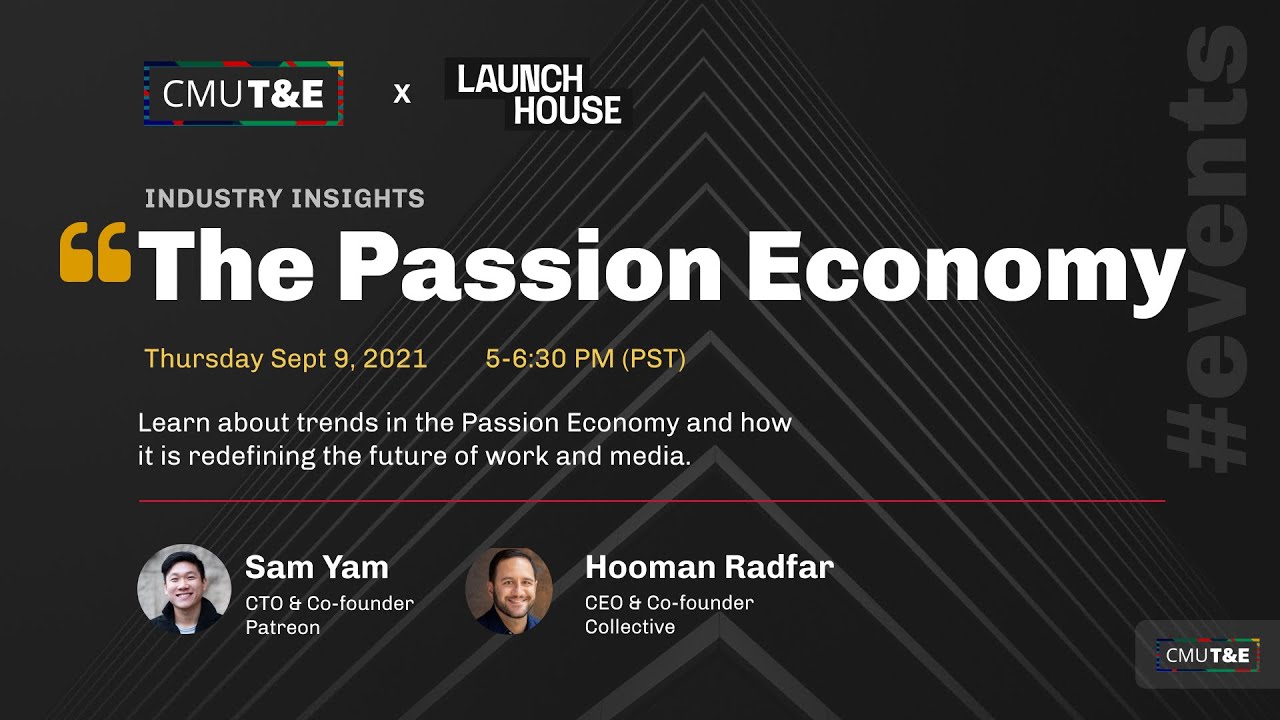
MarketX Webinar Series | Interview Patreon Co-Founder & CTO | What is the Creator Economy?

Sam Yam, co-founder and CTO of Patreon, talks about building the platform with musician Jack Conte in 2013 to let creators earn directly from fans. Patreon now supports 250,000 creators and pays out over a billion dollars annually through subscription memberships, Discord integration, and merchandise tools.
Chapters
Ben, would you like to give a brief background about Patreon?
Yeah, of course. So hello everyone. For the folks that don't know me and this is their first time on our webinars, my name is Ben Doror. I'm the head of research here at MarketX. And today we will be discussing a great company, in my opinion, named Patreon. And Patreon is essentially a creator's platform. It's a platform made for folks that want to, you know, put out their art, music, independent movies, podcasts, and you can, you know, just go on and on. Anything that is distributable online and anyone that has a following can have a Patreon. And it's a fantastic idea because it's democratizing the sort of space of creativity. It's democratizing artists and their ability to access sort of a career path without having a following of, you know, a million people. They don't have to be a Taylor Swift to make a living off their art. And that's pretty important. Today we have Sam Yam with us, who is the co-founder and CTO of Patreon. And as Catherine mentioned, he will be telling us more about the company and the future of the company and the future of the industry as a whole. Catherine, you want to kick it off?
Great, thanks Ben. We are honored to have Sam here to join us today to talk about the founding story of Patreon and also what's going on in the creator economy. So to kick it off, I guess the first thing I'd like to ask is, for 2021, what do you think is the most exciting news for you personally or professionally?
The most exciting news in general? Yeah, I just think the whole space with creators has really heated up. I mean, you look right now, on the news and they're talking about NFTs and this whole section of influencers, creators, looking for new ways to monetize art. I think the whole space has sort of leapfrogged and accelerated over the past, really just past year, because you have a bunch of folks who saw their traditional income streams dry up, whether it was through live tours or whatever else that had to be shut down through COVID. now looking for new ways to effectively continue on their living. And, you know, in a lot of ways, part of it was the struggle that was difficult, but also I think it's really exciting, certainly for us over here at Patreon, as we're thinking through the future and how to help these folks. But also just in general, I think we're very excited about the space. It seems that every other day there's a new company popping up trying to support and facilitate the creative economy.
Awesome. And one of the things that we definitely noticed is the crazy growth that you have experienced. I've seen, you know, your podcast with How to Build This and the great story. So for many of the people here who hasn't heard about the story, do you mind sharing with us, you know, how you and Jack got this started? What was the, you know, part of the story? You also have delivered In-N-Out burgers in college. Tell us more what's going on there.
Yeah, the In-N-Out burgers are not related to Patreon really, maybe my personal story. But Jack and I were roommates. Jack, my co-founder and the CEO, was a musician when he graduated. So we were roommates, and I think they paired us up because we both did music. I was sort of more classically trained, and then Jack is really multifaceted talented actually, but he also focused a lot on piano. And when we graduated, we sort of took very divergent paths. Jack decided to become an artist and musician, and he even posted a lot of his work on YouTube. And then I went out into sort of the startup tech world. But the— yeah, my path is more traditional, but I think the sort of interesting piece is like, I did love music. I studied for like 15 years. I played at Carnegie Hall in New York. It was like a deep passion of mine, but I could never connect the line to understand how I could actually make this into a career personally. It seemed that you would have to be the best in the world in order to really pursue a path that could sustain you. And so You know, in my mind it was like, that's great, I can always have it as a hobby, but obviously in order to pursue a career, I have to think about something, you know, in tech or otherwise. What's fascinating to me now is sort of— and this is when Jack came to me, this is now like 2013, so about like 8 years ago. At that time, he had, you know, largely found different ways to make money as a creator, but the huge disconnect— and he talks about this a lot— to him was still the fact that he and his peers were able to sort of gather together communities that would generate hundreds of thousands and millions of views. And the way that we like to talk about this is it was literally stadiums full of eyeballs watching your content. And then when you looked at your final check after these performances, after these videos that you shared out onto the world, you would take home based on the advertising rates, a few hundred dollars. And so it really didn't feel that the passion and excitement around the work that all these creators and influencers were generating really like translated to the paychecks that these creators were making. And so that was, I think, the core thesis around A, Jack's understanding that even his audience would be paying him a lot more if he just asked them directly. And the other thing that creators needed was sort of a sustainable set of incomes, not just these pockets of, hey, I got a sponsorship finally, that's good for the month of, you know, February, and now I have to scramble to find the next thing. To have a sustainable community and salary really allowed artists to focus on their work and further develop their careers in that regard. And so that was the premise that we launched with, both the idea that we wanted to create sustainable income, as well as provide fair value for sort of the worth that we felt creators were sort of offering into the world. And initially, it was a struggle. I think there are a lot of blockers that only recently in the past few years, I think, that a lot of creators have gotten over. And one of them being just the idea of asking for money for your work in a world where I think largely creators even assume that your work should be free, that distribution is free. You're uploading it onto YouTube.
Right.
And it's all an ad-based model, right? And so, you know, when we initially launched, there were, I think Jack went to like 50 different of his friends and nobody wanted to launch with us. The idea was really clear, but I think there was just that hesitancy. And so it was really just Jack that launched on his own channel. I think he had like 200,000 YouTube subscribers at that time, and he quickly was making like, I think, $5,000 or $7,000 per music video. So like over $10,000 a month.
Wow.
And I think once people started seeing both the willingness of a community to support these creators, as well as what the actual numbers translated to, there was a lot more excitement and we've effectively been growing just sort of by word of mouth since then. Now to today, I think almost a quarter million creators getting paid month to month and, you know, recently surpassing well over a billion sent to creators annually. And yeah, it's been good.
There's a story out there about how Jack put out a video and it cost him $10,000 to put it out and it only brought in like $100 or something. And I was listening to the podcast and he sort of said that was like one of the major drivers of like he needed to come up with something for a better world out there, you know, like for creators. And I guess that's how Patreon came about.
Absolutely, yeah.
Yeah, I think this is actually really echoing even my personal story, you know, growing up Asian family. I was actually really trying to pursue a child actor role, and then my parents are like, do you want to starve when you get older? So typically when you play 10 years of piano and all that stuff, you ended up becoming more of a, you know, typical profession. So I'd love to learn more about you guys over the last 8, 9 years. Where do you think is the highs and, you know, maybe some of the challenges that you also face? Because most of the companies, the last few years, things have been really transforming a lot of people's lives, especially with COVID Can you just walk us through some of the key moments in the journey that you guys have had so far?
Yeah, I mean, last year was one of the highest growth periods for us as a company. I think the transitions that's happening is like, you look at a lot of content that exists online and maybe in the past, right, with cat videos and stuff like that, it was commoditized. Entertainment and learning was just, you could get from anywhere. And what's happening now, and that's why people call it sort of the passion economy, is it now matters who it is that you're getting both your entertainment and your learning content, whatever it is, right? Like if you want to consume a lot of crypto knowledge, you believe in certain specific experts in this space. And these folks have now invested the time to build up communities of their own, huge followings. And so the key sort of differentiation of like what makes it the creator economy, the passion economy, is that it is not commoditized. It is specific individuals who have built this following. And because of that, they're looking to continue building on their career and their empire through that. And so I think Patreon is very squarely positioned here to help support these individuals. I think traditionally they've been looking at all kinds of different ways to monetize, and that ends up with them sort of having an existence across a whole number of platforms, right? The idea is like now with TikTok coming up and Clubhouse, like you effectively have to be multi-hyphenate in terms of where you exist. Even if you're a YouTuber, a lot of folks are also creating a podcast because they're trying to extend their reach. And so, What that effectively makes us actually quite nice when we talk about, okay, well, you're building out your audiences across these platforms, but when you really think about like where you want to have your most passionate fans, your evangelists, your zealots, as well as where you want to sort of pull together all your fans to make money. All right. And build up a proper membership. That's where we sort of want to exist. And we have some advantages here because a lot of these platforms— I know you're not asking me about the competitive space, but I just find this so interesting because a lot of these platforms are stuck on this idea of like the user is owned by the platform, not by the creator, right? And we have a very creator-first mentality, which ultimately just, I think, allows us to position ourselves in the future in ways that these other platforms can't. Where Facebook, Instagram, TikTok, they're never gonna give the email addresses of the users that signed up for you or subscribed to you, to you as a creator. In fact, if you wanna reach all the people that like you on Facebook or Instagram, you have to buy ads because you don't get access just by making a post to guaranteeing that at least you send out an email or even leave an impression on all these users. And so, like, our mentality is like, we're trying to help you build your business. And so you definitely have access to all the folks that subscribe to you, but even further than that, we're really thinking through the tools of like, what makes larger subscription business like, like a journalist or like the New York Times tick. And it's really a lot of tools around how do you manage churn? How do you reactivate, deal with reactivation? All these mechanisms around engagement specifically tailored for subscription and building out membership is sort of the area that we shine. And that these other companies, they are building plenty of monetization strategies, I think, for these creators, but ultimately I think are still tied to an advertising model.
Yeah, thank you for bringing that, and love to learn more, and let's dive deeper. So one thing we really like to understand is, I've heard some of your, you know, podcasts and also sharing sessions. Clubhouse, there's a lot of influencers now that are omnichannel, right? So how do you guys think about the strategy going forward? Is Patreon's goal to work with everybody in the ecosystem, or how do you see yourself positioned in this ultra-competitive world where everyone's trying to get all the creators on one platform? Where do you see the whole industry going?
Yeah, I mean, as we already noted, I think there's no future where it's just a singular platform. Even what's happening with Clubhouse, I think it speaks to the community's desire to have a reset constantly. It's this idea of, Same with TikTok, the democratization of being able to grow an audience and be famous. It just takes a set of viral videos and anyone can do it. On Clubhouse, it's like, hey, it's a different skillset. Now maybe I can start building a following, even if I couldn't build it on Instagram, for example. And so there will always be, I think, opportunities for people to build influence and communities around some specific area. That's also, I would say, the thesis behind Patreon. It's not that you have to build massive communities, right? Jack, when he first launched, had a few hundred thousand, like 200,000, if even, subscribers at the time, and yet was still able to make plenty, I think, from the perspective of like sustaining himself and continuing to build a career through this. So what we're seeing now, obviously enabled by the internet, is that people can start building communities around very specific niche topics. And even there, it's— we say this a lot— it's not the number of fans, that you have. It's the depth of how much they love you. Right. And that really speaks to like various levels of success for the different artists. So like, if you have, even if it's a very small niche space, just a very passionate, supportive community, or one that feels like they're getting a lot of ROI from the content that you're releasing, whether it's, you know, financial crypto people giving you advice that you think will help you grow your wealth, or if it's like fitness instructors in a way that instead of paying $30 a month to a gym, You'd rather invest into getting like, you know, workout tips and advice from them. You can make a living as a creator with a smaller set of followers and community. And so that's sort of where, you know, your question is, where does this whole space go? Do people exist across many platforms? I think people are constantly exploring areas where they can specialize and build out communities. And where this space exists is people don't need to become like huge celebrities. I think going forward, people will be able to build careers on their own, right? You especially look at like Gen Z and all that. Like, do they want to go build a traditional career or do they want to start becoming like someone that has followers and they can teach some sort of specialized skill or talk about a very interesting entertainment topic and build a career out of that? And I think that's where we're going to see a lot of, a lot of shift in terms of where the money and the attention and the dollars are going in the future.
Gotcha. Yeah, this is all very exciting. I remember I was reading about the sort of history of creator economy when we started looking at Spotify, you know, YouTube back in the days. What do you think was the turning point for you guys? At what point did you say, I think we're doing quite well and this is going way beyond my imagination? Or was there a moment you were just like, hey, you know, we've always imagined this moment?
Yeah, you know, I think since day one, even when everyone, you know, said no to the idea of like launching on Patreon, we felt that it made sense that, you know, there were too many creators that were generating real value in the world and there just wasn't a way to connect that value to like its worth at the time. So I, even before we saw any momentum here, I mean, this is why we've been going at it for 8 years. I would say, I think it, it became really clear. For me, for example, when Jack first pitched me, we were just in a coffee house, the idea. What clicked for me was like, I followed all these YouTubers in the music space actually, and one in particular, Kina Grannis. I really liked her stuff.
Yeah, I love Kina.
Yeah, okay, great. Yeah, she was in the— she played the— exactly. Yeah, she was in that scene. I thought that was so amazing. But, you know, for me it made sense. It was like, If I could pay her money through— like, her work is inspiring, and I really like following even her personal journey, right? Like, like, it's almost become a point where I'm really interested in, like, life working out well for her. I would totally pay her money if I could. And so that click made me think, okay, there's definitely something here. A lot of people probably want to support these artists and creators. That's probably the basis for Patreon. I do think What we've discovered over time, if you ask if there's a particular tipping point, is yes, there's a huge base of people willing to support and who care deeply about these creators. And there's an even larger base of people that are thinking about it from— I don't want to call it a selfish perspective, but again, maybe the term to use is like ROI. There's a huge segment of people that want to support these creators because they feel that they're benefiting from either the content or they're learning from it. And we've largely steered our product more towards both, right? Like you want to be able to support a creator, but you want to get the things that matter to you. And so we've built out a lot of tooling around creators being able to share out exclusive content. We found that works really effectively with podcasters. We have podcasters making hundreds, well, millions a year, but hundreds of thousands every single month. And we've also built out a lot of functionality and we continue thinking about ways that we want to do this, where we can support communities around these creators. And so facilitating you know, patrons connecting to one another. We have integrations with Discord, which is a hugely popular platform where, you know, if you pay a certain amount to these creators, you'll be able to have different levels of engagement either with them or with the community. And again, this is all ROI initiating because people feel they're buying access to a community where they can get advice or where they can just talk about really interesting things amongst each other.
Got it. Yeah, that's really interesting and definitely have seen a lot of the creators sharing that sentiment. Right. It sounds like you guys have a lot of new additions to the family. Can you talk a little bit about, maybe not boasting, but what are, who are the creators that moved across platform? Maybe we can, you know, for a lot of us here are not too familiar with the space. Can you just talk about who these people are and what prompted them?
Yeah. Yeah. I mean, there are so many creators that I really love on the platform. We talked about Kina. There's a great creator who does these photos called Humans of New York. And he basically takes these snapshots of, well, it started out with just regular everyday people throughout New York, and then he sort of wrote out their whole story. And it's just beautiful because you're building this sort of shared empathy with like everyone's lives and their stories. And Brandon, who is the creator of Humans of New York, is hugely successful in sort of, you know, garnering a lot of support amongst his community. You also have like really, you know, I mentioned there are like niche things that exist on the site. I'm trying to pull up, even if I can't pull up, I can recall off the top of my head. A group called Ask a Mortician, or not a group, but a creator that has a property called Ask a Mortician. And she's also very successful specifically talking about the topic of weird deaths and how things happen. Like, who has died at Disneyland, I think, is one of the videos that she shared. And it's sort of morbid, but also, I think, fascinating. And people really want to dig in and engage on topics like that that can get very specific. There's also I think very noble causes, or at least interesting ones. For instance, one of the very successful campaigns that ran for a while was like around the Hong Kong pro-democracy stuff.
I was there when this was happening. It was a crazy riot right outside the hotel I was staying.
Totally. So, you know, you can be on either side of these sort of issues, but I think Patreon is sort of situated like neutrally so that if you can gather support and a community around it that is going to pay you, Like, we don't really take a stance on this stuff as long as it's not toxic for the community. And so a lot of times, for better or for worse, these conflicts end up generating very passionate communities on different sides, and they all monetize and build a lot of support well through Patreon too.
Just curious, where do you see the highest following? Is Patreon mostly US, or can you tell us more about your geographical focus?
Yeah, we have been expanding out. I mean, we've been supporting a lot of international since day one, but not different currencies. We supported it just naturally because we were integrated with Stripe. We have now been localizing and doing currency support since about last year, and we've seen like 50% increase in conversion rates. The large share of our revenue and activity is still like 60/40 US, which means that we should expect this to shift like 'Cause we've only started now. In most companies, right, you're going to see something like even 70% international, 30% US. So we expect this— A, we look at it as a huge growth opportunity, and B, we expect this to shift over time, especially as we put more effort into it. I'm reminded of like, you know, and this goes back to my earlier point of where we sort of see the future happening. There was like a Harris study around asking children, right, what they wanted to be when they grew up. And it used to be the case, right? People would answer like an astronaut or whatnot. And this was the case. This is still the case in China, for example, right? Very practical or sort of aspirational type careers. But in the US and the UK, the number one answer is being a YouTuber now and an influencer.
Wow.
And so there is a whole generational shift in terms of what people want to do and sort of how they anticipate the future. And, you know, to your question of like what's happening internationally, This is sort of the trending we see overall because these influencers are global in their reach.
Definitely. Yeah, that's a really good point. I mean, we look at some of these numbers, right? It's like really shocking. And a lot of people during COVID make just as much money, if not more, right, doing artistic creative pursuits. And that is the thing, maybe, you know, accelerated by COVID. Do you think that this, you know, trend or phenomenon will continue after COVID? Or is this Due to this one thing and everybody now have more time, how do you think the next 5, 10 years will play out?
Yeah. So this was certainly one thing we were investigating very deeply into our own data, right? We saw, I mean, we saw phenomenal, we saw acceleration of our, we call it like the total market value, how much money we're sending to creators. We saw it go increase to up to like 70% through the end of last year. You know, I think our revenue run rate is like at that time, right? And now we're even larger than that, close to like $140 million ARR. And we're seeing it. So we were wondering whether this would level out, right? Especially after we started some areas opening up and whatnot. But we've actually seen continued sustained acquisition and sort of expansion across our cohorts, which makes us feel like we've hit sort of a new norm. For instance, even our last month was even higher year over year than like our end of year last year. Like I think we hit like 77, almost 80% year on year growth. I do I think again, it's more of an acceleration of people thinking about, you know, how they want to move their businesses online. And that's also why you're seeing this like ecosystem rise up around it with NFTs and all this other stuff. Our strategy very much going forward is making ourselves adaptable to support NFTs. I particularly find interesting a lot of the new mechanisms that creators are exploring to continue their monetization.
Yeah, definitely. And on that note, I would like to open this discussion to the whole audience. If anybody has questions, please feel free to raise your hand on the bottom. You can see there's a raising hand button. We also have a Q&A section, so please help. Go ahead.
Let me make one more point on this too. As you asked about, like, is this sort of a sustained thing or will there be a return to normalcy? Like, it's not even just the creator mentality. I think even from the consumer or the patron side, we've seen a lot of changes over time, right? For instance, we've seen the initial average pledge amount increase, right? We were really worried. In fact, if you look up stories about Patreon at the beginning of COVID we just didn't know which direction things were going. We did a layoff in the company. We wanted to be really careful about how we were thinking about spending. We didn't know whether people during a time of, uh, crises might get rid of their discretionary spending, which is sort of how we looked at, you know, will people support creators and whatnot. We've seen this increase Like over 22% over the past few years. And we've also seen the increase of people just paying a lot of money, like at once, right? So like the share of new patrons paying over $100 per month, we've seen grow like over 21% over these past few years too. And so I do believe there's a new shared understanding from the consumer side where like, hey, I, you know, paying creators and paying for works is awesome and normal. We see, for example, even our own network is getting more dense, right? Like over half of the payments now to creators, half of the amount of payments come from patrons who are supporting more than one creator on Patreon. Now this flipped a few years ago for us. So it's not just patrons who are really excited about one particular creator and then they're supporting them on Patreon. The majority of our revenue now comes from people who are supporting multiple creators in the space on Patreon itself. And we just imagine over time, as we get more creators on board, that should be even larger over time. So yeah, that's another side of the equation when it comes to like, are we in a new norm? And is there sort of going to be sustained growth in this space? I mean, obviously we're very bullish on this, but yeah.
I'm actually going to start off with a question from my end, just to follow up on the conversation here. So I know you all today don't do, and this is sort of a 2-part question. I guess the first part is the media and content that's out today. So for example, you go on Netflix, you go on Amazon Prime, you have to scroll for hours, not hours, but a long time to find something that's actually watchable, right? Do you feel that's one of the trends that's pushing people towards platforms like Patreon and sort of independent creativity? And the other question is within these platforms, especially specifically Patreon today, there aren't sort of, sort of ad-related dollars coming in through revenue. Do you see that changing in the future as more creators come onto the platform?
Yeah. Okay. So, so on the question of like, I mean, Netflix is a wildly successful company in its own right with very high engagement. So I do view like the patterns of what consumers are doing as there's space for both. I wouldn't necessarily say that we see like a shift from Netflix here. I would lean more on my point that what's actually happening is people are developing strong affinities toward specific people online. And whether they find that through, you know, channels on Instagram, TikTok, Facebook, or even a Netflix creator, right? Like, like someone that created a really awesome show on Netflix and then builds a following somewhere else. That is the behavior that's happening. People are going deep in on the creators and the people that they care about. And because of that, these creators now looking for ways to engage further with their audiences. One way we think about Patreon is how do we scale intimacy? For these creators, right? On Facebook, on Twitter, it's too taxing to engage with these people in any sort of, sort of like healthy way. But here, you know, on a scaled-back community where people are supportive and it's sort of a private gated community in that regard, a lot of times we've gotten the feedback that creators find it invigorating, energizing. And so what we want to facilitate is that sort of healthy interaction when these creators have built up these strong followings on these platforms. So that's how I sort of view the first question. Like, we are just a byproduct of what's actually happening, which is people are following and getting closer to specific individuals. Your second question is around like, will ad dollars flow into Patreon itself, the platform, or are you just saying the eco— I mean, obviously it already flows in the ecosystem, but actually, yeah, feel free to clarify.
Yeah.
So it would be Patreon specifically. So do you all in the future plan to incorporate advertising and advertising sales into the Patreon platform?
Yeah. I think there are different ways that this could manifest. One is as we build out the ability, I mentioned how the network is sort of getting denser, and a lot of times new creators that launch, like, we are providing— we don't provide, it's really their audience, but like having a platform and network means that patrons can more easily subscribe to them. So oftentimes we see in new launches, I think it's like 40 to 50% of their patrons already existed on Patreon before they support these creators. And so again, to your question of like ad dollars, one way this might manifest is if in the future we provide more mechanisms to search for and discover creators, similar to many other platforms, you may want to buy some ad space, right? In order to promote yourself in this ecosystem of people that are very passionate about creators and want to support them. In terms of like the broader way that ad dollars typically come in through like sponsorships and sort of advertisers, I do think that's always going to be one mechanism that creators get paid through. And so we wanting to be sort of the centralized place that creators can manage their business will probably provide insights into that. I don't think we'll lean on advertising as a strong mechanism to get creators paid. We have a bunch of beliefs around how it doesn't tie directly to the value, even for the consumer side, as you're like trying to consume this content, a lot of these advertisements end up being a distraction for you to get to the content. And ultimately, we feel like the ecosystem is sort of warped because of it. We don't want to be a company that we think, like Facebook and Instagram, that is sort of beholden to these creators. There was a huge falling out with YouTube and a bunch of creators when they tagged it Adpocalypse, where because of certain advertisers being averse to specific types of content they thought were offensive, YouTube had to broadly put an algorithm that actually just cut off funding to a bunch of different creators where a lot of the content we found out afterwards wasn't even really particularly offensive, but they, they were unable to really filter correctly. And they had to do that because the advertisers didn't want to pay them, right, to be put in front of this content. And so we just want to avoid those sort of situations. We may again tap into the ecosystem, provide analytics, provide insights into a centralized place where we run your business. I don't think we're going to be sort of building out a lot of ad dependencies within our own platform. We've seen plenty of success without it. And we think ultimately creators will be better off sort of building out their businesses on their own without it, right? Building out, you look at like the Jennings empire, like building out their own fashion empire or their own makeup empire or building out their own businesses.
Thank you. We have 2 questions here. Someone asked, which competitors are you most fearful for?
I, first of all, I don't think any of us look at it from a fear perspective. I think Jack, my co-founder, more so than me, I would say, is just happy seeing that creators are getting paid now, that the ecosystem is thriving, that this competition is promoting this idea that creators are important and products should be tailored towards them. With that said, I don't want to give a non-answer either. I think there are some companies doing really interesting things in this space. I'm less concerned about like the incumbents. Again, like YouTube adding on payments. I think that's great for creators, right? Where they want to do that. Certainly. Both with like YouTube live streaming and being able to tip creators that they're making some money. I just think again, for all the reasons I noted earlier and like your inability to own the community that's supporting you on these different platforms, that it's not the place to ultimately build your business. And creators are savvy enough to get that. It might be like supportive in many ways towards like monetization that they have. And it certainly is the place to build up influence and an audience, but I don't think it's the place that creators will think of like building their actual business. With that said, the companies I find interesting are— some of them are new, but you certainly have your Substack. I think they're doing interesting stuff in the journalist space, and also I just like the way they've designed and built out their product. I think Stir is a really interesting company. I mentioned sort of centralization of a lot of your business. I think they are effectively trying to build out, you know, a lot of your insights and dashboards across businesses so they can build on top of that. I think their user base is still relatively small now, but what they're doing is really cool. And then Sometimes just, I'll add this for color because a lot of people like to talk about this. There's OnlyFans, right? Which is huge. They're generating, I think, hundreds of millions in revenue. They sort of surged to popularity almost out of nowhere, even though they've existed for many years. And I think they also were like the perfect storm of what was going on with COVID and people looking for different monetization streams. We are not like a lot of what they do. I think people look at and they're like, okay, there are parallels to Patreon. But effectively, like, what we've seen is accelerated growth, particularly we segment out sometimes in the safe-for-work type of content. Like, obviously we don't want to be arbiters of art. People can be nude and they can, you know, do what it is that they, they need to do in order to express themselves and, you know, put whatever they believe is like artistic work out in the world. But we have noticed Our safer work has been increasing a lot. And then some of the content, especially that borders more towards the pornographic, has decided to go over to OnlyFans. And I actually think from our perspective, we've still seen growth overall go higher than ever before. And it helps us not have to wrestle with a lot of existential questions and even branding issues and even partnership issues because we sometimes would run into issues with payment providers and these other third parties that have, whether it's a more conservative take, just more concerns around that type of content. And we've found that it actually has helped us a lot in our business over the past year.
Thank you. We have one last question. I see Adam asked a question. Adam, would you like to unmute yourself? Maybe you can ask the question live.
Sure. Thank you very much. A couple of questions. One, Do you see potential synergies with other companies? This may sound weird, but like an Apple or other media companies, any thoughts there?
Yeah, I guess there's 2 sides that we look at for this. One is, are there interesting startups or companies that we could acquire and really benefit from? 2, you mentioned Apple, so these are the larger companies. Discord is a startup, I consider it a larger property now. Certainly, I think we can have really interesting integrations with these various companies. We did something with Vimeo in the past. YouTube did a very minor thing, but they white-labeled us to— or they whitelisted us to allow creators to link to Patreon directly in their annotations. So like these overlays over their videos, and, you know, we have sort of relationships with some of these players there. I think more interesting for us in terms of partnerships are, again, the ways that creators can expand out their businesses. And in particular, for instance, Like the segment of like merchandising or even creators being able to sell like custom fashion for their communities. We're looking at— we have some partnerships there and we're looking at even more with creators. I certainly think if you look at the trends of what's happening in China with like live streaming and creators just effectively becoming live streaming salespeople, right? Selling all kinds of goods and effectively being like their own empires. And doing just like hundreds of millions of dollars in business. We certainly want to be looking forward at the different types of partnerships we can have to increase business and monetization opportunities for creators.
What I've seen also on some of the TikTok creators are adding bylines encouraging viewers to go to Patreon because you can get more content.
You can—
there's more time spent on Patreon. than there is on TikTok, which is, you know, 7 or 10 or 17 seconds.
Yeah, I'll tell you, TikTok in particular is fascinating because you can get massive numbers of followers on a viral video, but creators are struggling still on that ecosystem because TikTok, unlike— I already mentioned how Facebook and Instagram, you don't even get access to the full reach of your followers there. TikTok is even less so because they don't base the discovery primarily on who you're following. They base it on like AI algorithm of what they believe is most interesting for a particular user. So just amassing a huge level of following, that's not the typical consumption behavior on TikTok. You do have a following list you can swipe over and look through, but most people aren't doing that. They're looking at the For You tab. And so these creators need to put on a separate link to amass followings in other places. And so that's one of the reasons why you see them doing it with like Patreon or other services.
Thanks, Sam. If you don't mind answering one last question, Bastian, I see you have asked a question here. Would you like to ask the question directly?
Sure, of course. Thanks. Thanks, Katherine. I'm working myself in sort of the fake news and polarization space. And I was wondering around 2 years ago, Patreon was in the news for like banning a few political accounts on the, I think on the political fringes. I was wondering how that conversation went back then and how you think about the recent conversations, similar conversations. On Twitter and Facebook and the general attitude towards political free speech and banning some accounts? Thank you.
Yeah, like I said, we don't take a political stance on anything. So when we went down and banned any specific individual, it was through a violation of community guidelines, usually due to a specific issue around either hate speech, so like targeting towards, you know, a segment, maybe an underrepresented group, or causing actual physical harm to individuals or groups, and not because of any political stance. So there are a few examples I don't necessarily maybe want to get into specifics on here, but we certainly don't have— we try our best, right? And try to take a very human approach to this too, I would say. Like, we have real people reviewing all these different situations where we both, like, go through— we have a set of explicit rules around, again, hate speech or bullying or doxxing, where people reveal addresses to their large communities that basically threaten another person's safety. And then we go to these creators and we try to resolve it. I think we have something where, like, even if you're in violation of these rules, we've resolved like 98% of these cases directly with creators overall. And sometimes we run into creators who are not willing to do that, and we just We can't have that sort of behavior because we think it's ultimately going to be detrimental to the community.
So in the interest of time, I know Ken, you asked about, is Patreon going upstream incubating or grooming content creators? And Wasey asked about NFTs, and I think Sam talked about it. So before you go, I just want to see, is there any other last-minute thoughts you want to share with our audience?
Yeah, no, I just think you'll see more and more This space is exploding. And even within Patreon, there are a lot of things I'm not able to talk about right now, but like, I think there's some really exciting things that are going to unfold over this next year in particular. Yeah.
Yeah. I have to say, you know, when we invested in ByteDance, definitely didn't see a lot of the things coming. So it's definitely a very exciting space. And thanks again for joining us. Sam has been a great friend and he's like nicest, most down-to-earth person I've ever met. So, you know, thanks again.
Appreciate that, Catherine.
Thanks for joining our webinar today, and thanks everyone else for joining as well. Thank you so much.
Thank you, Katherine. Thank you, Ben.
Let's dig into Patreon in a bit more detail. The company essentially runs a membership platform, right? They're a SaaS-focused business, and so you can look at them as a B2B2C, where, you know, the first B is Patreon itself, the middle B are the creators that they serve and the tools they provide to those creators, and then the C is the end user to the creator. Those are the followers. You know, for example, Taylor Swift has millions of followers, and those would essentially be a good example of the end C. Since 2013, the company has raised around $258 million in funding. Tremendous success story for the company as a whole. It all comes from originally the founder himself. It was, it was a personal pain for the founder. And honestly, just from looking at so many startups and technology companies, those are usually the best companies and some of the most successful companies is the founder originally had a personal pain to fix. And they essentially have all the details of the challenges in their mind. They're just able to build a better business around that versus somebody that comes in and says, this is an opportunity in the market. I'm going to build a business around it. Discussing, you know, the founding team here, we have Jack Conte and Sam Yam. Again, Jack was the one that I just mentioned, content creator before Patreon. And wanted to, wanted to build a platform that solved the challenges that creators were facing, but also allowed creators to obtain a small following and still earn a livable wage off of it. And then you have other folks that are also foundational to the company, Julian as a Chief Product Officer, Amy as a VP of Engineering, and Robin as the Head of Product Marketing. And so running through this slide pretty quickly, it is, it is important to look at the investors when, when looking at the investment itself. And so on the cap table, we see Index, Thrive, Initialize, NEA, all pretty sophisticated investors in their own right, and all investors that, I mean, if you look at other investments in their portfolio, have some sort of exposure to these types of investments, of investments that allow folks to essentially democratize a specific economy. And so overall, when we're looking at the market size, again, we're sort of seeing Patreon from the view of it being a SaaS And so the SaaS market as a whole is expected to grow around to around $160 billion, or sorry, from $160 to $305 billion in the next 5 years. So till around 2025, 2026, and that's registering around 11% CAGR over those years. The creator membership industry actually consists of, you know, 2 types of players, companies offering monthly memberships and companies allowing the end user base or the follower base to donate to the creator that they follow. And so Patreon is actually allowing both where they have a tiered membership model, but they also allow donations as well in case, you know, a person does not necessarily want to go in on a higher tier. Yeah, Ben, you know, a quick question geographically, you know, looking at the market and then looking at Patreon and where it sits within that market, where is Patreon active user base geographically? That's a great question, Dylan. So what we're looking at in terms of active user base and mostly visitors by geography. The US is the most saturated, right? And we also have users across the EU, so many users in Europe as well, which is why Patreon started a Germany office. They hope to expand more deeply within the European continent. And then there are also, you know, expansion plans within APAC as well. APAC is truly a rock star at the moment in terms of geography, and Any company in any industry wants to get access to that region. One, because of the booming middle class and the wealth that's being created within the APAC region. And so it's not surprising to see Patreon wanting to do the same as well. Yeah, that's really interesting, Ben, actually. And speaking about geographically, and, you know, I'm sure each geography has its Patreon celebrities. Who are the biggest names in Patreon based on region? And in your experience, who are some of the notable artists who have used Patreon and are big proponents of it? Patreon as a platform? Yes, that's actually a good question. And one example to mention is Joe Budden, who recently moved from Spotify to Patreon. And if you all don't know who Joe Budden is, he has one of the most popular podcasts in the world, very heavy following. And he moved his art from, again, from Spotify to Patreon. The reason that he felt like as a creator, as an artist, he needed more freedom in how he built his business, right? And that's really what Patreon allows these creators to do, and that's why it's become so popular with creators.
Right.
Whether you are, you know, an up-and-coming creator or whether you are a major artist like a Joe Budden, you're able to have more of a control over how your business is built. And in that process, you know, as you all may have heard, the challenges with being a music artist, for example, is that 90% or 80% of your income comes from shows. So actually like traveling to concerts and whatnot. Whereas the rest of your recording income, actually most of it, 90% of it goes to your managers, the record label, platforms like Spotify. And so you don't see much of that as an artist. And so Patreon is sort of flipping that on its head and saying, hey, we're only taking, you know, let's go here to the fee slide. And this is the fee structure that Patreon takes from their creators. You know, we're only taking 8% or 12%, let's say, if you want a more sort of sophisticated plan. And this is less any payment processing fees, by the way. I just want to add that. And so you can just understand while yes, the creator will have to sort of become more independent, more of a self-starter and build out their business in the vision that they see it, you know, and some of them do have teams. Like I would understand, you know, Joe Budden would have a specific team that supports them and backs them up. But in fact, Patreon also has some of those teams as well. They have a internal team called the Creator Success Team, and they essentially have, you know, business planners on that team. They have creative designers, sort of creative thought leaders, to be able to help some of the more up-and-coming creators build their businesses as well. Yeah, speaking of the relationship between the creator and their audience and then Patreon and where Patreon kind of sits in between all this relationship, you know, I'm wondering what motivates a fan to contribute more to their favorite artist on Patreon? You know, how does Patreon make it enticing to invest more money in, you know, into their favorite artists? Does it come down to the platform? Does it come down to the artist? Where does that motivation come in? So I think that comes from the artists themselves. Again, so Patreon is— look at it specifically and solely as a SaaS platform. They are supporting the artist, they're supporting the creator, they provide the tools, they provide the human support. To build out a business, they provide the analytics, right? That's ultimately important when you're building out a business, but they don't necessarily provide you with any sort of push towards following. I think to better answer your question, the user base is essentially the, you know, it's, you can exchange the words user base and follower base because they're the same in this specific scenario. And it's all up to the artist or the creator. To build out their following base. And they're looking to become a platform of, you know, essentially supporting the up-and-coming creators and the established creators versus helping creators establish a following base. And there's a major difference there, right? Where, you know, you also have to build different tools as well. If you want to help people actually go out there and establish a follower base, and those would be more around, you know, sort of lead generation and sales tools as well. Looking at some of the, and these are some of the features that I sort of tapped on earlier. A SaaS platform because it's more of like a CRM for the creator base, right? And so they're providing analytics around the usage, analytics around the user base. They're allowing creators to message their users, for example, and just build out a full-on list of their user base and be able to, you know, see who they are and who they follow and essentially how to best continue attracting similar demographics and without without sort of risking churn as well, right, around their user base. So it's a pretty insightful platform. And as you go up in tiers, you get more tools as well, right? And so the Lite would be, for example, somebody that's more green, right? Somebody that's just coming onto the platform or coming into the creator world. The Pro would be somebody that's, you know, more up and coming. And the Premium would be somebody that is more of like a Joe Budden, for example, somebody that needs a lot more support and has, has a large follower base. Right. And at the end of the day, you know, Patreon is also building out systems and tools that allow you to interact with the follower base as well in a more meaningful way. For example, they, they acquired a company that allows their creators to send merchandise to their follower base. Right. So those things are happening within the company and they'll continue to, to either build some of these tools out internally or acquire tools that support their creator base. You know, we're seeing tremendous growth across the board, and especially post-COVID when, as you can imagine, a lot of folks were at home and, you know, let's split the scenario up between creators and users. So on the user front or the follower front, a lot of folks were stuck at home. They needed entertainment. They didn't have much else to do. And so a lot of them began, you know, using platforms like Patreon and Some of them even for the first time, right? And on the creator front, you know, they had to supplement, going back to what I mentioned earlier, of live shows are a significant percentage of the income for these folks, for these creators. And so they had to supplement their income with another source, another format, because live shows were gone. COVID stopped everything in its tracks. And so a lot of the creator base sort of grew through the COVID pandemic as well. I know that many creators use Patreon as a platform to connect with their audience in addition to platforms like Spotify and YouTube. In what way does this make Patreon unique from its competitors? What's giving it a reason to exist and, you know, to coexist with these platforms or maybe exist on another level to these other platforms? Yeah, that's a good question. In fact, Patreon has an integration with Discord as well. So yeah, so they interact with other platforms that creators are using, and one, it's because the mission that Patreon has, which is not a mission to swallow the entire market for creators and be the behemoth in the creator world. Their mission is to support creators, to help them continue building out their businesses and continue to scale out their follower base. They know that's not possible in the entertainment space to do it on just one platform. There is always market share to be grabbed. So when looking at how these companies interact with each other, so you have You know, Twitch, Buy Me a Coffee, OnlyFans, YouTube, Spotify, and Discord. And as I mentioned, Discord, for example, is actually integrated with Patreon. So a lot of folks use both. But when it comes to the fee structure, when it comes to the support they provide to the creators, Patreon does really come out on top. And, you know, when you're looking at, for example, a Patreon versus a Twitch, Twitch is more, you know, gaming-focused while Patreon is more general in the artistic sense. And so when looking at the competitive landscape, You're either looking at, you know, the niche that they operate in. So Twitch, OnlyFans, Patreon, they each operate in a different niche. Or you're looking at which has a friendlier fee structure and provides more support to the creators. We keep hearing about the creator economy, Ben. You know, why are more people participating now in the creator economy more than ever? You know, why is it such a hot trend right now? Yeah, that's actually a fantastic question. And it sort of allows us to zoom out of one company, which is Patreon, for a second and look at what are the real drivers behind, behind such a platform, but also behind the other platforms as well. Right. And one, it is the sort of Gen Z mentality and maybe the younger millennials as well that are, you know, they grew up with social media. They grew up sort of not knowing, you know, like, like for example, you know, I'm not sure about, you know, how you all grew up, but I personally grew up thinking that the only way to, to sort of be on, on TV. And this is obviously, uh, this thought process has changed obviously when seeing how people are on Instagram and, and Twitch and all these platforms. But the only way to sort of be famous beyond— is to be on TV, be a movie star, be a talk show host, or, you know, this great artist, you know, Kanye West. And that's the only way you could sort of have a follower base, be famous, and create a business off of that. Whereas a lot of these Gen Zers and sort of much younger millennials are looking at it as, no, you don't need to have this mass following, right? You can go on Instagram and create these funny videos and these funny clips. And garner a following of, you know, 50,000 people, 100,000 people. And you know what? A lot of the advertisers will then start reaching out to you and say, hey, can you advertise this product, right? And that's how you begin making your money. And it's a similar structure here within Patreon and within the rest of the creator economy, where you have that driver of just different generation and different way of thinking and how they've experienced life so far. And then 2, you have the driver of the pandemic as well. Right. Another example that I want to bring out, I was reading recently, in fact, earlier this week, which is a young lady that was making, you know, around $30,000 a year in a full-time job. She lost her job during the COVID pandemic and started working on Fiverr full-time. And so Fiverr is another sort of creator platform, specifically around professional services. And she started making around $360,000 a year independently.
Right.
And so it goes to show you that, you know, there is a ton of opportunity out there. And I think the COVID pandemic has opened up people's eyes to that opportunity. So the last thing I want to mention about Patreon, and this is pretty important, is their financials. They're looking at some very healthy growth into 2025. And today the way the Patreon business model operates is they actually don't have a sales team. They only work off of initially word of mouth. And then, you know, they started some small marketing efforts here and there, which is how they, how they do today. And then the, again, the creator success team is also a a very helpful part of that in terms of supporting the creators, but it's essentially the creator's job to bring on the follower base. If you want to look at the creator as an independent contractor, essentially, of Patreon, they're signing up for the Patreon tool, but they're also bringing on the user base onto Patreon. Patreon has a moat advantage with that because they actually don't share the payment information With their creators. And so whichever user base comes on to Patreon, that financial information stays, or that sort of payment information stays with Patreon, one, for security reasons, but two, it actually has helped them build a moat because in order for that creator to move to another platform, they would have to essentially reach out to their entire user base and ask them to move along with them instead of just migrating them through some sort of a technical source, you know, whether you you would download an Excel spreadsheet and upload it to the next platform. That's not possible, right, with Patreon. And so that's helped them also build a moat around what they're doing. Obviously that's not the only thing they're depending on. They're, they're, they're building fantastic services and products, but that's also a piece of it. Now in the future, what I sort of built out here is Patreon today also doesn't advertise. And so I believe that in the future, they're actually going to begin integrating advertising into their platform, just like Facebook did years ago, for example. And at that point, they're going to bring on an advertising sales team. And so I built that into the model as well. And even with that team, that team is going to continue supporting the growth rate of the company, but they're also going to continue to be net revenue— sorry, or net earnings positive. They're going to see an initial dip because of them bringing out a larger team to go out and sell ads and an operational team to help create those ads, but also they're going to continue to be net earnings positive through that time as well. I want to also mention the terms on this investment. And so we're looking at a $4.3 billion valuation for this investment and the typical fee structure of a 2% and 20% carry.
More from Sam

The Untold Culture of Silicon Valley & Starting Patreon | Lessons from Sam Yam