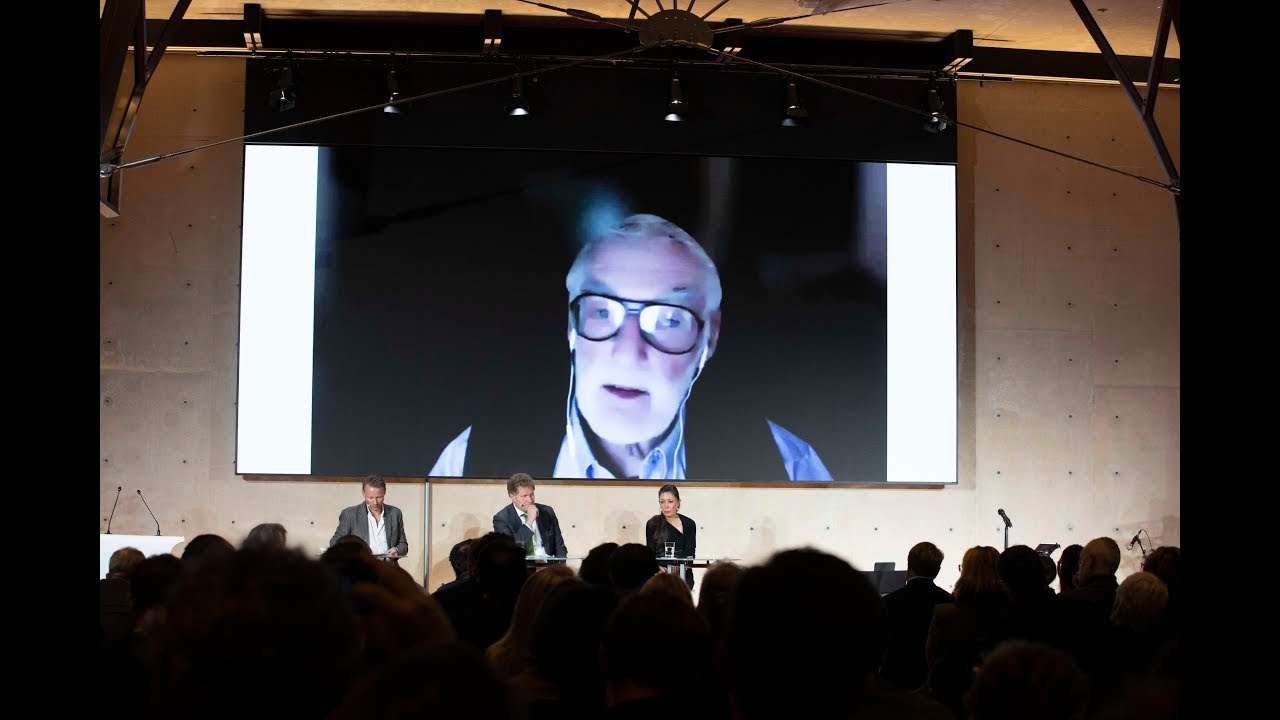
In this Startup Autobahn keynote, BASF board member Saori Dubourg outlines a profound, dual‑fold transformation reshaping industry and finance. She first describes a tectonic shift away from the traditional globalization curve toward a resource‑efficient "new economy" where smart material usage and sustainable design become central. Drawing on Dieter Rams' 1970s design principles, she argues that thoughtless consumption must end. Dubourg highlights the EU Green Deal as a long‑term, moon‑shot strategy that will generate over 140 new innovation markets across sectors such as transportation, agriculture, energy, and construction, unlocking billions in circular‑economy potential. She then turns to finance, noting a rapid rise in ESG‑focused capital—$2.7 trillion globally—and the inadequacy of legacy accounting (Luca Pacioli’s 15th‑century T‑accounts) to capture social and environmental value. Citing Sir Ronald Cohen’s work on global impact‑measurement standards, she calls for new metrics that value nature and humanity alongside financial return. Throughout, Dubourg urges startups, corporates, and investors to collaborate on breakthrough technologies and impact‑measurement frameworks, emphasizing that future business success will hinge on delivering environmental and societal impact as well as profit.
Chapters
TranscriptAuto-generated · 12 min
So with that, before we split into multiple stages, we've got one more keynote. I'm delighted always when we have multiple female board members, senior women in leadership here in mobility, and we got not one but two over here. This next resume requires reading. For others, I can tell stories, but she's amazing and I have to read out some of her Wikipedia stuff over here. So she's a member of the G7 Impact Task Force. She's a member of the Council for Sustainable Development of the federal government. She's a visiting fellow at the University of Oxford, 100 Most Influential Women by Manager Magazine, Female Manager of the Year, Sustainability Leader Award. The list goes on and on and on. We're so delighted to have the board member at BASF. Please welcome onto our Startup Autobahn stage, Saori. Thank you for being here. Right over there.
Thank you so much, and I'm really humbled. But quite frankly, I'm the first time here, and I have to congratulate the organizers. When I arrived, I thought I'm in Stuttgart. I was so wrong. I'm in Stuttgart Silicon Valley. So congratulations to this wonderful event, and I learned already a lot. What I brought you today is a view into the future, and I think you're all future-oriented, and we believe that the future needs better design, just as we saw with the EQQX, which is a wonderful example for what I will talk about in a minute. Now I think I need the help again of the team because it's the clicker. Thanks. So why are we at the beginning of a bigger shift? Quite frankly, over the last couple of months, not our industry alone, the whole industries have been facing quite a lot of tectonic shifts. Not only that, we see challenges in terms of gas availability here in Europe due to the Ukraine war. There was a lot of disruption going on with COVID That's why we are lucky that we are back now here on a joint kind of session with so many people. But it changed, it changed availability of products, of markets, of flow of materials. And last but not least, The climate change-related topic where you saw solutions today is a fundamental shift for everyone, and it will remain. And this is why when you ask me, what are we really talking about here, and what should startups maybe help us to think more deeply about, is— it's about this shift in the next slide. What we face, and this is why we are in an unprecedented time of change, is a tectonic shift in 2 ways. Number one, we are starting now at the end of the curve of globalization where companies went out to grow by volume, market share, and things. And what you heard from Ola, he just talked about efficiency. But what we are really now entering is a completely fundamental new economy. And this economy is a new S-curve of innovation where it's all about Smart resource usage on all levels. Why is this interesting? There's a German designer, Dieter Rams, in the '70s who already thought about this. I was pretty impressed because there's a quote from him. He was very visionary. He designed the 10 Laws of Good Design, the 10 laws that inspired Apple for their products because Jony Ive was inspired by these 10 laws of Dieter Rams. He is a guru on design, and he said in the '70s, the time of thoughtless design for thoughtless consumption and thoughtless production is over. We cannot afford to be thoughtless anymore. I thought this was pretty impressive because it was in the '70s, and he was actually designing products out of materials where he was wondering, oh, am I part of the problem as well? So this resource age is fundamentally different because it's a shift towards a new age. And Europe, Europe is currently working on this as the United States, as Asia and China and Japan and many other countries. And let me just give you the example of Europe. I know we in Europe sometimes are a bit critical on Green Deal, on the European Union, but quite frankly, I want to encourage you. Because for the first time, Europe has a strategy. The strategy that Mrs. von der Leyen talked about is— she said the Green Deal is Europe's man-to-the-moon moment. Why is it that this is an interesting strategy? I believe that a good strategy is not about looking just at trends and what is changing, because if you do, you have a constantly shifting strategy. But what is really smart about this, I believe, is if you have a strategy that concentrates on something that will be relevant in 20 years from now. And I can tell you one thing, climate change is not going away. It's getting more challenging. So every single bit, every single millimeter of advantage of solutions that we jointly create, the collaborators between companies, startups, and so on, is true competitive edge. in 20 years from now. That's why I like that strategy, given all the risks that are coming with it, I know. And that this creates innovation for all of us, I brought with me. If you look at the next chart, when we looked at BASF in these Green Deal options— please go to the next chart— we found out of the very, very cumbersome regulations that are coming, more than 140 50 new innovation markets will be created. We are a material producer, but this is inspiring us to think far and beyond into materials for the resource-efficient age. So what you see here is just one industry on the sustainable transportation field from a materials perspective. You can multiply this for the farming industry, $140 billion potential for different, you know, circular economy applications, sustainable energy systems, housing systems, insulation materials. So we are at the beginning, and this is what I would like to invite you to think about together with all of us: a new age of innovation fields with an average growth rate between 2% up to 35%. So this is the paradigm shift number one, and this is why Startup Autobahn is exactly at the right point in the right time. But there's one more fundamental change, and I don't know how people— aware everyone is. And that's the financial industry. If you go to the next slide. What we saw over the last 3 to 5 years— if you go to the next file, please. So capital markets are also changing, and this is unprecedented. The number of ESG sustainability-related funds have increased multifold over the last 2 to 3 years. We are talking $2.7 trillion globally going into sustainable solutions. Why is that? Because over the last years, the number of climate-related challenges and impacts have gone up to $311 billion of fundamental environmental damage, meaning this has doubled since the last years. The last 5 years, and this is quite significant. So investors, insurance companies are no longer willing to sustain the classical products that might have an impact on environment, and this will increase. And also globally, we have 240 billion of sites and productions that are not Paris climate conform. This means we have to rethink the whole capital market model as we Because the quick question is, how do you measure? Today it's all about return, but the future is really about measuring social value and environmental value. Now, just a question to you: Do you know who invented our today's system, the T-accounts? Probably not. If we go to the next slide, I will tell you who it is. Next slide. This is the guy. Luca Pacioli, Italian monk and mathematician from the 15th century, friend of Leonardo da Vinci, super interesting guy. He was the one developing the balance sheet we have today. Now, can I question you? Is it good enough to run today's capital market on a model from 1500 where climate change and digitalization was not even existing? Did we think through what this means? In terms of capital allocation, if the humans are just a cost factor in the balance sheet, and if nature has no value whatsoever, so what is the capital market actually optimizing for, and for whom, if humans and nature are not really value drivers? And this fundamental question kept us at BRF awake at night 10 years ago, and that's why we started thinking about measuring, measuring impact on all dimensions. the 3 dimensions. And we are not alone. If you go to the next slide, there's one guy who is a friend of us. It's Sir Ronald Cohen from the United States. He's actually UK-based. He was one of the key godfathers of venture capital in the UK. And he kind of says he has a déjà vu. Like Startup Autobahn is looking into startups, he said in the '70s we saw exactly the same phenomenon. We had first schools like Chicago School of University thinking about measurement of risk. This was, by the way, Zahid, the beginning of the venture capital industry, because for the first time it was not only risk, not only return, but also risk that was possible to be measured. And he says when technology like digital companies at that time in the '90s, Amazon, Google, Facebook, met risk measurement, a whole new industry started. And he says right now we are at the same time. We have totally new technologies on sustainability, plus we have an international debate how to measure impact in the space of environment and social dimension. My last slide, if you go to the next one. So he is now leading at the moment a task force on a global scale where the EU Commission, the United States, the World Bank, and all the big, big players on the standard setters are having a dialogue. And let me tell you, after Luca Pacioli, 500 years from now, this is unprecedented. It is an effort to come more and more to standards because Europe has moved ahead with its own system. Very cumbersome, we know, the taxonomy. I will not go into that today, but I want to encourage you— Thank you. You have ideas as startups. We need technologies. There's not only innovation that will come up multifold, there's also capital that will come up because the whole financial industry is looking for opportunities. And noting at that end, the last chart of mine is— and thanks for listening to me— last chart, please. I think the future needs a better design. We are at the beginning of something big. and business success tomorrow no longer means just creating value for financial terms, but also, as the EQX example nicely showed, it's about environmental impact and societal impact. And with that, thank you very much for having me here.
Thank you. I'll take all of that. Thank you so much. Thanks for being here.