Live with Sarah Levis
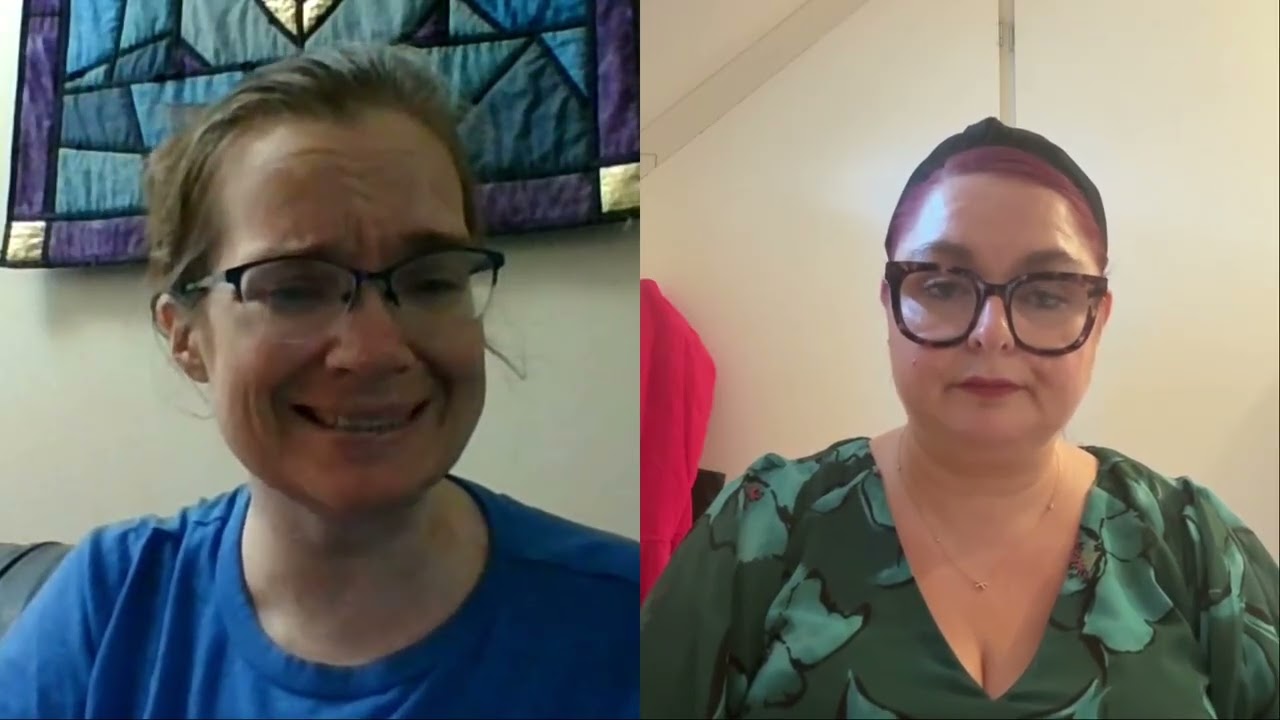
Kelly Holdaway, a UK writer with ME/CFS, fibromyalgia and endometriosis, talks about her coping motto "I'm alive, so I'm going to live" and why disabled people shouldn't have to perform gratitude for basic accommodations. They discuss disability policy in Britain, the emotional cost of proving your worth, and why the label "lazy" misses what chronic illness actually is.
Chapters
Okay, let's let's get things started. My name again, my name is Sarah Levis, and this is a and I I do the the the power in everybody body Substack your own Substack, and this my guest today is is Kelly Holdaway, and and Kelly. Kelly, tell us a little bit about yourself.
Yes, I'm Kelly. I'm from the UK, Manchester, England, if anyone's familiar. Most people know London and Manchester, you tend to find. Northern English, that's very important. We've got the South and we've got the North. I'm Northern. If anyone's watched Game of Thrones, the north is coming, the winter is coming, and in the north they all speak like me. Just imagine that's where I live. So I write flare and flair. Flare as in flare-ups of the chronic conditions that I live with, and flair as in I like to live with a little bit of flair. So I write about all sorts. Through sort of a chronic illness and disability lens, but you'll find stories about Michelin-star restaurants and trips away and makeup and rants about random things. So I try to make— chronic illness and disability isn't my entire story, but it is the lens through which all of my stories are told.
I love that. It's not, uh, it's not all of you. It's, it's just, uh, it's, it's, it's a part of you, but it, but it does affect everything.
Absolutely.
Yeah. And, and that's the way I've kind of come to see my disability as well. And, uh, and you're— and, and you were, you were diagnosed with MS early?
Yeah, so ME. I have ME and fibromyalgia from when I was 17. Not diagnosed at 17, but certainly experiencing symptoms, just knowing that I didn't feel well all of the time from being perfectly healthy, you know, child and teenager. Just suddenly didn't feel well all of the time. Took many years to get to the bottom of what that was, but now I know. I've been living with ME for 25 years now. I'm 42 now, so there's no adult version of me that hasn't lived with it. So it is, like you say, it is a part of me. It does colour everything, all of my experiences. But I try to— I don't buy into the Oh, don't let your disability stop you or hold you back, because it absolutely does stop us and hold us back sometimes. But I have a little motto for myself, like, I'm alive, so by golly, I'm gonna live. Yes.
Yeah, you're— I know from— I know from— the situation has likely changed. I know when I was— but I know in some respects that it hasn't. When I started blogging in 2013, 2014, the— there was disabled people in Britain were being treated horrendously, I remember, and there was a lot of pushback from the disability community around that. And I'm hearing now that that is still going on today with the current prime minister that you have now.
Yeah, so, well, we've just hot off the press a couple of weeks ago got a new prime minister and he is better. He was the mayor of Greater Manchester, so here in the north again, we know quite a lot about him and we've had him as a politician for quite some time. He certainly is more for sort of the ordinary person. We've had quite privileged prime ministers for quite a long time. They're from wealthy backgrounds, they're privately educated, all of that kind of thing. So we've had that for a long time. This new guy is a bit more man of the people, but we're yet to see if He lives up to what he's saying. I mean, one of the things he's announced just yesterday: we have free bus travel for disabled people in the UK, but only between certain times. So he now has said that's that will be a 24-hour thing.
Apologies. All right. Sorry.
He's now announced yesterday that that will be a 24-hour. Free bus travel for disabled people from April. So it's promising that one of his first things that he's done when he's got into office is try to improve things straight away for disabled people. But that's a tiny thing really, so we're yet to see if he kind of lives up to expectations. But there's, there's a lot of, there's a lot of surface-level support of disabled people. But as soon as anything you need access-wise gets anywhere near inconvenient, then attitudes kind of change a little bit. And we're still very much in that thing of disabled people are inspirational, and which, you know, we are, but not just, not just because we're disabled, not just because we're trying to live. And I do feel sometimes that calling us warriors or inspirational, or aren't you strong, or I don't know how you do it, is easier than confronting What do we actually need to do to make it so that you're not having to fight every single day to just live? So I think there's a little bit of, of that, that good intentions most of the time, but also, are you saying that you can't believe how strong I am so that you don't have to bother helping because I'm so strong that I'll manage anyway? So there's a little bit of that. Representation's better. We're getting some better representation in mainstream media for disabled people in the UK, but there is Yeah, you've touched on a lot of really important issues there.
You know, the— we call it inspiration porn over here.
Yes.
And the representation in media, again, you know, which is, yeah, it's getting a little bit better, but there's an awfully long way to go. And mostly when I talk about inspiration porn with people and, you know, why it's not helpful, why the attitude is not helpful, they, yeah, they've got no idea. They've— it's a totally they think that they're absolutely helping when they say it.
Yeah.
And it's funny, I work at a store in my— I live in a very small town. I work in a store for one afternoon a week, and I get a lot of, when I'm in there, people are like, It's so nice to see you out and about. Isn't it wonderful that you're working?
Yeah.
And I'm like, well, I've actually been working for the last 15 years.
Yeah.
You just haven't been— you just haven't seen it.
Isn't it lovely? I'm lucky to have joined the rat race.
Yes.
That's just life.
Yeah, yeah, it's, you know, just doing what everybody else is doing. But it's great that you're calling out attention to those things and those different aspects of how disabled people are treated. Because they're like, like you said, there's an awful, there's an awful lot of work to be done. Um, have you, uh, what, what is the level of accessibility like in, uh, in, in Britain? Do you, do you find that it's like, is it the, the physical accessibility? Is it—
It's, it's not terrible. It's not terrible. Um, we, and it's getting more, it's getting better and better, and There are some great schemes. So I don't know if you have the Nimbus access card or a similar scheme, but now there's kind of a bit— it's not universal yet, but there's kind of a one scheme. You kind of provide your evidence because, you know, we're always having to prove that we're disabled enough to get some help. But once you get over that hurdle, there are lots of things like, lots of theatres recognise it, and it can be as simple as, I'm just not able to queue, and they shuttle you into You know, a non-queuing accessible entrance right through to if you need help to transfer from a wheelchair into a seat. So there's some really good schemes. Airports here I've found are really good. I use assisted travel, I use wheelchair assistance in the airport. My experience in the UK airports have been really good with that. Similarly, even if we have the sunflower lanyard, I don't know if that's an international thing as well, but Airports are quite good at recognising that. So if you're not in a— if you're not a wheelchair user, which lots and lots and lots and lots of disabled people are not wheelchair users, there still can be recognition that, no, actually I might need some assistance. So you might not look at me and think I need it, but I might. So it is— it's getting better, but then there's always those examples. A young woman from the town where I live, um, had a little viral moment recently. She's only 19. She's the daughter of, of a woman I know, um, and she, she's a wheelchair user. And she went out with her friends, um, in Manchester on a night out, so a big metropolitan city, um, and they let her in this bar, and then a manager came over and told her she had to leave the bar because it wasn't safe for her to be in there.
Oh my God.
Mm-hmm. And even though she was— she's a very assertive young woman and was able to say, you know, no, my friend's here to assist, you've let me in, this is an accessible place, the manager actually made her leave that bar because he didn't have a plan in place to keep her safe. So that had a little viral moment nationally, so I think that brought a bit more attention to— and then so then she's been doing some work on, you know, in our local town centre, she went and did a little Well, if I go shopping with my friends, 9 out of 10 shops I can't get in. So there's lots and lots to be done, but I think the intention is getting better. And rather than just the, well, it's tough, then you can't get in, it feels like the recognition and attention around that is better. But our rail travel is notoriously bad for accessibility. That gets international coverage sometimes because it's so awful. We've seen wheelchair users crawling onto trains because—
Oh dear.
The staff are not available or not willing to help them on. So there's, there is loads and loads to be done, but I don't just want to say it's terrible because there is a lot of effort being made, and there are some brilliant schemes and organisations that are doing Really good things.
Yeah, it sounds, sounds a bit like Canada in some aspects. It's good in some aspects, it's very, very good, and then others there's, yes, again, lots of work to be done. Yeah. Um, what, what brought you to Substack?
Um, so as we were just saying in that quick catch-up we had before we went live, I do actually write for a living, but for other people, so I write press statements and press releases and, well, anything you can think of, if you want a leaflet, a poster, a website, anything, crisis communications, marketing plans, objectives, evaluations, I write absolutely all sorts, and that is my job, but I don't really write just for me, and I do really enjoy it. And I was what we have a program here on a Saturday morning called Saturday Kitchen. I'm obsessed with cooking and all things food, so that's my little Saturday morning routine. And a chef on there had said, "Oh, I've been writing on Sockstack," and I thought, "What is that?" So I had a look, and as soon as I kind of started exploring, I was like, "I think I belong here." So that's. Next week will be my 1-year Substack-iversary, if we're calling it that. Oh, okay. So I have really enjoyed it, and I kind of made a commitment to myself to write an essay every single week, not knowing whether I'd be able to keep that up. But I think the stubbornness inside me, I have kept that up. So next week will be essay number 52 of the year. So I'm really, I'm really pleased. But it's so— I know there's loads of notes all the time, and people have pinched the idea from each other about saying, you know, Instagram's for this, TikTok's for that, and Substack's for kind of get a brew and come and make friends with people. And it does really feel like that. I know there's some tiny bits of negativity that, that creep in, and I think Amelia specifically, who's on with us right now, had to block somebody, which is awful. Um, but it feels a lot warmer than other social media platforms. And I'm not really— I do social media as part of my job as well. I do have an Instagram account, and I do have the other social platforms, but it's not my natural— I like the long form, um, better.
Yes. Yeah, that's, uh, I, I like that there's a, um, once, once I became really determined to, to write here, I like, I like the community that's That I've found here.
Definitely.
And the people that I've met, and particularly in the— well, outside of the disability space, but particularly in the disability space. So yeah, it's a very nice place to be, and I thought I've got— do have an Instagram account, but, uh, I was on Facebook mostly, and I— and then my, my participation there has almost dropped to nothing lately. Yeah. So what, so what, what do you like to do when you're not writing, or, uh, for Substack, or your job, or I, as I've touched on, massive foodie.
Love food, going out for food, cooking, reading about food, watching food programmes. You know how some people, well, most people fangirl over maybe movie stars or pop bands? I fangirl over chefs, so I kind of add them to my list, and then if I get to go to their restaurant and meet them, I'm a very happy chappie.
Awesome.
So all things food. Um, I've got 3 grown-up children, so I love— we love a theatre date. Um, I'm heading to London actually this weekend with my son because he was 18, um, a couple of weeks ago. So we're going for, um, watching 2 shows in London, going to some nice food, lots of rest breaks built in, and lots of Ubers will be ordered. But do the best that I can for the weekend. And then I've booked a couple of days off off next week to try and recover from that, which we'll see if I recover properly or not. I don't know, it's always a gamble. Um, and I've got a best friend that's been my best friend for 30-odd years, um, and spending time with her is basically like a therapy session without having to talk about anything if we don't want to. So really just love spending time with those people that I absolutely love and give something to you. I've spent a lot of years spending time with people that drained things from me, and I don't do that anymore. So only people that are good for my soul. So yeah, theatre, food, cheeky nights away in hotels with my husband that I'll say, shall I book us somewhere to go? And even if we just go to that room and watch TV in a different bed, it's It's a nice change of scene.
Sounds good to me.
Watch TV in my own bed, I'll go and watch TV in a really posh bed. So it's a good choice sometimes.
And if you could go back in time and tell that 17-year-old that was not feeling well, if you could If you could tell her anything about what was, uh, what, what's to come, what would you tell her?
I think one of the main things, and I'm doing that, I'm not doing the awful thing of plugging the thing I just wrote, it's just, just convenient that you've asked the question, that the essay that I published this week was a bit tongue-in-cheek about banning the word lazy and I've been— had that little demon of I was lazy, I had my children and I couldn't always do the housework, and then I think, why can't I? Why can't I do everything? Um, and being haunted by— because I think lazy is one of the worst things that society can label you as. We seem to really demonize people we think that are not, um, doing as much as they could or should. So I think to tell her, you're not lazy. You are actually not well, and you're doing a bloody good job considering what, what you're coping with in your body. And just to carry on, get rid of the toxic people sooner. Definitely don't waste, don't waste so much time on them, and you're still going to be able to achieve amazing things. And then when you're 42, you might start something totally new that you enjoy. So just carry on.
That's awesome. That's such great advice, you know, particularly for— I think I read that piece and it really struck me when you talked a little bit about, or maybe it was the piece about taking, having to take time off of Having to take time off.
Yeah.
And, and being someone that has to, uh, that, that, that does work myself. I have, uh, I have my own small business and I have, uh, and I have companies through, uh, that I work to work for through that. Um, uh, feeling like, feeling like you have to do absolutely everything to, or, or as much as you can to, uh, to kind of prove your worth for the days that you're not there to do things. And I thought, yeah, I really do relate to that. To prove that I'm a good employee despite my disability. That's something that I really struggle with.
And, uh, um, definitely, I definitely do.
Yeah, but, and, and it, it sounds like you've got quite a good, quite a good handle on it, that, that you do take the time that you need. Um, or—
I do, after I've given myself a really good talking to. Yeah, it's difficult, isn't it? Because, you know, the conditions that we live with I could. I'm feeling ill enough to ring in sick every day. Like, every morning I wake up and I think, oh, and I get— I'm sat at my dressing table now where I put my makeup on, and I sit here and I think, how am I gonna do another day?
I don't know.
But then I do put my makeup on and I go to work, and it's that thing of, I, I do have a bit of a— I choose to work as well, so, and I want to. So then there's a bit of me, I think, well, you've got to accept it's going to be difficult because you've chosen to do it. Um, but then I need to just have a word with myself sometimes and be like, well, no, you don't have to kill yourself to, to be in the workplace. Um, and I do have— I work for a council, local government. They are flexible and there are reasonable adjustments in place, and my manager never makes me feel guilty about finishing early or taking extra breaks or not going into the office because I'm tired out or whatever that is, but it's still there. And I want to be a high achiever. Like, when people ask me at my current place, so, oh, like, what, what's your career? I'm like, well, I want to be the chief executive. So I don't want to I don't— I, for me personally, I don't want— I want to always get to the top of where I can be, and that's probably a bit of a toxic trait for me. But it's so— then it's difficult balancing that I've got to be kind to myself and I am chronically ill, but then I want to achieve. And how do I compete with the people that don't need to have a break and don't need to finish earlier and can be in the office? So it's a really difficult balancing act that I am getting better with, um, as I get Older. But it's, yeah, it's, it's a tricky one. And I think probably for, for anybody that works like we do with chronic conditions or disabilities, I'd be surprised if there was anybody that never had that little niggle in their head of, am I as valuable as the healthy person or the able-bodied person? Or would they rather not have a disabled person in the job? So it's, yeah, it's difficult. That little voice in your head sometimes can take over.
Yeah, I actually talked with my coach about that this week, about how, you know, about this little job that I have in town, you know, this just one afternoon a week where they have to have somebody come in to take the displays in from outside at the end of the day because Because with my, with my hand and the weaknesses in my hand, um, that, that's post-stroke weakness, um, they, uh, I, I can't do it. Um, and I keep, uh, and, and I was saying, you know, why, why, why would they, why would they just not have— why, why do, why do they keep me on?
Yeah.
Um, when it would be just as easy to have you know, one of the, uh, one of the other, uh, employees who works in the store come in for that 4 hours. That doesn't, that doesn't need to have a volunteer come in to take down the, to take down the displays. Um, that, that, that kind of, uh, that, that, that kind of negative self-talk, you know.
Yeah.
Or, or, or when my boss said, you know, uh, um, we'll have a I've got a volunteer that will come in and help you do that at the end of the day. And, and, and, uh, um, obviously something I couldn't do. So she was making an accommodation, you know, fawning over her ingratitude.
Yeah.
For an accommodation that, you know, that she made because it was something that she'd added to the duties that, uh, I had there that I couldn't do. So, you know, reasonable.
Yeah.
Um, you know, fine. Um, but, but just, you know, fighting not to say, oh my goodness, thank you. Yeah.
And so we have something— Something that I like to call the gratitude tax. Like, we feel like you've got to pay this tax of gratitude for anybody that you know, makes accommodations, or, you know, oh, I've checked that there's a lift, or I've checked that there's parking. And that's super considerate, and actually I find that really caring, like, if friends do that. But it's still that thing of, I feel like I need to be like, oh, I'm so sorry, and I'm really sorry that everybody else is inconvenienced because I can't go to that place. And I'm— so it's that kind of, oh, thank you so much. Um, and it's not We shouldn't have to be like that. We shouldn't have to think, you know, I've got to pay this tax in thanks because somebody has thought about me. Like, why, why wouldn't they be thinking about me? And why wouldn't it matter to them if I can't get up some stairs and if I need parking close by? So it is like you say, to not be sort of falling over yourself to give thanks. for somebody doing something entirely reasonable, really, that hasn't affected them.
Yeah, yeah, in any big way at all. Yeah, you know, and this, this, this young lady comes in and helps out and it's, and it's fine. But, you know, yeah, there's still that little voice. I am looking at the chat, folks, and I have seen that. I just want to point out here that Lisa from My long pause says she wrote about how she made it to the reference stage of the interview process, was basically hired, and brought up the reasonable accommodations and did not get the job. But that just shows me, and I've been there, Lisa, with the jobs around this small town, which is kind of backward in some of its attitudes about disability, but that just shows me that it was a toxic company and working there was hard for me. Yeah.
Screw them, Lisa.
Yeah, and somebody said, yeah, and that was the next, uh, from, uh, from the amazing Mac Devlin, was that, that was the next comment. Well, screw that place. Um, um, so, so yeah, such a, uh, uh, I, I, I really wanted, I really wanted to work, and, uh, and, and, and it has. It's been a, it's been an interesting, it's been an interesting journey, to say the least. Especially in a small town, given that I can't drive. But it's all part of it, I guess. You wish it wasn't, but you know, the difficulties in finding work. But it sounds like you've found a good company and that they're—
Yeah, public sector in the UK is actually pretty good. I don't think a job at my level in a private sector company, I don't think I would cut it for them because it's much more demanding on sort of hours and they push people and that they just don't do in public sector, really. So I think I would struggle in private sector. I suspect they would get rid of me, even if it's by a side door, by a back door, as soon as I started saying, oh no, actually I can't work a 12-hour day, or I can't— I think it'd be a different story in private sector. But public sector in the UK is pretty good. Government jobs are pretty flexible, as long as we don't get any certain politicians in, in the future, that is. But currently, government jobs are pretty good for disabled people.
Yes, that's, yeah, that's always the risk. What are the politics like? But Uh, Lisa, you, you said at the beginning before we went on that you were tired. I don't want to keep you on much longer, um, but, uh, I, I do want to ask the chat, um, I, I, if they have any questions up for you.
I'm happy to answer any questions. I'll do my best.
I just question all—
I answer questions all day at work, so it's fine. Kelly, do you have a minute?
Really?
Could I ask you this, Kelly? So I'm asking people, asking me questions about things that I like to talk about will be, will Yeah, there's questions and then there's questions, right? Yeah, I get some really inane ones as well. Like, I get asked things and I think, why did you think I was the person to ask?
Yeah, I've gotten those too. Yeah, where is your website? How do you get to your website? Why? Why? Why would you? You don't know. Um, uh, Lisa asks, how did you get into writing? Did you, did you go to school for it?
So yeah, so for my— well, I've got an English literature degree, so no, I didn't go to university to, to learn to write professionally. Um, I've always been an absolute, um, word geek. Like, I just love reading. I read voraciously, always have done. So I went and got an English literature degree and thought I wanted to be an English teacher, then stumbled across this job in communications, which is what I do now, and thought, actually, that sounds like me. I would always do things like, I'd see an advert on a billboard and think, why did they say that? Or that doesn't come across well.
Me too.
Or song lyrics, I'd even be thinking, what are they trying to say though? So that kind of inference and choosing the exact right word for things, um, really does suit me. I did have a foray into being an English teacher, but that's a whole other story, and then came back to communications. And so no, I didn't go to uni to learn to write professionally, but my degree did get me, um, down this path.
Yes, yeah, that's— yeah, I started out in English Lit too and quickly moved away when I realized it wasn't going to teach me how to write. And Mac is asking, he says he asks us at his muscular dystrophy meetings, what are you in for, just to clarify? He may, he may have joined after you, uh, after you.
Yeah, that's, that's absolutely fine. I am in for, um, ME/CFS, some people call it. Some people call it chronic fatigue syndrome, which we're trying to move away from now, um, but I just call it ME, um, and I also have fibromyalgia, um, I have endometriosis as well, but that's I was gonna say luckily for me, but it did nearly kill me at one point. But luckily for me, I don't really suffer on a daily basis with my endometriosis stuff. It's more the, the ME and the fibromyalgia, which for anyone that doesn't— isn't familiar, is characterized— basically, the ME is characterized by fatigue. I call it being tired right down to my bones, like it's— you feel like you're wading through mud. Like, it's not just an ordinary level of tired, but it affects your immune system, so you catch every virus, but then your body can react really differently and extremely. So then that can take you a while to get over a virus. And then fibromyalgia is characterised by global pain, so muscle and joint pain, that kind of thing. But it affects all the systems in your body, really. But like I say, I've never been an adult without that. I've raised three children with it. I've been to uni. I've got a career. It's been really difficult, but you you can live. I try to. I try to be probably too much. I'm probably too dismissive. I pro. I'm like, nah, it's fine. I'm fine. It's fine. I'll get on with it. Um, I do struggle, and there are some days when I'm. in a hole and I can't maintain the sunny disposition and the devil-may-care attitude. But most of the time I try to just troop on as best I can. That's what I'm in for.
And yeah, and the quickest way to tell me that, to get me to do something, is to tell me I can't. Lisa is asking again, how did you come to learn that you had endometriosis? Because she's thinking of looking into it.
So I had a really long gynae history. So I had my first son when I was 18, and in that pregnancy I had all sorts of problems. I'd like— what they were saying was a threatened miscarriage and then a threatened early labour. I had a couple of miscarriages after him, in and out, and they'd say, oh, it's pelvic inflammatory disease. Oh, you might have polycystic ovaries. Oh, it might be this, it might be that. And then when I was 35, I went into septic shock. I was at work and then suddenly I was in absolute— I felt, oh, I've got period pains in the morning, and all of a sudden I was in agony. And they got me an ambulance and it was all very dramatic. But I had sepsis caused by an endometrioma. going on my ovary. Still, they didn't say, we think it's endometriosis. They said, you've got a big cyst on your ovary. Then a year later, I ended up having a hysterectomy because of ongoing issues. It was only after they tested the tissue of my womb after my hysterectomy that they said, oh, you've got endometriosis. So it was a very long time. Wow. I couldn't believe it when she said it. I couldn't believe it. I'm like, wait, and you never thought it was that all of this time? You never even— and I didn't know. I know a lot about endometriosis now, obviously. Didn't know really anything about it to even ask the question if it could be that. Now I'd be like, um, do you think it's endometriosis? But then I didn't know to even ask that question. So it took a really long time. A lot of— I was in hospital in and out as an inpatient A lot. Um, but yes.
I mean, I mean, it's the doctor thing, right? I mean, I was, I was having a hemorrhagic stroke and I thought I had meningitis because it was, you know, my head and my neck. I went to a doctor and, and he said, uh, uh, and, and he said, uh, uh, you can still move, you can still move your neck. He said, so, so, so go home. But, uh, um, he was a GP and not, not trained to look for, uh, and, uh, yeah, you know, brain hemorrhage in a, um, brain hemorrhage in a 20, uh, uh, 22-year-old woman. But, uh, the specialist should know better.
I could, I could do a whole session for you on that. I mean, if anyone fancies, there's an essay of mine called That time the NHS nearly killed me. And if you want a little insight into a crazy episode of medical negligence and near death, that is the essay for you. Some cheerful, some cheerful evening reading.
Yeah, absolutely. Because, uh, and with my seizure stuff, they, they, they, they, they've pretty much said that they, they don't know.
Yeah, that's it. Because it's not like it is on— it's not like it is on Grey's Anatomy, is it? You know, on Grey's Anatomy, if anyone's ever watched it, and they get this mystery— they have this patient with a mystery illness, and then everybody works 24/7 to find out what's wrong, and then they crack it and they cure the person. They don't— that doesn't happen in real life. They go, don't know.
In 5 minutes.
Don't know, bye. Good luck.
Yeah. Um, yeah, they're just throwing stuff at the wall to see what, uh, to see what sticks with, uh, the, the seizures now. And they're, they're, they're just kind of like, you know, well, there's this new medication you might want to try. Let's, let's see how it works. And, uh, and I'm like, good, let's try it because I want to drive again. I'm sick of this. Yeah.
Yeah, you do get to that point where like, I will try anything. Literally anything. You tell me to do a ritual under a full moon and I will try. Like, yeah, we hope that they're gonna— that they're the ones that know. And it's so disheartening when not only do they not know, they don't really show any interest in finding out either.
Yeah. And, uh, and, and, you know, the— I— it, it, it's, uh, it, it sounds— again, it sounds too dismissive to see Seizures are one thing, but mine aren't. I don't have a whole lot of them. Pain is quite another. I'm fortunate not to have any pain. I can't imagine what it must be like to live in chronic pain. I'd be a whole lot less positive about things.
It's all relative, isn't it, Sarah? Because I can drive, so I've got that freedom and you can't. So it's It's kind of like it's all swings and roundabouts. So, uh, yeah, it's a struggle for us all in different ways.
Well, and then I guess that's true. Everybody's kind of carrying their— the expression here is everybody's got their own bag of hammers, right?
Exactly.
And, uh, we're all kind of— we're all doing the best. We're all doing the best we can. Making the best of it. With what, with what we've got to carry. And, uh, um, which is, which is what I, which is what I tell people when they say, oh, you're dealing with so much. And I'm like, well, I mean, yeah, I've got this, but, uh, but, but you, you've got stuff going on with your family that I, that I, that, that I can't even imagine. And that must cause terrible, terrible, terrible stress for you. So, you know, we, we do the— we do the best we can.
Definitely.
Um, I'll put out one last, uh, call for questions. Okay, and, uh, the, the chat's, uh, the chat's gone quiet. Um, is there anything you'd like to plug while you're here?
Not plug, um, but a bit of an invitation really. So I also run a series called 5 Questions With, um, and I invite writers that I have found on Substack Mostly in the disabled space, but looking on the periphery of that as well, where there can be crossovers. I read their work, ask them 5 questions that are tailored to them, and then publish the results of that, basically. I have published 2 so far, and the next one's tomorrow, but I would love to invite you to take part in that. There's no pressure on time because, you know how lucky I am, I put the call out and I've already got guests scheduled right until the end of this year, which was brilliant and also a bit like, oh, I better get on with it now.
Yeah.
So, but I'd love to invite you and everybody in the chat, if either you are interested in taking part in that, please send me a message, or if there's a writer that you think people definitely should be discovering. Also send suggestions over. But the next one's out tomorrow with Nita Green. If anyone's heard of Nothing About Us— nothing, wait, Nothing About Us Without Us— she is the guest tomorrow. So not a plug, but more an invitation.
Okay, yeah, I will definitely go read that. I really like the one, the most recent one that, that I read with Tabitha. With Tablitha. Yep. And, uh, um, and, and that's definitely something that I would do as well. And I'm sure that you'll get, uh, I'm sure that you'll get some stuff in the chat too. So I'm really sure you'll get more than you can, uh, I'm, I'm sure you can get far into the new year with, uh, brilliant, uh, with, uh, with the, uh, with the inquiries you'll get from this. Um, Thank you so much, Kelly, for—
Been lovely to speak to you, Sarah.
For, uh, for, for doing this. And again, I apologize for the, for the late start. Uh, um, I like, I like, like I said, uh, the, the, the people, the people in chat with me will know that, uh, there's always something going wrong with my lives, and, uh, today was, today was no exception.
No problem at all. Thank you so much, and thanks everybody for joining in.
Yes, yes, thanks, uh, thanks to the chat for being here. And, uh, um, I'd, I'd love to have you back on again to talk about doctors.
I've got material for days.
Okay, we will do that. Um, yeah, I— thanks everybody, and, uh, we'll be, uh, and I'll put out the details about the next one of these that will, that will start on time. Hopefully. Perfect.
Thank you so much.
Okay. Thanks, Kelly. Take care. Take care, everyone. And we'll, and we'll, we'll speak with you soon.
Perfect. Bye-bye.
Bye-bye.