Live with Sarah Levis - Disability and Confidence
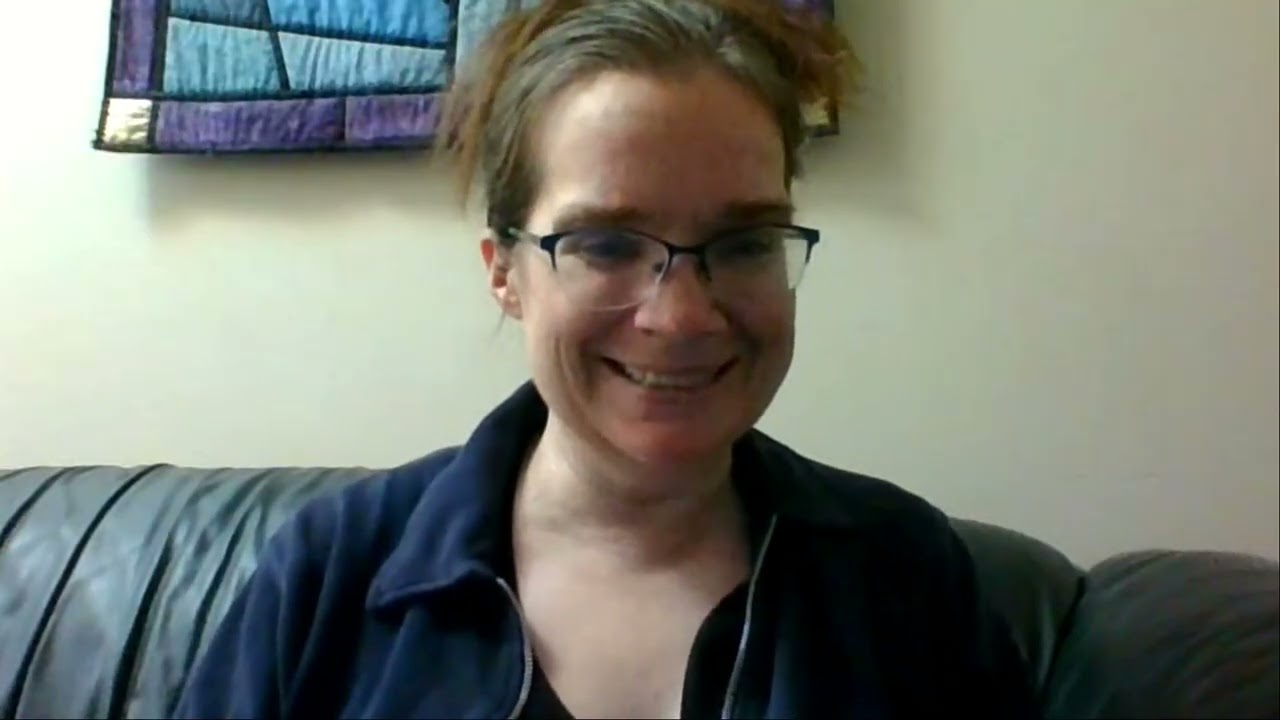
In this October 2026 YouTube live stream, Sarah Levis, author of the Power in Every Body Substack, opens a conversational space to explore how disability intersects with self‑confidence. Drawing on her own 26‑year experience of living with a stroke‑related physical disability and seizure disorder, she discusses the internal battle of imposter syndrome, internalized ableism, and the constant self‑doubt that can arise when seeking jobs, relationships, or new life changes. Throughout the session, participants (e.g., Florence, Amelia, Jeff, Joe, Jay, Naina) share personal anecdotes about coping strategies—affirmations, gratitude journaling, therapy, coaching, and reliance on in‑home care or transportation support. Sarah and the community also examine practical challenges of requesting workplace accommodations, navigating invisible disabilities, and confronting societal and systemic barriers, especially in small‑town settings. The conversation highlights the importance of community support, advocacy, and self‑advocacy, and Sarah announces upcoming Substack posts, future live sessions, and a coaching service aimed at helping both newly disabled individuals and those with lifelong disabilities to build confidence and navigate life transitions.
Chapters
My name is Sarah Levis and I write the Power in Every Body Substack and I decided to do this live tonight because I've been talking to a couple of people and just kind of thinking about my own life and I've been disabled, physically disabled for 26 years now. And hey, we should all do that, right, Florence? Keep smiling. And I thought maybe I wanted to give people a place to talk about disability and confidence and self-confidence because it seems to be something that a lot of people are struggling with right now. So So here we are. That's, uh, that's what this live is about. And, uh, um, and, uh, we'll, uh, we'll just bring people up to speed as they, as they, as they hopefully come in. And, uh, uh, oh, okay, Florence. Um, and, uh, and yeah, just, uh, And just maybe make this kind of an open space to chat about how this does affect our lives and how we cope with it. Because I thought that I was very good about coping with it until I was discussing kind of— kind of discussing some things with my coach that I wanted to try and, you know, then figured I wouldn't. And she said, Well, well, don't you don't you try everything to see to see how far you can get at least? What's that about? So once I was challenged on it, I thought, well, you know, maybe I'm not as over this as I thought I was. And like I said, I've been thinking, I'm doing some things about it since then, doing some thinking about it. I have a I have a weakened left side from a stroke and a seizure disorder that keeps me from driving, and that keeps me— Hi Jason, how are you? We're discussing confidence and disability tonight and what we do to and what we do to keep ourselves feeling self-confident. Hey, Amelia, how are you? And Florence says, uh, oh, Florence also had a stroke. 2 stroke survivors here, me and, uh, me and Florence. Hi, Joe. Um, and Florence says right off the, uh, right off the bat, but I'm turning that frown upside down. It took me 3 years to pull out of a deep depression. Yes, it took me a few years too, Florence. And, uh, and I, and I tried to I try to keep that in. I try to have that positive outlook and that positive, you know, well, I'm— maybe this won't work. Maybe what I'm thinking of won't work. Maybe this job that I want to apply for won't work. But let's see how far I can get. But like I said, it's always hard to feel that way. So— I miss you too, Amelia. I owe you an email. Thanks to everybody that's coming in for tuning in tonight. We're talking about disability and confidence and how being disabled, whether it's someone that acquired a disability like me— I had a stroke when I was 26— or whether it's something you've lived with your whole life, How that affects your confidence and how that and your and your and your thinking when you're looking at things that you want to try, whether that's in jobs or relationships or new roles in in in family or moving to start over in a in a new place. I know that's That's a big one that I struggle with is, you know, do I really have the— do I really have the resources, the internal resources to do that, to move and start over in a new place? So, and in talking to some people recently, I've realized that yes, This is something that other people struggle with too, so let's talk about it. Let's talk about how disability affects confidence and how we work through that, how we keep our confidence up when we're doubting ourselves. You know, that sometimes there's a whole lot of reasons to— why these voices in our head are telling us, you can't do that, you can't do that, and disability is one of them. And it shouldn't be. So we've heard from— Amelia's written, my self-image of myself is so low because of my disability, but I'm trying really hard to have that not be the case. It's a work in progress. And I think that's definitely true for a lot of people. It's, as I've said, it's something that's definitely a work in progress for me. It sometimes feels like when I'm in some roles, it kind of feels like— does anyone know the term imposter syndrome? That when you're there, you really shouldn't be there because you're not good enough to be there. I struggle with that in jobs sometimes, and it's the last thing my employers are thinking, I learned later. They're like, no, you're doing fine. Why are you doubting yourself when you're here and you're doing great? But, uh, but in, but in my head I'm thinking, but, but I have to do things a little, but I have to do things a little bit more slowly, and you know, I need, uh, I, I need some accommodations. And in my head that, that, that, that translates as not, not good enough, not good enough to be here, um, when it, when it shouldn't be, when that shouldn't be the case. Hello, Jeff. Thank you for stopping by. Jeff Iverson says, it really took a lot for me to ask for accommodation from my employer to deal with anxiety and depression. And yes, Jeff, it's taken a lot for me to— not so much the online work that I do because it's that there doesn't need to be so much accommodation, but the job that I work with and working in my town, yeah, when I have to ask for accommodation, yeah, I really have to gear myself up to say, you know, this is something that I legitimately can't do with one hand, or can we find another way around it? Yeah. It's there. And often it's my boss that comes to me and says, yeah, I noticed you have trouble doing that. Here's a— I think we can make it easier for you this way. So it's something I really have to practice. Says, Sarah, how do you comment— how do you combat that doubt? I keep trying to remind myself, especially in the employment sector, that, uh, that people wouldn't have hired me if they didn't think that I was suitable for the job. And, and even for the online work that I do, which is, which is most of the work that I do, most of my, uh, most of my interviews have been in person. They've seen me, they know that I'm disabled, they're— Or the one that I suspect that I— there was a job that I suspect that I didn't get because of my disabilities. Well, I was perfectly qualified for that job. And the, the, the one thing that I would have needed accommodation for was very easy. I just needed headphones for the, for the phone. They lost out. And some days that's easier to do than others. But, but, but I think it's, it's It's not just a one-time thing, it's a constant, it's a constant reminding ourselves. Yes, it's their loss. Exactly. Um, it's a, it's a constant reminding ourselves that, uh, that yes, we deserve to be in the community, we deserve to be having all of these things that non-disabled people have. Um, That we seem to doubt ourselves as being, and I don't know what it is, perhaps it's difficult but different for each person, capable of having, deserving of having. It's that internalized ableism that we have to work on really hard on combating. And that, and that may require, that maybe may require a therapist's help. That maybe I have a coach that I speak to about it. But, but we are just as deserving and just as, and just as, and need to have those opportunities as well. But it— but for me, it is constant. I have to keep— I have to keep at myself about that. Yes, it's the, uh, you know, the, the externalized stuff is hard enough, you know, realizing that it was probably— it was probably because I was disabled that I didn't get that job in, in town. That was— that, that was hard enough. But, but when it's your— when it's your own brain telling you that, uh, Well, it's because you're— it's because you didn't get it because you're disabled, because you're not good enough, or maybe you just shouldn't have got it. Those— that's the really hard stuff I find to deal with. Does anyone have any ways Does anyone have any ways that they deal with that sort of thing? I know that for me it's been, well, for me it's been 26 years since I became disabled and Yes, it's that constant reminding that this— no matter what society is telling us, and, you know, we do get some negative messages from society, we do get some narratives that say, you know, Sometimes, sometimes, uh, sometimes very abruptly, you know, well, now that you're disabled, you can't do this. Um, I, I tell people that the quickest way to tell me, to get me to do something, is to tell them I— is to tell me I can't do it, whether I feel like that's actually the case or not. Um, Amelia says, I'm trying to focus on what makes me happy and what I'm grateful for. I try really hard to do that too. Um, you know, it was, uh, it was a brain surgery that started all this for me. At, at least, uh, at least what I had, it was, uh, it was, it was able to be treated, and I'm still here, and I'm still able to I'm still able to— I was, you know, able to be at my sister's wedding and see her kids. And when the condition I have, sometimes if it's a little deeper, they can't do anything, you know. At least it was able to be treated. So one of the lucky ones. Amelia says, yes, I need to get in the habit of writing down the best parts of my day on a regular basis. I'm trying to do that even on the days when it feels like there's nothing to be grateful for at all, and there are some of those days. Something, um, even if it's just Even if it's just I got to have a Diet Coke that day, which is my vice. And Joe says, my doctor had to convince me enthusiastically to accept in-home healthcare service worker because I didn't want to see that I needed it. Yeah, I I think that's the case for a lot of people, Joe. Um, I, I have, um, I have a, I have a worker that comes in every day, and I didn't want that at first. I was, uh, because I was hell-bent on being totally independent. But, uh, um, I think And I think that, that comes along with what we're talking about here in terms of— I wanted to keep up that confidence that I could do this, can do this on my own, you know. You know, I may not have anything else, but I can do this on my own. I can still take care of myself on my own. And yes, Now I'm so grateful that I have that I have someone coming in and and helping with the sort of things that you that you can't do with one hand. That opens my life a little bit. I can it's it's very very hard to chop vegetables with one hand, and now somebody does it easily for me. I learned the other day when I was preparing for my sister to come visit me that it takes me almost an hour to change my bed. And, and because they've been doing that for me, I haven't had to do that in such a long time, and I didn't realize. Um, and they can do that for me so quickly. Um, it's a, it's a real blessing. It's a real blessing for me. So yeah, I really loosened up on— and, uh, and, and same too. Now I'm so grateful. Hi, Quill, thanks for dropping in. Um, but, uh, but yes, again, it's, it's kind of that, uh, it's again, it's that internalized ableism that says, you know, I, I can, I can do this myself. Only people who are much more disabled than me don't need this, and I don't need it. And those are hard things to reckon with. And I know that I use affirmations sometimes. Even though it kind of brings me back to— there's some people who are younger than me that aren't going to get it, but the Stuart Smalley stuff from Saturday Night Live, you know, I'm good enough and I'm smart enough and doggone it, people like me. It does work. If you keep on, if you keep at it and keep on doing it and recognizing that and kind of stop the negative voices where they are and replace the thought with Well, if they if they didn't like me, if they didn't like me because of my disability, they they wouldn't. They they the since since since since my father died a year and a half ago, a lot of people have been have been helping me with a lot of things in the community because like I said, I don't drive. I need. I need rides somewhere frequently, and I keep telling myself, if, if, uh, if these people, these people in my support circle didn't like me, they wouldn't be so concerned about whether I'm getting where I need to go on a regular basis. Um, Or, or whether I'm— or whether they wouldn't bring— they wouldn't be bringing over food, you know, to, to be sure I'm eating okay. Um, they, they wouldn't, uh, they wouldn't be checking up on me. So, so, uh, so, so just, you know, Just responding to, trying to respond to the negative thoughts with, with trying to counteract them. It's not always easy, but you know, especially when you live in a small town, and I don't know, I don't know how many of you do, but small towns tend to be not as accessible as cities, and I'm in Canada, so I don't. We're not as accessible as the state is, as the states are rather, at this at this point in time. But that's something we're that's something we're all learning to live with, right? It's the messages that we're not important enough to have easy access to everything, and that we're not important enough to have. To have the tools we need to be out in the community and participating fully and safely and in whatever, in whatever, in whatever context we please. And that's, and that's part of the work that we have to do. And that takes confidence right there too. It takes confidence to be an advocate. That's hard stuff. I see Jeff has said here, one of the hard parts with dealing with an invisible disability is the whole, you don't look disabled. And yes, definitely. That's a that was one that I dealt with in my in my teens when I was struggling with my mental health. I had a I I looked I looked perfectly fine, but but there were some days when I was an absolute mess inside and. And again, I think, I think the— I think there needs to be more, there needs to be more teaching about invisible disabilities for one, but, but it's not, it's not, it's not your problem, Jeff, that there isn't. Um, I think there needs to be, depending on how comfortable you are disclosing to people about, uh, about your disabilities, you need to be, still be insistent on asking for what you need and not feeling any shame or Or what's the other word I'm looking for? I think shame is probably the big one about that because they're— because nobody could— because even if you did, even if your disabilities were in— even if your disabilities were visible, nobody's Nobody's no nobody's qualified to diagnose you. People should be believing you. Hello, Jay. Nice to see you. We're we're talking tonight about disabilities and and how they. And how they affect confidence. And I'm thinking back to when disabilities were my— invisible disabilities were my primary disabilities and how— and just how exhausting that was. To have people, uh, to have people, uh, assume. And Joe says it can be frustrating when you've had a better day And a better day, uh, than, uh, in, than in bed, because the next— and someone says, what happened? You were good. And then you have to explain again. Yes. Yeah, people start to wonder. People start to wonder, well, how just disabled are you? I remember that from when I used to, when I used to use my wheelchair for long distances and people would get confused because I'd be in my wheelchair one day and I'd use my cane the next. And I remember that really bothering me at the time. Remember, really bother it bothered me just using my wheelchair in my small town at the time because of the the looks people gave me. But but now I'd be inclined to now now I'd be now I'd be inclined to to I I don't I don't I don't feel like I owe them an explanation. Yes, I was in my wheelchair one day and now I'm in my I don't have to use my wheelchair now. But if I did, I was. In my wheelchair one day and I was in my cane the— now I'm using my cane because today is a better day. I think people are too— people think they're owed more of an explanation than they actually are. I just You don't, you don't, you don't owe them any explanations about, about why you're, why you're, uh, you're able to be out of bed one day and then, and then you have to, then maybe you have to rest for the next couple of days. It's really none of their business. But I can understand how tiring it must be, how exhausting that must be to have people asking. People are just too nosy, and they should teach all this somewhere. You know, this is these these are the things that it's these are the things that it's okay to these are the things that generally it's okay to ask, and these are the things that it's. That, that, that no, it's not— it's none of your business, and you, uh, and you can just go on your merry way. Um, I think I put a note up about this. Someone asked me recently at a party, um, why do you use a cane? And I said, because it helps me walk better. I thought— I, I don't even know you. I'm not, I'm not going to get into a background about, uh, yeah, yeah, people assume fraud first. I'm, I'm not going to get into that, the background of, uh, of my stroke and everything with you. It's, uh, again, it's none of your business. Um, And yes, Jay, I see that. I see that up here, particularly when it starts to involve people who are on government supports. They assume that it's much more— that it's much easier to defraud the government with its income support than it actually is. And will say, you know, well, they're not on— they don't— they're not really disabled. They're just fooling the government. And usually I say to them, that's really actually very difficult. With Ontario's system, at least it is. But when I'm When I'm getting nervous about something I have to do and I'm— and I'm— and my disability is causing me to feel nervous about it, you guys may have picked up on that tonight, I, I, I ask myself, what's, what's the, what's the worst that could happen? I don't, I don't get the job, I, you know, you guys will never come to one of my lives again. But it took me a long time to get there. And it, and it helps, and it helps a lot if you can accept yourself as a disabled person. And that is a constant, and that is a constant battle. And, uh, and I, and I don't think there are enough spaces for us to, to talk about it. That's why, that, that's why I, that's why I opened this up here tonight. Um, um, Jay says, and if you do explain, they all of a sudden are a doctor and they give you advice. Have you tried? Yes, Naina says, my friend has been trying to get help from the government for about a year now and is still waiting. Yeah, that seems to be the trend all over, and the help isn't really And the help isn't really much, much help. I don't know where you're located, uh, Nina, but, uh, but it's been in Ontario, and I, I know in the— and I know in the US from what I've read, it's, it's, it's not a hell of a lot. Um, it's, uh Does anyone else have any, have any confidence boosters that they use? Or how often does confidence— or maybe, maybe I'm the only one— does confidence— does your disability affect your confidence? Just me? Well, I'm a lot better than I used to be. Let's put it that way. Oh, good, Joe. I'm glad. The confidence of a lion. Well, that's what I like to hear. We should all have that. We should all know that we're worthy of these, of all the things that non-disabled people are. We shouldn't have to go begging for them, and they should be accessible to us. What do you think? I think, I think, Jay, I think, I think talking about it and actually, I think for me, I was, I was saying at the beginning of this, I think it was when I got talking to people and, and realizing just how many people Struggle with this, that's what made me want to do this because I thought, okay, we're— this is much more widespread than I thought it is, and we do need a space to talk about it. You know, I mean, I can talk about it, I can talk about it with my coach all I want, But, but that's not, that's, that's not a space that's open to, to, to all of us to, uh, to, to, to share our experiences and to, um, and to share how we deal with it and to maybe, to maybe raise our confidence levels and to claim our places in the spaces that we belong in and don't always have access to. I'm sure that in my town I've been the first disabled people to— the first disabled person to work in In many of the places that I've worked, um, and, and I don't— I, and I would imagine that's, that's, that's changed some people's views, which I don't really care about that. I don't really care about that. Okay, you know, that's, that's great if it does, but I just, I was tired of sitting in my apartment. I just wanted to work. Naina says, I myself am not disabled in any way. I still don't understand people that treat those who are obviously struggling, have to explain their struggles. Yeah, it's mind-boggling how some people are really delusional or just downright evil. Yes, yeah, yeah, that's how I look at it when I see now some other disabled people in my community working in places. It's just like, what, it's none of a— it's none of my business. It's great that you're out here. It's none of my business what you're dealing with. And yes, yes, Joe, I think you're— I think you're— yeah, that's something that I believe is dealing with ableism is a step in itself towards confidence. Yeah. Because it, it, it, especially the internalized ableism, because it, because it gives you that faith in yourself that, that, that even if people are coming at you with ableism in, in whatever situation you're in, you're, you're like, well, but But, but I know better. I, I, I, I know that I'm more deserving of this, so I'm not going to let your opinion on what I should do in this situation affect me. Um, but I, I have been, I have been very lucky to have, uh, um A family around me and a support system that, that's, that, that hasn't been ableist and that has said, you know, go, go try what you want, try what you— go do what you want to do. And, and if you And if it turns out that you can't do it, or if it turns out that— if it, if it turns out that it doesn't work out the way you want to, well, you'll try something else. And, uh, and my father was, uh— well, my, uh, my bank in town probably still remembers my father coming in every single year. And once the snow started to fall and saying, your wheelchair ramp isn't any good if it's got snow and ice on it. So, so I've been very fortunate. Not everyone has had as supportive an environment as I have, and I, I, I'm always very aware of that. Deserving of everything you want. Yes, yes, Nina. We're— yeah, and it can take, uh, it can take— I know, I know from experience it can take a while to, uh, it can take a while to make that, that, that shift from now I'm disabled and I'm never going to contribute anything Because that's what everyone is telling me to know. There's still, there's, there's still, there's still life here, and I am still, and I am still me. I've got a, I've got a left side that doesn't work very well, and, you know, in a brain that has electrical storms that go on in it sometimes, but I'm still I'm still Sarah, and and and I can still do things. That that took probably six years for me to get to. And like I said, I still fall into it sometimes. I'm where you know I'll I'll read I'll read a job offering or something, and I'll think you know what? No, that that's that's never gonna work. That that. That, that wouldn't work for me when there's no good reason why I wouldn't, except that I'm kind of buying into that— those, those old tapes, those old— but I'm getting better at catching myself on it. Oh, Jay, I'm so glad. Jay says, I needed this so badly today. Thank you for talking about this, Sarah. I'm so glad. I wasn't sure how this was going to go. I just wanted to give people a chance to talk if they wanted to. So is there— we've got about 15 minutes left. Is there more that people want to say? Hello, hi stranger. Um, well, if you guys are If you guys are all talked out, I will let you know that. Thank you, Naina. Yeah, they were really great. Just give me one minute. I did cancel. It can't. So, okay, no, no, don't worry about it. Leftover supper that Bill or Dave and I had. That's okay. Like a shrimp stir-fry with a whole bunch of stuff in it. Yeah. And do you like butter tarts? Okay, can you put this in the fridge though? That was one of my PSWs. I'm talking to them. Um, I'm so happy that people were glad that this was something good for them. Um, something you're gonna see more— and we will do this again, perhaps with another topic. Um, and something you'll see more coming up on my Substack is that, uh, um, since, um, I will be moving into in January Actually doing some, some coaching in this area myself for, um, for people who are transitioning into, um, living with a— with a— with a— have just gotten a disability and aren't sure where to go next, or have kind of come to a spot with a disability they've had all their life and are feeling kind of stuck. So more about that will be appearing on my Substack. And, and yeah, I'm so, I'm so, I'm so thankful that all of you showed up tonight. Thanks for giving me some, some time to talk to you. And, and look out for more of these and for more lives that I'll be doing with, with other creators who are disabled on Substack because, oh man, that's a great way to learn. So, uh, so maybe we'll cut it here for tonight, and I will, uh, put this up along with a, with a blog post later in the week. Thank you so much, everyone. We'll talk to you soon. Thank you, Jay. Thank you, Nina. Well, uh, we'll see you soon. Thank you. Bye-bye.