Chief PeaceKeeper™ Scott Levin Sits Down With Michelle Dempsey To Discuss Her Book Moms Moving On
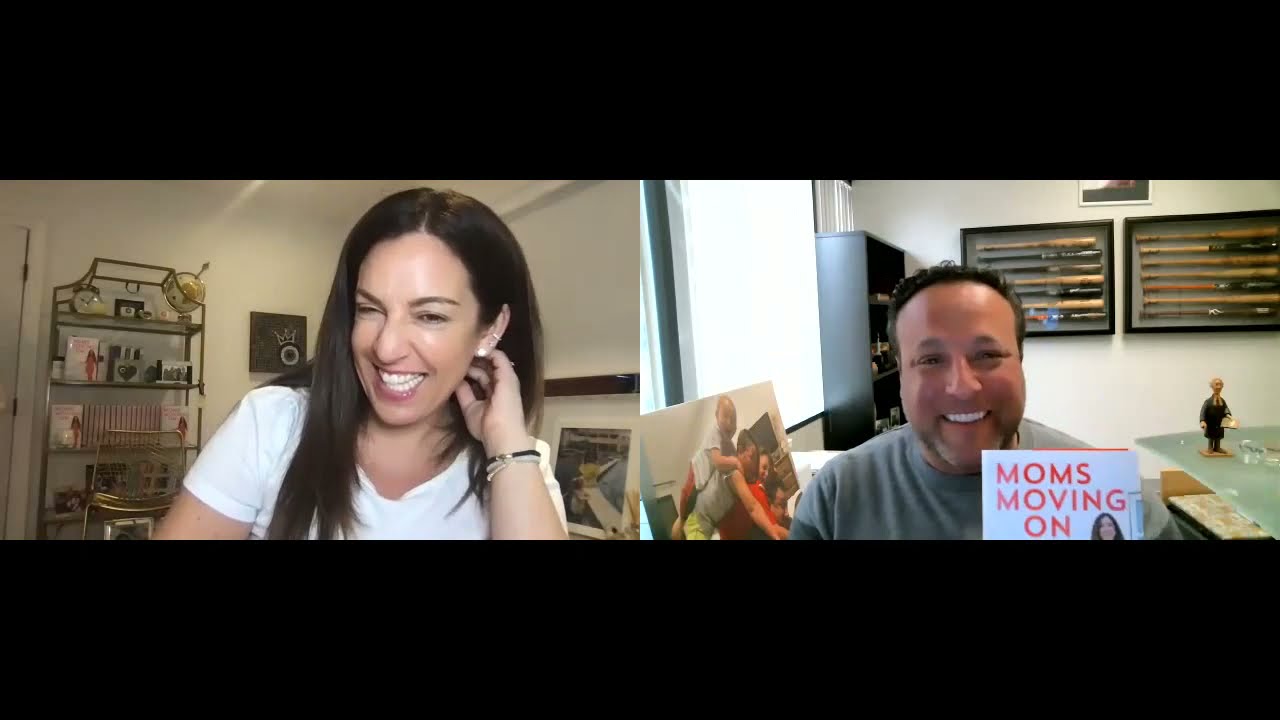
Divorce coach Michelle Dempsey-Maltak discusses her book Moms Moving On, which grew from her own childhood experience with a ten-year high-conflict divorce. She shares practical tools like a fear list and shared-values checklist, and explains why parents need a team of mediators, therapists, and financial advisors, not just lawyers.
Chapters
Hey everyone, this is Scott Levin, Chief Peacekeeper, and I am so excited to be joined today by Michelle Dempsey-Maltak. How are you, Michelle?
I'm great, thanks for having me.
Of course. Okay, if you don't know Michelle, and I'm sure you do if you're watching this, but if you don't, Michelle is a new— is an author of this new book called Moms Moving On: Real-Life Advice on Conquering Divorce, Conquering Divorce, Coparenting Through Conflict, and Becoming Your Best Self. This is an incredible book, everybody. I want you to go pick this up. I read this in a day, less than a day, because I have 3 kids and a crazy life too.
That's impressive.
Um, it is funny, it is fun, it is sad at points. It is, uh, it's just a beautiful read. And Michelle has given her story to help others navigate the process of divorce and post-divorce. And she's also an incredible divorce coach and professional. So she's also used that experience to give you practical advice. And I just cannot recommend this book enough, Michelle. It was— I mean, it's just a great read.
Well, as a dad who's not even moving on, I can really appreciate that you read it. Thank you. I know that many people who are reading it who don't have the intention to move on, their spouses are like, excuse me, like, is there something I should know? A few of my friends with kids were like, you know, their kids were freaking out, like, are we moving somewhere? Where are we going? So I appreciate it, and I'm glad that you loved it. I love it too.
And when my kid— that's why I have an 11, a 10-year-old, and then a little guy, 3-year-old. And when the book came, he was like, book for Mommy? And I'm like, no. book for Daddy. And he's like, no, book for Mommy, because he's looking at the pictures. And he takes it to my wife and she's like, what do I need to know? I'm like, no, no, don't worry, it's work-related.
Yeah.
But, you know, so much of the book, I think, speaks to achieving peace. And as— so I'm a former litigating family law litigator, and for the last decade plus, I only work as an attorney mediator. So I help people resolve divorce and disputes and post-divorce outside of court, uh, working collaboratively as a team and kind of not focusing on how we got here, but, you know, how do we move forward.
Yeah.
Um, and I really think that your book, you know, you, you speak to achieving peace. Um, is that a primary goal in your work and for the book? And is that a goal that you want people to understand in reading the book?
Yeah, I always say that I have the unfortunate advantage of being a child of divorce. I was the product of a very ugly high-conflict, long, drawn-out 10-year divorce that really spanned my entire adolescence. And something in me, I think I knew I'd probably end up getting divorced, but I, I was very clear on the fact that like if I had to go through it, I wanted it to be as painless as possible for my daughter. Obviously kids are going to have to adjust one way or the other when there's a divorce happening between their parents, but I really learned what not to do and how to keep the peace from seeing my parents or one of my parents do it all wrong. So yes, I think every everything I am today I can owe to that divorce, good and bad. It messed me up in a lot of ways, and so my goal is always to help women take a step outside of like living their life as this divorce existence and. and really like put it on a shelf and focus on other things and raise their beautiful children without all the anger and animosity.
Yeah, you know, one of the things I highlighted so much of it, but one of the portions is like your list of like, of the things that you're most scared of. Like, what if he doesn't put them to bed at the same time? What if he forgets to do the things right before bed? And then you go through and list each one and give your thoughts about it. And it's like, what if he doesn't put them to bed at the same time? They will survive. And you repeat that a bunch of times. And you know what? That's what I speak to my clients often about is like, yes, you're going to parent differently. But one of the big— one of the things I love most about your book is like you, you say, yes, they're going to parent differently, but both of us, both parents hopefully will be on their A-game. And I think you get that across to your clients.
Well, I think it's, it's hard to— so everyone, including myself, every woman at the beginning of the divorce process when they have little kids, most likely because of the fact that they're moms and moms breastfeed, and sometimes moms take off more time from work than dads, they've usually had more time with the kids up until this point. So every single woman, including myself, at the beginning will say Who does he think he is asking for 50/50? I do everything. And I'm like, I remember when I felt that way, but let me tell you something. In a reasonable situation, when we're talking about a man who is safe to be around the kids, he's not, you know, a total disaster, he doesn't pose a threat, he's most likely going to rise to the occasion and it's going to surprise you and you're going to say, wow, look at the father he's become. Because he now has the ability to do it himself, right? When we're constantly doing things for other people, we don't give them the opportunity to like prove us wrong or surprise us. And so in my situation, it's not that I thought my daughter's father wouldn't be a good dad, but I was such a control freak mom. My daughter was 2 years old. She was still on a sleep schedule and a bottle schedule. It was, it was like all-consuming for me. And she survived. And yeah, she— her bedtime routine was different, but still doing really good in school. She's a gifted student. She's amazing. And none of these little things that we hang on to are going to affect things in the long term, long term. And I think that's what we have to remember. Like, are— can mommy do it better? Maybe. But does that mean daddy's doing it bad? Absolutely not. And in some cases he is, and that's a whole different conversation, but For the most part, if they're getting to school, hair not brushed, they got to school, their homework's done, even if they didn't do it at the same time you would have done it. And so it really becomes about stepping outside of yourself and your own ego and your probable, like, and well-justified anger for this person and seeing that, like, they're going to find their way and the kids will be okay.
You know, in chapter 14, you speak to this shared list. a set of shared goals, values, ideals that you and your ex-husband put together. And again, it speaks to focusing on your daughter Bella and what's best for her, even during the divorce, even while it's most contentious and you have these feelings. Uh, you know, hopefully your feelings with your ex-spouse get better over time. Sometimes they don't.
And they, they don't— it's not that they get better. per se for a lot of people, it just gets easier. Like, putting time between a painful situation, it doesn't make the person change, it doesn't make your feelings about the person change, but that, like, anger and hostility that you carry in the beginning definitely goes away. And that's why, like, I think it's— you, you probably hear this all the time— it's so unfair that we have to make long-term decisions that are going to affect our children in the most emotional times of our lives when you go through the divorce process. And that's why I speak to in the book, like, not rushing it, like taking a step back. There's no emergency. You don't have to answer your lawyer today, tomorrow, or the next day. Take some time to think about it.
So when you put this— so I want to just read this quick list that you and your ex-husband put together. So this was like a list of ideals that you had for Bella. Excel in school. Be kind and follow the golden rule. Have close relationships. relationships to family and extended family, stay committed to a sport or hobby that she enjoys, and learn and cultivate respect for her religion. So in the moment, like during the divorce, how did you come up with— or did you come up with that list together?
No, I think ultimately in our values we're aligned, right? Like we want her to be studious. My ex has always used the Golden Rule with her. Like she knew what that meant when she was 2 or 3 years old. Our, our core values are, are the same, and that's essentially, I guess, what brought us together. But we knew, like everything else, we're not going to go tit for tat on, on stupid things, because if we're both committed to her doing well in school, I know he's doing homework with her, I'm doing homework with her. We're both going to reprimand her on the same things. Did you treat that person kindly or not? We're both, you know, from the same religion, we want to foster that for her. We plan on having her bat mitzvah and all those things. That was, that was like unspoken. Like, that's, that's what we care about. We don't need to really, you know, I know a lot of parenting plans go tit for tat on so many things. It just didn't seem worth it in our case because we had like the bird's eye view. We were seeing it together.
So you, from what I could tell in the book, You were working in— you have like a small marketing company right before your divorce or during your divorce. And then you've transitioned to be this, I think, a famous leading pioneer as a divorce coach throughout the world. How did you make that transition?
Well, famous is a generous word.
I mean, you're a superstar, I think.
But yes, you know, I just went into the supermarket with the pedicure paper between my toes and my hair up after a workout. So I wouldn't exactly Say famous, but has my name become known in the divorce world? Yes. And I think it's— I don't— I can't say why, but I will say that I think when you're passionate enough about something, it shows. And my passion is really about helping women understand a few things: that they're not going to die if they get divorced, they're not— their kids are most likely going to be okay if they, you know, do a few simple things to help their kids adjust. And divorce isn't the end of the world. It's the beginning of a brand new opportunity. So for me, I made this shift actually while I was still running my marketing agency up until the beginning of COVID I was already writing a lot for a lot of different publications about divorce-related topics— co-parenting, single parenting, getting remarried. And my following, you know, people were not following me for the fact that like I was an entrepreneur. They were following me because they had questions and they wanted answers, and my DMs were flooded all the time, which is why I started the Moms Moving On podcast. And within that time period, people were reaching out asking if they could hire me. So I'm like, well, I guess I should. You know, I'm not just going to say yes and take somebody's money without actually doing the work. So I did all the things I had to do to become a certified coach and divorce and co-parenting specialist. And I was able to fuse my education background in there, which was great. I used to be a teacher. Um, and then from that, people were like, oh my God, I love your podcast, where can I buy the book? And I was like, well, I guess it's time to do that too. So I did that too, which was a very good thing for my grandfather who put me through college as a journalism major and had been asking for years when I'd write a book.
That's awesome. Um, so your current husband is a family court judge, is that correct?
He is.
So I was wondering, do you like— does your background, or do you— when he comes home with, you know, and talks shop about his work, do you help him in any way? Uh, do you give advice or counsel him in his work?
Um, I think we talk about— like, he appreciates my perspective, right? Because he's not just a family court judge, he's also a father. divorced father. So he appreciates my perspective. And also with my clients, there's a lot of times where I'm like, how would you handle this in court? Because I don't know. I don't necessarily think my client is doing the right thing here. So yes, we talk a lot of shop. And all of our friends are divorce attorneys and family court judges. So that's kind of the world we live in. And you know Miami. Miami is like— there's a very small, tight-knit legal community. And there's a lot of good happening in the family court system down here in terms of what Miami is able to offer divorcing parents and children. We have Family Court Services, which is funded by an organization that I'm on the board of called Kids Side. And they raise money to be able to pay for families to have access to counseling and the legal process and mental health professionals so that the children are not affected in the divorce process. So I love that. So we're very immersed in the divorce world, to answer your question. Yes.
You know, speaking of, you just mentioned something like, you know, the counseling, and I have a question. It wasn't one of the ones I'm glancing at on the side here written down, but is if a client of mine in mediation only had enough money for a consulting attorney, a divorce coach, or a therapist, any thoughts? Is there an answer of one that you would suggest that they opt for?
Listen, in a perfect world, you'd have all 3, right? Because very often you come to the divorce table with years of unresolved shit that you need to work through. That's what the therapist is for. At this point, I, it's— I can see through my own— I'm very committed to therapy and learning and all of that. I can see why you're having the issues, your issues, based on the little bit you tell me about your past. But I'm not there to unpack the past. I'm there to help you make decisions in the moment. And be reasonable and sound going forward. Um, it's hard to say. I mean, you need a lawyer. I'll always say, like, if someone wants me to help them put together a parenting plan, I'm like, I'll help you go over it, but you need a lawyer. Um, but I think if you have a coach or a therapist, you're in a good place, but you do need one of the two.
Yeah, no, I think, uh, I think one of the things as a mediator, people often rely on me for too much, I think. I become their everything and I'm engaged by both parties. So I often say, we need to build a team here. We need a certified divorce financial analyst to work together. You definitely need a mediator because the process of divorce, in my opinion, you should always try to start mediation and see how far you go. The success rate is tremendous for me and my clients, but not everyone achieves success. And then you have to have the emotional component. So I totally agree with you building that team and that infrastructure allows you to be the coach and the quarterback and not just—
Yeah, where a coach is essential is most likely like when my clients come to me, that's usually right before they split. So they want help going through the process. They have already been to counseling, at least with their partners or on their own, to figure out, is it me? Is it not? Where it is essential to have a coach is like in the initial stages, because we can tell you You don't need to call a lawyer yet, or you need to call your lawyer immediately, or don't have this conversation before talking to your lawyer, you know. So I would say a coach in the beginning is probably going to give you more actionable advice. A therapist is not there for actionable advice. So if you're going to hire anybody in the beginning, it should be a coach.
So, um, I have a question for you. Is there a corresponding influencer or author on, uh, for dads that you're— that you recommend, or anything like that?
I'll tell you, there wasn't for a long time, but there's a guy I'm following now. He's— I think he's a teacher. I don't know what he does professionally, but he's a co-parent coach, and his advice is so good. There's so many accounts where I see what they're saying and I'm like, oh God, don't follow that advice. This guy is great. His name is Jay Skibbins.
Okay.
I don't know if you follow him, but he does all these TikToks and Instagram Lives, and he gives Great advice. Ironically though, even though he's a man, his following is primarily women because men aren't looking for divorce help. I don't know why. They probably need it the most. Like, yeah, it's, it's, you know, why do women move on? Well, because women hire the coaches and the therapists and they, they look inside themselves and they read the books and they watch the Instagram influencers and That all makes a big difference, you know.
Absolutely. Uh, Michelle's book, Moms Moving On: Real Life Advice on Conquering Divorce, Co-Parenting Through Conflict, and Becoming Your Best Self, available everywhere— Barnes Noble, Amazon, etc. I'm going to put all the links in. The Moms Moving On podcast. Michelle Dempsey on Instagram is a great follow. Absolutely follow her. I'll put all the links in this, uh, in the description. But thank you, Michelle, for joining me for writing this book. Um, like I said, it was— I, I don't know if it was intentionally— it's not funny, of course, but it was entertaining, educational, uh, from someone that's been doing this for 20 years that comes from a divorce background myself. Uh, I just felt like it spoke to me really beautifully. So I want to thank you for writing it and sharing.
Thank you for reading it. That means a lot.
All right, everyone, uh, we'll be back soon with another video, but I'll end this one now and we'll talk soon. Thanks again, Michelle.
Thank you.
More from Scott

Divorce Mediation Starts With Clarity: Know the Financial Baseline Before You Negotiate

Divorce Mediation Can Keep Your Family Out of Court | San Diego Divorce Mediation


Your Parents Helped You Buy a House — But Could Those Funds Be Lost in a California Divorce?

Nesting Custody Explained: How to Successfully Implement This Child-Focused Divorce Solution


Dating During Divorce – It’s Not About Whether You Date… It’s How It Affects Your Divorce #divorce

The Co-Parenting App That Filters Conflict | Sol Kennedy Interview #coparenting #parenting


Managing Divorce Panic - How to Think Long-Term Settlements with CDFAs Scott Levin and Tatiana Sunik