Divorce Mediator Scott Levin Interview on the Bryan Devore Connection
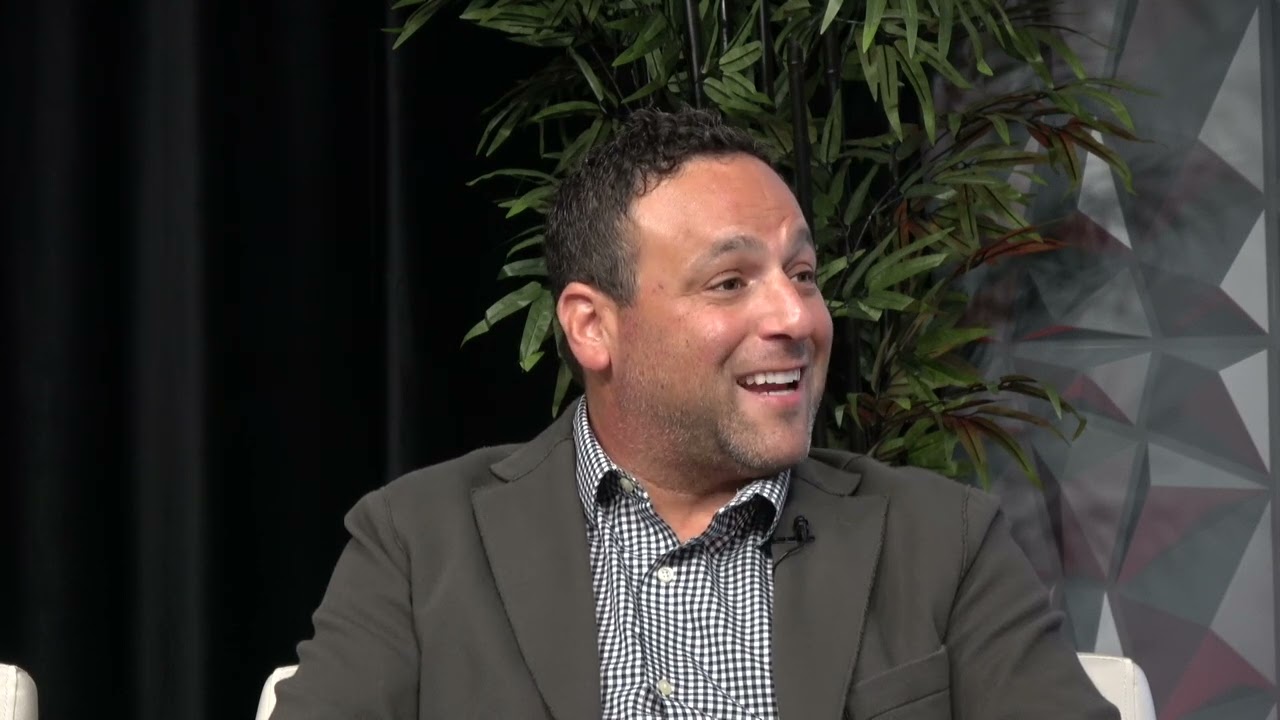
Family law attorney Scott Levin explains why mediation works better than court for divorce. Over one-third of litigated divorces return to court. He covers three growing segments: gray divorce with retirement assets, military divorces with custody and benefits complications, and same-sex divorces involving embryo ownership and parental rights.
Chapters
Welcome back to The Brian DeVore Connection. I'm your host, Brian DeVore. So divorce is more and more common now, it seems, with COVID We're seeing more divorces happening. We're also seeing some emerging markets when it comes to divorce, not just your traditional divorce, but, you know, other certain people are having more divorces maybe than they had been in the past. So I wanted to bring a friend on who is the Chief Peacekeeper. I love that term. Scott Levin with Scott Levin Mediation. Scott, how are you?
Good, how are you? Thanks for having me.
Yeah, my pleasure. Thanks for being here. And so we were talking when we, when we sat down and talked about what questions we were going to discuss, and it just sort of evolved into sort of these 3 different emerging markets when it comes to, you know, people getting divorced, which I thought was fascinating. So I wanted to talk about that. But first, tell us about yourself and how you got into divorce mediation.
Yeah, so I'm a family law attorney and a certified divorce financial analyst. I was a litigator for many years, but about 2012, I decided to transition my practice to mediation. So I no longer represent one person versus the other in court because I saw how destructive and counterproductive that can be for the vast majority of people. Not everybody, but for the majority of people, using the litigation system where you each have attorneys and you're asking a third party, a judge, to make a ruling that affects your finances, your kids, your most personal relationships, typically goes south for most people.
Yeah.
So in mediation, what I do is I, I work with both parties to a divorce as a neutral independent, and I use my skills to help them resolve the matter outside of court by spending, you know, as little money as possible and as little time and emotional heartache as possible. So that's kind of how I've transitioned into this world, and I've been doing it very successfully for over a decade now.
That's great. I love the term chief peacekeeper because that's kind of what you are. What I've seen with divorces, when people have gone down the mediation route versus the litigation route, It's saving them money, but it's also saving their relationships. And when I say saving relationships, you know, in a lot of these situations, probably a lot that you're dealing with, they're going to be co-parenting for however many years they're going to be co-parenting. And, you know, they've got— they have to have some semblance of a relationship from the time they get divorced until whenever. And so to be able to maintain some semblance of a relationship is super critical, it seems.
Yeah, it's not— You know, in any negotiation, I don't know if you've ever read Getting to Yes, a famous negotiation book, but the relationship between the parties, even in disputes between countries or giant corporations, at the end of the negotiation, the presumption is that they're going to have to work together in some way.
Right.
In families that dissolve, when you have kids, you're just at the very beginning of that process. Yes, you no longer are the same family, but you have to work together to co-parent. And when you defeat— if you defeat the other person in a litigated divorce case, that other person is not going to want to live under the terms of that ruling. So they will resist, they will be counterproductive, they will make it hard for you and your children to live under that agreement because they've been defeated into it.
Right.
In mediation, you create agreements that are voluntary. So you're not— no one is ordering you to do anything. You are thinking about options. You are creating ideas, and you're looking for ways that you can create agreements that you can live with that overlap with the interests of your, of your, you know, ex-spouse and current, you know, co-parent. So, Bryan, I can't agree more. Getting a deal that works for both parties helps that deal stay in place for the post-divorce. Over 35% of people that litigate their divorces go back, find themselves back in court post-divorce.
Wow.
So it's over a third, 1 in 3 couples who litigate end up back in court. And the reason usually is because one person has been defeated into the, into the settlement or into the judgment, and they don't like it. They're not happy about it.
They're going to fight back.
Yeah.
So that's, you know, again, another great reason to do mediation. And when it comes to mediation, we talked about sort of like these 3 emerging markets or, you know, groups of people who are— you're seeing more of than you had before. First one is the— we call it the gray divorce. So talk about the gray divorce, what that is, and what are some of the unique challenges you're finding with these types of situations?
Yeah, gray divorce is the biggest growth divorce market. And let me just say this before I go on is that I'm not Mr. Divorce. I don't want people to get divorced. Of course, once one of them has made that decision, I encourage them to use the process of mediation because I want them to do it quote unquote the right way. For the vast majority of people, not everybody again. Sometimes litigation is unavoidable. But gray divorce is, you know, people that are typically, you know, their kids are grown. Often can be second marriages, but they're in their 50s, 60s, 70s, 80s. People are living longer. They're living longer, healthier, and they don't necessarily want to stick it out like they used to because they see that the goalposts are being moved out. So some of the issues that are unique in gray divorce, kids are usually not relevant. Retirement is oftentimes the case. So like, you know, you're not dealing with necessarily 2 people who are earning income or one person that's earning income through their job or their business. They're now living in retirement income land. So Social Security, pensions, you know, it's just a different kind of set of issues in terms of spousal support and dividing those kind of matured retirement assets.
Got it.
So less about— more about how to divide the stuff and how to support both parties, less about, you know, co-parenting and kind of keeping the family together, but in a different sense.
Right. And it is interesting too. I mean, they tend to have larger estates, so to speak, than people getting divorced earlier. But it is interesting seeing— and I'm seeing it more and more because a lot of the work I do is with seniors. And, you know, they either recently got divorced or maybe considering it. And, you know, the saying is you're never too young to be or too old to be happy. And they're realizing the kids are gone. It's like, yeah, this isn't what I was planning on my retirement years to look like. And so people are saying, well, you know, doing that and getting divorced, I think the stigma is kind of going away of the older generations getting divorced now than it used to be.
Yeah. Another, you know, obviously a big issue for everyone in gray divorce is healthcare. And that's also something that we spend a lot of time kind of looking at and talking about.
Right. So another sort of emerging group of folks are the military. And I was kind of surprised by that. So talk about that.
Yeah, I mean, military, active duty military present, I mean, it can be a difficult, challenging lifestyle for young families. So unfortunately, in my practice, I'm kind of right across the street from the military base. You know, many years ago when I started in my own firm, I think, you know, just because Google Maps, when people would Google, I would come up like literally, you know, less than a mile away from the base. So I have a ton of experience with military divorces. And most of the time it's young families, you know, multiple children, oftentimes single income, you know, the active duty person. And what challenges exist for them is that when you're active duty, you don't know where you're going to be.
Right.
and when. You can be shipped over to Japan, to South Korea, to anywhere, anytime, to Texas, to Mississippi. So you don't necessarily have the stability that others kind of— that aren't in the military. You don't control where you're going to be. And then when you are active duty, like Navy, you could be out 2, 3 years at a time. And when you're divorced, how do you see your kids? Well, so you have to kind of plot these things out, like, are your kids going to go see you? Who's going to pay for that travel? You know, does mom come or dad come with the kids to go see? So it's just a lot of coordination. And then, of course, you know, incomes aren't necessarily huge in the military. So when there is a single-income military household and they start a divorce process, it can be challenging to figure out how to keep them, you know, afloat.
Right.
So a lot of issues, a lot of difficult— can be a lot of difficult issues. And of course there's also issues regarding like the military disability and pension and, you know, whether the non-military spouse qualifies for free healthcare. There's just a lot of specific rules with the military, but there can be challenging cases because they're oftentimes young and they oftentimes have, you know, a good number of children and not a whole lot of You know, kind of disposable assets sitting around.
Right. And like you— we've talked about, you know, if say they're from— they're living in San Diego and they're getting a divorce and, you know, the stay-at-home spouse says, you know, I want to move to, you know, Florida to be near with my parents, you know, and that disrupts things, you know, a lot as well.
Anytime you're dealing with, uh, one party's desire to— when there's kids present in a divorce and or post-divorce and they're, they're already divorced and now one person wants to move away and take the kids It's the most difficult issue, those move-away cases. And it's more common in a military divorce when that active duty person is, you know, has no guarantee to be here, so why would the other person necessarily stay?
Right, exactly. So the third, which I thought was fascinating, which makes a lot of sense, same-sex couples who are getting divorced.
Big growth market, unfortunately.
Yeah, so talk about that and some of the really interesting unique challenges there.
Yeah, I mean, you know, let me just say first that with any divorce, you know, in my role, my role is to help people find common ground and to make voluntary, fair, equitable agreements that respect their relationship and protect their children if they have them. So that, in my work, I'm always trying to evaluate, like, what are the most important concerns and needs that each person has and how can I help them achieve those and take care of those while, again, not defeating the other person but finding overlapping common ground and then crafting agreements through creative option creation. That's what my main role is. Create options, ideas. No idea is stupid. Let's throw them on the board and let's not talk about why it's that won't work, let's just put it on the board and then we'll talk through later. So, creating those ideas and options is the same in every case. But with same-sex couples, definitely some unique issues, especially with regard to embryos. So, let's say that a couple has embryos, they have a child, but they still have embryos that are frozen. Who owns them? What are they gonna— what's gonna be done with them? Can one person access them and use them? Does that mean that the other person is still— is now a parent of a future child with their former spouse? When you go to sign a frozen embryo— when you sign an embryo contract with that company, you really need to play out these decisions because most of the couples I find, one person signs and that's kind of like, oh, well, why don't you sign it? But both parties are paying for it, they're equal partners, they're doing it together, but now that person who signed kind of has it over the other. But in mediation, just because one person signed doesn't mean that that represented the true expectation of both parties. So we're trying to help people work through those challenges, and because you're dealing with little beings in a way, It can be a sensitive, unique topic. Right.
And typically, like you said, same-sex couples tend to be, you know, sort of maybe in between the other 2 groups. They're in their 40s, maybe early 40s, and they may already have children, you know, together that they have to deal with, you know, so the normal divorce issues plus some of the unique situations that pop up that might not be applicable to others. So you see a lot in your practice.
Yeah, I mean, you've got to be nimble in this practice. You have to be patient. You have to be genuine. When people hire me, I tell them, look, you're getting me. So if I find something humorous during discussions and make a little joke, that's just me. You're getting me. You're not getting Scott trying to sell you to hire me, and then I turn into some other person. So you need to feel comfortable with your mediator. You're going to talk about— likely going to talk about very personal things. So yes, there's the baseline of, is this person competent, experienced, well-reviewed, and can they do the work in a timely way? Those are very important things. But can I vibe with this person? Do they seem like they're genuinely interested in helping me and my partner move forward. And those are the things that you just, you just have to kind of meet different and talk with different people and professionals and choose the one that's right, best for you.
Well, yeah, because this person is essentially crafting your future.
Yeah.
You know, in a lot of ways. And so you need a really good person, the chief peacekeeper, who can do that. So Scott's information is on the screen. You can contact him. You can look on his website, check out all his reviews. And see his experience and all the work that he does, uh, and reach out to him if you have a need for divorce mediation or even thinking about it. Scott, thank you very much for coming.
Thank you for having me. I really appreciate the opportunity.
My pleasure.
More from Scott

Divorce Mediation Starts With Clarity: Know the Financial Baseline Before You Negotiate

Divorce Mediation Can Keep Your Family Out of Court | San Diego Divorce Mediation


Your Parents Helped You Buy a House — But Could Those Funds Be Lost in a California Divorce?

Nesting Custody Explained: How to Successfully Implement This Child-Focused Divorce Solution


Dating During Divorce – It’s Not About Whether You Date… It’s How It Affects Your Divorce #divorce

The Co-Parenting App That Filters Conflict | Sol Kennedy Interview #coparenting #parenting


Managing Divorce Panic - How to Think Long-Term Settlements with CDFAs Scott Levin and Tatiana Sunik