Do You Need a Prenup in California? Community Property & Creative Solutions Explained by Scott Levin
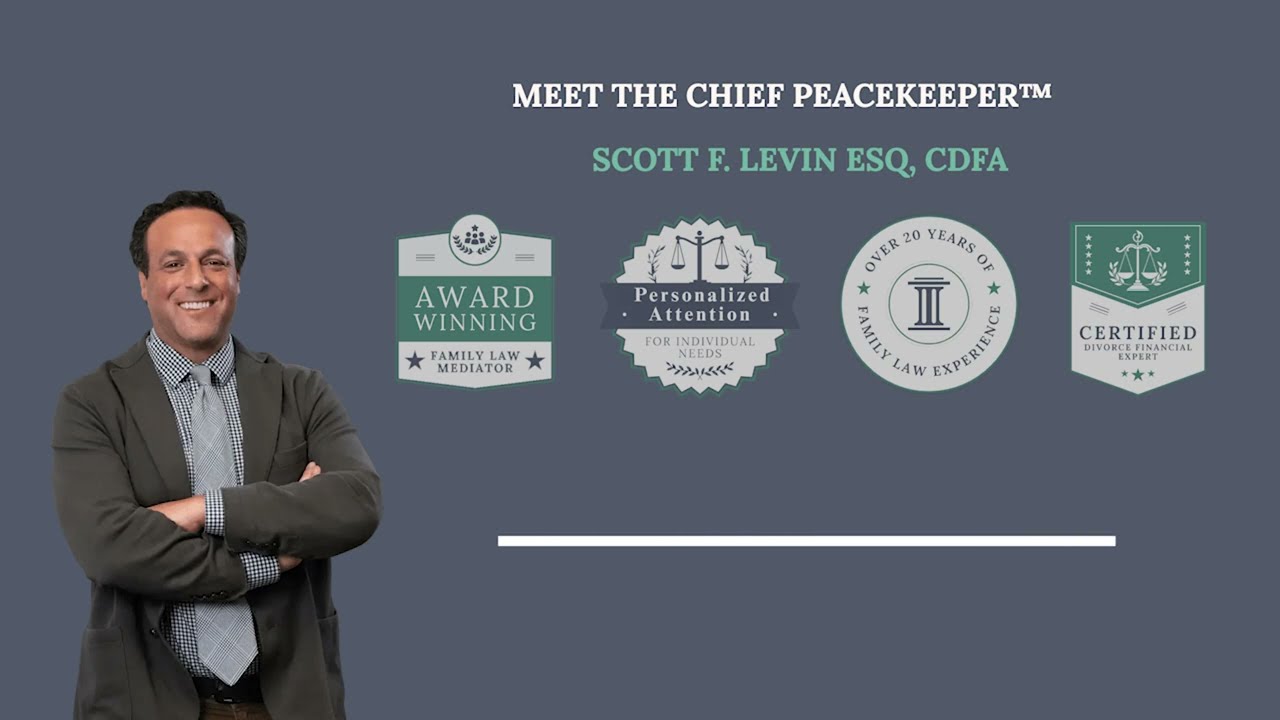
Family law attorney Scott Levin explains California's community property rules and when prenups actually matter. He covers disclosure requirements, spousal support calculations, and how mediation can keep divorces amicable instead of adversarial.
Chapters
Hello and welcome to Our Prenup Lawyer Podcast, where you and I get to learn more about prenups as I interview professionals in the fields of family law, couples counseling, and wealth management. I'm your host, Libby Garabedian, and let's get started. Today we have Scott Levin, a family law attorney, certified divorce financial analyst, and founder of the Chief Peacekeeper Mediation Method, dedicated to helping California families navigate divorce outside of court with compassion and clarity. With over 20 years of experience in finance and litigation, he combines legal expertise with emotional intelligence to reduce conflict, ease anxiety, and prioritize children's wealth. Hi, Scott. Thank you for being on the episode today.
Thank you for having me. I'm excited.
Of course. So let's first start with what's Chief Peacekeeper? That's trademarked, right?
Yeah. Um, basically it's, it's, it just signifies kind of what I'm about in terms of the divorce world. I had clients that were members of one of the tribal councils here in Southern California about 10 years ago. And when they were signing their divorce papers— so I work with both sides to a divorce, and then I work as a neutral impartial, and I do all of the legal process for them. So when we were signing our settlement agreement, the mom in this case looked at me and she said, you're my chief peacekeeper. And I said, oh, can I steal that from you? But, but yeah, basically it just kind of signifies, you know, in terms of the divorce world, like, you know, there's a way to do it where you can be peaceful, you can be amicable, you can be collaborative, and you can avoid a court battle.
Right. So how do you go about that in your own practice, keeping it amicable?
I mean, yeah, it varies in a lot of cases, but I mean, it's about collaboration. So in divorce, when you're mediating a divorce settlement, you're really forming a team with the couple. So a couple and they are on team us, and we collaborate on finding solutions to the issues of divorce. So on our side of the court are, you know, the human beings. On the other side of the court are the problems that we have to figure out. So we are not spending time defeating each other or hurting each other or trying to defeat the other side. We're trying to defeat the issues of the process. And so we just, I just set it up in that way, basically, like where it's all about Creative solution, problem solving, idea generation, whiteboarding. You know, what are the ways that we can solve this issue? My job is to let them know all the ways that I'm aware of after 2 decades plus of being in this, in this world. And so when people have conflict, they're usually putting forward, you know, one idea each. I want it, I would like it this way, I would like it that way. And those ideas are not You know, 2 things can't happen at the same time. So, yeah, one of the things I do is say, hey, what about options 3 through 10? Or what if we took this part of that idea and this part of this idea and meld them together? So, you know, I'm a creative thinker. I'm an outside-the-box thinker. That's kind of what I specialize in.
Yeah. So how did you get into mediation?
I don't know. Yeah, I mean, I was, I've been in finance and I've been involved in the startup world in my past life. So I have a finance background and I was litigating cases for about 10 years in court as a lawyer that would represent one side versus the other. In 2013, one of my kids was born and I just decided that I, you know, I was going to take a stand for humanity and not litigate anymore. So, you know, since 2013, I haven't litigated a case representing one person versus the other as an attorney in court. And, you know, it's a challenging place in the law because it's really easy to tell, you know, a client like, this is what you deserve, this is what you should get. Or this is what we should tell the judge from their perspective only. It's harder to put a puzzle together to make both sides feel as whole as possible and willing to sign a settlement, which they're not, you know, oftentimes neither of them are ecstatic about. So it's really much more nuanced and it takes a, you know, a much more critical, it takes a lot of critical thinking and evaluation and strategizing. More so than just, you know, let's go get them.
Yeah. How do you feel that you've had to adapt to go from litigation to this where you're trying to bring people together?
It's a totally different mindset. You know, that teamwork, that collaboration. I tell people that, you know, there's a big movement in family law where almost every family law litigator now is mediating cases on the side. You know, everyone has a mediation tab on their website. Even if they have never mediated, they're putting it out there, right? I believe that mediation's a special skill set. You know, when I was litigating cases and I was like waking up to emergency hearings and all the stuff that happens when you're litigating, You know, it puts you in a mindset that's very, you know, us versus the world. And so it's hard to turn that mindset off, that battle helmet, for your 2:00 PM appointment where husband and wife or wife and wife or whoever, a mediation couple is coming in to see you for an hour. And then you go back to defeating the other side. And all your cases are all about wins and losses. Mediation's a mindset. It's a specialty. And I really think people should be choosing one lane or the other, you know, either litigate cases and go on that route or mediate cases and stay in that world. But, you know, I think people should— I think professionals should really choose a lane.
Yeah, it's not really a transferable skill set. It's what I'm hearing.
Yeah. I mean, I just think it's just like family law litigation is very tough and it's a grind and you really feel like it's you and your clients against the other side and that's your mindset all day long. To turn that off is almost impossible, I believe.
So in the mediation and divorce litigation processes, how, I guess, is it made more difficult or easier when you've got a prenup in place?
Yeah, I mean, first of all, like in mediation, you know, most of the time you have to agree that the prenup's valid. Like you can't be contesting a prenup in mediation. You can ask for— sometimes I have clients ask for like a settlement that goes beyond the prenup, and the other side is open to that. But the prenup kind of shuts down certain aspects. Like before they hire me there, they've already said, hey, we both agree that the prenup does this, this, and that. But you know, maybe there's some flexibility on the edges. But I'm not a judge. So if someone's coming in here, if a couple's coming in here and one's saying, you know, I don't think the prenup is valid because X, Y, or Z, I'm not going to rule on that or, you You know, really have any say. What I can do is I can help them negotiate a settlement that respects the prenup, but also, you know, maybe gives them a, something that, that the prenup doesn't allow to one of the sides so that we can move forward without a battle.
So when you're drafting a prenup, what, what's your process so that when you're looking forward into the future, that on the off chance a couple ends up getting divorced or they go through mediation, how do you make it airtight so that both sides And they'd be happy?
Yeah. I mean, I don't know if that's such a thing, but airtight. First of all, I won't be involved in a prenup unless both sides are represented. So it really depends. So, I mean, I can, I can mediate a prenup, which is where a couple, you know, comes in. I work with both of them as an impartial neutral, and I craft a prenup with both of their inputs. And we basically collaborate on what the— what we want it to say. And then I draft it, and then they get 2 attorneys to review it for each of them. And then I make some edits that their attorneys want. So I can still work as a neutral in that capacity. So that's one thing. And that works out really well because both sides are involved. Both sides understand what it says because, you know, we've talked about everything. We've really gone over all the options together. I'm not a huge fan of the traditional, like, one side just meets with their lawyer, crafts like a one-sided prenup and hands it to the other side out of the blue, you know. So, but, so the other side, the other thing, the other way that I serve in the prenup realm is as an attorney. So there's basically just kind of collaborating with my client But both sides would be represented. Both sides have to do a full disclosure. So a lot of times the client will be like, you know what, I have this asset, but it's really not mine. It's my grandma's. But, you know, I say, hey, put it down.
Mm-hmm.
Oversharing is better than undersharing because you want, you don't want the other side to be able to say that they didn't know about something or they were defrauded essentially into the prenup. By a failure to disclose. So it's really important that disclosures have to be done well and accurately, and everyone has to have a chance to like ask questions and poke at those disclosures and ask for more information. And both sides have to be represented. But I've never had a problem ever in 2 decades doing a mediated prenup because both sides really do feel like they had a hand in creating the end result. But the traditional, you know, higher earning spouse or higher net worth spouse crafting a prenup with a lawyer behind closed doors and handing it a kind of a one-sided document to the other, that's when you can have, you know, people feeling like they don't really understand or they don't, they're not really involved in the crafting, and that can make them feel disadvantaged in the future.
Yeah, kind of isolating one spouse and freezing them out in a way. So talking about that collaboration and mediation, how do you dispel the myth that having a prenup or coming up with a prenup is an adversarial process? And instead, how do you get more of the couple coming together?
Yeah, I mean, in the mediation setting, I mean, the 3 of us sit down like this or on Zoom and we talk things out. So I bring up questions like, what if this were to happen? Or what if that were to happen? Or, you know, and I just bring up scenarios so that they can put themselves in that, they can project forward and like put themselves in those scenarios and we can play that out. Like if this happens, you know, then you would see, and each person kind of says, well, I would, I think this financial decision would mean X, Y, or Z in that scenario. So basically we just like, If you are you going to have if you're going to have kids, what if one of you takes a step back in your career? What does that mean to your financial outcome if you eventually divorce? How do we account for that? How how can we how can we basically set each party up so that that the in the event of divorce this document isn't punitive to one or the other? And that's that's really the goal of a of a have a mediated prenup is that these documents are very real and they have very real impacts and they're not to be played with. A prenuptial agreement is a— can have a huge impact on your life in the future. I've seen it happen to a lot of people. I've seen clients enter the divorce process with a prenup and having no idea what it really means and having it be just tremendously impactful. So you just have to be really careful and understand what you're signing, why and how, and have a chance to amend those things so that it doesn't harshly affect you in the future if you don't intend for it to do so.
So going back to what you mentioned about having a higher or lesser earning spouse in the relationship, when you're representing, let's say, the lesser earning spouse, How do you counsel them so that they don't feel like their financial future's in jeopardy?
Yeah, I mean, you, so usually in a case like that, you know, there's a prenup that's given to them from the other side and it's a pretty one-sided document most of the time. And it is very expansive. So what I try to do is say, hey, like, let's cut, this back a little, you know, in some ways. So, you know, we can't edit every provision or like, you know, it's not going to fly. But like, what's most important to my client? What's most important to their future? And we just kind of, we just amend those provisions so that they have more rights, less problems later. But yeah, that's a very common scenario. You know, most prenups don't I'd say like more often than not, there's a kind of an advantage and disadvantage side to a traditional prenup that's written with one person and their lawyer handed to the other person with minimal time. And you're just trying to make sure that they understand what it says and what their options are for changing what it says.
How do you equalize a marriage when you're drafting a prenup when you have one spouse who is giving up their career to stay home with their kids?
Yeah. I mean, a lot of times you can't predict that because if they don't have children yet, you don't know, you know, they don't know if they're going to, or they don't really know what that means career-wise if they do. So you just, again, you just try to say, hey, if you have a 7-year-old and a 4-year-old and you're getting a divorce, let's look at, like, let's put ourselves in that position and figure out what that looks like. What this document would say right now is X, Y, and Z would happen. Mm-hmm. That's that if that's not a result that you are comfortable with, then let's change it so that you know you you are comfortable with that. Or if you have a you know a seventeen and a fourteen and a nine-year-old, I mean so I just try to put them in these positions to get them thinking about those scenarios, and I help them understand what would happen according to the current document and what our options are for changing it so that those things may or may not happen.
What does child support and alimony look like when you have children born outside of the marriage versus when they're born inside of the marriage?
Can you clarify?
If you have, let's say a couple's coming together, it might not be their first marriage and one partner has children from a previous marriage or previous relationship and the couple has children together once they're married. What does that look like for the financial future of each child?
I mean, I'm not sure what it means. I mean, it could mean a lot financially, but, you know, that's a common scenario. I think that prenups are most often sought by people that have been divorced previously, especially when they have a business or that they've accumulated some wealth and they're in their, you know, 40s and 50s and 60s as opposed to, you know, their 20s and early 30s. But yeah, blended family. I mean, I'm not so sure that a lot of it, the prenup encompasses anything particular about those situations as much as talking through. Again, when I'm mediating a prenup, we can talk through like issues about blending and, and what, what might come up in the future that would be, you know, potential hazards and things like that to where we can kind of game plan. But I'm not so sure it would like be appropriate in the actual prenup document.
What's the difference between a prenup for a couple on their first marriage or maybe their second or third marriage?
Well, if they've gone through a really hard divorce process, that one of the big keys is that they want to have a path towards an amicable settlement if they, if they divorce in their, in this upcoming marriage. So it's very common for one person to say, yeah, I was really I went through a 2.5 or 3.5-year divorce process. I just can't do that again. I need to make sure that that doesn't happen. So, creating a path towards divorcing amicably or in mediation is a real key. Oftentimes, people have more assets and more wealth because they're older or because they've matured in their lives. And they have more to protect. So they have a business. They, they have a home. They have multiple homes. They have children that are from a previous relationship. So they have more complicated lives, and, and the prenup can help clarify, you know, financial rights and entitlements in the future.
Obviously, prenups are becoming more popular. Among couples. What's the biggest change you've seen in the last 10 to 15 years with these types of agreements?
That people are being more collaborative. You know, about 30% of my work in prenups are as a mediator, and I love that. It's really fun to mediate a prenup. I'm able to really, you know, help people, like I said, talk about things that might not go in the prenup but that I know are coming up. If they have kids from previous relationships, we can talk about those things. We also talk about what happens in the event of death while you're married. And, you know, I could help them kind of get in the frame of mind to make decisions about that realm and to get set up with a trust attorney as well. You know, so, I mean, it's just people are being more collaborative. They're wanting the documents to reflect their lives, and they're not wanting as much of the one-sided, you know, you know, demon prenup, which is like, you know, you get nothing, I get everything, etc., etc.
So going off that point about setting them up with a trust attorney, should couples be working on their prenups in conjunction with estate planning?
Yeah, I mean, it's a really nuanced division. You know, people get really confused by that because It's a prenup is what happens in the event of a divorce while both people are alive. And then a trust would be, would take effect about in the event that you are married, but at the time that the first person dies. So it's really nuanced though, because, you know, people want to be taken care of. In the event that they are married and you, and one person dies, but one person has, you know, owns the home according to the prenup and the trust. So, but the, they die and the other person, they presumably were happily married because there's no divorce process going on.
Mm-hmm.
And so people talked about what would happen in that realm at the time of, doing the prenup. It's very common to, for those conversations to take place. And those are healthy conversations, but they can only take place if you're mediating the prenup. I mean, it's hard for those conversations to take place if you're just talking amongst each other and then the 2 attorneys are kind of leading the drafting and the negotiation because those things aren't being brought up. So it's kind of an advantage of a mediated process.
So kind of shifting gears here. What if you have a situation, you touched upon this earlier, where you have inheritance or money from a family member, maybe the bank of mom and dad is contributing to one spouse. How is that written into the prenup?
Yeah, I mean, it's, it's common, very common that people are relying on their either ongoing gifts or inheritance. And it really depends. There's lots of options, but Inheritance, people want to protect inheritance, but we give them a way of like, you know, protecting their inheritance if they don't want to, if they don't want it to become part of a community property. But at the same time, it's a— there's ways of basically making it really easy for them to make certain property, convert it to community property if they choose to. So we have the way that I like to set these prenups are basically That, you know, we're achieving, we're achieving the protection in advance. So all the things that they want to protect are kept separate, but giving them a path to make their own choices in the future on a case-by-case decision. So they could say, hey, I'm going to deposit this money into a joint account and intentionally convert it to a community asset. So we're giving them the mechanism to do that. But yeah, but at the same time, protect— giving them the option of protecting that property as their own.
So keeping with that idea of autonomy and helping them make or have the freedom to make different decisions about their financial future, at what point should couples who already have a prenup take a look at it, make changes to it, where in most states it becomes a postnup?
Yeah, I mean, things change, right, over time. Like, your financial reality can change dramatically. When I got married, we had nothing and we don't have a prenup. But if we did, this would be an appropriate time. And yeah, my wife has a business. I have a business. We have 3 kids. We have property, 401, all that stuff, all these things that didn't necessarily exist. So when we made a— if you make a prenup and you, in that prenup, you made financial decisions that might not reflect what your Desires are at present, so you you should look at it and you should consider like you know totally revamping it or at least understanding like what it would say, what it would mean in the event that you divorce in the future based on those terms. So a lot of people do amend their prenups, and then obviously if there's you know wholesale changes, then they'll they'll just set up a postnup.
How does the postnup process differ from the prenup process?
Well, yeah, I mean, it just depends, you know, postnups, you know, there's a reason that people, courts view postnups, you know, with skepticism to some degree. So, you know, you have to be careful. I'm careful that I'm not taking on a case where it's a postnup only to delay a divorce process by a year or 2. But you need to, a postnup really should have nothing to do with divorce. Of course, it's like what will happen in the event of divorce will be in the postnup, but you're not anticipating or planning a divorce. A lot of times people will get a postnup when they come into certain property or they're about to, you know, use money in a certain way that where they want to be, where they want to protect that money in the event that they eventually get divorced. So they'll write a postnup before these decisions take place. Or in general, you know, sometimes people will write a postnup because they think that if they can get the pressure, some financial issue is putting pressure on the marriage. That if they can relieve that pressure, that the marriage could thrive more effectively. So I mean, and then of course, some people are, are getting a postnup because one person, you know, was unfaithful or did something to the other, you know, one person feels wronged. And they agree to some sort of financial terms that, that will account for that wrong and prevent, you know, temporarily the divorce. But that— those are, those are, you know, the cases where I'm really evaluating whether I want to be involved or not. I don't want one person to take— to sign over rights to property because they cheated or did something financially that harmed the other person, um, because they really want to save the marriage and the other person's kind of punishing them for it. That— those are, those are the cases that I steer away from.
And thinking about those ideas of pressure and maybe there is a little unfair bargaining power, have you ever been in a position where you're acting as counsel for one spouse or soon-to-be spouse and you've had to tell them that, no, you can't sign this prenup or you need to walk away?
Yeah, I had a case recently where it's basically my client, they, the 2 parties, were quite in love, I think, my perception. But one of their family members were putting a lot of pressure on the marriage because of a family business and wanting that family business to be protected. And they just would not. And my client's spouse was not in a position to make any accommodations to anything that we asked for. And it was really the first time in my life it was a take it or leave it. Right from the get-go post that. And I told her that I really didn't feel comfortable and that it wasn't right and that, you know, there's supposed to be negotiation and back and forth and it was just a take it or leave it. And what is leave it? Leave it is what? Divorce?
Yeah.
And 2 people that are happily married but have like this outside family pressure on them. So, yeah. That's the only time that I really felt like— the only time I felt the illie willies.
Maybe. How or at what point should couples in the relationship, you know, before they get engaged or when they're engaged, when should they start talking about a prenup? Let's say that there is that family pressure, that they have a business or their family just has a history of prenups. Oh, my older brother, my older sister, they just have prenups. That's how we do it.
I mean, you should really, I, you know, I don't, when people call me and they're like, yeah, I'm getting married, you know, what is it, July 7th today or 8th? When they're getting married July 20th and they're just starting to get lawyers, you know, that's always, that's always really strange to me. Like if one person knew that this was coming or thought, you know, why is it coming up so late?
Mm-hmm.
That can be a strategy. a strategy to put pressure on the other person to sign whatever they give them, or to only make minimal changes because there's not much time left. So you should, you should do it, you know, you should start the process 3 to 4 months in advance of the wedding or the marriage date. Give yourself enough time to negotiate, to understand, to, you know, to sit with an agreement where you, where you, where you're not being pressured by You know, you have to sign this in the next 2 days or there's no marriage. I mean, isn't that inherent pressure on the person? So a lot of people start the prenups either by design or by circumstance very, very late in the process. And it puts in— and no matter what the case is, there's implied pressure because you're either going to get married and sign this document or not.
How do courts look at that if there is divorce proceedings after, when there is this implied pressure? Does it have to be a little more clear?
I mean, I'm not involved in like contesting prenups anymore. I mean, I know most lawyers, you know, that I— friends of mine, you know, talk about contesting prenups all the time. I mean, I think if both parties are represented from the beginning with You know, quality legal counsel, and there's a full disclosure of assets, and they have time to negotiate the terms. You know, that seems like a fair setup to me. Now, the impact of what the agreement can say can be harsh, like I said before, but I mean, it's that the process is fair. Or is set up well, then I think that that's right off the bat, you're less likely to have a contested issue. But if you're not represented or one person's not represented, or you, or you start the negotiations, you know, 14 days out from the marriage, those are scenarios now you haven't processed since fall.
And thinking about that, having enough time to go through the negotiation process. What other advice would you give to couples who are considering whether to get a prenup?
Yeah, I mean, I think it's— I think that can be a really good idea in the sense that you can basically agree in advance not to, not to litigate cases. So like, if all that comes from a prenup is that you agree to mediate and that you put into place a path to mediate your divorce and you make it harder for that not to happen, that's a really positive outcome by itself. But, you know, in terms of, you know, you could make a lot of financial agreements that would ease the divorce process. It's just that a lot of these financial agreements can also have really meaningful impacts. If your lifestyle is supported by your spouse's earnings, primarily your spouse's earnings during marriage or their net worth. whether even if they're not earning income actively and you divorce, you could— if the prenup says all their stuff is theirs, your lifestyle is going to change dramatically. So you have to be careful about waiving spousal support. Absolutely. So most of the time there's no reason to do that. A full waiver, you can't predict You know, spousal support is a really, really key issue, and you just can't predict what that will, you know, under what circumstances you'll need it or won't need it. But to just, you know, most of these one-sided prenups where I'm representing like the lower earning spouse or the disadvantaged, you know, almost 90% of them say there's a full waiver of spousal support when I get the document, and I just expect it to be there, and it normally is. So, you know, I have to like, you know, push back on that, and they have to like come up with an agreement where there's not. you know, a full waiver because you might find you don't— you can't predict what will happen in the future.
What other statutory calculations or clauses are must-haves in a prenup?
I mean, if you have kids, so like if you were— if you're getting married and you have a young child, but it's not the other— it's not your partner's child. So like let's say you have a 4-year-old, but basically you're going to get married, that person's going to basically be looked at as a parental figure. And if they go through the next 20 years as that person's parent, the prenup could have provisions about, you know, caring for that person in terms of like life insurance beneficiaries or other things. And I'm, you know, they can be very creative. So I guess, you know, setting up One thing I'll say about one thing about spousal support, that's the biggest thing a lot of people want to waive. You know, a lot of, you know, people that are drafting prenups want spouse support to be waived by both sides. And you can do a waiver, and that's always a defeat because you don't know if it will be enforced later. But one thing that most of my clients do, or many of my clients do, is say, hey, We're going to set up a path where there's going to be value given to the other person if they accept the prenup. So like there's going to be this chunk of value money, and this money is yours in the event that we mediate a settlement and we don't litigate. And so you basically can set up your settlement in the event of divorce in a way that it's very likely that it won't be contested and become like the 2 or 3-year divorce. That's That's the main benefit of a prenup that most lawyers don't capture is what is the process? How will these 2 people navigate divorce if it happens? And the prenup can really be structured to make it an amicable or, or, you know, collaborative process so that they avoid the drama. You—
California is an equitable distribution state, right? How does that affect Prenups when you have spousal support waived?
Well, so it's community property states. So when, when there's spousal support, it's totally waived. So income is relevant to spousal support. So division of assets is basically what, when you get divorced, you're trying to account for what are the community assets, what are the separate assets. So you're dividing assets and debts. And then separately, if there is no prenup, then you're, you're setting child support and spousal support based on the income and the income differentials between both sides. If there's spousal support waived, yeah, again, I don't contest cases as an attorney anymore. So when there's spousal support waived, and most of my clients are acknowledging that that's— that they agree to that, and then they can mediate the settlement. If they disagree that spousal support is waived by the prenup being invalid, They, they want to pursue it, like, to invalidate a prenup, but not going to be mediating a settlement.
Now, from all the ugly divorces we've seen, but also the amicable mediations and successful marriages, what is something that you've noticed that, that leads to a happy couple in the end?
I think it's really important that couples form community. So I'd say 90% of the couples I see, we never mixed our assets. We all, I have no idea what he makes or she makes. Like, you have to be willing to form community. Something about keeping your money separate, like, weighs on a marriage over time. And I don't know why that is, you know, but you have to form community property. You have to be willing to, like, you got to jump in it and And and put something in together because so many of my clients that are divorcing are telling me that they never joined their property in any way. They each had separate accounts, and they both transferred money into a joint account to pay bills in a specific figure, and that's the extent of what they shared. And there's something about that that weighs on a marriage, and that and that and that. Defeats it over time. So, you know, even when I'm setting up a prenup that says, you know, there's ways of keeping money separate, but there's also a really easy way of making community. And we have to give that path to make it easy. And I encourage people to do, to invest in the community in some way every year, every month, you know, in some consistent way because Over time, when you just aren't forming financial community, it just has a way of impacting the quality of the marriage. Absolutely.
So, there's that honesty and openness and willing to collaborate to make it lasting.
Yeah, definitely. Just a way of like just forming, you know, putting money together in some way. Yeah, you have to do that. I think otherwise, I can just tell you, you know, So often people tell me that they've never, you know, integrated their funds in any way and they have no idea what the other person makes after 15 years. They have no idea.
Wow.
And it's so strange, you know, and that just, you know, you have to be willing to, you know, join funds in some way.
Well, thank you so much for all of this. It was very insightful.
Yeah, my pleasure. And, you know, Again, I really encourage people to think about mediating a prenup or mediating a postdoc. It does. It can cost a little bit more money because you have three professionals, but you know collaborating and being very open and the dialogue can really really benefit couples. You know long-term success. So I'm a huge fan of mediating. the premarital or postnuptial agreements. And people really feel very, very good about the process at the end of it, typically. So encourage people to try it.
Okay. Thank you.
Thank you.
More from Scott

Divorce Mediation Starts With Clarity: Know the Financial Baseline Before You Negotiate

Divorce Mediation Can Keep Your Family Out of Court | San Diego Divorce Mediation


Your Parents Helped You Buy a House — But Could Those Funds Be Lost in a California Divorce?

Nesting Custody Explained: How to Successfully Implement This Child-Focused Divorce Solution


Dating During Divorce – It’s Not About Whether You Date… It’s How It Affects Your Divorce #divorce

The Co-Parenting App That Filters Conflict | Sol Kennedy Interview #coparenting #parenting


Managing Divorce Panic - How to Think Long-Term Settlements with CDFAs Scott Levin and Tatiana Sunik