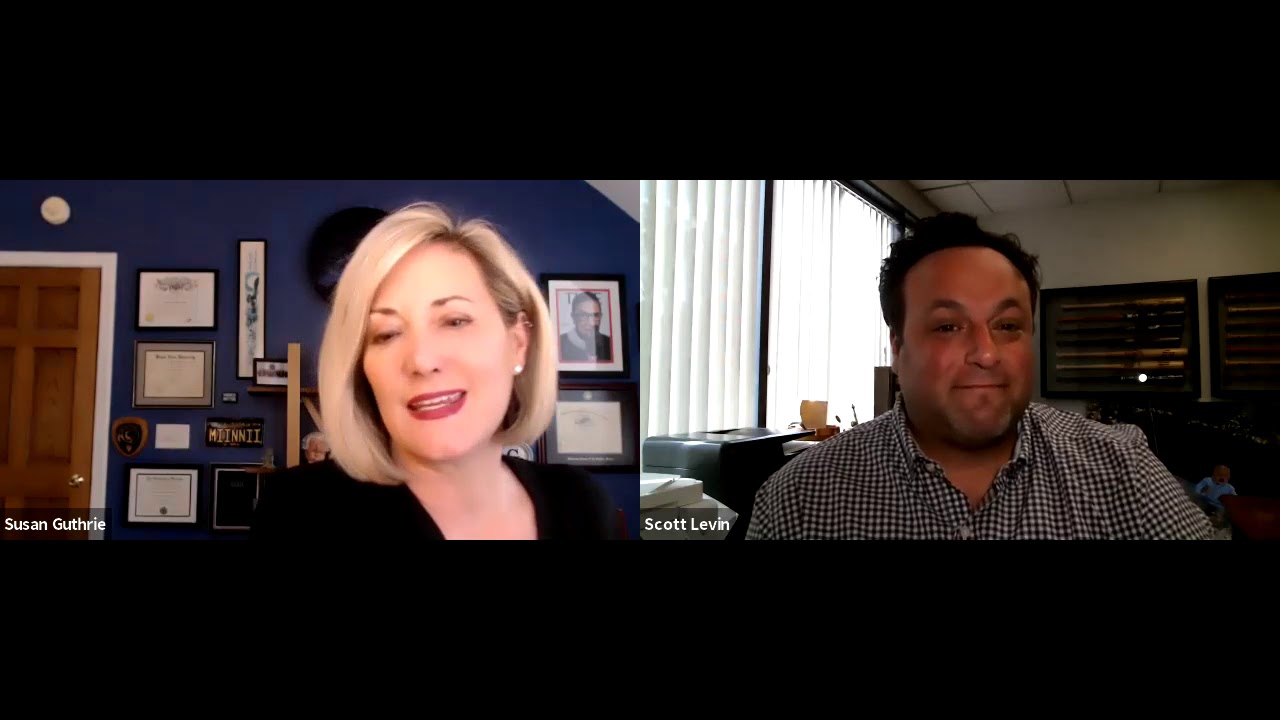
In this interview, mediator Susan Guthrie and attorney‑mediator Scott Levin discuss the concept of “emotional justice” in divorce. They begin by highlighting Susan’s pioneering work in online mediation, noting how early adoption of Zoom and other digital tools made mediation faster, cheaper, and less conflict‑prone. The conversation then shifts to defining emotional justice – the client’s desire for the legal system to repair emotional wounds such as betrayal, broken trust, or hurt feelings that arise before the divorce filing. Both guests agree that the family‑law system is fundamentally transactional, focused on dividing assets, debts, and parenting time, and therefore cannot provide apologies, emotional sustenance, or “fill the hole” left by relational breaches. Emotional justice, they argue, must come from within the individual, often requiring a “heroic act” of letting go and self‑love. To facilitate this internal healing, they recommend that divorcing clients engage both therapists (to address past trauma) and coaches (to focus on future planning), noting that combining the two can accelerate the divorce process, reduce costs, and help clients move on more quickly. The interview concludes with a reminder that while the legal process can settle the material aspects of divorce, true emotional resolution depends on external professional support and personal work.
Chapters
Hey everybody, this is, uh, Scott Levin, Chief Peacekeeper, and I'm here today with Susan Guthrie. Hi Susan, how are you?
Hey Scott.
Susan is everyone's favorite person, probably the most in-demand mediation person in the country, if not the world. She has the Divorce in a Better Way podcast. She does all sorts of Facebook Live events. And of course, she is a mediator that really led the way in online mediation years ago and was a practitioner with Zoom and other platforms long before anyone ever really heard of those words. So congratulations for being right, Susan, again. Thank you.
Yeah, or lucky. That's what I like to say. I was just lucky. It was all by necessity. So, but I found I liked it. So I like being online.
Yeah, and I do too. And I've taken several courses with Susan too, where she's taught online mediation. And I was not an early adopter, but I am an adopter. And I do love— I love everything about being online, you know, with people. And I think the results are oftentimes better for my clients because of it too.
So Faster, easier, less expensive, less conflictual in many ways. Although, as you know, since you do it online too, they can fight through this or have disagreements through the screen just as easily as they can do it in person. But—
Absolutely. Well, we have a kind of an interesting topic that I just sprung on Susan, so we're gonna see exactly why she is renowned, because she just learned of this topic a minute ago. Very professional of me. So there's the idea of emotional justice, and emotional justice is a big thing in the world of divorce, in particular because people that arrive to the process of divorce usually just before that time have a major emotional, you know, transaction that just has occurred, and they often come, you know, injured. And they want the system of divorce, the family law justice system, to somehow rebalance the scales. So we've heard of legal justice and social justice, blind justice, cold justice, but what is emotional justice and how— and how can it harm the process of people going through divorce is really the topic. So Susan, when I say the words emotional justice, what do you think of?
I think of almost every case I've handled in the past 30-plus years, right? I mean, unfortunately, you— I think you said it beautifully there. There's been, um, some sort of emotional transaction. There's usually been a breach of trust, really, right? Somebody has lied to someone else. Someone has done something they shouldn't have done. Someone has cheated, or they haven't kept that promise, right? That promise to stay together forever. In some way, there's almost always some sort of a breakdown of that trust and an emotional— everyone feels hurt and harmed by the process. So when they come into their lawyer's office, their mediator's office, into the divorce process, if they're looking for justice— and again, I think you really described it so well, the balancing, the emotional balancing— if they're looking to have the hole that's been created in them filled through the judicial process, through the divorce process, and many of them are, then unfortunately they're bound to be disappointed because the process is not about— it's a transactional process, to use your word, right? It is about separating out your stuff, your money, and your belongings and how your lives are entwined and your time with your children. I mean, it's— that's really what it's about. And the court system just doesn't have any way of getting you the apology that you want or providing the emotional sustenance that you're looking for.
Yeah, I totally agree. And, and, and, and it only is going to cause— I mean, what I try to tell people, and it doesn't always ring well with them, Is that if you're pursuing emotional justice, I don't believe that your attorney can provide it. I don't believe the judge can provide it. I don't believe the court system can provide it. It's just not going to arrive through the divorce process itself. It has to— it's actually, in my opinion, something that has to come from within. And it's almost like a heroic act of, of, of, of letting go. Like, that's what it has to come to. And when you see it as a mediator, when I see it, I'm like in awe of the person, really. But I also congratulate them because I know that they're going to be able to live, you know, their best lives much sooner than the people that are holding on. And, you know, are questioning the fairness of their agreement right as we're signing. And we've, you know, really gone over it in detail. And is this really what I should be doing? Because you can tell they're not really satisfied. They didn't get what they wanted, but it had nothing to do with the finances or anything.
Right. It was a pound of flesh or, you know, something that they felt made up for that betrayal or that hurt or that breach of the trust. And that's always been the hard thing that, as you mentioned, talking to the clients about it, because whether we're their mediator, their advocate, or we're just speaking to a group of people, often we hear those things, right, Scott? Where, well, she cheated on me so I don't have to pay alimony, right? Or he spent money on something like this, so I'm going to get that all back, right? And it's none of that. Our judicial system and the laws around all of that are not constructed in a way to make people whole in that sense. Like, oh, you know, there's, there's a certain amount of maybe hole filling that might happen. They might throw a shovelful in if there was something really egregious, but it's never going to fill that hole. And you're so right that it's, um, it's an internal game, not an external game. And, and I've always come at it from that perspective of self-love, right? You have to love yourself enough to, to use your words, let go. Um, and, and that's where you find that freedom. That's where you find that ability to— I always tell clients, fly and be free. That's my, you know, if you can get out from under the divorce process, the divorce process, if you're looking at it as something that's going to get you something, it's actually something that's holding you back. And, and Pulling you down. It's not until after the divorce that you get to start to thrive. So making it last longer by bringing all that emotional content into it and expecting that hole to get filled or looking for it to—that's that you're honestly just going to draw out your own unfortunate. You know, I was going to use the word misery, which doesn't sound appropriate, but there's a level of misery to it.
Yeah, and it can, and it can, and it can. And if you're trying to do that, oftentimes, I mean. I'm not a psychologist, but it can have a grinding effect on others surrounding the divorce, including children, unfortunately. So who do you think, Susan, who do you recommend for your clients? Are you recommending therapists? Are you recommending coaches? Who helps people achieve that emotional withdrawal?
So both would be my answer. I love therapists and I love coaches. And often a different one is called for. I always kind of look at it, is it something from the past that's holding someone back, or is it something about their future and plotting that future that's holding someone back? So coaches, I tend to find, are more future-focused, and therapists sort of deal with what's happened in the past. So often you need both. But I personally think that— I know you probably get this too— people don't want to spend any more money while they're going through the divorce process, so they will resist building that support team of outside professionals. They're like, well, we're already paying you, Mr. Mediator or Ms. Mediator. I already have my consulting attorney. I can't afford more. I honestly find if you get that external emotional help through therapy, through coaching, through both, your divorce will go faster, your divorce will be less expensive, and you will fly and be free much faster.
Yeah, well, I can't— I don't think that anything I would say after that is going to add anything. So I want to thank Susan for joining me and for letting me spring on her with this topic. But I, you know, emotional justice, as we've talked about, it's a tough thing and it's not, it's not likely to come from the process of divorce. So surrounding yourself with professionals that can help you through coaching and, and therapy and all the other aspects. is really the answer to these sort of, these sort of issues. So, well, thank you again, Susan, for being here, and I appreciate it, and we'll talk to you soon.