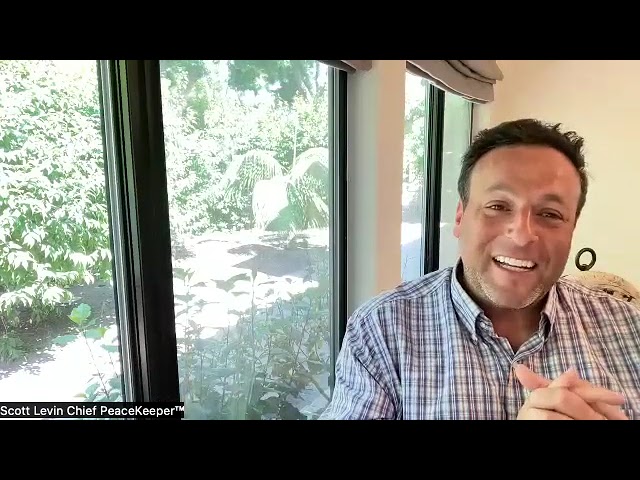
In this interview, family law mediator Scott Levin talks with attorney Elizabeth Van Cleave and financial analyst Ashlyn Downing about the challenges of dividing executive compensation—restricted stock units (RSUs), stock options, and retirement benefits—during a California divorce. They explain how these assets can be partially community and partially separate property, requiring forensic account review, tax‑law analysis, and precise tracing to determine each party’s share. The firm’s workflow consists of three steps: (1) mathematical tracing of community versus separate portions, (2) drafting court‑order language that complies with the Internal Revenue Code and avoids unintended tax consequences, and (3) executing the division through instruments such as QDROs. Elizabeth, a tax‑law attorney with a math background, handles the legal and tax aspects, while Ashlyn performs the data‑analysis and Excel‑based accounting. They discuss their typical case mix—about 90‑95% of engagements are jointly retained, with a small fraction involving single‑party retainers or trial testimony—and note that their reports usually resolve disputes without the need for court hearings. The conversation underscores the firm’s niche expertise in financial‑focused family law and encourages divorcing parties to seek their services for complex asset division.
Chapters
Hey everyone, this is Scott Levin, Chief Peacekeeper. I'm a family law attorney that helps people mediate divorces. I'm here with, uh, Elizabeth Van Cleave and Ashlyn Downing today. How are y'all?
Good. Hi.
Good. So this is going to be a really interesting conversation, uh, for those that are interested in the subject. So when you're going through divorce and you have, uh, compensation for executives called restricted stock units, Or if you have retirement assets that were earned before marriage, but are partially earned before marriage, or there's contributions after the date of separation, there's all these like things that make assets partly community, which are what you divide in the state of California during divorce, and partly separate. And with the executive compensation restricted stock units, those too can be things that you divide. During the divorce, and then there's a portion that become just separate property, and then there's a portion that are separate and shared. So it's, it's, it can get very complicated. And these 2 young ladies here are the people that you hire to figure things out as to what's separate, what's community, and how do we divide these assets that are not always so straightforward. So, Elizabeth, let me pick on you for a second. Tell us, what do you do on a daily basis? Did I describe that right? Is that pretty much where your work is?
Yeah. Thank you, Scott. So essentially what we do is we combine legal services with a little bit of forensic review of account statements to determine community property and separate property and a whole host of assets. And the main ones are restricted stock units, Stock options and retirement benefits. So what you'll see when you come to our firm is you'll see us do an analysis of what's community property that is available for division if we're dividing community property equally, which most of the time we do, and what's separate property, which is going to be kind of carved out and kept separate property for the person that earned the benefits. And then we prepare the court order or whatever legal language Scott needs to put into the marital settlement agreement. So it all kind of connects together and only the community property interest is divided.
And so how do you get into that? So you're an attorney with a financial kind of focus. How do you find yourself with the firm? How did you pick this segment?
Yeah, so I'm actually a math major from college, and then I went and got my degree at the University of San Diego School of Law, and then I got a tax master's. And how I explain it is all these things that Ashlyn and I do together at the firm, it's all kind of based in the Internal Revenue Code because it has some sort of pre-tax or post-tax aspect to it. And that way, in order for it to be pre-tax and have these attributes, it has to follow the rules of the Internal Revenue Code. So if you think about retirement assets, they're pretax 401 plans, and because of that, they have to fall within certain requirements of the Internal Revenue Code. So when you think about retirement benefits and stock options, it's actually like a subset of being a tax law attorney. And so we kind of mix Ashlyn's ability to do tracings and financial work with my ability to write the court order and Understand that all of these assets have different tax requirements, and you have to write the court order in a certain way so that when we divide stock options, it doesn't trigger a sale. When we divide retirement benefits, it doesn't trigger a taxable distribution to the opposing side.
Yeah. So really what Elizabeth does in terms of— so I'm a mediator. So when my clients work with me, we say, okay, here's what we have. We have this asset. And I think— and one of them will say, oh, I think I earned part of it before marriage, so maybe we could figure out what is. Uh, so we send them to Elizabeth, and Elizabeth does that math, or in Ashland, uh, the firm, and they figure out and they come back and say, here's how we would divide it pursuant to the law. And then they secondarily go another step and they give you— they give me the language that we need to put in to the judges, to the judgment, so that the judge understands what, what that, what that division is. And secondarily, they then actually perform that division by sending it to the retirement where the funds are held and to the company. And they say, here's how you're actually going to divide it. And that's through what's called a QDRO or other instruments like that. So it's really like threefold. It's the math, it's the language that goes to the court, and then it's the actual performing of the division. And what's great about this firm and why I wanted them on today is because you don't have to do anything but give them information, right? Because they're going to go off and do all the work, which is why I love them. Because what I tell people is, hey, I didn't— I don't remember my first or second or third year of law school them teaching math because we didn't do a specialty, right? So, uh, so that's why we have math experts. Ashlyn, what's your role at the firm? How do you, how do you come into play here?
So I'm our financial data analyst. So I do a lot of the Excel work. And so I'm the one who requests statements. Typically, I analyze the statements. I do the data entry and the analysis for a whole range of the services we offer. We do, we do the retirement accounts. We do the equity compensation. We will assist with Smith-Osler support, which goes along with the stock option compensation. We will occasionally do post-separation accountings of Checking savings accounts, especially in cases where, you know, the parties separated several years prior and sort of commingled funds for a couple of years before they really divided their finances up. So we get called in to kind of take apart some of the more complicated cases where you have all of these Different accounts that are all tied together. That's a lot of what we do.
Interesting. So what percent— so I, as a mediator, I don't litigate anymore. I haven't for over a decade. Elizabeth, what percentage of your— I mean, do you have a percentage of cases that are litigation versus mediation focused, or is it hard to say?
Well, it's interesting because I would say about 90% to 95%, I'm jointly retained. 5 to 10%, I'm retained just by one party, and normally that indicates that there's some sort of concern that the other party might not cooperate, or, or it's at the beginning of the case, and a family law attorney really wants an independent advisor that's going to be with them the entire case and ask confidential questions and things like that. So, but however, in terms of How many times we go to trial, I would say about 10 trials a year. And, and the one thing I wanted to mention is that even when I'm jointly retained, sometimes it can still be a conflict or a trial situation, because I can be retained as a 730 expert. So I prepare a report. I do the interview. You know, we attach Ashlyn's analysis and present it to the parties, answer questions. If they both agree, then we don't have a hearing. I implement what the report says. If the report has gray areas, like there's 10 years where we couldn't get statements, and so we did a good faith estimate, but the parties still want to go in and talk to the judge about, you know, burden of proof and should it be a little bit less or more, then I will go and testify still as a neutral party, but because they need a little bit of the court's assistance in resolving it or in mediation. But it is relatively rare to have to go to court because the report is normally sufficient to enable people to have trust and understand that it's likely the outcome that it would be in court anyway. And so it can really foster resolution and eliminate a lot of the disagreement between the parties when we get involved and present what financially exists Out there?
Yeah, well, I mean, I— we could go on forever. I, I don't want to— I don't want to get too in-depth, but really, um, I, I think that, uh, uh, the Van Cleef, you know, Elizabeth, Ashlyn, this firm, um, they're the most in-demand law firm that I know of. I mean, any other referral source I have, uh, you know, they are, uh, good but not as in-demand as Elizabeth has become. So I think it's awesome to— that you were able to take the time for me today. Thank you.
Thank you.
I hope that people will understand that when you have these sort of financial issues that are going on during or after divorce, that you really should reach out to the firm and give them a call and see how they can help, because they're really the go-to experts in this field. I fear that Ashlyn will now be pitched by a lot of family law and asset division firms for her expertise in this. Uh, but no, just teasing. But thanks so much for joining me, guys, and I'll post all the contact information in the description. But I really appreciate you both being here.