What to Do If You Only Have 30 Minutes in the Gym - Programming Tips from RESPORT Chicago

Madeline, a trainer at RESPORT Chicago, breaks down how to structure an effective 30-minute workout: 5-10 minute warm-up, a compound lift as your main theme, a targeted weakness exercise, then unilateral movements. She emphasizes that professional guidance helps with accountability and proper form, and that progressive overload matters more than session length.
Chapters
So if you had just 30 minutes in the gym, what would you do?
Good question. If I only had 30 minutes, I would start with mobility because that is one of my weaknesses. Definitely like full-body mobility stuff that gives you a lot of bang for the buck.
How do you approach programming for your clients?
If they're an athlete trying to get faster, that changes things. If they want to build muscle, just kind of want to maintain, that changes things.
If you decide to go to the gym on a day and you're tired and fatigued and you're like, what am I going to do? A lot of times you end up doing the things that you're really good at.
Totally, 100%.
Hey guys, Dr. Sean here from Reset Chiropractic and Physical Therapy. I'm here with Madeline, our trainer. She's been helping out with individual clients but also working on the clinical side and doing a lot of the rehab stuff with patients, helping everybody through their exercises, make corrections. And get everybody back moving and feeling good. We just got done with a pretty big sprint workout yesterday, and so we're doing a little bit of recovery with the NormaTec boots here, just trying to get the lead out of the legs and feel a little bit better. And I figured we'd take this opportunity to get to know Madeline a little bit so you guys can kind of understand a little bit about her background and what makes her such a good trainer and a good addition to the RESPORT team. So I guess first things first, Madeline, what made you want to become a trainer?
Good question. I wanted to become a personal trainer because I really like connecting with people. I really like helping people reach their goals, and the gym was initially a really intimidating setting for me. I was a track and field athlete in college. Straight out of high school, I hadn't lifted a weight, believe it or not. I just had speed. Very little muscle. I was a scrawny little thing going into the big collegiate weight room, and I was scared. I was like terrified. They were like, all right, let's do power cleans, day 1. And I was like, I've never even heard of a power clean. So the gym was a really intimidating setting for me, but I actually ended up loving it. I learned that if you really put a lot of work into it, you can get a lot out of it, both like emotionally and physically. So I just learned to be passionate about it, and I enjoy seeing other people see that passion and gain that passion, gain that recovery, gain that results. And yeah.
All right, awesome. What would you say are some of the biggest misconceptions, or the biggest misconception about kind of working with a trainer?
I would say the biggest misconception The biggest misconception about working with a trainer is that you're immediately going to get bulky, especially as a woman. That's a common misconception a lot of women have, that you're going to hit the weight room and immediately get bulky, look like a man. That's a common misconception I get a lot, and that's really hard to do. If you— if that's your goal, that's something we can reach and work towards for sure, but if that's not your goal, Don't worry about it, it's not going to happen.
What about, uh, like novices? We get a lot of people coming in who kind of know what they're doing, and I'd say one of the biggest issues that people have is performing movements well, right? It's nice to have a set of external eyes on, like, on you and making sure your form is good, right?
Totally, yeah. There's a lot of times where I think I'm doing an exercise correctly and I video myself or Dr. Sean's peeking over at me and I realize that I'm not. So having an extra set of eyes makes a huge difference for sure, as well as just helping with programming, obviously. Yeah.
Yeah, that's one of the biggest things we find too. Like, programming is really one of the biggest and most important aspects. It's essentially the meat of what you're doing in the gym. So your decision of what to do on a day Right, is determined by, all right, here's our program. Some people work from a program they might have found online. Some people work from stuff in a magazine, Women's Health or Men's Health have set programs like Arm Blasters or Booty Blaster, Booty Gains, Leg Gains, right?
Mm-hmm.
But, you know, programming specifically for your individual goals is, is really important. And also not necessarily just playing towards what we call your biases towards— so if you decide to go to the gym on a day and you're tired and fatigued and you're like, what am I going to do? A lot of times you end up doing the things that you're really good at.
Totally, 100%.
And it ends up being, all right, I'm just going to do some curls and some bench press today, whereas it's not necessarily what you need to do or what you should do or what's hard. And it's a little bit better kind of having that structure there. What do you see as benefits of working with a trainer?
Definitely accountability. Having someone to hold you accountable, kind of have an appointment with them, that's huge because with training consistency is by far the most important thing. And I'm guilty of it too. A lot of times if I'm not motivated, not having a good day, not feeling quite myself in my body, I am not going to want to work out if I'm only showing up for myself. Having someone else to show up for makes it a lot easier to be accountable, a lot easier to be consistent. Also, definitely that programming aspect we were just talking about. Programming is the most important thing. Personal trainers can help you tailor your program to your goals, what you want to get out of training, as well as keep in mind your injuries, your mobilities, your weaknesses, and help you work those out. So I would say benefits of a personal trainer is definitely the accountability as well as programming that'll help you get the results you want as fast as it can happen.
Yeah, I definitely agree with that. One of, one of the biggest complaints people have coming in, coming in the door when we talk about physical activity levels and what they're able to do, and when I ask them how much they exercise and stuff like that, is time, right? Biggest constraint is time, right? We got 24 hours in a day. We're up for, you know, 12 to 14, maybe a little bit longer if we're trying to get those 8 hours of sleep a night. But, you know, that, that time crunch is, is definitely something— the day just gets away from us a lot.
Totally.
But one of the things we try to tell people is if you only have 5 minutes to do something, or 10 minutes, or 30 minutes rather than setting aside— all right, you, you don't need 2 hours to work out in the gym, you don't need an hour and a half, right? Even a shorter workout can be really helpful and just get that cardio going, get that heart rate going, get those muscles burning, okay, and feeling good. So if you had just 30 minutes in the gym, what would you do?
Good question. If I only had 30 minutes, I would start with Mobility, because that is one of my weaknesses. Definitely like full-body mobility stuff that gives you a lot of bang for the buck. Bootstraps. So start with full-body mobility, activating everything, and then I would move into a compound lift, something that uses the whole body, something like deadlift, bench press, power clean, squat, something big that uses everything. And I would pick a theme for the day. Push, pull. So let's say I do deadlift, that would be a hinge, which I consider a pull. So I would pair that with a pull. For example, pull-ups. I would probably start with pull-ups because pull-ups are a weakness of mine. So I would start with a compound lift, kind of get everything moving, then move on to a weakness of mine, and then finish out with some unilateral stuff like some single arm Rows, single leg RDLs to get that unilateral component in. And yeah, I think that would take about 30 minutes.
What do you find are the most important things to kind of hit for warm-ups? A lot of times we talk to patients, especially after we've worked with them a little bit, we've given them a few exercises, and sometimes they feel a little bit overwhelmed with, I've got 30 minutes of things that I need to do before warm-up or before my workout.
Totally.
What would you tell that patient? Like, do they need 30 minutes to warm up or do they need more like 5 to 10 minutes?
I would say you can definitely get away with 5 to 10 minutes. I would say pick the things that apply to your workout. For example, if you are doing a hinge, a hinge day, a pull day, start with pulling exercises for the upper body to really activate those muscles. Start with hinging, warm up the backside of the legs a little bit more, put a little bit more love into the muscles that are going to be used for that day, as well as your weaknesses. For example, if you're squatting and you're like, hey, my ankles always inhibit my depth for my squats, I would really focus on loosening up your ankles for that warm-up. And just spend 5 to 10 minutes doing exercises that really apply to what you're doing for that day and what you need.
Definitely. Yeah, I agree with that. We try to keep— I coach CrossFit every, every once in a while, and we try to keep that warm-up to 10 minutes. But like you said, it's pretty structured and tailored towards what we're doing for that day. You want to just make sure you hit that. You don't have to do everything all the time.
Totally.
And then the other thing you can do is you can do sneaky mobility in between sets too, rather than just sitting there and looking on your phone and scrolling and stuff. You can sneak some core work and some mobility work in between sets too. And that's a, that's kind of a sneaky way to kind of keep warming up as you're kind of going through and like making your progress through your workout. I love that.
Sneaky mobility.
Sneaky mobility is a big one. How do you approach programming for your clients? We talked a little bit about programming and a little bit about the importance of exercise selection and stuff like that. But how do you determine sets and reps and exercise selection and stuff like that?
Definitely depends on the client's goals. If they're an athlete trying to get faster, that changes things. If they want to build muscle, just kind of want to maintain, that changes things. Also depends on how many days a week, the frequency. If it's something more like 3 days a week, I would maybe do a day that is more upper body focused, a day that is more lower body focused, And then like a full body, more cardio day. Kind of depends on how many days you have available, how many days you're realistic to train. If it's only 2 days a week, which is great, I would do maybe like a push-pull day like I was talking about, maybe a hinge. So a push day, kind of like lower body push, squat, upper body push, and then a hinge day, which is hinging and pulling. So that's how I'd break that up. And then exercise-wise, again, depends on your goals. If you're a runner, I would do a lot of unilateral stuff. If you want to get better at CrossFit, I would do a lot of explosive movements, stuff like that. So it depends on your goals, but I would start from there for sure.
For sure. What about the sets and reps? We talk a lot about that, you know, the basic You know, everybody, 3 sets of 10 is pretty typical. You know, we find and the research finds you can get benefits with basically any, any rep scheme, right? But it's the consistency that matters.
Absolutely.
So once you get the consistency, that's okay. But how do you kind of choose, pick and choose there for somebody like higher reps versus lower reps? Stuff like that.
It's all about progressive overload, using that principle to— I can start with, say, 10 reps for 1 week, and then you have to overload the body. You can do that either by adding weight and keeping the reps, or by going down in reps, adding weight. Just as long as you keep the principle of progressive overload, you're going to reach those results. So I usually start on the higher end of the reps Usually like 10, 12 maybe, as I'm starting out, and then go down in weights from there as you get warmed up, as the body gets stronger. So yeah, just practicing progressive overload.
That brings us to one of my favorite acronyms. In medicine, we love our acronyms. There's so many, it's so hard to keep track, but definitely the, the SAID principle, which is S-A-I-D, which is specific adaptation to imposed demand, which is just a fancy way of saying which you've probably heard, if it doesn't challenge you, it doesn't change you. At some point, if you do the same thing all the time, the same rep scheme, the same load, you're not going to get results, and your body's just going to get used to it. And so, at a certain point, you've got to change the number of reps, the number of sets, or the amount of time, or the load, right?
Yeah.
To actually challenge those muscles so you're getting that soreness. Now, we don't want to get So sore that you can't walk or you can't stand up or you're falling down, right, while you're sitting down on the toilet.
That was yesterday.
Yeah, that was basically us yesterday. A little bit too much too fast maybe, but it was good. And today we're feeling pretty good. So, you know, we have to get that challenge and we have to stress the muscles to the point where we're getting sore. If you're not really getting sore, if you're not getting sore in the right places, then typically we're either not working out or doing the exercise in the right way. We might be doing too much weight and you might be using different different muscles than we're trying to get, or we might not be doing enough weight and you're not challenging the muscles enough to actually get that.
Yeah.
But yeah, I think that's, that's a huge thing. And so kind of that exercise selection and the reps and sets does get a little bit nuanced, and that's where it helps having your experience there to make the right decisions and program accordingly. So that's the big thing. So, well, this is— this has been a great catch up. And obviously this feels really good on the legs after being pretty sore.
Needed this.
In the calves and the hamstrings for sure. So I like this. Let's— we're gonna keep doing some of these sessions. We'll answer a few more questions next time and get to know you, keep getting to know you a little bit more and talk about some kind of hot topics in exercise and lifting just to keep people informed. And then yeah, we'll go from there. But tune in next time and we'll get some more questions going and Feel free to ask any questions if you have any comments or anything you want to know. Yeah, drop questions in the comments. Yeah, drop them in and we'll, we'll get things going. But thank you guys so much and we'll look forward to catching up soon.
More from Sean

3 Essential Banded Upper Body Movements for Shoulder Mobility and Stability #ShoulderMobility
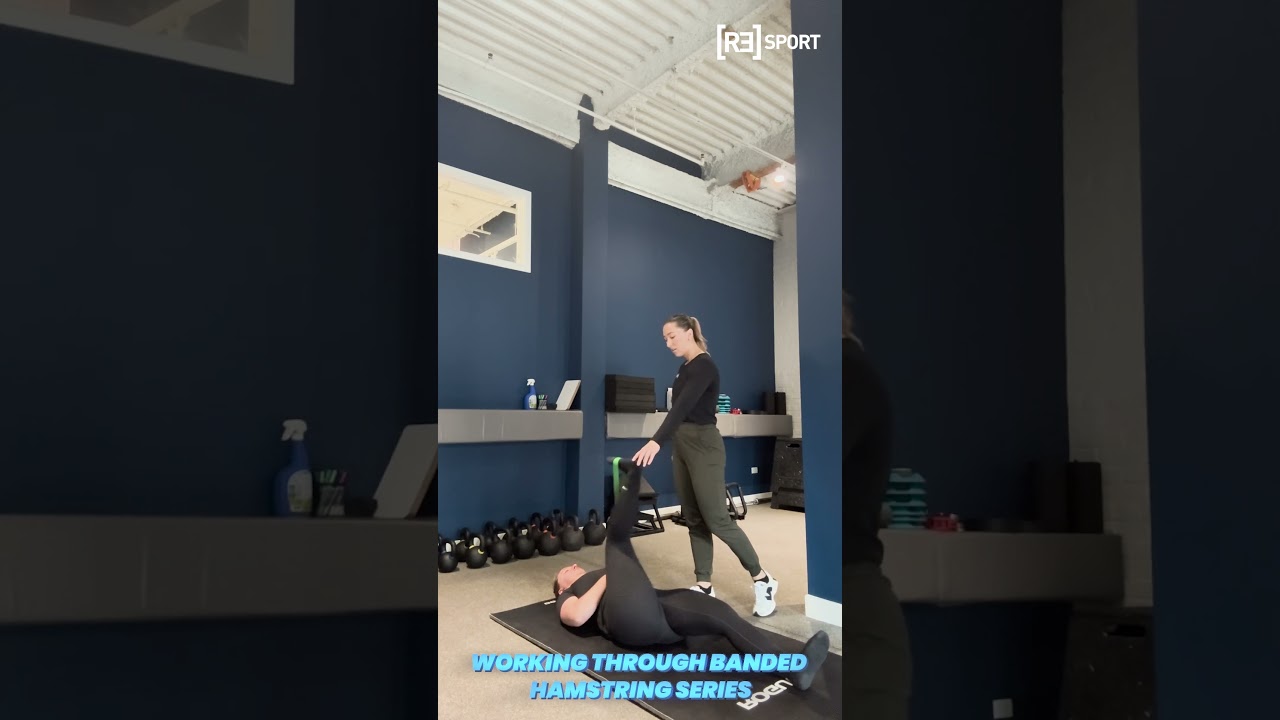
3 Essential Banded Upper Body Movements for Shoulder Mobility and Stability #ShoulderMobility
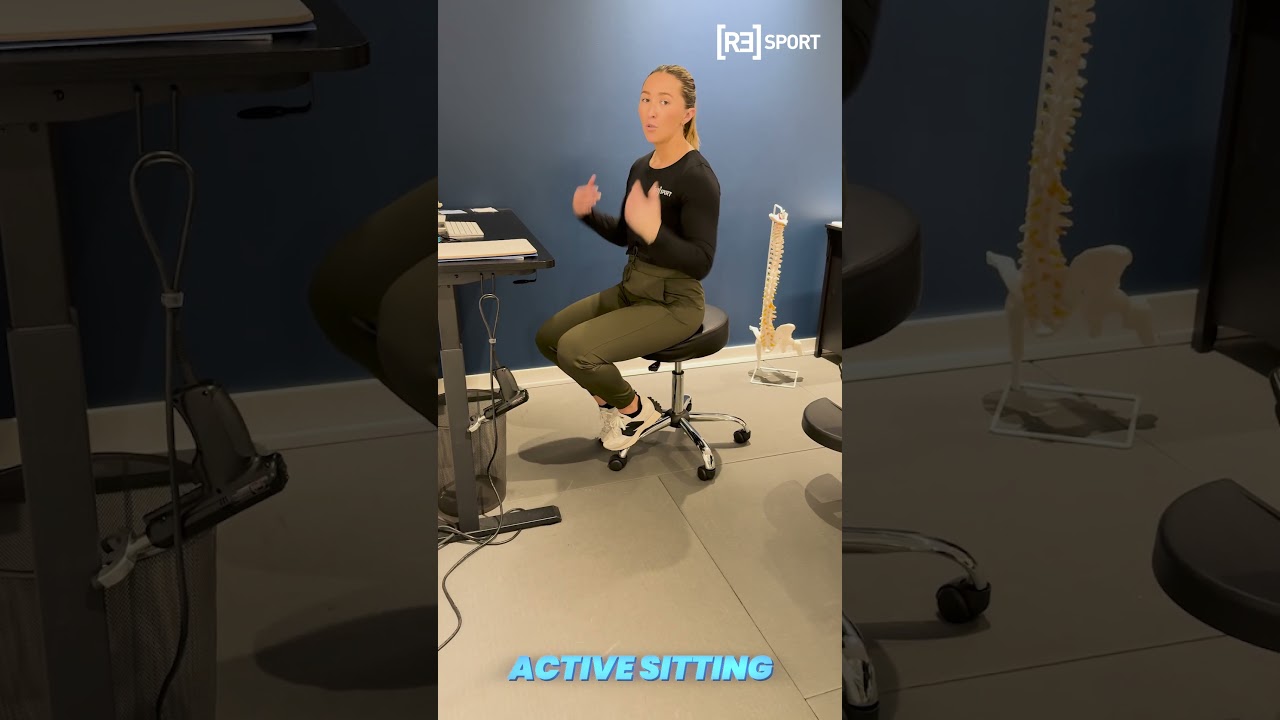
Active Sitting: Improve Posture & Core Strength!#ActiveSitting #PostureTraining



YouTube Invites Creators 💥 Shakeout Marathon Run 2025 Highlights! at ReSport

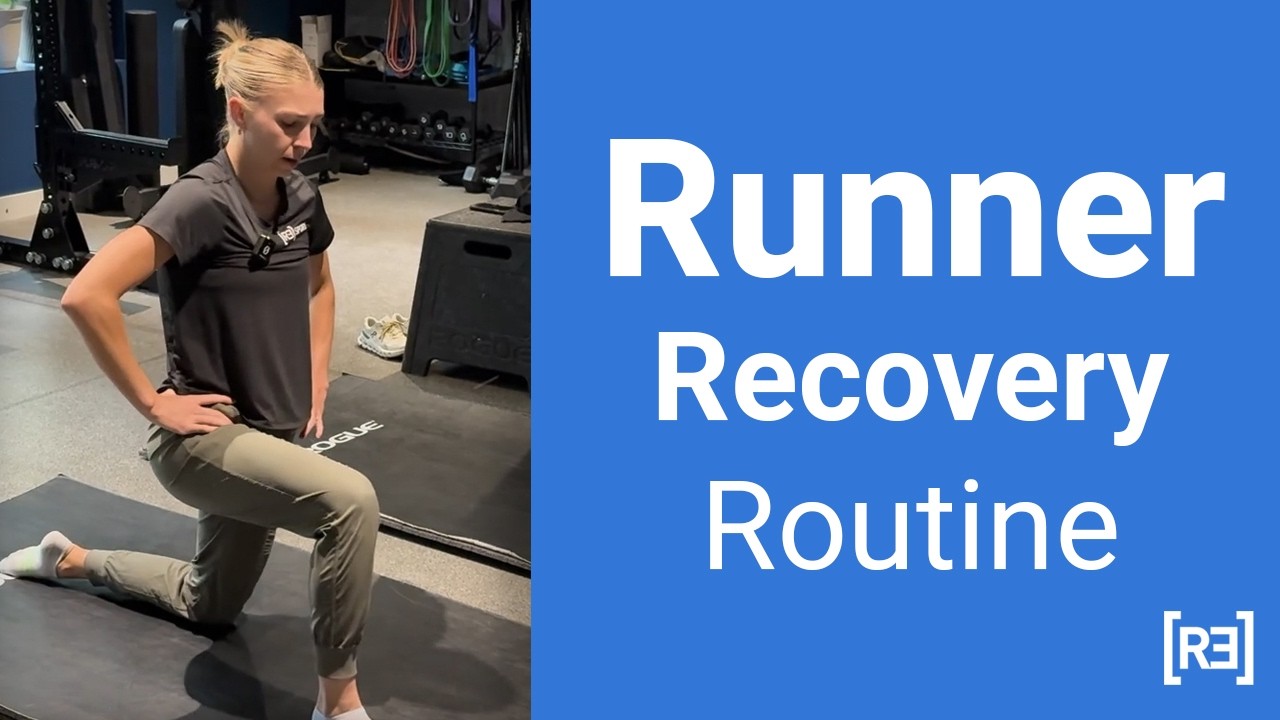
Post-Run Mobility Routine for Runners - Hip, Spine, and Calf Recovery with Coach Madeline

Explosive Track Workout for Athletes - RESPORT Chicago #TrackTraining #RESPORTChicago