Is it too easy to become a REALTOR®?
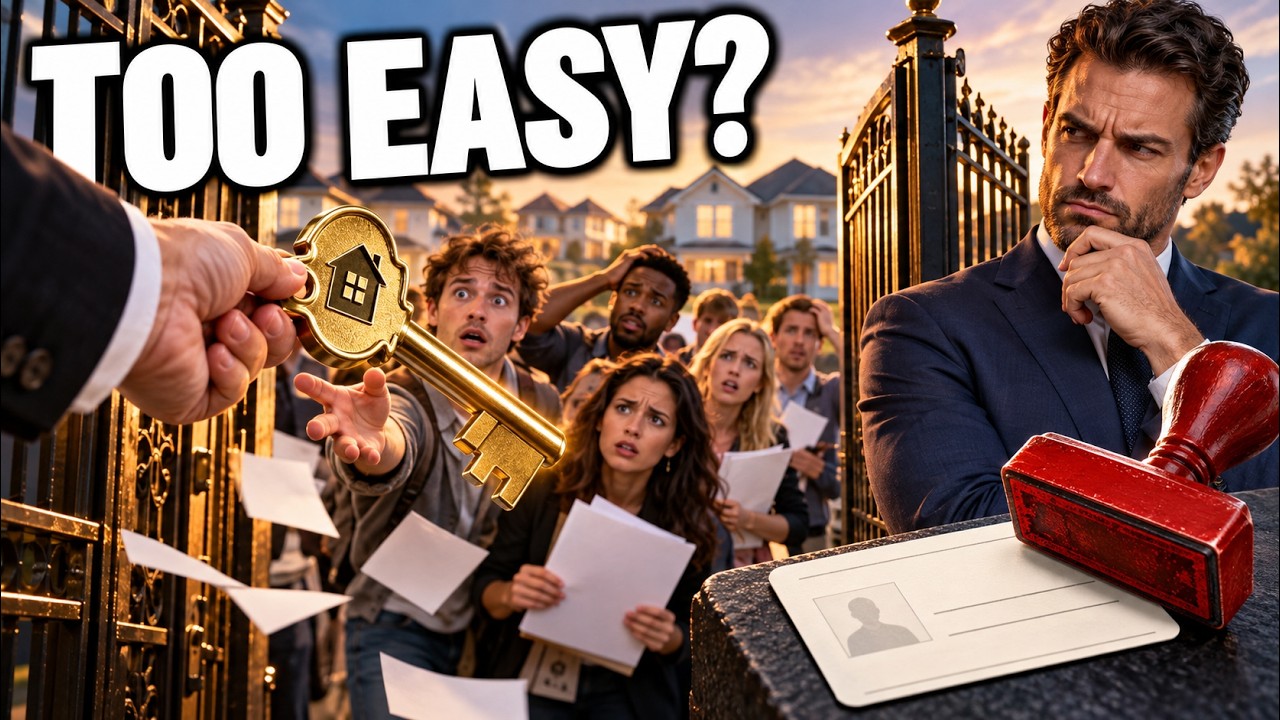
In this episode of Brokers Uncensored, host Shadd Boucher is joined by RE/MAX Alliance managing brokers Becky Dewey and Steve Zaras to discuss the perceived low barriers to entry in the real‑estate profession and the resulting impact on professionalism. The panel argues that while obtaining a real‑estate license is intentionally accessible, the lack of stringent pre‑licensing requirements allows part‑time or under‑qualified agents to enter the market, eroding consumer trust. They examine the role of post‑licensing designations such as GRI and C2EX, suggesting these should be required up‑front, but acknowledge the financial conflict of interest for state boards and NAR. The conversation proposes raising licensing fees, instituting mandatory apprenticeship or sponsorship models, and increasing ongoing education (e.g., annual ethics recertification) to create a tiered, CPA‑like credentialing system. Regional differences, such as broker‑state pathways in the Carolinas, are highlighted as examples of higher standards. Real‑world anecdotes—like a newly licensed agent misclassifying flood damage—illustrate the risks of insufficient training. The panel critiques NAR’s current lack of promotion of designations and its limited gatekeeping role, while expressing both hope for reform and skepticism about its feasibility. The episode ends with a call for audience engagement and a reflection on the need for the industry to evolve.
Chapters
Welcome to the next episode of Brokers Uncensored. I am here with Becky Dewey, managing broker of RE/MAX Alliance Group. Steve Zaras, another great, fantastic managing broker of RE/MAX Alliance. Of course, I'm Shad Boucher. And we are going to talk about something today that really has a bee in our bonnet. We are going to talk about the professionalism of the real estate industry and what we feel is a lack of, hmm, what do we want to call it? A lack of barriers.
Okay. Yeah.
That should be put in place by the National Association of Realtors. And isn't, and how they should be the gatekeepers. And I think that's something that we all feel is, you know, to be honest with you, it is too easy. It is too easy to become a realtor. Now, I think we'd all agree here, and you guys butt in, feel free, because I'm not the only one talking here. But I think becoming a licensed real estate agent in most states is That's okay. Okay, that that that level of difficulty is where it needs to be, and you should be able to be a licensed agent fairly easily. It should be. I don't want to use the word privilege, but I it should be a little bit of a task to become a realtor, and I think NAR needs to really kind of step up and raise that bar. Because right now, fog of mirror, you know. Okay, hang on. You pay us money and pulse. Okay, yeah, great. You're a
realtor.
What? And I think that's a problem in our industry because, you know, we've got a big responsibility.
Huge.
Well, imagine, if you will, you know, you've got Well, first of all, here at RE/MAX, we pride ourselves on education and we're really focused on professionalism. However, as you said, it is easy to become a realtor. A lot of realtors will go and get certifications and designations after the fact throughout their career. Can you imagine if we had to get those upfront? I took the C2EX, which through NAR, which is the Committed to Excellence.
Yeah.
I did that and it was fantastic. eye-opening, but it really talked about professionalism. Why isn't that a requirement before you can get licensed? There's other things that we can say, you need to do this before you're actually able to sell. Another one is the GRI designation.
Right.
These are important educational courses that will help raise the level of professionalism in our industry, but it also would weed out those who are not really committed. But the problem with that, Is if I could talk about the double-edged sword here. Go for it. The problem with that is then the states and the associations will not make the money that they're making off of newly licensed agents.
100%. No, I, I agree with you. I think that right now, I mean, right now, what, what do we think it is across the country to be a realtor every year? What, $1,000 between MLS and—
At least between MLS and, and, uh, the association dues.
Right. Roughly $1,000.
Yes.
Yeah.
I think it should be triple. I think it should be triple because if you are out here doing this profession and you're not making 6 figures, then get out.
Yeah.
Okay. And so I think that's one of the barriers that NAR should raise is the fees, because it would weed out the part-timers. It would weed out the people that do this as a hobby. It would weed out the people that sell one house and then, you know, whatever. And, and look, good on them that their, their spouse or somebody else, you know, has the money to, to let them do this part-time. But this is not a part— I don't go to part-time doctors. I don't go to part-time lawyers. I don't go to part-time professionals. And the public shouldn't have to. Right. And let's be honest, you know, other than than making a part-time agent wear a scarlet P on their forehead or something. How is the public supposed to know that you're putting your financial future into someone who, A, doesn't own a home, B, has sold one this year and has sold 5 in the last 5 years total?
Right.
I, I don't want, I don't want that person looking at me. I don't, I don't want them helping me. And, and that's— that wall needs to be put up.
I've had some really great agents in that situation who do an excellent job, and, you know, but for a majority, you know, they're slim pickings under those circumstances.
Well, let me ask you this, uh, um, Chad and Becky, uh, in our previous careers, uh, if you had one— I, I have, uh— we had annual reviews, uh, we had, uh, correct discussions about minimum expectations.
Yeah.
And if we did that with realtors and said, look, You know, or you had a bad year, you did only 5 deals, but we need you to get up to 10+ deals a year,
right?
Whatever it might be. Me, I always say, hey, a deal a month minimum, and you should not be focused on anything less than 6 digits a year, right? You know, that's why you're here.
Well, and I think you solve the problem with like small rural counties, right? Like, take where my family's from in Pennsylvania. You know, there's, there's 3 real estate companies there because there's less than 11,000 people in this whole city, right? Okay, great. So wherever you are, the county you do business in, whatever the average sale is there, you have to hit that every year.
Yes. Yeah.
And if you don't, you get a probationary year. And if you don't hit it the second year, then you can't call yourself a realtor and you can reapply later.
Yeah.
I mean, if you think about it, there are accountants, right? They have an accounting license. And then there are CPAs.
Yeah.
A CPA is an accountant that has done more work. Yes. We know when we go to a CPA, we're getting another level of an accountant.
That's right.
Realtors should be another level of a licensed agent.
I had a boss years ago used to say, improve or remove. It was that simple.
There you go. And, and, and, you know, Steve, you were talking about the GRI and, and the, you know, and the CRX and, you know, all this other stuff. Right? The public has no idea what those even freaking mean.
Nope.
No.
Nope.
And whose fault is that?
Ours.
Yes. And NARs for not promoting it.
Yeah.
NARs should be promoting the crap out of these things so the public goes, oh no, I want a GRI.
Right
now, becoming a GRI becomes valuable.
Yes.
You know, because you know getting these designations is not easy.
No.
It's not cheap. So why am I going to get these 3 letters after my name if it does nothing for me?
One thing I've recommended to my agents, because obviously nobody knows what the whole alphabet on your card means with all these designations, right? I don't discourage agents from taking those. I think they're extremely valuable and the referral network that they're entering into by doing it and the educational purpose. But one thing I found that I tell my agents, they're like, if I'm going to get it, if I'm going to get a designation, what should it be? And I'm like, Frankly, I think you should take all of them because they're great. However, if you're looking for a status on your card, I recommend— I say go get your broker's license. A broker associate has more weight than, you know, XYZ, ABC down the side of your card. Nobody knows what that means. Correct.
I mean, look, the good news is, like you said, Becky, the good news is an agent referring from Wisconsin is going to look for another GRI in Florida. Because the agent understands, but the public doesn't.
No.
No.
And NAR is supposed to be our face to the consumer.
Right.
So, you know, what, what are we doing? And, you know, I, you know, I think, I think the agent should have to retake code of ethics every 12 months. I think, I mean, I, there should be Difficulty.
Yeah.
Yes.
Becoming a realtor and maintaining.
Well, I get the emails from the boards about how many agents they inducted into the association. The numbers are staggering. I'm like, holy crap.
I mean, they're making a tremendous amount of money by correct membership.
I understand.
Here's the other thing. Now, this was years ago. This was years ago. You guys ever been to the to the The headquarters, at least where it used to be years ago. I don't even know if it's still there.
Mm-hmm.
In Chicago, right?
No, it's not there.
They had a, you know, big R on the front of the building. Big. So I went into the building. I was out, I was out there for a conference and I went in the building. I was like, hey, I just wanna see the headquarters, right? Oh, you don't have an appointment? No, I'm a member. You don't have an appointment? Well, I mean, I know I don't pay for a lot of this building, but I probably paid for that doorknob. Like, can I just get a tour? Oh no, you need an appointment. It's like, like, not that they needed to roll out the red carpet for me, but
they should have been a little bit more welcoming going, yeah,
well, that all members here, like, this is,
yeah,
you know, and I look, I know they do good work in Washington. I know they do things and, you know, but at the end of the day, 30% more exclusivity would go a long way to improving their value.
Yeah.
And our value is being realtors and something that— and that's the whole thing. When everybody can be one, then what's the point?
Well, the joke is more people have real estate license than driver's license.
Yes.
Yeah.
And that's—
And that's probably—
Well, and here's the thing, you know, I'll, I'll give you my I like the fact that you can go down, take a 60-hour course, be invested in, but get a license to operate in Florida. Because there's a lot of people that don't start off in their lives with a silver spoon in their mouth, can't afford to go to college. Can't— this is a career that, you know, I don't, I don't have a college degree. I am— I, I was taking college courses. I was on my way to get a degree, and then I started making 6 figures doing this and went, why do I want to go into debt?
Right.
So I love that, that you can get a license and build a business and have a family and pursue the American dream. So I think that level is great. But I think becoming a realtor should be like becoming a CPA, becoming a board-certified plastic surgeon, becoming a board-certified physician. It should be a status. And it doesn't mean anything when you fill out a form Pay your money and you become the same thing that I am after 26 years of investing in this industry.
Well, and correct me if I'm wrong, and I don't know all the details of it, but like, I know, like the Carolinas, for one, they're a broker state. Like, you don't get a salesperson license, you get a broker's license. And their, their criteria, from my understanding, is a lot more—
Right.
You know, difficult because you don't, you know, because right now, salesperson, you got to be a salesperson for 2 years and then you go to a broker. And I know, like I said, in the Carolinas, I think they're one of the states where you, you're going straight for a broker. And I understand their criteria is to be a little bit more difficult,
which is,
which is great. Florida, that's part of the issue.
No, I think it really— I look at it as NAR. NAR, you should— I mean, to me, and again, I don't run NAR, you know, but you should have to have a sponsor, which could be your brokerage or your broker. You should have to have an agent that says, I'm going to take responsibility for Kevin, and I'm going to be his mentor. You know, just like an appraiser, you should have to do a minimum number of appraisals. You should like all of these criteria to—
you're talking basically an apprenticeship.
Yeah.
Yeah.
Yeah. And then, and here's the thing, and then it should be a big flipping deal to pin that R on somebody.
Yeah.
Because you've worked hard to get it. You know, and just imagine what we would be to the public then,
right?
You know, and and yeah, is it going to gatekeep some people? Yeah, it will. But it should.
Yeah,
it should. You know, there's I you know, I think all of us right now are dealing with a caliber of agent that has no concept. I just had an argument yesterday. With an agent, which was hilarious. He's representing a condo. Okay. We know for a fact that the condo flooded during Milton.
Yeah.
He said, no, it didn't flood. That was upwelling of water. Yeah, that's called a flood. I said, did you take FEMA funds? Well, yeah, but it doesn't— it's not in a flood zone, so it doesn't require flood. So it didn't flood. It's not a flood.
That weren't in flood zones.
Because it's not a flood when you're not in it. He goes, it's not a flood when you're not in a flood zone. And I actually had to, like, I felt myself getting stupider.
Yeah,
like, I'm like, you're— and this guy was selling a $900,000 $100,000 condo. And he's arguing with me that it wasn't a flood because it was an upwelling of water.
Upwelling?
Yeah, that's the, that's the words he used. I literally
was like, you know what that means?
Exactly what I said.
I'm like, sounds like a flood.
Yeah, it sounds like to me like a flood. I was like, was water— was there— was water where water wasn't supposed to be? Not coming from the pipes in the house. Well, yes, but this was an upwelling of groundwater. Okay. Water on the ground. Where did the water come from? The upwelling. Okay. Did they take FEMA funds? Yes. Then it flooded.
Hold on a minute. I got to go bang my head against—
Exactly. Exactly. And I was like, you know, and, and, and then let's be honest, you know, I, I shouldn't do this. I shouldn't do this. But while I was having this with this agent, I went and looked up. Yeah, he's been licensed for a year.
One year? Yeah,
he's been licensed for a year. He's at one of these companies that provides no training, and he's out there training himself.
You feel—
yeah, and, and that amazes me.
He's out there training himself.
Yeah.
And, and you know what, he might get away with this for 30 years, or He might end up in a lawsuit that destroys him financially because he makes a mistake.
But see, that opens up another issue. They want to go with these other companies where they think that they're getting a larger cut,
right,
of the commission check,
but
they're not getting the support and the education that they need and the guidance. And they could make so much more money if they just would join the right company.
But again, I think real estate school and getting your license does not teach you the ins and outs. And there's so many moving parts to a transaction.
And that's why all of us—
and we can admit we've all been in this a long time.
Yeah.
I mean, there are days where we're like, I've never dealt with that before.
Well, you know, yeah. I mean, I, I knew enough about the FEMA 50/50 rule between before Milton to be dangerous.
Yeah.
And so I had to educate myself really fast after Milton because what, 100 years Tampa Bay hasn't been hit?
Yeah.
So yeah, but again, there needs to be somebody out there that is that barrier, which needs to be NAR. I'm sorry, it does.
Yeah.
And, and maybe, and maybe this is going to make somebody from NAR mad, but I'm telling you, that's what it is.
But unfortunately, I don't think that's ever going to happen.
No, I don't see it happening either. I don't see it happening.
I don't think we're saving the world, real estate world.
No, but you know what, I think, I think it's— I think there's a lot of people that feel this way, and, and hopefully at some point— well, and here's the thing, that's why there's a rival association now.
Yeah.
And that makes me sad.
Yeah,
that makes me sad because the National Association of Realtors is a is a is an iconic thing.
I
don't want to see it replaced, but you know, but I also want to see it realize that it has to change.
Well, it may step up to another level now.
Yeah,
I hope. But all right, guys. Well, appreciate you watching this episode. You guys got anything to say before we cancel this one out?
No, great, great talk, great discussion.
Not a problem. And you know, if you guys like what we're talking about here, like and subscribe. We are, like I said, we are, we are now in the double digits of subscribers, which is awesome. Um, and you know, really, to tell you the truth, this is more of a therapy session, but we'd like it to become something else. So please feel free to reach out to any of us if you have questions. Leave something down in the comments, and we'll see you on the next episode.
Have a good one.
Bye.
More from Shadd






Flight Attendants with Real Estate Licenses The Public Deserves Better! #b #professional #really
