Blair Fambro on Shally's Alley: Unlocking Growth and Opportunity Through Diversity Sourcing
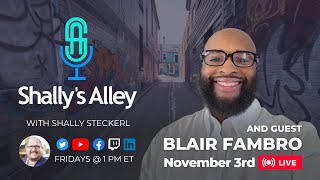
In this episode of Shally's Alley, host Shally Steckerl interviews Blair Fambro, the DEI strategy lead for engineering at Johnson Controls. The conversation begins with a light‑hearted birthday celebration before moving into a deep dive on diversity sourcing. Blair defines diversity sourcing as a focus on diversity of thought rather than just race or gender, emphasizing the value of varied backgrounds, industries, and experiences. He shares practical, data‑driven tactics such as leveraging Talent Neuron, LinkedIn Insights, and internal applicant data to identify geographic talent pools, and explains how blind or anonymized resume submissions can reduce unconscious bias. The dialogue highlights often‑overlooked groups—people with hidden disabilities and returning citizens—and discusses the paradox of “reverse racism” where promotion programs favor certain protected classes while excluding others. Blair describes the challenges of organizational resistance, offering strategies like building a business case, presenting data, and educating leaders. The interview also explores mentorship versus apprenticeship, the importance of long‑term holistic development, and how mentoring can be a two‑way learning experience. Throughout, both speakers reference the myriad forms of unconscious bias (halo/horns, PLU bias) and stress the need for continuous awareness. The episode closes with Blair’s advice to put oneself in uncomfortable situations to foster growth and a call for more mentorship programs in diversity sourcing.
Chapters
Hey, hey, hey, where are my party people at? Party people! You are live on Shelly's Alley, and today is my favorite day of the year. It's November 3rd. This is the first time in the history of the planet that there has been a Shelly's Alley on Shelly's birthday. Today I finally turn 18 and can vote. Fine. I mean, I've been waiting to vote. I'm probably not gonna vote, but I'm waiting. Just kidding. Not gonna tell you how old you are, although if you're pretty good sorcerer. I'm sure you can figure it out now that you have my birth date. So, uh, who would I choose to celebrate my birthday shally-zally with but the illustrious and impressive gentleman, Dr. Blair Fambrough? Now, he's not a doctor. I'm just messing with y'all. But for those of you that don't know Blair, well, let me tell you, first of all, you're missing out Secondly, well, you know, Mr. Fambrough's got what, 14, 15 years experience in TA, something like that?
Yeah, around there, about 12.
All right, 12. All right. And some of the companies you might recognize, he spent a little stint at HP, and there he was the digital media lead From there, he went on to a company that you might recognize called GM. It's a small company that makes, you know, things that like, you know, transport people. By the way, forgot to tell you this, Blair is in Detroit. I think you're still in Detroit now, right?
Yeah, Detroit.
Spent some time after 5 or 6 years at GM, went to Twitter, worked with a couple of friends of mine there. And now he heads up DEI strategy for engineering, something that is near and dear to my heart, at a company called Johnson Controls. And I spent some time there consulting with them as well. So I, I know the company pretty well. For those of you who have no idea what Johnson Controls does, a lot of the times that, well, if you look up into the sky and see a satellite, there's probably a bunch of parts of Johnson Controls in there. And pretty much any time that you use a car, there's probably a Johnson Controls in there. Not only do they make, you know, parts for engines, but also obviously controls and those start-stop batteries. Am I right? Is that the battery? The start-stop batteries are yours, aren't they?
Yeah. Yeah. Now, now Johnson Controls transition in regards to smart buildings. So they do a lot of things in regards to intrusion. You go to an airport and those sensors open. That's pretty much a Johnson Controls. Traffic controls project. So they have their hands in a lot of things.
Nice. Okay, yeah, it's a, it's a great company. Um, and I think they're in, uh, are they in Michigan or are they in headquarters in, uh, Wisconsin?
Milwaukee, Wisconsin.
In Wisconsin. Okay, okay, not too far from y'all. Yeah, not too far from y'all. All right, so, um, for those of you that are just tuning in, we have Blair Fambrough, currently at Johnson Controls. He is Your HR Connect, #YourHRConnect on YouTube. I'll put a link up in a minute here to that. And his specialization right now, although he's been doing this for a while, but what he's working on right now is day-to-day is diversity, equity, inclusion strategy for engineering specifically. And, man, I'm just gonna kick it off. I'm just gonna go right in. And, you know, you know me, I like to just dive in and go deep.
Oh yeah.
What does diversity sourcing mean to you?
Diversity sourcing means everything to me because this is something I've been, I've been passionate about, um, for, for many years before diversity sourcing became a thing.
And you're telling us that you were doing it before it was cool?
Yeah, yeah, definitely. Um, and the re— the reason why it's passionate for me, because coming up as a source and recruiter, you know, when I— some of the companies that you mentioned, like the, the, the, uh, GMs and HP and other organizations I've worked for, I've always seen a trend in regards to hiring. And, and it seemed that companies— and I'm not talking about those particular companies, but working even in the staffing agencies, I work from the staffing agencies— I've always seen the trends of companies hiring the same type of talent, or even working with leaders that always always pick certain universities that they say, okay, this person, this person went for this university, they work for this company, so I know they're the best.
And they have this mentality and thought process of that, and they don't think that that's discrimination.
Yeah.
Or they think that that's being discriminated— discriminating in the, like, that's where I know the talent is. But they don't realize the negative impact of not including, you know, diverse talent because it's sort of unilateral. You know what I call that? Um, I call that recruiting PLUs. People like us.
Yeah, and that's— and I like that. And that, that's exactly what— that's exactly what it was. So when, when I, when I decided to focus more on the diversity component, and I've noticed that there's a lot of talent internally that are part of ERGs and BRGs, and this was back when people were not as engaged with working with ERGs and BRGs. So I took it up— I took it upon myself to network with the people that's already within your organization in regards to getting referrals, in regards to what are the local meetup organizations. And most of, a lot of my work in regards to sourcing has been in Michigan. So I always try to figure out where are some communities that I can engage with that has, that has people that happens to be diverse that would be good, a good fit for certain organizations that I was supporting. So that has been always my passion. And, and that's one of the reasons why even before diversity and equity and inclusion roles were available for talent acquisition as a dedicated— Yeah, yeah. General Motors was able to launch that before in 2018. I decided to join that team because I was so passionate about diversity and I knew that was going to be the future of how we source and ensuring that we use diversity, DE&I, as we engage with talent from the organization. So that has been something I've been passionate about and I could see myself doing this for a very long time.
Well, yeah, I hope you do, for sure. I mean, it definitely makes a difference. Can you dive in a little bit more into specifically what diversity sourcing is for you? And, um, like, how— first of all, how do you define diversity? And how do you define sourcing for diversity? Like, what does that mean?
When I first think about diversity, and a lot of people make, make this mistake, I don't just think about it as race or gender and ethnicity. I focus on diversity when it comes to diversity of thought. And, and, and here, here's the reason why. And for me, I feel that the best way to learn from individuals and bring individuals together is to come from different backgrounds. So if, even if they happen to come from different, uh, different countries or were coming from a different institution, let's say for example, most of my experience has been tech and engineering. And the places, right?
Okay. Yeah, that makes sense.
Always want to hire people are from tech and engineering, but I know companies, they do things differently. Um, you look at banking and financing, you look at government sectors, they have a different way of how they do things. And each organization, each, each of those entities have a different and unique way of doing things. So bringing them together and working within an agile environment, you're getting different people from different backgrounds. And that's a, that's a diver— for me, that's diversity of thought.
So you're Your def— your definition of diversity, pun intended, is inclusive?
Yes.
Okay, because in this show we've had many guests, and I think, uh, at least I know I'm polarized, and I may have intentionally selected guests that are also, um, feeling like me, although they are diverse in opinion, in that polarization as well, which is that to me Diversity does not equal race, which is something that I sadly run into as a consultant when I used to do that. And, you know, not, not now in the company where I'm at. They have a very— I agree with, very much agree with the definition of diversity here. But in general, when you go out there and people talk about diversity, they sort of single out or like pick on a particular race, skin color, right? Or something, but it's very— it's a narrow definition. It's almost like diversity is about picking some protected class out from amongst the others, which to me kind of seems like discrimination.
Yeah, yeah, right? It definitely does. And now I'm starting to work with different peers that come from different backgrounds. A lot of things I hear often now is reverse racism.
In the workplace because they feel that, hey, there's a backlash of too much of one. Yeah, excess of anything is always right.
Yeah.
So tell me more about that. So how does that represent the reverse racism?
Well, it raises awareness because there are certain companies, and I've read about this, where they have promotional programs or promotional opportunities internally where they're only dedicating this to individuals, maybe POCs or women. So you're taking out a class of people who may be up for promotion or anything from that perspective. And then that raises issues in regards to, hey, I don't have this ethnicity, last name, or I don't have this certain background in regards to my race, so I may not be up for promotion, which has been geared towards the same thought process of others have thought about in regards to reverse racism as well. You know, with that, it has to be a clear line in regards to why we're doing diversity, equity, and inclusion and why we're building a certain, a work environment for everyone. And that's my idea of inclusion and that's my idea of process when it comes to sourcing. So when it comes to that, you know, there's always going to be concerns for all things. So one way we have to do that is we have to primarily train on exactly what diversity and equity and inclusion is. And for me, and I think when I'm working with people, I think people are intimidated by having that discussion or still don't have a clear picture because there's so many different definitions of diversity.
Right. They don't want to say the wrong thing and then be— Yeah, I got you.
Yeah. So that's always going to be a slippery slope. So once we can define what D&I is across the board and why this is taking place and why this is beneficial for everyone, is going to make sense. And even for me, it's been personal for me because I struggled with that in the beginning of my career. So I understand both sides of it. And this is what I mean by struggling with it at the beginning of my career is that I was to the point where I was working for so many companies and I didn't see anyone who came from my background or even looked like me or even had my tone of voice. So I was more focused on trying to fit in opposed to being myself? Or should I speak this way when I'm doing a presentation compared to how my colleagues are speaking? Am I speaking effectively or efficiently to be able to say, hey, this person is a good employee and is able to fit in? But there were times where I felt that I couldn't be myself. And if I wasn't myself, maybe people who didn't come from my background understood me personally or professionally. So those were some of the things that I had to struggle with. Which I think I'm overcoming. And I'm also put in a position where I can help others be their authentic self, no matter what their background is.
Yeah, I can— I appreciate that. And I can totally relate with that. It's— I've been trying to put this in a— trying to be a little bit sensitive here, but you had the opportunity to experience that and recognize that you didn't see it was visible. So you saw that there weren't people like you.
Yeah.
But there are— we were talking about this in the last episode— there are people who don't have that. They're not as lucky, right? They, they can't see that they're different from others because they have hidden diversity. So, for example, I was— I've recently been reading about the sunflower and hidden disability, people with hidden disabilities where they, you know, they don't talk about it. They don't, they don't even when they apply for jobs, they don't even acknowledge that they have a disability because they don't want to be excluded or discriminated against. And it's not a disability that you can see or detect, right? There's, there's various of them. And even if your skin color is one that passes for the majority, right, there's still— so for me, the reason I'm being long-winded about this is that for me recently, right now in the environment today, I'm feeling a lot of what you're talking about. Of wondering if everybody else, if anybody else out there, you know, feels like I do because I'm Jewish and right now there's a huge backlash and an increase in antisemitic activities, behaviors, thoughts, talk. My children are afraid of talking about their background at school. So they're— I relate with what you said because they're trying to hide that or trying to fit in or trying to like blend in. And outwardly, there's no, you know, you can't, you can't look at, you don't look at Shelly and say, "He's Jewish and Hispanic," right? But yet I've, you know, secretly felt that pressure. So I totally relate. But when it comes to, tell me from sourcing, I started a sourcing team back in 2003 at Google, and the focus back then for Google was Larry and Sergey had attended a chat or a speech at Carnegie Mellon University by the author of Shattering the Glass Ceiling. And so when they came back from that, their, their minds were working on how do we, you know, improve things. And then, and one of the conclusions from that book was that there needs to be better gender representation, particularly amongst engineering. So they came back and they said, we need to increase our female engineering staff. So that's what this team was, was about gender diversity inclusion. And at the time, it was fairly, you know, this was a while back, 2003. It was, it was still fairly black and white. Gender was, was still kind of a binary thing. They hadn't started, there weren't any LGBTQI+ inclusion teams, much less any female engineering team. So this was the beginning of that. It's a little easier to, it's a little easier to source for female engineers because it's easier, or it was back then, to distinguish them. And so our job wasn't to discriminate against male engineers, but to increase the top of the funnel and include more representation because it was known that there were a lot more disproportionately male applicants than female applicants. And so for whatever reason, female applicants were less of a minor— is it— is less of a minority less? No, they were more of a minority. They were more sparse, right? There were fewer female applicants than there were female engineers represented in the, in the population. So Google knew that they had to, you know, boost that. And so that was what my team did. But nowadays, even that's getting harder, right? So how do you go about sourcing for diversity in a way that elevates everyone and is inclusive when it's getting harder to kind of pinpoint diversity, right?
Yeah, yeah.
So what—
it's getting extremely hard to pinpoint diversity for two, for multiple reasons. I think everyone wants diversity. Everyone's going for the same candidates. But for me, I just try everything I try to do. I try to put it— I try to make diversity a forefront of everything that I'm doing, you know, in regards to if I'm looking for a certain demographic. I don't try to do it just for looking at a certain demographic. I just try to look at data and see what's out there.
Right, right, right, right. So the first— so let me recap that. What you just said is the first part of it is identifying, uh, what is out there Right. And then you're, and then you're not trying to eliminate or corral a particular protected class. What you're doing is you're trying to elevate by, you know, knowing what's out there and kind of boosting that population, all of that population evenly. Okay. So what are your, do you have any places that you go to, to help pinpoint, or what, what are like your destinations for, for research, for facts, for data, for hard numbers?
Yeah. So for facts, so I like to use certain tools out there like Talent Neuron. LinkedIn insights and also historical internal data. Because when you're working, especially when you're working with a large organization, you can easily see what the applicant flows or what applicant, how many applicants have applied, if they shared any sensitive data in regards to if they have a disability or anything from that perspective, which you do have to be careful about that. But you can see based on some of that voluntary information internally, where are these individuals, where they're applying and where their location are. So you can use the historical data to say, okay, perfect. So we, we have multiple applicants that apply to this particular position from a data perspective. But so how do we use this to our, to our advantage in regard to bringing in talent, but also bringing in talent that happens to be diverse? So that, that's been, that's been an approach I've, I've been using. Say for example, if I know that I'm, I'm gonna recruit for Atlanta or I'm gonna recruit for the Houston area, I know that based on his historical data, how many people apply, I'm probably gonna have more diverse applicants that may, they may happen to be, happen to be, you know, people of color or fall under the category of Latinx. So that is my thought process in regards to making sure that even if I'm going to search, I may not have to use an HBCU string, or I may not have to use anything else because they are based on the numbers, they're going to be in the pool anyway. So if I, if I'm reaching out to individuals, if someone responds, more than likely I'm going to have a wide range of diverse reasons, right?
So in other words, kind of the, the talent pool in that geography or in that community is already better represented. Yeah. And so therefore, okay, what about your internal data? How do you know that your internal data contains the, the, the information that you need? Like, for example, um, you know, with, with some ATSs, it's collected, but it's not visible to the recruiters. So is there some way that you're able to, I don't know, anonymize and report on— how do you know your— how do you know the diversity composition of your internal data when the ATS may not actually tell you what they selected because it's private?
Yeah, yeah. For me, I, I like to get— I have to request a special approval. Every company I work for, and then you can see it.
Okay.
Yeah, yeah, then I can see it. But I really have to make a business case on why do you need to— why do you need this confidential information?
Gee, I don't know. Don't you just show them your title, go like, I am in charge of diversity, so therefore, uh, that would be nice. Gee, I don't know why I need to see this. Yeah, yeah.
Once you go— once I make that business case and, you know, they They finally look at my title and say, okay, this, this is what you're doing it, doing it, doing it for. But another point is, I think what a lot of companies may not do in regards to the sourcing strategy is you, you, you must start from the forecast in regards to understanding where, where, where are you going to find that? Where are you going to find diversity? If you're looking in, in Idaho for diversity talent, or what's it going to look like?
Yeah. Yeah. Where? Yeah.
Yeah. So if you're looking to hire, if you're looking to diversify your team, you want 20 diverse hires, you're probably not going to get that unless you reach out to people who are going to relocate or who's going to work remotely for those teams.
So, right. If you're looking to put them in an area that has not a very dense population and not a lot of selection of talent. So in your experience to date, what, what groups or classes do you feel have been the most ignored? And I'm sure there are a lot, there's too many to mention, but like, is there, are there some communities that you feel have been passed over even with all that we've been able to do with diversity in the last few years?
Yeah, disabilities. I think for me that's number one.
I think so too.
It's definitely ignored. Every time I hear about a strategy, I always hear about women, I always hear about African Americans, I always hear about Latinx. It's very rare that I hear about a strategy for or about disabilities.
Otherwise abled people, right? Yeah, that's a very good point. Yeah, yeah. Um, you know, in my, in my experience, people who are low vision and blind, um, tend to have a very high, uh, what's the word, unintentional unemployment, you know, real unemployment. The number of like people that are looking for but can't find work because of their, um, because of their lack of vision. And I was secretly hoping that the pandemic would have somehow increased their representation because, you know, working from home, definitely, if you don't have to drive to the interview and drive to the office, and, you know, that would help. But it might— what I've seen so far, it hasn't had a very significant effect on that one particular group, and they have an 85% unemployment rate. Let me tell you another one that I think— I don't know if you're running into this at all, but returning citizens. So you know what I mean by that?
No, can you explain to them?
Yeah, so returning citizens are the community of people who have been incarcerated and have served out their sentence. Essentially, they have paid back their, you know, they've done their time, they've paid their dues, and are now being reintroduced into productive society. And the problem is that the rate of recidivism, or people that return to prison, is extremely high. I think it's as much as 75% within the first year, and they actually have numbers that represent the recidivism rate increases closer to being released, but if you're able to stay out of jail for 2 or 3 years you have a better chance. And so it's kind of like one of the, one of the goals is to try to keep people out of jail for a few years, because then they have a, you know, lower chance. And what, what I've seen in the efforts that I've conducted around that, there seems to be this fear of like someone who was incarcerated is just, you know, they're going to commit the crime again. So like they were You know, one of the people that I worked with and helped out was— had a 3 life sentence term or had been committed to or whatever, sentenced to 3 consecutive life sentences, which, you know, that basically just means forever. However, they were able to— there was a pardon in their state where they were able to get out after 35 years. Mind you, they went in when they were 18. So there's still plenty of life ahead of them. But now, just, this is just exemplifying kind of the problem, right? They're getting out into the workforce, and they have, they've been in since they were 18. They don't know anything about society anymore. I mean, cell phones, internet, it's, you know, think about 35 years ago where things were, right? And so these people are essentially ejected into modern society, and they're not given very much. And so for them, forget about life skills or job skills or whatever, it's so incredibly challenging for them to get some support. And then when they go and apply, they're almost immediately dismissed because they have, you know, a felony. To make a long story short, What I was very surprised to find out as I looked into these numbers is that violent felons, people that have been convicted for violent crimes, are amongst the lowest rate of recidivism. In fact, they're the ones that least frequently commit a crime again, especially if they've been in prison for a while. And the reason is that often their crime was a mistake, not a, not a policy, you know. And the highest rate of recidivism are white-collar crimes.
Oh wow.
And so guess what we do when we're recruiting? If they've been convicted of a violent felony, we kick them out. But if they've been convicted of a white-collar crime or an office crime, we don't have a problem with. But they're the ones that are the most likely to commit a crime again. So it's almost like we have this reverse mindset where, you know, we're giving the wrong opportunity. And there's, there's not a lot that, unless you ban the box or give them an opportunity, there's not a lot you can do for people that have had those violent convictions. So to me, that's the blind and the convicted felons that are re-entering society are the biggest groups that are just sorely misrepresented.
Yeah, yeah. And as, as interest, I, I never thought about it in that perspective in regards to You know, that you indicated disabilities and returning citizens. That, that is an excellent and great point. And I can even see where a lot of people will have biases about that. Or, you know, if— yeah, if someone—
he was a murderer, we don't want him working in the office. Okay, well, let's— first of all, it's not going to happen again. Secondly, what if it's remote? And, you know, like, yeah, you know, it's, it's not right. It's not— it doesn't, it doesn't mean that they're gonna commit a crime again, especially if we give them a chance to contribute to society. So my friend that I told you about is happily employed, and, um, he's just— he's extremely grateful for this employer. He's going to stay there as long as they let him, you know. He's not going to do anything to mess that up.
Yeah, yeah. And, and it shows that, you know, when people are being, being put in that position in regards to return— returning and being able to flourish, no matter what their background is or what, what transpired, that shows that you can still strive and be productive citizens. And also showing that, hey, this could be another strategy to help, maybe even if it's in recruiting or within the manufacturing or whatever skill set that this person can be trained on. This could be something to look forward to just to make sure we're including everyone from an inclusivity perspective.
Yeah, we definitely need to do a little bit more of that. You know, training, because that, that's a way to increase, that's a really, I don't want to say easy, but that's a very direct way to increase diverse representation in our companies if we have a better program to help people transfer their skills, especially if they're coming from a displaced market where their skills have become obsolete. There are many examples of jobs that have been eliminated because the job simply doesn't, isn't needed anymore. You know what I mean? Like, it's not that person's not unemployable. It's just their skills don't apply to what we're doing. But they're still hard workers. So, yeah, I want to, I want to switch a little bit here and ask about the friction, or how, more importantly, how you overcome the resistance in an organization that doesn't have to be your current company. But, you know, you've worked with very large companies. How do you overcome the resistance in accepting the talent that's coming in through your efforts without essentially singling people out, right? Like, is there, do you have any words of wisdom for us out there that are trying to put a diversity program in place, and we're finding it, you know, our candidates are essentially getting more roadblocks than they should? Is any advice on that?
Yeah, and I've dealt with that, you know, during my, my journey in my career. You know, there's been leaders that I've worked with saying, you know, I don't, I don't care about a diversity component. I just want to bring that. I just want to bring top talent to the organization no matter what their background is. So, and I, I'm okay with that if you're, you know, in regards to you saying, you know, you don't care about the diversity, but the diverse— I try to educate them on why diversity, uh, is important and, and also provide data. But that's just the basics of it. One of the things I try to do too as well is I've been— I, I like to submit candidates with hiding their names, their location, and also removing their education.
Blinding. Yeah. And some ATSs actually allow you to, you know, straight up, like, you know, just do that from within the system. So that's, yeah, that's good.
Yeah. So those, those are some of the things that, that I do from that perspective.
Aren't you, aren't you channel, aren't you like sort of telegraphing though? Like if you hide it for this candidate but not for the other one, they're gonna know.
No, I had, I was hiding it for all.
Oh yeah. Good, good, good, good.
If I have 5 candidates, I'm gonna submit, they're all blinded.
Yeah. Yeah.
And just gonna, that was a bad word. I'm sorry. You know what I mean?
They're all, anonymized or whatever. Now I really stepped in it. But anyway, apologies. So, yeah, that— okay, good. I'm glad we went into that. That can be a difficult situation.
Yeah. Here's why I did that, because I was working with managers that indicated, hey, I like this resume that you have from an HBCU or others, but I also— this person went to U of M. I know the professionals. I know who's working at— I know who's at University of Michigan. And I try to say, just because they're working this way, this person is actually working on autonomous vehicles. That's, that went to HBCU and is with our competitor. So this person doesn't have, he wants to get into autonomous driving. He's not doing it. So that, that made me, I, that's the reason I started the blind, the, the, the submitting, not the blind approach, but the, the hiding the, the candidate's name information. If they're a sorority, I just hide all my submittals and put them and just give a pretty much a summary overview. Because I want to eliminate all of that process. It's gonna, it's gonna take, it's gonna take a while, but also, but also it's gonna take a while to change people's thought process on that. But if, if I can get at the beginning to say, hey, this is a person's candidate, look at the job profiles and, and look, and look at their bullet points on their resume, that, that, that's the start. So then I can start saying this person's from a, has a diverse background. Before you seen this person's university background, you were, you were, you were okay with the resume and it starts to get them to think like, man, do I have some biases there? Or is there something in the back of my mind that's saying, hey, you know what, I am being biased and I don't even know I'm being biased in regards to someone's background or institution, more of a favoritism perspective. So that's what I'm looking at.
No kidding. So I am actually— I teach a course on hiring manager interviewing, and there's a significant portion in there about unconscious bias. And as I was preparing for the course and I was putting together the PowerPoint slides, I surprised myself with how many different kinds of unconscious bias there are. I was putting together the PowerPoint slide that was about like, this is unconscious bias, and I wanted to list them. There were too many to fit in a PowerPoint slide at 28-point. I was like, oh my God. So I had to kind of subcat— summarize them. Like, for example, horns bias and halo bias I put together. Halo/horns, because they're kind of the opposite of each other. And so on and so on. But there were like 30 of them when, you know, you might know about it, but then when you start putting it together to show someone, you're like, wow, this is a lot. There's a lot of ways that we fool ourselves into hiring PLUs.
Yeah, you know, it's, uh, yeah, I, I, you know, and, and my journey, I even caught myself with biases. Oh, this, this—
yeah, I was just gonna say that too. Yeah.
Yeah.
So I said, you're like, oh, wait a minute, I just did that. Yeah.
Yeah. Yeah. It was like, okay, I just thought, you know, this, this person worked for this company or this person went to the same university I went to. They might be. So it was not just, you know, me as a, as a TA professional saying, oh, Mr., oh, Mr. And Mrs. Or the hiring manager, you're doing this. I had to train myself to, to, to not do that as well because I think, you know, we naturally have biases because we understand our background. You might say if this person has the same journey I went through, they may have the same skill set, but you, I can't I can't have that thought process, especially if I'm trying to drive change within the culture.
Somebody told me once, it was, I was having a conversation with them, and you might have been on the show here, about the origin of this unconscious bias. And that where it comes from is a good place. Where it comes from is a place of survival and of, you know, community, right? It's being able to identify patterns that essentially keep you safe and keep you from harm. But that was before our society has evolved into what it is today. That was back in, you know, back when we were still— we didn't really have cities and, you know, and so on. We just, we've evolved so quickly that that hasn't had time to catch up. And so this origin of bias today, it represents this way, but it really, it was a way to survive. You know, you could die if you didn't have a discriminating mind that was able to recognize certain things, except now we're, you know, just applying it the wrong way. But yeah, it was interesting because this guest's point was that essentially you can't eliminate it. So you don't want to, you don't want to make bias disappear. You just want to be aware of it. Like you just said, you got to, you became aware of your own bias and you're like, oh, I do this. So now I need to pay attention to it and know that it's there. Yeah, this brings me to the other thing I wanted to ask you about, which is, um, something that you're big on, and that's mentorship. Can you tell us a little bit about, you know, how you— you've got, you've got a mentorship program, or you're in your, you know, at work, outside of work? What's, what's that about?
I just— for me, I just like to mentor people, um, that are looking, that are looking to get into the field. Um, and I, I try to reach out to universities or people I know personally that, that needs that mentorship primarily. My goal is primarily to be that person I needed at the beginning of my journey, of my career, because there's a lot of things that I discovered now that I wish I knew back then and understanding how my fears at the beginning of my career could have hindered me. And now at this point, and let's give you an example in regards to public speaking. That was the biggest fear that I've had. And I think it's one of the top 3 fears of all time. Yeah, definitely. And I was more focused on what people thought about me in regards to speaking my presentation. Am I scared to be challenged or I'm scared to be questioned as I'm speaking to the public?
So imposter syndrome, am I really an expert in this?
Yeah.
They're going to see through me. Are they going to realize that I'm a total rookie?
And that's pretty much kind of spearheaded me wanted to mentor because I feel I got to the point where I didn't care what anybody thinks. And I looked at it as I was scared to fail. Failure is a good thing. The only thing that failure does is it gives you a lesson learned.
I know. How do you ever learn if you always win? Like, how do you improve? Yeah.
So now for me, as I speak at conferences, as I put myself out there, I have a lot of people reaching out to me on LinkedIn, reaching out to me on my, on other networking events that I attend to, especially here in the local Detroit area. And I always get asked, hey, how do I get started? Or how do I join certain conferences? Or how do I learn about diversity inclusion or building a strategy? So I try to help, I try to help professionals who's up and coming or who has a passion for that. I try to schedule biweekly calls with them, see if they have any questions. See if they have any insights on how to build a certain strategy or just how to network or how to get into the industry to put yourself in a position to be on the forefront. And as I stated, I try to be that person that I needed during the beginning of my career because I—
so basically, you know, you're telling us to connect with you if we want to. If you're listening and you want to— yeah, there you go. I'll put your connection up here again. That's very good. So Um, how does mentorship differ from apprenticeship?
I think— I don't know, that's a, that's a good question. I just think from— I think mentorship is more for the long haul. Um, overall, I think, you know, for the long journey, you're always going to need a mentor or a coach as well. You're going to always need someone, um, from mentorship perspective. I look at it apprenticeship as, as, as something short-term. I look at mentorship as something long-term, and, and it doesn't have to be just one mentor. And one of the things I've learned, I've learned from people that, that have the same background as me, that, that's maybe more advanced in their career. But I also learn from people who are the total opposite of me and who's, who's doing a total diff— who's in a totally different field than I am, because I like to hear both perspectives.
So mentorship doesn't have to be Well, that's a very good distinction. Mentorship doesn't have to be in your field.
Yes, exactly.
It could be— you could have a mentor that is not in recruiting or whatever. Okay.
Yeah.
And apprenticeship is like skill-based.
Yes, I would say it's skill-based and still limited.
Yeah, it's like you have an apprenticeship, period.
Yeah. Yeah.
Right. Where it's the— so mentorship, long-term, uh, Holistic, right? Development as opposed to shorter-term, not short-term, but, you know, defined term and more specifically to the vertical that you're— okay, good. Yeah, that makes it— that's a huge distinction.
Because I have one mentor that's not even in HR at all.
But that's kind of what— yeah.
Okay. And they, they are, you know, they do more public speaking or they're, they actually work for, work in the government sector. So they're, they're in the public sector. So they have a different mind frame of how they think, how they operate, how they lead. So I like to incorporate some of the things that they're doing in that space and put it into my space. So as I lead and help and give others guidance, I have their input. I have one, one individual that is in HR and diversity and equity and inclusion. So that helps me hone into my skill sets from a technical perspective a little, a little better. It makes, makes me, makes me more sharper, this iron sharpening iron from that perspective.
Yeah. I like that perspective a lot. I was actually, when you were talking about that, thinking about the connection between teaching, because these are related, teaching, mentoring, and apprenticing, and, you know, but the connection between teaching and learning in that I've always, as a mentor, I had mentors and I still have mentors, so I've been mentored, but as a mentor myself, I encourage those that I work with to teach. Even, it's like public speaking, it's even if you're deathly afraid of it, don't want to do it, it's find an opportunity to teach, because when we teach, I feel like we learn more about what we're teaching. So it's kind of like you teach to give, but you also teach to learn. Now, if you're teaching the exact same thing over and over and over for decade after decade, maybe not. But if you're, you know, in a professional setting and you create a class at your organization for diversity or for sourcing or for HR, as you're putting that together and you're synthesizing your knowledge and you're presenting it, you actually become more adept at that yourself. So teaching is learning. Is the same thing with ment— when you mentor, do you learn?
Oh, absolutely. And the reason why, because sometimes even the questions I get asked when I, when I mentor someone, I don't even think about until it's like, well, that's, that's a good question. I may not even have the answer to that. That's something I need to work on as well, because that, that, that could be something I can incorporate. So when I'm mentoring someone else and I think about some of those questions I'm getting back, or just understanding how people think just from their perspective helps me mold the way I can think as well. So that helps, it helps me, that helps me grow. Let's give, give you an example. Someone just asked a question about, you know, how to navigate or how to network in a workplace environment if, if they're in a certain situation. And that was some, that was a situation that I'd never been in. But in regards to learning about that and thinking about that and doing more research, that just, that just made me more sharper in understanding what different aspects that other people may go through in the workplace. That just helps me gain that knowledge. So that's one reason I— that's another reason why I enjoy mentorship as well, because as you indicated, you get to learn more from individuals, but also just learn more about situations that you never even been in. So that helps me out a lot.
Are you mentoring me right now?
I don't think I'm that good to mentor you, Sally.
But oh, come on.
But at the end of the day, yeah, that's pretty much— that's pretty much That's the thought process I try to take when I'm trying to learn as much as I can.
That's pretty— well, that's cool. Yeah. Yeah, man. Wow. Lots of, lots to think about here. Let's see, I was, I was going down the path, and then I got distracted with what you were saying. Sorry about that. That's, that's unusual. Right. Okay. So in terms of sourcing and, you know, diversity, specifically diversity sourcing. Is there any mentorship or a program like that that you— have you ever participated in one? Do you know of one that people could, you know, sign up for? Is there anything out there like that?
Not that I'm aware of, and that, that's what I'm trying to start, actually.
Okay, okay.
I'm trying, I'm trying to slowly start that.
Yeah, that softball right there for you.
Just, yeah, perfect. And that's why my goal is to make Hey, I can join as many conferences like HRTX and SourceCon, put myself out there because I want to build up my network of people that I can mentor and, and give that guidance to. You know, I, I want to have that face-to-face presence to, to be able to say, hey, I'm someone that's looking to mentor, I'm looking to share my knowledge. Basically some of the great things you all— basically some of the great things you're doing. I want to take that same blueprint and be able to help and mentor others as well, especially, especially in any metro area because there's not a lot of HR professionals that has the skill set in regard to the technical sourcing and the diversity piece where I'm located. So I think that that would be a huge win to help mentor other individuals. It is, you know, it's a new generation of talent that's coming. They're coming in, they're coming in at a great time where technology is really kicking off. They're— I'm a little jealous because things are being easy because they're coming in and learning where I had to learn how to get this information and get all these names and manually put them in a Boolean string to be the hard way, right? Yeah. So, and I'm a little jealous, but I'm still happy that I can still provide guidance and be able to mentor. So that's what I'm looking to do. So you probably will see me at many more conferences trying to share my knowledge as I'm still trying to build up my network of of people that I can mentor as well.
Get the word out there, definitely. So if anybody's interested in joining the effort, you know who to talk to. Blair, this has been a fascinating show. I love your energy. I love your passion. I want to close out. We've got 2 questions that we always ask. The first of those is, is there something that you want to leave the audience with to think about over the weekend? So not a question or preaching or, but something for them to really mull over, like, for them to consider, you know? What would you have them really do some deep thinking about over the weekend?
I don't know. I try to leave, I try to, when I'm asked that question, I try to say something so profound, but I'm not going to do that. I'm just gonna, I'm just gonna be real.
Yeah, exactly. Be real, please. That's, that's really what it's about.
Yeah. And I'm gonna say, you know, for me is, I always like to tell people, put yourself in the most uncomfortable situation that you can, no matter what you do. And the reason I say that is because that's, that, that's what's helped me grow, and that's what's going to continue to help me grow. And I think, you know, if you're looking to grow and challenge yourself, that, that's, that's what you need to do. Put yourself in the most uncomfortable situation that you can do and get yourself out of it. And what I mean by that is if you have something that's holding you back, If you have something that's fearful and it's something that you have in regards to ideas or in regards to even applying for a promotion opportunity, the worst that can happen is you get rejected or someone says no. But what's going to happen?
What's going to happen?
Yeah. So the only thing going to happen, you say no, you're going to take that same energy and you're going to put it into something else and put yourself in another uncomfortable situation and put yourself out there till you get that yes or until you get that positive feedback. And that's going to tell you then, That's when you're moving forward and you know you're going into the right direction because that's one thing that I've always struggled with.
If you're uncomfortable, you're doing it, you're doing the right thing.
Yeah, you're uncomfortable, you're doing the right thing. If you're too comfortable, you're stagnant. That's what I would like to— that's the no pain, no gain. Yeah, exactly.
No pain, no gain. Okay, good. So think about how you can put yourself out there. And kind of push the boundaries on mentoring others and opening their minds. Okay, I like that, I like that.
Or even, even your own personal development.
Okay, yeah, right, that's right. Okay, yeah, before you're ready to give, you got to take care of yourself, right? Yeah, yeah, good point. So who should be on the show next?
Ah, that's a good question. I think the people I, I would have recommended Um, you are— you already have, especially one of our mutual— our mutual friend, um, Brian Fake. Yeah, I, I had to shout him out because I think he was the— and he doesn't like me to say this, but I, you know, I— when I worked with Brian, I, I told he was my mentor because every time I see Brian, he was, he was everywhere. I said, you know what, this is the first— this is my— this is the first time in my career that I was, I was ever humbled by someone because I thought I was always this hotshot, this guy, this. And then I met him and I was like, wow, I'm just so— I just humbled myself.
So sometimes you need that. Yeah, I definitely have. Yeah, I've had my days like that as well. So, um, good. So, well, so we got— so he's already been a guest and he's a good friend of mine. So who else who should be on the show next?
Let me think about that. Um, you know, I, I have some— I think I have some individuals. One of my, one of my, um One of my former colleagues who was actually at, who was actually at GM, her name, her name is Sarah Della Rante. She, she is awesome. She was one of the leads at GM. She is an HR, she is an HR VP over at Amazon. And I think she would be a, I think she would be a great fit. I think her passion in regards to diversity, and I think her passion overall in diversity, she would be a great a great fit for the show as well.
BP, you said? Yes, the, uh, oil— the petroleum company?
No, no, no, no, uh, no, no, she's with— she was— she's an HR VP with Amazon.
Oh, oh, oh, oh, okay. Yeah, sorry.
And she— and she was, uh, she was a D&I lead for General Motors as well.
Oh, gotcha. So yeah, yeah, okay.
Yeah, she has a— I think she has a breadth of knowledge in regards to multiple areas, in regards to engineering, manufacturing, automotive industry, I think she'd be great. So I definitely, I definitely recommend her as well.
Awesome. All right, we'll reach out. Well, my friend, thank you so much for being on the show. I look forward to seeing you around in the circuit. I'm sure I'll see you out there. If you ever need any support with the mentorship program, you know where to find me.
All right. Hey, definitely appreciate it, man, especially having me a guest on, on your birthday. I feel, I feel honored.
All right, best birthday so far.
Sounds good.
Thanks, man. All right, everybody, have a great weekend and be kind to each other.
More from Shally



Scaling Talent at Hypergrowth: Leadership, AI, and Hiring Excellence with Cindy Nicola







