Bukola Stewart Live on Shally's Alley
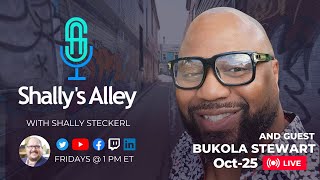
In this live interview, Shally Steckerl welcomes Bukola Stewart, talent leader at Calibri, to discuss his career journey, scaling sourcing teams, and recent initiatives. They reflect on personal milestones—Shally’s birthday and final week of cancer treatment—before diving into Bukola’s experience growing Calibri from a small shop to a 200‑person software development firm, managing distributed recruiters across multiple cities. The core of the conversation centers on gamifying recruiting and interview processes: tools (Kahoot, Boone, HackerRank, VR), benefits such as reduced interview length, increased candidate engagement, and diversity gains, as well as challenges like AI data quality, push‑back, and the need for thoughtful implementation. Shally shares decades of adult‑learning expertise, emphasizing that learning style matters less than aligning reward structures (recognition, achievement, financial incentives) to individual motivators. They explore StrengthsFinder insights, team composition (architect vs. promoter vs. analyst), and the importance of transparent strengths/weakness discussions. Practical advice is offered on piloting, evaluating tools, ROI, and change management. The interview closes with a thought‑provoking analogy comparing AI’s impact to the transition from horses to automobiles, urging listeners to consider how AI can augment their work.
Chapters
Hey, there we are! Hey, happy November 8th! And, uh, for those of you that didn't already wish me happy birthday, happy birthday to me! That's right, my birthday was on November 3rd, and yes, had a very nice time. Went out for some good food, uh, got sushi. Actually went to one of those revolving sushi places, you know, where they, they pass the food by you and you can just pick the ones that they make them in a row, and then you pick the ones that you want and um, a little bit of sake, and it was fun times.
Oh wow.
So yeah, yeah, yeah, don't ask me how old I am because I definitely— let's just say more than half a century, and, uh, I stopped counting. But it's just fun to celebrate that landmark, um, you know, every once in a while. Oh yeah, yeah. Uh, talking about landmarks, man, another big landmark this coming week marks my last week of cancer treatment. So, um, then I gotta wait 90 days to, to like make sure everything's, you know, all the treatment chemicals and everything have cleared out the system. But good news is, uh, after that I'll, uh, I'll get my test and see if, uh, yeah, I've been taken off of the, uh, the cancer list. So stay tuned, uh, we'll know it, we'll know in 4 months, but at least this is my last treatment. So yeah, definitely, absolutely, like, you know, loving Loving that. Um, definitely. Anyway, well, thanks for joining us today, man. I know you're super slammed and recently, uh, took the stage at SourceCon. So first of all, everybody, this is my buddy Bukola Stewart, one of the, uh, sourcing greats. He and I have bumped into each other many times at different events like SourceCon, and he currently is leading a sourcing team Um, actually, I don't know how much I'm supposed to talk about that. Is it top secret?
No, no, it's not. You can share it.
All right, it's not top secret. Uh, well, you can find him on LinkedIn at /bukstewart. Buck Stewart. Anybody call you Buck?
No, no, uh, Book. They call me Book.
Book. Oh yeah, Buck Stewart. Yeah, um, you can find him there, and he's, uh, currently running talent for Calibri. Yeah, in, uh, Cincy, right?
That's right, that's right.
Custom software development. They, they write software for other companies, so it's a, a software shop, I guess. Yeah, full of SMEs, uh, pretty hard to find candidates.
Yes.
And, uh, used to be, uh, so this is your second time there. Used to be a financial company before that and a data company before that.
That's right.
So long Long history of running recruiting, even going back to like RPO days. Yes. So cool, man. Well, hey, so what happened at SourceCon? Tell me the experience of whatever you can share that's not super confidential or whatnot.
I'm gonna say personally, like happy birthday.
Thanks, man.
Let's start there, man. And then, you know, oh my goodness, 90 days cancer and then you might be off the list.
Maybe, yeah, we'll see. But yeah, it's my last treatment, so I'm glad for that. These treatments have nasty side effects.
That is amazing, dude, that you've, you know, you know, at least gotten— you've got that one, one next hurdle to jump over, and you've got it. You definitely got it.
Big one.
Big one. Yes, definitely. But, um, yes, uh, happy birthday and congrats, definitely, on that part. You've got it. Positive, positive thoughts. That's, that's what's— what I'm moving, I'm pushing towards to you.
Thank you. Yeah, I appreciate it. I'll take all the positive thoughts I can get.
Yeah. And I do, you know, my current role for the past, you know, 3+ years, and I actually came— yeah, I actually worked for a startup for a little bit. Then—
oh, okay. I didn't know that.
The financial institution was a startup and it was called Luma and they did like software as a service, and they were a client of mine. When I was at Calibri, I was kind of in a, uh, like, head of talent, head of sales role. It was a small— that was another small company, uh, where I was wearing multiple hats. And this client had this amazing product that I was very interested in, and they were in a growth spurt where they needed to grow from like 8 employees to 150. And, um, got an opportunity to, you know, uh, essentially get into the world of startups because I never really, I've helped startups from a client perspective, but I've never worked inside. Yeah, inside. So that was very interesting and fun.
It's kind of cool to see your impact, like everything that you're doing, actually it's easier to see what's going on because every hire you make is one of the, new hires on a new kid on the block and yeah, a big team or anything like that, and you can actually see the difference that they're making. So it's a good experience for sure. Definitely a different type of setting.
Yeah, it's fun, uh, just being involved in those in the beginning stages of— I've always liked that. I've never really been a guy that's liked working for big companies, uh, not that there's anything wrong with that, it's just, it's just not my bag.
Yeah, some people like the uncertainty and make your own playbook. And some people like the rule book that's already established. It's a preference thing for sure.
And so once they grew to— I helped them grow to 150, the growth spurt was kind of done. And I like new challenges. Cliberty actually was looking to go. They were a local small shop at the time when I was there. I helped them go from, again, like 3 employees to 50. And that's kind of the reason why I went to that startup because they were kind of out of that growth spurt and they wanted to kind of remain at the time at 50 employees. And when they reached out to me, the owners actually reached out to me, they went to my wedding, which was funny, and they recruited me there to come back because they were switching off to a national model remote.
Starting to grow a little bit.
Yeah, to grow again to around 200 employees around that time, specifically in software development. And that's always a great challenge to grow a team, a sourcing team remotely. So I had recruiters in Chicago, Florida, Tennessee, and Detroit, and then obviously in Cincinnati too. And so that was fun. It's, it's still fun. We're kind of out of that growth spurt, uh, just due to the economy. But, um, we are, uh, branching out to a new, new co, um, which, you know, basically what we, what we've done in the past is more, uh, service solutions work, project-based. Um, our team goes in for about a year, uh, writes the software, and then they go on to the next project. This is more of a, you know, how can we help you from a technology perspective, contract, contract to hire, butts in seats service that we're adding on to Calibri. And it's been fun starting that up again. I'm going to start growing my team probably the 1st of January. So that's another fun initiative.
I can recommend a couple of good sourcers if you're looking.
Yeah, no, I definitely want to, uh, hear from you on that.
Some of them might even be on, on this program right now.
That would be awesome. That would be awesome to talk to them.
Cool, man. It's exciting to kind of have this. I don't know, I call it greenfield. Some people call it blue ocean, but like just, you know, everything ahead of you as far as like building stuff out. I like designing and setting up, you know, workflows and processes, and it's always different at every company. There's no Yeah, there's never one, you know, one single design or workflow that, that handles all of the different needs of an organization. You can't formalize this. Even big RPOs have multiple ways that they operate with clients, and, you know, it's— and then they're supposed to standardize as much as possible, but they still have various levels of service and everything. So it's always fun to kind of put that together and then see it grow. Some people like to build. I'm a builder. I like to design. I like to execute and, you know, implement the design. And then when things are kind of running and when they're running well, I get bored. I'm like, now what? I'm always looking for a challenge. So in an environment like a startup, there's always new things that you can do because you're growing. And in a larger company, you set it all up, you design it, and you, you know, it's, it's done. Then there's a lot of resistance to change after that. And I'm not really kind of the day-to-day manager or the farmer, right? I'm more like the architect or the builder. And different people, you know, different things. I know some folks that really enjoy going into a chaos, you know, established chaotic department and cleaning it up and then making it run and being the reason things run smoothly. It's a different skill set, you know, a whole nother level of patience or whatever.
No, I totally agree with you. You hit it on the nail, Charlie. Yeah, I'm more of the architect type of person that like, okay, show us the way versus, oh, there's this big wheel that's moving around very— that moves around in a circle very slowly. And yes, we know we're doing it the wrong way, but it's still moving.
It's always been that way. It's always been done like that.
Always been that way. Why do you want to change it?
Right, it's working.
I don't know about that.
It was working in the '40s, but not anymore.
Yeah, exactly.
Um, so it's been a long— it's been a long road since, um— I think, correct me if I'm wrong, but we met when you came down to Atlanta to go to one of my all-day workshops that I was having down at Georgia Tech. That was the first time we met, and you had just gotten into— like, you were going from recruiting to sourcing. And learning about sourcing, and now you're like a big shot SourceCon speaker and everything. So yeah, come a long way, man. Congratulations on the, on the career.
Oh yeah, no, that was fun. I remember, uh, meeting Ronnie down there, and I still run into him at SourceCon, and it was a lot of, uh, a lot of talent. You never, you know, you don't realize that, but that, that sourcing group that you, that you put together, man, was a lot of talented folks that—
yep. Um, if you see a lot of where they ended up, most of them are, you know, leading or building teams or— um, yeah, it's, it's pretty cool to see the— crazy to see the little— my little fledglings graduate and I know go out and do even bigger and more important things than I do. So it's, it's always fun to watch that. Yeah.
And it's funny with the SourceCon thing, it was, um, they literally— I went, you know, I just went there a couple of times just as a fan to learn Same thing with your training that you wanted was just for me to learn. And then they reached out to me, I think last year, to see if I would be interested in speaking. And honestly, it was a fear of mine speaking in front of a large audience.
I've spoken to everybody, so nobody's comfortable on stage.
Yeah, I'm comfortable around a small group. Very comfortable when I can—
at a stage, yeah, with the lights on you.
And no, that's totally different. So literally, you know, having a whole bunch of people, over 50-plus people, just staring at you, and you have to entertain them in a way. Um, and if they don't look interested, you're like, what, are you not entertained? And you know, you don't know what you're— right, uh, you don't know if your body language is off or whatever, or you, you you know, do you have something on your, on your, uh, shirt or whatever?
Did I forget to clean my crumbs off my beard or whatever?
Exactly.
Uh, and then so 50 sounds like a, sounds like a small— was that like a workshop or a breakout or—
well, no, I'm talking about 50 plus. No, there was probably 100 in the audience, in the audience. Uh, so yeah, there was probably over 100 there, but still, uh, you know, I'm used to speaking maybe, you know, in front of 25 people, you know, like a networking event or whatever. Yeah, yeah, just bunch of, you know, and they already know you or whatever. They're just there to hear you talk about how to network or whatever. Um, this was like you had to come up with your own concept, your own idea. The first one is about AI and, um, just is it going to take our jobs? And the second one, they actually reached out to me again. They wanted me to come back again this year. So that was interesting that they actually wanted me to come back. And this one, I was like, okay, what am I going to talk about? Am I going to talk about AI again? No. Well, let me talk about gamification. And because I just started implementing that for my team because, you know, just terminology, technical terminology.
You told me about that. Yeah. So you get your gamification for your recruiters.
Yes, for my recruiting team and also for my interview process. I've gamified a little some parts of that process. I just found that especially when you have someone that's new or an associate level recruiter or sourcer, they are intimidated by technical terminology. You know, they want to kind of stay away from it and just, you know, it's, it's nothing really to be intimidated by. So if you gamify that, the, the process through Kahoot or other forms and try to make it fun, the learning part of it, um, and apply, you know, competition to it, um, they seem to pick up the terminology a lot quicker.
So you're gamifying the learning essentially? Yes.
Yes.
Okay. And it's like badges, rewards, achievements.
Yeah, lights, explosions, stuff that'll keep them— that'll trigger the mind and get them interested. Instead of like reading a book, giving them a book to read, right? You know, Technical Recruiting 101, you're literally putting in questions. There's a little bit of work into it because you have to come up with the questions, add quizzes, put in like the little funny memes and everything. And, and, and then, you know, remembering to have like, and what we would do is just have celebration Fridays where we, I would add learning into that. And then the celebration was at the end if someone won the contest, the quiz.
Gamification part of it.
Yeah, I've given them a gift card for lunch. For that week, $25 or $20 or whatever. So yeah, I, I found that process actually helps them, um, you know, pick up the terminology. And, um, I've— the, the ROI, uh, for me and, and the company is that, you know, I've had a lot of, uh, productive employees that contribute to the, you know, the bottom line essentially.
So yeah, well, you know, I've been, I've been I should say teaching adults or educating adults or whatever for many, many, many years, way, way too many years to count. Oh yeah. You know, 3 decades basically. And it's a multi-headed beast, man. Adult learning is a whole, you know, so people get PhDs in it and there's a lot to it. Have you found that there's one of the biggest theories around adult learning and you probably hear this a lot, I'm sure most folks have heard it— is that everybody has a different learning style. But the reality is that there's really a handful of learning styles that are common. And then there's some deep diversity once you go beyond kind of like the major groupings of learning styles. Visual versus auditory. Some people like to read, some people like to watch, some people want to try it themselves. Let me do it and then you correct me. Some people want to watch you do it and then they imitate. Different ways to do it. But what I've found is that it doesn't matter what the learning style is. And let me know what you think about this. Regardless of the learning style, whether you do videos or you do gamification or you do text and quizzes, and you include the gamification for the sake of keeping people engaged, but it doesn't matter what you do, there's always the factor of like, what is the reward system? And not everybody wants to be rewarded the same way. Some people like to be acknowledged. In other words, if they did a good job, they appreciate it when you say they did a good job in front of others. While other people are embarrassed by that. And if you congratulate them or celebrate them publicly, they don't like it. It's the complete opposite. And some people are, let's just say, motivated— not motivated, but their reward structure is more of an achievement. Like, I get to put the trophy on my wall, right? So don't celebrate me. I don't want the applause. I want the trophy. Or some people want the applause. Some people want the quiet on the side. Hey, great job, man. And some people want like just literally the cash money or whatever the prize is, you know. So they'll do it for the $50 gift card or they'll do it for the kudos and they don't really care about the $50 gift card. Or they'll do it for the company-wide announcement and they don't care about the gift card. Or they'll do it so they can put the certificate on their wall. Like, there's all these different motivators, and it really doesn't matter how much you put into the development of the learning structures if you get that part wrong. Like, for example, if you make it all about public accolade and everybody just gets written up in the newsletter, you'll notice some people just don't participate because they don't want that public acknowledgement. They fade into the background. Have you found that? I know I have, but did you find that in your short experiment?
Yeah, I find that, you know, just like you said, I think it's, it's more about the personalities. So I, I think the drive, the motivator, what the motivator. So just like you said, I think, um, specifically it hasn't worked well with my technical team, with the technical team Because they are exactly what you said. They don't like the accolades. They don't like to be recognized. They just like doing a great job. They like falling in love with the problem, solving the problem, and then moving on to the next, the next problem. And like, you know, don't, you know, don't put me up there. So, you know, and separate me from my team because my team helped me fix this, you know, right?
Where the whole team is, reward the whole team instead of me.
They're more selfless in that way where I find the type of people that I hire are typically numbers motivated as far as like—
That's achievement. That's an achievement drive, right? Like, I want to do the best. I want to achieve the goal, get to the target, exceed the target.
Exactly. So they don't mind that. In fact, they want it and they kind of thirst for it. Um, most people that are on my team.
Um, so yeah, but do you find that you have to kind of adapt your reward in order to get some people to participate?
Yes, 100%.
Um, or have like multiple types of like, you know, you can choose your reward, you can have this or you can have that, because if you just say this is the reward, some people just sort of don't get it, they don't get recruited to do the job, you know?
100%. So we have a, um like a 15/5 process that essentially has check-ins where, for this is for the technical team, where they can essentially give people kudos and, you know, if you get the most kudos, then you get a reward at the end of the year. I cannot get our technical team to participate in that. Like, we have, like, our participation is very low. It's, you know, and the feedback that I've gotten is like, oh, it's, you know, I don't, I don't wanna call somebody out or, you know, there's a number of reasons. Essentially, they just, they don't like being singled out.
Yeah, it's not singled out, it's just they don't like the public acknowledgement. They'd rather probably have private acknowledgement or the certificate on the wall, you know, and it's a different, and it doesn't matter what their learning style is. They can be visual, Auditory learners, but their reward structure is a great part of the— the reason I'm bringing this up, because it's a big part of how you motivate people to learn. And, you know, in all my years, what I found is I've designed— I have an online curriculum. That course that you attended is now online. And often people say, well, nobody wants to sit through an online course. That's not really true. The course is designed— this is a full diploma, 200 hours. It's very, it's very in-depth. Um, but it's designed so that it engages visual learners with graphics and videos.
Yeah.
It engages tactile learners with interactions. So you have to click hotspots, heat maps, things like that. It engages the, the, uh, let me try it learners by giving them examples to go try and then they have to put in their answer. And it's not a quiz, it's not graded, but it's like a remediated learning activity. So it, it's engaging everybody, the auditories, the readers, the experimenters. Engages all of them. But I frequently run into people not wanting to participate because the organization that bought this for them has set up a reward structure that is very one-sided. Like, for example, um, if you complete this, you get a certificate, and not everybody wants a certificate. So some people just— the course is engaging, it's entertaining, it hits all of the learning styles, But they're not motivated because the reward that they're going to get outside of the knowledge that they would learn, which you would think is the main reward, right? But outside of the knowledge, the reward that the company is giving them for the achievement is not something that interests them. And so, they just kind of don't participate. And then, the customer will ask me, "Why? How can I get people to go in and do it?" And they want to do the whole like supervision. "Well, we're going to log to see how many people were in and how many minutes." And I'm like, "That works for elementary school, but that doesn't work for adult." Adults don't— you can't tell Bukola, hey man, if you're not in this course for 30 minutes, you didn't learn, because Bukola might have absorbed the entire content in 5 minutes and learned it and does it well, while Shelly, it takes him 27 tries and 5 hours with the exact same course. So you can't do— you can't say, well, unless you've been in the course for X amount of minutes or you've completed— The achievement structure has to be there. You've got to have some incentive that is either, you know, a badge on your profile or some kind of, you know, financial— doesn't have to be money. It could be a day off. Is that— you vary those rewards, people will suffer through anything. In other words, you can have the crappiest, like, text-based, you know, training that's all reading, no images, no audio, no video. But the reward is the one that they want, they'll do it.
Yeah. No, I totally agree with you. It's to talk about exactly that, that to that point, we have like a reward system for, for our technical team. And it's all, it's all wrapped around AWS certifications and Azure certifications.
That's the trophy, by the way.
Yeah, that's the trophy. And they— and if you look at our, our people, they are, they are certified up. I mean, we have like, I think we're at a platinum status when it comes to AWS and some kind of status when it comes to— I forget the status. So that, that is, that is that reward system that they set up, that our technical team set up is is working amazingly well. But you know, if you, you know, on the talent side, nobody really wants to— it's funny, like, you know, the actual information, you know, and they'll put it on LinkedIn, they'll say, I just got my Azure certification, gold certification or whatever. But on, you know, the 15.5, where it's internal, and they're actually, you know, people are trying to get, get, get people to to talk about the work that they've done so that we can essentially market that information and say, hey, look what our team individuals are doing internally. We have a culture. Right.
You wanna brag, not in a bad way, but you wanna brag about your achievements. However, some people just don't wanna be bragged on. Yeah. No. I shrink and get so embarrassed and so like, I, I don't know, embarrassed is probably the best way. When, when people start talking about me, like when they're like, oh, Shelly did this, or Shelly, you know, I'm just like, no, I want— I'm driven by the achievement, right? So if you tell me it can't be done, there is no greater reward for me than doing it. And nobody needs to know about it.
Yeah, that's interesting.
If anybody knows And there's a lot of things that I've done, a lot of things that I've done that nobody knows because I don't go around, you know, talking about how I did this, I did that. Unfortunately, that works against me in some ways because people don't understand. I've had conversations with, you know, business leaders, TA leaders, and CHROs where they're like, wow, you have a lot of experience and you've done a lot of different things, but I didn't know that about you because all they see is the, you know, whatever LinkedIn post. And so it works against me, but it just— I don't like the, you know, like Jim Stroud, he was, he was the MC at SourceCon, right?
Yeah, absolutely. 100%.
Jimmy and I go, I mean, I, we, we've been, we've worked together multiple times. Um, I hired him into like several different projects. He's someone who likes to get recognized and isn't ashamed of or afraid of being talked about, right?
Yeah.
It makes him— it, it's, it's, it motivates him when you say, hey, Jim did a great job, to everybody on the team. But if you did that with me, I'd be like, man, stop that. Like, don't do that. Yeah, it's just different motivators, right?
That's so interesting. Yeah, it's very—
it's significant because when you're— especially if you're a manager, you have to kind of figure out what is it that's going to drive them the most. You know, not everybody is compensation driven. Not everybody is achievement-driven. Not everybody is recognition-driven. And learning has a huge part to do with ultimately how you want that recognized or rewarded. The incentive, I guess, is what I'm trying to say. So, if you can find a team where you have— I'm going to call Jim a cheerleader in the most respectful and loving way. I love the guy. We've worked together many times. He's a great cheerleader. He loves when other people are successful. He will elevate them. He will accolade them. He enjoys the attention. He likes giving the attention. He shares the stage. He's a, you know, he's a good promoter of things, right? Put me in that stage, I, that I would completely fall apart. Me, you want to motivate by giving me an impossible challenge. The best way to keep me up at night is give me a puzzle to solve, right?
Oh wow.
And I just want the achievement. I, I don't really care, you know. Now both of these have a dark side, right? The dark side of someone that's a, that's a promoter, a cheerleader, um, not Jim, but people that have that dark side is they want the attention. Yeah, they're narcissists. Not Jim, but like people that are, you know, it's all about that, right?
You're essentially talking about Strength Finder, uh, you know, kind of.
Yeah, it's a lot simpler than that. It's achievement or association or accolade. Like, you know, I want to win, or I want us to win and talk about it, or I want them to win and, you know, see them succeed. But like, it's just very subtle, and it's really uncomfortable when you're being rewarded the wrong way according to your, you know— oh yeah, it's just like, oh.
And what I meant by Strength Finders is that Essentially, you know, my personality from a StrengthsFinder perspective is probably a promoter.
Yeah, they got a bunch of dimensions, right?
Yeah, a bunch of dimensions. And then, but my weaknesses are, in some cases, are organizational skills. Okay. And, you know, knowing that is knowing where your weaknesses due to your personality, uh, attention to detail, all that stuff, you can work on those.
Absolutely. If you know where your gaps are, you find other people to cover. So Jim and I worked really well together in a team where it was— so I, I led the team, Jim was leading a particular kind of sourcing, and the other person on team was Glenn Guttmacher. Well, you couldn't have three more different, like, you know, the mixture of Glenn is very accurate and precise and deeply analytical. And Jim is very, like I said, cheerful and wants everybody to succeed and is a good team builder. Where if Jim wasn't there, Glenn and I would literally fade into the background, but Jim brought us out, right? And I'm very much about the achievement. And so, I'm driving Jim and Glenn to achieve more. Jim's driving me to like get out there more, and Glenn's driving me to think more. And so together, the 3 of us make a really good team because we have each of those kind of bases sort of covered, right?
Yeah, 100%.
Yeah, that's a good, that's a good thing. So StrengthsFinder was good for you or your team?
Yeah, yeah, absolutely. Having my team read that and figure out where their, you know, their strengths and their weaknesses are. So that, and then we had a discussion about it and we just kind of put it on a board, kind of like a Scrum session.
Oh, okay. Like these are my strengths, your strengths, and then, yeah, yeah. And like I was talking about, you kind of move people into the areas where like, I can support you, you've got a gap in this, I'll support you on that gap, you support me in this gap.
Exactly.
Okay.
And you have, when you have that open conversation about your, and your strengths and weakness, some people feel uncomfortable talking about their weaknesses because they feel like it's, it's, um, you know, um, I don't have any weaknesses. Yeah, yeah, like, oh, these are your weaknesses, we don't need that, that on our team, you're out, you know. Well, no, no, that's not how, you know, typically how things work. It's like, okay, well, you're weak in this area, he's strong in this area, let's try to get, get you guys to work together so that we can make it, uh, you know, uh, we can cover those gaps.
That's an interesting question. Do you feel like, um, people are— what's the word— do you feel like people are like ashamed? Not, not ashamed, I don't want to say that. In, in that setting that you're describing, are they like, I don't know, covering up or hiding? Whether it's whatever the reason is, I don't want to label it, but whatever the reason is, do you feel like they just don't want to reveal their weakness because of fear of like, getting fired?
Yeah, being exposed if there's, you know, and the same situation happened when I tried to implement it on the, on the technical side, too, because I thought it worked well with my talent team. So I was like, hey, let's, let's introduce this to the, the technical side. And the executives were all on board, you know, I was a part of that team. So then when I was implementing it, there was a lot of pushback. This should be confidential information. Why are we, you know, talking about this?
Oh, right. And when, when, when in fact it would be better if it was, if it was more open, because then people could work with each other. Like if, you know, one person is a promoter and the other one is a relator, they work well together.
Yeah. And he, you know, you had like cap— there's different titles that they had. They had captains, promoters. Organizers, you know.
I like that.
Yeah, so it was all, it was all typically positive in a way, but it, it had the strengths and then it had the weaknesses. And then it actually kind of— you could use this app to kind of see which teams would, would are, are, um, better formed. And, you know, which teams would be better if they had, you know, somebody else on this team or versus that. So you could kind of switch it up. And I thought it was like, if we were going to be the best that we could possibly be, I thought this would be a very transformational step to go to so that we could be that truly, that the whole thing. But when I say we, I'm talking about Calibri, right?
The organization, right? Yeah.
The organization could make that next step and say like, hey, we do have a best of class development team, and this is why, and this is how we— this is the recipe. We're not just saying it, this is our recipe. And if you get where I'm going with it, yeah.
And then like making it a mandate. So is this what your— is this what your talk was about at SourceCon? What did you present at SourceCon about?
Yeah, it wasn't really about that. It was, it was specifically about gamification and, um, the whole process of of the new tools that are out there today are like Boone and Kahoot. And there's a couple of gamification tools that you can implement for every part of your interview process.
Oh, wow. Interview gamification. That's cool.
Yeah. So I talked about that.
And then these are like free, or you just— it's part of a built-in?
Yeah, essentially each tool was— yeah, I mean, it could If you added every piece, it would probably be very expensive. So I was just, I was saying like, if you needed to add it for onboarding, this is a tool for onboarding. If you needed to add it to the referral, your referral process, there's a tool called Boone. If you needed to add it to your skill assessment, there's HackerRank, Coderpad, Gorilla, GorillaTest.
Yeah, I used to use one of those for that.
Exactly.
The assessment of developers. But so are you saying that You're building this into kind of various aspects of the recruiting process from the application, and, and it's helping. What, what's the— give me an example of how you would gamify, say, um, I don't know, the application process or the interview process.
How—
not which— what— not what tool necessarily, but like, what, what's an example of that gamification?
Yeah, so Using new, the non-traditional gamification, you can actually apply it to the beginning stages, the top of funnel part of the interview process for new grads, for example. So Deloitte implemented a VR gamification tool that actually lowered anxiety for new grads. It allowed them to, you know, kind of put their best foot forward. It actually increased diversity of hire, essentially, essentially allowing the, the, you know, because they didn't really, they couldn't see the actual interviewer, It was a VR gamified process that had the behavioral part, a technical part, and then a phone, like a phone interview, screen interview that once—
And so would they kind of get like achievement badges or something for every stage? Or like, what are you motivating? What is the motivation?
The motivation is just the fun, just have fun doing it. Yeah. And then I interviewed with a top— I think the company was like P&G or something like that, that did that through Deloitte and to increase their diversity, the DEI number, their DEI numbers went up, I think by 30%. So yeah, that was one part. Another one was You know, there was actually a product— this isn't the interview process, but it was actually a product that a company, a confidential company, uh, was implementing. And again, the, the— I think the, the consulting firm was KPMG, uh, and they wanted to increase the numbers on, on this particular product. So, uh, their, their percentage of opportunities to this product, so they wanted their employees to learn about the product so they could sell it better. So they gamified the actual product. So they end up, basically there's like, I guess there was like 5 steps where they learned the rules of the game, gamification game. They learn the game was, the actual managers that promoted it saw like a 15% increase in sales. Because they essentially— I guess the game was, was fun. I didn't see them play the game, but, you know, the game was fun. And then they learned the rules of the game, and then they actually— it actually— they became what the last stage is, like masters of the particular product. So they were able to explain it a lot better and increase sales overall for the company by, I think, like 20, 27%.
So the game— I'm going to call it a game, but the system is replacing the traditional application form and helping to evaluate candidates without kind of making it, you know, boring and dreary. So it's increasing the interest of that sort of application process. And then at the assessment/interview, the, again, game or games can complement your sort of like the testing and maybe help with like anxiety of the interviews, things like that?
Yeah, exactly. So, uh, they're, they're essentially AI components to it that you have to— so there's disadvantages and advantages. So there's AI components to it that you have to constantly evaluate the data, make sure that the data's correct and eliminate the parts that are not because humans are putting the data in.
So you got to do your homework. It's not just you buy something off the shelf and voilà, you're gamified, right?
Exactly. You will get pushback. Some of the disadvantages, typically you will get pushback from your employer and the employees because again, It's unknown, it's new. So educating, having, you know, educating yourself on the demo, making sure that it's the right choice for your company. So it's not a, you know, you know, one fit for all. Like if, you know, you have to make sure, like if you choose one of these applications, that it's the right fit for your company, or even, you know, if you really need to gamify your interview process, that's something you would need to evaluate also.
We got a question from Steven on LinkedIn. Did you find that the burden on the candidate gets longer, as in like more painful for the candidate to go through the gamification process? Is it lengthening the interview process or the application process at all?
That's a great question. I actually, part of my presentation was actually talking about it actually shortened the interview process. By about—
Oh, it shortens it. Okay.
Yeah, it shortens it. And the reason is typically a lot of these— I don't know if you've applied to any of the enterprise companies and how long the interview process takes. Typically takes a long time for them to get back with you, for them to set up the interviews, for them to— And then they have a number of different steps. Well, if you gamify your interview process, it's typically um, you know, your, your, the burnout is actually less. It's, um, you know, the attention span is, is, you know, because you're gamifying the process, it's typically a little bit—
people are more engaged and it takes less time.
Exactly.
Interesting. Okay, again, if you do it like— it's not like you just buy software and it, and it works. You've got to make sure that you're carefully putting into the process. But if you do it right, um, if you implement a little bit of care, it sounds like it actually speeds things up and has a better candidate experience or a more positive one instead of making it a more negative one because like, oh my God, I got to do this too.
Exactly. So if it's well thought out—
Yeah, right.
Preface this with I'm not an attorney, but it's not just, hey, this is the hottest thing on the market. Let's just buy it, plug it in, and just let it go. No, there's a lot of work and thought that thought that needs to go into your interview process when you're actually gamifying it. But if you do put that thought in place, yes, engagement will go up. You'll have a lot more, as far as your diversity of candidate, you'll have a choice between your candidates. So yeah, I think it's, if you put some thought into it, yeah, it'll shorten the interview process.
That's good to hear. I know we got a little bit of a late start, but we're pretty close pushing on the hour here and I promised you I wasn't gonna keep you too much longer.
I'm having fun.
Yeah, me too. I appreciate, I wish we could keep going, but I did tell you I was gonna be done by 2, so. I want to ask you two things everybody always gets asked on this show. And, um, oh wait, wait, before I do that, it looks like there's a well thought out question. Tell me more about well thought out. Can you give Stephen a kind of a glimpse as to what well thought out means for the process?
Yeah, so well thought out means that let's say you want to implement the top of funnel interview process. That means You know, choosing, making sure that you just don't go with one product, you work for your demo demonstration.
Uh, okay, so evaluate a couple of products.
Yeah, exactly, evaluate a couple of products, make sure it's right for you, make sure that you're attending and you're asking the right questions.
Because a lot of these, like what, like does it fit with your culture, or how much—
yeah, is how much work is there? Yeah, how much work is implied? Also, the scientific— there's a lot of scientific backing for some of these gamified new gamified applications. So you have to make sure that they have a well-thought-out process when it comes to— so, okay, why do you have this tool and what's the ROI around it?
What's the ROI? What are the possible outcomes? What are the possible bottlenecks? Where does it go wrong? So prepare for that in advance. Okay, so kind of like maybe Like with any other software implementation, in a way, you have to plan it out, prepare for it, and have a team that vets it and have a committee that is able to look at the different perspectives.
Yes, make sure you have a— definitely you have an internal committee that can evaluate it, inspect it, and that you have buy-in on the levels that you're actually going to implement it into. Because if you don't, yes, To answer that question, it could lengthen the interview process if it doesn't do that right now.
The other thing I would say, it would be just my, my point of view would be that you want to start a pilot, right? Like try it with a specific department or a rack or a function or something so you can track that way. It doesn't impact a larger population and you can experiment with the more risk-taking hiring managers that would be willing to experiment. For the sake of the, the benefit rather than just sort of turning it on for everybody and then everybody's got to change, you know, big change is always a bad— yeah, bad thing.
So exactly, so change is typically a, you know, a bad thing for departments. They don't like change, especially big departments. So, um, you definitely need to do your research on these, on these tools and make sure that they, um, you know, there's an ROI for the department that you're implementing it into.
I'd love to see— I don't know if you did this, but I'd love to see some kind of like guideline to evaluating the gamification or bullet points on something like what are the things that you asked about. We don't have time for that now, but if you had something like that, I'd love to share it to the audience, the network. Yeah, yeah. I definitely— You do? Oh, cool. I'd love to see that. Yeah. Yeah. I definitely have kept you over time. So let me go ahead and get to the wrap-up questions, which are number 1, who should be our next guest?
Huh, good question. You probably already had Ronnie on, right?
Ronnie's been on, yep.
Uh, I would love to have Ronnie on again, but, uh, okay. Yeah, so that's my Ronnie.
Yeah. All right, and then the, the last question is, can you give us something to think about over the weekend? And I'm, and I'm not saying a statement to consider, but more like a question to ask ourselves. So what should we ask ourselves over the weekend to help us think of new ideas or new perspectives?
Yeah, I've been deep in thought around AI and how it can actually help my job, and I use it on a regular basis. So a lot of people think it's going to replace their their jobs. I just wrote an article probably a couple months ago around that, and I, I, uh, equated it to when the, you know, basically when, um, you had the horse, you know, when you essentially everybody was, was, uh, riding around in horses, right? And then the automobile came out.
And the what?
And then the automobile came out, right?
Right, right, right, right.
Okay, I'm telling you a story. And then everybody was worried like, oh, the automobile, it's gonna, you know, all the horse people that were horse, the, you know, driving people around in horse and carriages were like, oh, the mule's gonna take our jobs and all this other stuff. What are we gonna do? Well, I mean, you know, did it really take everybody's job? No. I mean, people just learned how to drive automobiles and then taxis came around and, you know, or if you, you drive your, your grandma to your grandma's or whatever, the world got smaller. Yeah, the world got smaller, smaller, and it was just a tool.
Like, it got better. It was easier to get places. It exactly increased commerce.
Yeah, so it helped, right? So you got— I mean, uh, it helped, um, move things forward. So I honestly feel like, you know, um, just the question of everybody think— to think about is like, hey, how can you utilize AI to make your world a little bit better? More efficient, what, what have you. Because it's coming, it's here. I don't think there's anything we can do to stop it but to, you know, to embrace it. And that's my personal opinion, but, you know, I'm, I'm throwing that question out to the audience about, yeah, you know, about that.
That's exactly, that's what I wanted. I wanted something for people to, to think about. Yeah, uh, I guess, are you saying, are you thinking about this like the car replacing the horse, which Yeah, we all know how that turned out. Or the internet replacing television, or, you know, horses didn't get replaced, they just took a different place in the world.
Exactly, they didn't. Yeah, exactly.
They just weren't used as beasts anymore. You know, we don't, we don't abuse them by whipping them and making them pull us around anymore. Well, maybe not as much, but anyway, that's a really good thought. So, um, that's— I like that, especially when it comes to like all these automation systems and—
yeah.
That's a good perspective. Well, thanks a lot, man. I really appreciate you coming on the show after such a busy schedule. Uh, have a good, uh, rest of the year.
You know, I'd like to do this again if, if, you know, you want me back.
We'll put you on rotation for sure.
Yeah, that would be awesome. Thanks a lot.
Okay, everybody, take care. We will see you here next week if you are interested in coming back. Our guest is going to be Colette Pavel. So look her up and get ready to ask her some questions. Take care, everybody.
More from Shally



Scaling Talent at Hypergrowth: Leadership, AI, and Hiring Excellence with Cindy Nicola







