Carrie Collier Live on Shally's Alley
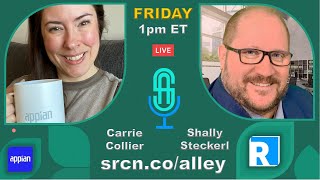
In this recorded interview, Vital‑Baritone welcomes Carrie Collier, Senior Engineering Sourcer at Appian, to discuss her unconventional path into talent sourcing, the evolution of the sourcing profession, and the dynamics between sourcers and recruiters. Carrie recounts how she fell into recruiting, moved into a specialized "SWAT‑team" sourcing role without traditional tools, and later transitioned to training and full‑time sourcing at Appian. Both hosts explore why sourcing is not a one‑size‑fits‑all function, highlighting the varied specializations (researchers, list‑builders, phone sourcers) and the impact of organizational resources, tools, and industry context. They trace the history of the sourcing community—from early 1990s isolation to the formation of Recruiters Anonymous, the Cyber Sleuthing newsletter, and SourceCon—emphasizing a culture of sharing and collaboration. The conversation delves into practical tactics such as persistence (multi‑channel outreach cadence), messaging strategies, and the "triangle" model that aligns hiring managers, recruiters, and sourcers toward a common hiring goal. Carrie also shares anecdotes about candidate engagement, long‑term candidate relationships, and the importance of gratitude toward the sourcing community. The interview concludes with advice for listeners to be grateful, network within the community, and practice strategic persistence.
Chapters
Ali's Alley Live, or maybe you're listening to the recording. Today I have the very exciting news of introducing you to Kari Collier, Senior Technology Sourcer, Senior Engineering Sourcer at Appian, and one of my most favorite people in the industry because of her just absolutely contagious smile and positive attitude and energy. And I just, I love having her around and seeing her on stage and watching her present because she just really is very— what's the word I'm looking for? Well, contagious. I mean, you can't help but smile and it's just very positive person. So welcome to the show, Carrie. It's your first time here. How's it feel?
It feels great. Thank you so much for having me. Really appreciate it.
Absolutely. Very honored to have you here. Glenn said he might stop by, so we might see him pop in here. But until then, you know, I wanted to ask you a couple of things that I've never asked you before. And if you don't mind, how did you get into sourcing? I think I— This is not your first career. It's not the first thing that you did.
No, it's not. I think like everyone, I fell into recruiting.
Like literally, ah, sourcing.
Yeah, literally just kind of, it found me. Um, so I started doing staffing. I think a lot of people start that way. Um, and they ended up putting me in a Java specialty recruiter role, um, where I didn't know anything about Java and ended up recruiting all these people. Well, anyway, over time I ended up, I guess, kind of getting good at it. And, um, my company ended up putting me kind of like in the SWAT team role where like I was airdropped into different locations to like what we called break accounts. Yes. And my director at the time, his name was Darren Stevenson. So I am blaming him for this. Um, he told me that he wanted me to help support, um, a really well-known big box company account that we had not broken into yet. Um, and he told me, Carrie, you have to do this, but you can't use LinkedIn and you can't use Monster or the job boards.
And you're like, okay, what are those anyway? I don't even know.
Well, no, I was like, what? How am I supposed to do this then?
Like, are you kidding me?
Yeah, I like was clueless. So he was like, you need to go. He was like, I don't know, go out on like ERE and Recruiting Daily. And like, he's like, go look, go check out some tools like Intello. And I'm like, what are you— what is this? But anyways, so I had no idea what any of this stuff was. And that's really how I kind of found sourcing and learned that it was more strategic and that you could be a recruiter without LinkedIn and without Monster and the job boards back then. And that's when I actually— I found Recruiting Daily back then, and Katrina Kibben was the host. I don't know if that's what you call them, but that's what she was doing at the time. And she was bringing in Steve, she was bringing in you, she was bringing in all these people. Dean Da Costa. And I was like, wow, there are all these tools that I can use to do my job. Um, and so I got, you know, caught up in the shiny things and got obsessed with it, um, which I think a lot of people do that get really into sourcing.
You're like, right, shiny object, like, ooh, give me the tool.
Yeah, another sourcing tool, right? And so I just bamboozled by it all. I just thought it was so amazing. And anyway, so I ended up breaking the accounts. It took me a long time. It took me like 6 months to get 2 offers, and I was really going hard with really trying to learn. I was figuring out who all of everybody was in sourcing. I was following everyone. Um, I was trying to use all the tools that I was learning about. Um, and it was just great. Well, anyway, so that was like probably the best time of my career at Appian— or not Appian, sorry, uh, at Apex at the time. Um, and then I kind of moved on from that, and then they started putting me in more of like a training role where I was kind of going around and like training people how to recruit. But I was also trying to, uh, what is the word, reflect my passion about all these things that I'd been learning about onto the recruiters. Um, and some of the things were a little bit more time-consuming than people had time to do in staffing because, you know, it's like fast-paced and people needed people yesterday and like Some of the things in sourcing take a little more time.
That's right. That's definitely something that is a misconception. People think sourcing is like an instant on switch, you know, like I post a job and 5 minutes later people are applying. I contact a sourcer and 5 minutes later they've got fully screened, vetted candidates. It's like, no, you know how you apply for a job and then you have to vet them? See, we got to do the same thing. We can find a resume in 5 seconds, but that doesn't mean it's a candidate, you know, it's not yet. No, yes, I handed it.
So then, then there was a thing where like, you know, they're like, well, be careful, know your audience. Um, and it's kind of when I started learning how to train people and like not sit in silence with people on the other side, like not talking and like calling people out and asking them if they have questions and, you know, like all those sorts of things. So I, I became kind of this person at Apex at the time that was just like loving training people. So I ended up doing that, but Ultimately, what I learned through it all was that sourcing was my jam, and I was the most happiest doing that. I wanted to do it at my last company, but it just wasn't in the business model. So yeah, I came up with like, like 5 or 6 criteria that I had to have to make a change, and I was able to find that at Appian. And so here I am. My first—
So this technically is your first job as a full-time sourcer.
Yes.
Although like many of us, you were a recruiter with sourcing tendencies. And yes. Yeah. And I definitely, you know, there's a lot of people that started out in sourcing as their first job nowadays, but I think there's really a good foundation if you start as a recruiter. And it may not be for you. I mean, recruiting is definitely not for me. I've been in the business for 25 years. And if I go into recruiting, I'm prone to make mistakes. I'm rusty. I don't really have, you know, the chops for, um, for the day-to-day of a recruiter because it's changed so much. It's not what it used to be back in, you know, back in the day when it was everything and there was no specialization. Yeah, I was good at doing all of it, but I really took to this side of it like, like you and focused on that. So I think it's good to have that education. If you don't, you know, if you're listening to this and you're a recruiter and you're like, man, I wish I could do this, or I wish I didn't have to do that, do what Carrie did. You know, it's, it's, there's nothing wrong with considering this as a specialization. It's definitely not an entry-level job, at least not at the level that Carrie does it. So I'm glad to hear that, you know, you're definitely an example I want to hold up in, in the industry. Yeah, there's something that we, you and I share in common. Uh, well, there's a few things that we share in common. Love for sourcing is one of them, but another one is that you feel like— you've told me that you feel like sourcing is not a one-size-fits-all, or some people say, uh, silver bullet or an easy button or whatever. But this is something that we share in common. Can you tell me what— I mean, I guess first of all, how do you feel about that? And What is it if it's not a one-size-fits-all? Like, what's— what is it really?
So to me, it's definitely a strategic function within talent acquisition, but I feel like the sourcer's role is defined by the organization and their needs. And so you might find in these greater, larger companies, there might be specific researcher roles or specific research groups, actually, which blows my mind because I didn't know that actually existed. Um, and then like people that are just building lists, people that are building lists and researching them, people that are, um, you know, um, like doing the whole gambit, like straight up researching, finding the people, um, interviewing them and then handing them off. So there's just, there's so many different tiers. And I know like many conferences talk about it, um, but I really do believe that. And then With, you know, myself at Appian, I started as one sourcer supporting engineering, and there was only so much I could do to reach the goals that I was being held accountable for and finding that happy balance between, you know, doing a site search, getting a huge list, having that time to actually research all those people, figure out if they're a fit, and then engage them. I didn't have time for that. So like now, as we're starting to grow, we're, we're being able, or we're having the opportunity to kind of do and dip our fingers more into this, um, beyond the, I don't know, low-hanging fruit ways of sourcing. I don't know if that's the best way to put it, but I get what you're saying, definitely. Yeah, so that's kind of what I mean by one size fits all. And then also, you know, as far as like tools and stuff that, um you're going to have access to. Not every sourcer is going to get LinkedIn. Not every sourcer is going to have SeekOut. Not every sourcer's infosec team is going to let them use scrapers. So like, we're all limited by different things. So that's, that's why it makes me feel like there's no one-size-fits-all. It's what can you accomplish with what you're given and the resources and what you have in your brain.
So it's kind of like recruiting in that way because recruiting is not a one-size-fits-all solution either. I mean, Gosh, I've worked with companies, clients as a consultant that have in healthcare, for example, recruiters that do 300 offers a year, 300 hires a year. And you go to an engineering recruiter and say that, you know, a recruiter makes 300 hires a year and they go, what? No, that's not possible. No, it isn't in engineering because it's totally different. So, you know, it depends if you're doing high volume, depends if you're, you know, each industry. So I think the same thing applies to sourcing. It's no different. It's a specialization. So as you said, even in sourcing, there's specializations. There's people that just do research, there's people that just do phone sourcing and so on. So there's a lot of room and that's why it's really not a one-size-fits-all. I totally agree with you. It's a customized solution. In my 25 years of doing this, actually 26. Oh my God, I just realized it's 26 years. In my way too many years of doing this, I need to stop saying years. Um, in my quarter century doing this, I have run into so many different models, and sometimes they even look a little bit similar, but they're not once you peel the onion back. It's— it really depends on the organization, the industry, and like you said, it comes down to the needs of that particular team, that environment. Sometimes sourcing delivers fully screened candidates, sometimes not. Sometimes sourcing essentially is like a replacement for recruiting when they hand off completely a rec to sourcing and sourcing only works on these particular recs that are, you know, where there's a requirement to generate external passive candidates 'cause people don't apply for the job. Sometimes it's, you know, it's many different things. But one thing I think for sure it isn't is it is not an entry-level job. And I've seen a lot of people try to do this and like, oh, I'm just going to hire some sourcers, entry level, and it fails. Those people try to get a job at another company. I'm not going to name names, but they leave this, they leave this entry-level job and they go to another company and say, oh yeah, I was making $100 an hour as a sourcer. And the new company's like, yeah, no way. Uh-uh. I'm not— A, we're not going to pay you that, and B, you don't have nearly the experience, right? Even if we did pay that, right? Like, so it's just not the same. Totally.
Yeah. I The— I totally agree with you when you say sourcing is not an entry, an entryway into recruiting.
Um, recruiting is a way into sourcing. Yeah, right.
Yeah, I definitely feel like it's the other way around, but I've seen— so here's an interesting question for you then, because I, I'm, I don't know, I guess just from talking to tons of people and working with different people, it's like you can tell who is passionate about sourcing when they're actually in a sourcer role and who, who is not. And I, I feel like there's definitely a— I don't know, we, we all get each other. Like, people that are really into sourcing and really appreciate it for what it is and are like all excited about, jazzed up about like new tools they never heard about and stuff, and like always constantly wanting to learn and be better. I feel like that's one group of sourcers. And then there's the exploratory sourcers who haven't caught the bug yet, I guess, who want to try it and they're trying to figure out if this is their jam or not. So I feel like there's like kind of different types and it's not entryway into recruiting, but it's still people putting their feelers out to see if sourcing is their thing. I've definitely seen that happen and I've seen those people move into recruiter roles. So they kind of tried it out.
It can go both.
Motorized.
Yeah. If you, if you do a search on LinkedIn, I don't know if you've ever done this, but believe it or not, if you go to LinkedIn and you do a search for just the job title sourcer, not sourcing or anything else, but just sourcer, there's 25,000 people worldwide that have that job title. And that's only one of the job titles. There's also, um, researcher, recruiting sourcer, sourcing specialist, and all that. I did this once just out of curiosity for a project I was working on, and I wanted to present to the International Standards Organization kind of like a map of the world with the population density of sourcing and everything. And there was 1.5 million people.
Oh my gosh. Yeah. Wow.
Back when I started in the 1900s, long, long time ago, There were— I mean, I thought I was the only one in '96, and then I found a couple of others that were in other industries that were also, you know, so it was like maybe a dozen of us that I can point back to. Then there might have been people in '95, '94, but in '96 there's definitely more than one. And from there it just slowly grew until about 2002, 2003, and then it just kind of blew up after that. I spent a lot of time going to conferences and talking about sourcing as a specialization and sourcing as a dedicated function. So yeah, so your question— sorry, I lost track of the question that you were going to ask me.
Oh no, it's okay. Um, I was just thinking, like, hearing you talk about, um, kind of how it blew up and stuff, like, I didn't even know sourcing was real. Like, I didn't even know that that was a thing. I also didn't know that in the '90s it was an entryway into recruiting, like, historically. I had no idea any of this. So I had no idea I was a sourcer or that I was sourcing until like 2017. And my boss finally let me go to my first SourceCon ever in 2018.
And then you're like, oh, it's a job.
All these people that like, A, wanted to like give constantly and like, sure, call me anytime, pick up the phone, you know, like we can help you with whatever, totally cool. I'm like, 'What? The speaker just said that to me at this conference.' And I'm like, just this person, like, I didn't think, you know, like, it was just such a giving community. So the community was amazing. Um, but how did you find each other? So back then when you started realizing that sourcing was actually a strategic role and there were only a few of you out there, how did you all find each other?
Well, um, that's a very good question. I do want to come back to the thing about, um, the sharing though, because that's a good point. So I'm gonna, I'm gonna put a pin on that one and come back to it. Okay. So at first, when I, when I first started— by the way, nobody's ever asked me that question, so that's kind of cool— um, when I first started, I, I had a job in a staffing firm. It was an agency. And I didn't really understand the value of what I really had. And somebody from a company, a corporation that wasn't a staffing firm that I met kind of opened my eyes to it and said, you know, this is really valuable, this is important, it's gonna be something that's gonna be even more important in the future. I want you to come over. And I was ready to leave because the agency was doing some weird things. and why don't you come over and, and kind of like do this over here. I didn't even know that was a corporate job. So now all of a sudden I'm in a corporation and, um, I get my own division and like I'm starting to, you know, and so I'm like, wow, this is, this is really something. Um, it's, it was, I, I tried to connect with other people and what happened was in Atlanta there was a group called Recruiters Anonymous.
Nice.
If that gives you any idea as to what we used to do when we get together. And that sort of was the beginning of like me meeting. But I, I think before even Recruiters Anonymous, I met Eric Jaquith in 1999, or even 1998. And I met Glenn Guttmacher in 1999. Glenn was a subscriber of my newsletter, which was the very first of its kind, and he was like one of the very first subscribers. So that was— I don't know how he found me, I'm gonna have to ask him that. So he and I corresponded, and then Um, we just kept in touch, and when I moved to Atlanta, I looked Jake up, Eric Jaquith, and we kept in touch, and then saw him at Recruiters Anonymous, and one thing led to the other. Before you know it, there's like a little community of us that knew each other. But I think the big, the big jump was Rob McIntosh and, um, and another, and another colleague and I started the whole SourceCon conference. It was, I believe it might have been Rob's idea or his partner's idea. I'm not exactly sure who came up with it. I'm not trying to give any credit or take any credit away, but they had this idea to do this conference and they came to me and they said, if we do this conference, would you support it and would you invite people? And, you know, I was like, I had the big Rolodex of like 20,000 email addresses of sourcers because I've been sending out this newsletter. So the newsletter that I used to send out, the Cyber Sleuthing newsletter, was the very first sourcing community ever, which became SourceCon, which became the ERE, you know, stuff. And so that's really where it started. But the idea of getting together was Rob McIntosh and his partners, uh, that created the SourceCon event, which then got sold to, um, ERE. So I think, I think it's like Shally and Glenn and Eric Jaquith were the first 3 that banded together and said, we work for different companies, but let's start sharing ideas. And I'm talking about '98, '99.
Yeah, and sharing ideas.
Yeah, exactly. It was like, let's share. And then after that, we had an event in like the early 2000s, and then that was like, oh wow, there's 100 people here with— it's not just a dozen of us, there's 100 people here. And it just kind of grew from there. I hope that answers your question.
Yeah, it does. I always— I've always wondered that, like, because there are a select group of you out there that, you know, have been around forever and like know all the things. You're like the godfathers. I told someone that today. We were chatting. I told them I was talking to the godfather today on his show. Um, but yeah, so I, I always wondered how it started because I definitely came in at the end, um, like with SourceCon and like actually meeting people and like networking and actually talking to people and keeping in touch and like all of that good stuff. So yeah, that's cool. Thanks for sharing.
Absolutely. Yeah, we had a comment: best sources have been recruiters but made the choice to be a sourcer. Yeah, I totally agree. Um, so here's an interesting one. Jenny on LinkedIn says, I was in a heated conversation about recruiters v. sourcers and the argument— by the way, I don't even know why we have to have a conversation about v. Like, because there's a— we don't— like, recruiters and sourcers don't get in a room and start socking at each other, you know? Um, but the argument was that we don't need sourcers and they shouldn't get paid more than recruiters. Okay, so we don't need recruiters and they shouldn't get paid more than sourcers is my argument, right? A sourcer is a recruiter with technical expertise. Is what she says. And then goes on to say it's a technical, um, role, right? Which I, which I get. It doesn't necessarily mean technical, doesn't mean technology, right? Technical means specialization. So you can have a technical specialization in accounting, you know. Um, it's a niche is what she said. And, and they should be considered a SME in TA, a subject matter expert. They are actually. So I would say they are. There's definitely enough of us that can prove that they are. As far as who gets paid what, you know what, I hire recruiters, I hire sourcers. Sometimes recruiters get more, sometimes sourcers get more. It's not because of the job title, it's because of the experience and the capabilities. And really, that's what it comes down to. So, you know, I would say scratch the job title. The fact is, the reality is, what remains in the entire argument is that there are different jobs within this function. Yeah, sometimes you talk to hiring managers, sometimes you talk candidates. Sometimes you do research, and how much experience you have and how much value you add to the company is commensurate with how much you make. Scrap, you know, the title could just be the same. It could be talent acquisition specialist for both roles. Doesn't really matter to me. I don't want to call it out as a sourcer. By the way, my original one was cyber sleuth. That was my first idea, but that didn't work out really well. There's a bunch of other cyber sleuth type things that are not in the HR.
Yes, yes. Um, when it comes to recruiters versus sourcers, that whole recruiter versus sourcer thing, um, when I was looking to go and find my first sourcing job, everyone who ever spoke about getting into sourcing would talk about, you know, make sure that there's buy-in from the top down. So that was like my number one. Um, and I also had kept hearing that sourcers are equivalent to recruiters and don't be looked at as like a support function or temporary or a contract, like 6 months in and out, go, like, you know, as your first job anyway. You know, it needs to be viewed as a, as a level playing ground or playing field, I guess, with your talent acquisition team. So when I came to Appian, I mean, you know, you can interview and you can hope that that's gonna be the view of everyone, but part of what I had to do when I came in was figure out how I was actually viewed within the organization and start making an impact, A, and then working together with my recruiter to accomplish the goals that we were given to make all those hires. And I've been really fortunate, I think, um, because I, you know, for my first sourcing job, I had all these boxes I wanted checked, and I actually got all the boxes checked, um, when I came here. I, I just feel very fortunate. But like, the recruiters and sourcers here, Jenny, um, we, we work collaboratively together. Um, I, I might appear to be a very creative person, but I'm not. Um, I definitely absorb things from reaching out to people and asking questions, and then when people freely give out like their email templates or, um, whatever, I'm, I'm the one absorbing that and then executing upon it. I do have some level of creativity that I try.
Um, you're being modest because I've seen your work and I've seen what you do. You definitely are creative. I know how you think. I've had calls with you to talk about presentations that you're gonna do. I think you're— I think you're not giving yourself enough credit. You're definitely creative. Creativity comes in different shapes and, and sizes, you know. It's not a one-size-fits-all thing either, right? So yeah, go ahead.
With that though, is that my recruiters that I work with are freaking awesome, and they come up with all these cool ideas.
Props.
And yeah, and so I take what they're, you know, because they don't really have time to execute. So I'll take whatever they, they've come up with and we'll put it together and then do something with it, and it ends up producing. And so it really is a partnership for us versus like a recruiters versus sourcers thing. Um, so I was just thinking about like how Jenny was saying she was having a conversation or just getting really frustrated. Um, I don't know, I, I was just trying to think like what would be a solution that for that scenario and maybe, maybe you collaborate together on something as like a project and see where it goes and see if some of the apprehension between the sides starts to melt away.
Well, I think I have a possible solution and I'm not sure if this is gonna work or not, but I call it the triangle and this is something that I apply whenever possible. It's a partnership, like you said, but it's a love triangle. Okay? If you have a recruiting function in your organization, you might have somebody dedicated to the role of recruiter, talent acquisition specialist, talent consultant, talent advisor, whatever you want to call it, but they're on the client side. So they talk to the hiring managers. And then you might have someone who's specialized in research and they talk to the candidate side more often. That doesn't mean that sourcers don't talk to hiring managers or recruiters don't talk to candidates, but The focus for the recruiter is the hiring manager. That's their partner. The focus for the sourcer is the candidate, and their partner is the recruiter. But there's a third person in this equation, and it's the hiring manager. So if the recruiter and the sourcer are at odds, it's the same as if the recruiter and the hiring manager are at odds, because all three— hiring manager, recruiter, and sourcer— have the exact same objective. All three. We all three want to hire the best person possible that's available for this position, right? The person, the first person we can find for this position. In all three of our jobs, this is a very controversial opinion, Carrie.
Okay.
All three of our jobs have nothing to do with the recruiter, the sourcer, or the hiring manager as individuals. Our jobs are for the company that we represent. And hiring that person is not for the hiring manager. The hiring manager is hiring for the company. It might be on their team, but when I hire a sourcer, I'm not hiring a sourcer for me that belongs to me or reports to me. Sure, I manage them, but they are a sourcer for the organization. And if they don't get along with the rest of the company, if they're not doing their job, that's, that's a break in fiduciary responsibility. So I say point that way, point to the way that Hiring manager, recruiter, and sourcer are all three accountable and responsible for the hire. They just have different jobs.
Yes, exactly. You just like— that's perfect. That's the best answer.
Jimmy's like, yeah, I got it.
All right. Yes, yes.
I love this one from Tom. It all starts with people who are not afraid of bullying because it has boo in it.
I always like his posts. They're always so funny.
Tom is so creative. Now talk about creative. He's very creative and funny.
Yeah, that's great.
So I wanted to go back to that, um, the, the point about sharing, just, just because of this one thing. Um, you've, you've shared before with me, and we were talking about sharing here, so you said before with me that the amount of sharing and collaboration that happens in our industry is unlike anything else you've ever known professionally. So why? So in other words, why is this particular function more sharing than many others that you've seen or encountered?
I don't know, because it all started with you guys. Um, we knew that. Y'all found each other and started sharing. I don't know, I, I guess when I was in the actual recruiter role It was like you were always so worried to share knowledge or insights and stuff because you didn't want other companies to steal your people or your ideas or find them faster than you did.
That's it. I got you. It's because of the old staffing firm mentality on candidate ownership, which I haven't worked directly for a staffing firm, but I've advised with them and consulted with them. And I can tell you a lot of the companies, especially the smarter ones, they don't have that mentality anymore. It used to be, you know, like the hoarding mentality, like, I've got my magic Rolodex, nobody touched my candidates, my candidate, it's my candidate. But that doesn't really exist anymore because it's on LinkedIn, the candidate's on LinkedIn, it's nobody's candidate, you know.
Right.
And so now staffing firms, you know, share in that ownership like they share in other ways. So I think that's where it started. It's, it's because recruiting was very much dependent on your own contacts versus— that's really not the case with sourcing. But compared to other industries, I don't know. I mean, compared to recruiting, I can see why. But compared to like, uh, you— so something interesting about Carrie that you guys may not know, Carrie's background is in criminal justice.
Yeah, so that's prevention.
For all we know, Carrie could have ended up being an FBI agent I mean, you know, instead she's a sorcerer. So yeah, talk about being modest about her abilities. So in criminal justice, there, there's got to be some sharing. But you're saying that even in that space, there's not as much sharing as in sourcing? I—
so I never actually went into, um, like being a police officer. I thought I wanted to be— I actually wanted to be a K-9 officer.
And I did my You wanted to be a dog, or you want to be a dog trainer?
Canine officer. So like, yeah, the trainer, like the person that has the dog for like drug sniffing and like all that stuff.
Interesting.
Um, when I did my internship, they said, oh, that's where they all— that's where the officers go to retire. So like, you're gonna have to come in and do your job for a little while before you can do that. Oh wow. Okay, I just went to college for 4 years and I can't do that. Okay. Um, But yeah, I just naturally was interested in criminal justice, law systems, why things are the way they are. So it all makes sense later in life how I kind of got into the role I'm in now. But I did do loss prevention for a little while. That was cool. I don't know where I'm going anymore with this. They don't share.
You said we share more than—
Oh, right. So I wouldn't know from the criminal justice system. Them. I guess there's a legality behind all that and sharing information. But yeah, like, I don't know. So like, I guess I'm just splitting the sharing of information from the staffing upbringing that I came from, where everything's held close because it's commission-based.
Which, yeah, that makes sense.
And there is some level of training, but it was more like throw you into the water and you've got to swim. And like, you're gonna have to teach yourself to, you know, use LinkedIn or whatever. Yeah, there's some tools, go watch some videos, but like, it was really fun for you to figure it out, you know. Um, sink or swim. But when I found the sourcing community, it was like— I remember my very first question. I went onto the SourceCon website or on Facebook, and I was trying to actually help somebody else with cleared recruiting, like finding people with top secret clearances. Um, but at the time, Derek Zeller was still on the East Coast. I think it was before he was moving to Portland. And somebody in the group was like, @DerekZeller, um, he can help you. And then he messaged me, DM'd me, um, I'll help you. And then he just gave me his phone number, and then I just called him. And then he gave me like— like, the fact he answered the phone, like, I just— I couldn't believe these people were talking to me, like, first of all, and like actually wanted to help me. But then he— we got on the phone and gave me all these ideas, and then I took it back with me, shared it with my people, and then we were on. And I was like, this is, this is neat, so I'm gonna ask another question. And so I just kept asking questions. Um, and I was actually— I saw Garrick in the chat today too, but he had posted something in a Discord channel about something that he had found randomly on Twitter And then we just started talking about how like all the golden nuggets for like learning and sharing are kind of found in videos like what this is. And then like in conferences on the side chat, like little nuggets that you didn't hear about in the webinar are being shared in the chat. So it's like, there's just so much sharing going on. And I find the best things from just networking and reading the comments and like following people on Discord and all that stuff, so.
Anyway, yeah, I definitely enjoy it. But, you know, uh, guilty as charged. I, I pretty much, uh, jumped in feet first in the whole sharing thing when I created a newsletter. Yeah, and started sending it out to people in like the '90s and giving away free tips. And then people were like, why are you giving away free tips? I'm like, I don't know, I just want to. And then I probably wrote the blog and, you know, just kind of went from there. I guess it spiraled out of control. Um, yeah, after that. So yeah, switching topics a little bit, something that, that recruiters and sourcers share, and I think anybody that's going to be successful in, in this space, is, is persistence. And, um, you said that you may not be the most creative, though I disagree. I think you definitely have a very high degree of persistence, but I want you to define that. What does that mean to you and why is it so important?
So for me, I guess when you're, you're learning how to be a sourcer and you're learning how to do engagement, you know, you can't just reach out to somebody once. So the way that I kind of figured it out is how are the many ways that I can reach someone and you can reach them on LinkedIn, you can reach them on connection requests, you can reach them in emails. You can reach them on the phone, you can reach them on texting, you can reach them on social media if you really wanna go and message people on Facebook and stuff. There's so many avenues and it's kind of like strategically trying to place all the ways you can reach someone across a period of time, whatever that is in your scenario. If it's high volume, maybe it's a lot faster and maybe it's over a course of 2 weeks, but if you're, trying to be a little bit more strategic with maybe people that aren't really loving emails from people. Maybe you do it across a couple of weeks instead of so quickly. But persistence to me is just, I'm reaching out, I'm interested in talking to you, and then I'm gonna try to get you on a connection request and tell you that I tried to reach you. And then I'm gonna let you chill for a little bit because I don't wanna be annoying 'cause maybe you're not really into recruiters or something, I don't know. So now, like 3 to 5 days later, I'm going to email you now and again tell you that I in-mailed you. And then there's going to be a cadence from there that goes across 3 to 7 days with emailing. And I try to do, do it in a less aggressive way. I mean, I try to put memes or images or graphics or links, lots of content about Appian, you know, all the things. And then I do a final email, like at the very end that says, I like call myself out and I just say, you know, I'm a very persistent sourcer, but we're very interested in talking to you. I understand timing can be everything, but let's keep in touch. Can I send you a LinkedIn connection request? And usually people will respond to that final, final one because they're just like, wow, yes you are. I definitely get that. Yes, you are persistent. But they appreciated it. It's a good one.
You know what though? So persistence doesn't have to be— it doesn't even have to mean the same thing as aggressive. Being persistent doesn't mean aggressive.
Right.
Being persistent is doing your job. Right? I mean, if you try, if you have a job that you're supposed to do and you try to do it and it doesn't work and then you give up, you're not doing your job. So honestly, I think persistence is kind of required. But I appreciate what you're saying in that it's almost like people would rather just move on to the next candidate than to be persistent because they feel like it's aggressive. It's totally not. What's aggressive is if you continue after someone says no, thank you.
Yeah.
Or what's aggressive if they reply and say, I'm not really interested, and then you come back with some pushy whatever. I mean, yeah, that's aggressive. But until I hear from you whether or not you're interested, I'm going to assume you haven't seen my message.
Right. Yes.
That's, you know, that's, that's all you have to do is say no. This happened to me the other day. Um, it doesn't happen very frequently, by the way, but I do, as I get involved sometimes in projects to, to help, you know, do some, boost some sourcing. I had a campaign and a candidate, uh, replied after my second, it might have been my third, actually might have been my third sequence. The candidate replied back and said, 'Well gee, I would think that after I didn't respond to your first 2 messages, you would, you know, you would get the point that I'm not interested. Plus, didn't you read my LinkedIn profile?' And I replied back to that and I said, 'Hey listen, I'm sorry that, you know, I'm sorry that you took it that way. Um, I was just trying to follow up because I wasn't sure if you got my message. So no, my assumption isn't you got my message and ignored me on purpose. My assumption is that you didn't get my message. And by the way, yeah, I did read your profile. I'm not really sure what you're referring to. And then he replied back to that and said, well, right there on my profile it clearly says if you're a recruiter, don't bother contacting me because I have no interest in calling and talking to recruiters. Um, so I went to his LinkedIn profile because I didn't see that before, and I glanced through it, and I realized that under the summary section, you know, where there's some like about you text. Yeah, if you notice, there's basically like an ellipsis that expands it, like see more, right? I call them C-Mores. There's a C-More right there, and if you expand the C-More, the third paragraph said that.
Oh gosh.
So I took a screenshot before and after, like here's your profile, here's how I see it, and here's what I sent it back to him and I said, hey, listen, I appreciate your feedback. I get what you're saying. You know, in an effort of, you know, thanks, let me also share with you, if you move that message up to where it can be seen when you're not expanding, you probably won't get as many calls from recruiters. I get that you don't want to get any, and I respect that, but like, it's not in the right, you know. So yeah, I did read your— I didn't say this, but I'm like, yeah, I did read your profile. I didn't say anything on it, you know. So sometimes people just think that being persistent is being aggressive. I disagree.
I am. It seems like to me too that maybe you are also excited by a challenging profile like that. So even if you did see that at the top, you might have thought of a way to—
Sure, but you can acknowledge it, right? Yeah, exactly. But you can acknowledge it. Hey, I saw you don't like talking to recruiters. I'm not really, you know, something like that.
Yes, yes.
What I'm What was funny to me was that he assumed that I had read that and also assumed that I would take silence as a no. I mean, I don't know where that comes from, but like if I'm walking down the street and somebody comes up to me and says, "Hey, can you help me?" And I'm silent, that doesn't mean no. That means I didn't hear them. And that's why people will repeat themselves 2 or 3 times. You know what I mean? They don't just ask you once and then stop. Oh, maybe they didn't hear me. Hey, hey, I'm asking for help. You know, this is the same thing we're doing. And then you can say, hey, you know what, I'm sorry, I can't move on, right? So all you have to do is acknowledge and say not interested and move on. But if you don't even acknowledge the person that's contacting you, then how are you supposed to know they're not interested?
Right. And even so, I still don't even stop when they tell me no, and not in an aggressive way. I'm not being aggressive, but I do write back and say something like, um, I totally understand, that's cool. And then I usually say, are you okay if I like keep in touch with you and touch base here and there? Because then that's how I nurture them. Um, and then usually they're like, yeah, whatever, that's fine, cool. And I'm like, yes.
And then we might benefit from each other's network, or we might benefit from connecting with each other.
Yeah, yeah, yeah, for sure.
Well, I wanna, I wanna close out with one thing that is, I think there's This is the one area where we might disagree, and that's okay. But you said that, um, well, I think you said someone else was talking about how search is easy but the engagement is tough. Um, I don't think search is easy. I think people who think search is easy don't really do it. And here's why, here's why. It used to be when you went on Google and you type something in, you would get a result. But there is so much content now that it's really not about finding someone. It's about finding the right person. It's not a needle in a haystack. It's a needle in a stack of needles. So if you go, yeah, sure, it's easy to search because there's so many different search tools. But what's not easy is finding the right thing. and this is not just me saying it, this is a legitimate problem that Google and Microsoft and other search companies are trying to solve because there's too much information. So part of our job isn't just typing a keyword in and getting results, it's the right keywords and the right results and making that discernment. So I think searching is still hard because we have to figure out what we're looking for and how to find it. The action of actually finding it has been made easier by, by search, but that's not the same thing.
So I agree with you there 100% because I would be like smoked by like so many people if we had to sit there and do like an X-ray search. That's what makes sourcing fun to me is doing that type of work. And it's— and it is finding that or finding the right search that produces the right results, but it doesn't stop there because then you have to do enrichment, and you have to look at the actual, you have to like put the puzzle together to find the right candidate in that fashion. So it's true that search is not the easy part. I think knowing how to use the right tools in the right fashion, knowing when they all make sense to apply to what you're working on to present the results that you have to present is like another level of art when it comes to sourcing as well. I think the hardest thing maybe for everyone though is definitely like the engagement piece. Like, what is the magic code to get someone to reply?
I have so much to learn still. Yeah, that's persistence. That's messaging. In fact, we actually had a question, which is a great segue into our next thing, um, from Leon in in on LinkedIn, in LinkedIn, on LinkedIn. What info do you include in your initial messaging? Some recruiters include a full job description, which can be too long to read. So I guess the question, the first question is, what do you include in your initial messaging that's not giving away your secret sauce?
Oh, so I don't ever actually put in a job description. Um, I don't. The way that I reach out to candidates And I've piecemealed a lot of this together from stuff I've learned from Batman over the years and just kind of trying to talk at people like a human, like we're having a conversation.
Pretend they're human.
Yeah, like a human. But I usually just ask them, how are things going over at their company? I like to tell them that I see that they're whatever, like software engineer over 'Wow, I bet you're doing some really cool stuff.' And then I have like a paragraph about just Appian being awesome and brilliant and smart and we're doing cool stuff. And then I mentioned something about their skills, obviously, that caught my attention. So I noticed your experience with blah, blah, blah, blah, blah, whatever. There's a lot of synergy or alignment with some projects that we're doing here. We'd love to talk to you. So I try not to like put them in a box for a specific job. Because a lot of times, like, when you're reaching out to people, like, they don't even have anything on their profile, and like, you're just guessing that they're gonna fit.
So that pigeonholes them into a position they may not be interested in. So they'll reply with no interest because it's not for them, but there might be something else that would be of interest, right?
Exactly. And then usually they just respond— if it's usually people that respond on a first message, for me, I don't know if this is good or bad, is because they were open to work on LinkedIn. And so they respond back to that one pretty quickly. The other ones, it takes some more, some more additional messages, I guess.
You ever mapped out a chart of response times?
So I'm using Sourcemail and it doesn't capture. Oh, yeah, it doesn't. For anything LinkedIn, it doesn't capture like if you're A/B testing like a subject line or a template or something, it won't capture like which is which, but it will for like emails. So as far as response rate on emails, it's usually the third one for me.
Oh, interesting.
Yeah.
My email is— for mine— oh, sorry, go ahead.
Oh no, go ahead. You go.
It's cool. What I typically see is not always the case, but like the first email will get looking, I'm just visualizing like the column will be the tallest, but not by much and sometimes not always the tallest. And then my second message is 2 days later. So the second message 2 days later will be almost as tall, sometimes taller than the first one. So I get about the same on message 1 than I get on message 2, but message 1 drops dead after a day or 2. So like all the responses come in right away. If people are going to respond to the first message, they respond almost right away. Yeah, the second day there's no response. So basically they're not going to respond to the first message after the first day, right? The third day is the second message and that boosts the rate. However, with the second message, this is kind of interesting. The third day, or actually the fourth day, so after the second message, the next day the column is almost as high, and the next day after that it's almost as high. So it's, it's a slower drop-off, not a cliff drop-off like after the first message. The second message kind of has a slower letdown. And then the third message has a shorter, um, peak than the other two.
It's a shorter peak.
It still contributes to the other one, but after the third message, the bars stay the same for a few days. Wow, interesting. So like days 6, 7, 8, and 9 have a pretty constant, and I think that's the cumulative effect of people still responding to second and third messages.
Yeah, oh yeah.
And then after that, there's like a little boost on the fourth message. So let's say 3 days later, fourth message is tiny little boost, and then it just sort of peters off to a sort of consistent trickle. Here's the weird thing, I've gotten messages, and here's my record, 666 days later.
Oh, those are the best.
Oh, there's a long tail on this. However, that's basically an exception, you know.
Wow. My, um, I'm just going to say this one thing because it was just, you know, this is my first sourcer job and one of my like personal accomplishments. It made me really excited. The very first person I ever sourced who responded to me, we did put that person through the interview process, but he bimmeranged back this year and was reinterested, and he went through the interview process again. So like, it was just really neat to see, like, and that was like almost 2 years later that he came back to us and was interested again. So like, those things are so— those are my favorite stories, are when people remember, remember your messaging or just remember the great experience they had working with you or whatever, and they come back to you like years or months, months later. It's awesome.
Oh, that's cool. Yeah, that's cool. I've actually, when I was in the agency world, I placed the same person 3 times. Nice. Not because I like, you know, back to back, like took them out of one job, but you know, they, the first job was a contract. They were there for 6 months. They ran their contract out, did great, but the contract ran out. So then I put them on another contract. They did that for a little bit longer, like 9 months. And then I found them a full-time job. Which is what he wanted in the first place. So it was pretty cool.
Yeah, I was reading what Glenn was writing. He's like taking notes. This is awesome.
Yeah, he's so good at that.
I know.
I should probably post that. I'm going to, I'm going to cover that in my speech, I think, at SourceCon.
Oh, good.
Yeah.
You know, I find too, like, if I've sent an InMail on LinkedIn first and I follow up with a connection request, I tend to get more response through doing a connection request. Than I do anywhere else. It's one of my favorite, favorite little tricks.
Yeah, a lot of people do because, well, I mean, I guess there's— they can either accept or reject, right? There's not a whole lot of—
right. Yeah, effort.
Yeah.
And then I don't let— even if they accept and they don't respond, I still follow up with them on that part too and make them respond to me, or I try.
I don't know if you remember this, but there was a time Uh, it might have been like a year or two, maybe even longer, where LinkedIn had this bizarre functionality where you would send an InMail to a candidate and they would respond by saying they're interested. Yeah, but it just said they're interested. It wasn't an actual reply. So you would InMail them and then they would essentially accept, right? They accept, and then there was nothing in the message, so you would just You know, I'm sending you an email and then I get an, Carrie accepted your message. Carrie is interested, but nothing else, right? And then I would reply, I would have to reply back again and be like, hey, I saw that you accepted my message. Can we schedule some time? And then it would ghost you. It's like they accepted and then it was so weird. They've since gotten rid of that, thank goodness, because they got a lot of complaints about it. And now to accept, you actually have to say something. You know, yeah. So you have to engage. But it was so weird because I got a lot of like accepts and then no replies, you know, not no reply, like just right.
That's interesting. I saw someone put they got someone to respond to them after 11 contacts. That's amazing. Great job.
Oh my God, Glenn. Glenn has this documented. Example number 613 of LinkedIn bizarre functionality.
Oh my gosh. Oh my gosh. Wow.
What a great number. Well, Carrie, I like to end every one of these. Thank you so much for being a guest. And I want to end it the same way for everyone. What do you want the audience to think about? What do you want them to walk away with? People that are listening.
Oh my gosh. Man, I feel like I have a bunch, but one, I'm just kind of on a thankful kick right now. So I would just say, you know, be thankful or be grateful for the community because the community is here to help, help you. Um, so if you're listening and you've ever wanted to reach out to Shelly or Glenn or anybody, um, in the sourcing world that's out there like doing events and speaking, um, you should 100% do it. Uh, you'll definitely learn a lot and you'll start networking and meeting people. And then I guess my final thing is just like being persistent, strategically persistent with your candidate pool will definitely take you a long way.
I love that. Those are great. Yeah. Neither Glenn or I will, will, will bite much, at least. So please reach out to any of us. That's definitely for sure. And thank you so much for sharing that wisdom. Well, I hope you guys have a good weekend and we'll see you back on Shelley's Alley next Friday. Cool.
Thank you so much for having me. Appreciate it.
Thank you. Bye.
Bye, y'all.
More from Shally



Scaling Talent at Hypergrowth: Leadership, AI, and Hiring Excellence with Cindy Nicola







