Colette Pavelle Live on Shally's Alley
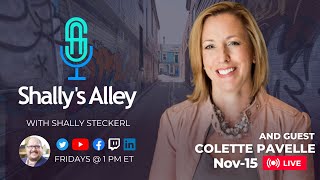
In this live interview, Shally Steckerl welcomes talent acquisition veteran Colette Pavelle to discuss her diverse career across hospitality, legal, senior living, and insurance, and the pivotal moments that shaped her approach to leading a TA function. They explore how adapting communication styles to different audiences— from sales teams to technical specialists— is essential, and Colette shares concrete tactics such as asking hiring managers about preferred communication channels and detail levels. The conversation moves to the challenges of writing effective job descriptions, the prevalence of confusing or humorous titles, and the need to treat job descriptions as marketing tools rather than static documents. Both hosts critique the current AI hype, noting that generative tools often recycle outdated language and can be useful for tasks like bias detection but should not replace human judgment. They discuss the shift toward skills‑based hiring, emphasizing that it’s a re‑branding of long‑standing practices. The interview also delves into non‑metric measures of success, with Colette highlighting the importance of truly understanding the “need behind the need” and translating requirements into candidate personas. They address the overload on modern recruiters, who are expected to be data analysts, market experts, advisors, and project managers simultaneously, and propose a strategic shift toward stronger cross‑functional partnerships rather than a one‑person talent‑advisor model. Finally, they reflect on personal productivity, the value of being present, and close with rapid‑fire questions about future guests and a thought‑provoking prompt for listeners to consider their own presence in TA work.
Chapters
Hey, all right everybody, happy November 15th! You are live on Shally's Alley. I won't tell you what year it is, that way when you watch this 20 years from now, you'll still think it's November 15th of that year. Nah, I'm just kidding because it probably won't be a Friday, but in any case Happy Friday, and I hope you have had a great week. So today our special guest is Colette Pavel. Did I say that right? Pavel?
Yes. Yes.
Pavel. Pavel.
Pavel. Yeah.
Okay. And, um, very happy to have Colette here. We, we have quite a few things to talk about. She's been in the industry for a while. I'm not gonna, I'm not gonna age you and reveal how long, but not as long as I have, but still. Um, been in the industry for a while, and, uh, I think we met when you were at Aon Hewitt.
Is that right? Yeah, a minute ago.
Yeah, yeah, you were there for like 2 years and then another 4 years, and yeah, you managed sourcing or something like that.
Yeah, I was perfect. Yep, exactly.
There you go. So, um, I kind of want to talk a little bit about, you know, some of the trends and innovation and, and things that have shaped your, your trajectory. I think a lot of listeners have some things that, you know, they could pick up on and tool tips and learning from your experiences. Your, your career goes through, spans a range of different industries, and you've been in various leadership roles. I mean, you were in like, uh, I think you were in, in automotive, if I'm not mistaken.
Not automotive. I've done, let's see, call center, legal, hospitality for the bulk of the hotels, right? Hospitality.
Yeah.
And then most recently, senior living. And now insurance.
And of course, Aon is professional services, right? Right.
Professional services. But I was supporting hospitality at the time.
Oh, gotcha. Okay. So yeah, quite a, quite a bit of you know, variety of experiences. So my question is, are there any, or I should rather, I should say, I'm sure there are, but what pivotal moments can you share that shaped your approach to leading a TA function?
Oh, wow.
From your learnings.
There's so many. I would say one of the largest ones is I started with a hospitality company out of Denver, and we were creating a sales recruiting function. It had never been done. The teams were basically voluntold, as I always say, that they had to use us. They didn't get a choice. They had to pay for us.
Sales recruiting is a whole nother— it's a whole nother beast. I've done some of that, but I have a colleague that has been in that for much longer than myself, and, and she's— it's, it's a different, you know, everything from the phone screens to sourcing. Sourcing, it's hard to find salespeople because everybody has a different job title, you know, account executive, account manager, business manager, business lead, like so many different things. But anyway, go on.
So the pivotal moment was, um, honestly, it was being, uh, my leader coming to me and saying, listen, your communication style, because I was East Coast, they're all Colorado-based. It's just not translating, like your, your communication style, because I was— I spoke too quickly, a little sarcastic at times.
East Coast. Yeah.
And so for me, that was my— and even though I grew up in the Midwest, I had just gotten into habits that didn't translate as well to leadership. She's like, you need to have courageous conversations, basically, which is HR, we always tell our leaders, you need to have courageous conversations. But I, I had to hear hard truths about myself, I guess. And it really helped me be more mindful of my audience, even in recruiting, right? Salespeople, totally different conversation, as you said, to speaking with a cybersecurity specialist or something, or a risk analyst or anything, that I really needed to be thoughtful when I'm having conversations with anyone, much less leadership.
So you're adapting your, you're adapting your communication style. It's not a change of who you are, but you're adapting your communication style to match the audience, not just level, but also function, you know, technical versus non-technical. But how did you do that? How did you learn to adapt your communication style?
To your point of understanding the audience is asking more questions, listening and asking more questions, especially in initial meetings with any individual is their preferred communication style. I mean, I still have people that just send me a Teams message. I don't want a phone call. I don't— just give me a quick update, moving on. Don't put something on my calendar, for instance. But I have others that they really value the face-to-face, whether it's literally face-to-face or virtual. And so it— in how much detail they want, that's usually the key. How, how much information do you want? I've screened 50 people, you know, or screened out 50 people. I've talked to 7 people, I'm sending you 3, like, what level of detail do you want?
Like their names?
Or do you just want to see the resumes? And so it's really, especially in my current role, because people come from very different size organizations when they join us.
Right, you're working with an insurance company. So, right, right. Yeah, it's a little, it's a little bit of finance, financial services, professional services, sales, a little bit of everything.
Yeah, a little bit of literally everything. So it's really asking the question, what do you want from me? Like, what, what can I, how best can I advise, serve, however you want to put it? Because I'm only the second person at our company to ever hold this role. Oh, gotcha.
Okay.
So it's also a new—
you're still breaking new ground. Yeah. Yeah. They may, they may were, they were self-serving before. Yeah. They probably were just fending for themselves and now they actually have someone dedicated to the role. Yeah.
Yeah, exactly. So it, it's, I won't say groundbreaking, but they're like, oh, to them it is.
Yeah. It's new.
Yeah, it's new. I mean, and they appreciate it tremendously. But they're like, oh, you mean, you can actually advise and you have market knowledge and you can give insight and compensation? Or I know we were earlier talking about job descriptions. I was like, well, yes, we have to make sure people in the world know what this means.
I know you think you know what it means, but right, that's not what the job description— the job description is always like, Literally written for the hiring manager. The hiring manager can read it and go, oh yeah, I know exactly what this is, but nobody else can.
Yeah. Well, and we have some really creative job titles that I'm like, okay, tell me one. Oh gosh.
I'll give you one from mine and you can give me one.
Okay.
So my all-time favorite in the history, actually, no, I lied. Let me give you two. My all-time favorite. Legit from history is systems implementation disambiguation engineer level 2.
I don't even know what one of those words means.
Help desk.
Is that made up?
Nope. After they implemented the system, people have questions that needed to be disambiguated. The systems implementation is literally an after-implementation help desk. Um, and you know, once I started looking for help desk people, it made a lot more sense. But at first I'm like, systems implementation, is this a big— is this an actual job? Um, and then my second favorite, because this one was, uh, in the ATS, and I was at— and I was at a very large company, global company, one of the top at the time, one of the top 10. And, um, I was charged with looking at essentially historically, let's just say not dead reqs but critically ill reqs. Req that were like on life support. Graveyard. Yeah. And I've found this, this one, I found this one hiring manager that had like, I don't even know, dozens of just reqs that were open. And I'm like, wow. And they had no activity and I'm working on them and I'm looking through that and Um, one of them, the job title— I, I am not kidding— the job title said head salad tosser. And I was like, huh, is it a restaurant industry? Does this guy work in the cafeteria or something? So, so I'm like, all right. So I dug into it and I dropped him a quick note. It was the funniest response. He came back and he said, well, you see, the thing is I'm so tired of opening these wrecks in the system and nobody ever gets back to me. Like, I don't ever hear from recruiting or HR. They just sit there forever and ever and ever. So I figure I'm gonna create a job, I'm gonna create a job rec that has a really weird funny name, and, you know, hopefully that'll get some attention, and then they'll see, you know. And I'm like, oh, how long ago did you do that? He's like, a few years back. Nobody ever looked at it. Oh wow, it was a real wreck. The, the job title was fake, but the description was a real wreck. Yeah, he just couldn't get anybody to pay attention to him. So he was talking about fending for himself, you know, he was fending for himself, but in the system it had that funny title.
I, I've, I've hoped that I want to put like head bottle washer or something. Yeah, right, like I could do it, but that's literally what he did. Yeah, I think ours are— they're just so long. They'll be lettuce peeler. They'll be like Director of Business Transformation, IT Stability, like, and keep transformation and so on.
And multiple job titles, right?
Can we just say Director IT, IT Operations, or—
and then below that in parentheses, you know, whatever. Yeah, that's true.
Well, where I tell them, you can call it whatever you want once they're here, but I'm going to list it as the following. Are you okay with that? Because otherwise, we're not going to have any applicants.
So, you're— so one of your pivotal moments then was, was being told or recognizing or being aware that you needed to shift your communication style. And, and your response to how you did that was by listening. So what I like to do when I join a new organization as a consultant, or I'm starting to meet new hiring managers, or even when I just meet my, you know, if I have a new boss or whatever, I always like to ask the question. I think this kind of connects to what you're saying. I always like the question of how do you prefer to be communicated with? Right. So do you, would you rather I call you, text you, message, you know, Teams message you, um, email you, or set up or put something on your calendar? Like what, what is your, you know, or, or none of the above? Like, you know, if I, if I want to talk to you, if I need to talk to you, what's the best way? And You know, so that I'm kind of in the flow of what you're doing and don't interrupt your day. And I think it avoids a lot of problems because you, you know, if you just make the assumption and slap something on somebody's calendar, like, who is this person? How dare they, you know, add themselves? But if that's how they like it, then I have no problem with it. And if you text them, they never get back to you because they're not mobile phone friendly or what, you know. So I like to ask that question, like, how do you prefer that I communicate with you when I need you? And then I tell them, Best way to get in touch with me is to text me. My phone is always with me and I'm often switching between computers from laptop to whatever. So, you know, in between stuff, just text me and I'll— and text me and say I'm on Slack or whatever. That's fine.
Right.
And the second thing that I like to ask related to how do you prefer I communicate with you is exactly what you were talking about as far as with hiring managers. Setting expectations. Do you want full resumes? Do you want summaries? Do you want a spreadsheet? Do you want me to just tag you in the CRM or the ATS? Because they all have different tolerance levels. And I found that there are some leaders in technology and in business that are quite happy going into the ATS and reviewing resumes if it's an easy thing to do while they're on their iPad or, you know, in an airplane or, you in between meetings or whatever, and they just go in there and tag a few things. And there are others in equal positions that absolutely will never log into the ATS no matter what you do. And so I always ask them—
You send them a link and they'll, nope.
Right. So your recommendation now gives me something new to do. You're asking about how much detail do you want? So that's outside. I'm only doing this with hiring managers because I want to know if I should email them, a resume or just email them a list or make a spreadsheet or just set somebody up. You know, once I build rapport with them and they see the quality of my work, I usually get to the point where I just say, I'm gonna set you up with 3 interviews. Right. And they're like, okay, but that takes, that takes work. You don't start with, hey, I'm new to the organization. Here's how I work. I'm gonna set you up with 3 interviews. And they'll be like, oh, hell no. I wanna see, you know, so I like to ask that. But what you said is ask for how much detail do you want? I'm gonna change my My question to that, like, how much detail do you like? Do you appreciate— I can be really verbose. And one of my pivotal moments was when I learned— I've been in leadership roles. I've been a consultant. I've owned my own business. But I never really paid attention to the fact that I— and this was a StrengthsFinder. I don't know if you've ever done this.
I've done it. Yeah.
Yeah, this was a StrengthsFinder sort of discovery about myself. I've never stopped to think about the perspective that other people— I like a lot of detail, and I never stopped to think about the perspective of someone else until I was a VP and I had a director who just laid it out with me and said, "Shally, I love you. You do great work. But I gotta tell you, man, you over-answer things to death." Like, you know, and I realized I like all that extra detail, and this person said, You know what you do. You don't have to change what you do. You keep the same level of detail. You do all the things that you do because that's what makes you, you know, who you are. But when you're providing the information to the other person, give them a summary and then you have all of the backup. Like, here's the highlights. Let me know if you need any more information. And I started doing that and I got a pretty positive response from my peers and my leadership team. Even so that they commented on like a company-wide meeting. They're like, Shelly's, you know, whatever, got much better. And that was a pivotal moment for me because I realized having the information and telling someone you have the information are really not the same thing. It's, you know, hey, I got the data if you need it. Great. I'll come back to you if I need it. Otherwise, I'm going to trust you. And you know what? My chief people officer really appreciated this when she saw the change. She's like, you know what? I trust you. If you tell me that this is what it is, I'm going to assume that you're right. 'Cause you haven't let me down and you've proven to me that you do all the homework and you don't speak until you, you know, have the background. So if you tell me it's gonna be like that, it's gonna be like that. If I need backup, I'll come and get it from you, but I'd rather just have the straight answer. Um, and we just got a lot more stuff done that way. So I really like that. Ask, how much detail would you like me to share with you? I like that.
Well, and, and I won't say, and this is, uh, it's funny, my recruiter, she is the give the summary, all the details. And I was like, it's not that I don't have those details. Um, I go, but I, and I coached her. I said, I don't provide those unless they need them. Some people want that level of detail. And some just trust me. They're like, hey, if you say this is the one, you know, sign them, sign me up. But like you said, sometimes you get there, you get there. Yeah. I know, even with my own VP, one of our, one of my team members was like, well, I went and looked at the resumes anyway. And she's like, Claude knows what she's doing. You don't need to go behind her. She If she says they're nos, there's a reason they're nos.
Right, right. Yeah. I like that. We have a comment from Aaron, a former guest here. He said he's also received, we enjoy the learning opportunities, but sometimes we just want the darn answer. That's pretty much what happened with me. And it was, you know, it was a director that I, she didn't report to me. She's a longtime friend. I've hired her multiple times. She didn't report to me. but she was, I would say a victim of some of my reports that, you know, the data that I put together. So she's the one that said, come on, just like tone it down a little bit. She even, she told me, she's like, I'm looking at this thing and I don't even know where to start. Like, what do I, you know, do I go to paragraph 3 or paragraph 47? Exaggerating, of course, but yep. So that's some really good advice.
Yeah. It's hard to learn though.
It's hard to learn. Yeah, I had to learn it by after years, you know, right. And I've been on stage and I give present— that's the embarrassing thing is I give presentations, I give keynote addresses to large audiences, and I know when I'm giving a keynote address that I need to make a point, but then when it's a meeting, I turn into like the nerd with the calculator and the spreadsheet. I don't know why.
Yeah, I'm the opposite. I'm the one that sits there and listens and listens, and then I'm like, Why? And they're like, why do you always ask that? I'm like, because if it doesn't make sense to me, I'm going to ask why.
I know, it's just like the 5 whys, right? The 5 whys of management consulting. You and I would work well together. Are you hiring? Just kidding.
Not yet. We've actually slowed down a little bit.
Yeah.
Yeah.
Well, speaking of not yet, what trends or innovations are you seeing in TA that are underappreciated or, or maybe misunderstood? So what— yeah, misunderstood, let's go with that. What trends are you seeing that are misunderstood?
Um, wow, I've never been asked that, so now I'm like, oh, it's understood.
Um, yeah, like people just think it's this, but it's really not.
I'm trying to put it back to you because I don't know if you see this. I've only been with my company just over 2 years. And I mentioned to you, like, I was the only— the second person to hold the role, the TA leadership role. And so I find, and this is an HR problem generically also, that they don't understand the consultative approach that we actually have market expertise or, you know, just a vast wealth of knowledge of compensation, job descriptions, all these things that are kind of part of how to negotiate deals, how to have conversations with candidates about, are you, you know, are you going to take a counteroffer, those kinds of things that you learn over the years, that they just think we're order takers. They're like, well, we give you this job. And you just, you know, shuffle through some paper virtually. And then you just throw things at me without any Just randomly, I guess, you know, no thought, no discernment, if you will, that it's— and I've worked with those type of talent individuals. I'm like, well, that's different. That's not true talent acquisition or recruitment. That, you know, that's entry-level recruitment where you're just like, okay, I do the things and the stuff, but I was like, no, my role is to guide. We're more gurus and guides. So I still find that's a misnomer in, in my space, at least currently. And then the other, I know we briefly talked before, is the AI buzzword. Yep. How's it going to affect TA? What's it Here's my take on it. Number one, it's a lot of fluff right now.
It is a buzzword.
Yeah, it's just a buzzword. Is it going to be useful? I go back to job descriptions. I'm like, you know what, let's run it through a couple times, make it more interesting, or more, you know, something. I've been trying to coach people that, look, we can have a very formal job description that lays it on. But how about we think of it as marketing? I go, I'm a marketer. At the end of the day, I'm a salesperson and a marketer. And if you're giving me some dry toast, well, I mean, maybe we'll find somebody who likes dry toast. But if we make it sound more dynamic, which our organization is, or this role is, you're going to get the person you want for the role as opposed to You know, I need 5 years of this and 3 years of this and other duties as assigned.
Well, that's one of my biggest peeves with AI, and it's happening more and more. Not to flagellate the diseased equestrian here, but it's just unnerving that people feel like giving a job description to a chatbot is some kind of innovation. It isn't. It's actually kind of the opposite of that because the chatbot is using data from a bunch of historic job descriptions. And I want to emphasize the fact that I just used the word historic. In other words, history is great if you're learning from history to predict the future, which is sort of what these robots do. But these old job descriptions are old for a reason. They're outdated, they use outdated language, outdated technology, and the chatbots are basically mishing them all together. So you end up with this like uni flavor of job description, right? It doesn't have the vanilla balsamic vinegar with pecans flavor anymore. It's now just mild vanilla.
I was gonna say Neapolitan ice cream with the big scoop. Yeah, blend it all together.
Neapolitan blended together. Yeah, exactly. So I think that that's a big, misnomer. And, you know, using, using these robots the right way, you can get results. Like, for example, you can give it a job description and you can say, do you detect any gender bias in this?
Right.
But you can't give it, or you shouldn't give it, a job description and say rewrite this to be gender neutral because it might not do it. Yeah. But if it tells you, you know, these are things that might be gender, then you can have— then you can make the determination on Okay, I see your point, but no, or, you know, or whatever, make the changes. Um, but don't just like let, let it do the work for you. You actually still need to do the work. It's like expecting the vacuum cleaner to run itself around in the room. Oh, never mind, the Roomba, right? Like, do you really depend on the Roomba to clean your house? It might take care of most of the dust and stuff like that, but you, you don't have— you don't ever stop actually doing your housekeeping and cleaning is what I'm trying to say, right? Yeah. So it's a tool that helps us go faster. I've always wondered this, and I'm probably going to offend a lot of people with this. I wonder, and I'm using Richard Rosner's, uh, comment here, you need to keep building the hype and excitement. It's what it's all about. It's a teaser of, of, of the job. Yes, that's the job description, but that prompted me to think about something else. Thanks, Richard. Do you feel like sometimes TA leaders cling to the next hyped thing because it gives them the— this is really nefarious, but does it give us the opportunity to kind of, um, do something new and different? It's almost like we, you know, it used to be semantic search, then it was big data, and now it's AI. It's the same thing, but we call it something else. Is it just because we just kind of want to give ourselves something new to do so we look like we're cool and hip and trendy? Because it's really the same thing, honestly.
I'm sorry, that's really funny. I think I'm probably gonna agree. I would say, because again, people think of it as an order-taking function, that they don't think we use technology or—
right, what we were saying before, they don't have the expectation that that we—
yeah, yeah. And I was like, well, I mean, we're generalists, right? Especially if you've worked in multiple industries. I'm like, what, I can hire an attorney, I can hire a cybersecurity leader. I mean, I've done all that. But to your point, maybe it's keeping it— trying to keep ourselves relevant and make it sound like—
yeah, I mean, maybe that's not the only reason. But I just feel like we sort of Because I, I used to go to a lot of conferences. I haven't in a while. I've been to a few, but I haven't as much as I usually do. And it's— I get the feeling that like they just take the poster and just like replace, you know, a word. Like this time around it was they took diversity out and they replaced it with AI, you know. Our tool now with diversity, put a sticker on top. Now with AI, you know. Now with big data. Now with semantic search. It's like whatever the flavor of the day, it's the same stuff. But, well, do we really? I think this is an evolution in tools, but I was curious to get your perspective on what are the real— what's the real benefit behind this, right? Not, not, not the hype, but what's the real benefit behind this AI impact?
To your earlier point, to me, it's having another lens, you know, whether it's looking at job descriptions, skills, You know, because that's also the buzzword right now is skills-based hiring rather than degree-based hiring and really focusing on skills. And I'm like, okay, that's just the new buzzword. We've always focused on skills.
I was just going to ask you that. Did we not focus on skills before? What were we focusing on? I know.
I'm like, oh, did I just ignore that part?
I think the philosophy is that we used to do hiring based on experience. Not ability. And so that's what my take is.
Yeah.
You know, have they done this job for 5 years? Yes. Then they can do this job 5 more years. Instead, the shift is, are they able to do this job even if they haven't done it before? Is that's what I think is really behind it. Right. But AI is not going to be able to tell you that.
No, no, for sure. And that's, and that's, well, and now people embed, uh, you know, keywords just to get you to look at the resume. I mean, we could go, oh yeah. All sideways on that. But, um, but that's your point.
I think what you're saying, I hear you loud and clear, is it's another set of eyes. And that's really cool because it's another set of eyes that's available immediately. So it's like being able to have a conversation with your document.
Yes, exactly. And it will not, to your point, replace real humans looking at it, because I see much bashing going on on social media of talent people. Well, they're screening us all out. And I'm like, no, that's 90% of the time still human. Maybe you just didn't make the cut. And you just have to move on with that. And sorry, not sorry.
Yeah, it's my job to review resumes. That's right.
Yeah, that hasn't changed in my many years of recruiting. I'm still looking at every single resume and going, do you meet basic skills or requirements? Okay, If you're even close, I'm moving you forward so I can look at it a second time, depending on how many I have.
Yeah, I teach that when I teach job seeking classes. A lot of times what we do— I mean, maybe I'm not supposed to speak for everybody, but as recruiters, a lot of times what we do is we scan the profile for evidence that we should put it on our file to look at, right? It's not like we're taking the resume and analyzing it in depth at the time. We're just basically sorting. So we're sorting This one looks, you know, yes, maybe, no. And then you go back to your yeses and like determine if you have time to go to your maybes. And, you know, I think that's kind of what we do.
Yeah. And I think people just, you know, assume— I don't know what people assume because, you know, I'm sure just like I, all of us in talent, everybody's like, can you look at my resume and tell me why I'm not getting this, that, or the other? And I'm like, no, I can't. Are you focused?
Are you— are you—
do you actually have the skills, or are you pivoting, in which case you need to do something else, right?
Yeah, yep. Um, I just wanted to throw this funny thing in there, but like lately I've been— I've been seeing a lot of garbage written by AI, generative AI. Um, and I don't know if you've noticed this, but if, if I see a, a an article, a paragraph or something that begins with the words, in today's world, I immediately stop reading.
Oh, I haven't even noticed that.
It's always AI. It's always like AI loves to say in today's world. It's like they're taking a cue from those movies where they say in a universe where only blind people exist, you know, or something like that. It's like, that's just, I just stop. Anyway, I thought it was funny because we're talking about—
and mine is the, um, because I know people do a lot of headshots now and, and the gener— the AI-enhanced photos, and I was like, I hate them. I don't know why I hate them. I just hate them.
I'm like, if you can't tell, then they're— when they're, they're good, they're really good and you can't tell, right? But in order to do that, there's a— there's actually a company that um, does this, and they, they take— they, they require that you upload 20, at minimum of 20 different pictures of yourself, and in different, different angles, you know, like that, left, right, high, low, and in different, like, lighting conditions with different, you know, outfits, um, even glasses, no glasses. And so they, they have this request of, you know, and you give them at least 20 and give them more. We have that minimum of 20. And then there— this is obviously a paid subscription, right? Right. Um, and their output for that is they'll come back and they'll generate 200 images that are artificial avatars of you, but they're all basically slight variations of, you know, this combined effect. Um, and 90% of them look uncanny valley eerie, but if you— because you're getting so many of these, you look through these, there will be a few where you're like, I— that's totally me. Like, you can tell. And those are really well done, but that's expensive and it's time-consuming. If you just take a picture with your phone and you upload it to one of these filter places, what you get back is, is, you know, a caricature of yourself.
So, but yeah, I was like that. I mean, if you want an avatar, that's a great way to do it.
If you want a caricature, yeah, it's fun. But don't use it at— don't pretend that it's really you.
So I know I was teasing you earlier about random resumes that people applying for jobs, but are you seeing— I've seen recently an uptick in also the more, I call it European style or international style CVs with the photos.
Yeah.
And I always love to stir the pot. That's my controversial take is like, look, you're just putting yourself out. You're putting yourself out there, which is great. But It could also not be great if the wrong person is reviewing it and there could be bias in so many ways.
It's, it's unconscious bias. Yeah, I know. I have seen that a little bit more often now. And I've also seen the people taking to the advice of social media and putting a bunch of garbage in there and, and just like beefing up their resume so they're getting longer. And that doesn't really, have much of an effect. I'm still looking for the same things. Now I got to look harder.
You know, my, my least favorite currently is people are using templates online, which is great if it helps it delineate or make it—
some people just don't know how to write a resume. It's not an easy thing to do without all the fields.
Oh, you know, where it'll say, I got one that still had green highlighter that was like your name or something, you know, and I'm like, Sir, there's a gap here.
Spellcheck. Do a little bit of—
at least look at it. Because the first thing I see when I open the resume and I'm like, oh, attention to detail is kind of part of this job. So I'm gonna have to politely decline. Even if you have the skills.
That is bizarre, though. They didn't even look at it enough to— yeah, to detect that.
Yeah, it's interesting.
Well, I want to shift back to one of the other things I wanted to ask you about, um, as far as your, your diverse career and different experiences. Um, obviously you're successful in talent acquisition, and what I want to know is what— when you think about success in TA, what is your North Star that is not a metric? I don't want to talk about, you know, number of hires, speed to hire, time to fill. I don't want a metric, right? I want a success measure that may— that where you feel like, okay, I've been successful because— and that isn't something that you use a measuring stick with.
Um, what's ironic about you saying not, uh, KPIs is we just created them and lucky for me, nobody cares about them. And they're fine for managing people.
They care.
But for me, it's— and this has always been throughout my career— really aligning with whether it's that leadership team, that hiring manager. I call it really understanding what they're looking for. I'm like, you can give me 50 JDs. Like, I don't, I don't care about that. What is the secret sauce that is not on this piece of paper? You know, whether it's work style, you know, I call it the soft, the squishy stuff that isn't on a resume. And that to me differentiates true changemakers or successful people in TA is— it's really understanding the—
get to the bottom of what this actually means.
Because I'm like, when I can actually meet whether it's the team members, the team dynamic, like, we had talked earlier about, again, job descriptions, and you, you always get those frequent flyers, right? And I've challenged hiring managers through my whole career. I'm like, just because this is the same financial analyst job, it wasn't that person who was in that job. What did they bring to that team, like maybe they were the trainer, maybe they were the subject matter expert of the technology, whatever that is. So not every Phil is the same Phil as it was last time.
Last time, right?
Um, so it's—
that's really interesting.
Yeah, because it— a customer service person, it— every person brings a little like you, we were talking earlier about writing a job description for a person. So we're not doing that. But again, if that person was your go-to for insert here, you know, they're the best escalation person, or, okay, well, then do you need that again? Or do you have that? And now you need something else, right?
I think that explains why I didn't get a job that I applied for that I really wanted. Actually, it does. Yeah, I'm looking, I'm thinking back in my head, and it was, you know, I was— it's one of those job descriptions where you— it's rare, but it happens— where you're going down the, the list and like, check, check, check, check, got that, got that, got that. And you get all the way to the end, it's like, wow, I have like 97% of everything that's in here. And I'm not saying the requirements, I'm saying like the nice-to-haves, and, you know, like, right. So I was really excited about it. And it was a leader that I admire and would love to work with. So very excited. I got all the way to finalist for that job. And I got beat out by someone else. It was just me and one other person, you know, down to the two of us. Like I said, this is a friend of mine. So I, you know, I got the inside skinny. And I legitimately didn't get the job for a very good reason. And it was because the, um, leader, my friend's boss who was part of the decision committee, um, recognized that they, they had a gap in, or they needed someone that had very strong project management skills. And I mean like official, like PMP type of. Yeah. Which, I mean, you know, in TA we do a lot of project management, but not with like Gantt charts and dependency charts and risk charts and I know of that, but I haven't, you know, as a consultant, but I've never really been in charge of it. I don't have a PMP. And it wasn't really in the job description that clearly. I mean, it was like project management was part of it. Right. But I think this was a salient point to this leader that what you just described makes complete sense. The person, whoever was doing that job before, or the person that they need to do the job that didn't exist before is someone that has this. And they were willing to teach them the TA stuff where I had all the TA stuff and they weren't willing to teach me the PMP. So I legitimately got beat out by someone that had the PMP, but didn't have the TA. And now it makes sense. It clicks. So I want to rephrase what you said, which is the key to the North Star for success for you is to really understand the need behind the need. So I think I'm going to call that like translation. Yeah, translating the requirements to the actual needs.
Right.
Or interpreting, maybe. I don't know, translations.
Yeah, I never know how to word it. I'm like, I'm like, it's not, it's not just a piece of paper. It's basically almost creating a candidate profile.
You know? Yeah. Because it's not what's just on the paper.
Yeah. Yeah. Yeah.
Yeah. Cassie actually has a really good question, that, for, for you about this. How would this work for, for roles that are new, not backfills? So like net new, never hired for this position before.
Right. So thanks for the question, Cassie. It is a little harder when it's entirely new.
Figures.
Of course it is. It's not a gimme. I tend to focus for the new roles, is how did the need come about? Like, where were the gaps before? Or, you know, is the business going— it's a new product, for instance, or it's a new technology. Like, there's some— what was the impetus?
So still, what is the need behind the need? It just— instead of who did this job before and what was their, you know, what are we replacing there? But, but what is the actual— like, maybe, maybe this position I was talking about had never been filled before and it was new. Maybe it was simply because they needed that project management. So you're saying dig into— now, is this something you would do with a hiring manager or like, how do you discover this?
So I hate to use these—
because I said it's not in the job description, right?
Sometimes it's a hiring manager and sometimes it's meeting with leadership, being a part of leadership team meetings, getting a seat at the table.
Right. You know, it's strategic meetings where there's some initiatives being discussed and—
Right. And you can ask the questions. We had a big push in our finance teams this year. And one of the teams, she's like, look, to your point, we can teach some of the budgeting, financial pieces. I mean, they have to have the basics, but we need somebody who can— knows business intelligence, how to build dashboards, how to literally build out, um, they want to create some self-service tools. So they needed a technical person more than they needed a financial person, you know.
So it's getting a financial job. Huh? For a financial job, right? Yeah.
And so you want to talk about the— does that exist in a person? Now I have to go fetch the need behind it.
Yeah. Okay. Okay.
If that makes sense. What's the need behind the need? Because if it's new or whatever, it's like, okay, I have— at least for me, like I said, I kind of create a persona in my head and I'm like, Everybody's like, well, why don't we have a candidate yet? And I'm like, because I haven't found them yet. They're in my head. I know who we need in my head. I just have to go fetch. And that, that's a harder thing to discuss with leaders and managers when they're like, but this one looks fine. I'm like, no. And this is why.
Okay. Okay. Gotcha. All right. That's, that's good. That's, I've learned two really big things today. So if I've learned something, hopefully people have learned a lot more than that. So, um, I, I want to shift gears and go a little bit higher in the organization, um, and say, or ask, I should say, if you could recommend one strategic shift for a company to make in 2025 to improve their TAs, specifically to TA, one strategic shift. And I'm talking about a strategic shift, not like buy a CRM or whatever, but yeah, get a tool. Okay, duh. What would be that one strategic shift that you think we all need to make in '25? Like, say you're the world's president of talent acquisition or something.
I'm like, oh Lord.
It's all in your hands. Our careers all depend on it. What would be that one strategic shift?
I hope not.
You're president of the world and you get one wish. No, I'm just kidding. Yeah.
Well, that's different.
Um, you got one wish in TA.
I, I, there's no like secret sauce, so I'm like, oh, it, it, to me it's targeting next year though, right? Like, right. Like what the challenge is next year.
Yeah. What is a strategic shift that we should all be making that isn't just a simple, you know, like, like, buy AI, you know, that, that's kind of almost like the kind of the gimme, right? Buy AI tools. But I'm talking about like strategically. Like, for example, I'll, I'll give you one that I've been mulling over back and forth a little bit, is to move away from the, um, strategically move away from this like talent advisor mentality where there's got to be a person in TA that is essentially the, like, be-all and end-all and know-it-all of the talent market for the hiring manager and becomes the partner to the hiring manager. I think that's overreaching in a way that— and I could be speaking out of turn here, but in a way, I think HRBPs should have more of that responsibility. In, you know, being their business partner. Like, it's literally in their job description, in the job title, HR business partner. So I think that's really where that strength should lie. Expecting the, the TA frontline— I'm talking about a recruiter, okay? Expecting a recruiter to fill jobs, do data analytics, gather market intelligence, and be an advisor to the hiring manager is a lot in one, in one go. Um, and I don't really see that we can continue. We can't— we're not going to sustain this level of growth in our industry if we're expecting people to do more and more and more and more and more and more and more. I understand that we've gotten to this point because we've cut so deep that we can no longer do more with less because we couldn't possibly have any less. Right? I know departments of, you know, TA departments that have 500 recs and they have 2 people, you know, filling all those recs. It just, what do you think is going to happen here? And AI is not going to remove enough barriers to make it possible to do that. But you're still putting on this pressure of you've got to be a business partner. You've got to know the industry. You've got to know the market. You've got to know the candidates. You've got to know how to interview. You've got to know how to source. You have to know how to pull reports. You have to know how to put those reports together. I don't know of any other part of the company where that many skills are required of one person. You—
but you forgot a couple others because sometimes you also have to own— you got to know about diversity, you got to know about diversity, all the diversity, legal, policy writing, privacy. Um, yeah, all the data privacy laws by country or state or pay transparency.
It's overwhelming.
Employee value proposition, the tech deck of like, I know for me, I'm like, oh wait, I'm part-time trainer. I'm also working on the CRM, the CRM, the career. We're redoing our career site. And I'm like, when did I join the marketing team?
I mean, well, you didn't, but you also didn't join the data analysis team. You also didn't join the legal team. You also didn't join the Psychology Institute of America. I mean, like, that's what I'm saying. So I think that the strategic initiative, and I haven't arrived at any kind of solid advice. I'm doing a survey right now, by the way, of leaders that is going to become a report for what is important for TA in 2025. And it's a 20-minute, 30-minute interview. In fact, actually, let me throw that on the screen if you don't mind. Oh yeah, no, there we go. Okay, scan that QR code. So I'm doing a talent acquisition leadership study, which is why I'm— I've been thinking about this, right? And, um, if you want to participate, there's no cost. You'll actually get a copy of the report in advance, and you'll be able to, um, contribute your voice to it. So we'll— I'll be publishing this hopefully by the end of the year. As I've been doing that, I've been thinking, you know, in these interviews TA leaders like yourself come back to me and say, well, we're looking for someone that's, you know, we're looking for TA people to be more well-rounded. They have to have this and this and this and this. And I'm listening to this and I'm thinking, when do we stop? This is a lot to take on.
Or, or we go back to, um, like you said, we've become the keepers of so many things. And I'm like, we need the depth again. You know, yeah, right, comes and goes, and I get it, it's cyclical. And, and we're—
I don't know what the answer is. I, I speculate that the answer may be something related to we need to learn how to connect to the other departments better. So in other words, we need to form stronger— as a, as a TA person, you need to form stronger ties with privacy and legal, form stronger ties with marketing and data intelligence. And leverage those internal resources, but not do it yourself, like carry the weight of all of that yourself. I think is— that's, I don't know, rant over, your turn. You tell me.
Yeah, well, no, and I, I, to your point, um, I was just thinking in my day yesterday, and I was getting asked really questions that had nothing to do with talent. They're like, did these roles get filled? And so that had to do with me, but I'm like, You're asking the wrong person. So I went to the person who had the information. And I've done this multiple times recently. I'm like, what? I don't, I don't understand why I'm the one being asked, because the person who knows that is actually over here. So now I have to go ask that person and come back to you and answer the question. And maybe that's just a corporate structure thing. But I find it was talent adjacent is what I call Exactly.
And it directly impacts talent, but it's not right. Like, being able to update your career site, it's, it sometimes means you have to know HTML. And like, we're not— why are we—
well, and I'm having to do market research, you know, what are our competitors doing? What will our parent company allow? You know, this, and, and, yeah, I, you know, we have way too many opinions. And I'm like, look, I just want a better one, okay?
Like, I don't— yeah, by the way, I have 20 jobs I gotta fill today.
So yeah, so yeah, I, I have, uh, 6 people who need interviews put on their calendar. Thanks.
What do you think about this? I— in talking about project management, um, in project management, and I'm no expert, I'm sure other people out there actually are experts that are listening, but in project management, one of the One of the artifacts as a consultant, we call those things artifacts. One of the artifacts that they put together is a guide of who knows what and where to go for what. So it's almost like a chart of if you need a password, go here. If you need a report, go here. If you need, like, why don't we have that for TA? Almost like a, I don't wanna say directory because that's not what I mean. I don't mean like—
It's not literally a directory.
Yeah, I mean more like a, like a, a guide as to who holds the master key to the different things like privacy and marketing. And, you know, like almost something, something like that, because it seems to me like that's where we should be going rather than just taking it all on ourselves. I think it's too much. Anyway, that's, that's my rant.
No, I don't disagree because I, I've been feeling that pain recently, right?
It's, it's coming.
Yep. I literally went to my leader and I was like, okay, I'm willing to do whatever you tell me, but is this my job?
And she goes, and you don't want to be the, that's not in my job description, right? Exactly.
I'm a team player, so you tell me. And she's like, no, but can you do it this time? Okay, that's, that's a good answer. But, you know, I feel like Everybody's like, well, TA will do it.
Can you do it this time? Yeah, I can do it this time. But if I do it great, do I get a raise?
Yeah, can I add that to my job description? Compensable, compensable time for an increase?
Can I put that in KPIs?
Oh, KPIs is a whole discussion. But anyway, fun times. We had to create a new one, a new KPI that didn't exist before that I had never heard of before. Because we had an executive who's like, well, this is time to fill. I go, that is not time to fill.
Oh, yeah, right.
And so we had to create a whole metric just because they were like, well, this is my time to fill. And I'm like, well, that's nice, but we're not going to call it that because that's not what it's called, right? That's not what it's called in the world.
So, you know, that's a tricky one, time to fill. And I think the best advice that I can provide anybody Um, oh, somebody— Alan said TA directory, guide on how to be a good hiring manager. Yeah, and, but also guide on how to be a good TA partner. I mean, like, I would like to know who I'm supposed to go to to get a change on my, you know, ATS, or who do I go to to update the, uh, the privacy. Like, this actually happened. I had a, I had a candidate that pointed out that a job posting was in direct violation of an ordinance in their particular city or something like that. I would never have known about that. But so this meant that we had to change the footer. And that's not something that you can do in the job description. In other words, in the job description, you know, it's— so the footer had something in there that was violating this kind of, you know, And I didn't know where to go for that. Like, I, that's, oh, that's our ATS. Uh, yeah, but like, where in the ATS do you change that? Well, it turns out that nobody except for the systems administrator at the vendor could, could make that change, which explains why I couldn't figure out where to make the change. But like, I would have liked to have known that because it's up to me to change it because I'm recruiting, you know, I'm head of recruiting. And a candidate is telling me we need this change. And the recruiters are like, hey, we can't abide with this. We got to make the change. And I don't know how to do it. And the people who, you know, it just— that's kind of what I'm talking about. But anyway, sorry, go ahead.
No, I'm still laughing at Alan's comment about being a good hiring manager. Because that, I guess, for 25, that is actually one of my goals is to have that kind of training, not, not just the basics, don't ask this, don't do that. But it's, hey, this is a partnership. So I— any talent person can only be as good as the hiring manager is at communicating what they, what they expect, what they need. All like this, I was like, I don't have a crystal ball. I don't have Pandora's box. I don't like none of those things exist. So if you don't tell a universal translator, yeah, I would love to have an anger translator. Oh yeah, every day.
Yes. ChatGPT, can you please take the bite out of this email and translate it to normal speak?
Take the tone out, please.
Take the chewing part out of it.
We actually have individuals on the team, they're like, can you read this and get rid of the snarks because I don't want, I don't want to get in trouble. Okay, I'll be, I'll be your truth, your truth seer.
Yeah, Aaron makes a really good point. This, I think this pretty much wraps up what we were saying here. You know, you be the advisor for non-recruiting topics, but make sure that you're aware of how you're being measured, because if you're being measured on something that doesn't have anything to do with providing that advice, then you're working— well, I don't want to say working for free because you're getting paid, but you're doing somebody else's job, and your, your job you're supposed to do is going to suffer from that, and so will your reviews and all that. So yeah, it's a really, really good point. I'm going to bring that back up here again. Thanks, Aaron. Well, um, we're, we're closing up here, and every, every guest gets to answer these two questions.
Oh Lord.
The first of them is, who should be our next guest?
Oh. I'm like, I'm going through my Rolodex of people I know that—
and don't necessarily focus on someone who would accept. I mean, somebody gave me Neil Patel, who's like a really highly renowned keynote speaker and he accepted. So you never know.
I mean, oh, Colin McClatchy, and I can send you his LinkedIn profile. Okay.
What would I talk to him about?
So he is all about the courageous conversations and basically being transparent and in your dealings with not only your colleagues or leaders, but also your employees. I saw him at a SHRM event in Baltimore. And I also, we had him as a speaker a couple times at a company I worked at.
Okay.
And I just always find him to be so insightful into just how that whole communication loop, I guess, is. All right. But he's—
that seems like a big one. But in case he doesn't accept, you got anybody else in your back pocket?
I'll have to get back to you. I'm like, oh my gosh, that's like— I'm like, I don't know.
You know, anyone you enjoyed speaking with or, you know, has good thoughts on, on the industry and has something to contribute. So yeah, I know I already gave you one, so you're off the hook, but yeah, I'd love to get more from you.
Yeah, yeah, yeah, of course.
The last question is, as people watch this, most, most folks watch this over the weekend and, um, you know, at, on their own time, if you will. So I want to give them something to think about. Um, what, what question should they be asking themselves Um, related to TA, I assume? Yeah.
As opposed to existential?
Um, you can go there if you want. It's, you know, let's make them think, right?
Oh wow, you should have warned me. Um, because I overthink and then I'm like a million ideas.
I like the spontaneity because it's usually more genuine. I know.
I would say, at least for me, what I've been asking myself recently—
that's good—
is, it's somewhat related, not related to what I do every day. But it's, it's that being present for me. And because I think in talent, especially when you've been doing it more than 5 minutes, We get so focused on next, next, like we're going through resumes, we're going through our task list. And it's, it's— and when you do that, at least I've found for myself, if I'm not being very present and focused on actually what I'm doing, something's going to fall by the wayside, right? I'm going to miss a good candidate. I'm not going to follow up appropriately. Appropriately. So it's really being present in, in what I'm doing.
Um, and okay, so how— so I guess let me turn that into a question. How are you being present, or are you being present enough?
I'm not.
No, that's the question that I want people to ask themselves, right?
Um, so the reason I started asking myself that is I found myself just doing the checkbox. 'Cause talent can be very checkbox. Okay, I did the new hire paperwork. I did this, I did that. Check, check, check. So that's why the question came up for me. But I don't know, it's, it's a harder thing. I find stepping away, it has become increasingly important for me to be, to be better present. I actually have to step away from the list and the to-dos of my job and actually communicate more with my colleagues in whatever form they prefer. It has been very helpful for me getting different perspectives. Just because I'm like, I— some days you stare at the screen too long and you're like, what am I doing? What am I even doing? Stepping away, come back to it, or do things that bring you joy and then come back and you're like, oh, Yeah, refocus. Totally different, right, right, right.
Well, thanks a lot for that, um, Colette. I'm glad you were able to come on, on the show, and thanks for spending your lunch hour with us. Yeah, yeah. Um, so thanks everybody, that's the end of our show. Come back next Friday, we're gonna have Ronnie Bratcher, um, with us here at the show.
More from Shally



Scaling Talent at Hypergrowth: Leadership, AI, and Hiring Excellence with Cindy Nicola







