Content First Recruiting with Joel Lalgee live on Shally's Alley
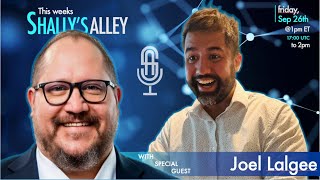
Joel Lalgee, a recruiter turned prolific creator, explains how to build an audience through content instead of chasing vanity metrics. He shares practical tactics like engaging with existing posts and segmented AI outreach, and emphasizes consistency over virality in recruiting.
Chapters
Hello everybody, you are live on Shelly's Alley, September 26th, Friday, 1 PM US Eastern Time. And that is my local time announcement for the day. Um, super excited to have our guest today who, uh, threatened me under penalty of death if I didn't feature him on the show. Sent me all kinds of, uh, death threats and requests and said, I better be on your show. And so finally I— because no, I'm totally kidding. I am so totally kidding. So I actually met Joel at, uh, I think the first time we met was at TA Week.
No? Yeah, yeah, yeah.
Like, like face to face, basically.
Yeah, yeah, yeah.
But you've probably seen him on LinkedIn, his videos. He's, uh, um, I guess well-known. Trying to define— trying to define him is kind of weird. Um, Social content first, social content first creator. Yeah. How's that?
I like that. I like that. Sometimes people would default to influencer, but I prefer—
Oh God, no, please.
Content creator.
No, no. I just don't see you with the like, yeah, you're like, check out my fit. I mean, although you do kind of wear nice shirts, but you know.
Yeah, yeah. Well, I need it.
My style, my particular dress style, I have, people don't think I have a style. It is, my dress style is if it's free, it's me.
I love that.
So if I got the t-shirt for free, I'm wearing it basically.
And that's pretty much, you know, yeah, that's what I tell brands, you know, you gotta, you gotta send out the clothing, send me the shirt, I'll wear it. I, I do wear a lot of that stuff. I wear a lot of it, uh, when I'm doing the yard work as well.
So, uh, no, see, I wear it at conferences and stuff.
Yeah, hey, that's the way to do it.
And then I don't get paid, so there you go. So that's like, how's that for a business?
That's good for you. I like that.
So folks that don't know, um, let me drop the thing here, whatever that's called, marquee. So you can go and check out the Joel Lalji Show. That's a lot of L's, I just realized.
That is a lot of L's. I'm just realizing that that's way too many L's.
There's too many L's. You gotta drop a couple of those.
Lalau.
How about just Lalji? Lalji's pretty unique. Did you try Lalji? That didn't work?
No, I don't— yeah, I don't know why it's like that.
I just—
I think—
I mean, did you try using like just Lalji? Because I don't know any other Laljis.
No, no, I just, uh, yeah, I think at one point I had, uh, what did I have? It was like J. Lolgy. It was like The Headhunter, but then someone else had already taken that.
And I don't— okay, all right.
I tried The Realest Recruiter, someone already had that.
So, so you fancy yourself as a headhunter, I see. Okay.
Yeah, yeah, the human headhunter. That—
The Realest Recruiter? The Realest?
The Realest.
Is that because other recruiters are not real? Are recruiters figments of your— of our imagination? Or—
no, the— so the original—
the realist, the most real—
the, the thought behind that was like, I do think that we can sometimes get a stigma for not, not always telling the truth, right? Like, you cannot— you can imagine.
So you had that realist, not realest. I got it.
Yeah, yeah, like the realist. Like, so if, um, you know, when I'm, when I'm doing my content more on TikTok, I guess, than the other platforms, just trying to give, give candidates real insight. So sometimes it's not what they want to hear, um, sometimes it's just real talk around the market. Real talk.
Yeah, yeah. So you do, um, I, I don't, I'm not a, I'm not on TikTok. I don't even—
it's good.
Yeah. Um, so you do a TikTok for, like, your TikTok channel is talking to candidates?
Yeah, I would say the focus is, um, world of work. So I take a lot of like LinkedIn articles and do commentary around that. Uh, obviously AI is just coming up more and more and more. Job market, job search. But I'd say it's more candidate focused, but obviously there's a lot of recruiters, a lot of TA people who are on the market, so there's a little bit of correlation between that.
But it's like not scripted, you just go on there and kind of ad-lib?
Yeah, you usually try to do a minute to 2-minute-long videos, not scripted. I'll have an idea of the topic before I go into it.
Right. Like you saw something you want to comment about.
Exactly. Yeah. Yeah.
So you built, you built a bit of an audience. One of the things I wanted to ask you was where did, where did things turn for you when you, when you realize, I mean, at first you were just like, oh, I'm so vain and narcissistic. I'm going to go on TikTok. I'm just kidding.
No, LinkedIn was the first place actually.
Right. Yeah. Well, that, that makes sense because you're a recruiter, but at what point did you like realize Uh, social media is not just like a side channel, it's actually like driving. Like, where was that point?
Yeah, I think, uh, driver, probably about a year into creating content. I think at first it was just an outlet for creativity. I kind of got to know a little bit of a rut at the agency, the recruitment agency I was working on. I was doing construction searches, and anyone who's done construction search knows that it's a lot of similar types of positions. And then I started hearing people on LinkedIn talking about this idea that if you build content, if people know who you are, then things like sales, you know, I guess recruitment could be, uh, be in there as well. Basically you get better responses if people know who you are. So that kind of helped me when I first started, but it wasn't really until a year in till I started getting inbound activity. So, you know, obviously as an agency recruiter, a large portion of what you're doing is building relationships, business development. It wasn't until I started to see inbound leads from people I didn't know and people just saying, hey, I've seen your content, would love to work with you, or, um, you know, just people reaching out who I had no idea who they were. That was when I started to really take—
so it became business, like, for, for customers. Because you find success more, uh, finding business or finding candidates? I guess they're both business, but you know what I mean.
Yeah, I'd say it's— it really, it really is a balance, and I've seen it shift with how the market shifts. So I think if, uh, You know, if we run into a market like 2021, it's going to be more companies reaching out needing help. Market like this, definitely a lot more candidate activity over business, which I'm sure anyone in BD right now on the agency side can relate to as well.
Yeah, yeah, yeah. So you— the turning point was people started reaching out to you and then you realize, oh, shoot, I got it now. Did you— from there, did you decide I'm going to create a strategy or did you just kind of start shifting around till you found it? Like, did you bumble around like most people and found a strategy or did you go take a course?
No, I—
do you have a coach?
How'd you, how'd you become, you know, the bumbling around? Because that's the type of person, and that's the type of person I am, right? I think there are certain people who— I'm a sharer, and I think I, I'm gonna figure it out. And, you know, I'm much more likely to try and figure things out from my own mistakes and just try and make it work. Whereas I know that, you know, I would say there's nothing wrong with not being like that. Uh, but I'm definitely not somebody who's inclined to like try and take a course to figure it out. Like, I just want to figure it out myself. And I've just found that then things stick, you know, even if it's, even if it's harder to do, I'll figure out my own way of doing it.
Yeah.
Um, and it's the same with recruiting, right? Like, I'll take tips and tricks from people, but at the end of the day, like, I just got to do it and I got to figure out what works for me. That's always been my style.
And so, um, I mean, even if you learn from somebody, you're still, I mean, when I, you know, I've been, I've been doing adult learning. I've been teaching adults for adult learning life.
Yeah, yeah.
I mean, I went to— I was in the Peace Corps, and one of the major things that they, that they, you know, teach you when you, um, before you deploy, during the first 3 months of like 8-hour days of training, is how to educate adults. And, um, it's, it's— I saw it in practice there and many times after that. Adults don't like to be taught.
No.
They like to learn. So even when you are teaching adults, you are giving them options that they then have to like explore and customize and make their own. And the learning curve, so to speak, is like, first they, you know, you help them discover the content or you help them discover the idea. They might, you know, resist or they might question it or however their learning style is. They have different learning styles from there. But then the second step is they apply it and they start using it. And then the real learning happens when they start changing it and like adapting it.
So that's really their own. Yeah.
So literally, and the fourth stage is teaching it, believe it or not. So if you listen to something, then you absorb it however, whether you write it, read it, show me how to do it, let me do it and you show and you tell me if I'm doing it, you know, all those learning styles is the second one. Then there's practice and practice in editing. Right. And then the fourth one is you showing someone else. When you show something to somebody else is when you learn it the most.
Yeah, it makes sense.
You even discover in your own how you arrived at your own decision on how to adapt it, and then you relate that. If you're able to relate that, you're like, oh, that's— it's just internalized. So yeah, anyway, that's my soapbox lesson for the day.
No, that's, that's huge. And I think like that's part of why I've always, always had that kind of mentality around mentorship, like having people who you can look to for guidance and, you know, people that you look to as advisors. But then always making sure, even early in your career, that you've got people who are looking up to you so you can, like you say, I have that element of teaching. And, um, that's always been—
that's, that's one of—
been—
that's one of my blueprints. Give me your blueprint when it comes— what's your blueprint to social selling when it comes to landing a TA leader? What is the biggest difference between a recruiter cold calling Yeah. In a recruiter's social selling.
Yeah, it's great.
What's the—
Yeah, I don't know if there's necessarily like a 100% blueprint that works all the time.
Where do most people go wrong? And they do— Yeah, they do what they do, cold calling on social selling. It doesn't work. Or what? Like, what's the difference?
Just selling too much. I think trying to sell over providing value and also breaking down what is value, right? And there's different forms of value. And I think a lot of times people go to value as I've got to teach somebody something new, uh, but value can be, you know, entertainment. So it could be, um, putting out a piece of content that someone's going to relate to, they're going to feel good about, maybe they're gonna— maybe they're even gonna laugh, right? So like an entertainment factor. Um, it could be providing value by highlighting somebody else. So I'm a big— I'm a big proponent of online commenting on other people's posts and like uplifting them. And so, but it's really thinking about them over thinking about yourself. So obviously we're all on LinkedIn. Everybody's got different objectives. I want a new job. I want a promotion. I want a business deal. I want something. But as much as you can, when you're producing content, you gotta think about who is that person I'm trying to reach? If it's a talent leader, what are the struggles that they're facing? How am I gonna relate to that? How am I gonna provide something that means something to them? over, hey, I've got my new AI product, try it out, I wanna sell you it. And I think that's where people mostly go wrong with, with content or even just DMs and reaching out to people. It's the same thing.
Okay. I don't know.
I mean, you've got, you've got a large following on LinkedIn, so obviously you've, you've resonated with a lot of people. What, when you're putting out something, what's the mindset that you're in? Like what, what, What makes you hit post on something to go, okay, I know this is going to resonate with the people who are following me?
Honestly, I never do that.
Really?
Yep.
So what's your strategy then, or how with the building the audience?
See, that's the thing I never did. I just, that's not something until very recently that I was focused on. I basically start— I mean, I was one of the first few people in this industry, insourcing. Um, you know, back in, in 1996, there was only a handful of people I learned from, 3 or 4. One of them, Barbara Lang, she's moved on to another industry, um, and another one has, you know, passed away. And so like the 3 or 4 people that were pioneers at my time, um, are not around anymore. Either they're— they've moved on or retired or done something else. And I was the one that really kind of came out of the shell and started talking about this as a profession. Nobody actually did this as a job. There wasn't a sourcer who's— that's their job. It was part of, you know, recruiting, and it wasn't really even that big of a part of recruiting because this was really early on advent, um, internet. So by the course of doing my job in this new way, which is using the internet, I discovered all these different things about internet recruiting that I then was asked to teach other people because it was— that was, you know, I basically started at an agency and I was The first, you know, recent hire, total rookie, bottom of the list. 32 branches, we were number 32 out of, you know, 7 or 8 recruiters. I was number 8 or 9, you know. And I was like, if I don't figure out how to do this, I'm gonna, I'm gonna fail.
Yeah.
So I started doing all this, you know, internet stuff and discovering things and breaking things and breaking the rules. And, um, and then what was the reaction from like the leaders? I was, yeah, they thought it was, uh, They all, you know, they were all thinking I was going to be burning out within a matter of weeks. But before you know it, I was breaking records. I broke almost every company record. I single-handedly brought the branch from 32 to 2.
Wow.
So, from number 32 to 2, just because of my production alone. Widest margins, widest spread, widest, largest bill rate, most contractors. You name it. And, um, and then they were asking me, how'd you do it? So I started showing people, and then they said, you know, show me, show me. And before you know it, I'm showing other people and I'm talking about it. So it literally just kind of took off.
That's amazing.
And, you know, and I created— there wasn't, there wasn't a sourcer right now. There's 1.5 million people.
Wow.
That have that job because of me. So honestly, I, I don't know why I don't have an even bigger following considering the fact that 1.5 million people actually have jobs because of me. But I never looked for it. I never planned. See what I mean? That's the— So you asked me, how did I do it? I never did, which is why I don't have as much of a following as I probably should, because it was never planned.
Yeah. Well, I mean, you still have a pretty large following as well. I mean—
Completely, like, if you asked me to distill how I did it, I would be like, I didn't.
Well, it sounds like you just pioneered a way, like, in your actual work, and exactly, people noticed, and, and you're putting out value, which, I mean, there is, there is something massively to be said for that because I think, like, initially when I started creating content, I wasn't thinking— I mean, to give some context, I wasn't on any of the social media, so all I was on was LinkedIn, and it actually given up social media, or I'd taken a break because I just thought it was a waste of time. And it wasn't until I started creating— yeah, exactly.
So like, so you're saying intentional, that create intentional value, create—
yeah, exactly. But I, I also think there is something about when people are trying to build a following or they're trying to be influential, whatever you want to call it, um, sometimes, sometimes it, that can actually make it harder because there's something about an audience that knows when you're authentic and you're genuine and you're really trying to help them versus, oh, I'm just trying to blow up so I can do my thing. Like, somehow audiences can, uh, they, they, they kind of know.
It really has to be authentic value.
It has to be. And it has to be, uh, or at least you—
for you, it's valuable.
Yeah. And I think now it's— may, you know, it may have shifted 6 years into a journey of of building content and going on different platforms, I, I've been able to add in some more sales, some more partnerships, things like that. But at the end of the day, um, my thought around it is when I— when we're having this conversation, or we're having a conversation at TA Week, we're having a conversation in the DMs, on the phone, whatever it is, I want to have that authenticity. I want people to be communicating with the same person, if that makes sense, which is huge, which Um, I don't know if this has ever happened to you, but when you meet somebody online and they're one way, and then you meet them in real life and they're completely different, it's incredibly frustrating. But it kind of happens a lot as well. Sorry, I didn't see that comment too. I see you put the comment on there.
Oh, somebody was just making a joke— like, not a joke, but like, starting in 1986, keep at it for 29 years, pretty straightforward. Yeah, but that's—
it's straightforward, but it's You know, it's funny, I think this idea of consistency over a long period of time, um, you know, you don't see that as much, much anymore. And a lot of people, I think, are looking for fast tracks for things, but the reality is social media, yeah, got to be consistent. You got to keep it. Same with recruiting, same with anything, right? Building an agency, building a business, got to be consistent.
Yeah. Tell me about storytelling. Well, when— it's because you talk about helping companies tell their story and attract the right people. Yeah. Um, what makes a recruiting story convert? What are the elements? Are there a couple of elements that are essential that make someone move from scroll to engage?
Yeah. Yeah. I think, again, it goes back to really knowing who that— they call it ICP, right? Ideal client profile would be in sales, but like we're thinking about an ideal candidate. So I think you've really got to understand who it is that you're looking for and what they care about. Like ultimately, when they talk about storytelling in sales or storytelling in recruiting, it's got to be about the person. You got to make them the hero. So you got to think, what, what are the things that they care about? I find a great way to do this is to look at the people you already have in your organization. Look at people you've already recruited in the past and, and try and gain as much as you can from them. Like, try and understand what do they care about? What are the things they care about? And I think when it comes to storytelling right now in this present time, it's all about authenticity and just keeping it as real, as simple, as human as possible versus where I think a lot of people are looking at now is, all right, I'm gonna do a post on social media or I'm gonna do something. Let me just go to ChatGPT and have it write it because it'll be easier. Now more than ever, we're getting flooded with these just AI content, AI messages, AI emails. And so I think the more that you can be in that process in an authentic way, and the more you understand the people you're trying to reach, then you can tell stories that they care about. So it's, again, it's focusing on them, what matters. And then just understand like different people obviously care about different things. So as you're telling stories, one thing that they care about, right? Right, exactly. So, right. Varying it and then looking at, okay, as an org, maybe we don't pay the most. Okay, so we're not going to talk about pay necessarily as the leading driver. But maybe there's a deeper motivation or purpose that we have. Maybe there's some really cool projects that we're doing that we know people are going to want to work on. Maybe it's work-life balance. Maybe it's having a deeper sense of purpose. Whatever it is, it's understanding that and starting to weave that into what to your content as well.
Okay, that's, that's good. What do they care— what are the things they care about? Um, and so switching to metrics, there's, there's a lot of vanity metrics. I just wrote an article about this on LinkedIn. Yeah, that— because I— because, because of your question of how did I do this, and I didn't know, um, I went and I started posting some things on LinkedIn, and I, and I— and they were very hard-hitting very important things that I think a lot of people should care very deeply about because it impacts their job. And I got like 2 shares and 1 like, you know, it was like, what is going on? So not because I'm self-important, because ultimately, like I said, I didn't build this that way, but I posted something that I thought, I'm like, this is a good— you were saying what, what makes, what triggers me into thinking this is something everybody needs to hear. Every once in a while, I have an idea like that and this was one of them. Like, this is something everybody needs to hear. And I posted it and it was like crickets. And I'm like, what is going on? So I went out and I did some research and I broke it down and I figured out what the algorithm is. But what I found out is that the algorithm is falsely telling people that they should look for vanity metrics. And when they get the vanity metrics, they don't have the outcome. So the real algorithm is the one that turns into outcomes. So I figured out what the outcome algorithm is and what the vanity metric algorithm is. If you want to get popular and you want to get, you know, like you said, quick results on people recognizing your name, vanity metrics all the way. But it lasts no, no, no tail. It's like when you stop, you stop, it drops off and it doesn't convert. So asking you, since you've kind of, you know, you started from, you pulled out, you went back and then you started and you intentionally built it, what KPIs or whatever, or what are the measures that you actually care about Yeah, when measuring success on LinkedIn first and then the other ones, as opposed to that are not just likes and likes and— yeah, because likes and clicks is definitely not it.
No. Yeah, I mean, I think, you know, what is it for me? And as a business owner and someone that's heavily involved in sales, it's always going to be, um, inbound conversions that end up in money coming my way. That's, that's the ultimate test.
So if, if, uh, so step one, an inbound conversion, meaning they what, clicked on a link?
They clicked on a link, they reached out to me, they were curious. Um, so, and, and again, I'm involved in a lot of different activities, but that would be the, that would be the, the base level.
And then step two, they buy.
Exactly. Yeah. So, so, so ultimately, like And I did, it did take me a while to figure this out. Like if it probably took me about 2 to 3 years to really start to monetize. And that was a lot of external pressure from my wife. Shout out to my wife who's like, you're spending a lot of time doing this.
And it's not working, right?
You gotta make some money. And so, you know, I've figured out how to do it the hard way because of that pressure. But ultimately, yes. So where I think the likes and the vanity, the metrics can be helpful is just top of funnel awareness. Like awareness is an important thing, right? Because if that's what turns a cold interaction into a warm interaction. So if, if somebody knows you, they recognize your brand, maybe it's your company name, maybe they, maybe they, maybe you work for Ronstadt and they go, okay, I recognize Ronstadt. They'll give you the time even if they don't know you.
But if they recognize your name, that's a good point. So let me stop you right there. So for me, because I'm extremely selfish and I'm going to turn this all about into me. Yeah. I don't need the recognition.
Yeah.
So I don't need the vanity metric. What you're saying is if you don't have recognition, the vanity metrics are there to increase your recognition so people can recognize you so that you can convert. Yeah. But if you have the recognition, the vanity metrics aren't helping you. Yeah.
I mean, if people already know who you are, then you've got a massive advantage. But if that—
the vanity point in doing things for vanity metrics, because you're just—
yeah, I mean, the vanity metrics within themselves are just numbers on, you know, they're just numbers.
It's like how full is your tank versus how fast you're going.
Yeah. And it's still like, I just think— I think a great example of this is, remember Hawk Tua girl?
Yeah, I do.
Went massively viral in one moment, so everybody knew who she was. And I You know, I think she, on the backside of that, she did turn that into a business. So I think what can happen though is if you just think that going viral within itself or getting a lot of metrics within itself are gonna do anything, you gotta have some strategy on the backend. You gotta send people somewhere. You've gotta be able to, or maybe you use those vanity metrics to start selling brand deals with brands who are looking to get in front of your audience. The biggest piece though is to me it's all about who is your audience and do you know who that audience is? So even if you, let me just, if you have 2,000 CEOs that are all CEOs of Fortune 100 big companies and they're big decision makers and they're the ones who are deciding where the business spends money. That's an extremely powerful 2,000 people. If you've got a million college kids that follow you and they don't have any money, they're not broke, you're not going to make any money. So to me, it's like even less to do with like, what are the amount of impressions or what are the vanity metrics? It's like who. And so yeah, like if you are me as a recruiter, I'm putting out content that's around HR recruiting. I'm probably going to have a lot of people in that field following me because, you know, other people aren't going to be that interested in it. So yeah, if I can make that big and, and, you know, still targeted, that, you know, that can be effective. But just random content that is just going out randomly that's going viral, I mean, you could just put out cat videos and it could go viral. It's not necessarily going to help you. So I think they do, they, they don't always matter. They can matter. And then it's going to depend on what you're selling. Again, if you're selling professional services, you probably don't need 50 to 100 clients a month, but I need 2 or 3. So why are you chasing millions of views? If you're selling small ticket, you know, like a small ticket training program for $149, you're probably going to need a lot of views and metrics to drive that traffic in order to convert. So I think it's a little bit of knowing like what's your goal and knowing when does it matter, when doesn't it matter, what are you trying to accomplish essentially?
But ultimately, no matter what, the base truths are that you have to first of all get people to like actually, you know, step one, they have to inbound convert. They have to click on something, reply. So all the other, you know, sharing and reposting and clicking your view, viewing your stuff doesn't matter as as much as them clicking on your link, replying to you, reaching out to you. So that's number 1.
Yeah.
And, and that's the best, the best measure because they're coming to you.
Yeah.
And then number 2, did they buy something? Now the question that I have about, did they buy something, did they purchase, do you have like an entry-level package and an advanced pack? You know, like, so come to my store and spend $5 on a muffin, and then later on you can come by and get catering and more expensive services, or do you just offer just the catering? Like, do you have, do they have a, do they have a low entry point purchase that they can make to sort of break the ice, or are you just selling them, you know, the premium package?
Yeah. I mean, me personally right now, um, or just the advice.
Yeah.
Yeah. My, my thought would be, again, it's going to depend on what you're selling, uh, and, and how you're selling it. So right now, like, I mean, I can break it down.
I guess my question, no matter what, whatever you're selling, my question is, Do you sell one thing or do you sell like an A and B so that you can—
I would— yeah, I, I think that is a great strategy. If you— I mean, if you're selling a coaching package or you're selling like professional services, if you have a low-ticket item that someone can buy and then they can buy that and then you're— they're into your funnel and you can, can upsell them, that's a great strategy for sure. Uh, but I would even think about it as engagement to me would even be a form of that. So if you can get somebody to comment That's step 1. If you can get them to engage with your brand, right? Then if you can get them to your profile to view your profile, that's like step 2. Then you get them to click on the link. So you almost have to think about it. It's, it's literally is, that's why they call it a funnel. It's like you have your, someone liking your post. That's still an activity. They're showing you, you like, and then they like your, a few of your posts. They see you again, they like it again. Then they click your profile to see if you're interesting. So. Um, but yeah, once somebody converts with you and they buy something small, you can certainly upsell them. I think that's a great strategy. Um, I do a lot of affiliate marketing, so, you know, it still kind of works like that where I'll have a link— I have a Linktree on all of my social profiles. So if you go to my LinkedIn right now, you'll see a Linktree, and then I'll, you know, I'm advising— I've got a CRM there in there, I've got an ATS, I've got tools that I, you know, I work with that I think, yeah, this could be great. Someone buys from that link, I get a commission. That's affiliate marketing. They can book a one-on-one session with me for, you know, job search. They can subscribe to my podcast. So there's these different offers along the way. If someone subscribes to my podcast, that helps me if I'm selling a sponsorship to my podcast. So it's about creating that ecosystem and understanding people at different, you know, different points. Um, but yeah, I think to your point, if you're selling like coaching and you have a small, you know, white paper for $50 and someone buys it, that's high intent that they're gonna wanna spend more money with you if you're providing value.
Got it. All right.
Yeah.
Yeah. Yeah. Um, advice for recruiters that are in your spot that, you know, we're like not, they're not creating content. Yeah, and they were like, you know, they're on the— do I do this? Do I want to do this? Is this a lot of work? You know, you just said you did it for a year before you even—
it's a lot of work.
Yeah. So what's the— what's the— give us one low effort but high impact move they can make next week. Yeah, just start.
Yeah, I think, uh, easiest thing to do is just start engaging with the, the content that's on your current newsfeed. So Okay, just go through, comment, get your name out there. Because I don't know if you notice, but LinkedIn now, they'll show you analytics on your comments. They're actually showing you now how many people are coming to your profile based on— and so it's first thing is like, you start, start engaging, start getting used to engaging with the comment that's already there, content that's already there. So, you know, Shelly, you post a post, you know, you posted that post, someone could go to that post Comment on it, engage in the conversation. Next thing you could do is on LinkedIn is start connecting with 100 people a week, which is the limit, and make sure those people are in your ICP. So either the people who are going to buy your services if you're on the agency side, or candidates that you might want to recruit. So just start to find those candidates, grow the network organically. Anyone can do that. You get 100 a week. The reason to me that's so important is because if you're working for someone else's business, You don't want to waste those money on the in-mails when you can DM someone directly. And if someone connects with you, you always have that opportunity. So that would be my thought, right? Start engaging, start getting in the ecosystem, seeing what people are talking about, and then hopefully that starts to spark ideas with you of things that you can start to post about as well.
Just start participating. That makes a whole lot of sense.
Yeah, yeah. And then, and then if you're like thinking about creating content your technique is the best, like, you know, you start documenting like what you were doing and helpful things. So if you're getting in front of 30 people and you're leading a, you know, a program on, hey, this is how you source people, you're giving those tips to those 30, put that online, and suddenly you're expanding that to 200, 300 people. And then they go, wow, Shelly really knows what he's talking about. We'll get them in front of our team. So start putting out the things that you know that are going to be valuable, what you're a subject matter expert in. People who you don't know see it, and there's got to be something.
I mean, you know about something. Sometimes I get asked this question, what I write about, um, because I do, you know, teach people how to do content marketing for themselves.
Yeah.
And I do get asked that question, and it's like, look, write what's natural. Because— and people will object to that and say, well, but I don't you know, what I know nobody wants to hear about. And it's like, you don't know that. I mean, there was like, there's been some huge success stories because somebody started writing about muffin recipes or whatever. And I'm not saying, you know, if you're a recruiter looking for TA leads, you're gonna write muffin recipes, but there's something that you know that is worth sharing, and you don't know if it's worth sharing until you start sharing it. So start sharing what you know.
That's 100%. And like, document the things.
And if it doesn't, right, exactly. And if it doesn't work, then share something else.
Yeah. Exactly. And like, start documenting. And the reality is, I think the biggest challenge for people when they start is they're already good at something. So if you've been recruiting for 20 years, you're really good at recruiting. Suddenly you start creating content, guess what? You're not going to be good at content. Just like you're not going to be good— you're not going to be good— like, because people talk to me a lot about this with video. I put out over 4,000 videos in 2021, so that's 8 videos a day I put out. And so, you know, people look at those videos and go, wow, your videos, you're so clear, you communicate in this way.
A lot of them weren't, right?
And, and I'm like, yeah, because I put out 4,000 and, and the first ones, if you go way, way back, they weren't good. They were all over the place. My wife's like, you rambled, you weren't good, you weren't communicating in the right way. Luckily, I got better because I just did repetitions. And then the advantage is you get better, then you can do more.
And so that's just like, and then eventually you get so good that you can do less.
Hopefully. Yeah. That, I mean, that's a goal. Although like, I, I mean, I, I enjoy doing content, so, but you're not doing 4,000 a year anymore. I probably, I probably do about, I still probably average about 4 to 8 videos a day.
Oh.
Cause I just enjoy it. And, and that is a piece where like you have to find the enjoyment in it. So for some people it's writing, like I'm not really that big of a writer. That's why I don't have a newsletter and a blog. So I do video. I enjoy podcasting, so I have a podcast. So you find the things that you enjoy. When I go to speaking events, I am not the keynote speaker that's going to blow a room full of recruiters away with recruiting knowledge, but I'm a good host and I can bring energy and I can bring a different dynamic. So guess what? I get asked to be a host, right? So just know what you're good at and know what you enjoy and focus on that. And, you know, maybe you grow into some of these other areas You know, over time, cuz maybe you get better at this, this first area.
So let's bust a myth here. What's the most overhyped or flat out wrong piece of advice that you see people sharing with recruiters about social selling? Like what's the, what, you know, we talked about the practical advice. Let's talk about the unpractical.
Yeah. I mean, I think, I think, I don't know if they're— I don't even know whether I hear anything wrong. I just, I think the focus that people don't think about enough is just pure distribution. So what I mean by that is, you know, if you've got a recruiting team of 20 people and you've got your employer branding team, or maybe it's your internal comms or marketing team, and they're putting out content, the bare minimum, you got to be reposting and sharing that. So I think people really underestimate basic things that you could be doing to just overall help the recruiting brand, right? Or, you know, maybe you're a recruiter on a team and you're searching for really niche engineering talent in a specific location in a town where there's not that many people, but you, but you got 3 other employees that work there, then figure out a way to get those employees whose their network is going to have those people in a network. Figure out a way to get your employees involved in sharing and reposting. So I, I just think that like a lot of times people skip to, hey, this is how you build a personal brand, but people haven't even got the basics of reposting, liking, and engaging with the company content that's already out there. So I don't know if it's bad, bad information, but that's it. That's the easiest place that people need to start, is just focusing on the basics— sharing, reposting, understanding the distribution of stuff.
So taking things into like a, you know, kind of overdrive mode here, future shock. Let's say LinkedIn changes its algorithm again tomorrow.
Yeah.
And your reach just drops 90%. What's your backup?
TikTok? No. Uh, honestly, I, I still focus on who am I trying to reach? Which right now it's executives. I'm doing executive search. So it's, you know, CEOs, CROs, CHROs, leaders at companies. So regardless, I just, I keep on thinking, what's the content that's going to be interesting to them? How can I keep on putting that out? So that's the backup plan is just to stick with the plan and just understand that I'm in this game for decades. I'm not in it for 6 months.
Yeah.
I've just always been that mindset.
I've been doing this marathon, not a sprint.
Yeah, I've been doing this for 6 years.
That's it. You're a baby.
Exactly. So I'm like, my head is just, where am I going to be in 5 years from now? 10 years? So you got to have that long-term mindset. So that's my backup plan is like, I just will never give up. And I know that even in the 6 years that I've been creating content, I've seen people blow up to 100,000 followers in a year. And then 6 months later, they're not creating content anymore. I've seen people with 5,000 followers that keep on creating because they're blowing up and then not doing anything after that.
Like, what's—
because they thought that blowing up and having a lot of followers was the key to success, but that's not the key. The key to success is just be consistent.
Yeah, so they blew up and didn't have success and they're like, oh, this doesn't work. Yeah, I gotcha.
Exactly. And it's like, yeah, dude, going viral like once or twice, like, that's cool, but The viral isn't what gets you success. It's the trust over time. And the only way you can get that is through consistency, just like any other relationship, you know? And, and, and so, um, so that's a backup. And then the other thing I've been doing over the last couple years is doing, you know, it's just going out and meeting people in the real world. That's just so underrated, but it's coming back big time. So I think from a recruiting perspective, get in front of your candidates by going to the places that they're going to be. Like, where does the top engineering talent go? What are the conferences? What are the events? What are the dinners? Where are they at? Where are the coffee shops? Like figuring it out, where are they actually at? And start to incorporate that into the strategy as well.
Okay.
Okay. What are your thoughts? Like you got a, I know you've got, you're driving people to like a training and development. So, you know, if LinkedIn, let's say LinkedIn was to disappear from even that end, like what would you do?
What I've always done, which is I solve the problem of how to, you know, identify passive candidates, and passive clients is the same thing. Um, I source, I source, I find people and I reach out to them directly. That's my thing. Yeah, I find the unfindable and I get them to respond. So that's what I've always relied on. And, um, yeah, which has—
that's— it's funny because I think I've always seen sourcing as not only just finding the people and finding the data, but it's, it's that key part of getting them to respond. Do you think, do you think that is getting harder with the, with the, the amount of AI outreach and how easy it's getting with like just, you know, agents doing sourcing, agents reaching out to people? Is getting a response getting harder?
Um, no, getting a response is getting easier. What's, what's happening is that the, um, People who use these AI tools, the tools are not really trained correctly. They're not trained on your voice. If you do this yourself, if you train the generators on your voice and you do the same 3 rules that have always applied, you've got to, first of all, it's segmentation. You've got to segment the right audience because you could reach, like you said, a million people. With a message and get no conversions, or you can reach 10 people and convert 10 people. So segmentation, number one. The second is making the, the content specifically relevant to them. So the content can be very tailored to that segment. It can be personalized. That's one, one type of content strategy is personalization. Another type of content strategy is just regular content that is very interesting to that person. So, it doesn't have to be personalized. You don't have to personalize something for that to be interesting to them. You just have to make sure that you target it correctly. So, segmentation, content, which is personalization or relevancy. And then, the third piece is timing. And timing very frequently has to do with multiple timings because you can't always have it. You can't always have the right time. So, if you hit those three things, it works. AI is not going to just automatically personalize it in the way that sounds like you. and it's not automatically gonna target the content unless you tell it how to do it. And you still have to learn what the content is so you can put— so you have to train the AI, right? The, the problem that people don't understand about robots— AI is essentially a robot— is that robots do exactly what you tell them to do. And so if it's— if you just tell the robot to do what it knows how to do, it's gonna do what it was pre-trained to do. That's probably not the way you would do it. So it won't work. AI works when you train it and you teach it how to do it and you have to groom it and you have to put work into it just like you did to create your 4,000 videos to make the videos that are good. You have to do that with AI. You just don't buy it out of the box and it starts. You don't buy a video camera out of the box and become an influencer because you have a video camera. You don't buy an AI tool and become an influencer because you have AI. So it's getting easier because we have the ability to process information. Much faster. So for example, almost everything that I do is, is based on AI browsers now, the browsers themselves. So I've trained them with models, and I've got the prompts and the models that, that generate the content based on the data, but it's specifically based on my data, not somebody else's data. So I tell it how to set it up, I tell it— I build it, it's multi-steps, it's multi-step browser agents. I tell it how to set it up, I tell it how to build it. I tell it how to fill it in. I tell it who to look at and then how to put it together. And so the messages are very segmented, very specialized, very content-driven, and the response rates are extremely high. But again, it takes a lot of work to set it up. You can't just go to a website and type in Java and hit send and send 10,000 emails and expect that to work. It won't.
Yeah. Yeah.
So the noise is out there on, on both sides. And this is not the first time that there's been noise. If you remember, when the internet first came out, there was a lot of noise.
Yeah.
People had a hard time discerning the signal from the noise. I even wrote an article called Signal to Noise. It was one of the first blog posts ever in the industry. Then later on, social media came out, right? And there was a lot of noise and people had a hard time distinguishing the signal from the noise. AI is just like the internet. It's just like social media. There's a lot of noise. And if you just use the generic tools, You're just part of the noise. You've got to customize it. So it's getting easier for us to do it if we do it right.
Yeah, that's a key. However, key— so you— so it's only easier if you know what you're doing.
It's only easier if you know, and you need to learn how to do it. And if you are hardworking enough, dedicated enough, smart enough, and a bunch of other things, and have the right timing and have the right runway and everything, you can learn how to do it yourself by trial and error. But you're way better off joining a community like mine where you can learn from people that have already done it.
I love that.
Because otherwise you're just— you— everybody can reinvent the wheel, but it's time-consuming, it's expensive, and it's really not necessarily worthwhile.
Yeah.
Um, you know, so it's just not— it's not ideal.
Um, how many people are in your community?
So we just launched not even, I think, a month or two ago, and, uh, the target for the launch is 100 people. Right now we're a little bit over 50. Once we get to 100, then the price will triple. So right now it's—
you got to get in.
Yeah, right now it's anybody who joins is lifetime. And actually, let me post this. This is an AI browser guide that I just published that is free to download, and it's, it's on the website. It talks about the strategy that I just mentioned. Um, people can download that for free and Right now, if you join, you get a membership for life— as my lifetime, obviously, not theirs— but, um, which means anything that I produce is going to be part of that for the $400. And that's, that's an incredible value.
Why?
Because I need the first 100 people to try things out and tell me what I'm doing right, what I'm doing wrong. I want to listen to what they're saying, and I'm very— I'm meeting with them twice a week, listening very closely. Basically, once those 100 people are in there and we've got some critical mass, then the price will be triple and it won't be lifetime. It'll be every course will be a different price because by then we'll have figured out the formula. So that's— I'm targeting people directly. Um, basically I'm going out there and, you know, approaching them.
Yeah, that's huge.
Yeah, TSI University is the, um, the, um, destination.
Tsiuniversity.com.
Very cool. So does that answer the question? I mean, it's basically— or it's, it's organic, it's referrals, a lot of referrals, and it's sourcing. I automate my sourcing and outreach, but guess what? It's very segmented, it's very tailored, it's very personalized.
Yeah, and I think that was kind of the, that was kind of the, the, the point I was, I was, um, kind of hoping that you would make in terms of if you know what you're doing. But it's the hard work up front. It's, it's very— I mean, it's like you said, it's very similar to content, right?
It's like you could generate generic content and expect it to work. You can't.
No. And you maybe, you maybe could have got away with that maybe a couple years ago when ChatGPT when he first came out. But now it's so clear, and it's like, you got the, the, you got the, uh, the paragraph, and you got the 4 points with the bullet point emojis, and then you have— and it's just like, it's fine. But, you know, like, to me, like, that's why video is just— it's so crucial. Like, even video that doesn't— I think people want these videos with like millions and millions of views, but when you look at the analytics, even if you get a video that has 2,000 views you can get, you know, hours of watch time. And as a recruiter, if you want people to know you, see you, measuring that watch time is huge. Like, just, I don't know another way to get hours of view time on a video that maybe takes 5 minutes to, uh, to, to make, you know. And it's— and, and then people know you. Like, people didn't really start to know me until I started doing video, and, um, they could see what I look like, my voice. And then I go out and people go, oh, I know you, I've seen your stuff, I'm familiar with you.
You have a YouTube?
I do have a YouTube. Yeah, everything is under, uh, is your YouTube like this recruiter?
How many, um, oh right, because all recruiters are fake. How many, uh, views do you get per video usually? A couple hundred or—
yeah, I'd say on the longer form videos probably a couple hundred, and then the shorts.
So you know what you're saying is you don't need to have a million of the shorts. I'm sorry, I cut you off.
You were saying the shorts, what the shorts, that they can range from 5,000 to whatever, half a million views on those.
Shorts get more views then. Because people swipe.
Yeah, because they've got the— they got their Shorts feed. So, and what's happened is now is, you know, when we're talking about algorithms, like, I think LinkedIn's algorithm is the only one that is not— it's still kind of set up with who you know, who you're connected to, and who they're connected to, like their news feed. And now we're seeing so many more promoted posts, like, down the news feed. So they're, they're really— they're definitely really, uh, trying to get that revenue in with those promoted posts, which, which is, it's fine. But the other algorithms, and I'm not sure how TikTok's going to change now because they just inked that deal to kind of sell the platform, but the algorithm, the algorithms that I've seen, it's all to do with the users and what they're into, which sounds so basic, but just think about like when you're on Instagram and you go to your Reels, it's trying to show you stuff that you want to watch. So whatever you respond to and whatever you end up watching more of, it's going to show you more of. So I've noticed with my content, if I'm putting out a lot of stuff about job search or, um, you know, hacks on resumes, you know, that type of content, when people are looking for a job, I'll show up on their feeds. But then once they've landed a job, then I become irrelevant. So, right, right, right. It's kind of just knowing that. And it's— that's why I think it's— instead of focusing on the algorithm, try and just understand like the trends and what people you are looking to reach, like what their interests are and just understanding that those interests are gonna change. So your content kind of has to change over time as well.
That reminds me of, that brings me back to something that I used to say back in the day when talent communities were all the rage and people were talking about, we gotta have a talent, nobody had one, right? We gotta have a talent community and stuff like that. And I was like, y'all, a talent community is like, In, in my opinion, I still hold this opinion today, I just don't talk about it very loudly anymore. A community is a group of people that have similar interests, right?
Exactly.
So if you're all Buffalo Bills fans, then you are part of the Buffalo Bills fan community wherever you are, whether you're in Rochester or Buffalo or in Atlanta, you're part of the Buffalo Bills community. So you have a common interest. You may lose interest in the Buffalo Bills and no longer be a Buffalo Bills fan, and then you're no longer part of that community. But generally speaking, in order to be part of that community, you have to hold those beliefs long enough to be a member of the community. Yeah, job seekers are never going to be a community because they are designed by definition to end their interest. So how can you have a talent community of job seekers? Because the moment they find a job, they're no longer members of that community. There was— it was never a community. So I never understood.
I've seen so many of them because I think they just think it's going to be easy money. Oh, join the community for 50 bucks a month.
Your, your interest in that community ends when you get a job.
I know. Well, that's— and I've seen so many of them pop up. And it's the same with like, um, that's what— that's why the job seeker— I mean, I just call it like job seeker porn at the end of the day. But like, that—
it's a little— call it a list, call it a lead list, nurturing list, call it a pipeline, but it's not a community. It's just, it just isn't.
No. And it's, it's, I just think like, you know, I mean, I can see like where, you know, like as an agency recruiter, if I had a network that helps executives find their next role and it's free, okay, that kind of makes sense because I'm going to help you find your next position. You find your executive position, then suddenly you're going to work with me on the back end because I, I did so much. Like that in theory could, could kind of work, but Um, yeah, I've just seen it so many times, and I've talked to a lot of people who have, you know, recently come out with like AI tools for job seekers, and I was like, yeah, it seems like a good market, but it's like, people— job seekers don't want advice. They don't want this or that. They want a job.
They want a job.
That's all they care about. Like, if you're not giving them the job, it's like—
or, or doing something that gets them to the job, like, you know, gets it to them very quick. Yeah, get get to the job, or—
yeah, which, which, you know, like, it's— that's so hard to orchestrate because it's, you know, it's like, I can, I can, you know, maybe set you up with 20 jobs that look like a good fit, and you apply to them, maybe you get interviews, but if you're bad at interviewing, I can't help you be a better interview. I guess I could coach you, but, um, it's, uh, it's— that's one of those businesses which I think it, it kind of goes through these cycles where people get really They go, wow, there's just so many people who are struggling to find a job. I'll set up a community where we can give advice to them. It's like they're tuned out. They just, they just want the job. They want, they want that. So that's the same with any kind of community. I think to your point, it's not only the, you got to think about what are they interested in, but if you start just putting crap content about anything else that you don't care about, yeah, they're out of there. They're not interested.
Jobs are not great content because the job's only going to be interesting to a very small segment of the population, you know. It's not like—
Exactly. Yeah. So, so, yeah.
Okay. Gotcha. Well, this has been fun. We're getting pretty close to the end here. And I do have— I do have a question that I ask all the guests, actually two questions, but one of them I religiously always have to ask. And that is, who should be our next guest?
Oh, that's a good one. Um, I would say— do you know, uh, do you know Desiree Goldie? Desiree, uh, D-E-S-I-R-E-E-E-E-G-O-L-D. Yeah, let me, uh, find her.
No, I don't, but it doesn't matter. I mean, somebody recommended you, so Um, that's amazing that someone recommended me.
I'm— I like— I feel very honored right now. Yeah, Desiree is great. Uh, let me, uh— so her last name is Goldey, G-O-L-D-E-Y. She's over at ZRG Partners. Um, she also has a podcast, but definitely someone I would get on the show.
Yeah, on it. Thanks.
Awesome.
And then the last question, the wrap-up question, is a lot of people watch the replay. This is more and more people are watching the recordings.
Yeah.
And so I want to give them something too, because they can't really interact and ask questions. So I want them to interact with themselves. Give us something to think about, a question that we should ask ourselves after watching this video. Could be about anything in the video or just something that's important to you, but like, give us something that we should think about deeply when we watch this.
Yeah, I think it goes back to what you were talking about earlier about kind of that last step of learning is teaching somebody else. So I would be thinking about like, who is it that you're mentoring? What is it that you're actually teaching people? And I think for a lot of people, you do have to look a little bit deeper into that. But, you know, who is it that you can kind of help bring to that next level? I think, especially if you're feeling lost, or you're like, I don't really know what I'm doing, or I'm not finding purpose, like really looking out there and going, who can I help? Who can I mentor? Who can I, you know, teach what I know?
Who can I teach what I know too? That's awesome.
I love that.
Well, thanks, man. That was fun to have you. See you at the, uh, Wreckfest coming up.
Wreckfest, that's what, 2 weeks from now? 2?
Yeah, it's coming up really soon. Is this—
were you at Wreckfest last year as well?
No, I was actually sick. I got sick.
Oh man.
Yeah, I wasn't able to go. That's too bad.
You're gonna love it. You're gonna love it. So I'm excited. And anyone out there as well, if you're gonna be at Rec Fest, let us know.
And it's gonna be a little different, I heard, different venue and stuff. But yeah, lots of fun. Well, folks, everybody that's out there, thanks for tuning in. Come back next week. We have Angel Alexander, MBA, as our next guest. And hopefully I'll see you at one of these events. Until then, be kind to yourselves.
More from Shally



Scaling Talent at Hypergrowth: Leadership, AI, and Hiring Excellence with Cindy Nicola







