Cooking Up DEI Solutions with Kevin Walters (Live on Shally's Alley)
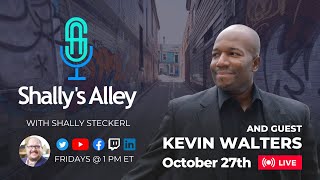
Kevin Walters, founder of the Diversity Chef brand, uses culinary workshops and cultural storytelling to help organizations build more inclusive workplaces. He discusses how return-to-office mandates quietly disadvantage remote workers from underrepresented groups, and how text-to-apply recruiting via SMS can reduce hiring bias for frontline workers.
Chapters
All right, happy Spooktober! You know, it just occurred to me that this is Shelly's Alley and there's nothing more alley than October, right? And visions of a dark alley with ghouls and all that. I should have come up with a better Halloween, uh, you know, plan than, than, um, just having a regular show. But you know me, I, I'm very spontaneous. So I don't, but I do have a really cool guest, a long time friend of mine Man, we go, I don't know, we go so far back that I don't think that they had plugged in the internet when we met. I'm not really sure if they had, maybe they had just put fresh batteries in it and just started it going online or whatever. But Kevin Walters is our special guest today. Kevin is well regarded for his cooking skills. You thought I was gonna say something else, huh, Kevin? Kevin once came up to me and said, I need a Colombian recipe for a presentation I'm doing at SourceCon. And I was like, what? You're presenting on SourceCon on Colombian food? And he's like, no, no, no, it's a whole play on this. And I'm like, oh, okay, I get it. So I gave him my sancocho recipe. You never did tell me if you actually ate that.
You know, I didn't make it myself. Yeah, but I did, I did try it at a Cuban place.
Oh, you had it, but you didn't make it? Yeah, I had probably a good—
it's very good. It's, it's kind of similar to— we have a Jamaican soup that's spicy. And no, I don't really like pork and all that kind of stuff.
But yeah, it doesn't have to be sancocho. Can be fish, fish, chicken, it could be ox, uh, oxen. That sometimes that's the That's the more common one is the little bits and pieces of the ox that are not typically, you know, they're kind of hard and chewy, but with the slow cooking, it makes them tender so you can actually eat them. You could use lamb. I mean, basically a lot of times it's actually just a mixture of whatever odds and ends you got. So there'll be a little bit of, you know, fish, a little bit of oxtail, and it's the leftover soup. Every country, every culture has a leftover, dish, you know, like bubbles and squeak in England and, and all that.
And Jamaican food, oxtail is a delicacy as well. Like, that's one of our, like, premier dishes.
So, oh, so that's not considered a leftover, that's actually like you go out of your way to, to make it.
Yeah, yeah. And yeah, the example you just gave shows how people don't really understand, but cultures intertwined. Oh yeah, a lot of influence that, you know, from other cultures intertwining historically, whether it be through, you know, whether it was through slavery, European colonialism, whatever it was, or just being migrated to another country and the infusion of that culture on that country and the combination of the food transforms the food.
It does.
Here's a historical context, which means most people don't realize we're all intertwined. We're more—
oh, 100%. Yeah, we are different, believe it or not. And how spices make it from, you know, one place in the world to another, like some obscure Asian spice being used in like an Aztec dish, and it's like, whoa, wait a minute, how did that happen? You know, Yeah, like, wasn't there, wasn't there a bunch of water? But you don't realize how much, you know, landmass there was. I was reading about how the, um, land between Russia and Alaska, uh, that was— there was— there wasn't water there. You, you could clear, clear walk across it. So when people were like, well, how to get here? Well, they walked, actually. It was— that was land at some point. So it's pretty amazing. And, you know, talk about Jamaica, the whole, um, Leeward Islands and the Western Caribbean and all that has a lot in common with where I grew up, because where I grew up is the home of the Carib Indians, and that's where the Caribbean gets its name. The Carib Indians were one of the, uh, the original peoples of that area that got mixed in and did a lot of trading and ended up, you know, so some Carib are in the, um, Dominica Island and Jamaica and some of the other islands as well. So it's definitely intermingled.
And that's where— and that's when the Europeans came over to the islands and the Caribbeans, right, to trade with the indigenous people at that time, the Caribbean Indians. That's where they intertwined and exchanged spices, spices, and food that they couldn't get.
And Corn, like corn, you know, that's like, that's so American. And when I say American, I don't mean United States, I mean like the Americas, you know, right, coming from the whole this western side of the world because, you know, we had, that was our grain, and then their grain was, was rice on the other side. Well, you know, that's pretty cool. Yeah, so it's in, in Sancocho you definitely use some rice and also some root vegetables, but usually they put the rice— and so you make the soup, then you use a spoon to scoop out like from the plate of rice and then kind of dunk it in the sancocho. So you, you wet the rice with the spoon instead of putting it in there, which is similar to, uh, gumbo. Oh yeah, that's right.
Yeah, there's another— like, think about New Orleans gumbo and how spicy it's pretty. It's almost the same concept.
Wow, okay. Yes, but where did filé come from? I want down. I don't know. That's like cassava or something like that. Not exactly sure.
Empanadas, ceviche. There's so much we could keep talking.
Yeah, like in Brazil, the feijoada, they use the— something sort of similar to fillet, I think. But yeah, yeah. So I'm getting hungry here. I'm getting really hungry. But I was dying to ask you, so on your LinkedIn profile, why do you have a chef's hat?
So why do I have a chef's, uh, outfit? Oh yes, on your LinkedIn profile. Yeah, I'm wearing your LinkedIn picture.
You have a, uh, what looks like one of those double-breasted, uh, chef, like from— there's a school, I can't remember, the Culinary Arts Institute or something like that. Is that what that is?
That's what it is. So no way. Um, you know, my brand, the Diversity Chef, and I use the magic of food to help organizations like transform and be more equitable, right? Through understanding like food, understanding culture, and, you know, providing like culinary workshops and consulting with them on best practices and where they want to build a talent pipeline, or, you know, communicate with, you know, different cultures. I think a great avenue to do that is through something that we're all passionate about organically without even thinking about it, right, is food. And so hence, that what you saw was a year and a half ago, SourceCon 2022. Was the foundation of that, where, you know, sitting around one day and just like all geniuses like you, right? So self-appointed genius, I guess.
But I wasn't there.
No, I was just sitting around, I was just thinking, you know, like, man, what's, what's a good way, you know, people are still struggling to connect with, you know, underserved and marginalized communities.
Yeah.
And I started just thinking about my own self and my own story and background. And one of my best friends who's Indian, when I worked in Atlanta, which is where you and I have a lot of history, yeah, I worked for a software tech company. I was like supply chain management, and it was like 50% of our population was Indian. And I was talking about being immersed in the culture, like I knew everything about the visas, we had our dev center, and I recruit from India, transfer people to the US. Long and short of it is, hey, I started, you know, guys were like, hey, why don't you come to lunch? All my candidates, I think I hired like half the company, shall we say, in the 4 or 5 years that I was there. Literally, when I looked at my LinkedIn profile after I left there, I literally had hired almost 2,000 people that were in the company.
And wow. And so, and talk about diversity, I mean, Indian food from the country of India is so varied, from meat eater, beef eaters in the south to die-hard vegetarians in the north, and extreme spiciness in the, in the east, and seafood in the west. And they couldn't be so different, you know. And that's, uh, that's a good representation. So I get the analogy, definitely. And you know what, I'm going to add to that. You might have— maybe you were going to go this way anyway, but it's an easy way for people to connect with diversity because it sometimes is the first introduction to that culture. I mean, if you've— it doesn't matter what culture you are, whether you're, you know, you're Chinese or whatnot, and you've always, you know, you grew up around Chinese people, you never knew anything about other people, and all of a sudden you have a meal that is from another culture before you've even met anybody from that culture. So it is a door opener.
Charlie, you're spot on. And that you're looking at a kid, right? Parents, you know, family immigrants from Jamaica, grew up in the South Bronx, you know, 10466. Google that zip code today. I dare you to walk down that area. I would never go there myself. Parents migrate here from Jamaica. In the South Bronx, like near the old Yankee Stadium. And, you know, then we moved to the North Bronx, 241st Street, more like towards White Plains, where I'm submerged and thrown into a very diverse neighborhood of Italian, Polish, Black, white, Spanish. And you talk about a melting pot, which is why they say New York is like the biggest melting pot. As a kid, some of these other kids didn't even speak English. And so you think we still were able to play together, have fun, and I got to learn a lot about their culture. Of course, you know, you get to go home with your friends, then their parents are serving them dinner. You, you take a bite, right? And they come to your house and then you get a little curious and say, you know what, that was pretty good. I want to, you know, at that time there was these things called libraries. I don't know if they still exist now, but we would actually open a book and start like reading a little bit. What's a book? Yeah. And so you're exactly right. A lot of times the introduction that we have, it's a soft and warm introduction, and it's a way that, you know, it's a little— you have to be a little risky, right, to try something. But once you overcome that curiosity, it's just like understanding another demographic group, you realize that, hey, you know what, it's not that bad. It's more— actually, I like this food, and I might like the culture.
Yeah, it's a easy— it's an easy way into it for sure.
Yeah, food is a— like they said, you know, what did they say about food and get into a man's soul? Like, for a woman, you know, if you want to get to a man, right, get to him through his stomach.
And I think you can get to anybody through their stomach. I mean, Why? It's like, yeah, you definitely— if you have a bad meal, you tell everybody about it. If you have a good meal, you tell everybody about it. It's like, you know, it's one of those things.
What was— I'm just curious, what was your, like, have you tried— do you remember like your first international dish that you tried and how you were introduced? Was it through a buddy or friend?
You're gonna— you're gonna laugh. Nobody's ever asked me this question, but I know exactly what it was. Wow. You gotta remember that I grew up in another country. So my first— just try not to laugh— my first international dish, my first foreign dish was when I was probably 7 or 8, maybe 9. It was middle school, and I went to an American kid's house. Their parents were there for work, for business, and they were in my school. Um, and I went to their house and it was the first time I'd ever had meatloaf and mashed potatoes, which was apparently a common Sunday, yeah, meal for them. And I'm like, what is this? It's a giant— like, it looked like bread. They sliced it like bread and had a boiled egg in the middle, and they sliced it like bread. And I'm like, is this bread? What is this? And then there's like a glob of mashed potatoes. I'm like, what's that?
That could be the most scary.
My fr— it was, yeah. And then the gravy, I'm like, oh my God. Um, and I was like, wow, were there eggs?
Did they, did they boil eggs and then crush them in the mashed potatoes? Because some people make mashed potatoes that way.
No, they didn't have— it was plain old, just, you know, honestly, I, I, I think it was so bland it might have even been powdered mashed potatoes for all I know. Okay. Yeah. Um, because it was very bland. The whole thing was very bland. You know, considering this is the Caribbean, right? So, um, but that was just— that was my first exposure to— and I didn't know this at the time, but later on, um, because at that age you just don't really pay attention to this— later on I realized that they were Mormon. So that wasn't just my first American meal, you know, experiencing something completely foreign, but it was also my first exposure to non-Catholic, non-Jewish people. Because I, you know, where I grew up, I was part of the Jewish community and everybody else was Catholic. So it's like, you know, you're either Jewish or Catholic. There wasn't a whole lot of anything else. Um, so this is my first exposure to people who, uh, believe in Christ but are not Christian. So that was also very interesting because their culture and their religious faith was different than what I understood to be Christian. And later on, I realized what it was, which was— it's a completely different—
wow. That's pretty cool.
That's very different.
It's funny that you remember that, because it was very shocking for me. Yeah, I was gonna say, I don't know if that was a good or bad experience, but it's probably such a different experience.
Very different. Yep.
Yeah. Now, I don't know, I will admit, I don't know the history of Meatloaf.
Um, I have no idea, but I did like it. I like the meatloaf. I didn't quite like the potatoes all that much. Yeah, but now I eat mashed potatoes, but the way my, my family likes to make them is with garlic and cheesy, and you know, it's like just a lot more flavor. But anyways, so that, that's diversity, right? And, and folks just don't— like you, like you were saying before, folks don't understand that diversity isn't Black or Hispanic. And that's what I hear a lot about. And we've had many guests on the show that talk about what diversity really means. You and I have had these conversations before about what diversity really means. So talk about the digital divide, right? Because that's something that you wanted to, to bring up and how that impacts. And, you know, let's go down that road.
I think it's important to understand that right now we look at technology and it's revolutionary with AI, right? How fast it went to market, how many users adopted this technology. And when you think about the underserved and marginalized community, just look at ChatGPT. You have the free version, right? And then you also have the premium. Features where you pay extra. Well, guess what? In underserved communities, underrepresented communities, they may not have the resources, the funding to offer that to that community. And so what you're doing is by making certain advanced features more complex or selective, there's other demographic groups that's left out of that learning. And so it creates a divide in that by the time the premium features get advanced, like you have rollout number 10 and they allow other features to be free, they're constantly trying to catch up and left behind. So the digital divide was huge in that unless the government comes in and mandates and actually provides funding for these communities actually have accessibility. They— we're talking about, like, you know, my daughter who's 14 has a Mac, you know, I have like 3 PCs in my home, you know, you know, my, my internet speed is, you know, like, I don't even know what number it is, it's so fast. But it's not like that in as far as in underserved communities, because the infrastructure may not be as good. And also, they may not have the tools. So it does provide this what we call technology divide and learning curve, not to mention the educational resources.
Yeah, and that's not racial either. That could be— it could be all kinds of other reasons why communities are marginalized. That— I was reading an article, uh, I wish I had tracked it better, but it was, um, it was an article about in these, in these communities that you're describing, there are significant amounts of people who have chosen not to have internet at home, even if it's available in their area, for various reasons. They could be monetary, they could be, um, cultural. They— so there, there are, you know, it basically— it's there, it may not be the best quality, but it's there, and they've actually chosen not to have it. So they're conscientiously falling into the divide on purpose. Now, like I said, I wish I had the article bookmarked or something because they listed some reasons. There were various reasons. It wasn't just— it wasn't poverty. It wasn't like can't afford it. That wasn't it. It was much more than that. It was don't want it, don't care for it, you know.
They probably are here in the desert over here in Nevada in a bunker somewhere No, I'm not.
I told you it was like there were religious reasons, there were social reasons, they were like, they're cultural, like we're not, you know, we're not allowed to use that kind of technology, uh, censorship, you know, parents that didn't want their children exposed to things that, that— and let's face it, I'm saying censorship, which is a bad word, but let's face it, as a parent, there are things you don't want your children to see.
Oh yeah. And I have I have— it's not you. What you're saying is spot on. I have several friends, uh, very educated, that have chosen to homeschool their kids. Um, their kids don't have cell phones and they monitor their internet time.
Yeah, exactly.
That's why. Yeah, the internet time is monitored. And look, we live in a different— Shelly, from when you and I were growing up, coming up, and now, we, we're in a different era. I mean, look what's happening on the internet. Look, look at the things that go viral and people actually— kids react to it, you know. Then after that, we got to watch, and we're not going to go off topic, but, you know, some kid will walk into a high school and start, you know, blasting and trying to, you know, shoot everybody. So it's a very— it can be weaponized, and I think that's the fear, right?
So the divide is sometimes— the divide is sometimes intentional, um, because there's not enough you know, control over what could possibly happen. And, or they're just not— they don't— they're not aware of the tools or whatever. But what you're saying is that that divide causes a significant amount of disparity, right?
Absolutely. It causes a very clear delineation in educational learning resources, accessibility, and disparity in advancement of knowledge. I mean, Knowledge is power, right? Education is power, and it also leads to higher economic privileges.
So, right, so it starts early. You have a displaced community that has, you know, little to no access, or has access but it's not very good, to technology. And so they grow up with not the ability to use computers, and then they go for an interview and the interview requires them to use a computer, but it's not something that's familiar. With them, and the job has nothing to do with computers. The job is something they're qualified for, but they're not qualified at filling out forms on the internet. And so now they're, they're almost— I don't want to say banned because that's a bad word, but they're, they're pro— they're blocked, they're, they're inhibited from applying for the job.
And that's why we need to make technology fungible for all types of people, right? Like You know, whether you have a text-to-apply tool or some kind of tool where you could actually, for warehouse workers or high-volume business where it, you know, people can use their phones, right? They may not have a computer and a lot, a lot of, uh, the workers in that industry don't have laptops. They don't use computers. And a lot of—
right, right, right. Yeah. Frontline workers. Yeah.
Yeah. Frontline. So we need to— that's, I think that's also the beauty of technology is to make it fungible, so everyone still can do their job and be productive in society.
The great disintermediator. Fun story. So I was just in your town, HR Tech, and I was at the HR Tech conference. Did you get a chance to go in there?
I was there. I was actually in the expo helping out. But I'm sorry I didn't see you.
But I was doing podcasts, and I ended up sitting at the booth for the entire time. But did you see— there was this company, just what you we're just talking about. There was this company that won the startup award for the new technology. And it was one of the most— I want to say it was one of the biggest innovations. There was not a lot of innovation at the HR Tech. There was a lot of repackaging, but not a lot of like straight-up new stuff. And of course, everybody had AI. But this company was doing something completely different. They were dedicated to what you just described. They have a text-to-apply application process, um, that was in— it also works for referrals. So people who don't have computers at work because they are in the field, in a car, um, you know, for— there's a lot of frontline workers in many different industries. I mean, um, technicians that do x-ray and, and cardiology and stuff like that, they're not, they're not sitting at a terminal. right? And they might not even— they might have one computer for the entire floor because they need to use a computer for work, but they're, they're on their phones, right? So this company, this is what they do. They allow you to have to fill out an application through just starting from a text to say you're interested, and then it sort of interview— not interviews, but it incrementally asks you the questions that it needs for you to complete an application. So you can apply from a, from a phone. And, and by the way, it doesn't even have to be a smartphone. It just has to be a phone that has texting capability, which, you know, even the old flip phones still have that, you know. So this is really cool because it's exactly what you talked about. So how do you, when you talk to clients and organizations, what is it that you're, what's your, I don't want to say your selling point because you're not selling, but what is your, how do you persuade them to think about this? How do you open their eyes?
It's funny, it's actually easier than I thought. Maybe I'm just—
okay, incredible. But I'm glad, I'm happy. But how?
Yeah, I just ask, you know, questions like, tell me about your experience with food. Like, how did— tell me about some international food and how you may have tried it. You know, I just try to find out a little bit about them personally. And most people say, yeah, you know, Friend introduced me. Oh yeah, I tried such and such. What I like to— and then we'll talk about the experience and the journey going there. Did you like it? Was it bad? Good? And then I also talk about what I do is how I use the magic of food to make organizations more inclusive. And then they go, wow, that sounds cool, and transform companies. Well, how do you do that? Well, I think, you know, put together culinary workshops, uh, A lot of this is going to be done here in what I'd say one of the major food capitals of the world right here in Vegas. A team of chefs besides myself, like, you know, you've been to Vegas and bar none has the best food in the world, right? And even the local restaurants, I always tell people the sous chefs that worked under Gordon Ramsay that's opened his own restaurant is probably even better than Gordon Ramsay because he's so big now, right? So he has to kind of—
he probably doesn't even touch Yeah, he's an icon, right? Right, right.
Yeah. So, you know, we'll do on-sites, we'll do experiences for organizations to help them understand about the historical context of food. But it's fun, it's engaging. It's not going to be just like, hey, let me cook you a dish. It'll be very interactive, hands-on, as well as, you know, including instruction and teachings and learnings about how to identify, build talent, right? About, you know, building ERGs, right? Or having other people from, like, having other chefs with these skills and these backgrounds, I think is key because they can actually talk about their culture and talk about, you know, having an indigenous chef, right? Or having someone from Jamaica or whatever country, or Colombia, you can talk really about your country in the historical context and how it has been infused with other cultures. And I think that gives people more of an empathy and common understanding of why—
starts to break the ice, starts to chip away at that frozen block of this is alien, I don't understand it. Okay.
Yeah. Who doesn't like to eat? I mean, whether you cook or you're a foodie or not, I don't know anyone that says, like, if you don't—
I don't need food. Like, that's what's not for me. Yeah, I can't do food.
Yeah, I've never had anyone that says, yeah, you know what, I'm not a food eater, right?
I mean, you could be picky and you can have things you like and don't like, but you still gotta eat food.
If you don't eat food you don't want to live.
Let me make something for you that, that meets all of your requirements of non-GMO, gluten-free, vegan, um, etc. We could still make something for you. Hey, you know, that's, that's part of diversity, right?
And what I want to provide, Charlie, and what we're doing is, is to provide— like, I just talked to a client in Australia last night, and they, you know, HR consulting company, they want to do possibly do this with their clients, but they're all virtual. And I, I'm really trying to get them to do something on site with some of their bigger clients. Um, but because of the layout and landscape, if you've ever been to Australia, it's being such a big country, it's— there's so many locations that spread across from each other. It's hard, like most offices are all over the place. So, um, I— we can still give that experience. And I don't know if you've ever— it's like watching a cooking show. Yeah, you'll see a lot of YouTube videos come out. I'm doing a soft launch now, but by the first of the year, you'll see a lot of my content, YouTube videos, and free stuff come out and with training and, you know, showing people like how food itself, right, and culture combined, and even the texture of food. When you think how different foods together, even though they don't look like they would be they make sense once they combine and form something better. And that's done a lot in the Asian culture, right? When you go to a Japanese restaurant, and you're like, hey, what's this cucumber doing next to, you know, fish, whatever, cream cheese, right?
Interesting. So it's an icebreaker. And then it's a, it's a metaphor. And then how do you turn it into actionable You know, I pretty much got the whole first half of that, right? But then what?
That's, that's the secret sauce.
So fair enough. That's that. Yeah, fair enough.
I don't know. Well, the actionable is, you know, with diversity, I think at the end of the day, what most companies struggle with is they don't know, they want to know what they don't know. And they don't even know where to start. And so this allows me to even just come in and look and do what I call like a, I call it audit, right, or analysis of telling you, hey, you know, from a maturity standpoint, I could tell you a lot about organizations without even talking to them. I'll look at your website, and I could tell you, oh, you're using stock images instead of ERGs, or people, you know, showing like what's going on inside your company. That means you probably don't have a lot of ERGs or team building events. Right? Being able to really—
You know, not knowing where to start is— I think that's a really— I like to divide questions into the known, what you know about, you know, the problem. When I'm doing an audit and trying to identify the, you know, root cause analysis, right? I like to ask, what are the things that you know? So you go to an organization and say, What do you know is an issue or a concern or friction point in diversity? Then there's the, what do you know but don't talk about? Right? There's what you know and talk about, then there's what do you know but don't talk about, the hidden stuff.
And they may not want to tell you that.
But as a consultant, that's my job, right? So what do you know that you don't talk about? And then the third one, the third level deeper is, what is the, what do you not know? And believe it or not, the "I don't know where to start," is one of the most common answers to that, because they're almost like, of course they say, I don't know what I don't know. Of course everybody can say, I don't know what I don't know, that, that, right? But I have to drill past that and go to the, what is it that, what is the unknown that is keeping you up at night that, you know, that's making you worry? You're worried, but you don't know. And that's where they say, I don't know where to start. I want to I want to create a sourcing program, but I don't know where to start. I want to create a diversity program, but I don't know where to start. That I don't know where to start is probably bigger than we realize.
Yeah, that's, that's why they're paying us as a consultant.
That's true.
Because yeah, I don't know what they do know, and the things that they do something about, they can do something about, right? And it actually may be linear. Like most companies are like, oh yeah, we need to hire talent. So I'm just going to focus on talent pipeline and recruiting and sourcing. And it's— that's one small piece, right? And we see all the volatility in the market right now. Because, hey, you forgot, you know, we talked about being invited to the party, sitting at the table, you know, wanting to be there, belonging. And so you wind up having a rotating door. So it's the unknown, like you said, and those are the things that they want to know, because unknown, those are the real pain points that's hurting.
Exactly right. The known and spoken, they would have done something about it. The known and unspoken, they're, you know, they're hiding it for whatever reasons, not hiding it for evil reasons, but they're just hiding it because it's hard to talk about.
But it's also what, if you think about it, gives them the competitive edge. If I diagnose your business right now and I say, Shelly, you know what, you're an awesome influencer, but I looked at your site and I realized your SEO strategy you might want to do this, do that, A, B, C, and D.
And that'll help a lot.
You're like, wait a minute, how'd you do that? Well, I was like, hey, I've been testing your site for 6 months. And you know what? Yeah, this is the, this is the hypothesis I came with. And I know this is what would work. You would, you would sign a check right away. If I could prove that theory to you.
Absolutely.
Like, hey, you were doing this without me knowing that I didn't know it.
And you found it worth the risk. Even if I don't think that it's gonna work, it's worth the risk. Because it might, right? And that's CFOs that are good CFOs will take risks with money if they think that the payoff is big enough. They're not, you know, a CFO's job is not to prevent the company from spending money. It's to encourage the company to spend money in the right places. And sometimes spending money on something that is an unproven area, but that could have a big payout is well worth it because, as you said, it's the competitive edge. But let me— I want to flip the script. This wouldn't be Shelly's Alley, and this wouldn't be my show if I didn't ask the tough questions. So get ready for this one.
Okay.
Um, talk to me about layoffs. We're at the end of— arguably, we're at the end of essentially a year of layoffs. January saw the most layoffs in recent history. March, second most. February 3rd most. And then from there, you know, April, May, June, July started to, to get smaller and smaller. September has been the fewest. October is looking like it's going to beat September as far as the fewest layoffs. So we're done with layoffs. But how does this year of like just shitcanning people, how did that affect displaced communities? And my, and my real question is did it disproportionately affect them or did it have a different than expected outcome?
Yeah, I think it disproportionately affected marginalized communities because if you think about—
See, I was worried about that.
If you think about statistically, this is no. If you go out there and do the research and look at the math, the pandemic disproportionately affected marginalized communities.
Yeah, that's true. Right. Right.
Any bird flu, anything that happens in society, right, because the system is not set up to support marginalized communities, its support is set up to support dominant groups, you're going to be adversely affected if you're on the outside, which— because that means that the groups that get the support first and the resources first are the dominant groups. So they're ahead of the line. So in a layoff, what happens is when companies, right, look at diversity as like an add-on or, you know, ad hoc project or latch on, for them, the first thing they're going to do is, hey, we're going to get rid of diversity, we're going to get rid of our D&I people, we're gonna get rid of all our underrepresented talent, we're gonna—
I was hoping that wasn't the case, but I'm getting that that is.
And unfortunately, it's a short-sighted view, because the real pain of the market is not so much that companies just overspent and everyone just kind of went crazy on hiring. Real pain in the market is because for the first time, we're in a true what I call transformational culture clash. We have 4 different generations of people working together.
Yeah. Or not.
Or not.
We're not working together. Yeah, that's right.
And that in itself is diversity. And companies need to understand, like, I got to communicate, you know, if I'm a baby boomer, I got to communicate differently with the Gen Zs, I got to communicate differently with millennials. Everybody has a different set of needs that they want from their employer. And you have to speak their language and communicate in the means or use the technology. In other words, if you're, if you're on laptops, and you're asking your, your workers, right, who mostly use cell phones, you're not mobilized, and you don't have mobile applications, are they going to be productive when a lot of them would? So you see, you see, there can even be a divide within just the culture itself and across generationally if the communication gaps are between generations. Like people, you remember, I'll say this, you remember when you were younger and Somebody older would say something, you're like, I don't know what they're talking about. That sounds like, hey, you know, back, shall we, you know, we used to use like, you know, the 8-track, you know, something. And you're like, what? What's an 8-track?
Yeah, I know what you mean.
Like, now you ask the kid— I asked somebody yesterday, I said, were you around when there were payphones? And she actually said, you actually kind of came in on the tail end of that. And I was shocked. And I was like, look how time has changed.
Don't be so shocked, man. Last time I was in Maine and I was at a restaurant, they had a pay phone.
That— I would have taken a picture.
I did. I posted on the internet and I said, what is this? I can't tell. I can't recognize— I don't recognize it. What is this thing? The comments were hilarious. The comments were like, don't touch it, it's contagious.
Yeah, but I remember having to wait behind people banging on that door like, hey, I need to make a call, I gotta get picked up. Think about if that happened today, there'd be so many fights. Like, people have no patience, right? But back then, yeah, like, think about— and then having to have, you know, coins in your pocket. Like, now my daughter, I try to give her cash, she goes, Dad, I use Apple Pay. Everybody takes Apple Pay. I'm like, that's right, nobody uses coins or cash. Cash is going to be really Absolute obsolete.
Since my daughter has a couple of bills in her collection and they're literally novelties for her, it's like, I'm gonna hold on to this. I'm like, no, spend it. Like, no, I'm just gonna put it in my collection. Like, wow, okay. Um, yeah, definitely not. So, all right, so the answer to my question then is yes, it did. This— the season of layoffs had, uh, higher than normal, which that's saying horrible. It's horrible to say layouts are normal, but the point is that it's a higher than normal effect.
Disproportionate.
Yes, disproportionate. And, um, what about— so what about this kind of the flip side— not the flip side of that, but 90 degrees from that— what about this whole like return to office stuff? Um, I have a personally I'm just gonna come out and say it. I believe that companies that are forcing people to return to office are essentially, uh, being lazy about not laying off people that they probably should be laying off, and they're literally expecting them to quit. Because there's absolutely no reason why, after you've been successfully doing your job for 3 years from remote, that you should be forced to go into the office. There's just no reason. If you've successfully done. Now, there are definitely lots of, I mean, you know, controversial Elon Musk and his rant about you better return to the office because our factory workers have to go to the office, you know, in order to work, and the delivery drivers that bring you your food, they have to go to the office to go to work. I understand that, but those are not people who successfully did their job remotely and are being asked to come to the office. Those are people who always had to come to the office. They were called essential workers. And even in the worst of the pandemic, I worked for a company that was literally an infrastructure company. We had people who had permission legally to go out, to go to the office, because they were essential workers. Those people have always been in the office. So you're telling people who you sent home and they've done their job successfully for 3 years to come back right? And then you're not increasing their pay. Because I've read some studies recently, uh, there was a— there was an article that I was reading that said that it can be anywhere from $9,000 to $14,000 more expensive to go to an office for an employee. Gas money, parking, lunch— even if it's not lunch, it's takeout. Even if it's not takeout, it's pack your lunch. Even if it's not that, it's directly— so there's all these So you're, you're dry cleaning, right? You're forcing people to go back to the office and not giving them raises. And maybe these are people who were able to get this job because it was remote. Now what? They can't do the job. So that's another kind of discrimination. Yeah, sorry, I'll stop ranting. Your turn.
No, what you're saying is, you know bullseye exactly, you know, true, because I believe, and from talking to leaders, and I won't mention names of companies, it was an intentional strategy to, instead of having to pay someone a severance, right, and lay them off, it was a way of switching the responsibility to, hey, you know what, we'll switch the role to, hey, you got to come on site. Or you're basically resigning, right? So if you can't do it, then you're the one that's leaving us and we don't have to let you go.
And therefore, I mean, how many wrongful termination suits are going to come up because you're Black and you got, uh, asked to come back to the office and you can't because the reason you got the job was because it was remote and you don't have a way to get to that office because you're living 80 miles away And normally you wouldn't commute to that. You wouldn't have applied for the job if you knew. You wouldn't be working at that company if you knew. In fact, you might even have an offer letter that says this position is remote.
Yeah. In fact, I know several people that took jobs because they were remote, because they were remote and they can't— they logistically can't move.
Like, that's my point. It's exactly—
it's not even—
and they're Black or they're Hispanic or they're whatever, and now they're saying you have to come to the office, but I never got hired in an office. I was never hired in office. I even applied for the job because, you know, I can do this job remotely. Now I have to go to an office.
In fact, in fact, they'd be taking a, a loss of wages going to the office because they may be living in a place, let's say, like Houston or Atlanta or a place that economically, right, it's a little bit less expensive, better for them. And then now you're asking them to move to a higher ticket market like Seattle or the Bay Area where the cost of living is 20-30% more.
Is anybody else talking about this, man? Are you seeing people out there like— are these companies that are making these stupid decisions of return to work, are they thinking about this repercussion?
I don't think they're thinking about this because unfortunately, let's just be honest, the population that is affecting adversely also may not have the resources in the deep pockets to go after these corporations that's doing that.
That just kills my buzz, man.
So if you think about it, like, again, what, you know, when things like I said happen, it hurts more.
Yeah.
In the marginalized and underserved community, they can do less about it. Yeah, they really can't do anything about it unless somebody takes up like a class action lawsuit. But And the other thing we didn't even talk about is think about, you know, you're living in— I'll use New York, a place where you're very comfortable culturally, right? Your kids go to school socially. You know, there's a mental aspect of—
you have the support groups, you have the support and community.
And now you're asking that family or that employee to disenfranchise themselves and move to Iowa or someplace, right?
Right. That basically they're not going to do. Yeah, it's not going to do— I mean, let's face it, they're not going to do— if I had to make that decision for my family, I, I would, I would decide against it because I could probably get a different— and I would have to gamble that I could get a different job, but it just— I wouldn't do it. So you're literally forcing me out.
I actually put a poll up earlier today, I think it was, do you work to live or live to work? And people have to really think about why there's so much change in volatility today, because people are saying, you know what, they open Pandora's box and say, hey, we're going to normalize your life and all of the things that happen in the corporate workforce, right, to marginalized communities. Or underrepresented employees, like microaggressions, bias, all of that, it actually goes away now if I'm working at home, isn't it?
Some of it. Yeah.
Yeah.
Some of it, but it's sort of mediated for sure. Yeah.
Yeah. A lot of it is not like you don't have to face it on a daily basis. Face to face.
Yeah, it's definitely—
you could turn off Zoom, right? You may never have to actually show your face. So Yeah, people don't want to go back to that because now they, they have more of a healthy lifestyle, their mindset, right? They feel better about themselves and they're allowed to be themselves. If I wanted to grow dreadlocks and I was still doing my job, I should be able to grow dreadlocks to do my job. I don't have to worry about— but it's going to judge you backlash of what my manager thinks because I have dreadlocks.
Yeah, man, that's authenticity. And we get what you're saying.
It would be great if we could get to a place in society where you're just judged based on your skills. You know, last comment, I said I was talking to someone yesterday about this is, you know, talking to a white guy, you know, a leader in the industry, HR tech, and he said, how can I change this? What can I do? He was like, he actually said, I'd like to hire more people like you, Kevin. I said, look, you don't need to hire more people like me. You just need to find more people outside of your own demographic group. And how do you do that? You have to be comfortable going to meetup groups and finding those groups. There are people out there with the skills. But most companies hire through referrals, over 50%, right? Success in that area. And so when you look at Facebook, or you look at their Rolodex, and all of their people, who else are they going to hire or defer to? It's the people they know. If they all— if they all look like them, or come from the same, you know, social groups, those are the people that are going to get the jobs. So some of this is just prevalent based on behavioral tendencies, it's not so much I think we're intentionally saying, hey, you know what, we don't want to hire specific.
Yeah, right. Let's just say the majority of it is unknown. It's like the unconscious bias. It's not on purpose. It's not intentionally designed to hurt or affect or adversely impact these communities. It's just doing it because it's a matter of the system, like you said. Right now you, you can't say that we intentionally made people, you know, move into these neighborhoods. Um, it's just that's where the economical, uh, benefits were. So nobody designed it the way it is now. This is just the tail end of how it ended up. So yeah, we— to change it, we have to change the root of it.
Yeah. Um, yeah, we'd have to change a lot, right? Even the redlining and go back. And I always say diversity is more about economics and power than it is probably about race, right? You know, or do you want to— in order to have true equity, shall we, you know, do you want to give me— if you have $20 in your pocket, do you want to give me $10? Right? You might want me to level up, but also, are you going to give up anything for it?
Right?
And that's— there's the challenge. How do we find a balance, you know, to at least allow folks that have those resources to, you know, it's almost the nature of capitalism too, right? It does exploit one thing and promote another.
Yeah, for, for profit. Yeah, for, for advantage, for profit advantage. Yeah, that makes sense. Well, wow, as, as interesting as this conversation is, that we are going to be running out of time here. So I have to ask you my, my last two questions that I ask everybody, you know, One of those questions is, what would you ask people to think about over the weekend as they're, you know, they're watching the show and you want them to really deeply chew on an idea or on a thought? It doesn't have to be about what we talked about, but what message do you want them to really think about?
Yeah, that's a great question. You know, I want people to think about, like, themselves. Look in the mirror and ask yourself, you know, if I looked at your credit card statement, I could tell you what your passion is or what you stand for, what you believe in. I don't have to listen to what you're saying. I know where you spend your money and your time. That is what your beliefs are. And so if you truly say, hey, you know, I believe in diversity, I want to, you know, diversity recruiting, diversity sourcing, diversity hiring, diversity topics should not go away. It should go viral because we should all be talking about it. It shouldn't just be the diversity chef or Kevin Walters or—
right, right. You know, it's everybody's— I got you.
It's everybody's responsibility.
Look at yourself, look at your actions and your behaviors.
Look at your own—
look at your world and say, your own bank account, where did you spend your money? I like that. Go to your bank account and find out where you spent your money. And that's going to tell you a lot about what you care about. I love that. That's a good— I'm gonna go do that right now.
Can I see? I'm just kidding.
There's a lot of sushi restaurants, I'll tell you that much.
There's your diversity right there. We know you love sushi. But, you know, look at that. And if you really want to make a change, you can make a change. Like, you don't need someone else to help you. You just need to figure it out and say, hey, you know what, I want to change how my Facebook friends look. I want to learn more about all the cultures. Well, there's ways to do that. And it starts with you. You got to be intentional and you got to think about it. It's not going to happen organically, you know. Different groups of demographic groups aren't going to just start joining your Facebook friends.
Yeah, right, just because you asked them to. All right, well, that's, that's a, that's a good meaty one. So last question, who should be on the show next?
Is what?
Who should be on the show next?
Oh, great question. Oh wow, I'm gonna say my buddy Andre Boulay.
Oh, I was just reading a blog post.
Yeah, yeah, Andre and I work together and he's really, uh, just a smart, intelligent, like, engaging, a guy that just comes in and executes, gets things done. But one of the most, you know, I've worked with a lot of leaders and a lot of people. And he's, he's, he's a normal person. And, you know, sometimes you work with people and their identity is their title, right? And then you get beyond their their title, and you realize, hey, you know what, this person's not that great of a person, right? Because they hide behind that. And so I like to be, you know, being a person that's authentic. Like, I am who I am. I like dealing with people like you and Andre and people that I know. Like, I've known you for, oh God, maybe two decades, right?
Yeah, something like that.
You're the same guy. Like, you have— as much as you've done and accomplished, like, you have not been this guy that I can't pick up the phone and call and say, hey, Charlie, I need a favor, or I want to talk to you about this. And I think that's a testament to who you are. So, you know, there's a part of you just being a real successful champion of not only diversity, but also of just, you know, working with just intelligent and great and bright folks and being collaborative.
Yeah, I love raising people up. That's, yeah, you know, well, you know that. So that's great. I mean, that's a really good endorsement. I actually was literally reading something of his this morning. So you must have been reading my mind. That's a good one. Wow. Well, listen, man, you're going to have to try to make that sancocho at some point and Next time I'm in Vegas, which, you know, for HR Tech, let's, let's get back together if I don't see you sooner. Thanks so much for being on the show.
Thanks for having me. I'm happy to come back again. And I will have your dish next time you come to Vegas. We'll, we'll figure, we'll figure a way for me to pitch. Maybe I'll be doing my pitch at HR Tech, but we'll figure a way.
All right.
Yeah, I'm gonna be scared to make your dish, but I'm gonna give it a shot.
You can't get it wrong. It's basically all the leftovers put in a pot. Love it.
Great stuff, man. This is awesome. Thanks for having me.
And everybody have a great weekend and be kind to each other.
More from Shally



Scaling Talent at Hypergrowth: Leadership, AI, and Hiring Excellence with Cindy Nicola







