CoSandra Dent Live on Shally's Alley May 30, 2025
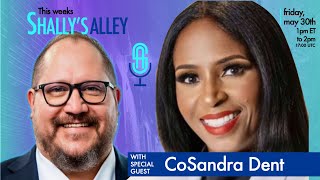
In this live interview on Shally's Alley, host Shelly (VITAL‑BARITONE) talks with former Fiserv talent‑acquisition leader Cassandra "Co" Dent about her journey from corporate VP of TA to founder of CoCreate Solutions. Cassandra shares the biggest surprises of entrepreneurship—wearing many hats, learning new tools like Excel, and the anxiety of meeting payroll—while emphasizing patience, resilience, and the need to earn business without a corporate brand. They discuss the politics of large‑scale TA, how influence and relationship‑building transfer to running a boutique firm, and the unique value proposition of CoCreate: combining talent placement with candidate career services and certifications (WBE, Women Small Business). Cassandra highlights her book Mastering How to Get the Job as a toolkit for job seekers, and she describes personal routines that keep her grounded (water, coffee, daily walks with her poodle, music/TV background). The conversation also covers the emotional challenges of solo entrepreneurship, the importance of a supportive network, advice for “wantrepreneurs,” and a light‑hearted closing about future guests. The interview blends conversational storytelling with practical advice for talent‑acquisition professionals considering the leap to independent consulting.
Chapters
Hey, all right, welcome to Shally's Alley. You are live with our special guest Cassandra Dent, and this is the— this may be the last episode in May. Yeah, it's May 30th, um, and, uh, man, I, I just realized I was looking at my YouTube channel because somebody asked me to send them the link, and I don't usually go and look at my own channel. Um, I, you know, it's, it's kind of like I was already there, but I went in there and I stayed and I was trying to figure out how many episodes we're, we're over 300 episodes. This is insane. Uh, I've been doing it for a long time. As a matter of fact, I started the Shelly's Alley podcast, uh, while I was working at Fiserv. And that is where I met the fabulous Cassandra Dent. We all, we all call her Co because we love her. Um, and she was— well, when I started there, you, you were VP of TA or—
yeah, director. I was vice president. That's right.
Yeah, VP of TA. And then, and I— so you were my boss's boss or something like that because it was centralized. So they were multi— I remember having a bunch of bosses. Um, but yeah, we met there at work in Fiserv. I was there for 5 years and Coach stayed on for another year until she took the brave step of deciding to hang her own shingle and start her own company. And of course, when she did that, one of the things that she did is call out— call me and ask if I would be interested in collaborations, which of course I would love to. And so we, uh, we reconnected even after Fiserv. And, uh, Co, now it's been— it's, it's been a couple of years since you left the safety, the relative safety of a, you know, quote unquote stable corporate job. Since leaving, what has been the biggest surprise to you, good or bad? Since you kind of stepped out on your own and hung up your own shingle. Tell us the story.
Absolutely. Thank you, Shelly, for having me. You're right. It's been almost 2 years since I started CoCreate Solutions, and I will say it was a big step, um, but I felt like, you know, it's time, um, why not now to do the things that I love but just, just do it for, for myself. I think one of the biggest surprises was, um, when you work in corporate, you have a team, um, and you leverage that team to do many different things, um, but as an entrepreneur You have to wear many different hats, anywhere from sourcing to filling out invoices, business development. And that's where I was able to call you and leverage you to do some of the business development for me and/or with me. But I think just wearing a lot of different hats. I've even taught myself Excel and PowerPoint, things that I didn't do quite well when I was in corporate. I know I have to do that now. So I think that's one of the biggest surprises. Um, the learning curve, you mean, like, it was somewhat of a learning curve and it takes lots of patience, especially when you're trying to make things look perfect for the client. So yeah.
Yeah. Right. Yeah. And, um, a good friend of mine, um, you might remember Amanda Janala.
I do.
Yeah. So Amanda, actually Amanda and my wife were in the same book club together for a while. So when I actually started at Fiserv, Amanda came up and introduced herself. She's like, hey, Sally. And I'm like, oh my God, how do you know? He's like, oh, I'm friends with your mom and, and this other, um, friend of mine. And she's like, we are in the same book club. And I was like, yay! You know, two friendly faces at Pfizer, people that I know. Um, but she used to say, uh, she— this is— I don't know where she got it from, but she used to say perfection is the enemy of good.
Yeah.
And sometimes something is good enough. I mean, you want to do your best when you have, especially when you have a new client, not that I don't do my best when I'm working with an existing client or that I do less or whatever, but when you're working with a new client, you're on stage, you're, you're, you know, you're being observed more closely. Once that trust is there, then you can do quality work, but you don't have the, at least that's how I feel, this kind of pressure to be perfect. And that pressure is partly what sort of drives me crazy. When I'm, when I distract myself, maybe you're experiencing this too, and kind of go down the rabbit hole with tweaking that PowerPoint slide just a little bit more and spend hours on it. And it's going to be 5 seconds on screen.
You know, that's right. That's right. And I'm glad you brought that up because I'm working with a client now. And I had a meeting with the Chief Technology Officer. And luckily, I had great leaders at Fiserv who taught me how to show up, make sure you're thinking way ahead of what they could be thinking. So I often think back to some of the leaders that had a great impact with how I show up. So for that particular client, I prepared like a 2-page, just a couple of slides, just to highlight what my talent acquisition strategy would be because it's the chief technology officer. But when I showed up, he was so casual, did not want Anytime. Have a conversation about how I plan to find the talent. So I think there are still some— I don't want to call it PTSD because it's totally not that, but it's a different environment. I'm having to change and customize my approach based on the client. It's not always going to be, I guess you could say, very corporate, so to speak. Some of it is just going to be very laid-back conversation. And building that trust from there. So yeah, I totally agree with you.
So did you make a mistake leaving corporate? You want to go back?
Sure. You know, that's a very good question. And I can answer that by saying absolutely not. Now, I have had my moments. I've had my moments because I was in corporate for so long. It's like, what have I done? And sometimes being an entrepreneur can be lonely. I mean, you're in your office and there you don't have a team. That's right. And I'm an extrovert. I like to get out and I like to talk to others and I miss my team members. I miss my counterparts. But no, when I think about being able to do something I'm extremely passionate about and build it from the ground up, my own framework based on what I've learned, my successes, my— I even have to think about the lessons that I've learned to make sure I don't do those types of things again. But being able to just do something for people, businesses that I, I feel like my heart is in it, I love it. And so no, I don't— I haven't looked back. I can't say that it's been a perfect world because when you're in corporate, And you're, you know, you have a team and you, you, you're at the VP level.
There's some rails, right? There's like, yeah, that's some— yeah, you've got some parameters that you can sort of, uh, you know, adhere to that, that I mean, they're, they're— it's not a safety net per se because, you know, you can mess up just as bad in corporate as you can on your own, but there's these parameters where like there's I don't know, a book of rules, even if they're unspoken. And as long as you operate within those rules, you're, you're going to be fine. Um, you know, except for unexpected circumstances. So, you know, this is a safe space, uh, you know, here we, we don't have, we don't have any tomatoes or egg throwing or anything like that. What, what would you, if you could go back to Thyserv days and reassure your day one self, like the, the day that you left and said, I'm, I'm gonna do this. If you could go back and reassure that Ko with one piece of advice about what you were about to step into, what would it be?
Be patient.
Be patient.
Okay, be patient. It takes lots of resilience and patience because when you want things. So when you're in corporate, you, you get a requisition, you know, you can just go fill it. You don't have to, um, go build relationships and get your foot in the door at a company. The business is coming to you. And I think that's what's been sort of an eye-opener for me, is that things aren't going to happen as fast as they used to. First and foremost, you know, you've got to earn the business. You've got to get in front of the business to convince them that you're the right person. Where I didn't have to do that at Fiserv because people knew about the company. Fiserv has a great brand, or any of the other companies that I've worked. But I do feel that patience, lots of resilience, is what I would have told myself. You're not going to go in thinking this is going to happen as fast as you would like for it to.
Yeah, it's not like home runs from day one. That's true. Yeah. In fact, I would say one of the things that, you know, I went to, I went to school for business, international business. I got a dual degree. Um, the other, the other, the other degree is in international communications. Um, but the business side of it, you know, one of the things that they were teaching us is entrepreneurship. And so there's all these classes on, uh, you know, business accounting, uh, entrepreneurship, financing, you know, so you can kind of get out there and, and start your own company. So they tried to prepare me for it. But they never talked about this one thing. And even all the coaches that I've met since then and mentors and people that have helped me along the way, they never said this one thing that, that I feel like all of us CEOs of our own businesses have in common, but we never talk about. And that is the nightmare that keeps you up at night, which is how am I going to meet the next payroll? Because that's one thing you don't have to worry about in corporate where, um, you know, I don't want to say your paycheck is guaranteed because people get laid off, things happen, but as long as you're working, you're getting a paycheck. And companies go out of their way to make sure you get that paycheck. When you're the one that signs the paycheck, sometimes as a business owner, you have to forego the paycheck because you have to put that money into something that you need more than the income, or because you have employees, as was in my case, um, that, you know, they need to get paid because they're the one— they're the ones that are in a job, right? So that's the one thing that they don't tell you about is the fear of the abysmal, um, oh my God, how am I going to meet my payroll? Even if it's just you, you still have to have that income, you know, you can't not have income. Right, with your own business, you still have to have something. And there's a balance between, um, take it, take it home, as in like your pay, or, and, or like reinvest it in, in the business. Where you maybe wouldn't have thought twice about ordering a ream of paper or a box of pens when you were at corporate, um, you know, now you're like, do I really need that coffee maker? Is it, is it, is it true? Or do I want to spend some more on Google Ads because I, you You know, it's scary. It's frightening. They don't tell you about that, man. They just don't. It's, it's one of those things.
They don't. They don't.
Yeah. It's scary. I mean, especially if you haven't done it before. Um, so I, I did the reverse of what you did. Do you remember this? I left my business to go to Fiserv.
I remember. Yeah.
It was a tough interview question too, because Julie and you both asked me this and you both asked me the same question. You know, why are you giving up your own company and everything? And what I had done at that time was I, we were far enough along before COVID that I hired a CEO. And that was my answer was, hey, the business is going to continue. I'll be an advisor. And it was, I was very upfront about it. You guys knew that, you know, I was never going to do anything on business work time, but I still had a little bit of a connection to it. However, the business ran itself until, until COVID. So I kind of took the other step and the same fears apply both ways. The fear of the uncertainty, you know, like for me, having my own company was more stable than having a job.
Right. That's right.
Because I had just been doing it for a while.
Yeah.
But you've led large corporate TA teams. What, and you told us a little bit about this before already here, but what is something that you miss and something you definitely don't miss about a large corporate team. And I want you to be a little introspective, a little playful here. You know, some comparisons maybe that other leaders out there are going to go, oh yeah, I know all about that, wink wink, right? So what is one thing you miss and one thing you don't miss about being in a large corporate TA team?
Sure. I think one of the things I miss is being able to develop my team members, you know, we built some pretty good internal mobility programs where we focused on internal talent and we watched them grow up throughout the organization. I miss having the ability to develop. Now that's going to happen soon because as CoCreate gets bigger, obviously I'll hire more. Absolutely.
And you're developing yourself, which is different. Yeah, absolutely. I actually have Um, so you, well, you can't see it cause it's up there, but I have my certificate from Fiserv. Um, you know, I was there for 5 years and the organization invested quite a bit in, uh, in my development. There was that strategic talent advisor, which I did both levels and then I was teaching it. Then there was that other one, um, with the managing, with the, with the, what was that called? Oh my gosh.
Managing matters.
Yeah. Where it had the 4 quadrants and everything. That was really helpful. So, yeah. So, so you're saying what you miss is kind of the structure of having these learning opportunities. For yourself, for your team.
What do you— Absolutely. But I will say, to your point, I have had a lot of development for myself as an entrepreneur. I've completed several certifications that I feel like are credentials that some companies want to see. For instance, my WBE, Women Business Enterprise, and I also completed my Women's Small Business Certification. Went through a 6-week training a few weeks ago with Greater Wealth Works who helped—
oh, okay. It's a private support organization.
Yeah. Yeah.
Oh, that's cool.
It helps define your business plan, how you pitch your business. So it was much needed. Had so much fun doing that. What don't I miss? I can say I would say I don't miss a lot of the politics. Right? I like being my true authentic self. And I think inevitably we have politics no matter what we do. But I think in certain cases, or, you know, there were politics that I had to navigate, um, that I don't have to do as much anymore. Obviously, I'm getting a new client, there may be some things tied to that. I'm thinking, I don't know if I want to do that, but you know what, let's get the client first. But I don't miss the politics as much as I had to endure. It's been pretty relaxing and not as stressful knowing that I am in charge of my own destiny and I don't have anyone else who I have to rely on to do that.
So that can be scary, but that can also be a relief. So that's what you miss and what you don't miss. You know, something interesting about what you brought up that I feel like a lot of people in talent acquisition who are looking to climb the ladder and go into management and leadership. And I learned the hard way that there's a big difference between management and leadership. Becoming a manager is different than becoming a leader of managers or a leader of leaders. But a lot of times people, at least from my perspective, what I've seen is they hesitate to move out of the management role into the leadership role because of what you just said. Because it's very— it's heavily political. But what most people don't know, or I guess don't recognize, is that recruiting is probably the most heavily politicized function in corporate. The reason for that is, even though there are jobs in corporate that are by nature political, like public relations, and, you know, but, um, the reason recruiting is much more politicized than all the others is because we deal with multiple levels of relationships. Most of the time, we don't have, you know, direct authority. So as a TA leader, you have people that report to you that you can command. But most of the time, the work that you're doing is the work that they're doing with other people, and those people you can't command, and the candidates you can't command. And the, you know, ultimately, the leadership above those people, you know, your executive leadership, They're counting on you, but you don't really have any direct line authority. So, there's a lot of what we call politics that is necessary if you want to get into a role like that. And I think it transfers into your own business because as an entrepreneur, you're going to have to learn to adapt that political savvy into relationship building and trust building. In a different way. But it's very much managing sideways and managing up. It's very similar.
It's very similar. It's very similar.
You can't avoid it. I don't think you can.
You absolutely cannot avoid it. I think that I've used what I've learned in corporate, you know, and I've leveraged those core competencies. And I think some of those competencies that I've mastered is influence, right? Being able to influence, building relationships. So I've leveraged those competencies almost every day when I'm talking to new clients. How can I influence them? How can I make sure that data tells the story based on what I've done in the past versus emotion? You know, I've taken all of those lessons learned in corporate over into the entrepreneurial sector, so I agree wholeheartedly. It's something you cannot escape, politics. But I will say it's different.
It changes.
It's different. It's different because I don't— you know, I have to pretty much navigate with myself versus having to go ask for approval from someone else. So I— that's the part I think, while I don't mind partnering, um, and having a leader who I feel can can truly teach me like I've had in the past, I do enjoy sort of being the boss, so to speak.
Well, yeah, that's definitely a nice benefit, I think, of, you know, you can just not work that day. I mean, you probably won't get paid, but— Yeah.
And I will say there are, you know, Being an entrepreneur, one other thing I've learned, you really don't shut off. You don't. You know, I'm not working every single day.
You don't shut off, but you do also learn how to take— like, it was, it was an adjustment for me to go back into solo, solopreneurship after, after leaving Fiserv, because I had to learn to, like, you know, I can make a run to the grocery store right now.
Right.
Well, not right now because I'm on the show, but you know, if it's 2 o'clock in the afternoon on a weekday, I can make it. I could go run to the grocery store and because nobody's expecting me to be at the office, right? Right. I don't have any meetings, right? So you have a lot more freedom with your time, um, as long as you don't— you know, the downside to that, of course, is you overuse that freedom. And, uh, the other downside to it is that because you are on your own time, clients that are in California and China both think that you're there all the time. And so you end up having these meetings.
Absolutely.
And I do have time. Oh, go ahead. Yeah.
No worries. I do like the balance that I've been able to have of being a mom. I have two small ones. One is almost— well, she's about to be a teenager. So I have been able to find that balance where I'm not tied to my computer or taking it with me to maybe a luncheon with my son's class. I don't have to do that anymore, or my phone rather. Um, so I've been able to have that balance of being a mom and, um, being a wife. So it's been great. But on the flip side of that, you know, I know I have to make up that time because I can't afford to not, um, be on when I know that there's an important client meeting that's coming up or, um, a meeting with my sourcer. You know, I, I can't afford to be off too long, but I do block that time to spend with my with my family, and I love it.
Yeah, the balance is, is, is important.
Absolutely.
Not everybody is cut out for, you know, that jump. Um, so how did you know— you're sitting there, you know, in your, in your, in your big corporate office— how did you know that the time was right to go and start to co-create? Was there, was there a moment, or was it like a growing kind of like it just pulled you for a while until it finally just pulled?
Yeah, you know, I like that question because, um, that's the question I can answer, and I hope I can answer it without getting emotional. Um, I, I had time to think about what was next, and I felt like it was time for me to step out on my own, but I, I resisted that. Um, direction that I was hearing at night, or in the middle of the night when I would wake up. And, and I was told to start your own, and I'm like, no, I can't do that. And so there's a spiritual perspective to this that I won't go into, but I will say that that thought was revealed to me 3 nights in a row consecutive. And I'm like, okay, I, I don't want to do my own thing, I'm just gonna go back to corporate America. Um, but I had already started about— started looking into getting my LLC, so I was just sort of thinking about it but nothing serious. And so I got a virtual office, and I grabbed my kids one day— this was last summer— and I said, hey, you guys want to go see this virtual office I'm renting?
Everyone remember this? Yeah.
And, um, they were like, yeah. So we pulled up to the building, and I was like, oh Wait a minute. And we got to the building. I go in and my kids are looking at me like, what's wrong, Mom? And I said, this is the same building where I worked when I first moved to Atlanta in 1994. And they were like, Mom, what if it's the same floor? I said, it can't be the same floor. So I go up to the receptionist and I said, you know, I'm renting an office here, CoCreate Solutions. Can you tell me what floor I'm on? She said, yep, you're on floor 19. And when she said that, I stepped off the elevator and I looked. And my mom passed away in 2018, and I felt my mom. And I looked, and it was the same area where I used to talk to my mom on the phone when I was at work, which I probably shouldn't have been on the phone at work. But anyway, the same—
gotta call Mom, come on.
It was the same view, everything full circle. And I felt it then and said, this is This is what I should be doing. This. And so I got a tour of the office and I knew then that I felt strongly that that voice that I was hearing was from my mom.
And so we're called, I mean, it was a, I guess it was a slow burn. You've, you know, started feeling it, you were called into it and you felt like there was, it was a tugging. Um, and then there was a moment, there must've been some sort of like a breaking point where you just said, Yeah, this is it.
Yeah, that was the day that I decided, you know what, I'm not looking back. I'm full steam ahead. If she's telling me I need to do this, I'm moving and pressing forward. So I feel like— and I have to go back. I thought that I wanted to go back to corporate, but when I stepped out of that elevator, it was confirmed. There's something bigger that I—
you were more at home there than you felt, right?
Something bigger I needed to be doing. And so Haven't looked back since. I haven't.
Yeah, that's a great story. So there's both a pull and a moment, like a reassuring moment where, you know, you felt like the safety net didn't need to be there anymore because you had faith, right?
Well, in the safety net, um, you know, you mentioned there's, you know, when you're in corporate, you know, you got to get paid in 2 weeks or the week after or once a month or whatever. But I will say, because I was led to do this, um, I've been very blessed to not have skipped a beat in that area. Now, you know, for those who know me, they know I love to shop. So I have become more disciplined, if anything, um, more disciplined in the things that I really don't need. Um, I've scaled back a lot on not buying those things. But as far as necessities and things that obviously I need to live. We have not skipped a beat, and I'm very thankful and grateful for that. It's been a true blessing because I don't have another job while I run CoCreate Solutions. This is my sole—
It is your full-time job.
Yeah, absolutely. So I'm very grateful.
And I think this might be a related or something we can piggyback off that. But when, when you, um, consider making the jump and what you just said about, you know, the— there is no safety net, but you, you made your own safety net, so to speak. What's something that corporate TA leaders get wrong when they dream the same dream, when they dream of going independent, leaving it all behind and hanging their own shingle? Because I, it's— I've seen it a lot And I've had other friends recently who have gone into, actually just saw a post yesterday on LinkedIn from a friend and colleague and former coworker who's never been an entrepreneur, who literally just yesterday announced, you know, I'm done with this. I'm gonna, I'm starting my own company. Here's a link. And there was like all this show of support, but What is the one thing you would tell people like that, that they get wrong?
I think what people get wrong is that it won't work because it does. It will work.
It can work. Okay.
So it can work. It's all about what you put into it. And it's about having faith. Again, you're going to have those moments where you think, what did I do? And you have your friends looking at you like, have you lost your mind? But when you have faith and you believe in yourself and you know what you're capable of and you have relationships of people, of those decision makers who you know who can back you up and are in your corner, that support system, it can work. And I think people need to realize that because otherwise they will not step out because of fear. You have to overcome that fear. I went through the fear because I was told twice to do it. I'm like, nope, nope, nope. And the third time I'm like, Okay, maybe I need to think about this. And then when I went to the building, that was confirmation. I think overcoming that fear is the first step, and it takes faith to get there. Without me going into much more of the spiritual aspect of how I got here.
That's funny. An old cowboy friend of mine used this analogy that just popped into my head as you were saying that. Yeah. Keep in mind, this is cowboy humor, but he was like, you know, the first time somebody tells you you're a horse or you look like a horse, you can dismiss it because, yeah, you know, they can think whatever they think. Second time somebody tells you you look like a horse, you might get angry and, you know, push back. Third time somebody tells you you look like a horse, buy a saddle.
Yeah, exactly. Exactly. You're— I love that story.
3 people are telling you it's time. It's probably time unless you have some real evidence to the contrary with that. So now, can you tell me a little bit about what is the impetus for CoCreate? Like what is it? It's not just recruiting and placing people. I know that's part of the solution. But just like being a TA leader, it's not about filling jobs. I mean, you do fill jobs and that is the objective. But there's a lot more than just filling jobs because you can fill jobs a bunch of different ways and some of them are not necessarily ideal, right? So, what is the impetus behind CoCreate? What's the full package that people need to understand about the business?
Absolutely. I would never forget the day I was in my office and I had someone helping me outline what I wanted to do. And I worked with her advisor.
Yeah, the mission, basically. Yeah.
Yeah. And we were outlining just everything I wanted to do outside of the mission. Like, I want talent placement, I want to be able to help with resume proficiency, LinkedIn optimization, you name it, I want to do it all. And she looked at me and she said— and I looked at her, rather— and I said, who's going to do all this? And she said, You. And I'm thinking, oh my goodness, I didn't think about that. Again, you wear a lot of different hats. And so what I decided to do, I knew I had a passion. I have a passion for, for talent placement, working with clients and businesses, um, understanding their workforce planning, um, knowing, understanding and knowing what type of talent gaps they have and, and literally going out there to look and find the talent. But then there's another side of it that I love, and that's arming the candidates. Considering I've been in corporate for so long, I'm able to pull back the curtain to arm the candidates with, with what these hiring leaders are looking for. So I said, I've got to make sure I have a component of CoCreate that does career services. You know, networking, career counseling. Um, I just got a bunch of folks from the federal government who were in transition, but their resumes were 28 pages long. And I'm like, you can't enter into the private sector with a 28-page-long resume. Let me help you. So being able to help on both sides, the career services and the talent placement, is what CoCreate Solutions— it's what we do. I think that's what sort of set us apart from other staffing agencies is that we have a candidate side that we, or that I, take the time to, to help. And obviously it is getting quite overwhelming, and I'm hoping to build a SME for each arm of my business within the next few months.
Well, one of our, uh, one of our Colleagues, former colleagues. Greg just posted a little—
I see Greg Valensky, one of my faves.
If you can't read it on the screen, your own business is a higher risk than working corporate. Yeah, it takes a high confidence level to take that step. That's true, it does take a— it does take a high confidence level, but I think once you got a kid out there, the confidence that you need to take each step is less and less because, you know, you feel like it's— you kind of fall into your place. Like Cole was saying, you, you arrive at that, this is what I want to do, and it's now more, you know, what am I going to do next and how am I going to get there, rather than, than, than fear of a misstep at that point.
That's right.
So I think it becomes the, the fear And the apprehension becomes more confidence as you, as you do it, especially when you have a couple of successes and you're like, hey, I can do this. This is actually— this is gonna work.
Absolutely. And I think another thing I wanted to point out was when you make a mistake as an entrepreneur, um, or when you feel like you want to give up— I'll never forget, I had a, I had a one day, I, I had a rough day And I said, you know what, I'm not doing this anymore. And then I told myself, you can't quit. You have to keep— like, so I was literally in my head talking to myself as my boss. So me as the direct report was telling my boss, which would be me in both situations, I quit. No, you can't quit. You know, so you just keep going. You, you, you build confidence by making the mistakes. I, you know, I have a, I have a spreadsheet of mistakes that I've made, right, that I won't do again. Um, but I think you need those mistakes as an entrepreneur in order to know what not to do, in order to build up that self-confidence, because the more you get it right, the more confident you are. Um, so yeah, it's, it, you have your moments, but I think confidence is something to Griggs point is key. And I've not—
I did—
the confidence I have today, it's not the confidence I had when I first started CoCreate Solutions at all. So, right, right.
Which makes me actually ask this other question. You know, from a distance on LinkedIn, uh, it looks great. It's, it's, it's a, you know, it's, um, the shiny glamorous lifestyle of building your own business, but in real life it's way messier, right? What is one thing that you can think of that looks great on paper, but IRL is like, ooh, this is a big grind, but it looks good.
That looks good on paper.
On LinkedIn, people look at it and go, oh, this is awesome. But behind the scenes, that's where you're putting a lot of sweat equity in.
Yeah, absolutely. I would say just honestly, the way I show up. I have to go back to that because I remember I went to this conference and this woman said, oh, I see you. I saw you on LinkedIn. I saw your videos. You always show up. You always look so great. And I'm thinking, those were the days I felt like crap. So you just I've learned to just not allow my feelings to take over what tomorrow is. And I think when you see me, certain events, yeah, it's shiny, but everything that shines isn't gold, rest assured. But I—
Elbow grease went into that.
I'm sorry?
A lot of elbow grease went into that.
Oh yeah. I think you just I just keep pushing through. So I will say, if you were to look on LinkedIn, you're going to see where I've— oh, she got her certifications, which is great, and all these things. But people don't see me every day, what it took to get those certifications, you know, um, and what it's taking to get some, some of the clients, um, that I've, that I've gotten. Um, so yeah, I think, I think that would be the main thing, is how I'm able to show up regardless of what I'm feeling.
Okay. All right. Let me, let me turn the tables a little bit here and get off of the whole moving out of corporate and starting your own business and talk about a little bit, you know, something a little bit more personal. Is there a book or a podcast that has helped you with this transition or with basically with this building the business? Right. So over the last year and a half, 2 years. Um, any book or podcast that you would recommend to people that are either doing this themselves or considering doing this themselves? It might be a good inspiration for them.
Absolutely. Um, I do have a book, and the book is now on Amazon, and it's called Mastering How to Get the Job. And what I decided to do was put everything that CoCreate Solutions, what we do and wrapped it up in a book, all the way from optimizing your LinkedIn profile, creating your own personal value proposition, again, the resume proficiency that we talked about. Have case studies in this book on how to interview, all the way to negotiating an offer and not lowballing yourself. All the things that I was able to see, some, some of these things we implemented in corporate, obviously part of those projects. I put all of that in a book, and again, it's now on Amazon. It will be on my website here next week, um, so it's, it's fresh and hot off the press.
I hope people will go out there and send me a link to it, to the bookstore.
I will.
And I, I don't need to tell you this, but you know how to optimize your profile. If you go on your profile on LinkedIn, you can add the bookstore link to your profile so everybody that sees you Um, we'll, we'll have a— you, they can click on it and go directly to your bookstore.
Did not know that. So no, thank you for that.
Thank you. Yeah, but send me the link, I'll get it out there.
Absolutely. And I'm very proud of that. I'm, I'm very proud of that. Um, because I feel like it's sort of a, a tool, toolkit, um, or a reference that, you know, a lot of the graduates can use once again because they're in transition. So I have an opportunity. I had an opportunity to make sure I addressed everyone in that book, all the way from your graduate to your veteran, your federal worker, executive, you name it, it's in the book. And I do have a part 2 coming out soon. I won't tell you the name of that one, but I am in the process of writing my second book. I'm excited about that.
Big deal.
Yeah.
What's your soundtrack?
What do you mean?
I have my soundtrack, you know, when I'm not on the calls and when I'm not, you know, when I'm not talking, which, uh, whether I'm gonna call or, um, whatever, uh, you know, I've got— you're at home, it's different than when you're in the office or in your home office. So you can, you know, you, you can crank some tunes in the boombox or put like music soundtrack.
That's your soundtrack? Yeah, I thought that's what you were talking about. Do you mean music? Oh, that's a good question. I, you know, I listen to all different types of music when you're working.
So like, you know, you're gonna sit down for work, you want to focus, you hit the play button on, I don't know, it's a playlist or a radio station that you can absorb without getting, you know, distracted, right? What's your focus soundtrack, your work focus soundtrack?
I don't honestly, I don't really listen. I have the TV in the background, which is—
oh, well, there you go. That's your soundtrack. Yeah. Yeah, so, okay, huh?
I was thinking music soundtrack.
It doesn't have to be. It doesn't have to be. So, um, I found when, as I, I teach and coach on working remotely, um, and I have a job seeker class that I teach, you know, which, which has a component about like basically looking for a job is kind of a remote job. It's, you know, you're working from home And your job is to find a job. And so, you know, some tips for that. And I find that a lot of folks need, especially when they used to be in an office, they need background noise. And so it's everything from either turn the TV on and leave it on some kind of channel that like, you know, for me it would be the Star Trek 24-hour channel, 'cause I've seen every episode. And so I can drop into a Star Trek episode for 30 seconds and know exactly what's going on. So that's something. Or, uh, or they just turn the radio on, or they put on their, you know, favorite podcast or whatever. But yeah, so when you have that, um, your home and— or you're in your home office or your rented office and it's quiet.
Yeah.
And it's like, I gotta have some noise. There's kind of— this is too quiet. Now there's some— there's some things sometimes when I hit the mute button and I got my— I got my trusty, uh, Bose noise-canceling headphones that will shut down the lawnmower and the leaf blower during business meetings with clients. But there's always these times when I got to turn on the tunes and, you know, and just escape, take a little mental vacation. So what's your beverage? Coffee, tea, soda, juice? So big old stein of beer.
It's crazy. Ever since I've been an entrepreneur, I've been on a health kick. So my beverage is water. I drink lots of water during the day. I watch all of my other— the only other thing I think I would drink would be coffee.
Oh, yeah.
Yeah. Which is all day. I'm drinking lots of water.
Check this out. So I just bought a cooler. You see it?
Oh my goodness.
Yeah, it's a, it's a regular size, uh, oh wow, uh, the, the, I don't know, the bottle is a regular size, but the cooler itself is desktop. And so I had this little space in the corner on my desk, and there's a window there which I like to open, so I really can't use the desk for anything because the window opens over the desk. And if I put anything on there, it would, you know, but there's room in the corner for a little something. I'm like A really good place for a water cooler. So I have a water cooler that you have.
That's a good idea. I should get one for my office. I definitely have the space. I should get that because I'm going up and down the stairs filling up my water bottle.
Right. Yeah, that was, that was me. I was going in and out of the house and it's movement though, right? So it is, but the dog gets out and, you know, it's still movement. I did put it on the other end of the office, but it's got hot water too, so you can go fill up a cup of tea. The hot water is tea hot, not like, you know, boiling hot.
I do have a Keurig, um, a coffee maker here in my office because, you know, when it was the winter, I would like cuddle up with some coffee and then get started in the mornings. Um, but I haven't used it in a while. But yeah, that's a good idea. Maybe I will look into a water cooler.
Yeah, that's my beverage. I mean, it's, it's water, and if it's not water, I might be caught with that with a Monster energy drink or something like that. But that's kind of, you know, a little bit about motivation. You got to keep it— you got to stay motivated.
Absolutely. And I think the mornings allow me to go to the track, get a good walk in, and then get started. So I like having that flexibility as well. Not that I didn't have that in corporate, because, you know, you can always make time to move and exercise. But I do like the fact that, you know, I can determine what time my day starts.
Yeah, right. It doesn't have to be the same time every day.
No, it doesn't.
I just, uh, I just got done with, um, well, I'm not done, but I'm almost completely mended from my surgery for my ankle. And, um, I'm thinking about going back to the gym. Yeah. And I got that— that's what that paper is hanging on over there to remind me. I got the, um, the YMCA listing for their yoga classes because somebody said, you know, what would be good for your ankle as you recover, you know, be some yoga because there's a lot of stretching and, you know, and it's— yeah, we do a lot of activity with the recent surgery. So I'm like, you know what, there's a yoga class at 1 in the afternoon on Tuesday. I can go to that.
I can go to that. That's right.
Yeah, I don't have to, you know. Yeah, I remember we, we had a gym at Fiserv and I loved going to the gym because I could go Yeah, I remember that you were on the—
well, you were part of the wellness program.
I was, yeah.
Yeah.
And I loved going down there because they had everything, showers and everything. Um, but not every work has that. And when, when you're at home, going to the YMCA is, is a bit of, you know, you gotta go there. So I, you know, I gotta put it on my calendar. But, um, to wrap things up, I told you I was going to keep— I was not going to keep you more than an hour, and we're getting pretty close to that. I wanted to ask you a question kind of, well, there's, there's two questions that I ask, but one of the ones that I wanted to ask is not my typical closing question, but it's a good one for entrepreneurs, which is, um, what, what would be a habit or a routine that helps you stay grounded when things get really chaotic, right? In, in a corporate office, we have our routines and our habits, whether that is go to the cafeteria or, you know, go, go make a pot of coffee or whatever. That it's like when things get overwhelming and we're like, I need to take a break. So at home, as an entrepreneur and a business owner, what, what is a habit or routine that will ground you when things are like, ah, yeah, I think just staying focused.
And I think it's easy for me to do that based on my work ethics.
Um, But when everything is all like, it's 100%, everything's running 100%, and you feel like, my God, I just need to take a break— what does that look like? Is it— is there a habit or a routine? You said, is that what you do? You walk, go to the track?
Yeah, I do. Yeah, I do go. I do walk, but I— it's, it's hard for me to—
that's not your stress break though, that's just part of your routine.
That's just part of my routine.
Do you have a stress break method?
I do, I do. I have So I have sort of have a coworker that sits with me every day. His name is Dallas and it's our toy poodle. So I typically take him for a walk. We get up and we go outside just so I can just breathe a little, right?
Yeah, exactly.
A mental break with my dog. And even when we're not walking, just looking at him is just so soothing and pleasing. Just having him— he would be in here now, but I made sure if he hears anything outside, he'll start barking. But I think just taking time to just step away, right? I don't do that very long because if it's something I know I need to flip over to a client, I have to get that over, right?
Right. But there's a 5-minute something or other.
Yeah, absolutely. And then there are days I don't even eat lunch. I'm like, oh, did I I eat today? No, I didn't eat today. Okay, I need to go grab something, right? Um, because again, you're doing everything yourself and you're just constantly going. Yeah, but you know, I, I often look at doing everything myself as something that's— it's temporary. This is, this is just the beginning, right? I am so excited about what CoCreate Solutions is about to evolve into. I'm already seeing it. And I'm so excited to see it this time next year. And I'm confident to say that because I know all the work that I put into it. And I just feel like the signs that brought me here would not lead me astray. So I'm so excited to see where this is going to go. So those moments where I, I feel like I just want to give up and I want to give this advice to entrepreneurs out there or those who want to be an entrepreneur, but afraid to step out, you won't know until you try it. And I know I make it sound easy. It's not. It's not easy.
It's not.
No, it's not at all. But it's worth every minute of time that you put into it.
Yeah, it definitely is. Uh, that, you know, as a repeat offender, um, yeah, I would say just stop being a wantrepreneur and just become an entrepreneur.
I haven't heard that one, Shelley.
Yeah, that's my own little one. I get— I, I've had a lot of conversations with wantrepreneurs. Yeah, I'm going to start my own business.
Yeah, okay. Yeah, that's hilarious. I think another thing I wanted to mention before, before I go to— and I think it's something important— is that, you know, when you have such a, um, support system, a strong support system of those who you've worked with in the past, and they've left ISERV and they've gone on to different companies My first break was somebody I worked with years ago, years ago, who saw that I had started my own company, and she said, I'm now the chief people officer at this company. We'd love to have you. So I, I feel like I have had an opportunity to not just run full circle with the building that I worked, but with people that I've worked with. Um, those people have given me an opportunity, and I can't thank them enough. And if they're watching this, they know who I'm talking about. It's, it's 4 of them, and I'm so grateful for them, um, for just saying, you know what, Cole, I remember the work that you did in corporate. Let's, let's get a contract in place. And I'm like, that's awesome. So I think that for those wantrepreneurs that you mentioned, think about the fact that You are going to have a support system. Everybody's not going to help you, and it would be some of those people who you thought would, but they, they don't. And that's okay. You just continue to build on those that have and find others, not dwell on the people who were not there for you. Right. And that takes a lot of resilience in itself. That takes a lot of, um, you can't get your emotions, emotions tied into what people won't do. Like when you hear crickets when you reach out to somebody and they don't return your call. You can't get caught up in that, and I had to learn that the hard way.
Sure.
Gotta keep moving, keep moving.
For sure. Yeah, yeah, yeah. Don't, don't listen to the crickets.
That's right, that's right.
Um, all right, so now for the, for the final question, and then this is a tough one, uh, so I usually save it for last. The big question is, who should be our next guest?
Who should be our next guest? Huh, that's a good one.
Doesn't necessarily mean, you know, that they're going to accept, but, you know, drop a name or two and I will reach out. I, I've been— I've surprised myself with the, um, people who have accepted the invite. I, I had somebody recommended this top marketing guru that looked like he got paid for speaking, and, and I invited him and said, hey, so-and-so said I should reach out. And he's like, oh yeah, I know that, you know. And then he was on my shows.
Like, oh, that's awesome.
Just somebody that you think, you know, ah, community of Atlanta, business owner, uh, you know, corporate, doesn't matter. Just who should be here in the show.
And I have to answer that now? Can I get to somebody?
Well, you can get me somebody, but you got any, any suggestions? You just drop a hint on?
Um, I'm trying to think. I have somebody in mind, but they would kill me if I mentioned them.
Okay, well then don't do that. Do that privately. I don't want to—
I don't want that person to kill me, but I do have somebody who I think could add a lot of value as it relates to talent acquisition, um, and/or HR.
All right, well drop me a note, and if you can think of somebody that you would want to be on the show, um, Yeah, cool. Well, thanks a lot, Co. I know this was a big deal, a big step for you. You haven't done this kind of stuff before, so appreciate you taking the chance to be on the show with me. And always fun to hang out. Um, and you know, hey, listen, if you're out there and you're feeling, you know, kind of alone in your office, hit me up. Let's go grab a car— a coffee.
I will.
The reason we can't just go down the street and get us— get a Starbucks or whatever.
I sure will. And Shelly, it's been a pleasure, and I know you and I have done some things together. You've been great. Um, I can't, I, I can't leave the show by saying that you actually helped me land a contract. And I, you know, again, revisiting, revisiting those people that you work with before, um, have been such a— has— they've been instrumental into it, you know, with where I am today. So I just—
definitely.
Thank you so much.
Oh, you're very welcome. Thanks, everybody. All right, well, uh, tune in next week. We have the fabulous Jim Stroud who will be on the show, and he is always as entertaining as he is informative. So come on back, and until then, be kind to yourselves. Bye, everybody.
Bye.
More from Shally



Scaling Talent at Hypergrowth: Leadership, AI, and Hiring Excellence with Cindy Nicola







