Culture Is Everyone’s Job: Bryan Chaney on Employer Brand, AI, and People Experience
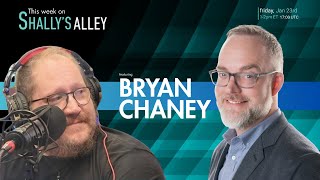
Bryan Chaney discusses the launch of the People Brand Collective, a professional association formalizing employer branding as its own discipline. True culture isn't perks or amenities but everyday behaviors and interactions. Organizations often fail at measurement, storytelling, and explaining changes like AI tools to employees, leading to disengagement.
Chapters
Hey, hey, hey! You are live on Shally's Alley. It is Friday. It's always Friday on Shally's Alley. January 23rd. And our guest today is none other than Brian Chaney. You guys probably know him already. He probably doesn't need any introductions, but I'm gonna brag on you a little bit, you know. I mean, because I got to, and I'm so super excited to have you on the show. That, um, it's just awesome, man. Brian's been in our space for 25-plus years, let's just say that. Um, talent branding and marketing and employment branding and social media guru at companies that you recognize like Alon Hewitt, uh, a small— another small 3-letter company, IBM, uh, Twilio, you probably know, Indeed, Workwise, um, and of course the Talent Brand Alliance. And one of my favorites, just for my own personal enjoyment, Crunchyroll, right? Um, who doesn't like Crunchyroll? Well, a lot of people don't know what it is, but you know, you and I talked about that. But Crunchyroll, for example. And now really big, really big news, starting a brand new, um, I don't know if enterprise is the right word, but a brand new Collective?
Yeah, yeah. Hey, I'm so glad to be here. So it is, so it is like, it's like, what is this thing? Is it a community? Is it a collective? Is it— well, it is a collective, but it's, it's a professional organization. So a legit professional organization for people who tell stories about the people experience in the companies that employ people. And that's the thing, that's, that's the biggest thing that's, that's coming up that I'm excited for, we're launching next month. I say next month, but it's really like in 10 days.
Oh wow, okay, it's like now.
Like pretty much now.
That's true, next month is in 10 days. Let me put that up. You caught me by surprise. I wasn't ready for popping that, but there it is, peoplebrandcollective.org. So what's really exciting about this, well, there's a lot of things that are exciting about it, but the big deal here is that there really never has been any association that brought together the top minds in employment branding specifically. So, it's almost kind of like, like I feel like it's time that we have the, the profession has matured to where there is a need now, right? It used to be recruiting was everything. It was like everything. Sourcing was part of recruiting, advertising and recruitment marketing was all part of recruiting, data analytics and all that. All of that was all part of it. Now recruiting is big enough to where it's got specializations. And this is one of them. It is the specialization that travels the world, in my definition anyway, between marketing and talent acquisition, because talent acquisition marketing is not marketing, and it's not recruiting. It's something else. It's its own special thing. If you talk to anybody at a company that has marketing departments, they will tell you they don't usually handle employment branding.
So I will tell— I will agree with you for the most part.
For the most part, right? I'm sure there's exceptions. Yes.
So I will say— I'll say so specifically, there's so many different levels to this work, and, and right there are— and people call it something completely different too. So in some, in some circles, oh, it's employment branding. Oh, it's recruitment marketing.
That's right.
Oh, it's talent, social media, it's HR comms, or it's Oh, I didn't think of HR Talks. Oh no. So get this right. So a fun fact, by the way, this is not the first organization. There have been other organizations, communities, places where people just gather this information. So dedicated to this. And in fact, I was co-founder of one of the ones that started back in 2015 as a community, and that was the Talent Brand Alliance. But that was always— it's community, and it was more focused on just in-house practitioners and the people who were doing this work because, uh, it just didn't exist. It didn't, right?
It didn't. And that's the difference between community and association, right? Community versus— yeah, that's what I mean, is there hasn't been like— SHRM has always been the association for HR, but there never has really existed a recruiting association of equivalent standard. EMA for a small period of time, the Employment Management Association, which then got acquired by SHRM. And then, you know, again, isn't it? So there really isn't. And then there was ATAP. And that was about acquisition professionals. But for recruitment marketing, for employment branding, for this field, it was always community. It wasn't a body that can set standards. And that's why I'm so excited about it. Because even, I don't know if you know this, but I sat in, as a representative of the American National Standards Institute, ANSI, I sat with ISO in the, in the technical committee TC 260, which is the International Standards Organization committee to set the standards for talent acquisition.
OK.
Even there, there isn't a talent branding specialty. It's, it's still just Talent acquisition, which is the whole, right? There wasn't sourcing. So one of the first things I did when I went in there is like, guys, we need a sourcing specialization, right?
Not shocked at all.
Yeah, exactly. So we did that, right? We created a sourcing standard, and then it was like, all right, what's next? Well, there's, let's see, um, social media. I'm like, no, that's gonna go away. Let's do something different. And then it became, well, communications. And then there's that problem that you identified— marketing communications, internal communication. So it went in that direction. So it's still missing. It's still sorely missing. We need governing standards for this.
Not only do we need standards, because if you talk to 10 different people and ask them what good looks like, you're going to get 10 different answers. And that's just perspective. That's subjective. All that. There needs to be a standard of what does someone need to bring? What are the things that they should be held accountable for? What are the things that they should be reporting on? All those things define it. What a lot of other— what marketing and communications have, they have, right?
They do. Exactly. Even competitive intelligence has their own set of definitions, which is a subset of marketing. Business intelligence has, right? But there isn't one in our industry. So super exciting to— the other thing I wanted to emphasize is not just you. Tell us a little bit about who else is part of this.
Yeah, so the, the thing that I've always appreciated is that you, you need extra hands. It can't just be you. It can't just be your perspective. It can't just be— because that then it becomes about ego, and it, and, and it shouldn't. It can't.
It shouldn't.
And I don't have all the answers, Lord knows. But you have to be able to find people who are motivated by the same things, who can see a similar vision, and who want to build something that's gonna live beyond themselves. And so I'm so fortunate to have Allison Cruz and Crystal Lay as partners for People Brand Collective. And it took me a lot of time to figure out, okay, I like this person, I know they're smart, what are they motivated by? What are they willing to dedicate to build this? And how can we talk about it? We had lots of conversations over the past several months, around what it could be, what it should be, what it can't be. Like, what are the things that we think can stand the test of time and why are we motivated to do this? And I think a couple things come out of it. We wanted to build something that can benefit everybody who's doing this work, 'cause we feel we're emotionally, romantically, we love this work. We can talk about it for hours and hours. But it, it's driving that business value and understanding how to communicate that business value. And I think that's where there's a big gap for us. People don't even know what to call the, the role. There's, there's over 200 different job titles, Shelly, for the people who do this work.
I can't even— yeah, I believe you, but I—
so we don't even know what to call ourselves. So we don't know what to call ourselves in recruiting either. Well, but you've at least got recruiter, right? That's true.
That's true. Valid. Yes, absolutely.
Yeah. So, so that— so, so what do you mean we don't even have a hindered. And so I think that's, that's a big one. Another one is, if we don't know what good looks like, how do we know what— how much money should we be making? What should the salaries be for this work? Because we've spent all that time just looking at, okay, what's a marketing manager make, or what does a comms person make, or what is this? It's like trying to figure out all those things. You're like, well, this is highly specialized, and this is This is unique. These are people who aren't all over the place. They're a lot more rare. Trust me, I have looked and having a sourcing background, I have sourced and continually sourced trying to figure out who, like, how are we, what are the words we're using today to talk about this work? So I think that's really powerful. And then really saying like, these are the resources that you can use to understand not just like what you should be doing, but how you prove your worth and how you talk about the value of this. So let's take a step back.
Okay. The—
when you think about employer branding, what do you think? And this is one of three functions within, uh, PeopleBrand Collective, right?
Employer branding is— yeah, gotcha.
So employer branding, recruitment marketing, and internal comms. And that's something that I think is the continuation of this delivering this message about the experience.
They are very distinct.
They're very, they're very distinct in that.
Yeah.
So the, the other part is, is how do you tell the story about what value you bring traditionally?
Now that's different. So that's storytelling.
No, no, no. So, okay, so when I say that, I use over— I overuse the word story, right? I use it a lot. So how do you report to leadership?
It's all that crunch. It's, it's all that Crunchyroll time, man.
Too much story.
Yeah, lots of, lots of story.
Yeah, and we, and we could talk about anime all day long, and I, and I, and I love it. And my, my journey has come so far, uh, uh, over the past 3 years.
Um, but just don't spoil Attack on Titan because I'm on the last season.
Oh, I won't spoil anything for you, don't worry. And I, I— there's, there's 3 shows that I've— that I, that I have, uh, watched and will continue to watch.
Fullmetal Alchemist, Attack on Titan, and One Piece.
So, so One Piece is one of them. Oh, but yeah, so Fullmetal Alchemist is not one actually. So I have seen it, but I'm not like— I, I have not gone in depth, um, uh, and, and I haven't gone in depth on Attack on Titan. So, so My Hero Academia. Oh, Demon Slayer.
Okay, you gotta watch Chainsaw Man, at least start with the movie.
I, I watched a little bit of it, and I've actually got— I actually got some really cool, uh, swag Uh, from very well done as a movie.
Like, it is well done as a movie. They, I think, even invented new technology for making movies because it makes— it mixes, if you can believe this, 2D and 3D animation. And yeah, it's like 2D and 3D and hand-drawn. So that's a very mixed, um— but anyway, so yeah, I totally understand what you're saying about defining this. And I think— let me, let me take a step— let me take a stab at employer branding. Okay, total amateur hour here, but I think Generally, people define it as the employee value proposition. Why should people want to work here and why, and why people who work here like to work here? So I guess that, you know, A, why should you want to come work here? What is the perception? Because when I think branding, and I'm only associating it with the word branding, in my world, when I think of branding, I think, what do people think of you? What do people imagine when they imagine you? And I like to ask the question of, if someone who hasn't seen you in 10 years brings you up in conversation, what are the 3 words that they're going to say about you? That's your brand. And that's— I use that because I think it illustrates how hard it is to change your brand, because brand established 10 years ago, it's not something you can just write on the back of a napkin, post it on a blog and say, "I've changed my brand." You know, it takes a lot to do that, to establish it and to change it. So for me, employment branding is how people perceive the value of being an employee when they're going in to become an employee and when they're there as an employee. I don't know if that's the right one, but that's how I think of it.
So I would say yes and. You're not, you're not wrong. Yeah, it's a big part of it. And the reason— the reason it's— there's, there's always more. So, so for me, it's understanding that your employer brand is really your experience brand. What experience are you creating?
What people have experienced?
Yes, exactly. So if you—
you're— which may or may not have been intentional.
And, and a lot of times it's not because they're not thinking about it. They're just making decisions based upon the stuff that's in front of them, right?
Yeah.
And, and so when, when there are—
we did what? Oh my God, are you kidding?
Oops. How is that going to show up for this part of our employee base? How is that going to show up externally? Or I'm blind, or wherever. Like, all of those things are— they show up, and it's, it's the experience that you create intentionally or unintentionally. And your brand is how people feel about that experience. And so if you can If you can think about that, it's way bigger than just hiring people. I say just, right?
But, but it's just hiring people, but it's also just retaining people. It's also just telling other people that may want to work here what it would be like. It's, it's, it's reputation. I mean, it's just reputation, you know what I mean?
It is how you engage, how you retain, and how you align your people internally. The people you who have already signed the offer letter, who show up every day wherever, whether they're remotely or in person, those are the people that you have to keep going in the right direction. And especially when that direction shifts or there's changes, or, or, or, or, whether that's leadership, whether that's strategic direction of the company. There's all kinds of things that you have to be aligned to, and you're communicating that every single day, and you're telling them unintentionally and intentionally, correct? And whether you want to or not. And so I think that to me was actually, uh, the, the last process that I went through for EVP, uh, and culture research, recruiting was last on the list of priorities.
Yeah, it is.
The top of the list was engagement and alignment because so much had changed and it was like, now we need— what worked before is not going to work moving forward. Now we have to do this. Well, how do I get aligned to that? I need to understand it. I need to feel connected to it. I need to know that what I'm doing is actually supporting that I'm making an impact or not. And I need to know what I'm going to be held accountable for and also why leaders are making the decisions that they're making. About the strategy and, uh, the business moves that are going on. Because if there's a disconnect, if people don't get it, they don't understand why, then they're going to be disconnected from it and they're not going to understand.
They can't communicate it.
They— you can't— you can't communicate it, and then they, they, they won't understand how they can best support it. So really, I feel like the power of your experience brand is how you set the expectation, how you deliver on that expectation, and then how you let them know what you expect of them so that they can know how to show up for the business.
So we're talking about a rule book. Are we talking about— and, and this brings me to a very interesting question that's been making my back of my eyes itch. Okay, you're building this People Brand Collective to formalize a profession that's existed for quite some time, but there weren't standards. Something must have been broken or something broke enough for you to say, "Enough, we need an institution." What was that?
I would say it's not broke enough.
Well, what was the straw that broke the camel's back, so to speak, in that, you know, I mean, this has been around for a while and all of a sudden you just said, "Damn it, we need to fix this." Was there a trigger?
Um, there are lots of triggers. Uh, the trigger, the trigger for me was having the time and bandwidth to focus on it, being able to do it.
So you've known that this was needed?
I've known that it's finally had the wherewithal to do it.
Okay.
Yeah, so that's a huge one, right? And in fact, that was probably, uh, the icing on the camel's back, as I like to say.
That was the one that made, that made it happen, and where you finally made it happen.
But, but beyond this, it was It was what, what job title should we have? How are we getting paid?
Right.
What are the standards? How do we provide the education that people need in order to be successful doing this?
Those are the questions that were always there, right? Yeah. That's not why you created this. Those were always there. You created this, you and the three of you got together and said, it is time because not only that, together. Yeah.
For me, for me personally, it's a matter of seeing so many people in not just recruiting, but in recruitment marketing, employer branding, um, understanding that everything had been tied to hires.
Oh yeah, right.
And, and so when you stop hiring or when you slow down hiring, right, what happens to those resources? What?
Yeah, they don't go away, do they?
To those budgets. And so, and so understanding that it's a much bigger picture, uh, that the value and the power that, that this work can have on an organization is much bigger than, than hiring. Hiring is huge, but when you're only tied to hiring and hiring stops, then what?
Branding and internal comms must go on, but it's— let's just hope that you're going to resume hiring because Otherwise, the alternative is, is, is, is organizational death. You can't not recruit. Even in, even in the worst of times, there's still backfills. There's still— so, you know, you could say we're not hiring. You could say you're on a hiring freeze. I've, I've never seen an organization in a hiring freeze that didn't actually allow some hires. I was, I was victim to that. I was brought on when I was at Cisco at the end of the cycle. They had laid every single contractor off, hundreds of contractors in recruiting and sourcing.
Yeah.
And I was the last one left. My boss had buried me in a department where they thought they were never going to find me. The corporate axe cutters were never going to find me, and they found me. And there was no choice but to go to our CEO at the time and get, and get me converted. So I literally got converted from contractor to full-time amidst the biggest mass exodus and, and downsizing that the company had ever had. So I can tell you that it doesn't matter. You always hire. If you're not hiring, you're going out of business.
You're always trying to solve some kind of a business problem that you're not equipped to solve.
Yeah.
And, and, and I will agree with you. So in all the organizations where, uh, where they've done layoffs that I've been a part of, they've always said we're not hiring, but except, right, these, these 14 roles are still going to move forward because they're critical and we have to do— we have to be able to solve these problems. So Beyond that, there's, like you said, there's backfill, but there's also what happens internally. Or do you stop telling people why they're there and what a great experience you're providing for them and how they're making an impact? Do you stop showing them and reinforcing that message?
This is people experience, right?
Yeah, this is people experience. This is inside. So let's say from the, from the outside it doesn't look like you're hiring.
Sure.
From the inside Guess what? People still officially not hiring from the outside. You probably need to reinforce to your people that you're still okay. You're still okay. And they care about you.
And that's not an employee relations job, is it?
Nope. Because employee relations is how do I solve the tactical problem? Usually, right? Obviously, tactical problems stacking up become strategic.
Right. But it's still rooted in You know, we have a whatever, you know, tactical problem that is accumulated and becoming a strategic problem versus this is different. This is, this is the, it might not even be a problem. It becomes a problem if you don't address it.
It does. It becomes a problem with engagement and it becomes a problem with retention. And I think, and I think that's the other piece is people get, they get scared. They don't know what, especially when there's no communication, they don't know what's happening. They don't know why these things are changing. They don't understand how it impacts them. And so if you don't communicate that in a regular and consistent way and have those touchpoints, we saw a lot of companies do a really great job of this during the pandemic because they, because they realized how, how uncertain and scared and confused everybody was. They stepped up and said, yes, we are okay.
We're going to make it, right? Yeah.
The company I was at started doing weekly leadership stand-ups so that just to say like, here's what's happening, here's what we're doing, here's what you can expect. They understood that. Well, you don't have to have a pandemic for that need to still exist, right?
This fragmentation created a lot of damage, I think. And so you're fixing that. You're The People Brand Collective is going to address, directly address that fragmentation of, you know, the different, like, people experience being done by employer, like employee relations and recruitment not really having access to traditional marketing because they don't see that as a necessary function. Have recruiters that don't really even, you know, in some cases you have extremes like recruiters are afraid to send an email without getting Marcom approval. And Marcom's like, why do we need to approve this? This is not necessary. And so you have all that fragmentation that's just created fear, uncertainty, right? And so you're coming directly to address that. But let me tie all this together in a big bow. So, you know, IBM, Indeed, Twilio, Crunchyroll, Those are some pretty different cultures. I mean, I can't imagine Crunchyroll's culture being anywhere remotely similar to IBM, you know, Big Blue, right? And, and indeed, I maybe— I don't know if it was Japanese-owned at the time, but like, you know, literally a Japanese-owned company, um, also very different, right? So these, these are, these are some wildly different cultures. What What lie do companies tell themselves about culture that you've seen everywhere?
They tell themselves that culture is about benefits or ping pong tables or, or the, the, the happy hours that a company will have. And to me, culture is about how you show up for your people and how they show up for each other. And, and, and, and that is a baseline, right? That is super, super broad brush statement, but in it, it means how do you interact? What expectations do you have? How do you support? How— what are the practices? When you walk around at lunch at an organization and you see everybody at their desk eating their food while they're scrolling through their emails, that is a powerful message about the culture of that organization. But that will never end up on your career site or in a recruiting outreach message. But it's understood because of the challenges and because of those kinds of behaviors. So it's how we show up for each other. Do we respond to messages off peak? Do we, do we put extra time in for public service and charitable volunteering? Do we— all of those things. What is the behavior that shows the values that we not just say we, we value, but the actual work behind that? What are the behaviors that show where that value actually is? Within the organization.
So, and what I'm hearing is culture isn't going to the opera. Culture is people understand the value of having an opera.
Sure. I mean, I'm trying to wrap my brain, my brain around the opera, but it's an appreciation.
Having culture doesn't mean going to this high culture event. It's the fact that people understand that there's a need for these, and that brings them together. And whatever it happens to be, whether it's the movie theater or the opera or, you know, the Green Day concert, but the, the, the, the, we, we seem to sometimes associate culture with the cultural activity. What you're saying is culture isn't the activity, it's the fact that we need these activities.
It's what drives the expression of that culture.
What's behind it? Okay, I gotcha. Okay. And so codifying that is scary.
It's scary because a lot of times we tell ourselves we know what that story is.
We think we know.
We think we know, especially when the company doesn't do a great job of telling that story. We fill in the blanks. We like to fill in the blanks with our own narrative and our own reasoning because we want to feel good about the time that we're spending, whether it's nights and weekends or all the work and the time and the effort and the creativity and all that, everything that we donate to be successful in our jobs, that exchange. We want to tell ourselves that we're doing it for a good reason. And we fill in those blanks. And if the company doesn't say anything, maybe everybody can fill in their own blanks, but it's all going to be different. Everybody's going to have a different story. There's no consistency, no real reason, nothing that people can get aligned to. But if you have that and it matches and it feels like the experience that people have on the ground is connected to this message about what culture means at the organization and why we do what we do, then there's that, that reiteration and that connection to being a part of something bigger than yourself.
I think that, that, I think that that's confusing storytelling with content.
And I think, I think you might not be wrong because it— because we, we say that a lot, right? Because it's not just storytelling, it's also What are the facts? So when I think about storytelling, I'm not just thinking about entertain me. I'm thinking about tell me how and why something happened so that I understand the context and can grasp not just the pieces about what happened, but why it happened and the impact it has.
And the impact. Yeah, that's funny. I have an interesting little anecdote that I may have used this example before. But there was an organization where I was working where they had the illusion that they had this very powerful, powerful brand, right, employment brand. They decided that they were going to offer this benefit. You talked about benefits being a brand or part of the value proposition before. So that's what made me think about that. They were going to offer this benefit and that this was a significant cultural win, right? The benefit was that they were going to begin providing on-site daycare for, you know, preschool children that weren't old enough to go to school.
Which is, which is a big deal.
Which you would think is a big deal, right? But it isn't. It turned out to be very much a backfire because what they thought that they were communicating was that we care enough about our people that we're going to offer them a very proximate daycare facility that is handled by us, and it's going to be completely free to you, and it'll be done in the best possible way. So we're going to have this awesome daycare facility right next to you at work where you'll be able to, you know, be 2 steps away from your children. The backfire was Nobody wants to put their child in a car for 1.5 hours to drive them to daycare. So there was immense backfire. Like, people were like, why are we doing this? We— the last thing I want to do is put my poor kid through 1.5 hours of traffic on the way to work. Yeah, like, I want the daycare to be as close to home as possible, not as close to the office as possible.
And I want it, as a parent, I want it to be my choice, and I want to understand that I have control in this, in this equation.
All of that, it was the back— it was like the opposite of what they thought was gonna happen. People were like, how dare you pretend that this is what we want? And, you know, the organization was like, but, but this is good, this is part of our culture. And people were like, no, it's not. I My child is not part of your work culture. My child is not— like, what are you talking about? What is it? This is a— this is— first of all, just pay for our daycare. That's fine. That'd be a great benefit. You know? But this isn't— this is something completely different. It's like, why do they need to be— why do all of our kids need to go together? They already have friends. There was so much backlash, and it just didn't go over very well. And it was one of these things where leadership thought, oh, what a great way to, you know, enhance our culture and our branding. And, and it turned out to be the absolute—
we— I, I can imagine the leader conversation going, going, we already spend 80 hours a week here. Like, like, everybody else should just be able to spend this, this time and not have to worry about our kids, alleviate that guilt.
And a lot of people are going, I don't want to spend 80 hours a week here, and I don't want to spend, you know, 3 hours in the car with a screaming kid, right? Exactly. Expose them to potential traffic accidents and dangers and, and smog inhalation.
That's just one layer. There's so many layers.
There's so many layers. Yeah. So that's like employer branding gone bad. Um, yeah.
And you're also assuming— you're also— yeah, like, you're also assuming people are going to want— like, they're going to provide the environment that you want your child to be in.
Uh, and that was a big—
yeah, that's, that's a whole nother part of that conversation.
That was one of the things that backfired. It just—
yeah, they're a bit more I could see them switching gears maybe and going, hey, we'll give you a stipend.
That happened, and then they put in a swimming pool.
Like, seriously?
Like, seriously.
Oh my gosh. A swimming pool at the office and a childcare—
Yeah. And then they're like, so we're going to have a swimming pool now. We need to hire a lifeguard. And so I was like, wow. Make matters worse. They created a job description that required that the lifeguard had to have a PhD.
So that's pretty bad, but it does not compare to the fact that I don't want to see the overwhelming majority of my co-workers in a bathing suit. No, I don't.
Yeah, no, and nor do I want them to see me in that condition either, right? Yeah, I would love this.
I'd love it. I'm like, I'm like, do they badge the pool? Like, do they know how many people are actually using the pool?
Oh no, it wasn't that kind of campus, but thank goodness. Um, the gym though, you do badge.
But anyway, so yeah, so all that means is you need people's perspectives outside of your own to truly understand the culture you, you have created and the culture that you nurture. And I think the difference there, yeah, is not just where we are, but where are we going? And I think that's the other piece. So when organizations have a lot of change, yeah, whether that's change in leadership, change in strategic direction, mergers and acquisitions, all these other things, you need to align those people with why they're there, what they're doing, help them connect with each other, help them understand, um, and, and either opt in or learn how to opt out.
That's a tough one.
So that's what I call regrettable retention. Because there are people who won't leave but won't change and won't understand that they have to do things differently than they did when they first joined the corporation.
Oh, that can cause some serious issues.
And does.
Yeah. Oh my gosh. Yeah.
So there's a whole bunch of swirl around. If you like, the, the old adage is like, uh, a, a culture is actually what the— a team culture is what managers— the worst thing that a manager will tolerate. And I think that's a way to talk about what kind of behavior are we accepting. If the people are still here, but they're clearly not on board, they're skeptical, they're naysayers, they're insubordinate or whatever flavor of that. Like, however they show up, it's very clear that they're bitter about the company they work at not being the company that they joined.
That they joined. And this is happening a lot with return to office mandates.
Yep.
People who were hired when there was no return to office, or when they were hired remotely, or they were hired with the promise of having—
and they thought it was going to be that way forever.
And well, it was promised that there was going to be— nobody ever said you're going to have a return to office. They're put— there are companies that are coming back now and saying we're going to return to office now, it's required, but it was never announced that way. And in fact, your employment contract was you're going to work remotely out of this location. So it's kind of almost even, you know, it could become illegal issue in some cases. But yeah, this is that, uh, somebody once called this— I remember this, uh, malicious compliance. Is it— does that sound familiar?
I haven't heard of that, but now I want to hear more.
Malicious compliance is where, like, so you want me to— so you want me to come to the office, you're mandating it, okay, fine, I'm gonna get there exactly at 8 and I'm gonna leave exactly at 5. I will maliciously comply with your return to office mandate. Before, when I was working from home, I was working 16-hour days and I was solving problems at 3 in the morning and midnight and whatever. But now if you email me at 7:59, I'm not responding. If you email me at 5:01, I'm not responding. Like, it's, it's become maliciously compliant. And so they're doing what they're told.
Well, or they're coffee badging, right?
You've heard that? Yeah, that's— yeah, but that's not malicious compliance. That's like actually be cheating.
I think it is, it is a bit of cheating. But, but yeah, it's like, I'll do the thing, but I'll do it exactly the way— yeah, I'll be, I'll be bitter about, uh, about doing it. Um, yeah, now that, that there's— that, that creates all kinds of problems, um, when people don't know why they're doing it. And, and you have that question, right? Oh, are we doing this for productivity? No, because the people who are remote are actually way more productive. So it can't be about productivity. There's been all kinds of studies around how productive are people, are they, are when they're, when they work remotely. And like you said, like I was doing something at 2 AM because I was thinking about it, or, or whatever the case may be, 16-hour days. And we did, we did statistically, we worked longer hours during the pandemic and we were remote and, and, and we figured out how to how to make that work, how to make that balance acceptable for us. Why? Because we might have squeezed out at, you know, 2:45 to pick up our kids from school or daycare or whatever, and then we come back and like, and we made it work.
Yeah, we made it work, and it was our choice. Now it's not.
Correct.
And it was always our choice, and now it's not. And we didn't choose for it not to be our choice. We didn't sign up for it not to be our choice. Had we signed up for it not to be our choice, we would have signed up for, you know, a totalitarian government where the office is just the dictatorship. If we knew that going in, that's fine, but that wasn't what we got hired onto. We didn't get— we got hired into a flexible work environment where we can control our own time, and now we're being told it's not just drive to work, it's we are going to own your time from 8 to 5 completely and dominate you. And the only reason we want you to come into the office, by the way, is so that we can have full control over every single moment of your day because we don't trust you. Why else would we need you to come into the office? You've successfully done your job for 5 years not in the office, so we can't say that it's because you do a better job when you're in the office.
Is it about control, or is it about the illusion of control and the illusion of influence?
It's the illusion. But the point is, it's not for good reason. It's for bad reason. It's not because we want you to work better. It's not because it's going to enhance productivity. It's because we want this illusion of control.
Yeah.
The war is being lost. I mean, sure, companies are doing this, but there's more and more— there's even more evidence now as people make the switch back and lose their productivity that the productivity was better when they were remote. So, like, it's even getting worse. The fact that you force people to come into the office is proving that it's less efficient.
It's changing your morale and you're less productive.
Yep, exactly. Yep. And well, you know, people are like, well, now, now I'm going to charge you for the time that it takes me to get there.
So, so that's the other, the other part is the, the fact that people will— it's— there's been studies, I think it's somewhere between 24 and 30%, uh, people would take a 24 to 30% pay cut in order to work remotely, to be in charge of their schedule, which is, which is, is very, very telling to me. Um, but we've gone, we've gone so far into that. All of that means there's an experience that you're buying.
It's an experience, right?
And it wasn't the experience that you were sold, and it wasn't the one that you were sold. So now it's like that terms of service change that you get at exactly 3 PM on a Friday from Facebook. It's, it's that thing that says, oh, by the way, here's what we can do now.
We're gonna—
now we're gonna be doing this.
You know what it is? What? You know what it is? It's the officer hammering in the speed limit sign on the road that used to be no speed limit.
Pretty much. And in any kind of change like that, people are going to have a reaction, and nobody even got to vote on it, right? But they don't have a story. And if you don't understand why they're doing that, and you don't understand what, what impact is going to have, what that change is going to have, right?
If you say, hey, people are dying, there are accidents being caused because of excessive speed, we need to fix this, this is for everybody's benefit, society will improve because of the speed limit— oh, okay, I get that. But just randomly putting up a speed sign People feel like, well, you're just collecting some fine revenue.
Right. You just want to be able to write more tickets.
That's it. That's not really the reason, hopefully. But anyways, that's sort of like I think not explaining is also happening with AI. AI is kind of crashing into people experience.
We almost got a full hour without talking about AI, Shelley.
But it's not the AI, it's the people experience part of it. Yeah.
No, I'm with you. Keep going.
Nobody told me that I was going to get impacted by the speed limit or the chatbot or now my benefits are being managed by a robot. I'm being told, by the way, that this robot is really smart. You can ask it any question that you want. I go in there and I ask how many vacation days I have left. And it goes, well, I can't answer that because I don't know what your department is. And it's like, well, but so I— where's the benefit to me in this? You know, it's just sort of like somebody just dropped AI in the middle of the conversation and said, hey, we now have this AI improvement. And people are like, did we need an improvement? And if we did need an improvement, why was it— you see what I'm saying? So that's just throwing it in there.
Well, you're not telling them what problems you're solving.
No, you're just saying we now have AI.
We now have an improvement. And why are you calling it an improvement? Because people like improvement. So we're going to call this an improvement when really we're trying to save money on all the time and support tickets that are hitting the HR teams that have to respond to this. Like, oh, we're having to do this. Why are we doing that? Well, it's because we want to lay off 20% of the stuff. No, nobody's going to say that.
Nobody's going to say that.
But what they could say is, we want to make our teams more efficient. We want to develop them. We want them focused on the things that actually drive your experience forward. So the things that are just kind of table stakes, we want AI to help us take those and provide the answers that you need. And we can do that in a very cost-effective way. This is why we're doing this.
Great.
There's a story there. There's a narrative. This is exactly what I'm going to get out of it. This is what the HR team is going to get out of it. Out of it. So telling that story, communicating that, is part of updating the expectations for your experience.
Okay, so let me recap this. I'm beginning to see a pretty big pattern, and I know this is your area of expertise, so I'm not gonna— you know, I just want to sort of recap. My area of expertise is recapping these big concepts. What I'm hearing is you should probably ask your people first. Then you should probably tell them why you're doing it. And this applies to both employment branding as a candidate job seeker, as well as internal communications, as well as the engagement side of things. So it doesn't really matter whether you're looking at this as We need this for talent acquisition marketing or internal communications or, um, what's the other one? Employment retention. You called it something else. I forgot already. Um, the people experience. Sorry, those three things. It doesn't matter. The rules are the same. Ask, listen, you know, because if you're gonna ask and not listen, that's ridiculous. So ask and listen, uh, recap it. And explain it. Otherwise, it's not— otherwise you're just making it worse.
Correct.
Is that about right?
It is. And it really is like, don't assume that you know what people want, right?
That was the ask part. Yeah, if you just assume—
yeah, well, then you go build and you're like, oh, well, that's— and so part of the part that I heard in there was ask, like, what you, you develop a hypothesis You develop potential solutions, you ask, and then you pilot it, and then you go back and ask again, and then you ask again and say, here's what we learned, we nail it, did we nail it? And then you move forward.
I left that out. Okay, ask them what they need, come up with a solution, ask him if that was the right solution, then come back and explain the story of why you did that.
And in organizations that are moving really quickly where—
ask again every so often.
It's hard. You gotta, you gotta keep, you gotta keep doing that. You gotta keep that process. And the one thing that I'll say that I've discovered over several years is that people don't have survey fatigue. They have—
they don't—
they have lack of response fatigue. Meaning if, if, if once a week you were working at a company and they asked you what you liked, what you didn't like, how Everything was going for you. If they asked you once a week to, to, to provide a 3-question response and they never did anything with it and you never heard anything back, you would— you'd stop. You'd stop responding. But if every week they came back to you and they said, hey, you told us this, here's what we looked at, here's what we did as a result of what you shared, you'd be answering that survey every single week because you would know what impact your energy, your feedback was having on that experience.
What a wreck! You just opened my eyes to that. I was just, as you were saying that, I'm like, oh my God, I think I know where you're going. You're asking them, how are we doing? What should we improve? And they're saying, go left. And then they don't hear anything and nothing happens. And then you ask them, how are we doing? How should we improve? And they say, dude, we told you go left. And you still don't do anything, and then you ask them again, they're like, just stop asking me, just stop it, it's not worth it.
You got the people who tell you to stop asking, and then they got the people who just stop showing up, right?
Exactly right. Yeah, yeah, or, or, or some combination of their— uh, it's still not good, it's still not good, it's still creating— it's making it worse. So that's, that's awful. So you might as well not— if you're not ready to actually do, then don't ask.
Which is what a lot of companies find themselves forced into because they're like, we don't have the time, we don't have the, the ability to test and do all these things. So if we just make this change and send the update that this change is happening, we've at least checked the box. And what they don't realize is then that's, that's, that's not transparency. Um, so, so, and that's what a lot of companies are, are facing because they don't they're not prioritizing that experience because they're just trying to get stuff done.
Damn. All right, well, I think this is a really good recap for the public segment of the show that, that I'm gonna— I want to put together the summary and, and put that into the after-hours content. So bear with me for a few minutes. But before you go, I've been dying to ask you this question because I don't know who else to ask, and I'm— you may not be the right person, but you're the best person I can think of to ask this question. And right now you're here, and I think it's really important. Why do marketing people hate recruiting so much? I mean, it's literally like, to a, to a professional marketer that does, you know, marketing and advertising, and they went to school for marketing, and they— to them, recruitment, employment branding, employment marketing talent acquisition, branding, talent acquisition is like, I wouldn't want to do that. I, I don't want to touch that with a 10-foot pole. That's beneath me. It's not worth my experience. It's, it's like, it's like not even the redheaded stepchild, whatever is worse than the redheaded stepchild. Why do they hate it so much?
So I don't know if I would say— I don't know if they would say that they hate it, but they don't want to do it. They don't want to do it because they don't understand how it connects to their goals.
That's it.
They don't. That's one.
Okay.
The other part is most teams haven't gotten educated to the marketing standards, the brand guidelines, the tone of voice, all this. So people are making up stuff to get their job done, right? Because they don't have instructions, they don't have guidelines, they don't have tools, they don't have enablement. So that they can do the things that look like they're right alongside the brand.
Like they're aligned with the brand. Oh, wow. Okay. That does explain it because I've always wondered, I mean, my 30 years I've been in this business, in my whole career, I've always wondered why there's such a disconnect, you know, to the point where we've created an entire cottage industry. I mean, there are lots of companies out there that are dedicated to employment branding as a service. And, you know, Red Branch Media and, um, people that we know, you know, some— they're out there. And that exists only because the, the BBDOs of the world said, I don't want to do this.
They either, they either don't want to do it or they don't understand it, or, um, I realize you've got budget for this, but I can't dedicate my headcount because that's not how I'm incentivized.
Got it.
Those aren't, those aren't my performance metrics.
I gotcha. Right. It doesn't turn into sales.
Well, I mean, it does in some instances.
Right, right, right, right, right. It's not directly— yeah, it's not like we created this campaign that drove revenue. It's we created this campaign and nobody knows.
It increased— it might have increased awareness, but I can't connect the dots to, to sales or the numbers that I'm, that I'm motivated to You got time for one more funny story? Go for it.
You know Yum Brands?
I do.
They own quite a few fast casual restaurants, things like that.
Oh yeah.
So I was sharing stories with a colleague and they told me that they, this was a while back when Facebook was sort of gaining momentum. And they told me that they had created a employment, a Facebook group for employment. A Facebook group specifically to handle people asking about jobs at Facebook, right? So it was supposed to be— sorry, not a Facebook group.
I was about to say a group. Yeah, yeah, yeah.
So it was a Yum Brands Facebook group where they were trying to engage with people that were job seekers, right? And it went so far off in the wrong direction that it literally became nothing more than people asking for Pizza Hut discount coupons. And they just tried, they tried, they put all kinds of effort into, you know, steering the conversation, providing content about this is what it's like to work here, this is a day in the life, here's our volunteering opportunity. I mean, they did everything right. They did everything right the way you're supposed to, to communicate your employment brand, your value proposition, but nobody was interested. They just wanted Pizza Hut coupons. Coupons. And eventually they just had to delete it because it just became essentially a Pizza Hut coupon factory. And I just was like, wow, that, that is a case of you could do everything right and the market's just not ready for it.
Well, so what I would say is the reverse is also true, that because there— a lot of the traffic that they're, that they're gonna get is people who are interested in those in those restaurant brands. They're into their, their fans, their customers.
They—
that's where that— that's where they make that connection.
Yep.
And they are— they're blessed and cursed.
Yeah, well, they, they liked the activity, but they were still trying to drive that employment brand, and it just never got traction. It just— it was all about the engagement. And so— and for that engagement, for the coupons and everything, they already had a channel that already existed. It was—
it was literally eroding that other channel that Well, they were paying, they were both paying, they were double, right? They're paying for ads to drive people to this thing.
Again, they were double paying, like they were double paying and eroding their own and causing more work for themselves. And it was just one of those things where you're like, wow, you got to be careful. You know, the opposite of that I think would be something that is so not consumer friendly that it would be like, for example, when I was working on a project with British Petroleum, BP, right after the, after the big Gulf spill. And they were struggling with how do we affect some change with our engagement. And this wasn't about branding. It was about passive candidate engagement. But it turned into a branding thing because part of the reason that their engagement had dropped is people were basically saying, "I don't want to come work for the company that killed the planet." Right. Which is so completely not true. I mean, they reacted quickly. They did everything they possibly could to remediate it. They changed a lot of procedures. And so the communications back was, yo, we need you to come help us fix this. Like, that was what we— we're reaching out to you as a geological, you know, remediation scientist because we need your help. And people were like, nah, I don't want to work for the company that killed the planet. It's like, it was an accident. I mean, what are you supposed to do? So it became almost this, like, a contentious relationship.
Well, their audience you have to, you have to have people who are there to tell the rest of the story. And I'm not going to speak to what, like, BP and what they're like— that was a whole nother situation.
It was a whole nother level, right?
Yeah. And, and I was thinking to myself, like, wow, recruiting for them just got really, really tough. But, but you have to have people who are going to tell the rest of the story. So just imagine, um, so you got one end of the spectrum where you've got young brands and there are people asking for Uh, for Cuba, right? Um, but on the flip side of that, think about an airline. So think about, think about like the people who have like airlines, like you, like all of the, the vitriol that comes out about people's airline experience, right? And good or bad, like there's always going to be good, good and bad experiences at every single airline. But you have to, you have to go, okay, well, that might be a certain group of people's impression about our experience and what we're about and how we do things. Here's the rest of the story, right? You have to have the people to tell the rest of that story. And that's why you can't just go off of Glassdoor or Blind or any of those things. You have to have the rest of that story. And most of the time we do that with the people we know, like, and trust, um, in addition to, you know, following and, and doing a lot of online, uh, research in the channels that are created.
That's, that's, that's a really good point. That drives, that drives it home. So that's— you need to start listening to that other group as well. You can't just go based on the crowd, the loudest wheel, right? Yeah, right, exactly right. Wow, awesome. Well, uh, you did not let me down, man. I knew this was going to be an exciting conversation, but we are getting pretty close. We're running overtime a little bit here, so I wanted to wrap things up. Thanks a lot for agreeing to be on the show. Um, I'd love to, you know, have you back, uh, invite you in to, you know, continue, maybe do part 2 on this at some point. Yeah. In the meantime, if you have a few minutes, I'd love to get into after show. Until then, hopefully, folks, you will have a good weekend, and we'll see you back here next week with our upcoming guest. Oh, you know what I forgot to do? I forgot to put the link here to get the bonus material. So I'm going to drop that on there. So our next guest coming up, um, is Adam Mikoff, who was moved, so we had to kind of do a little bit of a flip-flop. Martel moved up and took his spot. So, um, love to have you come back and meet with us again. Until then, be kind to yourselves.
More from Shally



Scaling Talent at Hypergrowth: Leadership, AI, and Hiring Excellence with Cindy Nicola







