Dena Davis, Culture and Engagement, and DEI Consultant on Shally's Alley
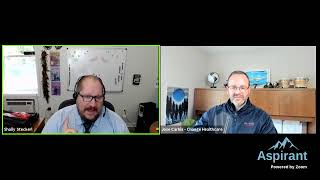
In this Shally’s Alley interview, host Shally Steckerl welcomes longtime industry colleague Jose Carbia, Global Head of Talent Acquisition at Change Healthcare. The conversation opens with personal anecdotes about their shared recruiting origins and Carbia’s 22‑year cancer‑free survival, establishing a tone of camaraderie. The bulk of the interview explores how modern talent‑acquisition (TA) leaders think about technology, especially AI and automation. Carbia explains that AI is best viewed as robotic process automation that can streamline screening, candidate communication, and data capture, but it must never add administrative burden to recruiters. Both guests discuss the practical challenges of implementing new tools during a pandemic‑driven “busy‑all‑the‑time” environment, emphasizing the need to experiment despite limited bandwidth. The dialogue then shifts to texting and VoIP integration. Carbia describes a pilot texting tool that flags mobile numbers from the ATS, integrates with Microsoft Teams‑based VoIP, and forwards calls to recruiters’ personal lines, improving response rates while navigating compliance and healthcare‑specific regulations. Steckerl adds her own experience with MMS‑based messaging via a VoIP carrier and notes the recent collapse of a VoIP provider. Motivation and leader support under pandemic pressure are examined next. Carbia stresses empathy, regular one‑on‑ones, and removing barriers for his TA managers. He highlights the importance of data‑driven management—using metrics such as time‑to‑offer, candidate‑experience NPS, hiring‑manager NPS, interview‑to‑hire ratio, and recruiter scorecards—to gauge health of the function and guide conversations with business stakeholders. The conversation expands to the concept of “talent‑acquisition experience” as a third pillar alongside candidate and hiring‑manager experience, arguing that recruiter satisfaction directly impacts downstream experiences. Strategic sourcing and RPO partnerships are another focal point. Carbia explains how Change Healthcare moved from a blanket sourcer‑to‑recruiter model to a strategic sourcing model where specialized sourcers support executive, technology, and sales recruiting. He warns against mis‑aligning sourcers with recruiters without clear value‑add, and he describes treating the RPO partner as an integrated team to scale quickly during volume spikes. The interview concludes with Carbia announcing an open strategic sourcer role, and both hosts reaffirm their friendship and plans for future conversations.
Chapters
It is 1 PM on Friday. That means it's time for Shelly's Alley, and with me today I have a very, very, very special guest, Jose Carbia. I have to introduce Jose because It's, first of all, it's a, it's a big honor to have you here. And secondly, you and I go way back, further than anybody else that I know in our industry. We started at the same company, our first recruiting job. It actually might have been your second recruiting job because you were doing something with TRC Industrial, Light Industrial Staffing or something like that, right? So you were, you were like a veteran and I was a complete rookie, except for maybe I had like 6 months on you in the job, and we basically practically shared a desk, you know, um, and, and kind of cut our teeth together. So it has been 25 years, um, a long, long ride, long ride. We, we cut our teeth in the same kind of setting, and then we both, you know, our careers went in different directions. Um, so very honored to have you here. Jose is currently in charge of global talent acquisition for Change Healthcare, which is a very important healthcare organization. And in that capacity, he essentially is a leader of leaders. So I wanted to have him on board to provide a perspective of, you know, the big picture. I've been talking a lot about getting upper management buy-in and speaking CEO, and Jose is someone that I have admired. He's a personal hero of mine from a very, very, very young age in my career. I never told you this before, but, you know, I was, I used to listen to you and follow your, follow your calls, follow your lead back at Kenda Systems when we started. So I piggybacked a little bit off of you and we worked really well off of each other. Jose also, I hope you don't mind sharing this, but Jose is a cancer survivor. I think he's been cancer-free for 22 years. You know, again, it's, it's admirable. Um, I have friends that have been affected by cancer. Some have made it, some haven't. So, um, it's a, you know, it's a big thing for me. Like when you went through that, I was like, oh man. And now recently another friend, a very close friend of ours has gone through that. So, um, you know, you can, you can take what life gives you and turn it around and it just, it gives me hope and it really warms my heart. So thank you for being here. Thank you for what you do for the industry and welcome. You want to say hello to everybody?
Hello everybody.
Awesome. Awesome. Now folks, don't be fooled by the congas in the background. Although José and I do share our Hispanic heritage, I'm the one that inherited the dance gene. He might have el ritmo latino, but he can't play the drums all that well.
Don't ask me to play.
Nope, not gonna do it. Let's get on the, uh, let's sit on the guest. We actually have the same desk, by the way. I just noticed that. That hutch and everything. Yeah, I even have the sit-stand desk too.
Oh yes, so do I.
So look at that, you know, we— great minds think alike, or maybe fools seldom differ.
That's right.
Um, you know, so you wanted to talk about a few things that we shot back and forth via email, like technology and AI and texting. Um, so I wanted to start there. Give me your synopsis, your thought on when a TA leader like you thinks about TA and AI, what does that intersection look like? Because a lot of listeners have mixed feelings. Some people have this idea that AI is this science fiction, like a robot that you're like, hey, go get me some coffee, and the robot knows what you're talking about. And obviously that's not the case. And other people are like afraid of AI that it's going to take over and like, you know, some Schwarzenegger movie or something like that. But you're sitting there in the leadership table and you're talking to, you know, TA people about AI. What does it mean for real? And, you know, at your level?
Yeah, I think, you know, if I could speak to technology in general, right, as recruiting has evolved over the years, so has technology, right? And it's advanced more and more year over year. With the introduction of AI into recruiting, I remember the initial introduction that recruiters thought, oh, we're gonna get replaced by technology. Technology's gonna do all the recruiting. That's not the case. But as leaders, we have to be in a position where we explore these technologies. And so here at Change Healthcare, we are implementing or have implemented artificial intelligence tools and technologies for the recruiters. We're still at the infancy stage and really exploring its capabilities, but the objective is to increase and improve productivity. We have so many things that we ask of recruiters. Full-cycle recruiters have a lot of responsibility. You know, there's always conversations I'm having with leaders and they say, well, can we have the recruiters provide this information to the candidates? And I said, yes, along with the other 30 documents we're asking them to send to the candidates.
All the tracking.
All the tracking and the process.
Compliance, responsibility, yeah.
And so AI, really, we really have to look at how can we automate, how can we cut out some of those tasks and processes in the recruiting steps that can make them more effective and efficient and get away from some of that administrative work that really bogs them down. They need to be recruiting, they need to be hunting, they need to be networking, talking to candidates, and they don't need to get bogged down too much with steps and processes. And so the AI tool helps from a— can help from a screening perspective to help them speed up the process for how they sort through candidates and, and, and really get to the, the top candidates more quickly, but also steps in the process of moving candidates forward or automating some of the communications and things of that nature. That's something that as leaders we have to continue to explore, but it's not going to solve everything and it's not going to be perfect. We have to constantly evaluate it and ensure that it's not creating, like from a screening perspective, not creating any adverse impact. From a process perspective, sometimes I tell my team, that's not create more work for the recruiter. And if it creates more work, then we got to go back to the drawing board. We got to pull back. And so the technology cannot be positioned to create more headache and more work for the recruiter.
Just often it's something I've seen leaders be concerned with and one of the reasons they hold back. And it's also often one of the pitfalls when you implement it that now you have to train this technology and it becomes, you know, challenging to to implement, which is now another, we're already super busy. Now we have another time suck, like maybe for a healthcare organization in the middle of the pandemic is not the best time to be experimenting with AI, right? But if you don't do it now, when are you gonna not be busy?
There's never a good time, right? There's never a good time. You're never not gonna be busy. So if you keep kicking the can, you're gonna fall behind.
So I really appreciate that perspective on AI. We've had, some AI leaders and thought leaders in the industry talk about that. So for me, that resonates really, really well. I automate a lot of things. In fact, a big part of my practice that I'm building here at Aspirant has to do with automation. So it's good to hear that you're thinking about automation as a way to remove bottlenecks and lubricate, you know, make things a lot more efficient. It's not gonna, you know, AI is not going to make matches, not anytime soon. In fact, there really is truly no AI. It's not really AI. What we say when we say AI, what we're really saying is automation and robotic process automation and assistive technologies. Best way to describe it is one of my guests Michael Askins, who's a big one of our practice leaders and a big thought leader in the industry, he said, he said it the best. He said this way: a robot can do something, one thing, better than a human. That one thing, they can, they can hammer the nail faster, more accurately, and with more precision and more, you know, than a human. But that's not the same robot that's going to serve you dinner, and it's not the same robot that's going to drive your car. So robots are good at doing something if we put it, set it up, and that robot is really what we're calling AI and technology. Good to hear that that's how you feel about that. But you also mentioned texting. I'm struggling with two things in like, as I'm out there exploring, you know, part of my job is to try tools, test them out, see if they work, implement them on our team and advise other people about it. With texting, I found two very challenging situations. One is that the texting tool— that's a mouthful— the texting tool itself doesn't integrate well with the other workflows. Like, you've got LinkedIn messages, you've got email, you've got CRM, you've got HRIS, all these different things, and texting is all by itself. Like, when you use texting apps, all that data is in this other silo in a lot of cases. Some CRMs have texting built in, but then they have limitations. Like, for example, you can't call and text from the same number, or when someone calls the number that they texted from, it goes nowhere because it's a virtual number. So how are you— how are you using texting, or what— how have you solved for these sort of gaps?
Well, we're actually exploring the texting technology right now. We have implemented a pilot with a few of our recruiters to leverage a texting tool that is set up through Google Chrome. It recognizes mobile numbers on resumes from our ATS or from the internet, wherever there's a phone number on the internet.
It marks them as textable.
Marks them, and then you click, and then you have the texting platform that comes up. The tool we're using does integrate with our ATS. However, we're not doing that right now. Until we could identify it. We could. And it'll keep track of the messaging for the applicants, not for if you're sourcing and generating leads, that'll be tracked external in the tool itself. But there's integration when it's combined with the ATS. It does come with a phone number. And then if somebody decides to call that number, it's set up to forward to the recruiter's actual number.
That's one other thing.
And so then that integration is there. The other thing actually that we're right now working with our IT department is implementing telephony, voiceover IP through our— we use Microsoft Teams. So we're actually exploring that as well so that it's all in the computer, right? So they have their texting platform, They have their telephony platform, so it's all in one place versus having to then pick up their cell phone, do their own texting or communication. So it's something that we're—
Manual does a bottleneck, right?
Yeah, something that we're exploring at the moment. So far, we're a month into it. Actually, I had a feedback session with the team that's piloting it. It's getting used to the change, right? 'cause everybody gets used to using their cell phone.
Email and cell phone, right.
The computer, but it's retraining the mind for a new behavior and really working out the kinks, then determine is that going to create more efficiency? Feedback I have gotten is that they're getting more responses using text than they do when they send an email, an in-mail or such. So if they can get a phone number and it's a mobile number, sending a text is certainly going to get a faster response from the candidate, assuming that, you know, obviously, if they posted their cell number or they provided their information during the application process and opted in to receive texts, we have to manage those laws as well to make sure that we're in compliance, that we're not just spamming people with information. And that's the caution that we have to put in place too, because we can't be in a position where we We are non-compliant to spamming laws.
And there are, I'm sure, some healthcare-specific regulations as well. That's the solution that we implemented, and we worked on first with a voice-over-IP system that was SMS-capable. And in fact, interestingly, we went with MMS. The reason for that is we found that SMS messages are too short, and they're limited, which ends up very frequently truncating our messages to be delivered in two texts. So you might get the second one first, and then, you know, and it just comes. So MMS, really not because we need the picture, but because it's all in one message, is a lot better. So we did that, and we did that through a voice over IP carrier. Unfortunately, it was VoIP.ms, and you might have heard in the news about that. It's a big federal case They were hacked with a denial of service attack. It is the biggest ransom attack ever to actually be executed on an infrastructure solution, you know, voice over IP. So yeah, that affected us for a while, but that was the way that we did it. You can call and text from the same number. It's integrated directly with the computer. You can call from the computer, text from everywhere, and it's tracked. But we still, we still have this other problem, which is voicemail drops have been— there's been a lot of crackdown on that. So the providers that we talked about getting implemented with for voicemail drops are now pulling out and they're saying we're not going to do it. Have you looked at voicemail drops where, you know, where you send a voicemail instead of sending an email or sending a text? Well, not instead, In addition to, Chris, back in the day, we used to call and whatever it took, right? We'd come knock on your door if we had to. But this is an additional messaging system that would send a voicemail directly to your phone. Have you done anything with that? It's usually tied to the same.
No, no, actually, I didn't know that that was out there, so to be frank, no, we haven't explored that, but certainly something I'll be digging into after this call to learn more about. You know, one of the things, you know, as we talk about technology and and as a leader of the function, it is important that we're always looking and exploring what the, what the opportunities are to improve efficiency and productivity. Uh, and, and so certainly exploring something like that and seeing if that adds greater speed and value to our process is certainly worth digging into.
You know, that was for me, it was a deal breaker with one tool, unfortunately, because It was like their special sauce, like, we can do this, nobody else can do this. And then, you know, oh, sorry, we don't do it anymore. Yeah, that happens. So I also wanted to ask you about something else that, you know, we had talked a little bit about, exchanged emails about, which is keeping your leaders motivated? So you've got— you're a leader of leaders, you have people that lead and manage several components within TA. These, you know, times are tough. Government mandates on vaccination are, you know, causing some sort of panic. I don't know how much of that is, is really going to come through or not about, oh, I'm, you know, people are going to refuse to get vaccinated, so they're going to quit. You know, as it is, we already have higher demand on recruiters because there's fewer people and, you know, more demand than ever before. And now on top of that, you know, people are going to be leaving and there's all this noise about technology. How are you keeping them motivated in the midst of essentially a perfect storm?
You know, I think as a leader, I need to be empathetic and compassionate about everyone's situation and scenario, right? You know, it is a It's been a tough environment with the pandemic, and so it's, you know, it's really being understanding and relating to everybody's situation. Everybody's handling it differently with the recent mandates and changes and the impact with talent. You know, there's a lot of stress, and so it's important that we, you know, here in our environment, I like to look at data, a lot of data. I manage through metrics. But I also look at metrics as a gauge, not— I mean, yes, we have performance targets, but I look at it as a gauge. And I certainly involve the leadership team together as one team in terms of how we set those goals, those targets, what's reasonable. But it's also about teaching them how to dig into the data to understand where the challenges are, what they may be, what are solutions. Do we need to build or create in order to impact some of those metrics? It's constant conversations I have one-on-ones with my leaders and checking in. It's just as simple as asking them how they're doing, how they're feeling today, and not really about the work. What can I do to remove any barriers to them accomplishing their objectives for the week, for the day? Sometimes it's rolling up my sleeves. I've actually just recently rolled up my sleeve to get to do some recruiting, you know, just to help one of my leaders that has a lot of activity and is having a challenge balancing everything, and rightfully so. You know, we all have to pitch in. We all have to dig in, and I don't mind it because I love recruiting, right? So, getting back into it was actually a good Good thing for me to get, get back to it so that I can learn and understand how our team members are leveraging our processes, our tools, and such. So it's just being engaged, being involved, communication, and being empathetic in terms of what they're— what everybody's dealing with. And everybody might be in a different place.
What are you hearing are the biggest detractors? I know that you're working towards keeping them motivated, but what are you hearing are the things that are eroding their motivation on the opposite end, you know, pulling them down?
Uh, it's, um, certainly it's the pressure, uh, especially, uh, you know, we've had— we've been impacted by turnover. And so as we all know, when you're impacted by turnover, that creates a lot more stress, uh, and pain. So it, it, you know, for us, we experienced a lot of turnover over the summer. We're stabilized now, um, and we have— it's interesting, I'm sure like most organizations for managing recruiting teams, the summer was not a very good summer for many, uh, because recruiters were on high demand. And, but we're stabilized. However, our volumes are increasing. And so we've had a significant increase in volume in the last couple of months. And we're trying to respond and scale accordingly, but it's just not fast enough, right? Anytime you have to scale, there's still a process you have to go through to identify the right people, get them to get through the background check, get them trained, get their equipment, get them trained, and getting them up to speed. That always takes time. And so that pressure on our leaders is really challenging because then they've got to face their stakeholders when their stakeholders are wondering why their positions aren't getting filled or some critical roles aren't getting filled. Then they have to really kind of, you know, I tell them, be careful. You know, the important thing is to ensure that you drop the right ball, right? You're going to drop the ball. We are overcapacity.
Pick the right one, right?
Pick the right ball to drop, but it's always a moving target, right? Every day that you come in, you have to identify what's the target today. And as long as you can manage to that and drop the right balls, and sometimes you might drop the wrong one, but we got, it's all how we respond, right? And react to the situation. And we have developed a good strategy to address that, and that's a relationship with our RPO partner. And we have a very strong partnership with them to allow for scalability when we need it. And, you know, I treat our RPO partner as part of my team. So, I don't exclude them. I include them in our meetings so that they're listening to what the challenges that my team is facing. If we need additional recruiting staff, we're pulling the RPO lever to get our staff quickly and get the support that we need. So that's helped also alleviate some of that stress from our leaders of having to worry about, oh, I've got to get a contract recruiter. I've got, you know, I've got to hire somebody new to replace so-and-so. And but I still got these reqs that we got to fill. How am I going to do it? It's important that I give them different avenues to go to to help, you know, have resources and solutions that can help them feel a little bit more comfortable and get through the stress.
So they have an outlet for that pressure, right? So, you know, the pressure is coming at them. And if you have these different options and you've built it correctly, you know, not every organization should outsource some or all of their recruiting, but there are, you know, there's plenty of recruiting that benefits from specialized outsourcing. So you have that as an avenue and you have a partner that actually is reliable and delivers and turns things around. That relieves the pressure. You have the data. That is, you're teaching them how to understand the data so they don't get trapped by despair and give in to the pressure by, oh my God, these numbers are terrible. But really compare these numbers to something else and gives you perspective. So you have that. Yeah, that makes sense. I get that. So that's a, that's a really mature way of handling it. And I think when you have When you're not looking at it strictly from a cost perspective, like how much is it going to cost us to use a search firm or how much is it going to cost us to outsource or whatever, you've got partnerships in the right places. The cost is not— I mean, there's always cost to recruiting. This is not a cost-free proposition. So it's really not like you said, the dropping the right ball or spending the right dollar. You're going to spend a dollar here. You're going to spend a dollar there. If you get bogged down in the nickel and dimes of that, you end up picking the wrong partner because you go for the dime and you lose the dollar, right? So the fact that you have all these options and they're innate, you have your leaders are enabled to say, okay, for this, I really am going to go to, you know, this is a better solution. I don't have to sit here and, you know, sign a contract and negotiate because it's already been taken care of. That's smart. That's smart. I can see why you were explaining that you had matured the TA function from a transactional, you know, filling positions function to a much more value-added function. And you just answered one of my questions, which is how did you do that? It seems like having these partnerships is part of that. I'd love to hear if, you know, there's another secret sauce to how you were able to mature that TA function to really, you know, be value-added. Because so many companies look at hiring numbers, like how many positions that we filled, right? And one of the things I talk about all the time with leaders in TA is don't go to your C-suite with how many jobs we filled, because that's activity. That's back in the day for us, how many calls did you make? Man, I could make 200 calls a day, doesn't mean I made any placements, right? What was the real measure of success for us? We got a placement. Like, so basically the The hire wasn't it, it was the check for us, right? In this setting, it's not the hire, it's that we were able to relieve that pressure. So what else have you done to move away from just number of hires as a success metric?
Well, certainly, you know, we've been in this journey for 18 months. We set out a 2-year roadmap, so we're almost nearing the completion of our 2-year roadmap and embarking on our next 2-year plan. But it all started with one, securing the right partner from an RPO perspective for scalability. And at the same time, then it was, we have to develop a data-driven function. You can't start managing recruiting without having data. And to your point, it's not just about the hires. And so having some, again, I always talk to my team about, we have a gauge, we have to have a gauge to look at where we put our focus on. And when we present information to the business, we have to show them, here's how many hires you have. Yes, great. But then what's the quality? What's the speed? How are their leaders responding to the service that we're providing? Are we hiring the right talent? Are they pleased with the work that we're doing? So building a data-driven function was key. And ensuring that we started with the basics in terms of data, time to offer, our experience scores. We do candidate experience NPS, we do hiring manager experience NPS, we do interview-to-hire ratio. So we look at those, those are just the basic metrics. And then we have scorecards for the recruiters so that we can manage the recruiters against those metrics. Again, looking at it as a gauge, you know, where's the majority of the group following, right? And then it all depends on like, you know, time to offer. It's a great metric, but look, everybody's time to offer is going to be different depending on the type of roles, right?
The situation and things.
And so if we understand that, we help recruiters understand that, we're in a good place. We also have to educate the business on that. So when we're meeting with the stakeholders and we're showing data, we have to tell the story. But we can't tell the story from the TA lens. We have to tell the story from their business stakeholder lens. What's important for them, the so what? And to me, one of the most important components for our strategy was really revolving around experience. And I split experience into 3 areas. Most companies look at experience 2 ways, candidate experience, Hiring manager experience. I added a third one, which is talent acquisition experience, and that's in-house experience. So how are our recruiters experiencing the process that we implemented, the tools, the technology? If they're just complaining that we're adding more work to them, then that experience is going to trickle down to the candidate experience and it's going to trickle down to the hiring manager experience.
Yeah. And you're going to lose your recruiters. And that, that is so Jose. That is like, You took candidate experience. You're like, no, hold up. It's going to be not just candidate experience. It's going to be talent acquisition experience. You know, like candidate experience is just that. You just took it and like, bam, you know, like Emeril, you put that extra dash of hot sauce in there.
And that gives the recruiters the opportunity to pitch in and get involved and help us improve our processes and feel comfortable about it. Because otherwise, if they're not effective, in doing their job. It is a trickle-down effect. And to me, it doesn't matter how long it takes to fill the job, but if the business is pleased with the work, it could take 180 days to fill the job. But if the business stakeholders worked with somebody that was exceptional, a partner, worked through the challenges, it was a tough, tough road to fill, but man, they landed the diamond in the rough, and they're very pleased. At the end of the day, that's what's most important. It's not the metrics. The metrics is just more of a gauge to get you where you want to be.
I like to talk about it like, uh, use the analogy of an Uber driver, right? You're, you're, you are, you know, Jose, you're the Uber driver. Your C-suite is in the back seat. They're the passengers, right? In front of you, you've got the dashboard that tells you your speed, your fuel, uh, you know, temperature, direction, all these things that you need to know in order to basically execute on what's expected of you, which is to take the C-suite from here to there on time and safely. But they don't need to know your speed or wind velocity or the pressure of your tires or how much oil is in your engine or the temperature of your engine. So when an executive comes to you and says, hey, how's it going up there? You don't go, well, sir, we're going 17 miles an hour. Well, ma'am, we're going 25 miles an hour. No, what they want to hear is We're almost there. We'll be there in 5 minutes. We'll be arriving early. You know, we're 10 minutes behind because of traffic, whatever the situation is, situation, but you report on the outcome and your gauge is a completion of that outcome that shows you, do you need to step on the gas? Do you need to buy gas? Do you need to change your oil? What do you need to do? But that's for you. For them, for the C-suite, it's percentage of, did we fill what? All the jobs that we need, or at least the ones that have to get filled. Some of them maybe didn't get filled, but they were the ones that we could live without, right? We could survive without. But the ones that we filled were the ones that, you know, that's, that's the outcome. Um, I talk about that all the time, and it's, it's lost in translation. I think with a lot of TA people, they get bogged down in the, the minutia of candidates, applicants, conversions, and all these. And those are just metrics. In fact, they're not even metrics, they're measures. They're measures like speed is a measure. The metric isn't speed, that's a measure. The metric is the difference in speed. Are we going faster? Are we going slow? That's a metric, right? Did we do better than last year? Did we? That's a bad example because this year is going to be— I don't think in any chart, I just, I can imagine a chart 10 years from now, there's going to be like that, boom, 2020. Whatever, whatever, it's either gonna go like that or it's gonna go like that. I mean, it's gonna be weird, but you know, how did we do against our previous week or previous month, et cetera? And improving that is another, you know, the difference hopefully for the better, right? That's the big picture strategy. And I love talent acquisition experience, man. That just elevates. And that's why you have a seat at the C-suite basically because of that.
It's demonstrating the value add. And if you're not feeling it, if the executives aren't seeing it, you're just a rec filling machine and you're not adding value to the business. You're not helping the business grow. And so that's our philosophy here is that we've really turned this function into a value add function and our leaders are connecting with our stakeholders and sharing knowledge and information. And it's a collaborative effort. It's not what can TA do for them, it's what can we do together? It's partnering with the leaders.
But you can't get to that point until you've built this other stuff. You know, you don't go to them and say—
It's building blocks, right? You've gotta build some credibility along the way. You can't earn that right away.
Can't go there and be like, look, I wanna partner with you. And they'll be like, yeah, I heard that before. The last guy that was in your seat or the last, you know, gal that was in your seat, they told us the same thing. And yeah, they're not here anymore, you know? So that's, that's true. It's, it's, it's, it's an additive, right? Like, like you said, it's building blocks or steps. You can't take the third step until you've taken the second step. And the only reason you got to that third step is because that second step was there. When you go to the fourth step, whatever that is in your roadmap, it doesn't mean that you stopped doing what you needed to do to get to the second step. You still have to maintain those other, you know, You're adding something and you still have to maintain the other steps. Otherwise, the step is floating in midair and we know that that can't work. Maybe on Minecraft it does, but it doesn't work in the real world, you know. So all the other things that led up to that have to stay. That's the infrastructure that has to stay there. You, you said something that, that just really hurt me, man. You said a sourcing function is not for everything in TA. I'm kidding. Of course, I actually Completely agree with that. In fact, I have a value map that I, that I share where I talk about where sourcing can add value. Insourcing can add value everywhere in recruiting, but just much more value in some areas and much less in others. So the benefits realization of sourcing is important. What leaders do sometimes that is a big mistake is throwing sourcing at a problem that could be a recruiting problem, a brand problem. And expecting sourcing to essentially overcome endemic or systemic issues. So it's, it's sometimes good to take a step back and say, where— if we were to implement a pilot sourcing team, where would it have the most impact? And that may be in number or in size or in cost reduction, whatever it is. But it doesn't— sourcing doesn't have the same level of added value across the entire recruiting spectrum. So where did you in that spectrum— I don't want to steal your thunder— where did you put sourcing in that spectrum of the areas where you contribute in your organization?
So the important thing is identify what are the value-add, most critical roles in the organization, in your organization, and that's what we did here in our organization. And certainly executive is one area, right? You know, when you hire a retained search firm, You're hiring a recruiter, a researcher, you're hiring a whole team. And so we placed our sourcing team with our executive recruiting team. And rightfully so, it's the hard, the niche, specialized, high-contribution type roles for the business, that high impact. And so we identified a lane in sales, we did technology, and we did leadership. And so we have sourcers that specialize in each of those areas. They support the executive recruiting activity. And so we have executive recruiters that are also, you know, working with the leaderships, managing those relationships, managing the process. But the sourcers are building relationships, driving pipelines. They're so well connected now with the executive leadership team that they can anticipate what are the needs in the organization. We also align those same sourcers to support some of our niche recruiting roles in technology and sales and leadership. Where we have identified areas where they're mission critical or we're just, we're not doing it. We're not getting it. And our talent attraction methods, advertising and so on, it's not working. Some of the sourcing that's done from a pool desk recruiter, it's not heavy enough. And so we'll pull in those specialized sourcers to really hone in and support those recruiters in those areas. So, you know, I call that strategic sourcing. And it's been—
it's worked for us.
It's been very effective. When I came into the organization, we had sourcers for everybody. Every recruiter was aligned to a sourcer. And it was through our outsourced partner. What I learned is that the sourcers were just doing the work for the recruiter, and the recruiter was just pushing the candidates, every candidate, and the sourcers were really looking at the candidates that applied. Not necessarily hunting for talent.
So, kicking the can, right?
Yes. And I think that's a mistake that many organizations make, is that they align a sourcer to a recruiter thinking that's going to create more output. But in turn, it really doesn't add more greater value. And sometimes the recruiters have a bad relationship with a sourcer, and then they, they don't really move on their candidates. So then you've got somebody you've hired that's on payroll that's really not getting anything done other than pushing candidates through that aren't getting through the process. So, so really being more strategic is really what, what's worked for us. And what's worked for me in my career is to have those specialty recruiters that really, you truly define them as hunters in the market. Not every full cycle end-to-end recruiter can dedicate themselves strictly to sourcing. You know, some are effective at it, but a lot of times a true sourcer is somebody that really is so hungry, it's got, you know, they're hunting and they love hunting still. Yeah, they don't love the administrative minutia.
It's like in sales, you have hunters, you have farmers, you know, in every profession we have specializations. It's the same thing. It's, it's a specialization, it's a flavor, it is an advanced skill. It's not an entry-level skills. So that is also another mistake. You know, I would add another dimension. So I really like the way that you map it out where you say, okay, what are the most critical— here's kind of summarize it— what are the most critical roles? So step 1, identify the most critical roles, and there can be lots of them. Then identify the ones which can benefit the most from sourcing, right? Because there could be critical roles that may not benefit from sourcing. There could be critical roles where you might benefit more by using an RPO or by hiring a PR firm or doing some advertising or whatever. I, you know, I'm not going to prescribe anybody's, uh, I'm not going to diagnose or prescribe anybody's medicine by via of a Zoom meeting, but you get what I'm saying. You know, it's critical is one dimension and can sourcing add value is another dimension. And then I'm going to add a third one Hopefully you've already considered this one, and that is the ability for that to be repeated, the re usefulness or the repackaging of that. So, for example, when I was at Coke, there was a position that we filled that I should say I'll take credit for it. It was a position that I filled, which was the chief security officer, the CISO, what they call a CISO nowadays. You know, this is a C-suite level person. The individual that was in that role prior had been in that role for 25 years. They left for— they retired. Not only did they retire, but they had also already previously retired from the FBI. So they had 25 years at the FBI, you know, out of college into the FBI, 25 years, retired. 25 years at Coke, second retirement, right? And the reason I'm explaining this is because even though that is a very critical position, it is also a very difficult position to fill at a company like Coke. Most organizations that are IP-based, where there's technology, the chief security officer is protecting a lot of the intellectual property, a lot of the digital rights. It's electronics, it's computer security, right? So there's that. So that's part of the job. But a lot of people don't really know this. Coke is a bank. Coke is a bank. There are vending machines that are piggy banks in every motel, hotel, and who knows what all over the country. Nowadays these are, um, you know, digital, so most people pay with their phone, but they still take dollar bills. So there's even, even today there are still people who go around and take the money out of the piggy bank, which is the Coke machine in every floor in every hotel. Think about that. Okay? Millions of them. And then the trucks that deliver to businesses, they sometimes get paid in cash. Sometimes it's an account or credit or whatever. But the trucks have safes built in where it's a drop safe and it's a one-way safe. The trucks are piggy banks. The vending machines are piggy banks. So it was physical security too. It's perimeter security. It's perimeter defense. It's armed guards. It's— and I'm going to add another layer to that— organized crime. Because there are organized labor that sometimes, you know, there's sometimes involvement with organized labor, and sometimes there's involvement with people who are disgruntled no matter what, whether they're an employee or a temp or whatever, and they leak where the security cameras are and somebody breaks in. And, you know, so there's all these different complexities, man. I'm never going to fill that job again. Never. That was a once in a lifetime. I mean, I've been in the business for 25 years and I've never seen that position open. That was one time. So any intel that I developed, any strategy, any— it's never going to be reused. Very critical position. But, you know, so the repeatability— I don't, I don't think I'm explaining it well, but the ability to reuse that that strategy that you created is a third dimension. It could be medium critical, but very repetitive, and sourcing has a much higher value. It could be highly critical, but not repetitive, and sourcing doesn't have a very high value. So the value of sourcing isn't tied directly to the critical nature of that position. And that's what I find, right? So that's what my chart talks about. So it's important to not just look at What is, what is the most urgent? Because that may not be critical, right? Who was it that Eisenhower— I think it was the Eisenhower Matrix. Um, remind me, remind me if, if I'm incorrect here. It's like urgent, important, or something like that. Like, what is, what is urgent isn't always important. What is important isn't always urgent. Okay, right. So something may be critical in that it is important, but it's not made urgent because the need has— the pain hasn't been expressed, or, right? So you have to look at that, the urgency, the importance, and the repetitive nature of the value, of the enduring value of building something that's a discrete capital investment.
Yeah, just because it's open for a long time doesn't make it critical, right? Just, you know, just because it's high level doesn't make it critical. Just because the manager says so doesn't make it critical. Right.
When Jose says so, it's definitely critical.
It's understanding the business strategy. And then what, what impact does that role make into the business? And what is the impact if we don't fill the position? Right? It could be a major project with a client, and we have a critical role to fill. And so understanding those factors is very important, especially by a sourcer, to get ahead in front of, in front of that. And that's where the— when I talk about anticipating future needs, having that level of engagement with our leadership, our senior leaders, is so important because they get that intel and then they understand where, how to prioritize and where to pull the talent from.
Yeah, I was thinking about a time at Motorola where what you just said, really important because, well, Motorola was well known for iridium. Many of the people that look at that, watch this video, may not even know what that is, but it was satellites that surrounded the planet all over the place. So you could actually get a, you know, beeper, text, whatever it is, pretty much anywhere on land. And the moment that those satellites went up, they were immediately obsolete because text messaging was released soon after that, and they were not text messaging capable, so they could only send the number but not, you know. So there was this huge flop, right? And here was Motorola trying to launch another project where they were going to do local multipoint distributed arrays for internet. So in other words, you would be able to put an antenna at the top of the Bell South Tower here in Atlanta, and that one antenna could serve Wi-Fi to the entire metro area or some, you know, maybe I'm exaggerating a little bit, but like a big part of the city. Um, so they were going to release this product and then when they went to testing, they realized it works great until it rains and then it stops working. It doesn't just not work great, it just doesn't function. And I was like, oh snap. So, you know, Motorola did not want another Iridium. They had to solve this problem. and the person that would solve this problem, he or she would have to have RF engineering experience, software experience, you know, radio waves, city— I mean, so many different skill sets. There were like 7 people in the country that could come in and solve that problem, and 6 of them worked for companies that were partners of Motorola. So like, you know, that's another level of criticality, but again, it's just not— we We're not going to fill that job again.
Yeah, that's true.
Something to think about.
Yeah.
Yeah. I know I've kept you far longer than I promised I would. I told you it's only going to be 30 minutes. Don't worry about it. Here I am, you know, stealing a lot more of your time, but I wanted to give you a chance to just, if there's anything on your mind you wanted to talk about or get out there, uh, wink wink. Remember I said you could make an announcement. Yeah.
I am seeking a sorcerer. Currently interviewing for a strategic sourcer in technology, focusing on our executive and technology pipeline. And so certainly check me out on LinkedIn if you're interested, you know, send me a ping.
Definitely. Now, boys and girls, this, this is a man that I would go to work for in the blink of an eye. If, if Jose called me like, Shelly, I got a position that I'm, you know, I'm interested in. I'm like packing my bags and I'm ready to go. So if you are interested in a really value-add strategic role as a sourcer, definitely reach out to Jose. As you can tell, he's a very nice guy and will, will take your call. So it would be a great team to be a part of. Any technical sourcers? Actually, is it technical or not? You said technology, sales, and executive.
It's technology. Yeah, this one right now is technology.
Technology.
Cool.
Cool. So you heard it here, folks. One of the hottest technology sourcing jobs on the planet is now available. So thanks, man. I really appreciate you coming by and spending this time with us. Great to catch up.
Yeah, it's been, it's been a pleasure and a lot of fun. And, you know, I appreciate the invitation and the opportunity to speak to your followers. And yeah, you know, obviously we're good friends and we'll stay connected and Uh, you know, I appreciate everything you're doing.
I have to have you back.
Yeah. Yeah.
Um, well, thanks a lot, man. I hope you have a good, uh, good weekend. And, um, say goodbye to the audience, everybody. Take care. Bye.
Thank you.
Take care. Bye-bye. Bye-bye.
More from Shally



Scaling Talent at Hypergrowth: Leadership, AI, and Hiring Excellence with Cindy Nicola







