Dena Davis, Diversity and HR Transformation on Shally's Alley
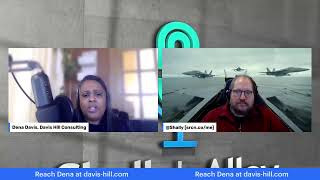
Dena Davis explains why DEI initiatives fail after launch: volunteer teams without expertise, unclear strategy, and assuming what diverse groups want without asking. She points to a real example: companies offering on-site daycare to recruit women in tech, when that wasn't what women actually needed. Effective DEI requires a skilled program manager, clear strategy, and listening to the communities you're trying to reach.
Chapters
Hey everybody, welcome to Shelly's Alley. September 30th, it is 1 PM and it is the last day of September. Finally fall is here, at least it feels like fall is here because, um, it's getting a little bit colder. I don't think you've seen me wearing one of these in quite a few episodes, so I'm enjoying actually having some nice weather that is not blistering hot and I don't have my AC on full blare. With me today is a repeat offender on the show, Deana Davis from Davis Hill Consulting. Now, Deana is one of my personal gurus in things related to HR transformation and change management and diversity initiatives as well. But it's not just that. It's, it's really all of the entire scope of HR consulting. So she's kind of my go-to expert when I have questions about things that are a little bit outside of my span of influence. Welcome back, Dina. How does it feel to be a repeat offender?
You know what, I actually am honored because this is my birthday.
No, I do not know that.
But this is a birthday gift to be on the show with you.
What? Happy birthday! I feel like we need to do something. Like, I don't have like a cupcake with candles or anything. Wow, totally appropriate day to use the cupcake and Crayola box analogy though, right? Oh man. So you have a new— not job, but you have a new very large client that we can't discuss. And it's, it's a very large longitudinal program that you're putting in place. But as a result of this, you are renewing your fervor for, how shall we say, pointing out some of the most common missteps that organizations make when they're— when they've made the decision, hey, we're going to put together a DEI initiative. And they decided it's done, right? This isn't about, like, do we need it or selling it to the Leadership team, this is— we actually are doing it. And then we start falling flat on our face. And you've seen some common missteps that happen very frequently. Can you tell us some of those that are— nothing that's going to give away your, your secret sauce, but like, what do we watch out for? And when do we know we need to call you?
Yeah, that's actually a really good question. So Couple of things that come to mind is, you know, like you're saying, when there was— I call it a renewed spirit a little over 2 years ago with regards to diversity, equity, and inclusion. So a lot of things in the world I think were great catalysts for us to really start to revisit this work, take a look at it, make sure that it has the importance and the visibility that it has throughout our organizations. And I give the— I'll call it the collective. I give us all pretty high marks in terms of our initial passion behind the effort, realizing its importance, and also putting structure and advocacy in place to support that structure of diversity, equity, inclusion being a critical part of the organization. However, I've also— and not just one client, but I've actually seen several different clients where we have a trend where you're about a year to maybe a year and a half out from declaring your DEI principles, your practices, and maybe even putting in a first-level strategy. And so about a year to a year out, I start to see where a couple of things happen. First and foremost, a lot of the work, if you'll say, that gets done in diversity, equity, and inclusion, it will involve specialist practitioners like myself and others. And we typically will rally around a group of people in the organization that either have skills, passion, or capacity to help promote this work. So what ends up happening is we end up forming what we call a program team or a program around the diversity, equity, inclusion. Now, diversity, equity, inclusion, as you and I talked, Shelly, it actually shows up in many different parts of your organization. Yeah, but for today's purposes, I'm going to focus mainly on that avenue of DEI that is focused on the employee experience, which is what most of us know and experience this work around. And so we create these program teams and we leverage those teams to the best of our ability. And I'll explain what I mean here in terms of to the best of our ability, because oftentimes we're forming these program teams largely around volunteers or people that have passion for this work.
And they have an agenda.
They may have a personal agenda at times, They may also not have certain types of skills that we need to really try to facilitate the types of changes that we're looking for. So what ends up happening is we have a lot of good effort in terms of things like engagement where we're looking at events, maybe celebrations, acknowledgments of differences in our personalities, our cultures, our diversity, just ethnicities and things of that nature. So we see a really good, healthy effort of that. But that is really a short-lived program. You're only going to be able to get so far and so wide with celebrations. And this work is not about celebrations, which goes into my cupcake analogy, right?
Yeah, it's got to be enduring.
Yeah, it's not the cupcake committee. And we're not sitting around figuring out how many blue-colored people we need in a Crayola box, right? And so I just say that kind of tongue-in-cheek, just a little bit more to be illustrative. We end up starting off with this effort and it sounds very fun and very engaging, but this is true transformation. This is true change. This is true leadership that is going to really impact and drive the DEI principles through your organization the way that you have planned.
And let's be clear, change isn't easy and it's not always pleasant or comfortable.
Absolutely. And, and that's where the skill sets come into play. So one of the critical missteps that we— I have seen, I should say, using my experiences, the benchmark here is oftentimes people either leading those teams or participating on those teams do not have the specialized skill sets around leadership development, change management, communications, even marketing, because there's a bit of— in terms of us reaching out and gaining engagement and gaining outreach in terms of what type of efforts that we're putting in place. And so really, when you look at this body of work, there's again a lot of skill sets that we typically don't get on a volunteer team. And then you really are just stuck only with parties and cupcakes and things of that nature because of the limitations of the people in that particular role. And so, you know, I would say again, definitely that's the first part of it, is not having people or a person with specialized skills that can really help to scope and drive the direction of this work, right?
So like, um, I'm just throwing it out here, you know, project management, change management, um, you know, the, the skills that drive a program, program management Essentially, I got it right. And they don't necessarily need to have an agenda. They don't necessarily need to be diverse themselves. It's just they have that skill. Gotcha. So, so don't you sometimes then have a case of too many cooks in the kitchen?
Often, yeah.
One of these missteps. So let's know, everybody, that, you know, every— who wants to volunteer? Everybody— not everybody, but, you know, who wants to volunteer? And you bought a bunch of people volunteer, then you got a whole bunch of people in there and you got lots of different ideas and people can't agree. And now you're basically stuck in the, in the mire of, let's just say, democracy, right? That is not— Yeah, sorry, go ahead.
No, no, go ahead. You're finishing.
I was going to say that it's not about— I mean, democracy is not bad. It's just if everybody has a vote, we sometimes kind of get stuck voting.
Yeah. This exact point that you're making, to me, it comes right back again to the point I just made around skill sets, roles, and responsibilities. And so one of the most important things that you need to do is make sure everybody is really clear on why we're here, what are the roles within the program team, how and where are the best opportunities for you to participate, and really be realistic about that because this is specialty work. You know, I'm also creating curriculum and I'm creating training programs, I'm creating communication plans, and This is not a crowdsourced effort. This is not something where we all get in a room and everybody puts their ideas on the table, then it all sorts out. This is a highly specialized body of work when we're getting into the actual application and execution of these ideas. So it's great to get input and it's necessary to get input, but it typically is going to come to a smaller team of more skilled professionals to sort that out, figure out the viability of those ideas, and to really understand the impact of us moving in that direction. Just a quick example I'll give you on that is, and this was actually quite some time ago, I had a client who was very, very passionate about a social issue. And it actually was quite disruptive because they, they were coming into the program team more as kind of, I call it the corporate activist, where it's like, we must change this and we have to do this and this has to change and we And that is not really what— it's not the platform for that. That kind of approach is actually not very engaging and actually does the opposite of what we're trying to do in terms of gaining the buy-in, the understanding, and the participation of the entire organization. So we've got to do— I call it different strokes for different folks. So we'll do different things for different people. And where they're coming from and their preferences and expectations. But we're not here to, I don't want to say change the world, but there's a certain amount of that we have to temper because it can be very off-putting for many others that are not as informed or as passionate about that particular item. And honestly, most times it's not really specifically work-related. So it's not a specific dynamic that we're trying to mitigate or, you know, work our way through within the organization. It just happens to be something that someone is passionate about, which is more personal in nature, but it's not specific to the organization in terms of it being impactful enough overall.
Right, right, right. So it's like we focus on the wrong— not the wrong thing, but we focus on the, the smaller problem because it's what we can see in front of us, right?
And, or again, I think people sometimes will use these opportunities— again, passion is great. I'm misdirected and misguided. Passion is dangerous, uh, and especially when we're talking about people and culture and things that happen in an organization. Because if, if you kind of— you make a misstep step. And I would say a misstep would be something of like that example I just gave. You come really hot and heavy on a topic that's actually quite controversial in, you know, we'll call it the rest of the world, and you are not prepared for that. Your leaders are not prepared for that. They're not prepared for the backlash. They don't know how to respond to the questions that people have. That creates an— a response, and people are right.
Yeah, exactly.
So it's very careful work that we're doing. It's not just simply like, let's go get our picket signs and go, you know, change the world. We've— we changed the world drip, little by little, right?
Yeah, you know, like the whole how do you move a mountain, you know, you don't just pick it up and move the whole thing, right? And these are— these are mountains we're talking about, right?
So yeah, exactly, exactly. And, you know, it's important that we're aligning our efforts to what is important, critical, and necessary to our organization. You know, so I have one client where they have a very strong community stance around a particular social issue. That is something that is actually very closely tied to the work that they do. So that's one where you will see a lot of— we'll call it corporate advocacy for that particular initiative. In this case, it's domestic violence. So you will see a lot more of that advocacy within this organization because of the community relationship that it has, but also the type of work that they do.
Right. It's essentially a corporate cause already in and of its own. It's— yeah, got it. And it also is related to— it touches on diversity. So, all right, so what I'm hearing is so far, um, I'm trying to like wrap this all into an idea that I can summarize. So you've got Um, something— well, no, several things happened that were— several horrible things happened that brought attention and more attention, extra attention, uh, and accelerated the, the charge towards this change that already everybody knows needed to happen, just kind of wasn't happening fast enough. So these horrible things happened. Now we're there. Now we know Well, we knew that we needed it, but now we actually are putting it in place. So that happened. Now we're doing it, and we're sometimes doing it in a way that is either A, myopic, focusing on only the areas that are important to the people that happen to be on the committee or program, which may very well be aligned or not with the company. So we gotta watch out. That's a misstep or a pitfall would be let's not let the opinions of the committee members drive the program until we've at least heard the rest of the company. Then we have the second component, which is too many cooks in the kitchen, too many people that maybe not necessarily have the skills. Or it's not a matter of too many people, but it could be not enough people with the skill, too many other people that don't have the skills and not enough people that have the skills to actually take things you know, through in a programmatic way because change is difficult and unpleasant sometimes. But it has to happen. And it's not, you know, it's not easy. Don't just wave a magic wand. I know as a consultant, we always have this question. If you could wave a magic wand and make one change happen, what change would you have? But the reality is there is no magic wand. So, that's the second piece. And then the third piece is not identify or not— I'm trying to tie this back to If the organization already has a cause or something that they value, ignoring that in favor of an artificial drive towards diversity and inclusion is a pitfall. In other words, maybe we already have a cause or several causes. Why are we not prioritizing those and ignoring those at the peril of favoring a program that may not be, which actually brings me to, I would say, number 0, what is diversity for us?
Right?
Like, not even asking that question, right? So you start out with the assumption that for us, diversity is more Black people, but that may not be the case. Maybe you don't know what your composition is. So maybe step 0 is, What does diversity mean for us? And that should include what we are already passionate about, which may be a cause like gender, for example, or international, you know, causes, etc. And then we're like, all right, let's make sure that we have enough people that have the skills in the committee. And then let's make sure that we're not forgetting to listen to, to survey the population. But at some point, stop listening and start building. Otherwise, we end up perpetually listening and perpetually voting and getting caught in this, like, wait, one more thing, oh wait, one more thing, oh wait, one more thing, and then just nothing happens.
Exactly. You brought up an excellent point, and I would say your ground zero to me is strategy. So again, this is one of the biggest missteps, is we don't go and create a strategy We just go do stuff, right? So we say, oh, we need a diversity team, let's go do this. And again, like I talked about the cupcake committee, we're all going to go down this path of let's go get the events put together, let's start celebrating and doing all these things that we believe are part of the program. But to your point, we've not even talked about strategy. And like I said a little earlier, is DEI shows up actually in many parts of your organization. And so I— it, it will show up in different ways and to different degrees based on your company, but it's not just this employee experience piece. And so that's why the strategy is so important. And typically, again, that's a specialized skill set of someone who is helping the organization navigate those areas of opportunity for their DEI strategy. And it does involve community relations, it does involve communications. It does involve making and building relationships.
So, so marketing, communications, talent acquisition, public relations, legal representation. So we have, you know, we make sure that we're not inadvertently stepping on any regulations that might exist that we didn't know about, right, as we start to get into these programs. Okay. Yeah, that makes sense. So draw it out first, map it out, kind of storyboard it, then build it with the components of what do we have, what are we interested in, what do we want to do, what's the company's, you know, passionate about, then build it out with enough people that have the skills, and then you can add more people, but you need to have enough people that have these basic skills, then making sure that we listen to everyone, but stop listening at some point and start putting things together. Gotcha. Okay. We had a question that came in from Srinivas. It was a little bit too big to put on the screen, so I'm going to read it. What are the 3 to 5 things that IT organizations need to do to promote and accelerate inbound applications of gender diversity, women in particular, right? That the question was related to women, but I would escalate that to gender diversity. Whether it's just return to work, as in, you know, women returning to work after leave or retirement or re-entering the workforce, or just generally driving more female applications to the organization when it has traditionally not attracted You know, a, a mixed gender, right? How do we increase the percentage of inbound hiring, um, of gender?
Yeah, and so that's going to be a multifaceted approach. So first and foremost, we've got to look at the culture, and I say this because it's not hard to find people to do certain to do jobs. It's not hard to find them. It's hard to find them when they have the right skill set at the right time, that fits well with the team, that is in commutable distance, that has the benefit package that I want, that has the— you see what I'm saying?
Like, there's so many people who can do the job, it's people who can do this job right now.
Exactly. And so there's so many factors that need to line up. But to, in my personal opinion, You have to have a culture that people want to be a part of. It's just that simple. If you're specifically in IT, there are certain organizations that don't have very good reputations for being, uh, I'll call it friendly to women in the workplace. Not that they're mean or, you know, illegal or anything of that nature, but no, but there's, there's certainly a bit of a—
there's more friction than in other organizations.
Absolutely. And that may be sometimes in work styles and how people are interrelating. It can be in hierarchical types of situations where there's a disrespect or a, you know, kind of a certain view of leadership. So oftentimes, in my opinion, the challenges that we have with recruiting women aren't as much as in recruiting women. It's do we have the type of organization that people want to be a part of? And I think you have to start there. And to me, when I think about the, the DEI lens of this, it comes back to equality and equity. So if you've looked at the needs of your women employees, have you addressed them adequately based on what they know, you know, they need, they want, or they desire in order to make that an attractive opportunity for them? So that's first and foremost.
And don't assume Right? Like, don't, don't just start saying, "Hey, ladies, come work here because we have a daycare center." That may not be important to the people that you're trying to recruit. It may not. And you know what? I'm— the reason I'm using that as an example is because a long, long time ago, I was involved with probably the first female engineering recruiting effort that was a concerted effort where we had a team around it. And the organization did make the mistake of making that assumption. And, um, it was like, we are going to be more attractive to women because we have on-site daycare. But what they failed to— first of all, they failed to ask, right? They just assumed. So had they asked, they would have probably known better. But what they failed to realize is that most parents— okay, now I'm not even saying specifically, but most parents do not want to put their child in their car all the way to work just so that they can be near that. They would rather drop them off at a daycare facility that is closer to home for a number of reasons. First of all, you don't want to expose your child to being literally held prisoner in a car against their will for 45 minutes to an hour. Which is not very interesting for them. It might be interested for you because you're driving, but they're not. They have nothing to do, right? Secondly, you're exposing them to a significant amount of bodily harm risk because there's a lot of traffic accidents. And so, you know, the less time you spend in a car, the more likely you are to not get into an accident. So it's like, there's all these reasons that women were like, so you have on-site daycare, so what? Like, I'm not going to use it, right? I mean, it's— I'm an hour away. I mean, the last thing I want to do is put my my baby in the car, right? And then the other thing is, what makes you think that I'm the one that drops the baby off at daycare just because I have, you know, certain genitals? Like, it's possible that it's the other member of the family. I mean, so there's these— all these really bad assumptions. So I would say that that is an example of— I don't, I don't want to say toxic male culture because It didn't come from that. This came from a genuine interest to increase representation, gender representation, but they just didn't ask what was important. And instead of building what was important to this population, they built what they thought was important and then had to go back and replace it.
Right. And that's an excellent example because, you know, the other part is not, not every woman has children.
Right. Exactly.
You're recruiting right out of college or, you know, kind of early career, that might not— or late career. It doesn't matter.
Yeah. Right.
Exactly. Like you said, it can vary. But again, I think of those— that's a great example of something that's just really not attractive. But I think when I think about it too, when I am talking specifically with women leaders, they want to know things. Like I said, they want to know what the culture is like. Am I going to be heard when I speak, or am I going to have to bring my 22 years full of credentials and experience to every conversation to justify I know what I'm talking about? It's really more of these types of things in terms of what's my life going to be like when I work there. People do read reviews. They talk to other people. And if you're having a hard time recruiting women, I would guess that you probably don't have a culture that new people coming in, and particularly women, might feel that they have a great opportunity to grow.
You know what, though? I want to jump in here and say something. One thing in particular, and that is that it's not— I know we're talking about answering the question about women in engineering, women in IT specifically, not just engineering but in IT. But I wanted to say that there are organizations that are sororities where the reverse happens. So it is really— this is not a male, you know, man-hating male toxic kind of situation. This is simply a gender issue that could have inequality in both directions. What I was going to ask you related to that was, would you, would you argue or would you agree that gender is perhaps the unifying cause of diversity worldwide? In other words, can you think of any other category of diversity that is more universal?
Um, I would say work styles, to be very honest with you.
Ah, okay.
Because that's what I did.
That's why I was asking, right? Because in my mind I was thinking, okay, 49% of the population in the world is gonna, is gonna fit into that, right? But, but I see what you're saying. Work styles, everyone has one.
Exactly.
And there, and there are lots of different ones, not just two.
There are. And there's sometimes I'll call them stereotypes, but there are sometimes stereotypes that sometimes are a little bit more true than we would like with, with regards to certain groups of people. And that's sometimes a benefit in understanding how you can relate to another group of people, but it's sometimes the limitation as well, because now you're like, oh, they don't do this this way, so now I can't engage with them.
And so, so are we talking about, uh, introvert versus extrovert, or can you Tell me what this example that you just gave— there are sometimes stereotypes that are really true. Um, yeah, can you give me an example?
Oh yeah, I'll give you a couple. And I'm gonna pick on the gender side of things here. And you know, one of the things that, again, I hear a lot from different women— and I'll call it just women in business, it's not just an IT or a tech type thing. Is not being heard. And when I hear that, the first question I ask them is, what are you saying?
Oh, no, you didn't. I'm not being heard, huh? What? I'm sorry.
Can I— here's what I mean by that. This is an organization. And one of the myths, the stereotypes, which sometimes plays out are women's emotions. So if you're coming to someone and you're saying, Shelly, I feel like this is the right thing we should do. And I'm coming to you from, again, more of an emotional point of view, it doesn't necessarily translate into business action and investment. Okay. So if I'm making a case—
Right. So now I'm saying I heard you and I did hear you, but I don't agree and I'm not going to act on it because it's not business savvy. Now you feel like you haven't been heard, even though I did hear you. But it feels like you haven't been heard because I did not act on it.
Correct.
So just because you feel that way doesn't mean I have to act.
Exactly, exactly. And I think it's important for particularly— and I wouldn't just— I won't just say only women, but any of us— is when we're coming forward and we are raising concerns or we're asking for certain support within an organization, we do have to give context in how it fits with this organization. And so if I'm coming to you, it's different to you if I say, Shally, I feel like this is the right thing to do because people really want to be heard. Or if I come to you and say, Shally, this is the direction I think we should take because we need to bridge this gap in what people determine is being heard versus the action that they think they need to see. That's a very different conversation because I'm coming to you in a way that's clear that I'm trying to solve a problem and I have context around it. I'm not coming to you and saying, I feel like there's a problem, because that could be my own personal problem and not be representative of the group. So again, I use that as an example because that is oftentimes when I say, what are you saying, is what reaction did you get and were you delivering the message in a way to try to get that type of response?
So yeah, and this applies to any, any diversity effort really. Proxima Panday is saying that, you know, DEI shouldn't be boiled down into a single issue or cause because that, you know, there are, there is progress to be made in every direction. But I think, Dina, what you and I are talking about here is the common missteps that may be specifically for one group, like I was talking about specifically the female example, the female recruiting example. But the lesson there isn't about gender. The lesson there is that the group, the organization didn't ask the question of what was important to the people they were trying to attract regardless of what that group was. So, this applies to every diversity effort really.
Yeah, actually, that's a great point because I often say that you really have to get outside of your own head when you're thinking about diversity because it's not about what I think or feel. Now again, some of that may have an opportunity to come into the discussion or even into the initiative, but it's really not—
you have a valuable perspective because you are from this, you know, you're female, you're Black. I have a valuable perspective because I'm Hispanic, over 50, etc., right? But then what you're saying is don't let in and of itself that become a prejudice, like your own view. Don't let that become a crutch or a prejudice. Don't color everything with your cause, right?
And that is where these programs tend to stall, is because he's like, hey, I really want to do this for, you know, Black History Month, and then, oh, we can't do that because we didn't do this much for, you know, Pride Month, or we didn't really sell 'Cause we're going to celebrate Hispanic here. So it becomes like this contest amongst the disenfranchised, if you'll say, to try to get—
To see who's going to get more attention.
Right, who's going to get more attention. And then there's this temperance of the organization to try to make sure that we don't go too far one direction because we don't want the Black people to feel like they're not as valued as the Hispanics. And again, you kind of go through these kind of normalizing.
We used to ignore everybody. Now we got to make sure that we don't ignore anybody.
Exactly, exactly. And here's the reality, and the way I explain it to my clients is this: there are things that you will promote, and there are things that you will celebrate. Now, promoting are those things that are core to our culture, our business, our industry, moving us forward, your values, our values. But we can celebrate a number of things that may or may not give the same effort from the organization.
Celebrate the things that bring us together.
Exactly. And that allows people to be more authentic, to be comfortable being themselves, even bringing some parts of themselves to the workplace, which is really great for engagement. So there's a lot of benefit in that. But if that's the limitation of your program, that is the biggest misstep.
That is the biggest misstep. Okay. Huh. Wow. Okay. So how big is this team that we need, and is it a reflection of our population? Is there a minimum size, like you would, you would at least need 5 team members because of the different skills? I mean, I'm just, I just threw that number out, but you know what I mean.
Yeah, well, first and foremost, you need a skilled program manager. So like you said earlier, they need to be skilled not only just in program management They need to be skilled in strategy development, of course, very significant stakeholder management. But you have to also have that very specific skill set of how to navigate those areas of opportunity for DEI in your company. So that's the first and foremost. The other is when you're talking about the committee members on the program team, something of that nature, I don't really think there's a specific number of people, but I think it's important that you structure that in a way that leverages people's talents and interests best. So we're not going to sit around the room and all create this training program together. That's not realistic. That people who create training are called— they do instructional design. There's method and madness behind what they're doing. It's not like we just kind of take ideas and kind of roll with it. Somebody has to figure out how to make this all real. So I think that what you want to make sure you're doing is set the realistic expectations of how people can best participate within the team. We need their input. We may need them for execution. We may need them for feedback loop. We may need them to solicit ideas from others. So there's a very active and important role that they play. But I think it's important that you're very clear in making sure they understand that in terms of maybe in turn, what are some of the limitations? Because like I said, we can't, you know, kind of every month go down one path because you're very passionate and you're very active, and then we're not giving good credence to the others.
And then, yeah, and then switch, like, right, you're getting whiplash from switching back and forth.
Yeah, exactly.
Got it. Okay, so it sounds like probably at least maybe 3 people to run the skills side of this, and then as many as you need from the representation and volunteer and the communication, because that's another thing that I found in efforts that I was involved in, communication is not easy. And it can be— you certainly need someone that's adept at expressing the ideas succinctly, but then you need lots of people to distribute that. It's not like a top-down, you know, there's no billboard for this. For example, I was part of two ERGs at an employer not so long ago. One of them was as an ally, not as a member, not as a representative member of the population, but as an ally. So I led an ERG as a representative. There was a Hispanic ERG, I'll be specific. There was a Hispanic ERG that I represented and I was the, you know, not the executive sponsor, but I was like the lead on the, you know, team. And then there was another one, LGBTQIA+, where I was an ally because I have a child that identifies differently. And so in that case, I was the voice of the non, if you will, right, representative. But communicating was challenging, communicating with the team members, communicating with the ERG, communicating with the community. Many times we would have to go out to the community to find out what locally, they wanted us to support with. So pflag in the local community, for example, rather than just kind of tell them, "Hey, here's what we're going to do," I found that it was— because they would be like, "No thanks, we don't really need that." Instead, it was better for, for example, for me to go and be like, "Hey, we've got some time. We've got some resources, what do you need? For example, you know what we really need is a meeting place. Like, that's, you know, you can give us money, but money's not going to help us as much as a meeting place because we have money, but there's just not a lot of places we can meet that are neutral, that are going to be, you know, drivable from. So it's like, oh wow, okay, so you're saying that the best thing that we can do as an ERG at this employer is to essentially provide you a meeting place? Yeah, that would be awesome. It would be really appreciated. It's so simple. It was so simple, but it was not what we'd have, you know, we thought we needed to, well, first of all, throw money at it, or, you know, or host an event or a fundraiser or whatever. And they're like, no, none of those things are, those are all great, but really this is what we need. And with the Hispanic community, it was a little bit different. It was, who do we need to communicate with? Like, who do we, you know, there's a lot of people that identify as Hispanic privately but are not very open about it, right? With a name like mine, people don't think I'm Hispanic at all. But, you know, I'm from another country, and English is my second language. So sometimes I'm just like, what do you mean? I'm— yeah, of course I'm Hispanic. Well, you don't look Hispanic. Okay, all right. Yeah, so like, yeah, I don't look Jewish either, but there you go. So it's almost like, well, all right, where do we go? And for me, the big effort was what are the places that we can go to where we can, where we can connect to make, like, for example, Chambers of Commerce. And that was just one idea. There are other, um, the Hispanic equivalent of HBCUs, right? And, and honestly, it was a matter of just like identifying who a point of contact was, right? And that was, that was enough. Effort to just do that and then put a little cheat sheet together of like, okay, if we need to make an announcement or we need to have a whatever, here's the 12 people in the Atlanta area that you should mail this to because they're the ones that can get it to everybody else.
Right. But before you even can mail it out, you need somebody that's skilled in communications.
How was that first part of it?
Draft it properly, make sure it has the right contacts. Are there— is there any potential fallout that we have to prepare for, or could, you know, and results?
The attorney and the marcom person Right.
Are the leadership team— are they prepared for any questions that they might get? So it's, it's so much more involved, which again comes down to what I've said earlier, is we just kind of give this as somebody's assignment, but we're not really valuing the work if we're not really putting the specialist in place. It's like you go to your general practitioner and you want them to do heart surgery. Could they do it? Well, hey, look, I'm not going to say they can't. But you would likely want to go to a cardiologist that specializes in heart surgery and who has experience with your type of condition. You see what I'm saying? So that is, I guess, in my opinion— not really, I guess, but that would be my biggest concern about these programs is, again, where we're saying we value the work, but then we don't put the structure in the infrastructure to really drive the type of change Because we're like, okay, well, it's great. We've got a committee and we had a couple celebrations. And now what?
What's next? Right? What are we gonna add on our— what's our next to-do list?
Well, that, that was your problem, because that was the start— starting line and the finish line are the same.
It just fizzles out.
Basically.
Wow, that was very, a lot of very insightful stuff. And Trini actually did a good job of summarizing some of this. Yeah, you did. That's very cool. Well, thanks for coming on the show again. Again, very deep conversation and lots of really good stuff. Davis Hill— Davis-Hill Consulting is how you can get in touch with Dina. Is that right?
Yes, absolutely. And, you know, like I said, I love to talk about these items and, you know, really just, like I said, try to get at the realistic view of this because oftentimes where We hear things that are happening and we assume we understand, but there's this whole other side to actual practical application. And, you know, that's the part that I just really encourage and I'm very passionate about, of just making sure we have full awareness of, because like I said, this is absolutely important work. And, you know, for a lot of organizations, I honestly feel like I am doing the most important job here is in really trying to help these teams and different individuals find that common ground so that they can be successful. And so if you really look at the type of work it is and the impact it has, it's absolutely valuable. But if you don't invest in it in the right way, or if it's not structured appropriately, it's going to fizzle quick.
Yeah. How about like trust but verify, you know, the scientific method, right? Like trust but verify. You have your hypothesis, let's test it out. Let's not just blindly jump into the conclusion because we think it's going to be that way. So just—
and most problems, I'll just leave with this, most problems are not solved by DEI. They're not. It's not typically cultural. They're right, it's many other factors and that come together around and with DEI as a foundation. So, you know, again, that's— I just share that because this is really much more transformation and transformative iterative. We're going to build, we're going to grow and continue down.
That's important. It's iterative. Yeah, it's, it's not a one-time thing. You don't do it once and you're done.
Exactly.
Do it once and then you got to do it again, but in a different way with, you know, more detail or in a different direction. Yeah.
And it's not corrective action. So if you have significant problems, like I know that one of the guests were talking in their organization, that can require oftentimes many different efforts to try to normalize or to get that culture back into a healthy state. So, you know, and I would not recommend using DEI as the platform for that because that makes your challenge much more complicated. And again, you could be alienating people through that process.
It makes people just want to resist it further. Yeah.
Okay, exactly.
Good point. Well, have a great weekend, everybody. Yeah, happy Octoberfest and other harvest festivals that might be celebrated all over the world.
Well, I'm gonna go celebrate my birthday with a massage.
So happy birthday! You're not gonna need it. It sounds like you're all set to go. Have a good one.
Thanks, Shelly. Appreciate it as always. Take care, my friend.
Bye-bye. See you next Friday.
More from Shally



Scaling Talent at Hypergrowth: Leadership, AI, and Hiring Excellence with Cindy Nicola







