Dennis Madden Live on Shally's Alley
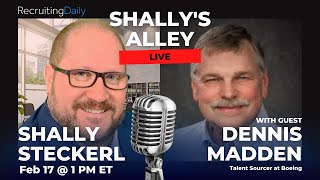
In this episode of Shally's Alley, host Shally Steckerl interviews veteran recruiter and sourcer Dennis Madden, who brings 40 years of experience and a finance background to the conversation. They explore how the tech sector is maturing and how hiring needs evolve as companies grow, discuss supply‑chain and on‑shoring trends in aerospace and manufacturing (e.g., steel, aluminum, composites, titanium), and examine the impact of these shifts on talent demand. The dialogue delves into transferable research and sales skills that apply across engineering, manufacturing, and software recruiting, emphasizing curiosity, deep market research, and candidate engagement. They compare sourcing tools: while Crunchbase works well for tech companies, they recommend state directories, the Thomas Register, industry‑specific top‑100 lists, and peer‑regression techniques for engineering and defense firms. For locating candidates with security clearances, they suggest “follow the money” by tracking public government contracts, using defense news publications, and leveraging library resources. The conversation also touches on AI tools like ChatGPT, concluding that such tools are aids for summarizing and organizing information rather than replacements for recruiters. Throughout, the tone remains conversational, practical, and cautiously optimistic, with both guests sharing actionable advice for recruiters facing industry changes or career transitions.
Chapters
Hey, it is 1 PM on Friday, so that means you are on Shelly's Alley. Today my very special guest is Dennis Madden, like the football franchise, right? Madden Football. And, uh, gosh, so Dennis, Dennis and I have never really crossed paths before, but Dennis is a friend of, uh, Shelly's Alley alumnus here. Jim Peterson and was introduced and recommended to me through Jim. And I looked him up and I thought, wow, this is a really relevant, this is a really relevant background for us. Dennis, you have 40 years experience in recruiting, right? That's, that's more than I have. So that's, that's considerable because I think of myself as, you know, a dinosaur in the field. You know, you were a dinosaur when I got started.
So I was the wrong one that crawled out of the ocean, you know, right?
The primordial ooze. You're the primordial ooze of recruiting. That's awesome. And, um, so Dennis has been in, in practically— well, I'm not gonna say every field, but lots of fields. Um, and he's got a, uh, a degree in finance. We've had a couple of other folks on the show that have a degree in finance, and that, that, that does lend a very unique perspective to recruiting, um, being able to kind of, you know, think from a finance point of view in an organization. So between 40 years of experience and a degree in finance, I thought, you know, this is a great opportunity to learn a little bit about a whole nother perspective. Currently, Dennis is a sourcer researcher at a company that you might recognize named Boeing. They do all kinds of stuff for, you know, airlines and the government, etc. And his focus recently has been, at least for the last 6 years or so, in engineering. Prior to that, he used to have a background in IT. We were sharing just now an anecdote about that, and I just wanted to dig into that. So Dennis, one of the things that you wanted to bring to the table is a perspective on when one industry or one sector of the industry perhaps is not doing so great or is not growing, there's always somebody hiring, right? So what's going on with tech and what can we learn from that? And, you know, you were telling me about engineering and tech being very similar. Let's dive into that.
Well, I think the tech industry, and like I say, I, I like to think I'm in the tech industry, but right, right, right, exactly. I mean, tech isn't just software, right?
Come on, AI or, or programming. Okay, so engineering.
Yeah, but if we look at tech as it's defined, uh, maybe today, and we look and we see the West Coast and, um, you know, look at companies like Microsoft, Facebook, Google, you know, whoever. I think what we're seeing out there, obviously that industry is not collapsing, it's not going anywhere. I mean, it's going to expand and grow and everything else. However, I think it is a more maturing industry now, uh, that, you know, companies are, you know, 15+ years, 20+ years, they're growing and they're going to have, you know, what you need when you're growing and what you need as you're maturing, you may not, you know, need as many, you know, sourcers, recruiters, you know, to bring in the talent. Obviously, I think they'll still be hiring. They're always going to be looking for the brightest and best, but I think that all industries go through this. You know, like my industry is, of course, aerospace. You know, there's also automotive, you know, there's, you know, the RV industry, there's all these other industries out there that are, you know, still growing and developing. But one thing that, uh, and we all know the big companies, you know, the GMs, Fords of the world and whatever, but when you look at how these companies make their money And, you know, what do they build and what do they buy? If you look at their supply chains, I think there's a lot of opportunities, you know, for people to, hey, contact those companies or contact people who know those companies and try to join because there's been— I don't even— this week there was a purchasing conference for the aerospace industry and they were saying these are the members You know, talking about, you know, 20% shortages, you know, on people. So they're obviously going to have to build up. You know, we're all involved in a world economy now that, you know, definitely brings, you know, challenges, brings opportunities. One thing I read that, you know, of course, Airbus, one of our big competitors, right? You know, Airbus is really ramping up their production, but their production suppliers are overseas. Will they bring some of that over to the United States? Because when you're targeting that many planes a month to ship out the door, you know, can you have your, you know, your freight or whatever on a boat waiting to come in, or do you got to try to hit a different— let me start—
that slows it down and probably drives up costs. Yeah. So, you know, Jim was telling me, um, a couple of shows ago that essentially metals, but in particular steel, is making a comeback and being, I guess, re-imported. Relocate. I don't know what the word is, but, you know, we used to offshore steel. Now it's coming back.
Inshore? I don't know.
Yeah. So is this— is it just steel? Is it—
no. And I think it's—
aren't airplanes made out of more than just steel, though? It's aluminum, right?
Oh yeah. Composites, titanium.
Wow.
Titanium.
Oh, okay.
Yeah. Uh, you know, sheet metal, uh, depending on the aircraft, uh, if you, um, you know Leather, you know, I mean, you have thousands of, you know, Boeing, you know, like we're a large integrator, right? And Airbus is a large integrator. We buy from everybody and we make a highly complex product that when it comes off that, you know, assembly line, it takes off and goes into the air. So, you know, it's with people in it, right? Right. Yeah.
Yeah.
Yeah, so, uh, and, and, you know, Jim's point was, uh, good because you, if you remember back in the, you know, '80s, uh, you know, um, '70s, you know, steel mills and stuff like that was dying in the United States, right? Uh, we weren't, you know, making it because it was cheaper to go offshore and, uh, you know, get those products in and maybe the cost we didn't want to make, you know, make that kind of investment. Well, now though, you know, if your supply chain, uh, there's opportunities, and, and we realize, hey, look what COVID did to our supply chain. It's like, you know, you can be cut off, okay, you know, so to speak, right? And there goes your profitability. And, and I think that, you know, companies want their, you know, suppliers. So like Jim was saying, maybe like the casting industry, and if you look at Maybe some of the problems that are in like jet engines, some of their delays are overcast, you know, cast parts, you know, that, you know, it's steam there. And, and I, you know, so all these companies are going to need people now. Does that present, you know, jobs? Maybe yes, maybe no. Uh, you know, I got a feel, I mean, I've jumped from industry to industry a number of times. You know, maybe I do oil and gas one time, and, and then, you know, went in engineering, or I will say, went a little bit, well, maybe we're in scientific for a while, you know, back in IT, and then back in engineering.
So what are some of the transferable skills that you find from a recruiting point of view? Like, how is recruiting— answer this— how is recruiting different in, um, you know, manufacturing and engineering and software, these, these industries. How's it different, or, or how is it the same? What are the transferable skills?
I think overall, yeah, I mean, when I teach, you know, sourcers, uh, you know, what to do, I, I really— it doesn't matter to me what industry they came from. I guess I want to know how curious they are. You know, what do they, you know, what do they like? You know, what do they do when they're presented with something new? Because, you know, I'm a firm believer that, hey, if, you know, you're curious, if you have good research skills and are really willing to dig in, and then if you can hold a conversation with a manager for a rec you're going to find that, you know, find that candidate for them. If you skip any of the above, you're probably not. It's, to me, those are things. So, the skills, you know, so a person could be a good researcher and they're going to know. They're going to say, okay, you know, GM is looking, you know, at adding, you know, they need people with battery technology. Well, what are the companies that are making these, you know, batteries? And You know, where are they being engineered at? Uh, right.
So it's the same thing. You're still really looking up competitors. Gotcha.
Right. Yeah, it's, it's basically, yeah. So that all transfers. Uh, and I think the other skill is, um, and this may be kind of old-fashioned, but I'm sitting here being old, okay, is, you know, If you look at selling a candidate, I mean, I know there's sourcers out there that can, you know, maybe they don't have as much candidate interaction. They're just generating names and someone else sells.
Right. There's a research sourcer and then there's the sourcer that does engagement. Yeah.
And that's fine. And, you know, and that's a great position. I've never had that luxury, you know, so to speak. But, you know, I believe that everybody, you know, and companies too, I mean, sometimes, you know, how are they going to get their hands around the research? You know, as far as, well, that's all you're going to do here and everything else. And you say, yeah, and, you know, maybe some companies go on and some companies don't. But, you know, if you show that You know, you're good in sales too, where you can engage candidates. You know how to close candidates to the next objective, whatever that may be. If you, you know, you close the candidate to one, get them on the phone, okay, with you, you know, two, then you close the candidate opportunity to apply, and then maybe you hand it over to the recruiter there. You know, that's, you know, a great way. And maybe you come back and you monitor how that candidate's going because maybe you may need to assist in Hey, John, you know, when we talked to you at this time, you're looking for this. Now you're looking for this. What happened? But I think that is easy for a company to, you know, pick up on that, you know, you do provide that. I, you know, you see a lot about this, you know, ChatGPT and, you know, everybody would have to be lost in the world not to be, you know, maybe aware of it. I don't think they're going to do it. Is it going to be able to really sell a candidate on a job? I mean, I don't know. I mean, you know, not really. I mean, that's not what I don't think.
No, it's more like, it's more like summarizing, like some things that they can do, you know, summarizing data and helping. It's more like a tool. It's like, you know, when, when those was a call, there was a, there was a Grammarly, when that Grammarly came out. And it helped you when you were writing your emails, right? To like check your— it's that, that's the same thing. So now it's, it's a tool that helps you, you know, uh, gather your thoughts and, and, and make more sense out of them. So, you know, there's, there's, there's a reason for that. But so you're saying that, that, that, that is a transferable skill, or that that's—
is that what that's a transfer skill? If you've been involved in, you know, if you're, let's say you were an IT recruiter and you were doing Linux engineers. All right. Well, we had to revert, you know, I mean, you know, Linux, you've got very transferable skills. Okay, you know, you could have this flavor of Linux, but another person could learn it right away and pick it up. So you had to transfer. So let's say you, you know, you define, okay, these are the 100 companies in my area. You know, this is where the Linux people hang out. This is where they ask questions. You know, pretty soon you've mapped your market out. Okay, now you come over to automotive engineer and you're looking for wire harness, you know, designer, the design engineer. Okay, it's the same type thing. However, where's the transference of skills? You know, it's going to be harder. Yeah, they could come from an aircraft company, but they're not going to come from a company that makes, you know, uh, equipment or the power lines. Okay, yeah, those are wires, but that's, you know, it's metal, but it's not the same. Okay, so, but your research that you did in, you know, and developing your, your competitor list, your company list, yeah, you're going to be able to transfer that, you know, right over.
Now, in some places it's easier. So like, I'll give you an example. Crunchbase is a— I don't know if I'm probably not doing it justice by saying this, but Crunchbase is a database, probably more than that, of information about mostly technology companies. So if you're in the tech space, software, IT, like you said, the West Coast stuff, it's gonna be pretty easy for you to, you know, you go in there and you look up Amazon or TikTok, and it'll give you, you know, all these other competitors. But that, that isn't the same. You can't go in there and look at Boeing, um, or at least I haven't tried. So where do you go for company lists in engineering and manufacturing and materials? Is there a different— is there a Crunchbase for that? Where do you go?
Um, oh, where do I go?
Yeah, for company lists and stuff.
Okay. I will, I will look at state directories and find out what companies are there. I'll look at the Thomas Register and look at who's making what, you know, what kind of product they are. I will look at obviously, you know, the top 100 aviation companies or 100 defense companies or, you know, whatever any of those lists If I'm keen in on a city, you know, what are the top companies in that particular city from the Department of Congress or Chamber of Commerce, whatever you want to call it. You know, and I'll just keep, you know, like, you know, digging down deeper. And then, and if I take a company like GM, okay, well, everybody in the world knows that GM is headquartered in Detroit, Michigan, or whatever. Right? However, you know, maybe if GM has a plant down in— I don't think they do, but let's say Spartanburg, South Carolina. Well, what does that plant do? Okay? It could be, you know, the final assembly plant. Is it some major component? And now what kind of engineers would they likely have at that plant? Well, they're going to have manufacturing, they're going to have industrial, you know, maintenance, you know, engineering. They'll probably have some quality. They'll have, you know, maybe, you know, some programmers that are programming the equipment or, you know, engineers that are troubleshooting, maybe setting up, you know, different lines, maybe installing robotics. Those people are going to be local. So I won't find maybe the design engineer. I might find a liaison person who, you know, took the design and now they've got it on the factory floor. And they're saying, okay, we can't build it like this. What's going on? Right? Okay. It's coming out wrong. That engineer would be there.
But if I'm looking, okay, you know, if you're looking one level up, you gotta, okay.
Yeah. So I'm gonna go, well, where are their design centers?
So do you find that manufacturing plant? So like, say for example, uh, I don't know, Gulfstream has a, um, a manufacturing or an assembly— I'm not in the lingo, so I don't know what I'm saying here— but, you know, they have a facility in, like you said, Spartanburg. Do you find that there'll be others nearby, or is it like, you know, they'll just be the one?
There does seem to be some clustering certain times, especially, you know, with some of your suppliers. I mean, we can all think of Wichita, obviously.
So there's clustering in suppliers, but not in the assembly, or?
You know, and then, you know, and then are those skills that their assembly people have, you know, are there other places that have, you know, good machinists that they're looking, you know, for factory type people, you know, just what are the companies that are in that area? So when you draw your talent, you know, from that, because obviously the closer the better, we all know that, It's hard to get people to move anymore, right?
Yeah, that's true.
Yeah. And, you know, so we want to be close is better. But when you draw your circle around that company and figure out what's in that circle, then you just do your research. And, you know, if you've been in IT or if you've been in wherever you've been in that, yeah, you had to do that, you know.
Yeah, I mean, I— there's, there's this technique that I, that I use and I teach, which is the company names is something that Glenn Guttmacher initially introduced to me. I can't even remember. It's been so long. It's a long time ago. And then, we took that and developed a bunch of other different methodologies for the same concept. It started out with a way to do peer regression where you find an individual, let's say, you find a Dennis Madden and a Jim Peterson and you know they both hang out in the same kind of space. You use both of their names. You find other people that hang out in the same space. And then, we took that and applied it to companies. So, you know, if you go out there and you type into Bing or Google, Microsoft, IBM, Google, whatever, you know, you'll get pages that have lists of similar companies. Does that same kind of concept translate? Like if you put in, I don't know, Boeing, Lockheed, Gulfstream, and I can't think of another one.
You'll get a lot.
Will you get a list of other companies like that? It's the same kind of thing. Okay. So for companies—
But you look at where all I mean, when you look at the Lockheed, us, Northrop, I mean, we are big consumers of parts and technologies and people that are companies. And so we affect a lot of jobs that way. And so you're going to see that mentioned all over the place. You know, I can find Lockheed engineers, you know, by just, you know, doing things just like that. And, you know, what, you know, who are the sub-suppliers of Lockheed and what are they really doing, you know, for Lockheed? And then you call in on— you can call in, email in, I, you know, whatever you want to do, okay? But you will see that this engineering talent, you know, those people have, if someone's working, you know, that, you know, hey, this company's, you know, making a flight management system or, you know, something like that for you. You know, all that same talent is there. And it's all, you know, I think if you use, the word. It's just hard to find, okay, you know, right now. I think in a lot of, you know, a lot of markets that, uh, you know, engineering, uh, which is good in a way because it keeps us employed, you know, that, hey, here's a hard market. I mean, they don't need us if, you know, it's not hard to find, right?
So yes, basically what you're saying is recruiters and sourcers out there, if you are, you know, if you are displaced recently and you have some research skills, um, maybe look into defense industry, manufacturing industry, aerospace. Aerospace, yeah, because there's, there's some— apparently there's some moving and shaking. I just posted a, uh, link to this website, you know, you got me thinking, and I was like, I wonder if this would work. And in fact, it did. I did just that, and I found the top 100, um, defense contractors in 2022, right? Yeah, which has, you know, Lockheed, Raytheon, Boeing, Northrop Grumman, General Dynamics. BAE, and so on. And that's like literally the same kind of research that I would do if I was doing a competitor list for, you know, companies that make artificial intelligence or companies that make electronic vehicles or whatever. So that's pretty cool stuff.
Yeah. Yeah.
So another thing that I wanted to touch on is And you don't have to tell me if you have to kill me, but do you do any work with like the, you know, the confidential stuff that is your secret clearances or that kind of stuff? That's always been fascinating to me because a lot of times people with clearances don't, you know, obviously advertise that they have them.
Right.
So do you work in that space at all? Do you have any advice for folks out there?
Not currently. I used to.
Okay.
Done a fair amount of that work, too.
But what advice do you have for people that might be looking for folks that have some sort of clearance and not specific, you know, anywhere in the world?
Right, right, right.
What, what tips or tricks do you have to share that would help us identify candidates in that space without knowing that they have the clearance? Right.
Okay. Yeah, um, follow the money is one. Okay, okay, that's good. All right, I like that. That's— I can do, uh, all government contracts are published. Okay, uh, yeah, that's a good one. I mean, and there's gonna be quiet money out there that's going into some deep, deep area, right? Uh, but, uh, you're, you know So that's, or you're, you know, that, that might be harder to find, but there's going to be these other contracts where, okay, this facility works on nuclear submarines. Well, guess what? Everybody in that facility is going to have clearance, right? That's a good point.
Yeah. So, so-and-so company won the contract for manufacturing control systems for nuclear submarines. Well, you know that wherever that is, they're going to have some. That's a really good—
yeah.
Is there a database of these public government contracts that's accessible?
Or, uh, there's a couple of things out there. I mean, I, I actually subscribe to, um, you know, like there's a daily, you know, defense news coming out from Aviation Week. And, uh, okay, I, I read that religiously, um, but, uh, you know, just to see, well, who's doing what, or, you know, whatever, even though I'm technically not doing defense right now. Uh, there's that. Um, there is a publication that the government has, and I don't know if it's free or not, and I haven't used this in a long time, but most the time you can, you know, and, and go to your— maybe go to your local library, okay? Because they're just gonna say that, that's right, you know, they have some research stuff for you. They may be able to access it, but it's, it's a daily listing of what, you know, what money Congress is spending and what contracts are coming out. And then once you I mean, once you get an idea of the contracts, well, you're going to know, hey, you know, this is doing that, so therefore this person is likely to have this type of a clearance, and that helps. Then I think I was talking to— a couple years ago, I was talking with— she was on the— can't remember her name, but she was in DC area and recruited a lot of top secrets. Secret world. She said, well, they all just live together.
Okay. Right.
Right. They're all, you know, they're all hanging around with each other.
I just want to point out, I have a— yep, I just want to point out I have a start page that is free to access if you go to that. And there are sections in there for, you know, cleared talent and how to find company lists and stuff like that. If anybody's curious, it's a great resource. Um, so I just wanted to point that out. But, uh, so you're subscribing to some of these kind of publications?
Not now, I don't.
Okay, but you— that's what you would do, right?
Libraries, that's what I get a lot. But libraries, I think, you know, the library is a good resource because you get some really talented researchers who, you know, we may be real good researchers, but they are really good researchers.
That's what they get.
That's what they get paid to do for a living, right?
For us, research is a means to the recruiting end. For them, research is the means.
Like, yeah, right, right. So, right, uh, you know, so you just, you know, browse around, talk to them, and they can, you know, show you or look it up. Uh, I think you mentioned before, I know plenty of time, you know, there's so many magazines out there that mention great stuff, uh, that, you know, we can get leads on and people on. Um, you know, the associations, um, You know, I think, you know, if you're, you know, if you're transferring skills or you're transferring from one industry to the other, I mean, the other thing that really is important is choose an industry that you can really get into. Like, you know, you would like reading about, you know, people and like reading about, okay, how that product is really built and get excited about about the product, uh, you know, because that's going to help you, uh, with your curiosity, right?
Yeah.
Plus, when you're talking to someone, you know, you're gonna just pull up these things out of your head. I know many times I'll be talking, I'll say, well, are you an engineer? Well, no, I'm about the furthest thing away from an engineer you can get.
I'm a finance person. Yeah, I have no clue when it came to that math, which, by the way, completely explains your comment about follow the money, because that's exactly where you would go, because from finance. So, I love that. I love that.
So, but I would lead with what you could be interested in and that will help you greatly talking about people because I get up every day and I've been around a long time and doing things and I just find this exciting. Every day is really exciting. It's fun. I enjoy the interactions. I enjoy the challenges. I love the aircraft, okay? I mean, to me, I could read about that stuff all the time, you know. I grew up in Dayton, Ohio, okay, home of the Wright brothers, right? As a kid going over to the Air Force Museum, okay, and seeing all the air shows. Uh, I wish I was an engineer, but I guess I didn't have the grades.
Hey, you're just as good. You're helping engineers get jobs, so Enough.
So this is close.
Yeah. Well, Dennis, you know, I really appreciate you being on the show. Thank you so much for accepting the invitation. I like to always give my guests an opportunity to give like one parting shot. Is there, is there a thought on anything, something that you want the audience to think about over the weekend, whether it's, you know, inspiring or thought provoking or whatever, something you want to leave everybody with, a little bit of wisdom?
Oh gosh.
I love putting people on the spot, by the way.
Okay. I guess the one thing that's been interesting to me lately is, is really ChatGPT. And I'm thinking, okay, it's gonna do this. And I saw someone posted today, what can do bullying and all that other stuff. Well, I haven't seen that yet, so I'm not sure. Maybe we can get there. But we've always faced, at least in, you know, my career, you know, we have faced challenges from, you know, legally what's going to happen, you know, when certain laws were, you know, introduced that could have a dimension effect on, you know, our industry. Or, hey, are you stealing people? You know, of course, you know, we all had the non-competes. We had, you know, threats. Well, we're all gonna, you know, outsource, you know, our jobs or whatever. Or, uh, IBM Watson is going to take over the world of recruiting. And, and, you know, the hype around it when it came out. And of course, you remember the IBM Watson Greek?
I do.
Yeah, yeah, I think that's what they were saying, you know. And, and I know when I was living through those environments or, you know, you have these recessions that come on, you know, it really— I think that's part of your, you know, your career and, you know, your flexibility and your adaptability. You just— hey, you're going to learn from it. You're going to move on from it. You're going to, you know, you continue to develop your skills, you know, take part in everything you can. I think what you guys are doing and Recruitment Daily and things like that, you know, is really great. I mean, those These tools weren't around when I first started, I can tell you that.
Yeah, right. The internet wasn't around when you first started. It wasn't around when I started, but I'm not trying to shame anybody here.
Right.
Well, thanks a lot, man. I think so. To wrap up, I think your advice basically is don't listen to the hype. Nobody's going to be replacing you. Okay. All right. I get it. I get it. Yeah. Appreciate it. Thanks a lot, Dennis, for being on the show. Okay. It's fun to have you.
All right, thank you.
Thanks everybody, see you next Friday. Bye-bye.
More from Shally



Scaling Talent at Hypergrowth: Leadership, AI, and Hiring Excellence with Cindy Nicola







