From Bootstrapped Staffing to Agentic Recruiting: Ali Elzeiny
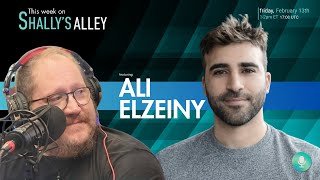
Ali Elzeiny, who built TikTok's algorithmic infrastructure, now runs Hive Mind, an AI recruiter that flags fraud and skill-tests candidates instead of relying on pedigree. He argues cognitive scores and skill tests predict engineering performance far better than years of experience, and that agentic AI can catch deepfakes and fabricated jobs at scale.
Chapters
Hey everybody, hello, hello, hello! It is Friday, February 13th. Oh, Friday the 13th. I just realized that.
Uh-oh, bad luck on the podcast.
Yeah, I'm not superstitious or anything, but I think this is actually the second Friday the 13th ever in my show's history, and we're pushing 350.
What happened to the last guest?
I have no idea. They just disappeared off the face of the earth.
Don't say that.
No, no, no, nothing happened. Um, but Welcome everybody to Shelly's Alley, and, uh, we have a guest with a very vivid background today. Um, I think it's just, you know, bright and happy. Um, Ali Elzainy is CEO of a company called Hive Mind, and I am a little worried that the Borg might absorb me, um, because that's kind of what I'm thinking with Hive Mind, but Um, he comes from a pretty interesting background. He's, uh, formerly part of the TikTok engineering team that, that built some of the original kind of architecture for, for the TikTok— or people call it the algorithm, whatever. You can probably explain that better. But, um, you know, you, you've been since then kind of making some moves from being a principal engineer there to a company called RocketDevs. And now you have your own company that is, um, taunted as— and I'm saying this a little tongue-in-cheek— the first agentic recruiter. And we had a little bit of a conversation about the first agentic recruiter, but we're going to definitely dive into that today as far as whether or not, you know, being first is true or not. But The point is definitely building an agentic recruiter, which is something that I've been very passionate about building, um, you know, a lot of agentic activities for myself. So I'm really looking forward to seeing how this is done for, um, scale, because I'm only doing it just for Shelly, not for scale, right? Um, but we also want to talk today a little bit about job fraud and kind of piggybacking on that. So that's kind of the introduction there. Say hello to everybody.
Yeah, hey everybody, Shelly, thanks for setting— thanks for that intro, setting up a lot of intrigue, uh, for the— this episode coming up. You know, we've got the, uh, the niceties and the doom and gloom also coming up. But just to introduce myself, yes, my name is Ali. Um, I live at the intersection of programming and recruiting. Uh, my 10,000 hours as a programmer came from working as a coder for 10 years in San Francisco, and my 10,000 hours as a recruiter came from bootstrapping a staffing startup called RocketDevs, which is a successful staffing startup right now being led by James Hitch. And from that, took lessons. I was like, hmm, you know, when you do something every day and you're kind of like, wow, how can we kind of automate most of these activities, these dodges, these assessments and things like that? And what we came up with was an agentic recruiter called Hivemind that I'm working on full-time. So appreciate the introduction, Shelly. Happy to be on the show.
Yeah, just, just to clarify, so, uh, Ali did run a, you know, staffing business basically. So he's not like, yeah, he's not your typical, you know, you see all these, um, startup CEOs in our industry that have no experience whatsoever.
Thank you. I appreciate that. No, no, I actually definitely agree.
Uh, no, I mean like they've never had— and I talked to them and they don't even know. They say, oh, recruiters, and when they mean agencies, and they don't understand, you know. So you actually came from well, basically an agency, right? And kind of get the difference between the recruiter. I mean, you know, there's— it's not nuances, it's, it's pretty significant. So sorry, I kind of cut you off there.
Yeah, no, actually, uh, you know, fun fact for the episode: how many of the kind of the major ATS players that we have in the market came from somebody with a recruiting background?
Any, any— not very many. There's a few.
There's a few. Yeah. Um, yeah, I looked, I looked into it.
Uh, you did?
Apparently most, almost everybody kind of comes from a founder background, not a recruiting background specifically. Like they maybe they might have a tech background like Ashby where they had kind of did a lot of interview ops, but we had never had actual any like actual recruiters with like kind of deep recruiting tech kind of come up with a product there. So for me that kind of signals that there might be like kind of this deeper core issue that needs solving that hasn't been itched yet.
No, I totally agree. I mean, it hasn't— I— everybody that is involved in the business of improving recruitment enablement and operations that's out there looking for products is still looking for a product that answers some fundamental questions that are not being addressed. Because, um, well, first of all, ATSs were never created with the recruiter in mind. I don't know if you realize that. They were always Yeah, it's—
I built my own. Yeah, I didn't realize that.
And you're not the only one to have done that. But however, a lot of companies that built their own also used a developer that hadn't had any experience. Yeah, so unfortunately that kind of, uh, gets in the way. And they are— just to finish my thought, um, they're developed for, for risk mitigation. That's what it is. It's a risk mitigation tool. Applicant flow logs, which were paper and pencil, were very, very tedious. To fill out. So anyway, that's where that comes from. So it doesn't really come from a, let me help a recruiter do their job better. It helps from— it comes from, let me, you know, help the company not get into trouble and break the law. And there's a lot of legal entities and organizations that have oversight over what we do. But I wanted to, before we jump into the hot fraud issue, I wanted to ask you, So you've lived in, um, you've lived in like, like elite engineering, right? And now you're building an, an agentic recruiter. I don't know if it's already built, but you know, you're building it. What, what is it kind of between those two? What is a really, um, unfortunate truth about recruiters that engineers talk to themselves about but don't say publicly?
Hmm. A truth about recruiters that engineers would talk about.
Yeah. That you know, you know, when you were a lead engineer, principal engineer, you and your peers, you know, there's, there's those memes.
Yeah. So like there's these memes. I think this is just kind of like just general on Reddit.
But those are public. No, I want the dirt. I want the, what's that?
You want the dirt?
Yeah. I want the ones that didn't make it into memes.
Yeah. I mean, I, I think there could be a tendency to just kind of like because recruiters typically don't have technical skills, so it seems like a lot of engineers might feel like they're being assessed by somebody that— or kind of decision lies into somebody that doesn't really understand kind of the depth of understanding.
We just talked about how engineers don't have recruiting skills, so it's kind of tit for tat, man, you know? We don't know how to do your job, you don't know how to do our job either. That's kind of why we do our job and you do your job.
Shelly, you set me up for this question. I mean, hey, I've always been super I'm super grateful for my name.
Well, because you do both, right? You've done both, and I only know a couple of others. I've actually followed the career trajectory and have a couple of friends that were former engineers that went into recruiting and are doing the job of recruiting, and it's very interesting. But, um, so the, the whispering is, oh yeah, I'm talking to this recruiter, they don't know, you know, anything about what we do technically or whatever. And I get that, but the same thing could be said about a lot of other professions, like in sales, you know, the salesperson doesn't know anything about engineering either, you know, they're selling you something. So that's not terrible. What, what I was kind of hoping you would talk about, um, is that most engineers— that's at least most of the engineers that I've spoken with, and this is a lot— think that when you say recruiter, they immediately assume that you get a commission on their salary. And so, they immediately assume that you're a greasy, slicked-back hair, used car salesperson that's really only in it for a dollar. And they don't even realize that most of us nowadays work for the employer and we don't get a commission. We actually are representing the employer. So, it's our financial responsibility, our fiduciary responsibility is to the corporation. If the company does well, we get a bonus, but it isn't to our pocket. We get paid to do a job like other people do, but they assume that, you know, you make a commission. So sometimes I feel like there's— it's very kind of like derogatory, or like they're like, well, yeah, you're just a, you're just a headhunter, and they don't get it. And so I wish people out there really knew that when you're talking to a recruiter, they might be an agency recruiter, they might know what they're talking about, and they might be a corporate recruiter, and they might know what they're talking about. You just don't make the assumption that we're all, you know, um, used car salespersons, you know what I mean?
Yeah, I mean, absolutely. I mean, recruiter is one of those jobs that it has like kind of a wide range of kind of like— it could be in-house, you could be agency, uh, you could be headhunting, as, as you mentioned. Uh, and yeah, yep, I definitely agree that people don't really understand the nuance there, for sure.
Yeah, so that's one of those, uh, unknown or known but unspoken. So in, in trans— in, in kind of shifting from here to the, um, fraud and AI and all that, I wanted to kind of take one step in that direction before we just jump right in. So seeing as how you're, you know, working on, uh, skill-based hiring and automation, um, if you could delete resumes, like if you could, you know, magic wand, right? If you could all of a sudden rule the world and say resumes are gone, vaporized, what would replace them with a signal that would be adequately, you know, what would be, what would replace them that would provide the same signal?
Hmm, that's interesting. What an interesting question. I think resumes in large truth, although they kind of reflect whatever we want to put on them, right? And people put a lot of different things on their resume. There's work experience, their job background. If you had to kind of replace and just kind of like the umbrella term for resume is just kind of like a, just a series of data points that's written by me, right? Could be true, could be not true. Hard to, you know, in some cases it's verifiable.
It is a creative document.
Well, I mean, that's, I think that's what a lot of people are complaining about these days. The resume is becoming more and more of a creative document. And that's why skill-based hiring is coming up the way it is, right? Um, if you could replace the resume with something, that's, that's a really difficult question. I think one of the things is if it could be less of a creative document, I think everybody would appreciate that. Would it be maybe like a collection of data points that, you know, right, like students, like verifiable, like, yeah, more like verifiable, more like verifiable data points, uh, that you could put on a resume. Um, which, you know, now that we're talking about it, it seems like your job history should be, uh, easily verifiable. Your education should be very should be easily verifiable. So it just kind of comes to the— just, yeah, so it kind of comes to the— do you— the skills isn't easily verifiable though, right?
And I think that's where, unless you, you know, like you have evidence of that, right?
Yeah, but I mean, I think a lot of trouble— like, for example, I'll just talk about software engineers. Like, let's say, let's say you worked at Google. Google is a big company, right? Like, you could do front end at Google, you can do back end. Um, so if I say like, oh hey, I need somebody with like a— like really that knows about architecture for ads, right? Uh, you could put that and it would be kind of hard to verify that that's exactly because Google does that.
Therefore you would assume that, right? Yeah. But you could provide samples of code or without breaking that's where neutrality or, you know, things like that.
Well, you can't provide samples of code I think in any case, but you can test them on, I could, you know, you could test them on event architecture for example, and kind of get to the bottom of whether or not they understand about architecture.
Yeah. By a sample, I mean like write a sample, not steal somebody's existing code.
Yeah.
Don't do that. If you're listening, don't take code from, right? A sample of code for them for a particular, you know, they like those. I used to do this a lot when I was, um, working with, you know, principal-level engineers, um, give them a scenario like, okay, you have this scenario, you're going to do this, this with a headless browser, you know, how would you, how would you solve this problem? And it doesn't necessarily mean like write an entire line of, you know, I mean, a page of code, but like just even tell me what the, you know, what are the classes you would build or whatever. So, so, but if you and I both want this and it looks like a lot of people want this and, you know, skills Skill-based hiring is definitely trending. Why are companies so addicted to pedigree?
Yeah, that's, I mean, that's, that's a great question. I would say it's a great heuristic. I define a heuristic as some, as a shortcut that you can take that's mostly right, right? Sometimes wrong, but it's mostly right.
If you work at Google, there must be something good about you.
Exactly. A perfect, a perfect example of a heuristic, right? I think what you're seeing more and more though is that whether that's just through like bad experiences with like high-level hires, which by the way, like companies do have They hire supposed rock stars all the time. They come in, they're totally fat and out of shape, just not ready for the ring, so to speak, right? Yeah. Coming off of the couch. And it's just coming more and more, obviously you can't test for things like grit and perseverance and the ability to just make things happen, although that's what we'd like to test for a lot of times as employers. But they use heuristics like, hey, this guy's a Google engineer. And especially if you're especially if it's hard to do a skill-based evaluation. For some recruiters, it is, right? Like, so shall you may not be able to get to the bottom of whether or not this person knows event architecture, but if he says he's from Google and he has event architecture, it's easy for you to be like, hey, all right, cool, you're in, and I'm gonna let the engineers kind of take it from here, right? And I think that's the kind of the paradigm of recruiting that we've seen so far today.
Okay, so, you know, that kind of leads us a little bit down the road of, you know, job fraud and the challenges of job fraud in building an AI. So you're trying to build, without getting too much into the product and all that just yet, you're trying to build an independent agent, a robotic process automation type of agent that does some of the parts of the job, the time-consuming, tedious aspects that we definitely want machines to take over because they can be inaccurate, they can be repetitive and mind-numbing and all that. You're trying to build that, but along comes all of this fraud that's like literally— I mean, there's been, look, there's been fraud in our space for decades, decades. But for just all of a sudden, I think the ease of things like with how easy it is now to correct your grammar and use proper English sentences, the scammers and the hackers and the fraudsters are able to pass as corporate citizens easier. And that's just one example. You know, bots can write scripts now and so on. So what is— tell me about what challenge you face with agentic recruiting that comes specifically from fraud.
Yeah, absolutely. And I'm happy to kind of cut into that just to give our listeners a background. Well, Hivemind aims to be like— when we say we're the next generation ATS All other ATSs before this have been like systems of record, right? Like you apply, you see that database, right? We want to be a system of action, right? Where you apply based on certain kind of workflows that we define. And like your resume meets a certain criteria, you get forward a certain assessment. If you pass a certain assessment, you get forward to the right hiring manager, so on and so forth, right? Obviously with doing things a little bit more agentically, as you mentioned, kind of like the interview process is rife with fraud. Specifically, like let's say, I don't know if you heard of kind of like the CEO of Clueless, I think his name is Roy, Roy Lee or something, but he kind of made a mockery of the LeetCode system by just using AI the whole time. He got a job at, I think he got a job at American, where did he get a job at? He got a job at Capital One, he got a job at TikTok and so forth, and then he went on Twitter as like a freshman, I think it was at Columbia University, said, "Oh, by the way, I used AI the whole time," and he filmed himself doing that, which is really crazy, right? 'Cause that's an example of fraud for sure. Because in this case, what's really kind of like for the company, why this is so detrimental, it's like the worst applicants get the top spots, right? So instead of hiring somebody that really knows what they're doing, they hire literally somebody that, couldn't code his way out of a paper box and needed to use AI. Is that the type of fraud you're talking about, Shelly? Happy to kind of talk about it more, kind of like interview fraud or—
Well, so there's— yeah, so, you know, we were— I was talking to a fraud expert in the last episode and he was explaining how there's a couple of different, a variety of different threats. First of all, you have fake candidates, so the person isn't even real. What you're talking about is it's a real person with fake skill.
With fake skills.
Yeah, real person, fake skills is fun. Fake, like completely fabricated person.
Yeah, we just, we, uh, like I can't say who the government contractor is, but we just signed a, uh, 2-year deal with the government contractor and their primary problem was that they were getting North Koreans that apply for government contracting jobs and I've heard they were, it was a little, little difficult to expose. So they got on call with me and they were like, I was like, I have my blah blah system. Actually like, great, we don't care about that. We have a very specific problem that is It's exactly what you mentioned.
Yep. So that's, that's a good one.
Very sensitive. Yeah.
Then you have fake jobs. Um, and people applying to—
Oh, actually I have opinions about these fake jobs. I think it's LinkedIn's fault. I have a hot take.
It is LinkedIn's fault, but it isn't just LinkedIn. So Indeed also—
But it's LinkedIn. It's LinkedIn's, um, cuz you know how LinkedIn offers seats, right? So they sell these companies these seats and they're like, oh, by the way, and if you don't use these credits, they just go to waste. So I mean, the company would rather, would just like kind of keep the seats open. I really, I do think, like, you know, if you're woke to that, I do think it's LinkedIn's fault on the—
It is, but it's not just what you think. So you're thinking about a real legitimate employer posting jobs that don't exist, right? The other kind of job fraud is completely fabricated fake employers posting completely fabricated fake jobs for the purposes of identity theft and actually stealing money and defrauding money. and here's where it gets really weird. Completely fake jobs posted by not the employer and being scraped by LinkedIn and added to the company page. So in other words, the example that was used, um, that was used by Jay Jones, the, the, the profiler that I was talking about, is in this case, this was like a, a, a Boy Scout troop that has a company page on LinkedIn, right? They don't hire people, they don't have any jobs. And at the very beginning of their page it says, we are a Boy Scout troop, we are not hiring, we do not have any jobs. And then below that there's jobs and 700 jobs, but they're from other companies. They just have been scraped, right? So it— they're fake fraudsters pretending to have jobs at this. So they're creating fake jobs at this organization and people are applying thinking it's a Boy Scout troop. So there's a bunch of different, you know, angles to it. So how does an agent— how do you respond to both of any of those situations?
Well, obviously, I mean, the bad actors, like, in that situation, I'm not really sure how much that falls into, like, kind of like what you consider it to be, like, kind of what an ATS could solve, right? Um, mostly that's why I was kind of talking mostly about the interview fraud where people, you know, have somebody else take the assessment for them and things like that. Yep, there's that. I think that's— those are more kind of the types of fraud that if you're, if you're kind of like a TA head, like that's a type of real person with big skills fraud, right? Right.
What about a fake person? How are you handling that? Not the person, personally them fake?
I, I could say, I could say for the, um, one of the big things that we like for this government contractor I can't name, one of the things was just deepfakes, right? So deepfake detection on video with where AI is, right? So the way you're sitting here today, I could actually be sitting here and I could look completely differently and it would be, might be convincing to you for the most part that I do look and sound the way I look and sound, even though I look totally different. Like let's say I'm a girl in this case.
Is that generally undetectable? Like it's, is it that good now?
It's, it's, it's not, it's actually, so According, like, the open source software that had— that can kind of do this type of stuff, it really kind of depends on, like, how good, uh, your graphics setup is. Um, it can get real— like, if you have, like, this multi-thousand dollar setup and you're not—
I mean, I know we can definitely do it for video that's already, like, we can produce video, but we're talking about a live interview here, so it's got to be done in real time.
This— the same way, like, AI photos, you feel like it could still kind of, like— I could— I feel like I could— I see AI photos and I know it when I see it. I do think we're were still there, but accurately, but that line is blurring every year, isn't it? And that's the scary part, is it's getting harder and harder to detect. So in this case, we would just use like kind of certain markers on whether or not we thought it was a deepfake and we just kind of did a bunch of research on what those markers were.
You would flag it and then—
Mm-hmm, and we would flag it for review.
So the employer needs to kind of review it a little bit more. Okay, so does this, Does this also help with bias detection and how are you working on the bias side of things?
Well, I mean, the bias, that's a really interesting part of it as well because we just had some company that wanted to engineer a little bit more bias in their pipeline. For example, it was an airway.
Intentional bias.
I mean, I thought it was intentional bias and that was interesting in a way that they want to make sure that whoever is sitting to be a flight attendant, let's say they're taking an interview and it is an airline.
right?
They wanna make sure that they look a certain way, that they talk a certain way, and that they kind of, they meet these professional, I guess they're so tired of getting like thousands of video submissions and like only 5 out of the 100 were pretty, were basically presentable on video. Mm-hmm. So there are companies that actually are, you know, they didn't call it, hey, like let's put bias in our pipeline. They said that they want more standards on like, you know, and they wanted to automate some of these standards on how they appear on video and so on and so forth.
Well, there are some legitimately, there are jobs that require a particular look, right? So if you are hiring someone to represent a product and they want, you want that person to look a certain way because that represents a product, that is a legitimate reason to do that. But if you're just biased against, you know, people that don't meet your standard of beauty and there's no reason for that in the job, that's bias. So it could be, you know, there is intentional bias. I mean, I hire a lot of You know, for a lot of the work that I do, people that have to have the eligibility to obtain clearance. And, you know, there are government conditions on that. And that could, by a non-government employer, could be construed as bias. But for the government, it's a law. So, you know, there are situations where bias is intentional. But I'm talking about, how are you handling Like, for example, with AI interviewing, how do you handle or detect when a hiring manager is exhibiting clear bias by looking at the videos and making a determination about the person's look without writing it down as a note? You know, oh, I didn't like the way they looked. Are you—
is that— yeah, I'm not really sure if we can tackle something like unconscious bias or even conscious bias if it's kind of like misdirected by a hiring manager. Or even outright racism. I think that'd be up to the operator. What we try to focus on as just making the system as accurate as that, we don't want the system itself to be biased or making—
By not cheating and things like that. Got it.
But not only that, we don't want it to make certain inferences based on appearance or how you look or what race you are. And that's what was so interesting about this pilot that we did. That we did with the airline is actually they wanted to make those inferences and judgments and they wanted control of that as well. So really what's interesting about that is just when you make a system of action, you just wanna make sure that everything, every decision it makes is very auditable, right? And it kind of explains itself as much as it can.
So you can figure out what happened and okay. Exactly.
And that you kind of see that in even like if you're a ChatGPT user in the reasoning, right? Like, oh, this person might be asking blah, blah, blah, and they'll kind of produce this reasoning It's totally uninteresting to read, but it's there for you to kind of audit, you know, how this system of action is thinking and routing its candidates and even answering questions.
So here's an interesting conundrum for you. Cultural markers. So cultural bias is discriminatory. In some cases, it's necessary because of the job, but for the most part, cultural bias is discriminatory and has an adverse impact on eligible candidates. But you may have to institute cultural detection in order to prevent bias. For example, there are some cultures where smiling is prohibited because it shows aggression. Because when you show your teeth in a smile, you know, some cultures interpret that as happy, others interpret that as aggression, and it is completely considered offensive to show your teeth. So if an organization is looking for someone that's pleasant and has great communication skills and they're looking for smiles, but that individual comes from a culture where smiling is prohibited, you know, I mean, you got a situation. So is that something you can teach an AI to, to, um, to understand that says this person didn't smile during their interview, but it's because that's their culture? So you, you know, don't like flag it and say don't hold it against Charlie that he never smiled because—
yeah, is that even I actually, I mean, that, that's a great question. I, I had, we have not, like Hive Mind, we only do interviews in English, although we're, we're getting kind of, um, more.
That's okay. It's still cultural.
Yeah.
I mean, you can have, you can be from a culture and speak English.
Yeah, that's true. Um, I, I would say we're still in the very early stages of, of, of that. Like, and I'll also say like, that's kind of why like humans hire humans is because there's so much nuance.
Yeah.
Like you, you would never give an AI system like, hey, hire this person A to Z, right? But you can have them assess you on your JavaScript skills. I mean, that's more realistic. And collect a video, nudge, make sure that the person—
This code is good. This code is good. This graphic, this PowerPoint is good. This medium, it's excellent. It's above average and all that kind of thing. Okay. So vetting is a science, as something that you say, vetting is a science. Break that down. What are the 3 signals that actually predict in engineering, since that's your forte, 3 signals that actually predict engineering performance I actually read a paper on this.
I could actually give a very scientific answer. So they asked a bunch of hiring managers, uh, I can't cite the study unfortunately, but they asked a bunch of hiring managers the results, kind of, uh, yeah, like who, uh, you know, who are their best employees, and they were— they stack ranked them at the company.
Okay.
And then, uh, they took all these employees and they saw how they did on certain data points, right? So one of the best— one of the best indicators that like, and it has like with an R-squared value, which is a correlational value of like 0.6, one of the best indicators of if they perform well on the job or how happy their manager was with them, if there's one data point, what is it, Shelly? Take a guess. It's a number, sometimes 2 digits, sometimes 3 digits.
Years of experience?
Nope.
That would not be 3 digits.
IQ? It was IQ is their cognitive, is their cognitive score was one of the strongest predictors out of like 20 factors on whether or not their manager was happy with their performance at work. So their IQ was the top, was the top thing. The second data point was whether or not the kind of their skill-based scores kind of coming in. So they had like skill-based testing, but IQ beat skill-based testing out, which was, which I thought was very interesting as well. But it does actually come, I think, you know, which is really interesting because I thought it was interesting because companies don't test, don't do an IQ test, like, you know, but it seems like if it is one of the strongest predictor values on whether or not you're going to perform well at work, as defined as if your manager rates you highly, then it seems like IQ is really important, actually.
Interesting. And how is that measured?
Well, that's, that's, that's another really great question because you can measure IQ in a number of different ways. That's a whole— that, yeah, that's a whole different discussion.
But, you know, to be fair, what you could do is you could measure— if you measure everybody's IQ in your organization a certain way and you use test A, and then you use test A to measure incoming applicants, then you're testing your applicants the same way you tested your population. Then that at least is reflective of your population. However, that would actually eliminate people that don't fit into the population. But if it's the same cognitive skills test, at least you have the cognitive skills, you know, test that's, that's similar. Kind of like, um, maybe not everybody can run an 8-minute mile, but if everybody at your company can run a 12-minute mile, the test is, are you, you know, do you have the ability to run a 12-minute mile? Because here we run faster. I'm totally making that up, but like, you know, that, that kind of thing does, does make sense.
Yeah.
So take— what about the 3? Well, you actually technically just gave me 1, but that's good. So let's make it fair and say, what's the one that is complete nonsense? Like, what's the one signal people use that is like, just, that's not even—
It might be like, would it be years of experience? You think like years of experience is just one of those things where it could have like a high, like high value. Like people always seem to value that quite a bit, but it can also kind of backfire. For example, like let's say as a recruiter, you stayed somewhere like you have 10, 15 years of experience, but maybe it was like low volume hiring somewhere and you wouldn't be able to cut it in an agency just because you're in-house. It was a little bit too cushy. That might be kind of an example, but I would be curious to kind of go back at that study and look how years of experience ranks. What are— that's pretty interesting to think about. What are some other values you think that could be overrated?
Well, so years of experience, um, has some people look at it more as like years of experience in the same job because that eliminates the, um, you know, the, the, the construct of like the company got acquired, went out of business, you had to relocate, you know. So job hopping can sometimes be a negative signal or it can be a false positive. But years of experience in the same functional, you know, functional job can be a predictor of, um, stick-to-itiveness and grit and stuff like that, not necessarily cognitive ability. So I don't know if that would be one of the top ones that I would say is complete nonsense. Um, believe it or not, I think the one that is complete nonsense is pedigree.
Pedigree. Um, so the pedigree defined as the, the company that you came from, like, right, the lawyers on your background, right?
Yeah, yeah, yeah. If— because, and I, and I say this because it's quite possible that your preferences as an individual are to work with a group of people that you value and respect, and you don't really— you're not, uh, you know, someone that's looking for promotions and raises and all that. You just want to, you know, have a nice time at work and a good environment and work with good people. You find a job you really like and you just stay there. It may be a small company nobody's ever heard of, but you're happy and you make good money and you're doing fine. And then all of a sudden the company, you know, goes out of business. Now you got to go find a job, and people look at you and go, well, you never worked at Google, so you're not used— you're not useful. But you might have been the most competent person in that job. You just never worked for a big, big company. And not everybody gets to work for blue chip companies. So I think that that's not necessarily a good filter. But I don't know, that's just me. You're the one that's building the Egentic, uh, you know, right?
I mean, I mean, that's why— I mean, if you kind take a look at like TestGorilla's studies, which is a big kind of indicator for me on like kind of building a skill-based hiring system like TestGorilla. According to TestGorilla, like from 2022 to 2023, like there was like a 30-40% of increase of companies that started using skill-based hiring systems. I think just for the reasons that you mentioned, right? Typically this like people will value pedigree and they'll use this heuristic as long as it serves them, but as soon as they hire You spend like $300K on some ex-Googler that ends up just like not knowing what they're doing at all. They can't even open up a pull request cuz they lived in this like walled garden where pull requests operated totally differently. But you did not think that you just hired a Google engineer. Happens all the time.
And then, and then they're like, wow, well we need to do, yeah, yeah, yeah.
We need to do, we need to do, uh, skill-based hiring.
And I have, I have seen, believe it or not, reverse pedigree bias. Mm-hmm. Um, I've had a few hiring managers tell me, Under no circumstances do not give me any candidates from insert company, you know, like, no, I won't talk to any candidates that came from this company. And it usually it's because of a really bad experience like what you just described. So with this billion scale, you know, you at TikTok, you shipped some infrastructure that handled 8,000 QPS with measurable, first of all, tell everybody what QPS is.
Transactions per second. Am I getting—
is—
I mean, am I in an interview right now?
I forgot my system. No, no, no, I just may not know what that is, but you know, you're handling a high volume of transactions. What did building for billions teach you about? Because no ATS you are ever going to design or use is ever going to be like the volume that TikTok or Instagram or whatever handle is never going to be handled by any ATS ever.
That's true. That's true. You know, man, I will say that ByteDance, the parent company of TikTok, is a crazy, crazy competent organization. They are just different. I've worked for American Express and kind of like American-based companies, and I worked for the Chinese-based companies, and there's a reason they're able to kind of make these super apps. I would say both have strong programmers, but One of the things I noticed about TikTok is their program managers, the technical program managers were so good, so detail-oriented, so technical at the same time. They really did think about design in just a plane that I've never seen before or since. And that ties into the architecture as well. Honestly, scalable architecture with serverless is not very difficult.
Cool.
Like I think anybody can, like even if you're kind of novice, you can make something that scales out quite easily, just kind of riding on the back of like what Amazon has built in terms of like AWS Lambda or whatever. So yeah, but it's pretty, but once you get in the billions, it is, it is totally a different story cuz then it's also about keeping costs down and self-hosting.
Okay. Which you can't do with an ATS, but aside from that, well you could, but I mean what would be the point of that aside from those obvious, you know, like mega, mega scale. What have you taken from this, you know, billion transaction track record that is going to make an ATS, you know, better? You know what I'm saying?
Yeah, I mean, I'm not really sure. I mean, the code, like, the code still pretty much runs the same. Like, you still write the same code in Go. You still want to make sure that it's like performative, that you're not making like just like really unnecessary like computation or double loops or whatever. So the code that you write is the same, actually kind of really comes down to the architecture and what architecture you're renting.
That makes sense.
Maybe using queuing and things of that nature. And for them, they're failover.
They're so slow that it takes minutes to load a page.
I know.
Oh my God.
Because that's a great example because that's something that TikTok cared about because they want you to keep scrolling. They want to make the app as addictive as possible.
If it jams, it's like, oh, I can't go to the next page.
Right, but if you're using an ATS, you have totally different— you don't care like, oh, I hope these applicants get a great and speedy experience. You're thinking more compliance and you're more thinking about playing on the safe side, which I think we were talking about, like the safe side of recruiting and why it's— and I spent a lot of time here just talking to like heads of talent, like you guys, you've been riding a horse, it's time to test out a car. You know, but it's a different conversation, right? Yeah. Yeah. Cause there's like, oh, well, you know, this horse has been working for me, you know, it's like, yes, yes. But I don't think you realize like how much talent you're leaving on the table. If you really are a talent acquisition, like you should care about hiring the best person in that pipeline. And that means vetting applicants at scale.
That's a big part of the conversations I have. Yeah. Let's, let's, let's lean into that a little bit. So you're, let's fast forward and you're, you're, your first ever agent recruiter. Debatable, but your first agent recruiter, and you know, it's out there and it's working and it's— it really is out there. Yeah, 300 customers.
I had to say that. Yeah, it's working.
Let me, let me go to the forward— like, I'm doing— so you— that's where you are now. Let's fast forward. So this thing takes off. Okay, it's not just working, it's, it's like part of the infrastructure now and everybody's using this, you know, agentic, right? So it's, it's, it's, it's going nuts, right? What part— wildly successful. What part of the workflow today that recruiters do is, is vanishing because of that? Like, what is the part that is the nudging?
I would say like the— I try to make the most use— like, like, the more brainless it is, the more it should be automated. I think the nudging is totally brainless thing. Um, and we talk about candidate retention Reminders, follow-ups, reminders, follow-ups.
You know, you abandoned this candidate. Hey, you, you've got an interview coming up, stuff like that. Because yeah, that's, that's true. So, you know, one of the big— one of the biggest— I would say probably not one, I would say the biggest problem that I had in a project where I was working hiring nothing but like high-end engineers for, for headless browser automation and stuff like that earlier, it's, you know, early on the automation, I don't know, curve or whatever, was no-shows to interviews. And this was a really— yeah, well, I found, I found several reasons for it. Maybe you have others. And maybe this is one of the nudging things that can be, that can be completely automated. First of all, I hate doing that. It's tedious. It's mind-numbing. It's completely, you know, it's necessary, but it has no value. Like, if you don't do it, it's horrible. Because people don't show up for interviews. But it— but doing it is like completely, you know. So a couple of reasons why I ended up figuring— or what I figured out why a couple of reasons were. One of them was that the calendaring app was adding the calendar item to the calendar, but it wasn't creating reminders. So it was on your calendar, but there was no reminders, which means you never got any notification like you do for every other meeting. Right. So candidates weren't no-showing out of disrespect. They were literally not—
just didn't know.
Yeah. So that was—
reminded the other—
honestly, is that the invitations never even got— like, the other problem was lesser, but more— but also common was the calendar invite never got— like, you never got— you, the candidate, never received the invite. So it's on my calendar. But not on yours. That happened less frequently, but it did happen. Um, and another reason was that somehow the invite went to the wrong email, or like you have two email addresses and you have one email address for your calendar, and then you have your other address that you don't really use for your calendar. It went there, and so you never added it to your calendar because that's not the one that has your calendar.
Yeah, no, absolutely. I mean, I think that's one of the— when I talk about operator experience, uh, doing interviews, that's the biggest thing that I hated doing was nudges. One thing I learned pretty quickly is I can't just rely on the calendar to make sure somebody shows up on time because the cost— yeah, and plus like the cost of that lost time, like you just lost an interview slot, you lost a candidate, you could have scheduled somebody else during that time, and it can stack up, right? With like a 15, 20, 30, uh, no-show rate, um, that's actually quite a big problem. Right. What we— what I can tell you, what, uh, the software— the solution that we found was to not just use calendar systems. So we use what we call a multi-channel system, um, emails, SMS, all of those things. And that's just kind of to protect your bottom line. That text to send out just costs 5 cents. Makes sense to do it, especially within— especially with somebody's crowded email inbox. Like, who really checks their email these days anyways with all the spam in there?
You have an appointment, don't forget. You know?
Right, exactly. But you know, they, they, they might not see it. Um, and people have multiple email addresses, so the multi-channel system. But one thing about multi-channel that I speak so passionately about this is that this shouldn't be up to the recruiter to kind of figure out, like if they're paying, like, you know, if their company is paying like $30,000 a month for a software and it doesn't do that outta the box, like what the hell is happening there? That was, that's not even AI, that's just basic good programming.
Yeah.
Right. Like it should do multi-channel. Outreach. Uh, if it's not, you should really look into it.
It seems like it's kind of a—
to be treated better.
Yeah, I was talking about literally the calendar didn't even have reminders. So it was a calendar and people would apologize, refuse, like, oh, I'm so sorry I missed it, there was no reminder. And I'd be like, really, there's no reminder? Yeah, there's no reminder. Like, so a calendar app should at the very least function the same way for a— for an appointment you made versus an appointment someone else made. You know, like, so how come it didn't have a reminder? It's so basic. Anyway, all right, so we talked about the one thing that is— hopefully, hopefully, I hope completely vanishes off of my plate. Um, what's the one thing that's gonna— that no matter what you can automate will always stubbornly remain human necessary?
Just— yeah, just the final human judgment on whether or not I like you and want to work with you. You cannot automate that. You cannot automate that. We just want to automate a lot of the data collection around those decisions to help people make better decisions. But at the end of the day, like, I think we were talking about Smile, like, you know, kind of cultural norms, unconscious biases, you know, it really, like, in, as unfortunate as, as these biases are, they are kind of a reality as well to kind of the decisions we make in terms of who we want to work with, right? It's a deeply personal decision as well.
You know, tell me this, like, so many science fiction movies have been made, um, where there's some sort of, like, there's some sort of AI that is, that is judging things. Like, um, for example, uh, literally, like, like a robot that determines, um, whether or not you're breaking the law, or that acts as a judge, or that acts as a parole officer or whatever. There's been so many, and none of those have ever painted that as a successful activity, right? So why is the public so convinced that AI can make judgment calls?
Yeah, I mean, it really— it can't make— it maybe can, might be able to make judgment calls on things that are very objective. Um, so it really would define— like, I guess it depends on what you call a a judgment call, right? Um, let's say it is getting better at making time, like police, RoboCop, Terminator.
I mean, you know, making, making determinations that impact humans in a way that is too logical, and the logic is the problem because there's no room for the exception. Like, you know, you were speeding, here's a ticket. Well, I was speeding because I was running away from a falling boulder. I'm allowed to eat in that case.
Yeah, yeah, I love that example because, yeah, the edge cases Edge cases are everything, right? So I mean, even when you take a look at Tesla and Elon Musk trying to make self-driving cars, like, I'm sure that came together very quickly, but then there's like the 15 million edge cases on like, what if there's signage at the road? What if there's construction? What if this, what if that? And yeah, that's where—
Just a lot of things.
Yeah, there's a lot of that. I mean, that's where AI like doesn't— is quite imperfect actually. Even with where AI is today is kind of like the limited context of what it understands. And I think that kind of goes back to what you asked, like what's the one thing that you can't automate? It's just the human judgment.
Right, yes, I mean like machine made wrong call, let's see, 2001: Space Odyssey, The Terminator, I, Robot, WarGames, Minority Report, Colossus, Ex Machina.
I love that movie.
I mean like there's, and I can go on, these are all like machine made bad call, you know, but at the same time there's a lot of movies about machine did good things because It's machine, right? Right, right. Machine made right call have to do with judgment, right?
Right, right. Yeah, absolutely. You know, yeah, you know, honestly, it's interesting that when we talk about agentic recruiting, it seems like there's— maybe you can help me because I'm really trying to separate out like kind of like this dystopian aspect of like calling an agentic recruiter with, um, with like, we're like, hey, it's just an ATS that does the things they that does things like the nudging, it does things like skill-based assessments and things like that. It's not some sort of like Skynet, you know, it's gonna make these like imperfect decisions that we're gonna have to like live with and, and consequence, experience the consequences of. So it really is kind of like a branding issue, to be honest. There's a little bit, cuz when I say agentic recruiter, people like Skynet, they're coming for us. I'm like, okay, listen, listen, we just wanna help here. You just wanna help you evaluate candidates at scale. That is 100%. That's kinda, yeah.
I can give you an answer to that, but tit for tat, right? So I'm gonna ask you to reciprocate with the exact same question, but for a different scenario, right? Right. So the general conception of AI is that it does things for you. Right. That's the general conception. And so people have a hard time understanding the difference between generative AI and actual like agentic AI. When you try to explain generative AI versus agentic AI, they get lost. Lots of people get lost, even smart people, because it's almost kind of like a new— like generative AI is doing something for you, just not taking control of your machine and executing activities.
I have— independently. I'm not sure if this is correct, but like what I define agentic versus generative— agentic is just something like let's say when a candidate applies, after they apply, they, they finish an assessment, something happens. I would say that's agentic because it takes action and you're not necessarily at the keyboard. If you're not at the keyboard, I would call that agentic versus just, just regular AI. Yep.
So here's the easiest way to think about it, and it's not the easiest for people that don't know a lot about technology, but for people that know a lot about technology, the easiest way to think about it is what we currently call Gen AI is basically decision trees. What we currently call agentic AI is essentially robotic process automation, which has been around for a really long time, which is also decision trees. So it is also decision trees, but it is more sophisticated. So, um, the logic of a decision tree, if this then that, versus the logic of a robotic process automation, it doesn't necessarily have— it can have multiple ifs and multiple that But what's really important is that it is taking the action on something that may not have been predicted anyways. So, um, a sorting machine— that's— I'll just go back all the way back to Turing and the deciphering of Enigma. That literally was a machine with cranks and levers and hole punch cards, but it was able to solve cognitive problems because it was essentially configured to deal with every possibility within that setting, right? And when you take modern self-driving cars, that would be an agentic, or, you know, a robot. The problem is that the setting is too big to be defined. So as long as you have a car on a road with marked lines, you're in a good shape. But the moment you put that car on Mars and you have Mars Rover, The world is completely different now. You have to have a car that can go on a highway and on the dirt, underwater, and in the air. That's a whole— like, there's too many, you know, possibilities and variables. So an agent or an agentic, um, device is something that's going to take actions on most of the things that it can encounter without you necessarily having predicted them, versus one that's going to only do execute on the things that you told it to do. So if you say go left, go right, go left, go right, and if you see a wall, go left, if you see, you know, a wall, go right, that's one thing. The other is navigate this room and figure out what to do, and whatever you run into, right, try to solve it. Now they will stop at some point, and there will be something that happens. Like this happened with the Roombas, you know, early on. Cats riding on them, or, right? And like, what does it do in that case? You know, so there's— it learns from that. So the machine learning and the, and the sort of ability to take an action in uncertainty and self-repair is more agentic versus the other one. But it doesn't necessarily mean that it is out of control doing whatever the hell it wants without any boundaries, right?
Yeah.
So people think that agentic means it can do whatever the hell it wants. Which would be the equivalent of thinking that the Roomba will all of a sudden start cooking dinner. You know, it's like, no, the Roomba can only operate within the vacuum, you know, it's literally a vacuum, right?
Yeah, exactly.
So your ATS agent is not going to start, um, you know, hiring people, you know, just it can't. It's not— it's operating, you know, but within its environment it can make determinations. So that's really, you know, and the fear comes from relinquishing guardrails.
Yeah, we're talking about trust, right?
Trust and control. That's where it comes from. So I don't know if that's helpful, but now you owe me one. Yeah. What's the mental shift that is required to stop thinking like an engineer and start thinking like an entrepreneur?
Oh wow. Engineers love to build and they hate to sell.
I'm a builder. You nailed it. I'm a builder. I love building. I hate selling. Okay, so is that it? Is that literally— that's it for me?
That's—
I'm an entrepreneur.
My favorite part of the day is building. My least favorite part of the day is, uh, selling.
So why'd you go and do this?
You know, it's, it's just I never woke up, said, hey, I want to make the next generation of ATS. It just seemed like what I I was like, this should be my life work because I feel like I understand it better maybe than anybody else in the world. Just having a deep experience in both. So it mostly was like a calling. It's not the sexiest thing to build. I think we can agree.
Yeah, we agree on that.
Yeah. But I did feel like I can do a great job and that's why it's going to be my life work. And as I think we talked about, Shelly, we're playing the long game here. So it's not going to be a 1-year thing, 2-year thing. It's gonna be a 2-decade thing, 3-decade thing. And hey, I'm here for it.
Okay.
Yeah.
All right, well, dude, um, I gotta wrap things up, but what I want to— I want to say is, uh, well, first of all, folks, you can get show extras if you go into Shelly's Alley on tsiuniversity.com. Um, it's for members only, but it's really inexpensive to become a member, and that's kind of how I support myself. Nobody pays for this. There's no ads, anything like that. So now I'm going to ask you to come up with something that you can provide us. So would you be able to come up with, like, bullet points or a handout or something on, you know, what to expect from an Agentic recruiter? Like, give me the, give me the abbreviated, here are the use cases of, and this could literally be your company pitch. But I just want to know, what should a recruiter look like? look for, not look at— what should a recruiter look for when they are purchasing an Agentic AI? And you're going to give that to me as a handout, as a show extra. So off air, but that'll be available for people to log in.
Okay, you can do that. I can definitely do that.
That would be awesome. So last words, what should we think about this weekend? Oh wow, what should we ask ourselves? What's important to ask ourselves this weekend related to everything we just talked about?
I, I guess just ask yourself if, uh, I mean, you're having a good time this weekend. I'd say just kind of keep it simple. I like to take it one day at a time. I don't know about you, Chandler. Just ask yourself, hey, am I Am I, you know, am I happy with that moment? I mean, that's typically just all we have, right? There's just kind of these fleeting moments.
All right, so let me change it up a little bit. So Monday morning we start talking about agent recruiting again. What's, what's a question we need to ask ourselves?
I would say like, just take a look at, like, if you're a recruiter and you're listening to this, just take a look at your daily process and just think about like, wow, if I got some elite automation on this, like how much could I automate out of this grunt work? And that way I can focus more on the people decisions and kind of like the high-level decisions that matter. Because the groundwork does take some cognitive load. I do hope that people kind of take a look at their status quo and how they work and kind of reevaluate and take a look at just kind of like if we spend 8 hours a day with our ATS, just making sure that it's just something that you enjoy using.
Making sure that it's our friend, not our enemy. Yeah, some of those users just hate their ATS.
Right. Yeah. And I'll say, not to be promotional, but check out Hivemind. It is my life's work. And it's just something that we've poured a lot of, so much design hours and hours of design. I spend like 4 hours, 8 hours every week actually just discussing the design pipeline with my engineers who also, by the way, I require them to do interviews as well for the—
So they learn how to do it. That's good.
Yeah.
Yep.
And that's, I run a full stack org that way, just engineering design. And I think that's how you build a product.
That's great. I like that. Eat your own dog food, they say.
Yep.
Eat your own dog food.
100%. Appreciate it.
Appreciate your time. Thanks a lot. It was fun.
I appreciate you. Thanks for having me on. Yeah, no, it was fun.
Yeah. All right, everybody. Well, that concludes our show for today. But if you want to come back and can't get enough of this, you are more than welcome to come back next week, which is going to be— who is going to be our guest? Going to be Anna Morgan. Anna just completely blew the walls out of an event here, a conference in Atlanta, and she's got some pretty cool news.
To talk.
Oh, you know her? Yeah, awesome. Yeah, so she's gonna be on, uh, next week, so hopefully folks will come back for that. Until then, be kind to yourselves, and goodbye everybody. Goodbye.
All right, thanks, Shelly. See ya.
Bye.
More from Shally



Scaling Talent at Hypergrowth: Leadership, AI, and Hiring Excellence with Cindy Nicola







