From Trenches to Transformation The Recruiting Revolution with Joe Shanbaum Live on Shally's Alley
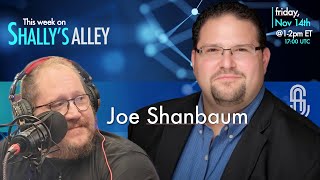
Joe Shanbaum, a recruiting veteran, explains why hiring requires serious skill and strategy. The conversation covers the shift from hiring for culture fit to culture add, the importance of strong recruiter-manager-candidate partnerships, and why simplicity and repeatable processes beat overcomplicated hiring systems.
Chapters
Hello everybody, how's it going? You are live on Shally's Alley. It is Friday, November 14th, here in Hotlanta. Not so hot anymore. And I am sporting my, my brand new Resist t-shirt. Man, you can't even really see that.
No, it's dark.
It's pretty dark. Yeah, it's, it's kind of a, you you know, um, grassroots— what do you call it— grassroots, um, protest, uh, you know, thing about, about, um, the taking back of national lands, you know. So it's kind of like protect national parks and—
nice—
uh, it's Smokey the Bear. So it's like all about like, you know, saving our, our natural resources for the future generation because they're apparently undoing some of that, like they're giving some lands back and stuff like that. So This whole like counter-revolution. So my entire political campaign is by buying a t-shirt.
You're contributing.
Yeah, which I wear live on television, right? As if. Well folks, welcome to Shelly's Alley. I don't even know what number episode this is, and lots of things are changing. I'm going to be doing some changes here on Shelly's Alley in the coming weeks. To, um, hopefully try to get, you know, a boost on some audience and maybe be able to spend a little bit of money because this is a completely free volunteer out-of-pocket for me. And it does cost a few, a few thousand dollars, which I don't mind doing it. I like it and it's, it's good, you know, it's good. But, uh, you know, time to start kind of ramping it up. So hopefully you'll stick around. In the meantime, we have special guest Joe Schambom. With us today. For those of you who don't know Joe, well, let's see, um, just recruiting leadership, Ford Motor Company, Visteon. Um, now he's working at, um, Talent Line Services. What, what is Talent Line?
We're a full-service staffing company now.
Okay, Talent Line is— okay, got it. But yeah, so lots of different roles in the industry, scaled and led recruiting functions. That have hired thousands of people a year and, uh, really focused on, on data, process, and people is kind of the story, if I'm, if I'm getting that right.
Absolutely.
You know, a lot of folks can relate with starting in the trenches as a tech recruiter, grinding it out in the agencies, climbing through corporate TA, um, and then, you know, leading a global team And then, you know, still kind of going into the fight. And then you have a, the Talent Revolution: Tales from the Trenches. It's a podcast.
Correct.
HR and TA pros. Tell me a little bit about that.
Yeah, so we started the podcast about 5 months ago. So my co-host, Jill Coniglio Kirk, is an HR executive. And I take the TA side. And it's really bridging the gap.
TA versus HR.
It shouldn't be, right? That's the whole point is to bring us together in harmony and share the perspectives and bring it together. And that's what we wanted to do is, you know, make people think a little bit more. Hopefully, TA gets involved more and HR understands what TA does a little bit and, you know, really bring that across a variety of different topics. So, sometimes it's just Jill and I chatting. Sometimes we bring on some guests, but it's been super fun launching that podcast and going forward.
Awesome. And, uh, how— what's it like?
I mean, I have no idea what it's like to run a podcast, so what it's like, it's, uh, it's been a lot of great learning, to be honest, right? So putting it together, creating the right brand, the messaging, the communication, um, you know, we do minor editing and, and great broad— you know, it's building it, right? It's, it's honestly, for anyone that wants to do it, just go do it. Right? We, we plan for several months and you got to jump over the edge.
You just have to do it. Yeah. You really could just sit there and plan forever and never, and never do it. You know what the weirdest thing is, is like getting, it's like camera, it's fear of the camera.
Yes.
Right. Is the weirdest thing. And then once you like, once you get over that and every time I start, you know, I'm always like, oh my God, I'm gonna be like, but you know what the, the reality is from, from the feedback that I get after 350 episodes. You know, people don't really— people who you want to care don't care about how you look or your background or whatever. They're there to, you know, spend some time with you, listen, learn, enjoy. You know, if it's a guest, for example, a lot of folks come because they like to see the dialogue, the banter. And I used to be all like, oh, I better put my suit on and, you know, whatever. But it just doesn't really, you know, just go for it. You jump in. It's real. I get a lot of feedback that they like the fact that it's raw and sort of just not processed, not canned, right?
Absolutely. We don't script anything. We put an outline, of course, so we have parameters, but, and we don't overly broadcast it, like, or edit it. So it's just raw. It's conversation.
Here's what happened.
Most people honestly probably listen so they don't know what we look like, you know, besides some producers.
You know what? Yeah, that's probably true. Yeah.
So, which is fine. And you know, you get better and you get more comfortable at it. I mean, this is my first live episode, everyone, and hey, pretty good.
So there you go. Yeah, I got pretty good at doing the live stuff after 300 episodes. You figure I can kind of see the bumps, right? But let's jump in. I did have a couple of questions for you.
Sure.
And you know, we'll see where it goes after that. You know, being in all the different sort of machines that you've been been built. Um, let's bust a myth, if you will. What's the biggest operational myth that you keep seeing leaders fall for over and over? And, um, not just the myth, but what's the truth that they don't want to hear?
Which leaders are you talking about? Hiring leaders, TA leaders, HR leaders, right?
Well, it would be in, in this case, I'm asking about the business leaders that are ultimately the customer of any recruiting. So whether you work agency, RPO, or in-house, at the end of the day, it's the, you know, the business leadership that is hiring and paying for your services. And a lot of times, in my opinion— and I'll start if you want— I think the biggest myth operationally with about hiring is that it's easy and anyone can do it.
I was just going to say, they think it's all easy, right, and simple. And every hiring manager, oh, I can go on to LinkedIn and find somebody and recruit them myself. And they don't understand the experience you have to provide, the communication, the back and forth, the scheduling, the qualifying. And it honestly, it takes tenacity, it takes experience and a lot of knowledge because you have to have all these parameters because you never know where candidates are going to ask you questions. So, you know, there's a lot of preparation going into, you know, just even email communication, right? Back and forth. What are they asking? To get them on the phone and really drive through. So, it's not easy. It takes time. It takes practice. You know, people can learn it. I mean, and I've taught many different folks, but it's a skill.
But what is it that they don't want to hear though? Because they probably don't mind hearing that it's a skill. What is the bad news that leadership doesn't want to hear about recruiting when you deliver the bad news? When you know it's going to be tough. It's good. Yeah, right. Okay, good.
Yeah. The location, the skills they're looking for, they're looking for the purple squirrels or the unicorns, right? Because they're trying to combine 2 or 3 jobs into one and you're trying to break that down explaining to them, listen, that you're asking for people to do 2 different jobs. So your talent pool shrinks and they don't want to hear that what they're asking for isn't available or how long it's going to take. Because you're peeling back those layers of onions and there's only 1 or 2 of those folks, or there's 1 at each company, and here's the map of what they look like. So it's— but that's part of where you have to be transparent. You have to have the right relationship and you drive that partnership of here's the process and here's what we're doing and here's how we're going to solve the problem.
All right. Good answer. I can live with that. I can live with that. A little corporate friendly, but I can live with it.
Sorry. I mean, but it's on the agency side as well, right? I mean, that's part of the—
Yeah, it doesn't matter where you sit. We have the same goal, you know?
Absolutely.
And, you know, our business model may be different, but ultimately leadership is who hires us. Either they hire an in-house staff or they hire an RPO or they hire an external firm that, you know, they have to partner with. But still, the fallacies are the same. It's easy. Anybody can do it. You know, it's, you just push a button and the next candidate pops out of the vending machine.
Hire me. You know, the next one up on the list. And it's not that.
Yeah. And then the other thing that I've, I don't know if this is something that you run into a lot, but I see, I seem to be running into a lot of folks that are, they think that it's a young person's game. So they'll hire like a, you know, 25-year-old. Right out of cosmetology school, um, male, female, I don't care. That's not the point. The point is it's like, oh, it's like an entry-level job. You know what? It's really not.
No, especially you can't—
you can do this entry-level, but it's not— you're not going to be a professional recruiter. And, and, but I, I— have you seen people that have like been in the business for a year and they're a senior already? I'm sorry, it takes 5 years to be a senior in any field.
I've seen that too. Absolutely. And the one of the other myths was, you know, I learned it early in my career, we were hiring sourcers and they're like, oh, you can go hire some kids outta school. No, no, no, no. These are experienced individuals that know how to find folks and probably more experienced than myself. And I've done that as well 'cause it's not entry level.
This is funny. Often my director's trying to get one person to fill two roles. Yeah, that is spot on. They want one candidate to do the two jobs. Somebody quits and that person used to do two jobs because they got one job and they learned the other one because somebody quit. So now you want to hire someone that's going to come into this to learn how to do jobs. Before you know it, they'll be doing 3 jobs. Yeah, that, that is true.
All the time. That's the purple squirrel unicorns. And I'm like, guys, that's what happens here. That's not what's happening in the real world, right?
You know that person that left? They left because they were overworked because they were doing 3 jobs.
Let's look internally. What do we really want to do? Let's break down that job a little bit more. So, and that's the consulting, right? And you're a consultant if you're internal or you're external, right? Sharing those perspectives, giving that value.
That's value add. That's partnership.
That's right. How do we add value? And that's what they're also looking for. So, you know, it's not a myth, but it's the value that you're providing in recruitment or TA, however you want to call it.
Yeah, yeah. And it's not always— it's something I like to say is not about the hire. It's about the outcome. The outcome is not— a hire is an activity. You hired someone. Great. You did your job, right? Don't expect the CEO and the CFO to pat you on the back for having done your job. That's what you got hired, you know, so yeah, I mean, okay, sure. Maybe if you're in the agency side, you just made a little bit of money, you know, because you got paid. But that's how you're motivated. That's how you get paid. But again, you're still doing your job. So don't expect a pat on the back for that. It's when the outcome is meant that you get your pat on the back because we've achieved our goal, which isn't just a hire. A hire can be done a lot of different ways. It can be done well, it can be done poorly. So you could have made a hire and it was a bad hire. I'm just saying, I'm not, you know, I'm not saying that it's about it, but it could be, right?
So, well, it's great you fill a box, but it's— is the box value-added? The box the right person that's going to drive the business forward, solve the current project. So exactly, it's not about how you're filling the box.
Exactly. And you could have done a great job doing that, or you could have just rubber stamped it, right? You could have dialed it in or whatever they call that. So you having another question I wanted to ask you is having sat in the, in the trenches and agency, in corporate, and now moving into— I'm sorry, I don't mean to be offensive, but it's sales. I mean, business development.
You're still doing full desk, right?
So sales and partnership and stuff like that. Okay, got it. Got it. Okay. But what, so having kind of been on all, you know, recruiter, corporate recruiter, agency recruiter, and now sales, what do you see across all three worlds that's consistent?
I mean, honestly, it's relationships, right? Okay. It's the relationship with the hiring leaders internally and externally, HR, candidates. And the other thing that's consistent is the experience, right? You're providing an experience. So as a salesperson, you know, the experience you're providing to the hiring leader, filling the HR role, to the candidate, and then internally the same way. So, you know, it's really relationships and experience that you're providing that cuts across everything in corporate and in third party.
Hmm. Okay. If you were to like spot, I know this is kind of tricky, but maybe, you know, if we can't answer, we can't help. Yeah, right. You never know, right? If you were to spot like, what does a grown-up recruiting function actually look like? Having, you know, having now sat on the side where you have to sell the service and the client has to be happy, where you have to do the recruiting and the candidate has to be happy, and where you have to do the recruiting and the hiring manager has to be happy. And, you know, so there's like a, it's a, is this, it's an awful thing. As I, as I'm saying this, I'm thinking about this. I'm like, you know, there's not a lot of industries or jobs in the world where, where it's, where like your product is a three-sided love triangle. I mean, you know, it's usually like buyer seller, you know, asker doer. I mean, but so we have like, you know, this.
You're trying to make everybody happy and it's really, really hard.
And then, and then there's you. So there's really four, right? You got you, you got your client. Which could be the hiring manager or literally a client as an agency. Then you got your candidate. So the candidate could decide to arrive at their destination and, you know, start on their first day of work and go, oh, hell no, I'm not doing it. And then like back out. So like your product can actually leave. When do you sell a refrigerator and the refrigerator gets into the house and goes, oh, that's it, I'm leaving, I'm out of here, waddles out, you know. So what would a grown-up function look like if like all three of those are aligned? I know, just kind of—
I mean, talking through that, I mean, I don't, it's, I mean, about the person, it's a really well-organized, communicated person that's, you know, really, you've, you're learning a lot about every little person and what makes everybody tick and move. And so the grown-up function is somebody that's very astute, that's very detailed, that's very organized, that's able to multitask like all recruiters do, that's able to play off of different personalities and know when to push and pull, know when to hold them and fold them, but also—
It's starting to sound like a country song already.
Well, analogies are part of Joe's life and people laugh when they say that. Or hear it, but it's honestly, it's going through a lot of experiences. I mean, the grown-up function is having some of those tools in the toolbox and no cliché, but really it is on where to pull those levers and where to move things to make everybody happy. And your own copy of, did I fill that role right and appropriately and find them the right talent and vice versa across? So, it's unfortunately just, It's experience, it's time, it's relationships, and it's, you know, having a little bit of luck, of course, and being a little savvy, right, in that maneuvering through it all.
You really think luck has a lot to do with it? At times, yeah. I've often wondered about that. I mean, organized, yes. And I think some people like myself perhaps live in a state of organized chaos. Right? I have my way of being organized, which is very OCD ADHD, which means I am continuously obsessed about being hyper-focused. But, um, you know, my office may not be neat. I don't have a tidy office. It's clean, but there are items strewn about. However, I know where every item is exactly, and if you move that Post-it note, damn it, Um, yeah, right. But my, my computer is very organized. I've got folders and I've got, you know, everything is sectioned off. So because that's where I think, so my thinking space is very organized. So I get organization, I get communication, and, um, and I've learned over time that it is important to over-communicate until somebody tells you that you're over-communicating. In other words, I guess I should repeat that a different way. You're not over-communicating until they are telling you that you're over-communicating.
Which I haven't had happen yet.
But right, exactly. But it happens. And until then, you're under-communicating, right? I think so. Communication, organization, and, um, and knowing a little bit about everything. It's almost like a master of none type of jack of all trades. Those are true. I find that in recruiting, we have— as a recruiter, we have access to more of the world of business than any other profession. Right? I mean, even in HR, they don't see some of the, some of the grinding and ongoings of different parts of business. They only see a component of that. But in recruiting, we got to get in there in the trenches in a lot of different ways. So, we get almost like a PhD in business. Forget MBA, you know. But you're saying luck. So, tell me a little bit more about that. And the reason I'm asking is because I've wondered Sometimes I've wondered if my trajectory has been lucky. I've planned it. Don't get me wrong. I've planned it, but I failed too. Tell me about the luck.
So luck comes into play of, did you get ahold of the person, right? Were you lucky to— and did you get ahold of them? Were they at the active right spot in their part of career or thought process to take that phone call? And are they going to show up? So if you take the candidate side, are they— did you get luck to be able to move through those things? Now, because it's not skill to call them, it's luck to get them on the phone, right? Or they're willing to take that conversation. It's a little bit of luck. And then it's, you know, it's not all— there's that subjectivity of luck that comes into play, right? Did you get— not every hire is lucky, but it's—
I see what you're saying. It's the occurrence, serendipity, the timing, or whatever you want to call it. Okay, right. I like that. Yeah.
What's the— where's that in their personal life? I mean, I'm talking a lot more on the candidate side because the business side isn't really luck, right? I mean, the manager has an opening, we got to go fill it.
You've got a process. You've got— yeah, yeah.
But on the other side, it's, it's— I call it the candidate luck, right? Are you— are they happy with it? Are they— it's a little piece of it, right? Because you can hit all the right buttons of does it meet their career aspirations, is the location and the money and the blah, blah, blah. But there's still that piece of, are they going to accept and show up and stay? Um, because literally, when you mentioned that person show up and leave, I literally had that a couple months ago. They signed the offer, they go in, they start the first day, second day they say goodbye, and it's like, whoa. And on the third-party side, guess what? You lost all that money. But, uh, so it does happen, and that's where I would say I didn't have luck, because someone else got lucky to call them back to the place that they were— they worked at.
Got it. Yeah, right, right.
Now I want to go back to one thing if I, if I can, and I'll just call it out just to be able to make friends with my HR people.
Yep.
Um, or comment on it. But I agree with you on TA and recruiters, no more the business side.
But just because we get involved in the trenches, really, like, and that's where I think you're breaking down a job with a hiring manager. You like, you got to understand, what does this person do for a living? What's their day-to-day? You know, so you— and every time you do that, you're learning you're not necessarily becoming an expert at doing that job, but you're learning what the job is every time.
Absolutely. And that's where I think HR is coming along and that whole business partner and the deeper pieces of it. But TA, that's where— and I may be plugging kind of the whole point of the podcast a little bit— but is bringing that perspective and showcasing that you've got to bring in TA to be able to help understand that because we know more of the business and more of the things to help them along. But then they can help us bring along on these other aspects.
So partnership and strategy and Yeah, exactly. Yeah, yeah, a good TA— I agree with you. A good TA and HR partnership is one where HR helps with, you know, the planning and the people, like how many headcounts do we need, the compensation, the timing. You know what, we should hold off and not hire for this person yet, or we need to start hiring now because we know this person is going to be moving in 6 months. Um, and, you know, and the strategy around it. And then TA is good at What's the market like? What's the talent market like? What, you know, so you put those two together and they're complementary. It shouldn't be an us versus— it should never be an us versus them because ultimately, all the parties, whether it's agency or corporate and hiring manager, the TA person, the HR person, they all have the same goal, which is to make the best possible hire. And HR can assist with a lot of that in preparation to and even during, right? Like in some organizations, I think it's sometimes a good idea to have HR sit in on interviews, especially with younger— and I don't mean youth in age. I mean, less experienced hiring managers that maybe haven't done a lot of interviewing. You know, it's good to have that coach in there. And also, with the debriefing meetings and the scorecarding and stuff like that. So, 100%.
Yeah, it's a total partnership, and that's what I'm trying to say is, and, and that value. But I would say HR's coming along in a lot of organizations that are getting— because they're being pushed into those, because the HR— and I know we're not talking HR all the time, but that operational thing is getting outsourced or moved into a call, you know, a center side of it. So the business partners are really driving through that, have to deepen that relationship. But the TA comes from another world of it that really understands it in a different spectrum that can help complement those things. So I'm with you on it. And I just, I guess I'm trying to, you know, keep my HR friends.
So, no, I think you're right. Absolutely. Let's, let's, let's actually put another, I don't know, feather in the hat or bee in the bonnet, depending on how you look at it, into the HR/DA relationship. You say that culture fit is outdated. And you have your reasons and I agree. But let's put together some kind of a framework that leaders can steal. What is the modern replacement for culture fit?
Well, it's really culture add, right? Can you add value to the organization and the cultures that—
So how do we build that? What's the— You know what I'm saying? Like, We're telling them replace culture fit with culture add. What are the— I don't know the pieces of that.
Yeah, it's what you're building it off. It depends on the role in the job, I would say, right? Because you're going to build that into, you know, the perspectives that you want to grow that team with, right? Because there's an overall company culture, but then there's a team culture, right?
That's actually a pretty big distinction. Yeah.
Absolutely. And the other part is getting the culture into the interview process, the job descriptions, and then into that whole perspective. So therefore, there's not bias on, you know, what is that manager thinking? It's, are you evaluating them on what do they bring to the table and what are those, you know, perspective, the new candidate perspectives that increases those core values? Does that all make sense?
It does.
So that's what you're trying to do.
And, you know, so the framework would be like, okay, let's not try to find a square peg for a square hole. Let's instead look at it as we're putting together a puzzle and what shape is missing. Right?
Absolutely. Because the, the team is different from what it was before. So the whole— that you—
we don't need just a bunch of squares or a bunch of triangles or a bunch of hexagons. We need a bunch of different shapes to make the bigger. Yes, got it. Okay, so that's sort of the framework is how do we— first of all, what's missing? Let's identify that, and then let's figure out how to hire for what's missing and look at culture as a way that we can maybe use hire to grow, enhance, evolve the culture. Is that—
yes, that's what I'm saying. And, and it's— it takes some extra work ahead of time, right? That planning and that partnership with HR. Again, not to— again, keep plugging that, but It's that, you know, because whether you're third party or internally, you've got to then go, what are you really missing? And what do you really need? Again, it goes back to understanding and qualifying the requisition and the perspective of who you're trying to hire and put those things in there. So it's not just go find me somebody with these keywords. It's give me somebody that's going to add value, add insights, add— they all can do the job, right, if they have the right you know, prior piece, but are they going to fit in and add culture to add to the organization? So it's the, the preparation, it's the interview plan, it's the targeted messaging behind it. It's all of those aspects together. So I don't know if I've given people a framework for it, but I think some of those other things we already have.
So you're putting it together, but there's something that you touched on Man, I wanted to jump on that. It was the, at the beginning of the beginning stage, um, when you're, you're taking, you know, the requisition. Run that by me again.
Which part? The, the perspective, the people, the—
at the beginning part when you start talking about the requisition with the hiring manager, there's something that you said that I want to— I don't want to put words in your mouth, but it's around validating or like, you know, confirming, verifying the, the rec. What was that called? What was that called?
I call it a strategy session. But you're in.
Yeah, yeah. Tell me more about that. So, that's something that I always have a problem with. A lot of organizations either skip it, they don't do it, or they think they do it and they think they have a standard. And they think the recruiters are doing it in a consistent way. But very frequently, they're not doing it at all or they're doing it inconsistently. It's highly unusual to see an organization actually take seriously that strategy call, kickoff call, whatever you want to do that actually, in my opinion, validates the rec. And that's what I wanted to jump on is We tend to sometimes, especially in agency, make the mistake of taking an invalid wreck, right? Tell me about that.
Well, you— so I, I've tried to push it into a strategy session because you understand if you can, you have to dive into what do they need, what do they want, what are they looking for, what's missing. So if you don't set out that, it's like a foundation of house, right? If you don't get that foundation to understand what you're looking for you're gonna fail. And I can give you a prime example. And I was meeting with somebody yesterday, literally, where the requisition said a title, which is totally misperception in the engineering world. And the manager really wanted something else. But it's the way the, you know, so if you just took a carte blanche, you're— and the manager was getting the wrong people.
You're just starting off in the ramp, right? Yeah.
You're— so it's that foundation where you have to set the strategy and the strategy of Is this the, the right companies you're targeting? The, the experience? The— then it gets into the personality and what's that void? How are they going to add value? What are those?
And the culture fit, the new culture fit mechanism of like, what are you missing? Do you have, you know, if you have a team of, um, uh, you know, this kind of culture and you need, you need a little bit more— let's, let's look for that. Let's hire for somebody that's going to balance us out, you know.
Bounce it or even shift it into another direction, right? You know, so that's where it's not because, oh, I hired for this 50 times. Well, that was then. What is now, right?
It's like, what have you done for me lately?
Always.
But you know, it's what do you need in the future, right?
I mean, you know, but the times, the tools, the technology changes. So what's the new evolution? That's why I mean, you have to start with a strategy session, or here's a list of questions that I need answered. Because this is going to then ensure that I'm getting you the right person for the role. And that would fit, right? So, right.
And it has to be done consistently, I think. Absolutely. I mean, that, you know, often skipped.
Absolutely. I mean, and, you know, now I know, especially internally, there's systems where you can then put it all in place and move it through, right? And You gotta have the documentation, but it shouldn't just be a check-the-box exercise.
But that's the problem is it either is or it's not documented or it's, you know, it's skipped over.
Right. And yeah, but so, and that's, I want to say a little bit of CYA for the TA person is if you've documented it, it's like, no, no, this is what you started with.
Yeah, exactly.
Right. And whether you're internal or external, it's I got you what you wanted. This is what you asked for. So if you can document it and move it forward, and, you know, it's, it's the key foundation for us, in my opinion. Yeah.
Yep. Yep. Folks, if you want to connect with Joe, there you go.
Yeah.
I wanted to turn into something a little bit different. More, more kind of like a business perspective, right? You know, you and I have both lived through some booms and some busts and some hiring freezes and some restarts and some, yeah, you know, that 3 months you spent on this project. Well, we're definitely going to close this rec out. Now we got this other rec that we should have hired for 3 months ago. And, you know, it's like we need it yesterday. When the business slows down, which it does, there's ebbs and flows and there's lulls. When things are slowing down, which could be seasonal in your business or it could be economic, whatever, what should TA leaders actually be doing in those quieter months to avoid literally getting crushed later?
Right. Yeah, no, there's, I've lived through it, like you said, a couple times. Even this year has been a tough year, right, in the third-party side. So, you know, there's, I would say, break it into three elements of things. So where you're at, your processes and your system, right? So can you clean up those? Can you make it more efficient? Can you make it more effective? You know, can you take out some steps, you know, from where it is? So there's a little bit of that process cleanup of, you know, let's, let's, let's clean the house again, right? Let's do some spring cleaning on that side of it. Then is your technology all set up right? Are we using the ATS and the, and the system appropriately? Can we, you know, make sure that, you know, the, the— can we automate anything? Especially now with AI and automation, is there a way to be more effective and efficient to drive the process smoother and simpler. But then also the talent work, especially the talent work. This is a time to build talent pools, right? How many times in recruiting have you been wanting to, hey, if I wanted to get ahead of the game, build a talent pool, right? Well, this is the time to do it. And then you have to nurture that. So if you have a CRM or different capabilities to be able to build that plan, but build the talent pools. And that's what we've done here on the third-party side of, We've got specific clients that, that you know are going to be recurring needs, or these are the typical roles that we fill. So let's build those talent pools. Drive your employer branding. I mean, marketing and branding is huge. So are we set up and are we systematically ready for all that branding and marketing? Engage in Silver Medalists, for example, right? So it's that connection. And then ultimately, take the time to build it with the business. Right? You have extra time. Sit with them, talk to them, learn, be that true deepen partner so you understand what's going on and what potentially is coming so you're better prepared.
Okay. Wow. I'm so glad I'm transcribing this. I think I captured all that in the recording. It was a lot for me to take notes on. But I think that's a very concise answer. It's just very detailed. So thank you for that. Yeah. Um, what would you say if you're the recruiting general, right? As in, I'm interested for that.
I might have to play with some AI now.
So yeah, there you go. Uh, so as you know, the battlefield commander, the recruiting general, what's, what's your battlefield doctrine? Um, what are the non-negotiables that make or break, uh, scaling recruiting in universally, just in any capacity.
Yeah, yeah. The scale recruiting, obviously, is to scale it.
Yeah. What are the non-negotiables to scale recruiting?
Well, so an easy process and repeatable, right?
So, okay, yeah, right.
Yeah, you know, let's, let's make it easy, simple, repeatable, consistent to go through it. So you have to have that to scale and be ready to go. Um, I mean, if you're wherever you're at, I mean, if you have a workforce plan, which would be great, which usually doesn't happen, but You know, exactly.
Again, yeah, but that makes sense out. Yeah, yeah.
I mean, therefore we can put the right marketing, branding, talent pools together, right, to be able to build that plan. Uh, we talked about so the, the process, but also the interview process too, right? So let's define that when you're scaling, so therefore we can move efficiently and effective down the path. And then, um, it's the partnership. I mean, I go back to that relationship thing that we started at the, at the start, right? So do you have the right relationship with the hiring leaders and executives that are going to truly set time away and aside to do the interviews, to do the feedback and build that plan together. And I've had to do that a few times and it's like, timeout guys, we need to— there was one where we had to hire 50 software engineers as fast as possible. So let's redefine the process. Let's get the system together. We'll keep the funnel moving and get the scheduled interviews and let's move it forward. You have to sit down and have that relationship. And but then provide the data, tell them what's happening, and really move through, move through those situations. So it's, it's partnership, it's relationships, scale processes, you know, really kind of simplicity.
I think, I think I like that. Yeah, we get— I like to overcomplicate things.
We all do because it sounds and it looks pretty, right? I mean, yeah, I do a lot of work in the automotive world and it's like, let's design this, but it's got to be designed to manufacture it too, right? It can be nice and pretty, but if you can't make it, it's useless, right?
Yeah. So let's take that simplicity and break it down into what are the— what are the simp— what is the simplest form that recruiting can take? So you've got, you know, you've got a requisition where you don't even really need a requisition. You have a position that's open.
Okay.
And you know what you want to hire for based on the skills and based on what's missing in the culture. So now we've got the, you know, we have our intake or strategy. We have our intake or strategy, right? Then we have maybe some advertising. Then we have maybe some sourcing. And you determine whether or not you need that based on whether in the past you've already had to advertise for this job a lot and didn't get good results, then, you know, you probably just need to go straight to sourcing, or you, uh, in the past have had great success with advertising, so you don't need to do that, right? Then you have screening and selection, and then you have interviewing, which is part, I guess, of selection, and then you have the offer.
Yes.
Is that kind of the basic— those are the basic steps if you can stay within there? Okay, go ahead.
Yeah. I was gonna say offer also into onboarding. So you gotta be careful because you don't want to lose them after you made the offer, right?
So, right, they start and now what? Okay, right.
So, uh, and then, you know, you got that assimilation or onboarding part. So it depends on the organization how involved you are, but kind of those are the big gates or stages.
The gates, right? Okay, so now we have where do, where do the, where do the mistakes get made? In overcomplication, right? So, I'll start with at the intake, the mistake is not overcomplicated. It's the opposite. It's assuming that it's easy. And the mistake that is made at the beginning is skipping or doing the check-the-box type of kickoff or intake and not understanding what the hiring manager wants. I think that's the biggest, most critical mistake in the entire process. And it's the hardest one to rewind. It's literally at the— it's the found— I mean, you said it, it's the concrete and steel foundation for whatever you're going to build, right? If you make that, you know, out of the wrong material or too small, then the whole— right. So I don't know about overcomplicating there, but now the next one would be— so you've got the sourcing slash advertising. I think we overcomplicate it, and, and I'm gonna probably make a lot of enemies with this, but I think we overcomplicate advertising. We tend to in our industry, and I don't know if this just comes from a reaction to a time when talent was scarce, but we tend to like blast the world with these ads or we advertise in a way that produces a high amount of traffic and then we reward ourselves for having a lot of applicants. But what happens is we advertise too much to the wrong audience and the wrong candidates apply and we create a lot of problems. For ourselves. But it doesn't just stop there. I can tell you that even if we didn't advertise that much and we have programmatic and targeted advertising where we're only spending where it results, where the results are trackable, we still do this other thing which I think is horrible. We just have so much policy around applicants that it makes it really difficult to remain nimble. And I think that's the— right there is the, is the point at which the whole process gets overcomplicated and blown out of proportion. You know, everything from, God forbid, if you still have to do this manually, applicant flow logs, to justification, to policies around having to get back to every candidate within a specific time, to policies of not getting back to candidates. All of these, these mandated policies just make what should normally be a regular you know, response to advertising process blown up into this, this, this tragic comedy. I think that it gets blown out of proportion there. And then you have sourcing, which also tends to get blown out of proportion. They treat sourcing as a— once again, let's boil the ocean, let's put our hands out and grab every candidate we can possibly grab and put them into our little pipeline and just grab, it's like a greedy, you know, one of those boxes with money where they're like grabbing the dollars, like, let's grab all the candidates we can get and we put them in here and now they're in our CRM and you've just now created another problem. So those two just create all this bloat, right? Yes.
Well, yeah, then you're forced to sift through thousands of candidates where your time could have been spent on, you know, if like you said, if you shorten up some of those and make it concise, then you're going to get a strong talent pool. And then if you have to go back to the well, if those candidates don't fit, then fine. But you're probably going to have enough there. And then it's, it's overcomplicated. Let's say overcomplicated. It's just like you said, bloated into that part of it, right?
And if you want to have all the policy and politics and laws and regulations and it just, you know, and it makes things just so much more difficult than it really needs to be. And it adds up a lot of time. And I see recruiters wasting 30, 40, 50% of their day in basically process. Right.
And that shouldn't be— it should be automated if you have the right systems and can do that. But when you talk about overcomplicating, I think the biggest overcomplication is the interview process, right? They want to do all of these stages and you got to do the phone screen and then we're going to do this and then we're going to do this one and then this person has to talk to them and then we want to do a test. And then we want to do a personality thing. So like, you've got to shorten it down for a good candidate experience, but enough evaluation. Can they, can they do the job? And do they fit the, the culture that we're trying to add to the organization? And it's got to be concise. And I think a lot of, you know, gets over-engineered in the interview process.
So that's another— yeah. So after the sourcing and the advertising, then we move into the selection piece where you know, too many interviews, too many steps, multiple lines of questioning in the application process, right? You got to go through the online survey, then you got to do the personality test, and then you got to do the skills assessment, and then they send you the take-home work. And, you know, I said, don't forget, we want to get the NPS score.
So can you take a survey multiple times through the process, right, to get the experience? So you just gotta— it's It's, it's, they're all nice to haves, but what's important to you?
And then boil it down.
Yeah, I mean, and just like, you know, and if we talk about or not talk about data, but it's like, what's the right data points that we need to have that are going to actually make an impact?
Yeah, talk about that, because there is such thing as too much data.
There is. I mean, but it's actionable data, right?
It's, it's right.
Yeah, if you provide data, I mean, and there was a leader that kept doing this to me, and it was and I understand it, is I showed them something and they're like, so what? It's like, well, you know, they're right. So, so you showed me this, great, but what does that mean? What are you going to do about it? Or what can we do about it? What is it? How does it help us, right? So you have to have the right data to, you know, just showing the data flow of how many applicants we have and move through, does that change anything? But you go back to the point, like I saw a data point which actually makes sense to me, especially on high volume. Your average, you know, the people, the candidates that apply to the candidates actually go through the process. What does that conversion look like? Does that mean do we have the right targeted audience? Do we write the job description the right way? Are we getting the right candidates in the process? That actually makes sense to me, right, for high volume.
Yeah.
So it's actionable data that actually makes sense, and you're available to provide some insights and they're actionable insights to be able to move forward and give a perspective.
In your opinion, where does that data come from? What's the best source of that actionable data?
Well, it's a combination. I mean, you're going to get— so the data comes typically from your applicant tracking system and your flow of moving through the process. But the insights come from a recruiter that's understanding what's happening from the, the macro side of the, the candidate process and the hiring leaders to the outside market, right? That gives you the insights to be able to— how do we want to do this and what makes sense?
So do you manually gather that?
You— so manually— so the ATS should hopefully be automated if you're in a good—
yeah, but a lot of times it just is, like I said, it captures too much information and it just you know, so many things just get dropped, or it's like the, the, the tip of the, I don't know, tip top, whatever, opening of the funnel, like people land on the page and then disappear and you don't know where they went. You don't know where they came from. It's like, it's like a guessing game.
Right. But so that's, so you get the data from those things. And then the other part is the insights, right? So if it's, you have a whole bunch of candidates that are landing on your landing page and not not clicking apply. Well, what are you going to do about that, right? So we have to then— there's no data set.
I don't know why are they not clicking apply. That's right, that's my question.
That's what we have to go figure out.
We don't know.
There is no— that's the insights that you have to then go provide and figure out, you know, who are those people. If you get some demographics behind them, if your, your systems do that, to then, you know, what turned them off to do that. Is it the— is it the lengthy application, or is it the, the job, the location, the different things. You have to then dive into those to get the insights, right? The insights aren't really— it's the percept— it's the perception or the perspective of the persons that, and the, the collective team to analyze that.
Okay, okay. Yeah, you know, I've always— I don't know if you have any recommendations, but I've always been looking for a tool that helps visualize that kind of data because I've tried Tableau and Power BI and you have to massage it so many different ways. It's like not an easy way to like, I wish there was an AI that interpreted data and knew how to get rid of all the dead end stuff that doesn't tell you anything.
I think it'll eventually evolve, but I don't think there's one out there yet. Right. I mean, all these tools and everything in AI world is just, you know, I've looked at two of them already this week and just demos of it. And it's like, wow, it's where is it going? And. I think you're still a while down the road to having all of that to where you want a good full-fledged data tool that's going to give you all that stuff to flush it out like you're saying.
Right. Yeah. I mean, we, you know, this whole thing started with like big data and that's, that was the beginning of it. And so big data is what led to like large language models and everything. So you'd think this technology is really good at that. But anyways, anybody out there, if you know of anything, let me know. I'm looking for something that helps be And I don't mean like something that I can design. I've already done that many times. It's something where I can drop my data from, you know, the ATS, like here's all the ATS data, and then it'll actually visualize it in a way that makes sense to leadership. It knows what to leave out and what to, you know, there's so much to it. Like there's duplicate applications, there's, you know, so much data that's just in, it creates a lot of data. It's not not any, any good. Anyway, brief commercial advertising. I wrote a white paper about AI browsers. It's very, very, very important that you read it because there are some huge critical gaps in AI browsers that cause some security risks. This is completely free. It is a way to get people to sign up to my newsletter, but it is free. And you'll learn how to properly apply AI browsers. I'm not talking about AI sourcing tools. I'm talking about just literally an AI browser. Browser. So grab yourself a copy of that. I gotta at least advertise for myself once, right?
Absolutely.
Joe, it's been, it's been an absolute pleasure having you on here. I, I'm going to have a long discussion with my transcription service about getting an outline for this. Um, but in closing, I, I wanted to ask you one last question, and then I have my, my closing questions that I usually ask. The last question is And like, literally just unfiltered here, what is a strong opinion that you have about recruiting that lots of people would just argue with you about?
My strong opinion is being technical, right? And really diving in. I mean, good strong recruiters have a good technical grasp of their craft, right? And You know, I, that's where I value that. They really understand it. They really know it. And that's why I said really partnering with the business to dive into those, you know, and I say that because I can, you know, I have examples of where engineers asked me where I've gotten my engineering degree and I only play an engineer on TV. So I don't have one, but it's that level of it, right? And that builds respect and it builds credibility. And so my, some people are like, oh, any recruiter can do anything. And you can, but really having that technical depth in your craft is, is, uh, is something I would say.
Okay. I don't know if anybody would argue with that, but you know what, there probably are people who would.
There's probably, there's some generalists that probably would, but you know, that's the first thing that came to my mind.
No, that's, hey, that's what I asked for. Um, all right. Wrapping it up. First wrap-up question is, who should be our next guest?
Oh boy. Um, I'd have to— I don't know.
Doesn't mean they're gonna accept, but you know, who's right?
Um, I don't know. I'm sorry, I don't have that one on top tip of my head.
Who would you want to see on here? Like, you know, someone, someone you, you wish you could get on the show. Doesn't have to be someone you know, right?
Um, oh boy, that's a tough one. Sorry. Um, all right, it's all right. Let me come back to that maybe.
Okay. All right. Yeah. I mean, have you had any guests on your show that you'd want to invite or, um, someone you saw on, you know, another podcast or something like that that you'd want to invite? Um, anyway, uh, just think about it. Yeah.
Cool.
All right. And then my last question is, as you mentioned earlier, before we launched, a lot of folks actually, actually it might've been live. A lot of folks listen instead of necessarily watch, especially, you know, over the weekend and they're in their earbuds and stuff. So, I want to give them something to wrap up that's a good thought provoker. So, give us a question that we can ask ourselves, not an answer, but something that we can ask ourselves as we ruminate and think about. It could even be about the show or something completely different.
Different?
A thought provoker.
A thought provoker. I mean, you got some tough ones at the end here, Shelly. Geez. This is why it's tough on live. But so, you know, I think Man, you got me. You're stumping me on this one, Shelly.
Just, you know, think folks, you're gonna have— you're gonna listen to this, they're gonna hang up or close their app or whatever, and you want them to process this idea for themselves to come to some sort of conclusion on their own.
You know, I guess maybe just going to the mantra of it's customer service and are you providing the right level of customer service to our four-legged piece, right? Ourselves, the hiring leaders, the candidates, the HR. And, you know, are you doing it? Are you overcommunicating? Are you, you know, providing just a service and filling a role, or are you actually providing and adding value to the process, to the company, and to the organization? So I guess I would ask everyone to be asking that, and it's maybe a softball piece, but—
No, I don't think so, because I think what you would just covered there is for folks to really introspectively look at the 4-legged stool and realize that we're in the middle of that. And are we being the best team player in that setting? Because it's not just about the candidate. It's not just about the hiring manager. It's not just about the organization. It's also about us and the candidate and the hiring manager and the organization. And that's complicated. So are you being the best team player? And if not, how can you improve that relationship of very distinct, you know, parts? And I think it helps wake people up to the fact that we don't just sit in a rec filling machine.
You know, one thing that I've learned over my career, and an old leader told me this, is every so often, Joe, stand above the forest and look around. What are you doing? What's happening? You know, Could you do anything better? Could you, could you, do you need to change anything? And sometimes you do and sometimes you don't. And then you get back down into the weeds. And we all have to look at that and do it at different times. And maybe that's what people can do while they're listening or cutting their grass or raking their leaves or whatever they're planning to do when they listen to this. But absolutely, I love it.
Awesome. Well, thanks a lot for being on the show, and I hope you enjoyed it, and I hope you consider coming back. I love it.
And I, you know, I've been a longtime follower, Shelly, back to the Job Machine of the codes and your books and everything else.
So thanks.
I really appreciate it for having me on. And absolutely, I'd love to come back.
It was awesome. It was good to have you, folks. If you are so inclined to tune in next week, we have David Noe, N-O-E, not N-O or K-N-O. David Noe is a famous host of Speakeasy HR and kind of a podcaster unto himself, right? So we got podcaster month coming on. And then after that, it's Black Friday. I am not going to do anything on Black Friday. So we're just gonna skip. But hopefully, we'll see you back here. Until then, please be kind to yourselves. Take care, everybody. Bye-bye. Bye.
More from Shally



Scaling Talent at Hypergrowth: Leadership, AI, and Hiring Excellence with Cindy Nicola







