Gwen Silverstein Live on Shally's Alley
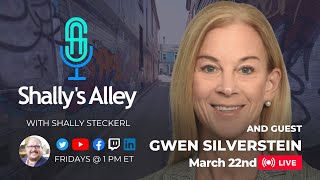
In this live interview, Shally Steckerl welcomes career coach and former HR/TA executive Gwen Silverstein. They discuss the creation of a concise, one‑page professional profile that distills a person’s "why," identity, and value proposition, and why many struggle to articulate it. The conversation shifts to the impact of AI on resumes and LinkedIn bios, emphasizing the need for authentic language. They explore psychological safety in interview settings, practical questions to assess team culture, and the importance of vulnerability when job‑searching. Gwen shares how she reframed the grief of a layoff, the common tendency to self‑blame, and the value of proactive networking—even in unexpected places like a child’s karate class. They address ageism and over‑qualification concerns, suggesting that candidates seek organizations that value experience. Throughout, they highlight the role of career coaching in clarifying goals, overcoming fear of change, and building confidence. The episode ends with a reflective prompt for listeners to consider what they are curious about and learning.
Chapters
Hey everybody, how's it going? Welcome to Shally's Alley. We are live once again. It is Friday, March 22nd. It's a beautiful day out and the sun is shining, the birds are chirping, tweet tweet. Thanks for joining us today. I have a special guest that is a dear friend and someone who's actually helped me out in a time of need and didn't ask anything in return. Very generous person, my friend Gwen Silverstein. Gwen, welcome to Shally's Alley. How does it feel to be in the alley with Shally?
It feels awesome. Thank you. Such an honor to be with you.
Oh, come on, quit it. The honor is all mine. Thank you so much for helping me out. For those of you that don't know Gwen, I'm sure many of you already do from her posts on LinkedIn. Gwen is an HR TA executive that also does career coaching as a, as a business practice. I'll put a link up to her page here. And Gwen was recently laid off at a company and is looking for a new opportunity and has also, during that time, taken the opportunity to do some soul-searching and think about what's happening now and what she wants to do. And she decided to pursue this, uh, the passion of hers to start her own business and be a, you know, be a solopreneur. Welcome to the solopreneur lifestyle. And be a career coach. So I wanted to talk to her today a little bit about, you know, my own struggles with looking for work and a lot of folks in the TA field, you know, kind of what's happening now with that. As well as want to share with you guys a really cool thing that Gwen did for me out of the kindness of her heart. This is something she normally does for her business, of course. She told me that I should create— what did you call it? A professional profile? Yeah, professional profile. So obviously, you know, we associate LinkedIn with our professional profile, but this is actually a document that is a one-page executive summary of who you are, what your value is, what you represent. And it's, it's the format that's really unique. It reminds me a bit of how an executive search firm presents candidates for the, uh, you know, for their consideration. It's not a resume. It's completely different than a resume. And, um, you know, I'm gonna see if I can— can I put this on the screen? There you go. Okay, so, um, I've got this on my LinkedIn. You can go to my LinkedIn page and you can go to the Gwen's as well, and you'll see a version of that that is the original. I very liberally stole her idea, and she helped me with the wording. I want to point out that the really important sections here though, which I spent some time back and forth with Gwen on, are boiling down to less words and really hitting hard on your why. Why do you exist? What is your, what is your mission, your professional mission? And then, so you see that in the kind of bar here in the left-hand side. And then 2 other sections that we spend a lot of time: Who am I? So what is, what is the, you know, what is Shelly, basically? Who is Shelly? And then what do I do? And these, it was really hard for me to take my LinkedIn profile, my bio, and summarize it into these things. So if you don't mind, Gwen, just give us a couple of quick words of wisdom on this? I know you don't— I don't want you to give away the secrets, but kind of frame this up for us.
Well, this really isn't my original idea. I will say this is— this is— it came from another, another person that I've worked with, and it really is a helpful way to share with people as we are networking or meeting people, to be able to give them a quick view of who who we are and how we want to be thought of and what people really appreciate about us. And in many cases, unfortunately, unfortunately, people will not read our resumes front to back, top to bottom. So this is really the boiled-down version of who we are and what's most important about things that we've done in our career journey.
It's like a life page, basically, right? So what is your, you know, not your job title, but what is your, what is your function, right? The global talent strategy and recruiting leader. And then how do you add value? Very brief look at your experience and just kind of keep it really minimalistic. So why did I— tell me why I struggled so much with the my why, and why do most people probably have, you know, struggle with the my why section of this profile?
Um, I think it's just really needing to think about what is it that lights you up, gives you energy. That's your why. And that purpose is something that continues to evolve. And your why may not have been the same why 5 years ago or 10 years ago. And that's okay.
Interesting. So it's kind of like, you know what you want to do, but putting it into this, framing it into this is what makes it difficult.
It is always. And I say personally, I think When I saw yours, I would say you had a lot of words. A lot of words. Yeah, because you do have a lot of things to say that are valuable, and it was an opportunity for you to think really how to simplify it and ensure that you were being very clear.
Yeah, that was challenging for me. I did have quite a few evolutions on that. So thanks for helping me brainstorm through that. I'm going to put up a link here to your, your new business website that you just launched, which looks really nice, by the way, top-talent-matters.com. And you can, you know, check out career coaching services. So tell us, share with us what's, what's happening now, what's in the world of talent and employment and Bring us up to speed on what you're seeing that's happening.
What I'm seeing is it is a very different marketplace, and I think you may agree, than what we have ever seen based on having AI, based on really the market has changed significantly. And so now the question I think that lies is, Are we who we are based on our resumes or based on the words that we use, or is that AI? So there's some sense of authenticity that now sometimes gets questioned. And that's the curious thing that I have.
Interesting. You know, I had not thought of that. It's, so you're seeing profiles and resumes and LinkedIn bios and so on that are, that appear more polished, but like how much of that is actually maybe polishing it to an unrecognizable state, right? Yeah, that's interesting. So your idiosyncrasies, your own language and how you communicate is somewhat removed and it may be improved, but it also may be muted, right? Like the real you isn't coming across like it does on that bio that no robot wrote for me. I was entirely me. I mean, I couldn't come up with that stuff.
Yeah. And I would just say the authentic you. And I think that's the part of— there's no filter. And I think that the AI is— don't— I believe that AI is the wave and we all must be a part of it. And I think it's very helpful in HR and in business. But in finding an opportunity in our career journey, it's about the human connection. People want to work with and people that they trust, that will really cherish and value them. And so that's the authenticity that, that we bring that's really important.
Yeah, I totally agree with that. I mean, it's, it's— so I think sometimes we, in the pursuit of, you know, compensation, sometimes we forget that getting paid more doesn't really compensate us for working with assholes. I mean, you know, you could get a raise and end up working in a company with— maybe the company is a great company, but your, your team is awful, or your boss is, you know, not very supportive. And that extra money kind of doesn't really— it, you know, it, unless it's a lot, it doesn't really make up for, for that environment, right? I mean, sometimes— I know personally, I don't know about you, but I've, I've actually taken a job that paid less because it was a much better job in a lot of ways. Right. The team is part of that as well. So, yeah. How do you feel about that?
I agree. I mean, I fortunately will say I've gotten to work with really awesome people and really curious, smart, clever people. And I think that I've worked in a lot of organizations where people would clearly say no jerks allowed. And so that, that was a really important value to make sure that there was respect for each other and really deep understanding and knowing that everyone brings something different to the table. But again, everyone needs to take care of their own wellness and create psychological safety so that people do feel safe to say when it is they do feel questioned or concerned.
Yeah, I'm hearing, or I should say I'm reading more and more about psychological safety. In posts and stuff like that. So help me out here. When a lot of us are looking for work, right, and we, we meet, sometimes we meet the team that we're going to be potentially working with for an hour, right? That, that does, it's not a whole lot of, it's not a whole lot of time to really ascertain that psychological safety. Do you have any tips as a career coach and a, you know, career development coach, any tips for us on what to look for, or maybe what to ask to, to, to suss that out, to make sure that we're not, you know, out of, out of desperation, I hate to say it, just taking the next job that's offered, right? Like, how are we going to ensure that we're being careful about that?
What can you— Yeah, it's a great question, Shelley. And actually, I just spoke to someone this week that described how they took a role and realized after 90 days it wasn't the right place for them. And I think one of the things that is just as always remaining curious and kindly and curiously asking, you know, what is it that I might be most surprised about after being a part of your organization in 30 or 60 days that I didn't ask and you didn't tell me? And help me just understand what some of those things might be.
Ask about what am I What might I be surprised about?
And also ask the person on the team, what were you most surprised about?
Oh, I like that even more. Yeah, that's a great follow-up. That's good. That's good.
And that's especially easier to ask someone that's more recently joined an organization. It's a little bit challenging to ask someone that's been with an organization for 10 years. Yes. That could be a little— so again, I think you may need to adjust that question slightly. Yeah. Really making sure, you know, again, because so many interviews now are being done virtually and not in person, there is something needing to ask more questions and the process does take a little bit longer. And I think that is a healthy part to making sure it will be a place that you will thrive.
Yeah, definitely. Otherwise you might end up, yeah, making a, making a regrettable mistake and Yeah, maybe you get a salary for a little while, but yeah, quality of life is not, isn't what you would have thought. So tell me a little bit about, there may be lots of folks out there who are, who are listening and tuning into Shelly's Alley that maybe have never utilized the professional services of a career coach, a career consultant that helps people accelerate their professional journey, their professional development. Some, you know, folks have used maybe life coaches and sports coaches. But maybe, you know, they've arrived at a point in their career where now they should be considering the services of a career coach. But maybe either A, don't know, didn't even know about that, or just don't know what is all entailed. So talk to me like I've never heard of a career coach before and tell me why I should think about this in my, you know, in my current state.
So I would say, Shelly, you know, what is it that you, what are some of the things that you dream about? What are some of the unachieved goals that you really want to accomplish? And I would get curious and ask you about that. And I'd also get really curious and ask you what are, what if anything is holding you back from accomplishing that. And then I would get more curious to really dig down deep and curious to understand what's underneath of that. So more about sort of the values and the beliefs that you have and what's holding you back. And so together we would be on that journey to figure out what it is, what are those next steps that you need to take or that you want to slowly take to get to that goal. And again, that goal may be something like a promotion at your current, current role, or it may be to land a new opportunity in a new industry, career shift, right?
A job change.
It could be, you know, again, I think it's a big conversation, but really taking a few small steps, but really understanding also, you know, what's the part— what's that always— we'll have that little voice in our head that might be telling us something otherwise.
And so For example, some of the ifs might be like, I want to switch careers, but I— how, where do I even start, right? That might be, or I want to switch careers, but I'm afraid that I'll end up in a, you know, low-level, entry-level job and things like that. So this is, these are the kinds of questions that you help people answer. Or also, you know, how do I get noticed if I have no experience? Like, this probably comes up a lot, you know, the whole catch-22 of We'll hire you if you have experience, but we won't hire you to give you the experience. And if you want to get into a new field, you have to start somewhere where they're going to hire you without the experience. So transitioning those skills, right, transferring them over, those kinds of things you help with. OK.
Yes. And also making sure that we address the fear. And I'll say the most important piece, one of the most important pieces in landing that next opportunity, whether it's internally or externally, is your confidence. And how you feel and how you present who you are and all of your gifts?
So I've received, I've been, I've been with some organizations that were, that were generous in, in, you know, career development. I've received in the past executive coaching. And I'm familiar with that. And I've also attended some conferences and even presented at some conferences where, for career coaches and résumé writers. So I'm somewhat familiar with the concept of, you know, professional development coaching, and I'm somewhat familiar with resume writing. But what is, what is the, what is the, the reason that folks don't pursue that? Like, what, what is holding them back from committing to a career coach? You know what I'm saying? Like, what, why do people hesitate?
I'm not sure. Maybe, maybe somebody else could answer that. But I would just say it's all those little pieces that you mentioned are the component, meaning the resume is a piece, the LinkedIn is a piece, networking is a piece, but really working through the center of it is really let's talk about the long journey of your career. And as you and I know, many times we've had to iterate and change, and I think that change is the hardest part for many people.
Oh my gosh, yeah, that is definitely— especially the fear of change, right? Yeah, I have had— one of my roommates in college, many, many, many moons ago, was very fond of saying, I don't know where this comes from, but he would say, "Change is inevitable, except from vending machines," which I think is kind of a cute way of saying, you know, it happens all the time, except for when you actually want it to happen.
Well, I will just say change is the only constant.
Change is the only constant. I've heard that one too. So Sometimes I think people maybe hyperfocus. I know I've, I'm guilty of this myself, hyperfocus on like polishing their resume, right? Maybe it's my resume. I, my resume needs to be improved. I need to rewrite it, and that's why I'm not getting any leads, or that's why I'm not getting callbacks. Or, um, maybe sometimes it's the LinkedIn profile, not the resume. You know, I got to work on my LinkedIn profile. But what you're saying is those are all components, and some of those components could be a little weaker, a little stronger. However, it's not a single component that's going to make a difference in making the change, getting the promotion, getting the job. What you're saying is you've got to look at the whole package of your motivation, your energy, your goals, and how you come across digitally, how you come across, you know, in person, face-to-face, virtual, you know what I mean, virtually. So those are all different levers that you tweak to work with somebody.
Yes, 100%. That is, all of those pieces are important. And I would say in some cases, some people don't even need a resume. And I will start out that conversation as well. You may not even need a resume. You may end up meeting someone who has a decision-making power to be able to bring you on into an organization. Then you may never need it.
Well, maybe not never, but you know what? I did once get a job where the job description was created for me. Like, it was like they knew that they wanted somebody to do this thing, but they didn't quite, you know, it was pretty early on that the world of sourcing hadn't quite evolved, that people didn't have the job title of sourcer. So my then-to-be boss and I, you know, brainstormed like, what would this look like in a job description? And I'm not going to say that I wrote my own job description; that's a little facetious. But more like I certainly collaborated. He told me what he needed; I told him what I could do. And we sort of came up with something that was similar to, you know, the job posting that we needed to get out there. So that does happen if you have kind of a, you know, the right skill set. But how do you even begin to look for opportunities like that? How do you even get yourself into a place where Like, what are some of the things that we can do to get to where we might not need a resume?
I think that that's pure conversations and network and talking to everyone and anyone, that you're open and that you're looking. And I think the part that all of us are always— I think there's many, there are many that are either embarrassed or don't want to talk about it. And so it's even being able to talk about it with The people that are your neighbors, the people that you may see wherever you are socially, in addition to being able to talk to people in professional networks. I mean, there's lots of organizations and communities that people are members of and be willing to share.
I'd love to hear from folks, type a chat or question. I'd love to hear from you if you've had any Strange experiences, you know, during your career growth that you maybe want to either share or ask Gwen about? I'm gonna, I'm gonna brag a little bit for you, first of all, just to let folks know why I am counting on your advice here. So Gwen is a Six Sigma Green Belt. She also has a Leadership Certificate in Human Resources from Cornell, one of the most reputable, one of the, you know, I would consider one of the best HR certificates out there from Cornell University. I've actually thought about going to that one. Graduated from Villanova and Syracuse University. You've been an adjunct instructor, you've been a director of HR, director of TA. So, you know, this is someone who has a significant amount of experience. So I'd love to hear from anybody out there if you've encountered anything that's a that's getting in the way, any objections, or something like that. And as I let people think about that, I also wanted to ask a little bit about, piggyback on what you were saying regarding networking, and say, it's important that you don't stop networking wherever you are, right? If you're at a kid function, you never know who the other parents are, right? We don't have the, we don't yet have the Google Goggle that tells us, who that person is, or, you know, we don't have the social, necessarily the social grapevine activated all the time. So you might be sitting next to somebody who could literally be your next boss. So never stop, you know, introducing yourself, talking about what you're interested in, what your goals are, and asking people what they're interested in, what their goals are. All of this to say that something interesting happened the other day. I had met this gentleman, Alan, in my son's karate school quite some time ago. I want to say 3, 4 years ago. We just met, right? He was a student there. My son was a student there. And recently, a mutual friend introduced me to this person and said, "Hey, Shelly can answer some questions that you have about ISO 9000." And the person texted me back and said, "Hey, Shelly, we met before at, you know, at the karate place." And I was like, "Oh my God, I can't believe, like, I knew this person from my son's karate school, but I had no idea that they were a Director of TA." Had I, you know, 5 years ago, had I taken the moment to ask that, I probably would have made a new friend, a new acquaintance in the industry. So we met before, but we had to be reintroduced by a mutual friend. So it's kind of like a missed opportunity. I wonder how much of that happens out there with people where they just don't put their name out there. And, you know, their next opportunity is right there, you know.
Well, I think that's a great story, Shelley. And I think it's the same thing that many of us aren't willing to be vulnerable to share when someone says, hey, how are you today? And for, for you or for me, it might be to say, I'm doing okay. I'm in the midst of a job search. And be willing and vulnerable to say, how is that going? So once we share that, it opens the door for someone to say, oh, my—
I know someone—
or my husband's doing that, or my friend is doing that. Maybe you could talk with them, or just to be able to make a connection. And I think it's be willing to be vulnerable.
Why don't we do that? Why— I'm gonna I'm going to internalize that for a moment and I'll try to answer that myself. But what is your take on why we don't say I'm looking for a job?
Because we've been told that not having a job, we've been, I think, trained or told that that's embarrassing and there's something wrong with that. And there's nothing wrong with it. I know it's not about you. It's not about me. It's about the state of a business. And since I've—
That business that you were part of, right.
And since I've, you know, many of us have experienced this many times in our careers, we need to remember it's not about us and it's okay to share and to be vulnerable. And people ultimately want to help other people.
That's true. Absolutely true. I think if you say that you're, you know, if you come out and say it, then they'll be willing to help you. Or they just, they're not, they'll ignore it. I don't think, maybe I'm wrong about this, but I don't think if you came out and said, "Well, you know, things are going OK, but I'm in the middle of, you know, career transition; I'm looking for a job," I don't think the other person's gonna say, "Oh my God, you're such a loser." I mean, it's either gonna be, "I can help you," or, "Oh, I'm sorry to hear that. I can't do anything for you," right? It's not going to be a negative thing. But as I told you, I was going to internalize that. And I realized that there was something that, that I had to learn for myself. I was laid off or consolidated or whatever, let go in, in, in January. And it took me a while. I mean, it's, it's almost been 2 months now. It took me a while to reframe my my, my thought process around what happened, right? And my first instinct— I wrote about this on a, on a post, by the way, folks. Some of you might not realize this, but actually one of the things that I committed to doing after I got let go was to say, you know what, I can't hold other people responsible for keeping in touch if I don't keep in touch. So I committed to reaching out to— at first it was 5 people a day, now it's 2 people a day— that I have lost connections with, you know, people that I know, that I've known, that I— and, um, that's how Gwen and I got reconnected. And, um, you know, we found out we were both in the same boat, basically. So, um, what happened for me was I blamed myself. It was like, what, what's wrong with me? How am I deficient? Why did they, why did they choose me? Of the, you know, I get that it's a consolidation, it's a business decision. If I was the owner of the business, I probably would have made a similar decision, right? So I can't blame them for that. But I definitely internalized it, internal, you know what I mean? So I, it took me a while to reframe it to now where I think about it, and I go, it's not about me, it's about them. They had to make that decision. And if I wasn't a fit for them, it was, it's, they're not a fit for me. So at first, I was like, why am I not a fit for them? Why did they choose me instead of other people? Sucks that they had to let somebody go, but why was it me? And now I'm thinking more about it as they were the ones that weren't a fit for me. I'm glad to be, you know, moving on. It's, it was a, it was a hard journey. Is that something that you find a lot of people go through? Yeah. Am I alone in that?
Yeah, no, it's very common. And, and being—
to blame ourselves.
It's blame ourselves, but it's lost. And it's a real— and loss is a big thing. It can be no different than losing a dear family member or anything else. It's loss, and it's really needing to figure out where you belong and your next step and allowing yourself to feel the loss. And I think that was something for you that was sort of the first step in the process.
Yeah, that's actually what I wrote about is how getting laid off is similar to— you grieve in the same kind of way. That was what my article was about. If you go to my LinkedIn profile, you'll see that that's one of the two articles that are featured there. And it was kind of a heavy thing for me, you know. It was just, it was, I don't want to say self-actualization, because that sounds a little too new agey for what it really is. It was more like just stop blaming myself. Like, it just really wasn't, it wasn't me.
It wasn't your fault. Yeah. But you still felt lost and you still had to allow yourself to feel it. And that's the right thing to do.
That's what I arrived at.
It was a beautiful article.
And then I turned it around and said, all right, now what am I going to do? And, you know, that's when we started talking about that. So I wanted to ask you, I know we're a little bit over the half hour that I promised you. I just want, I wanted to ask you one other thing about something else. We were talking about some of the challenges that we encounter when we're looking for work. And one of the ones that I shared with you was I've started suspecting or feeling like there's some ageism out there. And, you know, once you get to a certain age, maybe companies look past you, or, or just I don't know, ignore you because for whatever reason. Is that— am I just imagining that? I mean, it's possible that I'm just assigning, trying to assign reason to something that, you know, isn't there. But what do you— how do you feel about that? Is there, is there a component to sometimes we apply for a job and, you know, to use the old term, we're overqualified?
I would say I do think that you're right, Shelly. I don't think that you're incorrect in your observation. And I, I'm not sure how to solve that, um, or solve for it. What I would say is, is that it is an uncomfortable place to be in. And also, um, organizations at some point, we somehow need to remember who's reviewing the front end of the funnel, right? And so it is, it is really real, and It's unfortunate, but, but I think I say kindly, you know, at some point organizations will need and recognize they need adults in the room.
Yeah, I do. I agree with that. And I also want to kind of join this thought with the other thought you had before about identifying what you want, right? So I'm kind of thinking to myself, if it's, if it's the organization that is sort of, I'm just gonna come out and say it, prejudiced, right, for whatever reason, whether it's unconscious bias or whatnot, against old people like me, then maybe it isn't the kind of company I want to be with. Right? So maybe, as much as I'm, as much as it sucks to, you know, be left out of consideration because of something fairly arbitrary, like my age, right, which I think is in many cases an asset, as you were saying before, the experience I still think that maybe if that's, if that's who they are, then maybe I don't want to be there. And the company that does value that is going to be a better employer altogether. So, while I don't have a solution for you, I at least have a workaround, right? Find a company that actually cares about that. And the question I want to ask the audience is if you or anyone you know out there has a solution or has an idea on how to work around this obstacle, right, to level the playing field, I'd love to hear from you and maybe even put you on the show. So you know how to find us. Oh, here's a— we have some advice here from Doug Ross. Ross, Ross, Ross. The challenge is finding an organization or opportunity that sees the value that more experienced candidate, well-seasoned candidates bring to the table. They exist. Yeah, so that's kind of what I'm saying is Maybe that's what I need. I need to find, you know.
Yeah. And Shelley, you know it. You are right in that at the end of the day, it's a mutual— it's mutual. We're finding an opportunity. So, yeah.
Well, we don't have an answer, but we have a workaround. So we're getting pretty close to the end here. I always ask 2 questions at the end of my show of all of my guests, with one exception that we had one time we let somebody off the hook. My two questions are, first of all, who should be our next guest?
Hmm.
Doesn't mean that you're going to drop a name and they're going to be on the show. I mean, I still have to ask them, you know, so who, who would you like me to invite as our next guest?
Can I think about that? I'm not good on the spot.
No problem. Yeah, think about it. And if you could, again, I still have to get their permission, right? I can't force anyone on the show, but Yeah, I think I'd love to be able to, if you can think of someone that can talk about ageism, there's some advice again from Douglas Ross, cut your resume in half. Actually, I did that.
You know who I would suggest? I'm gonna say, well, let me think about it. I don't want to throw someone's name out there.
We have a volunteer. All right, Doug, I'm gonna call, I'm gonna call on you. All right, I'll be reaching out. But yes, please, you're not off the hook. Let me know if you can think of someone, even if it's not for that, but some of the other things that we talked about. I'd love to have them on the show. And my last question is, a lot of folks watch or listen or, you know, check in on the replay over the weekend, because it's, you know, during the middle of the workday, and not everyone has the luxury of being able to tune in. So I like to leave our, our audience members with something to chew on. So is there something that you want the audience to think about? Not— I'm not looking for words of wisdom. I'm looking for a thought-provoking question that leads to introspection and perhaps some self-generated wisdom. So what would you like the audience to ask themselves?
My question I would love for people to ask themselves is, What are they curious about and what are they learning that's new, either about themselves or about the world?
Is everybody curious about something?
I don't know, let's find out. Okay. Because staying curious is really important, but so I would just say what is You know, what are you curious about? And what are you learning either about yourself or about the world?
Love it. Great. OK. That's a great way to end the show. Thank you very much for your time and consideration and being a guest here on the show.
Thank you for having me. An honor. And I will— I'll send you a few suggestions besides that Doug, who suggested that he'd like to be on.
He self-suggested. I'm going to be reaching out to him for sure. I love that. All right. Well, thanks, everybody. And we will see you here next Friday. Our special guest for next Friday is Jim Schneider, so tune back in. In the meantime, be kind to yourselves. Take care, everybody.
More from Shally



Scaling Talent at Hypergrowth: Leadership, AI, and Hiring Excellence with Cindy Nicola







