Jeremy Eskenazi! Live on Shally's Alley.
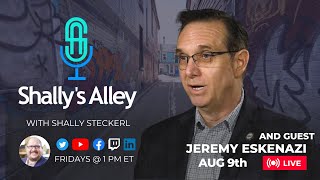
In this live episode of Shelly's Alley recorded on August 9‑10, 2024, host Shally Steckerl welcomes Jeremy Eskenazi, co‑founder of Riviera Advisors, to discuss how talent acquisition (TA) leaders can optimize results in a rapidly evolving market. The conversation begins with a personal anecdote about Shally’s recent layoff and her transition to Riviera, establishing the deep professional relationship between the two. Jeremy emphasizes that while tools, technology, and AI are important, the primary lever for TA success is strong people leadership and well‑designed processes. He critiques the common “culture of optionality” where recruiters skip intake or kickoff meetings, leading to weak accountability similar to sales teams that only track number of deals. The duo argues for standardizing core steps (intake, kickoff, SLAs) while allowing flexibility, and they stress the need for TA to shift from an internal vendor mindset to a consultant role that co‑creates expectations with hiring managers. Funding challenges are explored, with Shally sharing a recent experience where a 30‑% LinkedIn price increase consumed her entire budget, prompting a discussion on how TA leaders must present clear cost‑benefit options to CFOs and prioritize investments. The conversation then moves to workforce planning, where Jeremy describes the importance of TA having a seat at the strategic table, providing market intelligence, and influencing headcount decisions. He shares a case study from his work at Fiserv where TA insight prevented a facility closure. Both hosts encourage listeners to participate in Riviera’s annual TA leadership research study to surface post‑COVID pain points. The episode wraps with a call for future guests, a reflective question for TA leaders about understanding their company’s profit drivers, and a teaser for an upcoming discussion on ageism. Key takeaways include: prioritize people and processes over tool hype; enforce standardized intake and SLA practices; adopt a consultant mindset with hiring managers; proactively manage budgets by presenting tiered service options; embed TA in workforce planning to influence strategic decisions; and continuously seek data‑driven insights through research participation.
Chapters
All right, people. Hey, you are now live on Shelly's Alley. It is Friday, August 9th, and if you have nothing better to do, you're tuning in to us. Although I'm sure probably a lot of you are watching the Olympics, which have been pretty awesome. Haven't you been watching the Olympics, Jeremy?
Yeah, I've been getting into things like fencing and archery and things I never knew I would ever be interested in.
Yeah, I got way into volleyball. I was like standing up and cheering, and it's awesome. They have breakdancing and skateboarding and, uh, the, the new kayaking, like, uh, kayaking obstacle course thing. It was pretty fun, and they go pretty fast, so it's been a blast. But anyways, so welcome to Shelly's Alley, everybody, and today you have a treat unlike any other day at Shelly's Alley. Today you have a very special treat my dear friend Jeremy Eskenazi from Riviera Advisors. And you might recognize the name. You've probably seen him speaking at SHRM and other conferences like that. Jeremy founded, started, owned, I don't know, you know, is the premier talent acquisition consulting firm, a management consulting firm in talent acquisition. And And we've known each other for decades, I think. Uh, yeah, if not more, it's definitely been a really, really long time. And I've always kind of, you know, checked in with Jeremy and asked him how things are going. So one thing led to the other. And after I found out I was getting, you know, laid off, I got laid off at my last job. Uh, you know, I called him up. He's always a good shoulder to cry on. I'm like, you know, I don't know what I want to do next. And Jeremy asked me a very important question. He said, what do you want to do when you grow up? And do you remember that? And then I was like, well, I want to be like you when I grow up. And that— and then he's like, well, why don't we make that happen? Let's make that happen. And so we explored the possibility of, uh, joining forces. And lo and behold, um, you know, I've always dreamed of joining Riviera Advisors, just never thought I had the chops. I I guess imposter syndrome or whatever. Never thought I was qualified, but then he invited me to explore it. We took a deep dive into each other's, uh, portfolios and realized that it was a pretty good, pretty good match. So I ended up joining Riviera Advisors, and now it's just a love fest. Yeah, I mean, right? Jeremy goes way back, and what's really cool and interesting and important about what the work that Riviera Advisors do and Jeremy is that they actually, their job is to help organizations improve their internal talent acquisition function. So, they're not, they don't outsource. They don't sell stuff. They don't do, you know, the technology vendorship kind of consulting or, you know, the implementations consulting that you can get from from other technical consultants, but they actually build the organization internally. And with what I've been doing for the last 28-some-odd years building sourcing teams, it seemed like a real natural kind of, you know, now that I hate to say it, but now that the industry has grown up a little bit, sourcing was just a baby, you know, 20 years ago. But now, it's a young adult and it's coming into its own and people have directors and even vice presidents of global sourcing. So, it fits that in order to strengthen a talent acquisition team, you sometimes have to have sourcing, which made a whole lot of sense. So, what I wanted to talk about today, Jeremy, was forget sourcing, you know, sourcing is dead, long live sourcing, right? Forget vendors and technology. What is the, in your opinion, what is the best way for us to really optimize results as a TA organization?
Yeah. Well, first of all, Shelly, the sourcing is now an adolescent teenager, and that means you're a true grandparent now.
That's right.
The godfather of sourcing. You are grandfather.
Oh no, it comes out. The truth comes out.
Anyway, so my feeling is that, listen, those tools and technologies and things that are really in the, you know, the under the microscope right now, a lot of talent acquisition people There's a lot of content out around tools and technology and of course AI, and everybody needs to, you know, embrace these things. And a lot of good content is there about that. And I'm not going to pooh-pooh it in any way. So I definitely think tools, technology, AI are so critical to everything that we do in talent acquisition.
It's almost like a golden age, right? I mean, we were starved for really good tools in sourcing and, you know, maybe not starved in recruiting, but definitely in sourcing. And now there's just a lot of it. And it's, it's like, you know, sometimes I feel like I'm a kid in a candy shop. Which one do I want? I want to try that one. I want to try that one.
Yeah. Yeah, exactly. But I think that, you know, as you mentioned, you know, what I found is it's like the critical thing for talent acquisition leaders to optimize results in talent acquisition is really on people and processes, in my opinion. Look, if I can't go out and buy a whole bunch of fancy tools and technologies and AI and this and that and the other, but I can control certain things. So if I was a talent acquisition leader, I would really focus on people and processes. That's the best way to optimize results. And that means really good people leadership first. So I think a lot of times talent acquisition leaders are really good at the technical elements, getting involved in the planning and the technical, the tools. How are we going to do the TA process? But they are not as good. And I'm not being, you know, nasty to talent acquisition leaders because, of course, I learned this the hard way. But leading, coaching, developing, and managing talent acquisition team members is really critical. And a lot of talent acquisition leaders aren't always the greatest at holding their teams accountable to manage processes. So what I mean by this, Shelly, I think that's kind of natural though.
Sorry, go ahead.
Yeah. I mean, honestly, in other organizations, like let's say you were a sales manager. Sales managers, good ones, hold their teams accountable. They have goals and objectives and they hold them accountable. And if they aren't doing well, they provide them coaching and tools and resources to do better. Or if they don't use what they're given, they get rid of them. But I have found this to be the case that a lot of TA managers and leaders, they don't like to hold TA people accountable because, you know, maybe they don't want to rock the boat, or maybe they're keeping their hiring managers happy. So maybe if this TA person does something that's separate or unique because their hiring manager likes it, I'm going to be okay with it because the hiring manager is happy. So, these are kind of the things I mentioned.
In sourcing, I find that a lot. And when they do hold TA accountable, it's just like the basic number of hires and time to fill. And those, I think, are horrible, horrible metrics. If you compare just for a second what you said with sales, that's a really good analogy. If you compare how we measure TA with how sales leaders measure their performance, essentially, it would be like a sales leader going to their team and saying, how many deals did you close? Just a number of deals.
Yeah.
Right? And how long did it take you to close them? And I'm going to measure your performance as a salesperson based on the number of deals and the shortness of how long it took you to close them. Think about that. They're missing out on a huge— you know, if salespeople were measured on that, They would be— it would be a nightmare. I can't even imagine. But that's exactly what we do in TA. So, when we are held accountable, it's for these numbers that we basically don't really have a whole lot of accountability or responsibility for. But I think it's natural that we get in that position. What I was gonna say is that TA leaders often arrive in the role as either really good recruiters without a lot of management or specifically leadership experience. Now, they find themselves in a leadership role and again, no training, no coaching. Or they come in from another place operationally and they don't have any experience with recruiting. And again, they're not given any training. So, it does seem to be the redhead stepchild, don't you think?
Yeah, I totally agree with you. And I think that, you know, a lot of times, but that happens in a lot of organizations. Like if you're a good salesperson, then maybe you might be a good sales manager. But, you know, we're talking about salespeople. Sometimes the best salespeople make the worst sales managers because they don't know how to manage the people. The same thing would go with an operations person or a marketing person or whatever. So I do agree with you, but I think that it is an area that we have control over. We don't have to go and ask somebody for a budget to get some kind of new technology or something. Look, if I want to fix some of my issues or challenges and operationalize some some success practices in TA and make things go faster, more efficiently, make hiring managers happier and things like that. Sometimes that means holding people accountable and getting rid of that whole culture of optionality, as I like to call it. You know, that's the killer of success. Where—
tell me a little bit more about that culture of optionality. I want to dig into that.
Yeah. So, you know, we have in talent acquisition, we have a culture of optionality, whereas like, for example, If I asked a department, how do you process your travel arrangements or travel reimbursements? Usually there is an accounting process that everybody has to follow. Otherwise, you don't get reimbursed for your travel expenses, something like that. So everybody sort of follows that accounting practices. Generally, people follow. But in talent acquisition, we kind of operate in this way where we have a process. And we have a methodology.
Sometimes we follow it.
Sometimes we do, because maybe this hiring manager doesn't want to do that, or this department has their own process. And, you know, the way I'm a recruiter, I don't like to do it that way. I don't need to have a, you know, a kickoff or an intake call because I already know that hiring manager. I don't need to go through these steps because they take too long for me to go in the ATS. I don't need to do any of these things. But as long as I'm getting people hired, and the noise value is not happening, like there's not a lot of noise coming to the talent acquisition leaders, then it's probably okay. I leave it alone. That happens a lot.
That does. You're right. And I think the cause of it— two big causes are the one is we're measuring them based on number of hires. So as long as they're meeting that metric, then there's nothing else to hold them accountable for. Or if we're not doing that, then we're not really paying attention to the number of hires at all. We're just looking at kind of like, are the hiring managers happy? Is the squeaky wheel getting greased? And if it's not, again, we're not holding them accountable for anything else. So, you're saying that— I've always been a believer that the tool doesn't do the work. Tools are great, but tools need to be used. And using the tool. As you said, for salespeople, if you're a salesperson and they give you a sales tool and you don't use it, you're out of there. If you're a recruiter and they give you LinkedIn Recruiter and you don't use it, you get promoted.
Well, you get promoted only if you get the hires that the hiring manager is happy. Yeah.
Sometimes even if you don't get the hires, just because the hiring manager is happy. Yeah. And you never use the tool. But so like, we don't really use it well. And in a lot of cases, I mean, as a consultant, I've seen this time and time again where organizations will have 30, 40% of their population actually using the tool and the rest not. And one of the things I get asked a lot to do is help us get better adoption of these tools, right? Well, I can show you every trick in the world on how to get the most out of LinkedIn, but if you never log into LinkedIn, all these tricks aren't going to work.
Totally, totally. I think it's gotten a lot worse in the last couple years because a lot of— why? It seems to be a lot of recruiting teams, especially since the pandemic have become, you know, we're much more open now to being very virtual. People work from home and things like that. And, you know, we don't have the ability to, you know, have as successful as we used to maybe having, you know, recruiters sit side by side and sort of watch each other perform effectively and learn success practices from one another and sort of overhear and listen in and things like that. And we're not doing as many audio or, you know, sort of even, you know, even things you could overhear because we're working so much in digital tools where you can't even hear what's going on anymore. So I think it's harder and harder to do that, don't you?
I think so, too. Agreed.
I mean, in addition to that, you know, these recruiters, you know, if they're performing and hiring managers are happy, then the metric of noise is not happening and people are, you know, are just okay with it.
Everybody's okay, right?
Yeah, yeah, right.
So this, this, um, coaching, uh, you know, the, the, the people and processes and leadership coaching, developing management, management basically the actual management of this. Where do you think it starts? I posed that it starts— you gotta start somewhere. I posed that it starts with standardization. Even if you're doing something mediocre, at least everybody's doing it the same way. And of course, you'd like to do it excellently, but if right now one person does it excellently, the other one not at all, and the other one mediocre, you know, that's— I think that just speaks trouble. So in my opinion, I think the first step is to standardize. But what do you think? What would be the first step if you had an up-and-coming TA leader that just got into the role and they have no budget, they can't buy any more tools, they have to work with what they got, and you're telling them, you know, the best thing you can do is learn to manage your team to optimization. Where's the— what's day one? What's the first thing?
Yeah, so I think the first thing is to sit down with your team and ask them about their experiences and what in our current process is required and which things could or should be optional and what things could be removed. So a lot of organizations that I view is that they spend a lot of time getting in their own way with lots of double checks and processes and, you know, lots of double approvals and things like that. So looking at process together and then sharing that with your leadership team outside of talent acquisition is important. One of the things, though, that I think that as it relates to recruiters and the use of tools to get through the process is that— and I see Cassie's comment here about using LinkedIn Recruiter. But she likes to use other tools to reach out to folks as well. I personally believe that we shouldn't, you know, especially in sourcing, as you know, Shelly, one tool might work for some and you might find another. So as, as a matter of a great recruiter, I have a toolbox that I can use and I can use whatever works to get the best people.
Like any craftsman, you know, like a carpenter has hammers and saws and sanders and And scrapers. And I'm not a carpenter.
I would never mandate you have to use these tools to do this or that or the other, but I would mandate certain steps in the process. And usually those are the high-level steps, you know, like everybody, you know, like, for example, my feeling is always this. I feel like you can't be a consultative recruiter unless you actually do have some kind of an intake or kickoff meeting with your hiring manager. And it's not just like taking an order like you are a, you know, a server at TGI Fridays. You're actually setting and managing expectations about the process and things like that. But there are recruiters out there today that do not do intake or kickoff meetings because of one reason or the other. How can you be a consultative recruiter if you don't do that? So Now, I would also say that there are certain recruiters and jobs that you don't have to do that. Like maybe you're doing high-volume recruiting, you're hiring, you know, 150 people to do, you know, work in a hotel or a restaurant, or you're hiring people in a manufacturing plant. They're all the same. Maybe don't do an intake meeting or a kickoff meeting after each for each rec. But maybe—
No, no. But for the— for the quarterly or whatever, for the entire— right. For the entire Um, multi-incumbent role for sure. Yeah. So I guess what you're talking about is process. What I'm talking about is standardization. How do those two get married? Process standardization, standardized processes. Like, where do you first sit down and go, wait, this is what we should do for intake, and then you create a process around it? Or do you create a process with straw, straw man, straw person, you know, holding places, and then back in the What are we currently surveying your team? What are we currently doing for intake? Let's use some of that with some of the best practices. Which is first? Do you, do you say, here's the intake or here's the process? Let's fill in the blanks.
I would do it the latter, the latter part. Yeah. So I would start like you suggested, get the team together. Let's figure out, like, throw up our process and what it is supposed to be and then decide, like, are we really doing this and should we do this and why do we have these multiple approvals and things like that and then build build it from there. And by the way, on things like an intake or a kickoff meeting, you know, people ask, you know, do I have an example, you know, template that you could use? Sure I do, and I'm happy to share that. I'm sure you do as well. But honestly, a lot of people get all tied up and in front of themselves by filling out a form. I don't think it's necessary to fill out some kind of a form. Again, It's like you don't want to have someone taking an order.
The form is basically the recipe for how to— what to ask, but whether you fill it out or not, as long as you're going through. Okay, I see what you mean.
So I like the fact that there is a structure and there are certain themes that I need to get out of it. But a good recruiter does not need a form. They have a structure, and after a while you have it in your mind. You know, you talk about, you know, what's the— you know, what are the things you need to have in this job? And, you know, what are the things I won't see on a resume that I should see? Look for, things like that. But more importantly, I think that in the intake session or the strategy kickoff session, whatever you want to call it, more time needs to be spent on setting and managing expectations about what will happen next. And that doesn't always happen. You know, a lot of recruiters, they literally, okay, thank you, sir, thank you, ma'am, I'll take this and go out and go get your steak and I'll bring it back to you. But they don't talk about, you know, this is what's gonna happen.
Allergies.
Yeah, exactly. So I agree. I think that we need to have a structure, but it doesn't have to be a form or a tool every time. Yeah.
I have as part of my toolkit, as you know, I have forms that are designed to be manipulated as appropriate. In other words, put this into your CRM, put this into your ATS, but It's, it's sections of, as you said, the concept, uh, you know, dig into this. But it's not a form where you're supposed to answer. Yeah, like fill it out and hit send. Although I do sometimes recommend that for requests from sourcing. So the recruiter is requesting from sourcing. However, the, uh, concept is this kind of, uh, make sure that you ask about these things. Absolutely right. And make a note somewhere. It doesn't matter if it's a form. Well, you know, I like to kind of find the sore and sort of poke on it. So, um, doing that with this, along this line of thinking, why do you think— where's— let me, let me rephrase this. What is, in your opinion, the root cause of recruiters refusing to do a thorough intake?
Yeah. So I think that they're—
or take off or whatever, you know what I mean?
Yeah. And by the way, people always struggle with that. What do we call it? Like, I just had a client that, you know, I used the word intake meeting, but she's like, no, we can't use that word. It sounds too clinical. And it sounds like, you know, too much like we're being a servant to them and things like that. Whatever you call it, I don't care. Yeah, the thing that you do, the initial meeting with the hiring manager. So I think that, so here's how I look at it. When I first started as a recruiter many, many years ago, originally I felt like if I did anything to piss off the hiring manager, I tried to, you know, I did something like, for example, they told me, hey, Jeremy, I want you to go out and find me this person. I want them to have a a top-tier degree from a top-tier university, but I want them in San Francisco, and I only want to pay $45,000 a year for them. Um, you know, when I was first starting out as a recruiter, I thought it was my job to serve them. And so I wouldn't say things like, well, you know, Shelly, that's not really possible because, um, this is what the market looks like, and in my experience, I've seen this, that, and the other. So Things like that where the hiring manager would be sort of driving over me. And I, as a recruiter, always thought that if I did anything to piss them off, to rock the boat or whatever, the hiring manager would take out this little book in their vest pocket and it had a little book and they would write down my name and then make a little tick mark next to my name.
Yeah, you just made the shit list.
Basically, I would like get 3 ticks, then I'd get in trouble.
I see.
Being afraid to sort of push back is really what holds people back. But I think that the biggest thing in talent acquisition that we really need to get better at is this environment that we need to be able to set and manage expectations well.
Which you can't do without having those initial conversations in a comprehensive way. Right. You can't go back and say, well, this is what we agreed to if you didn't agree to anything.
Absolutely. Absolutely. Yeah. And I agree with Clay's comment here that, you know, they used to use that as building crutches to keep away from the order taker filler mentality. I totally agree with that. But the idea is, is that in those meetings, there has to be a give and take, and that recruiter needs to feel empowered to be able to push back on bad ideas or poor expectations. That means that leadership from the talent acquisition team needs to be able to stand up and support a recruiter when they do the right thing and not react. So this is what I tell— I coach talent acquisition leaders all the time. A lot of talent acquisition leaders are managing by the noise. So when Shelly, who is the hiring manager, calls me because Jeremy is not doing a good job on this search or it's taking too long, then the next thing I do is I pick up the phone and I call the recruiter and I say, oh, you're in trouble now. So what happens is that there's this environment where the talent acquisition management team is like constantly talking to their team only when there's noise, only when there's complaints, and not focusing on supporting them. So like, you know, I view a good talent acquisition leader as somebody who doesn't always go back to that recruiter every time they hear a complaint. From a hiring manager, but they support them and they investigate things instead of making that recruiter always feel like, oh, I've got a call here. It's from my boss and she's going to tell me that a hiring manager is mad. That's what makes it hard for recruiters to be able to set and manage expectations and push back if they don't feel like they're going to be supported.
Okay, so where does this unilateralness come from? Where does this one-way relationship come from where the hiring managers and the, you know, the leadership is holding TA, you know, TA's feet to the fire, but there's no reciprocity to that, right? Like I always talk about SLAs and it's almost like a foreign subject to most people in TA. Yeah. Even have an SLA.
SLAs are really just setting and managing expectations.
It's exactly.
Yeah.
So let me, let me summarize for you how I summarize the SLA. If you do this, I will do that. Or if I do this, you will do that. Or, you know, if you do this, I will do that. And then you will do— that's it, right? That's the bottom line. But what happens is if you do this, I will do that. And then that's the end of it. And then there's nothing else after that. So I, you know, oftentimes find that we don't, as a function, that we don't go back to the hiring managers that didn't do a good job. For example, Steve the recruiter has worked with hiring manager A and hiring manager B on the exact same type of role. Let's say it's a systems engineer. Both positions are very similar. They're just two different teams with some, some flavor, you know, differences, right? But Steve the recruiter has presented 7 candidates that have interviewed to hiring manager A and has presented 15 candidates out of which only 2 have been interviewed to Hiring Manager B. Now, Steve knows what he's doing because he's presenting candidates that are getting interviewed, but only by Hiring Manager A. Why do we not look at that and go, there's something different about Hiring Manager B? Steve does know what he's doing because he's getting results with other similar recs. So, it's not him or her, it's this hiring manager. But we never ask that question, especially after months go by, requisitions are open. Have you ever done an analysis where you looked at the time to fill by hiring manager?
Oh, yeah.
I see a pattern.
Yeah, I totally understand this. And here's, here's what I would say. You asked originally, like, what do I think is the root cause of this? Yeah. The fact is, is, is that not just talent acquisition, but also a lot of human resources professionals, we're part of, you know, I know a lot of people don't like to say that, you know, talent acquisition is part of human resources. It is. And the fact is, is that for years, HR and TA people have set themselves up to have them feel and pitch themselves as internal vendors to them. And, you know, I tell a lot of people this all the time. You will never get out of that hole if you view yourself and, and they view you as some kind of internal vendor to them when in reality, the, the, the actuality is, is that for internal recruiters, we are them. We work for the same company they do. And so, for example, if I do a great job in supporting my, you know, manufacturing team or marketing team or whatever, then I am providing success for my company. If I hire a slug and I do a bad job, then it's It's going to— I have skin in the game. So we have to get away from looking at our role as a vendor to them. We are them. And to Clay's question about, do I think that this is because many hiring managers aren't trained how to interview? I think that it may be the case because we don't usually say to a hiring manager, you're, by the way, you're now a manager and you're going to hire people. And here are the things that you need to be able to do to be successful. Not just interview, but like how to work with your colleagues in talent acquisition for the benefit of our organization, not just for you. Excuse me. So I think that setting and managing expectations from a management perspective about, look, hiring is everybody's job. It's not just TA's job. It's your job and TA together. We work together to get the best talent. But I think that's the root cause. We have to get away from looking at ourselves as a vendor to them. We don't have any customers, in my opinion. We don't have customers. Talent acquisition doesn't have the hiring manager as the customer. They might be a client, but we do. They're not a customer.
And I always ask customer, no. Yeah.
So, so for example, you know, I ask this question a lot when I do a lot of talks and things like that. I always say, you know, like, If you work in a retail or a hospitality organization and you go through orientation and training, the first thing they teach you in that is that the customer is always what? Right. And that is not the case here. So we can't treat them as a customer service function. We're not a customer service function. We're a consultant. That means we give them a set of our recommendations or a menu of solutions or options and tell them why they should select this one or that one or not this one or not that one.
But at the end of the day, what the price is, what comes in the price is if I send you candidates, you give me feedback. If you interview candidates, you give me feedback. If you don't, every—
can't—
like, you know, it's— there's a very— there's a price for them to pay. They don't just get to have the, you know, the next candidate in line. Oftentimes, I feel like hiring managers see a vending machine and they just push a button and the next available candidate just kind of pops out. And TA is that vending machine.
Yeah, well, part of that is because the TA person hasn't set and managed their expectations about what the candidate marketplace might be or, you know, what— how difficult is it to attract talent for their particular job or whatever. You know, there's a lot of reasons for that. But I think that we as talent acquisition and the whole of human resources just need to do a better job in positioning ourselves as a consultant and not as some internal vendor. And the only way to do that is by actually doing these things, setting and managing expectations. You can't just come out one day, like come to a training that I do or you do and say, hey, I just, I'm a consultant now. So you treat me this way, fill out this SLA. Yeah. So I mean, honestly, it starts small steps. For example, you know, you do an intake meeting and you set expectations and then you send them an email that says, okay, during our intake meeting, We talked about these things. I'm going to do this, you're going to do this, and this is how we're going to work together. That's literally an SLA, and it doesn't have to say SLA. Do not say SLA in the subject. Yeah, that's a good way to start.
That, that's quite literally an SLA. So, um, I feel like we kind of flagellated the deceased equestrian here, um, a bit with this, with this subject, because there's so many other things that I think keep Talent acquisition leaders awake at night. Speaking of which, I was gonna, I was gonna ask you, but before I do that, before I segue into the other thing that I wanted to talk about, I wanted to invite our audience to participate in our research study that we're conducting. So, for those of you that are not familiar with Riviera, every year they do a research study on an area of extreme importance to talent acquisition. And this year, we're putting together a study to try to understand the attitudes and obstacles that TA leaders are encountering now in the post-COVID world. I don't think— I think things have changed significantly, but there hasn't really been enough put in writing about what the general population of TA leadership is seeing and feeling and what is keeping them up at night. So I'd love to encourage folks to scan this QR code. And all you would have to do is, I think it's first name, last name, and email. And what this will do is it'll send me a message that you'd be interested in participating. And it would be a quick call between the two of us. So, let me know that you're interested and I'll set up a time to meet and ask you a few questions about what's troubling you in leadership. And here's the advantage to you. For your contribution, you'll be the first to receive the executive summary of the results before we make that available for purchase. So in other words, you'll get, you'll get the results for free that normally we would, would have as part of our research library, I guess. So scan the QR code and let me know if you would like to have a 15-20 minute conversation to talk about what's keeping you up at night. So with that said, I'm gonna leave the QR code up here for a bit, if you don't mind.
Yeah, I'll get out of here.
Oh, sorry, wrong one. All right, nice move. All right, there you go.
Hey, I was gonna say, you know, one of the things— we've already started this, and for our audience on Shelly's Alley today, I can just tell you I've already started this, uh, conversation. And one of the things that comes up a lot is how do we fund talent acquisition effectively. This is probably going to be a big, huge concept for us to explore here. And I'm curious for the rest of the audience. I mean, this is, you know, we're always struggling in talent acquisition on how to pay for the overhead, the cost. You know, we all want these cool new tools and technologies and showing the ROI and things like that, all really important. But I know that a lot of people struggle with how do we fund it? How do we pay for it? Is it a centralized cost? Do we charge it back? And things like that. So we're learning a little bit now just on our anecdotal conversations in this, in this process that that's coming up to be a really critical issue. And, you know, I thought I was going to hear people talk about, oh, well, how are we going to deal with AI and how are we going to deal with, you know, not having enough people and things like that. It gets down to a lot of like, how do we How do we fund this talent acquisition in this new world? Things like that. So, those are some of the themes that we're hearing, and we'd love to hear from the audience if you are interested in participating in the study.
Yeah, we'd love to hear if that's a big issue or is it ethics in AI? Is it automation? You know, all of these things. I was going to ask you another question, but just had an idea on something that I was just— I wanted to use. As an example, I recently went through this myself. So talking about how to fund this. So LinkedIn just tripled their price and they ate up all your budget. How are you going to fund the other stuff that you wanted to do? Right? So as a TA leader, I had a budget and I had a budget that was an X amount of dollars that included renewing LinkedIn and it included renewing LinkedIn at a 30% increase because I padded my budget to make sure that I was going to be able to cover it. But the increase was so much that it literally ate into the rest of my budget. So now how do I find money to pay for the other things that were on my list of things that I needed to? In other words, if I want to continue improving, then how am I going to pay for that improvement if LinkedIn just took all my money?
So again, setting and managing expectations is a critical element for very talent acquisition leaders too. When you're having to go and ask your boss and other leaders.
The CFO. Yeah.
Yeah. So basically it's a— so again, I said this before. Our job as a consultant is to provide a menu of services and solutions or options to solve your problem. It's like a Chinese restaurant. Select 5 from column A, 5 from column B, and figure it out. Well, if I only have a certain amount of budget and I can't do certain things that the business needs me to do, then I have to tell them, It's, you know, it's this or that. I can only do so much. So, for example, if the budget included, you know, eating up, you know, LinkedIn, we know we're going to need LinkedIn because LinkedIn is effective and everybody knows it's an effective way to access talent easily and less costly. Right. Even if it is 30% more, if LinkedIn is listening to this, I'm sorry to say, You're right. It is easier to find people on LinkedIn than the old way, for sure.
So by 3 times more, maybe not.
So you have to be able to go back to your, your leaders, your CFO or whatever, and say, look, these are the— this is the cost and these are the options for you. If I don't get more money for this, then this is going to happen. For example, I'm not going to be able to access people on LinkedIn. That may mean that it may take me longer or whatever to find talent in a more efficient way, um, using another tool. There are pluses and minuses to everything. And so I don't think it's the end-all be-all, but I definitely think it's important that we need to start being more like, it's not all or nothing. It's like, here are the services that we can offer.
Something, some of something else.
I have a client, she likes to call everything there's a rate card for that. There's a rate card.
I like that. Yeah, there's a— you want that? Sure, there's a rate card for that.
You want that? You want to hire somebody? There's a rate card.
So, so the gaining funding for these critical investments, um, is another key issue. The one I wanted to ask you about is, um, workforce planning, which, you know, which is— I know, right? I, I've had a couple of, uh, definitely well-renowned worldwide experts in workforce planning on the show. One of them actually literally wrote the book. Another one is that teaches the certification. And I've asked the same kind of difficult question to them. Unfortunately, their answer— well, the good news is their answers were very thorough, but they were also very analytical. I'd love to hear strategically from you what your answer is to how important or critical is workforce planning to talent acquisition? Mind you, not human resources. So, it's part of human resources. It's part of the CHRO or the CPO. But how critical is it to talent acquisition specifically? We're very much used to being told what the recs are. Here's what you're, you know, here's your recs. Here's your headcount. How critical is the planning of that for us.
So, Shelly, do you mean how critical is it for talent acquisition to be involved in the planning or to be involved in the output of—
well, we are involved in the output. I mean the planning.
Yeah.
Yeah. So I think that is for us to get a seat at the table of workforce planning and not just wait for the recs to come in. And by the way, let me illustrate with an organization that's waiting for, you know, we don't have any recs approved yet. We're on a on a hiring hold. We're waiting for the regs to be approved. Well, so you're not doing anything until then? I think, I think TA can definitely participate in the bigger picture of putting together what that workforce plan should be because we have different kind of intel. But anyway, I'll let you answer.
So, um, last year, um, I am a volunteer member of the Conference Board's Human Capital Center, and I'm a senior fellow in the Talent Acquisition Institute. We did a study that lasted all year last year on talent acquisition's partnership role in workforce planning, because most TA people are not really involved. And the hypothesis is that they should be. And the reason why they should be is multiple. But I can just say this, this is that Generally, workforce planning is being done inside of organizations without the moniker of workforce planning. So for example, you have finance people over here that are doing headcount planning and things like that. You have facilities people that are looking at facilities or the need for, you know, resources. You have people in HR that are planning for certain things, but very few times do they actually come together. And then whatever, whatever, What usually happens is that the output is just popped out of a dark smoke-filled room somewhere to TA and say, here you go, here's the plan. But I personally think that TA would get so much more lifted if they were able to at least participate in things like getting, providing specific feedback on what the marketplace is like for the kinds of talent that we think we might need to use in the future. So for example, why don't, Why don't we look at talking to recruiters and people on the ground who are talking to talent on a daily basis so that they can get their— it might even be anecdotal data, might not be completely analytical, but it might be anecdotal data saying, look, if we are planning to go to this particular market in this geography and open this plant or whatever, and I know that that particular market in Salt Lake City is really hard, there's 2.1% unemployment. I've tried really hard to get people to come and work for us in that market before. It's going to be super hard. We're going to have to spend a lot more money. And I know that because I've had some time in the marketplace. So giving that kind of feedback that informs the workforce plan is really helpful. And it would get us a lot more credibility by participating beforehand. The same thing goes with understanding what our you know, sort of historical funnel looks like.
So for example, informing the workforce plan about funnel, like we know in our experience, we know what recs we filled and which ones got canceled and how long it took. And, and get this, how long did it take the average time to fill for the recs we filled and the average time to close for the recs that were canceled and how long it took us and how many candidates. So there's a huge waste. I ran this analysis recently for, for a client, and there were, uh, 17% of all canceled recs— 17% of all 9,000 canceled recs historically came from 3 departments. So it doesn't sound like a lot, but the other 100 departments had 1% or less. So these 3 carried the huge workload of canceled recs. So you think about that, and you need to consider that in your workforce plan. And here's another thing that I think is absolutely crucial in our planning as TA leaders is to know the headcount that we expect to be able to do so we can pipeline against it. It's, as a sourcing leader, I get asked a lot to pipeline ahead of demand. It's nearly impossible to pipeline if you don't know what your recs are going to be in 6 months.
Agreed. So, Shelley, I think that, you know, for our audience, um, you know, just kind of weaseling your way into the town, into the workforce force planning process, even if you're not even asked or you're not part of it, is so important. I mean, you got to push your way in even if you're not invited. I'm going to do this. I'm going to share a link. Um, I'll share it in the private chat and then you can push it out to everybody. But if anybody wants a copy of that, um, Conference Board report, it is publicly available. You don't have to be a member. And I just, uh, sent you the link to that. You can go ahead and download it. I think it's really a good study that actually talks a lot about how TA people can participate.
Thank you, that's a, that's a really good, um, a really good share. I'm gonna, I'm gonna try to Bitly it to make it short so people can check it out, but in the meantime, I'll actually go ahead and post it in LinkedIn. And that is— so I'm glad you, you shared that because I was going to ask you, how do we get that seat? Right. Let me also share this quick anecdote with you. So there was, when I was working at Fiserv, there was a conversation at the GM level, essentially the president of an entire, you know, basically business, you know, billion-dollar segment of the business. And I was in this meeting as part of TA talking about, you know, upcoming requisitions and things like that. And it was announced or it was brought up that they potentially might close a facility that was one of 3 credit card producing facilities, um, physically manufactured. So Fiserv, for those of you who don't know, not only handles a lot of the money behind the scenes but also the, the transactions, then the— and, and even some of the like checks and things like that. So they— if you open your wallet, you'll see probably half of the credit cards in there were made by Fiserv. So they were going to shut down one of 3 facilities because they had had such a hard time filling the GM role for that facility over the last 12 months. And while I was on the call, I offered my perspective and said, let me look into what the talent pool looks like in the area and see if it's even feasible. Like, if we can, if we can determine that this person or this talent doesn't exist locally, um, then, you know, I understand. We, we grew the person that was there that left, right? So then we can figure it out, but at least we know. So they're like, okay, we'll put a hold on this. A week later, I, I send them my report and we have another meeting, and they determined based on my report that there was— what I did is I put in, you know, who are the competitors who do similar things that are in the area and, and things like that. They determined to keep the facility open. They funded it for 3 more years. And it's a good thing they did because the alternative, what they were looking to do was to outsource a third of the production to a company that that's all they do is make credit cards. But it's a good thing they did because of COVID that factory from the, the vendor shut down. So they would have been without a factory and without a vendor temporarily, of course. So just think of, you know, being able to just jump in. I jumped in. I was completely out of line. Like, nobody said, hey, Shelly, what do you think? This was a meeting about talent acquisition, but they mentioned closing this facility, and I just butted in. I said, wait a minute, let me, let me take a look at this. And I offered this talent acquisition intel that we had, and it, it had a huge impact in the organization. So yeah, I'm connecting this to, you know, beg, borrow, steal, but shoulder, your elbow, your way in, you know.
You know, a lot of TA people, when you say workforce planning, they'll sort of roll their eyes at you and they'll say, yeah, we don't do that. But in reality, that is not always true. There are little— literally might not be tied together in a professional or strategic way, but a lot of elements of workforce planning are being done in an organization today. Nobody's tying them together. And so even if you don't have true workforce planning, a TA person could really show their value by doing exactly what you did, by talking about things that, you know, talent acquisition people have a lot of inputs into workforce planning and they don't even know it or they don't even share it. For example, knowledge of the marketplace, things like that. That is so critical. And I would tell you that even if you don't have strategic workforce planning now in your organization, you have elements of it. And if you can sort of pull it together in a little way, that will help raise the credibility and improve your ability to do things like plan for investments and resources in TA tying directly to what the business says they want to do. You know, another thing that I would just mention is this to any talent acquisition leader. Works inside of an organization that has not seen or understands the business strategy, like haven't seen the business plan for the next year or the next 2 years, they can't be strategic. And a lot of talent acquisition people don't do that. If you're going to be a vendor to them, sure, you don't need it. But if you're going to be a consultant, you have to know what the business is planning to do? Are they planning to increase their sales? Are they planning to go into a new market? Are they planning— what are the sales increases and how are they going to do it? And sometimes the only way to do that is to ask, because a lot of times business leaders in different departments or divisions or whatever, they won't come to talent acquisition and say, by the way, here's our '25-'26 fiscal plan. Would you like to see it so you can figure out how we can work together? It doesn't happen like that at all. And a lot of times HR people, they might see it, but they won't even share it with their own TA people. So what I always recommend is go to these leaders and say, hey, I would like to see—
can I see the business plan so I can help plan for you better?
That's a good start.
That is a good start. I put the link up by the, by the way there. So for those of you that are wondering what that scrolling marquee is, that's the, uh, It is the Conference Board's Talent Acquisition and Strategic Workforce Planning Partnership Report from the Conference Board, which you don't have to pay to download or anything. So that's it right there. If you go to that URL.
No.
And yes, please share it, pass it along.
Yeah, I'm really proud of that. And you can, you can download the full report for free. Like Shelly said, it actually has some really good ideas and a lot of templates and tools that I actually shared. So it's in there.
You know, how do you feel about— how do you feel about this? How do you feel about making this a regular segment on Shelly's Alley on workforce planning? No, just the, the, the Jerry— Jeremy and Shelly Show. And once every so often, because I think we— I think we're running out of time. And, uh, there were a couple of other things I wanted to dive into. Of course, this has been, been a fantastic conversation, but, you know, I wanted to dig into more about the, uh, the setting expectations and then, um, talk about get, you know, gaining funding. We, we brought it up as a topic, but we didn't quite address it. So, um, how do you feel about that? Open to it?
Yeah, I mean, look, for the, for the audience that's watching now, this might be the, the Jeremy and Shelly Show, but we have the Jeremy and Shelly Show now. Almost every day, sharing it with you on a regular basis. So sure, and I love, um, I love the questions from the audience too.
So, um, yes, yes, get ready for this next time, bring your questions. Um, so in order to, I think, to wrap up today, kind of put a nice neat little bow on it, since this is your first, since you're not a regular guest yet, this is your first time, I, I do have to ask you my two stumper questions. Okay, the first of those is who should be our next best guess?
I would love to see— first of all, I want to see people who are in talent acquisition leadership that are feeling like they are being successful in this new marketplace where they've got less resources and less tools and people and things like that and still are able to hire great talent. And they're working in an organization that doesn't have say, you know, the best known, well-known brand or whatever. Those are the people who I'm most interested in. Yes, it's really cool to hear from people with well-known brands and things like that, but they literally are getting people who are applying just because of the brand in many cases. I want to, I want to hear from a TA leader who's, you know, getting people and processes right to get people hired in some company that nobody's ever heard of before. That's really maybe in a really difficult location to hire people in or a bizarre industry, or that's what I'm always interested in.
All right.
It's cool to talk to people from, you know, I'm not going to name names, but, you know, the big, huge technology players and consumer brands and big consulting firms.
It starts with F and ends with tang.
Yeah, they have— they all have stuff. We— they put out an ad and people apply. You don't need to do a whole lot of, you know, sourcing and things like that in many cases, right? Yeah, I'm interested in that more than anything. That to me is interesting, and that's what I watch.
So if this is you, if, if Jeremy was just talking to you, drop me a note. You can scan and, uh, join, uh, that, that's all that happens when you scan that is you send me an email and I'll set up some time. So scan that, let me know that you're interested in being a guest on the show to talk about exactly that. Or if you know someone, you can go ahead and nominate them on Shelly's Alley's show homepage. There is a form where you can nominate, well, yourself or, or someone else and, um, request to be on the show. So, uh, please do that because I, I can't think of anybody right off top of my head, but I will find that The last question that I want to leave people with is something for them to— a thought for them to mull over and chew on. I want a question that they should ask themselves that would generate some introspection in themselves. Like, I don't want you to give them the answer, but rather, what is a good question that they should ask themselves?
As a talent acquisition leader, I would say I would like to know— so here's the answer. Here's what I would say. Do I know how the company that I, or the organization that I work for, makes money? How it loses money? And what are the drivers of success for the business? Do I know those things? Because if I knew those things, then I could then I could share that with my team. I could be— we could be more aligned to the challenges and problems that our hiring managers have, understand what the issues are. Basically, if I understand that clearly, and that might also include things like, you know, do I know what the business plan is for the next period of time or whatever? Those are the things that I would ask myself. Do I really know how my organization makes or loses money and what drives success or failure? That's the question.
Do I know the business plan?
Yeah. Or do I know how my, how my company or organization makes or loses money? That's even a bigger— that's even bigger than the business plan.
Well, okay, that's a big question. Good. Well, thanks for leaving us with that rich and deep thought. And so we'll go ahead and make this a recurring segment of some kind. So I think we will have time to address some of those. Thank you so much for dedicating an hour of your, I'm sure, very valuable time. You know, folks, people pay like thousands of dollars to go see Jeremy speak. So, you know, we're definitely blessed to have him here today. So appreciate you volunteering to be part of this. And for those of you that are out there listening to the show, if you're wondering, who is up next. The plan is to have a rather, let's just say, spirited debate on ageism next Friday with a couple of colleagues, one of them Steve Rawlings, and a couple of others who have themselves recently encountered significant amount of blatant ageism and have some, you know, we're not going to, we're not going to just complain about it. We have some ideas. And we're going to debate those ideas next week. So if ageism has affected you or someone you love in the workplace or in the job-seeking place, this is going to be a good one to tune into. Until then, be kind to each other and be kind to yourselves.
Thanks everybody for joining us, and thank you, Shelly.
My pleasure.
More from Shally



Scaling Talent at Hypergrowth: Leadership, AI, and Hiring Excellence with Cindy Nicola







