Jim Stroud Live on Shally's Alley
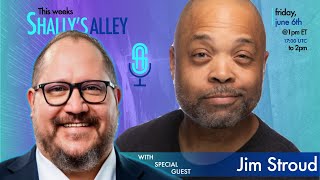
In this June 2025 livestream, Shally Steckerl interviews veteran sourcer and recruiter Jim Stroud. They discuss the rapid adoption of large language models (LLMs) in recruiting, noting how AI‑generated job descriptions and interview scripts are homogenizing content and stripping away the "special sauce" that makes a role unique. While AI can automate pre‑screening and help generate interview plans, both agree that the human‑in‑the‑loop is essential for reading nuance, motivation, and personality. They predict a near‑term "collapse" of generic LLMs and the rise of highly specialized generative models (e.g., video‑creation AI). The conversation shifts to historical tech disruptions, arguing that AI will augment rather than replace recruiters, citing analogies like ATMs, travel agents, and the industrial revolution. They examine post‑COVID hiring economics, hedge hiring, salary inflation, and recent layoffs, advising sourcers to pivot toward fast‑growing occupations such as wind‑turbine service technicians, solar installers, nurse practitioners, and data scientists, using BLS data. The hosts debate LinkedIn’s declining relevance, envisioning a future of fragmented tools, deep‑search crawlers across blogs, Substack, and personal sites, and stress the need for a resilient sourcing system that can survive tool churn. They also cover practical sourcing tactics—personalized outreach, adding personal brand elements, using AI for brainstorming, and the importance of old‑school Boolean and phone skills. Finally, they discuss remote vs. hybrid work, relocation economics, and the value of personal branding for both recruiters and candidates, ending with a call to reflect on one’s personal brand.
Chapters
Hey, party people, how's it going? All right, everybody, you are live on Shelly's Alley, the first Shelly's Alley of June, the year 2025. Just in case, you know, somebody in the future sees these and He wants to know kind of what was going on right, right around this time. Um, I'm super excited to have my really good buddy, and I don't even know, sourcing legend, sourcing, uh, like, I don't even know what else to say, man. You don't even need an introduction, but Jim Stroud, folks. Uh, you, you might have known him from, uh, being an MC at multiple SourceCons, and recently at ERE, although there was a virtual NCE, but you probably saw him there. Um, and just, I mean, we, we've worked together, Jim. How many times have we worked together, like, at different jobs?
Uh, Google, Microsoft, uh, one other place I don't remember.
Yeah, that's what happens when you're as old as we are.
Yeah, we're getting up there.
Don't do drugs, kids. Um, So Jim is, uh, Jim is one of these people that is exceptionally gifted at creativity. His mind works in ways that, um, just are not your expected way, connects the dots on things and is really creative. Uh, something you might not, you might not know about Jim is he is an aspiring cartoonist. One time Jim and I were sitting on an airplane going to, uh, going came into work and he had a little notebook and he was just doodling. And I looked over and it was like a full-on cartoon strip and it was funny and it was like newspaper-worthy. I'm like, what is that? I'm just doodling. I'm like, that's not doodling, that's like professional grade.
I'm surprised you remember that.
Yeah, it was hilarious. Funny. I still, I still think you should publish a cartoon strip for like a newspaper or something.
One day, maybe.
One day, maybe. So Jim, Jim's had an illustrious career, not that it's over by any means, but, you know, has had and continues to have an illustrious career in sourcing. Um, started out almost, almost when I did, a little bit after I did, and has been a disruptor. Uh, I think you, you might have called yourself a digital anthropologist.
Searchologist.
Yeah, searchologist.
Yeah.
Definitely a futurist, someone that is good at decoding trends, seeing the patterns. And in that way, we are a lot in common being able to identify these big patterns. But he's extremely creative on the other side, the kind of the left brain, I guess, because right brain is logic, left brain is, I think, something like that. And the opposite of me. So, we've worked together many times and collaborated in some really significant ways. So I'm really, really just thrilled to be able to sit down and kind of share this, this, uh, with, with him. I wish we would have been able to do it earlier, but, uh, things were preventing Jim from being able to appear. And now he's, uh, freelancing, right?
Yeah. Yeah.
Yeah. Yeah.
For hire.
That's right. So we worked at, uh, for hire. That's right. We worked at Microsoft, we were at Google and some third place. I can't remember it. And, you know, many other times collaborated on ERE and everything else. Total game changer. I have a question for you, though. There's a few things I wanted to kind of pick your brain about.
Sure.
And because, you know, you, you're just as real as me and, you know, we can have like a real talk conversation here. AI taking over job descriptions and basically half of LinkedIn or maybe more of it sounding a lot like it was written by ChatGPT. How long do you think it's going to be before recruiters start completely outsourcing interviews entirely to their chatbots? And what's the over and under on them doing better than hiring managers?
I think the more— it's kind of a weird situation we're in, because AI definitely makes things easier, makes you more efficient, help you scale yourself and your processes. So it's like you can't get away from it. But at the same time, the more you use, the more you integrate technology you sort of lose a little bit less of yourself.
Yeah.
And it sort of reminds me of something I noticed a while ago. If you write a— if you're looking for a template, say for example, for a software engineer job, whatever, right? You can take that, you can take some language out of the template, one or two sentences, copy and paste it into Google, and you will see all these different jobs with the same description because they're all using the same template. And it's sort of like AI in a sense, because if you don't put your own kind of special sauce on it, you have something unique about, about you as a recruiter, about you as your company, then what's really the carrot to attract somebody to your job? They're thinking, okay, I can do the same thing over here that I'm doing over— I could do the same thing over there that I'm doing over here, so why move?
You know, it's identical, it's the same job. Yeah, getting a couple of shoutouts, by the way. Ryan, uh, Falter, and, uh, Ronnie tuned in. So I, I understand what you're saying, um, but like, to break it down, it's the large language models. These large language models that are used for this, they're absorbing large content massive amounts of information. That's kind of what makes them a large language model. And they tend to favor, I mean, it's kind of a known bias that they tend to favor that which is repetitive and popular. So whether you argue what came first, the chicken or the egg, did we start writing job descriptions using chatbots and that's why they look like that? Or did job descriptions already have a lot of copying because this company copied that company and the original content that was fed into the LLMs already had that. But the bottom line is that the original job postings that are special and unique, those are one of a kind and those aren't getting imitated by ChatGPT or its peers because they're not the common denominator. So essentially, the problem with these chatbots and this content is that it is looking for what is most popular and most common. And that, sure, yeah, it might work, but it also blandifies everything. So you're right. But when it comes to interviews, there are some standard questions. So maybe not for job postings, but for interviews, aren't there, aren't there something— I mean, you know, when you and I were doing The Grind and screening candidates, we all, we had 12 questions that we always asked.
Right?
I mean, couldn't that part of it at least be automated? Or should it not be automated? And why not?
I would say, well, all right, it's a tightrope answer. So maybe yes, in terms of pre-screening candidates, you know, but when you actually interview, interview, no, I would say no. Because there's so many intangibles that you won't be able to pick up. Right? So I'm talking to someone, I say, so how do you feel about doing this type of work? And they may go, oh, I love it. But it may go, it's okay, you know, and you can sort of feel out, okay, are they really hungry for this opportunity or they're just hungry for a job? Because I understand both mentalities, you know, because sometimes somebody can say, I'm gonna think in their head, I'm gonna tell you what I think you want to hear so I can get this job and pay my bills.
And the AI is going to approve it and move it forward.
Right? Exactly. Exactly. Right. You know, different nuances. And then you can ask someone, so how do you feel about Python? Are you really strong in it? You know, you sort of look at their reactions and see if they are really enthusiastic about something, get into it. Right. Right.
They're like, yeah, I'm good at it.
Yeah, these kinds of reactions can lead you down a rabbit hole sometimes. Right now, because you pick your spider sense picks up that I need to dig in a little bit on this. Push that button a little bit.
Yeah.
I think they're really— yeah. And you can't really get that with AI. I don't, I don't believe so.
Not right now. No, I think there's going to be a lot of reckoning when it comes to, um, the collapse of— if you Google collapse of, of generative AI, you'll see a lot of scientists talking about the inevitable collapse of these models. And what's— what'll happen in my futuristic prediction— I'd love to see or hear your futuristic prediction— I think what will happen is that that collapse is actually going to allow us to go to the next level. I think we're sort of stuck right now. And you can see that in the fact that ChatGPT, for example, has been promising 5.0 for a couple of years now, and then the best they could do was 4.5. And now they're not even telling us that there's even going to be a 5.0, or they're like promising that it will be, but it keeps getting delayed because I think we've just sort of reached the limit of what LLMs can do. And we need to break out of this mold of like recycling content or just using other people's content as new content. It's like the, the recursive analysis, you know, you, you put the data in, analyze it, you put new data in, analyze it. Eventually the data that you put in is the data you're analyzing, and it's the same data that you, you know, made, you, you fabricated because you needed to fill something in. So I think what's gonna happen is that the way that they work so generically is gonna collapse, but new very specialized ones are going to come up, like the one that you were talking about, um, where it's like they're, they're generating like movies.
Oh yeah, uh, Veo.
Yeah. And so it's like creating something visually new. It's not, it's not taking existing video content and merging it into a generic video and republishing it. It's actually creating something new. And there'll be other specializations. And I think that's where— so for interviewing, it might help us with coming up with the questions and creating an interview plan and assigning the questions to different people based on their specialty. Like you can say, here's my team, who should ask which question? And, you know, you have a plan. It helps with the plan, but the actual interview should still have that human interaction, I think.
Oh, definitely, definitely. There's no way around it. And I think I read that same research you did about LLMs imploding.
Sort of imploding, yeah.
Yeah, on the same data. It just enforces in my mind how you need to have a human being in the loop, a human in the loop at all times. Like, one example I always give when I try to push the human in the loop thing is that AI is heavily integrated into air traffic control. Heavily integrated into roadside traffic, you know, yet there's still accidents. If you take the human being out of the equation, there may be even more accidents. You got what— human beings are solely unpredictable. No matter how many things you can sort of plan for, something could happen that's not programmed in because someone didn't think about it at the time they were programming it.
You know, right, there's certain constraints. And so as this general intelligence continues to grow, um, and starts to understand more and more of the context, it's still going to have gaps because there's still going to be things that it didn't see.
Oh, and you know what, in addition to the things that it didn't see, uh, there's also the danger of us not knowing what's it doing. I mean, I read, uh, what Anthropic CEO said basically in so many words, and Somebody look this up because I don't know if I'm just— if I'm saying it just like he did, it's like they just— like the CEO did, but they don't know how AI comes up with the answers that it does. You know, they program it a certain way, but then AI decides to do something totally different. I mean, I've read stuff where, um, some scientists said, okay, I want you to shut yourself off, AI, and AI basically says no. And it does other things. I think of one article I read where AI tried to move itself from one server to another because it felt like it was being threatened. Without— it would sound like a Black Mirror episode.
It was, it was moving, it was relocating. Like, I don't like this apartment building, I'm gonna move over there, the view is nicer over there.
And his thinking was that if I'm going to complete the different tasks that you asked me to do in the past already, I can't do that if I shut myself myself off. So the only logical thing is to move myself somewhere else, right? Which is not what it was programmed to do, but it had developed a mind of its own. And this is really weird.
And we can't think about all the things that it's going to think about because that's the point. So we can't project what it's going to do.
Yeah. So you always got to have a human being in the loop kind of thing. That's something that— that's the thing about AI. You can't totally predict all of what it's going to do. Yeah, because we don't know everything it's going to do.
We know what like really skeeves me out, like really, really just gets my goat. If you really— if you want to piss me off is when people say that it's going to replace us and take our job and stuff like that. Like, it doesn't— technology never— it's never done that in the history of all technical evolutions. When the Industrial Revolution came, some jobs were lost. Because there were jobs that were no longer necessary, like the job of hammering something. A robot can hammer something a lot better, more accurately, faster, safer than a human. And really, is hammering something what you want to do for the rest of your life? It's not exactly a career. So yeah, that job was gone, but the person that was hammering stuff that doesn't have that job anymore, they went and they got a different job where they learned another skill, and it was a little bit maybe, you know, better, and maybe they get paid more money. So It's not going to replace us. That's the thing that's like very personal and threatening. Like, I see all these posts about AI is going to replace recruiters. No, it's not. It's an enhancement, just like the assembly line was an enhancement, just like the wheel was an enhancement. If— just think about this. If AI really was going to replace an entire job function, then wouldn't we have already seen The disappearance of travel agents when the internet came around and everybody could buy their own airplane ticket. There's still travel agents out there. What about the disappearance of print shops like your mom-and-pop print shop? Sure, they shrank, they consolidated, and there's a lot more printing done online, but there's still people who buy invitations for weddings from local print shops. It didn't get rid of anything. There's not a lot of jobs that I can point to There's some, but there's not a lot of jobs that were completely wiped off the face of the earth. And those that were were replaced with other jobs. So that's kind of what, like, it just, it makes me so angry when people say these, these inflammatory things like it's going to replace us. It's going to enhance us and it might replace some of it, but really it's kind of the low-value tasks like hammering a nail, you know.
I got two examples around that too. One is the ATM, right? When ATM teller— teller, really dating myself.
They were going to replace bankers, but they never did.
All bank tellers, but they're still there. They're just doing other things.
They do other more important things like retain the customer.
And exactly.
Yeah.
And then there's an example of— and I believe it's Klarna. I'm doing some research. I'm speaking at the Atlanta Recruiting Community event next week, I think it is. And I was researching different things related to AI. And one example that I'll mention in the presentation is Klarna, which is a company that laid off a bunch of their customer service folks, right? I think 300 or some, some big number like that. But they had to end up rehiring a lot of them back, because the people that they were servicing were tired of talking to a machine. So they complained. The company may have saved money in the short term, right?
But now they had to rehire them, had to retrain them, and like, it totally backfired, right?
So the customer is like, I'm tired of talking to a machine, I want to talk to a human being, I'm tired of pressing 1 or saying representative or whatever, right?
Right. And we've been doing— we've been pressing 1 for a long time since before.
Yeah. So companies who were thinking like AI is going to take over, you might have some short-term wins, yeah, you know, but if your customers aren't feeling it, uh, then, you know, you get a backlash and you have to end up rehiring people back again.
Yeah, we really need to just kind of rethink this and, and What's different between now and the way that things evolved with the advent of manufacturing technology, with the advent of the internet, and how the internet was supposed to kill radio, was supposed to kill television, was supposed to kill the newspaper, is that back then there were a lot of skeptics still asking questions. It seems like today with this whole AI is gonna take over, it's like everybody's drinking the Kool-Aid way more mass hypnotism than before. And I'm not really sure where that's coming from because people who normally would be skeptical about things like that are just like all in on, oh, it's gonna do this. And I'm not trying to like say I'm not, you know, I don't support technology. I do. I've always been at the forefront of technology, but I don't support this sentiment of, um, we suck, machines are better.
Yeah, yeah, that always, that always backfires. I'm old enough to remember a little tool called InfoGist.
Oh my God.
And I remember when that came out, that was going to take all the sourcing jobs away. And now we have a lot of, a lot of tools now that make sourcing more efficient. I still don't think it's going to remove all sourcers.
No, it's just elevated the job to, you know, having a little bit deeper.
But this is— there's something to it. I think that And I'm like you, I'm a big proponent of technology, but there's a couple of things. Well, there's one thing in particular I always think about with these various tools. No matter how awesome your tool is, whether it's, I don't know, Hireezy, for example, or SeekOut or some other great tool, those are just great tools that pop up in my head, Penn and others. No matter how great the tool is in finding information, it only finds information that's available online, public information, you know, and not just online, but online publicly, right?
Not online behind a paywall or online.
Exactly.
Database.
Exactly. So I think one of the edges that a sourcer has is how well they treat candidates when they talk to them. Because if I can find them, the next person can find them. How you're treating that person, the experience you give them is going to make you stand out.
How knowledgeable you are in the company, how knowledgeable you are on the job, and also the outreach part of it. I mean, you can automate sequencing, but you can't automate the feeling that you like. For example, my best— you and I did a lot of thinking about outreach back in the day when it was not automated. And we created these models where we had, remember the spreadsheets with multiple columns, like group 1, group 2, and facts that we would be able to use in the merge so that we would personalize it. But all that personalization didn't mean anything without the sentiment behind it. And you're like, You remember when you talked about woo?
Part of woo? You have a good memory.
I sure do. And that was like, that was very paradigm shifting because it was like you used to talk about you're wooing a candidate and you can't just woo a candidate with generic content that they can already get from anywhere else, especially nowadays. My most successful campaigns still are where I put a little bit of me in there. You know, if I'm talking to computer scientists, I mentioned that, hey, you know, I went to school for computer science and I'm really passionate about it. I just never made it as a programmer. I didn't have what it takes, but I'm really interested in— I understand, you know, I speak tech, I speak tech. I know what, what these languages are. I know what a 4GL is. I'm not— that's a very long paragraph. I don't put the whole thing in there, but I'm putting myself out there by saying, hey, I, you know, I have a computer science background. Or, um, I'm interested in, you know, the things that you're interested in. Because that connection— people want to connect with someone that has personality. And I think that's the one thing that these AI really just never really going to have is, is an actual depth of personality. Yeah, but, um, yeah, I wanted to talk about something else. Let's, let's talk about layoffs.
Okay.
If another tech company says restructuring as a code for Whoops, we overspent during the boom. Do you think sourcers need to start sourcing CFOs instead of engineers?
Possibly, possibly.
I mean, what's up with that?
I was, you know what I was thinking about? I was thinking about this earlier, because I know a lot of, a lot of our friends, recruiters and sourcers are looking for opportunities right now. And it sort of struck me early. Well, I was thinking about earlier today, because I saw an article about some company that was laying off. And it was actually— I'll share the link with you. I got it on my other screen here somewhere. It was a list of the worst— yeah, here it is— the worst college degrees for finding a job.
Oh no.
So at the top was anthropology, followed by physics, followed by computer engineering, which blew my mind because In our day, in our day, you would think being a software engineer is like the safest bet you could, you could possibly ever have, right? But like computer engineering, their unemployment rate is at 7.5%, which is amazing to me. But AI has definitely hit that. But what made me think about what I'm about to say is that I looked at, okay, these are the worst jobs. So what are the jobs that are growing? In these days and time, right? And so I looked at that list. It was from the, um, looking at the Occupational Outlook Handbook, which is a government, uh, a government site. They, they search trends to see what jobs are growing. And so I'm looking here and I see the top, the number one job with 60% growth, 60% growth rate, is wind turbine service technicians, followed by solar photovoltaic installers. Third is nurse practitioners. Fourth, data scientists.
That's some hard hands-on jobs.
Yeah. And so my thinking is that not that as a recruiter, you want to start being a solar photovoltaic installer, whatever that is. But that if this is where the growth is happening, start looking for companies to recruit for that are recruiting these type of people. Because chances are, since these jobs are trending up in major ways, there's companies out there who need this type of talent. So I think for a lot of my recruiting and sourcing friends out there, look for those industries or those jobs that are trending up, and then look for companies that are looking for these kind of people. So, um, so yeah, the, the resource I'm looking at again is the Occupational Outlook Handbook.
Oh yeah, that's a great resource.
Yeah, you can go to, um, I'll just shout it out, BLS for Bureau of Labor Statistics, bls.gov/oooh. And you'll find it there. Homer Simpson.
Yeah. So digging into that, you know, just kind of a little bit more. The original question is, you know, how do we kind of get it— tongue in cheek— but how do we kind of get here? The restructuring isn't just because of AI. The restructuring is also because there was a lot of overspending and there was like an economic kind of accordion effect that happened. Um, you know, I was talking about this during the middle of COVID where I was like, hey guys, all of this like slowing down and putting the walls up on hiring is going to backfire. Because what I predicted happened, which was I predicted that when things alleviated and we kind of got past the worst part of of COVID all of the companies were going to start hiring all again, like all at once. And so as a result, when they're— when you— it's demand and supply economics. If all of a sudden you have massive demand for something that usually had regular demand, the prices go up. And so people started asking exorbitant salaries because there were so many jobs and it was an artificial boom. And all these people got overpaid, got overhired, and then things started normalizing. And now those people are getting laid off. So I don't know how much of this 7% unemployment in engineering specifically is related to that versus AI. But I do know that there was some hiring that I was— that I had visibility into, which I would call hedge hiring. And that is where they were hiring people for two reasons that were not related to the labor needed. One reason was we want to hire these people so the competitors can't get them.
Yeah, that's Silicon Valley.
Yep. And they were literally putting them out to pasture. They were giving them kind of, you know, easy jobs. Those might— that might have impacted the unemployment rate now because those people don't have jobs anymore because they never really were needed in the first place. And then the other reason they were hiring them is because they were expecting to have this big boost in productivity, which never happened. And so again, they overhired. I think part of this is just an economic adjustment, not to, you know, not to diminish the impact that AI is having. But some really big shot economists, like one of the institution professors at MIT wrote an article about this. The actual impact on overall economy is probably closer to about 4%. Shift in economy because of AI is closer to 4%, and that's, that's significant. It's, you know, 4% of an economy is a big chunk of money, but it's not 50% of our jobs are going to be lost, or, you know, whatever. It's just way too exaggerated, right?
To your point about the hiring too, just a quick interject before I forget. Yeah, I think a lot of times that the hiring is just so that companies can safeguard their stock price, right? They don't want to seem like they're contracting, so let me hire a bunch of people so we can say, hey, look, shareholders, we're hiring all these people, we're really growing, so the stock price can go up or stay up. If companies start laying off, it's going to go down, go down, and that's going to hurt the executive suite. So they're definitely going to safeguard against that.
Ronnie's working on turbine positions.
Ronnie, the way to go, Ronnie.
That blows, man.
Yep.
Wait a minute, I think I actually have That.
Did you hear that? What'd you say?
I did the snare drum.
Oh, not in here.
I don't know if it came through.
All right.
Um, okay. So fun, fun, fun. The, um, other thing I wanted to ask you is related to job search because you wrote a book, you teach classes, you've helped people, uh, you know, not just now, but I mean, folks, what I'm talking about here from the heart, Jim has helped people. Find jobs his whole career. This isn't a, you know, Johnny-come-lately, I'm doing it for popularity, but this guy really cares. So I know you're someone who's really been in tune with the strife of, you know, the job seeker for a while. With all this stealth job searching that's happening and people updating their LinkedIn profiles almost like a silent protest, Should recruiters start filtering candidates by how recently they added an AI prompt to their headline?
I think we look at it from a different angle. I think one of the things that a job seeker can do that will benefit them in their search for work more than anything else is to change their mindset from looking for a job to attracting a job, right? And this is, this is what I mean.
That's huge.
So a LinkedIn recruiter, shall we post a job, in an hour there's 200 applicants. I mean, it's almost a guarantee these days, right? And, but if you as a job seeker, if you say, you know what, I'm going to write content, about something that I'm passionate about that's related to my job. I'm going to speak on different podcasts. I'm going to speak at a local meetup. I'm going to write an ebook and give it away. I'm going to post things on LinkedIn that showcase my expertise. You're going to see, you're going to see people say, oh, that's interesting, I never thought about it. And then they reach out to you and contact you for more information, which can lead to conversations, which could lead to a job. I generally tell people a lot to especially post on LinkedIn because it's a professional social network anyway, right? But also because if you write an article— let's say you, you are a wind turbine service engineer, to go with that example, and you write, you know, the top 10 things every wind turbine person should know. Right? Somebody's gonna like it. Somebody's gonna comment on it. Somebody's gonna share it. Somebody's gonna repost it. Perfect world, right? Every time somebody likes, shares, comments, or reposts, that's your— that's your in. You could say— you can reach out to them. Hey, I saw that you liked my post on wind turbines. Awesome. Thank you. I noticed on your— on your company website in the career section that you have a job that's Good for me. Would you mind recommending me for this job? I'm great because I can do A, B, and C. And by the way, if you do recommend me and I get hired, then you get the employee referral bonus, right? And if I don't get hired, what have you lost? Nothing. So someone can think to themselves, you know, yeah, a quick $500 or whatever the referral bonus program— whatever the referral bonus pay is Sure, I'll do that. And they'll forward your resume on to the hiring manager or recruiter, what have you. I mean, what have they lost? You can even do a step further and actually write the email for them and say, look, all you gotta do is cut and paste this, cut and paste this in, change it a little bit, make it yours.
And yeah, so that's a really— if you ask me for a favor, like introduce you to someone or whatever, and you send me the text to— I'm 100 times more likely to do it. Like, you're like, hey, could you introduce me to— and, you know, here's something you can say. But it just— it makes it easier because sometimes, you know, the hardest thing about picking up a pen or a keyboard and start writing is the hardest thing is like, how do I even start? And if you have something that is how to start, the rest of it— that is one thing I use ChatGPT for a lot is brainstorming, uh, how to start. Like, you know, give me 10 ways I can start this, this sentence, or something besides, I hope this finds you well.
I will put down a t-shirt and sell it. Oh, that's a good idea.
That's a really good idea.
I see that so often.
Oh my God. Yeah, I hope this message, uh, accidentally stumbles on itself and falls on you well. Uh, you got a question here from Jeremy. Hey, Jeremy, job seekers who have been holding out for hybrid or fully remote, and then, you know, they've been holding out and then they're unemployed. Are you recommending tough love or relocation?
Well, if it's been holding out for hybrid or fully remote, I would say let your bills dictate that.
So you're with the tough love movement?
Yeah. Early on in the job hunting, when you are— you just got laid off and you're open to possibilities even more so, and you're like, okay, I'm only going to look for remote because I'm not feeling the pain as much right now. As long as the job hunting progresses and you're still not finding that remote opportunity, but you're seeing these hybrid where you go to the office, you know, twice a week, but you just don't want to. And hey, I understand. I totally understand. But every month these bills come in faithfully.
So yeah, they never miss.
They never miss. So after a while, you're like, I don't want to do it, but I got bills to pay, got mouths to feed. So then I'll go ahead and do it. So, but that's not something that I could tell you to do. That's something that your circumstance or your monthly bills will tell you what to do. Yeah, that's my—
you know what though? Yeah, that's a really good answer. It's, it's, it's— I, I agree with that. For Jeremy's, uh, summary here, basically, if If you can't afford remote jobs, it's time to start thinking about hybrid, uh, or maybe relocating to a better market. But that does cost money. Um, I would say this though, I, I would say that they're just thinking about it from a macroeconomic point of view. There was a time where remote work was a competitive advantage for employers before COVID We're talking about before COVID and people were, companies were saying, hey, we're remote first. And that meant that they could attract better quality candidates because they could attract them from all over the US or all over the country, wherever they are. So their talent pool got bigger. And also you noticed that there was some pay discrepancies. You know, people that were remote were not necessarily getting top dollar. Here's the problem. These companies that hired you when they said it was okay to work remote And then COVID happened and they said, of course it's okay to work remote. And now COVID unhappened and they're saying you need to come into the office, but they never told you you were going to have to come into the office the first time around when you got recruited. It was a remote job before COVID and they hired you with remote comp. Now they want you to come into the office. They need to put their money up. They need to increase those jobs because it is a lot cheaper to work remotely to you as an employee than it is to work on site. Talking about tolls, wear and tear on your car. Even if you take the bus, bus pass, I mean, there's an expense to it. There's clothing, there's laundry, there's food, there's so many things that cost money. So, if you're going to tell me, you know, I paid you, you know, $100 when the job was remote and I don't need you to come into the office and it's a mandate even though I hired you remote, I need to increase my comp. You need to bring that up to $120. Sure, I'll work locally, but if I now— I'm only going to get $80 because that $20 is going to go towards like me literally getting to the office. Yeah, that's, that's an economic incentive in the wrong direction.
That tracks too, because I've seen surveys where people say I'll take a pay cut if I can work remote. Yeah, that's, that's, that's not hard to find. A quick search, you see that. I think part of the reason why there's such a big push to pull to bring people back to the office, I honestly think, is because companies have signed these leases and they're like, okay, we got— we have to pay for this space no matter what because we signed this 4 or 5-year lease, whatever. Somebody needs to be here for paying this kind of money. I think that's it. But I also think beyond that, I think it also— some companies want to have people in the office because that sparks innovation, collaboration, and all these other feel-good team building things. That's great. But yeah, to your point, if they hired you remote and they switched it up on you and now you have to come into the office, then, uh, then yeah, we gotta pay for skinny jeans.
There's still got to be an incentive, man. Yeah, because you know, you, you wear your pajamas to work most of the time. Now you got to put on clothes and, and maybe your, you know, your, your size changed a little bit or whatever.
You know what, If companies need to change the incentive for working into the office, that'll bring people in. So for example, if they had, um, if they had a, a nursery or a babysitter service in the office, oh my gosh, as long as it's not too far a drive. Because yeah, no, if like, like if in the building, like if I'm a, a new parent and I can bring my kid and I can just drop my kid off on the third floor and then go to work on the sixth floor, Yeah, I would definitely, definitely— I mean, that was very attractive.
I mean, you know, if I don't have to pay for my own lunch now— yeah, because if you're working remotely, you've been, you've been buying groceries, you know, not necessarily going out to restaurants. Now you're in the office, a lot more restaurants, a lot more cafeteria, or you can pack your lunch. But, you know, stuff like that, you gotta, you gotta add that back into the equation. Um, and so I think that's part of why there's some resistance to it, but, um Anyway, I don't think we're gonna solve that problem today. Fun to talk about. I do want to, I do want to talk about another thing though. Be honest with me. If talent sourcing had a Hunger Games style reboot and every recruiter had to survive by only their wits of Boolean, no tools, no SeekOut, no nothing, just the wits of their own bullion and, uh, and they needed to use a modem to dial up to the internet. Who's going to win and who's going to rage quit by lunchtime?
The people who are going to win are the ones who are old school because they're used to doing it anyway and they have a history of doing it. A lot of the new school ones will fall by the wayside because they equate sourcing with LinkedIn only.
Yeah.
And if LinkedIn went away, they will be— they will be— a lot of them would be totally lost. A lot of them would be totally lost. And then ironically enough, a lot of them, um, will forsake their own ATS. I think it still boggles my mind that when there's a new rec, a lot of recruiters go straight to LinkedIn and start talking instead of going to the ATS. It's like someone goes to a nightclub, like a guy walked through a nightclub and like 3 pretty girls swarm him, say, hey, how you doing? He says, no, I don't want to talk to you, although you've expressed an interest in me. I want to spend the rest of my time in this club talking to 100 other women who don't know who I am.
They haven't even noticed.
You don't even notice me. It makes no sense. It makes no sense. You gotta— why not start off with people who've expressed an interest? But a lot of new school sourcers and recruiters don't do that. A lot of old school, for whatever reason. Don't do that.
Unfortunately. Yeah, kind of like the whole pick up the phone and dial, right?
Yes, yes, yes. A lot of people are afraid of the phone.
And I got some bad news, Jim. Jim, you know this, you know this as well as I do. I got some really bad news for everybody. LinkedIn is gonna die. Hmm, it's gonna go away. Look, it used to be Online Career Center, then it was Monster. Monster went away, then it was Career Builder. Career Builder went away. Then it was indeed, it maybe not went away, but it's changed a lot and it's very different. There's no, there's not one of these that has been there forever. And LinkedIn is not going to be that one either. There's a lot of signs already that LinkedIn is starting to regress. It's starting to go backwards because people aren't responding. Response rates have gone down from back in the day, man, when we were at Microsoft, remember how we were like looking for an 85%? Response rate. Yeah, that was their target.
Yeah.
Now people are happy with a 15% response. Yeah, that's LinkedIn. And it's getting lower and lower, and more and more people are not using LinkedIn. So I'm telling you, LinkedIn is going to go away. In fact, every tool eventually goes away. That's just what happens. And whether it's ChatGPT or not, who cares? The point is, if you're addicted to one tool and that's all you use, at some point, that tool is not going to work.
Yeah, I think you need a system. I think the word system is what you need.
Even if there's a collection of tasks. Yeah. Software, right?
Yeah. So even if you even say, even if you have a system built on AI agents, right, and those tools go away, then you find another tool to replace that system, or you find a manual process to replace that, excuse me, that, that, um, agent. Um, because the tools come and go, but you can find another tool to replace whatever tool you had in place initially, or you find a way to manually do it, uh, in such a way that doesn't take all of your time. Um, but yeah, you got to have a, a basically a system in place. And yeah, now here's a question for you: if LinkedIn does go away in the near future, What do you think will replace it?
I think what would replace LinkedIn would be a number of different things. LinkedIn was one of several tools. As it accumulated more and more momentum and people use less and less tools, it became the one tool. And so, in its absence, the vacancy that will create will go back to multiple tools, multiple sources. And if there is something that's going to be like LinkedIn in the future, it's going to do the same thing. It's going to start you know, narrowing itself down until it's the one tool. So it's not like LinkedIn will be replaced by something else because LinkedIn didn't replace something when they came on board. It, you know, it took years. It took years of me out there promoting LinkedIn from the day there were 100,000 people on there and I was advising recruiters to use it. And recruiters, especially in staffing firms, were really resistant. I remember years of staffing agency owners telling me, but Shelly, why would I ever want to share my network with someone else? I don't want to put my contacts on LinkedIn. That changed. And when that changed and LinkedIn got big, then it became the one tool. But when it goes away or it gets absorbed into Microsoft in a different way or whatever, um, the value that LinkedIn has to offer is much more than just a single industry.
Right?
So eventually it's going to go beyond that and it will lose its value to that one single industry. The replacement isn't going to be another single point solution. It's going to be a collection of things. But the most overlooked of those tools is blogs. And I don't mean blogs as in the old-fashioned blogs. I mean, think of how easy it is nowadays to create your own homepage. People have websites where they put whether it's, um, Medium or Substack, or there are hundreds of those. If you added up all of the Mediums and Substacks and websites that are on WordPress, you added all those up, that's more than LinkedIn. The problem is it's not all in one place. You can't go to a website and search all of them. You have to go to each one of these different places. So if there was one tool that could do that, it would be a deep search algorithm that's able to, to go to multiple websites and continue digging, almost like a, almost like a crawler, but a crawler that you control. And it's going to take time because the crawlers are slow. Google's crawler and Bing's crawler have tried to optimize k points for years, trying to get faster at finding that distance between— the shortest distance between two points so that they can upload and maintain their content faster. But it still takes sometimes 3 days, 4 days, a month for a website to be updated in the index. So what I'm talking about is real-time searching across all of these. And that's something AI could do. If there was a tool that would do that, it would be something that's able to run like a crawler, 1,000 threads with 1,000 different searches, go to 1,000 websites, collate all that material, and, you know, basically put it together into a set of results. That's what I've been getting into lately. That's kind of the way I've been doing it is through deep research, but it's not LinkedIn. I mean, especially in the space that I'm in right now, it's LinkedIn. It's kind of pointless. What I end up doing is I end up finding people and then I look them up on LinkedIn so I can get a resume.
You know what surprises me? I, I've always thought that Facebook would take LinkedIn down, right? Because, because years ago— well, still now, but even though it's not as popular now as it was back in the day, it had a lot of potential to displace LinkedIn.
It did.
Yeah, it could have. I wouldn't have said— and I know, I think they sort of approached it wrong because, and I haven't been on Facebook a lot myself, uh, recently, but I know at one point you could put your profile on there, which is basically your resume.
It had almost like a work thing.
Yeah, yeah. And so it was like, they could have, um, I would have said, hey, Facebook, create a, um, a separate site, say is powered by Facebook, take all the profile information from your Facebook profiles and put that into the work version of Facebook. And then Facebook could control, for lack of a better word, or influence your social life with the regular Facebook, right?
Right. Social Facebook and a work Facebook.
Yeah.
Well, there is a work Meta, but it's like an internal network kind of thing. Like, it's an intranet. It's not what you're talking about.
Yeah, yeah, yeah, yeah. So you're right about that. You know, I can see LinkedIn going away one day. I definitely, definitely see it being replaced by something. I think that replacement will ultimately happen with the next generation coming more and more into the workspace, especially this Gen Z, the first generation to grow up are totally in a digital space. So it's second nature for them. It's in their mindset.
They don't have these, right?
They don't have the thought of, I don't want my privacy, or I'm not so privacy-minded that I don't want my information out there. It's like expected for you to have a social, social footprint out there. So I think as LinkedIn inevitably goes away at some point, it's going to be replaced because Gen Z says, yeah, and this is going to be used for personal and for work. And maybe that— maybe the spin would be this is the ultimate protection against identity theft in a way, because you get to see, see me at work, you get to see me at play.
And this is something that, you know, I think maybe there's a little bit of LinkedIn trying to be more like Facebook.
I'm seeing a lot of that. I'm saying, like, I was talking with someone just the other day, it's a wall about that. Yeah, like the wall is blurring. And I told them that If you put personal stuff on LinkedIn, that's fine, but there's a— the danger of that is that people will start to associate you with the fun thing and not the professional thing that you're into, right? So if somebody is a network engineer, but all they post about is surfing, surfing on different beaches, then I'm going to think about them as the surfer person. I'm not going to think about them as a network engineer. And on LinkedIn, you want people to think about you based on your profession. So I don't tell people not to post personal stuff on LinkedIn. I just say use the 80/20 rule. 80% of your, of your posts should be about your job or professional side of yourself. And then maybe 2 of your posts could be about your dog or your hobbies or whatever, you know, because you want people to know, to think about you professionally. On LinkedIn more than anything else.
Yeah, we got a question about, um, yeah, Fishbowl. Have you tried it?
No, I have not tried it.
So it's like an invite-only professional networking thing, um, and it's, uh, as Cassie says, it doesn't have a lot of identifiers, but, um, it's, it's kind of like what you're describing. It's like a work social sort of thing. You invite, you know, you're, you're a consultant, you invite other consultants, and then you like form this little network of consultants inside of the fishbowl, sort of like, uh, I don't even know, it, it's sort of, it's like Facebook and LinkedIn, but, but a lighter version of both.
Hmm, okay.
Not sure if it's really something that—
that's— send me a link. Somebody send me a link to that so I can check.
I'll invite you. I think I have— I think I still have mine. I was invited by a consultant and I went in there. I was in there for a couple weeks. It didn't really do anything, so I I'd probably just let it lapse.
I played around. You may like, um, Lunchbox, but it's a different principle. So Lunchbox, you see a profile, you make a profile of who you want to talk to and what you're into, and then you can have lunch with somebody for like 10 minutes virtually, and you talk for 10 minutes, and then you go from there.
It's a matchmaker. That's pretty cool. Yeah, that's pretty cool. Well, we got— we're running pretty close to the end here, uh, so I had one more question before I wrap up with my two Big question. So, you got 3 more. My last conversational driver here is as a certified futurist and as the oracle of talent trends, let's say The Matrix was real. We went to see it together, remember? Let's say The Matrix was real and recruiters could like plug in and download any one skill instantly. What do you think is the first skill that they would grab? The one skill they would grab? Would they become master searchers or would they learn how to write outreach that doesn't make it sound like they're trying to recruit for Skynet?
They should download right now actually from the local library, the book, How to Win Friends and Influence People.
Oh, that's a good one.
Because no matter what the situation is, recruiting and sourcing is a sales role. Right, you're finding a candidate, so you have to sell them on the opportunity. And then you go to the hiring manager, you got to convince the hiring manager this person is somebody you want to hire. And then when it gets to salary negotiations, you got to be able to be influential and that kind of thing. So it helps with recruiting and sourcing, it helps throughout all of the recruiting process. That's the, that's the one thing I would tell people.
That's awesome. That's a great answer. I love that. Yeah, it's good because it doesn't matter what, whether it's AI or not, LinkedIn, doesn't matter where you go, you're you're still gonna have to make friends and influence people.
Yes.
That's awesome.
Yeah, man.
Well, to wrap up, I got 2 questions for you that I, um, I ask every guest. The first of those is gonna be a little tough for you because I think we know a lot of the same people, but, but I have to ask anyway. Who should be our next guest?
Ah, um, let's see. So many.
I know. Well, you gave me a couple. And by the way, it could be someone I don't know, and it could be something you don't even if they're going to accept. I've invited some folks to be, uh, guests on the show that I thought would never accept, like, you know, major Wall Street Journal, uh, bestsellers and stuff like that. So you never know. Yeah, I'll try it. Uh, who would you like to see on here?
There's this guy, and I, I thought about reaching out to him for SourceCon back in the day, and, and maybe I will for Recruiting Innovation Summit, which I'll throw a quick plug in. Look, if you're looking for a conference to join, definitely come visit, hang out with us at Recruiting Innovation Summit in November in California. Shelly, if you would put a link up in the description or whatever so people can check that out. A lot of the things Shelly and I have talked about will definitely be discussed there in some capacity, whether on stage or at the bar, that will be discussed. There is a guy, I'm blanking on his name now, gosh, but he does documentaries about the internet and it's sort of like the dark side of the internet in a way, right? So send me an email, I'll look up his name, but he, thank you, e-recruitingconference.com. He does documentaries on, Different things about the internet.
Gosh, what is it?
It's gonna drive me nuts. Email me, I'll send you his name.
Okay.
Yeah, but a documentarian who talks about the internet, um, from a hacking perspective, that would be— that person would be really cool.
That's awesome. I love that.
Pretty cool.
All right, and so closing out, um, you know, a lot of folks will watch this as a recording and, um, a lot of, a lot of times over the weekend. I want to give them something to chew on that they can think for themselves about. So can you tell us, give us a question to ask ourselves, not a question you're asking us, but a question we should ask ourselves for some deep contemplation over the next couple of days?
Yeah. Um, what is your personal brand? Because your personal brand opens up lots of opportunities. It also keeps a lot of opportunities away from you. If you are known to be a super computer person, that opens up jobs to you. If you're known for having a bad attitude, that keeps a lot of information, a lot of things away from you. Uh, I would spend quality time with myself thinking about my personal brand because it opens and closes a lot of doors.
What is your personal brand? And as a little kind of, you know, add-on to that, for those of you that might be struggling with what is my personal brand or how do I figure it out, this is a pretty good way to determine what your personal brand is. Think about what somebody would say about you who hasn't been in touch with you for 5 years. What do they remember 5 years later when your name comes up and they go, oh yeah, like for me, let's say, what, you know, we, Jim and I are in touch a lot more frequently than this, but let's say 5 years went by and somebody said, hey, do you know Jim? I'd be like, oh yeah, he's super creative. That's like, you know, that's his brand. He's creative. He's inspiring. So what would someone say about you that hasn't, you know, seen you in a while? What would be that? You know, that's your brand and you can change that. You can shift that, but it's a good way to kind of like detect what your brand might actually be.
So yeah, because it Yeah, because it's important that people know you, but it's also more important how they know you, how they remember you. Yeah, I was— I got a room painted in my house, and I mentioned it to a pal of mine at the gym. He says, well, why didn't you tell me? I would have gave you a great deal.
I'm a painter, right?
I don't even know you painted, right? Because I don't think of you that way.
There's a branding moment right there. That's funny. That's funny. All right, my friend, uh, I hope you can make it more often because I'd love to make this a regular thing. I mean, you know, we get the Jim and Shelly Show or whatever, but this is a lot of fun. I definitely want to have you back, and thanks for inviting me out to ERE Recruiting Summit. And, um, you know what, folks, everybody, uh, follow him. You got jimstroud.com. He puts out quite a bit of fun and informational and, um, you know, solid content. And also, if you are curious as to who is coming up next. Our next guest is Nicole Roberts. You can, uh, look her up on LinkedIn if you're curious to find out a little bit more. Uh, N. Roberts HR, uh, she's gonna be. And then after that, we'll have Rob Beck coming back. So we'll see you at the next one. Until then, be kind to yourselves. Bye, everybody.
More from Shally



Scaling Talent at Hypergrowth: Leadership, AI, and Hiring Excellence with Cindy Nicola







