Joe D’antonio! Live on Shally's Alley.
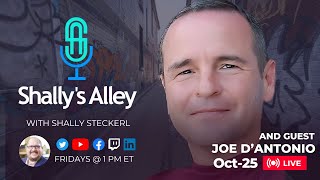
In this live YouTube episode, host Shally Steckerl interviews talent acquisition veteran Joe D'Antonio. They open with a light‑hearted intro before diving into the macro‑economic and election‑driven uncertainty affecting hiring cycles. Both agree that once capital costs settle, hiring will resume, though likely at a more strategic pace than the pre‑pandemic boom. The conversation shifts to high‑volume hiring and the role of RPOs, followed by a deep dive into AI and automation – from sourcing and onboarding bots to the limits of AI in retaining talent. They critique the over‑reliance on generic metrics, advocating for granular sub‑cycle analysis (offer‑to‑accept, approval‑to‑post, etc.) and ISO‑style standardized definitions of time‑to‑hire and quality‑of‑hire. Job‑board spend is questioned; the panel recommends leveraging internal talent pools, rediscovery, and data‑driven candidate engagement before buying external subscriptions. They explore the usefulness of candidate personas, warning against “culture‑fit” bias and promoting “culture‑add.” Finally, they debate technology versus recruiter up‑skilling, emphasizing that tech investments must be paired with training and clear process changes, and that communication between TA and the business is essential. The episode ends with guest recommendations for future speakers and a reflective prompt about solving the right problems.
Chapters
What's up, people? Welcome to Shelly's Alley. You are live, days away from Halloween. I don't know if y'all remember, but last year— or was it the year before that? Might have been the year before that— we had a Shelly's Alley on Halloween, and I made the absolutely horrible mistake to have a background, a backdrop that was Halloween related, and apparently it freaked some people out. It wasn't even that terrible. It was just like, you know, ghosts and bats and pumpkins and stuff. Um, but man, that was a bad idea. So no ghosts or pumpkins or bats today, but we do have a fun time with our guest this week, Joe D'Antonio. So welcome to Shelly's Alley, Joe. Say hi to everybody.
Good morning, or actually good afternoon. It's great to be here. Thank you.
Good evening and good night. Yeah, we've got people in Asia, we got people in Australia. Yeah, that's right. So folks, uh, I actually worked— I had the pleasure of working with Joe for a little while when I was standing up the power sourcing product, um, with Aspirant. And we were working, you know, I had built the, the sourcing side of the business. Joe came in and was working on the recruiting side, so the RPO. That was the traditional business model that they had. So he came in and, and helped, uh Well, actually not, he was leading that, I believe, uh, while I was leading the other one. So we essentially were kind of collaborators in that, you know, I had my thing and he had his, but very much, you know, some clients wanted this, the other clients wanted that. And we just kind of went back and forth. So we, we had a good time working there and learned a lot from each other. So I was so happy when Joe, uh, agreed to be embarrassed by being on my show. Being embarrassed to have to work with me is bad enough, but he actually agreed to be on the show, so I don't know how that works.
Nah, I never get embarrassed, Charlie.
You're good, right? Yeah, you never get embarrassed. So, um, Joe, you know, you, you've never been shy about your opinions. In other words, you're, you're a very frank— in our— you're frank, I'm earnest. Um, you know, together we're Frank and Ernest. And, um, I'm curious, you know, what do you think? There's a lot of hullabaloo about the economy and, um, you know, whether it's— is it coming back? Is it not coming back? I've been talking to friends that are business owners and they're like, nobody's spending anything. It's as if like everybody just went to sleep. Um, what's gonna happen after the election? Like, what's your— what do you think is gonna happen? I know a lot of this has to do with the election, A, being an election year, which, you know, 30 years being in the business, you and I both know election years tend to, especially when there's the possibility of switching, you know, switching camps, if you will, tend to cause a lot of chaos. But what do you think is actually, regardless of who wins, right? Not, not talking about politics, but just, just the fact that we actually have an election and all this is over and no more, no more YouTube ads every 30 seconds about, uh, phone calls. Yeah, phone calls, text messages. What's going to happen?
Well, you know, it's just you mentioned that you had some business. I've got a couple of friends in finance and I had this discussion probably about 2 months ago specifically about this, about like what's going on in the market. I had one friend who's in finance and M&A and was recently laid off. And he was— we were talking back and forth about how I see the market, how he sees the market. And we both kind of came to the conclusion that, yeah, we're kind of in this perfect storm of inflation's high, housing is high, and oh, by the way, we have an election coming up. And not only that, you also have all three branches that are— two branches. You have Congress, Senate, and the president that's all up there. And I think one of the big pieces that I've seen and what my friends are seeing is that No one knows which way to go. There's a lot of money sitting on the bench right now, a lot of capital that's sitting on the bench waiting to see how expensive it's going to be to invest in that, whether that be people, whether it be CapEx, whether that be M&A, whatever, whatever that is. It's, it's, it's kind of sitting there just waiting to find out like, okay, which direction, which policy are we going to have to adhere to? And the bottom line is, how much is it going to cost, right?
So, yeah, the cost of money, basically, or the cost of investing. Okay. All right. So what, what does that mean?
Yeah, I, I, I think that means once people, especially on the finance end, I think once people find out, like, okay, this policy is going to, um, this policy is going to cause interest rates to drop because in one direction, now the cost to make an acquisition, a cost to an investment is going to be cheaper, which means we can now invest more in hiring people, which means we can invest in bringing on talent, meaning recruiters to bring their, you know, there's a lot of recruiters that are on the bench right now waiting to see what's going to happen. And I think that sort of domino effect is going to cause companies to hire again. Now, will they be hiring to the levels they were 3 years ago where they're writing the biggest check possible to anybody, or what Meta did where they hired 40,000 people in 1 year during the pandemic, or some of the other companies that pivoted to the reality of what was going on? I don't think so. I think companies are going to be more strategic about it. But I think they're going to have to hire recruiters and invest in tech things because they're going to have to do that, especially companies that don't grow organically, where they grow by M&A. And there's a lot of companies out there that do it that way. And if they do it that way, that's how they're going to have to keep their growth going, obviously, for shareholder value, et cetera. So I think maybe not in the beginning, but I would say Towards mid to end of Q1, I think you're going to see everyone settled. There's going to be, okay, we know which way we're going now. We can go forward with our plans that we were going to do in maybe late Q3, early Q4.
Right. So literally what you're saying, and I believe this as well, is the delay of what Q3 and Q4 was supposed to do. Yeah. Got basically put on hold, right? And, and what you're hearing, and I'm hearing from, from our colleagues, you know, things, things just kind of didn't move. You know, they, they did a lot of reduction in cost at the beginning of the year, first quarter, second quarter, you know, got rid of bad investments, they got rid of— they fired people, they consolidated, sold off. So all that happened, and they were going to start up again in third and fourth quarter, but that didn't happen. So what you're saying is no matter what, like whoever wins the election, there's going to be a loosening up of, of, and a return to like what we wanted to do, which is going to increase spending. It's just a matter of how much based on which policies get enforced. Okay.
In theory, which, which would be good. Cause like I said, there's a lot of good people that are on the bench right now that I think, do I think it's going to be as large as it was before? I don't think so, but it has to be.
I mean, we might've shrank a little bit, but we went, you know, What I saw was like this in January, February, and March, it was this like collapse. And, you know, maybe it's only going to come partially back up, but a lot of people actually have retired, um, you know, that I know have taken retirement or they've moved into other— I've been in touch with doing a leadership survey about talent acquisition, and I've been in touch with folks that sometimes are just replying back and going, hey man, I wish I could help you, but I'm not in TA anymore. You know, I'm kind of, I'm out.
Yeah.
Peace out. So yeah, I've been making these calls to put together like a state of the industry in talent acquisition playbook for 2025 based on what TA leaders are saying right now, the impact of AI and everything. I'd love to get contributions, by the way, if anybody out there wants to join me. It's a 15-20 minute call. I've got a couple of— 3 major questions. So scan the QR code and— or actually, I think this is— yeah, there we go. That's better. Let's do that one. Scan the QR code and help me, but, you know, I'd love your opinion on what you think is going to be important to us. What's changed? Has the recruiter profile changed, etc.? That's what it's about. So, all right. Well, I'm relieved that you agree with me because I totally I think it's just a matter of time. I don't care whether it's big or small, but it's coming back.
It is.
A lot of people get jobs lately, you know, on LinkedIn, you'll say, oh, I finally got a job after months and months and months. So that's a huge relief. What do you think? So one of the things that's probably going to come back is high-volume hiring.
Yeah.
Because like you said, there's, there's lots of not just M&A, but there's also businesses that, you know, they shrank because of the, the recession, they shrank because of COVID and are now revamping up anything from, you know, financial services, tourism, manufacturing, all kinds of things, supply chain. Um, so there's going to be some high volume hiring, you know, returning, which is a good space for RPOs to be in. But do you feel that AI, generative AI or machine learning is actually gonna make it easier to process high volume hiring or is it gonna, is it gonna like, you know, overcomplicate things? Like, do you think it's actually gonna be an enabler or are people just gonna kind of get stuck trying to figure out how to use it and it'll cause a lot more distraction than it's worth?
Well, it will probably use the rest of the time to talk about this, shall we?
Oh, Jesus.
It's, I mean, it's a, It's an important topic, right? Because AI, right, right, right. Like everyone talks about AI.
But the reality of these tools, are they enablers? Are they distractors? Is it both?
I don't think they're distractors. Enable, I think, is an interesting term, but I think they should be an efficiency driver, right? So should be.
Okay.
You know, I think, you know, there's two things. I think, you know, looking before you go into what you truly need, to large hire. I don't know if you saw what Chipotle is doing where they're turning everything over to AI, where they're going to make it 75% faster to hire people. Right. But the one concerning part for me is that, like, that's wonderful. But what about post-hire? Right. So, you know, there's plenty of studies on the efficiencies. It's efficiencies upfront, which is always great to get. To move folks through. But what happens post-hire, right? Like, is— are you going to actually be helping your retention, which is just as important? What's the sense in hiring all these folks if they're just going out, if they're just going to leave?
You know, I was actually working on an onboarding automation, um, during my last employer where we were looking at these onboarding— I don't want to say AI, they were really more like automators that did things like, for example, when someone was brought into the system, it would, it would send out scheduling requests to specific people and put things on the calendar. And actually, you know, so maybe the onboarding piece might get a little bit more expedited, or at least will remove some of that like inconsistency in the process caused by people, oh shoot, I forgot that I had to invite, you know.
That's the one piece that we always hear is, oh gosh, I have to reach out to that candidate to welcome aboard or do this. And you know, because I'm busy with my 9 to 5. Yeah. So yeah, I could see that. So I look at it from an efficiency upfront, right? Like scheduling, getting folks through. But I still think the human touch needs to be in there because you have to build loyalty.
So what you're saying is it's not eliminating the high volume. It's just enabling it to be less error-prone, more— Yep.
Yep. And I do think that because it is needed, but, you know, turnover is going to be high. It's baked into whatever hiring you do in high volume, right? It's going to be. It's going to be there whether you're in retail, whether you're in manufacturing. I've done both and you are going to have turnover, you know, but you build loyalty in the beginning of the recruiting process. Right. For me, and I have always thought that retention is the most important. Like, what's the sense in hiring all of these folks?
Yeah, you can hire somebody 3 times a year or hire them once.
40%, right? If you've got a 40% turnover, what, what problem did you solve there? Right? You're not really— yeah, you got them in faster, but they're still— you're not solving the back end, which I think if you try to remove all of that human touch clear up to the day they show up and you— I'm a hiring manager and I get an email and I say, hey, great, your 10 employees are going to show up today. It's like, okay, I didn't meet any of them till their first day. That's where I think it gets a little bit tricky. And I don't want this to come out as it sounds as far as like Do we need it to make it that easy where people then go, well, I can find a job anywhere because it's that easy and I have no loyalty here because I didn't really meet anybody until I showed up on my first day. And that's the first 2-minute interaction that I've ever had is when I say, hello, Shelly, I'm here to—
I just started here.
Yeah, I just started here and I'm here to turn a wrench to build a compressor. It's like, well, I think there's value in pieces to that, right? But if you try to replace all of it to the point, I think, and there's plenty of studies out there to show that you're not helping with the loyalty.
And I think studies about that, the, you know, they thought the internet was going to do that. And it was, you know, the advent of the internet did a lot to help, you know, speed things up and maximize efficiencies. And it did replace a few things completely, but not A lot. It just made things better, easier, faster, cheaper, more efficient. I was gonna, I was gonna add that one of the things that I, ever since I started having guests on the show to talk about AI, I've had a few experts. Like literally one of the guys, quite, quite frankly, look, he wrote the book on data science and AI. And another one is, is a, you know, high-power consultant. And so I've had some really strong experts. On here. And it's the sense that I get from when I speak to these experts is the biggest value to AI is in doing tedious, time-consuming, repetitive, low-value tasks. Now, it, you know, it may be very low value to hammer a nail, right? But if you don't hammer the 20,000 nails you need to hammer in order to build a house, you ain't got no house. So it might be a low-value task, but it has to be done. It is part of one of the things that has to get done and it has to get done very well. So robots and AI are really good at accurately, rapidly with exact precision and the exact strength. They can hammer those nails better than a human ever could because that's what they do. So you're saying the same thing that they're saying, which is leveraging these AI for onboarding, for sourcing, for recruiting, is about the hammering of the nail. It's not about building a house. You're not going to have AI build you a house. You're going to have an AI that's good at hammering nails. You can have another AI that's good at framing. You can have another AI that's good at speckling. But you're not going to have no— you're not going to have zero humans building a house.
And I think that's what people get frightened of.
That's what they think.
Oh my gosh. It's like you can't— I don't think Recruiting is, is with human behavior, right?
Right. And it's literally quality and consistency, right? Aided by the tools, but we still have to be the responsible party of that quality and consistency, right?
Yeah, right. And then you have to look at all the efficiencies that you're creating for the recruiter, right? And now, now it's like you have— you're going to have all this.
Now it's about data. Now it's about knowing what to focus on, right? So that's a good point. So now you have you know, you have these tools, but are people getting distracted with the wrong measurements? I keep getting a lot of, you know, questions about what should we be measure? What are the right metrics? What are the right measurements? And I feel like there's a lot of irrelevant data points.
I do. I think everyone— remember, AI is the new big data. Remember when big data—
it is the big data. Exactly that.
Big data.
It's just big data with machine learning. Literally.
What is big data? Like, like, I don't know. So I think, you know, I look at data and I deal with clients all the time that are always asking for specific points of data. And I look at, are we even looking at the right data to tell a story about what's happening throughout a hiring process, whether it be why you can't hire someone or why is it taking so long, right? And I think people look at the beginning of the process and the end of the process to go, how long did it take us to fill that position? And sometimes it gets it gets lost in the middle of that. Like, okay, so if it took you 80 days to fill this position, why not you look back? Why did it take you that long? People just go, I can't believe— and, you know, the recruiter goes, well, you know, that's— you know, or the hiring manager goes, you're not good at your job because it took you 80 days to fill that job.
Yeah, normally it takes us 40, but there's no—
oh, when I—
there's no thought to whether this was a different location, right?
Right. But I think there's more data that you should be looking at. And I look at, for me personally, that I try to instill with clients or when I'm talking to TA managers is look at subcycle time. Like if you want to look, do gap analysis between when a position is posted to when a position is filled. And if it's not meeting an SLA or what you expect or that you've agreed to, you have to do that gap analysis and look at sub-cycle time, right? Like how long did it take that candidate to get, to get from application to a phone screen or phone screen to in front of a manager, manager to interview, etc.? And then now you can look at, okay, well, maybe this position is taking so long because it took us 5 days to screen a candidate and then it took 15 days to get a decision from the manager because the manager was traveling or doing other things or was out of the office. And now you could start building your story to say, this is why it took so long. And then you can go forward and go, okay, you've got a lesson learned. Although that my father-in-law's, he despises lessons learned, which is kind of funny. But, um, that just means, oh, he does. Oh, if you ever want to say, it's hysterical. But, um, but if you want to look back and go, okay, this is why it did it, look at, well, this is why it's because each step of the process it took this much time. And if we had— if we had— you were out of the office for 2 weeks.
Great.
We had no proxy for you while you were out to make a decision. Right. So we lost 2 weeks. Oh, by the way, we lost the candidate. So we had to go back. So you do all of these things that to me is just as important, if not more than the actual how long it took. Right. And go, here's the time. And we've been— how long have we been showing time to hire, Shelly?
Time to hire. Look, I literally had to break this down. For a leadership team executive board. Because there was just so many questions about it. Like, first of all, we don't have the right data.
Right?
Because it just, we weren't capturing things like, when did the rec get approved? Right? You know, I only had rec posted. And then we didn't have at the end of the process, we didn't really only have, we didn't capture the actual hire date. It was right, we had the start date.
Right.
But that start date would not necessarily be the high. I mean, we made an offer and an offer. So there's an offer date and there's an accepted date. Right. And then there's like a mandatory— in some countries, there's a mandatory waiting period.
Right. Exactly.
If there's a 2-month notice period required by the government, does that mean you add that to your time to hire? Not really, because it's a requirement.
Right. I mean, that's— and I think people get caught up in that piece and it's like, Another one that I'm a favorite of is quality of hire. Like that to me.
Yeah, that's almost like it's almost 30-60-90 drop-off.
That's all right. And it's like, why aren't we not really hammer— like, and listen, there's a handoff, right? So from a recruiter will say, I'm handing that candidate to you, hiring manager. It's now your responsibility for going forward and really helping us with quality of hire. But If you've identified someone through a hiring process as a hypo, right, and you're bringing them through the process and they're leaving within the first 60 days of hire, is that okay? That's what we should be measuring.
It may not be a problem. I mean, it may be a good attrition. If it was a bad hiring decision, right? Could have been a bad hiring decision. It may have been that the person might be excellent at what they do, but it just wasn't a good match.
Well, and that's, that happens. And that's true.
However, but you have to find out what the reason is, not just assume that it was bad quality.
Right now. Now, if, if you're training your hiring managers and the hiring managers are trained on interviewing and how to identify the right match, right? We'll call it the right match. We shouldn't fall into that issue where if, if that person gets in and after 30 days you're going, this person's not the right fit. Now, When you're doing high volume, that's going— it's baked in. Again, it's going to happen because you're hiring a lot and you're trying to get people through the process pretty quickly. And there might be folks that you're hiring that may not have been the right hire, but you're just looking at, I have a class to fill, I've got 20 people I got to fill. Maybe 15 of them will be the right match, but the other 5, if they make it through. But when I look at salaried hiring, that should be you should be hiring the right, like you should have made that determination.
Yeah. A lot of talk about lately about hiring for skill, hiring for potential rather than hiring for the, you know, the, the, the qual— like what have you done in the past?
Right.
More, more about like, what are you able, what are your skills that you're able to employ to impact the future as opposed to what have you already done, which may or may not be what you want to do in the first place. Right. Right. So that's cool. Um, I guess tying this back to the big data is machine learning, uh, you know, AI is big data plus machine learning. Um, what I think is even if you have the, the missing data is a problem, but even if you had the data, I still think that there's a— like we tried in the International Standards Organization, the ISO, we tried to create a consistent definition for certain things like quality of hire and so on. And what the way, the way they work is they create a formula that can be adapted to multiple environments. So the, the end result of this is if you're going to look at time to hire, you should, you should build that with certain components. Like for example, one of the components would be time from offer extend to offer accept.
Right.
That time is a better measure of process and quality then time to hire. Because from the point— if you have some recruiters and hiring managers and candidates where the offer to accept time period is extended, you need to understand why so you can dig in and remediate if needed. You also have others like from approved to posted or from posted to first qualified candidate. So that the ISO is like, here are the chunks. Use these chunks and you can, you know, then decide what you want to have the aggregate at. But if you just do time to hire or time to fill, it's— there's too many variables that are not well defined. If you put the chunks together and big data and AI and machine learning is able to help us analyze that by even making recommendations on, hey, it looks like visually there's, there's this peak in your, in your chunks, that's something to look at. Because the other thing, you know, even, even before big data was a buzz, I remember looking at, uh, plot charts, you know, with all the dots. You know, you got the x, y, and you got the dots. Yeah, I don't remember what it's actually called. I would look at like time to fill and, you know, start hired, offer, all that. You look at that data and what I always found really interesting is that they were just clumps like In some jobs, it was here. In other jobs, it was here. In others, it was there. But when you look at the average, it's in the middle. However, nobody in the organization ever conformed to that number, right? It was, you know, this team does 20 days to hire, this team does 55 days to hire, right? The average is, um, whatever, you know, 37. Nobody actually does 37, right? That tells you nothing.
Right. I mean, that's, that's, that's the whole thing is that, yeah. And looking at all of this data that I have been over the course of my years is that, yeah, like it's when you just do something like that and throwing that out there, right. It, it, it leads way too far assumptions. And like when you're dealing with it, like the whole point of data is to remove assumptions and to remove anything anecdotal, right? Like that's the point of it. Is to make decisions or, yeah, decisions based on data, not be able to go, it's our job to provide the decision support.
Right. We're not making the decision, but we're providing them with that.
Right. And that's why I think that, you know, I think looking at what you're looking at now, right, taking what the things that you were saying too is that like, take a look at what you're you're, you're measuring right now? Right? And is it realistic? You know, if you, if you put that in front of your HR leadership team or the business, are they even going to understand, like, what good is? All right, is 80 days good? Well, I don't know.
So you got to start measuring.
Is that, is that good? Is that bad? And, you know, I, and I think, right, first you start with the chart, find that.
And, and Aaron, I— sorry, Aaron, I tried to post your, your comment, but it gets cut off in the bottom here. So Aaron makes a really good point. So first you have the chunks, so you can use the chunks to analyze. Then you start measuring so you know what's actually happening. Then you can start developing those patterns and comparing contrast— this department versus that, this month versus that, this quarter versus that. So I'm gonna read you Aaron's because it got cut off. He says monitoring the subcycles can identify where the opportunities are, you know, are going to be, which is what I was saying. And that's where you can look at the recruiter and the hiring manager. But that's exactly what I was trying to make the point of. But if you want to measure a time metric that's important to the executive leaders, it has to be the entire cycle. And to add to that, the reason for that is leadership needs to know, the CTO needs to know If they need a left-handed Japanese-speaking widget smoker, how long is it going to take to hire that person so we know when we need to start budgeting and advertising the job and preparing? Because when they, when they come to you and say, we need it now, it's, it's already too late. So that's Aaron's point is the leadership needs to know what that time is, that lead time, right? And he actually offers up a kind of a definition for the entire time to hire. Or time to productivity, which we didn't talk about. So he says the clock starts when the need is identified. In other words, we know we're going to need— this is either we're planning and we know in advance, or we have attrition and we know in advance, workforce planning, or we have someone we know we're going to promote and we know in advance, right? Or we have someone that's going to leave, you know. So we know in advance when it's identified, and it ends when the quote-unquote butt is in the chair. The thing is, we looked at this in the ISO and here's the problem. When the need is identified, sometimes the need is identified too far in advance. It's planning, right? So we know we're going to hire and then, you know, need changes. So that variability throws a wrench in the works. In other words, we identified the, the need this year for next year, but then next year comes around and we— and, you know, things change. So we can't use that as a measure, but I understand what he's saying. And then when the butt is in the chair, this is another question that I get is, do we measure time to hire as time to productivity? Which is what he's saying is it's separate. It's a separate measure. Person started, that's essentially the hire, right? They've been hired and they're on the job. But you might know that your organization takes 3 months to get someone to productivity. Well, if you already know that, then you can add that to the time to hire. So you can have, in my vision, I'm seeing a spreadsheet with time to post, time to first submittal, time to offer, time from offer to accept. That's what I did is I had a dashboard that had that and then a column that the CFO sees and the CEO sees. That's the aggregate of that that is from time, actual time to fill and time to productivity. So they have all of it and they can dig in if they want to, but what they really want is that red, green, yellow on the right side that is the ultimate measure. And unfortunately, that's not something big data is good at sussing out because you have to define, you have to adjust for the delays that are already organic to the process. For example, you were talking about hiring manager being absent. Or, you know, an economic impact. So there's these— you can put the data together and then the machine can make its prediction, but you still have to temper that with your empirical knowledge of what could have possibly caused that aberration in the data. This year we didn't do as well as last year. Why? Was it because of something we did? Was it something that happened externally?
Right.
Because we changed the definition, right? So many things that, that can go into it. So it's still not automated is, I guess, what I'm trying to say. That, that data that the leadership needs is still not something that you can just put on autopilot. Unfortunately.
No. And you know, it's interesting. You talk about like when an employee tenders their resignation, right? And Aaron probably knows this dealing with hiring managers in the past is that how many times have we gotten a job where the, where the person had left a month ago and they're like, oh yeah, I guess I need to replace that person. So now you're 30 days— just don't— in the hiring manager's mind.
So 30 days in a Mr., Mrs. Hiring Manager, when did you need this person to start? A month ago.
A month ago, right? So, and it's like, I need somebody now.
It's like, well, hold on, let me, let me jump on my time machine and be— I'll be right back. I mean, I'll be right back.
So now we're— so from a recruiting standpoint, right now we're 30 days in the hole, right? And now from a manager standpoint, they're going to say, I want this job filled in 35 days. That may take 65 days. And now you're— now that you have all that pressure And we're, you know, and from a recruiter standpoint, you know, we teach our recruiters how to have that interaction and manage and set expectations. Right.
Why hasn't it been filled? Why?
Why isn't it going?
What are you guys doing your job? Did you post this on LinkedIn? Oh, no, no, we forgot about that. Yeah. Sorry. Yeah.
So, yeah, I mean, in a lovely world, in a perfect world, when if they get a resignation, we would get— I would see that job. Approved and through within 2 days to come to me for my recruiting team to go out and start recruiting. But it, you know, it does. Some organizations are very good at that. Some, you know, actually, yeah, for whatever reasons, may take—
I was recently at an organization where TA, actually all of HR, including TA, would get a weekly newsletter that included adds and removes. So it was like Here are the people that start on Monday. Yeah, here are the people. Here's Monday starters and here's Friday's leavers. And so we knew when that was, that was happening. And sometimes we knew that a leaver was well, well expected. We already posted the job and we already knew who the person was because they told us 3 months in advance. You know, it wasn't like all of a sudden, but when they were all of a sudden and we didn't know, that gave us enough of a heads up to be able to reach out to the hiring manager and say, 'Oh, somebody left. Are you going to repost the job? You know, and when do you think you're going to do that?' And then they can tell us, 'Well, we're going to put it, you know, fill it internally,' or 'Give us a few months.' And we— but we have that in advance.
It's very good. I mean, it ultimately comes down to communication, right?
We—
and I'm going to zag a little bit outside of data, but it comes to communication, making sure the business and talent— I mean, you know this, you've been doing this for so long, or as long as I have, maybe longer. Is that You know that the business— how that the business— you can look at successful hiring campaigns that are tied to use of data and communication, right? Where people are actually— there is a two-way communication going back and forth, right? So if you don't have good communication, if, if the business and talent acquisition are miles apart, we're going to— you will continuously run into that. So is, you know, that, that's my pitch for talent acquisition is like, and for the business to get closer to each other, because that's how you'll truly having good conversations and, and making sure the talent acquisition has a seat at the table, right?
Absolutely. It's not, and it's not just us, Aaron's saying it's not just us, right? There's also another party involved, right? The hiring manager. So Good. This is a great conversation on that. And I think it's insightful for folks to sort of see what we think about this in the behind, you know, behind closed doors, if you will. But I wanted to ask you about something that you and I both struggled with at our, you know, at our co-employment when we were together. I don't know if that's the right word, but when we were seated together, you know, we were still talking about like, do you know what's worth investing in? And what's not. And, um, we, we made the decision not to really invest into job boards that much. Um, we actually cut down our investment to like maybe 3 or 4 job boards from what traditionally had been, you know, maybe a dozen or so. Um, it is— are job boards even like— are they even worth at all any investment nowadays? You know what I'm talking about? And I'm not talking about job posting, I'm talking about not advertising because there's a million ways to define advertising, you know, job posting, programmatic distribution, etc. But I'm talking about buying a subscription to a job board. Yeah. Is it?
Well, I see. And then you're touching on branding too, right? Because branding is always important and always getting your— like if you're a Microsoft or a Meta or or Amazon, I mean, people know who you are. But if there's companies that they might not know who you are as largely or globally, yeah, I think there's value to a job board. But I also have to look at, you know, and this will tie nicely back into data, right? Is that you have an applicant tracking system, right?
Yep.
And depending how large, most companies have one, right? And they're various. And we could talk about applicant tracking systems probably for hours on end. But, you know, the easiest thing to do is just go buy a license for Indeed. Just go, just go get a LinkedIn Recruiter.
I knew you were going to go there. I think you told me that before.
Then, shall we? You and I have talked about LinkedIn.
Just try it, right? Try it, try it, track it, measure it, and then you'll know. You won't be speculating anymore. That's a good point.
And utilize it because the right way, right?
So, right. So you could do it for a trial period. That makes sense.
But, but that you're sitting on mountains of data in your applicant tracking system, right?
Sometimes, sometimes no.
Yeah, but sometimes no. But for the most part, like most companies have candidates sitting in their, in their database.
Rediscovery and re-engagement is huge. It's right there. So it's often very overlooked, right?
Well, that's my hope is when before you go looking externally and budgeting, like how much we should be spending, You really should be looking at what do we have internally right now, right? Like what, what can we be doing with the data that we have right now? What campaigns can we be running with talent communities with? Okay, I have folks that may have dropped out of the process, right? Maybe folks, maybe folks declined an offer because at the time it wasn't right for them or compensation or whatever the case may be.
Or we declined them because there was somebody that inched, you know, I mean, they were both great, but one was greater. And, you know, right.
And this to me is important about high, high volume, right? When you're dealing with high volume, if you're doing high volume on a consistent basis, you're building up a database, right? And if you start, if you, every time, all right, I've got to, I know I've got to hire, uh, 50 people in December, right? Okay, well, most people go, all right, just go, just go to Indeed, go sponsor a job, do a campaign, do this, do that. It's like, well, you've got a whole database of folks here that there's a, there's an excellent chance that you've already paid for, that you're going to be paying for again by just getting, bringing them back into the—
so it's like, yeah, you're going to advertise to somebody you already captured, that you've already captured. By captured, I the data. Yeah, right. So I'm not saying we're like, captured first, right?
Like, but applicant tracking, you already have their data there. So let's look at, all right, how do I— if I know I'm going to be hiring 50 people in Philadelphia for, I don't know, building a box, right? Instead of like— and I know the first thing people say, let's just go spend— how much money do we have to spend on programmatic? How much do we— well, Okay, let's take a look and see what we have here first before I have— before I start creating budgets. So if I have 10,000 people that I've already brought in that meet the criteria that I've looked for, that I'm looking for, that I haven't been able to engage to a point of at least getting an interview, why wouldn't I start there first before going out externally that way, but you still— yeah, yes, yes, Fran, you're absolutely right.
Yes, indeed.
But, but, but it's what you spend is, is more of like how much— I'm just saying, here's $10,000, go spend money on—
right.
It's like, well, wait a sec, we've got all these folks here, and then you can now start planning like Okay. And then you could do campaigns, you could do text campaigns, you can build email campaigns, phone calls, whatever you need to do. And you could do it quicker than posting a job and waiting for people to apply.
Right, right, right, right, right. Yeah. So it's a matter of like, I get what you're saying, Fran, here. Don't take away my Indeed. So you've got a source that you know that works. You've used it. It got your results. There's no reason to go, you know, start abandoning that source in favor of something that you haven't tried. But what we're talking about is investing in something that you have. Like, are you gonna go buy Indeed now? And I think the answer is, if you haven't used it, give it a try, test it, track it, see if it works. But don't do that until you've actually started to do something with all the data you already have.
Correct.
What Joe's saying is, uh, don't go spend on something new before you've— like, do you really need to go buy more batteries if you got a case of batteries in the garage? Garage.
Exactly.
You haven't even looked at them, right? You just think that there's no batteries, but you gotta go check the inventory.
100%.
And it makes a lot.
And we struggle with— we struggle with that all the time, is because companies were like, don't just do it, this is what we need to do. It's like, well, hold— let's, let's see what we can do here.
Because it's always been that way.
It's because it's always been that way, right? And how many times do you hear that, right? So, and I think daily or hourly I just heard it 5 times while we were talking.
So, right.
But I mean, that's, that's the reality of like, and not the reality, but I think that's what you have to think about when you think about job boards and you think about branding and you think about all of the things that you really truly need to do to meet those hiring goals. And I also look at it too, is if folks applied organically, for a position, right? And they're in your database. They've already expressed interest. They already know who you are. So, so you've kind of taken that, hi, my name is Joe D'Antonio. I'm calling from Company X. They've already gotten all of that because they've expressed interest already, but they may have dropped out for whatever reason. But you won't know unless you start engaging them and start talking to them first. And yes, I'm not saying remove all of those external— I'm just saying, use them more wisely and look at budgeting. And, you know, because I mean, budgets, TA, you know, when people look to cut budgets, where do they go? TA.
Yeah, yeah, they do. But you know what? I have some good news though. Most of the TA leaders that— shameless plug here, time for me to put my, my thing back up here. Most of the TA leaders that I have been interviewing, um, lately is— hey, look, I'm over here. Most of the TA leaders are telling me that the cuts were bone deep. Yeah. And that the cuts are over. Like, a lot of them are like, well, we've cut as much as we can. Now we're looking at what do we need to get to where we need to go, and wherever we need to go, we're going to need to spend. So, you know, they're, they're no longer— they're either, they're either not spending or they're thinking about where to spend, but they're not cutting anymore is what I'm hearing in general, which is, which is always wonderful. Yeah, they're like, we've, we've done— all the cuts were done. There really isn't, unless there's some unforeseeable event, but there really isn't any planned cuts left. So we're now at the point where we're like, all right, let's reevaluate, let's assess, which is, uh, now if you don't think that that's true, by all means, please click on the, uh, or take a screenshot or whatever of the QR code and And come tell me otherwise. I'd love to hear from you. But that's exactly what I was talking about before. So let me ask you about this. Do you still have a little bit more time? I do. All right. So let me ask you about this, like, re-engagement, rediscovery. One of the— at both of my last leadership roles, there were motions to create what were called personas. And I think this must have come from a recruitment marketing or recruitment branding conference or something where personas were heavily touted. And I saw attempts at both of them to create personas. At one organization, they used aspects of like the PI, predictive index, or Enneagram to try to like, you know, this is our— these are the kinds of personas that we want to attract. And then, at the other one, they use more of a marketing approach by like defining, almost like defining who's the customer. Like, who's the candidate, right? Yep. Tell me, um, are these like artificially created personas worth the salt? You know, where you just sort of imagine this is the candidate we want, or you use Predictive Index to fabricate the candidate? Is there any worth in that, or is there a better way to create personas? And I'm not negating personas, I'm just wondering if the speculative we think we want candidates that, you know, is that really useful?
Well, I'll tell you in about 3 months when we're done the project I'm working on right now.
But so you're doing that based on what-ifs, or are you using other data?
We are looking at personas right now of, of, okay, here's a persona of a high, or someone that we would consider high potential, someone that is doing what we would consider an outstanding job in the role. Role. Like, how do we—
so you're using not a candidate but an associate, a candidate, correct? Someone in the job. So you're not saying this is the persona of what we think, or this is the candidate persona that we've seen. It's actually, this is the persona of the people doing the job successfully, or correct?
And we're trying to identify by regions what, what is the makeup of a successful employee and doing this particular role and how do we replicate that as much as we possibly can? There's going to be deciding factors, you know, and marketing, you know, market, you know, we're using some, some tools like market data to see is this even something we could replicate in area X, right? Like for what you're looking for. But I, but I think, you know, because We do intake just like we do a little bit of that when we launch a new position, right? We talk about, okay, you have a new opening. We talk to the hiring manager. Tell me if it's a person. Tell me what, what are we trying to replicate? What were the intrinsic values of that person that was in the role that made them successful? Right. So we're getting that a little bit anecdotally from the hiring manager when we're opening a position to try to honed down, like, look for these competencies, right? So we're looking at these particular competencies. This is what— and then, I mean, that's—
competencies into personas. That's interesting.
Yeah. So, you know, and I— but defining what a competency is, and sometimes you have to talk about the difference between a technical skill and a competency, where someone can be doing all of the wonderful things that you need to be doing from a technical standpoint, They can turn a wrench, they can code, they can build something. That's wonderful. But all right, let's talk about the competencies now. Like, what does that person look— what fits well into your team? And not only fitting well, what could they potentially add? Because— and I know I sound like I'm probably zagging even more, but I talk about culture add all the time because, you know, you talk about like culture fit, like we hear that culture fit, right? Right.
Sometimes I think that's, you know, I had an expert on the show, Joe, that told me that culture fit is discrimination.
Yeah, it's bias.
And she explained it to me in a way that I was like, whoa. I mean, it was what they call, what she called groupthink. So yeah, like, which, which makes to me, it wasn't racist or discriminatory on purpose, but it's like, we're looking to hire for this culture. And that just happens to be Unconscious. Exactly. Yeah.
It's like in the middle of unconscious and conscious bias, right? Where it's like, I'm looking for—
she woke me up to that.
Yeah. I mean, it is, I'm looking for this particular person. It's like, well, and sometimes I think folks use, well, not a cultural fit as a way because they know other, no, no other reason why to disqualify someone. That's a culture fit.
That should never be a choice in the rejection.
Right. So I've been, at least I've been, and anyone who knows who's worked with me, I've been championing this for years, is that look at culture add. Like instead of looking for a reason not to hire someone, look, and I know everyone thinks this, and Joe, you're probably saying what everybody is saying, but it's like, how often do we say, well, okay, instead of were you looking at, did they fit into the box that you were looking for? Did you say, well, can we build another box for this person that will ultimately help us? And I don't like to use boxes, but But if you look at it that way, like, would they be bringing something into our organization that we've never had before that could actually lift everything and doesn't have to fit into that nebulous area of unconscious conscious of what I just— because you know what, maybe that culture fit isn't working anymore. Maybe it's not, you know, maybe that's right.
What if you're trying to change the culture?
A different way of doing something.
Another perspective. Yeah, diversity of thought.
I love different perspectives, are wonderful, which is why I love RPO, quite frankly. But, um, I think that different perspective— and some folks are open to it, some are not— and it's just teaching them how to at least look at it that way, as opposed to let's make the tent bigger instead of making it this small where I'm only— I don't care what they could do, but if they don't fit into what my idea of this is, I'm not going to hire them. And it's like, well, that's biased.
That makes sense. Um, it, uh, yeah, we did talk about the bias. Uh, I was gonna ask you about something about that, but then I just got sidetracked with another thought. Sorry about that. Um, I know we wanted— I wanted to ask you before you go because we're getting short on time. Yeah, yeah. Um, rather than— I, I could go back to what we were talking about and then go in the rabbit hole, but I did want to make sure that I asked you this question, uh, about, um, investing in technology versus investing in upskilling your recruiters. Yeah, there's, there's always been a debate in the industry as far back as I can remember, um, that that companies in general, employers in general, and I mean staffing agencies, that people who employ recruiters in general do not spend much on the development of the skills, rather preferring to hire recruiters that already had the experience, right? But you can't hire people with experience unless there are people that have no experience that got the experience. So, you know, it's one of those, like, at some point you have to provide them with upskill or development opportunities, but it seems to be kind of a gap in our space more than any other space that I've encountered. So why do we choose— why do companies frequently make the decision to buy LinkedIn for half a million dollars but not send their recruiters to a $600 webinar?
Because it's easier.
It's easier to buy the— well, okay.
I mean, I mean, like, honestly, It is. I mean, shall I— how many times have you heard, we don't have the time to do that, or we can't do that? And yes, that would be wonderful if we could do that, but we just don't have the time. I don't have the time. I need someone with experience. I don't have the time to bring somebody in with less experience. I mean, you know, that's a whole nother subject is time, right?
But I want to be the devil's advocate here and say, because I've made the decision to hire technology. And, and of course, you know me, I've always been a developer of skills. So that's— I've done both. But I can tell you that every single time that a technology was selected, there was always upskilling training involved. So if you don't have the time to give your recruiters fundamental skills, but you go and spend on tech, you're gonna have to make the time to train them on that too.
Well, that's, that, that's the Vital-baritone is like, what's the point of spending money on something fancy that's going to do all these wonderful things that— but if you don't know how to use it, or you're still going to spend the time, so that time objection goes out the window, right? Right. But that's, that's kind of what we deal with. Or you, or you think about like, like, okay, before you make a decision on what particular tech to add to your stack is why you need to evaluate where the gaps are in the first place. Like, okay, so if I can give— I have a recruiting team of 5 folks, right? And if I add technology into their day-to-day that will grant them efficiencies, what are they going to be able to do with those efficiencies?
Yes. If you save them an hour a day, what are they going to do with that extra hour?
What are they— all right, so now what are they going to do? Like, so now Now it's like, okay, then you have to figure out, so if I can give you, Shelly, if I can give you back 3 hours of your day because I can install technology that will help you do some of the tasks that you were doing before, now what are you going to do?
Repetitive, automated, tedious.
Repetitive. So now what are you going to do? That should be time for you to source, to build relationships with your hiring managers.
But we don't know how to source and we can't teach them because we don't have time.
Right. Well, so it's like, I know that's, that's issue, but that's where you have to look at.
Okay, sorry, I cut you off. I think the 3 things you were going to say is source, uh, spend more time with, you know, qualifying better, like deeper candidate qualification, and spend more time with your managers, giving them feedback. Whichever one, pick one of those 3 and do with that, do that with the time.
And, and getting better at You know, like, I— one thing we talk about is, is recruiters having to, having to have difficult discussions with a hiring manager. Right. And you can only get better at something like that by repetition. Right. Like being able to have that discussion and continuously be able to feel comfortable with an uncomfortable conversation that you may have that takes skilling to do that. And the hope is, is that if you're creating efficiencies, your team will get better at that because now they will have more time and you will have more time because now you're, you're, you're managing less of a process because the technology is driving those, those tasks that are low touch or that are, that are more of the administrative piece. Now you can spend more time upskilling your recruiters, talking to them about what's really important and how to message back to managers and building relationships with managers and candidates and sourcing.
Yep. Candidates, hiring managers, and sourcing. Yep. But you know what happens instead? We— I'm just such a devil's advocate. We end up fighting about the technology. Who wants to use it? Who doesn't want to use it? Who's using it the wrong way? Who's using it the better way? Who wants to change it so that it works the way the other technology used to work at the other company they worked at before? You got the recruiter that's like, well, when I was at Facebook, we had this other thing that does this. Can we make this do that thing? Sure we can, but that's not our process. That was their process. So now we gotta change our process because we got the thing.
I'm with you on this one.
Migraines.
Yeah, yeah. But it's the business we chose, Zach.
Well, yeah, it is the business we chose. However, I would rather not make the decision to blindly spend on tech before making sure that my team is ready for that. Exactly. I see it as an extension of their capabilities, right?
100%.
Yeah. So just like training, it's you, you, you've got, you reach some level of stability in your productivity. Training gets them higher, you know, more productive, more specialized, more, you know, more capable. The same thing with technology. And, and you don't wanna do both at the same time. You want to invest in the technology, let it sink in, then do the training, or invest in the training and then get the technology that satisfies that new need. But I think what happens a lot is we blindly buy the technology and don't provide the training. And so, we have technology that we just don't use.
Right. Or use correctly.
Or use like very— yeah, exactly.
Right.
Well, Joe, it's been great, but I gotta go, you know, shut this down because I've kept you almost an entire hour now. I do need to ask you two questions.
Please.
Everybody gets asked, and those questions are, number one, who should be our next guest?
I've got, you know, and I, and obviously I've, I've watched your— I've watched this before, so I knew it was coming. I, I've got two. I'm gonna throw two out there.
All right.
All right. One is Chris Miles. Uh, Chris Miles is a military, uh, program manager.
B-I-L-E-S?
Uh, Chris Miles. M-I-L-E-S. Oh yeah, I know him. Yeah, yeah, yeah, you know Chris. Yeah, he's— I worked with him when I was at ADP. One, I mean, you want to talk about passionate about military recruiting and what he's done? Oh, he is. He's— I, I could talk to him all day about the work that he does. He's a— what, he would be a wonderful— he's at Sonopar now. Um, and then another is a leader that I had in the past, and she's a Her name is Ange Onorato.
A-N-O-R-A-T-A?
O-N-A-R-T-O. Onorato. Did I miss an A in there?
O-N-A-R-T-O. Yep.
And she's a, she was an RPO and on for corporate side as well for years. And now she's a leadership coach. And she is, she's one of the best managers I ever had.
Nice.
Yeah, she's wonderful.
Hopefully one of them will say yes.
One of those, one of those two. Oh, they're— Angie's Italian, she loves to talk, so she's okay. But Chris, Chris, I— he's— Chris, I know if you reached out to Chris, I can't imagine why I wouldn't, because he is uber passionate about the work that he's done.
Yeah, we've had so many changes over the years. I, I, I think he's done wonders. He's sure.
Yeah, he's all over LinkedIn, like he is He's— I still talk to him about different things and different paths and what we should do, and boy, he's wonderful.
Awesome. Uh, so last but last— best— last but not least— whoa, okay, um, I, I promise I'm not day drinking. Give us something to think about, a thought-provoking question that we can ask ourselves. So what I want people to have something over the weekend that they can say Hmm, what should I do about this?
You know, I do that. I do that almost every single day. I leave and say, what?
Tell us.
Yeah, I know. That's what I'm thinking about. Which one makes sense is that I think from my standpoint overall is whatever you do and whatever it is, try to figure out what problem you're truly trying to solve. Like, don't have a solution in search of a problem. Problem. You should be looking at what are— everything that you do on your day is that what are you trying to solve? Because when you're dealing with a hiring manager, whether you're, whether you're, you're trying to make a decision, whether it be technology, people, everything that you do, it should be what am I trying to solve?
That's deep, isn't it?
I'm a deep guy, Shelly.
That's really deep because you know what, we do somewhat tend to, I think not just in our industry, but I think generally as humans, we do somewhat tend to like, some of us anyway, go right into like problem solving mode.
Oh yeah, that's what, 'cause we're taught that.
Go right, you like solve the problem and then, and sort of forget that maybe there wouldn't be a problem if we just changed something else.
You know, I've only done RPO and contingency. That's the only thing. It's problem solve, problem solve, problem solve, problem solve.
It's like maybe sometimes there shouldn't be a problem. So, uh, man, this has been fantastic. Thanks for coming on the show, Joe.
My pleasure. Pleasure's all on this side of the table, Shelly. This was absolutely wonderful.
Thank you so much. Folks, I am going to be a professional sardine next Friday, uh, in a tin can going 500 miles an hour. Crossing a large ocean for about 24 hours. So no Shelly's Alley. I'll just probably choose one of my favorites and replay it. But come back the following week and we have Bukola Stewart as our guest. He's a sourcing leader and just recently got back from— actually, probably still at SourceCon. So come back next week— sorry, the week after to see Bukola. Until then, please be kind to yourself.
More from Shally



Scaling Talent at Hypergrowth: Leadership, AI, and Hiring Excellence with Cindy Nicola







