Jonathan Kidder Live on Shally's Alley
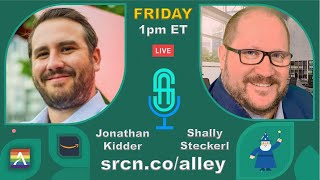
In this hour‑long live interview, Shally Steckerl and Jonathan Kidder discuss the origins and rapid growth of talent sourcing, tracing Shally’s journey from a 1990s staffing agency with primitive technology to becoming a pioneer who helped create a global sourcer community of over a million professionals. Jonathan shares his path from a communications‑marketing graduate to a tech sourcer at Amazon, highlighting how social media, email, and texting have become core engagement channels. They compare early "sneaker‑net" tactics—dial‑up bulletin boards and manual contact gathering—to modern AI‑driven platforms like SeekOut, ZapInfo, and integrated ATS/CRM APIs. The conversation covers practical sourcing assessments, the rise of talent velocity, the impact of COVID‑driven hiring surges, macro‑economic hiring cycles, compliance considerations across multiple U.S. agencies, and the proliferation and consolidation of sourcing tools. Both guests also talk about authoring multiple books on sourcing, creating browser extensions for outreach, and the future of multi‑channel automation and integration in recruiting.
Chapters
Friday! It is Friday, June 14th at 1 PM, one of the rare times that I actually start exactly at 1 PM on the dot. It's Shelly's Alley! We have a very special guest today. Oh my God, I got a picture-in-picture-in-picture! I got you on both screens there.
Yeah, let's edit that out here.
Perfect. No editing, this is all live. There's no memory. So live with me today, I have wizard sorcerer Jonathan Kidder. Oh, did you drop something there?
I've got my light going. Good to be here, everybody.
All right, turn on the lights and let's rock this party. So we met at SourceCon in 2011, right? That was quite some time ago, right? So like literally 11 years ago, a decade and a year ago that we met. And I think you were working at Best Buy at the time?
I was. I was working at Best Buy under Allegis Global Solutions. And it was kind of my first job right out of school. And really, you know, my team was like, you know what, you should go to a conference. And I started to kind of research conferences related to like recruiting and sourcing. And of course SourceCon popped up number one in my search. And, you know, I did some research and I was like, maybe I should go to this one. And it was being hosted in Atlanta at the time.
And my hometown, brand new.
Yeah, hometown of Atlanta, brand new experience. I had no idea really about sourcing at the time. Brand new, right out of, right out of school. And, um, I got to see you, Irina, Glenn, all the greats, Dean DeCosta, many others. And it was like back-to-back sessions and it just really just blew my mind at the time. You were like the MC, so you did, you did a couple jokes. I remember that.
Yeah.
But you kind of went through like different, um, sections and, and you really shared a lot of valuable information too. It was, for someone starting out brand new, it was just so much information. I was very overwhelmed but very just excited just to learn more about it and And, uh, it was definitely eye-opening on my end.
That's me, man. I'm always, I'm always spilling the beans.
You were very—
I don't think anybody has created as many competitors for themselves as I have. When I started, um, doing this like in 1996, I, I can't remember how many that— there were maybe like 6 or 7 people that did what I did, not very many. And Oh my God, John Sumner had written a book on disc that was like the first, the first book on CD-ROM that was like about like recruiting technology and stuff like that. And I bought that in late 1996. Anyways, so back then it was maybe 7 people. A few years later there were like 3 or 4 sourcing teams in the world. So by the year 2000 there were a handful of maybe 30, 35 sourcing teams. 4 years after I started. Um, but nobody really called themselves a sourcer until much later. I started speaking at SourceCon all over the world and other conferences in the area. And, um, like, I, I think at some point I saw on LinkedIn there was like 150,000 sourcers, and I was like, oh my God, I, I was like, I, I created this thing, this beat. Like, there's all these people now that compete for me for my jobs. Um, but now it's like 1.1 million, man. So I literally started, like, I lit the fire on something that became over 1 million person industry and it's continuing to grow and spread. And so, yeah, that was—
that's amazing. What did it click to for you? Because you saw the birth of the internet, honestly, you saw it coming. When did it click in your head to like, oh my gosh, leads, you know, internet connections.
I was getting Whooped. My first job, my first job at an agency staffing firm, right? Where like it's all about the commission and contingency searches and they actually had some contract searches as well. But you know, they didn't really have a lot of training. It's like, here you go, here's your phone. And there was no technology really. They had CPaaS for their ATS, which was horrible green screen technology. They had Lotus Notes for email, which replicated once a day. I mean, it was like, whatever. And so, you know, I'm seeing everybody else ringing the bell and making placements I'm sitting there by myself going, uh, this isn't working. So like maybe 2 months into it, I just had my laptop at night at home and I was dialing up literally like 38 baud, 38,000 baud, dialing up to like, you know, bulletin boards. And I was like, what the fuck? Might as well like, hey, does anybody here happen to know? I don't know anything about this thing called Oracle. Has anybody ever heard of this Oracle DBA? It had like just come out. Okay, seriously, it was like day 1 of Oracle DBAs or whatever, and some guy on this bulletin board was like, uh, yeah, I know somebody, but they're not in— they're not in this board, they're in this other board. So he gave me the address for the other board. I'm like, all right. So I connected to the other board again, dial up, create an account, all that. I'm like, hey, somebody told me that there's a so-and-so here. Um, his name was Sashi Joshi. I, I still remember because it was my very first placement. Yeah. And, um and I just made a connection through that. And that's when it, that's when it clicked. It was like, oh, Sashi had never posted resumes anywhere. He didn't even, he'd never even, he wasn't even looking. He just got gigs through friends. Wow. People were like, hey, check this out. And he was like one of the first few, you know, like mega Oracle DBAs. Um, I remember I placed him, um, make it, I placed him and the bill rate was $250 an hour. We're talking about in the '90s here.
Incredible.
It was so high in demand. It was so high in demand. So from that time on, I would go home and dial up, and they used to make fun of me at the office. They're like, oh my God, here comes Charlie with his floppy disk. And, you know, I used to call it my sneaker net because I would, you know, come in. I knew, you know, the internet was there, but they didn't even believe in the internet. And I was like, we don't believe in the internet, we just use a Lotus Notes. So, um, wow. Yeah, that lasted about a year before I just crushed every company record that they had. Most placements, most contractors out, most placements in a week, highest bill rate. I mean, everyone. And it was like, hey man, how are you doing? I'm like, uh, you remember that SneakerNet thing that used to make fun of me? That's literally all I'm doing. So bye, see ya, I'm out of here somewhere where they don't make fun of me. And that was the beginning of the beginning of the beginning of the end, right? So how did you get into this? Yeah, because you were like, you know, you were at Best Buy, this was your first job. And obviously you find SourceCon, but how did you even start?
So that's a good question. In recruiting, you know, I went to school for like communications marketing, and I really felt like I was gonna get more into like advertising, social media. At the time, social media was just publishing, you know, you know, it was, you know, I went to school around 2007 and Twitter was just on fire at the time. And, uh, I just recognized the benefits of that, like, wow, I should really learn more about this. So I went to school and got a degree in communications marketing and got an internship and fell into kind of social media too at the time. And from there, kind of my first job after my internship was at a company called Allegis Global Solutions, and they were looking for someone to do social media employment branding. Hey, can you manage Best Buy's Twitter account? Can you, you know, share YouTube videos about our career process, how to prepare for interviews, and so forth too as well. So I started in that area. And, you know, I would go in on-site locally to Best Buy. And they put me right next to the recruiters. So every day I would hear them on the phone talking and screening candidates. And I was hearing their wins every day, like, oh, we got this person, we got this person submitted. And I'm like, maybe I should get into that. So I talked to my manager and, um, at first they're like, hey, let's get you into more lead generation. Let's get you into sourcing. At the time they felt like sourcing was just like entry level, like here, just do this, find leads for us externally. And I fell into that around 2011 and just absolutely fell in love with it too, because I would find leads, I would get engaged, then get them excited about opportunities. And then I would submit them to to recruiters, and I would do that. And I had my weekly too as well. And, um, yeah, from there it just really, really took off too. And then from that experience, I was like, maybe I should find a conference or something. And then I found SourceCon, and then I got to, to meet you as well and, and meet many others. And from there it just really took off too.
So yeah, never were the same after that. That's funny.
And it's just so, so fun. I love just engaging people, getting people over the phone, selling to— and it's such an easy sell too. Like, hey, do you want to make more money? Do you want to work on this type of team? And, um, it's, it's just been a fun experience, um, thus far too as well.
Yeah, well, uh, you know, it's, uh, I think after we met and you learned some of the stuff I had to teach you, all of a sudden your billing rate like tripled. And, uh, yeah, now you're like global head of all things sourcing at Amazon or something like that, right?
Yeah, I'm a tech source at Amazon. I've been there for about 3 and a half years. And yeah, we've got a pretty big team there, and I get to train and mentor many junior-level sourcers. And, and that's something I really enjoy too, because you can source, but you know, after a while that becomes kind of mundane. I really like to train. I like to see other people grow and succeed and And so that's why I really got into just training people. I created my own blog, wizardsaucer.com, just to share articles, uh, in the industry. And, um, it just kind of took off. I started that like 2016, just sharing stuff, what I was hearing in the market. And, um, yeah, it just— it really took off from there.
And then you saw that I wrote a book. Yeah, so you copied me. You're like, I could do that. If that dumbass could do it, I could do it too. And so then you're like, I'm not just gonna write one book, I'm gonna write fucking 9 books. Of course my first book has more pages than all of your 9 books combined because it was like this thick. But then I wrote another one, and then I wrote another one. Now my third book is my last one, man. I'm done. You can keep the rest of it. You're like, I am done.
There's so much, so many different categories to focus on because I thought about that too, like I could do one big one or I could do little ones.
Yeah, put me in your next book. I'm happy to do that, but I am not writing another book. Editorial and editing and publishing. Oh my God, the nightmares. Just forget it.
You know, on average it takes me about, I don't know, 6 to 12 months on average for each book to write. And, and, um, I just kind of go back and forth. I bullet out everything I want to cover in the book. And there's just so many topics that, you know, if you look online, uh, like for example, diversity, bullying, sourcing, there's nothing about— there's no books about that topic. I wrote a bunch of articles and blog posts about it for a long time.
Yeah. And I, you know, I could write a book, but like I said, the whole concept of writing books is like so—
it's so hard, painful.
And oh man. And you know that— but here's my, here's my absolute worst experience. Okay.
Yeah.
Let's hear it. We were so close to getting this literally about to ship the proofs, the 200 proofs that, that the printer required. Okay, right before— so you have to, you have to— they, they force you to buy 200 copies that are proofs, right? Yeah. So they sent us the 200 proofs, and that was, that was supposed to be the, like, the seal of, okay, we got it, now we're gonna go to print. Well, I get, I get the proofs, I get the 200 books, I grab a box, I open one up, and I flipped to, um, the page on, um, oh man, uh, Blekko, I think it was. Was that— I think it was Blekko. And then, and then I just go facepalm because about a week before that, Blekko shut down and sold to a private company. Gone. So literally I had like a chapter on Blekko and I was so excited because nobody had ever written about this And I didn't even realize— I mean, I knew that they had sold, but I didn't realize that it was in the book. I mean, I knew it was in the book, but I just didn't connect the dots. So I opened the book and it opens up to Blackwind. I'm like, oh crap. Yeah, you're like, no, a whole section. So I was like, oh. So we had to go back and tear it out. And, um, but like, there's stuff like that. There was like Facebook. Remember when you could do Facebook Graph Search? That was in the book. Now it's obsolete. I mean, forget it. Remember that?
That was amazing too. That was, uh, You know, I think they connected that they realized that sourcers or other salespeople, marketing people could find people and start messaging them. And I think Facebook saw that and that's probably why they took it away or why Facebook—
I know exactly why they took it away. Why did they take it away? Because here's an example. Somebody was shopping for a wedding ring. Online and the Facebook Beacon caught them shopping for wedding rings. So like they knew that the person was, you know, shopping and it was a Facebook Beacon, right? So when they went into Facebook, there were ads on their page about wedding bands, right? Yeah. And that person's spouse saw that on their page and was like, 'Oh my God, you're proposing, you're getting a—' And it was— and that happened a million times, right? So people complained so much about it that they had to essentially shut down a big part of that. And that's— so it was such an exposure privacy violation. So I know that that's what happened. But honestly, you know what? Get rid of Facebook. I'm done. The only reason I'm still on Facebook is for the group. Other than that, talking about, you know, things that go away, what, what trends are you seeing right now?
You know, I had one similar in my book. I wrote a book about talent sourcing tools. I had a full, probably 3-page ZapInfo. Remember that? Oh yeah, right, right.
I could write 100 pages on that one, man. I kept using ZapInfo every day. Shut down, right? Yeah, they shut down and they sold it. They sold to Indeed. I'm trying to— well, I kept using it. I still used it because it worked for another like 6 months. They just— you couldn't download it anymore, so I kept using it. And then when they finally disabled it and came out with the Indeed version, I got that one and I started using the Indeed version because I was so hooked on it. I'm like, I just want to be able to download resumes. It was so much fun. And then they got rid of that one and now it's been relaunched again, but now it's like literally It's, uh, is it, is it usable? It's just for Indeed, just for Indeed. Like it only works on Indeed. You can use it for resumes, but you have to have the resume already. Yeah. And then it'll help you parse resumes. So it's kind of like me. Too bad.
Ah, it's a bummer.
Yeah. What other trends are you seeing?
So I would say for trends, you know, I would say, uh, just the market, especially during COVID really took off for tech talent. So I'm just hearing trends about engagement. You know, when you reach out, how many reachouts, getting people to actually respond to you. So people have been really interested in email campaign types of tools in general. I know you really talked about email deliverability, and that's something that I really have thought about too, as well. If I send out an email through a campaign, is it getting delivered? Are they clicking on it? Email tracking. I would say that's, that's kind of a newer thing that I'm seeing in mind. It's just like, uh, people aren't using LinkedIn as much anymore. I've talked to so many tech people that don't use LinkedIn. They maybe check it once a month, you know, for 5 minutes, and that's kind of it. But email is still king. It's number one. Um, for a while I was like, I'm gonna cold call, I'm gonna text, I'm gonna use cell phone numbers, but I think people just in general just kind of annoyed by that in the tech industry. So, uh, email has still been my number one way.
Texting still works for me. And also what I found is, um, iMessenger and Facebook and Slack and Snapchat and Pinterest and all those others, um, because they're— most of them, not all of them, but most of them are tied to the phone number. So if I have the phone number, I can use that to find them another way. And they may not respond to text messages, or they may not even get them. But if you find them on like a Snapchat or something like that, a lot of them are, you know, a lot of folks are on that. Yeah. Yeah, I would say that's a good area too, I would say.
And the nice thing about like any sort of social media or email or text, many times it just goes right to my phone. So I get a ping if I get a text or, or any Twitter update or any Facebook or Slack update. I've got the apps, it pops up on my phone. So people are receiving it and it's getting delivered to. So that's a huge thing that's, that's important when you are kind of messaging people in general to all the art of the recruiter message. And really, I just break down to really engage people effectively to what are the channels to communicate? How many times does it take to reach out to someone? You know, on average, how many times do they click on it, view it? Tracking all that information will make you really successful.
How many times does it take?
Oh, it's, you know, prior to COVID, I would say, you know, 3 to 4 times. But now after COVID, just due to demand, 5, 6, 7, 8, like a lot. And I sometimes I even have lists for my managers, hiring managers, to reach out to leads for me. So I have them reach out and they don't even respond to hiring managers now too, as well. So because that's, that's something when you have a hiring manager say, hey, I'm interested in your background, here's a project that I'm working on. And if they don't even respond to that, good luck as a recruiter trying to get them engaged. So I would say the demand has really, really increased too as well. So, Shelley, with your tons of experience too, you probably have gone through the dot-com bust. You've gone through recessions. I know right now it's kind of a bullish market. What's kind of your predictions for kind of sourcing in the sourcing world just with everything happening in this current market?
What should we do? Turning the tables on me, huh? Oh, yeah. All right. All right. All right. All right. I got it. I got it. So looking at it from a macroeconomic point of view, yeah, and looking at some of the bigger indicators like, you know, financial, world trade, purchasing power parity, gross domestic value and product, and consumer price and producer price indexes and all these things, you can see some patterns that are pretty obvious And it's essentially, it's a compression that sometimes is referred to as an adjustment. So I was predicting this. I was talking about this like in the early days of COVID in the first like 3 months of COVID I was already saying, guys, hold on, brace, because we're going to go into a hiring freeze. We're going to stop hiring. A lot of companies are going to say we don't want to do layoffs. So they're going to hold on to their people so they don't look bad. And so they don't lose business and things like that. Right. And we're not going to have any hiring until this thing goes away. But when it goes away, what's going to happen is the floodgates are going to open and all the wrecks are going to become available all at once because nobody does any freaking headcount planning or, you know. So if a company was, was holding off on hiring for a year and during that year they would normally open 20 wrecks on week one of the, you know, the pandemic being officially— yeah, yeah, officially like no longer lethal or whatever. Boom, 20 reps, right? And everybody did that. And it's like nobody's looking at the other people saying, well, maybe we should wait a while. Or no, it was just like no titration, just boom. So what I was talking about was hold on and don't do that. And instead, you know, go slowly, prioritize, go slowly. Because what's going to happen is if we do that, then we're going to have an adjustment. It's basically like an accordion. Exactly. So all the breath— think of it as the accordion or the bagpipes— all the breath was pushed out of the economy and people were literally holding their breath. Then they did a big inhale. Oh, and that's been the last year. Guess what happens after the big inhale?
The big exhale.
Nobody's going to hold their breath again. They held their breath for a year and they inhaled and now they're like, Oh my God. And then it's like a big exhale and then back to normal breathing. So that's literally what's happening. It's going to be up and down for some industries. It's going to be, you know, some will be affected. What you're seeing in the technology startups though is investment that was there during COVID And these companies usually have a year to 2-year pain point, right? So after about a year, a year and a half, 2 years of funding a company that hasn't started turning a profit, they start asking questions. So that's where the funding starts getting cut off. So that's what you're seeing. They were being— a lot of these tech companies were being encouraged to hire fast. Yeah. And so some of them hired more people than they needed because they were being encouraged to hire fast, and now they're pulling funding. And so they're like, uh-oh. That's why you're seeing offers being rescinded. And stuff like that. So that's, that's a very unique, um, strong exhale reaction to, right? But don't worry, we're going to come back to— we'll start breathing normally in 6 months or a year. The other thing that I think, um, that the other part of what you asked is, is what's happening kind of with the industry. There was a period where there were too many tools launching all at once, and most of them were incompetent And there was a lot of bad noise in the industry. I'm talking about everything from AI to, you know, I'm not saying just sourcing, I'm saying recruiting in general. There was all these tools and technology that, you know, some of them were really good, but they were unfortunately drowned out by all the noise of all these other ones that were terrible, that are all out of business, or they've been acquired and, you know, chopped up and gone into other. So Now, we're starting to see that the key players actually strengthen their positions. So for example, SeekOut has some pretty good game-changing technology with consolidating all of their searches into one complex search. That's exactly what you and I, it's exactly what I taught you how to do in 2011. Manually. Like, if you were a scuba diver, you would know how to do decompression charts like a Navy SEAL by writing them on a slate. Well, nowadays that stuff is done with a handheld computer. Well, the same thing was what I taught you was the Navy charts of Navy SEAL diving, right? But now you use a computer. Well, that's what's happening. So Seacow's got this technology that essentially automates that. You still need to know how to do it, and it's always good to know the tables in case you don't have a computer, um, and it's always good to be able to do something by yourself without having to buy a tool. But that's what's happening is these, these larger, more successful tools are starting to consolidate their strengths and build in the areas that were major gaps. Right. So for example, yeah, go ahead.
I mean, they started maybe with contact finding extensions. I know there's been so many that have come and gone in that area, and that was like the number one. Here's an extension, here's how to find someone's cell phone number, email. And many companies have like just started there and then they started expanding from there. If it's, you know, search, searching, or, you know, AI automation searching, or email campaigns, or whatever else SeekOut has expanded into. And yeah, Hiree, SeekOut, those two have been really focused on just optimization too. Another one, Entello too, that sounds like they're doing really well over there too with—
That's one category of tools, but then there's also like the bigger picture project management type tools that bring things together and connect the dots, right? They're like the cartilage and the tendons of technology where they're starting to allow you to do integration. So what I'm seeing is a good example, Greenhouse, right? One of their biggest advantages is their ease of API. You can, if you're a sysadmin with Greenhouse, which doesn't take a whole lot of technical expertise, and you have a little bit of technical knowledge, you can activate an API key and connect just about anything, because they're designed with an API-first mentality. So that is allowing for these technologies to come up that are putting things together where they used to be independent systems. You have to log into the CRM to do this, but then you have to move them to the ATS and log in there to do that. Then you have to go over here. You know, you have to go to that tool to get their email and then this tool to import the project. So all that stuff is being brought into a centralized point, but it's still best-in-class applications. You still use SeekOut and you still use Swordfish and you still use LinkedIn, but Greenhouse allows you to connect all three. Right. So that's the next generation. And then the other one is Outreach. I was starting to explore this about a year ago. Where I was looking for a solution that was capable of integrating sequences with text messaging, Facebook, Pinterest, Instagram, all of that. And the closest— yeah, all together in the same sequence. Wow. Yeah. The closest I ever got to that was with a, with a system that was built for telecommunications contact management in an inbound outbound call center environment. And it was really smart tool. but, um, they— the implementation of it was way— we were like the only— we were the first ones to try to do it, and it was way too technically complicated. Things started happening like the texting would go wild. We had one occasion where the same individual got 200 text messages, a total machine error, like it's a glitch. But you know, that kind of stuff will really cramp your style. So it never really got off the ground, and I haven't seen anybody really do that now where you actually have ability to send an email followed by a text message followed by a Facebook message and all of it is tracked back. So I'm still hoping that that's going to happen because it happens already in other systems but it's all inbound. So there's these audience listening or customer service listening technologies that will monitor Instagram, Pinterest, Twitter and allow you to respond from a central location. But they have to be inbound. You can't start the message, it's a response-only system, right? Because everything comes into your CRM, but it doesn't know how to— it knows how to check everything, it knows how to check 100 places and bring them in, but it doesn't know how to send them back out again to 100 places. If it comes in from Twitter, it can reply to Twitter, right? But it doesn't know how to send it to 200 places. So somebody's going to have to figure that out.
Right. So I guess with that in mind, what's, what's the next thing for you? Is it more just integration automation tools or what's kind of the next thing that recruiters— I know for us for a while it was just, hey, contact finding extensions. Hey, yeah, automation, automation tools, texting tools, automation, simplification, velocity.
I'm talking a lot about talent velocity. Being able to leverage things like rediscovery, get more out of your applications, get more out of your system, contact more of the people that you already have, update them, keep them engaged. So it's got more to do with like accelerating the workflow where it would take 5 recruiters to do the job. It's now taking only 1 because of the augmentation and technology. And by the way, this is not a bad thing, because the need for recruiters has more than 100-folded, right? So there's not enough recruiters. So it's not like, it's not like 5 recruiters are being replaced by 1 recruiter and 4 recruiters are losing their job. No, 5 recruiters are being replaced by 1 recruiter, and those other 4 recruiters are being that 1 recruiter for 5 other companies that didn't have a recruiter before. And there's even more need than that. So yeah, the hiring insanity is like, whoa, what is going on with the recruiting hiring right now?
And I would say for a while, peak of COVID once everything kind of settled, I was getting 1 to 2 offers a day. It was insane. Just—
was that one of those? I was one of those. I was, I was one of those. I think I was like, please, please come work with me.
It was like so many. So it was like, wow, it's kind of slowed down.
I only want to hire people I know because I've been burned so many times. I'm like, I only want to hire people I know. I don't even want to post the job. I think I told you that. I'm I don't even want to post the job because I'm getting applications from people that say that they're this but they're not. And it's like, so then I ended up creating a test. So yeah, now I have a test. Now I have like a real— actually have a— like every other candidate in my ATS, they go through a test. And, uh, you know, now I'm okay. I'm okay. So I'm all right. I won't stop. I won't stop, uh, reaching out to you though.
Do you have like an assessment? What sort of screening questions do you cover with like a sourcer? What What, what's— you cover like fundamentals, like here's modifiers, operators, talk, talk through Boolean string, where do you find people?
Yeah, it's a 3-tier, it's a 3-tier assessment. So the first gate is just, uh, answering some phone screen questions where we have in, in— it's a scorecard. We have a scorecard that has rubrics, and then we have, you know, some 7, essentially 7 basic questions. And I want to do this on the phone with the person, so they apply, I'm going to call them right away, and I'm going to do this on the phone and say, hey, can you answer some questions? So if they make it through that, if they pass the threshold for the rubric, then while I'm on the phone, I say, I'd like to send you a project. Would you be okay with that? Because the next step would be a full-on interview. So the phone screen is like 15, 20 minutes at the most. Right. Right. And it's these few questions and it's pretty much pass or fail. And I tell them right away. I don't say, oh, I'm gonna get back. I'm like, I'm sorry, but it just, this is not the right place. For you, right? Because this is what we're doing, and I'm sure you're great, but it's not. So then I'm like, all right, can I send you a project? Because the next step would be an interview, and I would expect that you would have interviews for about an hour. So take about an hour and do this project. And I send them a spreadsheet with some instructions and what to do, and it's got, you know, very— again, very specific rubric in there. They complete it, um, on the honor system, meaning that I, I'm telling them don't spend more than an hour By the way, I know what an hour of recruiting and sourcing looks like. I've been doing it for 25 years and trained about everybody in the industry. So if you spend more than an hour, I can tell, and I'm please, please begging you, don't spend more than an hour because I don't want you to spend more time than what, you know, and because this is an interview, right? So they'll either do it or not. If they don't do it, that's the second screening. If they do it and send it back, then it's got some scoring built in. And then the third one essentially is the final review, which is like an, you know, an actual final interview but with an offer in hand. So they really only phone screen once, online, online sort of take-home test, then a full-on interview with the decision maker, myself, or someone that's actually going to say thumbs up. And by the end of that interview, we are actually making an offer.
Wow, that's amazing. And kind of for my team, I have to do all the external interviewing for recruiters. So I do kind of a 60-minute session with them, you know, different questions. But it's kind of eye-opening for me because many senior experienced recruiters, sourcers don't know Boolean basics. Like, can you give me a site search? Can you talk about operators, modifiers? Can you just talk over any sort of example that you've used in your career? And many times say, I use LinkedIn, I look at the job boards, and, and I leave it like that. So, um, have you experienced that too in your career where you just kind of talk to people, you're like, you've been— oh yeah, 10 years, and, um, you don't know just like the basic stuff, um, in, in general too?
So yeah, that's why the, the quick assessment that we do is not, yeah, um, a, uh, it doesn't have like Boolean questions or, or anything like that. The scorecard. It's got, um, a few more, more, you know, happy to share with you offline, but it's got a few more general questions that are about like, how would you solve for this? Um, I'll give you, I'll give you one example. So this, this is funny. I'm hopefully not embarrassing somebody here, but this is like, this is a really good example of exactly what I'm talking about. So I'm, I'm talking to this candidate. They applied. I was, I literally emailed them within 10 minutes because I get a notification through Slack that says there's a new candidate. I look at the profile and move on and move quickly, and I send them a message and I'm like, hey, I'm interested in talking to you. So within a few minutes, uh, is it okay if I call you? Do you have time right now? And they're like, no, but, um, I'm free tomorrow. So we booked in a meeting, and so they come to the meeting. Maybe about 5 minutes into it, I, I asked this question, um, and, and the question was this: How do you find phone numbers for people that you need to talk to? And it wasn't, do you use any tools or extensions or whatever? I mean, literally the person could have said the white pages. This has got nothing to do with technology. It just has to do with resourcefulness and how would you go— you can say, well, I call their mom, or I'm going to call them for— you could have said anything, right? So they're like, I'm sorry, what are you saying? I'm like, How do you get contact info? You know, let me clarify. How do you obtain contact information for someone that you found? You're a sorcerer, you find people. How do you obtain contact information for these people that you find? Hello? Hello? Hello? They hung up. Wow, they hung up. It wasn't even like, um, I'm not really sure. I don't know how it was. Like, literally, they ended the interview by disconnecting the call, and then I thought maybe that the call went bad, so I texted and called, and no response. Then I get a message from our coordinator. The coordinator says so-and-so decided to withdraw from the process. Wow, wow, wow.
Oh boy. Yeah, thank goodness.
And again, that's not about bullying. It's literally, you know, it's You're sourcing. The job for sourcing is to find people. One of the things you got to do is contact them. Right, right.
How do you find them? That's just 101 too.
Yeah, and there's like 7 or 8 other— I think altogether there's 11 questions in that quick phone screen that shouldn't take more than 15 to 20 minutes. Some of them are pretty easy to answer. Like, he could have said, well, uh, I use a directory, or I use ContactOut, whatever. Boom, that's it. You know, it's a quick answer.
Yeah, yeah, no, pretty simple. Wow. Well, yeah, you know, I could kind of talk over kind of my books too as well. I, I've written on a couple different topics here. So, and it's been really fun. It's become a hobby for me during COVID the peak of COVID I had so much free time that I was like, you know what, there's so many different topics where if you do kind of a just a general search, there's really nothing online. Like how to even message people. There's no books related. There's lots of blog posts. There's many YouTube—
Books about sales and sales.
Sales. Yeah. And I feel like no one has attacked—
I'm getting a commission for selling your book, right? I mean, this is 50/50. That's fair, right? 50/50.
And there's nothing. There's nothing available, people. And pooling strengths, of course, of course, Full Stack Recruiter and a couple other ones, maybe even your books cover Boolean, but just, just there's not a basic one that just kind of goes, breaks down the level of what I talk over too as well. And then How to Speak Tech, you know, how to phone screen, how to engage people. I break over all the major, uh, you know, uh, you know, uh, roles and, and, um, in the tech field and how to phone screen, how to source, how to create different strings and, and so forth too as well. And then top talent sourcing tools, I cover all the different topics, lots of different categories. To it in general, talent source is more about here's my overall strategy, here's how I break down a, you know, uh, how— here's how I do an intake call, here's how I create different strings, here's how I gauge people online, here's the communities, here's the tools that I use. Diversity sourcing, HBCUs, here's how I find them online, name generation communities.
Oh my God, as you're going through this, I'm realizing that's literally each one of those is a chapter in my book.
I could have combined them. I know. Yeah, you could.
Well, you know what, you know, you know how you have like that Harry Potter box set? You need to sell a box set, right?
The Wizard Sorcerer box set. I totally, you know, You know, I totally need to do that. And really it is, I could combine them all just like your book. Every chapter, you probably, you, you break down, you know, every in-depth detail too.
So yeah, the way I wrote my book honestly was because the first one was really a survey or a report on all things sourcing at the time. Then the second one was meant to be a textbook, which is still used to teach courses at university, and, and it works that way. But like a lot of other textbooks, it's not something you pick up the front page and read to the last page. You know, it's, it's more like you skip around and it's more like a reference guide, right? Yeah. So the third one, um, what I wanted to do was really put together an actual book that you could read, right? Yeah. And that's where it has like the beginning of the story of how did sourcing start, where did it What's the economic significance of it? Why is it important? Um, all the way through to like what you're talking about, the intake meeting, a bunch of search. So it covers all of that. It even covers some of the things that, um, I haven't seen on yours. You might want to take this. I'm gonna take the notes here. Yeah, which is the, um, the, um, regulatory and compliance issues.
Yeah. Yep, you know, that's, uh, that's important too as well. And especially over the talent sourcing tools, like I summarized in the beginning of the book, like, hey, consult legally with, with each of these, like make sure you talk to HR, uh, just because we just don't know different countries, uh, what they can use, what they can't use, what data. So it's, that's it.
And even here domestically, um, for example, did you know there are 11, 11 government agencies that have oversight to what we do? 11? No, 11. Yeah, most people don't even like— they don't even think about that. I mean, there's, there's a whole chapter on, on that. Of course, you know, OFCCP, which has, you know, financial, financial oversights, like they can fine you. But you— and you know EEOC. Yeah, there's a bunch of other ones as well. There's the Americans with Disabilities Act, ADA. There's Sarbanes-Oxley. And they actually impact what we do because they're allowed to look at our data. In some cases, they're allowed to, you know, so now in my job now, I'm actually responsible for all things strategy and systems. So I work closely with our chief privacy officer on some of these things. And it's opening my eyes up to like a bunch of things that—
Kind of scary then too.
I wish I didn't know, right?
Managing or having data too. Yeah. And that's, yeah, HR, that's really good to have that just to know that information is really important too as well.
Yeah. So I haven't seen a book cover that. Of course, that's like not the most exciting.
Yeah. I know. I'm like, ah, but on top of that, I actually worked with a developer and I created my own extension tool called Recruiter. Recruiting want. And this is the peak of COVID I'm like, why don't I just create a tool like TextExpander but more for LinkedIn? So what it basically does is you can go to any public profile on LinkedIn and you could choose the message that you want to message someone with, and it just auto-populates. So that do this, uh, majority like, why don't I just create one for free? And it works for me, you know, maybe not—
it auto-populates From like your, from like a list of messages or something? Uh, from their profile.
So if you would pop it up right here, um, the extension would pop up and then you would choose a template that you want to populate. I added about 25.
That's what I meant, the template, right? Okay. Yeah. So it uses their information and then like some, a list of messages that, yeah. Does it work with Recruiter?
Yeah, you know, it can if you, uh, you can emails or whatever. It could, yeah, you could go in internally and do the same thing, would pull up the same information. So you see how I pulled up my name, my location, my education, my location. Sometimes it doesn't pop up, but you know, I would— you could just highlight anything right here. You could highlight that and then just click, and you can send them more personalized.
But yes, the one thing that LinkedIn, you know, with LinkedIn Recruiter, you can send batch emails, but you can only add their first name for personalization.
That's it. Yeah. Yeah, now I wish they would totally make it automated. I don't— I wonder why LinkedIn just doesn't do that, where it'd just be like, hey, auto-populate their name, their company, their location, their industry, their skill sets. Why hasn't— why don't you think LinkedIn has, hasn't done something like that with LinkedIn Recruiter?
It's not in their best interest. Really?
Just, it would just automate it very much so you could just go in. It's not in their best interest. Yeah, really? That's interesting.
Because as it is right now, it— yeah, as— yeah, as it— one of the problems right now is with too much unsolicited messages. And I don't know if you've ever tried to do this, but I've flagged a few messages as spam. Yeah. And maybe 4 or 5, not that many. And they, you know, they open a ticket and within a day or two I get a response. And every single time I've flagged them, The response is, this does not appear to be a violation of our terms because they paid for that, right? So it's kind of like, okay, so let me put what I'm saying— let me put it together. Yeah, let's hear it. I want to be very clear. They want you to pay for that is what I'm trying to say. Yeah, because if somebody pays to spam me and I report them as spam say, I don't want to get these kinds of messages, they say, uh, no, you signed up for this and, uh, it's not spam. So, um, because, you know, we paid for it, or they paid for it. Okay, great. Now if you do what you're talking about and you can send the messages out for free, they're not getting paid.
They're not gonna like that, right? Right. So, you know, and then what you would do is you could copy this template, you could use it as— you could use their services, you could use their recruiter message and copy that and add that. You could message them directly.
Oh, you have to copy one, one at a time? Yeah, yeah. Why don't you have a button that like includes— like that, like copies and paste? Oh, because you can't see where it goes. I can't see where it goes.
But yeah, I know TextExpander, they allow you to do that. It just pops up a little bubble, bubble pops up, and you can post it right.
Magical does the same thing because it's— you're doing it on the spot. Yeah. Yeah. You're doing it like you're in the box that response goes, right? You write this. So there you put the, you put the mat and then paste it there. But with yours, it's over there. So yeah. How do you get, yeah, but copy and paste is not that hard.
Copy paste. It's not too hard. Yeah. I was like, I'm just gonna make a free one. I added all my favorite templates up to 25.
And I, cause I'm like, I just do the same thing every day. I love how you name them. That's just brilliant. You know, name template 1, template 2. Only you know what template 1 means.
We— I had some trouble working with my developer too on that. Like, I'm like, come on, here's the templates. But all in all, it's— it works. It's not— not the best, but it's— it's free. How do you get it? I've got maybe like 2,000. Is that from Wizard Searcher or, uh, you go to Google Chrome and get it? Uh, just type in— yeah, okay. Yeah, Recruiter Wand. So it's kind of cool. It's not— I was like, I'm just gonna make something that Okay, now it's only 1,000 active views. So not too many people.
Well, you're probably gonna have 5,000 more after today. Hey, all right. I'm like, it's free. And I want commissions for that too. I know it's free. So I want my commission.
Great tool. Second one, easy, simple to use.
Thank you, my wife. Right. Shelly will be the next reviewer. Shelly, great. Free. What other tools are you using?
So yeah, it's a good question. So TextExpander is my go-to. It's amazing. It's the Magic extension, like you mentioned, is you can do so much with that tool and it's phenomenal. It's such a—
you have like shortcuts on, like, you type in 345 or whatever and it expands that. Yep. Yep, exactly.
That's amazing to use. Simple to understand. Another one, Sales Handy. I use Sales Handy since I have Outlook and it tracks, uh, you know, anytime I send a message, how many times are they clicking on it? What location are they clicking on it? is the email getting delivered to as well. Um, they charge like $100 for the year too as well, and it's, it's simple, easy to understand. I never have any issues with this tool. Uh, one of my favorite actually is because I just, I send out an email, wait, how many times did they click on it? Uh, it's just good to kind of have that too when you're doing mail merging too as well. They have their own mail merging, uh, kind of tool, and, uh, you can choose how many people you want to message to as well. Uh, and yeah, it's pro, it's only like $25, uh, a month for unlimited email sequences. So if you create one, if they respond back, it lets you know too as well. Simple, you know, easy to, to understand, uh, in general too. So I like it. Some people, you know, I'm sure there's other ones too that people use, but, um, that's one that I recommend. Another one, Mailshake, maybe pretty heard of that one too.
That's— no, Mailshake, like a milkshake.
Milkshake, Mailshake, same kind of thing. It's, it's cheaper too. So people, if you're cheap like me, it's, it's maybe, you know, uh, I call it frugal. Yeah, frugal.
I don't want to spend much money. 25 years, exactly.
Yeah. So look at that, email at $44 a month. So the bigger ones are way more expensive than this too, but it's, it's automated. You could sync it up with many other integration tools like HubSpot, Zapier, and others. But yeah, it's up to 5,000 recipients per campaign. So, and it's all hosted on the site, so you don't need to like link it up with Outlook, so it doesn't slow anything down. You can log into their dashboard and do it all there, then it syncs up with your, your Outlook that way. So I've liked it. I've had, you know, this one and plus sales handy for a while too. So, um, it's a good first step. If you're— you got tons of money, you know, of course there's like Jimdo, Lemlist, Inteller. There's many other ones that have more bells and whistles, but if you're cheap and frugal like us, this one's pretty simple and easy to step to use too as well. So, uh, so those were my email automation. That's really awesome. Another really cool tool, WinX. Have you heard of WinX at all? No. WinX. WhenX really just tracks, you know, basically your searches. So if you're doing a search, it tells you when's the last time you clicked on the links, and then you could add a little tag like, oh, you know, follow up with this person, or, you know, you can add little tags to different searches too as well. So it's just a way just to, you know—
is that the URL for that so I can post it on the chat here?
Uh, whenx— .io.
So really, it's kind of cool. And yep, right there, whenx.io.
And it's cool. So you could go to people's individual profiles, and then you could, you know, create like a notification, like, okay, you did a phone screen, and you want to follow up with this person in like 2 weeks, this little tool will just pop up and let you know, hey, ping, yeah, reach out to this person. Has good experience contacting in 2 months, and it'll just give a little notification to as well. So Wenx, simple, easy. It's $8 a month too, but they have a free version too as well. And then you could see how it— your searches, you could add different tags to as well. So cool.
By the way, um, while you're— while you're on this topic, um, um, Todd Davis Piped in. Todd, uh, yeah, yeah, he said that Doug created a new extension called— yeah, that's— what is Extract? So I just posted the link there.
Extract. I have not heard of that. That's pretty cool. Oh, Doug, I've got to meet him several times, and he's, he's quite the, the genius. So look at that, it's, uh, kind of a download the extension. You can scrap, scrape information. Easy to use.
It's just like, it's like, you know, wow, ZapInfo. But I think it looks like it's Chrome specific. That's all right. No problem. Yeah. Come on back. We missed you. Come on back, Doug.
I think probably he sold it and then maybe felt bad. Like, wow, I, the tool is gone.
You know, too many people were like depending on it.
Yeah. Living and dying by it. So it's, Interesting. So, wow. So request the app here. Let's see if I can get on their list here. Yeah. So you just have to request access, email, name, Google, Todd Davis. How did I hear about it?
I accept. That's right. All right.
So yeah, that's a fun one too. You know, there's so many other ones. Have you heard about Jobin LinkedIn Automation? That's a newer tool. Yeah. I haven't really played around too much with it at all though, but the lady and the team looks like they've been posting a lot on Facebook about it. So, but you can, you could do bulk automated searches and do a lot within the tool. Automated outreach here, track messages. Well, what about texting?
Are any of these good for texting or do you use any texting apps? The only one— or messaging other than email, like, I don't know, Facebook, Pinterest, WhatsApp, anything else?
SimpleTexting is the one that I've used in the past too as well. That was the only one that I, that I had access to as well. But yeah, SimpleTexting. I know, um, Mike Batman recommends this one too as well. SimpleTexting, it's easy to understand. Yep, SimpleTexting.com. But I haven't really done too much. I'm, I'm more like an email, old school kind of person, getting the email, sending them an email. Please respond. Yeah, but no, that's cool. Yeah, so that's, that's, uh, one that I would recommend too. Um, what was your question? Sorry, I kind of jumped to the next.
It was just, are you doing any texting or using texting?
Yeah, yeah, yeah, that was the one that I would recommend too, um, in general. But, um, yeah, there's a lot of tools that I use. Um, it's always changing, but it's interesting, like you said, a lot of tools have kind of come and gone. Too, so, or they've combined, uh, to other tools in general. So, but, um, yeah, that's, that's kind of the, the newer tools.
Are you, um, are you hiring sourcers? Because I know a couple folks. Yeah, we are hiring still.
We're, you know, definitely, uh, if anyone, uh, on the call reach out to me on LinkedIn directly, I could connect you to some people we're hiring. You know, we're looking for tech recruiters.
You still do sourcing as a—
okay. Yeah, it's interesting at Amazon. It's a different job title though, or like sourcing recruiters. So there's one, like, at the beginning of the funnel, I reach out to people, I create strings, I engage people, I do initial screens, and then if they pass the first round, then I send them to a kind of a client lead. And a client lead is someone who prepares them for the final round and then eventually gives them the offer. too. So it's the way it's set up, it's like a sourcing recruiter plus a client lead, right?
So you're hiring for that first job that— yeah, so if anybody's on listening, because I know some folks, we got some people hiring.
Yeah, we're still hiring as well. So that's good. I mean, tech is still, uh, still active. We're still kind of, you know, you know, working through this, this bullish market too as well.
So, um, yeah, but yeah, dude, I just realized I told you I was going to keep you for 30 minutes. It's like coming on an hour now. Yeah, man, that's what happens when you have too much fun. Way too much fun here. Um, well, it's been an honor. Let's, let's wrap it up because, uh, folks got to go eat or something. Let's do this again, man. Yeah, I appreciate it.
Appreciate the time. It's always an honor. You're one of the first people I got to meet in the industry too, so I really just appreciate your eagerness to train and teach others too. So really, without you being here—
glad it rubbed off on you though.
It rubbed off on me. I wouldn't be here without your support too. So it really— just appreciate that too.
It's a pleasure, man. Good to have you. Yeah. Anything you want to say? Parting, parting, uh, wishes? Have a good weekend.
Happy Fourth coming up here.
That's right. Yeah. Oh my God, it's coming up soon. Can you believe it? Bye everybody. We will see you next, uh, Friday. I think it's Dean DaCosta. Coming up. Oh, awesome. Cool. See everybody. Bye-bye. See ya.
More from Shally



Scaling Talent at Hypergrowth: Leadership, AI, and Hiring Excellence with Cindy Nicola







