Luke Eaton on Data-Driven Talent Acquisition
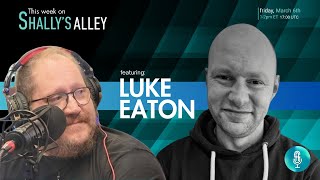
Luke Eaton, Director of Recruiting at Ava Labs, breaks down talent acquisition as an operational problem. He identifies capacity as the hidden bottleneck most recruiters miss, and introduces a BI calculator that forecasts hiring effort based on conversion rates. He warns against AI screening hype and urges recruiting leaders to align with business metrics to earn a seat at the table.
Chapters
Hey, hey, hey everybody! Welcome to Shelly's Alley. You are live in my alley and it is Friday, March 6th, around 1 PM here in the left side of the pond. Our guest today is coming from the other side of the pond, from the British Isles. Actually, are you in Scotland or in London today?
I'm in, uh, Scotland. I live in Edinburgh.
You're in Scotland today. All right, cool. Well, welcome everyone, and our guest today, Luke Eaton, who is Director of Recruiting for Ava Labs, and as I mentioned, in Scotland. You may know him from some of the writings that he's done and a lot of the information that he posts on LinkedIn quite prolifically about data-driven recruiting and recruiting operations, lean, if you call it lean recruiting, we'll have to explain that. And of course barbecue and bourbon, wait, not bourbon, barbecue and scotch, right?
Yeah.
Welcome.
Thank you so much. I was super excited. I've been excited all week about this. 'Cause so many people suggested you need to speak to Shelly, you need to speak to Shelly. Finally, I'm here. I'm really excited to have the conversation.
Awesome. Yeah, I'm so happy to have you, man. It's great to, it's great to have thought leaders from outside of the US with, you know, different perspectives and, and, uh, and all that. And, you know, and especially I was really excited to ask you about single malt scotch because apparently you wrote a book with one page.
Yeah, I, um, well, I was writing up— I was asked— I was at the Recruitment Operations convention in Chicago run by OneRec. If you're a RecOps person, fantastic convention. And I was asked to do a talk on change management for TA, which is a bit of a deficit in my view. I happily get into that. Definitely.
We can talk about that for sure.
Yeah, but I really, really suck at design. Like, my wife has to help me with colors. And I'm not talking like taupe. I mean, like, blue. I'm so bad.
I'm 100% colorblind. I didn't know that about you.
I just have the design sensibility of a drunk rhino. So I'm really bad at slides. So I just wrote out all the long form. And by the time I was finished, I was like, oh, I've wrote a book. Damn it. So I published a book. I had it printed and I had it for all of the conference attendees. But I just got bored of writing about change management. It's called Welcome to the Desert of Shitty Change Management. But I got bored of writing about change management because it is boring. So the back chapter is just my top 5 favorite single malt Scotch whiskies with my own personal tasting notes. So if anyone wants to hear, to know that, more than happy to grab me on LinkedIn.
I gotta know what the top 5 are. Just name them off.
All right. Okay. It depends what you're after. I'll do it right now.
Okay, let's, let's do it.
Lagavulin 16, really classic, really, really classic. A good Islay malt, very balanced even though it's peated. Ardbeg, another Islay malt but very heavily peated. Glengarry 12 Year Old, which is a Highland malt, very biscuity and malty. I had that at my wedding. Bruichladdie, if you're into kind of like coastal oily.
Yes.
Well, my fifth was Balvenie, a Caribbean cask Balvenie, and the reason I went for that was it's a good one. It's a gateway drug. So if any of your friends are like, oh, I'm playing, I want to maybe have some scotch, start them on that nice and sweet and then get them into the hard stuff.
The Balvenie Double Wood is so good and it's— yeah, um, like it's incredibly well priced for what you get considering it's— I think it's 12-year-old.
Um, yeah, yeah, yeah.
Bruichladdich, I thought, is— what's the Bruichladdich? Is it, um, Octomore? Is that what it's called?
Bruichladdich is the, um, uh, there's, there's a few. There's a, there's a classic, uh, Bruichladdich, which is that kind of coastal oily kind of like—
oh, the Laddie, that's what it's called. That's right.
Yeah, it's very, very hard to pronounce. There's another one called Bunnahabhain which has got about 17 H's in it and this is very Gaelic and hard to pronounce. Anyway, we're talking about whiskey instead of TA here. I love this.
I know. Yeah, well, I was just gonna say Bruichladdich is, um, it makes Octomore.
Ah, right. Okay.
Is the— yes, that's what— that's when I was gonna— but anyways, yeah, so now I— we actually have a pretty good aligned a list here. So I'm sad that I didn't discover a new one, but I am definitely validated. But yeah, you're right, we wanted to talk about data-driven recruiting and modern TA tech and enabling TA leaders to be viewed as strategic partners if they aren't, if they aren't currently. So, um, let's switch topics then. I wanted to ask you, from gut feel to data discipline, you describe yourself as a data nerd, um, you know, in RecOps, recruiting operations, for those out there that are uninitiated. RecOps, which is, you know, all the guts of recruiting that make recruiting and talent acquisition possible, but not necessarily the front line of like talking to candidates, right? So it's, it's all the, the guts and the data. Um, so my question is, what are the 2 or maybe 3 measurements that actually matter when you're hyperscaling?
And when you're hyperscaling, or like just, you know, pretty dashboards. Yeah, well, I'm going to avoid the obvious stuff, which is, you know, there's a lot of qualitative stuff out there and then there's resource. Um, so I would say like categories of data. So if you're looking at like resource metrics, so how much time and money will something cost? Um, let's say there's a certain scaling phase or a change catalyst to do with, uh, to do with an investment. And maybe they get their investment based on milestones, um, so that— and those milestones are based on headcount, for instance. Um, resource metrics are important, but, um, what one of the most underserved categories that I think is very important from an operational point of view, particularly for scaling, is that, um, is that, uh, is there's 3 operational metrics that govern Every process, whether it's recruitment, whether you're— if I was making, like, making this glass, there would be a process, and those processes are governed by 3 metrics, which is volume, which we're very good at measuring as recruiters, conversion at every stage within a given time, which again, we're pretty decent at measuring, and then the last one is capacity. And capacity is something we don't really measure very well as recruiters, but it is unfortunately the defining factor of any bottleneck in any system. Every bottleneck is a capacity problem by definition. So if you're scaling, all of a sudden you're going to hit capacity problems. And most CA leaders, even highly experienced ones, aren't actually that versed in either— either they're not measuring them at all. Maybe they can only see the product of a bottleneck, like a low conversion rate or a very long time to hire, but they can't pin it down. And bottlenecks are really, really, really vicious things because they actually are vicious cycles. So the worse the bottleneck gets, the lower the conversion rate gets. But at the bottleneck, you need the same amount of hires, so you need more volume to meet those hires. And so what does volume do to the bottleneck? It gets harder. So I would say some of those big, the biggest operational, the biggest category of data that is underserved by leaders in a scaling company are operational metrics. And of the 3 main operational metrics govern any process. We literally just don't measure one of them, and it's the most important one.
Capacity.
Capacity, yeah. All bottlenecks of capacity.
You know what, I, I was, I was having a conversation with a, with, with an audience, um, at, I was keynoting at presentation, and, um, I, I asked the audience a question. It was intended initially to be rhetorical. Trying to make a point. But the question was, do you know how many hours it takes you to fill a rec? So, you know, and this is directly related to capacity. It's, as a recruiter, do you know how many hours of your labor you have to put into the average typical rec? Now obviously some recs are going to be a lot harder, some a lot easier, some recs fill themselves. Etc. So I wasn't trying to get into the whole, like, you know, um, plot the chart of every rec you've ever worked at, but just kind of like your typical run-of-the-mill, you know, you do 30 of these a year or whatever. And I got blank stares. And I was like, okay, so as a TA leader, do you know how much time your recruiters spend, you know, filling recs versus not filling recs? Because there's corporate jobs in a staffing firm, in an agency, it might be a little bit different because majority, a very, very, very large majority of your time should be spent directly in the activity that lead to filling racks unless you're doing sales. But in corporate, we have other responsibilities through TA that have expanded, you know, our scope and such. But I was asking the question and I, from both the TA leader and the individual contributor, got blank stares. And I was like, well, this is a very bad back of the napkin but easy calculation to make that at least if you do this one thing, you can standardize the measurement of your— you know, your— you call it capacity, but I'm saying at the very least you need to have a general understanding of from the moment I start working on a rec, how many hours am I going to need to put into getting this position filled on average, typically, right? Otherwise, how are you going to know how many recruiters you need? Or how many?
Yeah, yeah, like the velocity of the hiring.
So I ask this question all the time: how many recruiters should I have and how many recs should they carry? I'm like, well, how long does it take you to fill a rec? I don't know.
Yeah, well, you, you kind of like got to the heart of almost like why I started writing on LinkedIn, um, and, and kind of try to— trying to help recruiters empower themselves with data is that all of everything you just described, like, are leading indicators. And those three can— like, so when I say capacity, I don't mean like how much can a recruiter do, I mean How many things can be done in a specific stage in a specific time? So how many tech interviews can be done per, let's say, week? That is a capacity per point. So if the volume exceeds the capacity, then that gives you the bottleneck and then you can calculate that, right?
And also, if I'm going to spend interviews, then you have people with hours to do them, then you can't do the interviews.
Well, what happens? Let's use a scenario. Let's say 4 tech interviews a week and then you've got a team doing 6 into booking in 6 interviews. What happens is you book out 1 week and then half of the following week. Week 2, you book out the half of that week and then the whole of the following week. And then the time in stage for every candidate, yeah, but the time in stage for the candidates goes up. So if that keeps happening, the time in stage is going to get bigger and bigger. Now if a candidate's got a higher time in stage, let's say that they're waiting 3 weeks, 4 weeks for an interview, the conversion goes down. But also, let's say that we have to scale and you don't know this and you're, you're building tools. Let's say you're bringing in Jack and Jill and Ashby and all these other cool tools to speed things up. If you're not measuring capacity, how do you know that you've not put something, you know, behind your bottleneck, which will make your problem worse?
No, they, they do that accidentally because they get to the problem worse part, and then they go, oh, we need to hire another recruiter. And so really, really bad leaders that, that don't know what they're doing just say, let's hire more recruiters. And it's like, well, hold on a minute. And then you end up with, you know, uh, an organization like Facebook with 400, 500, 600 recruiters, and each recruiter making somewhere between 4 and 8 hires a year. It's because you've got literally bottlenecks all over the place.
Yeah. Well, I work with a finance organization, like, just during, like, that big, you know, post-COVID explosion. Explosion and they needed to make like 2,500 engineering hires globally. They were just like gearing up for an IPO.
Wait, wait, wait, wait, let me guess. They had 2 recruiters that used to make 100 hires, so they said let's hire 20 recruiters to make 1,000 because they just did straight math.
I mean, unfortunately they didn't even know how to do the math, so they brought us in as embedded sort of people and I did all the data work for them to even show them. And when I showed them, they had this con— this— they had this major bottleneck at that tech stage, which is very common. And they were just putting in, like, they were bringing in embedded services and just putting stuff around the bottleneck. So I got to say it was all run through the CTO, weirdly, rather than the CPO or any other, or the COO. So I'm trying to explain it, but then I get to explain it in terms of lean and the theory of constraints. And because they're technical, they actually got it. So I said, look, if we do less recruitment, you'll make more hires. And I literally, we like, we're in Stockholm, we literally like mapped it all out, and you can mathematically prove that like if we did less volume behind this stage, you would make the same number of hires as if you just meet in the bottleneck, and all that excess recruitment power, go spend it on some other bit. So we were like load balancing our recruiters across this sort of workload.
That's a big part of it.
Yeah, yeah. But there's one point I really—
I want more, I want more resumes, I want more applicants. And so they, they get higher volume of applicants, but now they gotta spend a lot more time doing that busy work and actually spend less time filling jobs.
So elevate the bottleneck. And if you can't do that, like throttle volume in a way where you don't just say to every recruiter, I just set Wednesday off, you know, you say, well, make it, um, you know, great opportunity for a DE&I initiative, you know, like anything that would naturally increase conversion. Yeah. So, uh, but there's one point I, I don't want to get— you're getting me excited, sorry, talking about data, uh, which is that that was— I'll kind of took it that we took speaking about from like a leadership point of view, but for the individual recruiter point of view, what really I love about that, this type of model of recruitment, is it's fundamentally empowering for the individual because you don't need big systems. You can just get a spreadsheet. And if you just measure your volume in a week, you have the conversion rate in a week, and you can— what you were talking about, like predicting level of effort, like how much time are you spending? You should be able to look at the number of hires you're making and then predict from the conversions how many offers you're gonna need, how many interviews you're gonna need, how many screens, how much sourcing time and outreach you're gonna have to do. And then you can plan that and you can look at the conversion rates and aggregate marginal gains. So it's very hard to say, oh, the boss has said we need to do more with less and we need to make twice as many hires. All right, well, 100% increase is difficult, but maybe 4% improvement here, maybe possible another 4% here, another 4% here, maybe a, uh, you know, maybe a better drip campaign for outreach conversion, maybe 4% if you, I don't know, do, um, like take information from the skills interviews and bring it into your sourcing. And you add all of that up, and recruiters, what they can do is by improving their game that way marginally, for the same level of effort, they commit more hires. But also and the boss wouldn't tell you this, but it's really important. The same number of hires do it in less time. Go pick your kids up from school, you know, go have a proper lunch with your wife, right? Go to the gym. All the stuff that stops you burning out. So knowing your data, these, these really basic models and understanding how to do predictive work with them fundamentally empowers you because it's like a little sliding scale from output to time and you get to control it, not your boss. I've done a— I've created a bunch of BI tools ages ago that you can actually model it out. So you can just put in the number of hires and then the number of the sort, the conversion rate, and you can see the level of effort and download it as a PDF. So if anyone wants to hit me up on LinkedIn, I'll send you all of that for free. This was all pre-AI as well when I actually had to do the maths. But yeah, I'll send any of that. I'll send that to anyone.
What was that called? What did you call it? The The calculator?
Oh, it's just, it's like a little BI tool that I created, but I'll share it with you and you can copy it or use it however you want. But it just fundamentally, it just calculates, I call it Process Lab, which just allows you to calculate the level of effort. So you can pull data in from a spreadsheet and then it will give you your conversions and then it'll work out the level of effort. So you just say, I wanna make 25 hires and then it references your spreadsheet for the year and then says, well, based on these conversions, 25 hires will cost you this many offers, this many finals, this many techs.
Yeah, yeah, let's put that in the, um, let's put that in the after hours. So for, for members of TSI University, this would be a handout if you, um, if you're a member or if you join as an insider. I think that we should add that to that. So I'm gonna, I'm gonna get that from you and put it in there.
Okay, it's not sure. We've had this for free as well. It's not— if it's not open and it's like your high value community, then I've got an ebook version of this with all the dynamic tables. Perfect. If you wanted to change much you can, you can have that as well.
Perfect. Yeah, it's actually this right here. It is, um, I put it on the QR code thing here, right there. So if you join TSI as, as a member, as a subscriber, then you can access the, the book and access the, the handout. Um, awesome. Well, thanks for that. That's, that's pretty cool. You— we're starting to get into like basically the playbook of lean recruiting, and you were talking about marginal gains. And that— so that's, that's a lot of what you're, you know, you prescribe, um, in, in your book and when you— and when you write a lot about what you're, what you're talking about. So I want to dig into that a little bit. And just to say, um, if a TA leader walked into, uh, you know, brand new scaling startup and they have 90 days, you know, your first 90 days or first 100 days or whatever, to, um, leanify— that's not probably— I just made that up— to leanify recruiting. Um, where would you start cutting waste first? Without— I know you probably would start by like doing an analysis, but just based on all the analysis that you've done, all the times you've done this, you and I both have walked into environments where, you know, we knew right away something had to get cut. So what would you say are your instinctively gonna, gonna be areas where you would probably start cutting waste first in order to leanify a scaling startup?
Sure. Um, I'll— so yeah, lean, lean as in capital L-E-A-N, has a specific meaning, which is a process management framework. And people mean— take it to mean colloquially as like thin, right? Like lean something out. So I just want to be specific that like the— what I was talking about, about using bottlenecks and, and bringing volume down to meet bottlenecks in processes to increase throughput, uh, is lean as in the, the actual framework, the, the project management. But if you're talking about the broader, more colloquial, like how do you, how do you run lean, how do you run effectively, I'm often brought in, I'm fully internal now with Avalabs, which is amazing. But I've been essentially 7 years before that consulting and essentially being like a de facto TA director for scaling companies for a period of a few years. So there's often a similar playbook. Yeah, I've done about 8, I think I've done 8 ATS implementations in 8 years, not one a year. I've done multiple in the same year, unfortunately. And a few others. So look, budget, uh, the maturity of your TAT, um, and then governance, um, which is what, what are the defined roles and responsibilities in your current process. So I often find that the major threats to success aren't systematic, they're usually a lack of governance. So probably anyone in CA probably give us a holler on the chat if you feel disempowered by a stakeholder who doesn't listen to you. Maybe the business doesn't, doesn't revalue TA as anything but like a reacted shared service. So one of the first things you actually have to do is write out clear governance over who's going to own what in talent acquisition and most importantly, what happens if they don't do that? Because right now you've got probably got a tech interviewer somewhere who doesn't fill out their feedback and nothing happens if they don't fill out their feedback. Well, that's poor governance. So you just using sort of more mature business terms to describe the threats to that scaling phase. So for instance, you're working with the COO, they're responsible overall for scaling and you're like their little capo, you're their lieutenant for the TA people side. They're going to be looking at like, you know, quarterly and yearly, you know, threats to growth and milestones. Um, I would recommend immediately working with your C-suite and your heads of to define like a governance model for TA. So this person is responsible, this person's accountable, this group is consulted, there's an SLA for this type of feedback, and if it doesn't happen, this happens. I also recommend going to your CPO, um, and saying from now on, anyone in a management position recruitment and being a hiring manager is part of their role, as in part of their performance management framework. I.e., if you don't play ball, you don't get promoted. So it goes from this sort of optional extra that your very technical, uh, engineering leaders or your very busy finance leaders have to sort of suffer through to an important part. And bear in mind, we've not spent a penny yet. This is all good governance, building relationships with leaders. And then if you want to sort of be seen as strategic, that starts you being seen as strategic because you're starting to predict threats, business-level threats to your investment milestones. What you don't do is go, right, let's enable this team with like, let's get some loads of sourcing tools in and we'll start hammering away. Because if it comes up against poor governance, you've just wasted money and you're not going to get the ROI. And what happens if you don't see the ROI at the end of the year? It's your fault. Your— it is your fault. You didn't— it comes right back to you. Yeah, they're always in an accountant and it comes down to you.
Yeah, right. So if you— where would you say— I guess I want to come back and get an answer to, um, you know, you you just started, it's your first 90 days, and you know that there's waste because it's a startup and they weren't thinking about this, they weren't planning it, you know, they— hyperscaling, fast growth— where should you look to find what you're most likely going to be able to cut first?
Okay, yeah, I, I would say go back to your operational metrics. So get into the data, right?
So we, we talked about before the I'm sorry, volume, conversion, and capacity. Yeah, so capacity probably not even being measured at this point yet, right?
Exactly. So you should know like from the, your volume and your conversion, and then what you'll see is like maybe time to hire is, is significantly higher in a specific role or in a specific function. Um, and you know, look, look at like the, like the major outliers. But fundamentally you need to know if anything is sat behind a major, major, major ball neck.
What about bad hiring managers? How do you detect those? You know what I'm talking about? So like, there's so many different examples, and I'm not trying to point fingers or blame anything here, but the fact of the matter is that a lot of times TA is being held accountable for something that TA didn't quite do or can't really control. Like, for example, a hiring manager that just sits on candidates or intentionally does really bad interviews or rates everybody, you know, a 5 out of 10 in the scorecard, which does absolutely nothing to push the deal. So how do you detect that? Because those people hide in startups really well. I've seen it.
Yeah, yeah, like the brilliant jerks, right? I think, um, exactly, the Phoenix Project, which actually is like a, a, a story. It's like a fictionalized version of using lean to improve a business. Which is a very cool book if anyone wants to read. It's called The Phoenix Project. It's based on a book called The Goal by Eli Goldratt, who's like the expert on this. And he kind of had these archetypes in a software company, and one of them was called Brent. And Brent is a technical person who wants to like hoard their knowledge to remain important to the team. So they're very, very good and the business can't exist without them, you know, or they would be very, very critical. But they know that. And then that means some really bad managers. They don't do any good recruitment. So whenever some— what you described to me in my head, I think as a Brent or a brilliant jerk or someone with Elon Musk syndrome, like very, very common. Yeah, there's two ways. So the first way is like long term, which is probably what everyone's imagined, the license to hire, the training, all of that, you know, sort of get some better documentation. That's something that is going to work long term, but not short term and not with these people. Uh, the, the second is, um, is what I've already described around governance, which is you have to link hiring outcomes to the business's outcomes. So it means when the hiring managers are threatening hiring outcomes, they are de facto threatening business outcomes. So then you can go to the COO and say, this— in order to do this, we need to do this many interviews, We need to have this many people. This is the time to hire we're shooting for. And there's nothing wrong with measuring time to hire. And if time to hire is over and we can explain, we can look in the system and say who's slowing us down and why, then all of a sudden it's not the hiring manager not doing something for a recruiter they may not respect. All of a sudden, it's the hiring manager holding up a major business goal. For that quarter, and you should be able to attach it.
Now you can point to that, right?
The product roadmap, the commercial roadmap. And as soon as you're threatening time and money— and that is one, one of the things I suppose is don't make the mistake of going to your business with recruitment data and expecting them to care. I once went to, uh, the same CTO actually and said the conversion rate here is 44%, and he said, oh good, it shows we only hire the best. I was like, no, it doesn't. It said it absolutely doesn't do that. But then when I said to him, if we improve this conversion from 44% to 65% this year, we're going to save you 1,200 hours of engineering time. It was like, that's like a feature.
The light bulb goes on, right?
Yeah. I'm like, go get a Sharpie marker, go get your product roadmap, choose a feature, cross it off. Yeah. Because you weren't even counting it. They do point systems every single week for the software development time. They count everything as much as possible.
And they don't count reviews and all that.
1,000+ hours of engineering time not even be imagined. So you suddenly get more respect from the C-suite. So figure out what it is that the business is driving towards, connect your recruitment data to the business goals, time and money. And then when Mr. Elon Musk person Brent, you know, asshole interviewer type suddenly stops, you know, is not meeting an SLA, we can just flag that to the CEO and you say, just so you know, flagging, uh, flagging this as a threat to what we agreed, right? And then all of a sudden that they're on, they're on display to the whole business.
Now they're on it right now. They're on the same page. Okay.
Yeah, that's like, it's just me and them. If it's just me and them, why would they care?
Okay, so, um, let's, let's talk a little bit about the stack, the tech stack you've, you've advised and worked with with some, you know, talent tech companies directly. You know, you've been on both sides, right? You've been on the side of the employer and you've been on the side of the talent tech. Um, what, what does a, air quotes, modern, sane TA tech stack look like categories-wise? Like, what are the, what are the categories that are, um, you know, really necessary? And what are the categories that are like massively overhyped?
Oh, I like that. Oh, which could go in so many spicy directions, couldn't it?
Um, yeah, let's do that.
Yeah, well, I hope you've already— I hope you've got Glenn Lindley on at some point, you know, because he's— he literally wrote the entire— that TA ecosystem map. I don't know if you've seen that on LinkedIn. Uh, Glenn Lindley is in— he's San Francisco-based. He's English, but San Francisco is. But every year he publishes this ecosystem map All of TA, and I've been following him for about 5 years now.
I'm gonna tell him you said that and I'm gonna invite him on for sure.
Yeah, he's a dude. And you just look at this ecosystem map, it is rammed. It is like absolutely explosive. When it comes to a sensible tech stack, you want as little as possible to do as much as possible. So you want a simple repeatable workflow is, is better than something that's complex. Every time you add a new tool or a bolt-on, if you expect it to work in maintenance, you take on operational debt. And that operational debt, if you have a big team and you have some amazing TA ops manager, maybe that's, maybe that's fine. But if you're in a startup, you have to really worry about fixed cost. If you're in a startup that has, you know, the maybe up and down sort of headcount, like responses to budget discipline, you know, hire and layoffs and this type of thing. You have to be extra careful with fixed costs because you want to remain lean. So I can stack basically at all costs, and that tends to happen organically. So if you're up into a startup, you've just been essentially just organically doing whatever you can to make the hires. When you're starting to get into that kind of awkward growing pain, like 150+ space, and you're trying to go up to like 1,000 in a hyperscaling sort of phase with investment, then you need something that's going to be repeatable and systematic. Otherwise, the operational debt will take over and you just won't have the time to maintain. So work with a platform that you believe in the customer success team, that has good reporting and analytics.
Uh, drill down on this. So what, you know, used to be everybody just, um, well, I mean, back in the day it was all pencil and paper, but the first tech that people in TA really started buying by the, by the, by the truckload, you know, was, was the applicant tracking system, the ATS, and then it was the CRM, um, and then, you know, and since, well, since then we've added a bunch of others. So what Right now, today, what are the, like, categories of tech that you absolutely have to have? Do you still need an ATS? I say yes. Do you still need a CRM, or are enough— are there enough CRM features in most ATSs that we don't really need a standalone CRM? Yeah, I'm saying absolutely have to have, right?
Yeah, yeah. Well, I, I've been doing a lot of advisory for the past 4 years for a lot of ATSs, CRMs, AI tools, um, headcount planning suites, all of that good stuff. Um, and what I'd say is that the, the software development lifecycle of these, uh, businesses is getting faster and faster. So the, the big platforms that are well funded can put— they can be more innovative, they can put more stuff in. So what I'd say is, uh, ATS, absolutely, let's make that the heart of your recruitment function. So this is important also for legal points of views and compliance points of views, uh, you need an auditable way to be audited before a major investment, let's say in an ISO audit or something like that. So having one auditable place makes things a lot easier. It reduces your operational debt. And in that front, I'm not gonna like go shilling for companies because obviously that, that I have to remain agnostic. But like, there are obvious choices like Gem, fantastic ATS, also CRM. Ashby, fantastic greenhouse. You know, there's all kinds of stuff out there. So I would start with just a feature-rich ATS that won't break the bank and are going to be adding new features. So for instance, if you have an AI note-taking tool and a CRM and an enrichment account where you get emails from candidates and things like that, Greenhouse and Ashby have got every single thing that I just said. You know what I mean? Like this year they're going to start absorbing because there's been a success story.
So are you saying that's it? Like you just need a good ATS ATS that has CM capability, or is— are there other— so let's switch to the other side then. What are, what are the tech stack features that are massively overhyped and you really don't need to be successful in scaling a startup?
I always think it has to be based on its own parameters. You know, I can't say that this— all of this is trash and all of this is gold, but I would say overhyped, you can say that. Uh, I think AI screening tools, uh, haven't found a proper— I have not found a proper product-market fit. Yeah, I, I've, I would say twice a week I get someone messaging me going, Luke, recruitment's broken and I fixed it. Have you got time for a demo? And it's usually like an AI screening tool. Yeah, yeah, an AI interviewing. And they've got relative, there's some, they've got good features, some are looking at specific niches, but fundamentally it's, it's unproven. It probably will change customer That's all right. That was used. Yeah. And every time I look at their commercial side of it, when I ask them like who their customers are, so were they getting like real data on this stuff? It's always, oh, we've got— it's my cousin's uncle, or it's we've got this one customer who's really interested. I used to work for them, so they're like our use case. So we just— all I see is lots of single case studies, right? And what I would say Hang fire unless it's super cheap, you know, just hang fire and then just see like what, what's gonna happen. And that's what again, like these bigger platforms, they can take advantage of their customer base. If they were to explore something like that, they would explore it with a beta of 250 candidate customers at the same time. And then in 6 months' time you'll have benchmarks. Whereas right now it's like, this looks great, this is going to revolutionize. And then you look at the website and it's like reduce recruiter screens by 80%. Where did that come from? But it came from nowhere. It's marketing. So I work some really good AI screening tools, don't get me wrong, and I'm helping them find their product market fit, and I believe that there's a place for it. But right now, just— it's honestly spring clean your ATS, write some governance on how you ingest data into your ATS. Your reports will be twice as good than if you find— if you buy a really nice reporting tool and you have garbage process because then it's just garbage in. You— all you've done is make garbage data look nice, right?
Okay. And besides AI screening and interviewing, is anything else overhyped? Like, let me ask you this: are you seeing the same thing happening? Because I am with so-called sourcing tools. Like, everybody and their cousin and their uncle and their mother and their great-aunt all are, you know, whatever they— they used to be AI screening last week, and now they have, oh, we also do sourcing, because they added a ChatGPT prompt that says, I need help finding 5 software engineers, and GPT is like, here you go, here's 5. Like, everybody's got sourcing now. It's not really sourcing, but they call it sourcing. Do you get the same kind of overhypeness from that? Because I certainly do.
I would say that we're going to see this explosion of like what I call micro SaaS, which is like teeny weeny little use individual use cases, you know, vibe coded by people who either put it on a website or make it an internal tool. So we're going to see this sort of explosion because of where we are in AI, which is incredibly exciting. Don't let anyone think I'm down on AI.
They're not really sourcing though.
No, no, but that's what I think is that I wrote a whole article about this last week. So you're getting me excited. I had to jump out of my chair, literally. That's awesome.
Um, I pushed the right button.
Yeah, so shout out to Danny, who's on my team in Ava Labs. He, he built his own sourcing tool because we do a lot of sourcing through GitHub because we're working emerging technologies, right? So he is very ex— um, um, thanks for that, Jeremy. Love Jeremy. Shout out to Jeremy. Um, so like, he, he knows exactly what he wants So what I would say is like these tools should be sourcer enablers, not tools that replace sourcers, because sourcers have a deep degree of context. And also what these tools should enable sourcing to go from a reactive function to a highly strategic proactive function. So now that we can source to a, to a, now we can, now that we're, we can source an order of magnitude faster, let's say, or we can, we can explore the market faster if you a good sourcer. Why, why stop at the live rules? Why— we, we have, um, we have some automations that allow us to find like high-risk individuals in the business, or people who are, you know, looking to leave, or, you know, anyone who's, you know, people ops deem as high risk. Like, this is my current company, but with previous companies, um, where essentially you can just create personas for job families and then source ahead of time. Also, um, like, like market mapping. What's the difference between market mapping and like planning for like mergers and acquisitions? Why can't you market map for a potential acquisition with the finance team? It's the same role, so it's the same thing you're doing. It's an R&D function. So you, you should be in a situation where sourcing has a much more broader value to the business. Absolutely. It can like break out of A, reactive, B, just the beginning of a TA process, and C, TA at all. You should be able to use it for— it should work alongside marketing and BD who are out going out into the community as well. If you've got 3 shop windows, you know, BD and marketing, TA, and like any kind of ecosystem sort of work that you're doing, if you're in infrastructure, say, then you're all looking at the same people, but because you have marginally different missions in the business, you're all doing it in silos. So you've got sourcing tools over here. Marketers have got like HubSpot over here. BD people have got like deal room APIs over here. I'm like, you're all, you're all doing this to find the same people. You just all want to ask them 3 different questions. Do you want to join the company? Do you want to buy my product? Do you want to build on my product? So like, why not like elevate sourcing into a more of a broader kind of like strategic R&D function? On the sourcing side, I think things like if you want something spicy, The sourcing tools, the sourcing agents like your Jack and Jills and not so much Matterview. Matterview is different. I think Matterview is awesome. But a lot of these sourcing sort of outsourcer analogues, I think it's going to be a race to the bottom on price because they're currently anchoring the price to a human sourcer. Save 80% on a sourcer, what a C would pay a sourcer in a month. Use Jack and Jill or use this agent or use the Juicebox agentic function. But I think pretty soon we're going to wise up and realize, well, we're not replacing recruiters anymore, then we're replacing you with something cheaper. So I think recruit— I think, uh, TA leaders are going to understand that what we're paying for here is a data layer.
So it is always the UI. You're just saying that it's got to be— it's got to mature.
Yes, I think it's, it's immature. And I think what— but we're going to see this maturity in a year. Like, it's gonna, it's gonna happen quick because I think soon people are going to realize, well, if it's easy to build a UI like wrapper on top of a data service, well, why don't we just pay for the data service and then like build a wrapper? Now I think, I think long term this is good for your Jack and Jills and your juice boxes because they're then forced to anchor their value to the quality of their software again. So they, they have to say, well, we have an advanced feature here that you could never build than a million years. And this is the advantage rather than just saying, hey, we've hooked up a million APIs to this one client. So I think we're going to see more internal tools being built just because you can. Why not? And I think we're going to see a drop in price for these or a change in market positioning for these agentic sourcing tools. And then I think eventually we're going to start seeing much more feature-rich, like, UIs pulling more fancy data out of these broader kind of, like, data layers that are accessible to everyone, right? I could buy a deal room API right now for a few quid. Um, GitHub's free, Stack Overflow's cheap as chips. You know, we've got vibe coding tools. You could probably slap something together that will find a sort of population of candidates that you're looking for. with it, with a decent degree of technical quality. Uh, it won't be great, it won't be pretty, but we're not, we're not selling sourcing tools, we're trying to hire good, good people, right?
Um, yeah, well, that was— I thought that was the point of that, right? So, okay, so we now— so we know what we need, we know it's overhyped. Um, let's talk strategic. A lot of TA leaders say they want a— I hate saying a seat at the table— the proverbial proverbial seat at the table. And I always imagined this like, I don't know, um, King Arthur and the Knights of the Round Table table where there's like, you know, the 12 knights today, whatever bullshit. Yeah, the reality is a seat at the table, um, is not exactly all it's chopped up to be. It could be good, it could be bad. Yeah, there's something that some people want and, and it, it feels like you're elevating your position. So let's talk about The TA leader wants a seat at the table. You've scaled companies and products. Um, give me one or two things that, that would really earn that leader the credibility for said seat.
Yeah, love it. Um, I, I think that this whole seat at the table thing, a lot of recruitment leaders like getting— they work hard through that IC route, you get to that leadership, you get out of that middle management tier where you, you know, you're managing recruiters and doing a few recs. And then you get up here and realize, oh, where's the land of milk and honey I was promised, right? I don't see it as— you've got kind of a nicer mind than me. Mine's a bit darker. I see it as like an Illuminati. They're all like, ah, Luke, welcome to the Council of Evil. Take a seat. It's all bald white men, so you'll fit in. Yes. So in general, I think the best thing to do is there's no— no one's going to give you a seat at the table because it's a metaphor, right? What you need to do is start acting in a strategic way, and the best thing about it is it's free. Um, all, all the strat— all strategic work is. And let me start with this: I get that a lot. I, I coach recruits for free. So if it's for an individual recruiter, it's free forever, no matter what. If it's a business, I'll charge for my expertise, right? So I get recruiters message me on LinkedIn. I'll happily spend the limited time, etc. A lot of time. And they often say, like, you know, I want to be more strategic. And I'm like, right, well, what's your strategy? And they say, I don't know, I want to be more strategic. I'm like, there's not like a paywall for you to be— you could be strategic right now. Like, think strategically about your current company, like pen and paper, spreadsheet. So I would recommend, like, if you really don't know where to start, like, you just need to learn more about what strategy is, business strategy is and means. There's some good books like Transformational Leadership by Bernard Bass. Everything Bernard Bass has written, he literally wrote the book on transformational leadership. So that is leadership driven by a vision, which pretty much underpins most like SaaS techie kind of hiring these days, you know, visionary leaders. But you know, just have ChatGPT help you like curate some books on strategic leadership. But fundamentally, like, if you're a leader, you want to be more strategic. Align with business operations. So speak to your chiefs of staff, speak to your Biz Ops people or whoever's taking that role, and then say, what's the, what's the QBRs or what's the overall goals for the business? What's the North Star? Because I want to create OKRs and goals for my team that align to that. So first and foremost, just align what you're doing to the business goals. That's, that's important anyway. And then say, what, what's your current methodology for that? There are multiple ones. I want to make sure I'm doing it the way the business is doing And if you're building that relationship with your chief business officer or your chief of staff, or we have an amazing biz ops person here in Apple Labs at the moment and he's just the best. They're brilliant. They really are. And if you're just building a relationship with the person who's leading business operations and saying, right, how are we doing it that way? And then you just align what you're doing with your TA team behind those goals. Goals. And then just try and draw a straight line between the individual recruiter's goals right the way through to like the North Star of the business. So for instance, let's say the business wants to, you know, it's shoes.com and we want to sell the most shoes than Nike by next year and we need the best software. Like that should be TA's goal, that the end goal for TA is the same. And then you work back and go, how do I—
strategic goal?
Yeah. So then you say, well, how is CA going to do that?
You're saying align with the companies. That's kind of a no-brainer, but you would think it should be a no-brainer, right?
It's a high-level statement, but the low-level stuff is go speak to the chief of staff and the BizOps guys who are— their job is to go around the business and take all of the goals and make sure they're lining up and trying to figure out how many resources it's going to take. Are there any bottlenecks or challenges? And you start working with them in that way and all of a sudden you're just working. In the exact same method as your CFO and the exact same method as your CTO. You're just aligning to the business's actual strategic methodology. You don't need permission, just go out and do it. Like, you can write out a vision that aligns to that. You can break it down into quarterly goals. You can break— you can give those quarterly goals owners. Those goals could be stretch targets for your recruiters so you've got learning and development it also improves your bandwidth because if there's something like when I do it, yeah, I don't do ATS implementations anymore. I have someone in my team do it and I coach, they do it and then it's a stretch goal for them and then I coach the remaining 20%. So I get 80% back, you know, so there's so much value in doing this because once you've got that visual idea of like what your OKRs are behind the vision, you can start saying, oh, Steve would be great for that. Maria would be good for that. This wouldn't work until we have this system in place, or we're not spending enough on this. So I would say from a strategic point of view, there's no such thing as a seat at the table. No one's going to give it to you. Just start doing it the way your company is doing it and learn from either BizOps or from a bunch of books. But don't just sit there waiting for a seat at the table. There's no such thing, right?
So you can't sit there and wait for it. You're saying meet with operations. I'm trying to summarize: meet with operations, meet with the business leaders, align with the global strategy, the, the leadership strategy, the vision. And I'm going to go a step further and add a little bit of detail, I think, to that. So for example, what, you know, in, in this, in this situation, this scenario, um, what does align with business leaders mean? I'm just going to throw an example out there from my own experience. Um, let's say that the strategic leadership objective is to enter a new market. Let's say that you're going from brick and mortar to online business, right? So that's a huge shift at operations, sales, everybody's going in that direction. So HR needs to— TA especially needs to align with that, not just look at, okay, we got jobs to fill because because that's the operational side of it. But the alignment strategically is how do we specifically push those goals of moving into, um, you know, from brick and mortar to online? What does that translate to us? So look at how those objectives turn into numbers that you can show. That's where you might want to highlight in your dashboard board that you're, um, you know, hiring for positions that have never been hired before, where you have no applicant track— tracking history or anything like that. Highlight the fact that you've, you know, broken new ground and, and are increasing quality and increasing volume, reducing friction for hiring e-commerce people or whatever. It's like, highlight that because then you're highlighting the thing that everybody else has been to do, rather than just, we're hiring, we're filling jobs, because yeah, you were filling jobs before, you know.
So yeah, it colors everything you do. And also, when you start communicating it that way, it feeds back into the business, you get more respect from your other business leaders, because they know that you're part of the same journey. So it colors everything. So let's say it's not ops, and it's something employer branding on like the other side of the spectrum. But if you're, if you know that your North Star is, as you say, like, we're going be like the best in e-commerce. We want to be able to say we're the best employer branding for like high dopamine front-end engineers who just love doing new dynamic stuff with websites and mobile apps. Like we're going to source from like the top 5 most downloaded e-commerce apps on the iPhone at any one time. Like we're going to run you know, I don't know, React frontend. We're going to own like React frontend leadership and we're going to be the venue for that in like 3 cities in the US by the end of the year. All of a sudden you're like, you go from being, oh, my project manager's resigned, go get me another project manager. What do you mean, kickoff call? No, God, hurry up. Right. So where are my candidates? We don't have time to— yeah, to— wow, they're like like they're leading the charge in this broader, broader goal. It's the same job, uh, but there's so much more richness to it that way. So yeah, I, I absolutely nailed it with it. That's a perfect example. And I think that's where you start, um, and you'll find there's not as much resistance to it as you've made it out to be, right? Just start doing it, just start strategizing, um, and put it in front of the right people, and people will— you'll find people go, oh, Good job, this is great. Done. You've got this, you've got the seat at the table. Well done, you're in the Illuminati. Congratulations.
Okay. I know that you talked a little bit about, you know, governance and change management. You mentioned the desert of change management. And so my closing question is, I want to bring that back, the desert of change management in TA, and ask for, like, what is, what is your strong opinion about the future of TA that a lot of folks probably won't agree with? And found it on that sort of desert of, you know, bring it back to the desert of change management. Um, specifically, you know, you talked about vendors Um, so, you know, maybe dig into the vendors are implementing but not teaching. Yeah. The gap between ROI and, you know, close out with like, give me your strong opinion on that gap between the ROI and the implementation and how that's going to affect our future.
Yeah. It, it, it, what I like about, the reason I like touching these, there's this and a few other things where there's, I see when you see like potential win-win-wins I'm really interested in anything that's really ambiguous where there's no, no one owns a certain part of the process that knocks on and impacts TA. So I'm a big fan of headcount planning. Like, Team Ohana is a great headcount planning tool, sits right above us, and it just reduces efficiency at the top. No one's governing headcount planning. It's a bit finance, a bit ops, a bit TA. No one really gets in there. And you can save millions of dollars of burn. And you could— it's just as easy for a tier leader to own that. But the other thing is change management, right? So what I've noticed doing lots of systems implementations over the years is the software companies, software companies getting more mature and their customer success is getting really, really good and refined at implementing the technology, which is great. But then they have to hand over that implementation to a TA leader who, like, if there's a distribution curve of experience of all of their customers, you know, from really, really poor TA leaders to really, really good, and most of us are somewhere in the middle, um, they have to hand over that implementation to someone who may have no knowledge of change management, no knowledge of cross-functional communication. Maybe the business doesn't respect TA's voice in company, and all of that is going to be a threat for the implemented tool to be adopted by the business. And you're only going to get the return on investment after it's been implemented and then adopted. So that's what I call the desert of change management, is like businesses are spending so much money to get us to the implementation, and then there's just this lack of support to get it.
It's like literally turn on the— it's like you flip the button button. They spend all this time putting it all in, and then somebody like turns the button on and the vendor leaves. Like, yep, all right, your lights are on, see ya. And everybody left, it's still in the dark going, wait, this is not what we—
yeah, exactly. Yeah, exactly. It's like, it's like going to a restaurant and saying, I came here for a really good food. Yeah. And the guy goes, well, the kitchen's over there, go make yourself a sandwich. No, no, I paid. There should be guys that are making the sandwiches. Like, give me the sandwich. Um, so yeah, so what I would say is like, you're not gonna— the money that you got from the business to buy a tool was based not on we want a nice tool, it was based on we want a specific ROI. So if you're an ATS, it could be more efficient scheduling, which means 20% less time for recruiters, so we get like an extra recruiter without having to pay for it, right? In, in value, that's a great ROI. You can, you can get a business to give you money for an ATS for something like that. But if you go to all the trouble to get that tool and then you don't adopt it and people aren't trained on it, people don't use it very well, people— you don't ingest data in a structured way, so you're still left with really bad reporting. Like Ashby has excellent reporting, but if the data is poor, nothing Ashby can do, right?
If you've got a great schedule, provided the electrical system for you to put the lights in. Yeah, you have to buy the light bulbs.
Yeah. But yeah, here's the thing, right, is that you— let's say you don't get the ROI at the end. What is the— what's the TA leader going to do? I'm sorry, I'm terrible at my job, please fire me. No, they blame the tool. And then the whole horrible business starts over again. So what you have is customers here, they could improve their customer lifetime value by doubling down in customer success and helping us with change management. You as a TA leader, you can improve the actual, like, getting the ROI that you promised the business by improving the way you think about change management and communication. So, and then the business gets— is more likely to get the ROI, which hopefully, if they're strategic, is connected to the business goals. So that's the win-win-win. It's like, let's, let's, um, let's beef up our change management and cross-functional communication skills because it means your ATS is going to have more long-term customers staying for longer. You're going to be, you know, a better leader in the business, and the business gets on with its ROI. Um, so for me, that's what the change— the, the desert of change management, um, is for me, and why I, I saw fit to write a book about it, essentially.
Yeah, which, by the way, you can get for free if you become a member.
Yeah.
I think my video camera stopped working at some point. I don't know why exactly.
It did. We just blew— it was just so charismatic that you just blew the sensors out.
Completely stopped working. So I don't know what I'm going to do about that. It just was— it was working before and then it stopped. Oh wait, you know what I can do? I think I can change the camera source. Let's see if I can do that. Oh yeah. I can, but the other one's not connected. Interesting. This is my iPhone.
It is. Okay, hello.
Yeah, so I'm using my iPhone now. That's interesting. Well, anyway, that's why it looks like that. But well, dude, this has been awesome. Um, so folks, we have two things that you're gonna be able to get after hours, and that is the, um, the book and the BI calculator for, um, what you call Process Labs. So we'll get those two things and, and, and possibly your review of the top 5 Scottish single malts.
Yes, you get all of that. That's not bad.
All of that after hours. Thanks a lot for joining us. Really appreciate it. It was very fun having you here.
That was so much fun. I got a bit overexcited, I think, at times.
You jumped out of your chair once.
I've got that.
Yeah, on the record.
Yeah, I mean, a little geeky. Out over recruitment.
Yeah, um, awesome. Well, thanks everybody. We will see you here next week. Please, until then, be kind to yourselves. Bye-bye now.
More from Shally



Scaling Talent at Hypergrowth: Leadership, AI, and Hiring Excellence with Cindy Nicola







