Marc Hamel Live on Shally's Alley
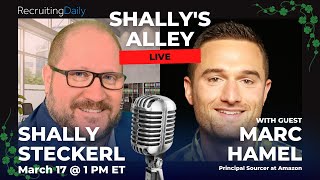
In this live interview, host Shelly (VITAL‑BARITONE) talks with principal sourcer Marc Hamel about the maturation of sourcing as a distinct talent‑acquisition function. They trace the history of sourcing from a niche, ad‑hoc activity to a professional career with defined leveling, standards, and global leadership roles. The conversation covers seniority titles (senior, staff, principal, distinguished), the need for clear job descriptions and leveling frameworks, and the push to formalize sourcing through ISO TC‑260 standards. They discuss the "Sourcers Who Code" community, the practical benefits of learning basic programming (Python, JavaScript, HTML) for understanding technical roles, building simple automation (scraping, bookmarklets), and leveraging AI tools like ChatGPT and Microsoft Copilot. The dialogue also touches on common pitfalls such as "shiny‑object syndrome," criteria for deciding when to invest in coding skills, and the importance of community mentorship and continuous learning. The interview ends with actionable advice for listeners to stay curious, reach out for help, and view sourcing as an evolving, collaborative profession.
Chapters
Patrick's Day! May the luck of the Irish be with you. Hopefully I'm not offending anyone with that statement, but it is St. Patrick's Day, so, uh, we're wearing green to uphold the tradition. And of course, it's March 17th, Friday, March 17th, and you're live on Shelly's Alley. Today we have a special guest because all of our guests are special. And in this particular case, someone I've known for a while actually Mark Hamill. Mark is a principal sourcer, which if you know full stack and the world of engineering, you know what principal means. Principal is like the highest level of like rank. You got like, you know, uh, senior, staff, and then you got principal. I think the only thing higher than principal might be like fellow or something like that. What is it?
Or like there's also distinguished.
Distinguished, there you go.
It's something different every company.
So it's a pretty senior thing. So he's, uh, he's pretty high up there in the, in the ranks of all things sourcing. And he used to be at Meta as a technical sourcer. So, um, I think he went full circle, left Amazon, went to Meta, went back. I think you've been a sourcer for what, uh, 13, 14 years, something like that, roughly?
Yeah, that sounds, sounds about right. A long time, but not as long as other people in this room.
But yeah, right.
Yeah.
Uh, all right, it looks like I have an API error, so let me see if I can correct that. Let's see, streams, channels. Huh, okay. Looks like it's not connected on Twitter. So let me see if I can do that.
We're on LinkedIn. I can see that because Derek chimed in.
You're on LinkedIn. Okay. All right. So we're on LinkedIn. We're on Twitter. We're on YouTube. But I think we somehow lost Facebook. Let's see if I can turn that back on.
There's nobody there to operate it.
I can't do that. Oh, Facebook's not connected. Hmm.
Maybe I left on bad terms.
They know you're here. I like a big— you're here. No, it's probably just some weird thing. I'm just not going to worry about it. You know, the recording is up there and it is on LinkedIn. So yeah, me either. And then, you know, of course it is on, on YouTube, so, um, maybe I can figure out how to get that activated later. I think I can add a channel, so let's see if I can do Facebook Live. Grow profile, group, page. I'll do profile. Connect Facebook. Oh, this might work. Go back. Okay, it says it's added. Huh, says it's added. So if I turn it off, what happens? Let's see if I turn it off and turn it back on. Sorry guys, I thought this would be on Facebook, but apparently it's not. So let's see the sourcing method back on. Unable to connect, not sure why. All right, well, that's all right, the show goes on. So anyways, I was saying, um, Mark and I met, we met at SourceCon a long time ago, right? Were you at Amazon then, or was it before, even before that?
No, I'll give, yeah, I wasn't, I don't know what year that was, but no, um, actually I might have been at Amazon then. I don't recall my journey though. I fell into this kind of like, uh, pretty much everybody I've met. I'm beyond lucky to speak at like crazy places, SourceCons and fun stuff over the place, and I always like to ask the question of like, Does anybody have a cool story of how they got into sourcing? Nobody really has that, and that's me. Like, I just fell into it. I had a buddy that called me up out of college and said, you want to do this? And I was like, how much are they going to pay? Cool, let's do it. Uh, fell into it. I was agency, did a little bit of everything, then went to more—
Started in the agency way back when?
Way back when, yeah, way back when. Uh, yeah.
How did you get into agency recruiting? That's what—
that's, that's where my buddy called me up and said, hey, do you want to try this?
And— okay, so you did. You had no idea. You're like, what is this? Yeah.
I was there for 6 years or something like that. It's all a blur.
Uh, yeah, yeah. Okay. And then so how did you transition into sourcing as a dedicated job?
That— when I went to— so at the agency it was the full desk agency, uh, and then I went to a, uh, it was more of a like a— it's a smaller, like, I think we had 7,000 people at the time, uh, and we had like a 4-person TA team at this company. They did a lot of like board-level component work and a lot of like hardware engineering and stuff like that. Point is, we had 4 people in the TA team, so I did a little bit of everything, but I really indexed heavily on the sourcing side. I just kind of fell into it. But being that it was like full desk, I did all of it, but really found my spot in sourcing and had some friends that I knew that went to that small startup company called Amazon at the time. And, uh, called me up, went up there, interviewed. Next thing I know, moved to Seattle, and that was that. Uh, worked there for about 4 years, sounds right. And then went to the artist formerly known as Facebook, who apparently doesn't want me to be live streamed. Uh, and then after, what, 2 years or so, uh, close to, uh, made the trip back there, uh, to Amazon. So that's where I am now. And I tell you that because, um, yeah, I've been in the journey in total, it's been a majority of sourcing, uh, but there's been flavors of recruiting. And in my opinion, like, those that are like strong sourcers have been— and I think this is the line that you used, uh, the best sourcers I know are those that were a recruiter at one point and made the conscious decision to be a sourcer.
Not sure that's the line. I think it's more like a personal experience for sure.
Yeah, yeah. Uh, and a big part of my role here is really demystifying like sourcing as a career path. Like, we have just this stigma industry-wide, but especially at Amazon, of like you you go sourcer, like full life cycle. We call them client leads, which are more or less closers, recruiting manager. Like, that's just the linear path that you take as somebody in the TA field. And like, my role is really about like, no, sourcing is a real function. Like, we have job— we have like a job description for this. We have like leveling guidelines for this. Like, this is a real thing. And keep people in that path, um, is really a big part of the role. So yeah, that was kind of a tangent, but there you go.
No, I don't think so. I, you know, honestly, I, um, For a very long time, I struggled with— I spoke at all the ERE events for, you know, both coasts every year. And I struggled with proving to, you know, corporate America that this was a legitimate profession. So it wasn't until not that long ago that it was really accepted as a job. When I first started doing this as a, like a singular job, so I was in staffing agency too. And, you know, that's when I started evolving sourcing for my own, you know, profit, right? But my first actual job where it was literally a sourcing job where that was my job and there were recruiters and sourcers was at the turn of the millennium in 1999 to 2000. Back then there were only like maybe 3 companies that had a what would be eventually called a dedicated sourcing team, and it was still very much like nobody, you know, even thought it was a profession. It wasn't about until 2015 that there was enough momentum where you could go do a LinkedIn search and find people that had the job title sourcer. And, you know, they were in the, in the hundreds of thousands. Now it's, I think, 1.1 million people worldwide.
Wow.
So yeah, it's kind of one of those things like, wow, I can't believe I, I sort of started this. I know I wasn't the first person to do internet sourcing, But I was amongst the top, you know, 10, and there were— we knew each other, you know, it was like Barbara Ling, Glenn Guttmacher, Ayers hadn't even just— the Ayers was barely just even getting started. They had a Recruiter in a Box program. John Sumner had something like that. But then it just started evolving, evolving, and I just kept trying to push the limits. I created job descriptions, I created career paths and all that stuff, and now it's a legitimate career. That, you know, it's accepted. You know, you can look it up in the job titles and everything. Still has its problems with becoming, I would say, mainstream.
Yeah.
In that, you know, you can't go to like a salary calculator and put in sourcer. And there's still also the confusion with sourcing for procurement, which comes up all the time. I get invited to all these like conferences for supply chain. I'm like, Dude, wrong, like, wrong sourcing.
Yeah, all the time. And it's funny, we, we went like a couple years ago when I was with Amazon, went to a push of like— so my role when I was with Amazon the first time is I was kind of like a, um, like a deployable resource. Like, they would throw me into teams that have like aging wrecks or V1 startups and crazy stuff, and I'd help, uh, you know, kind of build sourcing plans for the team and triage some of the issues running into it. And also I'd pick up a row and help source with them. But I say that because one of the crazy projects they threw me on was we needed to hire more recruiters and more sourcers. And they threw me in to like help with the team to do that and kind of lead the team through that journey. And when we started going after like, hey, when you start hiring some sourcers, a bunch of people did tons of searches and brought people that, like you just said about the procurement side, this is like, guys, like, no, this is what we do. Let's find the right people for this. Like, it was just a whole headache. And it was, it's crazy though that you said like you kind of started that 'cause sourcing is a function 'cause that's a real thing. Quick note, I will say, like I said earlier, I'm so lucky to be able to speak at SourceCons and HRTX next week and stuff like that. And I've done that for a while and I don't really get nervous speaking at events. I enjoy it.
Really? I still get nervous.
Yeah, that's what I was going to say. There's anxiety, but I think it's masked with some of the excitement of doing it. But I'm a little nervous for this, man. I don't usually get nervous, but I think it's because twofold. A, Uh, it, it's, it's Shelly. Like, you think about the Mount Rushmore.
Oh, come on, really? I'm intimidating? Come on.
No, no, no, no, not intimidating. Uh, but you think about like Mount Sourcemoor, there's like you, Mount Sourcemoor, you, uh, probably Glen Cathy, um, Batman's the Man. Like, there's like a few folks out there.
And so, man, you got, you got me up there as a grandfather with a couple teenagers.
I guess you could think of it that way. Um, but also like, we don't, we don't prep, so you just kind of like slap, strap me into the rocket ship.
Absolutely. That's why, that's why I'm on a jet engine here.
But I mentioned that because you're right, like, it's cool to think of like, you started some of these things and like, these are things that we're still working on, is like adopting sourcing as a function. Like, yep, it's gonna take continued work. But, uh, anyway, I appreciate you.
There's a good question, uh, from, from Garrick here. I'll put it up on the screen. I don't know if you can see. What are your thoughts on leadership that still sees sourcing as a junior recruiter function? Many people still see sourcing as entry-level. And I'm gonna, I'm gonna let you answer. So think about that for a second. I'm gonna give you a little anecdote that recently happened. So I'm, I'm in my capacity professional, professionally, I'm global head of, and that is essentially a senior director or junior vice president level job. There are many other people that are global heads of sourcing. That's, you know, so a job has arrived as a corporate function if you have someone that is a global head of or a vice president of, right? That's basically, you know, you have a career path that goes from entry-level all the way to that. And it goes to show you it's not entry-level. But I gotta tell you, I was on a call with a recruiter the other day demoing Gem, which is a CRM tool some folks may know. And This seasoned, experienced recruiter with 5 years, a total of a whopping 5 years of recruiting, a seasoned recruiter was demoing Gem, and she said something that made me laugh out loud. She said, "Oh yeah, when I was at my previous job, I used to allow the sourcers to use Gem." And I was just like, "Allow? You allow?" So basically, No, she said, "I used to allow my sourcers." So the sourcers belonged to her like some sort of object, right? And she allowed, she gave them permission to use Jamf. And I was just like, "Wow." So yeah, I think Garrick has a very good point. That's not just leadership. That's all over the place. So now, you know, what are your thoughts on that? Let me bring the question back up here.
Tons of thoughts. I'll keep it. So what I'll say first is that, yeah, a big part of what I'm trying to do here within a very large company is do demystify sourcing as a career path. And it really comes from like our leadership, which I'm so lucky to roll up to an individual that is very invested in sourcing as a function. But it also— and another thing around sourcing is we as sourcers often become order takers. I've seen it so many times over again. Like we're in a meeting with a very senior manager on the business side that we're supporting their hiring for, and we kind of allow them to do that. Like they— we end up being order takers instead of being consultants and talking about and in what they're looking for and influencing without authority through data. Like, be the expert in the room when it comes to actually the market. And I think like that will help provide a platform to sourcers as opposed to being just order takers trying to get into the next step of their career where they can have more influence as a recruiter, trying to have more influence when they can become a manager. Um, I think those things just like a whole unit together, uh, is what really is a big push. But when you have a manager, the whole department. Yeah, yeah, yeah, exactly. And when you have a manager, hence like I think the questions around like a recruiting manager, um, whatever. Yeah, that's the sourcing is like the entry-level function. Like it's, it's really about the education side. Like no, we need— we are experts in what we do and we are like data experts. I mean, there's so many flavors that can make up a great sourcer.
That's another thing, by the way. Yeah, you raise a good point. So another way to measure the maturity of a job function As I have been talking, you know, I use this— you might not know this, but there's an organization called the American National Standards Institute, ANSI, and they collaborate with the ISO, which is the International Standards Organization. A lot of folks know ISO 9000, which is like the manufacturing gold standard and stuff like that. But there are ISO standards for a lot of different things. And the ISO is a global organization that produces these standards. So for many years, I sat with the ANSI organization on the ISO internationally with 37 countries developing the standards for recruiting and the standards for talent acquisition and metrics and all that. If you're interested in looking this up, it is the TC 260. TC stands for talent— sorry, for Technical Committee. So look up ISO TC 260. Let's see if I can put that in the chat here real quick. That would be ISO— International Standards Organization— TC 260. They produce all kinds of different standards in HR and in talent acquisition in general. But anyways, the reason I was telling you this is there was already, when I joined the group, there was an already established model of the recruitment standard, which wasn't— was basic because it had developed, you know, some years back. And when I joined, one of the projects was to re-establish it and, you know, add to it. So I was able to contribute to that. And then I wanted to contribute to creating a sourcing standard. And that's where I ran into this question at a very large scale. In some countries, because it's 37 countries, it was still considered a function of recruiting. And so the argument that I used to this body of, you know, representatives from every single country that participated, the argument that I used to prove that we were a separate function is the evolution of other professions. So take for example marketing. There used to be somebody that was in charge of marketing for the company. Now you have digital marketing, advertising, social marketing, social media marketing, you know, different flavors. You have marketing support, marketing intelligence, business intelligence, etc. Another example would be law. You used to have a corporate attorney. Your company had an in-house counsel, right, general counsel. But now companies have privacy attorneys, they have copyright attorneys, patent attorneys, they have trial attorneys, they have attorneys that negotiate. So you used to have an HR person, right, an HR generalist, and then you have— now you have HR business partners and talent acquisition and recruiting. You used to have a recruiter, now you have recruiters and you have sourcers. You see what I mean? And so this is the evolution of the— and now sourcing is beginning to, over the last couple years, evolve into its own specializations. You have sourcers that specialize on the research end of things. They generate data leads. They're you know, they know how to do scraping. And this brings me to the topic we want to talk about today. And you have sourcers that do social media. You have sourcers that do conversion where they're engaging people, they're writing content. So they're almost a cross between social media and sourcing. And so the, the role of the sourcer is itself becoming a specialization. And so this is what I wanted to talk to you about today, is you're part of a group that represents themselves as Sourcers Who Code. I'm also part of that group. Many, many, many years ago, I was, uh, I studied computer science, and so I actually, you know, I wasn't a sourcer that code, I was a coder that sourced. Um, Glenn Guttmacher, for example, is also part of that group, and, and he talks a lot about JavaScript. Tell me, is— tell everybody, not me because I'm part of the group, but tell everybody about that group. Is there really any Do we have to learn how to code if we're sourcers? What's the real benefit to it?
Yeah, a lot, lots to unpack there, but quick answer: Sourcers Who Code is a group that, um, if you think about sourcing as a, as a function, like you're typically doing a lot of like keyword searches and you're doing research like you mentioned, and you're doing like the discovery, the engagement, those sorts of things. But if you're talking about the technical side, there's a lot of benefit in having the knowledge of the actual things that you're looking to source for. Like, if you think about, like, a lot of us out there in the technical field source engineers to some facet, to be able to understand the basic nuances of what an engineer does on a daily basis and how they do it is very—
Right, like almost like taking a course on IT, like what does an IT do? What does the IT department do? Yeah.
Yeah, exactly. Yeah, yeah, exactly. And that's where my curiosity sparked from is, Um, I wanted— like, when I jumped into tech recruiting, I, I knew some basics and things like that, but I found a lot of value in at least like diving deeper into like understanding the entire— each layer of the technical stack and like why and the how and what do we use and what do they use. And then that just sparked more interest around like, wow, you can do some cool stuff with this. And then just dove into like learning the basics of things like— oh, somebody shared it— like Python. And then I took basic courses on that, and, uh, that led into more of like, wow, you can get to the point where you can manipulate things a little bit to your benefit. And then you dive into the rabbit hole of, wow, these are kind of shiny new tools, which we can talk about in a second. But your question though is around like sources who code and it's the opportunity for—
Yeah. And is there really value in, so should all sourcers learn how to code basically?
And I don't think to learn how to code, no, I don't see that. You need, if that's something you're interested in, you need to think about the reason why, and like what you're trying to get out of it. Are you trying to get out of it to understand more about the profiles you're looking at, or are you trying to get something out of it where you can build your own tools? And okay, in today's world, I feel like there's enough out there that you don't need to learn to code, but there's a lot of benefit in understanding at least how to like look at it and understand what it's doing under the hood to an extent, which doesn't require you to have to pass or possess a comp sci degree. Um, and that's kind of the level that I'm in, like Writing code is really like copying and pasting it in most cases, and I understand it to an extent to do that. If you ask me to sit down and write something from scratch, I could probably piece something together at least, but it'd take me much longer than it probably should. That's the extent of where I draw the line, but I can get by with manipulating and I can show an example of something Andre Bradshaw created and I just added a couple of lines into it to make it easier for me and that stuff. Sources of Code provides a platform for individuals that want to learn but also want access to some cool things that have been created and just have a great discussion about the benefits of learning various frameworks and how to code and stuff like that. I think it's a real good group, Facebook group for discussion, but also just curiosity.
Okay. So basically you've got two things. You've got people that are essentially learning about the people they recruit. So if you recruit developers, programmers, software engineers, then sourcers who code, or learning as a sourcer whether you join a group or not, or just go to, you know, sometimes people ask me, hey Shelley, do you recommend any IT courses, or, you know, do— should I learn Python and things like that. So one point that you make is, um, yes, if you, if you seek to understand your target audience and your target audience is developers, yes, learning to code or just the basic JavaScript and Python, which is pretty easy to learn, is a good idea. And then the other side, right? So A, your audience, and B, if you are interested in making something, an app or something, with what a lot of times is referred today as low-code, then learning some basic JavaScript, which is very close to HTML, very close to English, would allow you to make things like what Glen Guttmacher does, which are bookmark scripts or bookmarklets, that allow you to do things with your page that you want to do based on the workflow that you have, your own workflow. Creating apps used to be you need to learn how to program. But nowadays you can program essentially with these basic languages like JavaScript. I get that. That's two reasons. But what about ChatGPT and models like that. And laugh if you want to, but the reason I'm bringing it up is because I actually have developed a pretty nasty habit of asking ChatGPT to write code for me. Because it takes— and I'm just gonna, you know, I'll admit, I learned programming in college. It takes longer for me to type out the things that I want to type out and check it to make sure it's correct than it does for me to explain it by talking at a computer. With ChatGPT, you can speak to it. You can talk to it and you can say, hey, make me a script on Python that grabs the stuff from this page, uses this lab, blah, blah, blah, and then it does it. I actually know what the code does, but it would take me longer to write it. And the other thing that I'm using it a lot for lately is Google Sheets and Excel spreadsheets. I go there and I say, write me a formula that extracts the, you know, that removes the rightmost 5 characters and replaces this with that on that cell. And then it comes back and like, you know, gives it to me. And I'm like, that's a lot easier than me trying to troubleshoot it. I would spend hours sometimes correcting formulas and swapping them out. So do we almost like need to learn code just so that we can talk to ChatGPT? Do you know what I'm saying?
Yeah. First off, you said a bad habit of having to do it yourself.
Because I'm not doing it myself.
I don't think it's a bad habit at all. That's a fantastic—
Like a calculator, right? I feel like I'm cheating.
That's the analogy that I use is I say it's like a calculator on a math test. Like we had to like, division and handwrite this out and then we could use the calculator on the math test and we could get the answer. It's just like, why not use this? To the point like you just said, I think it's very valuable to understand what it's doing under the hood. Not under the hood, that's a bad analogy. But when it spits it out to understand why. But think of how long, like you said, it would have taken you to write each line or to even then you'd have to run it through an IDE. You'd have to go through all the different steps to make sure it actually executes properly where Not to say every time it does, but the reason why I feel like it's beneficial to your point, ChatGPT does a great job, but there's oftentimes that it will spit out code that still doesn't act like there's something that gets hung up to understand. You got to correct it the same way that we do with like Boolean strings. Like I can sit there and write a long Boolean string, or I could use a Boolean builder for me and then it would spit out the string for me. And then if I needed to manipulate it or if something wasn't returning results, I would know what was wrong in it and fix it. So I don't think it's a bad habit. I do it all the time. I think the best thing about ChatGPT is like, it's great doing that stuff and writing code or even like triaging and finding out where errors might be. But it's like an on-demand Stack Overflow. Like how often do you, like I said, coding in my opinion is a lot of copying and pasting. How often do you get to a point where you're trying to research something or you're trying to find what this line means and then you have to go to Stack Overflow, then you have to pair it up and read and pop it in ChatGPT, boom. And like, think how much time you have back in the day.
And it's a time saver. Yeah. In fact, ChatGPT will actually explain how the formula works, right? So like just using the example of, you know, write a formula that trims the rightmost 5 characters from a cell. It comes back and it goes, okay, here's your formula and then here's how it works. It's like, okay, the LEN function does this And then the left function does that. And so you're learning as you go. It's almost like a self-teaching tool when you use it that way. So I think the argument of pro learning how to code or learning to understand code or read code is a solid argument. In other words, if it's your audience, you should. And if you have any interest in automating things, even basic things like Excel, then you should, because it'll be easier to do it even if you're using a robot. And this other thing that just came out, that actually came out yesterday, is Microsoft— shoot, I forgot what it's called— Microsoft Word and Copilot. Microsoft Copilot. I read about this yesterday. It's going to be inside and it's not just ChatGPT, it's a whole bunch of other things. It'll be inside Word and Excel and PowerPoint doing exactly this. So you'll be able to, in your PowerPoint document, use the Command Pilot and type in, you know, give me ideas for how to say this or summarize this, and it'll make it so that you can make presentations faster. It's not replacing you. You still have to, you know, talk to it. But it's Clippy. It's Clippy reborn into a chatbot that actually answers questions.
It's Clippy 2.0. You, you just said the line that is like the perfect line when I think of ChatGPT is you said when you go into PowerPoint and you say give me ideas for, like, you, you can— the things that it does, like, it's math, like, it's, it's text, it's, it's basic things that you could find out there to an extent. But it's like, I use it as an idea starter. Like, I, I feel like I sometimes can get good ideas. Most of the times, like, give me ideas for this, and then I can branch off from there. Like, that's the area that I feel like we can really use a lot of benefit. It's just like getting something started. ChatGPT does a great job of that. Um, I just wanted to highlight that because you mentioned it. I totally agree.
It's a language model, right? So that's, that's really where it behaves best. So give me another, give me another example of, um, of code, you know, not, not ChatGPT, but another example of code that you've used, or, or type of, you know, practical, something practical that people can go, oh, okay, I see that as a good motivation to learn how to code?
Great question. And that is the, uh, that's the other— like, as you were mentioning, the reasons to ask yourself, like, if you're trying to build something, why? It's very easy. And we were talking about this offline before we jumped on to— and you used the— way back when I was doing a chat, I was doing a presentation for HRTX, and they offered up, hey, you could run it by Shelly for his feedback first. So sweet, let's do that. And he's— and I was talking about different tools, and you're like, make sure you don't, like, come across as the, uh, one who follows the shiny new—
the shiny object syndrome.
I was like, right, good point. And I mentioned that because it's very easy to do that when you discover, um, what's out there, as well as when you have the ability to manipulate things for your use of what you need it for, to find them as like shiny new toys.
And right, and then obviously you're playing with the toy and not really—
yeah, and you can sit there for hours and be like, wow, this is so cool, like now I got this cool list and then you never go back to it. Like, that was cool, but now I'm never actually going to use this again. So that's what I usually look at the lens through when I like find something. Exhibit A, and one of the tools that I use and used it today even, uh, before we hopped on the call, Andre, uh, Bradshaw, who's, uh, if you don't know Andre Bradshaw, go to his GitHub. He has tremendous tools on there, very easy to use, very bright individual, actually works for a small company called Amazon now. He, uh, wrote a script, and here's like the example of what I'm talking about when like my knowledge versus copy and pasting. He wrote a, uh, pretty— not simplistic but not really complicated JavaScript where it scrapes Hopin. So Hopin is the app like HRTX uses for their events, and it scrapes all the people that have registered or the attendees or various different things. He wrote that. It's helpful because there's lots of conferences out there that use Hopin.
Have lists. Yeah, yeah.
And you get the list very quickly.
Yeah. And to explain for those that may not know what scraping means, You know, you can do this yourself, you can do it manually, but essentially it is taking all the information that is on the page or behind the code of the page that's visible to the computer, may not be visible to you in the UI, and parsing it, you know, grabbing it and essentially copying it and pasting it into a more legible format like a table, like a spreadsheet. So that's what scraping means. Yeah.
Sorry, go ahead. No, no, I'm glad you Clear that. Thank you. So for this, you have to open up your dev tools in Chrome. You have to paste it, paste it in. You have to paste in your authentic authentication token. You have to paste in the event, blah, blah, blah. And it works if you know what you're doing. But like to the extent of it's very simplistic to have my add line where it adds a prompt. And so when you push enter on the code, it pops up on your screen, say insert the event ID or things like that, which makes it easier as to have to go and like rewrite the code or open.
So you don't have to write the code, you just put it into the prompt. Yeah.
So that's the extent of like where I find benefit in knowing how these things work under the hood, but also having the ability to— there we go— having the ability to do a little bit of editing. So for me, like, I took that, I added in those few lines of prompts, and then I reused or reran it through as a bookmarklet. So instead of having to paste it into the dev tool or the console, you can just run the bookmarklet. And when you run it, it pops up, says put in the event ID, and then after you click enter, it says put in your authentication token. You put that in and there's your list. So like, those are real things that I really use because if I wanted to go through and write that or or copy everybody's name, or use— you could probably use, you could probably use WebScraper.io, you could probably even use something like Instant Data Scraper. Yeah, you could do these things, right? But instead of just running this, this live script, I'll scrape them all for you, put it in a CSV. Here's the list of the 300 people that attended, you know, Women Who Code event last April, or something like that. Those are very beneficial because those are the warmest of warm reachouts when you reach out to somebody and want to talk about—
hey, I saw you at a conference. Yep.
Yeah, so that's a great use case. Another tool, like, there's GitHub, has tons of open source tools that you could fall down a rabbit hole for. But like, there's Chat Downloader. So Chat Downloader is one where you can— it downloads all the conversation that took place during a YouTube video, live or not. There's tools that can do that. But Chat Downloader is cool because it has Vimeo. You can also do Zoom, you can do Crowdcast. So those things are helpful too when you think about what are you getting out of it. Where you're getting a list of the people that are very interested in the topic being presented, the names of the people that were participating, right? So that's the extent, like That's, I think, what's really beneficial. But to the point of like learning some of the basics, if you can take something like Andre's amazing work and add in a few prompts to make it easier for you, there you go.
Yeah.
So that's kind of like the super quick example I wanted to share.
That's great. I think I'll add to that by saying that if you, if you want to determine whether or not you should invest in, in learning, and by the way, learning how to code is not a huge, it's not a 5-hour, I'm sorry, it's not a 5-year degree. Some people do have 5-year degree in computer science, but that's not what we're talking about here. We're talking about reading a book and taking a—
Udemy courses.
Online class, right, exactly. But if you want to determine whether or not it's worth it for you, here's 2 measuring sticks that you could use. The first one is the concept of write once, use often. Is whatever this is something that you're going to repetitively use? Anything that you do repetitively, which can be defined in a lot of ways. Once a day is repetitive. Once a month is repetitive. Once a year, probably not. But if it's something that you're gonna do with some frequency, it is worth spending some time on writing an app or a script or, or, you know, something that helps you do it. Because if it takes you 10 minutes and you do it 10 times a day and you do it every day of the week, this adds up to hours where you could have just spent 1 hour developing something, creating something that then makes your 10 minutes be more like 10 seconds. So, are you gonna use it often is one of the two questions that I would ask. And the other question that I would ask is, is there intrinsic value in doing this with a machine that exceeds the value of doing it as a person. So for example, you could give a robot the entire Great Gatsby and say, summarize this in a sentence. But is that really something that you should do? Yes, it'll summarize it for you in a sentence, but maybe you should also think about reading The Great Gatsby because there's so much more that you can extract from that, right? When it comes to scraping code, or I'm sorry, scraping websites, yes, there may be value in creating an app that does it for you, but what could you have learned from the structure of that website if you just knew a little bit about how the code works? In other words, you can go out, you can get a tool or buy a tool or make a tool that scrapes it, but what if you knew just the basics? And I'll add to that, I'll say that learning something like Python is really not very difficult. Most of these modern fourth-generation languages are very much English-based, and they follow the same logic the language does. To those of you that are uninitiated in, you know, programming, the basic rule of all programming is very simple: if this, then that. If this happens, trigger, variable, then do this, activity, whatever that is, right? If the keyboard— if the key K is typed, then print K on screen. That's basic, you know, if this then that. So knowing that, then it's just a matter of learning kind of the commands of Python. And I would say probably Python is a good place to start.
Yeah.
Do you have any other that you would recommend?
By far, I highly recommend. Yeah. If you want to get into it, Python, softest barrier to entry by far.
Yeah. And HTML5, I think. Just because a lot of times when you go into like a view source, You can right-click and view source and you see the source of the page in HTML. A lot of times there's class or keys or other things structurally that will tell you things about the website that you could then use to scrape and automate that, you know, are beneficial if you know what they are. So you know how to put them into something like a scraper, for example. So very well put.
I totally agree.
Especially you said something about bright shiny object syndrome before. Have you had an experience where you basically chased the bright shiny object a little bit too far?
Oh, yeah. I mean, I like to think now that I think through the lens of like your example was perfect. Like, actually, what was the word you used? You said build once, use often. Yeah. That's in other words, a lot less dumbed-down words, public education here. I think of it through those lens, but it's very easy to follow those. Like you think about OSINT tools and I mean there's a fine line between what is something we're actually gonna use and like what's cool to do.
Right, exactly.
And then you find yourself using some of those in your spare time because like, oh, I gotta learn how to do this. I gotta learn how to, you know, find all the usernames from every different profile this person has in mass quantity. And then at the end of the day, is it practical?
Did you maybe just need one profile?
Yeah, right. Did I need to know their GitHub so I can see all the different projects and repositories I'm a part of? Yes. Is it cool that I got access to their bodybuilding.com website? Like, I— like, why do you need that? But it's cool that you can have it. And I feel like there's a lot of those tools out there, and it's very easy to be like, wow, I know everything I need to know to reach out to this person and have an educated conversation, when I could have just looked at, you know, the, the code that they've written and talked to them that way. So Yes, the answer is 100% yes. But you need to just like ground yourself with like, what do I actually need to know? Like what's gonna come up in the exam?
What do I really need to know now? What's the best thing to do? What's fun versus, you also wanna learn just for fun. Some people like to, you know, just learn to learn and read to read. But from a point of view of professionally, there's fun and then there's fun and there's education, right? And then there's the practicality of it. So that's why I recommend those two measures. There's a ton of stuff on OSINT on my start page if you wanna check it out.
That is my bookmarked first page for just about anything. Yeah, it's a tremendous Start.me page.
And as I work on it, I continue to label things so they get a little bit more organized. I actually ended up paying for the subscription because you get more features like it detects bad links and things like that. So free advertising for Start.me. So I wanted to wrap up today. I appreciate you coming here and I have all my guests I throw them this curveball at the end. I wanted to ask you to leave the audience with something that you want them to think about over the weekend. This could be about what we talked about, about something else, just something, words of wisdom or deep thoughts or even just inspiration, whatever comes to mind right now that you think is important for the audience to walk away and think about.
Well, I mentioned in the beginning of this, when I said I was like a little nervous because I'm an over-preparer and we don't prepare, uh, so you caught me on this one. I'm not nervous to answer it. What, what I will say, uh, and I truly mean this, is that the conversation doesn't stop at the end of like this video, this recording, all that kind of stuff. Like, for me and myself, when I got into sourcing, uh, in the agency world, it was one thing, but then you kind of shifted in— myself into more the corporate environment, then with a company like Amazon, where I had to totally reinvent myself. Like, I went there with knowledge of how to use LinkedIn, and I thought I could get by with it because I had success. The company had, what, like 6 figures or probably 5 figures worth of sourcers and recruiters all using LinkedIn. So I went in there and was just blown away.
Fishing in the same pond, everybody else, right?
Yeah. And I reinvented myself by diving into communities like SourceCon or watching webinars from the great people in our community that are so generous with building Start Me pages and things of that nature. And that's where I really like reinvented myself, as I was hungry, I was curious. And the biggest thing and the most beneficial thing to me was I would watch these or listen to these, and everybody was so open and welcoming. I would reach out to them like, hey, I noticed you did this, like, does this work in this way, or I have a question about this. And everybody was willing to help out. So that's why I say like words of wisdom are just like thoughts, or like, it doesn't stop here. Like, if Shelly mentioned something, I'm sure he'll probably respond to you if you have a question for him. Or if I mentioned something in my crazy blabbering that was actually beneficial, reach out to me. Like, get me on LinkedIn. I'm a recruiter. I'm on LinkedIn. Or send me a message or email or whatever you need. Like, be curious. The conversation doesn't stop here. That's my soapbox.
So, so yeah, that's really good. Reach out, right? Don't, don't assume that somebody's too busy to help you or whatever. Just ask, right? No, I think that's really good advice. I appreciate that. Well, thank you so much for coming. I know you have a hard stop. Um, hopefully we can, we can do this again. Absolutely. And yeah, if everybody has any questions, you can reach out to Mark. I put Mark's link in there earlier. I'll drop it on one more time here. There it is. Oops, sorry, I got your name wrong. I'm sorry about that.
It's actually— my name is actually Markham, M-A-R-Q-U-A-M. So the C is just arbitrary. Like I threw a C in there when I was younger because I wanted to be different, but I guess I could be.
I could have gotten it right. Are you trying to say I could have gotten it right?
It technically was like, yeah. So, Mark, AmeriC, AmeriC, whatever you want to call me.
But the LinkedIn URL was correct. So if you want to connect with him, reach out to him. And obviously you guys know where I am. Once again, thank you. And everybody, happy St. Patrick's Day. Celebrate and stay safe. Be kind to each other. Take care, everybody. Bye.
More from Shally



Scaling Talent at Hypergrowth: Leadership, AI, and Hiring Excellence with Cindy Nicola







