Martel Howard: Discernment Over Automation
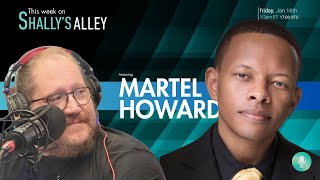
Veteran sourcer Martel Howard argues that recruiting needs discernment, not just automation. He identifies three signals that predict success: curiosity, grit, and courage. AI handles scheduling and basic Boolean strings, but humans must do the judgment work, storytelling, and deeper digs into candidate fit.
Chapters
All right everybody, welcome to Shelly's Alley. You are live on January 16th, our second episode of the year in our 357th episode or something like that. Can you believe that? It is a lot of episodes, um, and, uh, I think I'm— I think I'm finally getting the hang of it, um, maybe. I'm not sure. You tell me, give me some feedback and let me know. Today we have a very special guest, and I'm super excited to have Martel on because I feel like I invited him decades ago. It's like we've been talking about him being on the show for a while. He was introduced to me via a mutual friend, and we, we got along really well and have been keeping in touch since then. And I was like, you know what, it would be awesome if you came on the show. And he was like, yeah, it's a great idea. And then it didn't happen until, uh, 2026. So welcome finally, Martel. Appreciate you being here.
Oh, likewise, likewise. I enjoy it. It's a nice, uh I was like, cool day in Georgia. Uh, that's where I'm located. Yeah, I'm excited to be here. So I just, um, getting all things sourcing.
So we are both in Atlanta, um, and, uh, like I said, we were— even though we're in Atlanta, we were introduced by someone else, which is unusual, as I thought I knew everybody in Atlanta. Of course I don't, but you know. Anyways, so Martell has a, a background in sourcing most of his career, or I think all of your career, right, has been in either staffing or sourcing.
Correct.
But prior to that, had spent some time as a, as a scriptwriter, which I didn't know. That's definitely not on your profile. So you were writing scripts for like plays or movies or what?
Oh, movies. I still, I still write scripts.
Oh yeah.
I work— yeah, working on— recently won a, um, uh, short film for one of the short scripts I wrote, uh, film festival. Um, I write feature-length screenplays, uh, short scripts, and I work on getting those produced. Um, I've always been into drama, theater, acting. Um, something I always found fun to do. And, uh, I look— how would I put this— I wanted my creative career, um, to mirror my professional career. Sourcing in some ways is a lot like, you know, when you're doing writing scripts or screenplays. And once you get those done, you're looking at the characters and the actors who can best fit the role. And then you're working with maybe a producer or director. It's like the hiring manager to get the best people to play these parts.
Wow. Yeah, I didn't know that. That's pretty awesome. That explains some of the flair for the drama. I don't mean drama isn't bad, but like, you know, the dramatic sort of flair that you have. So I love that in your about you say talent is the backbone of success and I am the chiropractor. That's awesome. You're like, you're adjusting the spine of success, right? Right. That is so effing cool. Uh, anyway, got a little sidetracked there. So yeah. What's, what's a recruiting talent belief? Like, what's it— what's a TA recruiting, sourcing, whatever, you know, our industry— what's, what's a belief that you hold that most people just still get wrong? Um, and, and, and tell me why they're clinging to that. So what's something that, you know, want to kind of poke the bear, right? What is a belief about recruiting or TA sourcing that you hold true that most people get wrong?
Um, I would say a belief is about there's no, uh, perfect candidates. Uh, okay. Uh, like a lot of times people say, hey, we want the perfect candidate for this role. Uh, I don't particularly believe there is a perfect candidate for any role. You can have your, um, you know, like I said, your unicorns and things of that nature, but I don't believe there is such thing as a perfect candidate for a role. Uh, I think you have to dig deeper into that person's, you know, Of course, resume, story, and background. Then all those things take— you take those things into account to see who would best fit the position.
Okay. So what you're saying is it's not— there's not like a perfect fit, but there's a best fit. And when you're saying there's no perfect candidate, are you also saying that everybody has, you know, everybody has like negative traits, everybody has something that's not a fit? You know what I'm saying? We're not perfect, right?
Right, that's correct. It's like, like, um, like when you cast a role for an actor, you know, like they may hit 9 of the 10 things that you want, but, um, they may be missing this part. Maybe they're not good at memory.
You either have to work on it, fix it, or just don't work around it.
But there's things that you can train and they'll become better at that. And, um, I think a lot of times people miss them miss finding excellent candidates when they say, hey, we want a perfect candidate that meets these 10 out of 10s. But there's things that you can work with them with, and they'll become, you know, better within that organization.
Right? Kind of like that old adage, they, you know, they don't see the forest for the trees. Like, they're so focused on finding the perfect tree that they don't realize there's a whole forest out there. Right?
Right.
Yeah, I gotcha. I gotcha. So looking at how recruiting teams operate today, you've been in the business for about 10 years, which is, you know, I, I like to say that you're a— you're not a senior until you've been doing it for about 5 years, and you, you can't call yourself a senior anything— a senior recruiter, senior whatever. So let's say 5 years in, most people are, you know, senior experiences, and you've doubled that, you got 10 years. Looking at how teams operate today, what problem keeps getting fixed over and over and over again with the wrong solution?
That's a good question. Let me think on that for a moment.
Feel free to rant.
Got you. Problem that keeps getting fixed with the same bandage.
It's the wrong bandage. You know what I mean?
I would— maybe you could say to a degree, um, the, um, who I call it, the pre-planning section, like when you're meeting with them, the hiring, the kickoff, or the sourcing team all together. Uh, in that sense, it looks the same across many organizations. Like, hey, you meet with them, you get like, hey, what are your must-haves, what are your nice-to-haves, uh, you're just your basic questions like you go in there with, and then everybody leaves the meeting the notes. And then, like, 2 weeks later, like, you get all this feedback. Well, this is not the right person. This is the wrong person for the role, things of that nature. Then you have to have another meeting to see what went wrong with, like, where did we go wrong here in finding the ideal candidate. And a lot of times that most people don't have a candidate persona that they bring with them. Into these meetings and you have to get deeper than just your nice to have and your must haves. You have like, what makes your team work? What's the flow of this? What's the benefit of joining your team? You have to get into things more nuanced than just your nice to haves and your must haves and your flexible skills. What does a flexible skill look like to you and what are they doing with that?
Oh, interesting. Okay. All right, so you're saying the requirements are more than just a set of skills and abilities and competencies. There's more to it than that. Am I getting that right?
Correct, correct. Because there's a lot more to it than that. Because you can find the, you know, the right skills and competencies. But how are they using those skills? Like, are they using them in the way that you want, you have described them to us? And sometimes it's like going a lot deeper with questions. And no, one time I was working with a role that was an infrastructure engineer to role. We had our meeting, we did that, we said, okay, cool. We're good. We got the person that we want for. But when me and the recruiter was submitting profiles, it was never like the right fit. Now, on the surface to me, You know, that's, you know, this person was kind of like steeped in VMware. So it's like, this role shouldn't have been that hard to, hard to fill. But I know we worked on it for a little while. And then, and then just got out of hand. Oh, yeah, what we had to do eventually was go back, have another meeting with him. You know, still, it's like, still not getting the right candidates. And eventually, the recruiter, she looked into an old description for the role. And described the role as a support role, as somebody who would, let's say the main engineer was out, they would support the entire system.
So what we had thought was, you know, a basic help desk kind of thing.
Right, right, right. It wouldn't expand upon that. So we're thinking of somebody who does like support. So the candidates we were submitting were wrong. But once, you know, she looked into that, she said that to me. You know, I found the right person, that person got hired.
Interesting. So it was wrong by almost like level, like it was the wrong level of seniority. Gotcha. And so that would have been something you would— how would you have asked for that? Like, what was— how would you dig for that next time in the intake had you to do it over?
That's a good question. I think I would like ask a little bit more general, like, hey, what are they supporting? What was the level of support that this person needs to be like, like, like the scope?
Like, are they expected to fill in for someone or back someone else up. What's— maybe ask about like, you know, if they're gonna be, uh, next in line for someone's absence or something like that.
Correct, correct. Kind of dig a little bit deeper into like, hey, what, what are they actually responsible for, uh, if so-and-so is, uh, is out?
Yeah, I never thought of that, but like, who's, you know, who do they back up?
Who's—
if someone's you know, on the team is absent, who's the person that sort of like fills in? Because that happens a lot. You know, we, we're supposed to take vacation and time off and, and, you know, have work-life balance. But we don't think about that kind of stuff when we're recruiting for people. So that's interesting.
And then you think about it, does make sense. Let's say, because usually you have in many organizations, you have that one person that knows everything. And then when that person's out, It's like nobody else, they haven't maybe passed along that language to somebody else, or there's not really a true backup. And then kind of things just kind of go up in the air once they're out or they leave, right?
Back, like almost succession. I want to say succession planning. I know that's a big word, but I want to say like, think about succession planning as part of the, the intake. Like, you know, what role would they fill in if they were to— what's the career progression? And what would— who would back them up when they leave if they, you know, in that case? I like that. That's interesting. I do actually ask a little bit about when I do my intakes about either roles, like what roles lead to this role, you know? Like, I'm gonna go look for someone that does this job in another company. What else can I be looking for? Where would they have worked prior to getting this job? Or where were they like, sort of like, you know, almost like you're looking at a river and sort of trace the river back. Where did the river come from? What's the body of water that originated that flow? And I go back to that. But what you're talking about is also downstream from where I am. And that's— I never thought about that. That's good. So if you, if you took recruiting and you stripped it down to like, let's just say, 3 signals that predict success in, in recruiting and what we do, right? You take what we do and you strip it down to 3 signals that predict success. I know there's lots, but what are the 3 that you would keep?
Gotcha. That predict success in sourcing or recruitment. Yeah, I would say curiosity. You have to be curious about the role. So I think that's a big one for me. Uh, kind of dig deeper and like learning about the roles, like, hey, let me like ask more questions, look into what this person's doing, um, talk to people who are currently in the role, uh, to learn more about it. I would say curiosity is a big one. Um, uh, I think the ability, uh, I don't want to sound cliché, but to be, you know, driven, uh, to have that internal motivation, uh, to, you know, hey, like, you know, you want to— for me, I like to succeed at all costs.
Uh, some people call that grit.
So, uh, okay, so curiosity, grit, and, and, uh, I don't know, I'm trying to think what the other one would be. I'm trying to think of another C one because I like alliteration. Okay, like triple alliteration.
Like, we can come up with a C word.
Yeah, I try like, man, well, courage. Uh, courage would be one. Courage to like, hey, sometimes you're gonna be in, uh, a meeting with a, you know, I don't want to say, uh, contentious, uh, maybe, um, like a— you're in a meeting with a hiring manager, a hiring leader, and it's just like, hey, it's just not lining up, but you're gonna have to have the courage to ask those types of questions.
Yeah.
The hard-hitting questions. Like, to get, you know, the role filled, you have to be able to say, hey, look, this is what we're seeing in the market. This, you know, this is what my market intelligence tells me. This is where we would have to pivot to find the person that you're looking for.
Yeah, yeah. I, I suffer from, from a little bit of like imposter syndrome in a way. I think it's what I've heard other people refer to it. Like, sometimes I'm like, should I really be in this meeting? Am I like— maybe I'm not senior enough to be— I'm in a meeting with like a GM and a president, and, you know, and I'm like, maybe I'm, maybe I'm outclass here. Do I belong here sometimes? So yeah, that's it. I think that's a form of courage that you're talking about, not just whether I need to be there, but in those cases when I feel like that, I will sometimes keep my mouth shut and not say anything. And so what you're saying is, you know, you gotta, you gotta step up if you're there, right? Yeah, already there. They're not kicking you out, so you might as well state your business. And I think that's a good point to make. Everyone suffers from some degree of imposter syndrome, right? We have this human nature to like question ourselves and, you know, am I, am I really good enough to do this? Um, so that may be partly where that kind of comes from, is, you know, should I really ask the question? Maybe somebody else will ask it, or maybe it's not an important question. You're saying just, you know, put it out there. Like, you know what, what's the worst thing that will happen is they won't answer the question.
True.
Okay, big deal, right? They're not gonna, they're not gonna kick you out of the middle. Oh, that was a terrible question, you're out of here, right?
Yeah, right. You have to be able to bring the, uh, the, um, it's not enough just to bring data, you have to bring insights.
Like, part of that curiosity, you just said it's a signal, right?
Right.
Curiosity is a signal. Well, geez, um, asking Asking questions is a good form of curiosity. Um, so, and all right, so what would you drop? What, what signal would you drop? Those are the three that, you know, courage, curiosity, and what we call the grit, but, um, alliteration thing. Um, what would be the one that you would drop?
Like, you know, folks, Which one would I drop?
Yeah, might even be harder than which ones to keep, right?
I haven't thought of that one. I haven't—
like, what capability do recruiters think they're good at but maybe not matter much? Like, they think they're good at it, but it doesn't actually really help them become successful.
The only one I can think of is like just trying to be these like a super generalist at all things.
Kind of a know-it-all, jack of all trades, they call it. Jack of all trades. Okay. Yeah, I'll buy that.
That's the only one I kind of think of at the moment. So yeah, that's a good question.
What, um, what capability do you think recruiters are, are gonna like not, not mind being automated, you know what I'm saying? Like, I want to talk a little bit about one of your passions, which is, uh, which is work, you know, AI and automation and how, um, you know, you've written about how AI has, has changed the, what you call the surface of recruitment. And I do want to get to that, but on our way there, can we also answer like, what's, what's something that recruiters and sourcers do that automation should replace? We'll all be like, oh, thank God that's gone. I'm so glad AI finally took that off my plate. What's one thing that you can think of that we would all be happy to just—
Yeah, gotcha. Let's see. Probably, I think you kind of like more to like the repetitive tasks. I think to a degree scheduling would be one of the best. There. I don't want to say messaging. Um, I think to a degree you can use it to aid your messaging, you know.
Yeah, I mean, even if the AI handles iterations, you're still the one writing the— you know, you might be writing the templates. But I don't think that's one that's going to be completely gone. We might still have to supervise it, to edit, to tweak it, you know what I mean? I'm talking about what's one thing that the next wave of automation would completely like eliminate from our desk and take over, and then we would all be literally grateful? Like, that's awesome.
Gotcha.
Um, could be a capability, doesn't have to be a task, you know. Like, what about if, um, I'll just kind of pause it, you know, maybe a couple, right? For example, What about the process of like, um, whittling down requirements? You know how we get a job description or a job posting and it's got basically a wish list of 40 items that the hiring manager wants? And of course, some of those are must-haves, some of those are nice to have, some of them probably don't even need to be there. So what if like We could chat with a chatbot that would help us write a job description that was more streamlined so we don't end up with these kind of Frankenrecks. You know what I mean by Frankenrecks? Like a wreck that used to be 3 wrecks and got put together. They got— it's got the arm of one wreck, the leg of the other wreck, like leg and torso of the other wreck, and it got put together and now it says Frankenreck. So what about that? Maybe, I don't know, I'm just throwing that out there. Or what about Um, yeah, scheduling, definitely. I think scheduling is a good one, honestly, because there's some complexity to scheduling that whether you're human or an AI, um, is frustrating. Like, for example, human or AI, it doesn't matter. When you look at someone's calendar and you're trying to find a spot to throw an interview on, let's say they're a hiring manager, for example, and you're trying to find a spot and there's like blocks on their calendar that say meetings or unavailable or whatever. And it's so generic, you don't really know, is that something I can actually— can I overwrite? Is it just a mild block or is it a hard— like an AI may not be able to determine that and a human looking at the calendar may not be able to determine that. So there's these kind of like, wouldn't it be nice if the AI was able to reach out to them and say, hey, this block on your calendar, is it a real block or can I— put something on there, and that's part of the— right now we have to manually do that. We have to reach out to the manager and say, there's no availability next week, can I overwrite one of your blocks? So maybe something, maybe like an AI agent, like an internal AI that would actually talk to people, be like, hey, you're blocked, but is there anything on your calendar, you know, that we can use for an interview? We have an important interview, can you move anything? Right? Because even we as humans would look at the calendar and still not be able to determine what's going on, right?
True. Yeah, we still have to reach out, and that— I think that would kind of take a lot of, um, a lot of recruiters and sourcers to, you know, depending on their, um, level of interaction with the schedule. So yeah, cool.
So tell me a little bit more about, you know, you talked about AI changing the surface of recruitment. Um, throw me some wisdom. Give me some examples of what you mean by that. Like, what is changing and what is the surface of recruitment to begin with?
As far as like deployment and AI, like some of the foundational aspects, like I said, I love Boolean and X-Ray. I think those are key components, like, you know, for foundational sourcing and recruiting. And AI changes that to a degree where it can spit, you know, spit out strings pretty quickly. But I think a lot of entry-level sourcers or recruiters, even your most immediate or expert people, still need to be wrapped in learning, you know, X-ray or Boolean if you don't know. Because in my opinion, that comes down to, I say, critical thinking. It's like, how can you— how do you allow your mind to pivot quickly? Like when you're working with a string or Boolean, you're learning the position, you're learning the roles, you're learning what actually goes into that, and you're learning how people actually frame what they talk about. If you just allow the AI to do it and you just copy paste, you're not learning that aspect of a person's role, how they talk about what they do, what titles they use. It goes even deeper than that. Like, hey, if you're looking for people who may be bilingual, instead of searching using a string in English, use the alternative phrasing of that title in maybe Spanish or German. And you may be able to open up more worlds of candidate pools. That's, that's part of what I think. Okay.
Okay. You mentioned in the form where you completed to sign up for, you know, for being a guest on the show, you mentioned a phrase that I— it kind of made me raise my eyebrow, you know, like, what does that mean? And I wanted you to explain a little bit. I don't know anything about this, so you're going to have to explain. What you mean by this. You, you said discernment over automation, which is one of those— like, it's a phrase that it's— it seems like it's really powerful, but I'm not quite sure I understand the heft or the meaning of it. What does— what does discernment over automation mean?
Gotcha, gotcha. What it— what, what it means to me, what I look at it as— I like to use the, the fable, if you know the fable of, uh, you know, John Henry and the steam machine.
Oh, I do know that one.
Yeah, yeah, battle against that machine.
Um, and the fact that he, he was better, faster, stronger at that with the hammer, right? I don't know if it was a hammer or—
yeah, got it, right? Like, like, how would I put this? Like, John Henry was able to use his discernment to be able to beat the machine. Like, he knew the rail system, he knew where to strike, what, what nail to hit, where I need to do this to pivot, to move faster. The machine only knew what it's inputted to do, you know. It's like, it's just going to strike. That's what it's going to do, keep striking. But John Henry, using his knowledge and discernment of, like I said, the rail, how to swing a hammer, he was able, you know, to beat that machine. Uh, in the end, he won. His human— the human spirit endured over the machine. Um, that's what I mean by using that discernment. over just, just, hey, hey, let me just plug this into the, uh, AI and let it do it for me. Um, they, I, they unnecessarily didn't have that, uh, discernment unless you tell it to have that discernment. Like, hey, I want you to act as such and such and make it right. That's right, right. 20-year experience recruiting or sourcing, and still you, still you have to look it over. Like, you have to explain it. You have, when you walk home into these AI bots, you have to, or, um, LLMs, you have to talk to them like you're, you know, talking to almost like maybe a 3-year-old child. You have to literally dictate what you want it to do and still read that over because they— it, it doesn't have that human discernment of like this, looking at this position or this person. It doesn't have that wherewithal to, I think, pivot as quickly.
No, I understand now what you're saying perfectly, I think. Well, I think I do. So there's a school of thought. First of all, I wanted to— it's something that popped in my head. I've been reading a lot of articles lately about how the bubble is bursting, if you will, on AI, particularly on agentic or agents where they frequently don't do the work that they were expected to do, and people still have to kind of come back in after the work is finished and fix it and clean it up and things like that, which is what you're talking about. Um, so I'm framing my question or my follow-up with, with the fact that I've been reading a lot about that, and you're talking about discernment, uh, as a— it's, it's, it's a uniquely human skill. Um, and you're saying that sometimes automation, if trained correctly and prompted correctly or whatever, could potentially work with that, but there still needs to be human oversight, which I think is that discernment, right? It's a judgment thing, right? So let me ask you this: is it possible then, in your opinion, that a machine, a robot, uh, uh, artificial intelligence of some kind, could ever get to the point where it has ability to replace humans in that regard. And the reason I'm asking is— what I'm really asking is, will machines get to the point where they can exercise judgment? And the reason I'm doubting that is, in John Henry's— using your fable example— there were situations or conditions that had never been encountered before. For by the machine. So if you design a machine to solve 27 problems and a 28th problem comes up, the machine is not necessarily equipped to create a new solution for a problem that didn't previously exist and it wasn't trained for. For example, the robots that play chess have occasionally been— even the top ones have occasionally been beaten by grandmasters that are human, because the robot can only look at all of the moves that have ever been done before, and there are some moves that have never been done before. So if you could think of a move that's never been done before, can a machine do that?
Yeah, I like that. I like that. I think I read an article recently where a human beat, uh, one of these, uh, top-notch chess bots.
Yeah, and if I'm correct, it's the one that— the, the same article I read, which is that the reason they did that is because they made a sacrifice so counterintuitive and so outside of the norm that it was essentially a bait. Like, it baited the machine.
It—
they made a sacrifice with a piece that was of high value. A machine would have never made that sacrifice because it's never been done before, but they took a chance knowing that the machine was thinking in linear logic, and made a sacrifice that threw machine for a loop. And the machine made a mistake because it didn't know how to respond. And that's how they beat it, right? By literally doing something incongruent with normal standards. Yeah, so can machines ever get to the point where they will sacrifice a piece that they— that the rules say you shouldn't sacrifice?
That's a good question. Um, how would I put this? All I just say—
I mean, no is my answer, but right.
Yeah, the thing is, you— what they say, you never say never. But, uh, right, that's right. Yeah, it will be. Um, I'm a big, uh— how I look at this, I'm a big Star Trek fan. So, um, I look at it like, um, AI now, almost like Data. You know, Data is an android, uh, from the Starship Enterprise. For those who you don't know, he's, um, autonomous being, uh, in and of himself. Um, I look at a lot of that, like, uh, when people talk about AI agents, it's like almost working with a, like, an Android-type person. Um, but, um, I think a good— how would I put this— a good way to explain this, like, even though, um, Data could probably do most things on that ship faster and more efficiently, um, than the rest of the crew could, right?
But then they— Data wouldn't be able to do everything all the time.
Exactly. They don't let him do everything, you know, because he only knows— like, because there's situations where he's encountered where he didn't know what to do because, you know, even though he can calculate super quickly and super fast, he didn't know what to do in that situation.
Um, that's interesting because that's a really good comparison between Data and Spock. So Spock follows logic to a, to a degree that, you know, typically humans don't, um, and is ruled by like logic over emotion. Humans make sometimes decisions emotionally that may be illogical. Spock is all about logic. Data is clearly also all about logic, but in a different way. Data is all about logic following a sort of, um, robotic or mechanical process to a certain degree. So Data is faster than Spock, although they both operated on logic. However, the human emotion or intuitive behavior is sometimes needed in order to solve a problem that neither Data nor Spock can solve.
That's true. That's true. That's a good, uh, scenario. I didn't think about it that way, but that's true. They both are that same, um, paradigm of logic. But you'll say Spock is a little bit different, and then Data has—
Spock has intuition but isn't affected as much by emotion, right? Data has no emotion and isn't affected as much by intuition, but both of them need that human discernment sometimes from the emotional side that helps us guide our, our decision and is sometimes what people call leadership. I mean, really what it comes down to is A leader's job is to say, "We're going to go this way." And sometimes they can explain why. Sometimes, you ask a leader, "Why are we going there?" And they say, "I don't know. I just feel like that's the right choice." And there's no logic necessarily that they can point to. There might be. But leaders are sometimes making decisions in the battlefield and corporations and in crisis situations that run against what the math would show. Would be the right answer. So I think that that's kind of where I think we're arriving at the answer to my question, which is leadership and the determination to do something that is not necessarily, um, the path dictated by formulas, right, is what separates that discernment over automation.
True. That's a lot like, uh, sorry for the Star Trek reference, guys. That's a lot like— for me, it's like, it's hard to fathom Captain Kirk. Captain Kirk does things like— kind of like—
I like procedures and he's like all emotion, right?
He's just like, it's all intuition, right? And it's just like, okay, this— like, okay, I guess we'll do it. He's the captain, so you have to follow through with it.
But right, Spock is by the rules, Data is by the math or the science, and Kirk is like by the seat of his pants.
Exactly. And it's just hard to like And usually, you know, I know it's a show, so it usually doesn't work out for them, but it's just like so— it's such a different contrast. It's just like, hey, let me just go for it.
Yeah, yeah, that makes sense. So, um, you've said that, that great sourcing is intelligence work, not just outreach, and part of that is, um, you know, is, is, is intelligence gathering, if you will, and you talk about Boolean and script writing. Do you have any magic for us on— I mean, you know, folks a lot of times underestimate Boolean, and a lot of people say Boolean is dead. The reality is that Boolean is never going to die because Boolean is very simple. It's just 3 things. It's AND, OR, NOT. All the other things people think of as Boolean are field syntax or commands or, you know, other features, filters, etc. But the, the mathematical, down to brass tacks Boolean, is, you know, you've got this or that, you got this and that, you got this not that, right? So do you have any magic for us in, in Boolean script writing or something that you can share?
Oh, gotcha. Like, there's a lot of things you can, you know, use with Boolean, you know, of course, in anchor, you know, the in title Those advanced commands, before and after operators, I've used that to find people as well. That's a very good one, especially if you're looking for like, like certifications, things of that nature.
Google.
So how would you use that, for example, before and after, like I've used that for, let's say, I was looking for somebody with an AWS certification, have a current certification. So I would use like, hey, April, let's say like 2020, 2025, or before such and such date, or between these two dates, I need for them to have their certification. And I'll run that in my string, and it would bring up those profiles of people who have, hey, people who gained this certain certification within this time framing.
So not just the certification on their page, but in a particular place before or after something.
Right, correct. And then, um, you can also use that for school dates, I think, as well, if you need to be.
Graduation.
Uh, there's a lot. Um, I didn't have my, uh, X-ray thing, uh, hold on, my X-ray, uh, Word document open.
Oh, if you— if you have— tell you what, that would be perfect if you have something like, like that or a redacted version of that that you wouldn't mind sharing with our members. I can drop it in as an attachment in our online community. So perhaps you can share that, or maybe not the whole thing, but, you know, like a, like a, um, a summary or a, you know, minimal version of that. That would be awesome. And folks, if you're wondering what I'm talking about, uh, you, you would, uh, join TSI University as an Insider. It's a very small subscription and, uh, $12 a month, and you would have access to all of the bonus content from not just Shelly's Alley, but also a bunch of curriculum that we have in TSI University, past classes on AI browsers and things like that. So check it out, tsiuniversity.com. Um, so yeah, yeah, you want to pull that up? Maybe we can share that or just give us a couple of tips from that.
Yeah, definitely. Um, uh, what else?
Um, yeah, Near before, uh, after you said, and you were going somewhere else and then I interrupted you.
You can also— recently I did a new string that I was able to find, look, you know, source into resume books from colleges and schools.
I love that.
Yeah. And I thought this was great because I'm like, man, you can see like different resumes of what this person's going to or the entire graduating class of— exactly.
Yeah.
A lot of these, like, man, it's like, how would I put this? Like, you just don't know how much information there is out there on yourself, right? When you source into these things, because like some of these books had like the person's, uh, their birthday, uh, their parents' name, their brother's sister's name.
It's like that much information, it's like, oh, it's not supposed to be out there.
Exactly. And like, like, okay, this is a lot.
How did you find— give me an example of how you found it. Did you, did you use, uh, like a PDF, PDF command, or—
yeah, usually I'd use like file type PDF or file type doc. Um, sometimes I go through like the Google image searches and, uh, see what— run the string there, see what pulls up. Because you can also pull up things like, uh, by using a Boolean code, like, hey, uh, photograph from left to right, L to R, uh, you— or like, hey, you looking for people who maybe graduated from a certain school or college, or a dentist. Like, a lot of the dentists have their, uh, you know, listed from left to right, or in the newspaper, uh, they have the names or things of that nature. Uh, this tons of, tons of strings I, I have for this. Tons.
So do you use like Resume Book, or is there another name for it?
I usually, I put Resume Book, uh, because that's what most, um, colleges or universities call, call their, uh, you know, call their list. Because, you know, usually when you graduate, you have your Career Services Center, right? They help you with a resume, and a lot of times they just keep those things on file unless you tell them like, hey, I want to remove my resume. And that all that information.
Got it. That's funny. That's awesome. Um, all right, so on some of your posts you've talked about sourcing, sourcing through storytelling. Tell me about a, uh, a time where strategic storytelling directly change the result of a search? Not hypothetically, but materially? Gotcha.
I would say like, what I mean by sourcing through storytelling, that's the ability. Once you've gotten with your hiring manager or recruiter, to your ability to tell a story about the role, not, not, not so much in selling a job description, you telling this person what they'll be like, what they'll be involved in, how you frame— it's how you frame the role. It's like, I look at it like scriptwriting. It's like, hey, okay, first act, your second act, and your final act. Uh, sometimes a lot of people want to hear that, like, okay, what does this first act begin? Like, that's usually your first 60 to 90 days.
Uh, first act, I like that. Then you have your, um, open curtain for stacked.
Yeah. Then you have your second act, and that's like, hey, what they want to know, like, hey, after this, this, what would I be involved in? Like, how, you know, how can I make an impact here? Right? Well, you have your, um, I guess your third.
So I got past my 90 days, I'm officially on, now what? Like, what's my next challenge?
Okay, right. And then, uh, and then usually your third act is usually like, consider your transition act. Usually that's either, um, hey, after I've been here a while, like, where do I transition to? Like, how, how do I— how do you tell them a story about, hey, this is what your next step may look like— senior or principal or consultant, things of that nature. And then if it's like super transitionary, like you've been there a long time, it's like maybe like your retirement type thing or your final end with the company. But usually transition, the third act is, okay, I've been doing— I've been sourcing or been a recruiter for 2 to 3 years now. Well, what's the transformation at? What's the third act for me? Do I go to senior recruiter, principal talent recruiter? And your ability to be able to tell a story to them about that, because that's usually what grips people. I say descriptions do not grip people. It's also like casting call when somebody's reading roles for a character. You see a description, you see this and that and other. But your ability to tell a story about this character. It's like, hey, you know what, I think I can play this role. I think I can do that.
So, um, you, you mentioned with, with tools getting better at finding profiles, um, you stress that judgment is, you know, still makes a big difference. So it's the discernment over automation that we were talking about. And there's, you know, AI tools and stuff like that that are, that are quote unquote better at finding profiles. I don't know about whether or not they're better. They may be faster, but they're certainly not better. I think it's not a matter of quality. I think that, you know, handmade sourcing is still going to, you know, beat machine-made sourcing on a quality, but you might have, you know, other aspects like volume and speed and things like that. But regardless, with automation taking over and judgment still being a discerning factor, deciding factor, what do you think sourcing will always have to do by hand that will never be automated?
Oh wow, that's a great question. What do I think will always be done by hand?
Yeah, will always be done by hand. Yeah.
Oh man, like, has to. I try to think what I would say, because like, to me, it's like, I do believe X-ray and Boolean would still always be done to a degree by hand, because most tools, like you mentioned today, promise speed and scale, but they rarely, rarely promise— how would I put this— understanding.
Right, right. And most of them are only just searching LinkedIn or some you know, static databases. That's true. So there's, there's a, there's very few tools out there that go beyond that. So okay, so basically going beyond the database.
Okay, that's, yeah, that's because you don't have to have somebody to actually teach, you know what I'm saying, teach you like I can, you, the machine can spit it out for you. But somebody learning or junior person coming in, you have to either, where does you know, in person or virtually, you have to get with that person and actually show them like what's going on here. You have to make sure they understand it because like, like, um, that's like if you were to put me in front of, uh, like, uh, let's see, what's a really hard programming language? Uh-oh, I was gonna say— no, is that programming? Ruby? Uh, does anybody use Ruby anymore?
Yeah, Ruby's still out there.
Yeah. Ruby, uh, like, you put me in front of it and like watch a video on it, but unless you like actually work with me to understand this, I don't know how, how good I am gonna be at it.
I see what you're saying. I understand. Um, okay, so to kind of paraphrase, it's, um, and correct me if I'm, if I'm off track here, but it's basically like the, the AI automation and these tools are, are a junior to intermediate sourcer, um, but you still need a senior sourcer to supervise, train, you know, do the things that are not automatable, um, and so on. So I think I understand, and then that's actually pretty, pretty aligned with what a lot of the literature out there says about AI agents, is that they do replace some of the lower level, and I don't mean that as in they're, they're less valuable, but some of the tasks that are repetitive, time-consuming, laborious, less, less intellectually driving. Um, it also just even tasks that are, that are critical to be done quickly, um, things like that. So, you know, it's the difference between mass-producing drinking cups for disposable use versus handcrafting a beautiful art piece that's a goblet. Like, you don't— right, you don't manufacture— you don't mass-produce beautiful art goblets. So I understand what you're saying. And, and here's ironically— here's the thing though, the paradox in my opinion is that to become a master craftsman capable of producing a beautiful art goblet, you still have to have been an entry-level artist. So we're replacing these entry-level and middle-level functions. And so somebody's still going to have to learn how to do those anyway in order to become a— so what happens is what we automate the entry level and mediums, how does somebody become an expert if there's no job for them to do?
Exactly, exactly.
Like I'm asking, how do, how do, how do you become an expert sourcer if the inter— beginner intermediate sourcers are fully automated?
Gotcha. I think you have to, uh, I think it comes down to drive and grit.
You have to sit there and you have to go out and do it anyway even though automation is already—
yeah, I guess find somebody who's, who's done it, who's in the role. Um, because they— what these machines and AI must, uh, to me, in my opinion, what they don't do, they don't force clarity. Uh, oh, clarity is one of the most underrated skills in sourcing.
Explain that. They don't force clarity.
They don't, they don't. It's like I can look at this all day, they're not going for, you know, clarity on it. I can ask because a lot of these LLMs, like, how would they put— they are self-affirming. Like, I say they don't offer— unless you tell it to give me, you know, I almost say negative feedback or opposing feedback, uh, it's not going to do that. And still, I think even if it's opposing feedback, it's going to be under the lens of a positive light to a degree.
It's just going to see what you're saying, affirm what it's trying to please you and provide you an answer, but it's not going to like make the decision for you, right?
Exactly.
I see. That's probably a good thing, but I get you. I get what you're saying as far as that's a gap. So I mean, I guess you have to— in order to— I, I teach my kids this all the time, um, you know, you've got your data inputs, right? And then you've got information, which is data that has some sort of meaning. It informs you. Data that informs you, right, is information. And then you have knowledge, which is the application of that information. And then ultimately you have wisdom, which I think is kind of what we're talking about here, um, which comes from experience, which basically comes from making mistakes. So you might have all this knowledge but no wisdom because you know how to do it, but you haven't made enough mistakes. Wisdom comes from basically not doing it right. So I guess what you're saying is, in order to become an expert, you have to go out there and make a lot of mistakes, even if you're on your way to— yeah, okay, that makes sense. Yeah, on your way to becoming an expert, even with all the automation, you're gonna have to go out there and make the mistakes. Even if the automation is doing the work for you, you'll still have to go out and do it in order to get that wisdom.
Right.
I gotcha. I gotcha. I'm picking it up.
A lot of times, they have shiny tools, they take away the abstract thinking. And my— yeah, like, right, to be able to— you have to be able to do that. And going back to a foundational concept, you know, Boolean, Boolean demands that, like, you know, you can't hide vague requirements behind a fancy dashboard.
No, you can't.
It's not going to happen.
You just have a fancy dashboard with a lot more data than you can handle.
Exactly.
Um, because of the vague requirements. Well, dude, this has been fabulous. Absolutely fantastic. Folks, if you want the handout Martel's going to share with us, once again, you will have to join TSI University to get access to that. Sorry, that's just them, the rules. This is a free show. Um, but I urge you to follow Martel. I think we, we put that information up there. If not, let me put that up there again, because he actually shares weekly ideas, trends, and openings— job openings— and, uh, with his massive community. Gosh, I don't know, how many, how many trillions of followers do you have nowadays? 20,000 or something like that? Yeah. So he shares weekly, um, job openings and tips and insights. So I encourage you to, to visit his profile and follow him. And, um, go check out— go to TCI University and check out the downloads. Thanks a lot for being here today. I appreciate it. I was so excited. I'm glad you're here. We'll have to bring you back again.
Michael, I enjoyed it. It was fun.
So thanks. All right, everybody, we'll see you next week. And until then, be kind to yourselves.
Take
More from Shally



Scaling Talent at Hypergrowth: Leadership, AI, and Hiring Excellence with Cindy Nicola







