Matthew McKechnie! Live on Shally's Alley
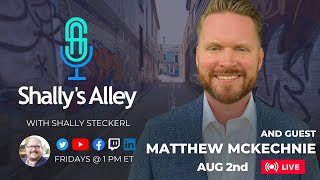
This content was created by vital-baritone. This content was uploaded by vital-baritone. This is a YouTube livestream interview titled "Matthew McKechnie! Live on Shally's Alley" (recorded 2024-08-03T05:44:23Z). The conversation features host VITAL-BARITONE and guest Matthew McKechnie (VP of Strategic Talent Delivery at Cirrus Consulting Group, former Amazon recruiter). The discussion covers cloud certifications (Azure and AWS), why recruiters might pursue them, study resources and estimated study time (Matt estimated ~20–30 hours), proctoring/certification logistics (e.g., Pearson VUE), impacts on sourcing and business development, cybersecurity and AI trends, and practical advice for technical recruiters/sourcers. The tone is an informal live interview with pragmatic, career-focused guidance and examples.
Chapters
What's up, crowd? Happy August 2nd! You are now live on Shelly's Alley. It is Friday, August 2nd, and if you are, um, well, if you're too busy watching the Olympics, I would completely understand that. It's been kind of fun and interesting to see the new sports like breaking and surfing and, um, other things like that. So Uh, yeah, if you're, if you're over there, not here, totally okay. But for those of you that decided that you wanted to join Shelly's Alley today, um, we have a really interesting guest. Matt, uh, McKechnie is a certified— I want to make sure I get this right— he's an AWS and Azure— Azure, Azure, Azure, Azure, yeah, AWS and Azure certified expert, like legit cloud practitioner in those two disciplines. And, um, I was, I was, you know, looking at status updates and looking through my network, and we had connected, and I saw something about— I think you posted an announcement about getting your second certification. And I was like, oh, that's interesting. I wonder how that helps with recruiting. And, um, and so I reached out and I said, hey, would you mind, you know, coming on the show and telling folks about, about this whole process? Because I've often wondered, you know, I, I get, I get asked a lot, Charlie, does a recruiter need to have the technical— do they need to know, like, to be a tech recruiter, do they need to know the technical field? Like, do they have to know, for example, software development, or do they have to know electronic engineering, or like, do they have to know the field? And And I've often wondered how much— the answer is depends. A little bit, yes, sometimes, but not always. If you work in an environment where you deal with a lot of different roles, then, you know, you can't do that. But if you specialize like you did, then yes. But then my question is, how often and how much does that kick in? So when I saw that you had that, I wanted to talk about that. So Matt was a a senior recruiter at Amazon, and now he works at Cirrus Consulting Group where he is a VP of strategic talent delivery, which is actually pretty well suited, I think, for the— what they do is they, they do cloud engineering, so strategically well suited for the, for the certification. So my first question to you would be How did— so you're going about your business, you're recruiting, you're placing people. How did you decide, I know I'm gonna get this like fairly difficult technical certification on— I think AWS was your first one?
Uh, Azure was the first one.
Yeah, right into that. What made you say I'm gonna get certified?
No, absolutely. Thanks for the question, Shelly, and thanks for having me. I think I first got introduced to you, gosh, 2020 or 2021. You You hosted a really cool sort of webinar on building your own search engine on Google, and it was just awesome. And I always love your unique approach. So thanks for having me. And yeah, so I work for Cirrus Group Consulting, like you said. I actually was at Boomerang. So I worked there for a couple of years, went to AWS for about a year, and then came back. So I've been here probably a total 3.5 years or so with Cirrus. And our founder, Jim Boyd, and I go way back. We were at another company called Convergence, which, a great staffing company, and we did, you know, everything you can think about tech. And he kind of tells a story of he met with about 3 Fortune 50 companies within a week, right? And they all sort of sat down and said, hey, what are you best at? Or, you know, what's your, what's your secret sauce? Um, and traditionally, you know, in the staffing world, on the agency side, it's always like whatever you placed recently, right? Whether it's, you know, maybe testers or engineers or whatever is going on recently, just because that's what your clients need, right? So that's what you try to ramp on and try to meet the market. Just a little bit of everything, right? And so he's like, well, what if we could actually be honest, right? And be, you know, and be the experts in a field and specialize in recruiting. I mean, wouldn't that be interesting? And he came with me the idea of joining and kind of helping him start the company. Started in 2019 and I joined them early on, right, right as the pandemic onset in 2020. And just the idea of, yeah, like what if you could have these conversations, right, with candidates and clients and really not just say because that's what they're hiring for or that's what you've just happened to hiring, you know, be hiring for in the past quarter, but to really be able to talk the talk and walk the walk from that, from that aspect and to dive into Because, because you mentioned it, and I'm sure this is why you get, you get that question about certifications, is especially if you're new in tech recruiting, it can be, you know, a little bit either jump on with a client or the candidate side, a little bit intimidating if you're going to jump on with a senior technical architect or technical director and sort of understand what they do, if they'd be a good fit, and how you're going to propose that, you know, how you're going to propose the right opportunities and how you know your client's right for them.
Oh, okay. So you comes up a lot. Yeah. So you were evaluating— so in other words, from a business development point of view, you're kind of evaluating the solution for them in— we don't do—
yeah, so no, to clear that up, yeah, we— so we don't do the technical solution.
No, no, no, no, I know. I'm sorry. Yeah, no, what I meant is you're, you're helping that. So the technical solution is, is the technical people, but you're helping kind of with the, like, the, the, the front end of that on the people side. So because you are certified, that gives them a sense that you kind of know the, the space. And so they— I'm assuming they trust your judgment better. Yeah, I think so.
I think it gives a certain— I think it's a differentiator. Um, and I've had, you know, people bring it up a lot. It's like, oh wow, you're—
oh, I see now.
Like, when I'm talking to maybe a senior architect or tech director, they're, you know, they're kind of looking at my profile as we're on the phone and say, oh, you're certified. That's the first I've seen that from a recruiter. So I think you kind of instantly get that sort of credibility and, you know, just they seem to start opening up if they're a little cagey. And then once they notice that, they just seem to be a little bit more receptive at that point. So interesting.
So Um, what I also— so you decided on Azure, and then you went, and then you're like, all right, this is interesting, I'm going to do this with AWS for same reasons, right?
Yeah.
Okay.
Yeah.
Are you gonna go get more, like Red Hat?
And yeah, I mean, there, there's a lot out there, right? Um, you could, you could keep going with this thing. Um, so yeah, the next— I mean, I'm actually working on a Microsoft cybersecurity, um, uh, certification, which would be the next. We're seeing more and more demand for cybersecurity. You know, with all the hacks, I'm sure everyone's aware of the CrowdStrike things going on out there, but cybersecurity is always a growing space. So just to be able to pull under the covers and learn a little bit more there. You know, you're able to ask the questions. You know, if a client brings up a, hey, we need somebody with, you know, this particular cloud solution, we need somebody with Azure Kubernetes. You say, oh, that's interesting.
You know what to ask.
Yeah, why did you decide Azure Kubernetes? What were you using before? You know, because a lot of times, as you know, Shelly, when you get into these searches, you know, a client can decide, hey, I need this and it's got to have these 8 bullet points. And then, but if you can kind of start talking to a candidate client and say, hey, well, what's similar, right? What's— do those skills normally go together? You can kind of get them there to where, hey, if you need to widen your network up, you know, your pool of candidates up, you can sort of work with them and sort of bring that capabilities like, hey, he may not have this service, but he's used this, which is really similar. And it can help with discussions and sort of having that background with the certification. What's also nice with the certifications on these, it's the Azure 900, the sort of your base level fundamentals on Azure. And then the flip side of that with AWS is the Certified Cloud Practitioner. So they go through each area of technology. So it's data and how AWS is related, you know, infrastructure, security, and then they give you all of like a little bit of history. You have to learn to be able to pass the test, um, what each of those facets. So if you're starting out in tech recruiting or you're there, you just want to learn more, it goes through each pillar of technology, um, because cloud sort of touches everything now.
So, so it helps you with— it helps you with the business development, it helps you with the— definitely I'm hearing hiring manager conversations, like they hired— the intake meeting, the, the conversation with the actual you know, authorities that are hiring to do more of— to hone in on, on your, on your search. So, you know, it's helping on both ends of that. Does, does it also, does it also help with candidates, or— Yeah, yeah, yeah. Okay, so what about— tell me about that.
Yeah, absolutely. And, you know, a little bit earlier, yeah, I've been on with, um, with candidates that, uh, you know, are like, hey, I noticed you're cloud-certified. That's awesome. Like, I don't think I've ever seen, and to my knowledge, I think we're the only recruiting firm that it's a requirement if you're a recruiter coming in to be certified. And so if we have a new recruiter, we'll just, we'll have them kind of ramp up, learn our process, and the first month or two they're really getting that cert. So we're not like super rushing them into recruiting, you know, to talking to candidates and clients, 'cause we want to have that base knowledge first. So, absolutely.
So the candidates feel like, so I guess my question is, are they more likely to respond? Do you feel like you get higher response rates or are they more likely to engage? Is it, you know, response is the same, but when you talk to them, they're more trusting? Where do you see the difference?
Yeah, I think it's both. I mean, I've had many, you know, candidates say, hey, are you an engineer? I mean, like, no, no, I'm not. You know, and I don't take credit.
No, but I play one on TV.
I'm a recruiter. What's that?
No, but I play one on TV.
Yeah, I play one and I do a pretty good job. No, it's like, no, I just try to find, you know, the real smart folks like yourself, Mr. Engineer, if I'm on the phone. And I just, you know, I've been doing it a while, been recruiting for 17 years now. So I've seen a lot of changes in tech. But yeah, I mean, I think it just, it builds that credibility if they're able to see it when I message and then in our conversation. Just to be able to ask that, you know, that next layer deep, right? Okay. You have Azure. Great. Okay. What services have you used? Oh, I've used Azure Functions. Okay. Well, how, how is that? Why, why did you choose that instead of a different technology? And peeling back the onion a little bit. And a lot of times they'll pause and be like, oh, these are more thoughtful questions, you know, than I typically get, get in a first-level interaction with a recruiter or, and it can go one of both ways. They're appreciative of it or they get a little like, Wait a minute, I didn't know this was going to be a technical interview. And then the interview, you know, can go a different direction. But I think for the most part, people appreciate that you took the time and to sort of get the certification, learn a little bit more about what they do, and hopefully present them an opportunity that, that, you know, that makes sense and be able to talk it through with them.
So, okay. All right. How hard was it?
Yeah, um, good question.
I mean, let's start with the Azure first.
Yeah, so I mean, I joined Cirrus right in the pandemic, right? So it's changing jobs, and then April hit and people were hiring, and then no one was hiring. So, you know, for the first couple months, um, it was really connecting people, you know, cloud architects, and having those conversations, all the while studying. So it took me a couple months. You could probably get it quicker. I got my AWS, I studied for about 3 weeks and got it, I think, because I was more used to the process. But I sort of jumped in. So with, with, with Azure, I think I jumped on A Cloud Guru as a training video source out there. There's also, you can go out on like Pluralsight or Udemy and buy these training videos and modules, and you just kind of tick off. And I went through all the modules on one, and took, took a practice test and I think just failed it. Just like maybe, you know, didn't even get near the passing. And in my first practice, I'm like, okay, well, I'm gonna have to actually learn these concepts and go back. And it was taking me back to my college days of like getting flashcards and going through these videos, taking notes. Um, so for that first one, it took a couple months. I mean, I peeled off some hours during the day and in the evenings to get it done. And then when you've got to take the test, you've got to clear your desk, can't have everything, you show the computer around your room, it's a little bit nerve-wracking, and you're timed to take it, but you've got plenty of time. But so yeah, I mean, you know, not— I mean, I think if you were an engineer jumping in, you could, you could probably pass it pretty easy, but, but getting there took, took some studying, took some time. To get it done.
So, so all— how many hours? I know it's a tough question. Estimate how many hours you put into it. Oh, um, like, uh, gosh, 20, 30, 50, 100?
Yeah, I would say 20 to 30.
Oh, okay, okay. To get the certification?
Yeah, yeah. Maybe 2 hours a day for, you know, uh, you know, 6 weeks or so. So Yeah.
All right, so, so I gotta ask, from a sourcing point of view, as you were doing this— I don't know if you still do a lot of sourcing because now you're, you know, you're a VP.
So we're a small company, so I'm here.
Oh, okay.
All right, all right. Yeah, I manage our team. And, uh, okay, yeah, it's— he gave me, uh, a great fancy title, which was— I was like happy to accept. But, uh, but yeah, I'm, I'm, uh, I'm leading the team, but I'm, I'm very hands-on.
You still get— okay, so, so let me ask you then, from a, from a sourcing point of view, has this experience, this knowledge of getting the certifications, has it expanded or improved your universe of keywords and like what to look like? Are you searching for candidates differently post-cert?
That's a good question. No, and I think it has because, um, you know, sometimes, sometimes a client gives you a really nice, well-written job description and they're like, I need these services. Sometimes like, I just need an Azure Okay, an Azure engineer, that can mean a lot of different things, right? Is that a security engineer? So they need like Azure Front Door, Microsoft Defender. Is that a DevOps? So they're looking for Kubernetes, Azure DevOps Services, you know, different— I mean, there's like hundreds and hundreds of services on Azure and AWS. So being able to like hone that down a little bit with the client and then be able to focus your search, because you know, you can do a search and you get thousands of people that come up. We're always trying as sourcers, I think, to narrow that pool, save our time, find the best fit for our clients quicker or hiring managers quicker. So yeah, I mean, I think so. I mean, 'cause it's a really broad spectrum, which was kind of cool when we thought about specializing. It's kind of a cool thing with cloud is they have these certifications out there that are, and they say they're for beginners or business units. You don't have to be a technical engineer to go out and get these entry-level certs on the AWS or Azure side. Um, and, uh, but it's wide enough as well. I mean, you're specializing, um, in cloud, but, but it— cloud touches everything now, development, infrastructure, right? So, so yeah, I would, I would say it definitely helps with sourcing strategy and kind of narrowing that pool down and understanding the, the, uh, not maybe, maybe not necessarily keywords, but definitely the search strategy and where to look.
And you might want to look, you might look in different places Okay.
Yeah, absolutely. I mean, obviously LinkedIn, but fishing where the fish are and kind of understanding, hey, is there, is there different, you know, meetup groups? Is there certain conferences that we can attend and network at? DevOps Days in Kansas City is a big one. I think you're in Atlanta, right?
I am in Atlanta.
Probably do one down there, I would think too. But, but yeah, just taking different approaches. Absolutely. I think the biggest thing with it, I mean, definitely identifying and You know, knowing what our client's looking for, helping them narrow down. Sometimes the hiring manager doesn't know. Right. So, so I think it does help us help them get there a little bit. I think a lot of good recruiters can do that anyway with a good intake. But yeah, but having that, right.
But it helps with that. Yeah, it does.
It does help with that intake and narrowing that down and then being able to go find them. I think it really helps with the assessment piece. So we try to break it down in 4 areas, like when we're trying to work with a new client, especially if they're a smaller client. They don't have an HR talent acquisition team. It's like, hey, do you know what you want? And, you know, let's find our own people. You know, you've tried posting. What have you done? You've tried posting, you're getting people that aren't a match for you, you know, the position or your company. So let's, let's go out there and find these people after we know what we want and we target and be structured in how we assess. So like a lot of times we'll ask clients like, how are you assessing your people and they sometimes they have a good answer. A lot of times they don't. Like, what? Okay, what questions are you going to ask? Because we can ask those questions on the front end. You know, sometimes hiring managers don't want to give that because they don't think— I think it builds the credibility with our technical background to be able to say, hey, give me those questions. I can provide you answers and get some of this out on the front end as long as it ties back to what we talk. What do you want? What is going to be measurable out of this role? How can we tie back our questions, how we're assessing these candidates to what you're needing. You know, if you're needing an Azure DevOps person, you know, we could ask them, hey, what are you doing in your last role to make development operations more streamlined, more automation, you know, improving performance and time to deploy and uptime and those kind of things.
So it sounds like a lot smarter, like smarter conversations.
It's interesting. Yeah, like I said, I've been doing recruiting and sometimes, you know, I go through waves where I'm a little burnt out on it. Um, but this kind of being able to pull up and like dive more into the technology, it gives you more interest. And I think your clients and candidates feel that, right? Like, um, you know, if you have that passion, um, and it's always trying to stay fresh, right? So do you—
would you ever get into— like, would you ever consider getting into consulting into like space? Because I— you don't have to be a developer Um, you can do like product, you know, project management, stuff like— I don't know, I just think it out loud. I mean, you've got a business you're running. I'm not trying to recruit you away from your company, but have you ever thought about like, I could do this?
Yeah, I do sometimes, but then I really talk to you, realize there's— it's, it's not all surface level. And, and, and, um, you know, I understand the buzzwords and what some of these things do, but, um, no, but, but I have thought about it, absolutely. But yeah, I mean, there's definitely more in, you know, in understanding what these guys do. I mean, um, it's pretty amazing where the way technology is going, as I'm sure you've seen. But, and now with AI, so tell me a little bit about that.
With, uh, you're talking about AI specifically with AWS and Azure, or like, it's— oh yeah, I mean, just in general.
I mean, every— that's the, that's the buzzwords now. I mean, we're, we're doing some marketing from a BD standpoint and, and sort of understanding what our target clients, what types of— I mean, there's so many AI tools out there. Yeah, is it SageMaker with AWS? Is Is it the machine learning platform? Azure ML Studio would be on the Azure side. But understanding what tools they're using and connecting with these type of talents proactively, right? Like if it's, so if you're going after healthcare and the top 10 healthcare organizations are using SageMaker, for instance, then we should probably know some SageMaker architects, right? Or getting into it, okay, proactively marketing that way. So it helps with a BD perspective. And then, and then just again understanding, you know, what are you trying to achieve with, with this? Um, you know, some companies are just, hey, let's quickly get ChatGPT plugged into our, our application.
And have you ever been like, whoa, whoa, time out, like that's not what, you know?
Yeah, I'm getting more and more interested into the safe AI, like what, you know, what are, you know, some of these regulated industries, you know, to be able to take advantage, you know, are they going to be able to you know, what are these standards going to be coming down? You know, I'm not— I don't know what they are yet. I think it's still early days, but how are they going to be able to safely use this, you know, in a regulated environment? I think that's sort of the long-term stability with some of this, just in my opinion on some quick research. But it's just amazing what these tools can do.
So, well, I wanted to ask a little bit about kind of the, the, what can, what can our audience— the pragmatic approach, right? Do you recommend, would you recommend that a recruiter or sourcer that's working in, you know, cloud AWS, that they get this certification? Or, um, or not necessarily? Because, and I'm saying someone who's recruiting, not running a business, managing a team, doing client calls. I'm talking about just your, your heads down, you're filling jobs. Does it make sense for them to set some time aside to do these certifications, or not quite yet? Like, I'm looking for that.
Yeah, I would say it depends. I mean, I, you know, I'd want to be careful with your time. Like, like, take, take a little bit and just, you know, don't jump on, you know, a certification because you think it makes sense. I mean, does it make sense with the type of roles? If you're seeing You know, if you— like, if you're a recruiter at a, maybe a Microsoft partner, like something like that's, you know, doing a lot of cloud solutions, and you're asked to find these type of Azure folks, so I think it would absolutely make sense. You know, if you're, if you're doing technical recruiting and it's, and it's not maybe as relevant, maybe it's more software development, and maybe cloud's important, but it's not— maybe there's another certification out there that might make a little bit more sense, but Generally speaking, yes. I think in terms of credibility, yeah, with hiring managers. And I think it's definitely helped me. And I'm glad either way that I have it, even though, you know, that obviously helps me because that's where our company specializes in. But I would think it would, it would help because like I said, I mean, cloud these days, if you're in tech recruiting, it touches a little bit of everything. I just have that understanding. Now, you don't necessarily need to get certified. I mean, it does take a lot of hours. You've got to take the test. There's definitely certification. What about courses? Yeah, there's other courses like LinkedIn Learning tracks or even Microsoft itself.
I was gonna say, so what are your sources you would recommend for just—
yeah, you can get badges, dip your toe in that. Like, yeah, if you want to just dip your— absolutely. I think a couple things is just, just Microsoft Documentate, Microsoft Learn. Like, if you go out there, um, there's free sort of modules that you can do, and after you click off, you get a little badge and you earn points, experience. Okay, it's all free. It— no, this is with Microsoft.
Oh, with Microsoft. Oh, okay.
Um, now LinkedIn Learn has some as well. I think, you know, if you try out, I think LinkedIn Learn gives you like, I don't know what it is exactly, a month free, and then you've got to pay. But it's all free on Microsoft Learn. AWS has something similar. Um, if you then, you know, from there, if you start with the websites, like the learning tracks, um, so let's say, hey, I want to learn a little bit more about how Azure Databases work, they have like a beginner's learning track you can just read through. If you want to go a step further, there's video. It's all reading if that's how you learn. Some people are more visual learners. So I like Udemy. They run specials all the time for like $15. You can get these whole courses where people visually walk you through these concepts. And that's been the biggest difference maker for me.
Oh, really? Okay.
There's a lot of stuff on YouTube now.
Okay. All right. Yeah, but I know there's a lot of stuff on YouTube, but I'm like one of those, um, listen, I, I know people who have learned how to play the guitar on YouTube.
Yeah, yeah.
But I think for— I, I, I guess I'm trying to be open-minded. It's, it's a surface learning. If you're gonna, if you're gonna— I think the people who learn how to play the guitar on YouTube are also doing lots of other things and practicing a lot. So it's got to do with putting something in. My fear is that I tell people, go look it up on YouTube, and then they get like this surface knowledge.
You don't know what they're gonna find.
Yeah. And then they think, oh, I'm, I know now. And then they're like, oh, you gotta, you gotta do your own research.
Is this a reputable source?
Yeah. But so that's what I was asking. So you think mini courses like on Microsoft, on AWS, on LinkedIn, these are good places to start.
Yeah, good place to start, I think, at Microsoft Learn. You're getting directly from the source.
Now, when you actually go for the certification, you go directly to Microsoft and Amazon, or is there like a third-party provider that does that?
You go right through their website. There's a third-party provider that actually used to be— it might have changed— it was something called Pearson VUE, which was Pearson V-U-E, and that's how they did— that's just basically how they proctored and put on the exams. So they link you through there, but it's right through the proctor.
Okay, but that's not the certifying provider.
Natively.
Got it.
Yeah. It's interesting. Yeah, they make you, you know, do you have anything hidden under your desk or any cheat sheets?
That's funny.
You used to have to go on site. But like I said, I, you know, with the pandemic, they changed that. So I guess, you know, that was one, one benefit of that. I was just able to do it from home.
So right, right. Yeah. Well, that's changed a lot. Yeah, I looked into proctoring tests when I was doing the Yeah, I had the foundation, the nonprofit foundation. We were offering certification, and there is proctoring software and things like that that help with, you know, to help detect people that are cheating. But then I realized, okay, so I get, I get if you're going to get a grade and or it's required for your job, but what we were doing was voluntary in the first place. Like, you want to take this course because you want to improve yourself. So why do we want to not trust you?
Yeah, like if you want to go ahead and cheat, what benefit do you have?
Yeah, yeah, what are you getting out of it? Like, go for it.
You don't have the knowledge, then you're not—
then you're not going to have the knowledge and you're not going to be able to do the job. So, you know, so then it kind of— we sort of backpedaled out of that. But it wasn't, you know, I wasn't looking for something that was going to provide an increase in pay, for example, right? Like if you— I'm assuming if you're an Azure engineer and you get that extra certification that you like, you might get a pay increase. So I guess it depends on what, like, how officially tied it is to your job, whether or not you need that. Either way though, the content is really important. So don't you feel like sometimes learning content can be a little— I, I, I go, I see two extremes. I see like lots of video and it's just hard to watch because it's just a talking head. And then I see lots of, um, just heavy tech, like textbook on the one end and yeah, too much video on the other.
Yeah, the Microsoft Word, heavy text, there's some videos in there. There's— there— I like a good balance. It can't be too high level because there's some of these questions on these tests will be simple vocabulary, but some of them be like, hey, you've got a client that wants to do X, should, you know, should they use this combination of services or this? So you've got to kind of know what they do. Um, so that's why, you know, when I sort of did that surface-level studying at first, didn't go well on the practice test. So you do—
that makes sense.
You've got to kind of learn like what they mean and then like what are some use cases for some of these things. Like, um, you know, so examples.
Um, so which one was harder, AWS or Azure?
Uh, you know, I, I get asked that a lot. Uh, I think Azure to be harder, but I don't know if it was because it was the first one I did, right? Like, that's why I known how to study for them by then. And so the, the— it took me a couple weeks on the AWS side, and then it took me a little longer on the Azure. I felt it was harder, but, you know, I'm not sure. And they changed every year, so—
oh, right. So do you have to get recertified? I think it's good for 4 years, and then you have to like take an update. Yeah, so I'm still good.
I may, maybe coming up on my Azure one, but I think I got a couple years.
Do they offer you like a catch-up course, or do you have to go through the whole thing again?
You've got to take the test again, um, you know, and in, in terms of what's changed, you'd probably have to, yeah, refresh it and make sure, you know, those concepts are still there.
So that makes sense.
Yeah.
Yeah. So who's gonna win, Amazon or Microsoft?
No, good, good question.
I mean, um, you got both, so like, you're, you know, you got both ends covered, but in the, in the business world of, um, I guess in the business world of technology or in the world of like spending dollars, you know, a lot of people underestimate Microsoft. I feel like they don't realize how big Microsoft is because Microsoft never really did a good job of, um, of like, I don't know, bragging, or it just— they're everywhere.
I mean, you see Microsoft stated and it's like, oh boom, and you're like, oh yeah, yeah, right.
That's my point. So it seems like they're— and then you realize, you peel back the onion and they're like in businesses that you never even heard of. Yeah.
And there, a lot of people know or may not know, they're one of the big backers of OpenAI, ChatGPT. And so in their new Copilot program that you see on all their new laptops and the new like fancy ads, that's all based off ChatGPT research that's been going on for years with OpenAI. And now it's plugged into Microsoft Office. I think it's really powerful. I think Microsoft's at a real competitive advantage because all these companies are already using Microsoft tools, right? So it's really easy. For them to then go into Azure. So we're seeing more and more of our clients, we have a lot of healthcare clients in the financial services space, if they're more concerned about security and they're already Microsoft shops, they're going Azure more and more. I think AWS was probably first to market and had nothing but explosive growth. And I think there's some tailwinds they're seeing now with some of these competitors.
So yeah, so there's— so it's a good fight between—
yeah, definitely. I think—
and then there's— the third one is Google, right? GCS or something.
What's that? Say again?
The third one is Google. Google Cloud. GCP. Google Cloud. Yeah. Are you doing that one?
Google Cloud Platform? You know, I haven't yet. Um, that'd be a good— that'd be a good— I think next after, after I— after security. Security is all three.
Like, security is everything. Security There's different— I mean, there's Amazon security, Azure security, but security itself, the concept of defending cloud networks and defending cloud data is fundamentally its own peripatetic division of knowledge, which can apply to any software. I started a lot about— I learned a lot about part of my job, my career has always been figuring out ways around security in a way that was ethical. So kind of like the difference between, um, white hat and black hat, right? The difference between, um, you were walking by the building and the window was open and you could see in the window and you saw something that was supposed to be confidential, but it's not your fault that you saw it because the window was open. Good versus— yeah, exactly. Versus you actually went into the building you know, unlocked it and got— like, there's a breaking and entering, and, and then there's like getting around security, and then there's just accidentally finding that it was open. Like, yeah, yeah.
So, yeah, we talked to CISO clients. I mean, the biggest thing, it's like, you know, I expect them to say some big technology, you know, uh, you know, it's a fault in this, you know, technology routing protocol or something, or we need this better system. And it's The biggest thing that I ask people is like, you know, it's the people, you know, it's somebody clicked on something. So the biggest thing you can do is train your people on like, you know, how to avoid these phishing and these, these certain traps.
Are your biggest vulnerabilities.
So true.
You heard it here first, folks, right? You are your own vulnerability. You are your own worst vulnerability.
I think we all know it, right, as humans, right? We're doing our own worst enemy in a lot of ways.
So that's it. So once you do GCP, you said, so you'll have All three. There's nothing— is there anybody else in the game, or like, are there smaller players, or—
oh yeah, yeah, there's, there's, uh, Alibaba is an Asian cloud provider. IBM has its own cloud, separate cloud. Okay, so is Oracle.
And so they are like more specialty players? They're a little bit smaller in the market share, and they have like niches where they, where they particularly— yeah, like people who are already— they have mainframes maybe, for example, for IBM, or People who are already running on Oracle are more inclined to do that. Okay, so probably not worth pursuing those.
Google's really known for their AI analytics. They have a, they have a tool called BigQuery that's, uh, you know, a data engine, right? Um, Microsoft does a lot of the infrastructure, desktop apps. Um, AWS, more Java, you know, open source type platforms, Linux based. So, oh.
So you learned all that from taking the certifications?
Uh, some, yeah, some. And then just talking to people, right? Talking to these folks.
Yeah, that's a part of it too, right?
People love talking about what they, what they do. So tell me more about that, right?
Well, that's how I started with you. I'm like, tell me more about that. How do you, how did you even want to get into that? What made you, what drove you to get into this?
Yeah, that was the biggest thing my first recruiting manager told me. He's like, you're not going to know anything, man, just, just pick up the phones. Like, well, I want to learn. Now you're taking way too much time thinking about it. You're not going to become a software developer in the next couple hours. Just pick up the phone and ask the first candidate, like, why do you use Java? What is it? You know, help me out. I'm new here. So yeah.
Well, everyone that comes on the show, I ask them two questions.
Sure.
And before we, before we wrap up, the first one of those is, who should be our next guest?
Hmm, who should be your next guest? Have you ever had, you know, a guy named Ray Thomas? He's at AWS. He's a recruiter. You may not have run into him.
I don't think so.
Connect you. He's, he's awesome. He's what they call a bar raiser at Amazon. Which he does debriefs on panels. So if they're hiring for a new high-level person—
but he's a recruiter?
Yeah, he's a recruiter, but he also— yeah, he's a recruiter and he runs debriefs. And his approach to recruiting is he's into some space projects over there at AWS, some federal projects, at least from when I was working with him. But he's one of the best I've seen from a qualifying and then being able to like manage personnel. So you might have these senior level directors in these interview debriefs and being able to advocate for a client in that arena. That he's one that comes to mind that would be a good guest, I would think. He runs—
yeah, I don't know him.
So yeah, yeah, he runs his own podcast as well. I think it's called Becoming Awesome.
Awesome. I like that.
Yeah, but AWS, right?
Awesome. Right. So yeah, make the intro. He might not accept, but yeah, definitely gotta, gotta ask.
Usually, yeah, he's usually out there on stuff, a lot of posts, really active on LinkedIn. And like I said, he does these kind of things. Um, I learned a lot from him. He was like my like onboarding buddy at AWS when I started, and he couldn't have had a better one. Um, but he— I'll link you his, uh, his, his podcast link. I think he's on Twitch is the platform he does. Um, and, uh, but yeah, I think he'd be great. So I'll think— if I can think of anyone else, I'll shoot it to you.
Yeah, absolutely. That's— one is more than enough. Um, you know, reach out. So yeah. Um, and then the next question, the last question is I like to leave folks with something to provoke thought. Um, so not, not, not a, not a, you know, pulpit moment, like a preachy moment, but more like a question that they should ask themselves and mull over themselves over the weekend. What would you want them to think about? Like, deeply think about something you want them— you want to leave them thinking about?
That's a good question. You know, just what popped into my head was I say, like, what do you care about? Like, what do you— what's important to you? What do you want to be known for? You know, is it, you know, being the best recruiters or being the best tech recruiters or being the best HR manager? You know, What's important to you? And then sort of, okay, if that's really important to me, what would, what would being the best look like? And that's sort of what we kind of sat down and did. It's like, hey, maybe we should get certified. Maybe we should take these extra steps and kind of find an area where we can, you know, we can tell hiring managers, yeah, we actually know this, not just because we placed a couple last month, but because, you know, we've spent some real hours in trying to learn these things. Um, and I think that'll bring authenticity to you. Um, and I think it'll, it'll bring you clear direction. Um, you know, so if that, if that helps.
Yeah, that's a good, good— so think— so the question is, think about what you care about, what's important to you, what's important to you in terms of professional, like, okay, and then pursue, uh, that knowledge.
Yeah, pursue that knowledge. Um, think about the steps that, like, would get you there.
What would you— what would take— so for you, it was like, you know, got to get the certification and all that?
Yep.
Cool. Well, thanks, man. Appreciate you being on the show and taking some time.
Yeah, absolutely. Thanks.
Look forward to that introduction. Yeah, my pleasure. Look forward to that introduction.
Yeah.
And, um, yeah, so that's it, folks, for our show today. If you, uh, want to come back next week, I'm gonna have my partner Jeremy Eskenazi from Riviera Advisors on the show. And, uh, August 9th. So until then, please be kind to yourselves. Take care, everybody.
More from Shally



Scaling Talent at Hypergrowth: Leadership, AI, and Hiring Excellence with Cindy Nicola







