Megan Whittington! Live on Shally's Alley
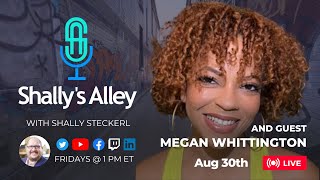
In this live interview, Shelly (Speaker A) talks with Megan Whittington, the "Sourcing Sherlock," about how her background in sales informs her talent acquisition work. Megan explains that recruiting is fundamentally a sales process, using consultative skills, metrics, and relationship building. She walks through the MEDDIC (Metrics, Economic buyer, Decision criteria, Decision process, Identify pain, Champion, Competition) framework as a lens for sourcing and recruiting, highlighting the three‑way dynamic among hiring manager, recruiter, and candidate. The conversation dives into practical outreach tactics—Chrome extensions, X‑ray Boolean search, tools like Crystal Knows, ContactOut, and personalized subject lines—to increase response rates. They discuss ethical parallels between sales and recruiting, emphasizing a human‑first, consultative approach and warning against shortcuts that damage reputation. Megan shares insights on interview process inefficiencies, consensus hiring, and how to streamline stages. The dialogue also touches on work‑life balance tools (break‑timer extensions, Oura ring) and the future role of AI, urging recruiters to adopt AI responsibly while maintaining "different‑egrity"—a blend of differentiation and integrity. The interview ends with recommendations for future guests and a thought‑provoking challenge for listeners to consider AI adoption and personal integrity in their professional lives.
Chapters
Hey everybody, what's up? Happy Friday, August 30th, the last Friday in August of this year anyway, and you are live on Shelly's Alley.
Hello!
Today we have a special guest, Megan Whittington, known as the Sourcing Sherlock. Did I say that right? Yep, the Sourcing Sherlock, the detective of, uh, of sourcing, the mystery solver of sourcing, all things talent.
I love it.
That's right. So Megan has a reputation for, um, being a connector and also specializes in diversity recruiting, currently with NVIDIA, but in the past has done quite a few things. She's actually done a stint with SourceCon as an editor. She was at Twitter for a while. But the most interesting thing I think about all of it is kind of how she got into recruiting. She, she came into recruiting from a role in sales. So I thought it would be kind of cool to explore that, that relationship between sales and recruiting and, you know, how that got you, how you made the transition from a sales role and what has sales brought into recruiting for, for you? Like, how has it helped, I guess? So tell us a little bit about like, what was the transition? What was the transition like? But more importantly, what made you make that choice?
Absolutely. So, so my background prior to a little more than a decade at TA, I started as an agency and then in-house for recruiting and sourcing, but I was a sales professional. My mom always said, you know what, you could sell ice to an Eskimo, you're so good at sales, right? And I thought, okay, yeah, you know, that's a natural path to do, like, that's something easy to pick up. But after a while, I wanted something more fulfilling. And I don't know if anyone's ever seen this before, but I was reading a job description. It was for an agency recruiter. Was an executive recruiter role. You read the job description, it will ask you questions, right? And it's like, do you— and I'm like, yes, yes, yes, that's me, right? So I'm literally talking to the screen and then applying for the job afterwards. So long story short is my, my passion for it was to have something more fulfilling. I think recruiting and sourcing is still sales, so sales has never left. I think it takes, um, if you have those strong sales skills, those consultative skills, if you will, those— that makes for a better recruiter and sourcing professional. So that's never left. And, um, I love learning new things. So something recently I learned was the MEDIC, um, M-E-D-D-I-C-C. We'll go into like what that means and everything, but yeah, it's a sales— it's not like a paramedic, but maybe depending on the the job search that you have, right, the requisition that you have. But it's a sales methodology. So I find there's a lot of parallels within sales, within that process, the sales process and the recruiting process. So I think it just emphasizes that always be closing, if you will. You got to close the candidate, you got to close the sale. So that's the parallel there for me for sure. Yeah.
I mean, when, you know, I started in the business, it was sales because I ran, you know, what some people may not be aware of. Is what they call running a full desk where you brought in the business, you know, you sold the client, the customer, you brought that in and then you fulfilled the requisitions. So my very, very first job, actually, I was a recruiter and I was paired up with an account manager. So they were the salesperson as I kind of learned the ropes. But then in my second role, I did both sides of the of the equation. So it's always been about— I mean, sales has always been a part of it, but at the same time, I also think that there's a misnomer. People say that recruiting is sales. It's not. It's recruiting. And I think the reason is there's a lot that we can bring in from sales. I get what you're saying. But the reason that recruiting isn't sales is the buyer.
Right.
And, you know, in, in sales, it's a little bit easier because you have the relationship between the buyer and the seller, but in recruiting, you don't really have that. It's actually more of a three-way relationship where you've got the buyer, which I guess the hiring manager, and then the seller, but then there's also the candidate.
Yeah.
And in sales, the, the product doesn't say no, but in recruiting, the product can say no.
That's right.
You don't sell a car and then the car gets to your house and goes, oh, hell no, uh-uh, I don't want to, I don't want to be here, right?
Yeah, yeah.
So, but I, I definitely, I, there's a lot of the same processes, especially with recruiting. I think definitely more so than with sourcing. I'd love to get your take on what is still sales in sourcing. Is it like the outbound? Is that what you're thinking? The outbound and kind of engagement part of it? Okay.
Absolutely. Outreach, right? Like you are trying to get a hold of that buyer, which is right. But if you think about it, like the MEDIC methodology, like that stands for metrics, picking off the buyer, certain criteria, identify pain, champion, competition. It's a lot, which is why it's an acronym.
But yeah, right, that's a hell— that's a mouthful right there.
But I look at it like, if you think about a metric, what, what are those success factors for the candidate? Their experience, the skills, specific achievements that they've had that match them to that job requirement. Of course, you have those metrics like time to fill, things like that, offer initiated on the sourcing side, offer accepted on the recruiting side. But if you think about the economic buyer, yes, that can be the manager, the recruiter, but in some cases it can be the candidate's spouse. You know, hey, my spouse doesn't want to move, they don't want me to leave this job, they don't want me to relocate, things like that. So understanding who holds that decision-making power, I think, is crucial at every stage through the process, right? Uh, we say always be sourcing, but I think always be closing as well. Like, you're closing a candidate at the beginning by doing that fact-finding like a salesperson would. You're uncovering those hot buttons, if you will, that is important to the candidate. So that's like early on, um, in the process. Of course, I have examples throughout, you know, the rest of MEDIC, but that's like starting out at that top of the funnel, if you think about where a sourcer lives and adds value in that recruiting funnel, in that process?
I mean, in recruiting, definitely there's the, you know, different sales methodologies that have crossed over, like, you know, feature-benefit trial close. I can think of, you know, a few others. I'm sure, you know, from your experience, there's a lot of others, but that's the one that I remember. Where you're highlighting, okay, you know, here's what this position or this company has to offer. Here's what that means to you. If this package was the right package, would you take the deal? I'm oversimplifying it, but, you know, and then you do this sort of trial close several times throughout the process. But in sourcing, you're getting the person, the first part of that is the hook. Of like getting them just to say, yes, I'm interested, or maybe not even yes, but like maybe like, okay, tell me more, you know? And at that point, it's too early, I think, to do a trial close, don't you think?
Yeah, for sure, for sure. But I think that goes back to the beginning stages, like you mentioned, of understanding how that aligns. Like sometimes the candidate that you reach out to may be great on paper and you start talking to them about what they've done, not aligned with what you're looking for for that role. Right. It's not all a yes. So I think that's similar to sales. But yeah, it's too early at that stage. I think it's establishing rapport, understanding what matters to that candidate, and then you're matching it. Like you mentioned, that three-prong, you know, you're matching that overall fit, if you will.
So we had a, we had a guest recently, last week, actually, Um, where, you know, we were talking a little bit about kind of the, the sale, the sales side of it and the closing side of it. Um, and, uh, so for me, something that's always— oh, I'm just gonna come out and say it— it's always bothered me. It's, it's always like, it's like this scratch in the back of the eyes that I can't get to, you know, like that. Like, I want to scratch the back of my eyes And that is when companies, customers, in my case as a consultant, one of my duties as a consultant is to help organizations improve their top of the line funnel, you know, to improve conversions. And so when I go into an organization that does this, it's like a really cold shower. I want to kind of get your reaction on this. What they say is, we don't want to talk to candidates that don't want to work here. And it's just like, okay, so first of all, uh, how do you know they want to work there or not? Like, you know, so you're saying that you only want to talk to somebody that you already hired, or like You know, exactly. So from a— and I actually use this analogy with him on the conversation, and I said, to me, a hiring organization saying we don't want to talk to candidates that don't already want to work here is kind of like a salesperson saying I don't want to sell something to somebody who isn't buying it.
Yep. I'll do one better. There was one I had a hiring manager say, oh, I talked to the candidate, but they're, they're really happy in their current role in their current company. So that was a deterrent factor that said, hey, I don't want to talk to this candidate. They're happy in the role. Wouldn't you want them to be happy? And then you said, you're a happy person, and you're happy at your job. We don't want to hire you.
We don't want— we only want people that are unhappy. Right.
Doesn't make any sense, but okay.
One of my favorite opening lines is when I, after I establish rapport, so, you know, hi, hi, uh, this is Shelly, you know, do you have a moment, blah, blah, blah. But like once you get past that, like a little bit of the icebreaker, one of my favorite lines is, now I know you're probably happy where you are now, but I'd like to talk to you about an opportunity that could be more interesting or it could be better for your, you know, whatever. It's like, I know that you're probably in a good place because I'm calling them, you know, I'm calling— these aren't applicants, these are— yeah, I'm calling them. So, you know, you're probably in it now. If they're not in a good place, they'll tell me.
Yeah, right.
Well, but if they are in a good place, I kind of already said that. So it sort of— it takes the wind out of that objection of, well, I'm really happy where I am now. Yeah, I kind of knew that, right? And that we want that. I'm glad you're happy where you are now. What if there's another position that maybe, right? So yeah, that's very similar to what I was talking about. What's your take like on how— what do you say to a hiring organization, a client, a customer, whatever you want to call them, that, that comes at you with that? Like, well, we don't want to talk to people that don't already want to work here. Like, what's the response to that?
Well, I, I share with them that yes, okay, I always tell candidates I'm talking to they interview, do your research. I find out how much they know or how little they know about the company in that first call, right? Um, so I would be educating the, the client or the customer, stakeholder, hiring manager, however it is. I'm uncovering that in that process, right? So I'm sharing how this role would align by uncovering those things and those wants and needs from the candidate as well to make that overall fit. And I'd share that to them because I'm like, My process is not just matching the skills on a resume to, to the job description because we know there's more to the job description and there's more to the resume, right, on both sides of that. So it's uncovering initially and then that you get that excitement for wanting to work there. They don't know the whys. They may not know this company I'm calling about, but during that process, like, you uncover why it's exciting to them. They've done their research. Most, like every candidate I've worked with, have done their research as well. So they do go into those next conversations with that excitement. They find their why, if you will, of why they're going through that process. But I help them uncover it before that.
And you want them to have done their research. I mean, that's, that's good because then they're going to start asking some more important questions and not come at it like, well, tell me, what does your company do again? That's always been a little bit of a red flag for me when a candidate says, what do you guys do again? Yeah, it's like, yeah, I get that we're not very well known, but you knew we were going to have a call today. You know, you could like, I came prepared to talk about your background. You could have come prepared to talk about my company, you know, for sure.
And those are the ones that don't really make it to that next stage. Like they won't meet the client, they won't meet, you know, the hiring manager. Process, because in that, it's telling. In that first call, that first interaction, like, it's always telling how far the candidate, I think, is going to go in every conversation and every interaction, even email.
I see it, I see it as my role as well to help prepare them a little bit. So by the time they do have that next meeting, they know more about, you know, I've told them about the company, and it's not a dissertation, but it's sure You know, it's the highlights. And I think one maybe— and I try to address what's important to them. If during the initial, you know, the discovery, when I was looking at the candidate, I discover a little bit about their background. I try to match what the company's benefits or the, you know, the feature benefits are to what I suspect this individual's preferences may be. But I also ask them during that, you know, what some of the things are that they're looking for. So, you know, it might be less travel. It might be, you know, there's— it's a fallacy that everybody's looking for money. I've made many offers in my career where the salary was a lower base than the base that they currently had. Yeah. And personally, I've taken steps down in salary because it was a step up in another role. So it was like more leadership or, you know, better coaching or a better company or more, you know, there's, there's always more to it than just dollars, right? So that's part of that discovery up front in the research, like you said, but also in that first call. So what else, tell me what else connects sales and recruiting? Like, you know, we talked about that, but what's the other, what other parallels are there?
For sure. And then one other question I do ask in my initial call is, we've, you know, talked about everything in the job description, we talked about your background, but outside of all of that, what's important to you? And I find that candidates really value that question because it's one they don't expect. Often people don't really ask, you know, that question, like, what's important to you? And sometimes they will say something more, you know, about the job, but they'll add in some personal things as well. So that helps me paint like that overall picture, what I'm going to sell back to them in that, you know, kind of package thing of like going over these are the things that you, you know, these are the hot buttons you said, these are the things that are important to you, this is what the role offers, like, and then making that make sense for them in those like more of those final stages, like closing calls if you will. But even at that mid-stage before there's the handoff to the recruiter from the sourcer, I'm doing that. So That was one other thing I wanted to add. And then just feedback that I give to candidates is to always have a question, at least one or two, for the person that they're interviewing with. And then always closing, like reaffirm that interest at the end. It's always that, you know, after talking to me today— I'm paraphrasing— after talking to me today and learning more about my background, do you have any objections of me, you know, taking on this role? That gives the interviewer a chance to talk to the candidate about maybe an objection that came up in their head that they're going to bring to the debrief that the candidate never had the chance to overcome, right? So those would be some additional tips, um, but I'll shift back to, um, how, you know, the parallels, if you will. And I also have an example of a time where I've utilized this and kind of had that sales methodology top of mind, if you will, for that. So earlier we talked about, you know, different metrics And then who the economic buyer could be for that. But think about the decision, the two Ds.
Friends, family.
It's been a spouse, it's been family, it's been other things. Like, you know, like you've said, our product has an opinion and it's not— people are not a car, you know, like it's different. So there's different layers and factors in that. So when I think about the two Ds in MEDIC, it's like decision criteria and process. So how can I uncover what truly matters to the hiring manager but also the candidate, such as the company culture, career growth, compensation, like I mentioned, overall fit? Um, what's going to get them to that, like, to landing that role? It's not for everyone. You're not going to always have a yes, you're not going to always have a hire. Um, but I do that, and I think about ahead of time to land that, that offer, right? If you think about the process, how you navigate the recruiting process, understanding each step, managing those expectations, like sharing with the candidate. I, I like to be transparent and upfront, sharing with them like, this is what our proposed timeline is for the interview process, these are the steps.
It may not have who you're meeting with because that could change based on scheduling, but at least how many interviews or What the interviews are about, like a technical interview versus a, you know, team interview versus a cultural interview. Yeah.
Yeah. And I don't know if you've ever— you probably heard this as well, but have you been in a company where the process was so long, like you needed to streamline and give them that feedback of like, hey, we're doing too much, basically? Like, we need to change the interview paradigm. They're doing all these interviews and it's like, Too many, we're losing candidates, here's a drop-off, you know?
Yeah. And it almost becomes like hiring by committee where, you know, if 7 out of 7 people don't say yes, then they don't bring the person on board, even though 6 out of those 7 people will never see that candidate as an employee ever. Like, it's just kind of a little bit too much.
Yeah.
Consensus hiring is— I do, I run into that.
Yeah, for sure. And then if we move over to the I admit it. That's identifying the pain. Obviously, there's pain points for the company, there's pain points for the candidate. You know, even a passive candidate, you can uncover those pain points that they have of maybe— hey, I had one scenario where a candidate really wanted to stay with the company and they were happy there, but they didn't see that open mobility opportunity. They couldn't get promoted, you know, where they were, so they were open to my opportunity because gave them that promotion, even if it meant leaving that organization, right? So identifying what those pain points are and then solving them throughout is really— I say, related to sales, like you're addressing the customer's needs. The best salespeople are going in, finding out those pain points, and then speaking to them with their solution. Not going into selling solution without knowing the pain point, because they may not even be able to themselves, you know what I mean? So, so I definitely related to that. And then the final two would be champion and competition. Obviously, for champion, you've got to find a champion within the organization or the candidate's family, right? It could be the spouse. Your champion could be there, economic partner could be there, uh, the spouse of the candidate, someone who is going to help advocate on the other side. That could be an employer, that could be, you know, the hiring manager from that initial call, that's going to— they're going to then meet 3 other people in that panel round, the other rounds, to where you have that advocate. Like, this is what was important to you in that first initial call. They're now moving through the process. Everybody has their own opinions and viewpoints in those debriefs, so that just kind of holds them true to those core things of why there was interest in that candidate initially. And then lastly, competition. Like, there's always going to be competition position. There's going to be—
who are the other candidates? Who are the other offer employees? Yeah, they might not be obvious ones. Yeah, I've had candidates that are only interviewing with me, and, you know, because I— because they were passive candidate.
Yeah.
But ultimately, if we don't move quickly enough, they'll start shopping.
Exactly. And I always ask in that initial call, that's another question I bring up, I say, are you interviewing anywhere else? Do you have anything in final stages? Obviously that can change. They can say, hey, I'm in initial calls with two other companies in addition to this one. But you can understand how those other opportunities stack up against the one you have and use that in your kind of closing process as well whenever you are speaking to the candidate, because the other opportunity may seem better, you know, money-wise. But if you look at the overall, of the overall comp, the overall opportunity, you could sell them on how it aligns with what that is. And of course, it's not gonna be selling someone who doesn't want to be there and doesn't want the role, but having those conversations, I think, are more strategic and thinking like a salesperson as a recruiter or sourcer in that.
So another fallacy, I think, in the logic between recruiting and sales, and now granted, there's a lot of parallels. But I just don't like it when people say recruiting is sales.
Yeah, yeah.
That's like recruiting is like sales. Recruiting is also like marketing. It's also like, you know, but recruiting is like dating as well. But you can't say recruiting is dating, you know, that's right. So another one of those fallacies is this, and it's kind of a, it's kind of a tricky subject, tricky area. But it relates back to the product, as in, you know, candidates, hiring managers, and recruiters. When someone is unemployed and they're looking for an opportunity, unlike in sales, the product isn't trying to oversell itself and be overeager to be hired. In recruiting, you do have candidates that will just say yes to anything because they're You know, and I've been there. They're desperate. They're unemployed. They've been unemployed for a while, not through their own fault— layoffs, COVID, um, you know, there's been other, you know, companies going out of business, whatever. And they find themselves in a situation where they have to provide a paycheck to sustain their family. And so they're kind of just saying yes to anything. That's a very different You don't get a lot of that in sales. That's almost like a buyer that's saying yes, yes, yes, yes, yes to everything, and then at the very end pulls out. Like, how do you handle that? So what can we learn from sales about that?
Yep. I think, um, salespeople that I've, I've interviewed, salespeople— I've been a salesperson, and I know one thing is true, that not all, but Salespeople can sell themselves, but you gotta cut— you gotta be able to cut through the fluff. Like, what is actually true here? What is— like, is this something that you actually want to do? And I think in that, you're uncovering by getting to know the candidate, right? You— yes, you know, you hear from people that are like, you know what, I will take anything. I'm like, give me a tour, I'm looking for anything, I'll take anything. I'm like, never say that, please Don't do it. Like, we got to be strategic. I get there's times of desperation, especially in this challenging market, but you want it to make sense, you know, for, for your next step. So is this a stepping stone role where you're going to be here and then leave to something else, or is this something that you're truly excited about? And I think that can be uncovered in those fact-finding questions like a salesperson would do to uncover if this is a sale they want to, you know, sell and actually move forward and target, or if this is something that they're like, hey, timing's not right, or something is misaligned here to where we're not going to move forward. So I think it's really cutting through the flow, whether they're a salesperson or not. It's cutting through the fluff. And I think I have those skills, and I credit those to like the situational behavioral questions that you ask about, you know, tell me about a time when— like those specific pointed questions where there's a bit of that storytelling piece, if you will, but it's like It's a true story. It's not a story that is made up, a fairy tale that you made up along the way. I think you can find out— not always, I'm sure, but I think over time, if you get into the practice of adding that into your screening process, you can cut through the fluff and see if there's really alignment there for the candidate and the role. Okay.
So, yeah. So what I'm hearing is, you know, the feature-benefit, trial-close, and making sure the candidate's interested is only part of it because they might fake their interest out of desperation. But if you do your job well in the, in the fit part of it, right, the investigation part of it, and you make the determination that this is going to be a good match, um, then, you know, then that sort of reduces the risk of someone being, uh, what we would have called in sales a tire kicker, right? Yeah, okay, that makes sense. All right, so that we went through the whole MEDDIC. Yes, M-E-D-D-I-C-C. Yeah, right. Okay, uh, what are the— is there any other parallels that you find exceptional around, you know, recruiting and selling?
So I think for like, for sourcing, I as a salesperson turned sourcer turned recruiter, I feel like it's that thrill of the hunt, if you will, that I'm like, all these different tools and technologies. I'm utilizing Chrome extensions. I'm using, I'm using X-Ray Boolean search. Like, I'm going where the talent is. As a salesperson, you'd go where the, where the buyer is, right? That's, that's your target. That's your focus. But in the sourcing process, I utilize Chrome extensions like Kendo and Swordfish and Get Email, ContactOut. I'm finding that candidate's personal email to the point where sometimes candidates have got a little like apprehensive. They're like, how did you find my email? Or how did you find my phone number? And I would be like, it's 2020 or it's 2021, it's 2024. Like, it's not that hard to find, you know. But a lot of times they're like, how did you, how did you get my info? You know, but in that it's that I need to get a hold of the candidate. Candidates that we are sourcing for, we are trying to get, you know, to our role and to bring to our company, they're not always going to be on LinkedIn. I have LinkedIn up every single day. I have SeekOut up every single day. I have my Chrome browser, DuckDuckGo, I have all of those open because I'm actively doing that every day. But a candidate, software engineer, or a finance, you know, finance role, financial analyst, they're not going to be looking at their LinkedIn messages. So as a salesperson, you have to think, okay, I'm a sourcer, I have to reach out to this candidate, I need to get a hold of them. How can I do that? Yes, I will send a message through LinkedIn because most of the roles I've worked in has— we have LinkedIn, utilize the tool, but I go outside of it. So that's my first touchpoint, maybe. Where I am reaching out to them via LinkedIn. I, you know, give it some time. I have that second touchpoint where it's outside of LinkedIn. It's their email or it's a short text. With the text messages, you have to be careful. You have to give them a, like, an option to opt out for that first one, like reply, you know, stop to stop. Even if it's, it's just me, it's not an automated tool, it's me doing it manually. But giving them that option, I think there's some sort of law or policy out there that says you can't, you know, spam them, obviously, for texting. So, so that's one thing. But that thrill of the hunt, if you will, of getting a hold of the candidate, as I'm thinking about utilizing those different tools and technologies for that. But then it's the outreach message. What's going to get them to respond? And I have found that utilizing, like, if it's an email, a couple of things I've done in a subject line, I've included their first name so that they see it. We get a lot of emails, right? I mean, I get a lot of spam on certain emails that are like taking over and I'm like, okay, I need a new one. But what's going to stand out most times that they see their name in that subject line? They're going to, they're going to look at it, right? Another thing that I've done as a salesperson, as a sourcer, as a recruiter, and this is probably, probably not the best, but I will put, you know, how if you respond to an email it will say RE and then, you know, the colon there. I will put that in my subject line so that they think they've already responded to something and they're curious because curiosity killed the cat. Like people are mostly curious, like, oh, what's this? What did I respond to? I don't remember this email. They'll check that. And I have had people say, oh wow, that was clever. Or hey, this is what caught my attention, you know, the subject line, if you will. But those are different things like in that, the hunt for the candidate and getting a hold of them and their contact info to, you know, not be creepy, but to get them on the phone to talk about the role you have, right? The other side of it is the outreach, those initial messages that you have. I love tools that I've utilized like Textio for my outreach message to kind of get that rating and that ranking score of what that looks like. But I've done some like A/B testing manually on my own in the past of like, which email format are candidates responding to? I always make it personal in that it's never too long because, you know, people are always on the go or busy. So that first one is just that, that bait, you know, you want to, you want to reel them in, if you will. And it's not a 4-page letter, you know. So those are some other parallels. I think that the hunt of getting in touch with them, but then the outreach messaging. As well and getting them to respond. Oh, I lost audio, I think.
Did you say I was cut off? Oh, sorry about that. Yeah, I appreciate that. Is there any relationship between— or rather, I should say, what is the relationship between recruiting and ethics in terms of like sales. And it's something that we don't hear a lot about, um, you know, ethics in recruiting, ethics in AI. In, in sales, there's, there's also kind of a divide, right? You've got the, the, the smarmy salespeople that, that just will do whatever it takes to get a deal. You know, here you have that as well. So what can we draw from sales ethics that, that can play in recruiting as well?
That's a great one. I think, um, especially I see a lot more on the agency side of recruiting, like the full cycle, but you also see it in-house as well of you're just wanting to get, you know, get your placement, get your hire, get your fill, however you, you know, determine what that's—
fire— that can backfire. You can at the cost of getting that one deal, lose the client, right?
So absolutely. So I would say, like, for me and for anyone out there, like, who likes— like, don't get me wrong, love the profession, it's great for the people who do it as car salesmen and women, but— or salespersons. But who likes that? Like, you walk up to the dealership and they're like swarming after you. No one likes that, right? So if you think about the ethics in sales and in recruiting, it's taking that, that consultative approach. Like, you are more of an advisor, if you will, not a, a salesperson. I've seen salespeople who have been the best where they don't even— doesn't even feel like they're selling to you because the approach that they take is truly understanding you, the business, the pain points. So for understanding you, the candidate, your pain points right? That's the parallel there. But being that consultant, if you are taking that consultative approach, like where you are saying, I want to understand if this is for you or if it's not. If it's not, I have no problem saying no. Just like as a salesperson, you can't say yes to every sale. Every sale is not going to be a yes. Every client or customer target, it's not going to be a yes. Just like every candidate that you source is not going to be a yes. Only one person is going to get the job for that one job opening. So if you think about it in that way of being okay with, with saying no, like, no, this is, this is not it, or this isn't aligned. Understanding like this is that human-centric reaction, like exchange, if you will, like you're connecting with them as a person first, right? Not just, hey, I want to fill this job, I got to meet my numbers, this and that. So if you really think about at the core, this is that person's livelihood. This is their, their means of income and how to support themselves and/or their families, etc. So when I've thought of it in that approach and kept that human-first mentality of understanding the person at every stage— the recruiter, the hiring manager, the sourcer, the, the candidate, the candidate's family, etc. —by thinking of that and taking that approach and keeping that human-first, I have found I have went further versus like, hey, I need to fill this, I got to get my commission next month. You know, as an agency recruiter, I'm hungry for everything. Not every, every client and not every customer, uh, candidate that you talk to is going to be a yes. And so I think understanding those two things, um, has helped go a long way. But there are those that, that are out there like, oh, I just want to fill it to fill it. Well, guess what? You're going to be refilling, you know, you're going to be backfilling that, that role and refilling that open headcount. Later because that person's not going to be happy, or the, the client's not going to be happy with that person working there. Like, it will show up, you know. The truth always comes out, whether, you know, now or later, I think. So that's what I would share, right?
Yeah. So it's like, it's almost like, don't, uh, you know, cut your nose off to spite your face. It's like, you might get the deal now, but you'll You'll pay the price later. You could lose the deal, you could lose the client, you lose the, you know, your reputation, your company. It's easy. I think it's easy to overlook ethics because we feel like it's an accepted profession and it must be— there must be a standard. And but it's not. There's no— as far as I know, there's no ethical oversight. Over the recruiting or, you know, there's legal for sure. You know, we have EEOC, we have at least 12 if not more government agencies that protect the rights of people, but the ethical boundaries are different than the legal. You know, it's one is legislation, you know, fines or prison time. Versus the other is more about what's right, even though it may not be legal, or what's wrong, even though it may not be illegal. Right. You know, rusing is a good example of that. There used to be a lot of rusing in sales, in recruiting, you know, that long ago. And eventually, I think the practice has faded away because of some of the negative repercussions, but it ran rampant. When I first started, rusing was commonplace, you know, people calling into organizations and completely making up stuff. Now organizations like SIP, Society for Competitive Intelligence Professionals, professionals, they actually have a, you know, a code of ethics that they adhere to. You could obtain competitive intelligence unethically, but not illegally. However, that would violate this code and make it so that the entire profession suffers. You see what I mean? Yeah. I think it's important to keep an eye on that. It's— well, I think we tend— recruiters and salespeople tend to forget that ethics is our responsibility because there isn't any oversight. We hardly even have— I can't think of any kind of, uh, certification body that has oversight. Even SHRM doesn't have oversight. Their certification is, you know, they're their own oversight, right? Um, so it can be pretty— you think, think like the Bar Association. Yeah, that's a committee with oversight over anybody else that's granting licensing, and, you know, even at the state level. So there's, there's definitely room there to, um, exercise some caution, especially now with all the tools that you were talking about. You know, the tools necessarily— seek out great tool— um, may not necessarily be on top of the ethics themselves either because they're just providing the knowledge. It's how you use it, right, that becomes you know, an ethical or unethical question. We had— I wanted to answer this question from— I put it up earlier, but I, um, yeah, if you have any answer to that about opportunities and technology that you might have uncovered through sourcing.
Groundbreaking, groundbreaking opportunities in tech that you've uncovered through your sourcing techniques. Any surprising finds? Thank you for Mindful Moments. Podcast.
Um, groundbreaking, you know, is, is the key word there that I'm seeing that I'm like, there's so much in what is really like, what is one thing that you have discovered that turned around, um, you just either accelerated, doubled, tripled your productivity, or, or gave you an advantage that you felt you hadn't, that you didn't already have through? I think the question is through sourcing. Yep.
I would say the one technology that I found was Crystal Knows. Are you familiar with it? It's Crystal. Yes, Crystal Knows. I like that. That's a good one. It could be a little creepy, but, but the, the stuff that I found that it worked well for me in executive sourcing and recruiting, right, for those leadership roles where your process with leadership sourcing and recruiting, the conversations that you're going to have with these candidates are different from a lower-level position, right? Not to say that they are better than— they're just a different kind of conversation, a different process, if you will. So, and then how, how you get a hold of that person, right? So I utilized Crystal Knows for a can— it lays over LinkedIn. So I put that over the person's, you know, profile that I targeting for this leadership role that I had open. It gave me insights and info about how to approach this candidate, how to reach out, what to include, what's the tone of my message that I should, that I should send. So that really went well in getting a hold of that candidate. And you want to know what the candidate said when I finally got him on the phone? He said, you know what, I don't answer a lot of recruiter messages. Like, I just ignore them. They just go into the wayside. I don't answer them. For one, I'm too busy. For two, like, it's not relevant to me or the message isn't compelling or interesting for me to like, hey, yeah, I want to pick up the phone and talk to Megan. He said that my message included that, and that's why he wanted to work with me today, to the point where he told my current, you know, TA manager at the time, like, this was a really great intro message. And I'm also impressed with her process of the conversations, the interactions I have. As a leader, I get a lot of messages that, uh, so that was one. Crystal knows is a good one. But on the personal side of things, as a person who is working and like, I'm a workaholic, okay, but you got to have balance. So there is a break timer Chrome extension that you can set up and take a break, people. The work will be there. Okay. That's something I had to learn for myself. I put that little Chrome extension in there. And it goes, time to take a break. Shut this down from your computer, get up from your desk, get some fresh air. So that may not be grounding.
Put the keyboard down, take a step back from the crack pipe.
It was an example for me who is known to be a workaholic, like, take a break, Megan. That's awesome.
Yeah, I actually, I have my, I have an Oura ring. And it has the, uh, it, it, you know, sends you a message every once in a while, like, time to stretch your legs a little bit, you've been sitting on your behind too long, you know, like, get up and move around.
I need that one to tell me to drink more water.
Okay. Oh yeah, yeah. You know, it used to be like all everybody talking about work from home, you know, and how it's changed us, and with, you know, the advent, uh, COVID and everything, that it it means for people's, you know, changing their habits. And I'm like, work from home? What are you talking about? It's work from chair. Yeah, you know, and like, the problem isn't work from home. The problem is you just are basically crazy glued to your— yes, your butt, you know. It used to be when you went to the office, if somebody went by your desk and you weren't there, they were just like, oh, they're taking a break or they're in the bathroom. I'll check back later. But if you're working at home and you don't answer within 15 seconds, and it's like 5 alarms— where's— where did Shelly go? Are you not working today? What's going on? Like, people, I, I also have biological necessities. When nature calls, I must answer. And it's like, just because I'm working from home doesn't mean I am available 24/7. Yeah, you know, that expectation has just kind of taking the balance straight out. So you feel like you have to sit at your chair more because every time you've stepped away and you missed a message and you get this like pressure, like, where were you? Where have you been? Like, what do you mean? I went to get a cup of coffee. If I was in an office and I went to go get a cup of coffee and it took me 10 minutes, nobody would wonder where I was. You know, where did you go? What have you been doing? So anyway, um, the trust though in that. Yeah, Crystal knows, for people that were wondering what it is, it uses textual analysis and applies DISC type, like the DISC personality. I don't even know if it's an accurate— I don't know if it's personality, but the, you know, DISC evaluation based on the text that they can determine from your LinkedIn. So it's accurate as long as there's content on someone's LinkedIn profile. If the LinkedIn profile doesn't have any, if it just has like job title and company and whatever, it doesn't have anything else, it's not very accurate. But if they write anything or if they have descriptions, it can tell from that. And it's about 80% accurate. And they also offer, I think, Enneagram and a couple of other personality tests. And what it's really good for is to help you determine the best approach, the best tone, or the best way of contacting. So it's— that's definitely— I would say that that's groundbreaking. Yeah. Now I'm wondering if they're using— right, yeah, I'm wondering now. It's making me wonder if they're using any of the AI developments to, you know, like enhance that. I'm not—
I haven't checked them out in a while. I need to see on that, uh, because I've, I mean, I'm seeing a lot of different tools and tech that are out there, like Grammarly, you know, has AI, you know, in it as well. So I would imagine so if they are, you know, keeping up with the Joneses, if you will, keeping up with the times.
But there's a time I actually paid for Crystal Knows on— I don't use it anymore, but I did, and I paid for it on my LinkedIn. Um, I forgot why. Oh yeah, so when I switched jobs and I went into consulting and I left, you know, the, the, the— when I left Fiserv and went into a consulting practice, I was like, okay, I don't really— I'm not going to be contacting people that frequently to where it was like a daily thing. So that's why I discontinued it. But I would definitely check that out if you are. Um, I still recruit, but not as often as when I was, you know, 100% full-time rec carrying You know, yeah, well, Megan, it's friends.
I'm curious, see what it says about me. We'll see if it's accurate.
Oh yeah, yeah, I'm gonna check it out. It's been a while. I haven't installed my Chrome browser and everything. Yeah, um, it's been absolutely fabulous having you here. Thanks for being such a gracious guest and sharing all of your medic with us. Yes, but before I let you go, I have to ask two questions that I ask all of my guests. One of those, the first of those is who should be our next guest?
Your next guest should be Anthony Rodari. He's currently at Wells Fargo, but he was a talent acquisition leader at Twitter. That's who I would say.
All right, I'll reach out. Doesn't mean he's going to say yes, but I'll take a shot. We try. That sounds good. And my last question is, I would like you to leave our viewers, listeners with something for them to think about. So more of a thought-provoking question rather than, you know, not some sort of words of wisdom or deep thoughts, but more of like a, I want you to think about this. So think about what would you want people to think about over the next few days?
I think something that— the first thing I would say is something that's top of mind is everyone is— not everyone, many people I'll say, are worried about AI taking over their role. So I would encourage and challenge them to embrace AI enough to where you can see where it can help you work smarter versus harder. Some of those mundane tasks that are repetitive, how you can embrace it and utilize it in, in a way that, like you mentioned, is ethical, but have it in your process to amplify who you are as a recruiter and a person. But then on the other side of that, it's a made-up word, it's differentegrity. And two things that were always important in leadership, in a leadership class in college that stuck with me to where I created this role this word is differentiation and integrity, personally and professionally. So ask yourself, do I have different-egrity in my day-to-day? Am I showing up with differentiation in a way that does not lack integrity? That's what the word means. So having integrity throughout that, I think, is the key part of that, because you can stand out and you can be different in a way that is not well received. It's not positive. But do I have different integrity? Do I have it in my day-to-day as a, as a career person, but also in my personal life? So those would be the two things. Embracing AI, right, in a way that to where you are, you're aware of it enough. You're not just completely oblivious because you're scared of it. You're scared that it'll overtake that human factor. Us as a human, like, you can't replace that. You can amplify us. But you can't replace us, if you will. And then different integrity. Do I have different integrity in my day-to-day, personally and professionally? That's what I would say. Oh, I think your audio is out.
I was just saying, that's, that's a deep thought. Yeah, absolutely. Cool. Well, thanks a lot. We're at the top of the hour. Really appreciate you taking the time to be with us here. And, uh, for those out there, we'll see you next month. September already, can you believe it? Let's make it a September to remember. September to remember, I like that. That's pretty cool. All right, everybody, be kind to yourselves. Take
More from Shally



Scaling Talent at Hypergrowth: Leadership, AI, and Hiring Excellence with Cindy Nicola







