Neurodiversity and Inclusion with Crystal Lay on Shally's Alley
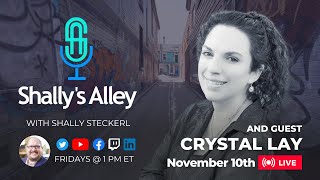
Crystal Lay discusses her research on neurodiversity in the workplace, where roughly 1 in 6 workers have a diagnosed neurodivergent condition and up to 1 in 4 may be hidden. She explains how job postings, fonts, and recruitment practices exclude neurodivergent candidates, and shares concrete fixes like adjusting lighting, dress codes, and creating quiet spaces.
Chapters
All right, everybody, welcome, welcome to Shelly's Alley Live. Today's Friday, Friday, November 10th. It's always, always Friday. But this particular Friday is the 10th. Can you believe it? We only have like 8 more Fridays at the end of the year. So 1, 2, 3, 4, 5, 6, 7 more Fridays before the end of the year. Really close. 2024 coming right up. Coming right up. Not soon enough. Not soon enough for me anyway.
I'm not ready for that.
You're not ready for that.
This year went by a little too fast for me, I'm afraid.
Well, for those of you that don't recognize the face on the screen right now, this is Crystal Miller. Miller? No, Crystal Miller Lay. So you go by Crystal Lay now? Or?
Kind of both. I answer to everything.
I've known you as Crystal Miller forever.
Yeah. So I found, like, as many people who get married later in life often do, I guess many women— it doesn't happen much with men. Um, like, they're known as one name. Yeah. And so, um, I tried Crystal Lay for a hot minute right after I got married, and that just failed. So I said, okay, I'll be Crystal Miller Lay. That's great. It'll keep me connected to my daughters. It'll be good. And then CML just kind of became a thing. And then after 5 years, I was like, well, I'm gonna drop the M and just be Crystal Lay. And people who don't know me professionally, that works fine. People who know me professionally like, but Miller, where's the Miller? You gotta have that. So whatever, it all works.
Good, I'm glad I clarified that. And so if you're wondering who Crystal Miller is, you might already know her. I'm sure you've read many blog posts, articles, presentations, conferences that you might have seen. But But Crystal's specialization is diversity. D-E-N-I. And I actually just found out that she is writing a dissertation on neurodiversity.
Finished.
Oh, you finished? Oh, okay.
So it's kind of bougie when you're—
when you go to— published?
Sort of. So, so it's bougie when you go to school in the UK and EU, your master's thesis is called a dissertation. So it's actually in the US, it would be called a thesis. You do not have to defend, right? You just publish it. They grade it and say, yep, this passes muster, or no, it does not. And mine did. So that was great. And I am very fortunate that my research was such that they want me to continue it on into my doctoral program. So I will continue to do that work over the next several years. So that is pretty cool. But it was— my focus was on Managing the gap between employer, employer branding, EVP development, employer branding, specifically around neuroinclusion, because we build EVPs, employer brands, recruitment programs, employment programs for one type, one neurotype, and that's the neuromajority. And that's unfortunate because there's more than one neurotype. So it leaves people out.
There's more than one gender. There's more than one race. There's more than one of a lot of things.
Indeed.
So the gap between employer branding and, and EVP development.
So it starts really when you look at an employer brand, you don't start with building the employer brand. You start with building what's known as an employer value proposition. Right. And it's the framework and the foundation for your employer brand build.
Right. Right. What does the— what does the— what does this company as an employer stand for? What's their— what's their vision and what's their mission?
Yeah, sort of. So when we look at EVP, yes, that is one way that it gets built. Back in the day, way, way back machine, EVP was really functionally supposed to help drive revenue. Right. And the way that it drove revenue was looking at the values that an individual held. Like you and I both hold values individually, like there's stuff that we believe in. And how did that align with the values that are lived out in the organization? Right. So it's not even necessarily the business values that an organization holds, but it's the way that the individual values collectively are lived out in the organization. So, you know, in layman's terms, it would kind of be like the way that individuals perceive companies care about the things they care about. Does that make sense?
Yeah. Yeah.
So that is actual EVP. You're looking at person-environment alignment and you, and you don't make that up. No, no, that, that's an organizational—
it's already there, right?
Right. That's, that's older than my work experience and probably your experience. And, um, it's, um, it's got some really deep roots. It's also hard to do. And so what we found over the years, really mid-'90s, there were a couple of consultants who were like, well, let's kind of take some pieces of that thing there, this person-environment fit, pull this into this thing that we can call EVP, and let's kind of characterize it around an offer letter. That didn't work very well. Surprise. Then it got moved around a couple more times, and then agencies picked it up and went, oh, we can charge for this. And so your Simon Barrows and Richard Mosley and people who like marketing masterminds, lots of respect for them truly. But they took it and ran with it in a different direction than the OD principles that all of the stuff was based on. And the net result is the OD principle around this, like the person-environment alignment, like that stuff drove significant increases in business revenue, like 28% measurable increases in business revenue. The way that it's done now is so watered down that you're lucky if you can get like a 5% measurable return off your EVP. So that's tough, right? Like that's a much harder sell. And it's because in my opinion, we've gotten so far away from those principles. That are tied to individual self-actualization, like the things we care about, our values, like that's part of our, our internal psychology, part of our makeup. The stuff that gets created and marketed now is not. And so if it resonates with us, cool. But if it doesn't, whatever. Right. And it kind of is that disconnect. So I started looking at that a few years ago and said, well, how much does this— like, how do we measure all of this from an ROI perspective? And then the pandemic hit.
And that changed everything.
A lot of it. Yeah. Because what I saw was like, okay, we were already struggling to quantify like how much this really mattered. But then the pandemic hit and workers were sent home. And what we saw was like all of the supports that people who are neurodivergent and and we'll talk about naming conventions around this in just a second. But people who are neurodivergent had to be successful at work were kind of tenuous anyway, but they were gone. Right. And there was a lot of floundering at work and there was a lot of failure at work around engagement and those values that were connected, like the connective tissue in the office that were kind of maybe sort of working, just stopped working. And so I wanted to understand why, like, what was happening really, like, what was the deal. And so that's what kind of kicked off this research. And what I saw is a lot of it was like, we build one way, we build for one neurotype, and the prevalence of neurodivergence is a lot greater than what organizations were giving it credit for. And previous research had said, like, well, maybe we were at 1 in 7. Like, maybe 1 in 7 employees had some form of neurodivergence, which is still a lot of people when you think about it right now. In my little company of 11, maybe not so many people, right? In, you know, Amazon, that's a lot of people. So, you know, so it sort of depends on your scale. But, but with the pandemic, we also saw an increase in mental health diagnoses. And a fracture in mental health, right? And so we had this opportunity with the companies that we were working with, the companies that I was working with as I was going through my master's program, to, to study like what is the actual prevalence of neurodivergence in these organizations, particularly ones that had transitioned to work from home? Like, what were the supports that they were getting? Were they asking for accommodations? Like, what was the deal?
Wouldn't it reflect the population?
Well, absolutely. I mean, yeah, absolutely. But not all populations were at home. Right. And so like you were able, we were able to study a mix of in-person, um, like on location, a physical location and remote workers. Um, we were able to study a section, a cross-section. I say we here, this is kind of the royal we because your, your educational research is is singular, but, but then we could take that and extrapolate that back for the company for projects. But we were able to look at everyone from individual contributors, entry-level hourly workers, all the way up to professional management level. We, we tend to exclude C-suite from that experience because their work experience is so very different anyway. But so we surveyed over 30,000 employees. So it was a really large sample size. As far as I know, it's the largest sample study of its kind. So as soon as I say that, somebody will be like, well, there's this study that was bigger. Cool. Awesome. Please send me the research.
30,000 is still a lot.
Yeah, it's a ton. And so as far as I and my advisors were aware, it was the biggest of its kind. So if there's a bigger one, man, I want to see the dataset. Like there's no pride of the biggest here. Like we need more data. Everybody needs more data around this. So if you know of a bigger one, show me. You know of a smaller one, show me. I want to see all of it. But, but so we looked at that and it was really interesting some of the things we found. And some of it was kind of expected. We expected a fair amount of people to come back and say there's neurodivergence in our population, like I'm neurodivergent. So didn't quite expect quite so many. So what we found is 1 in 6 had a medical diagnosis associated with neurodivergence. And so neurodivergence is more than just ADHD and autism, which are the things that are typically, you know, discussed. But you also have things like dyslexia, dyspraxia, you know, there's auditory sensory processing disorders, reading processing disorders, PTSD falls into neurodivergence. So Tourette syndrome, there's a lot of different different diagnoses associated with that. And if anyone wants to learn more about that, I've got some handy-dandy little visual aids. I think they're even on my LinkedIn that you can, that you can look at. But, but it's, it's really interesting to see like what is the wheel of neurodivergence and then what are the associated strengths and weaknesses with it. Because with every diagnosis, there are definitely weaknesses that we need to accommodate for. And I actually like to use the word adjust because A lot of the times it's not actual accommodations that we need to make. It's adjustments in work style that we need to make. But when we make those adjustments as employers, there's strengths that our organization benefits from, right? So to understand both of those is a really good thing. So 1 in 6 have that diagnosis. 1 in 5 said, yeah, I've got neurodivergence, like hand in the air. I don't necessarily have a medical diagnosis, but I identify as being neurodivergent.
OK. OK.
So that's a thing for me in my life. Right. And a lot of that is probably around ADHD. Informally, we're like, hey, you don't have to share your diagnosis. That's a protected thing. If you want to share it, cool, great. We can talk about it. But a lot of people said, yeah, I'm pretty sure I have ADHD. I heard recently in the last couple of months, somebody had said, like, somebody in our space and said adult ADHD isn't a thing. That is such bullshit.
Adult ADHD is not a thing. Yeah.
If you have child ADHD, guess what? You have adult ADHD. Like, that stuff does not magically disappear when you turn 18. So, um, and more often what we're seeing is that especially in people that are over 40, like, you may not have been diagnosed as a child, and now you're realizing that all of these coping mechanisms that kind of got you through to where you are now aren't working because of the changes associated with the pandemic, because of the changes in responsibilities, As you get older, your responsibilities change and shift. You have to do more quote unquote multitasking, which PS is a myth. And those things—
Yeah, that's for sure.
Yeah. And so we're seeing more adult diagnoses because work is complex and ADHD has a lot of executive functioning weaknesses around complex organizational development. And so it's totally a thing. And it just like, if I can just share one thing with the working world that resonates with people, it's that it's okay to be ADHD. That does not make you less than, and anybody tells you that's not real, like just, just ignore that, move on because it's okay to be ADHD. That does not make you any less of a good worker.
So anyway, you're saying it's okay to be different?
Oh yeah, absolutely. Shoot. It can be a superpower. Um, people with ADHD tend to be more creative. Uh, they work in productive spurts. So you'll see them have very, very high levels of productivity for a prolonged period of time and then they'll, have short periods of burnout, right? Because they'll run— basically, they'll burn the candle at both ends or whatever. Um, and then they'll have—
exactly how I describe it.
Yeah, there you go. Anyway, and so then their candle burns out, they've got to like let them solidify and go get another candle, whatever. And then they go again. And so you'll see them have these like super productive 2-3 days, and then they need a day or two to recover, and then they do it again. Right. And so once you understand their work style, because like not everybody works the same, then you can adapt for that on your team and you'll get more done. They tend to be more productive than neurotypical workers. So again, can be a superpower. You just have to understand the adjustments you need to make on your team as it relates to deliverables and time management. So, so there's that. And then if you look at what was really interesting to me was in quantitative data in the research, we, we gave the option to say, you know, yes, no, I'm not neurodivergent, I don't know if I'm neurodivergent, I choose not to disclose if I'm neurodivergent, which is always a good thing, right? So there was a level of I don't knows, which is fine, that's totally okay. Um, what was interesting to me is you had your knows and then you also had your I choose not to disclose. So you had yes, you had no, you had, I don't know. And then you had a almost 7% I choose not to disclose.
And which we know means I have it.
Probably, right? Like not all of them. There are always the people that are like, I don't have it, but I don't want to tell you I don't have it. So I'm going to put, I choose not to disclose. There's that personality type that exists. But to some level, there are people that definitely some percentage of those people are, yeah, I have it. I'm not comfortable telling you I have that. Okay, so we know if we, if we look at even half that population as having neurodivergence, now we've kicked it to 1 in 4. So realistically, we know 1 in 5 identify as being neurodivergent, but it could be as many as 1 in 4 in your population have some form of neurodivergence. That's a lot of people in your organization, and The uncomfortable thing that came out of this, though not surprising, is 1 in 10 workers were comfortable asking for an accommodation from their employers, which means 9 out of 10 were not. And when we looked at the reasons why they weren't comfortable, a lot of them were concerned about blowback for asking. And that blowback— the concern about blowback started in the recruitment phase, that even identifying in the recruitment phase that they have neurodivergence would potentially preclude them from being employed.
So having ADHD means you can't be employed?
I mean, that's the fear and it's not an unfounded one. When you look at employment rates for people with ADHD, I mean, I can look up the stat here while we're chatting, but I want to say it's 57% of people with ADHD have what's called dysfunctional resumes. So they experience—
what's a dysfunctional resume?
So dysfunctional resume is where your job hop, like your job changes, exceed the acceptable limit for an ATS or recruiter that's screening your resume for employment.
And does it have— does it have anything to do with the types of jobs? Like, not just jobs, but also Hey, Crystal, I'm sorry, myself. Can you mute on your end? On your end?
Yeah, sure.
I don't know if that— can you still hear me? Okay, say something. I want to see if I can still hear you. Oh no, no, it's not. No, it's not. Okay, never mind. I was in some sort of an echo. Yeah, yeah, sorry, sorry. So is it also switching the types of jobs? Like, I work here for 2 years, there for 2 years, but I was a veterinarian, veterinarian assistant. Now I'm a music producer. I'm not, or no.
So I'm sure that does play into it. The research that I looked at was really duration of job. So the— if you're not following the industry standard of employment and you have 2 or 3 jobs within a couple of year period, the automatic bias is there's something wrong with you. Right. And that may be true. Like, we can't rule out that you could be an a-hole, right? Like, that, that whole Reddit subreddit thing is a thing for a reason, right? The world is full of them. But, but when it comes to neurodivergence, there's a lot of reasons why people who have neurodivergence, ADHD, other things, tend to be, um, unfairly judged in employment. And a lot of it stems from lack of understanding from hiring managers.
I—
yeah, I can do that. Stems from hiring managers and the like. So, Shelly, I am not good at multitasking because I am ADHD. So I will just tell you from an audio perspective, echo cancellation and noise suppression on and audio gain control on and stereo audio input off.
So is there nothing else we can do? Yeah.
Okay.
Yeah.
That's what I got. So I've got a mask close. So like my microphone and my speaker, I think are pretty close together. Sorry.
Let's just, let's just keep going. Keep going.
Okay. So, um, so yeah, so, so there's a bunch of different reasons and a lot of it is like hiring managers don't necessarily understand all of these things. And as employers, we don't offer a lot of education around neurodivergence and what that means in terms of work. Right? So we don't do a good job in general of training leaders to be leaders. Right? We just expect, oh, you sold a lot of stuff, therefore you must be a good leader or whatever. You can add numbers, therefore you can lead accounting.
Congrats on your promotion.
Right. So, so there's that piece. Very few companies do a good job of training that. And as a result, people with neurodivergence are more likely to be put on performance improvement plans as a result of behaviors associated with their diagnoses or their neurodivergence. They are also more likely to quit a job before they get fired. Like, they can see the writing on the wall. So they are 30% more likely to quit to avoid being terminated, which means they may proactively quit something that they didn't necessarily need to.
They weren't going to get fired.
Right. And you do that a couple of times, it doesn't take long to get what's called a dysfunctional response. May. And so the unemployment stats for people with unemployed and underemployment stats for people with disabilities, which by the way is the largest minority group in the United States, is staggering. They are the most disparately impacted group out of every minority group. And out of the disability minority group, neurodivergence is the largest subset of that group.
Population. Population.
Yeah. The largest population subset. Mm-hmm. So it's a, it's a big deal. And, and as employers, I'm gonna say we, right? But employers tend to do very little for this group. Um, again, a lot of it is understanding.
Even after they're hired.
Even after they're hired. Um, but there's a lot that we could and should do before they get hired and we just don't do it. By and large, down to even just job descriptions and job postings, right? We take that legal, that legal mess that we get as a job description that's 3-page long and like 100 bullet points, and we throw it up on our ATS system and call it a day.
That is— most people don't read it.
Not only will they won't read it, they won't— like, if you're neurodivergent, you're not processing that. Like, it's too much information. It's not put together in a neuroaccessible way. So, you know, even, even at first touch, there's things that we can do very low lift that would be inclusive and we just don't do it. But, and so we'll get to that in a second. But even beyond that, you know, the general consensus, and I literally have had employers say this to me, is like, that's just a lot of effort. And so, I— like is probably a strong word, but it is kind of an interesting thing. I play an uncomfortable game with employers on a pretty regular basis. And I ask permission to do this. So, I'm going to ask permission to do this with you too, because it is an uncomfortable game. So, are you open to it?
Absolutely.
Absolutely. OK. So, we're going to play this little game where I'm going to ask you a series of questions, and you're going to tell me if it's OK to make the statement. And if you think this statement would be okay for your employer, like, yeah, you know, it's just a lot of work to make my work environment comfortable for this Black person.
Not okay. Not okay.
I just don't know that, you know, our team would be comfortable with a nursing mom on it. Like, I don't know, that's a lot of work.
Not okay. Not okay.
I don't know if we're ready for same-sex partners in our company.
Is there a double not okay?
Right, like, I mean, they can be gay, it's okay, but do we have to do anything about it? None of these things are okay, and we all know they're not okay, right? Now replace those, those protected groups with ADHD, autism, dyslexia, dyspraxia. You would make necessary accommodations for any of those other people, why would you not make it for people with dyslexia, dyspraxia, autism, ADHD?
It is— well, are they, are they really accommodations as such, or is it like, like making environment better, better for everyone? Are there any of those accommodations, something that would make other people uncomfortable?
Um, not necessarily. There's, there's some things— and I say not necessarily because like there's some things with autism, um, specifically that can be a little bit different.
So generally, generally benefit everyone. Yeah, some of them, some of them may be a little bit more specific, right?
So, uh, like as an example, um, people— some people with autism, I mean, so Autism tends to have a thing associated with it called sensory processing disorder. And so you can get overloaded. Sensory inputs can overload and overwhelm. And one of the things that they've shown can be very troubling in the work environment is actually LED— is lights, fluorescent lights. And so part of that is because people with autism, not every person with autism, But a lot of people with autism are able to literally hear and see, um, the individual flickering of the fluorescent light, right? It's a 60 Hz thing. And you and I, if we looked up at it, probably could not, but they literally can and they can hear it and they can see it. And that repetitive constant thing that's happening like every second over the course of an hour can just overwhelm them neurologically. And when they hit overwhelm, like, again, you've met one autistic, one neurodivergent person, you've met one neurodivergent person, like the way that that is behavioral outputs, um, manifest itself is different from person to person. But you can have what's, what's known as like a sensory meltdown. And so their neurological system overloads, and that can lead to, um, I guess the adult version of a tantrum. Um, so short temper, you know, maybe verbal outbursts.
Yeah. Irritability. Yeah. Just like getting irritated for a million other reasons.
Right. Um, but it can also lead to, you know, rocking and things that look weird in the workplace and it, whatever. It's, it's just, it's an expression.
It's an outburst, right? Perceptionally.
So, um, there's coping mechanisms again, uh, once you get to be an adult, uh, and even in childhood, um, managed neurodivergence and managed autism. Like, they generally have established coping mechanisms for these things. They just need a place to go to do them. So, um, you know, the accommodation as such would be a place where there's low light, for this specific example, right? Quiet room, LEDs versus fluorescence, that kind of thing, right? But it can also be Someone with autism, if you have fluorescent lights, needs to have a workstation near a window that has natural lights, needs to be allowed to wear a ball cap so that it can block fluorescent directly into the eyeball. Like, there's little things like that, adjustments that you can make to dress code policy that are super small but would maybe stand out if you're, you know, in Ernst Young and ball caps aren't allowed in your work environment. Right. So, right. These are adjustments, right, to an individual that allows the overall to work well, but they're not—
I don't know. I don't— it doesn't appear to be detrimental allowing someone to wear bra cups. What about the argument that a lot of these things that you're describing are behavioral and we try to address behavior when someone, let's say, misbehaves, or when an adult misbehaves? We address that behavior, but these are not just— you can't address the behavior of ADHD. You can't address the behavior, you know. If someone has dyslexia, you can't just address that by punishing them for dyslexia or whatever, you know what I'm saying? So you can't modify that behavior.
Yeah, so, so essentially you talk about that. So when you look at Behavior modification. Um, there is a, there's a ton of behavior modification that children and even adults with neurodivergence are subjected to. Uh, I mean, and of all neurotypes, really, that's what I'm saying, right?
Right. So behavior modification, make the argument that, well, if they have ADHD, why don't they just medicate?
Uh, as a proud taker of medication for ADHD, like, I am down for medication. But medication isn't the only—
ADHD.
Oh yeah, like it's not the only solution. And, and medication in the long term, like what I have found— and I will speak for myself because I'm not a psychiatrist and I am not giving medical advice, um— but what I have found is the longer you take ADHD medication, the higher that dose needs to be. So for me and my ADHD, what I have found is that it's great for short term. So if I have a project that I need to work my way through, my coping mechanisms may be sufficient to get me there, but they also may not. And so like, I will judge how I'm managing against my milestones. And if I look like I'm falling behind, I don't struggle. I will just get on my medication, which is not the type that needs to build up in your system and take that for the duration of my project. And then wean back off of it. And I do that under the supervision of a psychiatrist. And that's a, that's a really positive thing to do, right? Use medication when you need it, how you need it. Some people need medication all the time. That's also okay. But more important than the medication is the established coping mechanism systems and structures that are set up for each of your environments, right? So I've worked remotely for 12 years. I have very set systems and structures in place to allow me to be productive. But if you're a worker that's coming into a work at like a physical work environment, let's say you're a new employee, you have to have time to learn the systems and structures of that environment in relation to your neurodivergence. And that may take some additional time than someone who's part of the neuro-majority. And so employers, it, it, would benefit employers to be able to know that if the employer was able to be supportive and accommodating of that neurodivergence and be able to help that employee know that they'll have that additional time to be able to make those adjustments and acclimate to integrate into those systems and structures. So one of the ways that that can be done in organizations, just so it's not all incumbent upon the employer to try to figure all of this out all at once, is with the use of vocational rehabilitation centers, which are available in every state. So vocational rehab, um, they can, they can actually help in a lot of different ways. But one of the things that they can do, like if you're hiring someone who is neurodivergent, who has a learning disability or a medical diagnosis, um, with mental health, like they can provide job success coaches and that's great, right? You're learning and development team investing in them being able to understand Some of the stuff can be really helpful to the overall success of your organization. You would be surprised on how that would also help the neuro-majority, not just those who are neurodivergent. So, so there's those pieces and that like gets further into the employment link. When we back out into talent acquisition, because I know you're primarily a TA-focused audience, we can actually start looking at things that we can do to help people with neurodivergence be able to tell whether or not they're going to be able to be successful in your environment. And self-determine before they join your organization. And by the way, when we did the research, you know, when I did the research for my dissertation, 100% of participants said they did not recall seeing anything in the recruiting process that would help them determine whether or not they would be able to be successful as a neurodivergent person within the organization. There was nothing to help them understand how the organization would be able to handle them as a neurodivergent person. None. So not one person said, yep, I saw something that would help me understand how a company would be able to accommodate me. That's really sad. That's really sad because it's not that difficult to do. Where, where do we start? We start with showing pictures of the work environments that our people are going to be in. Real work environments, not stock photos, not a picture of someone at a coffee machine. What does their work environment look like? Are they working in bullpens? Are they working in the, like, the quad center, like the quad style? Um, oh my God, I just forgot. Cubes. Sorry, it's like, I've been so long since I've been in a cubicle, I forgot the word. Um, you know, like, what does their actual workspace look like? Do you have conference rooms? Do you have focus spaces? Can they book individual focus rooms? Like, what do they have? Like, are you in the workplace of the future style, long benches and tables where everybody kind of works together like it's a restaurant? There's a lot of offices like that. What does it look like? That's really important for someone with a bunch of different neurodivergencies, neurodivergent conditions to understand because noise plays such a major role. Sensory input plays such a major role in so many different diagnoses that it'll help them understand, like, I may need to bring headphones to to the office. I may need to bring— there are actually specific glasses that certain diagnoses that people with certain conditions can have that have almost the blinders on the side. So they have their glasses, they have blinders, but it's to help block out visual inputs. So there's things that they can accommodate themselves. They just need to understand what they're walking into. So imagery, video, photography, and know that it'll be accepted. Yeah, absolutely. Super important. Inclusive language, incredibly important. So ChatGPT, not great for a lot of things, but you can take your published verbiage on your career site, run it through ChatGPT, and ask it, is this neuro-inclusive? And it will tell you where you are failing, and it will tell you how to improve it. It won't be perfect, but it'll be better than where you are. You can also talk to people like me who nerd out on this kind of stuff. We will give you all kinds of tips. But, and I follow a bunch of people too. So you could look at like who I follow from a neuro-inclusive perspective, inclusion perspective. So if you're over in the UK, for example, there are a whole host of people that work over there. Peter Wambier, great. Scott's great. Like there's a bunch of different people that can help you with this kind of stuff. But making your language more neuroinclusive, making your career site design neuroinclusive, like making sure that you have a sufficient amount of negative space so people who have dyslexia, people who have visual processing disorders aren't overwhelmed by your copy, that you're using low contrast so that people who have visual processing disorders and autism are able to easily read and absorb What's your writing tools you can add to your website, your website, for any one of a variety of—
Yeah.
Yeah. And these are really low lift things to do. And we make sure that we do those kind of things with our career site builds. But a lot of them, you can go to whoever's handling your career site and say, like, look, we didn't build this way, but we need to redesign or we need to do a quick modification. And they'll laugh at you with the word quick. But we need to, we need to make sure that we're becoming more inclusive? How do we check to see where we're doing well and what we need to improve upon? Monotype fonts are still very in vogue, and they're horrible for people with reading processing disorders. So that's— and what is monotype? So monotype is fixed width, so it's where everything has the same width in between regardless of what their letters are. It's the same amount of space in between each letter, and that is difficult for people with neurodivergence to able to read and process. So making sure you're checking your fonts to make sure that your print and your digital materials and your social assets, particularly the images that you're putting copy on, are accessible fonts. Really important. When you're looking at your job postings, what I see is a sea of bullet points, and I look at hundreds of job posts every week, and it's like bullet point bonanza. I don't know if like, hey, right, it's like, do you get— is there like bonus points for bullets? You know, I don't know. But, um, but when you get beyond 4 lines, like 4 lines is optimal for someone with, um, neurodivergence. Like 4 lines, space, like you want to have some space and then start again. You can stretch it to 5, 6 is your absolute max. When you get beyond that, it's a lot. So what happens is they see the block of text, their eyes kind of zone out, they're not absorbing that information. They're going to scan a little and then move on. And that will probably happen with some of your neurotypical people as well. But it is particularly hard for people when they're a divergent. And why does that matter to you as a recruiter? Well, if you don't like getting unqualified applicants, maybe making sure that your job post is something that can be, you know, absorbed and understood easily and quickly by all is important. And you've got 49 seconds with which to get them to read and understand your job post before they decide to apply or not.
So roughly, roughly a quarter of the population is not going to apply if they're neurodivergent.
Right. So, you know, like, you need to look at that and say, okay, what do I need to have in here? And the answer is, with them, what's in it for me? What is it going to look like if I come to work for you? What am I going to do? And what do I need to have to be successful in this role? And it doesn't have to be anything like— let me put on my little gospel role and preach here for a second. Like, you don't have to put everything and God into your job posting. Put those 4 things, the absolute necessity of those 4 things in there. When they click apply, you can even in an autoresponder send the absolute giant long job description that everybody loves to put out. And say, okay, thanks so much for, you know, expressing your interest. We have your application. I'd really like you to look over this longer list of capabilities and qualifications at your own speed. And once you've done that, please reply back with, I meet these qualifications and criteria and I am still interested in moving forward with this role or not. If we don't hear from you within X number of days or X number of hours, we will disposition you and consider that you are no longer interested in this role. Right? Very easy way to handle that. That is not incumbent upon you to go chase somebody, but it gives them an opportunity then to take that giant list that they cannot quickly go through and chunk it up into something that's more accessible for them later on. So, so that's just like one way of dealing with it. There's a whole lot of different strategies you can use for that.
But it sounds like there are. Yeah, I wanted to do something, something that we talked about before. I wanted to, I wanted to ask you, what is your favorite problem?
Oh, okay. I really love gender problems. I do. I think gender problems are fascinating and I get probably once or twice a year. I'm not, and now it used to be more of it, maybe once or twice a year now I'll get a company that comes to us and says like, we have an 11% female application ratio, or, you know, we get 1 out of 35 applicants is a minority and that feels wrong. Okay. You know, let's, let's break that down. 11% is acknowledging you have a problem.
Right. Absolutely.
Like I, I'm I never make fun of the companies that say that. Like, I love that. First of all, it's very self-aware. And a lot of companies don't bother to do that look until they absolutely have to for whatever reason. So, yay for even getting to that place. But I love those issues, right? Because there's a problem there, they want to fix it, and they're willing to dive in and do the work. So, you know, the first piece of that conversation is like, are you willing to do the work because there's low lift stuff we can do to improve your application rates and to potentially improve your hire rates pretty quickly. And it may give you a 25% lift. Like, I'm not going to— the percentages will depend on like what the actual problem is. But let's say for the sake of this conversation, a 25% lift. But to actually fix the problem, that's usually a more systemic change management problem. Change management problems, culture culture marketing and culture change problems within organizations are usually like 18-month projects. So are you open to doing a longer change management project? And not every company is. And again, I'm cool with the ones that are like, nope, give us the low lift stuff. That's where we're at. Okay. I would rather somebody say that than get into it and not do it right. That causes so many more problems. But the ones that say like, yeah, let's get into it. Let's figure it out. It's so awesome. We had an engineering company that couldn't keep women and just couldn't keep them. And so like they had a burnout rate of, of 5 women to every 1, 1 man that left the company.
Wow.
And so they had whole divisions that didn't have, like, they couldn't sustain women in their, in their division. This is not a little organization. And so we worked with the organization to find out like what the actual problem was. Why weren't they getting female applicants? Well, they weren't getting female applicants because they were able to go on LinkedIn and see that they didn't have female employees. Right. So we were able to figure that out pretty quick.
Okay. So, but they were, they were leaving.
So, right. So I was like, all right, so, so we know the applicant piece, let's dig into the employee piece. Like what's going on there? So we, we did focus groups. With female employees. We were able to reach out to leavers who had joined the alumni group. So, it wasn't like they hated the organization. They just hated the work experience. And so, what they hated about the work experience is they felt like they were put into a very masculine society. And engineering is a largely masculine role, right? And so, we had to work through, I mean, without getting into their personal information that's protected, we had to work through the whys of what was going on in that organization, come up with strategies to help women become, literally become more supported within the organization. And that required the help of some external organizations because the company didn't have that capability in-house at the time. So, we partnered. We helped them partner with external organizations to provide that support until they could develop the internal people they had to be able to provide that support internally. And over the course of 3 years, they were able to pull up to a 33% female higher ratio that sustained and kept employment for over 2 years. That doesn't sound awesome, but from where they were, it was amazing.
Well, yeah, yeah, it's engineering. I heard 15% of the computer science graduates are female.
Yeah, and this was, um, actual—
it's good—
physical engineering. So, okay, even less. So, um, very, very low. Female employment rates in that particular sector. And it was, so it was a big deal for them, right? And so, we've got a few projects that we've been able to do like that over the last course of the last couple years, and they're really interesting, right? And the way that I look at them when we talk with employers, it's like, it doesn't really matter what your problem is. Like, your problem matters, don't get me wrong, but there is no problem that there's not a solution to. Like your problem is not unique. Whatever is happening to you has happened to someone else. So it's really just getting in and understanding what is the underlying psychology that's driving the people in your organization that is experiencing this problem and how do we fix it? And are your leaders willing to do that work? And if the answer is no, so be it. Then you have to ask yourself, are you okay with the real business cost associated with that. Because there's a revenue— there's always a revenue cost associated with that, even beyond the employment cost and the reemployment cost that it costs TA to be able to backfill and refill those positions. There's a productivity and engagement cost that is reflected in revenues.
Right.
And that's not like a Kentucky wind-up thing. Like there's a formula that you can actually calculate that out. So, if they're cool with whatever that revenue loss is, it's their company, so be it. But if they're not, and they're generally not, their CFO is generally not, then let's put together a project to go and fix that. And that's a fascinating experience. And it usually takes everybody from TA to HR to business leaders, functional leaders. Like it is a whole organization. It's a huge deal. Yeah, it's great.
So, it's not just something that recruiting can solve or the branding can solve.
Right. No, generally not. Like, it's usually a lot of different pieces together. And, and that's— those are awesome projects because when you get into those projects and I would highly recommend that TA and employer branding look at like, how can we do more projects with other parts of the organization? This is a great way for them to understand that you're more than just a cost center, but it's also a great way for you to be able to understand other parts of the business. Too. So when you, when you get into these things like neurodivergence, for example, like when you get into a hiring initiative for neurodivergence, there are tax benefits that you get for hiring people who have mental health conditions. And so, but in order for them to be successful in your organization, you will need to make some adjustments, and you might need to have some additional learning and development support. So that's, that can be a co-branded initiative with your employee communications and your learning and development teams, right? So that's a great way for your, your groups to start to work together in a different way. If you're, if you have a mobility issue in your organization, and by the way, a lot of construction companies right now are facing issues with mobility because you have a softening market. So what's something that you can do? You can work with your actual functional business leaders to look at transferable skills. Like, this is a transferable Skills project. Okay, what skills does purchasing have? How can we pull our purchasing people into junior builder roles? You know, how can we pull our builders into, you know, land acquisition roles? How can we pull our land people into estimation? Like, where can you move these people around and repurpose their skills so that you can retain the talent that you have? So, as the market strengthens back up, your people are more skilled in your organization. You've increased their value but you've also increased their loyalty because you've upskilled them in your org and kept and retained them. Now, you can do that in any organization, in any industry, right? Like, that's, that's a project anyone can do. But TA is absolutely the right, the right team to suggest that, because as hiring goes down, like, you need to look at ways that you can bring value to the organization so that you maintain your jobs. Right.
Like, this is a very good, very good point. If you're recruiting, it's going to slow down. Where can you add value?
Yeah. So, and it does, it makes you more valuable.
Well, this has been fascinating. I wish I would have been able to talk a little bit more, but I didn't want to distract folks with my echo. So I took a lot of notes and I'll handle this later. But I wanted to make sure that I asked you my last two questions. I always ask Yes. First of those is, do you have something you want our listeners to chew on or think about? Not advice, but thought-provoking. Something that you want them to think about over the weekend as they listen to the show.
Yeah. Something we didn't talk about at all. Today is Veterans Day. And so today is the day where we thank somebody for their service and then we tend not think about it again until Memorial Day when we all ask the question of like, is this the one where we say we're sorry for your loss or is this the one where we say thank you for your service and then end up doing both? So Veterans Day is interesting. Well, interesting is probably not the right word, but it is interesting to me how much veterans need our help. And there's just not enough, I think, awareness around the struggle for reintegration into civilian employment. I did write something about it on LinkedIn if you want to like learn a little more about the stats or some of the psychology around transition that may make it a little more challenging for veterans. But I would, I would invite all of you over the weekend to think about like, who do I know that maybe could, you know, help a vet? And there's this company called, I think it's Faradi. I'm probably going to, I probably butchered the enunciation, but it's V-E-R-A-T-I, I believe. Again, also on my most recent LinkedIn update, every single one of us has the ability to volunteer, um, a, an hour or 4 hours or 12 hours. Basically, it's, it's a mentoring program, um, with vets that are transitioning. And so, like, maybe think about if that's something that you could do, um, if that would bring something to your life in a way that might help them. So that's it. Veterati. Thank you. I knew I was going to put in there, put it that, but, um, but yeah, I love for people to think about how can they help veterans because the, the one piece to neurodivergence that I didn't really get to study as much as I wanted to, and I think it really does need a lot more attention is PTSD is part of the neurodivergence wheel. And the reason I believe it's gotten as much attention as it has is because of the veteran experience. And it's just, it's real. And the amount of stress—
there's Preacher Syndrome, which has to do with concussions, repetitive concussions. It affects— it's an order— I can't explain it well. It affects their cognitive speed because of the repetitive— like, it's like, it's a repetition injury of the brain.
Yeah, there's, I mean, gosh, there's so much to it, but, but I think when it comes to veterans, like when we look at what in the transition period gives them stress, um, there's been studies to show that civilian employment is the most stressful piece of transition because it's an instant reimmersion. And even though they get some, some limited job, um, transition support, when they discharge, it ends, right? And so, and then there's a lot of different studies that show like it's just a really difficult process. So anything that we can do in the TA field to make that easier for the people that served our country, I think is pretty great.
I love that.
I'm gonna add to that.
Just, just think about, think about what you can do particularly for female veterans. Not that their right is any, is any better, better, worse. It's different. When, when, when men return from service, they sometimes have an easier job finding a job, even if it's not a job they want, because hiring organizations see a male military person, okay, okay, very, very stereotypical, not what they would do, but it's a little easier. When women come back into out of the service and come back to civilian life, oftentimes employers don't know where to put them because they're like, oh, okay, okay, maybe, maybe can you carry a gun? Of course they can. The point is they have a harder time explaining how their skills transition.
Yeah. And it's, it's interesting. I was reading a study today, um, from 2020. I didn't publish it because I wanted to see if there were updates and I didn't have time to do that. but, um, that was talking about how 30% of veterans do not disclose that they're veterans on job applications because they're concerned that it might negatively impact their ability to get a job. And of that 30%, the majority of those were women. And, and so I was like, that's a, that's a very interesting stat. And so I think to your point, like, it may be harder for women to get a job when they disclose that they're military service members and It probably depends on what area they're in. But some of that is because they don't know how their skills necessarily translate. And I think we do all have to kind of do a better job at learning, like as employers, learning how military skills translate into our roles.
Something you can ask ChatGPT. Yeah, probably. You can ask ChatGPT to translate, you know, this code into civilian terms. It's pretty good at that.
Well, and I'm wondering if you could do the opposite. Could you put your jobs in and say, what are the military skills by branch that are associated with this? And then build that into your military career pages, or even add a section at the bottom of your job posting. Are you military, transitioning military? Here are the skills that are appropriate for this role.
Yeah. Yeah, you can. You can. Rich does not. Does not. We got to wrap up. We got to wrap up. Before we go. Before we go. Half-ass. Half-ass. You should be on the show next.
Oh, there's so many good people.
Um, I'm not opposed to a list.
Okay, I'm down with that. So, okay, I think so. I love Marvin Smith and he's doing some really interesting stuff at BECU with Carrie Corcoran. So maybe them. Um, I think that— what do you want to talk about? Like some of it's like what What areas get you going right now? Automation.
Automation. Technology. Technology. Outreach. Outreach.
Okay. So when it comes to technology, I'll pimp my husband out for a minute. So Duane loves tech, as does Martin Burns. I would think either one of them would be great. Martin Burns is awesome. You definitely need to have some caffeine before you have him on. He talks 100 miles an hour, so he's so much fun. So yeah, outreach, Jen Tharp, Rand Thorne, you know who else I really love their outreach stuff? Oh, I love Maren. Maren Hogan's probably got my favorite emails ever. When you talk about automation and outreach, she just does it like nobody else does.
I saw her recently. Great idea. Yeah, I just saw her recently. I thought of that.
The other, you know, the other company that I would reach out to, I don't know if they'd have to clear it through, through PR or not, would be CVS. They're doing some really fascinating stuff. They've got— they're a good percentage of their hires come from their DEI initiatives. And so I think it'd be interesting to talk to them about not only how they're using technology to help facilitate some of those things, But if you look at like what their outcomes are, I mean, they're well into double-digit military hiring. They have a second chance program. They're hiring, you know, youth in need, um, you know, retirees, like population. Uh, so there's Pete Suchi, there's Nicole Fritz. Um, Dave Lee is in charge of their military hiring program. He's fantastic to talk to. Like, He's so passionate. So I think any of those three would be great.
All right. All right. Plenty. Plenty. I've got some chasing down to do. Well, sorry to keep you a little bit late. Thank you so much for all of your insight today. It was a lot of really good information. Lots of notes. Lots of notes. We will put this up for replay later on. And everybody have a great weekend. Please be kind to each other. Bye-bye.
No problem. Oh, Shelly, I've got one more for you though.
Yeah, go ahead. Yeah, go ahead.
You should talk to Rahul Yodh. He's done a lot with video interviewing candidates. Rahul Yodh. Now, full disclosure, he's a client, but I love how he's using technology to automate high-volume recruitment.
Okay. Okay.
I like that. I like that.
Cool. Now, have a great weekend. Thanks.
Thanks, everybody.
Thanks, everybody.
More from Shally



Scaling Talent at Hypergrowth: Leadership, AI, and Hiring Excellence with Cindy Nicola







