Patrick Moran, Sr Talent Sourcing Manager, BAE - Sourcing cleared candidates
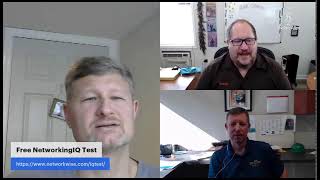
Adam Connors, founder of NetworkWise, argues that genuine networking beats LinkedIn scrolling. Introverts often make better networkers, and treating connections as relationships rather than database contacts changes everything. His program includes 13 modules, a free Networking IQ test, and daily reflective journaling to surface sharing opportunities.
Chapters
Welcome to Shelly's Alley. It's Friday and it's 1 PM. We have a new chat feature now, so please chat and comment. If you chat on LinkedIn, I will be able to see the chat and I can ask your question live. I may not be able to respond right away, but I can respond if you're on Twitch or Facebook or on Twitter. So wherever you are, just go ahead and ask questions. We had a great question and answer period on our last session, so I highly encourage you to do that. Today's very special guest is a good friend of mine, Adam Connors. Let's bring him into the studio. Hey Adam, how's it going?
Gally, what is the good word? How are you?
I am doing well, thanks for asking. So, uh, in honor of you being my guest today, I took out my work shirt. I call this my work shirt. Because I don't know if you can recognize what it is. It's a Dickies, you know, shirt, like the one that mechanics wear. So I'm getting ready to work, right? I've got my name on here and everything right there. Um, I, I use this shirt as a gimmick at a conference, and all of the people that were there with, you know, with me on my booth when I had my own business, we all had these work shirts, and then we had patches on our sleeve to indicate, you know, our a rank or specialty like Sorcerer, Scout, whatever. It was pretty cool. Anyway, since then I just kind of, you know, haven't really taken it out much, but I thought, you know what, I'm gonna, I'm gonna whip out my work shirt. So for those of you that, uh, don't know Adam, Adam is, is a former— he's a recovering recruiter, has a, a history of recruiting in, um, in the past, and now he has his own business that actually did pretty well. It survived and actually thrived through the downturn. It's called NetworkWise, Adam Connor's company, networkwise.com. And what it is basically is bringing back the, the lost art of real networking. Now, I met Adam a long time ago, and he remembered meeting me, so he invited me to his radio show that he had some time ago. And I learned a lot from that, along with some of the other podcasts that he did on the show. So I wanted to bring Adam today on here to, to talk about this lost art of networking. And one of the things I find recruiters often overlook, or maybe they, they forgot, is they really don't network. And we used— that's all we used to do is we used to network. When I got started in the business, you know, it was probably after you did, Adam, that it was all about, you know, you call one person and you get that person to give you 3 names, and you get those 3 names to give you 3 more names. You know, there wasn't a LinkedIn back then. So what can you tell us, Adam, about the lost art of networking? What's really missing?
Whoo, that's Pandora's box that we'd be opening right there, shall we? So let me, let me rewind back actually a little bit on something that you said. So yes, I I am a recovering recruiter, but at the same time, it's something that never leaves you. So since leaving recruiting, I've built a bunch of businesses. And as I'm sure that you can appreciate just as much as anybody else, there is nothing more important than the people that you bring into your organization. So, you know, it's paramount. It doesn't leave you. And I feel very fortunate to have had the, you know, to have the 15-plus years of recruiting to that. I've been able to— I've been fortunate enough to bring that with me to other businesses. And it's been that skill set that's really helped some of these opportunities that I've created happen because of knowing how to connect and how to recruit the right kinds of people. So I wanted to make sure to clarify that.
So you basically elevated your recruiting business into recruiting everybody for everything.
Kind of, yeah, yeah, yeah.
Um, so NetworkWise, the way you explain it to me, it's basically like it's a company that does training and coaching and consulting on relationship building, not sales. And you even have, which, which is really impressive because I wanted to do this, you have your own certification called, uh, NetworkWise Certified Professional. So that's pretty amazing. I wanted to create a sourcing certification, but I just never got around to it. What's that certified professional certification, networking professional, entail?
Yeah, so thank you for asking, by the way. And I would encourage you, you know, especially someone like yourself that has the street credit to be able to create one of these certifications, you know, there are a bunch of people I could send your way that I would strongly encourage to go through that. I can also put you in touch with somebody who was the original, um, founder of AIRS. I don't know if you remember AIRS, that certification. So, so Tim McKegney, great guy. And, uh, if you want, I'm happy to make that introduction when this is off, if that's something that you are interested in doing.
Yeah, yeah. Tell us about this certification. What's up with that? Sure.
So the certification, you know, the NetworkWise Certified Professional, essentially, you know what it does? It validates somebody's accomplishment of being a recognized expert and taking pride in their relationships. You know, it's essentially kind of like a foundational understanding of what it means to network, understanding, you know, what true networking is, more importantly, what it's not. So the course, it's real simple. It's 13 modules, 3 to 5 minute little video clips that cover a principle. And after each module, you've gotta take a test. The test is designed for you to pass, assuming you weren't asleep. 3 to 5 quick questions, making sure you're comfortable with the content and you're familiar with it. And then after you've completed all of these modules, there are action items that you have to complete to really reinforce what we've talked about. Because Kelly, as I'm sure you know, a lot of times people think they control their futures. We don't. We control our habits, and it's our habits that dictate our futures, our destiny, whatever you want to call that. So the idea behind this course is to give people not only just the knowledge, but we also give them the tools and a roadmap that are going to help to develop these types of skills to make this a habit. So to build world-class relationships, to And as far as the certification goes, once you've completed all these action items, then you get certified. You get a digital certification, a paper certification also. You get a certification that goes onto your LinkedIn profile. And what's also really nice—
You have a really nice badge too.
Thank you, thank you. We put a lot of time into that. I appreciate that you acknowledging that, so thank you. What's nice is that we're now in 2022, We're— now that we've had a bunch of people go through this, we've, we've certified, you know, people of all different organizations, met— I mean, just, just literally, you know, Fortune 50 companies, uh, elite business schools, even high schools. And now what we're going to do, the focus of 2022, is to get people to work within this community to network amongst each other. So now that you've been, you know, we've taught you, hey, here's how to network and we've given you this roadmap. Now why don't you network amongst yourselves? You've now added a new sphere of influence to your networks. So now let's connect you with fellow networkers that really understand and get it. So, Shelly, say you, you went through the program and you noticed that I was NetworkWise certified also. You found me on LinkedIn through one of these groups.
Got it. Number one clue that we should network.
Yes, indeed. Um, what would happen once you reached out to me? No, more first and foremost, I'm more inclined to connect because we're kind of the same tribe. But then the first thing that I should say to you when you reach out to me is, is, Shelly, how can I benefit you? What can I do to benefit you? And that's the premise of, of the start, you know, like that's like kind of the ethos of what it means to network-wise. And that's the foundation that you're going to start off with. And that's a totally different dynamic of a relationship when that's the intent that you're going into.
That reminds me of— you remember the old Pay It Forward? And it was like a movie. And it sounds like the Pay It Forward mentality, you know, do something for someone else and then it comes back to you tenfold, right?
You know, I call it a karmic boomerang. You know, you know, just karma. So, Charlie, there's a gentleman that was on my show by the name of Brandon Steiner. I don't know if you know who he is. He owned Steiner Sports. Do you know? Do you ever hear that? It's a sports memorabilia— biggest one in the country. And he's amazing. He's the guy that bought Yankee Stadium, broke it apart into pieces, and then sold it. Anyways, he said something to me that stuck. He said, Adam, he goes, you do as much as you can as often as you can, for as many people as you can, without expecting anything in return. And when you kind of follow that philosophy of living, again, it just comes back to you in spades. And, um, you know, as you can see, not a good-looking guy. Uh, like what you said, I forgot, you got a voice for print. Uh, didn't—
yeah, you said you have a face for radio, and I said, don't worry, I have a voice for print.
That's awesome. Um, but, but I've been really fortunate to live a, a blessed life that's afforded me some amazing things. And it's really all come down to amazing people like yourself that I'm fortunate enough to call friends, that really understand what it means to build relationships, help people out, you know, take a proactive approach to relationship development.
So what do I say to people that say, oh, I know how to network, I'm a recruiter, of course I know how to network, you know, like, because I learned a lot from you, and I'm not gonna, I'm not gonna cheat people out of going to, for example, that, that test. I put a, I put the link to your IQ test there.
Oh, thank you.
Networking IQ test you can take. It's for, this is completely free, and it gives you some insight on how well you actually network. And it's, it's very eye-opening. So I don't want to take that— I don't want to take your thunder away, but what do I say when someone says, I don't need any networking training, I know how to do that? What is it that, that they're missing?
So it's, it's a great question, by the way. What's really— I'll put this into perspective. Let's just look, you know, let's just talk just that one, that one quiz. The average score on that quiz is 67. Now, um, to put that into perspective, we've had thousands of people go through that quiz, and I would say a good majority are actually like leadership, and also a lot of people in sales because that just tends to, you know, be people that gravitate towards this just out of their own curiosity. So you'd think the scores would be higher, right? Like, and with leadership, you'd think the professional networkers, right? Yeah, correct. So it's, it's very humbling when you, when you really kind of dissect what it means to network and how to truly develop these kinds of relationships, because people don't— it's not necessarily, hey, I'm an extrovert, you know, I'm a great networker. Oh hey, I got a lot of friends, I'm a great networker. That doesn't make you a networker. You know, actually introverts make the best networkers, believe it or not. And I— Pardon me?
I don't believe it. Why is that?
Okay. All right, good. Yeah, I like the challenge. So listen, I'm a raving extrovert, so it pains me to say that, just so you know. Like, it's, uh— but I'll tell you why introverts make better networkers. Because you'll have a conversation with an extrovert, is typically— and again, I'm generalizing— typically more superficial. Like, think about if you're at a party You know, an extrovert's more likely to bounce around and talk to multiple people, whereas an introvert is more likely to kind of maybe just talk to one or two people. But during the course of that conversation, the, the odds of it being more super— you know, the odds of it being superficial are very low. The introvert is going to be more thoughtful. The introvert's going to ask better questions. And there's more.
What's going to happen is they're going to be focused on that one person because that's where their energy and their focus is. They're not going to be looking for, you know, what else is out there.
Correct. What they also do, what they also do is they'll ruminate and they'll think about that conversation. And this is, this is the difference. So what's going to happen is the extrovert's more likely to maybe forget about, you know, they had that conversation, they moved on, yada yada. The introvert's going to play that conversation in their head that night, maybe then that week. The introvert's going to remember a lot of the details and the introvert's more likely to follow up with the person that they had the conversation. Or when they do see the person that they had a conversation with, the introvert's more likely to remember some of the details of the conversation or follow up where they, or where they left off. So that's the difference. And the introvert's also more likely to actually take a more proactive step to reach out. Believe it or not. They're going to be the ones that say, hey, we talked about this book. I came across it and it thought— and it made me think of your— our conversation that we had. That's what makes them different. And that's what makes them better.
Okay, so far, I've learned two things. So I've turned my, my otherwise, you know, weakness into a strength, because as an introvert, I usually don't think of myself as a good networker. And I've learned that most people have no idea how bad they are at networking.
Correct.
And we had somebody from LinkedIn post a comment. Nicole Sotelo says she's connect— she works on connecting with 15 people a day to build new relationships. Does that seem like, like a good, reasonable number, or should we do more or less? Is it about quality? What's the deal?
So, so thank you, by the way, Nicole, for reaching out. So that's a subjective question. You know, someone might, you know, it depends. Do you want 100 pennies or you want 4 quarters? So I don't necessarily know what that is. And just by reaching out, it's not necessarily the, the quantity, it's really the quality. So maybe in the beginning, as you're building relationships, you know, you want to reach out because you got to do some vetting. You know, there's a process that happens, and that's again getting back to networking It's about, you know, the goal when you're building a relationship is trust, and trust is the holy grail, right? And there are certain things that you can do to expedite, you know, and that's why you, those are kind of some of the things that we teach is like how to really develop better relationships so you can do them quicker and get to that holy grail of trust faster. So maybe again, I don't know if it's the 15 people for work or if it's just in general, Um, you know, that's a good amount of people to be talking to, but I'd love to see you really kind of whittle that down as you— as once you kind of come across your tribe, if you will, and develop better, deeper relationships, really get to know them, really not just who they are, but people that are parts of their networks and their spheres of influence, because you'd be surprised at what you can get out of that.
So let me tell you, uh, let me tell you an example of something that happened to me. That I think is pretty relevant to what you're saying. Um, so I had— I went on this camping trip with, um, with some family, and, and it was, it was one of these, like, you know what a yurt is? No. It's like, it's like a pre-made tent. It's, it's, it's a tent, but a tent that has, like, wood floors, and, you know, there's no electricity or anything. It's still rugged, kind of like a soft-sided log cabin. And in some national parks, they have these cabins you can rent, and sometimes they have these yurts for people that don't want to go through the whole— or they're, you know, they're, they're, they don't— they're just spending one night, or they just don't want to do the whole tenting thing or the RV thing. So in the middle of between these yurts, there's, there's a big quad, and, you know, people are playing. My kids, of course, you know, kids, super social, they go out there and they start tossing the frisbee with the other kids from the other Um, you know, and I just, I go out there and I start playing the frisbee, and I start talking to the other, one of the other kids' parents, one of the, the father. Um, you know, I was like, hey, uh, you know, you got any extra wood? Um, I buy it off you, you know, we're having more people than we expected, blah blah blah. And we start talking, and you know, the reason I'm bringing this up is because Sometimes people think— I, I feel that people think that, that you have to connect with the right people and that there are certain people that are valuable in networking and certain people that are not. It's always been my philosophy for as far back as I can remember that there's intrinsic value in everybody, and there's, yeah, good and bad in everybody. Everyone's capable of, of greatness and everyone's capable of evil too. It's just about all the decisions that we make. But I think that there's, you know, I'll network with the waiter, waitress, janitor. As a recruiter, I've made placements and hires from waitstaff, right? So, you know, so here I am having this conversation and we just start talking about what do you do? Well, you know, I do this, you do that. Turns out that the dad was a— or maybe still is— a general contractor, but not just a general contractor. He was the superintendent of like these massive civil works. Well, there's not a lot of people that, you know, that have that skill set, right? It's, it's a rare skill set to essentially be that you're like the the foreman of foremen in these huge, you know, these huge engagements. Well, he wanted to get out of that field because he was spending way too much time outside. He spent too much time in the sun. He was, you know, like worried about his health, too much time on his feet. It's like, it's hard work, right? You know, once you get a little older, you don't want to be out there as much. So we just started talking and I thought, I should introduce you to somebody. And I introduced him to a friend that owns one of the longest standing and most highly respected construction search firms. But it's not just construction, okay? It's specifically construction supervisors and foremen and superintendents. Like, they, they don't do the labor, um, they do the exec— it's executive search in the construction industry. So I connected him to that. And at first he was like, no, I don't wanna talk to a recruiter because I don't want another job. Yeah, every time I talk to recruiters, they wanna put me out in, you know, as a superintendent again. And that's what I'm trying to get out of. And I'm like, no, no, no, no, you need to talk to this guy because he owns the search firm. So I'm not referring you to a recruiter, I'm referring you to like a business owner. And I thought, you know, you might actually enjoy sitting behind the desk as a recruiter. Because you have the connections and you can talk to somebody. You might want to consider— I train recruiters for a living, right? I teach recruiters for a living. So I can tell you that if you have the aptitude and the interest, you can do it. So I made the connection and, you know, they basically hired him on as a recruiter. So he changed his career and, you know, it was a good win for him. I never got anything out of it. Never heard from either one of them again. But had I not thought that there was some intrinsic value in this guy in shorts and a t-shirt drinking a beer, throwing a Frisbee, just like I'm in shorts and a t-shirt drinking a beer, throwing a frisbee. I would have never made that connection.
I love that story, and that reminds me of the Tim Ferriss quote. You know who Tim Ferriss is? You familiar with him? He wrote The 4-Hour Workweek. He's got a show, a podcast called The Tim Ferriss Show. It's one of the most downloaded shows in the world. Uh, venture capitalist, wildly successful guy. Well, he's got a quote. He says that you never know who you know that knows somebody that can put you on the front cover of the New York Times. And, and you don't know, and you've got to treat people as if they are someone that could put you on the front cover. And the worst thing that can come out of it is that you've done something to help them. And you hope to never be in a situation where you need something, but have you kind of planted enough acorns along your, your travels? You'll have plenty of oak trees later to sit under. So I, I love that story, Shelly. I've got a bunch of those myself. I could—
what could I have done differently in that situation to, to improve on that, right? Because I feel like I made the introduction, the guy got the job, and that was it. Like, it was the end of that. I'm not saying I didn't benefit from it because that's not the point, but what could I have— so this is a teachable moment. What could I have done better?
So awesome question, by the way. So the only— so what you did was great. The only thing that I would have done differently is I would have followed up with each party a couple weeks later to see how it was working, you know. And then that would have been the only thing. I would have reached out to the person, hey, how's this new transition coming along? I'd love to hear about the experience, just because I just like to learn personally, like, just to hear about it. Hey, what did the change go— what was this person like that I referred you to? Because again, you know, both parties were leveraging your borrowed trust, you know. You were the— you were the node, you were the hub. So there's that. And then I would reach out to the person that owned the search firm also, just say, hey, you know, out of curiosity, you know, how things work out with them, you know, um, just to, just to kind of, you know, tie the, you know, tie the loop or whatever that saying is called, where you're, you're just hearing how things have gone. And then it gives you an opportunity to then learn a little bit more about them. And then at least for me, then I try to figure out, okay, are these people that are worth staying in my circles. Because every year I do an audit on my relationship, and there's some people that just don't— there's some great people that I want to really— that I— when I come across amazing people, I warn them that they're stuck with me. And maybe one of those two people could be stuck with you.
Okay, I wouldn't say stuck, but yeah, I got you. So that, uh, that comment that you see there is from Marisha Reed. Marina and I go way back, and she's, she's a very well-known, highly respected member of the recruiting community that focuses on building value for businesses through something that she coined. Uh, maybe she didn't invent it, but she, she calls it acqui-sourcing. So it's like, you know, there's, there's businesses that buy and sell other businesses, and, you know, you, you run the local print shop at your town, and then you want to sell it because you want out of the business. Somebody can help you sell your business. Somebody can find a buyer. And it's a kind of recruiting. She comes from that space and also does executive search. And but her claim to fame is she's known as the telephone sourcer, which is basically it's networking. I mean, there's, there's, there's some science and some secrets to eliciting information like, like an interrogator or like a journalist. But a big part of being good on the phone is, is treating people with respect and dignity and networking. And so she made the comment that intrinsic value is an interesting subject. I've, I've invited her— yeah, I've invited her to try to, uh, come on here. So Maureen, if you can, if you can hear me, um, go ahead and, uh, and, and click on that link I'm going to send you here if you want to you want to comment. So, um, if— hopefully she'll come on board here. Okay, but until she comes on board, tell me something else. So I, I have this other question that's been kind of bothering me. Do sometimes people feel like, oh, you're trying to get something out of me? You know, like, does this approach ever result in some resistance because people are like 'Well, what's in it for you? Why are you doing this? Why are you being so nice? Why are you paying it forward? I suspect that you're behind, you know, you've got some ulterior motive.' How do you handle if that happens?
Yeah, I mean, look, I don't— very few people have come right out and said that, but you can tell, you can read the energy of people. And, and I, I just feel bad for them. It's a shame that that's the place that they're coming from. And those are the same people that say they hate networking, and it's really just an ignorance. That's all that it is. Like, when you really if, you know, if your intent is sincere, people can tell, you know, like your intent when you had that conversation, you know, I'm sure that guy could tell you just genuinely cared.
You didn't ask— we didn't ask that, but I'm just wondering how that happens. Yeah, so I used to talk about, you know, when I, when I did cold calling, I used to talk about when you're going to start your series of cold calls or your calling block, make one call or two calls for no reason other than just to connect with somebody new because it takes some of the fear out of cold calling. Is that good advice, or am I having— have I been giving people bad advice for 20 years?
Excellent advice. Excellent advice. Because you're just— again, even when you are cold calling, it's a hard thing. I mean, it's—
yeah, that's— people ask me all the time.
Yeah, but it's a great, great skill set to have, you know. And, you know, again, some of the people that have the success, if the— again, it comes back to the intent. If your intent is good, it's going to come through on the phone. It's going to come through in a Zoom. Hopefully people think that, you know, that I'm sincere and that's going to make them feel more comfortable with you. And that's where, again, that's what's going to help build that trust quicker. So yeah, I think that's excellent advice, Charlie.
2 calls at the beginning of your— so you're cold calling, blocking basically what you just said, you know. And those calls, I'm not paying it forward. I'm just saying, hey, I got your invitation on LinkedIn. Here's what I do. What do you do? You never know when you might be, you know, in the market or whatever. So that's one of the reasons I, you know, it's to me, I use LinkedIn for that because it's easy, right? It's how easy is it? You go into your inbox and there's probably somebody that sent you a connection request, you know, chances are. And so save that for when you need to do your cold calling block.
Can I, can I ask you a question?
Yeah.
So let's talk LinkedIn for a minute. Do you accept, do you accept invitations from those that don't personalize it? Oh, I know it's a loaded question.
Yeah, sometimes. Yeah, that's, you know what, honestly, I have to say I have never I haven't thought about that specific way. That's a— you made me stop and think. So my policy on connections on LinkedIn, my policy on accepting connections on LinkedIn is really to consider the value to both people in networking. So, and I do this pretty quickly because there's a lot of, you know, I get a lot of invites and I've forced myself to do this because I've reached my limit. I can only have a certain amount of connections, 30,000 connections. LinkedIn caps you at, that's a little known thing. But since I've been on there for, I don't know, since 2005, I've had to live with this 30,000 limit for, you know, 15 years. It's crazy. Yeah. So I look at the person's job title, company name, and location, and I just try to make a determination is there some intrinsic value in, in this connection happening? Uh, if they're a recruiter or in talent acquisition or in HR or in the staffing industry, I, I just connect. Yeah, yeah. I don't even look at the, at the note personalization. If it's personalized and there's a question, I respond. But sometimes it's, hey, I'd like to connect, so I just connect. When I don't, whether it's personalized or not, is when there's obviously not a good connection here. Like it's not, there's no value in it. They're completely outside of my industry. They're in another country and outside and there's just nothing there. I'm not saying I only connect with recruiters, but I connect with people that are in technology that are, you know, just in the spaces that I'm related to. It has to be far out for me to not accept it. But I could still not accept the connection request that's personalized. I'm not just looking at whether or not it's personalized.
Interesting.
What's your take on that?
So that's really interesting. Um, and I guess, I guess it becomes subjective. So, so I don't— if someone hasn't taken a minute, like they're just looking to just connect to build their numbers, that's no value to me.
And, and sometimes that they're in HR and their talent acquisition, their recruiters. So I know sometimes That happens. And so I accept that anyway, despite the lack of, you know— so you're saying even if they're, even if they're a talent acquisition leader that might be a listener on the show and they just, you know, casually send it, I should reject that?
I'm not saying that you should. I'm just saying for me, that's just how it's subjective. Like, it makes sense for what you're saying and for what you do. I just don't, you know, I take my relationships very serious. So when I'm talking to somebody or I'm connecting with somebody for the first time, usually I want to see Who do we know in kind? So I can triangulate on who they are. And I like to ask somebody, oh hey, I know that you— I see you're connected to Shelly. How do you know Shelly? And then when they can't tell me anything about knowing you—
pardon me, you dig in a little bit is what you're saying, correct?
And then myself, you know, I found myself— because in the beginning there were a lot of people that I accepted, and when people would ask me the same thing, if I didn't know who they were, I was like, oh man. So then I would just unfriend. You know, because— so that's the other reason I use LinkedIn all the time. And I've got a couple tips for people that do use LinkedIn. Um, it's good to have a commu— once you've connected with somebody. So say, Shelly, you and I, we connect for the first time and we talk. Like, we took— you know, because to me, the goal of LinkedIn is to take a relationship off of LinkedIn. So let's say that we, we connect on LinkedIn, we see that there's some mutual value in a conversation, we have a conversation. Then what I do, and I recommend people do this because not everybody like you or I has a CRM, I would then send you a note in LinkedIn saying, Shelly, man, I really like the conversation. You've got some great energy. You really understand networking. You just really understand sourcing. I enjoyed this conversation. If there's anything that I can do that can benefit you, happy to do it. Boom. Messages in LinkedIn. So now what does that do? You and I, we might not talk for 2 years, and you might come across my profile, and you might say— because this is, this is what happens, and I know that it happens all the time— you might come across my profile and you say, oh shoot, look, I really want to talk to this guy because I might have an opportunity or this or that, but you know what, he's not going to remember me, and you know what, I don't, I don't remember him. But if you go into that messaging It's like your own CRM that's going to help you jog your memory. And what it's also going to do, it's going to help because they— a lot of people, they're, they're super insecure, you know, like they can't— they don't feel comfortable enough to just say, oh, I don't remember you, or whatever it might be. But this way you eliminate that. You've now put the notes in there and you guys can both kind of like triangulate almost on each other through that messaging feature in the notes. So all that makes sense.
Smart. 2 years later, uh, they, they come across your profile and then they see, oh, there's some exchange messages.
Yes, you got a history there.
So this is, this is funny because this happened yesterday actually. Perfect timing. So I got a message on LinkedIn, I got a response on LinkedIn to my personal LinkedIn, um, not an InMail, right? So it was— what I mean is a message, not an InMail. And it was a prospect, a candidate, someone that I reached out to when I used to work at Fiserv in 2019. Okay, they just responded. So like, and it was early 2019, so they replied to my— it's 3 years later.
Wow.
And they replied to my message, hey, I, I, um, I'm responding to your, your message. You said that there was a position open, I'm interested, here's my resume. And I'm like, oh my God, it's been 3 years. 3 years. Like, what? So, you know, what you're talking about is legit, right? Like, this person had that in their inbox for God knows how long. And, you know, finally responded. I mean, it just— it's crazy. I was thinking, I was wondering if I should wait 3 years to reply, do you think? I don't know. I mean, that's a long time. That's, that's like, wow. So anyway, um, hey, we gotta— we have another guest. I was gonna pop him in. I think he had a comment. I'm gonna bring Alan Fleur here real quick.
While you're doing that, do you mind if I read something to you?
Please go for it.
So I'm gonna, I'm gonna, uh, I guess you must have multiple accounts, but I just don't— I just Can you hear me? I can't hear you.
Yep, I can hear you.
Okay, cool. So, uh, I think, I think you and I are connected maybe on multiple accounts, but I just found, um, a correspondence. Can— it looks like you're talking, Shelly, but I can't hear.
Not saying anything. I think it might be Alan.
Oh, okay, gotcha. Okay, so back in 2018, I reached out to you. I said, hey, Shelly, I said, we met about a decade ago at a recruiting conference. I love what you're doing and have done, and I think you'd be an excellent guest on my podcast. Check it out.
So this is—
this was my reach out to you, you know, and then you had— then our whole correspondence goes back. I'm not going to bore everybody with our whole correspondence, but then you and I had this, you know, bunch— we had multiple conversations over LinkedIn before we then got on the phone, reconnected, and then talked about you coming on my show.
That's right, I remember it was something like that. I didn't even— I didn't even think of looking at my LinkedIn chat, but that's right.
Yeah, so if you go back down—
now here we are.
Yeah, I'm looking at it right now. We've got multiple conversations, you know, so we can, you know— and that's nice. So then say we didn't have the relationship that we do and that we haven't talked. Now you could— we could just go back into each other's change and feel a lot more comfortable picking up right where we left off.
Yeah, yeah, that's right, that's right. We got— uh, there's a good comment. People come across you when they're cleaning out their stuff and it's something they save, and if it's relevant, then they try to reconnect. So yeah, that makes, that makes a lot of sense. So, um, Alan, I think you had a comment on something you wanted to Pitch in.
I was just, I was just listening. I use LinkedIn all the time, and I like the idea of connecting and reconnecting and picking up the conversation. My, my sector is all about relationships, and I find it funny, this comment, um, people come across when they're cleaning out their stuff. That's the first, that's the first reason I'm going to call him. I'm going to say, you know, I was cleaning out some stuff and I came across an old business card. I looked you up, and now you've moved twice. I just wanted to say, hey, how you doing? And, you know, the other thing I do regularly is, you know, if I come across somebody that we can't use here, I reach out to my network of— and I just, I send the resume, I refer them out.
I just—
and it's a great way to— it's a great way in commercial construction to continue to give before you get, and also to help out somebody who is looking for a job.
It's great to hear.
I mean, what's driving you crazy, Mr. Connors? Nice to meet you, by the way.
It's a pleasure to meet you as well. I love that. I mean, I just— what you just shared. So when I was recruiting, I did the exact same thing, you know, and even with some of the competitors that I had, if I didn't have— if I came across somebody who was a talent and they were a good person, instead of kind of hoarding them to myself to see if they fit any of my clients, you know, I would reach out or I would give them the name of some of my quote-unquote competitors and say, listen, reach out to them. They might be able to benefit you that— and where I can't, where my clients don't have opportunities. And I can tell you, there, um, I've got a handful of long-term clients, or I had a handful, I should say, of long-term clients because of doing just this. They remember, the people, not everybody, but the good ones, they know that and they remember who made that introduction and they get that and they value that.
Yeah, and two things about what you, well, two items really quick. One of the things you just said is I find it effective from, you know, who do you connect with? Who do you get along with? Who do you network with? Is doing that give before you get, it really helps you How would you say it? Sift through them to get to the 80/20 of the 20% that are the most beneficial to you a lot faster. And the second item to your point is, you know, I got these hanging out all the time. Every time I go someplace, I got a Post-it note in here, where, what, when. I got notes on the cards and they're all in, they're all now in my system. And I keep these physical ones 'cause I'll just start going through 'em when I've gotta do, I've got a really hard niche search right now and it's like this top one, this top one right here, I'm gonna be calling her later today and say, you know, hey, I'm doing this, congrats on the new job. And in my industry, it's a white paper on how to network. It's, I mean, I've been in architecture, engineering, construction, tech for the first 10, 15 years and the networking I see in this sector is scary efficient.
Really?
Yeah, it takes me—
Can you expand on that? What do you mean by that?
So I'm an internal, I've been external, but—
That explains that guy with the beer in the field that I was talking about. Sorry, go ahead, you were gonna explain.
No, no, it's okay. So in other places, I'd say the normal thing 80/20 rule. 20% of the people in a company are probably 80% of the— do 80% of the networking for the company in various forms. But in this sector, um, while the 80/20 rule might apply, I'd say it's closer to 30/70, 40/60. And you start to get up into those higher areas of quality, everybody knows everybody, or at least they're one— they're one they're one level or so off from it. And they know, you know, the legacy stories, the this and that. I mean, the ability to back to ask somebody about somebody, the ability to call up Shelly and say, hey, Shelly, you know what, I'm looking for this. And they know exactly, and they know I will not call that person for a job. They know I'm looking to network and I'm looking, good begets good. And it is scary how well it works.
Nice, I like that.
So, um, Adam, what do you recommend for— I mean, I know you said LinkedIn, it becomes kind of like a little CRM, but what do you recommend for an actual CRM? You know, some people associate a CRM with their business. I'm sure Alan has a pretty sophisticated CRM for his company. I've worked with a lot of companies that have their own CRMs, but I can't take my CRM with me, right? If I'm, I'm at Fiserv and I'm building their CRM, the moment I leave, that, that that's their property. I built it on their dime. So what do you recommend for a personal CRM?
Or do you know what, I, I, I, what, I have my own old that I built that I've taken with me. Sorry. Yeah, no problem. Um, I've got my own that I've, that I've built, you know, that I've had for like 15 years. So I don't know I don't know if I'm the right person to ask that. I mean, there are a bunch of ones that, that are free. I think HubSpot offers something that's free. Then they start banging you out with anytime you want to like add something, but it's just— at least it's something, you know. People should just use something to track their relationships. I don't care what it is, you know, but it's so important. I mean, what is more— what is more valuable than your relationships. You know, invest in something. I don't care what it is, just invest in it and use it.
And Shelly, I guess a question I would have from a technical perspective is, I agree with you, when you leave the company, you've left those— that address book. But if you've got a copy of it, or if you're on HubSpot or Zoho or whatever, and you've got your own— which, who, who here doesn't have their own URL, their own domain name. Can't you just change that to adamconnors@adamconnors.com and now that transfers over to you within Zoho?
No. So the problem is that when you, when you work, when you're salaried at a company, um, your work belongs to them, right? It's not like you're an independent contractor and you're using your network. Um, so you would— the connections may still be there and they may still be yours if you leave and those people reach out to you through LinkedIn. Because that's the other thing, you know, for a long time there was a discussion about this on LinkedIn, and I think it sort of faded into the background, but there was a discussion about who owns your network, right? And people would ask me when I do LinkedIn trainings all the time, so who owns your network? Or who owns the network. Don't you own your own network, guys? You don't, okay? If, if you're networking on LinkedIn, LinkedIn owns your network. Let's be perfectly clear about this. They own your network. If you don't believe that, try to sell it, okay? Adam, I want to buy your network from you. Can I buy your LinkedIn network?
No, I can't.
So it doesn't belong to you, it belongs to LinkedIn. So there's, there's a little bit of a break. Like if I, if I leave the company and then I go somewhere else, what happened with this example is this candidate that reached out to me 3 years later, I don't work at Fiserv anymore. They're replying to my personal message, although I sent them an InMail. They replied to me through another mechanism. It was a new message from them to me because I'm an Open Connector. So it wasn't even a reply, it was just they saw and then they tried to reply and they couldn't because I don't have InMail, and so on. So that person now made a connection with me. That's a new relationship. I get to keep it that way, but I can't just take the database with me. So it's, it's the database itself that has that.
Um, can I add to this? Can I add to this, Shelley?
Of course.
So this is all the more important— I guess it just reinforces the importance of relationships. Because, you know, a contact might be a company's, because while you were working for a company, you built a contact for them. So that, that information that's in the data, their database, that's theirs. But a relationship is yours. And I could tell you this firsthand because I don't want to mention a name, but I was sued when I left the company because what happened was you took the relationship with you, my relation I didn't, I didn't reach out to them. They found me.
Yeah.
And so again, had they just been contacts in a database, and that's one thing, but these were relationships that, that reached out to me. So it's a different, that's a different animal. And that's all the more reason why you need to build those relationships, have a couple extra phone calls so they find you. They take that extra step to find you.
That's right. Yep. So, Alan, let's say you hire a recruiter that's a contract recruiter that comes to work for you for a year to finish a project. You got a big project and they come with their, you know, their network, but they, they use your CRM. The data that they put in your CRM, they belong— that belongs to you. When they leave, they can't take it with them, but those relationships that they brought and take with them are still relationships. So my question was to, to Adam was, should we have our own personal CRM? Because You know, it's like, think of it as, as the— I'm trying to find something on my desk that I can use, probably this one here. It's, it's the old black book, right? It's the— we, we all used to have the black book that we wrote down. So shouldn't we have like that digital personal black book? And don't rely on LinkedIn for that because it's not LinkedIn. LinkedIn may be a way for people to find you and reconnect, but LinkedIn could be turned off like that.
Yep. Yeah. No, and you're right, you're absolutely right, Charlie. Everybody needs to have their own, whether it's their own little Outlook, in Google, in on a spreadsheet, whatever. And I would all— I would say it's analogous to someone going from one agency to another one, that yes, that contact address book in the CRM at Agency 1 belongs to that agency. It It does. And when that person leaves to go to job 2, they're bringing their relationships. And I would say that most of the time, if you have— I don't know, what would you— what would either both of you think about this? I would say if you have 10 clients and you move to the new one, you— let's say you're probably going to bring what, 5 or 6 of those over as— because they're easier because they're relationships. And the other remaining ones are, well, we like the company, we're going to stay with that comp— the other company. And it, it's just, it's relationship-based.
Yeah, as long as it's initiated by them. Yeah, you're not poaching. That's the, that's the key there. Yeah. So that's right. Well, um, I would just, I would just caution against depending on LinkedIn, you know, for, for most of the most of the time I've had Google, and Google has a pretty portable, uh, contact— I don't even know what to call it. There's like Google Contacts. What's cool about it is that every time you send or receive an email, that person is added as a contact in your Google Contacts. But I wouldn't call it a CRM because it's just a— it's, it's just a directory, you know. Um, it doesn't show you a whole lot of— it doesn't show you all the relationships or anything like that. So that's why I was wondering if it's so, you know, a personal— a PCRM, I guess. I don't know. And what— when you built yours, what did you build it on? What was it? What was that?
So, so I used an old recruiting, uh, platform, and then I just customized it. Um, it's in just SQL Server, just real, real basic, very rudimentary, but it does everything, does everything that I need. All the contact information, it's got web links. It's got a nice feature that I really like, which is called relativity, that essentially shows— so like, like, like Alan, say you were in my, uh, my CRM, I would connect you to Shelly because that's how we met. So that's a really nice feature that— so this way, you know, almost like, you know, you see the second-degree, third-degree, like LinkedIn offers. And then it just, you know, a notes feature to kind of track every time I've spoken to somebody, because that's important too.
That's fun. I like that. Yeah. Yeah.
I mean, it doesn't— would Adam— wouldn't you— would you agree that it doesn't have to be a ton of bells and whistles? It just has to do a couple of things very well and be portable.
Totally simple.
That's it. There's not too— it really does. I agree with you wholeheartedly.
Yep. I would even, you know, if there's advertising or whatever, it would be free but with ads, I would use it kind kind of like Gmail was at the beginning, you know? Yeah, yeah. Um, but there just isn't— I have used a few different ones, uh, Batchbook, and they all have their, you know, they all try to be something. Then they start out as a very simple CRM and then they add all these features because now they want to sell it and upsell it. And before you know it, you gotta click 3 times to get somewhere and it's like, oh, forget it.
Yeah, yeah.
Well, we're getting pretty close to the hour here, so Adam, thanks a lot for coming back on, uh, on the show. And, uh, hopefully we'll do this again. I want to remind everybody that you have that offer for a free Networking IQ test. So I encourage you to take that test and see how much you actually know about networking. So go to networkwise.com and forward slash IQ test. As we say goodbye, any, any last words? Any words of wisdom, Adam?
Man, I could be talking for hours. I really just appreciate the opportunity. It's fun to talk to you. It's great to talk with recruiting shop again also. It's been a while, so, uh, it's fun. I, I would just recommend to everybody to just really kind of take stock in who they're talking to, the time they're spending. Our time is our most valuable commodity, so, you know, invest in those that reciprocate their appreciation for you, you know, and, and your time. So, um, you know, can I give everybody an exercise that I suggest?
Yeah.
So something that I do on a daily basis that has probably the best thing that I do and has opened more doors than anything that I've done, and I do what's called a daily reflective journal. So what I do during this daily reflective journal is once a day, um, and if you're a morning person, do it in the morning, a night person, a night owl, do it at night. I reflect on the previous day, and I, and when I say I reflect you know, what did I experience that day? What did I learn? What shows did I watch? What, what put a smile on my face? What funny memes were sent to me? What jokes? Whatever that is. And I kind of— and I, and I just get in the habit of doing that. It's a great habit for gratitude and all these other things, and also just to see what you've accomplished. But then, and this is where the magic happens, then what I do is I think about and I reflect on all these things that I experienced, and I say Well, who in my networks could learn from this? Who would appreciate this? Who would this put a funny— who would, who would get a chuckle out of this? And then I spend a couple minutes, whether it's a phone call and I'm telling them about it, an email where I'm forwarding it, or I just text it to them, whatever it might be. What it does, and number one, it's an excuse to have a contact with your, with your contacts. Number two, it's telling them that you're thinking about them. And again, the third thing is it's that proximity. It's almost like a business back in the day, you know, location, location, location. Well, the same thing with your relationships. When you're location and you're in front of them all the time, they think about you. And then when they think about you, it could be for your work, it could be for personal, it could be anything. But you want your relationships thinking about you. And as a result of that habit, Shelly, I cannot begin to tell you businesses that I've gotten, people I've helped out, invitations to ball games, whatever it might be. I've just had some of the most like random wonderful things happen just from doing it, and it feels good.
So I'm going to start that. I'll probably do it in Evernote though because I'm not good at handwriting.
That's good.
That's a really good way to close the show out though. Thanks, Alan, for coming on last minute.
And hey, Shelly, yeah, really, really quick, I want to leave people with something because I started doing this some months ago. I got back to it And just a little tip for everybody here with Shelly's. I had my marketing people create these simple little cards with our logo on it. And for people that I have a hard time getting a hold of, I just write a note that says, you know, Shelly, I've been trying to reach you for da da da da da, and congratulations, you're the first person in 6 months I haven't been able to get a hold of. If you have a minute, I'd love to talk with you. Thanks a lot. And it's old school, But you know what, with all this tech and everything else, it's been breaking through and it's something who we can find out where a person's address is. It's pretty easy. And you know what? It's not a bill. And I'll tell you that the last 6, 7 people I did it to, I got a text probably the day they got it. And it's led to candidates.
That's 2 really good tips. Wow, there's money on that right there. Well, thank you both gentlemen. Have a great weekend. And, uh, we'll see you back on the show some other time.
Thank you, Shelly.
Bye-bye.
More from Shally



Scaling Talent at Hypergrowth: Leadership, AI, and Hiring Excellence with Cindy Nicola







