Patrick Moran, Sr Talent Sourcing Manager, BAE - Sourcing cleared candidates
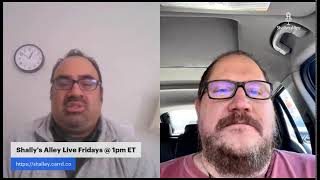
Patrick Moran, a senior talent sourcing manager at BAE, shares how to find civil and structural engineers who rarely show up on LinkedIn. He mines public bid records, professional directories like ASCE, and licensing registries, then systematically tracks referral networks using CRM tagging based on the Dunbar number concept.
Chapters
I can hear myself. All right, I'm gonna drop Facebook.
Okay, we are back live. I think we might have resolved the problem. Okay.
Can you hear me?
I just added your video. Now let me— oh, there you are! I see you on screen.
Can you hear me, Shelly? Ciao. Shall we?
I can hear you now.
You can hear me now? You can hear me? I can't hear you now. I, I can't hear you. Now I hear you, barely.
Okay, maybe there—
it's a delay. You're delayed.
I'm always— yeah, I'm on big time.
Yeah, it's like really cutting in, it's cutting in and out. I can't—
can you— let's roll with it, huh? Let's just roll with it. I can hear me.
Go ahead. As long as you can hear me.
Yeah, um, I was telling people, even that I was really excited to get on the phone with you, known each other for a while, is that your sector is one that people don't usually think about when they think about sourcing, right? Like, people think sourcing, oh, that's technology, that's But you're sure that it's essentially industrial and environmental services and it's not for people you think of sort of, right? Have you encountered that before?
Man, I can barely hear you. I can't— it's cutting out so bad.
Oh, okay. All right, let me repeat that. I would say your sector is one people don't traditionally think about.
Okay. Right?
Correct. Yeah. Yeah. The civil, structural, environmental. Yeah. It's kind of, you know, it actually would be interesting to like have training sessions. See, audio is cutting out for you, Shaolin. Yeah. Yeah, I mean, it's kind of— it is kind of the forgotten market. You know, a lot of trainings are focused around tech recruiting, which is understandable because it's a very, you know, that's probably the biggest area for recruiting maybe. But, you know, I think this side of the business and recruiting sometimes gets a little bit left out and you don't see too many trainings on the civil, environmental, structural. I mean, they're just as hard as finding, you know, a Java person, you know, finding a drainage engineer in Florida. It's just impossible. So the, you know, thinking of engineering, they are two different things. We have technical and you have civil structural. But in the end of the day, they're just as hard as finding a Java C++ type person, you know. So if anybody out there is doing some trainings, that would actually be— I'm telling you right now, like, if you have companies like, you know, the big engineering firms that hold 50 60 recruiters that focus on that type of work, if you put together a training, you know, how to find those type of people, you probably got a lot of people to sign up for those.
Can you tell us why people think that engineering is not something you can use LinkedIn for? It's like, oh, those people are not online, they're not on the internet, you can't find them on the internet. Is that true?
It depends on the engineering. It depends on the type of engineers. A lot of— I think a lot of the people that we look for are fortunately on LinkedIn. But, you know, there's always the group that's not. They're going to be on other— you know, you have to maybe find a— well, of course, Indeed and some other type of job boards and stuff. But, you know, you can kind of uncover some people looking at like RFPs, you know, project who You know, what company want to bid on a project? So you can see who the, you know, who the team is, who's the lead engineer, the project manager, all the way down. So you can find lists like that. You can use, obviously use lists like ASCE, ASCE website and chapters to network for individuals. So along the, it's the same line of, you know, other type of recruiting where it's a lot of networking. Who do you know in the industry? Using your hiring managers to find who they know, because it is civil engineering is a— depending on the discipline, can be a tight-knit group. So going back to, you know, the drainage engineer example, you know, you have a leader who's a manager of drainage engineering in Tampa. He's going to know, you know, the people within the area who are also other drainage engineers. So you, so you can reach out, but I think a lot of the people are probably on, you know, on LinkedIn. But again, you can find lists on different chapter sites. Again, looking to see what company won the project, won the bid, and who's going to be working on it is good. You can also utilize resources in our industry like ENR Magazine or any type of civil engineering publication, environmental publication, ASCE. One, I think it's called, is, uh, is another publication. So you can just do some investigating through those publications, which I've done a lot of, to find out, you know, what company is working on what project, who's the main point of contact for that project, and all sorts of stuff.
Yeah, talking about— I've used those before. Those are public information. Those bids, they have to be filed with either county city or some other authority like that, and they name all the people that are gonna be responsible for different areas of the project.
Yep, yep. Yeah, gold mines. They're really good, you know, finding things like, uh, who's registered as well, like who's a PE, professional engineer. I think, um, I think Greg Hawks has showed that once a couple times in his videos for PMs in Texas, I believe, or mechanical engineers. But you can find lists by state of, you know, who's a registered professional engineer or who has a certain license, maybe a PG, professional geology license, and so forth. So that's always good to dig those up as well.
So folks might not be aware of what this industry is. You've driven on top of the structure. Your water and your electricity depends on the civil projects, these big projects. When you hear in the news about the infrastructure of a— that's what we're talking about. We're talking about what makes transportation possible, what makes public works possible, right? Is that what we're talking about?
Yeah, I think I understood. You mean— I'm sorry, just, you're just cutting out a little bit. Just the projects, and that's what we're working on, like the roads and the highways? The water? Is that what you're asking? Sure. I lost you.
Yeah, that's—
yeah, yeah. I mean, that's, you know, a lot of the— so that's what I hire for. You know, have companies work on those projects. And it's always fulfilling because I think of it—
I was asking—
oh, yeah, yeah, yeah. Sorry, sorry. Yeah, yeah, that's— that tells the story to the, to the candidate, you know, hey, we're working on XYZ bridge, you know, in this area, and it's gonna be a great project. And it's a big project. It's, you know, all this stuff. So when I try to sell the role, or when I, when I talk to candidates, for me, and I stress this to my team, you know, make them, make them recognize that it's a, it's, it's, you're doing a project that maybe gets somebody to where they need to be the next day. You're helping build a road that might, you know, be better for them to get to, to their school or to work, you know, you're building a bridge because there's a purpose behind it. There's, you know, you're getting somebody to the hospital faster. You know, I like that. I like the feeling of I can look around and And when I travel, I say, oh, that's something, you know, maybe my company did, or, you know, I hope— We did that. Yeah, we did that, you know? And I've done that. There was a project a former company and I— a former company did in Denver, and I was like, oh, this is pretty cool, you know? I like this. This is really neat. And now with the new firm that I'm with, I'll be doing the same thing. Oh, wow, we did that. You know, we moved— we did the geotechnical engineering for that. You know, we did the environmental side for that. So it's always nice to see that.
So I was watching this program, they were talking about people that put the iron in the, in the bridges, and then the concrete gets poured over on top of that. And it's a very, very interesting job. It's, it's like they basically put all that lacework of the cross iron, you together. And apparently it's a really rare skill and a very highly paying job. Do you guys use those kinds of people or is that an external company that provides that?
That might be more subcontractors. So like the more the companies I work for are more than like the design, engineering design side. So basically we'll design it and another company will come in and build it. Now sometimes there are companies that do the design build all in one, but, you know, most of the firms I've worked for is just the design, the design side of it. Then you got the general contractors that will probably come in and build the thing for you.
So what has been the rarest or maybe most difficult to find skill in, in this industry that you've ever experienced?
Oh, uh, you know, I would say Maybe in an area, specific area, maybe transit people are kind of tricky to find. You know, we're behind, a lot of the US is behind the curve as far as mass transportation, I think. Transit, like we don't have like nearly what Europe has, you know, as transit goes, or other like maybe even, I'm guessing maybe even Japan or something, China maybe. So finding the transit and rail people that specialize in that industry are very, tricky to find, I would say. So transit and rail. Another tough area when you see it is usually aviation, because it's such a small market. Only, I mean, the niche for that field, aviation, to design a terminal and maybe do taxi runways and stuff, those are always tricky. I think anybody in the civil engineering field would say, you know, aviation, they're always— that's gonna be a long haul for you, along with transit and rail.
There's only so many airports. It's not like they're— yeah, pop up, you know, like malls everywhere, right?
Yeah, exactly. And I think I was in a call, um, on an ASC call not too long ago, and it was something to the effect of, you know, the kid— students are still going to school to study civil engineering, but it's, it's—
I don't—
you know, it's not like it was. I think they were— what they were trying to say, you know, I think today's generation are going more into other fields like technology some other, you know, fields perhaps. Not to say that civil engineering is going in, you know, is dying or anything, but, you know, it's just, I think, I think students are looking at other options perhaps. But I'm going to tell you right now, if you're a civil engineer, structural engineer, it's booming. Like, now would be the time to get in the industry, right? Because now, I mean, the offers, you know, are just incredible. And, um, you know, I think, uh, now if anybody's thinking about going into civil or structural, environmental, water. Now would be a great time to get in the industry because there's so much potential there and stuff. So I try to get the kid when I've done some—
parents, tell your children, yes, don't say computer science, say civil engineering if you want them.
Yeah. Well, yeah, because without us, well, without us, there would be no buildings or light or HVAC or air conditioning or water. So yeah, you might have the technical side, Nick, but without us— yeah, go ahead.
Yeah, I was going to ask about this other— I just had an interesting conversation with somebody from a company that was in this industry, and I was introduced to this term called coke, which is a byproduct of some kind of industrial process, and it needs to be handled using OSHA standards or whatever. You guys also work on these environmental remediation or waste treatment or your big, you know, pollution projects?
Um, I'm sure they have. Like, every company I have, um, they, uh, they have different business lines. Um, that's something I haven't dealt with personally. That sounds like more on the environmental side, which actually I do with the new company now. I have, you know, some remediation investigation type of roles, so I'm starting to get used kind of slowly integrating into that side of things. But you know, my background has mostly been infrastructure and transportation. Haven't done any of like the remediation and so forth, waste and kind of what you just said. That part I'm not too familiar with at all. I haven't done it personally. I'm sure somebody on my— somebody in the company has that I've worked for, but not me personally. Mine's just strictly roads, bridges, highways. Transit, rail, airport. Dan, sometimes I was— I was— I, for one company, I did ports and maritime. And that actually is another one that can be very tricky. So that's going along with environmental— sorry, environmental— going along with, um, uh, transit and rail and aviation. Uh, ports and maritime folks are very niche, very tough selection to find because, you know, they're only on so many coasts. You know, we have the West Coast, we have East Coast, and the ports, only so many ports these people can work at and stuff. So those are also very tricky individuals to find.
So you see some trends now, you talked about, you know, it's the offers are extraordinary. And you see the demand. Do you see any trends in terms of where candidates are going to come from? I mean, you talked about LinkedIn, and you talked about those, those bids and projects. Is there anything else out there on the horizon that is going to be a disruptor in this industry that you can see?
Uh, I think, you know, just mean like not finding, not being able to find the talent, you mean?
Yeah.
I would say probably, I mean, not, not right now, not the short term. I mean, obviously with the Biden passing that infrastructure, you know, Congress passing the infrastructure bill, you know, there's a lot of work to be done. So I can only see it speeding up and more people, you know, looking for, for specific individuals within our industry. I don't— I mean, I think the only thing would maybe be people leaving to go to other industries, you know, like technology or any type of other field. You know, I think it's pretty, pretty solid. I think there's definitely a lot of— there's, there's definitely a good amount of candidates out there.
Preston, are there any like social networks for professional engineers and civil engineers?
Oh yeah, yeah, yeah. Like, yeah, I mean, like I said, ACEC is one, ASCE is one, WTS, Women Transportation Society, is another one. Um, you know, there's all sorts of different groups that, you know, I mean, I used to join— I still am a member of ASCE. Um, I used to belong to the Women in Transportation Society. I don't have that one anymore. but all those different, you know, National Society of Professional Engineers is another one. Geological Society of America, I think, is another one. So, you know, you can always find some kind of different group. Yeah, I mean, you can always find some different group that you can belong to or join and participate in. So I always try to make a point to join at least one or two, you know, because I think that just helps build your, you know, somebody's brand and be able to really be involved in the group. And, you know, say they know who you are, you know who they are, good chance to network.
So reputation is a big deal in this market.
Yeah, I would say so. I would say so in, in civil, you know, for, uh, this type of engineering recruiting, I would say so.
Knowing people and the networking side of it is important.
Yep, yep, absolutely. When I, when I attend, uh, you know, whether it be an ASC meeting or last year when I attended a bunch of, um, Women in Transportation Society meetings, even local chapter meetings as well. I would, I would, you know, introduce myself and then quickly, you know, send them a LinkedIn message, you know, and they would accept the invite and stuff. So you're just building your network that way because, you know, later on down the road, hey, I met you at the ASC conference in New York City, you know, via, via internet or Teams or whatever. You know, we're looking for this type of person. Do you know anybody that might be a good fit? You know, So it's always, it's always an excellent time to network through those chapter meetings, local chapter meetings, or even national meetings. Last year and the year before, they did a lot of those through Zoom or, you know, Teams or something. So it was always easy and free to join. So I did a lot of those last year, got to know a lot of people from around the country, and then just added them to my network. So hey, I can reach out to them later on if I need something.
That's important. Yeah, we've had a conversation about employee referrals many times, uh, with leaders on, on the show that I've had as guests. But something that doesn't come up very often is non-employee referrals and being intentional about generating leads or referrals from people that are not working for your company. Essentially, like you're saying, networking, right? Which is all we used to do back in the day before before the internet, but it's sort of like a forgotten art now, you know, talking to somebody that's not potentially a candidate but that might have connections. Like, could be maybe a professor, or it could be a chapter leader of one of these associations.
Yeah.
And do you put those in a CRM, or where— how do you track these, these influencers that you're probably not going to recruit? How do you keep track of them?
So I don't, we never had a, I haven't used a CRM in a long time. None of my companies had one. I personally did it for me personally, just, I sometimes had spreadsheets, sometimes I just keep notes in LinkedIn. I would just know, I just have a, you know, I'd be okay. I know this person, I have this, I don't know if it's a photographic memory or not, but But I just know, I would just know my own, I had my own way of knowing, of doing things. And, you know, going, you made a good point about professors. That's a good one because I do network with different professors, or I used to. I haven't done it in a long time, but I had, you know, a list of professors I reach out to for schools like the School of Mines or North Dakota School, Colorado School of Mines or North Dakota School of Mines, or any school that would just continuously pump out civil engineers. Structural engineers and make sure that I was, I was, I was utilizing that resource as well to get future talent coming out of colleges and stuff. So I would, I would basically keep my own way. I would keep my own spreadsheets and I would just know, just my own thing.
So Jeremy, there's this, there's this concept that is used in social networking architecture, which is the science, the social science that preceded all this social networking that we see today. There's been, you know, anthropology and population studies and other things about how societies grow and how people connect and all that. Everything from, you know, tribes to towns and all that. Probably the biggest example of social networking architecture is the study around how virus spreads, right? So going back to like the typhoid fever days, there was an individual that was coined Typhoid Mary that was a carrier of typhoid but did not get sick, showed no symptoms. However, they were able to track that many of the infections for typhoid came from having contact with this person, but because they had no symptoms, they didn't know, so they were basically just passing it around. And it was a, um, a good research study for how people connect with other people and how quickly something spreads. The beginning of like, you know, pandemic research and all that. We're talking about a long time ago. Well, there was a scientist, I don't know if they were anthropologists or what, by the name of Dunbar. Um, and he's credited for what they call a Dunbar number. Dunbar number is 150. It's 150. And according to this scientist, it's the number of connections that a human can have, the maximum number of connections that a human can have of any significant nature, right? I'm not talking about somebody that you wave at every morning. That's not a connection. But people that are, you know, friends, relatives, colleagues that you actually, you know, exchange information and then she can exchange, you care about each other and so on. So that number has been used for the basis of trying to figure out how big someone's network can be. And then, you know, things like LinkedIn come around and blow that up. We see people that have thousands of connections or 30,000 connections, and of course folks say, oh well, those are not real connections. They might be, some of them might be, some of them might not be, but one, you're just saying makes me wonder, um, these are VIPs of some sort that you're connecting with. They're not candidates, so you don't want to put them in an ATS. You don't want to try to attract them to come work for you because they're, you know, VIPs in other ways. But you still have to be able to reach out to them in some kind of way that is planned or planful. So wouldn't it make sense to have some kind of structure for cataloging or tagging these people. So let's say you have a collection of my mining industry influencers, my road building transportation influencers. So you could send them a message when you needed to activate that network instead of having to call them individually or email them individually. You could select your group of transportation influencers and send them a message send a social media message or an email message to the whole group, say, hey, we have this need, who do you know? Yeah, I don't think anything out there exists like that. LinkedIn itself doesn't have a way to create what I would call circles. So on LinkedIn, everybody's a first degree. Yeah, I wish there was like a degree within the degree. So like first degree people that I work with, first degree people that I know personally from, you know, not work, first-degree people that are, I don't know, influencers, some way to group them in that way. There isn't anything like that. The CRMs don't really have that unless you use tags. LinkedIn doesn't really have that unless you, you know, kind of hack it with tags. What do you think about all this?
That's actually a really good idea. That's actually a really good idea. Um, yeah, because I can't— you can put somebody in a, I mean, a folder, but you— I mean, I guess you could use like maybe folder-wise, but it would be nice to be able to have like, you know, your 12 top people who you're going to reach out to and be like, here's, here's what I need, or not, here's what I'm looking for. Do you know anybody in your, in your, um, in your networks? That's actually a really good idea.
Um, so yeah, I mean, I usually try to make a list, but lists are lists are flat and, and you can't necessarily email everybody. Some of these lists might be lists of people that are on Facebook that you don't have email addresses for. So how do you reach the group in ways that are, that are beyond just a simple email list, right?
Mhm. Yeah, yeah, absolutely. I can see where that would be very useful and, and save a lot of time as well. Um, but yeah, I think that'd be a good idea. I'm gonna write that down actually. Um, Yeah. So yeah, that's software. Yeah, let's create the software. Exactly. No, that's a good idea. You know, I think a lot of it— so I come— so how I got into this business, well, one, I had a couple things. Why I got into recruiting 14 years ago. But I was always good at like the networking part of it. My brother-in-law saw that. So my brother-in-law, he's an executive with with Aerotech. And so, 2008, 2007, um, he was like, hey— so at the time I was working, um, at the Bellagio in Las Vegas, and I was doing their marketing and promotions for some of their nightclubs around the, around the city. And, um, I was always good at networking with people, getting them to come to the clubs, getting them to spend money, um, you know, bringing just people from out of town in. My— back then, you know, iPhone, that wasn't even heard of. It was your little self-flip cell phone or whatever. I didn't even have a BlackBerry. So my phone contact list was like a mile long. I mean, I could bring people from New York, from Florida, from England, whatever, all the way in to come to Vegas for a weekend and have fun. And so my brother-in-law was like, you know, you're really good at getting people to talk to you and getting them over here and just doing things. Said, why don't you think about recruiting? Why don't you do that? And I was like, I never really knew, you know, didn't know what it was. And, and so I tried it in the agency field at Aerotech for 2 years. And I didn't really— it didn't really mesh with me. I didn't really care for corporate recruiting too much. Then about 3 months after I left, one of the senior recruiters said, you might want to do— might want to do agency— sorry, corporate recruiting, because it's a different vibe. And I was like, oh, okay, I'll try it, I guess. And then, well, here we are now. But I guess the point of the story was that, you know, going back to your idea of networking and meeting and, you know, all this stuff about reaching out and so forth like that, that just comes naturally to me.
Just organizing your—
Yes, reach out to be like, hey, how you doing? There's a great book that I read once. It's called The Tipping Point in college, which I think I still have a copy over there. But it talks about being a salesman and what they call a maven and what they call a, um, salesman, maven, and seller. Seller. And so it was just, uh, it was great to read. And I was like, oh, you know, that's a good point, that's a good point. Always be networking, always be meeting people, smiling, all that good stuff. So, um, so I guess again, going back to your point, it's always meeting people and engaging with them And connecting with them has always been pretty, pretty easy for me to do. I'm not afraid to walk into a room and start singing.
So yeah, you're lucky in that way, or you're, or you're able, you have skill in that way. But there's still that question of how do you, you know, how do you organize that? Because, yeah, you know, some people have like shoeboxes full of business cards or— Oh yeah, like you said, the phone list. Yeah, there's got to be a way to be able to group those contacts so that you can reach out to them in batches and do it in a very smart way. You don't want to send a message to all of the influencers because it's not the right message for most of them, you know? Right.
And you could, like, you could do it single— I mean, you could do it meticulously where I go through and you— I mean, if you had the time to go through LinkedIn and pick out, you know, the top 20, and that would take—
imagine doing that every time.
A long time. That would take a long time. But there would be— maybe you could use a project or something, but still, yeah, that would take months maybe, um, if not longer. But yeah, I mean, there are, there are certain people I'm sure that would be high on my list. Okay, I know this person in New York would be a good one, or this person in Florida, this person in California. There would be those type of individuals right off the bat. You would just know, um, okay, I know these are going to be people that would definitely help me out.
Right. I would love to track not just who should I contact for these types of jobs, but also like to track the results of that outreach, right? So if you have 20 people in my list of, uh, civil engineering, you know, peer leaders, how often have they referred someone? Kind of like, uh, what do they call that? There's a, um, the, the, the rating of like From net promoter. That's, that's— oh, and yes, net promoter number, right?
Yeah.
How many? Yeah, exactly. How many of these people, of 20 people, which are the ones, which are the 2 or 3 that have actually referred somebody in the past? And, you know, then they get, they get my first message, or I reach out to them, maybe, you know, take care of them in other ways, send them cards or buy them coffee, or, you know, because I know they're the ones that have really gone out of their way to help me out. Yeah, even if it's just as much as just forwarding an email, but they've actually taken action on my request.
Yeah, yeah. Track the outcome, track the result. Or, you know, everyone— some former boss of mine said, you know, everything can be measured. So you gotta— you can measure that, you know, what's the— what is the return, right?
Yeah, measuring it for the sake of measuring is just activity. But I, you know me, I always like to get to the outcome and then be able to reverse engineer it and say, okay, what activity has led to this outcome? Let's do more of those and less of these. You're gonna go all—
you're gonna go all Good Will Hunting on me and start figuring out the formula and, you know, all that stuff. X, X.
You know that? Yeah, I'm gonna do that. I got a whiteboard back at home.
Yeah, just remember.
So what's keeping you up at night now with regard to our industry, you know, with recruiting? I mean, we're sort of getting past some of the biggest, scariest parts of, um, you know, the pandemic, and it seems like there's some sense of normalcy returning, of course minus what's happening unfortunately in, um, in Russia right now. Yeah. Is there anything that's keeping you up What is worrying you about the future of recruiting?
Worrying about the future of recruiting. Wow, that's a good question. I mean, I know some people said in the past, you know, robots and stuff taking over recruiting. I don't feel that way at all. Because there has to be a human element. To me, there always be— there always have to be a human element in recruiting. I can't really pinpoint one specific answer, Shelly, to that because I don't— I mean, I read every— I actually was talking to somebody last week about this, that I scour all my stuff on Sunday. Like, I go through all my material on Sunday. So I read, you know, I look at blogs, I read different articles about recruiting and sourcing. I take— it takes about 2 hours for me to get through everything. From Fistful of Talent to recruiting blogs to this to that to this. I got Dean DeCosta's new tools, whatever. So I do all this in a period of 2 hours every Sunday regardless of if I'm sick or whatever. So I do that religiously.
Thanks.
So I keep up on the latest and greatest and all that stuff, share that knowledge with my teams and my coworkers. But I guess nothing offhand, I got to admit, nothing stands out and says, oh my God, I think recruiting is in trouble or I think sourcing is in trouble. Yeah, I don't have anything off. Maybe ask me that question in 5 years. I might have a different story or a different answer. But right now—
It's tough to look at the crystal ball. Yeah.
Yeah.
It's like the crystal ball could tell you the truth or it could lead you down the wrong path. But I agree with your point about robots. Robots are assistants. Robots help you. Do things. You know, good robots are, are collaborators. And, um, I had, uh, one of my favorite all-time episodes was with somebody that's not even in acquisition. They're an expert in automation and, well, you know, cognitive automation, what we can do with computer-based robots as opposed to factory, you know, automation. But, um, the reason I was bringing that up is because He made this really interesting point that's always just stuck with me ever since then. There are robots that are going to be significantly better at doing something than humans could ever be, but they're really good at doing that thing. So he used the example of you can have a robot that is absolutely the best at hammering nails, They can hammer them faster, more accurately, and exactly the right depth with exactly the right force. Never miss. And they can do that in, in a way that humans could never do. They can hammer nails, but they can't fold napkins, right?
One thing, one thing.
It's like, right, they— or they can do 10 things, but that's what they do. They, they don't have this other— the adaptability and the flexibility, at least not for a long time. So his point was, use robots that are capable of doing something really well as your assistant. And you can have lots of these robots that are helping you do your job. They're not going to take your job away. They're going to help you get more meaning out of your job. Do you really want to spend the rest of your life hammering nails, or do you want to do something else while the robot handles the nails? And what is that other thing? What can you do instead that has more meaning or more impact or more value and let the robot do basically the heavy work. I mean, it's a tool. Like, the wheel is a tool. Nobody, nobody thought, oh, we're going to invent the wheel someday and it's going to eliminate labor. No, they just thought, hey, we can do more now that we have— yeah, you know, right? It's not like the wheel's gonna take our jobs.
Yeah, right. I mean, exactly, exactly. Yeah, I, you know, that going back to this, going back to this industry, I don't see that. I mean, they're, like you said, the tools can help. I mean, if they're consider, if you're considering things like Calendly or something like that, a robot, yeah, I mean, that's, that can help you, it can be making more efficient as a recruiter. But I still think they'll always, there'll always be recruiters needed for a long time.
Yeah, a robot's not going to be able to read a resume and determine, hey, you know what, this candidate might actually be really good for this other job that they didn't apply for, right? Right. How many hires have you made like that? One of my surprising outcomes when I was at Fiserv, and I was there for a good 5 years, was there was a candidate that I ended up hiring. I actually— the recruiter doesn't make the hiring decision, but a candidate that was hired as result of my activity that was completely different for the job than everybody else that had applied. And that's something that, you know, I, I recognized on the conversation having with— I was having with him during the phone screen that he would be good at this other job even though it's not something he would have ever applied for, right? And the hiring manager, when they looked at his resume, they told me, why, what made you think about this person there, they don't even have the right job title or whatever. But I said, you know, when we were talking, he answered some of my questions in a way that would be really good answers if they were answers to the question about your job. They weren't good answers for the job that I was considering him for. They were really good for this job. And so that's what made me think about it, is as they were telling me the answers to the questions that I was using for meeting, it became more and more obvious that they should be in this other position despite their resume. And the hiring manager said, that's a good reason, and interviewed them, and they were thrilled. And it was a really, really good match, almost a 90-degree career change for this person. They went from essentially being a consultant to being a technologist. Um, they were, you know, more like a business consultant and they, they're, they're now more like, uh, not a programmer, but they configure software. And it was their business mindset that allowed them to configure software in a way that the business could benefit from. So it's like almost imagine if a recruiter one day was able to write code and then created an ATS, right? All the ATSs I've ever seen were not created by recruiters. Yeah, they were created by software engineers.
Software. Yep.
And it was like complete departure, right? So that, that is a human thing. A robot could never make that logical leap, right? And a robot's not going to be able to convince somebody to take a look at an opportunity. We're not gonna force somebody, but we do have to give them a reason to consider us, right? We have to say This is why this is a good opportunity. And we use the examples that are appealing to that person, right? If I'm talking to Jeremy, I'm going to tell Jeremy why I think this is a good opportunity for Jeremy, not all the 500 reasons why this is a good opportunity, but the 3 that matter to Jeremy. And a robot's not going to be able to determine that either, right?
Right. The, the art of maybe persuasion, um, Maybe that's a good term, or, or selecting the right—
yeah, the right persuasion, you know.
Exactly.
I can ask a question and figure out what it is that you're interested in. Are you interested in career, money, advancement, training, support, uh, visibility? Um, you know, is it just a matter of like you just don't want to drive to work anymore?
What is it that's really Yes, for a job, right? What are the main drivers? Yeah, yep, exactly. Well, I just think if, if robots do come, I hope to be out of this game by then. I'm hoping if that ever happens, I'm like, okay, it's time for me to retire. I only got a few more years left anyway.
Close to that already.
Yeah, it's gonna say I'm looking at my account like, see, I'm gonna turn what age this year? How many more years I got left? Um, but, uh, yeah, I know, I know the feeling.
So, yep, talking about age, that's interesting. Are you seeing any, uh, any effects of discrimination? I was just having a conversation with a friend about that, and, you know, we're both— I'm not going to disclose— we're both over 50, and I'm starting to see effects of that. Are you noticing that out in the industry? People giving someone a second look because they're— would it be too old? Or is that kind of not a thing anymore?
Yeah, I haven't personally, I haven't seen that. You're talking about just in hiring or in recruiters, like recruiting?
Recruiting?
Yeah.
You present a candidate and the hiring manager basically is like, they're too old. I mean, oh, no, exactly like that.
I know, I haven't seen that. Now, mind you, I haven't recruited like, well, now this new role, I'm a senior recruiter. But before that, I managed a team of recruiters. So I hadn't technically recruited since 2019. But even before that, I hadn't seen very minimal, if that at all, in our, in our industry.
So yeah, well, we were talking about it because I started noticing basically hiring managers saying, say, making comments like, they're never going to be obvious enough this person is too old. But they, they— I'm starting to hear comments like, well, um, you know, how much trajectory do they have left? How much runway do they have left? As in, like, how many more years are they going to be working? And it kind of strikes me as maybe that's an underhanded way of discriminating against the age. I don't know, I just— I'm noticing it more. I'm sure maybe I'm just more sensitive to it because now I'm over that.
Yeah, the gray hair, like, mine's coming in and stuff, the gray hair.
I'm sure it's probably what it is.
I'm sure it's happened. I mean, oh, you know, I've always— one thing I've learned in this industry is you never— nothing ever surprises you, especially with candidates. So I'm sure it's happened. I just haven't been aware of it, or I haven't— I personally haven't seen it in years. Now, I could ask my recruiters, could be a different story. Previous recruiters, I'm sorry.
Maybe, yeah. Topic for another show. Yeah, speaking of another show, we're pretty much, uh, close to the, the hour mark here. Um, thank you so much for bearing with my—
oh, thank you. I'm sorry about that. Yeah, I tried to get the phone, wasn't working, and I'm sure it was me.
I, I 100% software.
Always.
Thank you so much for coming. Always a good time talking with you. Congratulations on the new job.
Thank you. Thank you. Yeah, we got finishing week 3. So start still trying to get everything going. And, you know, like I said, it's been a while since I've actually had a rec load desk. So this is all, you know, I listen to hires in week 3. No, I'm just saying. But I really enjoy this industry. I really like recruiting. I love recruiting, and I eat, sleep, drink sourcing, recruiting, you know, and follow people like yourself and other people who have influenced my career and been my mentors throughout my decades-long career and really learn a lot from everybody and you and everybody else that I come in contact with. So thanks. Yeah, I kind of passed the torch on to you.
Last words for our audience. Any parting words, you know, like, from Jerry?
Just keep your sunglasses on, keep in your lane, keep recruiting, you know, the talent's out there. And, you know, never, never give up, I'd say. You know, it's one thing I tell, I tell a lot of people that somebody doesn't get back to you on the first try, try again, try again, try again.
So yeah, I love your positive attitude. You've always had a real positive attitude. It's definitely contagious.
So Thanks, appreciate that. Let's keep it that way.
All right, man, well, have a great weekend.
All right, man, you too.
Thanks for watching, Charlie. Thanks everybody. Thanks for being on the show.
Bye-bye.
Bye.
More from Shally



Scaling Talent at Hypergrowth: Leadership, AI, and Hiring Excellence with Cindy Nicola







