Ray Thomas Live on Shally's Alley
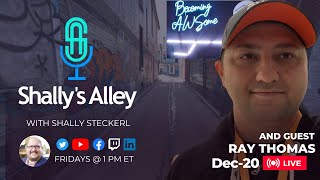
In the final 2024 episode of Shally's Alley, host Shally Steckerl interviews Ray Thomas, a veteran tech recruiter at Amazon Web Services and host of the "Becoming Awesome" podcast. The conversation opens with Shally sharing her personal health challenges in 2024, then shifts to an in‑depth exploration of Amazon's Bar Raiser program: its purpose, selection, veto power, training, community support, and how it differs from Microsoft’s As‑Appropriate interviewers. They discuss the risks of bias, the importance of data‑driven decisions, and real‑world anecdotes of hiring‑manager misconduct. The dialogue moves to the value of AWS certifications for recruiters, how certifications build technical credibility, and practical sourcing tactics such as reading GitHub repos, using tools like Guild for intent signals, and texting candidates. Shally shares her own experience requiring recruiters to read code to improve candidate conversations, and Ray adds stories about creative outreach and community impact. The episode closes with a philosophical prompt – “What impact are you making on the world?” – and a preview of the next guest. The content is conversational, enthusiastic, and peppered with personal anecdotes, offering high‑signal insights into recruiting best practices, bias mitigation, and professional development for talent acquisition professionals.
Chapters
Yo, what's up everybody? You are live on Shally's Alley, and this is my final episode of 2024. You thought I was going to say of forever, right? No, just of the year, because next week is December 27th, and it's right between Christmas and New Year's. And y'all, I need a break. Like, seriously, this has been one of those years that shall go down in the history books as erased from my memory completely. It fucking sucked. Okay. 2024 was just bad in so many ways. You know, at my age, things get a little tricky, but when you almost die twice in one year, you know, it's a bad year. So anyway, here I am, you know, survived cancer, rang the bell, and then A week later, one of the, one of the creepy side effects from cancer treatment— by the way, I had none of the really bad ones— but then all of a sudden I'm done with the treatment and one of the creepy ones keeps, you know, kicks in and sends me to the hospital for 4 days in the ICU. So there you go. You never take shit for granted, right? Um, sure, sure does give you a lot of perspective. Oh look, Chrissy Wilson says hi. Hey Chrissy, what's All right, so y'all, you're probably wondering who this handsome fellow with the really cool backdrop is. Um, that's— that is no backdrop. That is actually his recording studio slash, um, uh, what's it called, slash home office, podcast studio, you name it. Exactly. Yeah, all of that good stuff. Uh, with me today is Ray Thomas, also known as AWS Sum or AW Awesome or whatever.
It's awesome.
It's just awesome, right? Otherwise known as awesome. Ray was actually introduced to me by someone that we had on the show earlier that was talking about, um, different reasons why as a recruiter you should get certified in the— I don't know if I'm saying this right— certified in the profession or certified in this, in the, in the skill set of your candidates. Um, and it was a really— I thought it was a really appealing idea. And he said, you know, you should talk to Ray because he is what they call a bar raiser at Amazon. And I'm like, oh, that's something I haven't heard in a while. So I wanted to talk to Ray about both of those things. The Bar Raiser thing, and also the certification thing. But let's start with the Bar Raiser thing. So for everybody that's, that's not familiar with that term, at least not in recruiting anyway, what is a Bar Raiser? Can you tell us what does that mean to be a Bar Raiser?
Yeah, absolutely. And before I get to that, uh, Shelly, thank you for sharing about your journey, personal journey. Uh, very happy, uh, you, you pulled through.
Um, yeah, me too.
Cancer hits— it's something that hits everybody. It hit our family, so it's something that's very close to me. So congrats on that. And then Chrissy, hello, nice to see you and welcome. Happy to have you here as well. And thank you, Shelly, for inviting me, and thank you, Matt, for the introduction. My background, my background, just quickly, and then we'll go into the Bar Raiser portion of it. I've been a tech recruiter for over 2.5 decades. January 6th was— that will actually be my 6th year at Amazon Web Services. And, uh, Becoming Awesome is actually the podcast I have, uh, within AWS. I'm the only TA-focused, uh, podcast. Uh, we're currently in holiday mode as well. We're going to be coming back in February, uh, you know, with the brand new show and whatnot.
But a brand new show, okay, I gotta hear more about this.
Yeah, it's like, as far as like how the structure will be, etc., and also the platforms in which we're scaling it out to So we use bar raising at Uber. So yeah, I mean, once, you know, once a lot of people started to understand what Amazon is doing and why they had this thing called a bar raiser. So let me demystify it a little bit. So a bar raiser is actually an Amazon— at Amazon is a very experienced employee who acts as an objective third party during the hiring process. This is to prevent someone from hiring their friend or former colleague just because—
just for favoritism.
Exactly, exactly. So, so what are we—
you can hire your friend or former colleague if they passed it.
Yeah, but yeah, yeah, but at the same time, you'll have a bar raiser that's not from the team, the org, or anything else, just to remove any biases. And they're the one— and let me like drive into— dive into like some of the, the roles and the qualification, kind of like the process of it all. But the role itself. So we have the Amazon Leadership Principles, there's 16 of them. That's literally the culture of thought is what I tell people what it is. So with that, we assess from a behavioral aspect during the interviews, the interviewers each have a couple of different leadership principles that they're assessing for, and we try to make a data-driven decision at it. So we try to identify candidates who perform better than better than 50% of the existing employees in a similar position. So if you are interviewing for an SDE-2 position, the data that we're going to collect from both your functional and the leadership principles has to say that you're operating at a level that's better than 50% of the other SDE-2s. Okay, we evaluate the candidates for long-term potential, overall fit with Amazon's culture, and then The end result is whether I'm part of the full interview process where I'm interviewing the candidate or part of what we call just a pre-brief and debrief. I'm in all the debriefs where I help drive the decision-making. I actually dig into everyone's feedback and then have a line of questions to kind of vet all the information that was given to make sure that it's a data-driven decision and not an assumption-driven decision. So I tell candidates, and I actually told one just before this meeting of ours, right? I was actually preparing them. I say I'm the one that's going to make sure that there are no biases, that we're not making an assumption, you know, just because—
like an independent reviewer, like a— like an exactly unbiased, impartial reviewer of the— yeah, the process.
Yeah, I want to make sure that everything is data. So just because make-believe the interviewer didn't ask for a specific question and therefore we don't have that data We're not— we shouldn't. So here's where I come in and say, well, we're not going to assume the negative because we didn't get that information. We have to assume the positive and we have to move forward. We shouldn't ding the candidate because maybe they had that data. Maybe we didn't ask it. So again, it's a matter of trying to be very objective as a whole and make it fair, right? So again, how do you even become a bar raiser? You have to be nominated by your manager. And peers and another Bar Raiser in order to say that person should be nominated to become one. And then you actually go through the whole shadow program where I shadow as a Bar Raiser in training other Bar Raisers. I would first listen in, walk through the whole process with them, and then, and then what you call, eventually start to lead the interviews myself in the program. And then there's a whole written summarization about the quality of my, uh, of my performance from each individual Bar Raiser that was shadowing me. And then it gets reviewed by the core team to say yes to this person or no. So it's actually very— it's, it's actually very time-consuming. It's very, you know, data-driven, even from evaluating me. Um, so that's where it's at. So again, we're holding Amazon's hiring bar. That's why we are the leader in, you know, in what we do is because we hire people that are better than us, right? So to help drive that, and then it continues to, you know, make sure that the candidate has an incredible, you know, journey, regardless of what the outcome is. It was a very fair process.
Right, right, right, right. Yeah. So that's, you know, I was, I was at Microsoft, and back in the 80s, Microsoft introduced the concept of an AA interviewer, an as appropriate interviewer, which predates the Bar Raiser program. And Amazon borrowed from that as appropriate process and added or adapted it to Amazon's leads, not leads, needs. There's a lot of similarities. I mean, the as appropriate in Microsoft is like independent and objective. It's also about high standards, you know, raising the bars and like high standards. There's also some decision, decision influence on both of those roles. And they both require training. They both require experience. But there's also some key differences. The, from what I understand, the Amazon Bar Raiser or the way that it's defined that way focuses on exceeding the standard versus the As Appropriate is more about fairness in the process or like a final checkpoint. Yeah. So a little bit of a difference there. Um, the cross-functionality of it, it's, you know, you in on the, uh, Bar Raiser side, it's always a different department. But I believe that Amazon— at Microsoft, sometimes they had, um, people that might have even been in the same organization. So there could be a very, like, you know, your boss's boss's boss or something like that.
Yeah. Yeah.
So there are some differences in some similarities in it. And Amazon basically, you know, made this more about like the— well, raising the bar is kind of the key, right? Focusing on the hiring above standard and raising the standard for everyone in addition to the other aspects of fairness and everything else. Yeah. But I think— is there like in the Bar Raiser, is there a veto? Like, can the bar raiser say no or just express opinion?
Yeah. So we can say no.
You can say no.
And it's very rare, but it's— but the veto, like, I've been one for a few years. I never vetoed anything because by the time you get involved, there's been— yeah, the whole— because we're part of the process from the very beginning to the end, right? You already have— if you have a team of recruiters that partner well with the hiring managers, you're having the right people in the process in the first place. That candidate move forward for the right reasons to that final stage, which is only then when the bar raiser comes in to make sure you now have the panel of interviewers, you have the right people that are tenured enough to assess the candidate properly for what they're aligned to assess, right? So for example, if it was someone on the tech side, right, why would I have— if we're interviewing a software development engineer, Why would we have someone on sales aligned to a tech competency to that person?
Right.
They don't know what they're doing. They don't know what to ask for.
Doesn't make any sense. Right.
It's a horrible experience altogether.
Right.
But, and then make believe you do have, again, say it's all SDEs, right? But then some people might be stronger on the front end versus the back end. You want to make sure that if we're focusing for, we're hiring for back end engineers, right? You want to make sure you have backend engineers on that versus frontend, regardless of their title. You have to vet all this stuff so they can actually take a look at the right things when assessing for system design or for looking at their code, whether it's logical, maintainable, or data structure and algorithms or the problem solving. Everyone's aligned, the expectations aligned. There's a rubric that they follow. So it's very data-driven from every angle. And my job is to make sure right people Right tenure, right questions asked, right data collected, and then have an open conversation. Say, given everything we just heard, is this person better? Are they going to be successful long term?
And you're assigned to a particular, like, I don't know, one or multiple particular— you call them lead— I'm sorry, you mentioned leadership. Yeah. So you're assigned to like, this is what you're measuring. Right? They're not coming to you and saying, hey, what do you think about their development skills? Right?
Actually, I'm actually— I'm based on the data that they collected. So I'm someone that knows every one of them well.
But that's— but that's a— you're assigned a vertical.
Yeah. So the way it works is you normally have, you know, the interviewers, they have the functional competencies as far as half of it, they could be doing the coding stuff, then you would have a couple of leadership principles that each one will be assigned to. Each one will be assigned to a couple of leadership principles. So when they— so if I'm part of the interview myself, I'm also going to have leadership principles. So then I make my vote, I put in my vote, and then I'm not seeing anyone else's vote until I enter my own. So this way, there's no— so this way, there's no biases injected, nothing. So it's a very fair process. So I'm only evaluating based on these leadership principles, would I think they'd be successful? My final vote can change based on reading everyone else's feedback as they come through.
But later on.
But right later on, because you can have a conversation and change your mind. Absolutely. Absolutely.
But you should have your unbiased— or I don't know if I'm biased. There's always some kind of bias, but you should have your opinion.
Yeah.
Uninfluenced by other people's opinions. So get this funny anecdote. This happened at an organization that I was advising and supporting. With a big, let's just say, redesign of the workflows. And we accidentally found out that the hiring managers were— what is the right way to say it? The hiring managers were circumventing the built-in regulatory or policies by what you were talking about. You're supposed to put your review in before you read anybody else's. Well, uh, there are some hiring managers that were actually getting around that because in order to see someone else's comments, you have to submit your comments. So they were submitting blank comments so they can unlock the other, and then they would— it was like, it was like they were, uh, because the, the, the password or the gate was You have to submit your comments before you can see other people's. So they figured out that if they submit like a blank comment, it unlocks it for everybody else. And we were like, oh my God. And so they were actually— and the reason we found this out was because we noticed some hiring managers canceling their interviews minutes before the interview as a pattern. Like, hey Jenny, we noticed that the last 3 interviews you canceled were like right before the interview. Um, you know, you can't possibly have had 3 family— but like, I get family emergencies or, or business emergencies, you know, there's sometimes you have to cancel, but it was a little bit of a pattern. Um, and we're like, well, I didn't want to complete the interview because at that point, you know, and we're like, wait a minute, you read the other notes before. So not only was she reading the notes before putting in her own notes. She was reading the notes before even doing the interview.
Yeah.
Can you believe that?
That's horrible. And you know what? That, that impacts the candidate's experience, right?
So everybody, you make it now, you, now you don't have a fair— like, you only have one interview. Yeah. And the entire company might be missing out on a good hire because somebody else didn't interview, you know. And the candidate is definitely being like literally snubbed.
Yeah.
Because we're going to schedule you with this person. Oh, never mind. Haha, just kidding. Here's the cake. Nope, not for you.
No, no. So, so you look at it this way where, you know, One bad review can impact us in such a— the blast radius is massive given the size of the organization we are, right? So we always say this was our tagline when I first joined. They said we're Earth's most customer-obsessed organization. So when we talk about customers, almost everyone has shopped on Amazon.com, period. Like every— almost everyone, everyone heard of Amazon.
Whether you do now or you—
yeah, we're now or later. So our mentality is everyone's a customer. You have to do the right thing. On their behalf. So even when I interviewed for the role, they asked me, so Ray, who are your customers? Shelly, you know what I did? I had my glasses with me. And I said, I took my glasses, I said, see this lens, I see this, see these glasses, I said, the hiring manager and the candidates are equally as important. It's like the frame and the lenses within one is useless without the other, they both need each other to function properly. So with that, it's 50/50. So if that hiring manager did that, it would have such a poor candidate experience. All it takes is no frames, tell their group of friends, say, oh, this interview, this what happened, blah, blah. And guess what happens? That person that could be a great hire for us, that a prospect that we're trying to get, says, you know what, I'm not going to respond to that recruiter anymore. It's done.
It's good.
Yeah.
And all of a sudden, you know, you can't take— you can't unwind Yeah, reputation that you can't put the toothpaste back in the tube.
Um, I'm looking at Christy's comments and, and I love how engaged she is, you know. So again, great way to eliminate bias. Absolutely. The, the reason why we have the practices is fantastic. And also, glad you ordered something today. My wife's— my wife orders a lot, so do I. I'm a shopaholic, so I'm kind of used to getting a bunch of packages all the time.
So I've actually met some folks that um, have admitted that they'll go to a store physically and like find the thing they want and then order it on Amazon.
Yeah, yeah, or they just compare the prices depending on how you need it. Fine, I'll pay a dollar extra because I, I could get it right there, or I ordered it, I save $5, you know, or something like that. So I've done it. Totally guilty.
Definitely. I mean, it's like definitely addictive, especially when you get it right away. I mean, but anyway, so, so this whole bar raiser thing is, it sounds like a lot of work. It sounds like something you might, if your organization does this, you might want to aspire to, you know, get in a position where you can be a bar raiser. It sounds like it does a lot of removing bias, um, or removing bad bias, because, you know, the word bias is biased. Um, bias can be good, you know, but bias is what keeps us alive. Bias is why we don't get eaten by lions. But, right, um, so, you know, there's good bias, like, oh my God, this is going to kill me, I should probably run. That's bias. But what are the, what are the, um, what are the risks And I'm not saying, you know, air any dirty laundry, but like, what, you know, if not implemented correctly, what are some of the downsides or risks of a bar raising program within, um, the recruitment workflow?
Um, so you have to potentially— I think, uh, I think when you look at risk versus reward, obviously, like I said, there's a reason why we have been ahead of the competition, certain aspects of technology, because of the bar we keep and how we hire.
And sure, yeah, but like, like, let's not just tell somebody, hey, go do this, and then they do it the wrong way, you know. So what are the— what are the pitfalls you could fall into if you don't do it right?
So here's the thing, you mentioned biases, right? Some people could be so, you know, so focused on their work that they, they sometimes end up having a bias of like how it should be. Like myself as a recruiter, right? I've interviewed— I've been a bar raiser for for interviewers that are interviewing, right? For, sorry, for recruiters that are interviewing, right?
Yeah.
So I'd have my own bias, what makes a great recruiter, etc., etc. So how do I go about— so we have all these mechanisms and all these trainings for busting your own personal biases, to be conscious about your bias. Exactly.
So we have like, if you are biased, at least you know it, and you can apply that knowledge to protect yourself from, you know, making a decision that isn't fair, even though you, you know, you're aware, like, I already know coming into this that I have this bias of how things are supposed to be done. Okay, so basically what you're saying is kind of beware of your unconscious bias and make sure you have a way to defeat that.
Yeah, absolutely, absolutely. And if it sometimes means going in and checking and asking the Bar Raiser communities, like, 'Hey, I think I might be doing this.' That alone will trigger such a positive response because people know how self-aware you are.
And so they— the bar managers, like, they talk to each other?
Yeah, we actually have like a, a chat, you know, we have a Slack group and we actually, you know, talk about some things that we're seeing or we ask for advice. Or like, if they've— if there's a situation that, uh, that they've never seen before, they don't know how to handle, someone else will say, 'Hey, this is the best way.' here's why, etc. So we'll get advice from each other. So it's a big community that will support— there's over 1.5 million employees at Amazon all across. But if you look at the Bar as a community, it's a fraction of a percent. Okay, that's how low the number is. It's all volunteer-based. And this is the impact we're making for all these hires. So now you have a community that volunteers for such a pivotal part of building Amazon and all the different divisions of Amazon. I'm primarily AWS, right? But, but you end up being supported by the rest of the community. We have our own, um, you know, a wiki. We have our own, uh, Brixpedia. It's like an encyclopedia of like, here's all, you know, here's what to happen in these situations, etc. All these things are documented. So there's a lot of support, but it is voluntary work, uh, and it's for the right reason. Some people think that you'll get promoted by, you know, like, because you took this on. Like, no, this is not part of your promotion. It's not. It's actually more work, right? More work. But it is more work. It's almost like having a, a part-time job, a second part-time job. But it's the reason the people that want to do it is a special group of folks that want to be doing it is because we care. We want to make sure we have the right people. And at the same time, the reason why I personally became a Bar Raiser is because—
because your name is Ray, so you wanted to be a bar raiser.
I wish that was the case. But I was literally on a debrief where I'm the recruiter, and there's a bar raiser. And I didn't like their approach. And I was very vocal saying, hey, I don't think that's fair. Or I don't think— or they— or the bar raiser was not as familiar with the function. So when there's some data that wasn't being called out that they should have called out, I went and I jumped in and etc., etc.
And they're like, so you can do this better? And you're like, yeah, then you got to get into the program.
So sometimes when I'm still at the Bar Raiser sitting there, you know, but like for my own candidates, I sometimes say, hey, as a fellow Bar Raiser, I do that now. As a fellow Bar Raiser, I need to ask this question because I'm seeing this, you know, etc. So this is the thing. Are the Bar Raisers trained on specific interview Competencies. Yeah, we have like, all interviewers, period, have to go through a certification program before they're allowed to interview or even shadow an interview. So there's best interview practices, etc., you know, that we have. So there definitely is a lot of training. And it's all about, as far as specific interview competencies, you got to know the all leadership principles, the function is different where For example, I won't be an SDE functional, functional interviewer because I can't read code. But I can assess the feedback on the code that the other interviewers had mentioned, hey, this code was, you know, I was unstructured, was this, was it scalable, etc., etc., etc. That's easy to understand. And I understand why they said what they did, versus, and that same time, I could dive in and say, Well, he didn't do this. So I don't think they have the ability to— well, what specific data says they don't have the specific ability to? Because maybe you don't need to do it just that way. Maybe there's another way. And I asked the other interviewers, can this be done a different way?
So it's role-specific.
Yeah. So the bar raisers can—
because I mean, there's also, you know, there's core competencies, which you're talking about, those leadership principles, and there's role-specific that, you know, can they do the job? Then there's behavioral and cultural, right?
Cultural.
So, and I guess also performance or achievement focus as well.
Yeah. So those are the 3. I could be talking to someone on a function I never heard of before. Like actually one of the bar raisers, like they were doing something about animation, right? And specific character animation. Like I've never seen this. I don't know what the bar looks like for this. Therefore, as a bar raiser, they actually go and take a look at all the documentation around how to analyze what is a good, what you call, animation expert, you know, and what's more. So you got to learn about it, then go to the interview, then use that to help calibrate everyone and yourself with your feedback and say yes or no to that candidate.
Got it. Cool. It definitely sounds like something that if you're not familiar with, you know, could help your organization. And, um, and yourself professionally as a career. The, the other topic that I wanted to talk about, which is kind of very much in your face, as in like it's all over the back there, is, um, is the AWS certification. And you have your own podcast, uh, very, very well-known podcast. You've mentioned earlier this, uh, the, uh, Becoming Awesome, and it's, um, a YouTube at AWS Careers that is about the pursuing the certification for AWS. Um, now tell me a little bit about why a recruiter who doesn't do the job of AWS, AWS, um, cloud engineering or whatever, why pursue a certification? What are the— I get, what are the reasons, advantages, whatever you want to call it?
All right, so I'm gonna start with this. I don't know about you, but if you were to look at my LinkedIn profile, right, and it says, you know, I kind of write the type of people that are recruiting at that time, like solutions architects, analytics, etc., etc. You know how many times I got a message from a recruiter saying, oh, I have an opportunity as a solutions architect, and I think you'll be a perfect fit?
Okay, yeah, I can imagine every day.
Okay, so I don't want to be that. I don't ever want to be that person. I never have been that person. And the reason why—
well, you could also not be that person and still not be certified.
But it'll go back to this. I'm gonna get that.
Okay, okay.
I said to go to certification if I want to. The type of talent I was hired to bring on are the type of people that I would actually do, um, you know, I would source through white papers. I would source through authored books, not just keywords on LinkedIn and stuff like that.
Yeah.
Okay. So in order for me to come across as credible, because those type of individuals that I was personally targeting, they get hit up literally, and I talked to a few of them, hundreds of emails sometimes a day. The ones, some are like a week. Hundreds of emails a week, and then you have some that are hundreds of emails a day. But they respond to me. Why? Because of the way I presented the messaging. So when it comes to the certifications, it did a couple of things. It's— it gave me a deepening understanding of the roles that I recruit for and the technologies that the candidates themselves work with. So there's certain verbiage, you know, my vocabulary that I use, that they can connect with. And like, and there's like, oh, so you know this? Like, yeah, I do know about that. Builds the credibility. It earns trust is one of the big leadership— does that. I ask meaningful questions during the interviews to ensure the— there's alignment with the opportunity. I stay current on like the fast-evolving industries that we're in, right, uh, by earning some of these relevant, uh, certifications. Um, and then it just bridges the gap between recruitment and the technology just for better candidate job matches. So those are like the high level, the key reasons why.
So it's like a good icebreaker. Yeah, it's good at building trust and establishing credibility.
Yeah.
And it's good at, um, it's good in helping you basically be familiar with that particular, um, technical skill set or whatever you want to call, you know, the definition of that role. Um, but so what, how do you not everybody's recruiting for Amazon.
Yeah.
And not everybody's recruiting AWS engineers. So how do you pick what certification you're going to pursue? I mean, do you just happen to like—
fantastic question. Um, I think you have to take a look at what you are recruiting for because there's certificates for everything, right? Um, if you are—
suppose that's what I was asking.
Yeah, yeah, right. Because even if you look at— if you go to our training and certification on AWS, there's so much, so many different certifications depending on, on X, right? So depending on who you are, whether you're a recruiter or you're somewhere in tech, if I'm a recruiter focused on this type of technologies, like say just, I'm, I'm a database person, I recruit database engineers, okay, I could be working for a startup, I could be working for an agency, and just, but I'm known for database engineers, whatever your thing is, I would actually go and just do HighLevel, take a HighLevel certification course, because it again brings some credibility. And then at the same time, your messaging will change, your communication with that candidate will change. For example, that candidate may be talking to 5 recruiters, right? Maybe more. But if you're talking to them at a deeper technical level and not just a recruiter trying to pitch a role and my job's the best type. You get rid of that. I don't sell my roles. I never sell the opportunity. I talk about what it is, but I really try to align what they love doing and say, you know what, that's actually— that is where you could apply that versus saying this is the best team ever. I— once I'm able to dive at a technical level with them, because engineers, for example, they're tight-minded. They're, they're like, they geek out over certain things. And if you can speak their language, great. So if you are recruiting in sales, and the salespeople that you're trying to recruit for are in, say, retail, right? Retail folks, look at fashion, look at this, take a look at those certifications on, on any, a lot of things in that world, in the retail world. So imagine you, and if there's not a certification, say there's a blog that's always talking about the current, current, you know, current trends in the fashion world. You're on top of that. Say there's a newsletter, but there's no certification. You think of that as your certification, a daily thing saying this is what just happened in Paris. This is what just got launched here. This is what got launched there. And you're able to talk about not just past but then immediate trends, immediate things that are happening right now, you become credible. You're the one that they'll actually listen to more when it comes down to, say, the closing.
So certification or not, it's about this subject matter specificity. Um, yeah, like, because I mean, I was going to use this as an example. I built a team that was recruiting for Software engineers, big surprise. Not like I haven't done that before. Google, Microsoft, Cisco. But this was a startup and there was a little bit of, well, it was challenging to attract talent when you're a lesser-known company and, you know, these people are being recruited by you. And by Google and by Facebook and by Netflix, and you're like the tiny little brand that nobody knows anything about. So it gets a little more difficult. And there was also a lot of confusion around what the product actually was. So it gets— the waters get a little muddy, right? So I was like, you know what we need to do? We need to make sure that the people that are on the front lines that are talking to these candidates can actually, actually talk to the candidates, you know, not interview or screen, but actually talk to them.
Yeah.
So it was a requirement on that team, on my team, it was a requirement that the people that worked for me actually knew how to read code. They didn't have to program code. I wasn't asking them to write a program that was going to be sold commercially or used in a production environment, but they needed to be able to read the— be able to understand how to open a Git repo and read segments of code and try to interpret and understand that. And that became a huge advantage when we were talking to candidates that were having competitive offers because they were— this, this was not by design, but they were much more comfortable talking to us about the opportunity, they would stay on the phone longer and eventually hear the pitch. Not that we were selling, like you said, we were listening to what they had to say and we were understanding, but they stayed on the phone long enough compared to, you know, prior to that it was like, what's it all, what's the salary? Like literally just right out of the, right off of it. Uh, sure. Yeah. I'm interested. What's the salary? What's the job? Like this. And it's like, do you even want to know what the job is? And the reason they went to that is because they just didn't feel like you would be able to understand what they were saying. So they wanted to jump right to the thing that they could use to say no. So we ended up figuring out that it was a lot easier to have these conversations. Now, there's not necessarily a certification for programming. You can go get a computer science degree, but a lot of the people we were interviewing didn't have computer science degrees and yet they were software engineers. So it wasn't, you know, um, So it's not so much about the certification, it was about being able to be in the environment that they're in and have a conversation about that environment. And, uh, believe it or not, what I discovered— and this might be some of the secret sauce for you as well, so tell me if I'm right about this or not— is literally knowing what to ask. Because being able to read the code does not mean we were interpreting the code for quality. Yeah, we weren't like reading their code and going, uh, you made a mistake here, this should be this function. No, it was because we understood how to ask the questions and what to ask about and to get them talking. And then we took good notes and we presented that information to the hiring manager. So we transitioned from the hiring manager essentially looking at a resume saying yeah, to actually listening to us, looking at our notes, and deciding to interview someone without even looking at the resume.
Yeah.
So because we were literally checking the boxes that the hiring manager would have looked at, and we were having this conversation with that candidate, and they were telling us about their experience during this call where they would have otherwise, quite frankly, lost their patience and not answered these questions because they feel like you don't know what you're talking about.
Yeah. So I'm so glad you brought this up because I'm actually going to tell you a funny story. And for the first 20 years I was working in the startup, I was working on the agency side primarily for startups. So I wasn't recruiting for the Googles or I wasn't part of Amazon or anything like that. So, and early stage startups, no one ever heard of new technology. So imagine how hard it was, right? But now coming back to, you know, how do I approach these people? Well, how do I gain their interest? How do I get this person to respond to me when there's 100 people sending them messages right now. I always demonstrated learn and be curious. What I did was, which is one of our key leadership principles, one thing that I always did is every week on Monday, I would go and take a look at AngelList or anywhere else to see what new startup just came out with technology that could probably give us an advantage in the recruiting world for any aspect of our job, whether it's to write better messaging, whether it's how to source and write the Boolean or the X-ray search is a certain way to, uh, get, uh, to identify more talent, right, that's already not in our databases, whatever. Um, there was a product at that time that was ahead of its time called Guild. And what Guild did— so, so Guild, which was fantastic, did a couple of things.
They—
you would— it would connect with your LinkedIn. You would actually literally put candidates that you— that, that are in your top tier prospect list in these buckets. And then it would tell you, give you indicators saying, hey, this candidate maybe it has a 20% or 50%, uh, probability of them starting to look at new opportunities within the next 2 weeks. How does it know? How did it know that? It would take a— it would monitor their profile and notice that this candidate would change their profile picture, they, they tweak their title, they start adding some keywords and new skills, things that we all do. It's like if you're about to sell your house, you're going to tidy up the place, then put fresh paint, right, and all that stuff. It knew that was happening and it would alert me. So I would— so then the second part before I reach out is what you brought up with the— since I can't recode either, it would actually go into their GitHub and actually see All right, the last 10 projects, all I had to do is put the cursor over the mouse over the project and say, 90% in Python, 10% this boom, boom, boom. That's all the information I needed to write a message saying, I just came across your GitHub, it looks like out of the last 10 projects, out of the last 10 projects, you know, 8 of them were written in Python primarily, over 90% of your code is written in that. I would love to learn more about you and your passions, because I have a customer that is very interested in your type of background for that specific function, but needs someone that loves writing in Python, you know, would you be interested in having a quick conversation? That's it. I don't talk about salary, I don't talk about nothing. That's all it took. And the response rate shot through the roof. Okay, so it wasn't an Amazon, wasn't an Amazon. I was one of the million people that were trying to reach out, but because that was more thoughtful to them, they responded to me. Guess what? They also responded to me 2 weeks later as if they just read the message. And you want to know why? I asked them, hey, I noticed you were both online. We're both local. Can you mind grabbing a drink? Let's just meet up. It was great. Took them out to a rooftop, bought them a drink. So how come it took you 2 weeks to respond to me, by the way? Yeah, he goes, he goes, let me show you being in another top, top startup, right? In their high growth mode. He goes, look at how many emails I got today, over 300 internal emails. He goes, now look at how many messages I'm getting on LinkedIn, over 100 that in the last couple days. So it was just in the policy, just finally getting to it. That told me, hey, if I had your number and I texted you, this, would you have responded immediately? Goes, yeah, I thought you would have been— I thought you were a friend or someone. It's like, great. Next thing I did, make sure I went and found something that had accurate phone numbers, and I start to implement texting many years ago before other people started looking at it as an everyday. Yeah, I was one of the few that started doing it immediately. Again, you gotta think creative, understand them, understand where they're coming from, understand how busy they are. So therefore, short, sweet messages that hit home and in a format, in a medium that they will look at more faster if you need them faster, right? So applying all these things were what made me successful and continue to make us successful at Amazon. We just know different ways of doing that at scale. So, so that's really where it's at.
Yeah, I think it's, uh, I think that the takeaway there is be able to walk the walk the walk even though if you don't, even though you don't have to do that, like you don't have to necessarily do the job, right? Um, but it does raise a little bit of a, a little bit of a conflict in my mind that sometimes I get pushback from leaders about, no, we got to hire recruiters that know this industry. And sometimes I kind of think like, well, do you want to hire somebody that's already been there, or do you want to hire somebody that's going to go there? So, you know, on the one hand, I understand the, the need to, like I said, be able to read the code. But a couple of the folks that I hired didn't know how to do that when, when they started. I— we, we taught them that. We taught them how to, you know, break it down and understand it, gave them some tools to be able to do that. So they learned it. It's— so that essentially cemented in my mind the fact that you don't need to have already done this in order to be able to do it. And funny thing about, especially with, with software developers, very, very seldom do they put their current language that they're learning on their resume. And that's the one that they want to get into. So I will— you probably know about Golang.
Of course. Yeah.
Yeah. Absolutely. So I was having a hard week. The company was having a hard time finding Golang engineers, mostly because a lot of people that were getting into it was fairly recent. A lot of people are getting into Golang, didn't put it on their resume because they—
I'm like Rust today. Like, Rust is a new thing that everyone's focused on today, but right, and it's not on their resume because they're learning it now.
They're not going to put it on their resume that they worked on a Rust project because they haven't yet. This is what they want to get into. So if you approach them and say, hey, you know that, that all that old Java code that you already did, we want you to do more of that, and they're like, I don't want to do that anymore, I'm into Rust. Versus you approach them and go, hey, I noticed that you're actually writing some code in Rust, pretty new stuff. Um, it seems like, you know, or Golang, which is what I was talking about. It seems like, you know, all we do is Golang 100%. It seems like you might be a good fit. And they're like, how did you know that I wrote in Golang? Like, where did you find that out? It's not on my LinkedIn. And I'm like, I don't even know if you have a LinkedIn. Like, I didn't go to LinkedIn and find you. Yeah, I read your repo on, you know, GitHub. And then, and then they're like, oh, so that was the, the sort of the icebreaker. Now, you know, that may not necessarily be the same in, in every industry, but I think there are lots of jobs where you can think about what the person might want to do. You know, even if you're like, let's say that you're recruiting for nurses. Yeah, well, if you're recruiting for nurses and you're trying to hire someone that's like already done, uh, whatever that, you know, ER nursing for 20 years, and you're like going to offer them another ER job, they're going to be like, and tell me something I don't know. But what if you find out that they've been, uh, taking courses in, I don't know, uh, interventional radiography, right? And you're offering them a job where they're going to get training in that. You need them to have already have the experience, but you're— now it's a whole nother conversation. Like, hey, You're getting into that. You're learning it. We need your skills, but we'll also be willing to teach you this. So I think in many industries, you can find a way to reach someone's aspirations rather than— like, what triggered me was, you already need to know that. Well, do I really? Do I really need to know that? Because if I got every job based on what I already did, then I would be doing the same thing I was doing when I was 16. Yeah, I'd be flipping burgers at Burger King.
Yeah, recruiting is not— because that's what—
that was what I knew how to do, you know.
But recruiting is not rocket science, right? It literally isn't. Like, you could teach anyone straight out of school, even if they haven't gone to school but they have a brain, you could teach them how to recruit because it's just a set of process, like understanding the type of profile and then trying to map where these type of people— what their demographics are, what the geography is, where to find them. How do you communicate with them, etc.? If you know how to recruit one thing, you recruit anything. You can recruit a sous chef, you know.
But what we're saying is get into the mind of what does a sous chef want to do, exactly, you know, what are they— so you can talk to them. You don't have to be a sous chef, you can talk to them. So you don't have to have already been that to be learning that, but you do want— so certification is in a way, uh, proof that you've learned about it.
Yeah, you know, at a high level evidence, now you're able to communicate with them somewhat effectively. Like, you won't know how to read their code yet, you know, and you don't need to, but you can understand this— the difference between this database and that database. You can understand what they—
you can understand that they're doing this, not that, right? Exactly. So how much work is it to, like, just, you know, we'll just take AWS because that's yours.
Yeah.
Um, how much work is it to go from zero to I'm certified?
Zero to I'm certified?
Yeah, from like—
depends on what you're trying to do. So I'm actually looking at— I'm in, uh, AWS. I'm actually looking at our uh, training and certification site. I'm in my Skill Builder profile, right? There are certain things that will only take me an hour to get high level, and then there's another one that will take 70 hours that I have to take a look at.
But like, there must be a first thing— like, there must be a first thing you do that gets you certified, like the basic. That's good.
So Practitioners— anytime you see the word Practitioner, that's high level. That's made for people that are non-technical. So for example, I started and even Matt, right, is the AWS Cloud Practitioner. What that means, it literally is for you're in the industry, but you don't, you're not necessarily a coder. So both the coders and technical folks to the sales folks can pass this test, because it gives you a high-level breakdown what AWS is, what the cloud is. Okay, right. That's it.
So what is that? How much work was that?
I think to me, the, the, uh, for me it was the modules was probably around like 12 hours, uh, 12 or 13 hours.
And then you pass it.
And then the practice test for me, I'm a, I, I, I have test anxiety. So I literally did the practice test over and over and over 20 times a day just to memorize all the questions to the point where when I did the 60, 60-question practice test, I would complete it in 7 minutes. All right, 60 points, because I just, I knew exactly what it was asking for. And then you just go, go and actually take the test. It's, you know, it's a proctored exam. So people, right, so someone's actually watching you take the exam. And I was about to say, because you could be like, hey, ChatGPT, how do I, you know, it's not so like, whether it's in person or it's a virtual proctor, right? Like, for example, I was actually in this room when I was getting the certification, I had to take my— the webcam showed that there's nobody in here. The electronics were unplugged, were unplugged. There's— the TV was unplugged, everything was unplugged. Nobody in the other room, nothing like that. And then even when I'm sitting there reading the question, I couldn't move my lips. I couldn't be like, you know, under my breath. So that person's like, don't move your lips. So it's like they really want—
because they would think you're talking to somebody.
Exactly, whispering to someone or something, right? Um, and at the same time, your screen is locked. You can't open up any other browser. You can't do anything. It's completely locked.
This is a software, I'm assuming, that does this.
Yeah, this is from Pearson. So Pearson VUE was the one that I went through.
Right. So you can't be like, uh, no, they watch every single thing.
But at the same time, I did it fast because I studied for it. I just did the practice exams over and over. Right.
So it's a bit of an investment.
So, you know, it's, it's, but it's a long-term investment, but look at that investment.
Yeah.
I was just thinking about how much the investment.
So it's about 20 hours. Total to—
yeah, and that's something like that, which we talked about this before, before the show, right? You look at like even investing in this and myself and building the podcast and then showing the— gathering the data to show that it's, it's actually something of real value, right? I invested in my long term. I invested in my long-term growth. I invested in a skill I never had before. I was never a podcaster before. I had to get speaker certified. Someone that has major imposter syndrome and grew up with a major speech impediment, which is why I speak a little slower right now so I don't mumble my thoughts as much as I used to and stutter like crazy. Here I am. Amazon gave me the full freedom to fail if I did. And at the same time, they give you all the support so you don't fail. You know, trusted to be speaker certified, trusted to have the only TA, you know, livestream for them. And I did this. And then when you look at the layoffs and everything that happened in the tech world across everyone, I told— I tell everyone, I said, strip recruiting out of the equation. We could teach anyone to be a recruiter. What are your superpowers? What else are you known for? What are you visible for? That's going to separate you from the pack. And you got to do that. That's what I tell all—
whether that's certification or certification or this or that.
Do something that shows you genuinely care about being better or helping others be better. Being at my level as a senior level, right, I have to be a force multiplier. I have to build something that's going to help make the team better, or I have to mentor to help someone elevate to this level. So that's the expectations that are at, at our level. So, but at the same time The bottom line foundational— we can teach anyone to source. Sourcing is the easy part. Influencing and building and, and being like a force multiplier, that's, that's this other thing, you know. So you got to separate yourself in that aspect.
Yeah, I— this has been a— it's been a lot of information, and I wanted to, um We're getting pretty close to time, but I want to give, give you an opportunity to, uh, respond to the two questions that I ask. If you've watched the show before, you know that I always ask two questions at the end.
I haven't, I haven't seen the back end of the show, so let's go, whatever it is.
Uh, yeah, so I always close out with, uh, two things that a lot of folks really watch this as a, as a recording because even though I tried to be, um, mindful of, you know, Fridays at 1, probably one of the easier times for people to attend, it's not exactly can always make it. So A lot of folks usually watch it on the weekends and so, and so on. So I like to do these two things. First of all, that my first question would be, which is how I got in touch with you, who should be our next guest?
Oh, that's a great question. I wish I knew. I, I wish I thought about this.
Um, and that's the best— I want to put you on the spot because I want you to think right off the top of your head, who's somebody you want to see on the show? That doesn't mean they're going to accept the invitation, but I'd like to invite him. So who do you think I should invite?
I would love Jenna. I would love Jenna to do this. Jenna Lass, you know, she's actually my co-host from Becoming Awesome, but she has, she's the principal level here. She's someone that I, when I first joined, I was like, I want to become like Jenna. That's generally the person when I first joined Amazon. Once I started to see the team, like, I want to learn from her. And then it took years until I had the courage and the idea to say, say, what do you think about this? And they're like, yeah, let's do that. That's big, you know.
So, all right, I'll invite her. Hopefully she'll accept.
Yeah.
Um, so you're off the hook for that one. And the second question is a little bit more philosophical, and it's more about like one of the things I have always aspired to is to be a thought provoker, right? I don't, I don't really like the idea of a thought leader. It just functionally doesn't seem like— I personally am offended by someone thinking that they lead my thoughts. It just sort of feels weird. But what I do like is I've always been a student of the peripatetic model and Socratic model. Those that have been unfortunate enough to study under me know that I ask a lot of tough questions. So, one of the things I like to have in this show is something that prompts people to think deeply about something for themselves. So, my ask to you is leave us with a question we can ask ourselves. It could be about anything we talked about today or just something else, but something that we should ask ourselves and think about for ourselves. What should we think about when we watch this show over the weekend or whatever?
I think that's actually a much easier one. What impact are you making on the world while you do this?
Ask yourself, what impact am I making on the world? Okay.
And I genuinely say this, and it's not just in— because I'm at Amazon, everything else— it literally is. I do feel that, you know, someone like yourself, you, from the health issues that you have— I have my own— I see the people around me, right? Life is short. Um, I, I try to be a genuine human being that tries to help out anyone I can. Any chance I can. Even if you look at my internal, uh, we call it phone tools, our internal directory, people have a quote. I said, I'll give you the shirt off my back, hopefully it's just during warmer weather, you know. So that's really what I write. Um, and the reason why I'm still here at Amazon is because I have a daughter that has a rare vision loss disease, right? She had rare retinal disease where she's losing her vision. And it's going to continue going that way with initially no cure. But the technology that we're recently building is helping these companies find cures. We now have new tools that are now— it's the world of what's possible, right?
Right.
Hey, what if we try this? What if we try that? So the impact I'm trying to make is trying to find the smartest people in the world that's going to help make the world a better place, that's going to either help It's either going to help save lives or help improve lives. That's why I do what I do, and that's why I'm doing it here. And that's literally what I want to leave with.
I like that. I like that. I think I want to be a little bit more generous to some folks that may have a hard time with, with thinking at that in that way and say, how are you making other people's lives better? How are you improving other people's lives? It doesn't have to be other people. It could be one person. Yeah, I mean, if you make one person's life better, that's an impact already. Now start with that. You don't have to, you don't have to come up with the, the cure for world hunger, you know. Uh, should we all be so lucky to be Bill Gates and have all the money in the world, or, you know, whatever? But really, if you can think of a way that you are improving someone else's life, uh, is someone else's, you know, period. Um, that's a really good, that's a really good thing to aspire to. So That's the question then. How are you improving other people's person's life?
Yeah, yeah. So, so, you know, like I look at Chrissy, she's like super engaged. She reminds me of Isaiah LaBrosse, who was on, on our show, right? Super engaged and everything else. We just found out that he applied all the learnings from our show and the tips that we gave.
He got certified.
He actually got a job at another company doing what he loves, what he really is good at. And because he applied those learnings, how to interview and specific things that love, we love that. They, they, they're, they're someone that's transitioning their career from financial to try to get into tech, but they still love financial, they ended up getting something in a market where it's tough, where there's a lot of competition, right, for jobs, they landed something, the tips, and they, they wrote a beautiful email saying that to us.
I was like, that's just awesome. That's just awesome.
How cool is that?
That is so cool. I, I, I'll share a cool anecdote with you. So a long time ago, I used to— I had a foundation, nonprofit foundation, for years, for 7 years, that helped people become recruiters and sourcers. And we found that there was a huge impact in the community of blind and visually impaired in particular, one of the most hard-hit in a lot of, a lot of ways, most underemployed and unemployed in, in many respects. And, um, the reason— what you were just talking about made me think about, about this guy who, uh, he's blind and his, uh, wife had a motion disability. So between the two of them, they, they had a bit of a, you know, tough go at it. And he was referred into the foundation through a local organization that provides vocational rehabilitation training and things like that. So we took him under our wing, ended up hiring him first as an intern. And it turned out that this person was brand new into recruiting, sourcing, the whole, the whole works. So didn't know anything about the industry. Ended up making such a huge contribution to Greenhouse, the ATS.
Yeah.
Because he figured out through his own scrappiness how to do some of the things that he was supposed to be doing. Blind. So in other words, Greenhouse did not have the required, um, uh, whatever it is, you know, the, the required technology to assist visually impaired. A lot of websites allow you to do, you know, screen readers and things like that. So he went in there and was trying to do his job. He's like, I can't, I can't see anything here because normally my screen reader does these things. And it's like You know, so he ended up figuring out how to do it anyway. So he hacked his way around, figured out how to do it.
Then I was like, wait, this does this, this does that.
Exactly. And then we went back to Greenhouse and said, y'all, it's kind of embarrassing that you're, you know, a fairly mature company and didn't have this. And like, we've never had anybody that was a blind user. And I'm like, I get that. Like, you know, I get that because that's one of the things the foundation did. Was identify the fact that people just never think about that, you know.
Yeah.
So then we're like, well, we, you know, work with this guy, and he started working with them, and they ended up implementing a bunch of fixes that made it possible for— I don't know how many blind users they have now, but it made it possible for blind people, right, or visually impaired people to use greenhouses and ATS because of this literally kid— I mean, young guy that was just so, you know, I'm not trying to take any credit here. We helped him get a job as a sorcerer, but what he did improved the lives of anybody else in the future that might be a visually impaired or blind person using Greenhouse. So just absolutely amazing, the waterfall effect. You know, I may have changed his life, but he then took that and amplified it times— I don't know, I can't even project it.
And so companies that start with one person and that makes a difference. The, the companies that are focusing on people with disabilities, it's, it's great from a human perspective and it's great for your profits. It's that simple. Oh yeah, just another multi-billion dollar opportunity right there if you focus on them as well.
So, so let's wrap it up. Uh, yeah, basically just have, you know, if you help that one person improve their lives, you didn't— you never know how far that's gonna go.
Yeah, yeah.
So how are you doing that? Thanks a lot, Ray, appreciate it. Uh, Everybody out there, you know, follow his show if you want to learn a little bit more about it. It's AWS Careers on YouTube and connect with him on LinkedIn. We are not going to have Shelly's Alley. So this is once again my last episode for 2024 because next week is the Friday after Christmas before New Year's, and I'm going to have a little bit of a vacation. But we will see you here next year. I know, a whole year away. And our guest will be Seth Davis, a local prodigy here in Atlanta, former police officer who left the force to become a recruiter and a sourcer and has some interesting things to say about leadership. So hopefully you'll tune in next week. Until then, Happy New Year. Take care, everybody. Bye-bye.
Take care. Thanks, man.
More from Shally



Scaling Talent at Hypergrowth: Leadership, AI, and Hiring Excellence with Cindy Nicola







