Rob Beck Live on Shally's Alley
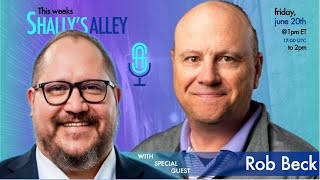
In this live YouTube conversation recorded on June 20‑21, 2025, host VITAL‑BARITONE reunites with former colleague Rob Beck to discuss the challenges and opportunities in modern technical recruiting. They explore the nature of bad versus good data in applicant tracking systems (ATS), the risks of bias and outdated information, and the trade‑offs of granting ATS access to imperfect data. The dialogue moves to quality‑of‑hire metrics, recruiter burnout, and career tenure patterns across agency, corporate, and leadership roles. A substantial portion of the talk is devoted to the role of AI and automation tools—Claude, Gemini, Copilot, Notebook ML, and LinkedIn’s AI messaging—in augmenting, not replacing, recruiter work. They critique over‑automation that harms response rates and propose a more nuanced, human‑in‑the‑loop approach, including custom rubrics, confidence‑interval scoring, and visualizations like spider charts (BlueJeans). The conversation ends with reflections on personal tooling habits, the evolution from grep‑based sourcing to modern LLM‑driven workflows, and a forward‑looking call for future guests and introspective questions for recruiters.
Chapters
Hey, all right, what's up people? You are live on Shelly's Alley. It is Friday, June 20th, in the year 2025. One full decade into the century— no wait, one full quarter century into the century. Uh, two and a half decades. Wow. It's been a while. And I think like it's been that long since I saw you last. What the hell, man? You abandoned us. You moved to Denver and you just forget about us little people here in Atlanta.
Moved to Colorado. I do miss the Atlanta recruiting mafia for sure and how we all used to get together and, and shoot the shit. But we still do.
You're just not here.
Yeah, I know. And yeah, it's, it's interesting because I do need to plan a trip to Atlanta sometime soon for sure. But I do miss everybody there and And really kind of missed those, those times where we would all get together and, uh, you know, basically tell each other what was working, what wasn't, and, uh, and, uh, all that.
That's kind of what we do on the show now, you know, ever since you left, I just, I got lonely. And so, but that— so you're not in Denver? I thought you were in Denver.
So I, I work in Denver. The, the office where I bought is in Denver. I live out in Boulder County in a little town called Erie.
So yeah, it's Denver City, whatever, proper. Um, cool, man.
Us living in Atlanta.
Yeah, in Atlanta. You live in Atlanta, but really it's, you know, Alpharetta or whatever. Um, cool, man. Well, I— it's— for those that don't know, um, Rob— I, I call him Bob. I don't know why. I've always called you Bob, and I know you go by Rob. It's like, I always called you Bob. I think something about Bob Beck, it just sounds better than Rob Beck. In my own life—
I used to put Robert on my business cards. Business cards, remember those? And a lot of people, when they see Robert, they just say Bob.
Right, and it's not your favorite. Yeah, I know. I know you hate me for it, but that's all right. That's right. So for those of you who don't know Robert Beck, he's a repeat offender. This is his second time on the show, actually. Has some interesting stories to tell. A little bit of a, I guess, a quick history. We worked together at my firm that I had, and he was one of the partners for many years there. And he also has his own, or I don't know, had or still has his own company called Grebstaff. Is that still around or did you—
No, we dissolved it in the move. We looked at different we looked at ways of maybe doing it in both cities, and I mean both states, but it just, it looked like it was going to be a nightmare. So we, uh, we shuttered the business and rolled it, rolled it out, and then, um, got a job at Ibotta.
Yeah, so basically, I, you know, he had a business, I had a business, we met for wings, and we're like, hey, we both have businesses, we both have the same kind of back office needs, let's, you know, join forces.
And Yeah.
And so we worked together for a while and then he decided to abandon us and move to Colorado. But yeah, long story short, yeah. A lot of experience in technical recruiting, definitely in e-commerce. He used to actually work at a company called BigCommerce, right? You were at BigCommerce for a while?
No.
What was that? BigCommerce?
Was it— I was doing some contract recruiting at—
Oh, right.
OneTrust was in there, Nielsen.
Yeah, so a lot of like digital commerce and stuff like that. Yeah. Yeah, and so, and also, you know, interesting background. He has a background in geography and planning from, you know, way back, which means that he was in big data before big data was even cool because Geography is basically— it's always been big data, you know, giant databases of vectors and all kinds of stuff. So yeah, interesting background. But I want to talk about the data side of things a little bit, and especially something that you talked— you and I talked about briefly last time we saw each other, which is that, you know, you feel like data-driven hiring is, um, is broken, and you have some ideas on, on how we can fix it. You were, you know, you wore both the data scientist and the sourcer hat. Um, you're definitely insourcing now in a pretty competitive field. E-commerce, still very competitive. What is the biggest, in your, in your perspective, the biggest threat to hiring? Is it— it's an A/B choice— is, is, is it bad data? Or good data in the wrong hands? What's worse?
Yeah, good, good question. Um, you know, bad data, I guess, you know, if you could elaborate, you know, where, where you want to go with that.
Um, is, you know, like there's, um, there's incomplete data. You've got your ATS and your CRM, there's like a lot of incomplete fields, there's a lot of missing pieces, um, there's incorrect information. So, you know, bad data can take the form of, well, several forms that at least in my mind, I'm thinking 3 things. I'm thinking incorrect. So like data that is wrong. Then there's missing. So data that is, you have a gap and you're trying to make a decision, but you're making a decision based on what you think is 80% of data and you really only have, you know, 60%. And then the third one is dated or obsolete. Like it was correct, but it's just no longer, and you have no idea. Because whatever it was was correct then, but now it isn't anymore and you didn't know that it changed. So that's kind of what I think about bad data.
Yeah, you know, I think it's a mixture of both. Not to, you know, straddle the fence here, but we're kind of going through that exercise right now where we're starting to identify who silver medalists are, who— okay, who got the— you know, we have two strong candidates. We only can make one offer. We're going to make this person an offer. What do we do with this person? Like, what do we do data-wise? How do we tag them, mark them, put him in another bucket to come back to later? And, you know, what does that look like? And I think that's where there's good data, but, you know, how to get back to that, that particular—
Okay, so wait a minute. So you have good— If you have bad data, do you know where it is in the ATS so that you can ignore it and then just make the decisions based on the good data? Or, um, do you have bad data but you don't know where it is and it's polluting your decisions?
Um, it's— we don't know if it's bad data.
So for example, you don't know if it's biased, you don't know if it's incomplete, you don't know if it's outdated.
I think that, okay, so we have the silver medalist here finally, and we think they're great, right? Because we look at the scorecards and, you know, they averaged all guesses, let's say, and so on and so forth. But, you know, do we validate with that, with the hiring team that, hey, is this person actually like, do you honestly believe that you could probably not make a mistake hiring either.
Okay, right. So is it really— are they really equal? Okay.
Are—
yeah.
And so, and then if we go back to them, you know, uh, we, we, we have to keep up, right? You know, is that— does that data become bad as the months go by?
Oh, well then there is— yeah, there is planned obsolescence for data. That's true. Okay, but I don't want to get into that because that was good data and You just, you know what, you have to set the threshold on what, what that place. So let's just consider that that was still, that was still good data, not bad data. But I want to— this is— I tricked you. This is a trapdoor question. Um, I really wanted you— I need you to pick a side. Yeah. And, and, and the reason is you can't stay neutral. The reason is, uh, I want to know which one you'd give access to an ATS and why? Would you, would you let the ATS have bad data, or if you have a binary choice, or would you let the ATS have good data knowing that some people might use it in the wrong way?
I think bad data is acceptable in that situation because, um, today it might be good data, a month from now it might be bad data.
So it's manageable?
Yeah, the person moved.
It's manageable. And it's expected. And okay. So it comes down to what? Trust, judgment, risk?
Yes. Yeah, at all. You know, so what I focus on, especially here in the last few years, is the candidate experience. Because we've kind of moved— our organizations moved from remote-friendly to hybrid here in Denver. And so, the pool of people is just smaller than it used to be for us. You know, we used to, used to be able to search any state. And so, um, what we're doing is trying to figure out what the best way to document and so on and so forth. And then, is the— does the ATS have the, um, flexibility to be able to recall this group Right. And, uh, wow.
Okay, so it represents access to power over hiring. And if the data— so what you're saying is that if you, even if it's bad data, you still need access to that because you can still make the decision based on the data that you have, and then it's really up to you to verify that. So you shouldn't ever assume that the data is perfect anyway. In other words, if it's bad data, at least you have a decision. You still need to verify that and trust the verif— so I get it. That makes sense. So yeah, so you definitely want the ATS to have as much data as you can get. Is there an exception to that? Like, in my mind, I'm thinking the one exception would be, like, say, um, having too much information about bias. Like, for example, if there's too much information being gathered that demonstrates that there is bias in hiring, there's misguided hiring, it's not intentional, it's unintentional or unconscious, but the ATS can show that. However, you never asked the question. Some recent case law says that you're liable. Because you had the information even if you didn't know that you had it or look for it. So I can imagine that in that case, having bad data— and I'm just thinking of, you know, worst-case scenario— your data shows that you have biased hiring. In reality, you don't have biased hiring, but the data shows that you do because a disproportionate amount of applicants that get rejected are rejected for some reason that is not a qualification reason and they're also rejected for a qualification reason. So for example, geography, right?
Yes.
You need to be able to be local to do this job. People are getting rejected that aren't local. It looks like you're rejecting people of an ethnic minority, but because they're not local.
Yeah.
Now you're liable even though you didn't, you know, so you still have to use judgment. Okay, I get it.
Absolutely. Yeah.
So you trust people more than you trust the tool.
You can only, you can only, yeah, when you're following up in this example with the silver medalist, that's, yeah, you can only go by what that person tells you. And that's the other challenge, right? Do they, so back to the silver medalist, we chose this other person, this other person's clearly qualified. They fit the culture of the organization. They just, They were column B. And so, you know, and a decision has to be made. It's just, okay, you know, I'm not the person that sends the, you know, the automated email, hey, you weren't selected, but, you know, join our community. And, you know, and it's, which to me is, it's a laughable email to me.
Yeah.
But it gets—
not to get snarky, but if you, if you hand over ATS admin rights right now to the bad data gremlin, you know, it's obviously shady, but it's probably harmless versus if you hand over ATS admin rights right now to the overconfident dashboard jockey that in a meeting called correlation causation's cousin, you know, it's like, okay, yeah, that's— this could be dangerously wrong making it, you know, trusting the data, right?
So yeah.
Not to get snarky with you, but that's really interesting.
Yeah, I think—
And you have a smaller data set. Sorry, I just wanted to clarify that. Yeah.
Yeah.
Yeah.
And yeah, so not everybody— some instances they're not even a silver medalist. And the other problem with—
But you almost were going to offer them but didn't.
Yeah. But the other problem is there's a reason why they didn't offer that person. And is that the reason why you wouldn't again? Yeah, exactly.
So if it could have been comp, and next time around you have more budget, so maybe this, this time you would, right?
Exactly, because you didn't take that person through the cycle, right? Um, you didn't— oh, they, they countered, uh, you know, we offered them X, they countered with Y, um, and then they countered with, uh, maybe a higher variable or more RSU, you know what I mean? So, and became a, you know, high maintenance hire versus, oh yeah, you know, hey, yeah, oh yeah, I've been waiting to, you know, to work here all my life. And yes, sign, send me the document, I'll sign it.
I like to call those regrettable hires. They happen and they get— it doesn't matter who's got the data, they happen. Yeah.
Yeah.
I've made that decision myself.
Which gets in because that— this is where I thought you were going to go with this, is, uh, quality of hire. Um, and what does that mean?
Well, quality of— yes, a good— it's a good way to go. I'll let you— I'll let you jump in on that because you brought it up. But, um, it's a, it's a good way to go. The thing with quality of hire is that it's not something that, um, generally speaking, in most scenarios TA has a direct correlation to affecting or improving. TA can definitely support quality. And I will say sourcing is actually one of the best ways that TA can support quality of hire by providing a more varied, deeper slate through sourcing than you could through just accepting inbound applicants because you're limited to in the inbound applicants, you're limited to what's available versus— yeah, right. So sourcing can improve that, but ultimately the hiring manager is the one that makes the decision, even if sourcing is or isn't involved. Ultimately, the candidate may be misinterpreting, misleading, lying. So there's a lot of things that affect quality of hire that are not even process related, and there's also some that are not even talent, really. For example, you might have a culture that externally looks like it would be a good fit for this candidate. The candidate wants to work there. The hiring manager likes the candidate's cultural fit and the skills are all there. But then when the candidate gets there, they realize that the culture is different in the rest of the organization than in the small portion of the organization that they had access to. And that's not a fit. And they decide that it's better for them to move on. And so, they leave after 90 days because it's great team but bad fit. And that's something that you kind of— you want that to happen because you want someone to be successful and they're going to be successful elsewhere. They just wasn't— it just wasn't a good fit and you missed it. It's kind of it's a little bit outside of our control. But I'll let you answer that though. What were you going to say about that?
Well, you know, there's, there's so many, there's so many variables that, okay, what, you know, was it the, um, was it the manager? Uh, you know, I don't know how many, you know, I haven't, I wasn't trolling or scrolling on LinkedIn today, but I'm sure there's a post of people leave bad managers and, you know what I mean, and, and so on and so forth. And then Also though, was that candidate or, you know, was the candidate that you hired, was in this example, was Ibotta column B for that candidate? And they really wanted the job over here from, you know, XYZ Incorporated. And well, we are the ones that came with it. 6 months later, XYZ calls back.
Yeah.
You know, and so there's, you know, there's so many different that can happen. Humans are human. And, you know, I really, I do love the fact that hiring still is very a human thing. And I don't believe that AI is back, you know, on our doorstep yet, but it's there. It's certainly, there's tools out there now making our lives a lot easier, you know, from the likes of, well, what I would call Grammarly, right? It would kind of finishing your sentences. Now you can even cut and paste it into something and make the sentence better or more concise or et cetera, et cetera. And so, yeah, it really is, there's so many variables to it. And I know that there's a lot of leadership in talent acquisition that feel quality of hire is a valid or a valuable metric. Marker.
And, you know, I just, I, I find that any marker can be a good marker if you always apply it, right?
Yeah.
So, so whatever the errors are, they're always going to be. So if the errors in quality are related to the candidate, they're always going to be there. So yeah, you can apply that. It's just not something— so using it as a measurement is fine, but trying to improve that measurement through the strictly a TA process is a little bit trickier. That's really where I contend It's, you know, we have other things we can spend our energy on where we have much bigger impact than that. Because like you said, it could be the company, could be the candidate, could be the manager, could be the environment. It could be circumstantial, you know, so many different things. And I do have a comment about the automate versus augment thing based on some recent research that I did, but I'm going to save that for the next question, which is you've helped— you and I both have built sourcing engines for ourselves, for our clients. And you've, you know, been doing that here and you've built sourcing engines that really hum along. And it's, you know, it takes years. We've talked about this many times. If it's not, you can't do it overnight. But let's be honest, is burnout a bug in the system or a feature we've just accepted as part of the job?
I think it's a feature. Um, okay, you know, it's, you know, we've been doing what we do a long time, and the value that we've gotten out of staying in the business is it's not for everybody. And people will be in it 5 years and be like, that's crazy, that job of recruiter. Or sourcer or whatever, I'm going to become a real estate agent, or you know what I mean, or something else, right? Because there is no college degree for recruiter or talent. There is HR, but, um, but, you know, burnout is, is certainly, um, something that's real for sure. Um, you know, if you're working 15 jobs, it's coming for you. Um, if you're able to So I run my desk even at Ibotta like it's an internal staffing agency. I do my own intakes. I make the phone call to the hiring manager, get the job. I learn more about the job and during that call, what, what are the nice-to-haves and so on and so forth. And then I run off into LinkedIn, Slack public channels, custom search engines and look for people, right? And, and kind of sell them on a job at Ibotta, first selling them on the company, then selling them on the job, and so on and so forth. And that is really kind of, for me, because I have the agency background, has kind of— I have a— I know how to run that desk without the burnout, right? Versus that person who might not necessarily know how to juggle so many balls at once might get frustrated and might get challenged that, man, it's like drinking from a fire hose.
Yeah. So, you're saying that essentially kind of us— I'm just going to rephrase— us becoming fireproof essentially or very highly fire-resistant. Is, is actually— so it helps us prove our value. And the tenure in the space is one of those things that, you know, if you've been in it long enough, you've survived multiple, multiple fires, if you will, um, and you're not burnt out from the fires— just kind of taking that burnout analogy a little bit further— then that's, then that's actually a benefit vis-à-vis a feature, as opposed to, um, A detriment. Okay. So I don't know if you, you probably haven't seen this or read about this recently, but I did a bit of a study on career tenure and things like that when I was working on, you know, we had that nonprofit foundation and helping people get into the industry. So I did some research and recently I updated it. It didn't take a whole lot to update it, but the breakdown kind of turns out to be about, Tenure at a single company. So recruiters in general, TA people in general at one company, the average tenure is 1.5 to 3 years due to burnout. In-house corporate recruiters, 3 to 5. Agency, 1.5 to 3. And senior TA leaders, 5 to 7, especially in higher impact roles. So that's at a single company. Career-wise, Generally speaking, overall recruiters are, um, if they're gonna bail out, they bail out before the 5th year. So 5 years is like the crossing. If you get to 5 years and you haven't bailed out, you're, you're more than likely going to stick to it. Otherwise, you bailed out before your 5th year anniversary from the field. So recruiters who stay in past 5 years, uh, average tenure 8 to 12. Yeah. And they evolve into TA leadership, HRBP, consulting agency, you know, branding, tech, stuff like that. So, and this is from LinkedIn Talent Insights, BLS, SHRM, and ERE reports that I got this from. And there's a difference between sourcers and recruiters. Sourcers tend to average about 2 to 4 years at one company. Recruiters a little bit longer. So they'll last a year longer-ish. Technical recruiters, a year shorter-ish. Executive recruiters, a year longer-ish. And program managers and leaders, usually 2 more years. So kind of give you an idea. It is a very highly politicized role and is a very high burnout field. So I'm glad that you explained that way because you're saying stick-to-itiveness, grit, perseverance, whatever is kind of required for the job, basically.
Well, you know, a very thick skin.
Yeah.
Realizing that, you know, hiring managers lie, candidates lie, everybody lies.
And if you don't have that thick skin, you can still do the job, but it's not—
but you just got to, you know, maneuver through that, you know, document what you hear. And then sell, right? Sell to the, sell to the hiring manager why you think that person is a good fit. I think a lot of the success that I've had here has been, you know, I really love to look at the pipeline and find people not like that. And so, and then introduce them because, you know, I do take the intake extremely seriously. And when I hear them say, I want this and I don't see it yet, you have to focus on that. And until they tell you, no, I kind of— yeah, I changed my mind on that, or, you know, let's calibrate on this because I think that, you know, some things have changed after I've talked to a couple of people, which happens, right? And so you really are— and, you know, maybe business the business has changed, right? And maybe the role is a little bit different than—
That happens a lot. Yeah.
Yeah.
That happens a lot. Shifting in the business priorities that kind of really affects your role. So you have to have that flexibility, which is where, you know, when I was at Fiserv, going from, you know, leading sourcing and top of the funnel and candidate generation, and I went into, you know, workforce analytics and recruitment analytics and, And it was good because it expanded my field, my repertoire significantly. And now I have both, but it definitely required a shift because it was the middle of the pandemic and sourcing was just not— it was not as important as it was when they hired me. So yeah, yeah. Let's turn to my third topic that we wanted to talk about, which is the topic of blending relationship recruiting and automation. And this is where I was gonna share that new research that I thought— in a world— I want to— I wish I had that theater— in a world where outreach can be automated, in a world where outreach can be automated and sequenced.
Yeah.
And, uh, and A/B tested, you know, to death. Although I don't know how many people really do that, but you can, you can outreach— you can automate outreach, you can sequence outreach, You can A/B test outreach now so much more easily than when we were, you know, growing up. Um, it's almost like table stakes in any CRM. How do you keep the human in there without, um, losing your, your soul or, or, or without like just crashing your reply rate? I've seen companies that try to put in automation and sure, it removes the repetitive process from the recruiters, but it also tanks the reply rate. So In this modern, highly automatable, sequencable toolset, how do we keep the human so that we don't do that? We don't fall prey to that?
You know, it's interesting, Shelly, because we actually— I just had my mid-year review and we're kind of— and we're measuring that. We're measuring our outreach, you know, who's responding, what are they responding to? And I've had a couple of colleagues here who have had really good success using what LinkedIn gives them in their like auto-generated type outreach. And then when I read it, I'm just like, who would respond to this? You know what I mean? And because it's long, it's verbose, you know.
So you're saying they're trusting it and it works even though you wouldn't expect it to?
Yeah. And the subject line is not catchy. There is a call to action. That's probably all you could really say, but it just goes on and on in multiple paragraphs and it's like, wow, yeah, chop that in half. Yeah, well, seriously, and, you know, and chop it in half and, and then, uh, you know, bedazzle it with their like background and, you know, and press send. But you're right, um, you can't automate that. You can't send that same message to 50 product managers. Because, you know, the moment that you, you fine-tune it to the message to one person, the next person's not like that, the next person's not like that. So, um, I, I really truly believe that, um, while the numbers don't lie, right, the, the, you know, they have the response rate for the LinkedIn, uh, you know, messaging AI thing is, is this, and Rob's, yours is, is that, you know, why don't you use LinkedIn AI? And I'm just like I— okay, I will. And what I do typically when I use that is use it, like get in there, but then kind of edit it, edit it up to, to my need. Um, you know, something I learned from Sandler training, um, you know, you know, hey Rob, dash, and start your message because they're probably going to be looking at on the phone and start them off.
Right. Don't do it. Yeah.
Yeah. Don't do the, you know, comma, enter goes down a space and so on and so forth. And that's been very valuable for me. And but, you know, again, you know, you have, you know, maybe the, the, you know, maybe the internal recruiter that's just, you know, has, you know, just is looking for that speed. Will just go ahead and use the LinkedIn message that's been auto-generated. But, you know, I just, I think that, you know, leaving it as short and concise with a call to action, with some data peppered in about their background that you've noticed, you know, either it could be on their LinkedIn profile or you even went into their GitHub or something like that. I definitely like to add a GitHub blurb into a LinkedIn message. Um, that's in mail because that actually shows that—
yeah, you, you went a little deeper than just— right, yeah, yeah.
Oh, you know, and so it, it's just a, um, you know, I— it's— this is a human business. It still is. Eventually, you know, there is going to be a tool that, you know, you can automate the, uh, the front, you know, top end of the funnel to get to a point and then you have people kind of, you know, cycling them through. I, you know, I—
well, those tools exist already, uh, and I am using some of them. And, um, that's why I wanted to kind of bring you your attention to this, this new research. Um, we're 100% in agreement that it, it's, it's, it doesn't— the tools exist, but they don't work. Yeah, they don't work the way that you think they do, and they don't They 100% most definitely do not work the way the vendors are saying that they work. There's this, there's mass hypnosis about automation that vendors are telling people that the automation is here to like, uh, agentic AI do your job for you. Here's what I found. So do you know who Anthropic is, right?
Yep.
They make Claude and Sonnet. Um, they're ChatGPT's, you know, the flip side. Um, I don't know what the market distribution is, but they're the two, you know, they're Microsoft and Google of of generative AI. So, so Claude is the other, is the Microsoft or the Google, whatever. And they have used their big data analytics engine on themselves to analyze and get economic index insights from the usage of Sonnet. So how people are actually using. And you know, I'm a very big data person. I'd rather dive into the data than read a report about the data written by someone else. And so here's what I did. I went and I dove into the data and what the actual data shows, the truth of the data of people using Anthropic, not vendors selling you something, but you and I and 1 million or however many of our peers in there every day using these tools. AI is not being used to replace TA or any other knowledge worker. In fact, what is on the rise is the share of usage for coding, educational science, and healthcare. Those 4 areas, not TA, coding, educational science, and healthcare. And again, it is not replacing its usage. So the usage numbers are high in those 4 fields. But they're being leveraged by technical people for technical tasks in conjunction with their job. Yeah. More importantly, and this is what I've been preaching now for, for 2 years, it's not about replacing us or our job or even replacing the task. It's about augmentation. It's human-AI collaboration. Just like we, we don't talk about this enough, but we used to use Google as an augmentation tool to do our job. Google was revolutionary when it came in. It made a lot of information on the internet accessible to us so we could ask smarter questions. We could speak more intelligently to candidates because we could Google the technology. Well, essentially Google is really what's being replaced is being replaced by these tools where augmentation is the improvement or the increase in usage. Automation has remained constant for 2 years. In other words, the automation side hasn't really improved much. It's not taking over. People are just using it to deep think or minimize or shrink or repurpose or repackage or— and, and TA, HR and TA doesn't even register in the top 30 fields in their chart of fields. So with proportion to usage, healthcare and technical number one, community social services, sales, uh, physical science, social sciences, all of that. It doesn't come into like basically management and, and our kind of field. It doesn't come into that until way down the list. Um, computer, mathematical, arts, entertainment, social media, education— all that is like 80% of it impactful, right? And this is from actual usage.
Well, yeah, and, and, you know, they use it every day, you know what I mean?
Yeah, I use it every day, but I'm using it to do my job. It's not exactly replacing me, and it's not doing my job. I'm not letting it do my job or telling it to do my— I wish I could. I would if I could. But every time I've tried— I had a funny conversation with my son last week. ChatGPT, I have the Pro version of ChatGPT and Claude. I have Pro on both. I had a 3-day, not the entire day, but 3-day-long essentially fight, argument. With ChatGPT. And for the sake of my own sanity, I asked my son, uh, who's very analytical and very logical, to come in and be like, am I, am I high here? What's going on? Like, what is up with this? Like, I'm literally fighting with ChatGPT. What is going on? Because he uses it a lot too. And the conversation goes something like this, um, please do this task. 2 hours later, hey, where are you on the task? Oh, sorry, there was a memory error. I'll get started on that right now. Do you want me to complete it? Yes, please complete the task. An hour later, it comes back, 10 out of 20 steps completed, and it says it's done. I'm like, you didn't finish. Where's the other 20? Or where's the other 10? Oh, sorry, you're absolutely right. Now this goes on for several days in different ways where I'm actually asking for it to go back and finish what it said it was going to do. So it said, I'm going to do this. And it would even say, I'm going to do this, this, this, and this. And then it wouldn't do it. And at least 8 different times I replied back with, why didn't you do that last time? Like you said you would. It got to the point where I was, the last straw was like, I don't think you're capable of doing this.
Did you say please?
I said please at the first 5 or 6 times, but you know. Later, I'm like, I don't think you're capable of doing this. Please alert the developers that this is a bug. This is not working. Then he's like, well, you're absolutely right. If you'd like, I can take it. I can go back and redo all the work and put it all back together. I'm like, okay, sure. Yeah, do it. Then again, it failed. It's like, come on. I'm only doing it because I wanted to see if I could. It was an experiment. I was already doing my job anyway, and I had to finish my job. This was days later after my job was finished. I continued the project because I wanted to see if it could do it too, right? So basically it failed at me outsourcing my job to it completely. Yeah, completely failed.
Yeah, well, that's the thing. You, you do have to go back and validate. So like a great example is one of the things that I was— we use Gemini here.
Oh yeah, yeah, yeah. I pay for that too. I pay for Copilot, Gemini, Claude, and ChatGPT.
And so a lot of like, we're doing a lot of data science jobs now and, you know, SQL is reborn actually as a skill set. And I used to be able to—
Wait, did it ever go away as a skill set?
It didn't, it didn't. But, you know, I used to rattle off these inner outer join questions and And I knew, you know, I knew the answer. I knew, like, if a candidate would say, "Well, could you rephrase the question? I'm not understanding what you're asking me." I kind of had a, you know, I had an ability to rephrase and things like that. And just like anything, like Excel and everything else, you know, second language, unless you, you know, if you don't use it, it goes away. And so, yeah, I just was using that and, you know, some good in or out of join questions. And Gemini, they'll do a pretty good job providing that to you. But again, you have to go back and really kind of validate that it's right. And, you know, until that happens, it's just another— it's a more impressive search engine.
Yeah, yeah, it does. There's a lot of benefit. I'm not— I mean, I'm using it daily, but I'm using it for, um, assistance in things. Yeah, I'm getting— like, I used to use Google. I'm getting answers. I'm You know, there's a lot of— I use it very— that's why I ended up— I hadn't bought the pro version until my wife bought it, and then she stopped using it because her job changed a little bit and she didn't need it anymore. And I saw, like, I saw it on her credit card statement. I'm like, oh, are you still paying for this? And she's like, yeah. I'm like, are you using it? She's like, no. I'm like, well, since we're paying for the month, I'm gonna try it. So I tried it, and I'm like, this is better than, than the free one. So then I, and then I tried Claude. I'm like, this is even better than the other. So I pay for that one. And then Copilot comes with my 365 and Gemini comes with my work, with my Google Workplace. So I have all 4 paid. But, um, anyways, all right, so let's move on.
You got a problem. Just, yes, I do.
But you know, that's the same thing with every sourcing tool. Yeah, I, I use them all, you know.
Yeah, that, that is true. Um, and then there's a new one. I don't know if you've seen Notebook ML.
I have, yeah. I'm still in Gemini.
It's— it has like a PartyRock vibe to it.
Yep.
Like AWS's old one, or kind of, I guess, went away, but I don't know.
But I think it's still there, actually.
It's still there. I don't know. I had access until I didn't. And, um, that has some really cool features because then you could create your own source of documents, i.e., resumes, and that's your, you know, give me the 10 best full-stack engineers with React and Node.
The key on that is using a rubric that makes sense, that's logical and supportable and auditable.
Well, that's the thing that we talked about and how this was back when we were, I think, still in Atlanta is the prompts. That's what's going to set you, is learning what the tool wants to hear. From you, and how to prompt it to give you the results. You know what I mean? You have to kind of—
yes, I know exactly what you mean. In fact, that was my next question. I can't believe you segued into it, man. Are you sure we don't have the same mother or father? Maybe? Are you sure about that? So, you know, you've done recruiting for cloud architects, decisions, principal decision scientists, all kinds of stuff. This is the recruiting mashup ideal, right? Do you ever wish that candidates came with like a confidence interval instead of a resume? You know what I mean? Like, yeah, the tool that you just described, my ideal tool wouldn't be stack the top 20 resumes in order because the top 20, anywhere between 1 and 20, I'm still going to look at anyway. I'm not going to like take number 1 and ignore the other 19. But what I would rather do is have some sort of like a like a grading confidence based on a rubric where I provide the, the weighing of the rubric where I say, okay, um, if they have one of these, then one point. If they have two of these, two points. If they have three of these, three points. If they have one of these but also one of those, four points. If they have one of these but not one of those, minus one. You know, like, like I give it the scoring myself based on what I know about the hiring manager, the job, the company. I don't want the automation to do that, but I want to be able— and then I want it to come back and show me every resume, but with this sort of like, I don't know, like a, like, like, you know, those, those candlestick charts where you've got a line, a bar, and then a line? Yeah, that's what I want. I want candlesticks on the 10 rubrics with, with the, the length of the bar representing the, the range or the variability of error, right? And the thickness of the bar represent— like, you know what I'm saying? Like, that's— I want that. Can you do that?
Well, yeah, it's a rules engine, basically. Yeah, it's just a matter of AI.
Exactly.
Yeah, just set up the rules engine. Here's, here's what we like in our product managers at XYZ company. Um, you know, maybe even, um, you know, kind of do a interview or survey of your existing team of product managers to, you know, determine Um, maybe there's some data in there that you can kind of— okay, this seems like everybody on this team has this type of interest, or you know what I mean? And, and then create that rubric, and you could do that for each group. And yeah, it, it would, uh, yeah, that would be sweet.
So I'm actually, uh, I'd love that, and I'm actually playing with a tool that, uh, is on the way to doing that there. I think they're still in like Alpha or beta, you know, I get involved in all these. I just can't help myself. But, but, um, you know, when somebody tells me something that's fresh, new, cool, new idea, like, do you want to see it? I'm like, yeah, I want to see it for sure. Um, and it's a tool called BlueJeans. Um, I'll have to dig into it a little bit more before I actually kind of go live with it and, and share it. But basically it does a um, what are those called, like a spider chart?
Yeah.
So instead of the candlesticks, it's this— so the distance from the center of the spider shows the strength and the broadness, and then it's got the categories inside. And it does that with, um, resumes in your ATS. Okay. It doesn't rank per se, it's again, it's like a confidence rating, um, and then it gives you The output is the screening criteria. So in other words, what you're gonna do with it is you're gonna use it to, you've got, let's say 20 resumes, you run this on those 20 resumes and then it'll tell you what to ask those candidates to dig into the gaps. So when it can show you confidently this person has A, B, and C, it shows you on the resume, here's evidence of A, here's evidence of B. But if it's like, I don't know if they have A, then it tells you what to ask. So when you talk to them, so you're not sorting them to eliminate people, you're, you're analyzing them to figure out how to dive deeper intelligently using— and, and then it uses all of your success hires and everything like that. I should introduce you to them. That's pretty cool too.
Yeah, that's kind of cool because it reminds me of— so let's say you're just looking at average, uh, engineering resume heavy JavaScript in the resume.
Yep.
Doesn't mention any libraries, doesn't mention like that.
What do you ask? What's missing? What's not?
Are you front end, back end? You know what I mean? That would be, you know, because, you know, you can use them both for—
it doesn't guess. Yeah, it's not, it's not going to guess for you. It's just going to ask the question, um, and then it'll also allow you to weigh it based on, like, say you have Java backend but you have 3 different hiring managers. You have the same rec or whatever, same profile for a Java backend, but 3 flavors. This hiring manager is on the database side, so we want to ask a little bit more SQL. This hiring manager is on the reliability side, so we— and so it's the same job with the same spider chart, and it shows you the spider chart for the job and the spider chart for the candidate, and where there's gaps, that's where it looks at, let's ask about this to evaluate for human evaluation. Yeah, I'm gonna plug you into that.
It's, uh, that's cool.
If anybody's interested, send me a note about it. Uh, it's called BlueJeans, and I will introduce you.
Well, yeah, when you said BlueJeans, I thought, is that the video? Like, it was a competitor to Zoom?
No, no, it's just ATS resume evaluation for screening. Yeah. Um, cool. Well, we're getting close to the end here. I had one more question I want to ask you, and I wanted to ask you this. I may have asked you this a long time ago, but it was probably 5 or 6 beers in. Um, and I may have forgotten the answer. You named your firm when you were back here after a Unix command. Yeah, grep. For those of you out there that don't know, grep is a, is a, you know, old school admin, uh, sysadmin Unix command. Um, have you— tell me the truth— have you ever grepped a Boolean string mid-conversation Just to prove a point?
No, I haven't.
Are you thinking about it now?
Yeah, I kind of am actually. It was funny because we got the name, you know, my wife, she's a technical person and she was using the tool. And, you know, she's like, have you ever heard of grep? No, I have no idea what you're talking about. She's like, well, that's a, that's an operator, I guess, to find stuff within you know, a system or whatever, or a file or something. And I was like, oh, that's kind of search or something. Yeah, exactly.
This regular— it's regular expressions. Regular expressions.
And so, uh, that's kind of where we got that. And, um, it was so weird at first because, uh, um, when I would— people, they don't read typically, um, but, you know, you know, and this is back in the business card days, right? You give them the business card.
Oh no, did they think it said grope?
Greg, who's Greg?
Who's Greg?
And it's like, no, it's grep. Oh my God. Yeah.
Okay.
I get it now.
And they still don't get it probably.
Yeah. And so, but yeah, you know, it, I never really kind of dug in as much as I probably should have. You know, because it's funny because once COVID hit, and we were, you know, relegated to our homes, I took up some Python and everything. Yeah, was goofing around with that and, um, you know, made a few little tools, you know, that, you know, but I— it kind of gave me new, um, respect for what engineers really do. Yeah, because they just kind of have to sit there and do this before they can even—
before they start. Yep, exactly. Gotta think like— yeah, that's a good point. I, um, back in the gre— so when I started, there was a database that was a green screen database. So basically, it's Unix. I mean, it was a, you know, the screen was brown and the text was green and there's no windows or anything. And so command line is the only interface that you had, and grep is a command line utility for searching. And I had to search our database, and our database, again, because this was very analog, was 99% scanned-in resumes from faxes or scanned in at the scanning station. And so it was all OCR. And OCR back in the day was really damaging to files. You know, Java would sometimes be IAVA. Oracle would, you know, would be ORA and, and LI, and things got, you know, jumbled up and everything. So I used a lot of grep, 'cause basically it's like a dash command, right? So -w matches the word, -v doesn't match the word. Stuff like that. And so that's how I got into this business, doing that in a Unix database. And when Google came out and I realized that you could use grep on Google back then— not anymore, it wasn't the same thing, but it was a different syntax, it was URL injection— and I wrote the cheat sheet. That's propelled me into sourcing. No, it was basically the fact that I was grepping sort of Google because they were using syntax that was regular expressions, basically. It's just regular expressions. And then of course it got easier, better commands, and then they got rid of all of that. Now they don't have that basic cheat sheet. You remember that they used to have, um, the one-page one that had like, I want to say, 14 commands? 12 of them don't work anymore. Like, they don't exist. They've been scrubbed from the architecture. You couldn't execute them if you tried. It's sad. They went backwards. Yeah, they removed it. They realized it was using a lot of resources and nobody was really doing that. So yeah, man, it's been fun to catch up.
Absolutely.
You know, I gotta always ask two questions.
Sure.
The first one is, who should be our next guest? Um, Trying to think of who would you want to see on the show, basically.
Has Ronnie been on a couple times? Yeah, I know. Brian's been on.
Yeah. Somebody from your world, data science. Somebody from, you know, what are you interested in these days that you would want to see me interview someone?
How about my colleague, Jalen Carter?
All right.
He's a, he's a younger sourcer, very technically inclined. So we have, we use Workday here and it is a version of Workday. It's not probably necessarily, necessarily, I guess, the most mature version or instance, but he would be an interesting person because he's, you know, obviously a very good sourcer. And somebody who could, you know, who also was really interested in the tool. Right. Okay. And the reporting and all that.
All right, cool. Yeah.
I are the ones that are kind of just going back and forth on this silver medalist thing.
And you said it's Workday?
Yeah, we use Workday. Okay. And so he would be a good person. And then I like, you know, I don't know if you've had Jason Singer on.
No, I should have.
He always has really good perspective of— he's a very big candidate experience guy. And has always been solid for sure. Either in sourcing or recruiting.
I mean, yeah, no, that's— it doesn't have to be sourcing. It's all— yeah, man, you know, you always overdeliver, man. Is it? Yeah, I asked you for one, you give me two. So that's That's great. And of course, the last question I always want to leave folks with is something for them to ask them. So a question— I don't want you to ask us a question. I want you to ask us a question that we would ask ourselves. So what should we ask ourselves and think about over the weekend as we contemplate, you know, going into next week that would be sort of interesting? So what should we ask ourselves in introspection? That would help us improve what we do?
Um, just how are you going to improve this week?
Okay.
And it could be your— it could be your spiel, right? Um, we have to have a really— you have to be able to— you have to explain the company that you're representing, uh, in a clear and concise manner. And that's the one thing that's going to put you, that recruiter, over the top over the, the other person they talk to.
Okay, so I like that. How, how are you more clearly going to explain what your company does? And in your estimation, what would be the way to arrive at that? How could they do— how could they think about that so they get there?
Um, Gemini is, you know, basically your writing field. So, and we have, but we have documents for all the new hires that come, all the recruiting hires that come, and okay, Here's the best way to sell the company. Here's, here's, you know, kind of that history.
But you want a short one because you can have the long one. So how do you get to that short one?
Uh, it's, you know, you have to, you know, talk to yourself in the mirror, right? Or, uh, you know, uh, if you have a, uh, you know, significant other, hey, I'm going to try this new elevator pitch for our company. Um, because, you know, the fact remains The recruiter that knows what they're talking about can tell you about the, knows what they're talking about, can tell you about the company, can tell you about the project, the team, how many people, et cetera. As you're kind of rattling those off to that candidate, you're differentiating yourself from anybody else.
Wow, that's good. Company, team, people, project. Oh, awesome. That's great, man. Appreciate it. Thanks a lot for being on the show again, Recruiter Fender here. We'll probably have you back one more time before, uh, is all said and done, but I appreciate that so much, folks. If you want to come back next Friday, we have Rob McFalls, who is a, um, it was invited by Megan Whittington, and he is a recruiting and TA expert in, um, um, the— he calls himself the Workforce Wizard. And he's in kind of like the, um, the government space. Let's just put it that way. It's fun stuff, fun stuff. Cool. So come on back next week. And then of course, happy Fourth of July. We will not have a live show, um, on, on the 4th, but I will probably just play back a recording. So come back after that, and we'll have Steve Bartell on July 11th. Be kind to yourselves, everybody. Goodbye.
We'll see y'all.
More from Shally



Scaling Talent at Hypergrowth: Leadership, AI, and Hiring Excellence with Cindy Nicola







