Ronnie Bratcher Live on Shally's Alley
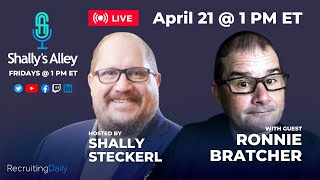
In this conversational recap of SourceCon 2023, Shally Steckerl interviews veteran sourcer Ronnie Bratcher. They discuss the conference’s overall vibe, noting that the content catered to all experience levels and highlighted a common over‑reliance on LinkedIn Recruiter despite its inflated user numbers and privacy settings that limit searchability. They review key sessions, including a round‑table on X‑ray/site commands (site:, intitle:, inurl:, filetype:), insights from speakers such as Erin Matthews, Junius, Marcel, Hunter Casperson, Trish Widarke, and Brian Fink, and the importance of data hygiene, psychological persuasion in outreach, and concise three‑word calls‑to‑action. Vendors are critiqued, with Source Whale praised and others deemed irrelevant. The duo shares practical takeaways: focus on high‑value activities, do less but smarter, personalize messages using human‑centric language, and leverage ChatGPT as a time‑saving tool for drafting, summarizing, and matching candidates. They also recount participating in the SourceCon hackathon, the value of community competitions, and the philosophy of curating one’s own “start page” of favorite tools while discarding the rest. The episode ends with advice to selectively adopt new techniques and continuously iterate on personal sourcing workflows.
Chapters
Welcome to Shally's Alley. I ask myself often why this is an alley if I'm flying in an airplane, but you know what, I'm just gonna let that one go. So today is Friday, April 21st, and we're going to do a SourceCon recap. SourceCon 2023 was just in Dallas, and, um, it was a fun time. I have with me one of my best friends in the whole wide world, Ronnie Bradger. Ronnie is a fellow sourcer and also an aficionado of the sourcing industry. He was multiple times speaking at, at SourceCons, and he was with me at this event this time. So we're gonna just kind of chit-chat a little bit about what happened. For those of you that don't know Ronnie, he is currently available for contract. He's a contract sourcer, just finished up a 3.5-year engagement, and he's Taking a bit of a couple of days break to plant some seeds and grow his garden, and then he's ready to hit the road again and start sourcing. So if you have any sourcing needs— now I gotta warn you though, Ronnie is hardcore. He sources the old way. He's not one of those just grab resumes off LinkedIn and spam volume. And, you know, he's a true, you know, one-shot sniper where he's gonna go out there and and get exactly what you need. So really hardcore sourcer, could not endorse him anymore. I think I've hired him like 27 times for different projects at least. Um, and, uh, not, not only that, but as you can see in this background there, Ronnie is also a, uh, medal-winning cyclist.
Used to be.
Well, yeah, you, you won the medals already, right? You know, they didn't take them back.
Yeah, that's true.
So there you go. All right, so SourceCon, um, yeah. What was your— and I'll tell you what mine was, but what was your biggest impression? Like in one sentence, it was like, okay, SourceCon this year was blah.
Yeah. So SourceCon this year, I felt like it tailored to the entire stream of level of experience people.
You like the whole spectrum from the whole spectrum.
Yeah. So the entire content that was delivered was very medium, uh, not overcomplicated skill level.
Yeah, yeah, medium skill level, not that medium quality, just, yeah, just overall targeting the medium level of skill.
Yeah, even if you were, you know, like us, 20-plus years veterans, we still got something out of it.
Yep, I definitely picked up a few things.
And if you're a beginner, you got something out of it. And if you're mid-career, you got something out of it. And every session that I went into, there was something like that as well. So it's cool.
Well, I'll tell you what my, my biggest takeaway was, and I think this may be your second biggest. I was surprised at how many people I had conversations with where the conversation started something like this: why do I need to do any of this stuff if I already have LinkedIn Recruiter?
Right?
Yeah. Um, And man, like, let me tell you the ways. Oh my God. You know, like, I talk about this all the time. Even though I was the first recruiter on LinkedIn, 100, I think it was 15,000 members then. And I spent many years evangelizing LinkedIn, and I still use LinkedIn a lot. It is definitely not my only source, even if I have LinkedIn Recruiter. So, it's a little kind of eye-opening for me that, that such a large population of people in our industry are essentially dependent on it, like exclusively dependent on it. And that's not good. Being dependent on any one thing as a source, no matter what it is, is really not good. But let me put it to you this way. In December of last year, the United States Labor Department released their annual you know, state of the, state of the labor workforce kind of report. And in that report, they published that there are 132 million workers, people that work basically in the United States. That's including employed and unemployed. So that's 132 million people that are able to work. Um, but here's the weird thing. LinkedIn tells you that they have 190 million members, right? So right off the bat, that, that tells me something's off, right? Yeah. Now if you drill down, what you'll notice is there's a good overlap of people that have duplicate accounts because they forgot their login, and, you know, so you got a double, double account, triple account. You've got people who are no longer in the workforce that still have accounts. You've got people that are deceased, people that have passed on, who have— and so this 190 million is not the active population. It's actually, um, also fake accounts, spam accounts, spoof accounts, all kinds of stuff. The reality is that about 40% of the population of people on LinkedIn, sometimes in different industries is higher and sometimes lower— Ronnie, you can verify this from the healthcare side— uh, about 40% of them do not allow LinkedIn to publish their profiles. So they go into their privacy and they check a box that says, I don't want to be found in search results. If you're a user of LinkedIn and you told LinkedIn you do not want to be found in search results, recruiters can't find you even if they're paying because they can't pay to violate your privacy. So there's a large portion— first of all, people that are not on LinkedIn, okay? And I've done this test multiple times where I've gone to Indeed and I found people that are on Indeed that I can't even find on LinkedIn even by typing in their name. But then there's also people that are not responding on LinkedIn and so on. So bottom line is I'm not trying to knock LinkedIn here. You know, if there's a tool out there that works, use it. But that was to me, the biggest wake-up call was like, wow, so many people are just exclusively using LinkedIn.
Yeah.
What do you think?
Uh, I totally agree with that as well. And I'm going to correct you. I think I was before you on LinkedIn. That was a trivia question.
What number was, uh, was yours?
I forget, I forget the number, but we had a trivia question on that a long time ago.
Oh yeah, so funny story that you— now that you bring that up, I don't know what your number is, but I don't— I, I was number, uh, I was number 50,000 and they started at 1,000. So when I first got my first account at 50,000, um, that was my first number. But, um, I, uh, I Deleted my account. This was really early on. I deleted my account and then I logged back in again. And when I logged back in, it was 150,000 or 155,000 or something like that. And that time I stayed. But what I was gonna tell you is that at the time there was 100 and— sorry, at the time that there was 50,000 people, I uploaded 60,000 contacts.
Yeah.
Yeah.
I remember that. Yeah.
You remember that? That's partly why I deleted my account, but let's just talk about something else now. Yeah. Yeah.
So go back to LinkedIn. LinkedIn as well. So, um, so I, I got the opportunity to, uh, operate a— or run a roundtable for 2 days, uh, which is an honor to do those things. Uh, and my actual table was on what they call X-Ray, which is the site: command on Google and Bing, which means that we're just kind of backdooring websites to find content and stuff like that. So that was my table. So like you said, I was really, really surprised at some of the questions I got. At the table. Like one question, one young lady said, why would I do site commands if I have LinkedIn Recruiter? So yeah, that just opened up a can of worms, right? So, you know, for instance, you know, I'll give a perfect example. My last contract, you know, we took away everybody's LinkedIn Recruiter license. So what do they do? How do they source now? So we had to teach them how to do this, these kind of things to get, you know, to source on LinkedIn and other, other areas. Expertise.
The site command, just as a sidebar, works on any website that has public content. So it works— site:linkedin, it works on Facebook, it works on Twitter, it works on conferences, it works on— you know, it's basically just a way to tell Google to search this site only.
Yeah, exactly. Yeah, I, I was actually testing Tinder yesterday. Yep, just trying to cross-reference some people out of there, so just testing some stuff. So yeah, so it was really cool. And, and, you know, the, the The people ask really good questions, uh, it was really engaging and things like that. So, um, but yeah, I want to— can we talk about maybe you point out a few of the, you know, the content and point out a few of our friends and what they spoke about and, you know, kind of give the reviews of that?
Yeah, so you said you, you had a roundtable that where the topic was site colon, um, and, and a lot of folks just didn't really know about it, didn't know how to use it. That's interesting. It's kind of a basic thing. So there's, there's four major— I don't know what to call them. I call them global, but there's 4 major commands that work across Google, Bing, all search engines. And site is one of them, site colon, intitle, and inurl also. And then there's filetype. So those are the kind of like, I would say, the 4 basics of field search syntax or commands on search engines that I think everybody should know. Um, I don't know if you, if you feel the same way, but Yeah, let's talk about the sessions. What sessions did you attend? I, I also want to talk about the vendors too and the kind of overall ambiance. But yeah, what, what sessions were you able to catch? I know you can't catch everything.
Yeah, I couldn't catch everything, but I did catch, um, uh, Erin Matthew, our friend Erin Matthew. She actually talked about her journey, uh, you know, starting in sourcing and how she got there and how she's where she's at today. Um, her content was really good. I think it's, uh, it was, you know, it was for somebody that's been in the industry for a while, it's very motivating to see the younger generation coming up, a lot of smart people, and she's one of them, obviously. And, you know, what she spoke about was just, you know, where— what you can be as a sourcer. If you just want to talk about sourcing, you know, I mean, like career path, career paths. Yes, exactly. So like, you know, for instance, my, my career path, you know, started as a staffing recruiter and then move into, you know, a contractor and eventually move to a true sourcing-only role. So, um, you know, I've always— everybody's probably tired of me saying this, but I, I think you should be a full lifecycle recruiter before you do just a sourcing job, you know, by itself, you know, because we support those roles. So, but that's one of mine. What was one of yours?
But so I agree, sourcing is definitely a, um, a specialty, you know. It's so you, you— it's recruiting is the, is the whole job and sourcing is a part of it, you know. Um, totally agree with that. So I— let's see, Um, there were— there was Trish, there was Junius, Marcel, Hunter, Brian Fink. Um, Junius was— I, you know, I love Junius. He's just got so much charm and, and just presence and everything. But I, I know you, you saw his session as well, so I'll let you talk about that one. Um, I, you know, Hunter, Hunter Casperson, I met him— I've met him a couple times now, and I think the last time was in Seattle.
Seattle.
Yeah. And, um, he's, uh, you know, he got started— I hope— no, I hope he doesn't mind me sharing this— he got started in sourcing when he was 19.
Yes.
So, uh, he's a, he's a young— he's not 19 now, by the way. So he presented at SourceCon, um, and he's been doing this for, I don't know, 6, 7, 8 years or something like that. I don't know exactly how old he is now, but the point is he's no longer a junior, right? Like, I think once you pass 5 years, like the 5-year mark, in, in any profession, you get to say you're senior now. Like, you know, if you've been doing the same thing for 5 years or more, you're, you're a senior. I think that's just my, my take. So, you know, he's a senior sourcer and he presented on some pretty cool stuff. Also, side note, this was really fun, he is a third place winner in the world beatboxing competition, which is pretty awesome. So very creative guy. He brought, I think, uh, a different perspective to SourceCon that's a little bit— I needed to hear it. And it's a kind of a different, more— I want to say youthful energy. Gosh, that makes me feel like I'm old. Not that I'm old, but he has the perspective of this other generation and thinks the way that this generation thinks. So yeah, you felt the same way?
Yeah, totally. It's totally good. I mean, we needed that generation to speak up and talk, you know. Um, we don't get it. We have a lot of veterans and we speak a lot and train a lot, and we need to hear from the younger people because they have creative ideas as well. Um, you know, the past 12 years I've seen so many people just grow their careers and they're still smart, and, and I still love learning from them and sharing content with them, things like that, and talk about war stories so that hopefully I'll hear their war stories when I'm on my rocker 80 old. So, uh, yeah, but yeah, Hunter was cool. I really enjoyed talking with him and meeting him as well.
What was your takeaway from, uh, from Junius?
I didn't go to Junius, by the way.
Oh, you didn't? Oh, okay. I was, I was gonna hold back on that one. Uh, so, you know, Junius works with a lot of— he's done a lot of work with, um, government, um, recruiting. So recruiting for people that have clearances of different levels. And that's a very challenging field. I've done that myself, and I know a few others that have done it as well that I've, that I've, you know, worked closely with. It's, it's difficult because it teaches you another way of thinking about things. Often as a sourcer, you want to find what's on the page. So you, you want to match the profile to what the hiring manager wants, even if it's not necessarily the same keywords that are in the job description. And that's part of what a sourcer does is kind of expand the options, right? But in Junice's world and in that world of, you know, top secret, many times what we want to find is not supposed to be on the page. It can't be on the page. So it forces you to think about finding things because of the absence of information. So what isn't there? And it's almost like a reverse mindset. So his perspective is very different from that angle that, you know, obviously, if you find the obvious, then it's a clear match. But sometimes you have to make inferences, and inferences can be just as valuable. So I think that's the biggest takeaway. Who else did you see?
I saw Trish Widarke. She's— I've known Trish for a long, long time, and it's finally great to see her speak. Her content was basically pretty much talking about the beginning of sourcing. So like it was really key to the 1 to 4-year kind of folks in the room. Her talk was really straightforward, wasn't overcomplicated, straight to the point. She actually showed really good examples of the outcomes of if you do this, this is what you're going to get. And, you know, she talked a lot about values of her database, of where she works and how she cleans and uses it, which a lot of people don't go to their database.
Oh, she's big on data hygiene, and that's important. Absolutely.
Yeah. So I thought, you know, I thought Tricia's session was really good overall, and I really enjoyed seeing her talk and catching up with her as well. So it was cool.
Yeah. So she kind of— it's a different world than most corporate sourcers. She's working on multiple different clients. And so she supports a variety of recruiters and has to almost be— I don't want to say the enforcer. She probably wouldn't say that. But she has to be the encourager of keeping good data because otherwise you have contact collision. That's when two recruiters talk to the same candidate. Or you have— oh my God, my hands look so big. Or you have like, um, out-of-date information. Multiple examples come to mind. You're reaching out to somebody and they're like, uh, yeah, you, you already placed me. I'm working at this company. Why are you trying to recruit me? Like, you know, stuff like that. So data hygiene is absolutely super important. Um, so another one that, um, that I, I think we both saw was Marcel. From—
yes. Oh yes, from Amsterdam. Yeah, yeah, yeah. Marcel, I met him, you know, I actually met Marcel first time in Hungary, uh, when I was at SourceCon Budapest, um, and then I saw him again in Ceylin and then I saw him again last year in Amsterdam. So it was really cool to see Marcel in the United States. So, but, uh, yeah, I'll just continue and I'll tell you my, my perspective of him as well.
Well, I'll give you one quick takeaway from me. So Marcel is a very, very imposing, large imposing man, you know, tall, what you would think when you think Viking, right? Like he's— but he is such a sweetheart and he's so nice to talk to and just a very generous person, shares a lot of information. He was, you know, he did the kind of self-deprecating humor about his challenges in speaking in it. Yeah, exactly. Yeah, speaking in English. But, you know, he's a polyglot. He speaks a bunch a bunch of different languages. So yeah, he did fine with that. I think he beat himself up too much over that. Yeah, um, his content was— there was a significant component of something that I like a lot, which is psychology. There's a lot of psychology in sourcing that we probably don't talk too much about. For example, the psychology of persuasion, the psychology of the conversation that you have with candidates digitally and over the phone when you're phone screening and all that. What he brought on was a psychology of persuasion, but not the dirty persuasion like you go to a car lot and a used car salesman's like, you know, forcing this car on you. Not that, but more talking about when you send emails and when you do social media messaging, he used examples of a different type of personalization. I do see lots of people talking about the value or explaining the value of personalizing messages. Sometimes though, it's a little over the top where it would work for very special specialized sourcing where you're only gonna be contacting a handful of people, but that level of specialization where you're, for example, matching someone's LinkedIn profile and saying, "Oh yeah, I'm also a fan of science fiction and I went to that conference." That's super personalized, takes too long. Marcel's perspective was personalization from a human level, more about like being yourself and using more organic language that's easier to absorb, Words to use. For example, you know, you and I do this a lot. He said, use the word "you" and don't use the word "I." It was funny. I was actually laughing out loud. He showed a slide where he broke down an email from a recruiter to a candidate. This candidate is a friend of his. So he gets examples from the candidate in that perspective. And literally on the screen, it was like, "I blah blah blah, I blah blah blah, I, I, I." It was like 7 "I"s. This is one email and it had 7 "I"s. Remember that?
Yep.
And then, and then of course he gives you the solution, which is like, you can take all of these I's and turn it into we's or you's. And it, and it's so, even just that alone softens the message. So there's some tricks that he showed that way, replacing the I with, with, you know, we. But the other one that he talked about was to use quotes, as in, um, I don't know if I'm saying this, maybe you can help me out here.
Yeah.
Quoting an employee. So he's, he used a quote from a person who works at the company as to why he likes working at the company or why he came to work for the company when he's contacting other people. I don't remember if this was the first message or part of a sequence. Do you know more about this? I can't remember.
I think it was like at the beginning. And then I think the other thing that at the beginning of the sequences. Yeah. And the other thing he talked about was the The three words, you know, three— he emphasized the three, the three-word sentence or something like that. I can't remember all the things, but he had a lot of branding.
Uh, oh, the three words when, when you're looking at a call to action. That's right, the call to action. He said that the call to action should have three-word sentences, and he gave tons of examples of, um, you know, Netflix and other places where they convert a lot of You know, call to action is really effective and it's very brief and very to the point and removes skepticism. So he definitely, yeah, that's also part of psychology. By the way, you don't have to have a button on Netflix to be a call to action. You can have a call to action in an email. What would be an example of a call to action in an email?
Exactly.
What would you use?
Call to action?
Yeah, in an email.
Please click below, you know, or something like that.
Uh, yeah, it could be, it could be check the— check out this job, or, you know, apply here. Or it could be, I like simply just respond back and say yes or no. Exactly. Just, hey, let me know, let me know what you think. And then I respond, right? And then when they reply, then I can send them the additional information. But yeah, call to action is basically asking them to do something, because if you don't ask them to do something, that's exactly what they'll do.
Exactly. Yeah. And also, like, you know, Marcel being the only foreign speaker, is that the content was actually delivered US-based content. So yeah, everything was applicable here in the United States.
We didn't just show European examples.
And if anybody's in the audience and you're a speaker or trainer, you know, if you go to another country, content should be, you know, all directed towards that community. Not what we do here in the United States.
Yeah, two examples that are relevant for them. He did show one in Greek, but it was part of a kind of a little bit of a joke. It was the whole message was in Greek and I was like, what is that?
Yeah, yeah.
So did you say Erin? You saw Erin's, Erin Matthews?
Yeah, yeah, yeah. And her content was great too. It was just straightforward. Yeah. So we talked a little bit about that.
Sorry.
Yeah.
Junia's, Erin. Oh, Fink, Brian Fink. Yeah, he kind of closed out. He was like the, I don't know, closing keynote.
Yeah, Brian, you know, Brian's got the great personality, you know, bubbly and just a super great guy. I've known him for 13 years now, I think. So yeah, he closed off the session and I really thought he delivered very well. He's— what we, you know, what do we crave as sourcers? We want things that we can take home and try.
Yeah, actionable information.
He had so much of that, which, you know, was great. And then he did And, you know, as always, I learned something new from that young man. And he had a couple of things at the end. I don't have them written down right now, but there's a couple of things I want to try. I thought they were pretty cool. And Brian's really very masterful of taking ideas that we wouldn't even think about, you know.
Yeah, yeah, he jumps, uh, like I learned, um, I learned the Airbnb hack from him.
Yeah.
Um, and he, he resp— so he learned the Amazon hack from me, finding people based on the books that they read. And then he took that to Airbnb and, you know, like kind of one-upped— not one-upped me, he, he like evolved it and made it something. So I love that kind of exchange in, in SourceCon. And it doesn't even matter if it's just in general, the sourcing community, you see a lot of that. Oh, interesting, like Garrick is here, he's done several evolutions of an idea and, you know, fed it back to the community in the— on— in our Facebook group and things like that. Um, well, let's talk about the vendors. So this was, this was really interesting, and I, I want to say— I'm not trying to be mean, but I want to say disappointing.
Um, yeah, it's only like 5, right?
Yeah, there was only 5. Uh, actually, no, is it more than 5?
There might be more, right?
Yeah, 1, 2, 3, 4, 5, 6. Sorry, there was 6 vendors, but it was a complete miss. There was one vendor, Source Whale, and my wife, she's a sourcer and she uses Source Whale. She's very, very happy with it. He was like using it all the time. So that was like totally on point and appropriate. But then there were a couple of other vendors there that I think just kind of missed the mark as far as what they, like the audience, like I don't think that they were gonna walk away with any connections to potential customers or even influence that way. So it was kind of a little, I was taken aback by, how off some of the vendors were. I usually go to these events and learn about the new technology that's out there by looking at the booths and, you know, and I listen to what they're saying and everything. That's how I learned about, um, Gem. I mean, I knew about Gem before, but I was at that— I was at, uh, Seattle SourceCon, and I, I'm very friendly with, with the Gem folks even though I haven't ever until recently purchased their software. And I just was up, you know, went up to them like, hey guys, how's it going? Anything new? And they're like, well, uh, yeah, there's a few new things here, let me show you. And it actually, like, it happened at that event that I saw two new developments in the GEM software that were basically the two reasons, uh, the two out of three reasons that I had passed on them before, right? So I had evaluated Vendor multiple times for, you know, as you know, I'm a consultant in my previous life, if you will. And I evaluated them for clients several times. And the 3 things kept coming up. I'm like, "Yeah, it's still not there." They had addressed 2 of them. And the 3rd one just wasn't as much of a— it was like the number 1 and number 2 reason. And the 3rd one was my 3rd stopping point, but it wasn't a hard stop. It was like, "Well, you don't have these other 2 things." but they solved it. And at that conference, that's when I figured I need to take this and, you know, take another look. And I did and did a demo and everything. I was really impressed. So I like to go to these conferences to see what's happening with the industry, um, you know, catch up on, on, uh, vendors and technology there. You never know, there's new technology out there that's going to help you do your job a lot easier. But when I was at SourceCon, I already know about Sourcewell. Had I not known about Sourcewell, I would have learned about them. But the other 5 vendors, I didn't learn anything that's relevant to what I do.
Yeah, I didn't really get too engaged with the vendors, unfortunately.
Is that something you normally do at these events? Like, you know, so yeah, normally I do.
I normally do. Um, I try to target stuff that, you know, that I can possibly—
yeah, you buy your own tools, right? Like, you, you're, you know, like a craftsman, like a handyman. You know, you have your own tool. So you look at these vendors as, am I going to buy this tool?
Right, exactly. And if it's cost-worthy and/or if I, you know, get on a project I can recommend, and, you know, obviously knowing the people that I meet at the conference that, you know, it's like family and friends, you know, if we can make this a little bit better on pricing and things like that.
So yeah, yeah. So it was a kind of a— I don't know what happened there. It was a bit of a mess. But anyway, they'll work on it. Yeah, so it's a question from a— oh, go ahead.
Yeah, this is the OSINT question. Yeah, yeah, OSINT was only really talked much about during Dean DaCosta's session.
Um, Junius did talk a little bit about it. He didn't call it OSINT.
Yeah, I, I talk about it a lot. I don't call it— I feel like we've been doing OSINT before OSINT was OSINT, right?
Yeah, we have been. Yeah, in fact, if you want to know, um, you want to know all about OSINT check out the— oh, actually, wait a minute, there's a— let me edit that. It's the Start Me, um, Start Me. There we go. Let me edit that. There you go. That's it here. So go to that page there, and, um, there's, you know, a lot of stuff in there, but it definitely was covered. And the, the other answer to that is no, actually, there was not a lot of classes on how to use LinkedIn Recruiter. No, that it was just a lot of people asking, why do I need all this other stuff when I have LinkedIn Recruiter, which is— I'm glad that they were at the conference because they found out all the different reasons that they need to use it. So most of the classes were not about LinkedIn Recruiter. The OSINT stuff was just not really addressed specifically as OSINT, except for, like you said, Dean's, uh, page, who's also got a lot of start pages there.
Yeah, definitely. So, um, yeah, so I mean, like, from all the presentations that I attended and just the what I heard. I felt like the content was just definitely, you know, not— sometimes you go and you have like really, really technical stuff that you're just like, oh, can't— I can't get it. Nothing like that happened.
Just too much.
Yeah, everything was really even keel. Content was, you know, very, very well delivered and things like that.
Yeah, I know what you mean. Sometimes it's like death by PowerPoint and Yeah, 1,000 things that, you know, in fact, did you catch my session?
Oh, yes, I did.
Any takeaways from that?
I always got something to take away from you. I think it's just working smarter and not harder. I guess that's a good way to say it.
I think that was, that was the big takeaway.
Yeah, I think you're like, you're talking about like, don't go down the rabbit hole. You know, you're just saying just do what it takes to get get what you're trying to accomplish, uh, in a very quick way.
Well, the reason I, the reason I asked that was because, uh, sorry to interrupt you there, there's a point to that. So, um, I mentioned at the beginning of my presentation, I'm like, hey, I, I like to start with the beginning, uh, at the end— sorry, at the beginning. I like to start with the end. I like to start with what I'm going to be giving them at the end. And, um, at the beginning, I was basically saying I'm here to take things away from you, not give you. And my comment was, you know, there's a lot, there's a lot of great presenters, but when you come to these events and you spend 2 days learning and listening to all this, it feels like folks are just telling you all these other things that you also have to do. So by the time you're done with the conference, you have like more stuff to do. And that was my point was just take away from, from the event the things that you learned that can replace other things that you're doing that aren't as effective. So in other words, figure out what you're doing that is effective, do more of that, and figure out what you're not doing that is effective, or what you're doing that's ineffective, and then replace that with some of the things that you learned here. And then I gave some tips on how to do that and how to focus on that and where to, where to go to sort of maximize your time. But that was my biggest takeaway, was it really— it comes down to do less. Like, actually do less.
Yeah.
And I think it was a bit of a relief for the audience because sometimes I think people go to these things and there's this anxiety of, yeah, oh my God, these people are doing all this other stuff and I'm not doing any of it. What am I, like, in the Stone Age? I need to go do all this stuff. And so then there's this feeling like I got to try everything. Yeah, it's kind of like a buffet in Vegas, man. You just can't, you know, you can't go to the buffet in Vegas and, and I mean, you can try, but you really can't taste everything. You got to pick the few things that you want to try. And, and sure, you can sample a lot, but here's the thing, sample a few things and then if you like it, then you can come back for more. So that's kind of the biggest lesson from, uh, from an event like this is sure, take down all the notes and then experiment with some of these things and see if there's a way you can fit them in to replace something that isn't working as well. And focus on the, the highest value activities.
Yep.
And do less. Just do not do less with more. I'm just saying do less, like actually do less.
Yeah, yeah. I think over the years, you know, being trained by you and several others, but, uh, you know, the biggest thing I've taken away is, you know, learn from— like, for— I'll just use you as an example, you know, things that you've taught me over years, um, you don't have to do it Shelly's way. You can do it your own way. So you take, take Shelly's concept and do it the way you want to do it and adapt it, and adapt it, and then you train it and turn it around, and you give that credit back to the person that trained you in, in, in, in the beginning. So yeah, uh, you know, pass it on, pass it on. Yeah, make sure—
change it, make it yours, and then pass it on.
That's right. Yeah, and give credit to the original source. So, um, and I've done lots of that through my career as well. So especially, you know, known for the search engines. So, you know, this has been my study for the past 13 or 14 years. So, you know, something I enjoy kind of researching and looking at and see it evolve. So, but now I got to get into the ChatGPT. That was the other thing I was gonna talk about, you know, well, at this conference, I was prepared mentally to just be overwhelmed by ChatGPT. ChatGPT. I thought everybody is going to be talking about it over, even in just normal conversations.
And why did you think that?
Uh, because I think the last couple of conferences that I attended, um, online were just overwhelming with ChatGPT. And, and just, I'm not saying in a negative way, um, but I, I just felt like there was just enough people talking about it in a small portion of their presentation but didn't just say, oh my God, it's the best thing since white bread. I was glad because I was prepared to be overwhelmed and just be over-influenced by the new tool. I'm glad that happened, by the way. It was talked about, but it wasn't overly talked about. I don't know what's your opinion. You're an expert user. Already about it.
So, um, but yeah, uh, my take on it is, is very different. I'm actually going to be teaching a master class next week. Uh, Brooke, I don't know if you're listening, you can put the link up for the master class on, um, on ChatGPT. But my take on ChatGPT is very different than I think most people's. I, I take it, I look at it from the perspective of sourcing. Because that's what I do. And for me, even though my job now involves, as a consultant, a great deal of strategy, it's also a little bit about the, you know, working smart, right? So for me, ChatGPT is more about finding things that are finding people or doing things the way that you really wouldn't be able to do before. It's essentially, you know what, the easiest way to describe it, it's time-saving tool. Yeah, that's really what it is. It's a way to save time.
Yeah, the way I'm looking at it as well is— I think maybe you mentioned it, or I already thought about it— was like, remember when Google came out, right? You know, everybody's like, oh my God, Google! And that's— and it's changed our lives basically, in my opinion. Uh, but now ChatGPT, uh, is taken away— it's taken information even faster. Um, so we don't do as much research, if that makes sense.
Yep.
So I'm saying, so like, you know, that's right, previously we would search for the best speaker, uh, for your house, you know, and it would give you, you know, Google would give you a gazillion things. ChatGPT will probably go directly to the source and give you what the best speaker that you should be using in your house.
Yeah, it depends. There's a— they're going to try and update the information Yeah, because it is a little bit dated. And so that, that kind of datedness of it is, um, people are asking questions that are related to information now, and that doesn't really quite work because it doesn't, uh, have information related to, to now, right? So for me, it's more about like, um, well, I mean, probably easiest way to do it, to do it, is to give you some examples. Scraping websites. Yeah, so there's, you know, there's ways that you can use this to scrape a website. It has to be a website that was around back then, so 2 years ago. But still, there are plenty of websites from 2 years ago that are useful to us. It helps me when I'm writing a pitch or an outreach message. I start it myself because I know what I want to say, but I tend to be— personally, this is something I've discovered about myself over the years. I tend to be more verbose than necessary. I tend to say more words or write more words than are needed. Or talk more than I should. So I use it to compress. So I write my thing and then I feed it to ChatGPT and say, shorten this or make this into 250 words or shorten this by half and make it more exciting or more fun or easier to read, those kinds of things. So that's what I do, and it helps me. So normally I would spend half an hour, an hour, sometimes even more than that refining my pitch because this is going to be a massive campaign. And what I do is when I, when I create my sequences, I don't know if you do this, but my sequences, I change the entire sequence every 3 to 6 months.
Okay.
I adapt it.
That's a good idea.
Two reasons for this, by the way. Number one, it the language that you use. If you, if you copy and paste somebody else's content or content from the internet, it's already being used, and the detectors are familiar with that language. And so you have a higher possibility of getting stuck in the spam filters. But even if it's your own original content, after you've sent out enough of these messages, it's now registered in the spam detector. So I change it because I don't want to have a pattern. I'm probably still saying the same thing, just modifying it. So that's another way that I do it. I also use ChatGPT to extract search phrases from profiles, because let's face it, it's a language modeling system.
Exactly.
Language is what it's best at. So writing, for example, summarizing, etc. But if I give it 3 resumes or a job description, it is really good at determining what the pure essence are, or the most salient points are. So you can say, summarize this into 3 bullet points or something, that kind of stuff. I also use it to match candidates. I know this is going to be kind of weird, but I literally say, compare this resume to this requisition in a side-by-side table. And it'll come back and it'll show me bullet points of Shelly's skills are blah, blah, blah, blah. Compared to the job requirements, blah, blah, blah, blah, you know, like point by point. And then it'll conclude with, you know, this is a strong match or not, whatever. I don't care much about that because I can tell from the bullet points. But it gives me a really nice way to— normally I summarize my candidates when I present them, but that does take a while. So I literally just go boop, and then it comes back with a short summary that I can use to, you know— now it's a little bit more bullet point for hiring managers that are tactical and frontline, but for executive summary, it's a couple of sentences when I'm sending somebody to like the CTO or whatever. Yeah. So, and I also automate a bunch of tedious tasks and, you know, things like that. So those are the things that I use ChatGPT for.
Yeah, that's cool. The other thing I, uh, it's not talked about much is, uh, SourceCon has, uh, they used to be after dark sessions, but we changed— they've changed that to what they call a hackathon. For the past 10 years, actually. So I normally just kind of sit in the room and just hang out and watch people do their thing. I've never really—
oh, you were— yeah, I saw you participating.
So I participated for the first time in my life, and I thought— I got through the first question pretty fast. I'm like, okay, let's go, let's do it. And my good friend Susanna Fraser helped build the questions, so I was really hoping it was going to be really tailored towards skills that we would actually use as a sorcerer. And then I felt the questions were dead on, uh, from a research side and the sourcing side. I had to use Boolean techniques, I had to use, you know, image searching, I had to use Google Maps to find things. Um, and I actually made it further than I thought I would make it. Um, and I don't do good under, like, timed pressure. So it was my first time actually doing something that in my career, which is kind of weird, but I just normally don't play games and stuff like that. But, uh, I thought it was really cool. I thought, uh, there was not much participation. Like, there was probably— I think there was more online participation from the virtual side. Okay.
Yeah, when I walked in, I saw maybe 5 or 6 tables.
Okay. Yeah, 20 people or so. So, and the person that won is actually here from— lives here in Atlanta with us, named Seth. I forget his last name.
Davis.
Davis. And exceptional, exceptional young man. So hopefully we'll get to—
very new to sourcing as well. So that was interesting. Yeah.
So look forward to, you know, hopefully seeing him at a network event here or dinner or lunch or whatever, you know.
Yeah.
So it was really cool to see our hometown hero win.
That's right. That was pretty cool. Yeah, yeah, yeah. I was, you know, for those of you that might not know this, so we have, Ronnie and I have designed, and along with Glenn Guttmacher, have designed and run many of these competitions. In fact, 3 times we did the World's Greatest Sourcer, much to Ronnie's dismay because he doesn't like that title, but it's essentially a competition of finding candidates and sourcing and so on. So Ronnie has been a contributing architect to these. So it's just kind of odd for me to see him compete, um, you know, sitting on the other side of the table. And, uh, that was cool. Yeah, I didn't— I, I usually, if I'm at these, I usually kind of follow along, um, and, you know, don't try to— like, I don't want to win because I think I really need to give other people a chance. But I try to follow along to see what's going on without the— I'm not getting nervous about the time because ultimately Yeah, I'm not trying to finish, I just want to see what's happening. Yeah, um, but usually I do finish them and, you know, they can be fun. I like them more when they're very practical and there's takeaways that you actually can apply to sourcing. Exactly. And that's what I try to do when we do ours.
But yeah, yep, and yeah, like one of the questions— the question I got stumped on is I didn't, I didn't go deep enough on finding— so it was trying to find, uh, the owner of the restaurant you know, near the funeral home, or some previous—
finding the person that owned a particular restaurant.
Yeah, but I didn't ever think of clicking on the actual link to the restaurant to read the information.
So yeah, sometimes it's the— it's the little gloss over. Last time, uh, at— in, in Seattle, there was a person sitting next to me, Jackie Clayton's, uh, husband actually, who was like stuck on this one question and he was just getting so frustrated. And, uh, the answer was on the page that he was looking at, like, like literally. And he kept asking me for tips. I'm like, it's, it's, it's on this page. He's like, I've read the page, I've read the page, it's, it's on this page, I've read it 20. No, really, it's— and it wasn't even like hidden text or anything, it was on the page, you just glance over it.
Yeah, yeah, yeah, I just don't give time stuff, so it's all good. But yeah, I thoroughly enjoyed I thought that was kind of cool. And then also, I think this overall, the conference, you know, I go to these things to, to obviously find, you know, leads and work and things of that nature. But I met a lot of really new people, good new people that, you know, I didn't get to sit in their sessions, and they finally met them, you know, after, you know, in the evening when we were networking at night. I just felt like everybody was very cordial and, uh, very sharing. And, and it became closer friends with a few people, uh, that I just met in the past year or so. So it was really cool. I don't know what your thoughts were of that.
I think the, the hotel was awesome. It was the Hilton Anatole. It was a huge hotel. It was like you needed a map to get around. Yeah, multiple towers and everything. Beautiful venue. Hilton, uh, for those of you that are not familiar with the Hilton, uh, ethos or whatever, The, um, the original founder, he liked to collect art and, and cultural, um, culturally significant items. And so all Hiltons are decorated with, you know, original pieces, almost like, almost like a museum. And I'm talking about museum quality stuff. So this one was beautiful, beautifully decorated, lots of really great art. There's some sculptures and things like that. In the middle of the big hall, there was a hanging light installation that very gently moved, and it only moved with just one tiny little motor. Was pretty cool. So the ambiance was great, the food was great, the, the environment— it was just a really pleasant place to be. Only challenge, and I don't think this is a big deal, is there's not a lot within walkable distance. There's like maybe 2 or 3 places that you could go to, but the food at the hotel was good, and the 2 or 3 places out there were good, and you know, $5, uh, Uber or Lyft right away. You could go somewhere else. Like I said, it's not a big deal. It just was a little bit out there. But, uh, man, I've kept you way past the half. I always tell you I'm gonna— we're gonna do this for half an hour, and then I keep you overtime.
Hey, that's the way we work, right?
Yeah, I guess we work overtime all the time, huh?
Yeah.
So, but yeah, I appreciate you being here, man. Thanks for—
I know, thanks for inviting me in this, um, this recap for me.
I, I, you know, I always like to close with the same thing, and you probably already knew that, so you might have prepared something, but you got any words of wisdom or thoughts or questions that you want to leave the audience with to think about? Yeah, you know, parting words.
Yeah, I think, I think we said it during our talk is that, you know, don't, don't take everything and try to put it on the page and go home and try to knock it out. Um, you know, space it out. Uh, I, I'll just give you an example, like on your Start Me page, you know, I've I've scoured through that thing and I've probably eliminated like 45% of things that I would probably never need to use that you probably like to use and I don't. So yeah, you don't have to, you don't have to know everything. Find the things that work for you and use it and get good at it and then tinker with the other stuff when you have the time. That's, that's my, that's my wisdom of truth.
I like that. Believe me, I would never be offended if you took my start page and deleted half of it for your site. That really is not, you know, it— my start page, uh, you know, a little secret here. So my start page is actually my start page. Sure, like for real, like that's right. So when I'm using it all the time and when and I try something and it, and it doesn't work, or it's— I delete it. That's constantly evolving. My start page is not a collection, it's actually my— basically it's my favorites. I like it better than my favorites because I don't know about you, but the favorites, you know, on the, on the bar top, if things get lost and I find myself clicking in a folder and a subfolder and then sorting and stuff like that, it's something about the start page just kind of being all in one page that is probably an OCD nightmare. Yeah, but Um, but I know where the sections are after a while. I just kind of get used to— so that's— it's actually literally what I do every day.
Yeah, yeah. I've actually started my— I'll start my page for myself, and I, I was sad to say, but I have an Excel spreadsheet I've had since 2001 or so that I've kept, but I call it the Bradshaw brain dump, basically.
Oh wow, how much money is that worth?
I don't know, it's, it's, it's not really—
not for sale, not available.
I don't have it organized very well. Like, I just have stuff everywhere, right? But so now, so the Start Me page is actually making me get organized. So I'm moving data. It's not— well, it's not public yet. Just so I'll go public with it. But wow, I don't think there's enough information there that's worthy compared to you or Dean's.
Oh, come on, cut it out. There's more than enough. Yeah, listen, man, thanks a lot for coming. And, uh, yeah, folks, everybody, I didn't mean to jump on Ronnie's wisdom. But basically, Ronnie said, don't try to absorb it all. Find what works, delete everything else. I love it. All right, all right, take care everybody. Have a good weekend. Be kind to each other. Bye.
More from Shally



Scaling Talent at Hypergrowth: Leadership, AI, and Hiring Excellence with Cindy Nicola







