SpeakEasy HR: Real Talk with David Noe Live on Shally's Alley
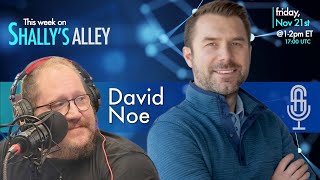
David Noe discusses his SpeakEasy HR show and how companies across healthcare, construction, and small businesses can rethink employee experience and retention. He covers mental health support through EAP tools, community-sourced hiring, and why restarting people strategy around core values and mission matters.
Chapters
Hey everybody, welcome! You are live on Shelly's Alley. Um, I wish I had one of those on-air signs like you do. Is that like a remote control, or do you have a—
uh, I gotta push the button up there, so it's, it's flashing right now. So if it's bothering you, I can hit the button.
Not at all, I love it. I, I want an on-air sign, um, because obviously we are on air and we are live. And folks, my guest today on Shelly's Alley is David Noh. He actually knows— David Noh knows about live shows. He has his own live show, Speakeasy HR. So welcome to Shelly's Alley and tell us what is Speakeasy HR?
Yeah, thanks for having me. This is really exciting and your intro is fire. I love it. So Speakeasy HR was an idea I had and it turned into a podcast. And so I do live on Mondays LinkedIn, YouTube. I do live conversations with just authentic, real people in business and HR. So a lot of, a lot of culture, a lot of different leadership development topics. So we, we range in topics. And so I've got a website, speakeasyhr.com. All the content can be out there. You can go on Spotify and all the, you know, podcast platforms, and then YouTube. As well. And then I have a blog, so a lot to offer and it's been a lot of fun.
That's great. And you've been doing that for what, a couple of years?
I started in July of '24, so I'm about a year and a half in and I have guests lined up for the next year. So I have a lot of exciting new guests coming on and I've had some really interesting guests over the last 50-something episodes. So I always learn weekly or usually do it weekly, not every Monday, but majority of Mondays. I'll post on LinkedIn when I have upcoming episodes. So my next one is after the holiday. It's December— what is that, December 8th, I believe.
So yeah, we're not doing one next week either. Yeah, Black Friday, right? But I love that you start the week and I finish the week. We should synchronize guests. They'll come to your show. On Monday and then on Friday they'll come to my show. Yeah. Like bookend the week. That's awesome.
Absolutely.
Yeah. So, well, really happy to have you. And I did have some questions that I wanted to ask you. If you haven't seen the show, which I don't blame you if you haven't, but there's a few things that, you know, I kind of prepare in advance. And of course, we're here to talk about whatever's on your mind and what's hot and what's going on with you. So happy to shape that. Conversation. But just given your, you know, your background, you've been in HR across healthcare, construction, and professional services. Where would you say was— where, or maybe how— let's start with where, and then if you want to do how— did you learn about the definition of people first? And how has that evolved?
Yeah, I think it's evolved over every job I've had. I feel like back to my first job in HR, it was the origin story. Yeah, I didn't grow up wanting to be in HR. I, like most, I fell into it, and over time I've learned how organizations treat people, how they evolve their culture, environment. And so I've really focused on Now really taking a lot of what I've learned over the last almost 20 years in HR and have really made a culture with the company I work for now at Payroll Partners. People first, people behind technology that we have, and really making a culture where we, we celebrate our employees, we treat our people the way we feel like people want to be treated, and it really pays off when you do that.
So yeah, you'll— you're— is there, is there like a a point at which you just kind of discovered that people first, or did you come into it from the beginning? Like, I guess I'm looking for the catalyst.
Yeah, I would say back when I had my role in probably healthcare, that was where I felt like people first was really a thing. You know, I, I was working for a large local healthcare organization, thousands of employees, many locations, 100+ locations. And really, it was— every office was different. Every office had a little bit of a different culture. And so we tried to really align the culture and mission and values to each location. Oh, okay. No matter where you were working, it was really about treating the people, making it a people-first organization. Taking care of our patients and taking care of the people that came into the doors every day.
And just recognizing that every, you know, team or location is going to have a different culture, different interpretation on the company culture. Yeah, that's, I think, something that we tend to forget about is how, you know, you might have a macro culture, if you will, for the organization, but then there's a subculture of your— could be your city, if you have— if you're, if you're you know, distributed company. Yeah. Or it could be just that team, sometimes even down to like even a microculture within the team that, that, you know, is a little different, a little bit different flavor than the rest of the organization. So, yeah, definitely. And I can imagine in healthcare that's quite, quite a big difference between, you know, the areas that you might be in, like children's group versus, you know, elderly versus, right, like treating different types of patients and things like that?
Oh, yeah. Yeah, it was a lot of primary care offices, urgent cares, which would be different specialty, you know, a lot of different specialists had different kinds of patients, right? So you weren't seeing the same kind of population coming into the doors and, you know, being patients of those offices. So it really varied based on what that specific office did. And so it definitely evolved from there, right? I mean, during COVID it was definitely people first. We had— I was working in a roofing company. We were slammed busy because people were home more and people saw that their roofs were having problems and their gutters. And we were acquiring a business in Kentucky. And so it was all about trying to make sure people were treated, um, well at the organization. Our customers were treated well. And at the end of the week, I always had payroll and, uh, was making sure people got paid right. You know, that's what kept people coming back.
Um, I feel like you've had some experience with, you know, small businesses, right? Yeah. And I mean, that, that's where your, your Your company's customers now are small businesses, if I'm not mistaken, right? Do you feel like, do you feel like, or maybe I'm just going to ask it straight. Do you agree with me? Because I feel like businesses that are small, that, you know, let's just, I don't know if you want to define it as 500 employees or 1,000 employees or whatever, but like, you know, below 1,000 employees, at least, if not, if not even maybe below 500 employees. That's what I mean by small businesses. They tend to kind of expose the raw underbelly of truth in what's going on in business, in the business world, way quicker, way faster than enterprises and even mid-sized companies. I feel like, and please agree or disagree, that they expose that truth faster. We get the state of what's really happening from them almost immediately. What have— and if that's the case, if you agree with that, what have you learned as yourself a small business owner like me that big companies just always get wrong about strategy? You know, once they pass that 1,000 threshold or whatever. So as a small business, what have you learned that big companies always get wrong? And do you feel like small businesses kind of get to that truth faster?
So in my experience, I have dealt with a lot of different companies and industries across different sizes, and, you know, small startups, midsize, large healthcare organizations. So looking back at some of those, you know, instances, I feel like everywhere you would have potential issues where people were trying to really create a very difficult environment to work in. During COVID you had more people working at home, not as in office, so you have less water cooler talk and ways to kill the culture. So I think it really depends on the leadership and the management of that organization, because again, when I was in a healthcare organization, there were specific offices that felt like they never got the right culture fit. So they kept losing people. They kept having complaints about the managers and complaints about the physicians. So like that really created a very hostile situation. It was really difficult to staff these kinds of offices. Now the enterprise level, and you know, I don't have tons of experience in, you know, major 10,000+ organizations. My, my focus has more been small to midsize. So same with that. I mean, if you, if you are involved in TA recruiting and, and bringing new staff members on board, you're, you're, you're trying to acclimate them into the organization. You're trying to get them familiar with the culture to, to, to really contribute to it in a positive way. Because a lot of my, my current focus is the employee experience, right? You can have two people in the same organization, in the same department, and their experience could be drastically different, right? And some of them might be like, oh, this is my favorite job I've ever had. I'm never leaving this company. Some are like, I'm ready to leave tomorrow. I am not happy. This reason, this reason, my manager doesn't trust me. They micromanage and blah, blah, blah. You know, it's just so— I've seen it in every organization. It's not like, oh, once you get to 500 employees, 1,000 employees, you know, this is really what's going to happen. I think every organization can be successful.
999 employees, ding! 1,000 employees, oh, our culture is terrible.
Uh-oh, ring the alarm, ring the alarm. Yeah, I mean, great.
So we crossed that threshold, damn it.
Yeah, it, it, so, you know, again, now you have 5 generations working together, right? That can also make a big difference because if you have a bunch of people in their first job out of school, they're young, you know, they're motivated by something completely different than people in their 40s and 50s, right? You have people working longer, you have people that have been working for 40, 50 years, and you're like, they're at a different point in their life. Like, they don't want to deal with some of the stuff that people are in their 20s really making a big deal about, right? Like, they want to come to work They want to contribute. They want to feel like they're being treated well. They're making an impact and they want to go home. Right.
And they have different motivations. That's right.
Yeah, absolutely. So it's, it's, it's really hard to pinpoint when you're at this level of a company's size organization-wise, you're going to have these problems. Obviously, if you have people working all over the world, all over the country, it's going to be difficult to really have that structure of a culture where in, in our instance where we have majority of people in one office, one location, we all see each other every day. It's a lot easier to get stuff done in my opinion. Uh, you know, so that's, that's kind of what I—
business. Yeah, but once you have— right, yeah, once you're, you know, you've got teams, it doesn't really—
you've got some, you've got some characters in your chat here.
Oh yeah, you can ignore that. That's YouTube. That happens sometimes.
That's all right.
It don't get published. Bye. Sorry about that. So, yeah, I mean, you've got, you've got a bookstore, right?
Yeah.
You've got a nonprofit. We talked about a nonprofit foundation when we met. And you also work with the chamber. Tell me a little bit about the, the bookstore and the foundation?
Yeah, so that is kind of a side passion project my wife and I have.
We both grew up in Michigan. Sorry, the book— the bookstore and the foundation, they're related?
Uh, they are related in a sense of the store that we own.
It's actually a physical bookstore, right?
It is a physical store. Yeah, been around for 40-plus years, and it's more of a faith-based model, right? So books, jewelry, all kinds of apparel, all kinds of stuff. We have an online store. We're getting store, um, we're getting sales from all over the country. We're not benefiting financially through this opportunity that we have been, uh, taking on. We created a nonprofit to help with the younger generations as they are just trying to learn and educate themselves on, on their faith, right? Like, that's our big thing, is to help mentor and provide education for, um, for individuals that we hope to benefit, uh, you know, from them going into a situation where we're impacting them. Not necessarily for us to make money off of, of us, right?
I gotcha. But so you actually— when I said you're a business, I mean you literally own like a retail location Yeah.
Yeah.
And you also, instead of that being like a revenue source for yourself personally, it's used for the foundation.
Yeah. Yeah. We have staff members working Monday through Saturday and we have a wonderful payroll company, Payroll Partners. So it's, we can pay them correctly. We can pay them on time and it works. It works.
That's awesome. Yeah. So yeah, it's kind of, I, you know, I had a nonprofit for a while. I told you that before, and it was, it was not a physical location. We didn't have it. We worked with other nonprofit entities and provided services to them to help their constituents, their community. So, you know, I guess we both have that in common as far as like we're both community builders. And now I've got, you know, my community, which has always been TA and sourcing. I've got and bringing it all together into TSI University and building a community there. So, you know, I think that that's, um, very rewarding to have a community that you're part of outside of your physical community. I mean, you've got your place, you know, your friends, your family, your local community, but I mean, it's rewarding to have like something that's professional or otherwise brings a little bit more meaning, um, and gives you more of a sense of, you know, contributing to something. So kind of going in that direction, what's one moment where you feel like community, not policy, but community solved an HR problem better than any compliance playbook would ever do?
Community helps solve an HR problem.
Yeah. So, sometime in one of your experiences where you feel like the community helped solve the problem and it would, it would not have been solved as well if it was just kind of by the book, right?
Yeah, that's a really good question. I, I, I think over time I've just built a very good network of, of individuals that I can lean to as somewhat, uh, more of a mentorship, right? And in, those instances, it's kind of like, I don't know everything about HR. I know a lot. But when you're in HR, there are situations that you sometimes get into and you really don't know how to navigate through. And it's kind of like, like, who do you lean to? Who do you, who do you reach out to? How do you find the, the opportunity to impact that situation? And do what's best for the business. I always, at the end of the day, whether it's a very difficult, uh, strategic process to make a decision and how we act on something, I'm always looking out for the business and what's best for the business. It's not easy to go into a conversation and tell someone they can no longer work for us because of X, Y, and Z, but that is a part of running a business and being in HR. You have to have difficult conversations. So I think over my career, I've had people from a community resource network aspect really help me personally figure out how to handle situations. So the next time I've had similar situations, I look back at like, okay, in this instance, you know, I handled this newer situation to me this way, because as you are in HR, it's like you want to be consistent, you want to be fair and handle situations in a way that's going to be, okay, very consistent in nature, right? Like how you handle situations, it can be black and white, but if there's some gray in there, you, you sometimes have to really dive into, okay, what's the best next step in this situation for everybody involved, right? If there's a manager, uh, several employees involved, I mean, there's just— I could write a book about the situations I've been in. And like, every time I have a new one, I'm like, wow, that's, that's a new chapter, right?
You could write another book. Yeah, a small book, but still could write another book. So can you highlight and, uh, you know, give us a bit of a kind of like, I don't know, a story or an anecdote from an experience where like the community rose up to, to solve a problem that, that would have been really challenging to do by the book, if you will. Just like a moment in time when you're like, you know, there's one time.
Yeah, I mean, I think, you know, going back to working in healthcare, We have a lot of really good community partnerships, and this organization, in two of my positions, they have programs to help people go through and become medical assistants. And they have other programs that I also have helped go into and do mock interviews, talk about career development, talk about what you can do in, in the medical field as you come out of this program. So we worked with that organization several times while I was in healthcare, and in my previous— or in my current job, we've also worked with them, right? So this organization has helped me find people of, uh, interest into what we do, and without that organization, we wouldn't have hired several amazing people out of their program, and retention was high for these individuals. The individual that I hired has recently been Employee of the Month. She's one of our best, uh, sales, uh, support reps. So I think from a community support aspect, it's been about helping find the right talent for jobs that have been open. And without that organization, we wouldn't have been able to do that.
Yeah, so help you with sourcing, quite literally.
Oh yeah.
Definitely community sourcing. There you go. There's another chapter in our book or, or is that's an entirely different book altogether for sure.
Yeah. Right.
Yeah. So, um, you're speaking of shows, your show Speakeasy HR is, uh, is also known for real talk, very similar to, you know, here where I, I, I at least try to brag about how we don't do fluff. Um, and I don't think we do very, we don't, if we do it, we don't do it very well. So Speakeasy HR is really known for, for that real talk as well. Um, from what you've learned there, or even, you know, elsewhere, give me some one uneasy truth or, um, uncomfortable reality, if you will, that you wish people would just stop dancing around. Something that we were all like, you know, touching with kid gloves or whatever. And I can, I can give you one that I think is, should be addressed. But if you don't, if you don't have one top of mind.
So yeah, I—
you do.
Yeah, I definitely do. I think there have been several individuals that have come on and have talked about really the mental health and the state of people in their job. You're not going to get 100% of everybody that you hire, I think. Right, right. I think managers that have that expectation, like, you leave your life at home, you come to work, and you work and only work, and you don't think about anything else outside of work. That just doesn't work. Like, it doesn't, it doesn't work anymore. I mean, there can be situations where people are just so distracted because of something that's impacting their life. You know, you might have a, a family member that is in the hospital battling cancer. You know, yourself, you could be going through a family situation, going through a divorce, going through something where, you know, you lost a child. Like, so just the more support that managers and organizations can provide and show empathy, right? Like, everybody goes to jobs— majority of people go to jobs to do their— they want to do a good job in their work. Um, yeah, yeah, right? I mean, so it's like, it's, it's a very difficult situation, and, and The more that we get into the, the younger generation coming into the workforce, I think it's going to continue to be even more of an impact and more of a topic of conversation. And so if businesses are not really focused on how to support their team from a mental health and mental health aspect, they're going to be struggling and losing people because of that.
So what are we pussyfooting around? What are we being careful about? Is mental health is what you're saying? Like, just—
Yeah, I think just not really addressing it and not really finding the right resources for those individuals. I mean, some companies say, oh, we offer an EAP program, but let's face it, EAP programs are very low utilization from the statistics. I think it's under 10% of EAP programs are truly utilized. So if it's a local resource, if it's a local organization, if it's an outside company that can help with those situations for you, you know, you can't solve everybody's problems. That's not what an organization is there to do for, for an individual that they hire. But if you can really show them that you deeply care about them as an individual on their team, and help them navigate through those situations and really provide the flexibility to get their job done right. You know, I've had situations where people are like, I would love to work from home, but I can't because of X, Y, Z. And would that benefit their mental health? I mean, anytime you go on the highway, you ever— do you ever commute from point A to point B and have to get on the highway? And your mood changes because of that commute?
Oh yeah, it happens. As much as I'd like to not let it, you know, and I take steps to make sure that I stay safe, especially because, you know, I think I'm at high risk because I don't commute regularly, right? Yeah. So when I get out of the house and I go to doctor's appointments or to, you know, run errands and stuff like that, and I'm in those high-traffic situations, I'm a lot less accustomed to it.
Yeah.
So I got to make sure that I'm not, you know, I just give myself extra time and everything because otherwise I'll just get somewhere. I remember going to a doctor's appointment a couple of weeks ago and I got there and my like blood pressure was through the roof. And of course, first thing they do when you go to the doctor, the first thing they do is they always do your vitals, right? And I'm like, yeah, I don't know if this is going to work that well. Um, because it's just that, you know, it was like a, it was like a bad traffic day. Um, yeah. And it really, I mean, it, she, she took my temperature, the, the technician took my, my temperature and, um, and blood pressure like 3 times cuz they kept getting like, right. These readings are like, are you okay? Do we need to put you on blood pressure medication? And I'm like, no, just get me off the road. You know, totally.
Yeah. Yeah. That's a big, that's a big one.
Interesting.
That's a big one.
So stop dancing around the issues of mental health and not everybody is going to be. Yeah. I mean, like, what would you do about this? Let me give you kind of a weird scenario that I'm sure has happened more often than I, than I care to admit. But what would you do in this situation? Right? You have somebody, you have an employee that is has had trouble with alcohol, right? They're, they're addicted to alcohol. And, um, and, you know, this is a real thing. And something happens at a work-related event where they behave in a way that's definitely, you know, not company policy, right? But they're an alcoholic, and this was a work-related event where they provided alcohol. You can argue it's their responsibility as an individual to know that they have a problem and then not accept any alcohol at this work-related event where alcohol was provided, but they did do something inappropriate, and then the next day they get fired. I know that there's some personal accountability there, but I also feel like this was not my, not my company. It's just happened in another company that I, you know, someone that I know. Um, but I also feel like, doesn't the employer have a little bit of responsibility to like I don't know, provide, like you said, some support to— I mean, could, could they just require that they go to counseling or require they go into a program or something like that rather than just say, uh, you had a drink, you misbehaved, you're fired? Like, that— this wasn't a choice the person made, you know. They, they, they are addicted. And it's— I don't know, I just feel like there's this line that we cross where we We provide alcohol and expect everybody to have a good time. Somebody doesn't, we handle the event, but then we fire the person because of that. And it feels like it's just a little too much. I don't know.
Yeah, there's, there's a lot of questions I would have for that organization. And it would be hard to probably go through all those questions.
I know, right? It's right. This is a one and it's not a repeat behavior.
Yeah.
You're on your third warning. This was a one and done.
Yeah. Yeah.
It's, it's an interesting question because, you know, Mental illness, but I mean, right, maybe— I don't know if it even— well, it is a—
yeah, I mean, it— so if that happened on a Friday night, today's Friday, if it happened tonight, right, and next Monday people go to work and they find out that Joe Smith is no longer with the company, they're gonna all be wondering like, what happened?
That's what happened.
Fired because of how he acted. And so it's kind of like, okay, you're setting that precedent.
It was a work-related function after hours, after work, not at work, not at the workplace.
Yeah, let's say it was a holiday party, right?
Right.
We're getting ready to go through the holidays, and it wasn't, you know, a paid work function. You weren't paying employees to come. It wasn't required. It was more voluntary. Um, you know, it's just like somebody going out on their personal weekend.
It was required, actually. It was a— it was an event that they were sent to.
So if it was an event that they were sent to that was work-related, I think it's setting that precedent beforehand, like, hey, you are representing the company. I go out and I have Payroll Partners on my shirt majority of the week. It's how do you want you— how do you want your team to be representing your organization? You know, I, I think it's all just— it's similar to how people act on social media, right? You know, if, if somebody has a very strong stance on a, on a situation, whether they feel like they're right or, or someone's wrong or whatever, you know, people lose jobs because of what they're saying sometimes. And it's because of the fact that they're representing the company in a, in, in a negative situation that's going to financially negatively impact that organization.
Yeah, that's different. That's different.
People are quick to— people are quick to fire people because of that. So, you know, if you have a— if you have a staff that is potentially recovering alcoholics, I would probably, you know, just reevaluate, represent.
Yeah, yeah, there's a lot of misdecisions in a situation like that, and without knowing all the facts. But I just feel like, you know, wouldn't it be the employer's responsibility to at least offer like an alternative rather than just immediate termination? I don't know. There should be a— there should be a, I don't know, second chance or something. There's no criminal activity.
So yeah, yeah, no, I mean, there's a lot of—
piggybacking on your mental health thing, like we just seem to like expect everybody to be on their best behavior, expect everybody's mental health to be great. Expect everybody to show up to work in a good mood despite the reality of the world being, you know, you might have a really bad commute and got put in. I mean, there's just things that happen, right? And I think there's— we're not addressing that.
Yeah. Yeah. I mean, what I think is going to happen and, you know, don't hold me to this, but, you know, people that have mental conditions that impact their physical ability to do their job and they go and seek treatment, that's more of a medical leave. They might have to take off, and it might be because of drug addiction, it might be because of alcoholism, it might be because of something that has gotten them into the point of where they need full treatment. It might be, it might be an outpatient facility. They've got to go somewhere for 4 weeks, right? So then it's, then it's about what, what does that organization have from short-term disability coverage, you know, offering somebody a benefit to take the right appropriate time off work to get better, right, to get better, right. And so whether you're a small business or large business with thousands of employees, that's that's going to continue to be, uh, a situation whether you want to deal with that or not. And that's where HR and people— not technology, because AI is not going to be able to offer that empathetic, you know, human connection, right? Um, unfortunately, yeah, you're still going to need somebody like in an HR role to navigate through the complexities of those situations. So for, for those listening in HR roles, you are still going to be important to an organization as we progress into this new state of technology and AI and things that are going to potentially eliminate jobs.
Yeah, yeah. Not, not to like jump on the AI bandwagon, but I was reading about AI tools that are actually making some progress towards understanding some of these mental health issues that might actually provide some tools. In other words, like, like an AI, I was, I was reading about an AI that was working with successfully a pilot program working with people that had dementia or some, you know, variations of like Alzheimer's and those kinds of things. And the, and the AI is like understanding the somehow understanding how to communicate with them in a way that was not, you know, originally devised. So there's some hope that we might have AI tools. The other day I was actually talking to my, my, interestingly enough, my, my health benefits pharmacy section or whatever, the pharmacy benefits or whatever. They called me because I had a change in a prescription. and it was— I, I got a prescription that was— that treats or has the same treatment as another prescription that I'm already on. So the pharmacy called me up and they're like, hey, are you aware that these two things are, you know, are you taking the same? I'm like, no, no, no, my doctor's switching me from this to that. And they're like, oh, okay. And then they're like, well, did you know that we have this app? And I'm like, no, I did not know that we have this app. So they have an app that you can use. You're talking about, uh, what was it, employee, uh, the EAPs? Yeah. Oh my gosh, it slipped my mind. Um, the— what's that called? The Employee Assistance Program?
Yeah, yeah.
And, and, and so there's like a whole website, but you have to go and look it all up. So they have an app that's an employee assistant AI, I guess. I don't know what else to call it. That will actually get the answers for you instead of you having to go and dig around through all these. Here's 2,700 links that we've prepared for you on, you know, how to find elder care, how to get legal assistance, all these things that you normally would need in order to, you know, help alleviate some of the stress in life that you— so you don't bring them into work. And so there's an AI chatbot that like navigates that for you, and you can ask it a question like, What if I, you know, and I'm like, wow, that's kind of cool. I had no idea that existed. I wonder why we don't, you know, talk about that. Yeah. I mean, and this is not, you know, like I just started. I mean, this has been there for a while. So we are, yeah, I think we should do a better job of like extending that benefit out, especially since it's, I don't know about free, but it's included in our package and I'm sure it's not very expensive to run an AI for for that purpose, you know?
Probably not. Yeah.
Well, let me ask you this in kind of our wrap-up stretch here. If every HR leader, in your opinion, if every HR leader had to like start over with their people strategy from scratch, like Monday morning and they're like, all right, we're going to rip this page out, crumple it up, throw it in the bin and blank sheet of paper. We're starting over with our people strategy. What should be like number one item on that list to bring what we're talking about, humanity, I guess, right?
Yep.
Back into the business. What's that number one thing?
Focus on core values. Focus on what your mission of an organization truly is and making sure people in the organization understand what that is. So having the right core values, if you haven't reviewed your core values lately, or if you don't have any core values, you might wanna evaluate that a little bit more and really align it with what you feel like your culture is going to be in the future. So it would all revolve around that, and then you would figure out a way to instill a culture around the core values, have the right people in leadership. Leadership, middle management, um, how to progress individuals in their career. Everybody wants growth. Everybody I talk to in interviews, why are you looking for a job? Well, I didn't have a lot of growth opportunities.
Growth or opportunities, right?
I didn't get support. Yep. I wanted to get certified. I wanted to get my SHRM certification, but I didn't have a company that supported it, right? So like, you really If you value that and your company values that, or a, you know, company of interest that you want to go work for, it's going to, it's going to not only help your current situation if you just start from scratch, it's going to help individuals as they look for new jobs to work at your organization. And really, at the end of the day, it's going to help with retention. It's going to help with growth. Company success way beyond what you feel like, um, is happening right now, if you really feel like all that is not in alignment.
So let me take that back and like, just because I, yeah, I'd love to like just simmer things down into like practical, I don't know, uh, soundbites, bullet points. So like literally starting over a blank sheet of paper, you're saying right at the very top of the list of, or at the very top of the page, just pinpoint the core values and then build from there.
Yep.
Mission instead of mission and— yeah, go ahead. Mission and—
yep, absolutely. Mission, mission statement, the true vision of the organization, and how you're going to explain that as a company to the public.
And then everything else branches off of that. Yep. Rather than like start with like policies or whatever, because I think we end up getting lost sometimes in policies and procedures, especially as we're a bigger organization, because they're necessary to maintain structure, but then it's taking us further away. Like sometimes policies and procedures could be countercultural, you know, and not in a good way, right? Like running against the vein, if you will. We just let it get derailed.
So, yeah, I mean, it's important to have policies. You don't, you don't need a 150-page handbook, but you do those after.
Yeah, right.
Do them after.
I got that. Yeah. So that's the first— that's your— that's my question is what was the first line? So that's the first line. Cool, cool, cool. Well, two things that I always do to end the show. The first of those is to ask a question that a lot of folks are surprised by. And that is, who should be our next guest?
Who should be your next guest? Oh my gosh, I think it depends on the topic.
Hey, who would you want to see in the hot seat? And by the way, you have the advantage of having interviewed a bunch of people on your show. So maybe like, who from your show you think should come over here?
Well, episode 50 was Pete Schramm, and he's wrote a book called Pathfinders. Amazing guest. He's got his own podcast on you know, major platforms. So Pete Shram would definitely suggest him. There's so many people, uh, people in the disrupt HR world, uh, Jeff Taylor at boomband.com. He's, he's a fascinating conversation. I had him on. And so I think it just depends on what kind of topic you want to talk about.
You got— you gave me two already, uh, so that's, you know, Believe it or not, twice as much as I usually get. Folks sometimes are like, well, I'm not really sure. I just think, who would you want to see if you were listening to this show and watching the show?
Yeah. Yeah.
Great. And then the other question is, you know, a lot of folks, we talked about this pre-show, a lot of folks really tune in or watch or listen or whatever afterward. And so I want to give them something that they can chew on, if you will. So Give us a question for us to ask ourselves to answer. So something that we should ask ourselves over the weekend or whatever.
Well, going back to what I do in my day job with Payroll Partners, I think if you are in a situation where you make decisions on the technology your business uses, I would say if you are using a payroll vendor service provider, what's keeping you with them and what's your hesitation to explore other opportunities? Because I came to Payroll Partners as a prospect looking for better software, looking for service. I've been there 3 and a half years and I've absolutely loved the transition to them. I wasn't looking for a job in a payroll vendor. And so it just kind of fell into my lap as an opportunity. So people in those, in those roles, I would say, what's causing you really to, to not, to, to not explore other opportunities? And if your pain points really are service customization, you know, tax issues, not accurate, payroll is black and white. You either get it right or you get it wrong. So that's what I would have people think about.
Okay. All right.
And if they're looking, look me up on LinkedIn. I'd be happy to connect.
Sure. Yeah, we put your, we put your bio up there. Yeah, a couple of times. So cool. That's awesome. Thank you for providing that. Yeah. Information. So, all right, folks, we are not going to have an episode live next week because it's Black Friday. So I think it just would be a really bad idea. So we're going to skip one, but then we'll be back after that. And our guest, should you choose to return, is actually Martin Burns. A lot of folks might recognize that. So really, well, looking forward to that episode. And also, if you want to see the show extras, Check out tsiuniversity.com. Members of TSI University get extras from today's show and handouts and transcripts and things like that that we provide, um, as an addition. So hopefully we'll see you there. If not, then we will see you back here in 2 weeks. Until then, be kind to yourselves. Bye everybody. Thanks, David.
Thanks a lot. Take care, everybody.
Bye-bye.
More from Shally



Scaling Talent at Hypergrowth: Leadership, AI, and Hiring Excellence with Cindy Nicola







