Steven Rothberg Live on Shally's Alley
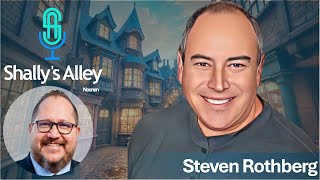
In this live interview, Shally Steckerl talks with early‑career recruiting veteran Steven Rothberg about the sweeping effects of recent federal actions—most notably the "DogE" initiative that is terminating probationary employees and canceling federal internship programs—on the pipeline of new talent. They critique the entrenched incentives of corporate university recruiting, which reward travel and junkets rather than hiring outcomes, and share data showing that graduates from non‑elite schools or online sources can be as productive, if not more so, than those from top‑tier institutions. Rothberg and Steckerl discuss cost‑effective pathways such as community college transfers, gap years, trade schools, and apprenticeships, and warn that declining enrollment and reduced federal funding risk creating a caste‑like system that limits social mobility. The conversation also touches on the broader impact of these trends on private‑sector hiring, the role of banks and government in sustaining the higher‑education loan ecosystem, and future guest suggestions. The tone is informal, advisory, and at times blunt, with a mix of critical and hopeful sentiments toward reforming early‑career hiring practices.
Chapters
You are live on Shally's Alley. It is the last Shally's Alley of February, Friday, February 28th. And, uh, wait, is this one of those leap months or leap year things? No, it's not, right?
It's—
today is the last day of February.
I, I think, I think there have been more than enough days in February already.
Yeah, no kidding. Let's just end this thing. Oh man, so everybody, uh, you know, the man that needs no introduction, my friend Stefan. Oh, Stefan, uh, what was that? I'm just gonna bite the bullet and, and admit to my mistake. I, I have known Mr. Rothberg for many, many, many years, since back when we both were handsome, and, um And for some reason, when I created the description for this episode, I just let autocorrect take over and correctly spell his name with a PH. And of course, I have caught more grief for that than I— than I've got for any other mistake that I've ever made in my life. So I'm so, so, so sorry about that.
No, no worries at all, Siobhan. No worries.
Coming from Shelley or Shalindra Shacklesmickle Um, you know, I just— the irony of it.
Sure, surely you must be joking.
Surely I am joking. That's right. But here we have it. Uh, we are back, and man, it's been— I, I want to say a couple of years since you came on the show last. Um, that was, uh—
and that's, and that's why you look, you know, happy and refreshed.
I— that's right. Yeah, I finally got over it, and then now you're just—
now you're just repeating your mistakes.
You know, it all comes back around. It's like a circle, you know. It's just— or a virus of life, or more like a merry-go-round, really. Oh, look, there it is again. Oh, look, there it is again. Oh, look, there it is. But for real though, yeah, um, I am definitely curious, you know, for those of you that don't know you or follow you, which they should, folks, this is the, let's just say, preeminent expert in all things early career, founder of College Recruiter, and evangelist for the life of recruiting people out of universities. And a lot has changed.
Yeah.
A lot has changed. In fact, you said that As we were talking about this, there's been some significant impact in early career recruiting because of what's going on with, uh, Doggy or whatever that department name is.
Doge, right?
Yeah, that—
the, the meme coin that became a quasi-government agency.
Exactly.
Sort of is, or, uh, yeah. You want me to dive into what—
yeah, what do you— what— I mean, I, I don't see it because I have always been mystified by college recruiting. You know, my version of college recruiting is I source people at the universities and I message them in advance of an event, or I make connections and, you know, use, use college recruiting as a source because that's kind of what I do. But I mean, I know there's so much more to it. And so what, what is this impact?
Yeah. So the impact is that I was thinking about when you and I were messaging the other day, it's not so much like at the sourcing point, the, the, you know, the identification of the candidate, the engagement, getting them to apply, even hiring them. It's, it's what I'm seeing is, is a really massive impact on candidates that have already started. They may be where they were hired maybe 3 months ago, they maybe were hired a year ago, because those people generally are in that probationary status. And one of the things that Doge did is it basically fired, or is trying to fire, all probationary employees. Um, okay. And which is basically early career, which is— yeah. So there are loads of people, there are loads of people. I, I was actually just on a call with one minutes ago who have worked for the federal government for literally decades but moved from one agency to another. This particular person was hired by USAID in, I think, September, October, and so she was on probationary status because she was new to that agency. So she was terminated.
We're in a different agency before, right?
Which wasn't something that I personally new. Um, and if you moved from one agency to another, you were with one for 20 years and then a year ago you moved, you're probationary. You were just fired or attempted to be fired, depends on what ends up— how this all ends up playing out. But almost by definition, anybody early in their careers who would graduate would be probationary. So they've all lost their jobs. The other thing that's happened is that virtually every internship program with the federal government has been canceled, and that's hundreds of thousands of people.
Wait, but hold on a second though. I do know about internships.
Yeah.
And that's not a— I mean, for the most part, those are— there's a period of time. I mean, an intern for a year or 6 months, that's not really even employment in the traditional sense because frequently they're not, they're not expected to stay. I mean, you know, it's one of the objectives to try to hire your interns, but you're— but you make a goal to hire the interns. It's not like an internship automatically turns into— so how is that even—
well, they, they are hired. They're hired as temporary, temporary employees, right? The expect— the expectation is kind of like a contractor. That it's for a try before you buy. Yeah, try to get temp to hire, whatever. But you're still an employee, right? So, you know, if you go and work for like Six Flags in the amusement park, you know, during, during the season, you know that you're not going to be employed there for, you know, 20, 30, 40 hours a week for a year or two. It might be for 3 months, it might be for 6 months, it might be there.
Maybe a specific set period of time, right?
And the same thing with most internship programs. You're hired and you're expected to work for, say, 3 months. That would be pretty normal.
See, when I went to school, it was a cooperative education school, so we had mandatory cooperative periods which are specifically mandated, uh, to have a termination date because it is like you have goals and objectives that you achieve and the co-op employer signs off on your educational experience. It's so You know, I know that that's not the same as an internship. I mean, it is, it is a co-op, but still, I don't see an internship as something that you should be terminating because it's experience for the— like, I don't get it. I'm missing something.
Yeah, I think, I think what you're not, um, appreciating is that the goal, the goal here is not to get rid of poorly performing employees.
No, it's not, right? It's everybody that's recently hired, right?
Because you because if that was the goal, you would go after them with a sharp knife or sword or something, you know, use your preferred adjective. A scalpel, I think, is probably a better— right. But instead they're going after with a sledgehammer. So the goal here is to undermine the effectiveness of these governmental agencies, not all, but, but most. And a great way of doing that is to go after them with a sledgehammer. Because let's be candid, when an organization is going through problems and employees choose to leave, the ones who choose to leave mostly are the ones who know that they can most easily find a great job someplace else. They're your highest performers, right?
Because it's like, it's easier to leave.
Exactly. So the people that you tend to keep are the people who are going to be the least likely to be able to find a job someplace else. They tend to be your lowest performers. That's what we are getting, um, with, with the DOJ. Now, there are people that I know that will say this is a good thing. We don't want our government to be effective. We don't want our government, our federal government—
okay, now we're getting into the nefarious.
Yeah, yeah. But, but it's— but there are people out there who are supportive of this for the reasons why it why it's happening, that they're trying to reduce the impact of the federal government on our lives. Okay. And this is one way of doing that.
Yeah.
From a just simply early career standpoint, if you get rid of all probationary employees, that's a really fast way to massively reduce headcount. And they have the least protections. So I don't agree with it, but it's rational. It's easier. It's probably going to be pretty effective. And I think caught up in that are the interns, um, because they just were the recent ones. Sledgehammer. Recent probationary. I mean, we've— we're, we're seeing that some workers from like the, uh, was it the nuclear safety, whatever it was, that they've been rehired.
Yeah, that—
so they're, you know, clearly there have been some mistakes and they're kind of—
that's what I was going to say, right? Maybe this wasn't—
I don't know if it was intentional all the way through.
Exactly right. Maybe internships weren't on, on the radar, but just got caught up. But I mean, I will tell you this though, I, I had some experience, firsthand experience with USAID myself. Folks might not know this, I'm a returned Peace Corps volunteer and I did a full tour in the Peace Corps. And one of the projects that I initiated was a, um, I created a cooperative, an agricultural cooperative to store rice because one of the most damaging environmental impacts to the rainforest— and this was an untouched rainforest— is because of the slash-and-burn economy where they would, you know, farmers encroach on the buffer zone and even into the protected land to grow rice because the, the, the, the, I guess the standard or the way it's always been done is you cut down the trees and that provides fertilizer for your crop of rice. What they didn't realize and what most of them don't know is that the richness of the soil is only 10 centimeters deep in the rainforest. And so by cutting down the trees, you're essentially Yes, you are getting fertile land for a couple of seasons, but without the protection of those trees, it gets washed out very quickly and it becomes, you know, unusable land. So my, my job was to try to curb that encroachment. And I created a cooperative where they would store their rice so that they wouldn't have to turn to selling it. It's a bad economic equation when, when the rice producer makes rice out of their farm and then sells it to the merchants that come in in truckloads at the, you know, at the harvest price, which is the lowest price of the year. And then those very same merchants come back 6 months later with that very same rice and sell it at 10 times the price because it's been stored. So the answer was, hey, why don't we create—
and, and the reason that the farmer would be buying that is as seed, right? So that they can buy it for food because they're buying it for food even.
Yeah.
Oh, so the farmer who's grown way more than they can consume themselves, they still have to buy part of that back just to feed their family because they can't store it.
Oh wow, rice is very difficult to store. The only way that they— I mean, they try to store it in 55-gallon drums, but unfortunately, most of the 55-gallon drums that you find in this part of the world are formerly used for malathion and other types of life chemicals that, you know, lifetime chemicals. So, what we did is we created silos where they could deposit their rice and build up essentially a bank account of their rice. And they would all pool their rice together. That way we could build a silo that had proper aeration, proper security, proper pest control, and then they would be able to withdraw their rice to feed their family and also sell it off-peak market for higher money.
Right.
And so that was my project. And I went to USAID to obtain funding for that project. Oh. And at the time, I discovered I was— I had hopes to become a member of the Foreign Service and join the State Department. That was kind of my trajectory. I discovered so many really bad and ugly things about the way that things get done that I completely abandoned my dream of joining State because of my experience with USAID. And it wasn't any one particular person's fault. There were many very helpful people. That did the best they could, but the policies like Public Law 480 and these other policies that, that were there to, um, further the U.S. interests didn't align with a small farmer trying to curb deforestation by storing rice. So what I thought USAID was about was entirely not about, and I was very disheartened and disillusioned. That doesn't mean that you know, the program deserves to die. I'm just telling you that I did encounter quite a bit of, of really well-entrenched policies that were in some cases older than— I mean, they started during, during the beginning of the Vietnam crisis. So they're that old, you know. And so this was— I was there in the '90s, so they were 20, 20-year-old policies already that were way out of date. So yeah, yeah, I mean, I, I, there's probably a lot of that going on. It just doesn't— but you're right, this seems like punitive. It seems like a sledgehammer to just try to solve a quick problem without looking at the impact that this has on college careers. But I want to ask you this question brutally, cut through the noise, brutally honest truth about early career recruiting. Yeah, what I want to push you to challenge the outdated hiring practices and expose major blind spots because government aside, okay, most— I'm, I, I, maybe this is my ignorance. I expect that most college careers start in the private sector. Um, yes. So even if we completely flubbed this one, There's still a lot of hiring going on that employers do with early career. What is the most brutally honest truth that employers don't want to hear about early career hiring?
Oh, it— this might sound hard. It's actually really easy. Yeah. Um, uh, it, it— the, the— there is almost no, um statistically significant difference for benefit to hiring a student from an elite school. Oh, right.
Okay.
And employer after employer— and this is mostly within what used to be called college recruiting, is now mostly called like early career, early talent, something along those lines. You still see companies with a college recruiting department or university relations, but a lot of them have changed. A lot of them have changed to early career, but it's— if it walks like a duck and it talks like a duck, it is a duck. So let's just talk about all of them. The reality is, is that the majority of the people in those departments really enjoy fancy corporate travel, um, when they go out. Oh, okay, you wanted the brutal truth. Here it is, Shelly, or Cindy, or Siobhan. Or Shelly. We'll get back to that.
Sally.
Sally. Yeah. The, um, so if you are a typical employer that's doing some university recruiting off of students and recent grads, the lingo, the language that'll be used within those departments is go— is recruiting at, going to those schools, getting your job postings to those schools. And so they look at each school as a source, just like a sourcer might look at LinkedIn, Indeed, you know, whatever their— whatever hunting ground that they're using. Could be in-person events, it could be a parking lot outside your, your competitor's manufacturing facility, you know, whatever. So if you're a university recruiter and you've been assigned these 5 schools all of your incentive systems are built around networking with the career service offices, the professors, the department chairs, etc. at those schools, which means going there and buying them dinners, treating them to concerts, sporting events, whatever. In return, a lot of those recruiters will get— literally, they'll get really nice tickets to the homecoming football game. They get to stay in fancy hotels. They get nice steak and wine dinners. There's a lot of that. They rack up a lot of travel points when they do that. And then during offseason, they can take their family on a nice vacation to Costa Rica.
So it's a junket. It's a press junket. Okay.
When I was in undergraduate business school, one of my professors referred to that as feather bedding. You kind of like create a nice cushy existence for yourself. Now it's entirely rational for the individuals in that system to want that, to like that, to get back to that. I thought, wrongly so, in March of 2000— 2020, I should say— when COVID hit, wow, and all these internship programs were under stress, some of them canceled, there was virtually no on-campus recruiting the next year in, in 20— yeah, fall of 2020, 2021. There was almost no— I thought that was going to be the break in the chain, that, that, that, that link was going to be broken, and that large employers would realize we don't have to go on campus to recruit students and recent grads, and in fact we shouldn't. Be going on campus, because when we do, we're limiting ourselves to currently enrolled students at a very small number of schools who all kind of have the same professors and curriculum regardless of their skin color, regardless of their gender or other characteristics. It's the opposite of diversity because they all come out with the same thinking. And a good large organization would want to fish from a large pond a lake, not a small one. But the opposite ended up happening. As soon as it could snap back, it did. And so what we've seen is, uh, there's been some movement towards online, whether it's, you know, a handshake or a college recruiter or a LinkedIn or whatever, but not nearly as much as, as I would have thought, and not nearly as much as I think it should. So I think the big The big thing that a lot of people just don't appreciate is that the incentive structures that are built into recruiting often are to the benefit of the individuals— the recruiter, the hiring manager— not to the benefit of the organization.
And not necessarily intentionally. Um, I mean, not by like, haha. We're going to do that, but more because it just sort of evolved into that.
I think it intentionally depends on who you're talking about. So if you're talking about the head of the university recruiting department, it absolutely is completely intentional.
Okay.
They're trying to ensure that they have a job. They're trying to ensure that they continue to have that nice travel and those other sorts of benefits that they get. If you're talking about the CEO of a large organization who doesn't really know what's happening in the weeds in talent acquisition and shouldn't, right? To be clear, if they're in the weeds for something like that, they're not doing their job. But I don't— I think that they would be oblivious to it. And this is the way we've always recruited. This is the way we are going.
It's how it's always been done.
Yeah. I'm not against on-campus recruiting, but I am against organizations thinking and acting like it's the only way to hire these people. If you're an organization and you're looking to hire 2 interns for your engineering department and you've got 30 employees in your company, absolutely go to the school that's across the street from you and form a relationship with it. Yeah, heck yeah. If you're an organization hiring 500—
they need—
yeah, if you're an organization trying to hire 500 interns, yes, go to the school that's across the street from you. And yes, go to 30 others that, you know, that produce candidates, but you probably want to hire at least half of those people other ways, from schools that are, you know, in rural Alaska. Um, you don't have to fly somebody up there to do it. You can, you know, there, there, there are these things called video calls. There are these things called job boards. Yeah, so, you know, like anything else You know, you don't want to— you want to diversify, um, and you want— if you bring in people, 500 people from the same 20 schools year after year after year, you're going to end up with everybody thinking the same way, and that's not healthy.
Well, so yeah, that's homogeneous thinking, right? So, you know, you know, there's, um, uh, a company in the Bay Area that I worked with for a while, and they are just predominantly Stanford graduates that work there. And yeah, you know what I'm talking about. And I did notice when I was there that there's a very much like a— everybody thinks the same way because of having the same educational, um, foundation, you know, the same way of thinking and everything. So I get that.
But I, you know, I wanted to Can, can I, can I address a question? Um, Garrick Chan, who I think you, you know well— I, I do. I do. Yeah. Okay, so he asked, I think, a fantastic question, and he's basically saying, he's kind of challenging the, um, well, just using his example, would somebody from Santa Monica Community College have the same chances as someone from Harvard? And I think what he's basically saying is, is somebody from a community college as likely to be, maybe less, maybe more as productive in your workplace as somebody from Harvard. And if I can take a minute, I can share, I can share some, like, an actual story from an actual employer that we all know.
Please do.
So, um, I was at a conference probably 10 years ago, um, but that was hosted by Carrie Arnott, um, and Mo Hut, um, and at the time they were running together a company called Maritage, um, and they had a a conference for basically program managers, and I was talking to a university recruiter from Lockheed Martin, and what he told me was that they had just tested hiring 10% of the students for mostly engineers from various online sources. I don't even remember if College Recruiter was one of them. So it's not about us, it's, it's just online versus on campus. So 90% on campus, the way they had traditionally hired, 10% online. And he said what we expected to find was that the 10% that we hired online would be a lot less expensive to hire because you don't have all the travel costs and all of that. Staff, staff time is far lower to hire somebody online than going on campus. But what we also expected to find was that the students that we hired from the Stanfords would be far more productive than the ones that we hired online. And he said the opposite was the case. Yes, online was cheaper, but more importantly to Lockheed was that the productivity of the students hired from, let's call them, second-tier schools—
yeah—
was higher than from the first-tier elite schools.
So I'm like, is that attributed to—
exactly. So like, first of all, I thought I didn't hear him right, so I questioned him. And so he— what he said was that the students from the elite schools, virtually none of them stay with Lockheed Martin for more than a year or two. Oh, the students from the second-tier schools— I went to the University of Minnesota, he included that as a, as a second-tier school.
What? I take offense to that. I studied physics there.
Well, you know, it's, it's not Ivy League, let's be candid. Oh, it's, it's a very good school, but it's not Ivy League. Um, well, since you left, it's not Ivy League. When you left, it stopped being Ivy League. But anyway, the— so the students from a second-tier school will tend to stay with them for 5 years, 10 years, or longer. So the students from the top schools, when they're coming in, they're better qualified. They probably are like smarter, better critical thinkers, you know, call it what you may, but they don't last. So by the time they kind of get trained up and become productive, they're productive for somebody else. They're not productive for you. And I think this is part of the problem when talent acquisition is disconnected from productivity metrics. If you only know that your candidate appears to be well-qualified when they're hiring, and then you lose sight of what happens to that person after they're in your workforce, how do you get that nice feedback loop of like, I thought that Cindy was really good. She ended up being fired 3 months later and there are 30 more like her. I need to stop hiring those Cindys. But if you don't know that the people you helped hire are not performing well, how can you correct that? If you don't know which of your employees is performing really well, the people that you helped get hired are performing really well, how do you look for more people like that? So, I think maybe you rely on what the hiring manager tells you. But do some hiring managers know?
Probably not if they're too far removed from that. Yeah, I would say so. Interesting. I'm glad you dug into that. I was going to ask about that interesting comment that I think this was some— this was something that you mentioned. Oh, I'm going to put up this comment.
Yeah, I was just reading the same one. This is great.
Yep, yep. Yeah, so, so yeah, you had made this comment once before, I think, when I was asking you about preparing my, my kids for early career recruitment, and this was, you know, some, some years ago, um, you said that it's— it may— I may have misinterpreted, so let me just correct it here. It may be a better idea to have them complete preliminary courses at community colleges.
Yes.
And finish their education at a brand school. So like first 2 to 3 years of school, go to the school that's nearby and it's less, but it's still a good school. Like we have a lot of them here in Georgia that are, that are good schools and have good names, but they don't cost the same as MIT or Stanford. And then they can finish their last year because what employers really look at is the group to where the degree came from.
Correct.
Is that still, is that still sound advice? Did I interpret that correctly?
You did. And, and I'm, I'm glad you, you brought that up because that's, that's another issue. So there are a couple things. You, you mentioned one of the benefits. So the employer that's recruiting, you know, seniors, fourth-year students, um, or perhaps even from like juniors going looking for internships in between their junior and senior year, they're going to see that you're attending Emory, University of Minnesota, MIT, you know, wherever it is, right? And that's what's going to matter the most to them. So that's So that's a really good benefit, um, to graduating, maybe going to your— from your last 2 years at a brand name school. Um, the cost savings of going to a second or third school, or as Garrick said, like Santa Monica Community College— it's far less expensive to go to a community college or a second or third rate school. And so the student loans that you graduate with are far smaller, which gives you a lot more flexibility about where you look for work. There's another benefit that I see as well, and that is very few of us, when we're 17, 18, and deciding, are we going to go into post-secondary? Where are we going to go? What are we going to major in? Very few of us know where, where we're heading in life. You know, a 17-year-old is a heck of a lot more like a 12-year-old than they are like a 25-year-old. Um, and you know, 12-year-olds don't know what they want to do for their whole lives. They might think they do, but as soon as they get out into the real workplace, they find out— virtually all of them— that that's just not something that actually works out. Like, how many 12-year-olds ever thought that they would end up in HR? Right.
My tool— I can tell you my 12-year-old, um, was, was, um, sent to this business city in a school here where it's like, uh, they have like, you know, they have like a Chick-fil-A and a, and a Sears and a Walmart. It's like a make-believe. They call it Tiny Town. Um, and everybody gets assigned a role. You know, you get assigned the role of like work in the cash register or whatever. And, um, my son was— I don't know why he was picked for this, but he was selected by the group to be the CFO of the power company, uh, you know, Georgia Power basically. Um, and so he had to like, you know, for the, for the entire day of school that he had to like write checks and pay bills and, and And he came home and he's like, Dad, the CFO does a lot.
I didn't realize.
And I'm like, well, yeah, that's kind of why they teach you these, these things. But what did you expect the CFO was going to do? He's like, well, I just thought the CFO just like, you know, had all the money, but I didn't realize that people come to them for— they, they make decisions and they ask questions about product and, and all that stuff. Like, yeah, that's, that's You're just as powerful in a lot of ways as the CEO. And you have to have, you know, you and the CEO have to align. And he goes, but the CEO didn't do anything all day. He just sat there and shook hands with people. And I was like, oh my God, how realistic is this?
So I will not tell my wife who is our CEO that you were trash talking.
No, I'm talking about the CFO being like an overworked, underappreciated member of the executive suite.
Yeah. And, you know, 12-year-olds don't know what a CFO is.
No, he didn't have no idea.
Well, he came back and he was like, very eye-opening.
I don't want to be the CFO. It's too stressful.
Right.
Now, I think also a lot of it had to do with the fact that the kid that got selected to be the CEO was probably the popular kid. And he probably didn't do any of the things he was supposed to be doing. Just, you know, just being the popular kid, you know, like I'm sure that there wasn't— my son took his job seriously and therefore was overwhelmed with all the actual things he had to do.
And isn't it great that, you know, when you look at the Fortune 1000 and who some of the CEOs are, that none of them are just like the popular kid who sit around doing nothing. Like clearly there, I'm just, you know, so some— yes, exactly. So, um, the, um, you know, the, the, the community college route I think is a fantastic route. College is not for everyone, but that doesn't mean that it's a bad route for anyone. It is a really good route. The reality is you have far greater chance of getting into a well-paying job if you have any kind of college degree. You don't need to go to Stanford in order to get a well-paying job. You can go to a community college, you can go to a state 4-year school. You— GPA is now almost completely unimportant to the vast majority of employers.
Have a graduation, right?
Exactly. They're, they're looking for people— generally, they're looking for people who have a college degree. If you happen to have a college degree and a high GPA, it gives you a tiny advantage. If you happen to have a college degree from a school that they, that they're familiar with, that they like, it gives you a tiny advantage. There are certainly loads of exceptions.
These tiny advantages do add up a little bit.
They can.
It's, it's not— but the bottom line is you have to have a degree, and it's not—
yeah, that's the most important thing. So it's like, it's not binary, it's not a zero-sum game, it's not Stanford or nothing. You know, if you're choosing between Berkeley and Stanford, maybe you choose Stanford. But choosing between a community college so you can perhaps— or none at all— community college is a heck of a lot better. And then maybe in those 2 years, you're gonna kind of find yourself, you're gonna maybe mature, maybe you're gonna realize, you know what, engineering is for me. If I'm going to be an engineer, I need to have a 4-year degree because that's what you have to have as an engineer. It has to be a 4-year engineering degree. So there are majors that matter, there are schools that matter, but that's the exception, not the rule. The reality is the vast majority of college and university students are employed by large organizations on the corporate side, not the government side, and the— their major has almost nothing to do with their occupational field. So you will see like Like one of my kids graduated with an environmental sciences major and she's a data analyst, you know, in, in the HR tech space. She's not using her environmental work. Now, does she want to get back to that? Yes. But that's not— that wasn't her first job out of school. I see this over and over and over again. You see history majors going into sales.
You see English majors going into customer support, you know, because the foundation of education is not for the profession necessarily. Yeah, it's critical thinking and being able to— yeah, right. So Garrick asked the question, and I have a question to follow up on that, uh, and I also wanted to put this up because I think it's funny. Um, but Garrick had a question: what about external— and I think what he means is extracurricular— so joining, uh, fraternities, societies, clubs, those kinds of things, is that beneficial?
Yes. Yeah, the, the, those extracurricular clubs, um, a couple of things that just come to mind right away. Number one is you've got a built-in network. The people who are in, say, that fraternity or sorority or your varsity soccer team or whatever, your older classmates that are, say, 2, 3 years ahead of you, you can then network with them. You can stay in touch with them. They can help you find a job. Whether it's within their organization or at another that maybe they're working with. So you've got a really nice network there. To, to, um, when my wife was moving— before I knew her— when she was moving from Michigan back here to Minneapolis, um, where she went to high school, one of the things that she did is she went to her career service office at the University of Michigan. She had already graduated and basically said, can you connect me with University of Michigan alumni who are in the Minneapolis-St. Paul metro so I can network? And they gave her a list which today would be on LinkedIn is what is how you would do that. Right. And she basically went down that list and she had a whole bunch of informational interviews until she got to the point where somebody basically said to her, no, I'm not going to tell you, give you advice or tell you who you should talk to next because I think I want to hire you.
No.
Right. Bingo. Now, it doesn't have to be that, that much of a home run. But that kind of a home run does happen. Another really adv— a big advantage of being involved in the fraternity sorority club is it demonstrates leadership, right? And a whole lot of employers really value that. If you go to the right school and you have the right major in their eyes and you have some kind of leadership quality, boom, they're all over you like a cheap suit, um, in a good way. Um, I did notice that a little bit earlier on in the thread, somebody mentioned about banning yoga pants on, on college campuses. Um, so two things. Number one is, um, I don't think we should be, um, treating women's clothing different than men's. Um, those—
I don't know if that yoga pants comment was specifically related to gender, just the pants.
Okay, it's usually when I see stuff like that, it's about like body shaming women and that, right? I just didn't want to leave that there because I don't think that's right. The other thing is maybe the comment was directed at me, that he doesn't want to see me wearing yoga pants, and that's entirely fair.
Absolutely. Same here. I don't want to see you in yoga pants. No, I think it was just a snide remark about the item of clothing as opposed to— but you're right, it could be interpreted many other ways. Which, which are not so nice. So yeah, community college to a larger campus. Well, no, not necessarily. I mean, you could, you could still go to a larger campus and then join. I mean, you know, I was, I was a founding member of, of our fraternity in college. And by founding member, I mean, we, the group that I was with, we started that, we rushed a national and started that charter there. And we had a pretty big diversity of, um, students that were members. I mean, we had some folks that were in their, um, master's programs and everything. So there was, you know, it wasn't your typical freshman year kind of thing, but that's not necessarily always the case.
Yeah. And, and I think there's— it's a good point that if you go to a community college or trade school or, or You know, something like that, and then transfer. You're losing— let's, you know, you're losing a year or two at that 4-year school, supposedly.
Yeah, I guess.
Is that without consequence? No, it's, it's a good point.
You graduate later, you mean?
You might graduate later, but even if you have like 2 years of the community college and then you graduate, and then you move to the 4-year school and you graduate in 2 years, so you're still graduating in 4 years. Many, many of them do. But you do lose that, that first and second year at the four-year schools. You do lose some of those connections.
Okay.
But I think that the benefits for most outweigh the, outweigh the harms. And so it's not that it's without anything negative, but I think the negative is, is much more outweighed.
There's definitely enough. So weigh the options, weigh the benefits with, with giving your children—
yeah.
Um, your, your young adults, I guess, advice. So that actually, I now I have two questions. The one question I was going to ask before, I'm going to hold off on that. So this prompts a different question, which is what about things like gap years? I mean, is graduating on time, um, you know, really like if you're 24 versus 23, or how, how heavy does that weigh? Because some, sometimes You know, I mean, I wasn't one of them, but we had plenty of students in my college that switched majors and they kind of took a year off to figure that out.
Yeah, I, I was also one that went straight from high school right into a 4-year undergrad, right into a 3-year grad school, right into the workforce. And I look back on that And for myself, I think that was the right path because I think if I had taken a gap year, I probably never would have gone back.
But for those that did, for medical reasons or whatever, like, how, how consequential is it to have a gap year in between? Um, maybe it wasn't even changing majors. Maybe it simply was you had to go make some money and in order to pay for it.
I think for the, I think for the vast majority of young adults It's fantastic, and it won't be noticed. And, and I mean, okay, so I graduated, I just turned 18. If I had taken a year and gone and traveled, worked abroad, just went and worked flipping burgers, whatever, I would have been a hell of a lot more mature going into the undergraduate program. And I think I probably would have done better. And if I had especially taken a year or two off in between undergrad and grad school, I definitely would have done better in grad school. And I did fine, but I just, I wasn't as mature as a number of my classmates. Like, so one of my closest friends to this day, I went to law school with him from '88 to '91 is when we went to law school. He had already been working as a civil engineer for, I think, 6, 7 years. So when he came back to school to go through law school, he really knew what he wanted to do, and he was far more mature than I was and a lot of our classmates. So he excelled, and, and the, the, the studies that he— what he brought to the class, what he understood from the materials we were talking about, was far ahead of me. Everything I knew came from a book.
Book.
Most of what he knew came from real life. So I, I see employers really valuing, like, um, ex-military. You know, you've gone, you've served 2 years, 4 years, 6 years, whatever, maybe on the GI Bill. You go back to school, you graduate with a nursing degree, whatever it might be. Wouldn't you rather hire that person than somebody who went straight through school?
Well, you know, sometimes people, uh, graduate at 17. because of, you know, the timing of our, um, admissions in, into school. I, for example, um, graduated and I was 17, not 18. And so will my son, cuz he like literally missed it. Like he's the oldest in his class because of that. Um, so, you know, there's, there's kind of, uh, and he, and he's been pushed ahead in order to make up for that. So there's a little bit of that, but I was, I was thinking more along the lines of like, in some cultures, in some countries, um, you know, Europe and in other places where they are expected to do a year of like community service.
Yes.
Or, you know, it's not necessarily military if that's not, but it could be, uh, working, uh, you know, as an ambulance, uh, what do they call that?
A, um, um, like a paramedic or something.
Yeah, exactly that. Right.
Yeah.
Yeah. So let me go back to the other question that I was going to ask.
Sure.
Well, now I have two. So the first one is trade schools.
The—
not necessarily getting a bachelor's degree.
Yeah.
Uh, maybe not necessarily even a degree per se, but actually like a trade. Is that still early? I mean, early career, if you go into— and I'm trying to use a good example, I don't know, uh, welding or and there's got to be plenty of examples out there that are non-degreed schools that produce people that have— that make a pretty decent living doing, uh, you know, electricians and things like that. How is that being impacted or affected, or is that out of our, um, impacted or affected by everything going on right now?
Dodge and Oh, you know, well, um, because it was, was such a broad brush, a sledgehammer approach, there's at least as of right now any probationary employees is just, you know, gone now. Now one thing about the federal government, and when people look at like what's the average salary of a federal government worker versus what's the average salary of, of like private employer or people employed in private industry, the federal government is heavily skewed towards office workers, right? You don't have very many like welders and fast food workers. You do, but it's not to the same extent as—
but I mean, because the people who do that, they work for companies that work for the— like Lockheed and Boeing and, you know, aerospace companies, they hire people that are—
Sodexo is going to run the food service, right? So are you a If you're working trades, if you're working in the kitchen in a VA, you're a Sodexo employee, you're not a VA employee. So if they were to take that into account, then the wages from the federal government would actually probably be less than corporate America. Yeah, but whatever. The— your— I think your, your, your point though is, is all of the, the determinations, the hiring freezes, is that as likely to hit trades, yeah, as say English majors, probably not. And I think trades are going to be safer. The one thing I don't want to get away from though is that there's this narrative, and it's very often by people who have a college degree, often a graduate school degree, would not have gotten into the place they are without those. They work at a big investment banking company and they will say people shouldn't go to college. And it's like, at all, at all. And it's like, let's take a look at your family, your kids, your nieces and your nephews, and are you telling them they shouldn't go to college and that they should instead become a welder? If so, you're walking the walk, and I respect that. We might disagree, but I'll respect that. But when you're telling your own family one thing and telling the general public the other. I call bullshit on that, and they should be ashamed of themselves.
You know, my son is going to definitely—
I think trades, if, if, if that's what you're— if that's what you're good at and you like that and you value that, hell yes, go to trades.
My daughter wants to go into design and, you know, graphic design and things like that, and my son actually wants to do engineering, so It's, it's either what— that's why I was, I was wondering if, um, the outlook for— and also connecting to the other question before I forget, we talked about the enrollment cliff last time, the, the enrollment cliff last time, the projected decline in number of college students and graduates. Is that still— so put these two together. Are we still seeing an enrollment cliff? Is it getting worse or is it getting better? And are trade schools the answer to that problem or not, or just another problem?
Hmm, okay, let me, let me chew on the trade school being an answer in it for a second because, because the other part of what you're asking is really important. Yes, there's still an enrollment decline. Some of that is simply demographics. The largest high school graduating class in history was something like 12, 13, 14 years ago now. Um, so like, I have one of, one of my nieces is, I think she's 31 or 32. She was a member of the largest graduating high school class in history, um, U.S. history. And so it's been on more or less a steady decline since then, just because of fewer births. Correct. Right. And one factor, and one consequence that we're seeing from that is that some of the second, third-tier schools have closed. You probably every once in a while will see something like XYZ College that had 600 students has closed. Yeah, that's, that's a, an, that's an impact. What's not really being talked about much, but it goes back to the whole doge thing, is that there's, there's clearly going to be a massive cut in investment or spending, depending on which word you prefer, from the federal government into colleges and universities, and that is going to cause some of these schools to close. And that will find the second— inevitably create an enrollment decline. Now, what's going to happen to those students? Some of them are going to be stuck in lifelong poverty, working in some of the jobs that some of these commentators want for others but not for their own kids. They're going to be working fast food, they're going to be working in warehouses, whatever, because because they lack the education, because they lack the education in order to work in a, in a profession where most of the muscle that you use is between your ears, between your ears rather than on your arms. Um, the other thing that's, that is going to happen then is with that reduced spending from the feds and some of these schools closing is it's going to become even more expensive to go to college, which is going to force out—
and perhaps also more demanding to apply, like, are, are admissions going to become harder?
Right. So the, the harder to get in, it costs more. Harder to get in, costs more. And it's a simple supply and demand issue.
Okay. Right.
It means, um, with essentially Pell Grants, which I was a beneficiary of, millions a year are, Pell Grants are probably going to go away. So people from lower income are not going to be able to afford to go to college or university, and we're going to get into this caste system, is my fear. That part of what a lot of people love about this country, including me, is that almost anybody can, you know, can get into the middle class or even become wealthy, at least There's the possibility of that happening for almost anybody.
Okay.
If we get into a caste system, that's— now, because you were born into poverty, it just— it's simply not an ability for you to go to college.
Perpetuates.
Then it's going to perpetuate it. And I don't think that any one of us should want that.
No, no, because that's— I mean, that's a— that's an erosion of of our liberties or of the American dream and the pursuit of happiness and, you know, doing what you want to be able to do. It's, it may be very difficult for someone in a disadvantaged neighborhood to make it to become a doctor, but they still can. If that happens, then what you're describing, then there's, they won't be, I mean, they're right now, it may be very difficult, but then it would become impossible.
Yeah, like I, I can, I can grab a basketball and I can go to the free throw line and I can throw, I, you know, shoot 10 times and I might get 1 or 2 of them. It's possible for me.
Exactly. Yeah, right.
It's possible for me to get a basket, but if I'm like up against somebody who actually knows what the hell they're doing and they're going to get 9 out of 10 baskets, right? So, you know, is, is it possible?
What you're describing is that you wouldn't even be invited to go on the you wouldn't even, you wouldn't even get a chance to do it whether you had the skill or not. No, right? I don't think so, Garrick. We're not quite there yet. I think that's the danger that Steven's describing.
Yeah, I think it's a spectrum. There are definitely, there are definitely elements of our society that are consistent with a caste system, but it's not full-blown like it is in some other countries, right?
Yeah, no, I mean, what you're talking about is a bit, is a much more, a much higher barrier for moving across, almost like what you see in those dystopian movies where there's like like the wall around the different, you know, casts, but yeah, but not, you know, virtually, not physically. Um, so is, so trade school is still a viable option. And I guess what I'm, what I'm wondering is because there are some jobs that do require a great degree of specialization, even though they don't need— necessitate a degree. In other words, like, uh, and I'm trying to think of something, you know, if you worked in the Navy in a submarine and were exposed to, um, the nuclear reactors that are used on those submarines, you may not have a college degree, but you have a skill set, uh, and, and know how to work around radioactive equipment, and you could still have a very profitable career in and around, um, nuclear power without necessitating a college degree. So there are options. Just wondering how much that's being, uh, eroded by this. Is, is the same cliff happening to that, or are we seeing the shift of people who don't go to college, uh, to get traditional degrees, whatever that means, uh, going to trade schools instead, or are they just not going to anything? Um, and I like this comment about apprenticeships. I do believe apprenticeships are a really good option.
Yeah, I, I've definitely disagreed with a lot of whatever that person has written, but that one, um, 100% totally agree. Apprenticeships— and for those who aren't familiar with them, do a little bit of Googling— way more popular in Europe, especially in countries like Germany, than they are here.
They're a trade through—
they're fantastic on-ramps to to lots of different professions. We don't do that here because our university system is basically for-profit, and it's not in— it's not in the best interest of a— of a—
apprenticeships are— so there's this on the side of the trade school.
Yeah, and, and I'll, I'll definitely want to come back to that. Are there more— well, you know, let me answer the trades one first. Are there more people going to trades? I don't know, because I'd be, I'd be really interested to learn that. I could see that being the case, um, like anything else, they're going to be people who maybe couldn't get into a traditional liberal arts college or university who absolutely will not go to trades, right? They're going to be those people.
They're schooling, they're going to be down, they don't have an option, they can't go anywhere because they can't.
Yeah, it's, it's so, they're, they're no interest, whatever. But they're going to be people who are on the margins. I'm not sure if I should get a history major or if I should become a chef. Um, those people that on the margin I think are going to be more likely to go to culinary school rather than becoming a history major. I think there'll be some of that. I think that's inevitable. But to go back to your point about, um, or what we were talking about with, with apprenticeships, the, the beauty of apprenticeships is that it's like when you talked about co-ops versus interns. Internship is usually 3 months long, co-ops are usually a year, sometimes 2. Time Apprenticeships are even longer. And when an employer takes you in as an apprentice, there should be— yeah, there should be no expectation that you know jack shit about anything because you're probably 16, 17.
For—
in a lot of countries, it's actually an alternative to a high school degree, not even just a college degree. And then by the time you're 18, 19, 20, You are like an expert at working that piece of production line equipment, you know, whatever, whatever the apprenticeship is. Right now, they are almost inherently better suited for an industrial economy than an information economy. The way that they've been used mostly is in manufacturing. But there's nothing inherent about apprenticeships that say that you're about instruction. I mean, you could hire somebody as an apprentice and teach them accounting, right? That's, that's all here.
Or white hat hacking. I mean, how many of these white hat hackers don't even have computer science degrees? They just learned, right, through the, the school of, you know, scrappiness and, and scripting, and, and they just kind of figured it out.
Yeah. So the— I think one of the big reasons why the US and some other countries like there are more apprenticeships per capita in Canada than there are in the US. Canada is more like Europe than the US is, right? So it kind of stands to reason. But they're so much more popular in other countries than here, I think, because there's this sort of evil symbiotic relationship between the government, the banks, and higher education. So the banks very much want universities and colleges to thrive because you get a lot of people taking out student loans, and it's the only kind of debt that is not dischargeable in bankruptcy. Oh, okay, okay. The government wants that as well because the government funds a lot of those student loans. A lot of those student loans, like when interest rates were super low during COVID like they were basically at zero, so student loans were still at 6, 7, 8%. The government was profiting off of students going to colleges and universities. It's a profit center for the government. And because they're not dischargeable, there's very little risk to the federal government in people defaulting. If they made those loans, um, defaultable, if you could default on a student loan, you'd see a lot of people defaulting. That would cost the US Treasury, and therefore us as taxpayers, taxpayers a lot of money. The banks wouldn't make as much. You'd see a lot of colleges and universities going out of business. So there's a three-legged stool there that each of the three of them are very dependent upon each, and nowhere in that picture are apprenticeships. If apprenticeships become big, you don't have as many going to college, university, you don't have as many taking out loans. The Wells Fargos of the world, they don't get their origination fees, their servicing fees, and the federal government doesn't make money off of the interest. It's, it's, it's reprehensible.
It's, it's just basically just, yeah, for that particular trade.
Yeah.
Yeah.
And some people might be like, wait a second, I thought you work for a company called College Recruiter. Shouldn't you be in favor? And it's like when, when I started this company and we weren't doing anything in recruiting at all, it kind of evolved into a job search site. The reason we call it College Recruiters, because that was the job title overwhelmingly that our customers had. They worked, they worked for large companies. They were hiring students and recent grads. But always since day one, we've been more about any kind of early career, um, employment, not just internships for college students.
Okay.
Yeah, right, right, Siobhan.
That's right, Stefan. Um, I'm never gonna live this down, and rightfully so. So, my friend, it has been illuminating as usual, and I really need to have you on the show more frequently. I would, because we talk about Very important things that I don't think enough about. But I can't let you off the hook. I always have to ask this question and you know it.
Yeah.
Who should be our next guest?
Who should be? Okay. So, I was debating this. I would love to see you bring on, if you want to sort of continue or get more of an insider perspective on what's happening with federal hiring and how that's going to impact private industry.
Yeah.
Okay. There are a few people that I know, but one that I know is going to be a guest with me on Recruiting Brain Food, Hung Lee's publication, on March 21st. And that's Mike Bruni, B-R-U-N-I, with Talent Acquisition Strategies. Mike worked inside the federal government, including in intelligence agencies. And I was a moderator of a panel with him and Roy Hartsfield, Both of them came out of the intelligence agencies in June. We talked about how do you do business with the federal government, what does contracting look like, that, that type of thing. And so Mike's going to be on Recruiting Brain Food to talk about like the impact of DOGE, not just on government hiring, but how that's going to spill over into talent acquisition in the corporate side in the US. And globally. Um, I can't think of a better person. And, and, and Garrick, the only reason I can think that you would want to see me in yoga pants is if you want to destroy your eyesight. And the reason that you'd want to destroy your eyesight is so that you can get a service dog. I think you should just go adopt a dog and not have to go through the whole service. There's a, there's a better path to getting very painful.
It's very painful.
Yeah.
Um, yeah, but believe it or not, I actually know Mike Bruni and I would be sweet, very happy to bring him on if he'd accept the invitation. Uh, we actually did a project together. So, well, thank you very much for, for being, um, an honored guest and allowing me to murder your first name. Um, it won't happen again, but I promise you that. Everybody, thanks a lot for coming on the show today. If you are interested in. Next episode, we have Cassandra Dent, former colleague of mine from Fiserv, who's now launched her own firm. And we have some interesting entrepreneurial questions to ask her. So hopefully we'll see you back here next week. Until then, be kind to yourselves. Take care, everybody. Bye-bye.
More from Shally



Scaling Talent at Hypergrowth: Leadership, AI, and Hiring Excellence with Cindy Nicola







