Sylvia Dahlby Live on Shally's Alley
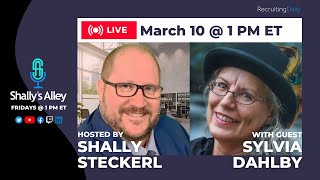
In this hour‑long interview, Shally Steckerl talks with Sylvia Dahlby, a senior leader at Smart Search, about the "Smart Inclusion" initiative that grew out of an AI‑driven resume‑search debiasing tool. They explore why inclusion must be about acceptance rather than mere tolerance, share personal stories of mobility challenges and neurodiversity, and discuss how remote work both expands and narrows talent pools. The conversation moves through practical barriers— invisibility, over‑visibility, lack of self‑assessment, and the "fence" created by rigid definitions of diversity, equity, inclusion and belonging. They critique narrow demographic boxes, propose hiring for skill and cultural‑add instead of cultural‑fit, and debate the role of pronouns and language in inclusion. Throughout, they stress the need for genuine curiosity, organic self‑assessment, and continuous evolution of policies, noting that diversity is a moving target that resembles a constantly remodelled house rather than a static checklist.
Chapters
Friday! It is Friday, March 10th, and roughly 1 PM. Not in Hawaii though, but it is 1 PM roughly here in Atlanta. What time is it where you are?
It is 8 o'clock in the morning. Ah, good morning!
Good morning to you. Mahalo, is that correct?
That's correct, and we would say good morning, aloha kakahiaka.
Aloha kakahiaka.
You got it.
All right. With me today, I have Sylvia Dalby, who has been on the show before. And if you've been watching, you might recall that the last time we said, hey, let's talk about that on the next show, This Is That. And what we wanted to talk about is a project. I guess it's not really a project, but it's more of a lifelong endeavor that, that started out as a project and has evolved into much more than that, that Sylvia has been working on with regard to diversity, inclusion, equity, and belonging, and all of the things that have to do with that. In particular, there were a couple of aspects that we wanted to discuss. So I thought, you know, let's, let's do that again. And because we didn't really finish the— we didn't really get into it too much on our last conversation. And so I had a couple of questions. First of all, can you give us an executive summary of this inclusion project that I— it's not really a project, but you know what I mean. It kind of give me the executive summary.
Yeah, let's call it an initiative.
There you go.
I'm with the, I'm with the Smart Search applicant tracking software. And as you mentioned, I've had a lifelong interest and involvement with SHRM and other HR and recruiting organizations that advocate diversity in the workplace. One thing I like about my product is, you know, we've long kind of supported recruiting efforts and sourcing efforts in that area. But we had just launched a new AI tool for searching resumes, and it did something called debiasing, which we thought was very interesting. And we wanted to talk with our customers about this technology and learn how they were using it. This actually evolved into a much broader discussion because we had more questions than answers.
Yeah, don't we all? Don't we all? I've had several very well-informed, highly educated, and intelligent people on this show to talk about diversity. And without a single exception, every one of them had more questions than answers.
More questions than answers. There's always more questions than answers. So that's, in fact, that's going to be the title of the blog post, right?
There's always more questions than answers. I like that. That's a good title for a blog post.
Yeah. Well, So we called it Smart Inclusion and started widening the net. Like, we wanted to talk to other people besides just our clients, right? And so we expanded it to talk to industry thought leaders, educators, people in and around the staffing business that— and how these tools were being leveraged, particularly with the focus on AI. But that also morphed into more of a general conversation about what are the trends, the tools, the techniques that people are now embracing or using to deploy a better, a better commitment, let's call it, to diversity in the workplace in recruiting and equity in employment. So it's been a real learning experience as it continues to be.
So I wanted to, I'm going to quote/paraphrase a couple of things from our conversations that I think are interesting to share and probably maybe even, you know, quote here. One of them is that— and this might be— these might be your words— inclusion is acceptance, not just tolerance. Or in other words, as you were explaining, inclusion is about being accepted, not just being allowed in or being tolerated. Like, okay, you're, you know, you can be here. That's not inclusion. Inclusion is we accept you here, right? So, um, what is that— what is the lesson that you've learned from this project And if you don't mind sharing the example of the, of your own experience in being, you know, an underrepresented class, not just, you know, in two ways, not just yourself, but also you were actually were in a wheelchair for a month, if I understand correctly. Yeah. So in the context of this acceptance is not just tolerance, explain that.
Well, Uh, I, the Smart Inclusion series is a bunch of video conversations and in one of the conversations—
Oh, these are already existing.
Yeah, they already exist. They're on our YouTube channel. Uh, well, maybe not all of them, but a lot of them, most of them.
This is the Smart Search YouTube channel, right?
Uh, right on the Smart Search YouTube channel. And there was one where we talked about, um, accessibility in the workplace. And this resonated with me on a couple of different levels. As I said, I broke my foot and so for, it was really a good 3 months. I was very much mobility challenged. And personally, it was difficult for me because my house is very vertical. I mean, I have a 3-story house, my office is on the top floor. And it was a big adjustment for me. I was in a wheelchair for a month and on a, like a little scooter, like a knee scooter. Now since I work at home, I was able to make some adjustments. But when I went out in the world, I found I was treated a little differently. And I also discovered—
well, you— it's the same. You—
it's still— it's still the same me. Like, but for example, I went to a concert and I went with a friend of mine who helped push, push me around. But I'm in the wheelchair, I get to sit in the handicap seats or whatever. This is a small town, right? You can't go to a concert without running into some of your friends. None of them saw me. I'm the one that said, hey, you know, Bev, how are you doing? And they're like, oh my God, it's you. What happened to you? Now granted, they weren't really looking for me, right? But they're not looking for me anyway, right? You're just at the concert and then you happen to see some of your friends, but they literally did not see me. They did not see me. And this also happened, you know, when I'm just kind of tooling down the street, like people, you pass them by. They're looking, you know, out above you, right? They don't really see you. So this was kind of an eye-opener for me. And I, I got in touch with Denise Tsukiyama. She was Equal Opportunity Office officer and ADA coordinator for the City and County of Honolulu. And I knew her from SHRM, like she's a longtime SHRM leader. So having experienced this, I talked with her about it because she's— I only know her driving around in her little motor scooter. Right, like she has a, um, like a power chair.
Yeah, I know what you're talking about.
That she drives around.
Now you're basically, uh, you know, also in a— that's not self-powered, but— and you— people didn't see you, like, as in, like, you were invisible? Like, I'm—
yeah, they just didn't— they didn't notice me, right? They didn't know—
it would just be there, nobody would say hi, or—
right, right. Whereas if I'm walking down the street, as in, who knew me? Yeah, people who knew you People who knew me, people who actually knew me didn't even see me. You know, they were like, oh my God, what happened to you? So my situation was temporary, right? But Denise, her situation has been going on as long as I have known her, right? So we had to see—
she's like, oh yeah, that happens to me all the time.
Right, right. So it was really— we had a great conversation, and it kind of revolved around the idea of people with mobility challenges are an untapped talent pool, right?
Well, as you know, I have dedicated a good portion of my life to that with the foundation that—
Exactly.
You know, we help promote recruiting and sourcing curriculum to people that have various, you know, disabilities because, well, for one, it's actually a job that lends itself very well in that you can do it from practically anywhere. And a lot of times people that have disabilities have already made accommodations for themselves in their own home office. And employers would often, even though it's very easy to make accommodations for people with disabilities at work, employers sometimes, you know, they fear it, right? But they, but if you're working from home, nobody needs to know that you have accommodations, right?
Right.
And let me just give you a quick example, because sometimes people, when I talk about accommodations, people go, oh, well, that can be really expensive, etc. Listen, it could be this simple. If the job is to stand and count people as they walk through the door, just, I'm just saying that's your job, okay, and you are unable to stand, then the accommodation is to provide you with a stool. I'm oversimplifying it, but that's the accommodation. So how really challenging is it, right? But yet companies fear it. So the Foundation has always worked with People that, for example, the blind, that's not necessarily— it can or doesn't have to be a wheelchair, but they are mobility impaired in a very real way, which is that it's hard for them sometimes to get somewhere that they have never been before, like for a job interview. Now, they can get somewhere with guidance and then they can get there on their own later on. There are, you know, solutions for that, but it's difficult to go to interviews for the first time without some sort of guidance. So anyway, yeah, go ahead.
Well, in the, in the mobility, when we were talking about the mobility and people that work from home, this was back in 2016, right? So now here we are, 7 years and a pandemic later. And first of all, employers are finally coming around to the idea that a mobile, dispersed workforce, a remote workforce, or even a hybrid model is okay, right? And it has opened up fresh talent pools for them. But look, it took a pandemic for that light bulb to go on, right?
And it took a pandemic for a lot of other light bulbs to go on too. And unfortunately, the light bulb flickered on and then it's flickering off now. There's so many companies that are, "Return to work!" You know, "Now we're mandating, you know, you got to be in the workplace," like worse than before. There was a company that goes nameless that never had a 'you must be in the office 40 hours a week' policy. And after the pandemic, now they have one. Like, they literally went backwards, right?
Right. Well, the other thing that's happening— this is kind of a little off topic, but, uh, it's the 4-day work week, right? Like, the— like, uh, people are doing this, uh, they did a study in, in the UK about, uh, the 4-day work week, and they found— they proved that the people were more productive, they were happier, they were less stressed. It's like it really was working. But here in the US, it's referred to as like the quiet quitting, like, well, you can't possibly do your job well unless you're here 5 days a week. Right? Like, and there, what was it?
The reality is that a lot of us work 6 days a week. You know that.
No, that's very true. That's very true. But what, there was a TikTok movement that's been going around now. It's Minimal Monday or Bare Minimum Monday. And I think this is how people are giving themselves that 4-day workweek.
Monday's a new Friday, is that what you're trying to say?
Right, Monday's the new Friday. Like, I'm going to do the minimum on Monday.
Monday's a new Saturday, and Monday's a new Friday, which makes Tuesday the new Monday, and Thursday the new Friday. I'm confused.
Yeah, I'm confused too. But what was astonishing for me for the whole Smart Inclusion project is that there were so many aspects of the idea of diversity and what it meant, right? Like what it meant to people personally, what it meant for employers, how and why an inclusive workplace really is better, right? Like in everything else that you look, diversity is a strength, right? Like you want to diversify your portfolio, right? You want to have diverse, diversity in nature.
There's no doubt. Intellectually, everybody knows and understands that diversity is important and necessary and valuable. The challenge isn't getting people to understand that conceptually. The challenge is getting rid of the— and I'm going to correct myself— not getting rid of, but the challenge is becoming aware of the bias. We had another guest on the show that said that the bias is inevitable, that everybody has bias, and there's nothing you can do to stop it. In other words, you can't stop having a bias, but you can do something about your bias. First of all, it comes from, hey, this is, you know, understanding that you have a bias and then preparing yourself so that it doesn't impact your decisions. So that's really what it takes. And I think what's really terrible that's happening is that there's so many definitions, not just in the United States, but globally. If you just took the country of the United States, Here, we have a hard time defining diversity. But if you tried to take that international, I used to sit on the ANSI, the American National Standards Institute's board for the International Standards Organization, ISO. We were coming up with HR standards for the world, which is 100-some-odd countries that practice. And there was the topic that kept coming up of creating a diversity standard worldwide. Every time this topic came up, with the ISO, it was shot down. And the reason isn't because diversity is unimportant. The reason is because nobody can agree on what it is. And then in the United States, we've now added much more confusion by saying, well, diversity isn't just diversity. It's important to have diversity, but also inclusion, and also belonging, and also equity. And that's getting— that's now making 4 complicated ideas out of what started out as one idea that we still have not very well defined.
That's interesting. In one of our conversations, this was with Kelly Slade at Relias, she did say exactly what you said about awareness being first. Like you have to be aware of your own bias and the fact that we're not perfect people, right? Like we all do this. You, we naturally, our brain, the way our brain works is we naturally make judgments every minute of every single day.
Humans are like patterns. We look for patterns.
We look for patterns, okay? We look for familiar things. We look for different things. And this is all hardwired in. So your brain is literally making these snap judgments and decisions every second of every day. Like, which knife do I need to use, you know, to cut this up? And how, you know, how do I not cut my fingers off, right? So a lot of this is unconscious, right? You know which— you just go ahead and grab that knife. You have like a physical memory And this all is hardwired right into your brain. So acknowledging your own built-in judgments, let's not even call it a bias, but you make snap judgments about everybody, right? Because that's just the way your brain is wired. So just acknowledging that you have this built in is truly the first step. It's like that self-assessment. Right. Right. And have the will to do something about it. And then the other thing is that what Kelly was saying is that, you know, you're not perfect. So we're going to make mistakes, right? We're going to offend someone. We're going to insult someone. We're going to be insulted or offended. How much weight do you want to give that, right? You can't learn without mistakes. So How can you just accept, right, that people are different, people are flawed, we're all going to make mistakes, but we all ultimately today have to get the job done, right, or have to live in the same neighborhood or, you know, whatever we need to improve, we have to go through these learning curves. Yeah, exactly, exactly. And I think, you know, this, this renewed focus on diversity, equity, inclusion is, is is a good thing because we're trying to define stuff and wrestle with stuff. But at the end of the day, it comes down to people being able to get along better. Another speaker talked about coaching, right? So that you just have a better understanding. My most recent interview was about authenticity, right? You can't fake this. So how do you make people feel comfortable and welcome? Like when you're onboarding a new hire, how do you incorporate them to cultivate that feeling of belonging? Because that's where engagement comes from. And that's where productivity stems from, is that I can be my natural self and I don't have to be, you know, worried. Do you know who Heather Bussing is? Yeah, yeah, yeah. Her— she gave one of these Smart Inclusion talks, and she talked about how diversity and equity and inclusion in the workplace is really like a— it's almost like a health and safety issue, right? I need a safe work environment. Where I can come and not feel like I'm going to be harassed because of my gender or my orientation or my religion. Absolutely. Yeah.
Right.
I thought her point was well taken. We need to get beyond this idea of compliance and just create a safe, welcoming, comfortable work environment to the greatest extent that we can as flawed human beings that have to work together.
So the barriers, you know, you talked about the barriers that we face in diversity. And one of them is being invisible, which, you know, you experienced being in a wheelchair. We tend to sometimes prefer to ignore difference because we don't know what to do. And for me, it's, it, this may be a mistake, it may not be the best way to do it. But the way that I get around that is by asking questions. And something that has always kind of triggered me is if I am genuinely interested in asking questions, and the person who I'm asking questions from gets defensive, it feels to me like they're the ones in the wrong. And I may be the one in the wrong, but what I'm saying is, if I don't understand your culture and I don't know your culture, whatever it is, you know, whether it's gender or, as you said, it doesn't matter, right? It's, it's, you're different, and I don't understand what that means. There's no way for me to understand what that means unless I ask questions. And if it makes you mad that I'm asking questions because that's singling you out, then how am I supposed to learn? Because I don't even know What's different? Do you know what I'm saying?
No, I really do. In fact, let's take another example outside of mobility would be that where you have a lot of that lack of understanding is like neurodiverse people. A lot of them, it's invisible, right? They might be dyslexic, right? You can't see it. They might be somewhere on the autism spectrum. They might have some other cognitive difference. It's just the way that they think. Differently. And a lot of people do not understand that, like you were pointing to the lack of understanding. And I think that having a genuine curiosity and asking questions is the way to go, that you want to be able to accommodate them and to understand, right, so that you can communicate better. So let's say you get a neurodiverse person who is being interviewed. They might have a hard time making eye contact. They might have trouble with a panel. Yeah. Interview. I think by asking—
You're a standard, therefore you fail and you're out.
And therefore you're out, right?
You didn't answer the question quickly enough because you process information before you speak differently, right? Yeah, exactly. And now you're out. Yeah, so that's, that's something that I've encountered. I used to say that I was unemployable. And the reason I used to say that was because I didn't realize this: I was neurodiverse. My particular, whatever you want to call it. Now, now it's embraced as quirkiness. Thank God I have an employer. And, you know, that's how I've always thought of you, as quirky. You know what, great, thank you, because that's probably the best way to describe it. But it's definitely neurodiverse. And the reason I always thought that I was unemployable was because when I would interview for jobs, or when I would even have a corporate job, there were things that I just could not understand. There were things that were supposed to be done the way they had to be done because it was the way that it was supposed to be done that I had a problem with because I didn't, it didn't fit, you know, square peg, round hole. It just didn't fit. And they tried to explain to me, but it didn't fit. So I ended up, you know, getting fired or, or quitting because I, it just, because I might have liked the job, but it just was frustrating. Yeah, it was frustrating in these other ways. So that's the opposite of being invisible, that's actually kind of being, I don't know, noticeable. But I get what you're saying. And so, whether you're invisible or too visible, or people are ignoring you because you stand out, it's still the barrier. So, we have two barriers. One is people don't see you, and the other one is people see you and avoid you. Right.
Or they don't understand you. Right.
But is it okay to ask questions? 'Cause that's what I do.
Am I in the wrong here? I think so. No, in fact, I think that employers do need to ask questions, right? Because like, take accommodation, like you're setting up an interview, right? Maybe it's a neurodiverse people, maybe it's a person with a mobility challenge. It's— I think you should ask all applicants what they need and provide all applicants with the process, right? Like, let them know this is what's going to be required. So for example, if I'm a blind person and I got to navigate all across town to someplace else, right, perhaps I can request an accommodation that that first interview be virtual, right, because it's going to be very difficult or time-consuming or whatever, right? And I don't know yet whether or not I'm really even interested in this job, right? And that's because that's what ends up happening. Yes, that people just opt themselves out, right? Like they look at— like they get— reach a certain point in the process, and like you said, you just got frustrated and you're like, I'm done, right? Well, how many people don't even make it through the interview process?
How many people don't apply because they're afraid that they're not going to be able to be granted that virtual interview, right? Or what about if you are disclosing, um, that you are blind and it's not even a matter of discrimination at this point, it's a matter of revealing medical information that maybe your employer doesn't need to know?
Well, that's a great question because I think a lot of people don't self-declare things on the front end of that process. They, first of all, they really don't, they don't see it's necessary yet, right? Uh, you know, or if you take somebody that is, uh, neurodiverse, maybe they never want to tell anybody, right? Because they have had problems throughout their lives, uh, with a lack of tolerance or acceptance. Um, or it's, there's a stigma attached to it. So if they can get away with like not saying anything, Why wouldn't they, right? And then think about people that are not even diagnosed, right? Like, they— it's just— well, you know, that's what they know.
I learned, right?
It's the other thing I learned about neurodiverse people in particular. But, you know, you can look at people with a disability challenge or a mobility challenge for that matter. If you're born that way, it's just part of who you are. It's like being left-handed or blue eyes, right? That you don't really see it as It's you. It's just you.
You don't see you the way that, yeah, but you have a bias. It's just a different one. Yeah.
Yes. Yes. So I do.
I think that's frustrating. There's barriers for diversity. And have you, in this process, this initiative that we, that we formerly called the project, in this initiative, have you come up with any I don't know, guidelines for overcoming these barriers?
Well, I think the first barrier that needs to be overcome is the, that self-assessment, right? Like you really need to take a look at yourself, your employee population, and your corporate culture. And look at, do we have representation? Like, do we have the, creativity and the innovation and the different ways of thinking that really drive profitability and growth and process improvement.
Let's say we don't. What if we don't? We have to start somewhere.
We have to start somewhere. And so I think that's what—
The barrier can't be we don't have it, right? Not having diversity can't be a barrier to diversity.
Exactly, exactly. So you have to look at, but you have to, you have to see where you are, where, the point of what, where you're starting, right? OK. Like, where are we now, right? And how can we incorporate more diverse hiring practices and business processes? Because it's not just about hiring; it's about engagement and getting, you know, the company to grow.
So start with understanding who you are.
Start with understanding where you're at, right?
What's your point of view?
OK. What's your point of view? This goes right down— this has to be organic, right? This can't be something that management does. Right? It has to come from within. We do this ourselves, like, here within our own company is, where are we at? Like, we have in our— we've incorporated into our own training programs. Like, it's not a separate training, it's just part of our ongoing training. This is what our, I don't know, our sexual harassment policy is, and then here's our manual about how we do everything. But when you get feedback from your workers, they have to be able to buy into it because if management says this is going to be our diversity policy, it's meaningless, right? People have to know that it's true, it's authentic, and be part of it. So like, let's say you're designing those interview processes, right? You should be talking to people with mobility challenges, people that are neurodiverse, people that are people of color, and making sure that your process Your job descriptions, your offers, right? Are we paying people fairly? So, you have to look at your own processes and procedures from within, right? And find out how do your employees feel about your efforts as you make the effort and fine-tune that process. So, I think the self-assessment comes first, that it has to be organic. That the leadership has to lead, right? Because if, like, let's say I show up at a company and I'm, you know, you're a diverse company and I see you got 15, you know, old white dudes on the board of directors. Not that there's anything wrong with being an old white dude, but I don't see myself at that table, right?
Well, that's one of the classic problems and dilemmas that people talk about. But then there's no way for an underrepresented minority to get to that board-level seat if they don't start somewhere. Because those board-level people didn't start at the board level, you know. Exactly. So you can't, you can't go overnight from we have an all-white male board to we have a diverse board without growing the, you know.
Right. And in fact, that's, that's my second My second, my third or fifth point is that it's a process, right? This is, uh, that was the other thing that emerged for me big time. It's like, yes, we've come a long way. Yes, we still have farther to go, but it'll always be that way, right? This is always going to be an ongoing evolutionary process as we find new and better ways to do everything, right? Whether we're using technology or whether we're coming up with new products or services to provide people, that this is the same process. Right? How can we grow the company by involving and engaging our employees and getting those different perspectives so that we're always pushing to move that needle forward? So you're never really done. It's kind of like furnishing your house, right? Like once you get the new carpet in—
Your furniture's outdated.
Yeah, well, no, but I'm just saying, like, now you got a new sofa. Well, now you got to have new drapes.
A new coffee table or a new— yeah, right.
Or get a new coffee table. So it's like you're never really done. Right? Or then, you know, like you need to convert that spare bedroom into a mother-in-law apartment because your family needs have changed, right? Or you're going to have a new baby and now you need to add a wing, right? Or, you know, a bathroom. So you're always in this process of remodeling. I'm going to stretch this analogy a little further, or furnishing the house because things get old, they get dated, right? Things that worked yesterday are no longer going to work. And when you're not growing and when you're not learning, that's when you're dying. Right? So companies that don't want to grow and learn and change over time are the ones that, you know, start shrinking and stagnating, or they get bought by somebody else that's doing.
We know that. Yeah, we do know that. So, all right. So let's go into the other barrier that I think we need to discuss, which is the definition, right? We have, we started with, know you have bias, then identify, you know, do an audit, self-check, whatever, right, recognize it and start somewhere. OK, because you can't just all of a sudden overnight solve it. But what about this other confusing thing about diversity that sometimes it means different things to different people, or that some organizations trying not to point any fingers here, consider diversity to be Black men or Black women. And it's like they just categorized one individual underrepresented minority, and that's the definition. So however you define it, it's broken. And I'm gonna— there was something that you said, I think it was a quote for someone else about the difference between diversity, inclusion, belonging, and equity. Who was that that you were quoting?
Oh, her name is just right out of my head. I have to— but I was on like a LinkedIn Learning.
Got it. So let me, let me feed it back to you, and then it probably— you'll probably remember. So the definition was: diversity is being invited to the party, inclusion is being asked to dance, belonging is being able to dance however you want, and equity is having an equal say in picking the music.
Right.
So I like that, and there are other definitions like it that, that explain the differences between these. But what I want to point out about this and all the other definitions that I've seen that are SMART is that the first part of that is being invited to the party. There's no way you're going to have equal say in picking the music if you're not invited to the party. There's no way you're going to be asked to dance if you're not invited to the party. There's no way you're going to be able to dance however you want at the party if you're not invited to the party. So It all starts with being invited to the party. The problem is, this is the third barrier, I think, we don't know you. So, how are we going to invite you?
Or you're inviting them for the wrong reason. Like, one of the—
What if we're not inviting them because we just don't even know?
But if you're not invited, you don't exist. Yeah.
And that's my point. The other barrier is, I think, awareness of, you know, and that's where the definition comes in. And the reason I'm telling you this is because I've been asked many times to work on diversity initiatives. Sourcing has been, you know, sometimes made the scapegoat of diversity. I started diversity sourcing a long time ago in 2003. I believe it might have been the first official, you know, team that did nothing but diversity sourcing in the United States anyway. And it's always bugged me that they have this narrow definition. No matter what, there's always this narrow definition. And I finally landed somewhere where we are, you know, as an employer, we are opposed, completely opposed to the definition of diversity, because in and of itself is discriminatory. In other words, if you single out groups, there are some you're going to leave out because you don't know. And that's the problem that I've always had with it. If you say diversity is about the categories that are protected by the EEOC, a lot of those categories don't include me. Some of them do, some of them don't. And there's categories that haven't even been created yet. So let me finish what I'm saying, though. If you say diversity is ethnicity, religion, gender, sexual orientation, genetic— I forgot the genetic one. I remember. So you're defining it this way. When companies set up policies for that, they're leaving out groups of people. For example, what about Indigenous people? They sometimes get left out. What about people that have mobility impairments? They sometimes get left out. So however you try to define it, I think, in my opinion, it ends up backfiring because now you are putting up a perimeter fence around something. And so that's what I'm saying is that we kind of need to not do that. The fence is the problem.
Yeah. Well, that's actually a little bit of a light bulb for me today, Shelley, because I agree. I think that once you define it, you've put a fence around it, right? You've limited—
You left somebody out.
Right. Well, not just left somebody out, but you've literally erected that barrier. Right? Like these are the people that are—
You just put up a barrier. That's right.
You just put up, put up a barrier.
There are going to be people that did not get invited to the party because they're outside the fence that you just put up.
Right, right. I think it's gonna, it's gonna come down to the, to skills, right? Like, what do you need? Like, from a— and we're talking as an employer and a recruiting person.
I like that. That, to me, that's the best.
Yeah. And that's, and that's also kind of what, where we got started was with the AI tools, for example, because what I liked about our AI Search was that it only looked at the various elements that— and the recruiter can decide, is the education more important than the industry, right? Are the years—
what are the requirements for the job?
What are the actual requirements and how well is that person going to accomplish this desired result, right? Do they have the skills necessary to get this job done, right? And to, to do it well and to help the company achieve whatever those goals are. So we, there's been some, a lot of discussion around that, like hiring for skill. And when people were using that word cultural fit for a long time, I never felt really comfortable with that. Like, don't you want like a cultural add, right? You want somebody that's going to bring some unique dish to that party. Right.
Add flavor to, or, or a diff— yeah, a different dish or flavor to the dish. Right, which flavor to the dish, or bring another dish. They're going to bring something that would improve the buffet, not just be another ingredient that we already— yeah, I get that. That's exactly what I'm talking about. And we don't— and that's the thing is we don't know what all the ingredients are that exist in the world, right? And we shouldn't be defining that. That's always been the problem that I have with it from the very— from 2003. But this brings me to the other point that we wanted to talk about, remote work. So we started about the foundation and how we help people of, of, you know, we don't define diversity. That foundation that I started does not define diversity. We help people that have been marginalized and underrepresented and have received assistance in any way, shape, or form because they have, you know, a need, right? So we don't know, we're not the ones that define the need. Someone else, another organization, another entity, we don't even know all the entities out there, is defining it. So what we're doing is we're providing the solution for these entities that have people that they, their clients that they represent, which is to get them trained on recruiting and sourcing, right? Because it's a job you can do practically from anywhere, and a lot of times people have their own accommodations. So the other thing is that there are pros and cons, and in, in, because of the pandemic, or maybe, maybe it was just bound to happen anyway with or without the pandemic, it's now more accepted to work remotely. So, um, there are some benefits to improving diversity because remote work can promote diversity, but I also want to talk about how remote work is bad for diversity. So what's the point and the counterpoint? We know that, we know that being able to work remotely is good for diversity because some people that perhaps wouldn't even have applied because of what we talked about, the blind person not being able to make it to the interview and not even want to deal with that at first. So is removing barriers people who, who are now able to apply or more interested in applying because these barriers are gone are applying because the jobs are remote. But what's the other side of that?
Well, the other side of that, as someone who's an early adopter of working remotely, is the isolation. If you're really trying to build bridges and get people to interact and communicate with each other, that's hard for people that work remotely. You lose a certain amount of visibility, right? You lose a number of communication devices. Like, we're face-to-face in a way, right? And I can read your facial expressions, but I don't get the total body language, right? I don't get those. You were blind, and nor would I if I were blind. So I think one of the barriers of remote work is that isolation, that you lose a lot of interaction with your coworkers that would cultivate that acceptance that we were talking about earlier.
Right. So in other words, you were able to, or you were able or more comfortable applying for the job despite the fact that you have a spinal, whether it's an injury or it was congenital, and you basically are wheelchair-bound. Normally you wouldn't have applied for the job, but now you're not afraid because you feel like it's a remote job, so it's okay, I'm not going to get discriminated against. Now you get the job, now you're working at the job, and nobody knows because you're on virtual calls and, and, you know, the camera doesn't pan down. So you could be essentially wheelchair-bound and be doing the job, even be on video calls, and nobody would ever know. But now the problem is, because they never know then there's also never that light bulb that goes on that goes, wait a minute, you mean this person who's in a wheelchair is equally capable? Right? So, and that's the problem is, is it's like you— the benefit is you're hiding so you can get the job, but the detriment is you're hiding so nobody gets the idea that you actually are capable of doing the job. You see what I mean?
I do. I do. And it, it also comes down to that comfort level. Like, how comfortable are you being your natural self? Right. And disclosing when appropriate, right?
When appropriate.
Or not.
Not for employment purposes, but for inclusion purposes, belonging purposes, those other purposes.
For inclusion purposes. I got to confess, I'm really struggling with this latter-day idea of the pronouns. Because on one hand, I want to embrace new ideas and new things. But on another, what difference does it make? You know, it's like if I, if I need to just be accepting you as who you are, I kind of see it like none of my business, you know, like unless you want to tell me.
I'll tell you what difference it makes because my daughter and I have had this, what started out as a conversation very early on and for private personal reasons and has evolved into an ongoing debate. And that is, you know, she's in the middle of of this change where, you know, pronouns are practically being invented by the minute, right? And there's not a line that they're drawing yet, her peers in, you know, in high schools. But we have this conversation a lot, and here's the line that I've drawn and that we've drawn together that we can agree on, her having an alternative, um, you know, set of pronouns. So you can use the pronouns that you want, and you can ask me to use the pronouns that you want me to use with you, right? So you can have whatever pronoun you want, and you can ask me to use that pronoun for you. But what you cannot do, and you do not have a right to, is to tell me I need to use pronouns. And that's the problem that I've been seeing with this, is it's— I've been asked to add my pronouns to my signature. I'm sorry, no. I don't want to do that. That's violating my rights, my personal preferences, my identification of myself. I'm willing and more than happy to, with, with my daughter included, even though I made lots of mistakes, and this is how I learned, that, you know, she wanted to be referred to by different pronouns for a time. And it was tricky. And because I made, you know, I messed up, and she took it very personally. But, but, you know, I learned from that. However, when somebody says I have to put pronouns on my LinkedIn profile, That's, you know, I don't want— you can call me whatever pronoun you want. That's my choice. If you want me to call you by a particular pronoun, tell me, and I will respect that to the extent that I am able to. I will probably make a mistake or forget, and, you know, my daughter says, if you make a mistake, don't apologize, just acknowledge, oh, sorry, that's, you know, I didn't mean that. Doesn't work. She said, it's not an apology. It doesn't really work. I've already been hurt when you use the wrong pronoun. 'So just say, I didn't mean that, I meant this, and move on.' Okay, I can deal with that. So let me call you whatever you want to be called. Don't tell me that I need to be calling myself something. That is, to me, where I drew the line— is other people enforcing pronouns on me. Not telling me to use their pronouns, but telling me I have to use pronouns. You see what I mean? That's the line that I—
I, I'm glad that you said that because I I kind of feel the same way, you know, like, yes, I acknowledge you want to be referred to as however you want to be referred to. And I respect that. And I will do that. Right. But, you know, I've, I've just been me. And I don't want to be boxed in by that. I know, to me, that's just another one of those little barriers.
It's another—
I've defined, I've defined myself.
There's the fence. There's the fence. There's the fence. I don't like—
truthfully, I don't see how it makes any difference in our interaction professionally. Or even personally, like, if you're my friend, you know who I am. And if you're my coworker, this is who I am at work. That's the other element that I think—
It is completely possible to carry a conversation without utilization of pronouns.
Agreed.
It's challenging, but it is possible.
Well, it is possible.
For example, we can use names like Sylvia instead of she or her.
Right. Right. No, I just, I think it's just getting like, there's extremes on either way of just about anything that you want to look at, right?
We need the patterns, Sylvia. We have to have patterns, right?
We do.
We have to have patterns.
We're back to that brain thing, right?
It's the brain thing.
Put everything in a box.
It's back to the brain thing. The problem is that we start putting people in boxes. So the patterns are, they're necessary because of our, for our survival, how we evolved. We have to see these patterns. That's how we can, you know, our ancestors were able to dodge tigers jumping out of the, you know, the wheatgrass or whatever. I'm probably making a mess out of this, but you know what I'm saying? I mean, that was necessary. Not maybe not as necessary now, but you could, you still need to dodge Teslas that are coming up on you and making no noise. I mean, there's still reasons to, to have this natural evolution, but then all of a sudden we're putting fences and then that to me that the fence is The fence is the enemy.
Yeah. Actually, speaking of fences, I've been looking at the chat here and our friends over at Recruiting Blogs made a really fascinating point that I want to touch on. And that's, it's noted that remote can be discriminatory for the digital divide, right? Like the people that don't have internet actions or because of the socioeconomic status.
They might have, but it's not sufficient to be able to do the job remotely.
Right. Well, I'm particularly thinking of a thing that sprang from one of my conversations in the SMART inclusion where women tended to bear the brunt of this, especially on the lower income strata. Let's say I am a single mom and I have 3 kids. I have 1 PC in the house and a slow internet connection. And now I need to work remotely and my kids are supposed to go to school. Remotely.
They have to go to school remotely too, right? So it's, it's not, it's not the lack of internet. It's not, it's inadequate internet. It's not the lack of computers. It's inadequate, insufficient, right?
That insufficiency is pick a part of rural America, Hawaii Island included. I mean, for all intents and purposes, the only reason, one of the reasons I'm living in Hilo is I have fast internet, like some of the other towns I looked at, I'm like, no, it'd be like going back to dial-up. Not going to happen, right? Because I'm dependent on this technology. And now in the modern age, right, we all are to some extent.
Absolutely. The pandemic came down very hard on women in particular because they tend to be, for whatever reason, already fair or unfair, the ones at home with the children.
Or responsible for getting the kids to school. Right, or getting the kids to school or whatever. I know that's a blanket statement.
No, but I get it. It's, you know, it's the cause.
So it's, it's very interesting. Thank you for, for that question, our friends at Recruiting Blogs.
Oh, here's a tricky one. Oh man, I love this one. Whoever posted this, I can't see who you are, but I'm hoping you're a friend. Hey, all I can say is my name is Shelly. Let's just leave it at that. Let's just leave it at that. I've dealt with this my entire life. I mean, you know, there are so many— it's— there was a— this is a little bit of a kind of quirky, interesting, somewhat funny anecdote, but there was a push for hiring female engineers. In the, you know, diversity program that I was running. So it was specifically focused around female engineers. Now, the reason for it, the cause of this was genuine, but the application of it was horribly mistaken. The cause of it was there was not enough representation of females in the engineering population. Now, it wasn't punitive. It wasn't the government audited and they found them that, you know, that it was being unfair. It was just, there just wasn't. But the execution of it was very, very wrong. The execution of it was that this leadership wanted there to be 50% of the population female engineers, which kind of makes sense if you don't think about it at all. But if you think about it a little bit, you realize that only 15% of the population of people that have computer science degrees are women, so 50% would be a grossly overrepresented majority and impossible to obtain. So, you know, that was the mistake. But here's what was quirky about that. There was actually an effort to try to identify—
the reason I'm tying this back to the question, um, this is funny, Tom, uh, the question about, of course We knew we could count on you for that, Tom. Have another cup of coffee, dude.
This was a gender— I kid you not— literally a gender guesser, because they wanted to be able to distinguish the gender of applicants so that the idea was that we could lift up or, you know, amplify the inclusion of females in the hiring process. Which was again, the concept made sense, but the other side of it was the problem. However, to me, the gender guesser was hilarious. I mean, it was like, really? And I did implement this for a very short while, and when asked for an explanation, I said, well, the gender guesser is 51% accurate. You don't see the irony?
Yeah, yeah, I do. That's a beautiful irony.
Literally, uh, pretty much half and half. So it was like— and the, the problem is exactly what the, um, person that posted about the shortened or abbreviated names, or just simply androgynous names, completely original. Like, your name may very well be Pat, not short for anything. You know, it doesn't have to be short for— it could just be Pat and/or Lee and/or Kim and/or, um, you know, and that's, that's an example of names that are androgynous in and of itself as a nature of the name. Then you have names that have androgynous tendencies because of their regionalisms, like Shannon can be a male name, right? Right.
Or Carol.
That's right.
You know, so in fact, every Carol I know is a man, so figure that out. And then you have like, you know, what I call the hippie names, right? Like Rainbow. Right. Okay.
Or Native American names or Asian names.
Yeah, right. And then exactly that, that you, you know, you don't really know, right? Because that's not your, your language or your culture.
Or they just don't use gender. There are cultures where his and hers are not, they don't exist. Something is theirs. It's not hers or his in that entire culture. And there are cultures that I've visited in the world where they don't have the concept of property. In other words, they don't have a mine either. So this is not my child. This is our child. You're not my uncle. You are our uncle. There is no possessive. So culturally there's diversity as well. That, that expands way beyond the concepts that we understand in business today. And that's why I was telling you before that diversity in the United States is a very limited concept. When you go outside of the United States, diversity is much bigger. It means so many different things. There's a company that I worked with that had a 7-day workweek. Do you know why?
Why?
Because in this organization, in this culture in this country, they had 3 distinct religious observances, each of which considered a holy day a different day of the week. For some, Friday was holy, others Saturday, others Sunday. And because of that, there was no way to mandate to have a weekend.
Yeah, right, right, right.
Not only for the company, but for the company's customers. There are customers who shop on a Friday and those who will not. There are customers who shop on a Saturday and so on, right? So, this company had to create all kinds of policies that we don't even think about in the United States because of, in this case, religious observance differences. And that's just one example. Holidays and vacation time is another. I mean, again, cultural and observances and Another one is language, not language barriers, but simply the fact that the language doesn't occupy that particular idea.
Like, yeah, no, you're so right that, that, and language, it defines the way a person thinks.
That's my point.
Yes.
If there's no possessive in that language, you don't think that way.
Right. Right. You don't, you don't have that thought. And I think—
This is not my notebook. This is our notebook. I'm using it. I am using it, but it is a notebook.
I happen to have it in my hand. Hands at the moment, but that's right.
That's right. And in some cultures, you know, people, you've probably heard people that talk about, well, today I'm, today I'm thinking, today I like chocolate. Well, there's cultures where they live in the, in the present by cultural definition. And so for them, if you used to like chocolate, but you don't like chocolate now, it doesn't matter. It's today I like chocolate. I don't like chocolate. And so if you go to them and say, well, you, but your pattern is that you've always liked chocolate. Why did you? Doesn't even fit in their head.
Today, right? Today I like chocolate. Yeah, no, your thoughts, your language defines your thoughts, right? And your thoughts are things and manifested in your life, which really comes down to what I think is the true essence of diversity. And this was, you know, from my conversations in and around neurodiversity. Everyone is neurodiverse. Everyone thinks differently. Some people think fast, some people think slow, right? Some people are very analytical, some people are more holistic. Some people have what we have defined as a neurodistinct thing, you know, like ADHD or whatever. But it's— everyone is a unique individual. And I think being able to honor those differences and treat everybody fairly is the end goal of any, you know, diversity, equity, and inclusion initiative or, you know, process that a company wants to undertake to transform themselves into the, you know, to make the world better. I think it's that this is what it also takes, not just to make a company better and a product better, but to make the world better, is just accept people, that we are going to have and differences. We are going to disagree. We are going to make mistakes, right?
Sylvia, that is the perfect way to end the show today, because to me, if there ever was a magic pill to solve the problem of diversity that would be worldwide and universal and interplanetary and intergalactic for when we find life in other planets and other galaxies— because I recently discovered, I don't know if this is old news, it probably is, but I recently discovered that the universe is a web.
Oh, yes, the cosmic web.
Yeah, it's not made up. It's made of hydrogen gas, and literally, it's like currents in the ocean. It connects planets together. So there's got to be something else out there. So at some point, this definition of diversity is still going to include that, because I think this comes back to everybody is and so putting the fence in is not going to work. I think what we need to do is recognize our own personal bias, identify that that's the pattern that we have, and forget about the fence, and be accepting of the fact that it doesn't matter that we're both white males. We're still diverse between the two of us.
Absolutely.
It doesn't matter. There's nothing that makes a pattern where there are one group that is better than another group because everybody is diverse. And I think that, to me, is the solution. The problem is implementing that solution is pretty difficult because there's lots of people that are simply going to refuse to be aware that there's diversity.
So, well, you know, we always like to hire people that we like, right? And that goes back to cultural fit versus—
so start liking people that you don't know.
Well, Start just liking people that have the skills to get the job done that you need.
Get to know somebody and then decide if you like them.
That's right.
Don't dislike them before you even let them apply for the job.
Absolutely.
Yeah, Tom's question is just brilliant, you know, seriously, what is, what is neurotypical? That's the point. It's not just, it's not just that, it's also religious and, and ethical. I mean, we are looking at differences in ethnicity that are microscopic now because of the continuous. When I was in school, in elementary school and middle school, they taught us about the melting pot of the future. Guess what? It happened. Like, there's so much mixing of ethnicities now that it's getting pretty difficult to really separate them. And there's so much mixing of religions. I found out about Pastafarians the other day. At first I thought it was a cartoon, but it's actually a religion.
So Pastafarian, as in Pasta, the food?
That's right.
Okay.
They believe in a spaghetti monster is the ultimate being. Again, I'm not going to—
What's funny is I've heard weirder things.
Okay. That's the point, right? So we're entering this world where there's just so much variety that I think that the solution will essentially arise from the fact that there is so much variety there won't be similarities.
Yes. Yes.
Let's get rid of similarities.
Let's get rid of similarities. Embrace our differences. Well, you know, that's the last remark I want to make is that humans are themselves, even within myself. Okay, I am a bundle of conflicting things.
That's exactly my point. That's right. Which box do you check? Are you, are you You know, it used to be, are you Black or white? Then it was like, are you Black, Hispanic, or white? Then it was like, are you white, Hispanic, white, not Hispanic, Black, West Indian? And now they're like, the choice of boxes is getting so many that people just check mixed, right?
Well, because that's where we're going.
That's where we are.
Yep. All right, well, I don't know about melting pot. I think it's more like a salad, right? Like all these different ingredients are together in the salad, you know.
It's a salad for you. For me, it's an empanada.
Oh, empanada.
Okay. I'm just kidding. Yes, I think we, you know, we have a lot to discuss. And I think this was a great conversation. Thank you again for coming on the show. And I want to— do you mind if I celebrate your soon-to-be retirement?
Oh, not at all. It is 39 days, 12 hours, and 42 minutes, 49 minutes. So proud of you.
So proud of everything that you've done.
I'm very excited. Okay.
Your contributions.
Thank you. I feel like it's graduating.
Okay, so I'm not gonna go away, and, uh, but I, uh, I'm not expecting you to, but yeah, but you don't need to do the daily grind anymore.
Yeah, I need to do something else. I need it. I need a change. I'm just ripe for a change.
Well, good luck with that. Thanks, Sylvia. Take care, everybody.
Always a pleasure. Thank you, everybody, for joining, particularly you, Tom, and our friends at Recruiting Blogs. Appreciate your commentary today.
Take care. Bye-bye.
More from Shally



Scaling Talent at Hypergrowth: Leadership, AI, and Hiring Excellence with Cindy Nicola







