The Unicorn Hunter’s Playbook: Ashley Surratt Live on Shally's Alley
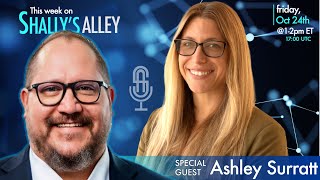
In this live interview, host Vital‑Baritone welcomes Ashley Surratt, a senior talent‑sourcing leader at Black & Veatch who previously led sourcing teams at AWS and other tech firms. The conversation begins with a quick definition of EPC (Engineering, Procurement, and Construction) and an overview of Black & Veatch’s work on power grids, wastewater treatment plants, and data‑center infrastructure. Ashley explains that sourcing for EPC is fundamentally different from tech recruiting because the roles are highly specialized, often requiring deep engineering knowledge and field experience. She cites the “nodal modeler” role – a position that stayed open for three years and had only about 20 qualified candidates worldwide – as an example of the extreme scarcity of talent. To overcome these challenges, Ashley shares a toolbox of unconventional data sources: public project proposals, court case filings, award‑winner lists (e.g., Daisy Award for nurses), speaker lists from industry conferences, and even the names of engineers listed in state‑level bid documents. She emphasizes the need to go beyond LinkedIn, using AI‑driven talent mapping (LinkedIn AI features, prompt‑generated Boolean strings) and market‑intel platforms such as LinkedIn Talent Insights (formerly Talent Neuron) to build data‑backed conversations with hiring managers. A major theme is the shift in sourcing metrics from pure head‑count to a decision‑support mindset: quality of candidates, interview‑rate conversion, and providing hiring managers with alternative options even when the sourced candidate isn’t ultimately hired. Ashley argues that sourcing should be measured by its influence on hiring decisions and brand awareness rather than the number of hires alone. The discussion also touches on the personal attributes that make a great sourcer. Both participants agree that curiosity, creativity, and a problem‑solving “I can” attitude are essential super‑powers. They critique rigid job titles and stress the importance of being able to pivot, ask probing questions, and avoid getting stuck. On the operational side, Ashley describes how her team currently tracks declined offers and market trends in a manual SharePoint spreadsheet, while also leveraging internal talent‑insight tools to understand competitor hiring, compensation, and talent flow. The conversation ends with a look at emerging automation tools – AI browsers (ChatGPT Atlas, Gemini, Perplexity’s Comet, etc.), productivity trackers like Microsoft Viva and RescueTime – and how they can surface hidden patterns in sourcing data. Finally, Ashley leaves listeners with a continuous‑improvement mantra: ask yourself each day, “What could I have done differently to be 1 % better tomorrow?”
Chapters
Hey party people, we are back!
Hello!
Well, I don't know if you just experienced that, but for the first time in 320 episodes, I went live and it kicked us out. And then I did it again and it kicked us out again, and I was like, what is going on? Anyways, we are here. The stress of doing a live stream. We are here with the lovely Ashley, Ashley Surat from Black Veatch. And for those of you who are not familiar with Ashley's wonderful work, she is in what's called EPC, which is craft and— actually, what does EPC stand for?
Engineering, procurement, and construction.
Okay, so craft construction at a company called Black Veatch. She also used to run some recruiting sourcing teams at AWS and a couple of other things like that. So we have a celebrity amongst us, and as you can see from the whiteboard in the background, this is not someone who kids around. They are like all in on sourcing. So welcome to Shelly's Alley, Ashley. So glad to have you here today. Um, much, much appreciated. Let me put your little, um, name banner thing here and, uh, elevate you to the top position. All right, hot seat. You're in the hot seat now.
Feeling the pressure, feeling Yeah, no pressure at all.
I mean, it's not like you, you know, source the workforce that builds the world or anything.
I mean, no big deal, right? Minor details.
Yeah, minor detail. Yeah, it's like power plants, uh, data centers, um, you know, those kinds of things. So we're talking, we're talking sourcing for skilled trades, um, and why recruiting blue-collar roles takes more creativity than a lot of tech positions. And I, I fancy that. I've worked with a lot of companies in this space, um, like for example, let's see, who are some, um, well, McKesson, um, CH2M Hill— what are they called now? They change names.
Yeah, they did. I forget now. You're gonna put me on the spot.
Yeah, and actually, you know, in the construction space and everything, and it's fascinating how different that world is. But it's, it's hard to explain to people that are kind of the uninitiated. I mean, there's some weird jobs, right? Like, yeah, I don't know if you work on any of this, but the people that put the iron beams or the iron, like, I don't know, the, the, the flexible iron in the road on the bridges, it's like a really highly specialized role where they have to know exactly what they're doing with these long iron poles that get buried in the concrete because you can't, you can't fix that once it's in the concrete. It's like in the car, like, you know, it's there. So there's stuff like that, but I'm sure there's also plenty of other things I don't know about. So tell me a little bit about— catch up the rest of the world on what is MPC.
Yeah, so Black Veatch, we focus on— we don't do a lot of roads and bridges, but very similar types of things, like, right, they're very challenging positions. And so we're for all the way from the initial design of a wastewater treatment plant. If you think about water infrastructure, how it's getting to and from your home to the plant, all that good stuff.
And then, wait, why is wastewater going to my home?
Water and waste. There you go. I also talk fast, may clarify. Um, we do a lot with the grid, so how you get power to and from your home into the substations. Those are probably our biggest two areas, but we do a lot of different things as well with power generation, with power plants. You talk about data centers and all those things. So from the very beginning of inception, if we work with clients and they say we need something to fix this problem, or we need brand new build or optimization, our engineers are designing it. And then we have a really great opportunity, which we don't— all engineering firms do this, but we keep our product as like this final product through construction, which just makes it right. And that's where that EPC comes in.
Like, literally, like, hey, that we built that.
Yeah, yeah, you get to see your final product, which is pretty cool.
So when people talk about infrastructure, you know, like, oh, this government's infrastructure, this city's infrastructure, this country's infrastructure, this is it. This is the infrastructure.
We are living and breathing it right now.
Roads, bridges, dams, power plants, yeah, everything. So, and you've actually— sorry, what was that?
That's keeping us very busy lately.
Yeah, right? Oh yeah, no kidding, that's a good point. Um, just don't tell people where cement comes from, it usually freaks them out. You've sourced in healthcare and tech, um, and, um, and now this, this, which I'm sure has some tech in it. I'm sure there's lots of engineering and technology, but then there's also this other stuff that a lot of folks don't even see. You know, the people that get up in the morning and get the road built before you even have your first cup of coffee. What is the biggest myth that just doesn't survive when you move industries like you did?
Like, oh, that's a really good question. So I don't know if it's a myth, but I'll say it's a misconception that I had coming into the role. So when I first joined BV, they're like, Ash, we need help with project managers. I'm like, well, project managers are everywhere. What are you talking about?
Right? Yeah, yeah.
And then I got—
you Gantt or can you not Gantt?
Yeah, yeah, yeah. That is not really what a PM does here.
I know.
So it's very niche. And so I got here and it was really funny.
Estimation and—
yeah. And like, having to have this giant, very niche engineering background, like 10 years of designing the wastewater treatment before you even start managing the project. And I'm like, oh, these are extremely hard to fill roles. And so you don't realize, like, nobody— very few people are like getting excited about, you know, our power lines and like the slag and what kind of tower do you need? Like, you don't think about all these things. Was— people are going to school, like, that's not typically what they think about. And so Well, I've learned a lot, but I didn't realize how complicated these roles were and how niche they were. And so when I first came here, it's like, ah, you know, I've done big tech, I've done all these things, like, it'll be fine. These are by far the hardest roles I've ever sourced and recruited on in my entire life. Um, they're just extremely niche and hard to find, and not a lot of people—
let me— yeah, come here, let me tell you something. Uh, what I'm doing right now is— that's— it's nuts. But yeah, yeah, but I, I hear you switching industries. That's kind of what I was wondering. So the biggest myth is, you know, because we say If you're a good recruiter, you can recruit for anything once you understand the roles. So that's, that's not a myth, that's true. If you're a good recruiter, you can, you can make the switch. But the myth is you can just make the switch. It's actually like, wow, you have to, you know, really dig heels in.
Yeah.
And you learn, and you probably don't know a lot of the things that you are not— that you're not gonna— that you don't know. Like, you just come into this and go, yeah. Like, when you said project manager, I was laughing because I went to work for this company where they had project managers, and those were basically consultants. And then I went to this other company where they had project managers, and they were, they were Scrum Masters, like in IT. And I'm like, huh? And it just, it was like, took it completely, you know. That's— project manager and product manager, in my opinion, are the two most useless job titles because they don't describe what you do. Yeah, you know, like they're the two most like open for interpretation titles that— because I mean, even consultants, you know something about what they do. Yeah, they provide advice. But like, a project manager could be doing spreadsheets, or— yeah, you know, it's crazy, right?
Yeah, it was definitely a little humbling moment. I'm like, oh, okay, it's fine.
So like, what's it— give me the breadth of, you know, go from like an example of the hardest of the hard— now that you're settled in and you know more about the space and it's no longer, oh my gosh, I gotta learn this. Like, you know, what, what are, what are the really hard types of roles? And then like, what are the ones that you're like, wow, this is going to be hard, and then you did it and you're like, whoa, surprisingly easy, give me this.
Yeah, yeah. Um, so our infrastructure, we have an entire consulting arm of our business as well, so.
Okay, right, right.
They have some really hard niche roles that You know, I've pulled the data on, there's literally 20 people of that. You're like, well, how am I going to do this? And so, and how do you get those, one of those 20 people just to even get to talk to you? And then we have to, you know, you start looking back of, you know, transferable skills and all those things. But our nodal modeler is probably one of the hardest roles I've ever worked on. We had it open for almost 3 years before we got it. Nodal modeler. There's not very many people that do it. And also you think about all this emerging technology in this space. It's wild. You probably— people don't think about it, but there's a lot of, a lot of new and lots of quick innovation that's happening. And so being able to find people that are keeping up with that is also very challenging because there's only so many people that, you know, worked with this piece of technology. And you think about the cybersecurity of our infrastructure, that's a whole different ballgame of cybersecurity specialists that you know, the United States hasn't really spent a ton of time on before, really invested in the way we should have probably. And now we're playing some catch-up.
Yeah. Yeah. I mean, I hear about some things because I'm in the, you know, government space.
Yeah.
Um, uh, government. Um, but I heard about this. I, I, I can't— I wasn't there, so hearsay. Um, hack that happened where the, uh, cyber attacker was able to get into the mainframe through the power supply. And I was like, huh? Because, you know, come to think of it, it isn't— it is a wire, it is an electric wire. So is your cable.
Yeah.
And your DSL. These are all wires, so it kind of makes sense. But I'm like, how do you router that? Because I'm in my mind thinking Cisco. And it's like, yeah, that's not— well, so that's, that's one of those weird things. Um, and another weird one is the physical security. Yes, buildings. And then it's like, oh right, so you got this really awesome data center, but guess what? Somebody could break in just like they break into an office or a bank. And like, you know, so you have a whole nother— like, you got cybersecurity and then you got like, you know, this other thing.
Yeah, physical security, right?
Yeah, yeah, it's crazy. So what is that? Give me an example of the most unexpected place where you found a candidate. Not that, you know, like, don't name names, but like, yeah, yeah, yeah, yeah. If you want, I can start.
Yeah, you can start and I'll think about it. Okay.
Um, so, uh, when a company like yours proposes a project, especially for state and federal, uh, and there are lots of companies that do this, they have to publish a paper that is essentially kind of like a— let's call it a pitch deck. It's an intent. And if they win the contract, this, this document becomes part of the, part of the, you know, like public record and evidence. Anyways, in there they have to name people that are capable of doing the components that are going to get done. So essentially they provide almost like a little mini resume, kind of, of like the project engineer who's, you know, the lead engineer or whatever. And these are, these are documents that go into state and other organizational kind of records. So, uh, that was one for me, was finding somebody that had, you know, supervised superintendent kind of role and was listed in there as a contact. And it just, it was just a name, but with the name I was able to go from there. So that's my, my one example.
Yeah, that's a really, that's actually a really good one. So we, I've actually done training on that here on how to X-ray, find those people, find them, right? Like find those titles. Where I think another place that you could go to to find some unexpected talent is I'm going to go back to nursing for a second, but when I was in that space, Daisy Award winners are just listed. So you can go to every state of Kansas Daisy Award winner and go find them and start reaching out. Like, who doesn't want a Daisy Award winner at their health system? So we actually got quite a few hires from just me pulling that activity. So that was kind of just a unique way to pull nursing talent. And then from like an engineering perspective, I think going— I was going to— the proposal is probably the probably the most unique way you can probably do it, to be completely transparent. But also looking at speakers. So a lot of these associations are writing papers on how to improve the water infrastructure and things of that nature. So then who's writing those articles and who's, who's talking about them and really digging deep into those. So that's kind of where I've also found some experts.
So you have a fan that's asking a question: how are you using AI to find— how are you, how are you, and if so, how are you using AI to find these kinds of, you know, talent?
Yeah, that's a good question. So I mean, LinkedIn has a million different AI features. You can all jump into those and play with. But one of the things that I have found really successful is looking into, like, taking someone's profile and saying, okay, what companies did they go to and finding similar ones and just really start doing some talent mapping using AI technology just to kind of help me do that. But then also asking them like, what are the top 10 wastewater treatment plants in XYZ state or whatever? And then going out and try to find those proposals. Are using those wastewater treatment plants as my keywords in my Boolean, right? Like, have it write it for me. So that's some of the things that I've done. So having to just like research, I just let AI tell me all the wastewater treatment plants that someone could have worked on.
Wow. Okay, extending the talent map with, um, a sample profile.
Here's a sample profile.
How did they get here? What do other people do to get here? Where do they come from? Yeah, that's awesome. Uh, all right, I'll give you another one. Um, okay, so, uh, court cases.
Uh-huh. Oh, that's a good one.
Uh-huh. Yeah, also public record, right?
Yeah.
And typically in, in something that has to do with infrastructure, if something went wrong, um, and let's just say it was an, you know, a natural act like a flood, earthquake, rain, lightning, whatever, you know, things that happen, um, and there's, you know, lawsuits, then sometimes in those lawsuits they'll call in the specialists that were responsible for those construction projects or had, you know, responsible for parts like pouring the concrete.
That's at least clear.
To testify on behalf of the— could be the defendant or whatever, but they're the ones that are the subject matter expert because they were there. Like, yeah, I poured that concrete and I've been doing this for 30 years and I poured that concrete like I poured every other concrete. And so therefore it was done right. None of my other buildings fell. So, you know, this was flood, not, not concrete problem, right? They put their names in there too.
So yeah, that's actually really smart. I would never have thought that. So I might have to go play with it later to see what I can find out there.
Let's go to the other end of the spectrum.
Yeah.
And, um, talk about the ones that you were like, this is going to be hard. And then you're like, whoa, I can't believe how easy this was. Like unexpectedly super easy.
Yeah. Um, let me think on this one. So I would say— I wouldn't say it's easy, right?
I think we can find the people, but it was like you thought it was gonna be hard and it was unexpectedly easier than that.
Yeah, yeah, yeah. Um, I'm actually surprised at how many people actually do this work. Like, when you think about like how you create and design a grid, like, you're like, oh, how many people are doing it? But We can find them. So I was pleasantly surprised on how many people that were out there for us to connect with and different ways that we can find talent. It's more of getting them to engage with us because they're not active necessarily on social media and online because they're just tend to be more private people. So the surprise was there's a lot more of them than I thought there would be. The unfortunate part is that you're just, how do I get them to engage? Yeah, because they're also working in the field.
So kind of, that's exactly right. Like you're saying, yep.
Mm-hmm. We have to like get them where they're at a little bit.
Right. Yeah. So getting that messaging them in the field. So yeah, what you're saying is that they're, they're just hidden in all kinds of job titles and companies that you didn't know about. There's a— because, you know, this is not, you know, I did not try to offend anybody here, but you know me, I kind of say how it is. This is not exactly like a sexy, you know, industry. You're out there, you know, in the sun pouring concrete. Using heavy machinery and everything. It's not like people are like, ooh, Facebook and Google, you know. And so a lot of these companies, folks don't even know, they're not even aware of them. They're the companies that built the infrastructure. But yeah, those companies don't put an advertising sign that says built by, you know, brought to you by, you know. Yeah, like, my God, look at this giant stadium, it's, it's Turner Field. Yeah, you know, but nobody realizes it's like Yeah, there's a little stamp in the corner that says made by Black and White, you know? Yeah, yeah, yeah. So you don't realize that. That makes a lot of sense.
Yeah, I can just— I think the other piece too, when you go back on the construction, I know I've been taking a lot of time with the engineering, but on the construction side, I didn't realize how much people travel in that space. That was really surprising to me that most of our construction professionals, they'll come from Kansas City, but they'll travel to Texas, they'll travel to Florida, and they'll work on these projects and you know, live nearby and then travel to the next one. Like, there's a whole population of professionals that are doing that. And I was like, didn't know that was a thing.
That's one of those unexpected things. Yeah, recruiters just don't understand about the EPC.
Yeah, until you really, right, start hiring those individuals. And a lot of them will bring a lot of people with them, right? So they're like, oh, this is my brother, this is my cousin, right? And like, they all do kind of like— there's these networks of crews. Yeah, exactly. That's a great way to look at it.
Yeah.
Um, so that's been something that I was really surprised on how many people actually want to travel. Like, to me, that sounds terrible, but I'm not me. I'm like, I'm not the one work doing that work, so it doesn't matter.
But yeah, I used to like to travel. I don't like travel anymore.
It's not as fun.
So you describe sourcing, uh, and, you know, from out there and being kind of in the public eye a little bit and helping evangelize our, our industry, you describe sourcing as constantly changing, which is not— I wouldn't describe necessarily recruiting as constantly changing. I mean, recruiting has been— technology has changed, but the, the, the, the mindset of recruiting, the systems of recruiting, yeah, have been pretty steady. Uh, but sourcing is something that I agree with you is very rapidly evolving. What is, or can you think of, one of the newest techniques or mindset shifts that made the biggest impact on your team recently? So think of either a technique or a mindset shift that, that is new, that impacted your team, that has been a change.
Oh, man, you really put me on the spot. I gotta think about this one for a second.
Oh, you thought this was gonna be easy?
I mean, I watched a couple of these episodes. I should know what I was getting myself into. I would think, like, so What I'll say is I think there was a time where sourcing teams and were always were held accountable for hires, hires, hires, right? Like, if you weren't hiring, you weren't doing your job. That's not really how my team impacts the hiring.
So it's not—
yeah. And so we really had to look at our metrics and where do we make the impact? Because I'm a very strong believer that if we had 3 interviews, one's a sourced candidate, one applied on their own, one the recruiter found on their own, right? Because there are recruiters still source and they hired the one that the recruiter sourced. That doesn't mean we didn't hire, bring in a good person. And we also gave the hiring manager enough people to interview so they quickly make a decision. So we were able to influence that hiring.
Decision support.
Yes.
That's right.
And so really getting that mind shift away and saying quality over quantity, right? Like, I'd rather you submit 6 really, really good people versus 15 and only 3 of them made it through. Like, I don't, like, we want to make sure we focus on quality. So I think that transition kind of made people think differently about how they source and how they move candidates forward. And then when I first came here, and I will say we started to see more and more requests come in from recruiters because we are a global organization. So now we're seeing requests come in from globally because they are hearing about how much success other people have had partnering with us. And so that's been really fun just to kind of see this evolve over the past, like almost 3 years, I guess it'll be 3 years.
And to be clear, because I think this is really important. To be clear, aside from the fact that you're running things and you came in and made, you know, this impact, the pivotal aspect of that success is, in this case, the mindset shift of going from, you know, we are providing you with decision support. We are enabling the hire even if the candidate that we sourced didn't get hired because If the hiring manager only had one choice, that's not a choice at all. We sourced an alternative that was equally, you know, in the mix, and they chose the best candidate and it wasn't ours, but they were able to choose a candidate because we provided one. And that mindset is you still assisted the hire, which I— it's something I've been, um, I've been for 25 years I've been talking about.
Yeah.
Because you don't necessarily have to bring in the candidate that gets hired. In order to fill a position. You also don't necessarily need to be counted on the number of hires that you do. It's always good to track that and have a number that you can say, I influenced this many hires. But for me, the economic incentive and the emphasis and the KPIs of forcing recruiters into a track— even recruiters, not just sourcers— would track where you get measured on hires. What ends up happening is you basically are incentivizing or rewarding the wrong activity. If, for example, if you go into an organization and say recruiters have to make 35 hires in order to meet their quota, let's say, they will do whatever it takes to get those 35 hires and meet that quota. Even if they chose to only work on the easy jobs and didn't do the hard ones and they didn't— they're not telling you that they're doing that. Even if they chose the easy way of doing it and spent more money than they needed to, whatever it is, the goal you're giving them is 35 hires. So it's kind of like the wrong incentive.
Yeah.
And for recruiting, that's tricky because how, you know, it's always been there. For sourcing, doing the same thing is bordering on criminal because you're incentivizing people to do something they can't really control, right?
Yeah.
In sourcing, you don't have— you can influence everything up until the interview. Once the interview happens there's two other parties involved, you know, the candidate and the hiring manager, not to mention the organization. And you know, you can't change anything that happens after that. You can't impact. So the best you can do is provide people that get interviewed.
Yes.
And if the more people you submit get interviewed percentage-wise, then you're doing a good job. Measure that. Measure the percentage of people that you present that get interviewed because that has a higher impact on quality Mm-hmm. Because that is, in my opinion, the last step where the, the inflection point, uh, is between essentially sourcing or recruiting and the rest of the organization. That's the last inflection point. Beyond that, there's a lot of— there's background checks, there's compensation, there's, you know, and those are not even things that even recruiting is involved in.
So yeah, I think they only have control over what, so much, right? Like Let's just focus on what we have control over and let's—
Absolutely, we have a lot of control over who gets interviewed. Yeah, I mean, that's it. We have, and that's as far as we can get.
Yeah, agreed.
Oh, I like this one. I look at sourcing as influencing the brand awareness more than necessarily the hire. Yeah, yeah, so the brand awareness is also part of that, exactly. Yeah, you might have in sourcing touched 10,000 candidates and only made 2 hires, but now there's 9,980, whatever.
Good math. I'm impressed. That's not good.
That, that know about the organization next time around. This happens a lot. I, I get in my career, I've had hires months or years later after.
Yep. So yeah, building those relationships are really important. And, you know, we talked about, you know, how I've kind of moved into different industries. I actually, one of my first hires here was somebody that I was pursuing when I worked for AWS. But another company, when I got laid off, I was like, okay, I came here and I was like, oh, Well, I know exactly who I'm calling. I called him up like, hey, did you end up making it through? He's like, no. And I was like, I have another job. And so it all worked out. So it was kind of cool to like watch those relationships that you build end up working out for you down the road. And some people that I've hired years ago reach out to me still today.
So nice. What is— I got a funny question for you. What is the longest period of time that has ever transpired between you sending somebody a message and them responding.
That is funny. We were actually just talking about this the other day. So I recently had somebody reach out to me like 2 years later, like, hey, I know this is like from 2 years ago, but I'm on the market now. Like, okay, well, we do have roles open possibly. So it ends up working out, like I end up talking to them. But it was 2 years ago. But that just shows like how often these individuals are going into their LinkedIn. I can't believe it. And I'm like, I haven't been in a while.
It's the same. So my number is very, very similar. I was going to check. So it was But trust me, I'm not making this up. It was 1.8 years. But the reason I'm saying that is because yours, you beat me by, by a margin.
You know, that's like, you know, we're around. Yeah.
But this was 666 days later.
Yeah, I did not do that level of math.
But say what? No, I literally said on the, you know, 666 days ago. Um, it, it, you know, say what you— I'm not superstitious or whatever. There's like an ominous number.
Yeah. And that is actually just a good call. Yeah, 667.
What do I really want to respond to this candidate? So I forwarded that, you know, to my, to my team. I was like, hey guys, what do you think? Should I wait 666 days to reply? Oh no, I did not. I just, you know, but yeah, yeah, that's funny. Who do you think will define the next generation of world-class sourcers? Creativity, technology, No, what? I'm sorry, what the— what do you think will define the next generation of world-class sourcers? Creativity, technology, or strategy? So I guess Martella is asking the next generation of, you know, sourcing greats, is it going to be because they're creative, because they're technological, or because they are strategic?
Okay, well, I think there's a little bit of all that, but I think technology is going to make all of our sourcing jobs. Yeah, so I think, I think technology, you have to be a technical person to enjoy tech and keeping up with tech. To be successful. Yeah, that's true. Yeah, we are— this may not be the right space for you. I think strategy, though, because going back into where people are at, how do you meet them where they're at, being able to pull market data to create a strategy around all of that is going to be key. Because we can use technology to do— help us and support us on that. You're going to have to have a strategic mindset to kind of overcome, because with technology comes other ways for people to, like, hide their stuff, or like, I don't want to be contacted, I want to be left alone, or whatever. And then the other piece of that, I actually think personnel, like being able to communicate. I think eventually you're going to have some automated messaging, right? We're going to have all these things that are going to automate, automate, automate. But at some point you have to have human interaction. And so to be able to do that is going to be really, really key. You can't just like hide behind the keyboard anymore. I think there are people that are going to start talking to you.
Yeah, I definitely hear that. So strategy number one over technology, because I think what you're saying is technology is like You know, part of the— it didn't used to be, right? Back in the day, technology even for sourcing wasn't really— I mean, we had very basic technology. But what you're saying is now technology is accessible to everyone. So that's going to be kind of like basic stakes. So more so would be, um, the strategy, which I have to say, uh, creativity is a, is a component of strategy.
Yeah, yeah.
You know, innovation and creativity, but the strategy being putting it all together. And I think that that's the project management part of it.
Yeah, exactly.
Awesome. So you've built teams from scratch. I built teams from scratch. We both built teams from scratch. Uh, scratch is great. What is the first signal that you'll look for that tells you— let me hold on. After you have— so not before you hire the team, either after you've hired everyone, or if you've inherited a team. So I don't want to use this as a way to evaluate candidates, just to be clear.
Yeah.
So you have the team, what's the first signal you look for that tells you that a sourcer gets it?
Oh, yeah. So going back to metrics, right, it goes about quality of work. So I think it's, are you learning the profiles quickly? Here, it's like I said, this is the hardest roles I've ever worked on in my entire life. So do I expect it to happen tomorrow? No. But are you taking feedback from the recruiters? Are you changing and pivoting? Are you looking to source in various ways and be creative? Is it— are you just living in LinkedIn? Are you trying to find ways to find talent? So those are really the two things, like how quickly are you learning the profile? How diverse are you when you're searching to find talent? Because when people come to me like, oh, Found everybody on LinkedIn. Like, that's cool. Where else are you going? Making sure we're reaching out in various ways. But so it's not necessarily I've reached out to 150 people this week. It's I was able to find 6 really quality people this month. And so going back to that metric, this person's figuring it out. Like, if they aren't getting there, working backwards to say, are you sending the right messaging? Are we seeing— there might be a volume capacity. Sometimes you have to do some A/B testing on that to figure out what messaging is and isn't working. Just understanding, are they getting creative? Are they getting innovative? Are they getting stuck? And not thinking outside of the technology or our toolbox. This was a little long-winded.
What I heard was, sorry, you can tell the first signal that they get it is they don't get stuck.
Well, I guess that's really because, but I think it's more of, are they able to think? Yeah, great. Like, be creative.
And this is great. I think it's great.
They create, right?
Problem solving, creativity. Yeah. So in other words, you know, in a systems process, which recruiting is more systems-driven than sourcing. And by systems, I don't mean technology. I mean any collection of tasks is a system. And recruiting has a very rigid, comparatively, collection of tasks. You have certain things you have to go through. You have to post jobs. There are legal requirements. You know, there's a lot of things that have to be done for regulatory, all kinds of other— sourcing gets involved when that stuff not working. So yeah, we get to be in the gray, you know, less organized like that. So what you're saying is in recruiting, if you reach a point where you get stuck, there's things that you have to do to get unstuck. But in sourcing, when you get stuck, there's not like a button or a, you know, there's no, um, flip to page 27 and follow this process. So what you're saying is if they get it, then they're the type of person that's gonna work around it, go under it, go over it, find a solution. They're not going to stop and look at the manual and try to figure out what the next step is supposed to be.
Yeah, yeah, yeah, yeah, yeah.
I think you have to enjoy that, like, enjoy that, but also like not get— enjoy it, but also not get to that point and go, this can't be done, like, can't do it.
Yeah, right.
Yeah, yeah, that makes sense.
Yeah, it's also, it's also okay to ask for help, right? Like, hey man, I'm stuck. I'm just—
it's also—
yeah, in my rut. Yeah, let's brainstorm some ideas and I'm here for that too. But being able to acknowledge it and see that you're stuck is also important.
As a, as a leader, so I've, I've had the, the privilege of being, you know, technical lead, tech lead, right? I've been supervisor, manager, and, you know, director, VP, so leader of leaders. As a leader in any of the, any of the roles, whether it was supervising other people that I didn't really necessarily directly manage, contractors for example, or leading managers that managed other people, the one thread that's always been consistent throughout that— because a lot of other things really change, especially in sourcing, a lot of things change— um, the one thing that's always been consistent is I find the most annoying and, and least, uh, workable issues come from 'I can't.' Yeah. Versus I don't know how. When someone says, hey, I don't know how to do this, how do I do it? What, what can I try? That's, to me, that's an open invitation, right? But when they're like, I can't do this, it's sort of like, I, it's like, really? I mean, really, you can't? Like, are you sure you can't? Is, is it you can't or is it you don't want to? Because what I'm hearing is You haven't tried yet. Yeah, I'm hearing you gave up. And so to me, that's— it's not a tenacity thing, although tenacity is a part of it. I think it's not just the grit and tenacity, which, you know, that's also, also there, more so like the helplessness of it, right? Like, yeah, if you're in that, if you're following the manual and the manual says you get to this point, you have to stop work, That's not sourcing. So if you get into that position where I can't, then you really are in the wrong role, I, I think.
You—
then you're— you shouldn't be in sourcing because sourcing is the 'I can no matter what,' not the 'I can't.' Yeah, you know, there's got to be another rock I can go.
It's got to be something else I could be doing. Let's just keep looking. Yeah, what if, um, and enjoy. Yeah, the 'what if,' like, I don't know, I think being able to think creatively and just enjoy that. And curiosity, I think that's the word I'm looking for, is have the curiosity to try to find the solution.
Yeah. If you could segue to my, my second to last question, if you could give every recruiter— wave your magic, see if I can— your magic wand. If you could magically give every recruiter one Sourcing superpower, what would that be? I would equalize— everybody gets it.
Yeah, yeah, everybody gets it. Can I just use the word creativity? Um, I just like— really?
Sure. Yeah, that's the— is that the superpower? Creativity?
I think so, right? Like, I think you've got to be creative to find different solutions, to think about being able to turn over more stones, or however you want to phrase it. The curiosity and creativity, right? I think you have to be curious enough to find it and creative to drive and create, find creative solutions. I guess it's two words, curiosity and creativity.
But curiosity and creativity, okay, that's fine. That's a, that's a superpower, like being able to fly.
Yeah.
Um, okay, what about you?
What would you, what do you think the superpower should be?
Critical thinking.
Okay. Yeah, I would agree with that. So we have lots of C's, the 3 C's.
And yeah, that's true. Yeah. And I think it's specifically relevant in the form of like asking questions. So probing, right? And probe everything. It can get—
Curiosity piece, right?
Yeah, I think so. I think it's related to that. It can get sometimes interpreted the wrong way. My last guest ran into some environments where asking why was seen as annoying and disrespectful. So I just want to be cautious. That's why I was cautious. Like, I don't want to just encourage everybody to go out there and do the 5 whys. And if you don't know what they are, I'll explain that in just a second. But the reason is I taught my children the 5 Whys, and I regret nothing else more than that. So because, you know, if— of course, immediately the moment that they learned it, guess where they used it the most?
Yeah, yeah, yourself. Yeah.
So, well, that was a mistake, but no, I don't regret it. It was a good idea. But so the 5 Whys basically is kind of like a— it's almost like an elementary school type of consulting tool that just traces the why. Um, I can't do this.
Why?
Because I tried this and it didn't work. Why? And so, you know, if you do that 5 times, right, you actually usually don't even get to the 5th time, by the way. But if you probe 5 times— now the thing is, you can do that, you know, in the why, or you can be like, well, why did you get that result? What have you tried in the past? So the critical thinking and the probing and the creativity Part of that has to also come with a little bit of sensitivity. If you're in an environment where you're asking why, it could be easily misinterpreted as you are smarter than them, you think more than they do, which is not what you mean. But, you know, like, hey, everybody, why are we doing this? Could come across as y'all are dumb.
Why are you doing this?
Or it could be, you know, hey, just want to understand how we got here. What were the things that we did to get here? 'And are there any other ways to do it?' You know, 'Let me try something else,' you know, as opposed to— So I think it's that type of questioning that I'm encouraging. That makes sense.
Yep, I agree 100%.
Last thing I did want to touch on a little bit is the automation aspect of it. So you work with a lot of data and automation, particularly in market intel. And, you know, I told myself, this is a good reminder, I am horrible at promoting my own stuff. Let me pull up my QR code for the AI browser guide. Oh no, that's the wrong one. I want this one. There we go. Okay, so folks, do yourself a favor. If you haven't done this, you need to get this like right now. Stop what you're doing and take a screenshot and go to this. Um, or let me grab the URL for it as well and put it on here. In just a second. Um, the AI browser tool guide is— so this is not an AI— I'm not selling AI technology. This is actually a toolkit for building sourcing capabilities with AI browsers. AI browsers are the next— they're really the next evolution of what's happening, and they're mostly free. Um, ChatGPT just launched this week Atlas, and it's mind-blowing. There's Fellow, there's, uh, GenSpark, there's Perplexity's Comet, there's, uh, DIA, or they just got acquired by, I believe, Atlassian. Um, and this is what's, you know, Chrome is starting to add this, Microsoft is starting to add this. It's the next AI browser wars. If you remember the browser wars, it's happening again now. And the reason is that these are actually going to be— they're not here yet, but they will be leading to the ability for us to actually have longer tail, multi-step, truly agentic systems. Right now in the market, there is no agentic system. People are saying that they have it, they've got humans behind the scenes that are actually doing it. But the reason I wrote this toolkit is because this gives you the resources to use it and do it right, because there are some massive inherent risks. So download this because there are risks, big ones, that you need to be aware of. And there are right ways to do it, and it's free, and you just do it. I'm not selling you anything here, just go get it. So with that said, uh, and I did my, I did my due diligence, plugged my own show. The next question that I wanted to ask you is about automation, and particularly data. Um, is there anything that have you that you can share? Have you done anything that's given you a superpower with either automation or data that moves the requisition? It could also be market intel. So when I talk about data, you know, market talent, market talent pool, things like that. So I'll let you answer that. That's really pushed the needle.
Yeah, yeah, yeah. Um, I wouldn't say necessarily from an automation standpoint. That's fine.
Yeah, data.
Yeah, but we, we do use Talent Insights And I've brought it with me a couple times. I talked about earlier about how we had a role that was open for like 2 years. And we finally filled it. But we also had to pull the market data to say, OK, you want all of these things to kind of drive that conversation. When you ask about the 5 Whys, like, I like to say, like, what if, like, what if I found somebody with just these things? And here's how it would open up the market for you. But you'd have to train on this piece. Would that be acceptable? So driving those conversations, and I will tell you, We sometimes, for that role where it was open for 2 years, that's how we got there. We were able to figure out, OK, we have enough people here to train on this piece. Let's go and like, what would that look like? And so then we tried that next. So being able to drive conversations with hiring managers through market data to say, this is what the data is showing us. This is what we're experiencing. What if we did this? What if we did that? Just to see if they're open-minded. Sometimes they're not. Sometimes they're like, I'm like, OK, that's cool. We'll keep doing what we're doing, but just know this is sitting out there. And there's been sometimes I've had to check back in with them a couple months later, like, hey, what if, like, are you sure you want to keep going? So that's something that we definitely, we leverage a lot here is that, but then also using it to have like pull competitor reports, understand, like last year's data. So we can see like, what companies did we hire the most from? Which companies did we lose talent to? Like, who are we not competitive with? Who are we, who are we competitive? So then when we start Putting campaigns together for this year, we know who to target, and maybe we need to look at why we're not competitive with some of these other people that we've lost talent to. So really being able to make some really smart decisions and collaborate with all areas of HR, right? If it's a benefits thing, bring in benefits. If it's a comp thing, bring in compensation to that conversation to talk about it.
So it's a little bit of going back to competitive intelligence days.
Yeah.
And Can you share, if not specifically where you get the data, but like how you're, I guess, what is the data? Because a lot of times people think about market intelligence or talent pool intelligence and they draw a blank, like, where do I get that?
Yeah. So we do use Talent Insights. I will say we used Talent Neuron before, really liked it. It was a good product. We just couldn't get down to those niche roles. Like, we could say electrical engineer, but we couldn't get down to, like, how niche we have to be. And so the data wasn't truly accurate. So that's why we transferred over to Talent Insights, which is a great tool. But we also track every declined offer.
So it's internal data?
Why? It is a little bit. If it, if it's declined, we want to know exactly why, not just it was declined because of this. Like, we want to kind of know the trends, and we want to track, like, where were they working or where did they go afterwards. So if they had two different offers for for tracking.
Which one was the other one?
Which one did they go to? Because we can see it on LinkedIn or wherever. And if we told them, they were like, "Oh, yeah, there's more money here," then we can start tracking those things. We do manually track a lot of things, good, bad, or indifferent. It's just where we're at, to be able to find those trends to bring it forward to the right teams to help us continuously improve and stay competitive.
Can you— so you have internal data. You probably needed to somehow segment or change your infrastructure to collect that data. Was there, was there something, you know, that really helped with that? Or was it like, did you do a landing form or—
Yeah, yeah, right now it is a manual spreadsheet inside of SharePoint that's a shared doc that everyone could just get into, which, you know, good, bad, or indifferent, that's where we're at. But hopefully we can start showing the value and start looking at technologies that we can implement more strategically that's not as manual.
And externally, are you— let's use Talent Insights is what you said.
Yeah.
Are there any other, like, Google or just free resources out there that you could use?
Yeah, so I, like, we talked about AI earlier, so I will sometimes just do a search like, hey, give me the top competitors in this market for this. And sometimes I pretend, like, from a sales perspective, like, if I'm wanting to build a brand new wastewater treatment plant, like, who should I go to? Who's top rated? Um, and just to kind of see who's out there, who are we competing against. Yeah.
Okay.
Yeah.
And yeah, you're right, there's no really— not really an easy automation, um, way to do that.
Cool.
No. Uh, so I am working on something. Do you have access to Google?
Yeah.
Um, it does— like, you have a Google account? Basically, um, I have a workplace Google account, which the reason I'm pointing this out is the limit for NotebookLM is 300 data sources, which is kind of arbitrary because, yeah, 300 data sources versus 50 for the free one, and the limit is 200 megabytes per source. So you could have 50 sources, you could cheat and put 300 documents into 50 documents that are 200 megs each. And, you know, really it's not that much of a limitation. I think they just need to create some difference between the accounts. The point is you could probably do this for free, but I haven't tried. And I'm using it in a way where I'm providing the raw data because it doesn't hallucinate. This is a RAG or a retrieval augmented generative technology. It's a large language model system, but it's only using the data that you provide. So you get, you dump your, first of all, it's yours. Doesn't go anywhere, doesn't get shared anywhere. It's literally completely isolated. It uses the Google model Gemini but doesn't provide anything to the model. It just uses it as, uh, you know, augmentation for it. So, okay, I dump in the logs in there and I ask questions about the data. So it also, it also does help with visualization. Yeah, but like, for example, one of the things that I'm doing is— have you ever used, um, RescueTime or TripTalk or any one of those?
No, but our Copilot does some, like, something very similar where I'm able to put data. Yeah, help us.
Viva works really well. Same thing. Yeah. So basically, you— I, I, I've played around with this productivity model where I say, okay, here's my activity for the last month, here's the report that I can get from, uh, this. I pay for it, it's not very expensive, but it's, it's worth it. And you can get it from Viva. And then I ask it questions about it. Because it's really good at understanding these, these patterns that I can't see. It's just too much data, right? So what if you gave it— again, this is private, she's not giving it— what if you gave it the information from your tables that are unstructured and asked it to structure that and provide any insights on patterns Because you might be able to— what I'm thinking is sometimes people give feedback, uh, reasons why— speaking from my own experience, in exit reports when they leave a company or when they don't accept an offer and things like that, um, even the recruiter notes are not very structured. It's just the notes from talking to the candidate, but it's understanding large language models, and so it's able to infer information from that even if there's not like a dropdown that says accepted an offer that made— that paid more money, but somewhere in the text of the note it alludes to that, it picks it up and it finds the patterns. Just thinking about that because I'm using it for productivity, and, um, I have— see if I can show you this.
No, I can't show you, but yeah, now I want to go play with it. Yeah, and try, right?
So for, for example, with RescueTime which is just a time tracker. You know, you can use Viva or any of that. Um, I did an analysis on my, uh, weekly— sorry, no, I'm drawing monthly activity. And, um, in a period of the— in the previous month, I did 46 hours focused work out of 66 hours that was tracked. Then the one after that, I did 62 hours out of 115. And then after that, I did 93 hours out of 83. And so it's helped me focus in on doing more productive work. Yeah, because it's identified here are the things that tend to like suck your time or distract. And I'm not talking about I'm playing video games or anything anything like that. It's just that there's activities that I've categorized as higher value towards goal versus lower value towards—
yeah, I mean, you can get down some weird rabbit holes if you're trying to source people, right?
And learning—
I have wasted 30 minutes, right?
Exactly. That's right. And learning is something that I value. So learning activities, it knows, oh, this was a, you know, you're reading an article and you're learning, I get that. Um, but it, but it helps me get away from the— your you're learning versus you're, you're now having a little bit of fun. And that's okay if I have a 10-minute break, but stuff like that. So I think that kind of system might be helpful because you're not relying on anything that is public, which, you know, scares the bejesus out of me.
Yeah, yeah, yeah, yeah.
I don't want these robots to know, you know, stuff. So when they take over, uh, you know, they'll at least not know anything about me.
You won't be on there?
No, I will be on. There's a weird thing I actually asked I asked, uh, shoot, I forgot which one it was. Might have been Gemini. It was either Gemini or— I don't know, I don't think it really matters that much. Like, um, who is Shelly Snack Girl? Just again, I'm terrible at promoting myself, so this is kind of one of those like spur-of-the-moment things. And the response that I got back was like, really, you should try it.
Is it like Googling yourself back in the day?
Like, way worse. But better.
All right, I'll do it.
I'm saying like, yeah, it's, it's worse because of like, it's like, whoa, you know a little bit too much about me.
Yeah.
Um, but then on the other hand, it's better because it's like, oh, interesting. Um, like it started, I'll just read you this way. In the talent acquisition world, I wish I had a radio announcer. You stand as nothing more 'Nothing short of revolutionary as the father of sourcing.' I don't know where he got that from. 'You didn't just join an industry, you created one. Your foresight in 1996 to establish talent sourcing as a legitimate function has transformed how organizations worldwide approach talent acquisition.' I'm reading this going, 'I did that.' You're like, 'Thank you.' Yeah, like, 'Wow, uh, what else can you say about me?' Then, you know, so Tell me more.
Exactly right. Don't stop.
And then it goes into stuff like, you know, uses technical expertise and cross-cultural intelligence and compassion and bridge building. And I'm like, holy crap, where is it getting this?
It was a little intrusive.
Highly encouraged, but just weird how much it knows.
Anyway. All right. I'm going to try it.
I'll let you know what it finds.
Yeah, please do.
Yeah, this has been wild and fun and crazy. We got to do this again, but I have to ask you two questions before you go.
Okay.
The first question, and the most important question of the day: who should be our next guest?
Oh man, you gotta put me on the spot.
It doesn't mean that they'll accept. I mean, I'm gonna invite them, uh, they might, you know, not even respond to me, but just go ahead and throw out a name.
All right.
And I do put people on the spot because if I— if I let people say, oh, I'll send it to you, they never do.
Yeah, yeah, yeah, hold on one second. I will—
who would you like to see in the hot seat?
So when my first time I ever went to SourceCon, uh, or my second time I should say, I won Sourcing Anonymous and that's how I met Martell. Um, two of the people that won with us is Danielle Hart and Katie McVane. They were both at Rec Fest. Um, they pump out really great content and doing some really cool creative things. They work in the finance industry, so that might be something interesting.
Perfect. As well, I will reach out and hopefully, you know, bait the hook and get that fish. All right. And so final, final question, closing question for folks that are listening to the podcast and are, you know, playing this back later. I want to have— I want to give them something that they can do for themselves. So give us a question that we should ask ourselves to answer for ourselves? Like, what, what question do you think we should all be asking ourselves over the weekend, or whenever we listen to this?
Yeah, sourcing related?
That have anything that you're— that you consider important?
Anything that's that are important?
Yeah, hot mic.
Yeah, it is a lot of deep thoughts with Ashley over here.
That's right.
Um, I'm a really big believer in continuous improvement, even if it's just 1%, right? So I think it's, what could I have done differently to be better tomorrow?
Oh my God, 1%. That's actually—
it's a whole philosophy.
I just realized that if, if every day you improved 1%, you would triple, more than triple every year.
Exactly. So just, that's what your goal should be. Just improve just by 1%.
How can you improve by 1% today? Damn, that is super deep. Like, that's so deep I think I need sonar to get there.
Well, I didn't come up with it. It's— there's a whole philosophy.
Yeah, but I like this.
Yeah.
So the question is not the 1%, but the question is, um, ask yourself how you can— how you can improve by even if it's just a little bit every day.
Yeah, love it.
Awesome. Thank you very much. Well, this was great fun. Uh, do I see you at, uh, upcoming ERE?
Ah, I will not be at IRE. I want to be though. Look, one day we'll get there. All right, we'll get some conferences back in my belly. All right, all right.
Well, thanks a lot. Have a good weekend.
Yes, you too.
Yeah, it's, uh, it's fun. Folks, if you want to come back next week, we have Adam Kovacs as our guest. Look him up. And, uh, don't forget to subscribe on Spotify if you want to catch the recordings. Until next week, see everybody. Be kind to yourselves.
More from Shally



Scaling Talent at Hypergrowth: Leadership, AI, and Hiring Excellence with Cindy Nicola







