Todd Davis - The Candidate Generator - on Shally's Alley
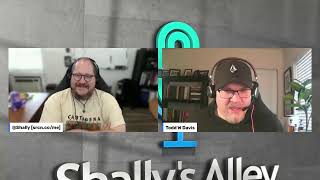
Todd Davis, a veteran sourcer and recruiter, talks about his path from heavy-metal music to recruiting, and how he uses sourcing techniques like DNA testing and FOIA requests to investigate his biological father's 1974 death. He and host Shally Steckerl discuss how personal loss reshaped their priorities and the importance of mentoring younger sourcers.
Chapters
Hey, welcome to Shally's Alley. It is Friday, November 3rd, exactly 24 hours after I was birthed. Um, yesterday was my birthday at around noonish or so, my mother said, uh, 12:45 or something like that. So this is 24 hours later. I am now one day old past my prime. Um, and so today I really, really, really am very happy to say special guest Todd Davis is joining me today here on Shelly's Alley. And man, Todd, I don't even remember meeting you. Like, how long has it been?
It's, um, so there was like when they invented the wheel, I think is when it started. Like, remember we were outside the cave and we were hanging out and that guy kind of rolled the wheel by and we're like, wow, that's incredible, right? You know, right, right. And then we were talking about how we should probably start hiring people like that.
Now that's when we invented recruiting, right?
Right, exactly. And it's on the cave wall in Nevada. Yeah, exactly. Like, if you go to Nevada, there's a cave, and you go inside, you'll see the writing that we did for the original outline for the methodology and the workflow on actually how to hire people. Happy birthday. I feel like I should sing happy birthday, but then you want people to tune in and not tune out. So please don't.
No, I might even hang up if you do that. You're on your own. See ya.
I, I do have a musical background, but it was—
that is true. So a lot of people don't know that you were in a band.
I was in a band for a number of years in the late '80s and early '90s. Toured, recorded, had long beautiful hair, which, you know, speaking of birthdays, that goes by the wayside. But I had hair all the way down to my belt buckle in the back. And I sometimes, late at night when I'm alone and with a glass of whiskey and feeling really depressed, I go look at those pictures And, um, yeah, just thought I'd share. It's cheaper than therapy, is coming on Shelly's Alley.
So that's right, much cheaper therapy, and you have better results. Yeah, so I mean, we have very similar taste in music. We both are into the real heavy metal, dark metal, death metal, um, stuff like that. I obviously don't have any soundtracks that I can play on air for any of that because I would probably really lose all my viewership. But yeah, I mean, little known secret, Todd Davis, you heard it here, used to be in a band. He had groupies everything.
I don't know about groupies. It was usually like a groupie, teenage dudes that would hang out and like, you know, go like this house with us after. We actually, you know, where you are, we played at the Masquerade, and I heard that that moved. So we're being really Atlanta-centric right now even though I'm sitting in Seattle. Like, we're up in Atlanta, but we played at the Masquerade, and we played in Heaven, which we thought we had made it because it was a 3-story club. Heaven, Hell, Purgatory. And so Heaven was the main stage, and we finally made it to there with the pro sound system. It was incredible. But I remember the thing that stuck with me was a good business lesson is like they're always trying to screw you no matter what. And so, we did the show. We had a sold-out crowd. I remember it was awesome because my bass was going through the system and it moved the metal chairs that were there. Eventually, they cleared them out for the mosh pit. But we had great ticket sales and then we came to settle up and whoever the manager or whatever says, "Yeah, your drummer destroyed one of the mics on the drum heads and it's going to cost you exactly how much we were going to pay you tonight." didn't have a manager at the time and we wanted to be able to be invited back. But we lost like, you know, it was nothing. It was like $1,500, but it was, it was depressing. So that's when I went into sourcing. No, I— it was somewhere around there. Yeah.
That's when you got back into sourcing from, from the cave paintings. Yeah.
The cave paintings. Yeah. I remember those are good days. I mean, the cave paintings and, you know.
Yeah. And just rolling out representations.
Exactly.
Yeah. So that's seriously how far back we go. I don't even know. And I mean, we had to So many different— I think we intersected at Microsoft.
We might have been Google originally.
Google original.
I came in after you.
Yeah, that's probably it. That was probably the first one, and then Microsoft. Um, so been a long time. But anyways, one of the most creative sourcing minds in the industry, and we have a lot in common. One of the other things that we share in common is something that both of us kind of discovered later in our, in our careers after being in sourcing for I don't know, 15 or maybe even longer than that, years, we used to take ourselves too seriously, both of us. 100%.
Really did.
And we learned separately but together that you just can't take yourself too seriously, especially in this industry. It is such an undefined industry with, you know, a big part of what we do is to take risks and to experiment. And, you know, this is not the kind of space where you really— and people are just really taking this so sometimes way too seriously. And we both kind of just learned not to do that. What was, what was your big like aha moment where you were like, I'm just taking this way too seriously? Well, I was going to say the S-word, but I think it's my show, so I'm just taking this shit too seriously. When was that aha moment?
Yeah, I was trying to like— when you're coming, I was like, do not curse. And I'm trying not to. I mean, I've been working on that. I mean, kind of rediscovering my faith and like trying to like—
that's cool—
refine the rough edges.
But no, just know we have no sponsors. I'm not gonna lose any, but yeah, yeah.
Wait, wait, wait, am I doing this for free?
Yes.
Okay, I got him. No, okay, so I'm not, but you are.
I'm just kidding. Remember that microphone that you broke?
Yeah, exactly. No, it was like $1,500 microphone. Drummer was too good to fire at the time, and we knew he didn't mean— he didn't do it. There was just no way. But, um, The dude also used to use a marching band snare. So it was like, if everyone's heard a marching band snare where it goes, like, if I'm speaking really loud is I'm half deaf already from, from that time. And like, as I'm getting older, I'm losing my hearing even more. But if we're talking seriously about like that moment that things changed for me, because like when we got into it, there was like the research goddess and like I was the candidate generator and we're building these brands, right? And And I moved from Atlanta, Georgia out to Seattle and went to work for Microsoft and some other things. And, you know, it was like, you know, you— I had this, or like, I had to be successful. I was going to be that equity millionaire by the time I was X, right? And I was going to build this brand and be this huge kind of whatever, right? And, and I, I sacrificed a lot in stupid ways. And like, that's wisdom to like some of the people getting into sourcing right now is like, you know, don't waste your time and like talk to people that, you know, have learned like myself from mistakes. But really, if we're going to be honest, and on a Friday, I feel like just being completely honest, and I think some people may know the story, but I was at a tech technology company, I was trying to make that jump and be that person and be huge and like, you know, compete honestly with you and like become this like whatever. Star in the industry and be able to retire. What happened was is that, you know, I left my family in Atlanta. I'm an only child. I'm adopted, which is a whole other story we can talk about. But yeah, go ahead. Yeah, my mom and my dad were there. Love my mom 100%. And I had gotten a call that she had fallen. And this is way many years ago. She had fallen and she was in the hospital. And my dad said, hey, can you fly in to you know, help check her out of the hospital and help me get her home. And I'm like, oh shit, like I have to do this now. I'm like, I've got these deadlines. I'm going to be this important sourcer and sourcing legend. And this is why I always bristle when people say he's known as a sourcing expert and all this stuff. Like, I hate the image. And the reason being, and it literally is a visceral kind of like I get sick when I hear about it, because what happened is I finally said fine, I booked a red-eye. I flew into Atlanta. At the time, I took Marta from Hartsfield-Jackson up to St. Joseph's Hospital, walked over, went in, checked on her. Dad was there. She was sleeping. And so I said, "What am I going to do?" Of course, what I'm going to do is, first thing is I'm going to go set up my office in the break room until— or in the family waiting room area so I can get on the Wi-Fi at the time and try to do some work because work was the most important thing. Building my brand was the most important thing. So I did that. And then of course, the second most important thing, because it was all about me and I was selfish, is I went downstairs and had breakfast because I was hungry. And it was just really eerie because St. Joseph's Hospital at the time was, you know, and still is, is a Catholic hospital. So they did the morning prayers and then something kind of was disturbed to me. So I went back upstairs to mom's room and I know she was still asleep, which was really strange at the time. And You know, I was sitting across from her and she was in the bed and I was sitting here and I noticed her lips were turning purple and no one gave a shit. Like, nobody was in there and I had to call and get the nurses to come in. Wow.
And then hospital—
wow, at the hospital and no one— not monitoring, not anything. And I'm watching this and I'm like, why hasn't anyone done anything? So they come in and all of a sudden all hell breaks loose. They escort me out of the room. I start seeing— and I'm just gonna— I mean, this may be my last time on anything, but there, all of a sudden, I just started seeing blood. And so I had to go out of the room, and we're standing outside the room, and they're rushing experts in. They did that just like the movies or TV show, Code Red, Code Blue, whatever. People are rushing in, and they're working on her. And all of a sudden, they bring out the sheets that are just drenched in blood in front of me, and Then they say, you know, then the priest shows up and I'm like, what is going on? And then the doctors are coming out and talking to us about what's happening. They move her down to intensive care. I go down there and they've got the curtains drawn. Like, I can't remember what I maybe had for breakfast this morning, but like, this haunts me to this day. I'm in a room, the curtains are drawn, they're working on her, trying to save her, and all of a sudden she just flatlines. The nurses that were in there, two of them, quietly turn off all the machines, do all that stuff, and just leave. And I'm left there with my mother.
They're like, what was that?
What was that? And at that moment— and I'd like to say like my life radically changed— but at that moment I realized like this rat race, this thing to try to become whatever, yep, is really not that big of a— I mean, it's a big deal and it's important to take care of your family and do the right things and give back to others. And I try to make myself available now. But like, you ask me when it changed, that's when it changed. And there have been a couple other life stories that were like, yeah, things are— life's too short. So that's, that's when it changed. And I've been on a journey trying just to figure out like how to, to live a good life, to give back, to be a good employee, to help others in the community. And also call out BS in the community too.
And I've gotten in trouble for that, like, you and I both, more than a few times. Oh man.
Yeah, it's like, you know, you— I go up and I kick a bigger dog, but I'm still going to kick the damn dog. Like, I don't care if the dog is doing bad behavior and it's like hurting other people in the community. Like, I'm gonna go up and kick the dog. Like, I don't care. I've tempered that a little bit because I have a mortgage. But, you know, it's like you just want to try to do the right thing on all occasions. Right. And I think what's really interesting is like people don't know the lives behind the sorcerers, right? Or behind these people in the community. It's like, why do we get up and do what we do and how do we get into what we're doing? So, but that's all I'll share since you—
Yeah, that's good. And I told you I would. I would. I don't know if I said this, but I might have implied that I would. And I would also tell you what my big aha moment was. And I'll share something equally momentous and probably that nobody knew. I'm not really sure anybody knew. So for me, the big moment is, well, there was a small moment that then hit me in a big way when the big moment came. The small moment was when my daughter was born, 2008. And I was like, Oh wow, this is— everybody told me, everybody told me your life's gonna change. And I'm like, yeah, I know my life's gonna change. I'm like, I know it's gonna change, I know, I get it. But everybody said it and nobody ever actually described what actually would happen, like, you know. And so now this, this child was born and I fell immediately in love with it. And it was like just I mean, just complete change. Unfortunately, I didn't quite learn my lesson at that point yet. And I gotta tell you, I started this in 1996. I never wanted to be famous. I hate the stage. I'm a total introvert. But I was born with this disease called altruism. I was a Peace Corps volunteer. I've always given back. So for me, giving back and teaching and writing are just something that I do. I did this normally, naturally, organically. I never was looking for any kind of fame, but because it was something that was working, people asked me for it, I kept sharing, and the sharing is what got me there. So there was a point where I was taking it too seriously, and around 2008 when my first kid was born, I was struggling with things like, "Oh, they're stealing my ideas. Nobody is giving me credit." And like, you know, that's not why I started. I didn't start doing this because I wanted credit. I started doing this because it worked. I started doing this to save my job in 1996 when I couldn't make a placement and it was like I was going to lose my job if I didn't make a placement. And that's how I started what we now call sourcing. But it wasn't just 2008. A couple of years went by and 2010 I had my second kid. Overwhelming. Same You know, I mean, so Glenn is probably listening. Glenn was visiting me when I just had the one kid, and it was one of the first times that Sam laughed, like, so wholeheartedly. And just, it was such a sincere laugh of pure joy that it was immediately contagious. It didn't matter what was happening. That made her laugh. Glenn was there, and I just started laughing. Glenn's— everybody was laughing, and I was laughing so hard I was crying laughing, you know what I mean? That like laughing tears. Um, and I was just like, wow, this is a feeling I've never had before. So 2 years later, I had my second kid, and it think, you know, all of that came back again. And that year, 2010, I I was having a conversation with Jeff Hunter, who is the founder of Talentism, and I was asking him about something. I'm still trying to run my business. I'm still trying to grow. So, again, still taking myself too seriously, which is exactly what you said. Even though I had gotten these two wake-up calls, right? My two kids that were far more important to me now than anything else, like anything. Wanting to be rich, wanting to be a millionaire, none of those things mattered anywhere near as much as my two kids at this point, but I still was taking myself too seriously. And it all came together when Jeff Hunter straight up told me, "Shally, I'm disappointed in you." And I'd never heard that before.
Yeah.
Like, I just never— I don't disappoint. I make mistakes. I definitely make mistakes.
I screw up.
I make people mad. I make people angry. A lot of people think I'm a total a-hole. But I've never heard anybody say, I'm disappointed in you, right? And man, I was like, oh, ow, that would just like— that one hit right to the, um, you know. And Jeff and I were friends, we're colleagues. It's not like Jeff was my mentor, that really— it was just the fact that he was somebody who was a friend and he cared enough to tell me that, you know, he called my shit out. And I said, why? And he said, Shelly, you're still acting like you need to prove something. You need to stop. You're no longer doing that. You now live for others. You need to be an example. You need to lead by example and act like an example, not try to, you know, basically keep taking yourself too seriously to the point where you're gonna— he's like, your, your job is different now. You are now a mentor. You— people look up to you. And, and I'm like, so I'm thinking about this and I'm thinking My two kids, same thing, right? And that's when the light bulb went up, it went out, I mean, I should say went on, that's when the light bulb went on. And I started seeing myself through the eyes of my kids as they started growing up and talking to me as they were, you know, 3 and 4 and 5 years old. And slowly I got to the point where even though I had been woken up by Jeff's words and these two children, Slowly I got to the point where I ended up wanting to be that person that the kids thought I was.
Oh, that's totally cool.
And that's when I was like, okay, that to me, that was, you know, now I do have something to prove. And what I have to prove is I want to be what, what Sam and Sean think I am. I want to, I want to live up to their their view of me, which I never will because they think I'm their hero and the great— I'm— hey guys, I'm sorry, I'm none of that. I'm just as fallible as the next guy. But until then, I was like, you know, putting myself on a pedestal, not by intent, but just kind of because I was doing the rat race. So it was a big moment.
Yeah, it's, it's funny how age and perspective can really change a person. When you're young, you don't think about that, but then when you get to like this stage those life experiences, those sorts of things, they're such a huge imp— they have such a huge impact on what we do, you know. And, um, there's been several of them, and I think the kids are, are a big thing for sure.
Yeah, it was for me. It just, it still didn't sink in until, you know, Jeff Hunter, who I probably have never spoken to since then, by the way— now I got to reach out to him, um— and he was trying to hire me for a project I think it was Bridgewater Associates. He did actually hire me for the project. But yeah, it wasn't, you know, that was the little straw that broke the camel's back and then I realized, wow, okay. So, you know, now I make fun of myself on national television, I wish, right? This is hardly national television. But, and, you know, like David said, I passed the torch on to the second generation and the third generation and the fourth generation. I was just recently at SourceCon when you were on stage. And I saw people reacting to you and I was on stage and there were a lot of— I'm trying not to offend anybody, but there were a lot of children in that room.
A lot of children. Yeah, 80%, you know, was it 80% new or something like that?
Yeah, 80% new to the industry, new to sourcing. And I didn't want to ask the question because in my mind I was going to get up on stage and I was going to say, raise your hand if you were born after 1996 because I was going to make an offensive joke out of it and say, I started sourcing before you were born. But then I thought better of it because that doesn't prove anything and it doesn't mean anything at all. Somebody could have started sourcing yesterday and still be better than me. That's not—
that's 100%.
But it was a joke about like how old I felt. So then I realized, wait a minute, Charlie, this isn't about you. So I didn't ask. But oh my God, looking in that room, I was like, wow, there are so many people here. That were, I don't know, 500 people that were like born after 1996.
Yep. Yeah. So, and yeah, it's crazy.
We both passed the torch.
Yeah, I think my torch went out and then I relit it and then I passed it or something. But yeah, it was kind of, kind of crazy. And I think, you know, thinking back on like, I don't know, the impact and everything. One of the things I didn't share about my mother's death, which I think has hindered me in my relationships with people, and sometimes I can be off-putting or cold or people don't understand. There are two things that happened. Um, the thing with my mother was, is that she was allergic to warfarins. Does everybody— blood thinners. And, uh, what had happened is that the hospital— yeah, um, the hospital made a mistake and put her on a heparin drip the night before, so they essentially killed her because she bled out because of her allergic reaction.
They got the wrong medicine.
They—
yeah, I heard about an actor that There's an actor that's a big advocate for life.
Yeah. Um, what's his name?
Relabeling or something.
Yeah. Yeah. And so, yeah. And we tried to pursue it, but you know, it didn't, nothing came of it. But ever since then, I kind of, I've, you know, shut down a little bit. And then what happened a couple of years ago was that, um, we just had our wedding anniversary on Tuesday. My wife and I, we married 19 years. That's a whole other story. But the best man and the only bridesmaid were our best friends, Heidi and Drew Wright. And I met Heidi at Microsoft. Just really good people. This is how this industry works. You can make good friends. But what's hindered me from making more friends and really letting people into my life was that we, with Heidi and Drew, we went to, we went on trips together. We camped, went to Montana. We were involved in everything. And Drew was my best man. And Heidi We provided my wife her wedding dress because we decided to elope. We were going to Leavenworth, Washington, here to the Wedding Haus, H-A-U-S, and gift shop, which is a Bavarian kind of town. And, you know, it was incredible. They did everything, set everything up. The ring bearer was actually their dog that they dressed in a wedding dress, a little outfit, and had the ring tied around the neck to come down. But yeah, it was a different time. We were a little bit crazier. At that time. Um, but, uh, what happened a number of years ago— a couple years, 3 years now— I, I tried to shut things out, but, um, down at Luther Burbank Park here in, in Seattle, primarily it's over in Bellevue, uh, like Mercer Island, kind of that affluent area. They were at Luther Burbank Park in their Jeep, in their car, and Drew turned around and shot Heidi in the head and then shot himself in the head. And killed themselves. And they didn't die right away. They were taken to Harborview. And, you know, the crazy thing is, is like, and you're talking about another pivotal moment where it changed. It was like another wake-up call within this industry is like, you know, our time's not given. So when you're talking about your kids, you're talking about these things like, what legacy are we going to leave? And I wish I had it figured out. Like, I don't know, because my legacy's changed in a lot of ways, whether it's work or whether it's family. It's like all that's changed, but, um, it— these things impact us on the way we do it. So I mean, maybe using this platform to apologize to people if I've been, you know, kind of hard to read or off-putting or whatever. It's like, I— it's hard for me to, to get back in, to let people in, because we've lost so much. But if you— the sources out there, if you go Google, you know, murder-suicide Luther Burbank Park, you'll pull up the news reports and the, and the, you know, there's, there's a TV thing too on it. But yeah, it's incredible. I mean, I wish my life changes were a little more like the birth of children and like it was easy, but like for over the years, like change has been born out of pain and in whatever ways.
Yeah, well, that happens.
I'm thankful for it, but I'm thankful for it because it, it, you know, makes you who you are. It makes you either stronger or makes you want to quit, and I'm not going to quit.
It.
So that's right.
Yeah. Well, I've had my share of tragedies as well. Nothing, nothing that like significant, definitely. But pain and whatever, birth of a child, pain, winning, etc. All these things, if you don't, if you don't mean, if you don't make them mean something, then, you know, so for me, it was just a matter of I hate saying growing up because then people are going to think that I'm saying that they're children because they haven't grown up. Again, this really has nothing to do with age, but it felt to me it was like I'm finally accepting my role and not just fighting it anymore. And so that's part of it, right? And finally realize I've got to take care of my family and I've got to make a living as well, but I don't need to do all this other stuff. So the whole taking yourself too seriously, definitely hit home with me when you said that. And I said I was going to come back to something. So you were adopted, and you shared with me some time ago that you're creating, or you have been running essentially an investigation about your biological father's death because you believe, and a lot of people believe, that it was a murder. So what I wanted to kind of ask you about or bring it up is, and the reason for this is you mentioned that you've been utilizing all of the things you've learned in sourcing. So sourcing as a profession has provided you the tools to be able to do this other thing. And that's something that I talk about all the time when I, when I work with people that are displaced. We have the nonprofit foundation that helps veterans and people with disabilities get into the recruiting industry. One of the things that I share with them when they ask me, why should I do this? Is because sure, sourcing is a fun job, it's a great job, you can do it from anywhere, there's a lot of advantages to it, you can get paid well, um, you don't have to have a college degree for it. It, you know, it helps to have a degree in something so that you know certain things, but it's, it's such a great profession. But there's one other thing, it's one of the few professions where what you do in sourcing you can actually use somewhere else, like anywhere else, like in any other job. And so you exemplify that because you actually were able to to use sourcing to discover the truth about your father.
Yeah, 100%. And tell me about that.
What, what tools did you use in source— from sourcing that helped you literally conduct a criminal investigation like that? Like you are the detective.
And we're still doing it right now too. And it's doing the legwork built on the research that's been done that we've got to do. And I'll be returning the Florida, um, hopefully the first of the year to, to start doing that. But yeah, so the story was, is like, I, I'm adopted. So the story about my mother was my adoptive mother, and I was born, um, in Tallahassee, Florida, and put up for adoption through the Children's Home Society of Florida. Throughout my life, I never really wanted to look into that. Like, my life's my life, and I'm just— this is my family. But then, um, when we moved to Arizona, I think it was like 2015, 2016, um, my health had deteriorated because it was another thing we didn't take care of. And I went into the Mayo Clinic for just a regular kind of checkup, and they rushed me over to the cardiac unit at the Mayo Clinic in Arizona because I was showing an irregular heartbeat and a bunch of other issues, and they needed me to get checked out. So long story short is, like, my health was in the crapper at that time. I was diagnosed as diabetic. They discovered— I think this is coming out first time too— I've got tumors on my hip to this day that they're still investigating. Had a bone biopsy. I've had It's not cancer, they haven't said it yet, they're not sure, they think it might be Paget's, but lots of stuff. So I needed to find my medical history, right? Like, you walk into the doctor, it's like, oh, can you— yeah, can you tell me, you know, is there a history in your family of, you know, bone cancer or other thing? I'm like, I don't know, I have no idea. So I started on the journey to find my biological family and start simply by taking, like, any— you see these crime shows now where they're like, through the DNA database on one of the, like, Ancestry or one of these others, they were able to find the— I think the Green River Killer here in Seattle. I don't know what it is about Seattle and killers, but, you know, it's crazy. But they found a relative of the Green River and then were able to pair it and kind of figure out who fit that profile. So I said, well, if they're— if someone's using that in that way, I'm going to take the cheat code and I'm going to take my DNA test. And come up and have the results come up and see what's going on. So I did that, and it's not as clear-cut as you think because, like, you have to start using your sourcing methodology and kind of how you approach it because you get the results and they're like— unfortunately, it wasn't like, here exactly are your biological parents, or even like, here's your second or, you know, second, you know, or first cousin, or here's the— like, it was like second, third, 4th cousins, like it wasn't clear-cut at all. It wasn't clear-cut on my mother's side either because I used that as well. But so what I started was then an outreach strategy, like figuring out who the people are, what my messaging was going to be, because when you're doing this you've got to be very careful. You're reaching out like, oh hey, by the way, someone in your family, you know, got busy and, you know, in the '70s and like here I am. But did outreach strategy, met one of my, um, one of my second or third cousins. She introduced me to another cousin, then I met my first cousin, and we found out that, um, it was her uncle. And I had three aunts and, uh, Gilbert Kent Williams. So if you see, I'm going by Todd W. Uh, Davis now. It's— I'm taking on the Williams name in the center. But he was my biological father, and they were like, unfortunately, he died in, uh, died 1974. And I was like, oh, and they're like, well, we have, we have something to tell you, and this is really hard, but they've become like family. My first cousin Jennifer is like my sister now. But turns out that he died in 1974 by a, what they said at the time was a self-inflicted right temple gunshot wound. And he shot himself in his, um, in his parents' laundry room in their house randomly, um, at like 11 randomly. Yeah. Just strangely, like, you know, he was just on the phone with his mom and then it happened. And I was like, for a long time I was like— they, they came in and told me the story, like, well, it was actually murder. Um, he was running, uh, illegal guns and firearms through Florida. He had a, a grow operation in lower Alabama where they went to an old mansion, they were growing marijuana. Like, there was this criminal history and he, uh, turned his life around. We're talking about changes and perspective, and that he was going to turn evidence, and, um, he was taken out. And I was like, oh, it's a grieving family coming up with an excuse for something that's really difficult. But then I started looking into it, and so you start putting together a case file, and I'm using Hunchly to actually gather information and put data into a case file about everything, which then produces a report. I start gathering that data and information in terms of like Who was there on the day of death? What were the circumstances? What was the location? Putting the geocoordinates, looking at the floor space, looking at these things, and then delving deeper into it. Like, okay, the Freedom of Information Act in Florida, can I go in and actually get additional information? Strangely enough, and I think it could be two things, but the crime scene report disappeared, or they said they shredded it. They basically, Polk County Sheriff said they no longer have it, but the autopsy report was still available. And so, like, working through the methodology was pulling that autopsy report, reviewing it, and then seeing, like, oh my God, there are irregularities. Like, okay, the autopsy was done 3 days after he was embalmed, and that was because my biological grandfather at the time intervened to bring the body back to the funeral home. You know, I have to be careful what I say, but they, they, the authorities at the time were maybe not the best people, and they had rushed it to cover it up. So when he came back in and the autopsy was done, reviewing through it, he had contusions on his— and bruises and contusions on his upper body, mid-body, lower body. Both knuckles and both hands were bruised and contused. And yeah, so there's obviously been a struggle, right? And so you start researching using your skills, like, okay, what are these keywords, you know, good, like medical terms, because I'm not a doctor. So I use those skills to research like what some of these things meant and then deep diving into like really morbid things. We should have been the Halloween special, I guess, but like a right temple— right temple gunshots are usually at an angle because when you're doing this, you're you're not cocking at a 90-degree angle straight through and through. His was straight across with an exit wound out the other side, and it was through the optical orbital thing. So if you're thinking about how you're doing this, that's also another thing. So what I started doing was compiling and doing research through interviews. So like there's the human intelligence or the OSINT intelligence where we're doing like the open source, what we do is sources and researchers. There's the human intelligence where you're actually talking to people, gathering data and compiling that. So I started doing the human intelligence, like who was there on the day, what's the story, talking to, you know, people that were in contact with them, the, you know, 2-3 days around the death. And, uh, yeah, so we built out a case file and looking at it, and I firmly 100% believe that he was he was murdered. And so I don't know how it's going to happen. I don't know how long it's going to take, but my cousin and I are working on starting with a podcast. We were going to do a vlog, but we're going to do a podcast, and we're going to try to kick over as many stones, and then we're going to start running down these people if they're still alive, what records are still available, and try to get that done. But Ancestry is a great resource for sorcerers. I showed it Was it SourceCon or one of these that you can actually go in?
Ancestry.com, right?
Yeah, ancestry.com. And you can actually go in and look up like patent records and other things that are in there. There's such a treasure trove of data and information that's in there and their search features.
So your sourcing helped your investigation and now your lessons learned in your investigation are helping your sourcing. It kind of goes back.
Exactly. Everything's a learning experience within sourcing. It's how you find information. You know, and, and I think everybody does it on a daily basis, whether you're investigating a new TV to buy, like, what are you going to— what features do you want? What are the best ratings? What sites are you using to, to read reviews, etc.? Like, everybody kind of does sourcing or research. They just maybe not call it that, right? You know, you get assigned or prescribed a new medication or something, you're going to go research who the manufacturer— at least I hope you are— the manufacturer and like like, you know, where is it made and those, um, those sorts of things. Yeah, David Marr just talked about social media and network intelligence. Yeah, that's always a big part too. Um, yeah, I wish, you know, in a morbid sort of way, with the murder it happened within kind of a closer proximity to, to today, so we'd have those things to go into. So a lot of the work that you do is through, you know, digitized records or you know, crazy things. I went down to Florida, um, in August and actually went to Winter Haven where this happened and went to the cemetery. And there's some crazy stories there. Um, you know, the family was— they answer really concerned about me looking into it because they still believe the people responsible still have a presence in Florida. And I thought, again, crazy family, we're not thinking about this. But we went to the cemetery where he's buried, and we went in and asked for the gravesite, and we're so, "Hold on a second," and people disappeared. They brought us water. It's nothing. So it's a lot of fun hanging out in a funeral home in the middle of Central Florida, but finally they came. The guy pulled up in a golf cart and we followed him over to where the grave was. It's a random Tuesday at 11:00 AM in a really big Auburndale cemetery. Nobody else there, just massive, like nobody. And we get out, we're taking photos, we're looking at things, and we see over our shoulder there's an SUV with tinted windows parked just far enough back from us to watch what's happening. The person's not getting out, the person's not on their phone. We can at least see the shadows. They're not eating. It's not like their lunch break. And it's a huge cemetery randomly on 11 AM on a Tuesday. And it got me thinking, like, maybe there is more to this. Maybe there is something that, you know, there is the maybe the organized crime element to it or something. Like, somebody shows up randomly, I, I got me thinking maybe they're not the grieving family that I thought. Maybe this is true. Maybe this is the thing that's going on. So I didn't mean to turn this into like a true crime podcast, but it's just, it's fascinating that like, you know, one thing leads to the other.
What, what other, what other sourcing components have you been able to leverage to like investigate? Or, or conversely, what investigation resources have you been able to leverage for sourcing?
Aside from sourcing or from, or for something like this?
Either way. What research tools have you leveraged for this or from this?
Yeah, no, I mean, what David brought up in terms of the social media intelligence too. So, you know, while there isn't necessarily, there isn't going to be anything from 1974, but there could be, right? So there's alumni associations from that time that are posting information or tidbits of information. So for instance, like if I'm trying to find if some of his classmates are still alive, like the Winter Haven High School Alumni Association group of 1969 or '68 or whatever has a presence and they're posting stuff and they're talking about, oh, do you remember this time that X, Y, and Z? So you start finding out like, oh, this person's still alive and they're using social media and pulling nuggets out of the social media posts. Also, I found my biological mother as well, and it took a lot more work to do that. But what was great was going through some of the kind of newspaper archived websites because she was the homecoming queen in— at Lauderdale— it was a Lauderdale High, and there's a picture of her. The theme was Tinder Was the Night, or Tinder Is the Night, which is kind of weird to me. You got to put it in context of what year it was, which is a song, I think. But, um, but there were pictures of her and her date for that, that time, um, and other information that gave away different things like member of X church at that time. So if you go— if you start building, stair stacking your information, you start looking at like, okay, she was part of this Catholic church, um, is the family still part of it at this time? Can I go to the church? Can I talk to people. Is there additional information? And I found kind of stacking this information that my biological mother— I missed it by 6 months. She passed before I had a chance to get to her, but because of that information, I saw that she was the homecoming queen. Their family lived in this place and they were a member of this church. She was still a member of that church and her memorial service was streamed live when they recognized her and her contributions to the church. So it's like how you put the data together, how you follow those strings. And I tell people, like, getting that methodology down, I think, you know, when you get to a certain stage like you and I, we can do that in our heads, but it's always good to kind of write that out so you know where you're going in terms of your research, whether that's investigating something like this, or if you're working on a new position, if you're working on whatever. It's like having that methodology, how are you going to think and work through that data. So yeah, I mean, there's a lot of non-traditional resources that people can leverage to get to data and information today. It's just, you know, it changes on the regular. And so I think people do a disservice by not looking at the latest social media trends or where data is residing or trying to figure out which has the largest repository of the data they need to get to.
So I don't know. Ask the question. So that's a big lesson, right? Where is the data before you start making the— as something I've always talked about is before you assume where the data is, ask for where it is or research where it is and then go out and find it because otherwise you're— you could spend a lot of time digging in the wrong place. It might look like a very big source of data, but it's sure it's a very big source of data, just not data that you want.
So yeah, like I'll ask you this question is like, If you're doing an interview with a sourcer, I mean, do you ask them like, hey, how and where do you start your, your search? Do you, do you kind of— I ask that.
Walk me through the search, which, which starts with— Yeah. So it's more of a walkthrough. And what do you, what do you do with your search?
And what do you hear mostly is like the first—
I go to LinkedIn.
Exactly. Yeah, exactly. And, you know, We don't want to bang on LinkedIn too much because it's been a blessing in a lot of ways, right?
I go to Career Builder, then it was— I used— and then I go to Indeed, then I go to Monster. It's always, I go to this place. It's always been, I go somewhere because everybody wants a quick answer, everybody wants the easy button.
Exactly. But I think the ones that are— correct me if I'm wrong— but the people that are really successful and carve out a niche for themselves and do really well are the ones that go beyond that step. And it's, it's smaller percentage of the astronomically huge sourcing community that is today, right?
Yes, it is a smaller percentage in my experience in 26 years of doing this, that the ones that go beyond that— or, or another way to say it, or another way to look at it, is the ones that ask where is it first before they, you know, like, it's, it's fine if you go to one place as long as it's the one place that you know where candidates And the problem is that they go to the one place where they think candidates are, or everybody tells them candidates are, and they aren't. So if it just, you know, I look, I had a recruiter, a sourcer that reported to me here in my current position, that despite me trying to argue to the contrary, basically, their, their 90% of their candidates came from Indeed, like, this is what they do, they went to Indeed. And I, you know, when I And when I heard that, I was like, "Well, why do you only go to Indeed?" He's like, "Well, I get results." And for the types of jobs that they were looking for, for the people that they were hiring, there was really no arguing with it. I looked at the source data and I could see that he's got the people coming in from Indeed for these jobs that were getting interviews and hires, and his conversion numbers were really high and his quality was really good. So I'm not going to argue with success. I only was just questioning because I'm like, "Why would you go to Indeed?" And if— but his answer was perfect. It's— that's, that's where I'm getting results. And that's a better answer than, I just go, you know, I go there because everybody else goes there, or I go there because that's the place to go. And that's what I get with LinkedIn. With LinkedIn, I don't get people that say, well, I looked into it and I get the best results with LinkedIn. No, I get people that say, I just go to LinkedIn and nowhere else. So that's different than what you're talking about. What one thing is, I go to the place that I thought would work and it worked and I stayed there, or I go to the place I researched it and figure out what work and then go there. The other one is I just go there because it's, it's what I have.
But you got to tip a hat to LinkedIn for creating that brand. Like, like, it's so ingrained in TA, right? It's just—
we, we did that.
Yeah. Okay. All right, fine.
Yeah, we did that. Remember when we uploaded 60,000 contacts in 2005?
Oh God, you know, yeah, I've forgotten so much.
You forgot about that, didn't you?
I forgot about that.
2005, 2006, LinkedIn had 50,000 contacts, and overnight they had 110,000 contacts. That was me.
Yeah, I—
so I don't know how many, but like, that— we, we, us, we the recruiters in the source, we did that.
Oh, okay. Yeah, well, I'm just gonna blame you. I didn't do that.
So yeah, yeah, I got a letter. I got a couple of letters. Yeah, it was a good idea. It worked. Yeah, but—
Yeah. Well, even today, you know, we struggle with it working in the executive space like I am. It's like, you know, I built out the CRM kind of temporary Band-Aid solution till we brought one on board and like, like, why do you have another URL space on the form instead of just keep, you know, just putting LinkedIn on there? Well, because there are other URLs and other things and other information that we can gather. It's like, yeah, I don't know. I just, I, you know, my philosophy nowadays with LinkedIn is I work back. Like, I don't start, but I work back.
And like, work back to LinkedIn. Yep.
Yeah. And like, because it gets you a lot of noise most of the time, most of the time. But like, at the executive level, you'll find, I don't, and, and if they are, it's question, there are different things come up in my mind. But like, at the level I'm working at, um, you know, VP plus, if they have time to continually update their LinkedIn profile, with information, then I'm wondering what they're doing. Maybe they have an admin or somebody that can manage that for them, but it's like the data for those sorts of people for me are going to be news, YouTube where they're doing interviews or they're doing an interview on CNBC or there's other data sources, right? Or simply just going to the company page and if you know how to X-ray it right, you know, or even if you just put in a simple search string of leadership, you can go in and see at least for the first tier and then getting 1 to 2 down, you can start extrapolating that different ways. But I don't know. Yeah, you're smiling. What's—
somebody asked if the music follows me around all week. I was laughing at that.
Yeah. Whenever he takes a step, like if he's walking into, walking into Costco or something, it's like the music starts. People are like, Shelly's here. Yes.
Yeah. That is, that is how cheesy I really am. But dude, it's almost an hour. I gotta let you go. You have a life and stuff you gotta do. But man, thanks a lot for coming on the show and sharing all those stories and taking some out of my, my closet as well. So this was fun.
No, thanks for the therapy session. I appreciate it. It's, it's cheaper than the one I'll be doing later, but it's kind of two in one day is gonna be amazing. So No, it was great having a conversation, and I think it's been a pleasure. I think it's been a pleasure to like kind of get to know you again, and we hung out a little bit at SourceCon, but like, yeah, props to you for everything you've done, and, uh, props for you on life and everything else, and thank you.
Thanks, man.
Thank you for having me on.
So it's been a pleasure. All right, well, everybody, it's, uh, it's about that time. Sad to see you go, but I will see you guys next Friday. Take care. Happy Friday.
More from Shally



Scaling Talent at Hypergrowth: Leadership, AI, and Hiring Excellence with Cindy Nicola







