Why I Said No to Google and Yes to Changing Recruiting with Brandon Jeffs
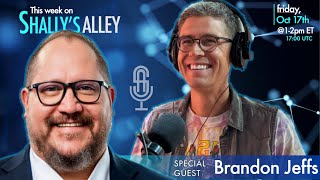
Brandon Jeffs turned down a Google offer to build a startup focused on recruiting storytelling. He and Shally Steckerl discuss why resumes are broken, how AI could enable resume-free hiring, and why RecFest's small, community-driven vibe beats massive conferences.
Chapters
Yo, yo, yo, what's up everybody? Did you miss Rec Fest? No, not breakfast, Rec Fest. It's like a, it's like a carnival for recruiters, and it just happened the last couple of days. Brandon and I just got back. I literally— Brandon just got off the airplane like not that long ago, and, um, we, uh, we're excited to talk to you a little bit about it and kind of share our experience and kind of recap a little bit. But, but first, uh, who the heck is this person that is in front of us? You probably already know them, way more famous than I am. Brandon Jeffs, founder of Building the Talent Machine, which is a company, I guess. Um, maybe, maybe, I don't know, something like that. And, uh, to prove that, I will demonstrate by showing you a website. Ooh, look at that. Look at that, he's got a website and everything. So say hi, what's up?
What's up, Shally? It's awesome to be here, dude. Thanks so much for having me on. Glad we both got home safe.
Yeah, yeah. Remember that time we sang Hotel California together?
Always. You can check out, but you can never leave, baby.
What was that, ERE?
I think so.
Yeah, yeah. And we had fun singing it. Man, that was kind of interesting.
That was what, May?
Yeah, it was interesting because what's really interesting to me, I've never done this before, is, uh, karaoke with a live band. It's not karaoke with like a teleprompter or, uh, uh, you know, um, just microphone that's basically like just nothing but the background music. The band is live, so epic. They like will riff if you, if you pause or like miss the, the lyrics. They'll like riff with you and then start the stanza over and like Yes, it was fun. It's actually kind of like singing with a live band anyway. So you were the only one that stood up and gave me some moral support there. I was in my little wheelchair. I was singing Carrie O'Get to a Live Band from a wheelchair. So good.
So good, dude.
You know, life is strange, isn't it? How it does that. But tell us a little bit about what is building the talent machine, just for people that don't already know your famous self.
Yeah, totally. Um, absolutely not famous, but I appreciate the glow up. So Building the Talent Machine, we are a content and creator studio that services the recruiting technology industry. I'm a recruiter myself. Uh, we fill recs, I source. I've worked in public, private equity, and startups the last 10 years, and I've, I've built a career in this recruiting community, and I love it. I love storytelling. Recruiting is storytelling. So I got a podcast mic in a white elephant Christmas gift a few years back, and I said, screw it, we're starting a podcast. So Building a Talent Machine is all about storytelling from talent leaders who have built the talent function or built a significant business group's recruiting function at a tech company. So I'm having fun. We do sponsorships on the show. It's a video show. We do content activations. We do some creative stuff that the industry has never seen before that I'm about to release. So I'm just having a good time. And of course we do search. So if it's engineers, it's go-to-market, like we'll take those recs.
But it's your show. You're not like helping other people launch their podcasts. It's not like that.
No, I do that just out of like, you know, friends and family hit me up being like, yo, how'd you do this? And it's like, how do you do this?
How do you do that? And pointers. Oh, okay.
Yeah, no, this is, this is my show. I'm the host.
I have to call you because this shows me— can you believe this? Take a wild guess. I am absolutely terrible at self-promotion because I, I don't even want to admit this. I hate even like just admitting it, but I don't really think about myself when I do these things. The show started out as a way to connect with people that were during lockdown, uh, didn't have, you know, their usual interaction with colleagues at the office. And it started as a Facebook group, then it grew, then it became, let's, since we're all together, let's do some hacking. And that became Let's have, you know, some guest speakers, and it just sort of evolved. And 312 episodes later, right? Take a guess how many different people have been guests on the show. I just— the reason I'm telling you this is because I've never done this before, because I'm such an idiot when it comes to self-promotion that I never even went backwards to think, ooh, you know, what can I brag about? Never even did that. So I just did that last week. Take a guess.
150.
That's pretty close. Oh my God, that's like—
how close?
Close. Um, so 173 now. Okay, separate guests, but that's because we've had some repeat offenders. There's been about 20 people who have come back a second time. It's been going on for a while now, right? 312 episodes. So We've had people that, you know, 2 years later came back. So if essentially there's been 170 unique, you know, people present, like talking on the show. And the other thing that I never calculated until last week, how many views, total views do you think I have?
Total views over 150?
Over 320 episodes.
320 episodes. Just give me a quick second 'cause I can't do math in my head, man, and before coffee.
No math before coffee. Yeah, 331 episodes actually.
I think you've got—
I've got—
I'm gonna, I'm gonna go like 2.9 million.
Nah, not even.
No, not even?
No. Okay, I was impressed with the number, but it's only about 12,000 views.
12,000 views.
But yeah, that's—
oh, got it, got it, got it. Sorry, I was unique.
Yeah, 12,000 people have 12,000 unique people have viewed the, an episode.
Oh, that's, that's incredible.
That's incredible. Which I, you know, I think is a pretty good number.
Yeah, yeah, yeah. 100%.
I don't even know if that's a legit number people track or whatever, but it's, you know, from, from my YouTube statistics. So I'm like, hey, I should start, like, I should brag about that. That seems—
No, you should.
Like, it's somewhat significant.
You know, I posted a video or I did a video for a client and it was off the shelf content where they. You know, rent and, you know, contract my video production team. So a guy with a 4K gimbal, they rent my image and likeness. I'm the subject. I do all the scripting, creative direction. And when I saw it, I saw that it hit like 36,000 unique people off one video. I was like, this is crazy. This is like if Madison Square Garden was filled and we were like, hey, we're going to play you this video, New York City, right?
Um, And they watched it.
Yeah. That's why I don't like really care about the metrics. And my whole thing is like, no, I never get in the bottle is because like even the emotional difference between getting 700 impressions to 1,000 impressions is so much different from if I get 7,000 impressions to 70,000 impressions on a post. I don't know what it is. And I just, I want to have conversations and talk to people, even if I reach one person or one person responds with a laugh, if I drop a joke, which I do a lot. Like, that makes my day.
Yeah. And to me it was, it was, this was an impressions. This was like viewers. Um, cause I didn't even look at the impressions. I have no idea.
It's, yeah, I was thinking like 3 million impressions, not, not unique viewers.
Yeah, no, I didn't even look at that. I'm just, this is very new to me. I mean, I've been doing the broadcast live, just kind of recording and, you know, and broadcasting, but never really kind of went back to, to do anything like that. So I could probably use your services, but anyways. We just got back from Wreckfest, which is in its, I don't know, third year or something like that. And it's a very different event. Um, I'll, I'll give you my take on why I think it's so different because this was the first time I attended. Um, and then I'll, you probably have been there before, so I'll let you kind of chime in on that. But my, my reasoning for why it's different is because it's a lot, in my experience, a lot less pressure, much more casual. Yeah, words. Um, I felt like I didn't have to do anything. I didn't have to go to, uh, the, the sessions if I didn't want to. There were always 4 sessions going on, um, in like 4, 4 compass points of the event. Um, I didn't have to walk the booths if I didn't want to. I felt like there was a lot more conversational. I felt like it was more of a, um, like a, a gathering rather than a conference. Still a conference because there's still speaker sessions and their content and there's still booths and all that. But I just, for me, it felt like that. So I don't know, what's, what's your take? And is this your first or?
So I think that's a good description. It's for folks that haven't been, it's outside under circus tents. You feel like you're at a festival. It's been going on in the UK for quite some time. So it kind of borrows that. Like England music festival vibe. And apparently I haven't been to the one in England, but apparently it's like real rowdy over there. They drink all day. It's more agency focused. Here it was more a collection of friends socializing, seeing the vendors loosen up a little bit, seeing, uh, a little bit, yeah, newer faces on stages. I think Jamie Leonard and the team over at the Recruiting Events Company do a really good job of putting people on, and he put me on the map a bit. 3 years ago for their first Rec Fest in Nashville when they came to the US. I remember I saw something and I was like, this is cool, a recruiting festival. And I just started gassing it up online. And then Jamie hit me up and he was like, yo, can you speak? And I was like, what? I'm just like some goober. So this is the 3rd year I've spoken. Last year I did a bunch of content for him doing like man on the street. So I'm all over their social. I love the team there. And then this year I hosted RL 100. The first, um, day of the pre-conference.
Okay.
And then my company works with, with clients and vendors in this space. So like one of my sponsors and clients is Built.In, another one is Findom. So I had 2 days booth activation with the gimbal. My boy Lucas was out there. He's like the guy with the mustache doing backflips in the little booty shorts. He's a riot. Uh, and then I spoke, uh, on stage and then hosted a fireside chat with the CEO of a company that I advise. So it was, it was booked and busy.
Wow. So what was, uh, what was your big takeaway from the event? Like if you were to say, having come back from ERE or HR Tech or any of the other ones and you wanted to sort of summarize it for folks, what would be your, your, your summary? Your gist?
Yeah, I appreciate you asking. My whole The zeitgeist. Yeah, the aesthetic of the conference.
Exactly.
So I've been at all the major conferences thus far. That's part of building the talent machine. We're doing this like neo-analyst broadcast journalism style. Attend the conferences, report back, upskill and uplift the recruiting industry.
Sounds extra pretentious. I love it.
Super pretentious. I barely have a degree in English as a first language, so any opportunity I have to sound pretentious, Shelly, I'm going for it. I used to write for a newspaper. Um, so the different way—
I mean that in the most respectful way possible. Yeah. Yeah.
If you're not, if you're not trying to sound pretentious as a recruiter in tech, like go, go do something else. No. Uh, the big takeaway for me, I'll be honest, I was very heads down against deliverables. So I didn't get a big 30,000 foot view of the conference. Cause I was so laser focused. I like, my calendar was literally stacked the entire time. I think like I had a chance to go to the restroom. Maybe once each day. But the takeaway for me in my experience was—
by the way, for outdoor porta-potties, they were— they swank.
They were swank. Uh, no, I think the takeaway is community, man. Like, I talk a lot about community. It's probably one of the overused words in our vernacular, particular in B2B SaaS. Uh, the only thing I've heard that's probably more overused in recruiting tech than community is culture fit. But I felt a sense of community being there around my peers, friends. When you're in your 30s, it can be challenging to make friends as an adult. And coming out of the pandemic as a lifelong extrovert, I had appetite to make more work friends. I've been working as a recruiting team of one, like first recruiter into a startup. So the last few years for me is about community building and, and it's honestly about friendship. So for me, the theme was friendship and being able to see other people make friendships. For example, there's like this group of women in the Talent Collective that Natalie Stones runs. Natalie's the head of events and community at Findem now. And there's like all these recruiter girlies that just have each other's back and it's so sick. They're like making bracelets, they're doing happy hours and breakfasts, gassing each other up. Like, I love it, man. So for me, it was all about friendship.
So very— so really super social. Now, if you wanted to explore vendors, you would have had a chance to, right?
Yeah, there's a shit ton of vendors. Yeah.
And then if you wanted to see sessions, there was a lot of good continuous lineup of, um, of, uh, like the agenda. I mean, I, I, if I was to— I tried to kind of summarize the topics and there was so many. I actually went into the sessions app and I tried to do a filter. It's like, which one do I wanna, which ones do I wanna go to? 'Cause sometimes there were 4 at a time and other times they sort of staggered them. And so I did the thing where you choose topics and I'm just gonna like, I'm gonna read you this. Like this is the choices of topics. AI and automation, analytics, assessment, budget, candidate experience, contingent labor, diversity, early career, employee engagement, wellbeing, mental health, future of work. And I'm still only like a third of the way through.
Holy hell.
And I was just like, I didn't even, I froze. I didn't even choose a topic from the list of things to choose from to filter the content because I was like, hello? Yeah. It was overwhelming.
That's good feedback. Let's fly that up the flagpole to Jamie.
I mean, I think it's great. I think I honestly, had I to do it over, I probably would have picked a track. Um, like Julia, she was the one that just commented here. She had a— she was the MC on one of the stages, and I, I think I probably would have just like stuck to that stage because like that would help me filter the topics. But I don't— I mean, I tried to walk around a little bit and it was a little overwhelming with, uh, with a lot of choices, but it was definitely fun. Um, now if I told you— do you know what the composition of the audience, what the attendees was?
Yeah, it's more practitioner-focused. Um, that's something that I observed directly, and even my camera guy Lucas, because, you know, he's an amazing cinematographer, he's been with me on the road for all of these conferences this year, uh, it's great to see him, and he was like, whoa, dude, this was crazy, we captured so much great content. I was like, yeah, because it was more practitioners. And the difference between a Vegas conference and RecFest is, you know, it's $100 to get to RecFest. It's $1,000 to get into HR Tech. And that's exactly what we saw at HR Tech. It was just like marketers marketing to marketers. It was a big partnerships play. There were basically like no practitioners, whereas every single person— yeah, every person we talked to at RecFest was a recruiter or somebody that's touched a rec in the last couple of years.
So 1,600 attendees registered. I don't know if they actually all showed up. Obviously not everybody. But 1,600 people registered. 50% of those were representatives, or as we would call them, delegates, if you will, of an employer. That's great. Um, it's about 3%-ish, 4%-ish, you know, some sort of independent unknown category. And about 46% were in the, what I would call the, the, the vendor sort of space, if you will. Now, as far as roles, Um, what I noticed— this is my own breakdown and analysis, right? About 45% of the top— the people there were in straight-up recruiting, functional recruiting. 45%. The second largest category was sales. Now, this includes GTM, go-to-market growth, uh, business development, VP of partnerships, all the roles that I know you don't want to admit that you're sales, but essentially your job is to like you know, get people to buy stuff. So yeah, that's 21%. And 10% were founders of their own, either solo operators or startup founders or company founders or C-suite level, you know, founders. So that's a good— that's what, 40, 60, 70% of the population? About 10% were in brand marketing. So that was probably the lowest group of professionals being represented. Lowest as in smallest because, you know, there were a lot more recruiting, 45% than anything else. And then if you put like HR and operations and other, you know, related, not tactical recruiting areas, that would probably be about 5%. So that was kind of the composition, which I thought was pretty interesting. It's, yeah, I mean, 45% frontline recruiting, like you said. It's a pretty big, um, represent— excuse me, representation of the industry. Um, and level-wise, only about 25% were individual. There were a lot of managers, 15 to 16% managers, and about 10% in the director— no, sorry, 13% in the director. So, you know, manager about 15, 16%, director about 13%, VP about 10%. And even chiefs, C-level people, about 12%. So that's a pretty big, uh, representation of like different levels. But a good quarter of the people were, you know, if you did, if you map the recruiter and the individual, good quarter of the population were frontline recruiters. And that's pretty cool if that's the audience that you're trying to reach and if these are your peers that you're trying to network with, um, you know, stuff like that. So I thought that was That was some interesting intel that I could share that might be unique perspective.
Yeah, no, that's legit. Um, that checks out. I think there's a lot of folks in the recruiting space trying to build, and that's a net positive. I mean, even like my title, it says founder, like I run a media company, like you can call me like whatever. It's just, it's, it's whatever. Like I'm a, I'm a guy that does a content studio and I've got opinions cause I'm a recruiter, but I've worked for whatever you want to call it.
But yeah.
Yeah, so I think the attribution there is interesting. Uh, bloated sales teams for sure. I've seen a lot of great recruiting tech companies and founders that have strong revenue that do not invest in booths. So sorry, Jamie, like, I think you do a great job. It's awesome that people show up. You're running a business. You doing this allows us to do it. So there's so much gratitude, but you don't have to necessarily buy a booth. In order to have an impact. And I see a lot of founders that just like pound the, the pavement at these conferences and they just have a different approach. But there is a false positive of the state of the market. So if you are a practitioner, maybe you're that IC and you go to the recruiting conference and it's the biggest recruiting conference in the world, um, and you don't see a company, there is a noticeable impact when those brands are not there. So I'm texting my friends that work at those companies and it's like giving them that intel. But at the end of the day, like, you kind of have to, but you also kind of don't. It depends on your ICP. And I think what we're seeing is, especially in the ATS market, is over the next 5 years, the market cap is going to expand by 2 to 3x of its current value. So if we go from about $2.5 billion market cap for the ATS market, there are estimates that it's going to get to $6 billion in the next 5 years. So there's diversification.
Oh, okay.
Just ATS. So what that means is like, if you're on stage and you're looking out and it's like, well, what is 2 to 3x the volume of half the vendors look like? So what's happening is vendors are niching down. And as a result of niching down, it's harder to understand if that 50% of the attendee list is within your ICP. So there were vendors that were absent that have their own conferences. And instead of investing, you know, $50,000, $60,000, $70,000, $100,000, I mean, like, what is it to go to HR Tech? $1 million? They can just throw their own party and invite the exact people they want. So there's a lot of ways to skin a cat when it comes to biz dev and the way buyers buy software. Is changing, but it's also good to remember that like this stuff is so cheap at the end of the day. Like we're talking about like software that costs $10,000, $20,000, $30,000 a year. Like that's nothing compared to other business groups' tech stacks.
Wow. Okay. Interesting. Well, um, I said, uh, we were going to recap, not deep dive. So I think we kind of exceeded our, our, our welcome there. And I did have questions, actual questions for you.
We can keep going, man. I'm down.
I know we could, but, um, this is about you. It's not about RecFast. It's about you. You're in the hot seat. And I don't know if you knew this, but we do have some— something very interesting in common. We, we both turned down Google, but I have a feeling in different ways, uh, and obviously for different reasons. But you did, you did turn down Google, and that's a lot of recruiters' dream badge, if you will. Um, what was going on in your head, man, when you honestly chose startup chaos over corporate prestige? And what does that— what does that say about you?
Um, I'm a builder.
Or how you define success.
Yeah, I love to build. And how I define success is by understanding exactly How I want to spend my time. And the difference between recruiting in big tech versus startups is in startups, you get to have your hand in a lot of different cookie jars. A recruiter in big tech, they've got large teams supporting them. And every role that I've had, even in public companies, private equity companies, like I've been able to have basically a major. Of recruiting and a minor in something else. And that is employer brand, systems and operations, talent management and mapping based on my leveling and how I grew my own skills. So if you go into big tech to be a recruiter, like you're gonna be a recruiter, you're gonna be booked and busy talking to candidates, doing first round screens with people that already know about your brand. It's their dream job anyway. You're just pushing a process. And you probably have an employer brand team, a sourcing team, a RecOps team, maybe a talent partner who does more of the strategic work with that business group's decision maker. You've got coordinators. So it just looks differently than sharing a title. So Google specifically, who, who didn't want to work for Google? They were like the hottest shit in the 2010s. Every other company decided to mirror their people operations and recruiting processes after Laszlo's book. And, um, at the end of the day, like, it's easy. Like, people want to work. People want an easy job. Like, it's easy to recruit in big tech. Like, cash rules everything around me. Cream, get the money. Dollar dollar bills, y'all. Um, if you're recruiting in big tech, it really just comes down to getting the right level and the right offer to convert a candidate who's already aware about your company. They already want to work there. Um, I know people that have worked at Google. I have friends that have recruited at Google. Great people that are in my texts. Love y'all to death. Um, who doesn't want an easy job? I wanted a challenge and the whole reason I was going to work at Google is because I wanted to leverage that whole ex-Google thing that people are obsessed with.
So you literally were like, uh, I want to work here so when they, when they interviewed, why do you want to work at Google? I want to work here so when I leave I can put ex-Google on my resume.
Literally, I want to work at Google so I can quit. Um, because I wanted to go, I wanted to have like a very meta role, which is exactly what I did and what I'm doing now, which is like play a role in the recruiting tech space because I'm a practitioner. And so I turned down Google. Um, it was $190K first year comp with a $20,000 signing bonus. I had two offers. One was if I was going to drive the hour to Boulder to be in person and a less offer if I was going to work remotely from the cattle ranch where I live. And I said, kick rocks, y'all. Um, and I went and worked at a Series A ethical AI startup. In the recruiting tech space, pre-ChatGPT that exited, and the rest is history, as they say.
Yeah, gotcha. Yeah, yeah, it was definitely very different. I was early on, I was their PIPO and helped grow the companies. I ended up there as a contractor and helped, you know, basically create sourcing for them. This is very, very, like I said, pre-IPO, so very early on. But, uh, they wanted me to stay on permanently full-time, and I turned them down in exchange for a job at Microsoft, which was a lot more challenging and exciting. So it looks like same reasons in a way, except for Microsoft would not be a startup in that definition, but it was, uh, the opposite. Google was the startup, Microsoft was the not startup, but what they were doing was a lot more interesting, exciting, and had a global scale. So it's a little bit different.
Did you go to Microsoft because they would allow you to be a jerk there?
No, they did not allow that. So you were— what was that? I thought they would. No, they wouldn't. No.
What was the pin that like early Microsofters used to have? It was, uh, F-U-I-M. It was like, F you, I'm vested or something. There's like some story about like the early Microsoft folks that literally had a pin that said they were fully vested.
I did not know that. No, I was there after. I mean, it was 2014. 5 years old, the company, when I joined. Um, yeah, so 2005, '06, '07, around that, that time. Um, when you get to be my age, some dates just sort of blend together. Yeah, but it was an interesting— a lot of people thought I was swimming upstream, like against the current, you know, because people were leaving Microsoft to go to Google, and here I was leaving Google to to go to Microsoft, which is almost the opposite of what people are doing. But I had my reasons, and it was— it's very similar to your reasons, just not because of the startup, but because of other stuff, um, and the way that I defined success for myself at the time. So, uh, parallel but, uh, interesting, you know, different angles, same perspective, kind of, right? Um, now people— I don't know if you call yourself this, or people call you the Kevin Bacon of recruiting— what is the connective tissue that you think makes people link in our industry? And how do you intentionally do that?
The creative connect— or the connective link is two things: empathy and optimism. Before I got into recruiting, I followed my passion. I lived a lot of life. My first job out of school in the Great Recession was driving a forklift. Outdoors in a lumberyard running a saw in upstate New York. I have an indoor job where I get to wear slippers, so I traded in my steel toes. The irony is the best piece of swag I got at Wreckfest was a Dickies jumpsuit with some like SaaS vendor, and it's like, raise your hand if you've ever worn a jumpsuit. Like, I used to—
I didn't see that. I was in the wrong booth. I would have picked one of those up.
Oh dude, it's money. I'm gonna rock it on the podcast all the time because like literally my first job out of school was wearing like Carhartt jumpsuit and freezing my ass off, drinking out of a Stanley thermos that rattled around a truck. And now it's like Carhartt and Stanley's in vogue for software types. And I think what that taught me from my first job, jobs I had as a kid, the upbringing that my parents instilled in me is a lot of empathy and understanding that people have lived a variety of human experiences. And if we can connect with that in different ways through empathy, understanding. A perfect example, Shelly, is all of this talk about like the 996, 7/12 culture. People online are so angry.
Hold on a second. Run that past me again. I did not get it.
Oh, so the 996 work culture is working, uh, 9 to 9, 6 days a week. So 7, 6 or 7/12s. And it's basically, um, just talking about people are angry that companies have these grind work cultures. Well, the reality is poor people work yourself to death, is kind of work themselves to death as well. And they have two jobs. Um, and young people are working 70 to 80 hours. They're doing something 78 to 80 hours a week anyway. So why not work for the potential of life-changing equity? I had to work 80 hours when I was 23 years old just to pay the bills and there was no equity associated. So yeah, I think empathy is huge. And then optimism, like the next great candidate is one phone call away. Like if you're a recruiter, like show me you can source a candidate that does not have a digital profile. That's a recruiter. So in order to do that, you've got to pound the phones. You got to pound the pavement. You've got to have optimism. You got to hype yourself up. And then the Kevin Bacon line is somebody told me that, cause I'm like a super connector and I just like, I literally know everybody, man. It's crazy because I, yeah, exactly. So that's, that's the deal there.
Instead of LinkedIn, it's linked to Jeff's.
Sure, man. Let's roll. It's LinkedIn. It's LinkedIn. No, kneel and kiss the ring. That's my whole thing. The reason I'm doing this, Shelly, is because I started going to conferences and I'd see these folks that had like 100, 200, 300,000 followers on whatever social platform.
Yeah.
And they didn't know who Jerry Crispin was. And that's a problem.
Interesting.
So if you're going to talk about recruiting and you don't know who the powers at be are, or who the folks that came before you— if people don't know who Shelly is, if people don't know who Steve Levy is, or Dean DaCosta, or Carmen Hudson, um, that's like—
it's the giants on whose shoulders we, we all, we all ride. Yeah, well, I guess it's easy to forget Or maybe not even pay attention to that when you're just getting started.
No, no, no. It's easy to sound like you know what the fuck you're talking about.
Oh, that's, that's also—
Online. Sorry for the F-bomb.
I have no idea what you're talking about. The popularity of career advisors on Instagram that tell you what to do to get the interview and write your resume and stuff like that. And they just— you're listening to what they're saying. It's like, I can't do this.
Well, we could talk, we could talk about that. So there's a lot of this whole, like, why do we coach the market? Why is there an entire market for online on YouTube for how to get a job at a FAANG company?
It's just entertainment, I think.
Yeah. And when we think about what we did during that time, so why does the XYZ formula for a resume exist? Well, it exists for two reasons. One, because when Laszlo Bock was building Google and deployed that methodology for advice, they were training the market. At the same time, they were managing operational expense so that a fleet of recruiters could manage a high volume of inbound resumes. They were training the market to say, hey, this is what we want your resume to look like so that our recruiters can read it in 90 to 120 seconds. So they're doing two things at once. And so now all of this resume advice, it's going to change because the world of work is evolving and the way people get jobs. Is evolving and we're actually going to see a world in which people get hired without resumes pretty soon. So all of this advice stuff is going out the window. All the SEO ranking around it is—
I know that. I hear that. But how are we gonna start hiring without resumes? I mean, I wish that would— I wish that were true.
Can I tell you?
Yeah, please. Because I've been trying to kill the resume for years. It's about time for it to die.
So this is how the resume dies. The resume dies because we are in this nascent stage of LLMs. We're almost 3 years into ChatGPT and I'm disenfranchised. I thought we were gonna live in like this science fiction future. We thought it was going to be more evolved than it is. But what are LLMs really good at now in this state? Words. Resumes are full of words. Job descriptions are full of words. Humans are full of words. So LLMs are advanced at natural language processing. The way we hire without resumes is this. Shelly, you're hiring 10 software engineers to build something in TypeScript. You're gonna build a front-end application for a B2B SaaS app. Go ask those 10 incumbents exactly what they do for 45 minutes. They speed that into the LLM. Then every candidate has the opportunity to describe their work history as it relates to that work. To an agent in 45 minutes at the very top of the funnel, because there is an infinite amount of efficiency from AI interviewing agents, you're then matching the way people describe their experience to the experience of the job. And this is like evolved performance-based job description type work here, where we're focused on the outcomes of a role, which recruiters should be asking in intake. Versus years of experience, companies worked for, et cetera. And then the evolved state is the agents and the internet will know all of this information about us through assumption. So if you were the one software engineering recruiter at a certain company for specific dates, because LLMs are good at research, they will know and be able to say like, oh, we're 95% confident Shelly A was the person that built that company. And B, here's the story based on the post-hire outcomes of the people he placed. And that to me is how we evolve hiring without resumes.
That, I mean, that makes, logically makes sense. What you're saying about LLMs definitely checks out. My, what makes me hold back on thinking about that, and I know you're, we both agree that that would be an ideal situation if we didn't have to deal with these resumes because basically resumes are nothing but just marketing documents that don't really reflect a whole lot.
So is it a problem?
Exactly. Yeah, right. But, but you can hire people without a JD. It's still people that hire without a JD or job posting still want to see resumes. And this construct of a resume was a summarized version of a curriculum vitae, which was a presentation document that lists your job history. And the reason that we needed this summary was because we had too many applicants. So essentially, a resume was a way that was created to eliminate candidates. In other words, I'm— let me just not mince words. Resumes are specifically— the intent and purpose and use of them is to eliminate you. That's what they're for. That's what they were designed for. That's why employers ask for them. They're not asking for your resume to include you. They're asking for your resume to exclude you. And so, what you're describing is the opposite of that. It's including people for the right reasons, which is the diametric opposite of what we're doing. So, in order to go that way, we'd have to literally 180 our thinking and include people as opposed to exclude them. As long as we're looking to exclude them, we're going to be relying on this easy, you know, I can look at this for 10 seconds, see that you don't have the right job title, and send you a rejection letter because that's what we've been doing. And that's what they're for. So you're not going to get rid of— sadly, you're not going to get rid of something that's being used to exclude people by giving them something to include people.
I like, yes, and— but I— this goes back to the whole Laszlo Bock training the market in this XYZ statement for the resume to, to shift from that original CV model into more of that marketing document that you said. So you can talk a little bit about the work you've done. Um, but I think the feedback I have on my experience hiring the last few years, working with like director plus placements into early stage startups, is the, the founders I work with, the first thing they want is the LinkedIn profile. They don't want a resume. They want to know, right?
Resume, LinkedIn profile.
Yeah. Well, I, I think they're different because the LinkedIn profile, like, there is a false positive as well. If you have a great LinkedIn profile that you are Uh, have more skills, have more experience, more aligned. It's all the way candidates present and pitch themselves. And an example of this would be like, I've interviewed pretty much all the SDR, AE influencers out there. I've gone and poached them over the years. Uh, they're actually not that impressive. Some of them are, but some of the least impressive sales folks are the ones that have these inflated profiles where they look super visible, or maybe they've got that like engagement pod. And it's like, actually, like, let's go find the person who has, uh, different behavioral traits than just having a shiny LinkedIn profile or whatever profile or resume or whatever.
Yeah. I get you.
And then on the technical side too, you have founders who are like, oh yeah, I don't want to interview any software engineers that haven't, you know, had a commit on GitHub in the last 6 months.
Well, see, that's a fallacy because Well, you're shaking your head up and down. You probably know what I'm about to say. They may not have any public commits. They're private.
Or they're busy. They're doing their job.
Yeah. Or they're using some other Git. There's a billion reasons for that. The most common one, as I was in that space, is the fact that they do have published works, but they're password protected. You can't see them for a reason.
I mean, that's actually true.
Open source doesn't mean— open source doesn't mean here, you can have it. I mean, you still, you know, anyway, um, but I just realized that you're in the tech sector. So in other areas where that may not necessarily— the ChatGPT describe your job kind of analogy thing may not, not resonate with people— there's others as well. For example, I think the, the extended trial, the, the, um The, the pro tem period, they're like, let me do the job for a week and I'll show you what I can do capabilities-wise. Like, that's another way to hire people without needing to have a resume. Oh yeah, I try before you buy, or, or internships or cooperatives, is, you know, apprenticeships.
There's all these other ways that don't require this, this one-page you know, document that's basically, you know, yeah, I come from the restaurant industry, Shelly, and if you get hired, yeah, if you get hired in a kitchen, like, you, you stage. Like, if you're going to be a line cook, if you're going to be a sous chef, like, you stage. You work for free.
I love that. Um, yeah, let me see what you can do.
Yeah, or it's like, look at our menu, add something to it. I love that pressure. Um, here's the thing. This ties into skills-based hiring. People want to talk about skills-based hiring all the time, except for when it's time to pay a vendor to administer it, or if you're a candidate, prove that you got them. And that's what I love about that humanity element of being in a kitchen, be like, okay, I'm going to cook something. If I don't cook something great, if I don't, you know, work an evening shift for free, I'm not going to get this job. Now in tech where there's money. Oosing out of—
there's other ways to do it.
There's other ways to do it. And I think one of the ways to do it is this like contract to hire or fractional to hire, which we're seeing more nomenclature around. So there's, there's tons of ways to hire folks, but it comes down to what do candidates want to do and how bad do they want it.
That's, that's a good point. And that's aside, aside the point. I think that the resume death— and now, you know, unfortunately we've now, we have resuscitated the resume in the form of a LinkedIn profile. So when I say kill the resume, I'm also saying kill the LinkedIn profile in a way. I would love to be able to see content on LinkedIn that's more about what it is that you do versus this kind of like artificial storyline.
Dude, tell me about it. I spent all this time and money producing these like killer 4K videos, flying my video guy out, having a blast. And then I'll do like a shower thought post that goes viral. And then like the shittiest algorithm engineers in the world work at LinkedIn. So it's like, Great, now I've got to wait 4 days before my next post because if you have a viral post, uh, they dock you for your next posts. And then like, it's not like Twitter or TikTok.
Yeah, if you have a hit, your next one better not be a hit.
Yeah, it's like, why are we— why are we doing this? And they don't pay creators. Um, no, I don't know.
Imagine if you could sell ads on your own profile. I'd be rich. I'd be so rich.
Who says you can't?
You can't sell ads on LinkedIn, on your LinkedIn.
Define ad, baby.
Well, you know what I'm saying? As far as like the way they do it, they are selling ads on your profile.
Yeah.
Yeah. You know what I'm saying?
No, I'm going out to LinkedIn Connect next week. So we'll have this conversation in person.
Let's do that.
Sorry to any software engineers that work at LinkedIn on the algorithm. It sucks.
It's not your fault. It's humans. I wrote about that. Yeah. There's a post about that, about why it's really not necessarily the algorithm itself as much as the way we humans use it. But anyway, you were talking about video, which actually is a really good segue to one of my other questions. In your videos, you make recruiting look cool, which is basically sorcery.
I think it's cool. It's super fun, dude. I'm like, I'm primed. I told people this on stage.
Yeah, but how do you do it? Like, what I'm saying is, Oh, how do I make— how do you make recruiting look so cool? Because the average person— and I'm not saying you're by any means average, but what I'm saying is a typical person that's going to go out there and create content, it's gonna have a hard time making recruiting look cool.
I'll tell you how I do it. It's this: I've been a solid B+ at everything I've done in my life with minimal, minimal effort. And here's the thing, I'm happy being B+. The delta to become A, to go from B+ to A- to A, is not worth the effort. I am able to deliver value to clients when it comes to recruiting. I'm a baller recruiter. You need somebody, like, I'll go do it. I will work that to death. Yeah, everything else—
great job. You don't have to be the best to do a great job, right?
Exactly.
I tell people that all the time. It's like, you don't have to be the number one recruiter in the world If you're the number one recruiter in SaaS in Atlanta, that's pretty darn good, dude.
Exactly.
One of the top 10 in SaaS, you know? So yeah, I get that.
But Brian Fink is the best recruiter in the world. I'm never going to be Brian Fink, but if I hang out with Brian Fink, like, I can be a great second fiddle to Brian Fink and learn enough to be dangerous. And that's like the only reason I'm here in front of you today is because I'm like good enough and the stuff that I suck at, I'm like good enough at the good stuff that the stuff I suck at doesn't matter. That's startups, dude.
But I want to drill down a little bit more and get to like this ingredient, right? So the secret sauce, it's taste. It's tasty.
I'm a millennial sneakerhead who loves art and culture, and because I'm B+, I wasn't good enough at music to be a professional musician. I wasn't good enough at marketing to go be a creative.
Do you script them? Are they spontaneous, or is it editing? Is it unfiltered? Is it like— tell me. And maybe you don't want to reveal the secret, but tell me, is it scripted and you just put it down and it works because you got a B script that it works, or is it, um, you do a lot of editing and make it, make a, you know, F into a B when you edit? Or, you know, kind of like, where's that step?
Uh, we don't make these because, uh, I don't use Facebook. And, uh, no, I have to give a tremendous amount of credit to my cinematographer and my editing team. My cinematographer is named Lucas Lacey. He is probably somebody you've seen on tour with me if you've been out on the conference circuit, and he's incredibly talented. He is an ex-parkour athlete, shattered his kneecap Instead of going to stunt school, he went to film school, picked up a camera, started filming parkour, and he just graduated school in May. We started working together in March. So, uh, it's an investment. My company, Building a Talent Machine, is a very real content marketing studio. We will deliver value for the recruiting tech industry better than any other company on Upwork, any other local studio, because we have knowledge of the space. And that's the differentiator is I've got 10 years of recruiting, Shelly, to know what moves people around recruiting. I have insights. I have informed opinions. That's why clients want to work with me because it's not enough to just hire some studio team in New York to come out and film your CEO.
Yeah. Overproduced video is not, it doesn't work anymore. So there's, let me be clear, off the cuff or sometimes it's read. Okay. And I'm just gonna guess off the cuff. Good production value but not Hollywood studio, right?
Yeah. And companies, companies need 3 things. They need 4K professional video production, on-air talent, and distribution. We do all 3.
Nice. Last question, because I know we're getting pretty close to time here on the questions that I had for you. We have this humor thing in common. We, we both use humor as a, a bit of a coping mechanism. Exactly. Or also Trojan horse that, you know, helps with breaking the ice. And, and, you know, and it takes a little bit— I know sometimes I mess with my humor and I go too far one way or the other. But do you see humor as a recruiting strategy, a brand amplifier, or rebelling against beige?
D, all the above. Life is too short to work on— life's too short not to work on cool problems.
Strategy, humor for brand, humor for rebellion.
And yeah, dude, like, I go to recruiting conferences, like, I'm out at HR Tech in a tie-dye shirt and cowboy boots, and Lucas is there in booty shorts and a tank top, and it's at HR Tech, and people are like, who are those people? It's all, it's all brand.
That was, that was me. I used to wear shorts conferences and people thought I was crazy, but it's because I wanted to wear shorts.
Um, and then here's the thing, it's recruiting. You know why it's recruiting, Shelly? Cause I got that boyish skin tone. When I do recruit those early career sales folks, Gen Z, they think I'm one of them. I'm 38 years old, dude. I'm like, I'm the only influencer you'll ever meet that doesn't have social media. I am so lucky that I get to wear slippers instead of steel toes and talk to people for a living.
And so like legit straight talk on the humor. If you know, if you make a mistake and you offend someone with the humor, it's almost like, okay, hey, look, sorry, I didn't mean to offend, but like I'm trying something here. So, oh yeah. And over like, I think people sometimes get too in recruiting, they're like, I don't want to offend anybody, so I'm not going to even try to be funny.
No one orders milquetoast at brunch.
There you go. Okay. That makes sense. Gotta have that crawfish pie with etouffée and, uh, yeah, milk toast.
I'm a green juice, green juice boy.
Milk toast? Where did you even get that from, man?
Wordplay.
Toast. All right, well, I gotta let you go, but before I let you go, I gotta give you two questions that everybody, everybody gets. The first one, nobody's gonna get away with, uh, coming to the show. And that is, who should be our next guest?
Your next guest?
It doesn't mean they'll accept my invitation, but who should I—
Oh yeah. Let's play tag here.
Yeah, right. Exactly. Let's pass the tag along.
You know who would be really good actually as a next guest is my homie Nate Wiley. Do you know Nate?
No.
Uh, Nate runs a recruiting company called Infinite Talent. He is an amazing technical recruiter. He built data science team at Lyft. He's a super legit dude. He's, uh, in the South as well. He's not too far from you. I think he's in Raleigh, North Carolina.
Wiley Press or whatever.
Yeah, yeah, yeah. It's W-Y-L-I-E. He was at RecFast, so hit up Nate for sure. Um, gotta shout him out. He's such a good dude. Uh, also a veteran, so thank you for your service, Nate. And then, um, man, I'm coming to Atlanta. I'm actually doing a road trip. I'm starting something. Come visit Atlanta, Asheville, Nashville. We'll be back down there.
Come visit. You got my number. Come hang out, or, um, let me know when you're here and I'll show you around a little bit. All right. And then the last question is for folks that watch this as a replay, and I want them to be able to do something for themselves. Like, uh, give us, give us something to ask ourselves That's introspective. So what should we ask ourselves about your subject matter that you're passionate about, or anything that you're passionate about, that we should ask and answer for ourselves?
Ask why you do it. Before you log on and sleuth the internet and start setting your sequences, before you book your calendar with 6 to 8 screens a day, things that are just the daily rhythms of what it takes to be a recruiter, Ask yourself why you're doing it. I know why I'm recruiting because a recruiter gave me an opportunity and I was able to advance myself in my career, have financial security. I used to live paycheck to paycheck. I used to work in a homeless shelter. I used to not know what I was going to do with my life. And recruiting found me because of a recruiter. And it has been the most fulfilling path. That I could have never chosen for myself.
Why do you do it? Yeah, so instead of WTF being, you know, whiskey tango foxtrot, it would be more like why tango foxtrot. I like that. Why tango foxtrot? Why the F do you do it? I like that. Sweet, man. Thanks a lot. Appreciate it. Hey, this was awesome. Uh, we are right at 2 o'clock, and so we gotta turn things over to the airwaves, but I'd love to have you back, and definitely please hit me up when you're down here.
Yes, absolutely. Thank you for having me on the show. Uh, I came in a little hot and a little spicy from the trip. I'm glad you got home. That, that sun must have been getting to me.
I was— to me too. Yeah, folks, tomorrow— not tomorrow, next Friday we have Ashley Surratt. You probably recognize the name, so she'll be our guest next Friday. Hope to see you back here. Until then, be kind to yourselves, take
More from Shally



Scaling Talent at Hypergrowth: Leadership, AI, and Hiring Excellence with Cindy Nicola







