Winner of Worlds Greatest Sourcer Shawn Vyas
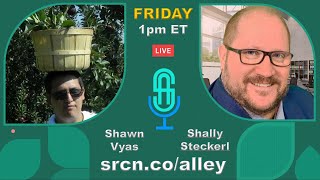
In this conversational interview, Shally Steckerl welcomes Shawn Vyas, the runner‑up of her "World's Greatest Sourcer" competition, to discuss how they met, the competition’s impact, and the evolution of sourcing as a distinct profession. They explore the lingering perception of sourcers as junior recruiters, the role of hiring managers, and the importance of DEI and legal compliance in talent acquisition. A large portion of the conversation shifts to practical open‑source intelligence (OSINT) and social‑media intelligence (SOCMINT) techniques, covering tools such as BoardReader, Social Searcher, Feedly, Twitter scraping, and Stack Overflow SQL queries. They also critique LinkedIn’s coverage of the workforce, discuss data quality, and share resources for learning OSINT/SOCMINT. The interview closes with advice on uncomfortable conversations and continuous learning.
Chapters
Hey again, it's Friday, September 23rd, and it's 1 PM US Eastern time, at least from what I can tell from my, uh, Top Gun jet here. So you must be on Shally's Alley. Well, I'm flying over Shally's Alley right now, but so today I have a unique guest, and the reason I'm saying unique is because Sean and I met under kind of unique circumstances, uh, some time back. And ever since then, uh, well, I've just had kind of a man crush on him. So he's getting embarrassed now. So I want to, I want to tell people kind of the story how we met. Is that okay?
Sure, please go ahead.
All right, so I have this, uh, contest that I run occasionally, haven't done in a while, called the World's Greatest Sorcerer Competition. There's been like 3 or 4 of these over the years. Typically, I use money from a sponsor to pay for the prize because what I like about the World's Greatest Sorcerer Competition is it's actually a cash prize. So I want to reward people for their time and I want to have it be something that they can do not during work so they can, you know, like on the side maybe make a little bit of cash. So you don't do it every year because you can't— I just can't find a sponsor every year for it. But anyway, Long story short, this might have been the second or the third contest, World's Greatest Sorcerer Competition, and I'm looking at the leaderboard and up comes this guy, Recruiter— what was it? Recruiter SMV or something like that?
Yep.
Yeah, Recruiter SMV. And I'm like, what is this Recruiter SMV? What's going on? And it just— I saw this trickling up and up, like in the leaderboard, just kind of going up and up. And I'm like, wow, okay, keep an eye on this one. And lo and behold, he actually gets second place in the competition, which is really hard to do. There were like 1,000 competitors, and I think towards the end about 500 people were still hanging in there fighting to, um, to get the— remember, it's a cash prize, so there was like, there was, there was money on the line here. Um, and Sean took second place. So I reached out and I'm like, dude, who are you? Like, in a good way, like, where'd you come from? This is I love it. This is exactly why I was doing this because I wanted to meet people that were just creative and had solutions that nobody had thought of. And that's partly why actually why he won. So that's how we met. And then ever since then we've been in touch. I've tried to recruit you a few times unsuccessfully, just timing hasn't worked out. So obviously you're one heck of a damn good sourcer. But I wanted to ask you something on the show if you don't mind. What motivated you to enter the competition in the first place?
Yeah, really good question. So I was working at Best Buy at the time on kind of a seasonal position, and my boss actually let us know about it. Apparently I hadn't been clued in to, you know, I really think that that competition kind of pivoted me and my career as a sourcer to kind of just being kind of a relatively newer sourcer to really learning about the industry, learning about colleagues, things like that. Yeah, my boss, she's like, hey, sorcerers, there's this World's Greatest Sorcerer competition. Why don't you enter? And I think it was the last day to enter, the last hour to enter.
I didn't know that.
That's awesome. It was last, last chance. And so we all kind of hopped on there and she's like, yeah, take, take the next hour. So it's really nice of her, really appreciate that she, you know, cared about our our progression, career progression, things like that. And when I got in there, I'm like, because, you know, I was doing kind of sourcing hacks at the time, sorcerer.games, you know, things like that, hackathons and little fun things. I'm like, ah, this will be easy. This is just like the other ones.
And then you're like, this is not easy.
No, it was much, much more complicated than I thought, but I learned a lot too, which was, it was a fantastic experience. Experience overall.
Did you actually think you were gonna win the money?
No, not a chance. Not a chance.
But yeah, yeah, but yeah, you got to second place. That was, that was cool. That was really—
yeah, I figured if, you know, if I could get through that first round, that first qualifying round, that I could have a good shot. But no, no way. I never would have thought second place.
Yeah, I mean, you just kept inching up and up and up, and I was like, wow, okay, it was There were some folks that, like you said, just got tripped up in the first round, and that happens pretty much every time I do it. A lot of folks just get tripped up on the first round because they think it's going to be a game or, you know, a silly puzzle or whatever, but it's not. It's a, it's a real contest, and people learn. Like, that's the best feedback that I get is people say, I, you know, I went in there and I, and I just got my butt whooped, but I learned a lot and it was well worth it. Um, so yeah, it's, it's a fun time. I I've been trying, shh, don't tell anybody, top secret. I've been trying to get SourceCon to host it again. 'Cause it was—
Oh, that'd be awesome.
Yeah, but it just has, I mean, things have been really difficult with all the change and everything going on. And so maybe someday we'll get somebody, I don't know, HRTX or Recruiting Daily, somebody will pick it up again. We'll do it again someday. And then you can be a judge this time.
Oh yeah, that sounds great. I just love the validation it brings to sourcing as a role, right?
Yeah, absolutely. Which is interesting that you bring that up because, you know, you and I have had this conversation on several occasions about sourcing kind of being the redheaded stepchild in the TA industry. Do you still feel the same way?
Yeah, I do. I do. I think, you know, I was a sourcer 10 years ago, right? And back then, you know, it was just kind of a new kind of fangled position. It wasn't, you know, a lot of companies wasn't really sure. That's true. That's true. I mean, you, you created it, right? So you even know even further back than I.
What we know now is that, yeah, exactly. Yeah.
I mean, it's come a long way. It really has evolved into kind of its own function, uh, into providing value for an organization. That you can't really get anywhere else, right? Not to mention obviously the strong DEI initiatives that all companies have. So being able to put a foothold on that and bringing, you know, data-driven insights into the talent acquisition world. But, you know, I still get, you know, people, oh, so you're like a junior recruiter, kind of taboo. You know, that's a bit of a pet peeve of mine. Because it really isn't.
It's not, you know, I was a recruiter before I was a sourcer and honestly, today is still my philosophy. So much so that I took this to the International Standards Organization, you know, ISO. I was a member of the US ANSI, American National Standards Institute, representing the United States in the global ISO community for talent acquisition and I brought sourcing. To them as a distinct profession. And what— when I, you know, they may— you— they make you present when you're bringing up an idea like that. They make you present in front of all the officers to vote on whether or not this should become a standard. And, you know, I had to present in front of everybody why sourcing has to be its own standard. And the questions were all about, well, isn't sourcing just like, um, you know, I want to grow up someday and be a recruiter? It's like junior recruiting. It's like, no, People that are really into this, they were a recruiter first. And I maintain still today that a sourcer is first a recruiter who then chose to specialize, like in a lot of other professions where you start out as a generalist, right? You know, you do carpentry and then you develop a skill and ability and interest, a style or whatever in, I don't know, chairs, and then you become like the, you know, world's greatest chair person, right? That's what the world's greatest sourcer is about. It's not the world's greatest entry-level person that's going to want to be, you know, become a recruiter, right? So it is definitely— you start out with recruiting because that's the general field, and in recruiting you specialize. Some people are sales recruiters, some people are technical recruiters, some people— right? And in marketing you specialize. Some people do marketing lead generation, some people do advertising. The same thing. So sourcing is a specialization, but still I constantly run into that it's a junior, you know, entry-level job that somebody— that anybody can do. It's funny how they think anybody can do it, which is offensive, but also at the same time true, right? Like, right, anybody could source, but not just anybody could source. You have to have, uh, an aptitude, a mentality, a tenacity. There's— there are things that you need that you don't— you don't need to have the experience to do it. You can learn it, but there's some fundamental core competencies that allow you to be able to learn it. And once you start going down that path, you've got a long way to go. I'm still learning. It's 25 years and I'm still learning and creating new things. This is definitely not— how are we going to remove the stigma, man? How are we going to get us out of the junior recruiter bucket?
Well, that actually reminds me of a good story there. I was, I was interviewing with a company, um, and the hiring manager just very plainly told me, you know, anybody can source, you know, I don't need someone, you know, I can hire anyone and they can source for me. I need someone who can do outreach. And, you know, I was like, well, with all respect, Mr. Hiring Manager, I would have to disagree. And you're right, you're right, anybody can do it, right? The way I like to think of it, and hopefully this isn't too pretentious, but kind of like chess, right? Anyone in a few minutes can learn how to play chess, right, and understand the rules of the game. They can do it, but that skill ceiling is unlimited, right? Right. So yeah, you know, how— that's a good question. How do we kind of erase this taboo? And I think it's just, you know, bringing value in our role, right? Bringing unique value that recruiters can't or don't bring in the role, right? That data-driven insights, the pipelining, right? The deep diversity sourcing or, you know, creative outreach and sourcing. And then, you know, kind of sharing that in presentations to the business. I think that's maybe kind of part of the path. Well, I don't know, what do you think? I know that—
Yeah, I think so. Results, definitely, right? Number one, results. That's for sure. So you can't make the case that it's its own profession when it is not producing what's expected. But I think also it's on the other end, what's expected, right? For example, sourcing can't solve every problem, you know. If you've got a broken interview process, and you're, you're not gonna name any names. But, you know, let's just say it rhymes with Google. And you have a broken interview process that requires somebody to go through like 7 levels of interview and panel interview and all this stuff. I mean, that's a gauntlet. That's, that's like, it's an admissions program, not a recruiting program, right? It's like, how do we eliminate candidates as fast as possible? Sourcing is not going to solve that because eventually you're going to put everybody through the meat grinder and everybody's going to have been interviewed in that horrible broken process, and they're all going to be like, I'm not doing that again. That was terrible. That was like so depressing and detrimental to my, to my self-esteem because I got beat up. And maybe that's what they were going for, but it just— that sourcing is not going to solve that problem, right? Diversity is another one. Sourcing is not going to solve your diversity problem. Sourcing is a tool in recruiting like it is in a lot of other things. But if you are an all-white male company, you can't just hire a sourcer and say, all right, bring me some diversity candidates here. Let's go.
Right.
Where are you? 6 months.
Let's go.
You can't bring in a diverse candidate and have the diverse candidate show up for the interview and go, I am surrounded by people that are not like me and there's nothing in here that looks like me. Sourcing is not going to solve that problem.
Yep.
Yep.
That's, you know, when I interview for jobs, I always look at C-suite, VP-suite, you know, executive level and take a look at, you know, who is there? What strides? How long have you been in business? And, you know, what strides have you made in diversity? What have your challenges been? And if they don't have a good answer, I'm out. Right? Like you said, I can't be bringing in talent that is diverse and they have no one to look to, to be, you know, perhaps get a mentorship from. It makes my job 10 times harder. So.
Right. Yeah. And it's not like you got to have the problem solved in order to start solving the problem. It's really more about you got to be doing something about it. And as Deena Davis, one of my favorite people in the industry, she is, truly, I think, a visionary in diversity, and should have a lot more spotlight on her because of her just sharp wit about diversity. And she likes to say, "It doesn't mean you have to have diversity to get diversity. It just means you have to be genuine about what you're doing." So if you have zero diversity right now, and you want to create diversity in your organization, Admit it. Just say, "Hey, we right now don't have diversity and please help us solve the problem. We would like for you to be a pioneer and we will do whatever we can to try to make things right and make you comfortable so that you can help us with that." But what happens is a lot of times, it's very disingenuous. The company goes out and says, "Oh, we have ERG programs. Uh-huh, yeah," in name only. And like, they're saying they have diversity but they don't. Don't, and that doesn't attract the right people. If you say, listen, we really need diversity, we recognize the need, we know it's immensely valuable, we know it's the right thing to do, we just don't have it. Let's, you know, help us. People will respond to that. I mean, I would, personally, I would respond to that. I agree. No?
So I think the lack, yeah, the lack of transparency is so tough. You know, I've been on a lot of companies where you get stonewalled when you even ask about What is our diversity, right? Oh, well, HR's pulling those numbers. We'll get that to you eventually, right? And then you never hear from them again. And, you know, you try to do your own visual analysis, but that's never strong enough. And it's like, hey, I would love just some transparency. If we're not there, we need to acknowledge it, right? That way we can make action plans and work towards fixing it.
So we're working on it. Exactly. So do you feel like the hiring managers have a role in this?
In diversity?
Yeah, well, in both diversity, in solving the challenge of we don't have diversity, but we need to get it, let's be transparent, and also the challenge of how do we elevate sourcing to be not just a junior job? I mean, it's already been done. There's lots of sourcers that are, that are, you know, very senior and very specialized, But how do we, you know, does the hiring manager, in your opinion, has the hiring manager evolved much since we started, you know, recruiting many, many, many, many moons ago or not?
Yes and no. Yes and no. You know, I think diversity is everybody's responsibility, right? Also with referrals is everyone's responsibility. And, you know, referrals in essence are a double-edged sword, right? Generally, people will refer people who are like themselves, which is, you know, doesn't really help. It can sometimes, especially in smaller companies, startups, can cause an echo chamber. So I always like to encourage hiring managers or, you know, colleagues to maybe try to provide a diverse referral from time to time, right? And that you know, generally helpful and, you know, we could do things like source-a-thons and diverse diversity-focused source-a-thons with hiring managers and things like that. I think they have evolved and when we talk about a hiring manager, what is that? That's pretty much—
Good question.
Everyone that's not a recruiter, right? I mean, I think that, yeah, let's put a fine point on that.
I think anybody that is responsible for supervising an employee or a staff member or a team member is really a hiring manager or a potential hiring manager. There, there can be— I can see where there can be supervisory positions where the supervisor is given the team and they didn't hire them, right? So that, that to make that distinction is you may be a supervisor that didn't hire or doesn't hire, someone else hires for you and assigns you the team. But if you are definitely in a leadership position where you're leading a team or supervising a team, I think the expectation is that at some point, you'll be selecting your own team. So you're, you're maybe a hiring manager in training. I think that's the distinction is anybody who's responsible for managing other people as direct reports is a potential— is a hiring manager or a potential hiring manager.
Yeah, and you know, before you meet a hiring manager, they could be at any level, right? They could— maybe this is their first hire ever, first time ever even working with a recruiting team, or it could be someone seasoned, right? And I think that's part of the challenge of being a sourcer, but you know, I think as far as one way hiring managers have evolved is that they do focus on, you know, they— many of them understand the importance of diversity.
Okay, got it. Some of them, I think, they just—
okay, I think some of them still have kind of a transactional mindset about it. Like, you know, okay, my team is, you know, 80% white. Well, we need to add another 10% or whatever, right? Yeah, so, which may not be the best way to think about it, but No, that's what I think about it is what do we need to add?
What, you know, what do we need? Not, not let's just inject whatever, you know, so it's what represents our, our market, what represents the population, you know, there's, there's things that you can ask that. Yeah, I got you.
Yeah. But I mean, I think what may be lacking in some companies is, is hiring manager training.
Ah, you know, interview training. Right.
Interviewing training. Yep.
Yeah.
Yep. Both of those. That's right.
Oh my gosh, that reminds me. I love this story. It reminds me of a hiring manager that I was, I was back when I used to attend interviews with the hiring manager. This was quite some time ago. Like I said, I'm pretty, I'm pretty long in the tooth. I've been around for a while. So there was a time when I, when, when it was still required that if I brought somebody in, I, escorted them from the lobby to the hiring manager and, you know, sat through the interview with them. And I was like the HR representative in addition to being the recruiter. But anyways, so this candidate came in and they were a diverse candidate. But let me explain what I mean by diverse candidate. They were a male and the position is like 99% female. Not only were they a male in a female and an all-female, you know, population primarily, And it just happened to be that it's a profession that's predominantly female. I mean, there's, you know, that happens. And so, we were trying to get some diversity in there. But they were also a veteran. Not just a veteran. I mean, a veteran is good enough. Like, obviously, anybody who's a veteran, I mean, that's awesome. But on top of that, they were a veteran of a war. So, they were a war veteran. And they were disabled war veteran, right? A person with a disability. It was like, you know, this is, this is mega diversity right here. Anyway, so I'm so proud of myself for like, really bringing in just like bringing in the gold, right? It hits all these marks. And one of the first questions the hiring manager asks when they're looking at the resume, they're like, Oh, so I see here that you were, you were discharged from, from the military. Why were you, why were you discharged?
Oh, goodness, no.
Oh my God.
I'd like to finish, but let me step in there.
I couldn't even jump in fast enough. It was like this guy, my, my candidate had, I'm sure, encountered that before. Because he had an answer ready-made. And he— but he did— he definitely did not need to answer that question. I mean, you know that. He definitely did not need to answer, and he really shouldn't have. But the answer that he gave was a really good answer. Um, it just— it was so quick that, you know, asked and answered that I just— I was like, uh, let it— yeah, I had to let it go because anything else that I would have done would have drawn attention to it. Later on though, I took the manager to the side and I'm like, So listen, asking a military veteran the reason for their discharge is like asking a female if they're planning on getting pregnant anytime soon, or asking a Black candidate if they're Baptist and go to church. Like, you just— these are some things that you just don't— I mean, this is not none of your business. Like, A, none of your business. B, there's so many laws that are in effect here. Americans with Disabilities, Equal Opportunity. I mean, there's like, you He violated so many laws by asking that question. It is a private medical thing. More than, more than likely, we don't even know. We don't even, but that's the thing is we don't need to know, right? It's, it's, it's not something that we need. It's not something that we need to know in order for this person to do the job, you know, that period. But then on top of that, there's like the fact that it could be a medical issue, whatever. Anyways, I can't tell you what he said, but he answered it very eloquently and, um, he got the job. So, you know, it worked out, but I was just like, I literally, my heart just dropped. I was like, you didn't, oh no, you didn't. And it just comes from training. He had no idea. In fact, the hiring manager thought it was cool. It was like, oh cool, this is great. And it was like a positive, but it doesn't matter. It doesn't matter if it's cool or not.
It's not relevant, right?
It's not relevant. It just don't, you don't do it.
And that's a constant conversation. I mean, I've even had to have that conversation with other sourcers and recruiters, you know, saying like, hey, that's true. We, you know, we can't hire a white man for this role. It'll make us look bad. Right.
Okay.
But what about a gay white man? You know? Yeah. You think about that, you know, are they any less diverse than, you know, something else? Right. And it, that, that I really don't like.
White male from another culture. Or, I mean, yeah, so many, yeah, skin color is one factor of diversity and may not even be, in many cases, the most significant factor. I mean, you can have people that have the same skin color, the same skin tone, and have completely diverse opinions from the, you know, whatever you call the majority. And that's the problem is that the majority is, we're trying to get diversity is representing the marginalized groups. And that may be different in different areas. In the case that I was talking about, you know, 90-whatever-percent female team members, it's that there's a diversity of opinion, there's diversity of perspective there that needed to be addressed. And that can be different in other situations, in other cultures, in other environments. So fundamentally, you know, you're looking for that instead of basically just skin tone. I mean, which is— I hate to say this— skin deep. I mean, it's superficial, right? So I get it. Well, that's been a very interesting discussion. Um, totally off topic, but I know that you had originally talked about you wanted to come on the show and talk a little bit about OSINT. So let's kind of turn the tables and switch into OSINT. By the way, What is OSINT and how does it spell?
OSINT, open source intelligence. And I think Dean was on your show here once before and he described it very well, but so I'm gonna try to add to that a little bit. But, you know, it really is using the internet to, you know, investigate. Perhaps, perhaps that's a little bit of a short definition, but using everything online to your advantage when doing an investigation. And then, you know, that investigation might be finding out more about a candidate, right? Yeah, I found them on LinkedIn. Okay, do they have a website? What other sites are they on? You know, where do they hang out at? And so I think it's very closely aligned with sourcing. However, you know, traditionally it's used for things like police investigations or, you know, government investigations, things like that. But it, you know, you start to get into coding and scripting, kind of some of the more advanced topics for sourcing, but it is a very powerful tool.
So basically what you're saying is that we've been doing OSINT— I've been doing OSINT for 25 years.
Exactly, that's exactly correct.
A big part of what, um, what sourcing is and what we do is, is utilize information that is open and readily available. I mean, it's not always the case. Obviously, I'd love to have— I, I give my sourcers tools that are paid, therefore not open source, right? If it's a I'm assuming if you have to pay for it, it's not open source, right? It seems like open source would be something that you can access freely without any barriers.
There is some open source software that does have paid, but for the most part, you're right.
Yeah, so that's been— I mean, obviously, like I said, I want to have tools. I'd like to be able to afford them. But if you don't have tools, you can still do open source intelligence. So give me an example. What is in your mind, what is like, is it legal, first of all, to do that?
As far as I know, it is. You know, I think OSINT really came into, you know, general view with social media when, you know, Facebook and Twitter, everybody has one, right?
Some kind of account.
My profile pic on Facebook may not be as flattering than others, but everybody has a profile some way or another. They're online, they're sharing information about themselves, and you know, there's an online persona or profile that you can capture about just about everybody. So I think that's kind of where it really came about, but you know, an example, you know, if you've heard of the organization Bellingcat, I think they really publicized OSINT and the the powerful, how powerful it really is nowadays. They used OSINT to discover who crashed Malaysian Flight 517, I believe, over Ukraine. And so, you know, no one was really sure about who it was. Is it Ukraine? Is it Russia? Was it just a failure? And they used online sources. They used video from Twitter They use video from Russian soldiers who were posting driving the missile launcher through Ukraine and taking photos, taking all the information they can gather to create Google Maps, things like that, to gather and make an investigation and come to a conclusion that no other news outlets could come to. So I think that the potential there is just stronger than any other form of investigation. So it's really exciting to kind of follow along with that.
That's Bellingcat.com, if you're wondering.
They have a movie, they got a book. They got a lot of great, great things there. Yeah, cool.
Yeah, I definitely have actually met them in, in Netherlands when I was there. Oh, wow. And yeah, so I'm familiar with them. I just wanted you to kind of give us an example of what it is. And I think some of what you're talking about also sort of crosses over into what I've been talking about, which is SOCment, SOC MINT, which is social media intelligence, and it's a kind of a specialization within OSINT. OSINT can be a lot of things, right? So you've got conceptually from, I don't know, back in the day, if you want to say it that way, or, you know, in the olden days, there has always been some sort of OSINT in that, for example, the clandestine services, you know, the government agencies that are responsible for keeping tabs on what other countries are doing that might be a threat to their country, you know, sometimes they're three-letter agencies or whatever. They have these intelligence desks, as they're called, that are responsible for gathering information. And one of the tools that they have used for a very long time is open source. It just wasn't really well known in the public as that's what it was called. But basically here's what it is. There's a guy or a gal or a person, an individual, or maybe even several that are in country, in that other country, and are responsible for listening to the radio because there might be news on the radio that isn't on print or talk on the radio. And I'm talking about not just like the main radio, but like listening to a bunch of different radio stations and even the small ones and the local ones. People say all kinds of things on the radio. There might be another person whose responsibility is to read all of the newspapers published in that country. If it's a big enough country, there may be a lot of newspapers. I'm sure in Russia, there's lots of people that read the newspapers. 'Cause again, the local newspaper, the Peachtree Corners rag, you know, might have some intelligence that's interesting and actionable. So that's open. So they're reading the paper, they're listening, they're watching TV. There's somebody whose job it is to like watch all the different channels, somebody whose job it is to listen to, you know, broadcasts and so on. So that is, that is, has always been open source intelligence. And where it comes from is the abbreviation for HUMINT, which is human intelligence. And that's the other side of it that is not open source. That's where they develop assets that are people that are insiders that communicate what's going on in behind closed meetings. That is the opposite of open source intelligence, right? Closed door intelligence, that is, you know, the, the other type. And so, um, HUMINT and OSINT were two components of, of gathering intelligence. And guess what? We're in the intelligence gathering business in sourcing. We're in the intelligence gathering business, and we're also in the information management business. We have to gather all this intelligence and organize it, and we analyze it, and we present it. What is it? It's information about people. We got to figure out where they are, how to get to them, find out who they are, put packages together, contact them, and then analyze it, select the best ones, and put them forward. It's the same thing that people do in all kinds of other information management and information gathering jobs. Like journalism, right?
Absolutely.
It's the same thing. So yeah, absolutely. Now, I deviated a little bit, but Socmint, for example, Socmint is about utilizing specifically these social media destinations. A million and one ways to find out what's going on on Twitter, or Pinterest, or Instagram, and so on. So there, it's search engines, it's applications that that listen, and what's so different about it is that it's much more real-time and it's a lot more high-volume. A search engine, for example, is not really necessarily very well equipped to listen into every tweet and every post on Pinterest or whatever. So that's why there exists some OSINT. Have you played around with that?
A little bit, yeah. I know that that's a really good point. Real-time, right? I mean, that really is what Twitter is, and there's a lot of Twitter scraping tools that you can use. You know, one thing is for conferences, right? Love hashtags, right? Hashtags are great. So if you know a conference, let's say an AWS conference, and you know, you're looking for some cloud developers, well, now you can kind of use tools to kind of snoop those hashtags in real time. "Hey everyone, I'm here at AWS conference." Boom. That's just another easy in that Google searches, search engines aren't really gonna find. They might find it way after the fact, after it's been indexed, or maybe not at all. Maybe it's a more private tweet with a public hashtag.
Yeah, that's right. Google is really not— they themselves will admit they're not there to gather the real-time information. Their job is to try to organize and catalog the information that's relevant to their users, and something that is a passing tweet may not necessarily be that relevant. So also, Twitter— I don't know if this has changed, it's been a while since I looked into it— doesn't necessarily access, or I shouldn't say Twitter doesn't allow access to their historic data. I think search engines can only index 7 days at a time. So if you want to go back into the historic data of Twitter, you have to actually pay for— used to have to pay for the API. Some search engines don't do that. Bing, I know, does, or used to. So if you're on Bing, it can actually go further back, but they still only get, I don't know, 30 days or something like that. So there's still, you know, there's a reason why you might want to use a specialized Twitter search engine that pays for full access of the entire API.
Yeah, I used to have a Twitter tool, sorry I'm trying to pull it up right now, it looks like it is down. It would let you kind of search through historical tweets, it is gone.
Snapbird?
It was tweetbeaver.com.
Oh, okay.
Twitter tools that would let you kind of go through historical tweets, but it looks like that is gone forever. So yeah, it's a little bit more difficult now.
Let me see if snapbird.org is still around. Nope, they're not.
I should probably go through all my sources and kind of clean them up a bit. It's been a little while.
Well, one that, one that I still use quite regularly, definitely not every day, but it's on my list of places to check when I'm going deep on something is BoardReader. It's literally just boardreader.com. Board as in bulletin board, and it's a community search engine that reads through forums and online communities that are essentially threaded, like threaded boards. You might remember from the olden days.
Sure.
Online discussion groups. You put in a topic in there like, I don't know, Golang or Python or something like that, and it'll go back to all these different boards and look for advice and people asking questions and answering questions on Mac developers groups or Go developers groups and stuff like that. So it's called board reader.
Love those. Okay, cool.
Specifically for, you know, I'm saying technology words, but board reader would be for— it doesn't have to be for technology. I mean, there's boards for medical, there's boards for scientific, there's, you know, all kinds of stuff. So that's an example of something.
Yeah. Yeah, someone mentioned in the chat here follower wonk for Twitter analysis. So that's right, try that as well. Absolutely. You know, I don't know if this is helpful, it's something that I just recently found, but Feedly.com, it lets you kind of, well, it kind of lets you choose, you know, industries or keywords or just topics and kind of, you know, how Google has news.google.com and it'll kind of create a feed for you. Well, this is kind of a more privacy-focused feed that you can kind of set up yourself. They have a free version, they have, you know, a paid version as well, but it could be a good way to kind of keep in, you know, on top of the industry that you're recruiting for. Maybe you could use it for layoffs, right? And kind of tracking layoffs through groups like that or through sites like that. So I'm not sure if you've heard of it, but I've only recently started using that.
I've heard of PT, but I hadn't used it for that, definitely.
Yeah, I want to try to find out some more creative— I've done it for sourcing to kind of keep track of sourcing news. Things like that. But yeah, I'll have to do a little more research on that and come back and share what I learned.
Yeah, please do. You ever use Social Searcher?
I have not. Tell me a little bit more about that.
It's, it's another one of those kind of listening, similar to BoardReader, but where BoardReader focuses on discussion groups and boards, Social Buzz or Social Searcher. Wow, Social Searcher. This is why I don't work in radio. Searches, it's free. You can pay for some features, obviously, like email alerts and things like that, but the basic one is free. It searches through all kinds of destinations. So for example, Twitter, Facebook, YouTube, Instagram, Reddit, Dailymotion, Tumblr, Vimeo, Vcontact, Flickr, and it will summarize it for you in kind of like a Trello board type thing. And in addition to that, so it's not just an aggregator, which is what I just described basically. It also has the ability to look for filter, like show me stuff with links, stuff without links, stuff with video, stuff with status updates like, "I am at this conference," stuff with photos, positive comments, negative comments, like, "I hate Java" versus "I love Java," that kind of stuff. It's pretty cool. You can also set up, even for free, you can set up a couple of continuous pervasive searches that run all the time. It can shoot you an alert. I think there's a limit to how many you can get for free, but it's still pretty decent. One of my best uses for this is to figure out where to go. So a big challenge for me in sourcing is when I don't know a particular whatever, my first question is, where are these people, right? Somebody comes to me, a hiring manager comes to me and says, uh, I want, uh, fubu with flapper people. Okay, I have no idea what fubu with flapper people are. I'm totally using gibberish here. I'm like, what? You know, so I'm gonna go to something like Social Buzz and just be like, fubu flapper, what is this? And then it comes up with like the websites where people are talking about that. And then I'll see, for example, oh look, there's, there's a bunch of Tumblrs about this. I know, right? Tumblr. It's like, if it's like, I, I don't know what, what, what else is like Tumblr that was, I can't even remember the name of it, but you know, and then it's like, oh, Tumblr, I could check out Tumblr, or oh wow, there's lots of information on Reddit about this, you know. There's more on Reddit than there is on Twitter for this topic and vice versa for this other topic. So it's a good place to do that and just discover where people are talking about this particular whatever. Um, even so much as it gives you users. So you go in there and you type in FUBU with Flubber, positive sentiment and user filters, and you end up with a list of popular users that are possibly positively talking about FUBU with Flubber. So now you got the influencers on Twitter and Reddit, the actual users. Talk about sourcing, you know. Now, these may not be the people you want to recruit necessarily. You know, you don't want to recruit Bill Gates for a Microsoft job, but if they're the influencer who's following them, who's reading them, who's commenting, who's not commenting, who's linking, cross-linking. So that is Socmint in a nutshell.
Yeah, I love that. I mean, you know, I think one thing that, um, you know, when it comes to sourcing, like you said, The conversation that I have with all my hiring managers is, where do I find these people, right? Your network is much more, you know, shaped around these type of candidates than I am, right? And I know that they're not on LinkedIn, right? Everyone praises LinkedIn and they love it. I hate LinkedIn. Unpopular opinion, I hate LinkedIn. I really don't like it.
I don't think that's—
and I know the The people that I'm looking for don't hang out there. They just don't. So where do I need to go to find out where they're hanging out at? And how do I engage with them? And wow, I'm definitely going to try Social Searcher to do that initial research because yeah, you know, usually I go to, you know, Stack Overflow, GitHub, you know, I do technical sourcing. So Google User Groups is a fantastic place to find candidates, although many groups have, you know, emails that are redacted, but there are ways around that. I've worked with colleagues— figured out, yeah, you know, you can reverse image search their user profile, uh, things like that. There's ways around it. But, um, yeah, that's a really big key piece of, you know, and, and not only that, but hey, where do I advertise? Where do I post my jobs? ZipRecruiter, sorry, not gonna work, right? Yeah. Where can I post a job? What Slack user groups can I post my jobs at and get the biggest ROI? So yeah, that's just another good tool. So cool. Really first time I've heard of SOCmint. I'm gonna have to do a little more research on that.
I didn't invent it, I promise. I didn't make it up.
I wouldn't be surprised if you did.
No, I didn't make it up. I use it a lot, but You know, it's just, it's a little bit more real-time than OSINT, which can also be real-time, but a lot of OSINT is somewhat historical, right?
Yeah.
Some of OSINT is looking in archives and it doesn't have to be that, it could be 6 months old and still be very useful, very relevant versus SOCMINT is more like, you know, what's happening, like zeitgeist, what's happening right now. Somebody from Facebook, it might be Glenn, I'm not really sure, I'll have to figure it out, just posted this. LinkedIn has its place, but it's a crutch and disservice to our industry at this point. You know, not to cast dispersions, but to follow up on what you said about LinkedIn, not everybody's on LinkedIn. There's a very, there's a, first of all, there's huge skepticism about that. People say, well, no, I can find anybody on LinkedIn. So there's the right and wrong on that. So, oh, that was David Marr. I see. Thanks, David. The right and wrong is you can find almost everyone you need. So you can find a lot of people, and you could probably find most of what you need. But that is— but what is absolutely not true is everyone is on LinkedIn. That is not true. It's true you can find lots of people. It's true you may be able to find enough people to fill your positions, maybe. But it is completely not true that everybody is on LinkedIn. And that is a fallacy that I fear has been perpetuated because of laziness and because of greed. All you have to do is check the data, like ask the question for yourself, right? If there are— what is, what is today, what is the working population of the United States? In other words, how many able to work, how many able and eligible to work people are between whatever the age is, I don't know, 16 and retirement age, you know. So looking at that, um, probably pull up— I know the number is— yeah, I knew, I, I knew it was about 168. Oh, I— okay, here we go. It's 207 million right now. That's not the population of the United States, that's the population of people that are not children or, or retired, um, out of the workforce. It's the— it's the size of the workforce is 207 million. Well, if you go to LinkedIn and you ask the question, how many profiles are there in the United States? You're going to get a different answer, right? Yeah.
Irina has a cool, cool way of doing that.
Have you ever done that?
I have. I have. Irina had a really good way of searching for— I can't recall it off the top of my head, but I'm pretty sure that Twitter and Facebook both have more users. Than LinkedIn by far. Yep.
Yeah. I mean, if you have a LinkedIn Recruiter seat, it's, it's super easy. All you got to do is go to the LinkedIn Recruiter and say, um, United States as the location, right? And it's going to come back with 180 million profiles. So 200— and what did I say? 207 minus 180?
20%.
Hold on, that's 27%. But wait a minute, but wait, there's more. So they're saying LinkedIn is saying that there's 180 million users on LinkedIn in the United States, although we know there's 207 million working Americans. However, out of those 180 million, how many are duplicates?
Right?
We don't know.
I saw you had two profiles. I need to add your duplicate.
I have a duplicate, right? And I have a duplicate because I have to because LinkedIn told me about 15 years ago that I couldn't have more connections than what I already had. They set a limit. I have more than 30,000 connections at a time when I had 60,000 connections. Explain that one to me. So I've had to cull down my network for years to try to get to the point where I can add more. So I just created a second profile. And then there's duplicates that are unintentional, like, shoot, I forgot my password, or I no longer have access to that email. And I can't do, I can't recover. So they create a second one, or they forgot they even had one in the first place because they created their profile 10 years ago, and now they need to create another one. So there's a, you know, a reason for that. And not to be sad about this, but, you know, the population does decrease for organic biological reasons. You know, people die, and it's a fact of life. So 8% of the population in the United States passes away every year, right? Now the population growth is exceeding that 8%, but what does that tell you is in 10 years there's a cumulative 80%, right, of, right, the population that has churned. So how many of those 180 are duplicates, intentional or accidental? How many of them are fake?
Yeah, oh, tons, right? Yeah.
And how many of them are people that are no longer around? We don't know the answer to that, but it's definitely not the same number as 180. It's actually a lot less than that. And that's— go ahead.
I was going to just quickly say that's the other point, you know, just because they're on LinkedIn doesn't mean you can message them there, right? There's many, you know, unmonitored inboxes that they just have it to have it, right? You know, maybe if they're but they're not going to answer your message just because they're on there. So, but yeah, sorry, please continue.
Oh, I was going to say, do a search for, for example, one of the smaller population states, like, I don't know, Rhode Island. I don't know what the population is of Rhode Island, but I'm assuming it's probably one of the smaller states, right? So if you look in Yeah, I'm kind of guessing that it is. It may not be as small because it's densely populated.
I mean, I'm running it here right now. Right.
So the way— the other side of this is the population of Rhode Island is roughly just a little bit over a million. But if you do a search in LinkedIn for Rhode Island, you get 400,000 profiles. So that's less than half.
That's what I got. Yeah. Do you really think half of Rhode Island is on LinkedIn?
No, I know half of Rhode Island is not on LinkedIn. Right. And I also know that 400,000 is definitely less than a million. So not everybody's on LinkedIn. Period.
Right.
Like there's no arguing with that. It's, it's right there. So, I agree with you, but that's why we do OSINT and SOCMINT. Oh, Wyoming is the smallest one. 130 million? Oof. Oh wait, oh sorry, no.
Yeah, I think Wyoming may be the least populous.
Yeah, somebody said, I think that might be David Marr, would be a good guess. That's interesting, how many—
130,000.
Oh really?
Okay. Beautiful, beautiful state.
And how many of them actually work?
Well, that's the other good thing. Yeah, we can even search for that.
So what— well, the state of Wyoming has a working population number of 292 on their.wy.us website. That's 292,000 in Wyoming. So now let's see how many are on LinkedIn. 200,000 on LinkedIn, 292,000 working population. So that's 92,000 people in a very small population, big state, but less low population state.
Yeah, I mean, that's a third right there. Right? A third of people are not on—
somewhere between half and a third of working Americans are not on those websites. Yeah, they're not on those websites.
Yeah, so where are they, right? How do I find them?
Yep, talk to bitOSINT. Yep, call Sean. Call Sean to find out.
There you go.
Thank you. So yeah, let's wrap things up. Uh, Sean, is there anything that you want? I always like to close out with, you know, your parting comments. Is there anything that you want people to think about, you know, in our industry, something that help them motivate, focus, something that you can share, a moment of spontaneous wisdom, if you will?
I think if you're, if you feel like you're having a conversation and it's uncomfortable, you're probably doing the right thing. So have more uncomfortable conversations with your colleagues.
Wow. Damn, that's a boom. I wish I had a sound effect. That's a deep one. That's a good one, yeah. Because what you're saying is, if I may interpret, if you're having an uncomfortable conversation, you're probably learning, you're probably doing something you haven't done before, you're probably doing something that may be worthwhile. Hopefully it's not uncomfortable because you're being a jerk, Hopefully not. Right. That's what I'm assuming. It's not the reason.
Don't be scared to learn. Don't be scared to learn.
Oh, check this out. Sagar Subramanian says there's a website for generating SQL queries to find developers in Stack Overflow. Yeah, I mean, that's— this is sourcing. It's finding people in the nooks and crannies of the internet where they are.
Yeah, Stack Overflow actually has their own backend for SQL queries. So I learned this from my colleague from my last company, Keith, I'm gonna mess up his name, I'm pretty sure Keith Richards, but he showed me how to, yeah, Stack Overflow has a backend to do SQL queries, which is nice because you can bookmark it, right? And save it. Unlike a normal search, which changes each time you do it, you can kind of have a replicatable search with that query. And then, you know, you can extract that maybe to a database, right? Which I know you do. I know you use lots of tools to do that. So, yeah.
Yeah, so somebody's asking what's a good resource to learn about SOCmint. There's no K in that, by the way, if you want to look it up. It's S-O-C-M-I-N-T. Uh, I'd say, Sean, you go first with OSINT, and then I'll do SOCmint, and then we'll, we'll wrap it up. Thanks for that closing statement, by the way. I love it.
Yeah. Um, yeah, I, I have to say, really does provide a good, uh, you know, kind of a primer to it. They have a documentary about it. Yep, yep. And I think Dean DaCosta, you know, I haven't read it myself, but I heard he has one of the highly regarded books about it. But I know, Charlie, you have some websites around it as well.
Yeah, I've got a Start Me page that has a bunch of information about OSINT and SOCMINT. See, I think I had that saved here. Yeah, right there. Oh, that's not the right one. Where is it?
I'm definitely gonna explore that.
Yep, srcn.co/start. And from there, you can jump off to a few of the other ones. I linked to some of the other pages as well.
Awesome.
Awesome. Well, this was incredibly fun.
Um, you're right, time did fly by.
It did, right? Yeah, yeah. Sean was all worried, like, I don't know what to say. Like, don't worry, it's gonna go by quickly. Well, thanks a lot, man.
Everybody, yeah, you too.
Have a great weekend, folks, and, uh, see you back here next Friday.
Thank you. See you later.
More from Shally



Scaling Talent at Hypergrowth: Leadership, AI, and Hiring Excellence with Cindy Nicola







