Why the Father of Predictable Revenue Says Sales Frameworks Are Dead
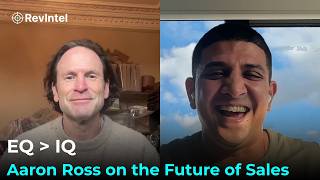
Aaron Ross, who built Salesforce's outbound prospecting system and wrote Predictable Revenue, says the sales frameworks he created are now dead. AI will automate data-driven tasks, making emotional intelligence and genuine relationships the real competitive advantage. He's divesting from his consulting business to focus on creative projects and relationship-driven sales.
Chapters
Guys, welcome back. First podcast of the year. And today I've got Aaron Ross. Aaron Ross wrote the Bible on modern sales, Predictable Revenue. Didn't just sell books, it built the entire SDR model that powers Silicon Valley today. And if you ask Aaron Ross what matters now, I don't think he'll talk to you about cold email templates or assembly line sales. He'll tell you that EQ is far more valuable than IQ. Relationships are more— I agree with this— relationships are more powerful than GTM frameworks. And in a world where AI can really automate everything. Uh, the man who automated sales is telling us to go back to being human. So we're going to call this one The Relationship Signal: Why the Father of Predictable Revenue Says Frameworks Are Dead. Aaron, give us a quick run-through of who you are and what you do and why you do it.
All right, you're jumping in with the clickbait already. Okay. All right. I wouldn't say I didn't automate sales. What I did was assembly line it like the Toyota way. That was actually one of the most books towards, you know, but yeah, like you said, you know, the Predictable Revenue book and then the sequel called From Impossible to Inevitable, which I did with Jason Lemkin of SaaStr. You know, known best for those. They're really, again, like, you know, my background was an engineer. I ended up in sales through no particular plan, but I had started a company and raised money. It failed. And it's like, oh shit, I gotta know sales. And so, yeah, of course,.com, uh, as the lowest level, you know, the most junior employee, it's like, you know, I gotta know this from the ground up. And within a few months, um, kind of gotten started, I was just answering the 800 line. And inbound leads. All right, and create this outbound prospecting system at Salesforce, which helped them almost double their enterprise growth. And then wrote Predictable Revenue about that. Again, how do you create more of a systemic, systematic, systemic approach towards generating pipeline first and then sales? Yeah, From Impossible to Inevitable book was more of like a leadership book on how to create predictable growth. This Predictable Revenue is more like a sales, if you're a sales leader, like kind of go-to book. The Impossible Book is more, the goal is, hey, if you have an executive team, like you create a joint understanding around why, if growth isn't what you want, where do you start to try to troubleshoot that and how do you make it happen? But it's been like, you know, we, well, updated the Impossible Book in 2019, so it's been 7 years. Since— and so let's call it 10 years since there was a brand new book. And so I've done a lot of speaking, a lot of, uh, you know, raising babies since then. So now kind of emerging from the cave, the cave of confidence.
So I think you've listed your biggest career win as, like, the— as embracing being an author. Um, and a lot of people that I think they would say building a mil— like a multi-million dollar consulting firm and like really having a big Right, that was a surprise to me in a way. I, I, like, I, I think I'm going to be— let's see, you've obviously done it— but even changing the way a sales industry operates, why was accepting that identity so hard, and what changed when you finally did?
Well, you know, the thing is, we're— life is strange, ultimately. I'm old enough where I'm 54 now, um, but you know, if I think back to when I was young The time is very different now. Even though I was growing up, there wasn't a lot. I don't remember. I don't remember. I'm sure people asked, but I don't remember a lot of like, what are you going to do when you grow up? And like, what are you going to major in? And what's your plan type of thing? And this is, of course, also part of the family and the busyness of the parents and the time because I grew up in the '70s and kind of '80s. And so it was there, but it wasn't— and I wasn't surrounded by social media of everyone doing everything all the time really, really well. So I was, um, I'm more, you know, the game Frogger.
Uh, no, I don't. I might know if you explain what it is, but it was the thing where the frogs that go like this and catch the balls.
There's a newer game, you know. Okay, so basically you're a frog, and I know there's, there's other games that are the same thing, but this is the classic, right? I'm, it's like the attack. Um, you're a frog and you're standing on the bank, you're trying to get to the other side of the bank, right? And there's logs that go by. And you know, so there's logs and there might be like some predator. And so all you can do is jump to the next log. And then once you're on that log, all you can do is look for the next opportunity. You cannot predict, you know, if you haven't played it a million times, predict like I'm gonna do these 5 things. And so for me, that's a lot of my career has been, which is I don't really know. I generally know, okay, I wanna make money and I don't even know really what I wanna do, right? I'm just gonna do the next thing in front of me. So in school that was coding and that was, summer internships with computers. In college, that was civil engineering and in different, you know, more coding summer jobs and even a painting business. And then it was investment banking and then it was software and this, that, the other, right? So the point was, I, you know, it's like I didn't really have much. I never really had an idea of, oh, I want to be this thing someday. I'm going to work towards that. Until at some point in my mid-20s, maybe late 20s, like, oh, I want to be an entrepreneur. Right, but that was like a late 20s thing. And so all these times, these things I end up in, like even doing sales or things that just didn't even creep up on me. It was like, well, that's like the next thing to do at this time. I would've never.
Yeah.
And then even doing, going to salesforce.com, was there for 4 years, 3 years in like building the sales team and a year in the M&A group and then consulting and just stuff. So I think what happens is sometimes we get so focused on goals 'cause we're so taught you need goals. If you don't have goals, you're failing, right? You need to go, what are you gonna do today? What's your plan for today and your plan for this month and the plan for this quarter and the plan for the year and work backward?
Yeah. Yeah.
It's exhausting. You know, people do that in their personal lives as well as the professional. And then I think if you have a company and it's completely scaling and everything's working well and you can kind of model that out, okay, that makes sense. But usually the exception. And I think what we don't do enough of is kind of like let these interests that are kind of bubbling back there creep up on us in some way. And so actually going back, I do think that this is an area that for people who want to be successful and differentiate themselves, whether it's their company or themselves, in a world where you basically have instant commoditization. I can say this.
Commoditization. It's a hard one. It's a tongue twister.
Instant and instant copycatting.
Yes.
Right? So if everyone, if you do something interesting and basically everyone online just copies it pretty much, say right away, like how do you And so going back to this in the future of sales and growth as an individual or even a company, technology or otherwise, I do feel like, you know, my belief is that like letting these kind of interests that may seem orthogonal, tangential, kind of weird, kind of creep up on you and actually kind of sitting with them, sometimes it's over years, it can actually really unlock huge future opportunities. And to give it one more example of the author thing, I mean, that was something that kind of sat with me as a kid. I've read lots of science fiction. So there was this idea in my 20s, like, oh, I'm gonna write a book. Never, but at Salesforce, I was doing the work and I'm like, oh, there's some good stuff here. So I just started blogging. I was really, I just wanted to start sharing it. And then later I want to do a book. So again, it was never like I have this goal to be an author. I'm gonna work backwards. It was like, what's the most interesting thing that makes the most sense today? Or in the short term? And I'll just do to do that. And once that kind of evolves, then I'll see what— once I hop to that log, there's the frog, they'll see what next log is in front of me.
Yeah, yeah, makes sense, makes sense. It's all right. So, but if we move on a little bit to, let's just say, the sales guy trap, like, you, for years you were the predictable revenue guy. Like, that's how, like, sometimes I'm like, I can't believe I'm under— I'm talking to this guy right now. And, uh, do you like— but do you ever feel trapped by your own framework? Like, how did you give yourself permission, in a sense, to evolve beyond the system you, you created yourself without saying like, this is my shit and I've got to change it now?
Yeah, no. And so first, I think there's, there are tremendous millions and hordes of people— it's called, you know, the term golden handcuffs, right? That's not— this is not a new thing, which is you become really successful at something lawyer, whatever, it doesn't matter what it is. This is being a VP of sales, right? And you get to that point in your career, it's probably more midlife, you know, 40s has been the average. I think that's gonna change. All right, and you get to that point where you're just like, oh my God, I'm so sick of this. It's like shooting myself every day.
Yeah, okay.
And so I don't know what to do. So for me, It was a bit of— I just came to the realization and I've been doing the predictable revenue consulting and training and things for, you know, the book came out, let's say 10 years. I'm just going to round. And I had a business partner and I was just like, I cannot work with this guy. I need a business divorce. It got to the point where I just had to.
I was the same.
Yeah. And I have a big family, right? I have 10 children and our bills for a lot of the years, I mean, when there was like younger, they're a bit lower now, but when there was more babies, younger kids, we needed oftentimes like 2 nannies because I work, I only work like 20 hours a week. My wife has her projects and so, but we were spending at least mid-five figures a month in dollars. So I mean, I had to make a lot of money. And I would put a point on that, which is I didn't start making lots of money and then have lots of kids. I had lots of kids. So then I had to make more money.
Yes. Oh, yeah.
Yeah. So there's probably— and then, but I just got to the point where there's— it's a— it's— this is going to be another book I'm working on. I'm calling it The Grind Must Die because I know career reinvention is going to be a big thing. It always has. Yes. Will be even bigger in the next few years. So, but it was— it's a bit hard to describe, which is I know I have to change. I have to get out, starting a conversation. Took months and months and months to figure out with another third party how to navigate that business divorce. And that was like getting bought out over a few years to give me time to create something new, even though I was like, oh, that's going to be— that's terrifying. So a lot of the parts of it were terrifying and just again, taking one step, next step, despite the terror of the next thing and the next thing and the next thing. And it's been 5 years since that happened. And I'm not quite there yet. I haven't completely, I haven't replaced my income yet. But what I have done is I've created a type of work and this took a couple years to figure out, you know, if I said this is really relevant to SaaS leaders and even companies again, whether you're an individual or not, because again, I think the way the world is going with again, AI, instant commoditization, instant copycatting, was when I was like, I have to get out of this, these golden, predictable revenue as my entire income. And with this in this business, it's probably 80% of my income, right?
Yeah.
Let's call it 70%, maybe 80%. So tens and tens of thousands of dollars a month. How am I going to replace that? I don't know. But I can't solve the new income problem while I'm in this thing I need to get out. I have to get out first, pull the ripcord first, and then once I've kind of gotten out of it, then figure out what I'm gonna do next. And so there's probably a couple years where, but again, I knew I had a bit, then you know, those knowings that kind of, we call intuition, or just like this knowing I had to find work that I enjoyed doing on the daily and then make money at it. Because even if I had to work I didn't like to to do. I wasn't enthusiastic about it. It was just like nothing happened. It took like 2 years. It's probably literally 2 years of like, I don't even know what I want to do. What do I— I'm not talking about wanting to. I'm specifically talking about the actual activity of what am I doing? Am I like writing? Am I speaking? Am I creating software? Am I part— what are the daily activities that I actually can do? Am I woodworking? Working in a cafe, I actually want to do that I would enjoy doing whether or not I was paid. So it probably took me 2 years to kind of get clued into what that was, and then another couple years to kind of take that and turn it into artifacts and models and things that were, you know, okay, I can see how now I can make money. Like, I've taken these things I was interested in doing and I like doing, and now they're these things and we can talk what those are. And now I can see I'm gonna have to make money with them even though I'm not making money yet. So I went from this first phase was, I don't know what I wanna do or how I'm gonna make money at it too. Or is it even possible to have work that I love and make money? Okay, here's a better phrase. Is it even possible to make more money doing something I love than I used to do? And then it was, is it even possible to have work that I love? And then I was like, okay, actually a couple years later, okay, now I found work that I love or I enjoy doing. I look forward to doing.
Yeah. Yeah.
Possible. And I was like, how can I make more money at that than I used to? And then I got to this point of, okay, now I know the work that really engages me and I look forward to, I'm enthusiastic about, and I'm going to make a lot of money at it. I just don't know exactly when or how. There was this uncertainty. I kept whittling away. And there's been all kinds of things to kind of financially make the, you know, the life work for like 5 years until— because there's all kinds of stuff— until the new kind of income comes in. And I feel like this year actually is going to be a big transition towards starting to see more, a bigger increase in income from work that I really love to do.
So You said a few times, I've heard this actually, that being an author is more, it's more than writing. It's about being a creative entrepreneur. And I think that's one thing I've learned over time where pressure gets tough and you're pushed into a corner. I've seen how, let's just say, my business partner managed an HMRC problem and he said, it's done, we have to close the business. I called HMRC and they said, you've got 12 months. Here's the payment plan. And it just went to show like how much somebody will push to get to, to create survival, right, for your business. That's what it's about. And where you have a mismatch in those kind of, um, in those perspectives, I had— again, for me too, I had to get out of my business relationship because every idea I would present, it was just always just something that wouldn't work. Um, but how does seeing yourself as an artist change the way you approach business problems now? Because it seems like you have a very different kind of perspective on how you approach business today.
Well, let's go to, you know, tech companies. I'm not going to use the word SaaS, right, because, you know, bad word some ways.
It's fine.
Like, you know, everything will continue to be successful in its own way. So yeah, just like direct mail still works, right? Whether it's—
even better than some other things, right?
Yeah. So SaaS, B2B SaaS will be around, always be around. All the people So, you know, I look at the world stepping back towards, okay, I'm working on a new book. I have a partner in Brazil and a sales business in Brazil. They're actually doing a lot of predictable revenue type work. And this works really well because the partnership is different. You know, he runs it. He's CEO. I'm an amplifier. Yeah.
Okay.
Yeah. But the, so the, but the point is that we're looking at what in a, in an AI post AI world, how does go-to-market change? Like what are some of the, approaches or even frameworks that are going to work and be relevant. Because I think a lot of the older books, and honestly, if you read, you know, 3 or 4 sales books, generally they're all going to, after that, you don't really need to read more of them, right?
Yeah.
Which is fine. So, you know, to me, what look to me, I look, okay, what's going to differentiate people so that you can have durable success and not be at risk of commoditization? Obsolescence, commoditization. I got the word that time. Or copycatting at kind of any turn.
Yeah.
And so to me, like where I go to, I mean, there's no one way to do it. I'm sure people can be amazingly technically excellent, right? AI, Google, so on. For me, what I think is going to be a much more durable solution and more broad basis for people to focus on, you know, it's really, I call it like the right brain type of work. I feel like left brain will be taken over and amplified a lot by AI, right? Analyze this, create that, document this, you know, right? Important stuff. But that's the place where it's gonna be the most able to take over that type of work.
Yeah.
The part where I think it's gonna be harder and the place where people really can differentiate is the right brain stuff, which you can call it Intuition and relationships. There's probably a bunch of stuff in there like, you know, music, art, a lot of things you could mean this bucket. To me, looking at intuition, creativity, and relationships, you know, I think those are the areas where it takes a practice. You know, our society, or the Western society, first of all, doesn't cultivate these very well in general. Like, school is really more about about grades. Okay, that's fine. And people go into the corporate world by definition tend to want to have a lot of structure and to know it's kind of like school, which is like, just show me what to do to get the good grades.
I love it. I've loved that. I've never heard it like that. But I really like that.
Even like the entrepreneurship is like a safe place to make money nowadays because it's so well documented. It used to be. Yeah. For safety, people go into being, you wanna be a lawyer, a doctor, an accountant or dentist, right? 'Cause that's like a really safe place to have a career. And now, and then become a tech is one place. Most people in corporate world tend to be that type. I mean, I'm in it. And so it means a lot of times we're not, and people generally don't trust and rely on their intuition, right? They want data, like show me the data. Because I'm not comfortable making a decision in a vacuum without, you know, some proof. Like I need the ROI case first before I can say yes. Like prove it. Yeah. Success to me first and then I'll say yes.
Yeah.
Anyone who's ever had like enormous success, that's not how it works. Actually, when you have big leaps, success into, you know, whether it's money or even relationships, it's usually I'm not really sure here, but this is important. I'm just going to go for this thing. That could be big or small. But so I think intuition, creativity, but relationships is probably like a really simple place that we can say, look, for businesses, if you— relationships, if you invest in them, and by relationships I mean it could be with your team, it could be from your team to your market. It could be a CEO to the market. So that could look like, you know, so the internal team is able to work better together, right? And there's more trust. It could be between the salespeople to the customers, right? There's more trust. So there's more loyalty from the customers. The CEO or founder creating content at scale to so that you have like thousands, tens of thousands, hundreds of thousands of people who can buy into you and your message. There's lots of ways to create relationships and to improve them. And so the idea is if you can find ways to invest in relationships in a systematic way. So again, I mentioned the content at scale or training salespeople, then that's something that can— it's one area that can create durable success no matter what happens with AI and the tech in the world. Because absolutely, there's going to be more black swans. I mean, lately, right, the latest one was just this thing with Trump in Greenland. Before that, it was Venezuela. Before that, I mean, there's been COVID, the Ukraine, it's just China, terrorists. Like, there's just going to be more of that. And so you can't say, look, I need to future-proof. I've got $20 million in ARR and I want to get to $80 in 2 years. I need to future-proof that. You can't do that. You can't say model it out on a spreadsheet and assume you're just going to do it. What you can do are, again, have great people. You can create the best conditions for continued growth.
Yes. Yeah.
There's not one way. I'm just saying my lens is like the relationships, this right brain stuff, intuition, creativity, and relationships really means too, are you simple things like if your team, with your team, like do you actually practice caring about your people? And how do you let that change your behavior with them? Or in the past, most people, a lot of people, a lot of executives treat their team like cogs in a machine, right? And they can tell, right? It's not going to induce loyalty or their best work. So it's just more of an emotional shift. It's like a state change as one of these things to help that can create, you know, better relationships, better results that leads to durable success. And again, you know, we're still in the early stages of AI, but it's going to keep changing even faster. I don't think that's going to slow down.
I think so. I've got a whole section on that. I want to unwrap that around relationships and EQ over IQ. But before we move on there, I want to imagine that Predictable Revenue, let's say, is chapter 1. Impossible to Inevitable is chapter 2. What's the title of chapter 3 right now for you?
Well, you know, it's hard to— say. I do think that there's a theme. What I love doing in kind of a meta level is shaping ideas, you know, or like, you know, discerning ideas, usually from talking to people and just living, and then shaping them into artifacts, which, you know, I'm working on 5 books right now. So, but I'm also creating the kind of some products, physical products for the most part for now. So like speech, so basically like ideas and ideas, speaking, and partners. So for me, like, I love, you know, writing books, speaking, and working with partners. That's kind of like one level that's really about ideas. And for me, like writing books, you know, creative relationships, most are one way because I don't know them, but with like hundreds of thousands of people. But I just, I'm a book person. I love part of me is like, I love— I don't do books because, you know, for the result. There's just something in me that wants to create books. And that's kind of started in— it was very subtle in my 20s. But it was very like, in my 30s after Salesforce, like, I'm a book person.
Yeah.
So, but, you know, there's probably a term. It's almost like I'm creating a studio to create books, but also these are the physical artifacts like getting like coffee brands and maybe these like funny cards and write-in letters, letter kits and wax stamps and other things.
Yeah.
All intentionally to help create and improve relationships.
Yeah, I think, look, I think that's important. And for me, one thing I have recognized more and more than ever in 2025 was the impact of really an impact of relationships, like close one-to-one, hand-to-hand combat kind of relationships, because cold outbound and cold calling, yeah, it is effective. It can be effective, but it's like, it's only for so long. So I have understood like being, removing the emotional attachment to like what I know works versus being creative and trying different things, that I think was something quite valuable in my learnings about business. But I think you said a few times that like your hardest lesson you've learned is that EQ is far more valuable than IQ, which is a big statement 'cause you're a data-driven sales processes guy, but what specific failure or moment taught you that lesson?
By the way, I don't know if I'd say my, the hardest lesson was EQ. I think EQ is just more relevant now.
Yeah.
In the future, like, 'cause it's all, they've always been both important and they're always going to both be important. I think what's going to differentiate more people and more companies. Yeah. It should be more EQ and less IQ. In the past, it was more IQ because of probably like tech and STEM and things. So, you know, was it, I think, you know, thing is having 10 kids and again, some are biological, some are from a prior marriage and some are adopted and seeing what it takes to kind of support that kind of family and maintain a relationship with my wife who'd been married coming on 15 years. You know, not supported physically too, emotionally and financially.
Yeah.
And how little— it's like how little IQ— it is important. It's very important. But for the most part, it's mostly EQ, like dealing with uncertainty, conflict. And we have a very dynamic family, like, and we moved from California to the UK and different things. So it's like with all this, like, hmm, what do we, where do we want to go? Do we, do we adopt? Do we have another baby? How do we support things? Where do you want to live and how we want things to work and which schools? You know, it's like what they say is most decisions are made from emotion, but you justify it with logic.
Yep. Yep.
Like, we're not rational. Humans are not rational. And so I think just that IQ for sure has its place. But we've always glorified it because of school grades and accomplishments and the EQ part, which actually is what runs our lives. It runs selling processes and buying processes and entrepreneurs. Like, think about this. How often, if you're an entrepreneur, you know one. All right, you've got someone who has an idea and maybe they are so high anxiety to get it right that they're— so the one version is there's like the chihuahua hamster wheel, like work, work, work, work, work, and they're constantly changing and changing and changing it and they just can't even settle on like a final version. Yeah, yeah, yeah. The other version is they work so hard to get it perfect on the whiteboard they never launch it.
Oh God, tell me about it.
Yeah, so you can be super smart IQ, but you can get stuck. It's really, you get stuck with the FOMO, right? Fear of missing out or FOFU, fear of fucking up. It's not just entrepreneurs, right? Salespeople, you know, anyone who's sat there staring at the phone, I need to make this call. Or I need to like push button, you know, push publish on the post, the thing that is the other.
Yeah. Yeah.
Yeah. To end a relationship to, to, to try to get a new job or ask for a raise. There's just all these places where in the day-to-day that be able to deal with either be confident or pretend to be confident, to make a decision even if you don't know what's going on, or to know when to not decide. I think it's, again, it's one of these weird things where we grow up in our culture, the US/UK culture is so much about like, make a decision, make a decision, just go, just go, go, go, go. And there's a place for that. That's kind of how my wife is. But I'm kind of like, I don't feel like it's the right time to decide yet. Like that log isn't there yet. I know I want to do something, but there's nothing in front of me yet. So I need to, it's better to wait. So like the timing. Yeah.
Yeah.
That's tricky. Even I never quite get that right, which is if you're baking a cake, right? It's simple, right? You know, You can get the ingredients together really quickly. But then once it's baking, you just gotta wait until the timer dings. And with decisions, you don't have that timer and you don't necessarily know the ingredients. So it's like that, hmm, what do I need to know to decide? And then when's the right time to decide? And a lot of times people rush decisions because they're scared to hate uncertainty.
Yeah.
Or they might not make a decision because they're again scared to get it wrong. And it's just, it's tricky.
So do you think decision-making is a skill that you can learn?
100%. Yeah. Yeah. This is for sure. It's a skill. You start with kids. I mean, kids don't make a lot of their own decisions. So the more you can let them make their own decisions, the more you can let them make their own decisions within boundaries. I think the challenges with, I don't know about the UK, but in the States, the helicopter parenting and You know, the stereotype is parents are like making all the decisions and they're like getting, shuffling their kids to get the good grades and fighting with the teachers and paving a smooth path for them. And when they get to college, university, or older, they're like, yeah, bulldoze. And we have older kids. You know, it's hard. I mean, You keep thinking— there's the arrival fallacy. It's so tempting because you think, oh, once I get to that next someplace, they'll be easier.
Yeah.
So identified as a human, it never gets easier. It just gets— well, there's always bigger challenges and it just changes.
Yeah, it changes.
But that, it's like how to reparent yourself and make your own decisions. And I don't know, it's just, it's something you just got to relearn usually in your, you know, in your 20s and 30s on up.
You're telling me. I'll touch on it too. I'm at that phase right now where I just turned 39 November 5th of last year. So I'm a Guy Fawkes baby. I was raised in the UK. I grew up in the United States from— for 15 years, from my— from the age of 13 to the age of 27, I was in New Jersey. I grew up there. So a lot of my twang, a lot of my upbringing, a lot of my optimism comes from my upbringing in like an optimistic town, seeing entrepreneurial individuals, doctors, lawyers, business owners, like I couldn't believe.
Not the UK.
Not at all. When I saw the car wash, the town car wash guy, you know those long car washes in America that they have and you drive in, they have them here now, and you walk by and you got, this dude drove a Lamborghini. I was like, the guy has a car wash, 'cause in the UK you go to a petrol station or a gas station as they call it, and you only have that thing you drive in and you put in £5 or £10 and you get the premium wash. And it does the little things that do it. You don't have this thing that goes through, but it just went to show that no matter what you did, landscapers, plumbers, engineers, labor workers, from whatever spectrum, just as long as you had a hustle mindset or let's just say you were resilient, right? You were resilient, you were motivated, you persevered, had good perseverance, you were able to get there. And when I came here and saw like I had to get a job, otherwise like, oh, you're a fuck-up. And then when I decided to start a company, oh, he's crazy. And then when I started to reach success, you're arrogant. And I was like, what the hell is going on? And then I had to learn my emotional quotient again, like you've shared. It had to change. It had to redevelop. It had to reassign new kind of values to myself. Because the way I operated as a new person, understanding myself, the values I inherited were very different from the old cultural kind of perspectives of Indians, for example, British Indians. It's a very— not anything other than it's a realistic thing. We came from a very different background. We moved here and then, you know, all that changed. And then how I've operated in business has really made a big difference. One thing that people are coming to this podcast for is to get like ahead of AI, some of the trends. One thing we're seeing that I thought would change a lot is the SDR work, right? The AI automating SDR work, writing emails, obviously even making calls to a certain extent, and where EQ is more valuable, not less. Why, if AI is the ultimate IQ, why does EQ win?
Well, I don't know if it wins. It's probably also more of a blend of, you know, how do you use the right tool at the right time? Right. So AI, it's like, you know, I've been learning myself because I've been using AI a lot for about a year, kind of once it got past a bit of the toy stage. And so it's like, when do I use AI and it's helpful versus when is it hurtful? And so even today I was installing Claude Code. So I'm like, I want to check this out and try it out.
Yeah.
I think, you know, getting hands-on, what the thing I don't, so here's, and again, I don't really think in like the terms of like this moment in this year necessarily. I think a bit longer term. Honestly, a lot of the AI stuff I think is really boring, which is okay. It helps you draft emails and honestly they're usually not that great, but it helps. It's more of like an editing partner. So, you know, back and forth. Even like a lot of the agentic automation, I'm like, ah, because everyone's going to have that within a couple of years. And so it's not really going to help. Like if everybody, it's like in the first days when there's some people had the internet and some people didn't, they're like, oh, we have this amazing superpower of the internet. It wasn't that long before everyone kind of had some version and then it all just became kind of the same stuff. So I think that's for the most, for most people, unless people are really at the bleeding edge, you know, that's not really gonna be differentiated. You're, you know, Agentic this, that, the other, going back to the EQ side. But, you know, I think too what a lot of people don't do enough of, especially executives, right? Okay. Yeah. Drafting emails, presentations. Like, okay, big deal. Like what really changed for me was using AI to be like a creative partner with, you know, kind of like random or weird ideas and I could, you know, turn it into kind of like a project or add visuals again, like, well, even with books, right? Because with AI, I feel like I'm working on multiple books at once and it doesn't feel like a big load.
Yeah.
And that could look, so that could be anywhere from just dropping, I'd rather drop voice notes into ChatGPT versus like an Otter and have it transcribe it and cut and paste. So it's easier for just ideas. With the projects, it's easier getting editing help or structuring things. I can do visuals for book covers, which to me is like a very— it's a major change from— if I have a book cover, so things that help a book come alive to me are stuff like a title or like a book cover or a partner. Like it's a step change to, you know, some stuff to, okay, this is a thing. Mm-hmm. Mm-hmm. AI has made that possible. Or again, like kind of cards and just these other projects I'm doing, you know, just a bunch of ideas for, because now I can have an idea for a good idea or bad idea, but from, you know, zero to some sort of mockup very quickly. And from there it's easy to say, hmm, do I want to do something with this or not? And I don't think I'd be surprised if many people are doing that type of work with it. Including SDRs, you know, there's all kinds of people in outbound, not just SDRs who've used things like images, GIFs, poems, music, all kinds of creative approaches to stand out from the crowd. You know, so I think it's, you gotta figure out what works for you in that job too, to, you know, get people to connect with new people.
I think that's an important thing. And I think if you, let's call it doubling down, right? If we double down on certain things like where we have relationships and my advice, I think you would share similar advice, is to double down on your network. They're not— but your network of people you can ask for help. And how do you actually do that without being the guy who only calls when you need something?
Yep. Or, you know, he has something— I find like it's— if you have something, you know, interesting to talk about or something you're doing. You know, so with my kids, and by the way, you know, networks, going back to relationships and the value of them, if you think about, you know, there's a slide in a current talk and it's kind of like fleeting solutions to, you know, permanent solutions in a way. And fleeting solutions would be like, give me an email template or give me a new page. But, you know, starting a company, is in the middle, but like relationships can last, you know, forever, right? Longer than companies, because think about how many people you know and you've changed companies and they've changed companies, but you're still connected in some way, right? So relationships, even if they're not— they may or may not be relevant to you today. Yeah, you like, or interesting, or just kind of meet someplace, you know, that could be relevant, you know, maybe it could be at a hobby level, like maybe you both end up writing books or a business level, or maybe end up in the same city. You never know. So I just take a long-term view with meeting people, and, uh, and not as a transaction, but just, hey, there's another person, could be interested and interesting. And, you know, who knows if your paths will cross in the future or not.
Makes sense. So if we go a little bit further down the line, you've helped— I'd love to, like, one thing I've had a few guests now that have had some nice messages come across. I saw you on the Revintel podcast, That would be really good if, if more guests could experience something similar. I think you've helped hundreds, if not thousands, of companies. Who's the perfect fit for you right now? Like, is it a Series B SaaS? Is it early-stage founders? More experience? What is the perfect fit for Aaron Ross today?
Yeah, um, well, in terms of, yeah, helping companies, I think it's someone— it's a company that's raised, you know, either they've got a few million or plus in revenue, they've raised a few million plus in in funding, and they've got a lot of opportunities on their plate, probably too many good ones. And they're trying to kind of laser in on like, what are the best ways? Where do you place your best bets for go-to-market and how to do that the most efficient way possible without going down a lot of— I don't know if rat holes is the right word, but rabbit holes. Rabbit holes. The thing is that you can— today we have too many good opportunities. Um, but, and this is what I've seen from my other, um, you know, like a board position and other stuff, is that the hard part is saying no to enough of them and to do a small number really well. They get— you have to get— you break through on them. It's really—
yeah, that makes sense. So if there's a founder listening today and their outbound set, their outbound motion is broken, emails are not converting, SDRs are burning out, where should they go? What's the first step? To fixing it with their team?
Well, honestly, the first step would be because usually that issue is a lack of clarity on their ideal customer profile and they haven't nailed the niche. In fact, so I would actually go to the first— that's why it's the first chapter of the book, From Impossible to Inevitable, because that's the most common problem. You can get that for free at fromimpossible.com. So that'd be where I'd go first. And if that's not the issue, so it's usually nailing a niche is, it's called like 80% of the problem.
Yeah.
Unrealistic expectations is another big one, which is why, where are my appointments after 30 days? If you're doing outbound, and that could be outbound marketing or outbound prospecting, if you're reaching out to people who don't know you and it's B2B SaaS and not like consumer, but it's, it could be 4 to 6 months to really get something working. Through all the testing and all the iteration, it's rare. I know you'll see these stories online and they're so biased, which is, oh, in 30 days my agent system got me 100 appointments.
Such bullshit. I fucking hate it.
Yeah. I'm like, do you know any— I mean, I'm sure they're out there. I don't know anyone who's actually got one of those things working. It's great click.
No.
Someone has. I mean, obviously, by the way, Jason Lemkin has probably the best information on actually using agents. In pre-sales and sales at Saastr. He has a whole thing. I think it's saastra.com/agents or I think if you Google it, no bullshit. But I think so usually it's gonna have nailed a niche, unrealistic expectations, or you just might have the wrong person in the job.
Yeah.
You know, it's not that they're bad or not. It's like, it's a very, especially outbound lead gen, even if someone's done it well before, But if they're in a new place, like they might have to recreate the whole thing. 'Cause it's, we're past the days where if you did ABC prior company and you just do the same thing at this new company, that's just gonna work.
Yeah.
It will. Things are just changing too fast. It may not. So just kind of, those are the kind of the 3 biggies.
All right. So in Impossible to Inevitable, you talked about nailing a niche. Okay. In 2026, is it better to go niche and deep or broad and platform? And if you were starting a SaaS company today, which path would you take?
Well, I think niche and deep for most people. Like if you have a functional area, it's usually gonna be niche and deep. Mm-hmm. People can do broad and platform if it's like, again, you're kind of building like a certain kind of coding environment. Okay. You're building a broad platform, but in a very niche way. Mm-hmm. So again, you can go broad and niche, but most people you think niche and deep, and by niche, Think about a really specific use case.
Yeah.
You're a salesperson doing X, Y, and Z. You're a marketing person doing X, Y, and Z. You're a small business owner trying to do X, Y, and Z, or maybe just X. Mm-hmm. Start there. I, I start from, I mean, the thing is I know this stuff well cuz I've been through a lot of these problems, right? Where I wasn't sure, like, what do I do? Like I can do X, Y, Z, or I don't wanna focus on this thing cuz I don't wanna limit myself or, you know, feels too small and it's really hard sometimes to pick something really specific as a beachhead and just do that one little thing when your vision is so much bigger. So that's where it's really, again, going back to the EQ and FOMO and FOFO, like ultimately, you know, and this is again part of the new sales book, tentatively titled Phantom Revenue. This could be a couple years away though, it's still pretty early. You know, think about an iceberg. The results we want is what you see at the top, right? Which is you have growth or like what's the framework or what's the tactic, what's the comp plan type of thing. And that's fine. But if we're not getting results we want, it's usually below the waterline, like all the stuff which is team friction. So the second layer is team friction and there's more than ever before just because there's so much diversity and not in a helpful way. 'Cause there's different times, so many different time zones and bigger cultural gaps in values between people and political stuff. So the top layer is execution, that's what you want. If you're not getting what you want, that second layer is team friction and the first layer is mental noise, right? That's, you know, your own FOMO, your fear, uncertainty, doubt, all that type of stuff. So again, if you can start to kind of see yourself, at least know where you get stuck or what your main mode is, Like, you know, if I'm scared, I tend to paralyze and kind of like process and think first. My wife tends to be— I'm like a deer in headlights, right? My wife, when she's scared, she tends to like work even harder and faster. She's like a chihuahua running around in circles. So, and I saw someone, you know, if you get into that mode, you can do fight, flee, fawn, which is you just end up playing dead. Pleasing people. Like, numbers aren't good, so you're just like trying to please your team or the investors. And there's a fourth, but you just kind of— if you know your mode, and this helps you kind of not get trapped by the mode. Doesn't mean it's the wrong thing to do, like work harder or maybe like just stop and think. But what you don't want to be is blindly, you know, in a rut and you don't know how to get out of it. It's like, if you're in a rut— yeah, in my rut, that's fine. I'm like, for me, sleep and exercise are like the two big rut breakers. For my wife, like talking and probably working are like two of her big rut breakers.
Yeah.
And I know you're, you know, if you have a hard thing, how you tune it, how you react and how you deal with it, how you process it. Again, that's, I put that all in the EQ bucket as well, like self-regulation, emotional management. And one aspect of this is, you know, companies especially or teams when people aren't good at regulating themselves.
Yeah.
Often blame gets spread around, right? Because feelings are infectious. And so if the investors— I've seen this, right? Investors are anxious, so they pressure the CEO. Like, what's the pipeline? What's the— CEO sales, like, hey, rep, where's that enterprise? And the rep is like— and the customer gets pissed off.
Yeah.
You know, that's what happens when people aren't able to be as aware and like regulate themselves, be like, you know what? Okay. So, you know, people are— in other words, like, people are fascinating. I'm endlessly fascinated by them and how they interact with money, people and money, people and people. So that's what all my books are really— I can see all they're going to be about.
All right. I want to share some more tactical some more tactical nuggets for those that are listening. So one, one word that stood out to me in all of this too. So niche and deep sounds like that's what I've chose to do. Yeah. And then, but if you categorize leads into spears, seeds, and nets, which bucket is the most undervalued right now? Where is there a big arbitrage opportunity?
Always seeds. Okay. So spears, seeds, and nets. What this means from the book, spears would be outbound, basically cold outbound to people you don't know. Yeah, that would be kind of content marketing, broad marketing. And the seeds are word of mouth relationships, right? Because you planted seeds, but you don't know when they're going to grow. I had this conversation with, you know, it's like, okay, entrepreneurs by default tend to want new business, new business. I mean, this is such an old— 20 years been dealing with this new business. We need to do outbound prospecting, outbound marketing, da da da. Okay, what are you doing to, going back to relationships and systems, right? To kind of contact and talk to all your customers, or at least have communication with all your customers as much as you can, or the right types. And then for the ones that are successful, ask them for referrals to other people like them. Or upsells, or could be, so most people, if you have a team, you have customers and like a customer success or account management person or team. Okay, they're doing hopefully cross-sells, upsells, longer-term contract, whatever that makes sense. Sometimes people aren't, but almost nobody has a system to ask for referrals from customers to new prospects. So that's the place I feel like people are almost completely ignoring, and I know why. It's very, you know, when work has a slow, it feels like there's lots of steps, you don't really know what you're gonna get. It's a lot more tempting to be like, I know I can send 100 emails a day and I'll get, you know, 0.5%, well, maybe not, 0.1% responses. And like, there's something happening here. It's more satisfying in a dopamine level. Like, if I'm gonna talk to 1, 2 customers a week, and I need to ask them for— and they're not really sure who to talk to. And so I need to like come up with some suggestions. Can you refer me to here? It's a bit fuzzier. But the thing is, the closing rates will be so— if you do that and you look at the close rates and the amount of energy invested to get— I don't actually— I don't know who's doing this. I'm sure someone is. The companies I work with are not ready. They have other fish to fry. First. But it's not to not do outbound, but no one's, like you said, people just ignoring this, asking, talking to your customers, live conversations, not these automated emailing people for shit. Talk to your customers, ask them, are they happy? And for referrals to specific people that you've already kind of looked up again.
I think that's a solid bet. So One thing I've noticed is you're going to fail a lot. I think you— I look in terms of— I'll jump into it a little bit, but even Steve is just like, go to this guy's profile. If you guys are connected, he's helping you anyway. Go pick 10 people and just share them. Say, hey, can you introduce me to these? And there's been times even a year ago, one of our advisors that we shared actually this week, he said, just go to my profile, pick whoever the fuck you want me to introduce you to and I'll do it. Right. And I'll just say yes, yes, yes, yes, yes. And they say refer, like Scott referred you kind of thing. But we know a lot of people are gonna fail a lot and a lot of success stories are revisionist history. So if you could give us a piece of revisionist history from your own career, what's a success that was actually a series of messy failures?
I mean, I'm trying to think a lot of stuff. Well, I mean, like even creating the outbound system at Salesforce was a result of failing with my first business and then doing, you know, almost like failing. So the first 3 months at Salesforce, I did, you know, inbound lead response and I was really good at it. I mean, I was the best at it, but I was so good, I failed because I was so sick of it. I was like done with it. You know, or even another one. I had a first marriage, was divorced. But if I hadn't done that, I wouldn't have had the different kind of sense for who to meet the next time. I mean, I failed at so many things. Failure sounds permanent. I've made so many mistakes in parenting and money. I mean, that's how you learn.
Yeah.
I don't know if I have a good example other than I made so many mistakes. The benefit of being older is that It's sort of like, okay, I'm going to make a decision on this thing. And you know, say I have a 22-year-old who has— they're in a relationship, they're like, do they break up with them or not? And now I'm like, well, either way, like, you kind of got to— there's a certain amount of things you need to learn from relationships, whether they're work or romantic. There's no shortcut here. So if you break up, you still have to learn these things someplace else. And how to There's a bunch of things. Okay, or if you stayed with them, then you can learn with them. You can't really get it wrong. Maybe if you know it's time to break up when you absolutely know it's time. But then, yeah, you're gonna keep doing your best. So in other words, it's kind of like a lot of shit happens. You know, that's how you learn. It doesn't feel good. So rather than trying to focus on like the right thing to do, you know, refocus on like, what do you need to do now? Like, what feels right for you in this moment to do next?
Yeah, look, I think I could probably— like, I have a lot of similarities in that. I think my first life coaching experience revealed that opportunity in such a nice way. I always felt guilt when I stuck myself and kept attached to a relationship because I was letting the person down. But my life coach taught me, if you stay with that person, you're actually limiting yourself and that person for what is possible in your life. And if you let that person go, you actually create a platform, a launch pad for what you can have. And don't you think it's better to give— release that person as well as yourself and give them the opportunity that they deserve? Don't they deserve the best version of somebody else who can give them the things that you should— like they expect from you? And if that's not you, that's okay. Then you can go give that to someone. For me, it ended up being the same situation. I was engaged and, uh, it was a long-term relationship. I thought it was going to be a marriage. I knew things broken, and I couldn't come to terms with that. But with the right type of coaching and advice and questions asked to myself, I ended up meeting an amazing— like, the woman of my dreams. I've got a beautiful daughter, and my life has opened up so many more possibilities because of a tough decision. So if we wrap it up, uh, I've got—
sorry, same thing with companies, right? You know, yeah, you have— say you have someone works for you and they're just not a great fit. It's hard to know whether they need more hands-on coaching or whether you need to move them on to another job or to another company. Right? If you really care about someone, you're like, I care about you and this is just, this is not a great fit. You need to, you know, so that thing is, they say, don't be nice. You wanna be kind. And sometimes a kind thing is to move someone on to another job or another company.
Makes sense. It makes a lot of sense. So if people look back at Aaron Ross 20 years from now, do you wanna be remembered as the Salesforce guy or something else?
Nah, I don't care about that honestly. Like I really don't. Um, the Predictable Revenue book, I'm, I'm proud of that book. Um, it was just a warmup, you know? Do I love— thing is I only feel like I've done like 1% of what I'm gonna do. Yeah. And you know, I don't know if we could flash— there's, there's things I'm working on. There's the new books I'm excited about. I can't say if they'll be better or bigger than Predictable Re— irrelevant. I'm just like, these are books I need to write. There's like, you know, this group of the— mentioned like these executive gifts, you know, the— these Banana Peel Wisdom cards that are funny. And yeah, brands and yeah, this kind of Iron Crown Company stuff. I don't know how this fits. And I have app ideas. And so ultimately, like, I don't— to me, the only thing I really care about is more how my family thinks of me in the future.
Absolutely.
I'm gonna— I do feel like I'll have a lot of inspiring work for people to help them, and some of those would be books and other things. I don't know what that looks like. I mean, I like having friends. I need to be better about like maintaining friendships. So I don't really think it— it doesn't— I never think about how I'm gonna be remembered in 20 years from now, but I do think that I've just barely gotten started. Uh, you know, my books have done hundreds of thousands of copies and like, you know, almost the sales bibles in these industries. And I just feel like they're so, uh, small compared to whatever's coming in the next maybe 10 or— it could be 5 or 10 or 20 years, I don't know. I don't know.
Makes sense. Well, look, the whole, the whole episode has kind of had a foundation of challenging us to value EQ, uh, and kind of, uh, what was the word you said? Couple it up, double it up with IQ, blend it, sorry, blend it with IQ and relationships over the frameworks that have typically been those like, those posts that you can't move outside of. What's one simple thing for our listeners, founders and investors, that they can do tomorrow to start building that relationship muscle?
You know, honestly, I think what I probably would say is, if you don't have a hobby, start thinking about what kind of hobby would you like to do or want to do. If you have one, realize there's probably lots of people in your sphere that have something similar or like to talk about hobbies. I just like talking about other people's hobbies. I'm always interested in stuff. So if it's a VC, if it's an executive, a business conversation, I don't really care. I'm curious about them. The work, but also them and their hobby and like what they're interested in, because that stuff is just interesting. Yeah, I think the big mistake, you know, wasn't as big a deal in the past, but this is going to be more and more prominent, which is the more you keep your work life in a box and there's no like casualness, there's no hobbies, there's no talk about this, that, the other, you can do that, but you're only going to limit yourself in the way that you can connect with other people, whether they're—
it sucks like that.
Yeah, and like, you know, and like just have more of like a human-to-human relationship with, you know, I think reasonable boundaries. Like no one wants you to dump— if you're like in the middle of a divorce and you just need to like vent, it's not really the appropriate thing to do in a state of work with your coworkers. Like find, you know, you have to have a bit of like some common sense on like certain topics and certain times.
Yeah.
You know, like, you know, we're all just people working together, people like Even think about sales and marketing. It's just a psychological exercise, lead generation. Two people don't know each other and they're starting to get to know each other, right? So again, even sales and marketing is just a psychological construct between groups of people. People to people.
It's a very simple way you've put it.
Yeah, so don't overthink it, you know. If the more that you can make— find yourself and explain yourself as a person, the more you'll be able to connect to more people in deeper ways. Yeah, that's, you know, so hobbies, that's a simple place to start. And I think just going back, a lot of corporate people, we've been taught that like it's the job and like your value is your job and how much money you make is your job and your title. Like your self-worth is, you know, your title, the amount of money you have, and your kind of career. And it squeezes out all the other things that aren't relevant to that, or getting a mate, or, you know, that sort of thing. So it's kind of practice to go back to like, what do I actually want to do? What am I interested in? If you have that, bless you. I mean, I'm jealous. It took me, you know, a lot. I'm still working on it. But last few years, when I was around 50, started to go back to that. I had a few more, and I had a few more brain cells from getting a little more sleep once the youngest got to be more than 4 years old. All right.
Well, I think that—
Oh, homies. Do you have a hobby?
Me? My hobby? I'll tell you the truth, mate, uh, it's not gonna be— well, it's not gonna be— well, my hobby honestly right now is, uh, I want to turn my body into— I've damaged my body for many years, I've abused my body for many years in terms of, uh, being a young teenager, a 20-year-old, uh, heavy, heavy addictions. But after my addictions, I've gone fat to skinny, skinny to fat. I've had kind of up and down loopholes. And one thing I've really found that there was a really, there was a low moment in 2023 where I thought like everything was gonna end. Let's just put it that way. I was sitting on my sofa and I had gone through a separation in my relationship. I wasn't seeing my kid. And I thought to myself like, I don't wanna do this anymore. But one thing caught my attention, which was you're a dad, you are a son. And it's like a difficult kind of thing to talk about. But I got the one thing, it was 1:00 AM in the morning. I signed up for Pure Gym. I got to the gym and I said, no matter, even if you go there and leave, I don't give a shit. Like, get your ass to the gym and get out of this fucking rut that you're in. And I got to the gym and for 2 years, it took me 2 years to get to a place where like I'm on testosterone replacement therapy. I'm really trying to do things to optimize my health because I know that the health at the end, like running with my daughter at the park, is a struggle. I'm in great shape physically, but my stamina is fucking awful. So I have to take on running and all these things of just, as much as being a good dad and a good husband and a good son and a good person at work and enjoying my work, it's about really, really developing my body. And then I've always gone externally to, like, let's just say heighten my senses, increase serotonin. There's been those external factors that you take, right? Yeah, right. And then what you end up getting is this place of meditation where you can find peace from being within, and you can get a high from being in your own presence and guided meditate. Like, all that kind of stuff is really— sounds cheesy, and I thought it was, uh, I never thought I'd get to this place, but those are things that kind of inspire me because it's like, wow, you're actually a really cool person, uh, even physically, mentally, spiritually, if you really like enjoy the ride. Put it that way. That was the best line I've ever got.
I'm just pointing out, again, super interesting, right? Even more interested in you and your story. I bet people who listen to this, most will feel the same. Like, okay, there's a lot of other stuff to this guy. It's not just some talking founder head. Not that I'm— Yeah, yeah. So it's an example. It doesn't have to be something that serious. It could be someone loves gardening or whatever it is. It's like going back to a hobby thing you asked. So I'm just reinforcing the point that A lot of those personal things outside work can actually make yourself more interesting and relevant to people at work if that's where your main focus is these days.
It does, it separates it. So I think that's a great way to wrap it up. Any last words? Where can people find you, learn more? Is there anything exciting on the horizon over the next 30, 60 days?
A lot. Yeah, I have a new— so the first next book is coming out called Predictable Income. It'll be on Amazon. It's more for individual, uh, individuals. And best place to find me, you know, I don't have a great site. Just my email is probably the best for now. I mean, I'm on LinkedIn, but I maxed out connections, so I think it's tricky. Although I think you can use this to connect to— let's just, uh, aross— a-r-o— aross— aross383.com. All right, I have like a single— I've got different things all around, so, um, all right, great.
I think that's a great way to wrap it up, guys. That's the pod. Thank you very much for taking the time to watch this episode and staying here the whole way through. If you like what you saw, click subscribe. It'll take you 2 seconds. It helps me reach amazing guests and deliver valuable content for you. And if you ever want to find out what we do as a business, go to www.gorevintel.com, and that is the place where we help you make decisions that are backed by intelligence and it's for founder CEOs. That's it for me for now. I'll see you on the next episode.
Bye.