Why Innocent People Confess to Crimes They Didn't Commit
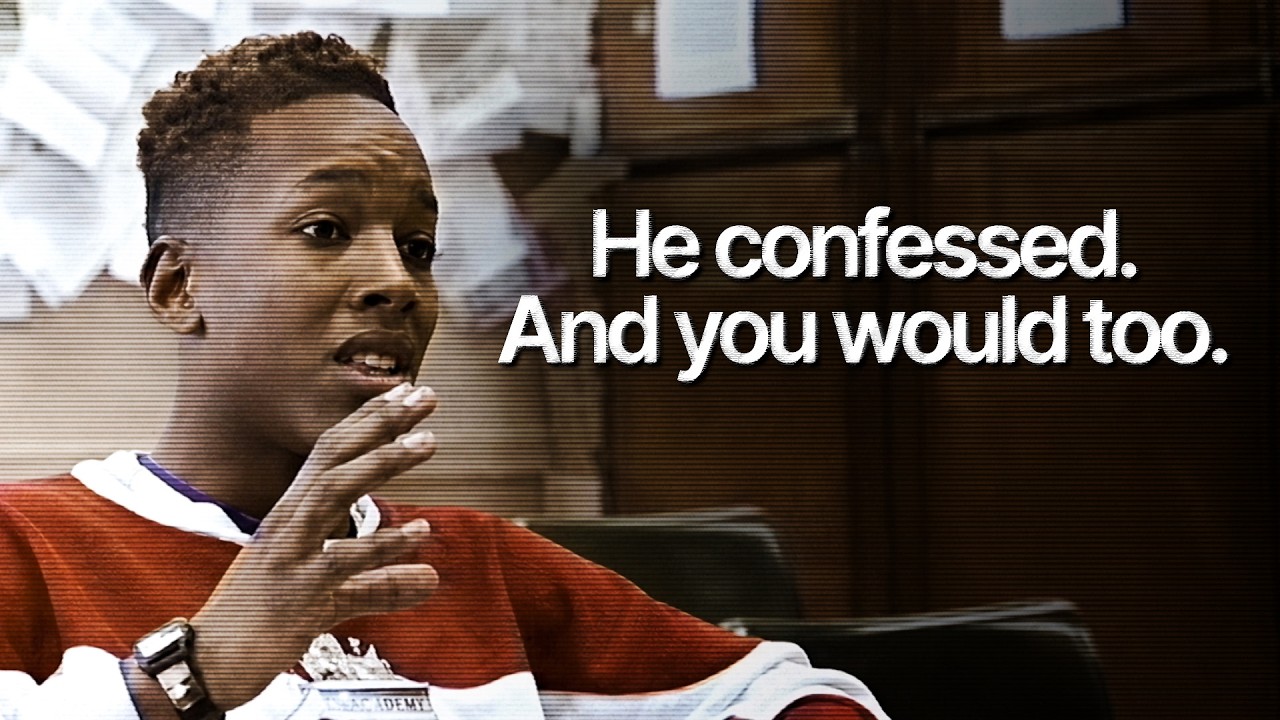
Psychologist Saul Kassin explains why innocent people confess to crimes they didn't commit. Police interrogation tactics mirror Milgram's obedience experiments, using isolation and incremental pressure. The Central Park Five confessed to a crime DNA later proved they didn't do, and lab studies show people can be tricked into believing they committed acts they never did.
Chapters
I want you to imagine that you're sitting in a small room at a police station. A detective sits across from you, looks you in the eye, and says, we know you're guilty. We have evidence you committed this crime. You know with every fiber of your being that you are innocent. So here's my question: would you confess? Of course not. You would never, under any circumstances, Admit to something you didn't do. I want you to hold onto that certainty for a moment. By the end of this video, I think you'll feel differently. Let me explain. In the 6th grade, a boy named Saul Kassin got an assignment from his teacher: write a book report. Saul was a huge Yankees fan, and he chose to write about the legendary baseball player Mickey Mantle. He proudly submitted his assignment to his teacher, Mrs. Avery.
I had a crush, to be honest, on Mrs. Avery. I wanted to impress Mrs. Avery and so, I spent a lot of time on this book report. I just remember being excited to get the grade back. I thought it was a really good paper. I'd spent a lot of time on it and when she called me up, she would call people and they'd come up and get their paper. This was toward the end of the school day and I just remember her glaring at me in such a way that I looked at the— at the grade And there was, with a circle around it, a big red F. I said, I don't understand. And she says, well, you plagiarized it.
Plagiarized it? Saul had not plagiarized anything. He had poured his heart into that paper.
I didn't want to break out into tears in front of my classmates and in front of her, so I held it together. I got home, flicked open the door, there was my mother, and I burst out crying. Mrs. Avery accused me of cheating. She didn't ask me if I plagiarized. She told me that I did. And I just will never forget the helplessness that I felt at having been accused of something I didn't do and not really knowing how to respond in a way to defend myself.
His mother went to his teacher and demanded she provide proof of her accusations. Mrs. Avery looked for evidence but couldn't find any. She changed Sol's grade. But that feeling of helplessness stayed with him. In that moment, when someone accused him of doing something he hadn't done, why had he stayed silent? Sol grew up to become a psychologist. He studied how people interpret the actions of others, particularly in high-stakes situations. He was especially fascinated by juries. These were people whose conclusions had life-and-death stakes. How did jurors decide whether someone was guilty or innocent of a serious crime? To evaluate the psychological factors that shape how juries think, Saul started running experiments with volunteers playing the role of jurors. He wanted to find cases where opinions were divided, where some jurors thought a defendant was guilty and others did not.
A couple of cases came back that elicited no variability. As far as everybody was concerned, everybody was guilty. Fortunately, we also asked subjects in those studies to explain their verdict. What was the basis for your verdict? And in the cases that I recall, everybody cited a confession.
A confession. When a defendant confesses to a crime, there is nothing left to deliberate. Every single juror said, of course this person is guilty. It was unanimous every time.
My first response was, well, that's interesting. It looks like we'll have to remove confessions from evidence in order to use cases. It became a nuisance variable. So right away, we tossed out cases involving confessions because confessions were a nuisance.
It happens so often in science and also in life. We fail to notice something important because we're so focused on something else. Saul wanted cases where jurors disagreed with each other. Cases involving confessions produced no disagreement. They were just noise. Or were they? Saul's nuisance was trying to tell him something profound, but it took years before he realized what it was. While studying juries, Saul came across the most popular police interrogation manual in the country. He started reading it and was stunned by the guidance it gave police.
Well, for starters, the opening salvo of an interrogation was to bring in a suspect and declare an accusation of guilt. We know you did this. Don't lie. In fact, I believe in that first manual, they advised the interrogator to come in with a folder full of materials and toss it on the table and said, we've got a lot of evidence against you. And they suggested doing that even if you didn't have a whole lot of evidence. So right out of the gate, I'm looking and I'm saying, okay, wow. These are powerful tactics. These are almost Milgram-esque.
In the early 1960s, psychologist Stanley Milgram ran one of the most famous experiments in the history of psychology. He wanted to know, would ordinary people comply with instructions from an authority figure, even if those instructions caused harm to someone else? In Stanley Milgram's experiment, volunteers were told to administer increasingly powerful electric shocks to another person. No real shocks were actually being given, but the volunteers didn't know that. The experiment was designed to see how far people would go. When volunteers protested about being asked to hurt another person, the experimenter instructed them to keep going.
150 volts. Answer or stop. Experimenter, that's all. Get me out of here. Get me out of here, please. Continue, please. Go right on. Mr. Cohen, let me out! He refuses to go on. The experiment requires you continue, teacher. Please continue.
You must continue. The experiment requires that you continue. And the prods are designed to get a subject to first administer a 15-volt shock and then a 30-volt shock, and in 15-volt increments to bring that subject up to the point where they would be asked to administer a 450-volt shock which on Milgram's shock machine was listed as XXX severe shock.
Before the study, Stanley Milgram asked psychology students to predict the results. They estimated that maybe 1% of the subjects would go all the way to the maximum shock level. The actual number of volunteers who complied with the instructions? 65%. Saul saw a parallel between Stanley Milgram's lab experiment and the tactics police were being advised to use on suspects.
So that's Milgram. Now I look at the interrogation manual. You bring them in isolated, no friends or family members or lawyers present. There is, instead of an experimenter as an authority figure, a police detective who has real authority. And that police detective aims to accuse you of something and get you to make an admission of guilt. And through a process of gradual escalation and a series of prods that are listed, The detective's goal is to get you to make a small confession or an admission of, I was there, and then a slightly greater admission, I saw what happened, and then a slightly greater admission, I was minimally involved. And eventually, 15 volts at a time, the goal is to get that person to make a full admission of guilt coupled by a full narrative confession that explains the chronology and the story.
The authority figure in Stanley Milgram's study was a psychology experimenter in a white lab coat, someone with no real power over the volunteers. If that person could produce such obedience, what could a detective, someone with actual power, produce in a suspect? Saul realized he was looking at 2 powerful facts side by side. First, when a jury heard someone had confessed to a crime, They said, okay, case closed. The person is guilty. They assumed there was nothing more to think about. After all, what sane person would confess to a crime they had not committed? Second, police were trained to extract confessions using psychologically powerful techniques. Isolation, deception, gradual escalation, hours of unrelenting pressure. You don't have to assume bad intent on the part of detectives for this to be a problem. Like the rest of us, they also assume no innocent person would confess to a crime they didn't commit. Saul began to look more closely at the history of confessions in the criminal justice system. He came across a case study from the early 20th century. In it, a man with limited cognitive abilities was interrogated for hours about a murder case in Chicago. He confessed to the murder and provided details. But some of those details turned out to be wrong.
And so we have a situation where he was interrogated for long periods of time. He was a vulnerable suspect, and the confession he gave was not particularly accurate in relation to the case facts. And yet the prosecutor pushed forward, and within, I kid you not, one week, he was convicted. And shortly thereafter, he was hung.
As Saul dug deeper into the historical record, he discovered more cases of false confessions. Enough to start to see patterns. He came up with a way to classify false confessions into 3 types. The first, voluntary false confessions. These are cases where people step forward on their own to confess to crimes they didn't commit. One famous example, the 1932 kidnapping of the son of the famed aviator Charles Lindbergh.
Charles Lindbergh was at the time an American hero, and his infant son was kidnapped, and It was big news, as you can imagine, and 200 people volunteered confessions to that kidnapping. And ultimately, police did not charge any of them. Ultimately, none of them had anything to do with it. It's interesting, to some extent ironic, that when someone volunteers a confession, police are inherently suspicious and they look for proof of guilt to corroborate that voluntary confession.
When someone walks in off the street and says, I did it, police know to be skeptical. They check the details. Is this just someone after publicity? Voluntary false confessions almost never get all the details right. This is why, after a crime is committed, police do not reveal all the details of the crime scene to the public. If someone comes forward and says, I did it, the police can say, okay, describe the crime scene for me. Was the TV on or off? Was the victim lying down or sitting up?
Sometimes they're protecting somebody else. It might be a child covering for a parent or a parent covering for a child. So sometimes it's a, you know, sort of a rational reason like that. And then sometimes it's a reason that reeks of pathology and somebody needing to gain attention. The motives may vary. But it is my sense that voluntary false confessions don't present much of a problem for the criminal justice system.
The second type of false confession that Saul identified is the compliant false confession. This is where suspects know they are innocent but confess anyway because the pressure becomes unbearable. They want out of a terrible situation.
The Salem Witch Trials are a great example. Compliant false confessions, these are cases where somebody is under great amounts of stress. They are motivated to put an end to that stress. They want out of that bad situation. They're not even thinking about long-term consequences. They may have come to believe it's in their better interest to confess than to deny involvement. They know they're innocent, but they confess anyway. As a way to get out of a bad situation.
In Salem, some suspects who refused to confess were executed. Confessing was the safer option. But that was 300 years ago. Surely the same thing couldn't happen in modern society, right? Well, let me take you to April 1989. A 28-year-old woman is attacked while jogging in New York City's Central Park. She's found unconscious around 1:30 in the morning, and she's rushed to the hospital. where she stays in a coma for 12 days.
For a city that was already on edge, this was the breaking point. The papers were just filled with, with headlines that, you know, we got it, we got to solve this. I understand fully that when this happened and when it was reported and the heinousness of the crime, the city was in a state of outrage and demanding that we find who did this. Within 72 hours, NYPD solved the case. There were a number of kids running through the park that night, wreaking havoc on some bystanders, and police immediately started rounding people up, going into their neighborhoods, bringing others in. They interrogated all sorts of kids and ultimately found 5 kids who confessed— 14, 15, 16 years old.
All 5 were Black or Latino. All were teenagers. None had attorneys present during questioning. Police interrogated them for hours and obtained confessions, including 4 on videotape.
The way New York City worked their confessions in those days, starting in the 1970s, 1980s, was the detectives interrogated off camera. They brought their suspect to a point where they were ready to confess, and then they delivered them to an assistant district attorney Who stepped in with a camera on and took the confession. They described the jogger as she was running. They described her location. They described dragging her down through the grass. There were clear tread marks. And they gave a description of a woman who had been beaten in the head with a hard object, clothes pulled off, and left for dead. You cannot look past those statements on video. They got some of the facts right. They're basically telling the same story. There are some annoying disparities and contradictions between them, but they get enough facts right.
In one of those video confessions, 16-year-old Corey Wise sits in what looks like a classroom. It's past midnight. His knee is shaking with nervous energy. A prosecutor asks him questions. Korey doesn't just describe what happened. He expresses remorse.
This is my first rape. I never did this before. This will be my last time doing it. This is my first experience. This will be my last.
Here's a confession that's not just communicating an admission of guilt and some narrative details that are accurate in relation to the crime facts. But now he's reflecting on his own motivation and remorse and acceptance of responsibility. How does a judge and a jury look past that statement? And when you have 4 of them, even though they don't align with each other perfectly, how can a jury look past those 4 statements?
All 5 teenagers were convicted. They came to be called the Central Park Five. Donald Trump— this was long before he became president— took out an ad calling for the death penalty. For years, almost everyone believed the Central Park Five were guilty. But then, in 2002, Saul got a phone call.
You know, I was teaching at Williams College. It's a liberal arts college in Massachusetts. And I was preparing for classes in the fall, and this producer called and said, I wonder if you can look at some confessions for us. I said, okay, what's the case? And she said, will you promise not to mention this to anyone? I said, sure, it's confidential. And she said, it's the Central Park jogger. And I went silent.
ABC News had received a tip that the teenager's confessions were coerced. They sent Saul 2 large boxes of case materials.
I spent the next couple of weeks probably doing terrible teaching at Williams because I was completely distracted by this case. And when I was done, I was horrified. There was no evidence of their guilt. The confessions were contradictory.
The details did not line up. And there was a reason for that. Detectives had shown Corey Wise pictures of the victim. 2 of the teenagers had been taken to the crime scene. Their knowledge of the crime had been fed to them.
Now, that's contaminating their memories. That's— now, this is not their statement. You've motivated and incentivized them because they think it's in their best interest to cooperate. And you've spoon-fed them information to provide a compelling, accurate confession.
And there was something else. Several DNA samples had been collected from the crime scene. Every sample matched a single person. That person was not any of the 5 teenagers. The juries that issued the guilty verdicts had known this. And so had the judges.
We have 2 juries in which they are told that they confessed on the one hand, but they're excluded by the DNA on the other. And as one of the jurors said in an interview years later, they had a confession. And if there's a confession, what else is there you need to know?
A previously convicted serial rapist named Matias Reyes eventually came forward. His DNA matched the crime scene evidence. In December 2002, all 5 of the original convictions were overturned. The city of New York eventually paid the 5 men $41 million. Donald Trump was asked about the case after DNA evidence had exonerated the young men. Now President Trump, he stuck to his guns. The kids had confessed. What else was there to say? Saul says the real damage here was not just to the 5 teenagers who spent years of their lives in prison for a crime they didn't commit. The real perpetrator had not been caught and had remained a threat to public safety.
In the Innocence Project cases where DNA excludes the wrongfully convicted, and sometimes that DNA hits on a perpetrator, many of those cases, that perpetrator went on to commit one or more multiple violent offenses, including homicides and sexual assaults. When you get a confession from an innocent person and close that case, you're not doing a whole lot of good for public safety.
The Central Park Five were compliant false confessors. They knew they were innocent, but they confessed under pressure. Each one minimized his role, hoping that his cooperation would get him sent home. Saul says there is a third type of false confession. In this one, the innocent person doesn't just say, I'm guilty. They actually come to believe they committed the crime. Let me take you to Connecticut in the 1970s. A 17-year-old boy named Peter Riley comes home and finds his mother in a pool of blood. She's been beaten to death and stabbed. Peter has no history of violence, no conflict with his mother. He denies having anything to do with her death. But after hours and hours of interrogation, The detectives offer him a polygraph exam.
Peter, you say you didn't do this. We think otherwise. We have evidence. Are you willing to take a lie detector test? Trusting in the lie detector test and trusting in his own innocence, Peter said, yes, I would. At which point they administered a test and lied about the results. They said, Peter, You failed the test. And he said, that's not possible. And they said, well, it is possible. You failed the test. It shows deception. And sometimes the test tells us things about you or a person that even they don't know about themselves. So it looks like you killed your mother, even if you don't remember it.
Think about this from Peter's perspective. He is 17 years old. His mother, his only surviving relative, has just been murdered. He trusts the police. And like most Americans, he doesn't know that police are legally allowed to lie about evidence. On the one hand, he has his own memory. It's telling him he didn't do it. On the other, he has what he believes is objective, scientific proof that he did commit the crime.
And they presented him with some options. You know, sometimes that happens. People block unpleasant memories, or people lose consciousness. And they gave him a way to bridge this gap between their unimpeachable evidence and his lack of memory. And so they convinced him that he must have done it. He transitions from this state of denial to, well, it looks like I did it. When you hear these cases, often the first utterances are things like, I must have done it, it looks like I did it, it appears that I did it. They're not saying, oh yeah, now I remember. They're concluding, they're inferring that they must have done it because after all you have this evidence. And then he transitions from that tentative hypothetical language of inference into a full-blown, oh my God, I killed my mother. I pulled out a knife and I stabbed her.
Peter Reilly was arrested and convicted. A year and a half later, a new district attorney looked through the case files, discovered that Peter had been somewhere else at the time of his mother's death, and vacated the conviction. He was never retried, but he had confessed, and for a period of time, he had believed his confession. Saul calls this An internalized false confession. And he has shown in his lab that it's surprisingly easy to create one. In one experiment, volunteers are brought in to do a typing task on a computer. But before they begin, the experimenter warns them, whatever you do, do not press the Alt key. If you hit the Alt key, we could lose all our data. A minute or two into the experiment, the researcher erupts.
What happened?
Did you hit the Alt key? The volunteer says no. Here is where the manipulation begins. Sitting in the room is another person who looks like a volunteer but is secretly working with the researchers. For some volunteers, this person pipes up and says, I saw you hit the Alt key.
So what happened was that in the presence of false evidence, when the confederate said, I saw him or her hit that key, We got a substantial increase in the number of people who then falsely confessed and agreed to sign the paper to hitting the Alt key. Some subnumber of them also then internalized the belief.
Some of them didn't just sign the confession. They actually came to believe they had pressed the key. Saul found something else that was disturbing. False confessions don't just affect the The confessor. They contaminate everything around them. In another experiment, 2 people sit in a room divided by a screen. They can hear each other breathing, moving. Suddenly, an experimenter comes in and says, money has been stolen from an adjacent room. She asks one of the people, was the other person sitting here the whole time?
90-some percent of the time they say, yeah, she was here the whole time. I would have seen her, heard her go out. You know, we were— Chatting away.
Then the experimenter comes back after some time and says the other person has confessed to leaving the room and taking the money.
Are you sure she was here the whole time? And the subject now drops from being absolutely certain that this other person never left the room to, I'm not so sure anymore. Now, more than 50% of them cannot vouch for her presence in the room with them, even though she was there breathing at the other side of this, of this wall. They could no longer vouch for her presence because they heard that she had confessed. And they didn't even get to see or read a compelling confession. They were simply given a secondhand account of the fact that she confessed. And that's what we've seen in actual cases. Once a false confession is out of the bag, it corrupts everything around it. It corrupts eyewitnesses, it corrupts alibis, it corrupts informants, it corrupts, believe it or not, forensic examiners, forensic science examiners.
Published research by Saul and his colleagues has found that in wrongful conviction cases involving confessions, nearly 80% contained additional errors in evidence, and almost all of those errors came after the confessions. The confession didn't just end the investigation; it reshaped everything that followed. Sadly, many private companies have adopted police tactics as well. Take the case of Joaquin Robles. He worked at AutoZone. One day, $820 went missing, and he was accused of stealing it.
So, in the middle of his workday, he was called in by the loss prevention manager and interrogated. So, you know what? $820 is missing. It looks like you did it. Looks like you took the money. And Robles said, I didn't do that and I wouldn't do it.
The loss prevention manager interrogated Robles for hours and then threatened to call the police.
And Robles looked at the choices and he said, well, I don't really want to involve police. What do I have to do? And he wrote a confession dictated to him in which he said, I took the $820. We had family debts to clear. I'm sorry, and he signs his name. And then he signs a promissory note in which he's agreeing to have that money deducted from his paychecks to compensate AutoZone. He signs it, the money is deducted, and he is promptly terminated.
A couple weeks later, it turned out the money was never stolen. It was a clerical error. But it was too late. Robles had had already been fired. When he was asked why he signed the confession, his answer was painfully simple. It was worth $820 to keep my job. We've spent most of this video looking at the puzzle of why innocent people confess. But there's a secondary question that matters just as much. Why are we so quick to believe their confessions? Some of it is because we think we are better than we actually are at telling truth from fiction. Saul once ran an experiment where he asked prison inmates to confess to 2 crimes. One, they had actually committed. The second, they had not. Then he asked both ordinary people and police detectives to watch the confessions and tell truth from fiction.
Bottom line was the average accuracy rate was 54%. Truth and lie detection studies give us on average, when you meta-analyze all of the studies, They give us an average accuracy rate of 54%. That's exactly what we found.
That's barely better than a coin flip. And the police detectives? They were actually less accurate than college students at spotting false confessions.
We found that our student observers were more accurate than our police observers, in part because the police observers kept overbelieving the false confessions. And we found that the police observers were a whole lot more confident. than our student observers. They were not accurate and they were confident. Not a good combination.
We believe confessions because of the assumption we started with, the same assumption you made at the start of this video. No rational person would confess to doing something they didn't do. Saul says the most important way to address false confessions is also the simplest: record all interrogations.
Those sessions should be fully recorded so that you and I and a prosecutor and a judge and a jury can watch it later and understand for ourselves how that came about. 2, it's not a question of the pressure that is felt. Some of the most benign interrogators, investigative interviewers in Europe, for example, they apply pressure to suspects. But here's the important part. They ask open-ended questions. They don't communicate information about the crime. You know, when I get a confession to look at, I'd like to know that all of the facts in that confession originated with the confessor.
Record everything. Ask open-ended questions. And most importantly, make sure the facts in a confession actually come from the person confessing. Not from the detectives themselves. At the start of this video, I asked if you would confess to a crime you didn't commit. You probably said no. Most people do. And that confidence, that certainty that you would never betray your own self-interest, that's the very thing that makes false confessions so dangerous. Because it's the same certainty held by jurors who convicted the Central Park Five, the same certainty held by detectives who extracted those confessions. The same certainty held by all of us when we hear someone say, I did it. We assume that the most basic act of self-preservation, the refusal to confess to something you didn't do, every person would be capable of at least that. But Saul Kassin's work has shown us that with enough pressure, enough isolation, enough authority bearing down on you, your confidence in your own innocence Your ability to stand up for yourself, these rocks on which you think you stand, these rocks will dissolve. And perhaps that's the real lesson here. Not that the system is broken, although sometimes it is, but that we have a blind spot when it comes to our own minds. We believe we know ourselves better than we actually do. We believe that if we were in that room, We would hold firm. Every person who has falsely confessed believed the same thing, right up until the moment they didn't. Thank you for watching this video. This story is one of the many ways your hidden brain shapes your life. To understand your own mind better, to understand the minds of those around you, please check out the Hidden Brain audio podcast. You can find it on Apple, Spotify, and at hiddenbrain.org.










