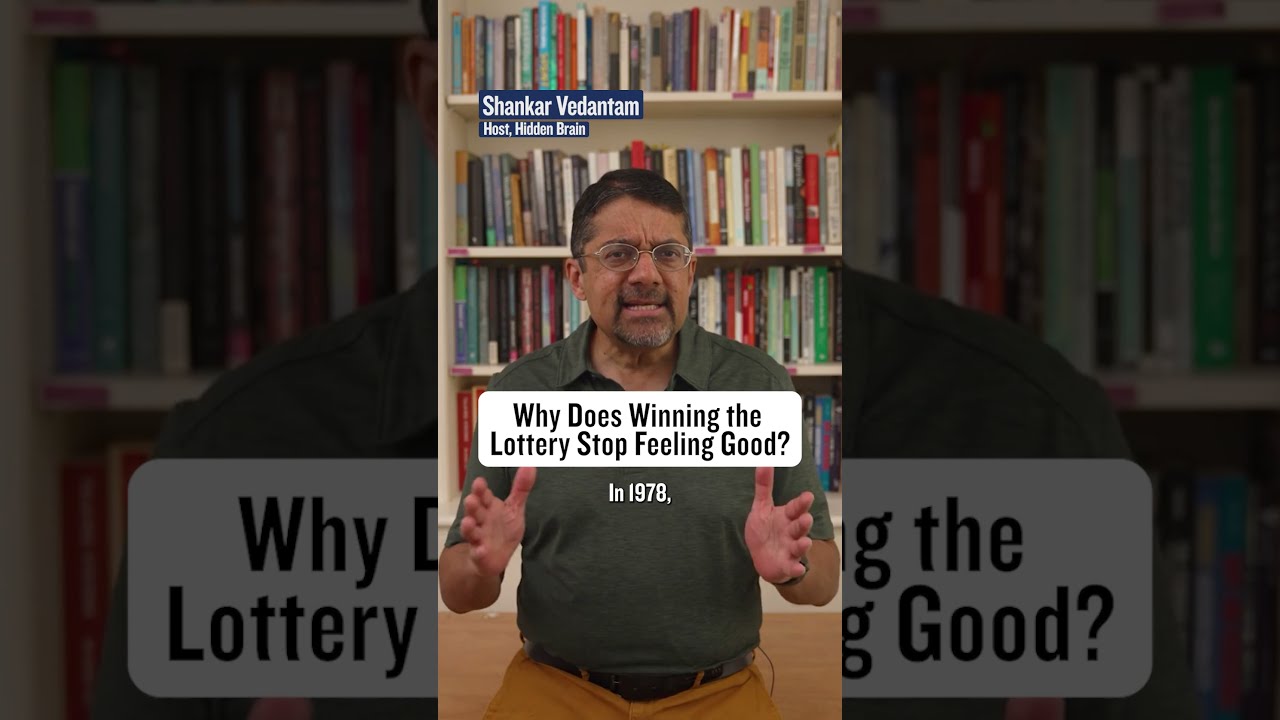
A 1978 study found lottery winners returned to baseline happiness within months, while accident victims reported above-average happiness. Psychologist Sonja Lyubomirsky explains the brain adapts to both good and bad news. Lasting happiness comes from small, varied experiences like walks and shared meals, not big windfalls.
Chapters
In 1978, 3 psychologists published a paper that changed how we think about happiness. They interviewed 3 groups of people: those who had won the lottery, those who had been in terrible accidents, and those who experienced neither. One might expect the lottery winners to be the happiest and the accident victims to be in despair, but they found the lottery winners were not happier than the control group and quickly adjusted to their big payouts. And the accident victims still rated their happiness above average despite injuries. that it left them disabled. Psychologist Sonja Lyubomirsky has spent decades studying this phenomenon. She calls it hedonic adaptation. The human mind has a remarkable capacity to absorb good news and bad news and to return to a kind of emotional baseline. That's why the big salary raise stops meaning much after a few months. It's why the dream home becomes just a house. Newness wears off because the brain treats novelty as information. Once the information is absorbed, The brain moves on. Our expectations change. Sonja says that lasting happiness depends more on a steady drip of small, varied experiences than on any single big event. The phone call with a relative, the leisurely walk in nature, the meal you savor with a dear friend. These resist adaptation in a way that windfalls do not. For more insights about the science of the mind, tune into Hidden Brain on Apple, Spotify, or hiddenbrain.org.